























Boletus betulicola
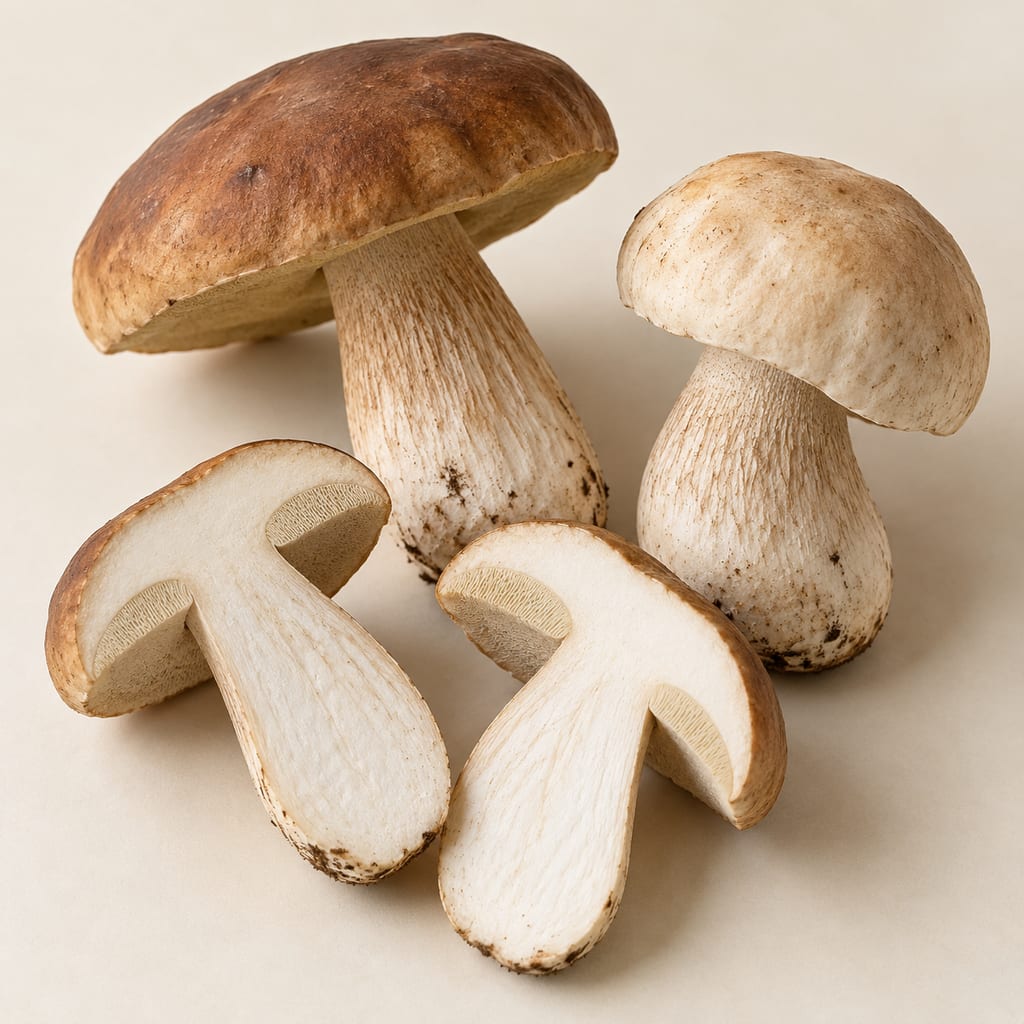
Boletus betulicola is a slender, birch-associated bolete of the penny bun group, kept as its own species by Finnish mycologists and treated by others as a form of Boletus edulis.
 FermenteaWhere food goes to change
1086 articles on substrates, cultures and additives.
 Edible mushrooms339
 Brittlegills25
 Truffles20
 Milkcaps17
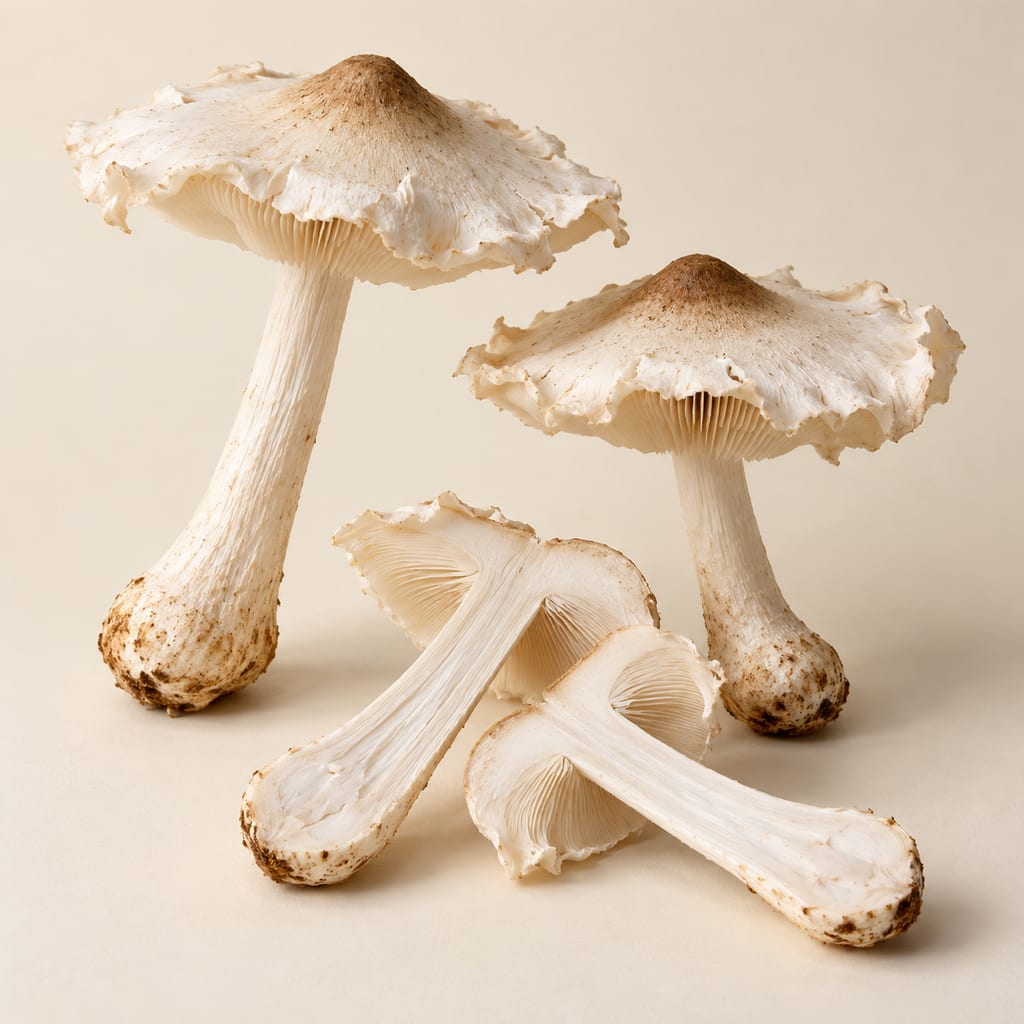 Termite mushrooms17
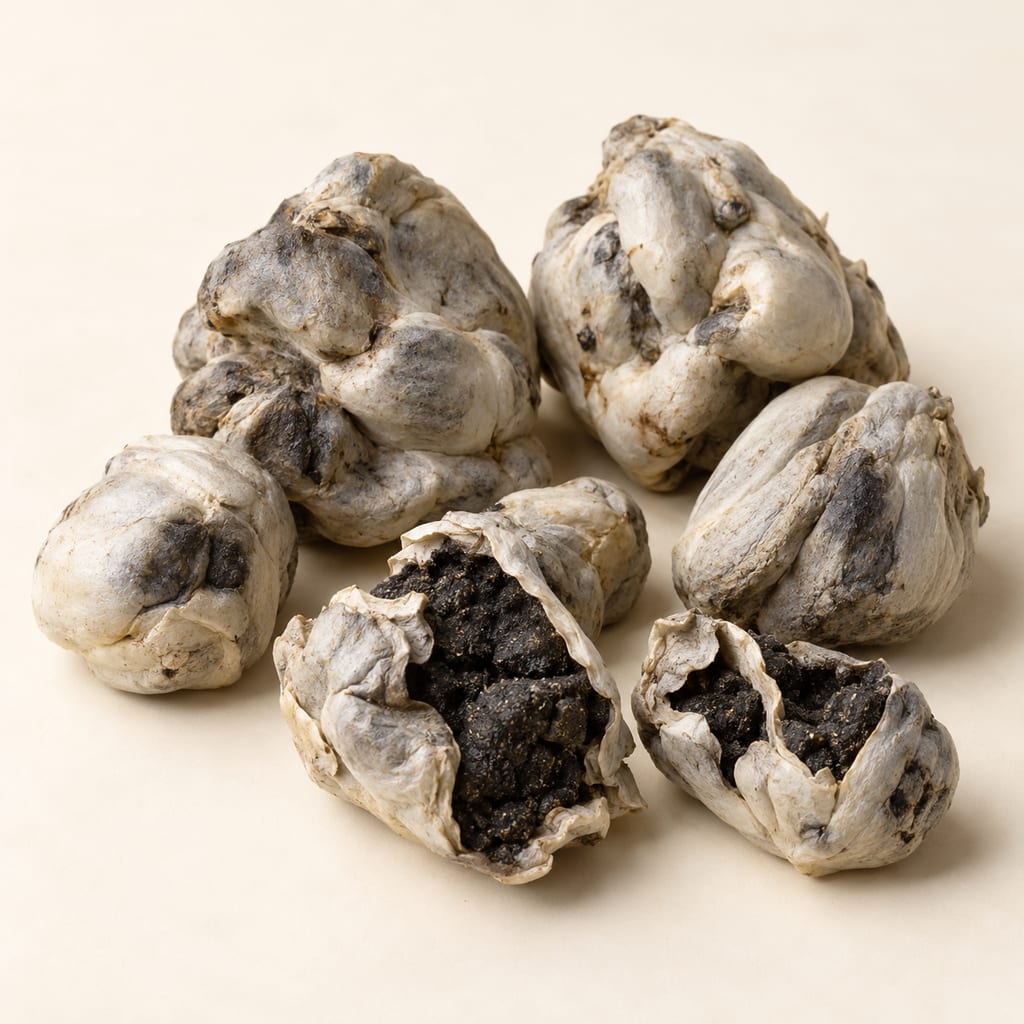 Fungi7
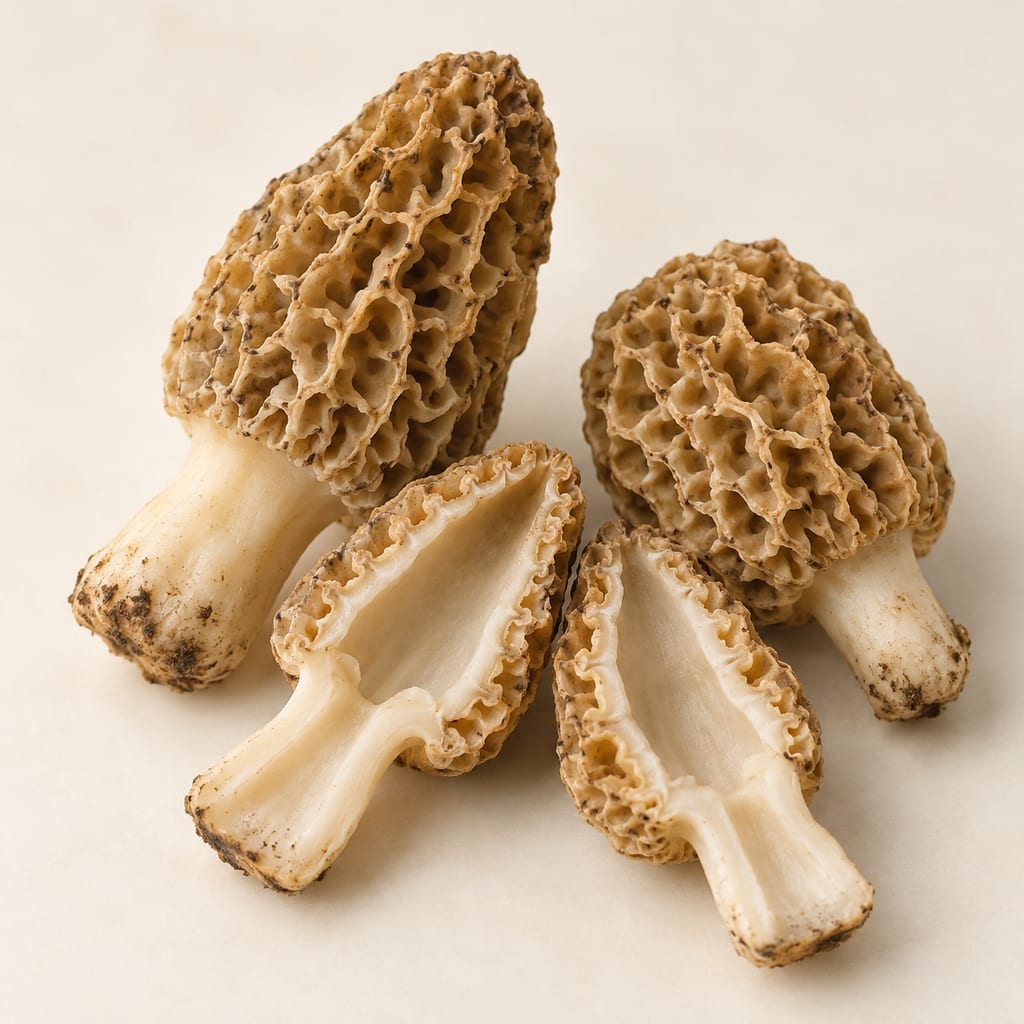 Morels4
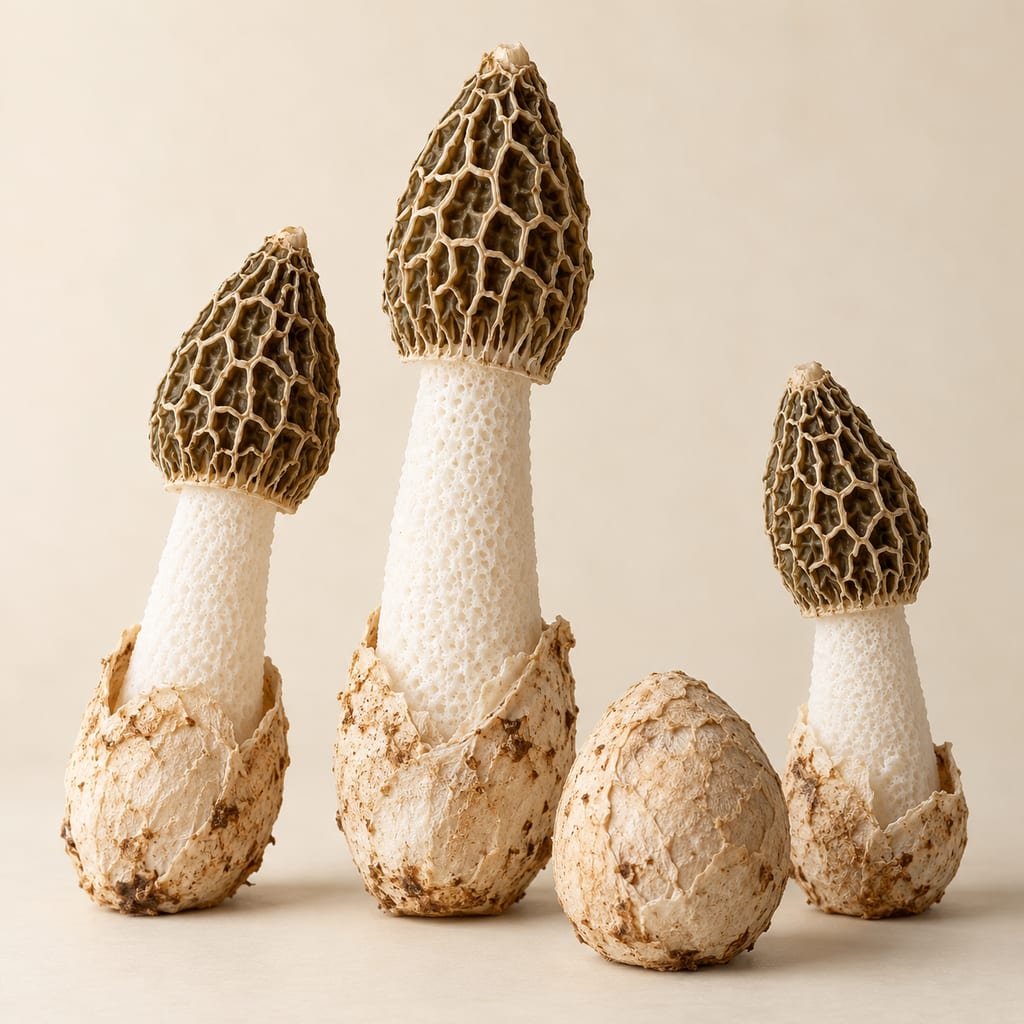 Stinkhorn fungi4
 Lichens3
Boletus betulicola is a slender, birch-associated bolete of the penny bun group, kept as its own species by Finnish mycologists and treated by others as a form of Boletus edulis.
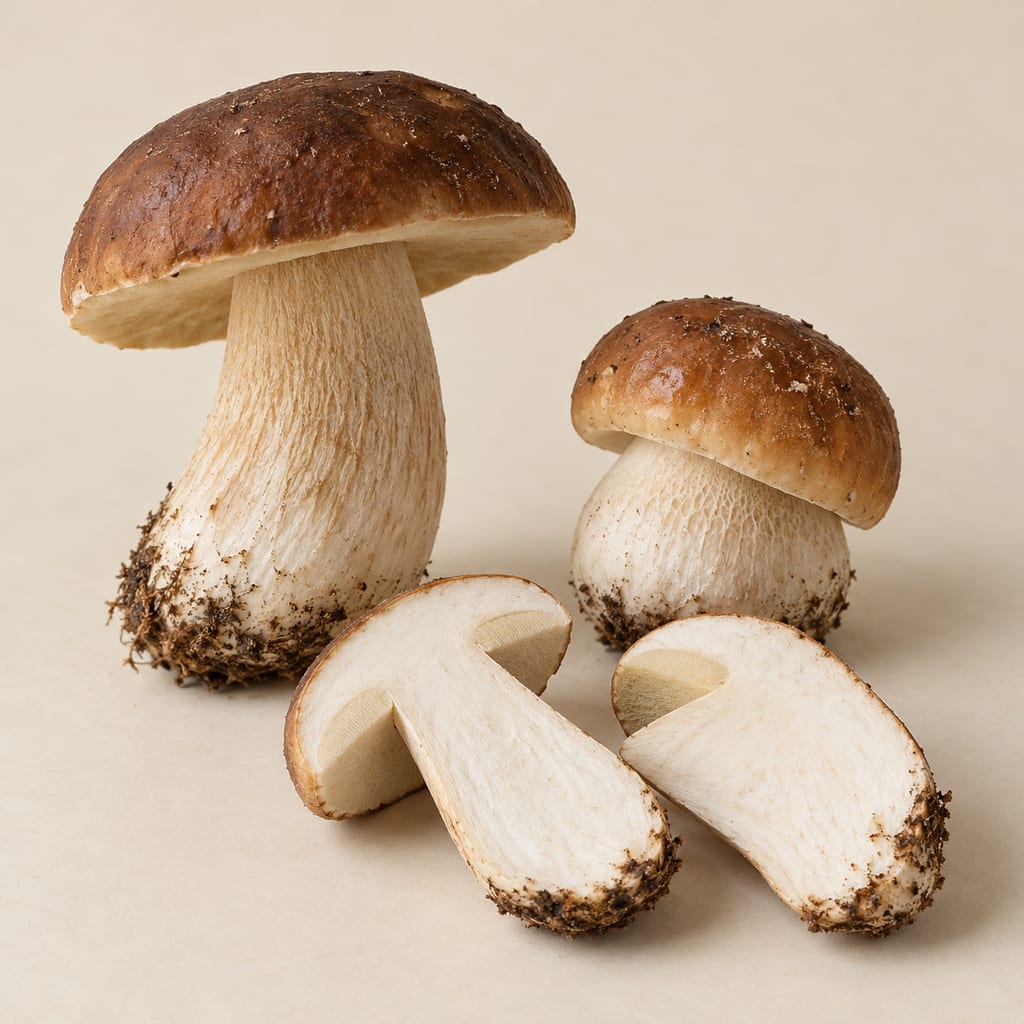
Boletus pinetorum is a greyish-brown penny bun relative that grows with Scots pine on dry sandy heaths in Fennoscandia and Estonia, described as a new species in 2009.
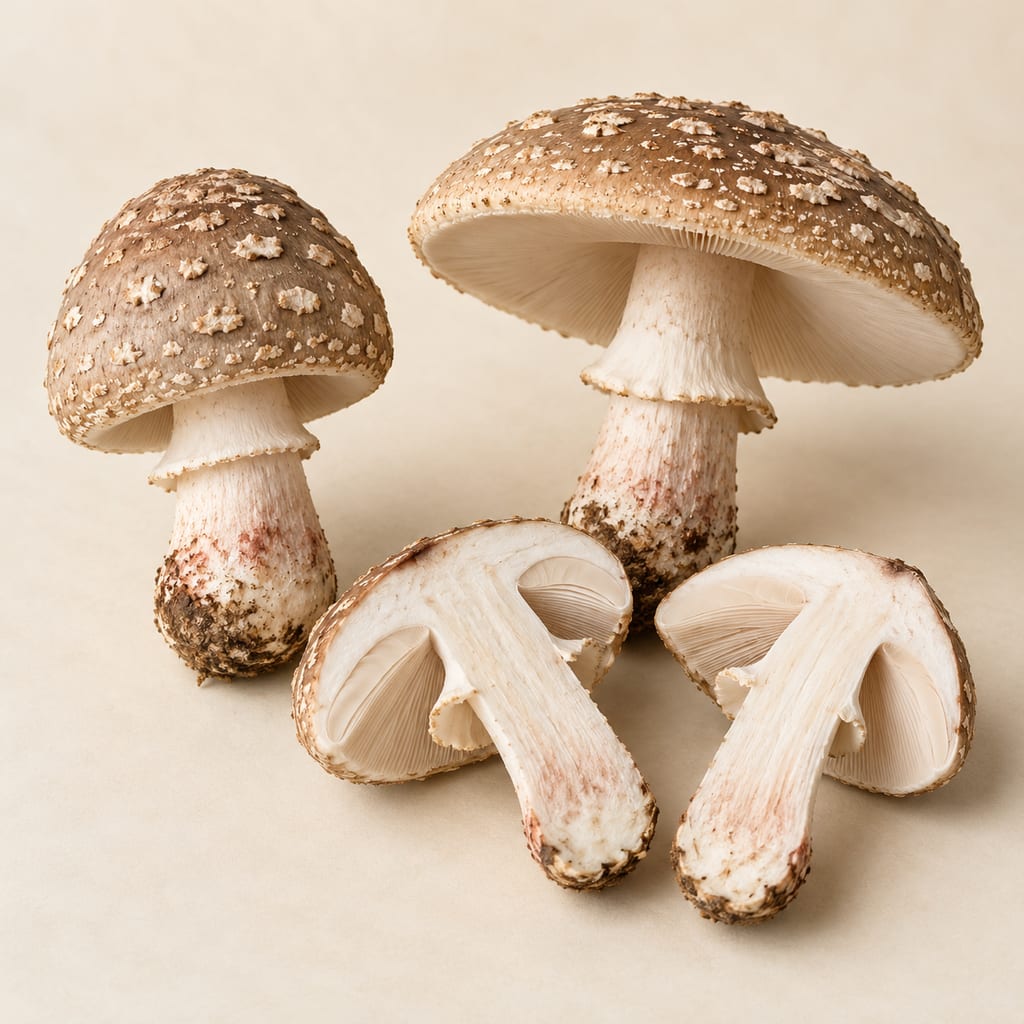
The European blusher, Amanita rubescens, is a woodland amanita whose flesh turns pink when cut. It is eaten only well cooked and is easily confused with the poisonous panthercap.
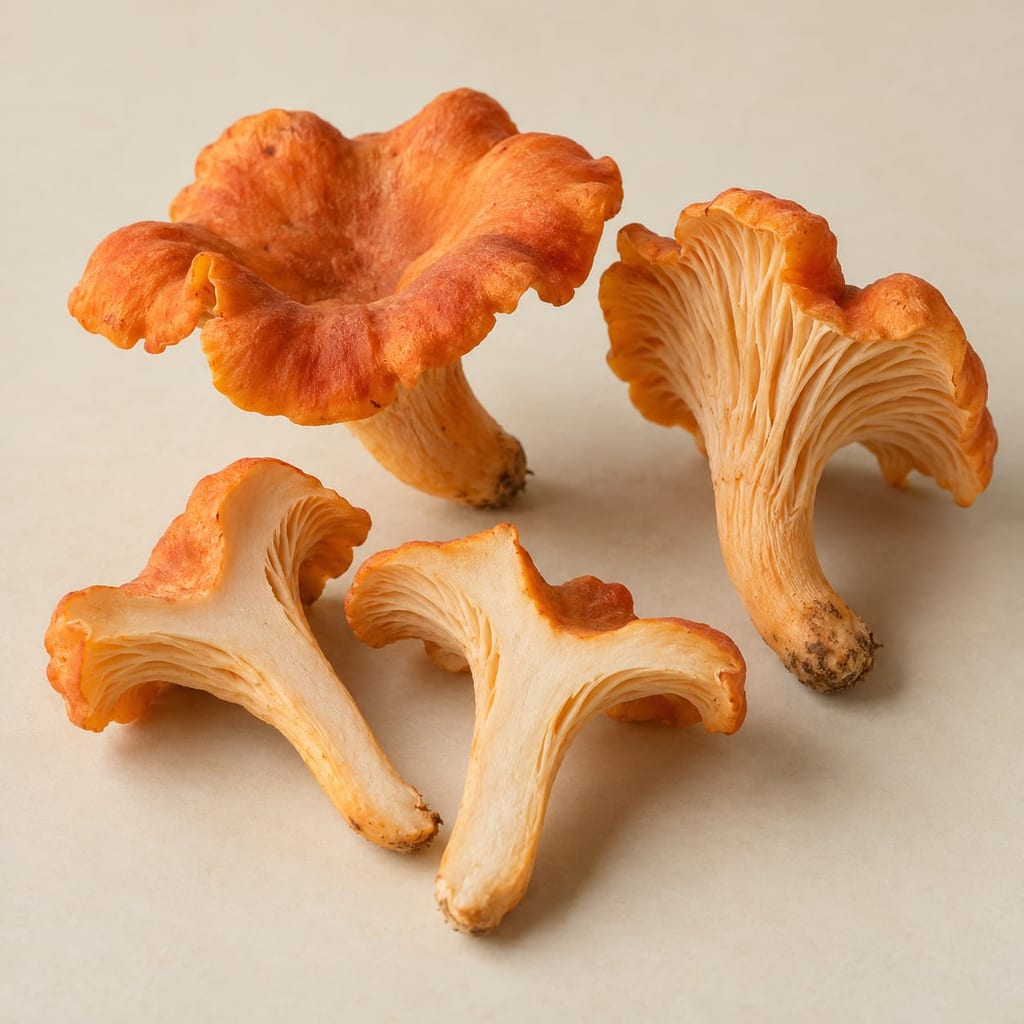
Cantharellus albovenosus, the Asian chanterelle, is an ectomycorrhizal forest chanterelle that is marketed in Yunnan; its species identity and local safety still need review.
A wild ectomycorrhizal bolete of the Tshopo rainforests in DR Congo, recorded as locally eaten in a 2020 interview study. Species-level food use is not independently assessed.
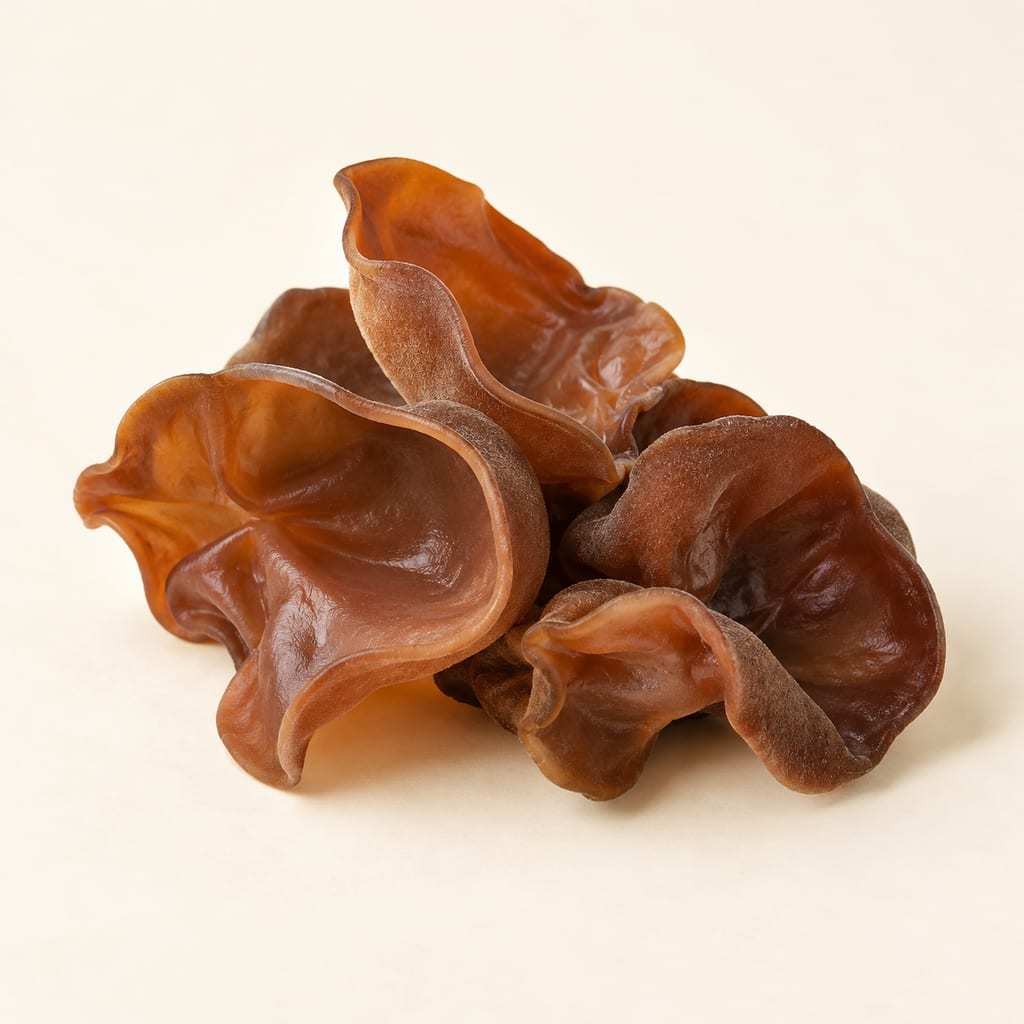
Auricularia villosula, the short-haired wood ear, is an Asian wood fungus that China lists as edible and that is cultivated in Inner Mongolia. It is easily confused with the cultivated black wood ear, so a market label does not settle the species.
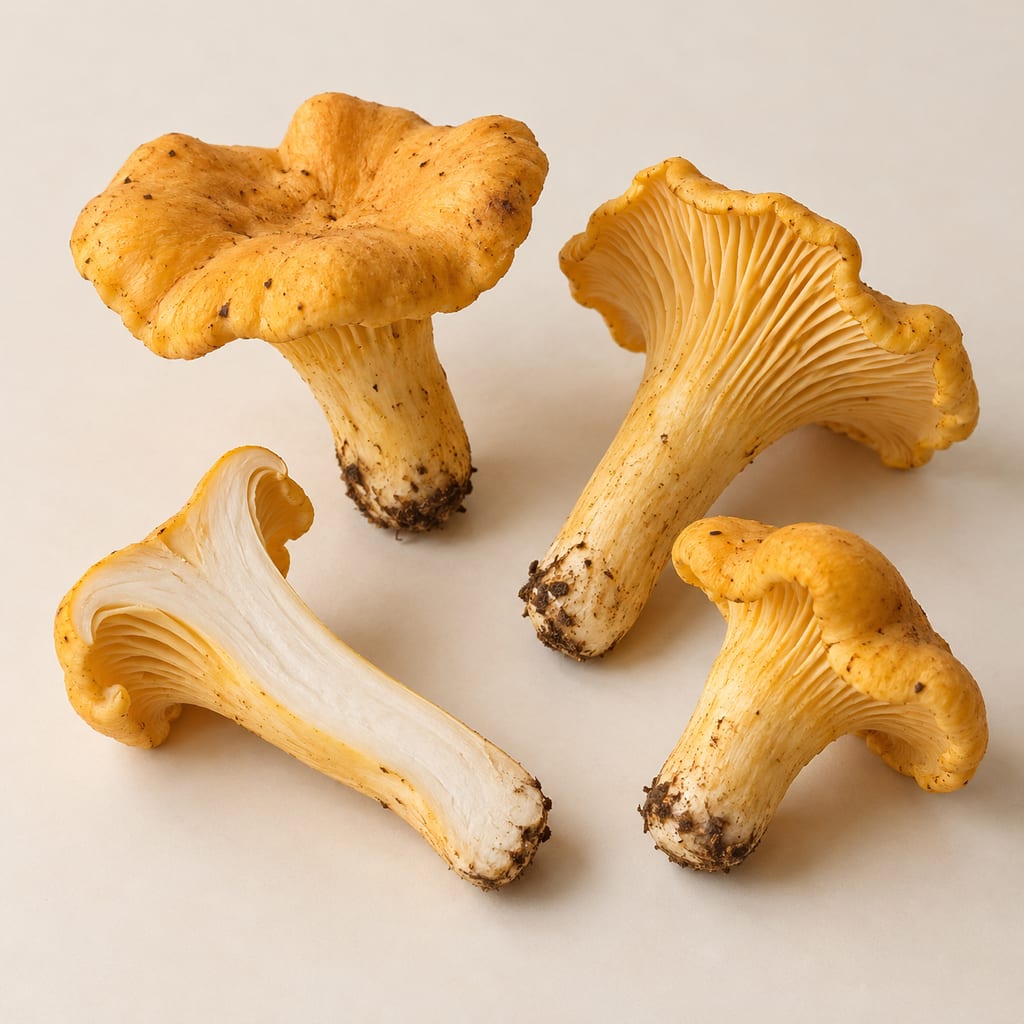
The chanterelle, Cantharellus cibarius, is a wild golden-orange mushroom of European woodland. Its ridged, gill-less underside, fruiting on the ground under trees, separates it from the poisonous jack-o'-lantern, which grows on wood.
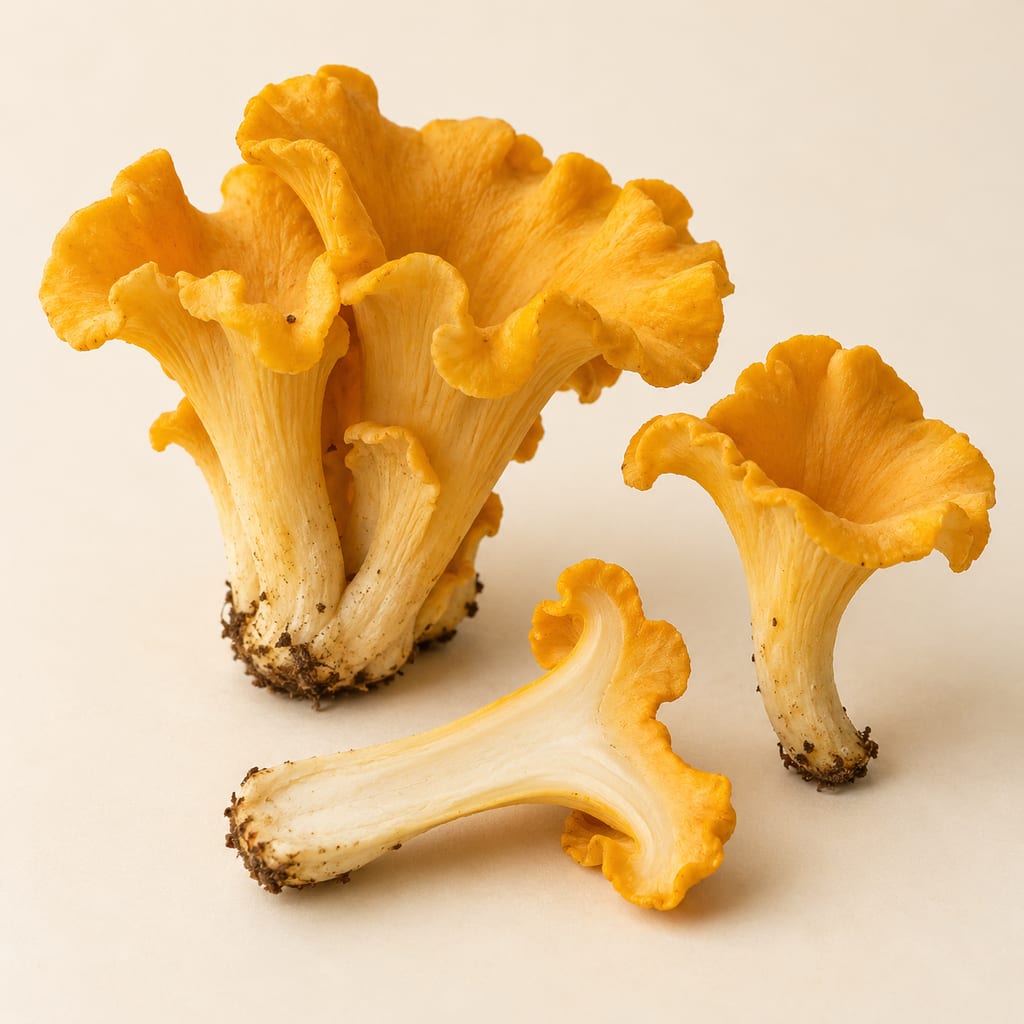
Cantharellus odoratus, the fragrant chanterelle, is a North American and Central American oak-woodland fungus. It was sold in a Veracruz market in the 1980s and in Guatemala in 2002, and its name is still disputed.
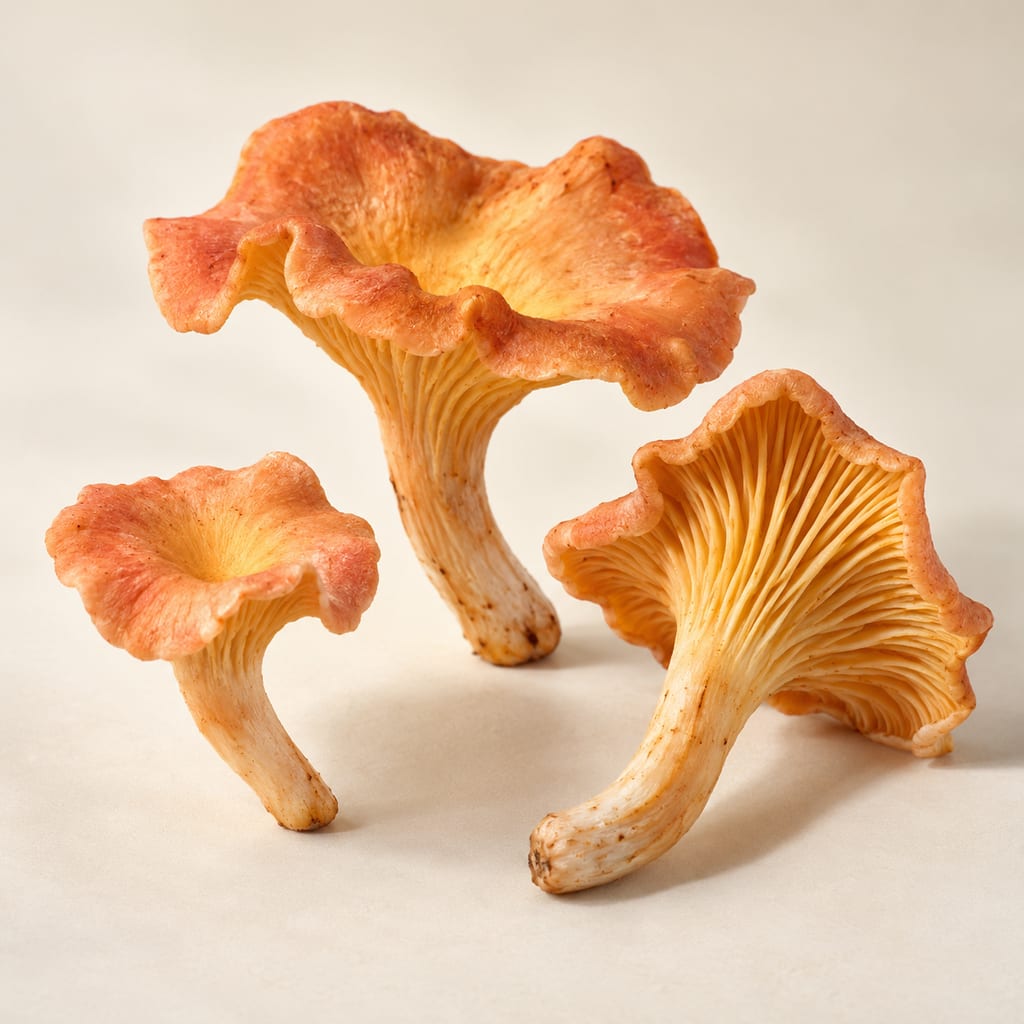
Cantharellus phloginus is a pink-capped chanterelle of southern and central China, named in 2016. China's 2026 catalogue lists it as edible, and it is sold in Yunnan markets. Its name is disputed, and colour alone does not identify it.
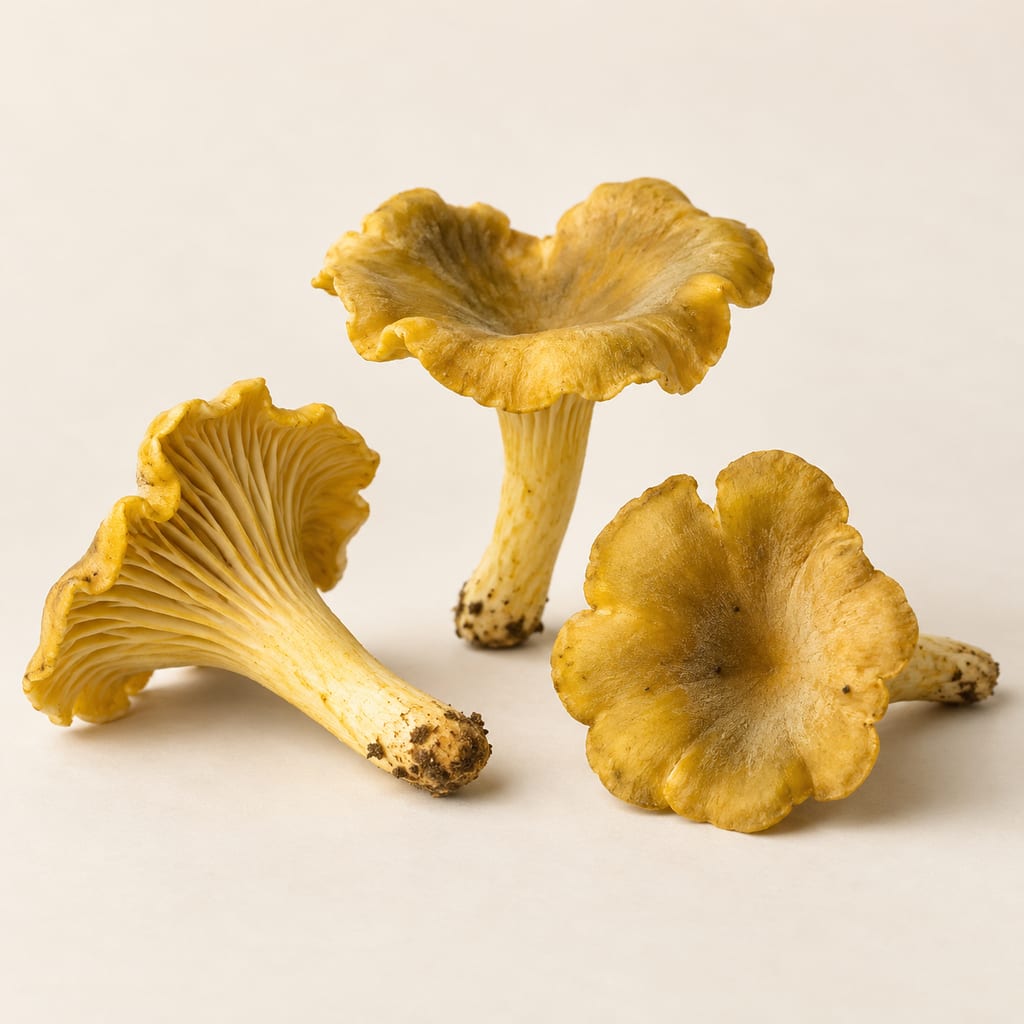
Cantharellus luteovirens is a small yellow chanterelle described from Guangdong in 2021. It grows in subtropical forest with acacias, and China's 2026 catalogue lists it as edible. Its species boundary depends on microscopy and DNA.
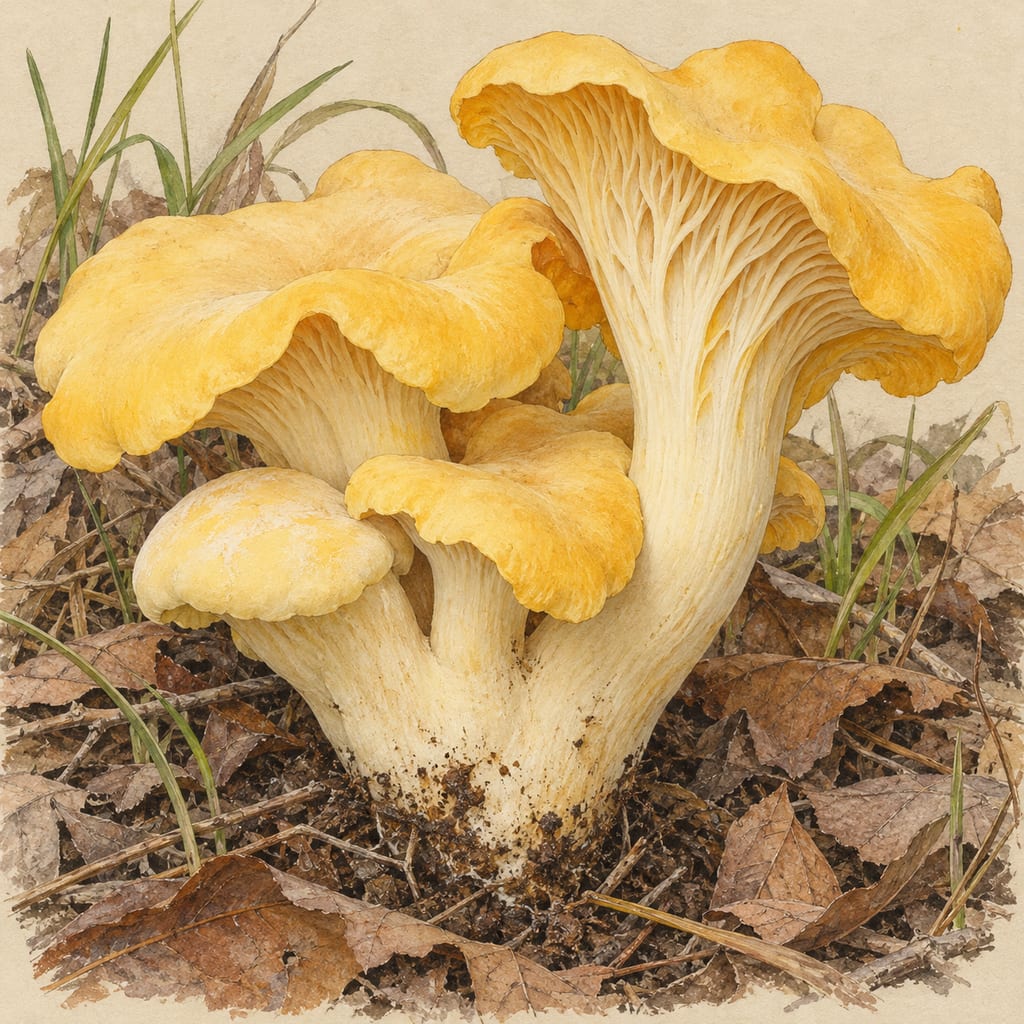
Cantharellus afrocibarius is a robust yellow chanterelle of the miombo woodlands of southern Central Africa. It is eaten and sold locally, is rated Vulnerable on the IUCN Red List, and is hard to tell from related species in the field.
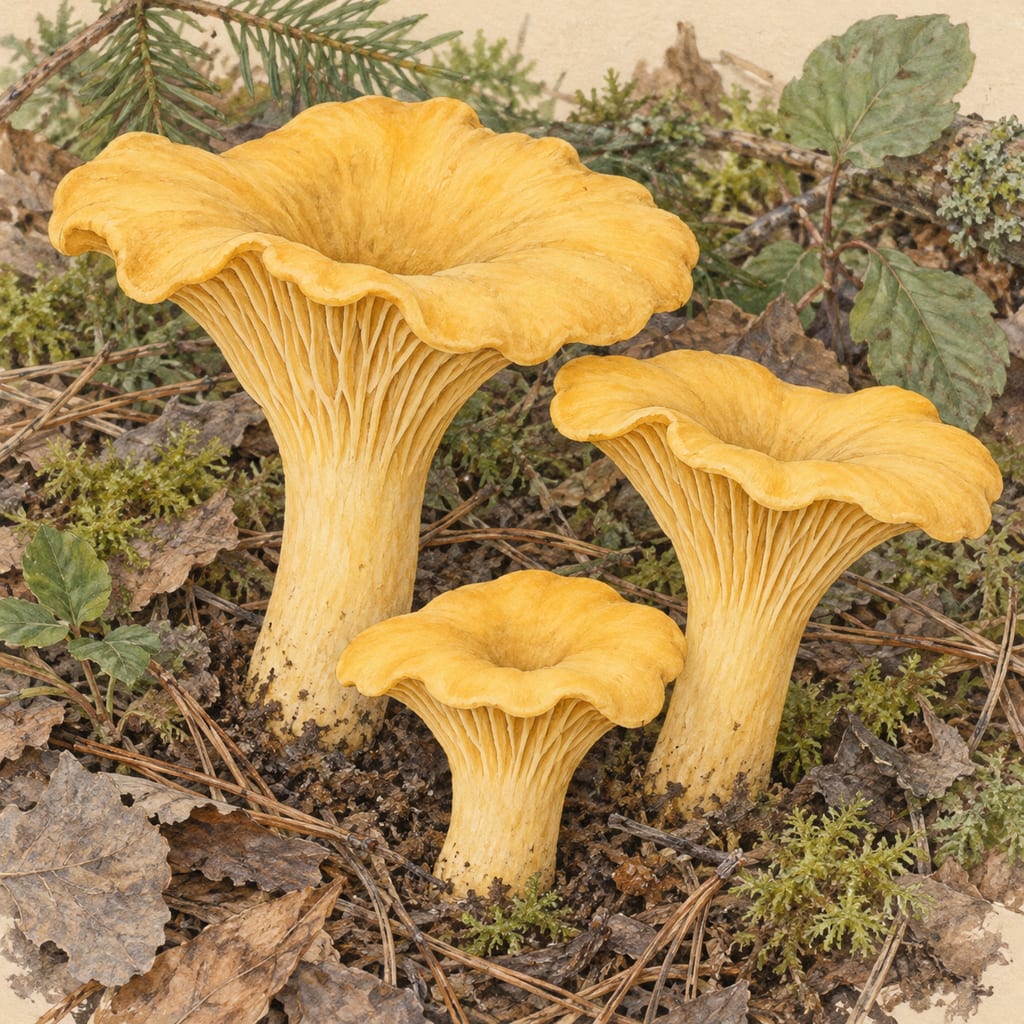
Cantharellus tuberculosporus is a rare chanterelle of high-elevation Xizang and Sichuan, China. Its name has been disputed, and no food-safety assessment of correctly identified specimens exists.
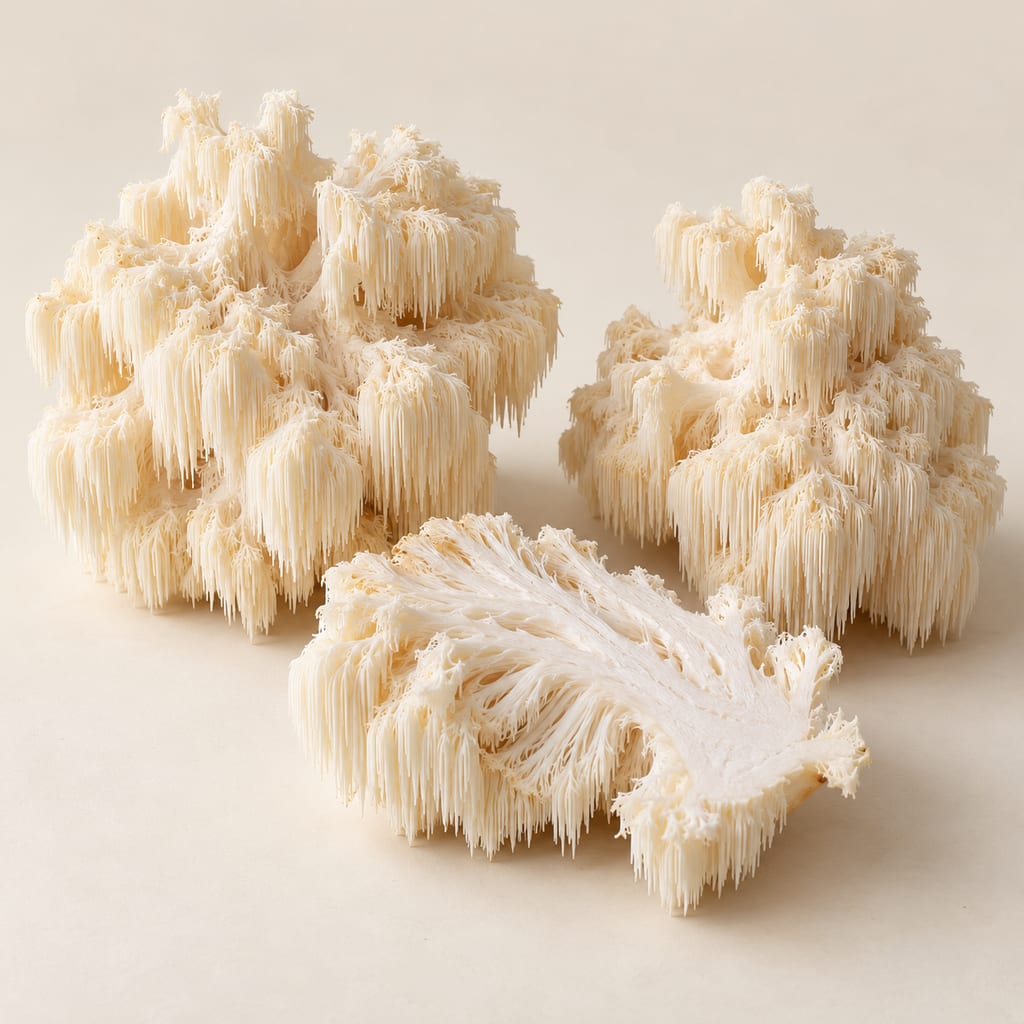
Hericium americanum, the bear's head tooth, is a white tooth fungus of dead hardwoods in eastern North America, eaten when young and cooked, and told apart from related Hericium species by molecular work.
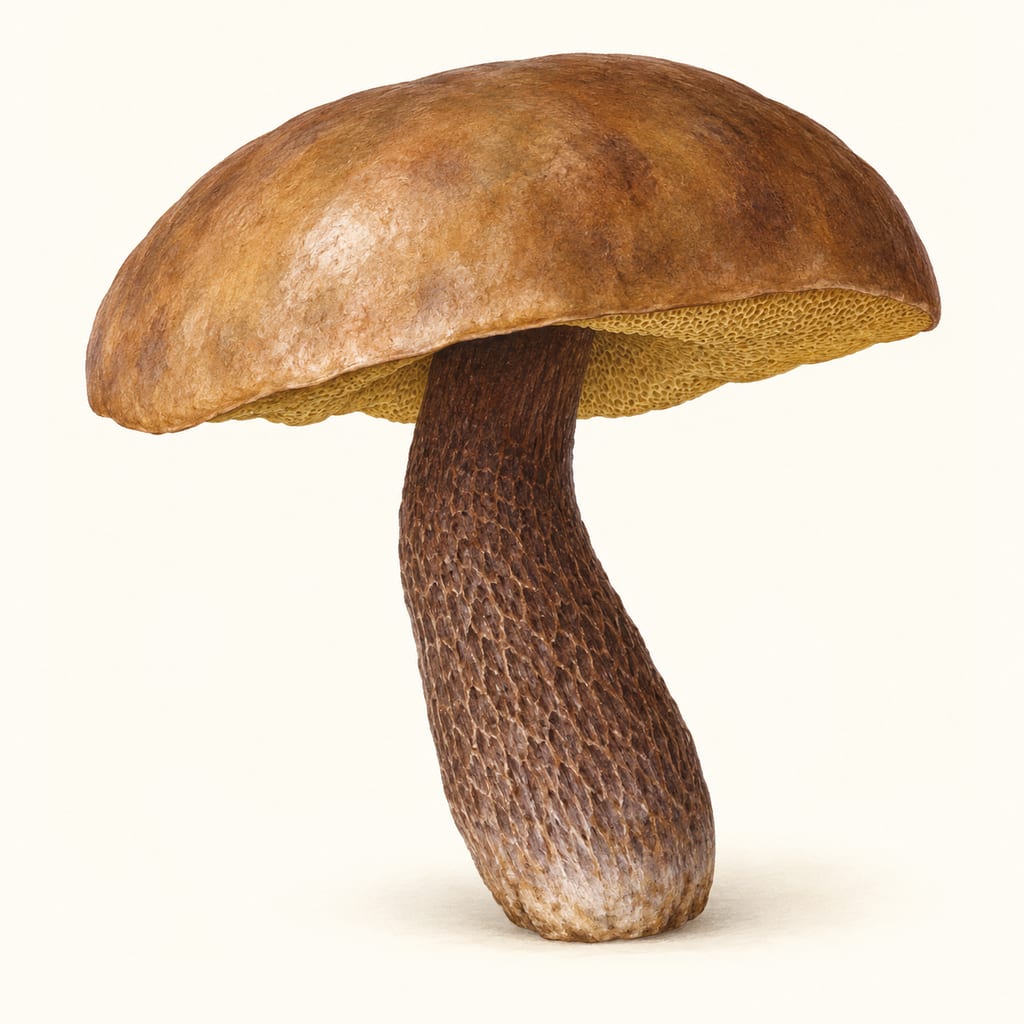
Boletus botryoides, the grape-coloured bolete, is a porcini-like wild bolete of central and south-western China. It is listed as edible in Chinese catalogues, but no dish or preparation is documented for it.
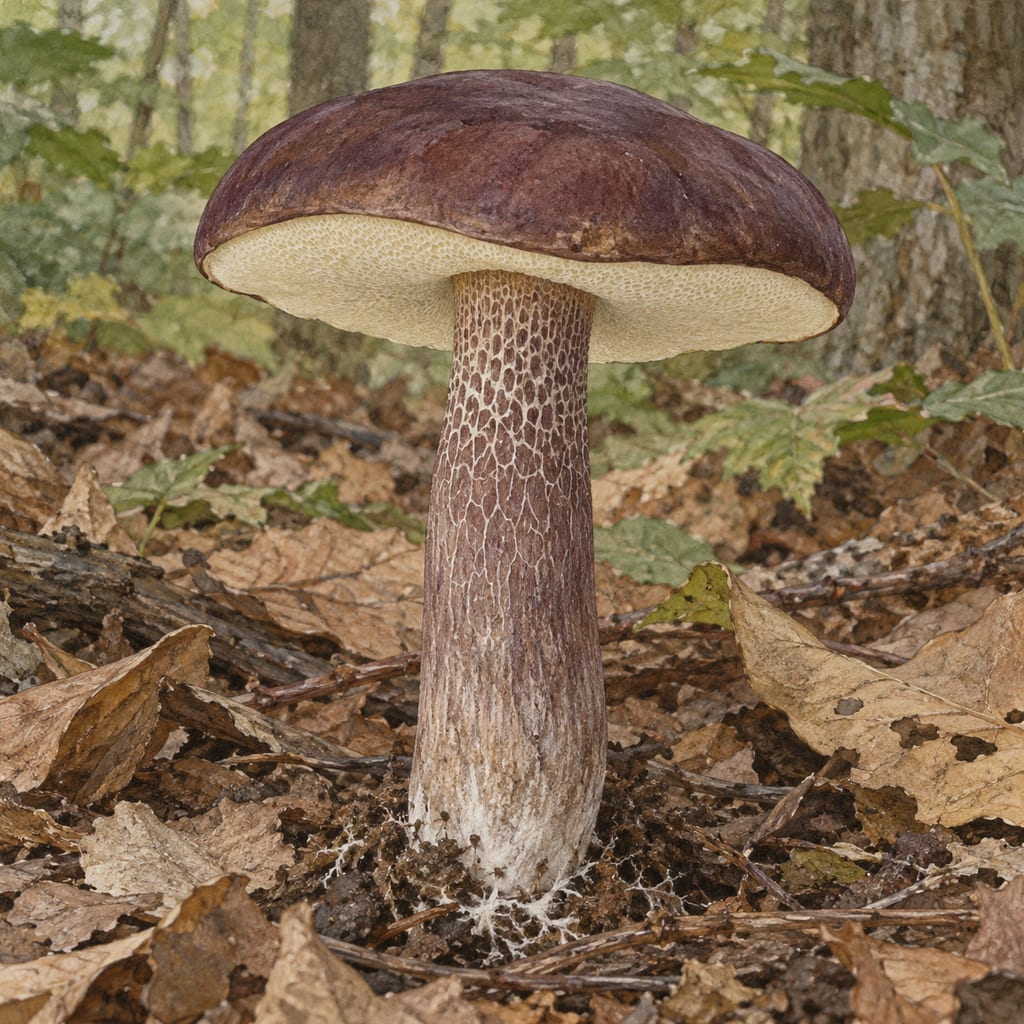
Boletus subviolaceofuscus is a porcini described from Yunnan in 2016 and known from a narrow range in south-western China. A Yunnan wild-food list gives it as directly edible; no preparation or dish is documented.
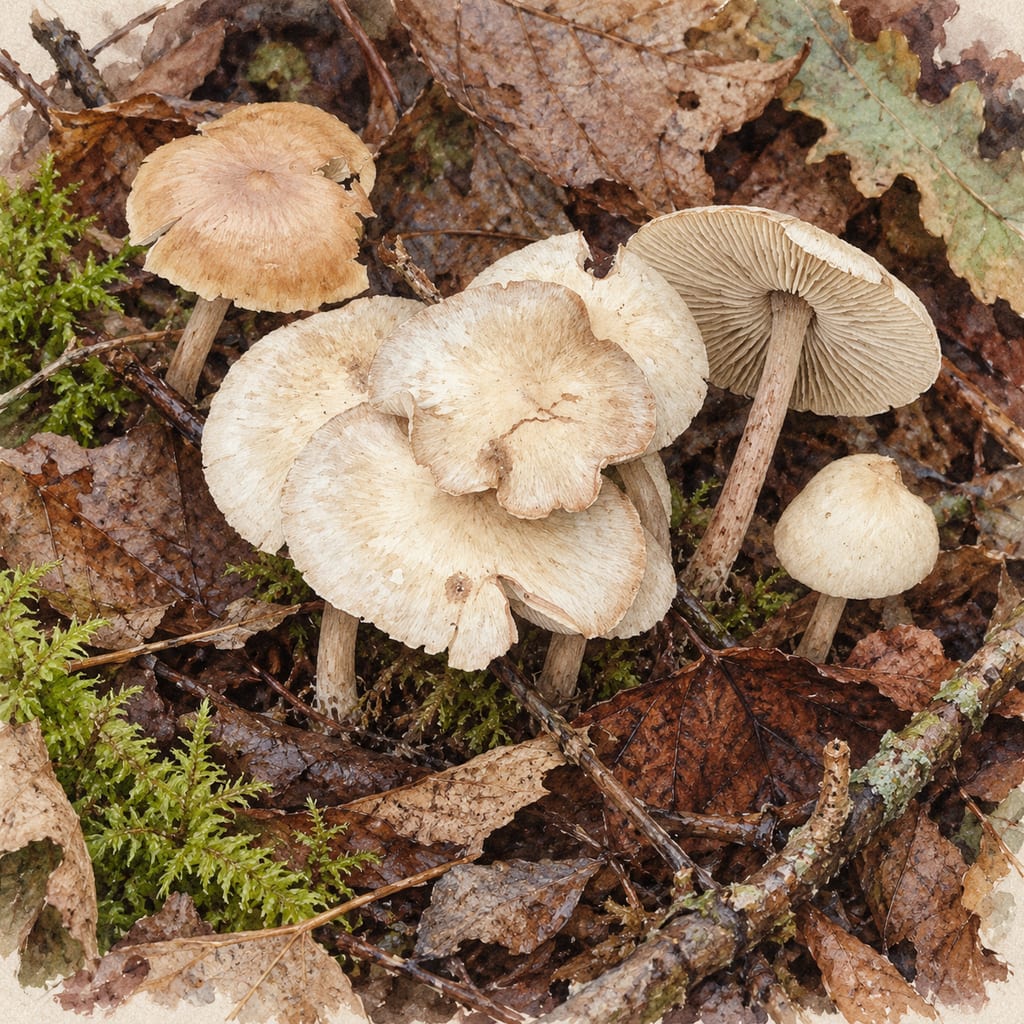
A clustering woodland agaric, now named Collybiopsis confluens, documented as eaten in one Mexican lake basin and listed as edible in older Hong Kong and Malawi checklists. Its food status varies by region.
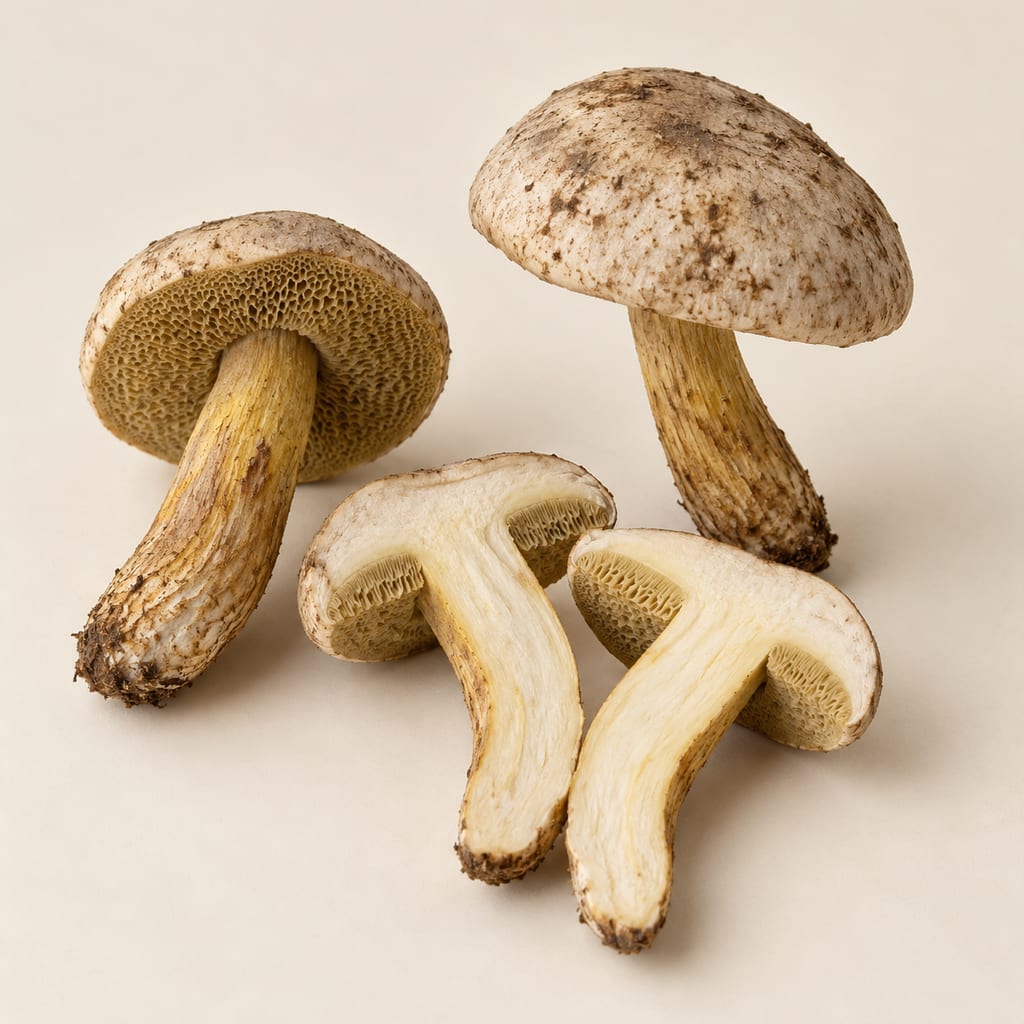
Boletinus grisellus, the gray larch bolete, is a bolete that grows under larch in China, Japan and eastern North America. Some references describe it as edible. No species-specific preparation is documented.
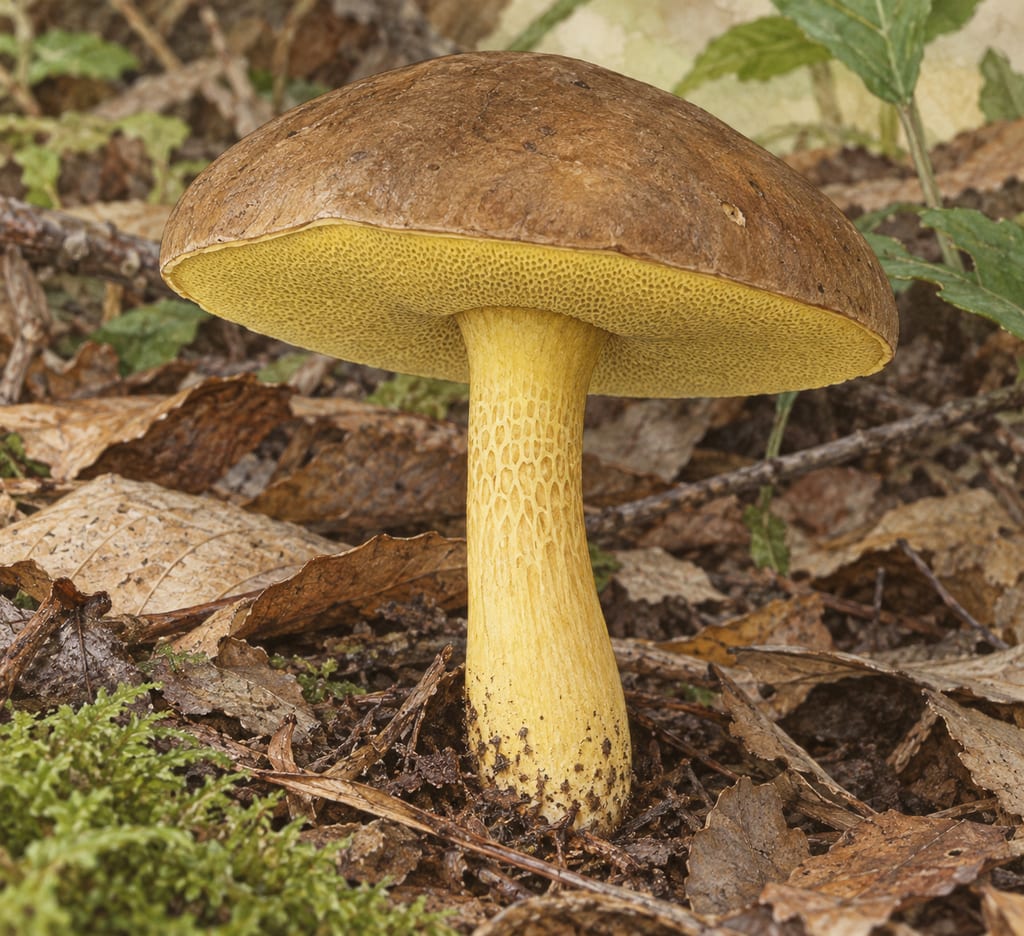
A butter bolete described from Yunnan, China, and reported as eaten by Yi people around Lijiang. Edibility is catalogue- and use-based, not an identification guide.
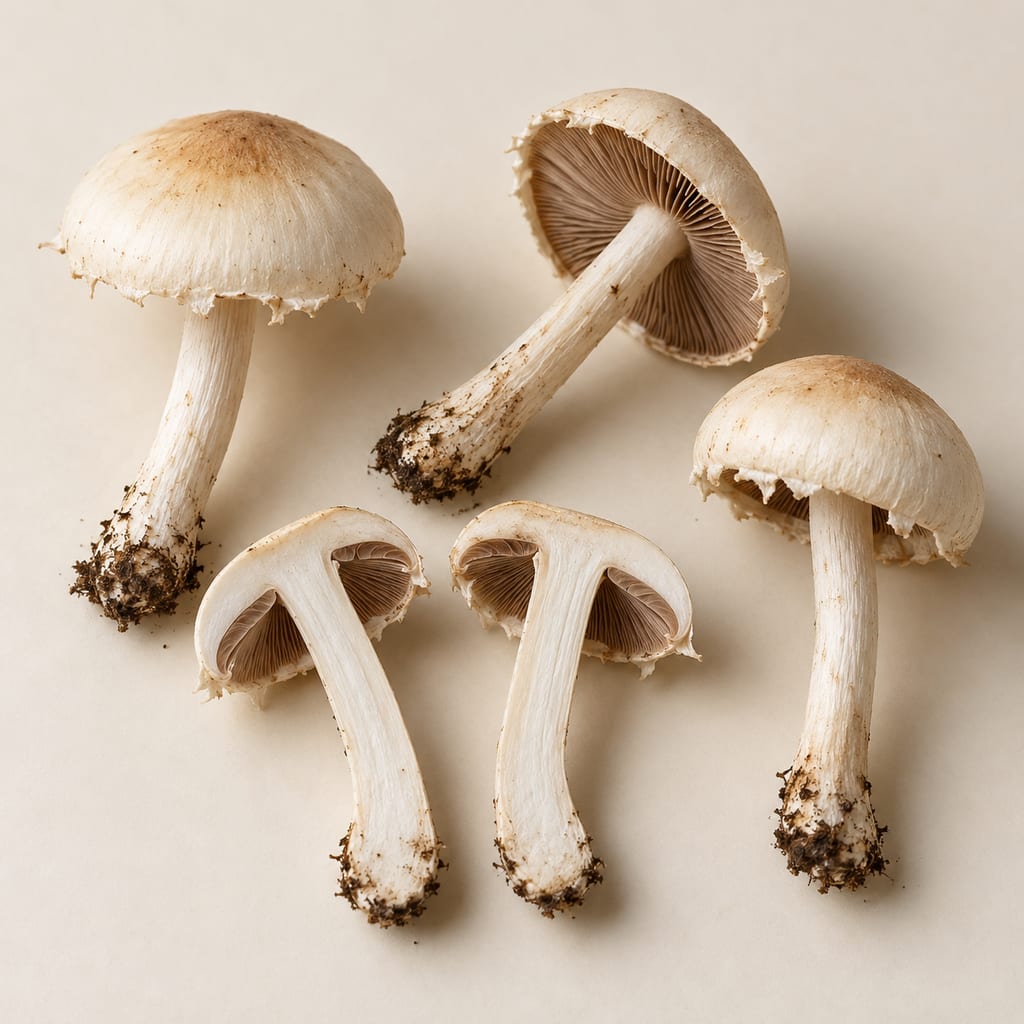
A grassland agaric listed as edible in historical and scientific catalogues for Hong Kong and China. Taxonomic concepts and practical food value vary; the listings do not establish safe identification or culinary practice.
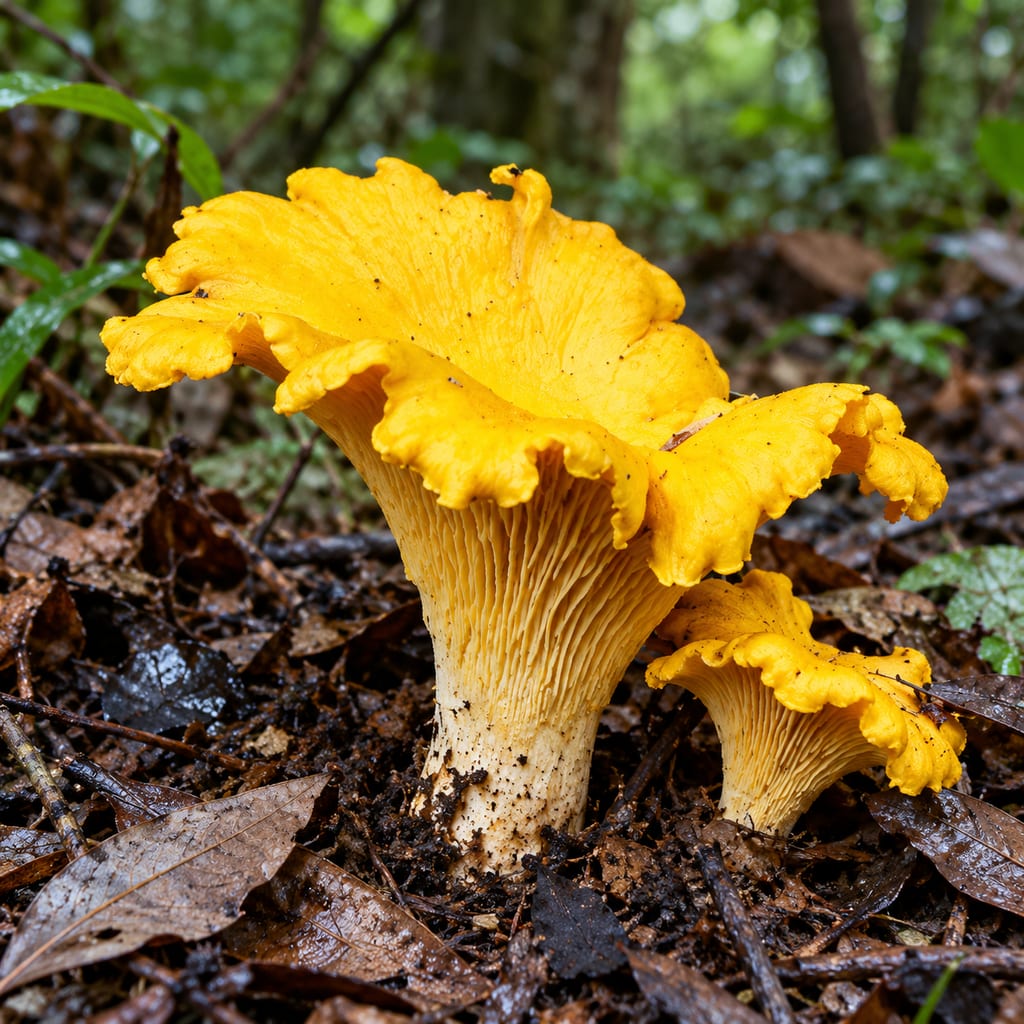
Cantharellus macrocarpus is a large yellow-orange chanterelle described from southern China in 2021. It is listed as edible in a national catalogue; no species-specific food study was found.
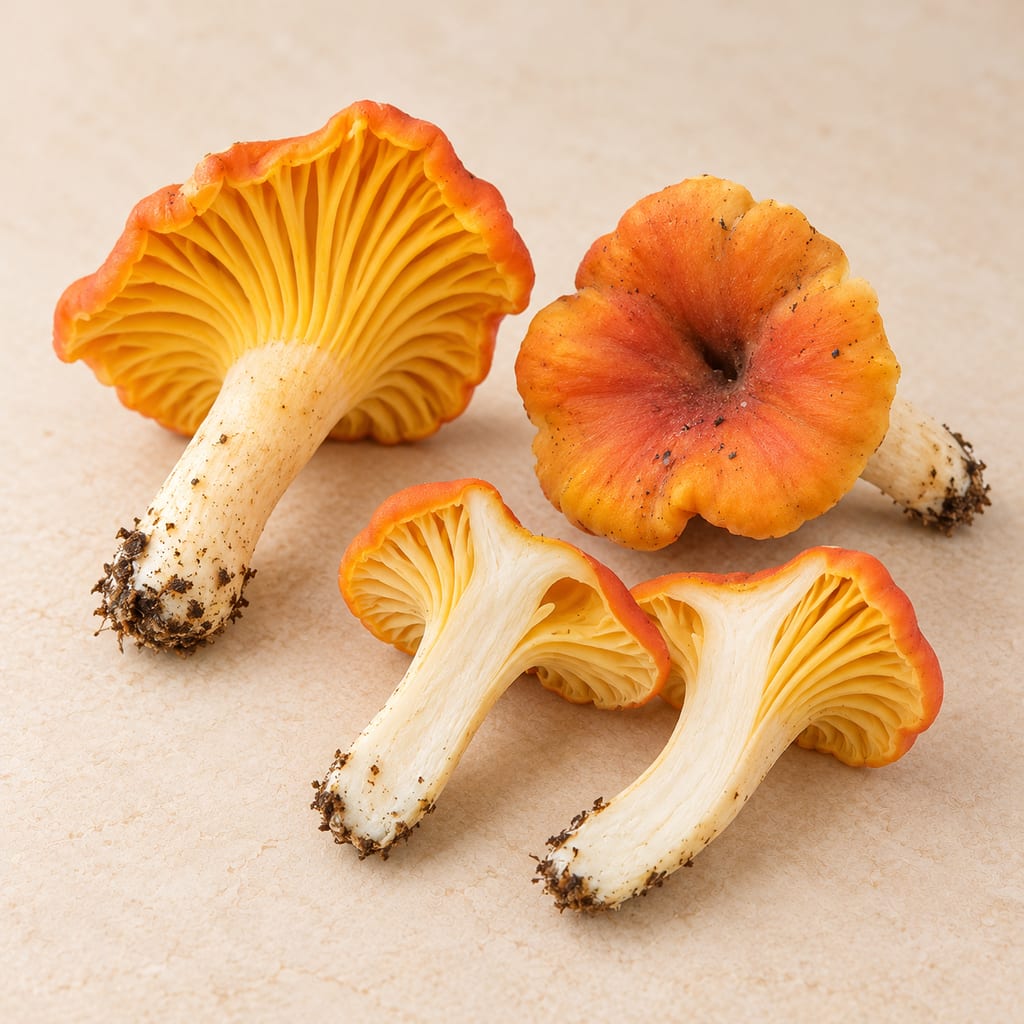
Cantharellus platyphyllus is a red-to-orange chanterelle of tropical African woodland, gathered and sold locally in several countries. Its edibility rests on local use and literature, not a species-level safety study.
A historical name for a very large bolete reported from Madagascar and listed as edible by FAO. The taxon is unresolved, and no modern food tradition or safety evidence is documented.
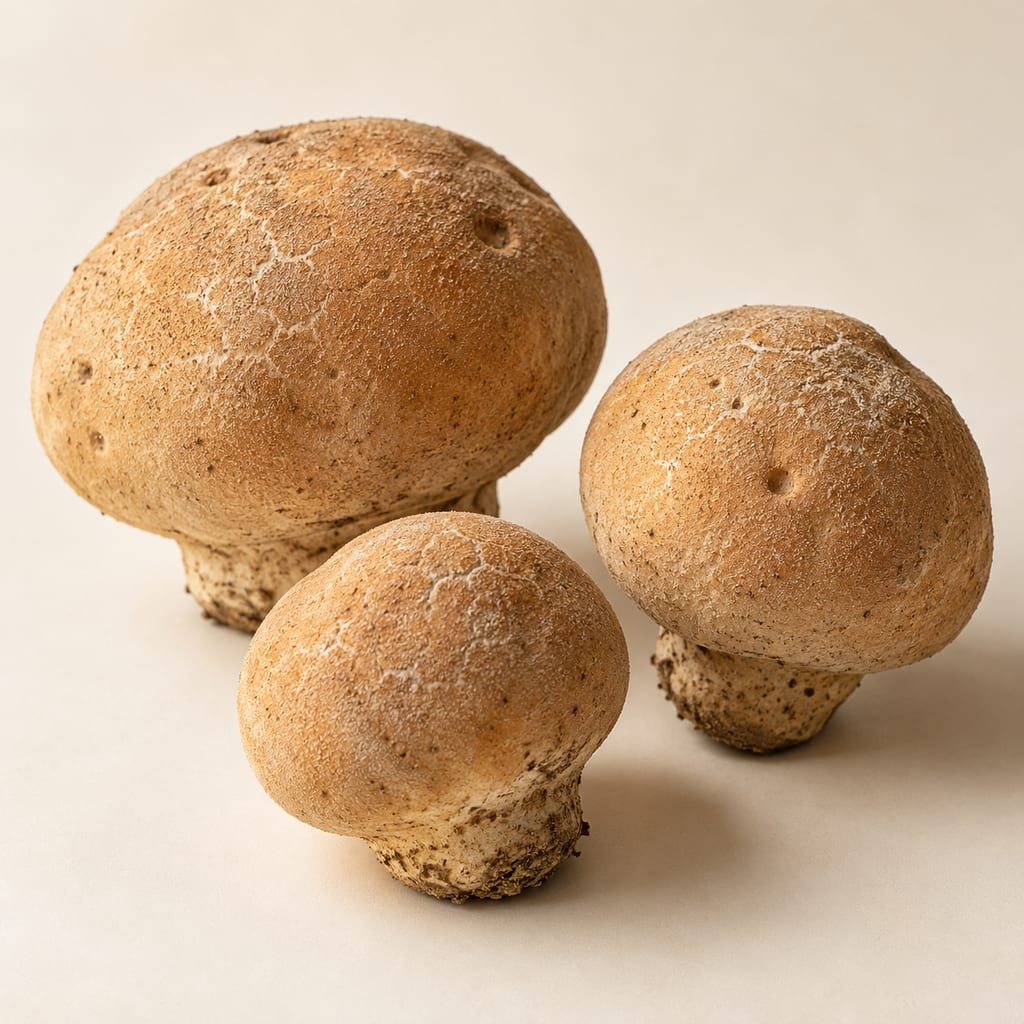
Calvatia boninensis is a large puffball described from the Bonin (Ogasawara) Islands of Japan, reported as edible in some catalogues and local accounts, with no species-specific safety or preparation study.
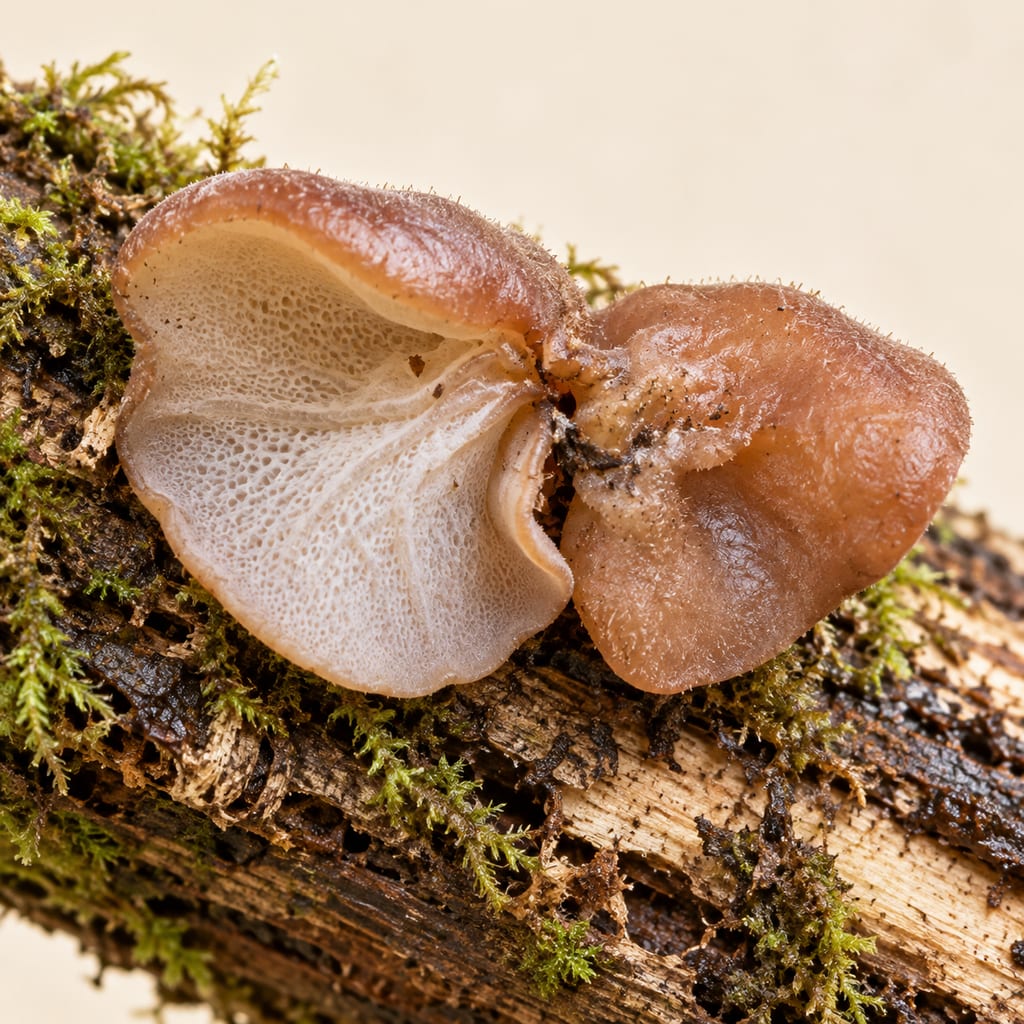
A gelatinous wood-ear fungus described from Yunnan, China, in 2021 and listed as edible in a 2026 Chinese catalogue. Documented food use, preparation and safety are absent.
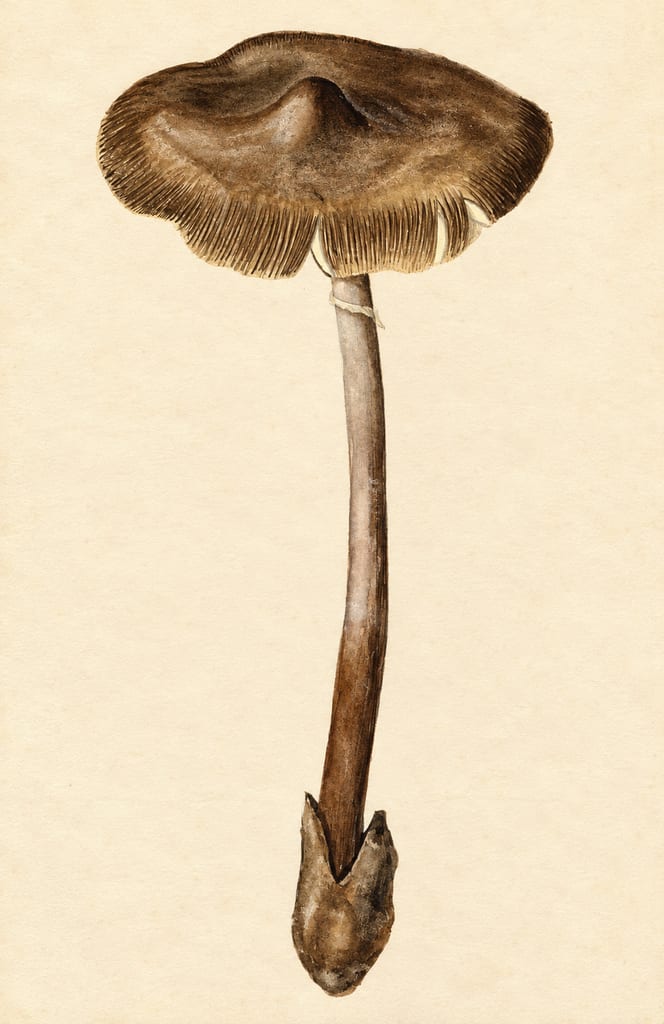
A wild ectomycorrhizal Amanita of the Congo rainforest, recorded as locally consumed in Tshopo province. Its preparation was not established, and the genus includes deadly species.
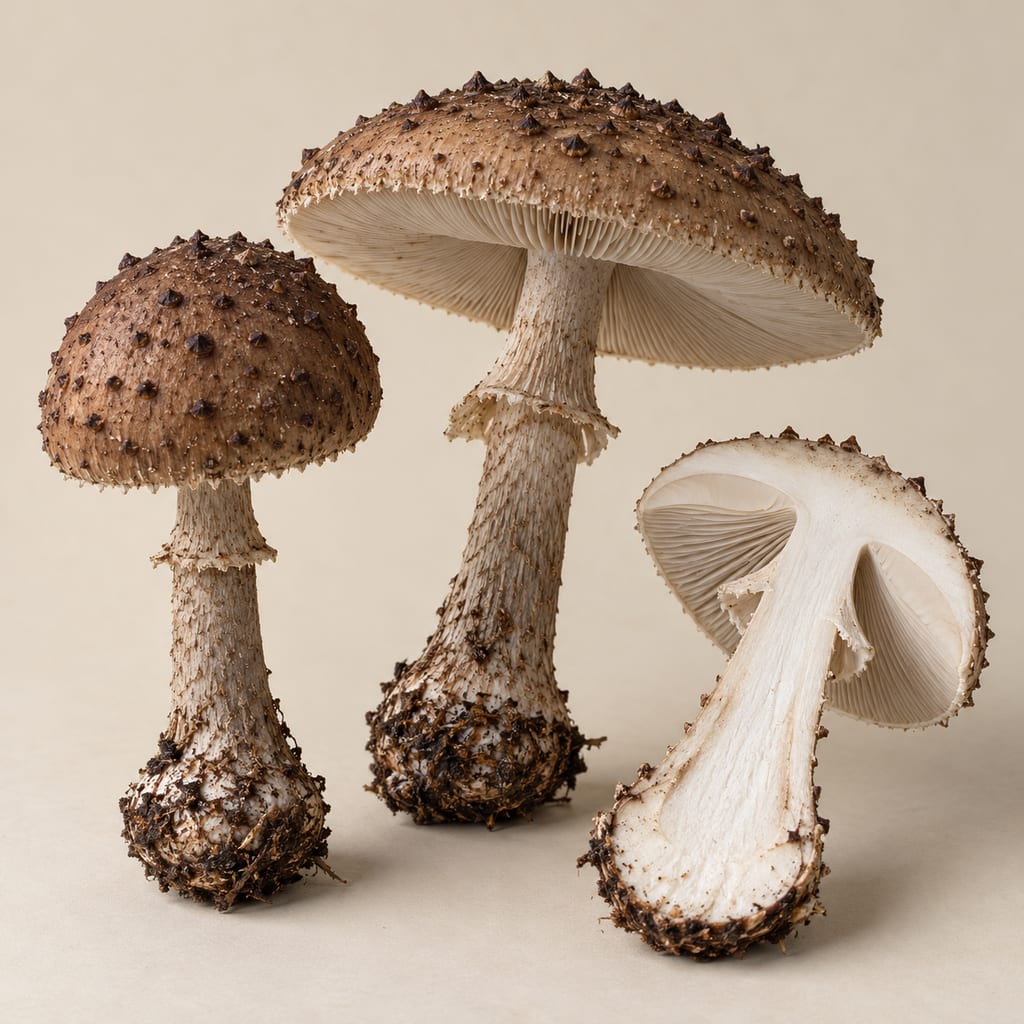
A wild ectomycorrhizal Amanita of the Congo rainforest, recorded as locally consumed in Tshopo province. Its preparation was not established, and the genus includes deadly species.
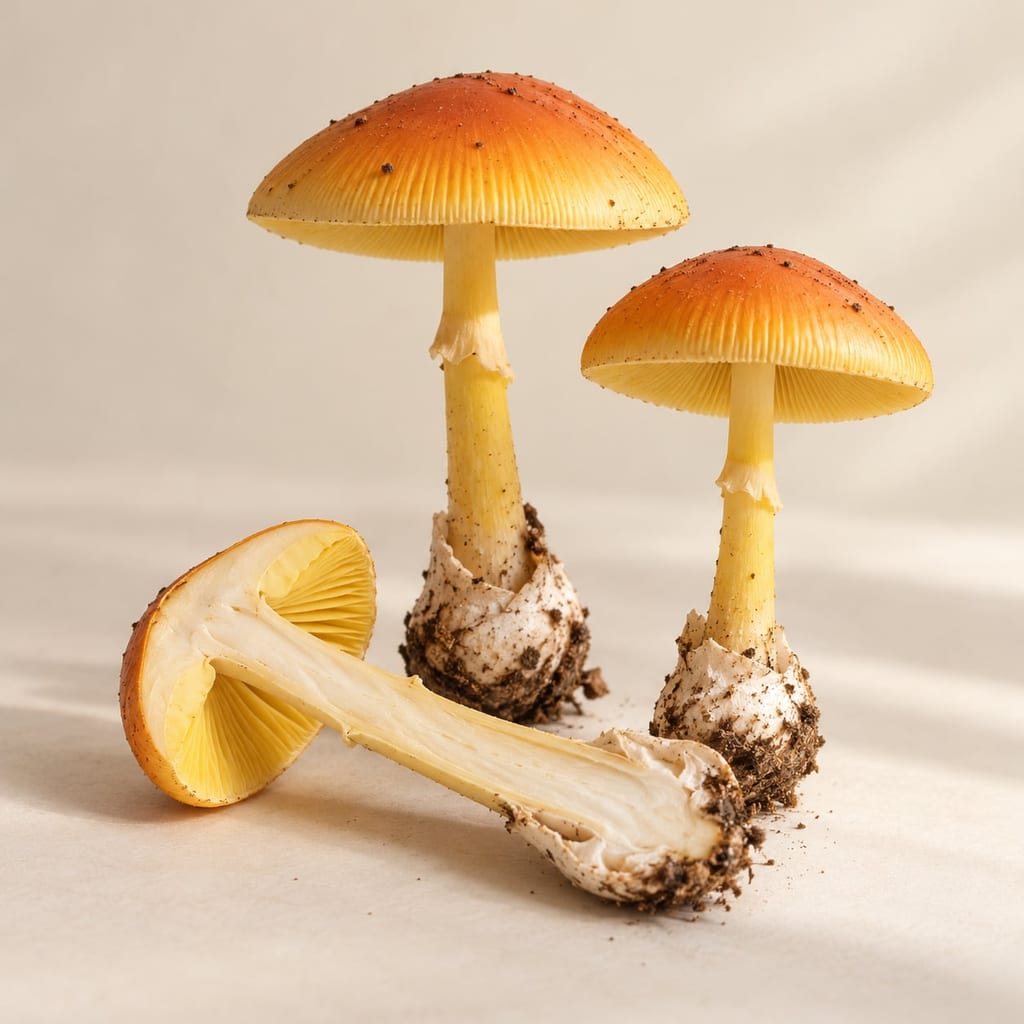
A wild Amanita of China, first reported there and listed as edible in a Yunnan ethnomycology study. The genus contains deadly species, so this page does not support identifying or eating it.
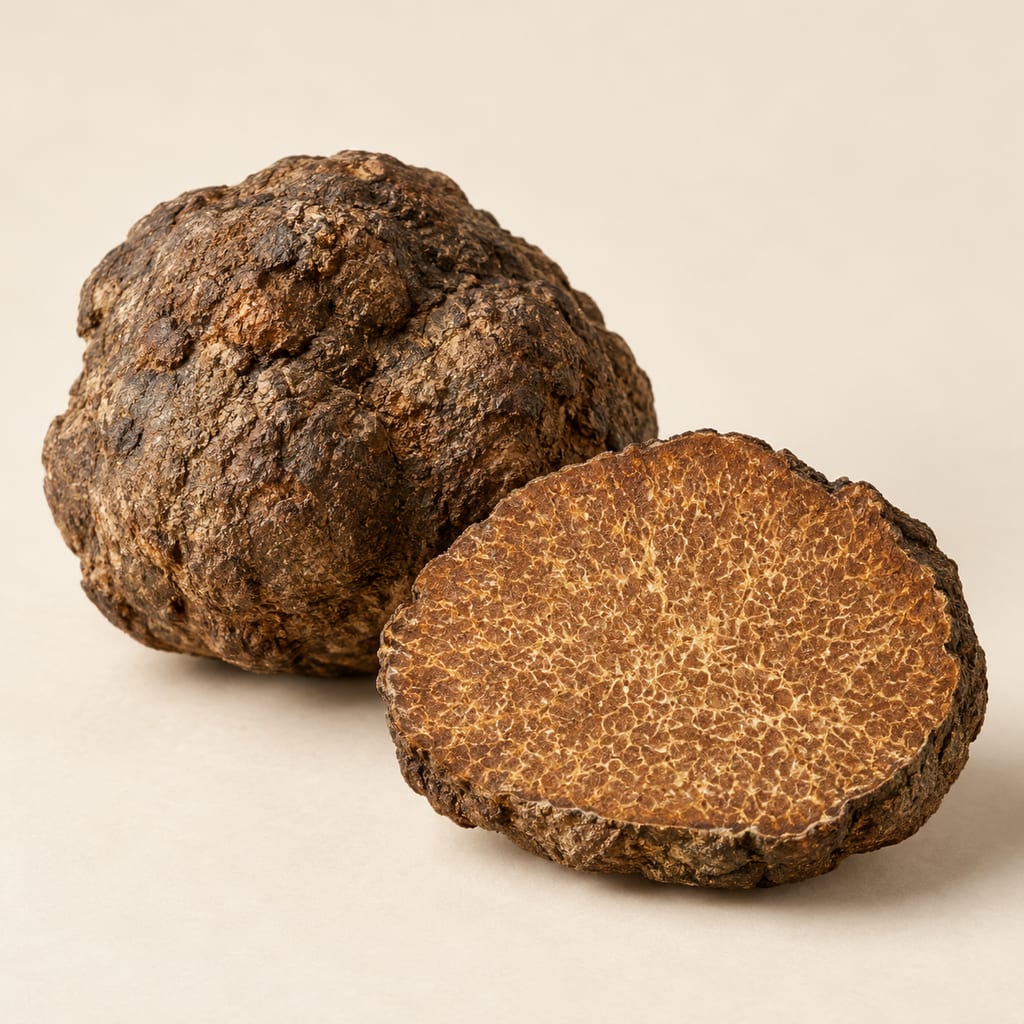
Polyporus indigenus, a polypore of the Brazilian Amazon. Its underground sclerotium, not the fruiting body, is the part people eat, and it is known locally as pão do índio.
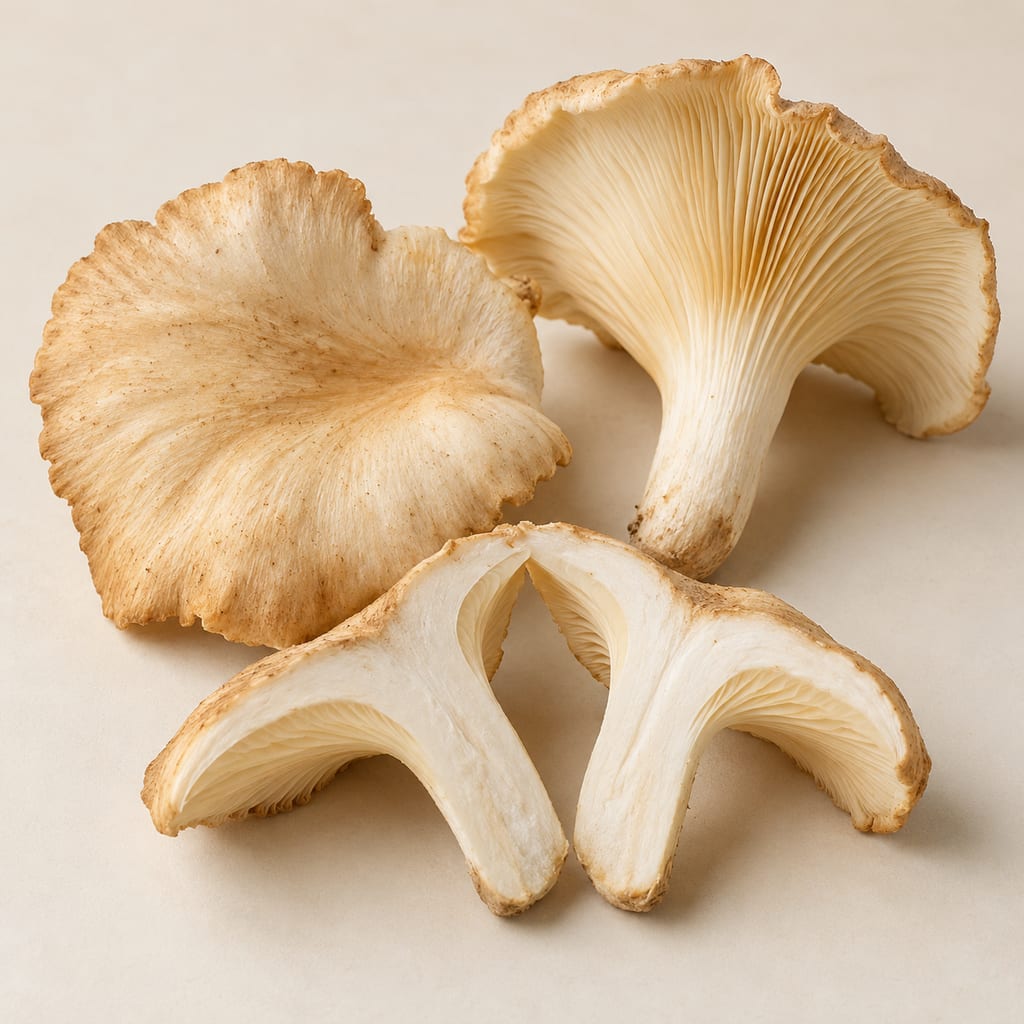
A wood-decay gilled fungus of subtropical and tropical North America, recorded as food in Mexico. It is edible when young but tough, and it can be grown as a saprotroph.
Pleurotus flabellatus is a wild forest oyster-type mushroom that grows on dead wood in the Congo Basin, recorded as eaten locally in Tshopo. Its name is entangled with P. djamor, so the record needs taxonomic care.
Cortinarius caperatus, formerly Rozites caperatus, is a wild food appreciated in northern Europe and parts of North America. Identification and contaminant risks require care.
Agaricus meijeri is a Brazilian wild edible mushroom recorded in Paraná and Rio Grande do Sul. Its season and preparation are undocumented.
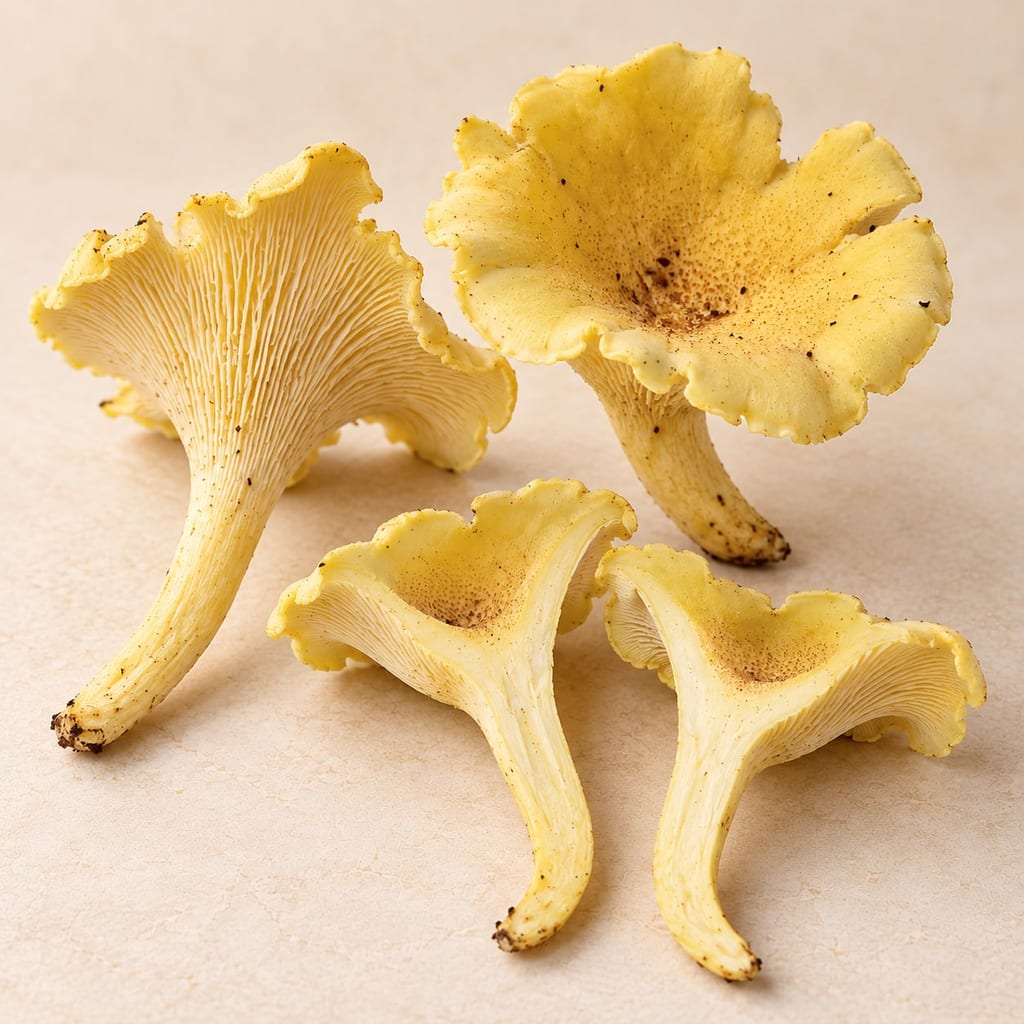
Cantharellus luteopunctatus is a wild ectomycorrhizal chanterelle of central African rainforest, recorded as eaten locally in Tshopo province, DR Congo. Its preparation is not documented.
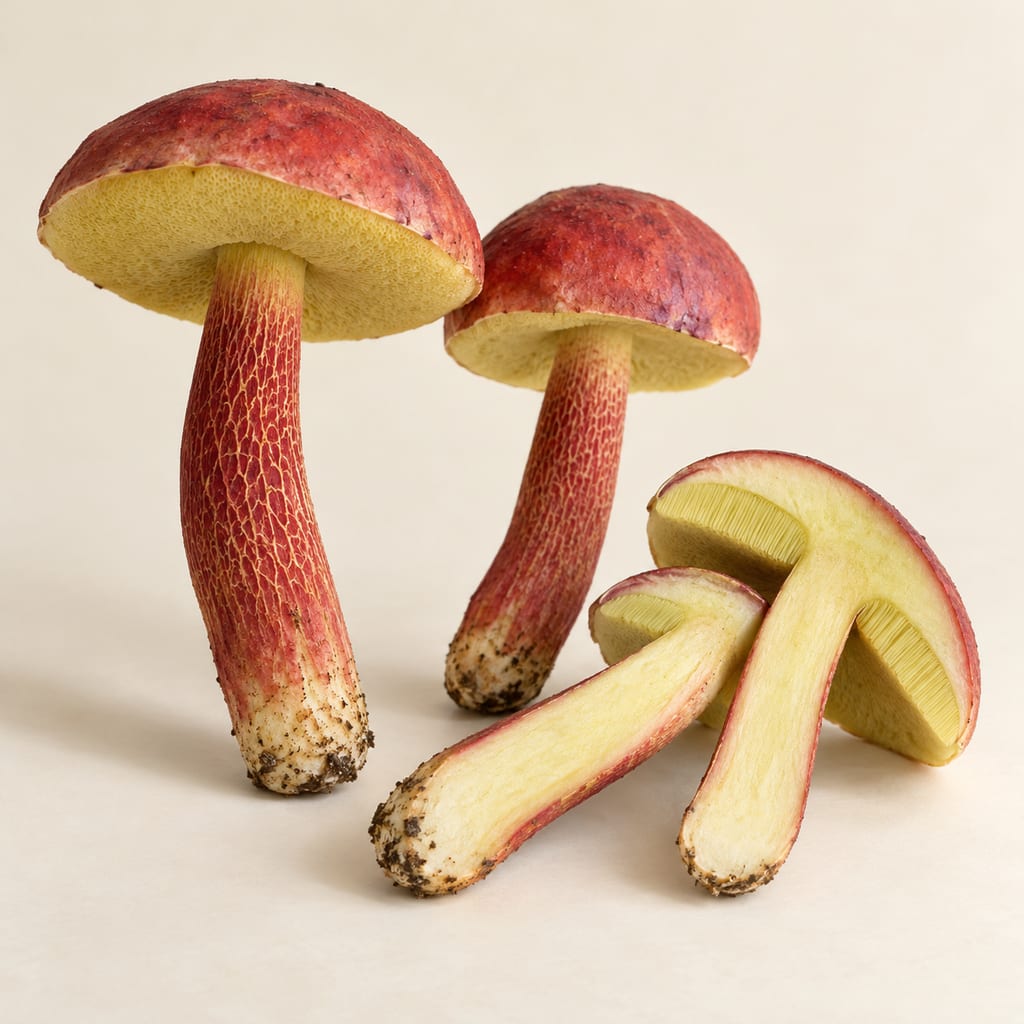
Heimioporus japonicus is an ectomycorrhizal bolete recorded from China and East Asia. Its edibility is contested: one source records sale, another a toxic status and gastroenteritis.
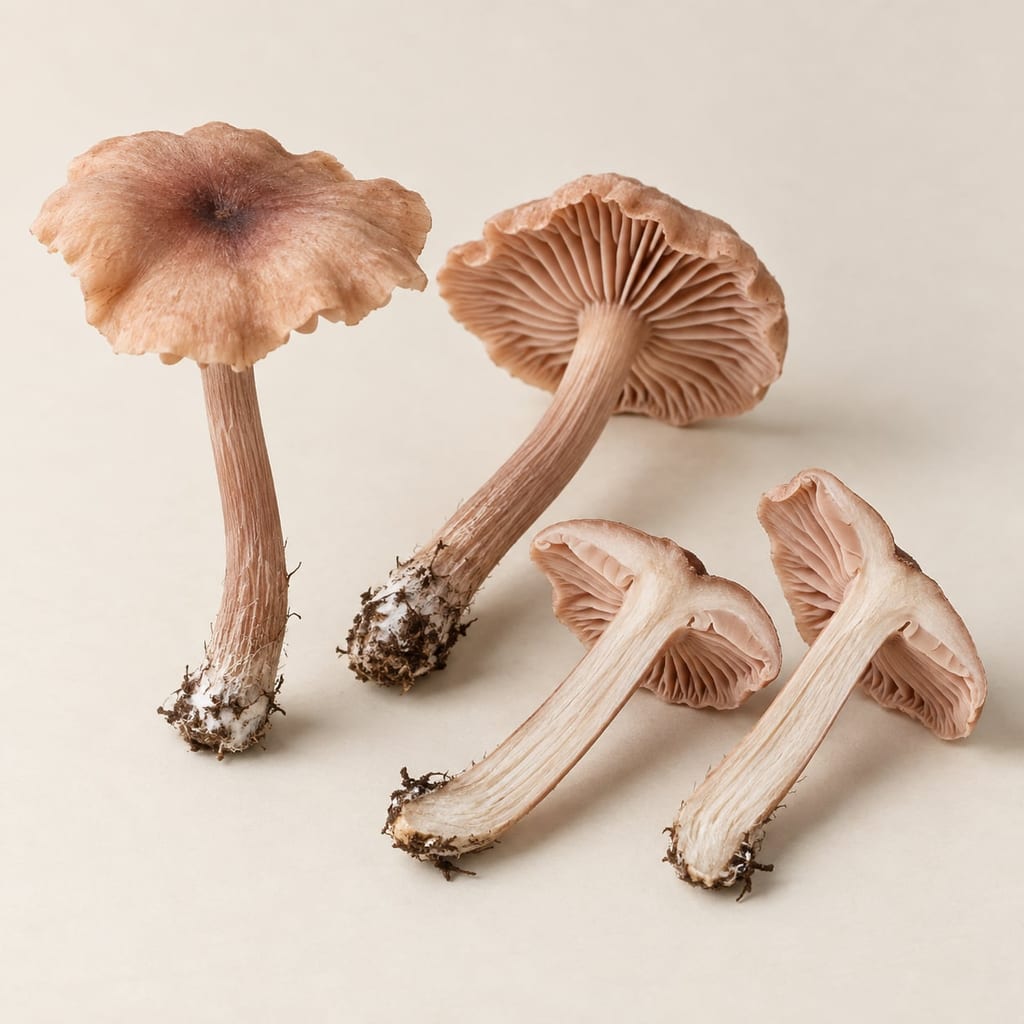
Laccaria vinaceoavellanea is a small ectomycorrhizal mushroom sold as food in Yunnan and Sichuan, and it accumulates arsenic in its caps, which the sources treat as a main safety caveat.
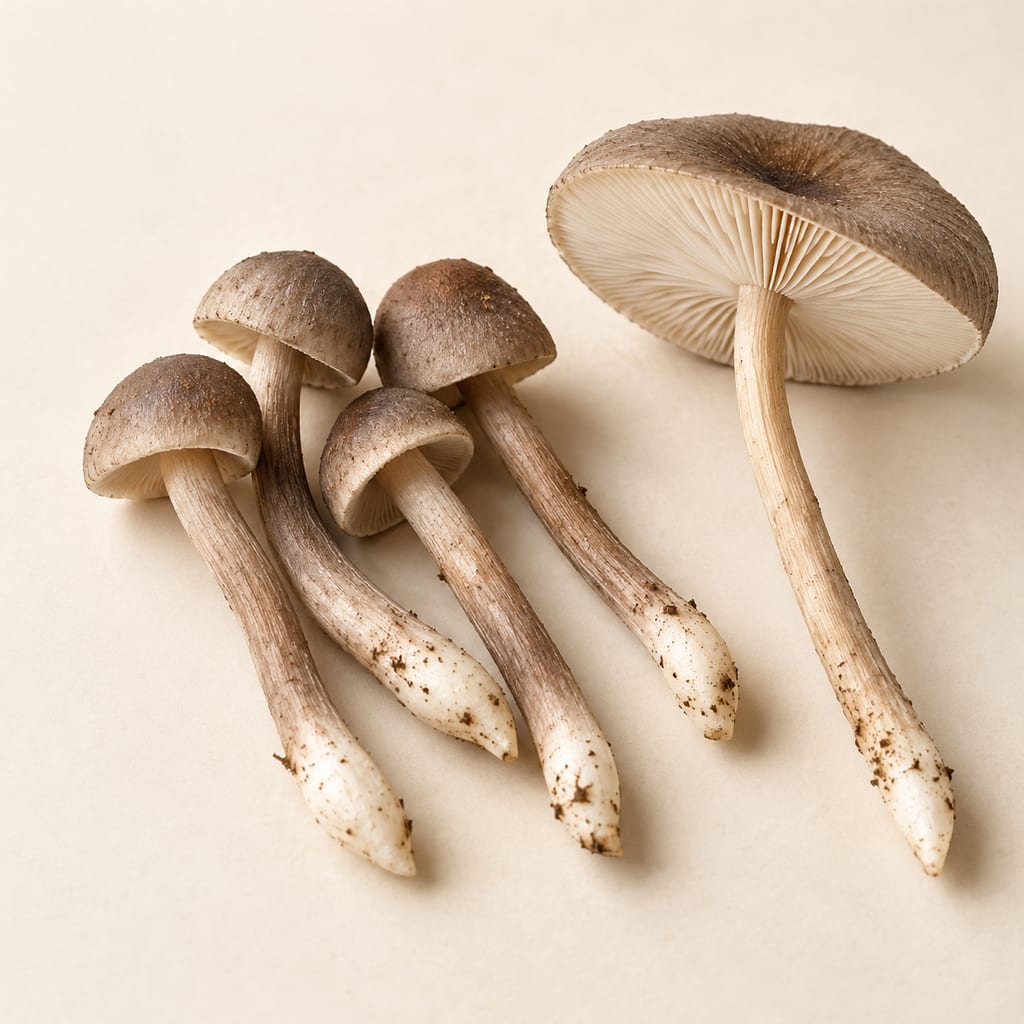
Hymenopellis raphanipes, the black termite mushroom or heipijizong, is a saprotrophic rooting fungus widely cultivated in China despite its market name, which refers to termites.
Gomphus orientalis is a vase-shaped wild mushroom sold in markets in Yunnan Province, China, with its species identity and local safety still unresolved in the sources.
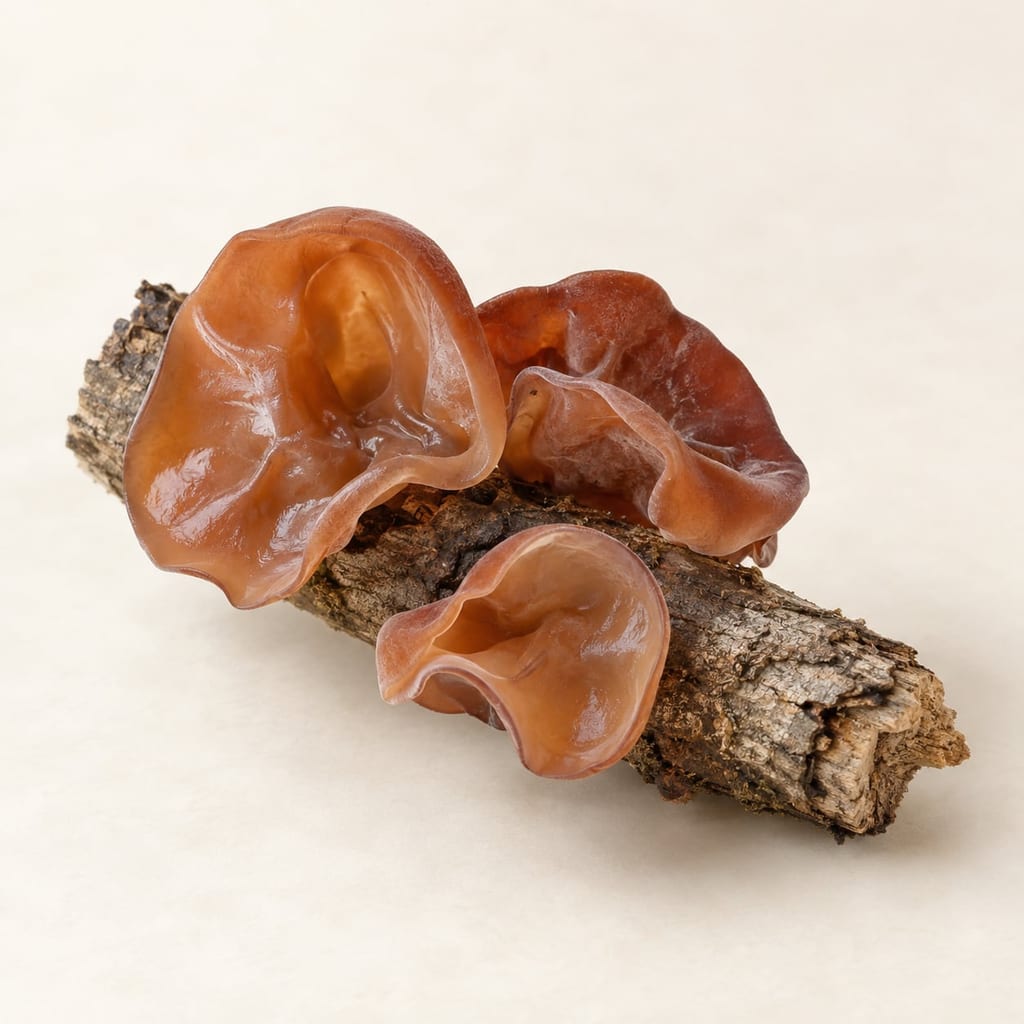
Auricularia auricula-judae is the European jelly ear, a soft gelatinous wood fungus eaten cooked and dried; it is distinct from the cultivated Asian black wood ear.
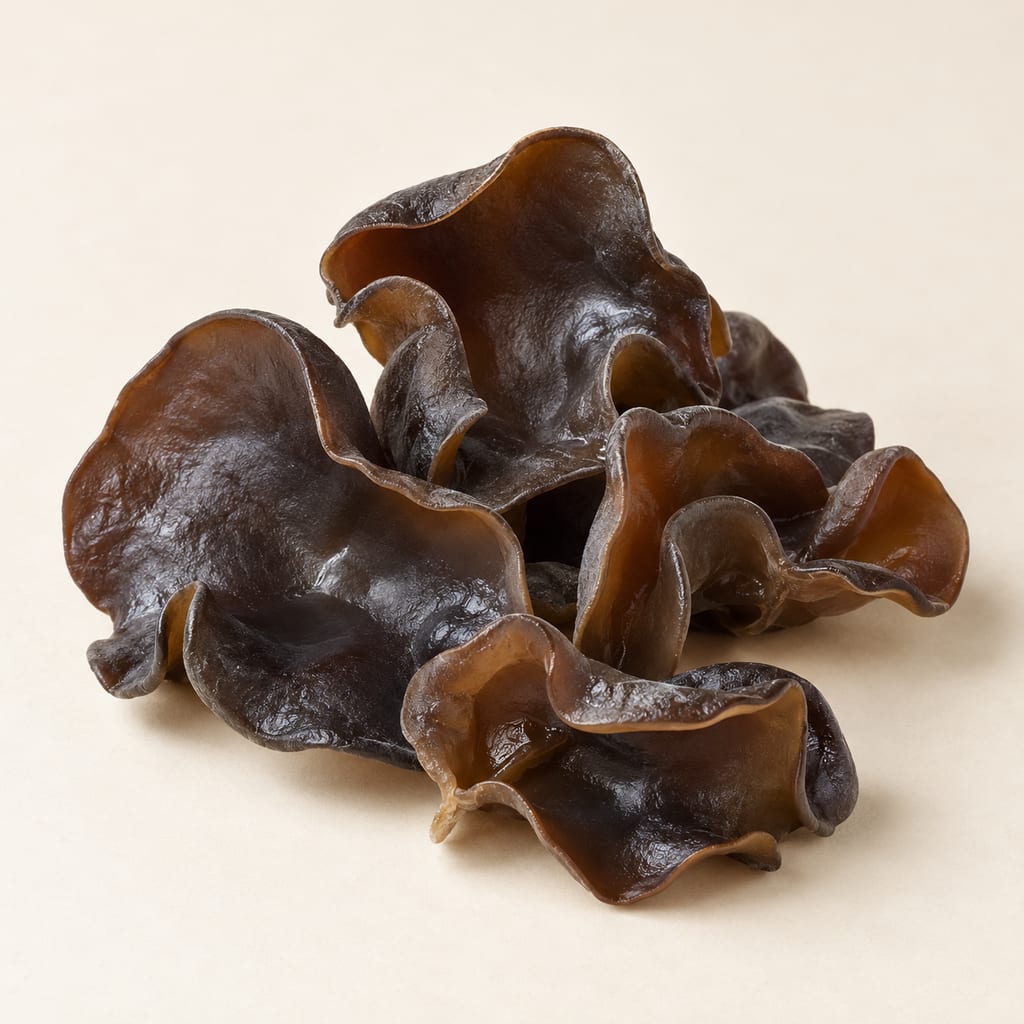
Auricularia heimuer is the black wood ear, a gelatinous wood fungus cultivated on a large scale in China and Southeast Asia and long sold under the European name A. auricula-judae.
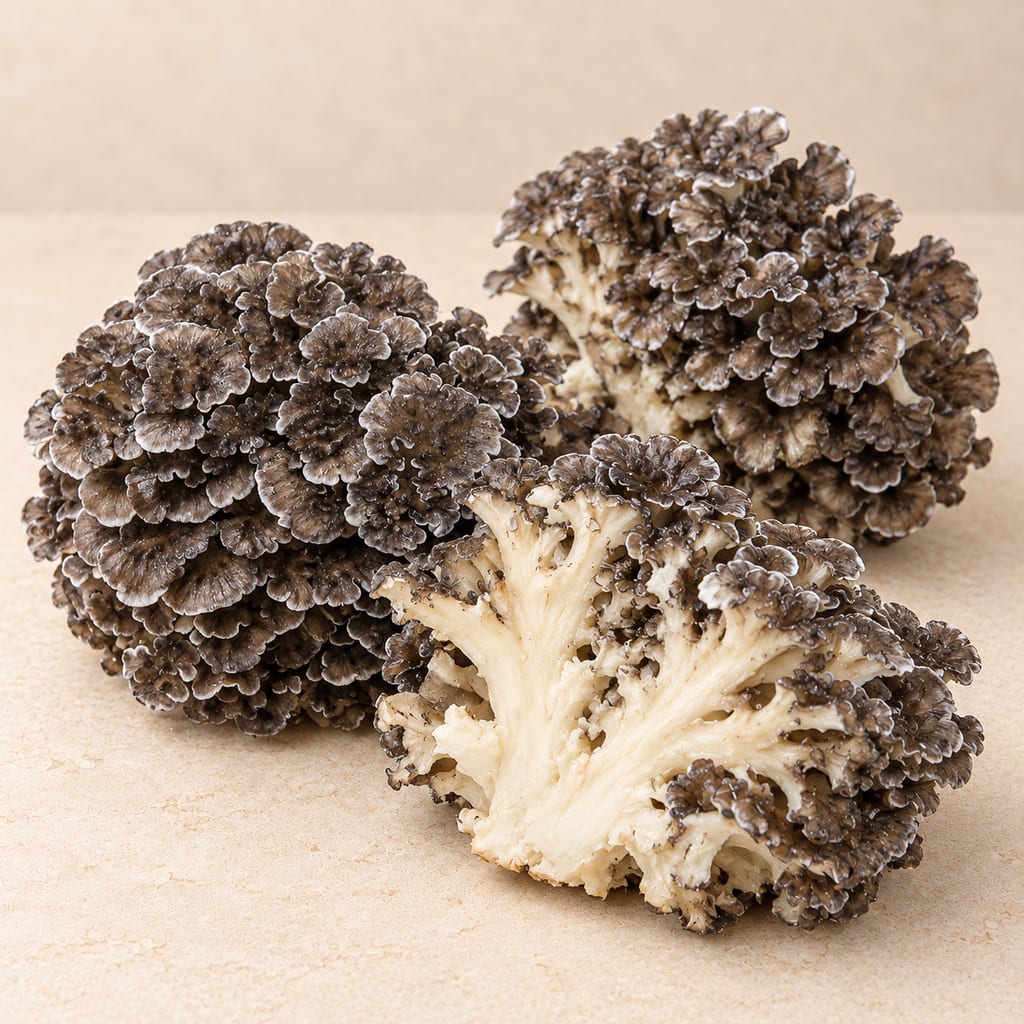
Grifola sordulenta is a wild polypore of Nothofagus forests in Patagonia, recorded as a regional food fungus with an almond-like flavour and little modern cultivation.
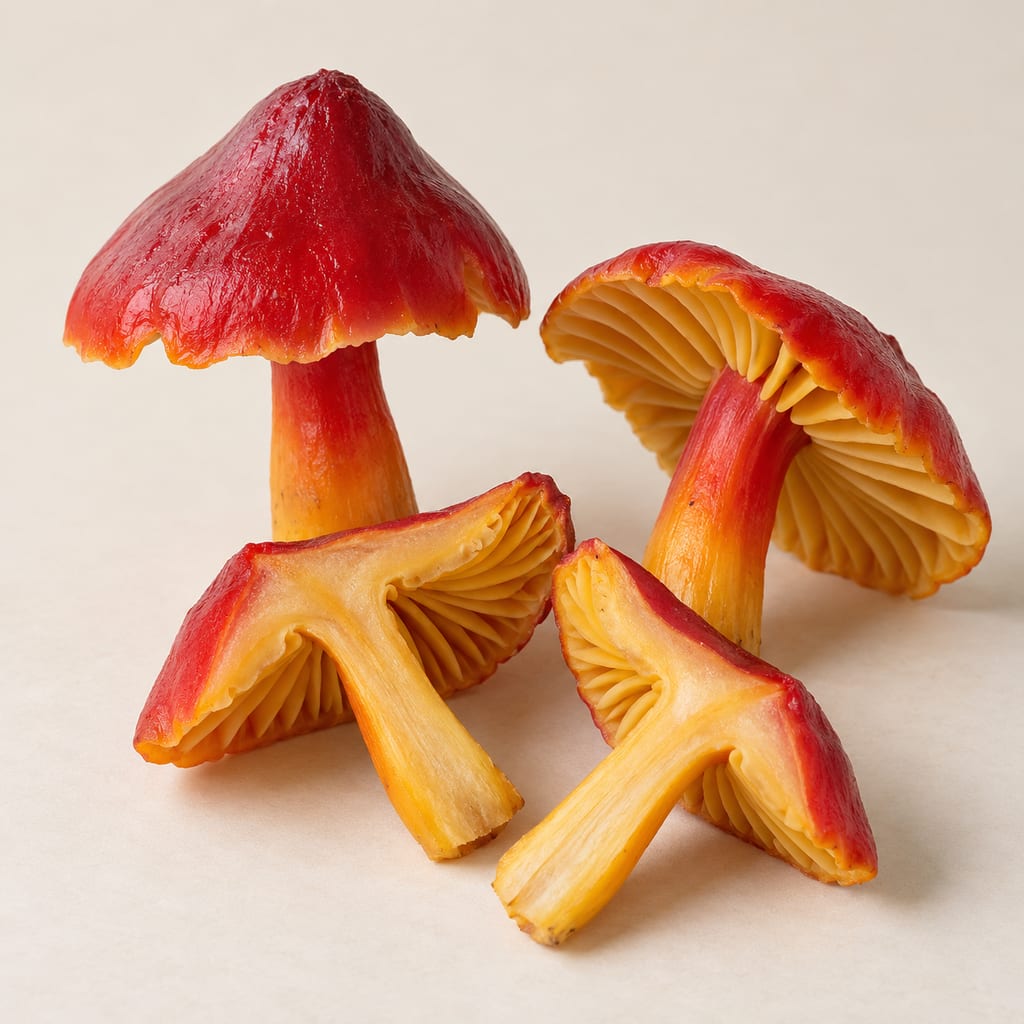
The crimson waxcap, Hygrocybe punicea, is a red grassland mushroom of old, unfertilised pasture. It is rare and protected in several European countries, and sources disagree on whether it is edible.
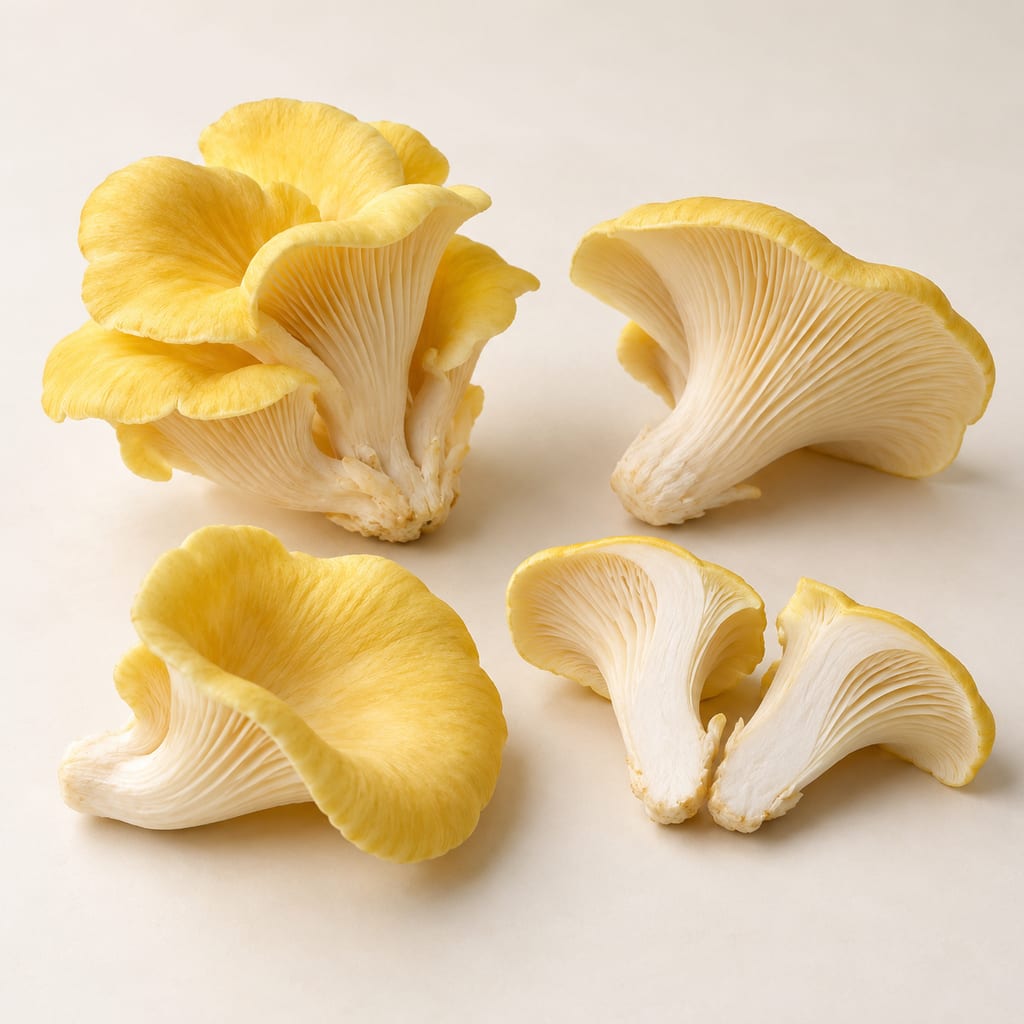
The golden oyster, Pleurotus citrinopileatus, is a yellow oyster mushroom first described in East Asia and now widely cultivated on sawdust and corn cob substrates.
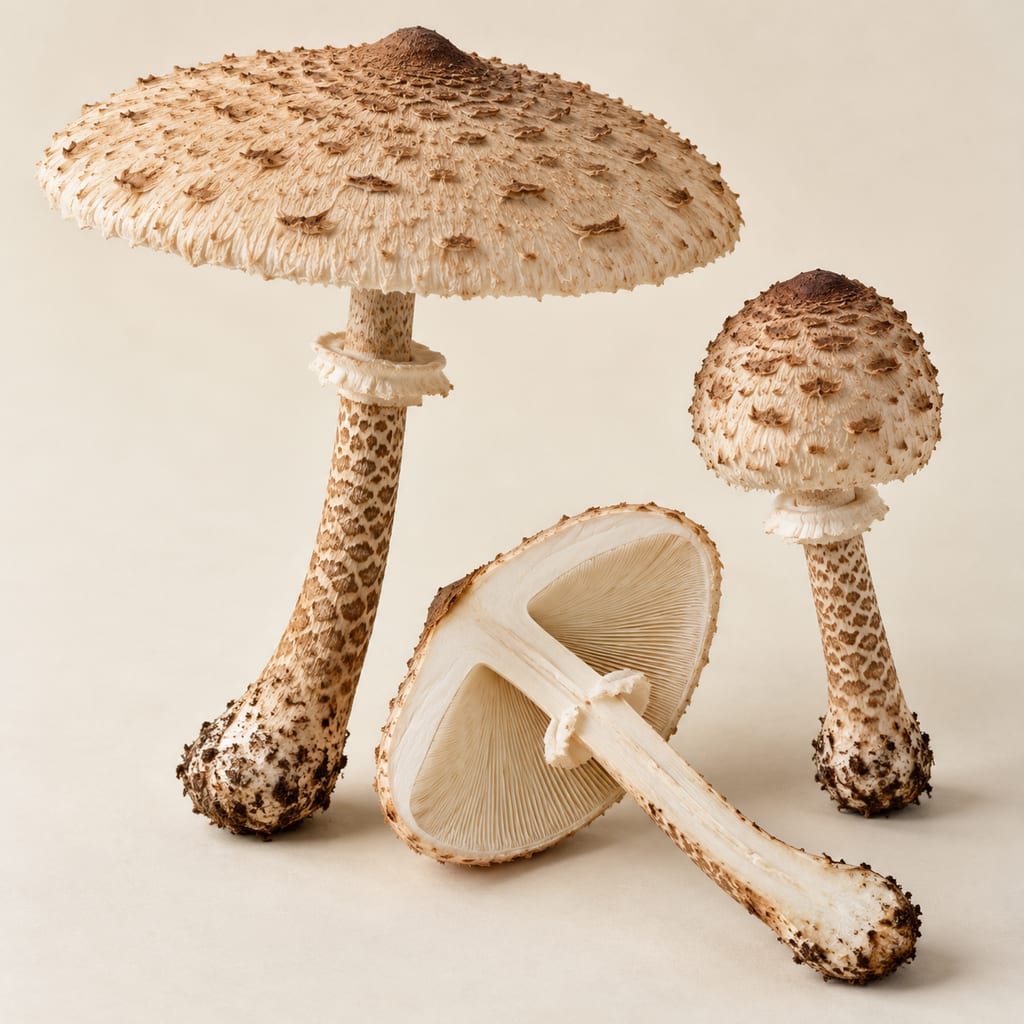
The parasol, Macrolepiota procera, is a large wild mushroom of European grassland and woodland edges. Foraging sources treat it as a well-regarded edible; its main risk is confusion with poisonous Chlorophyllum species.
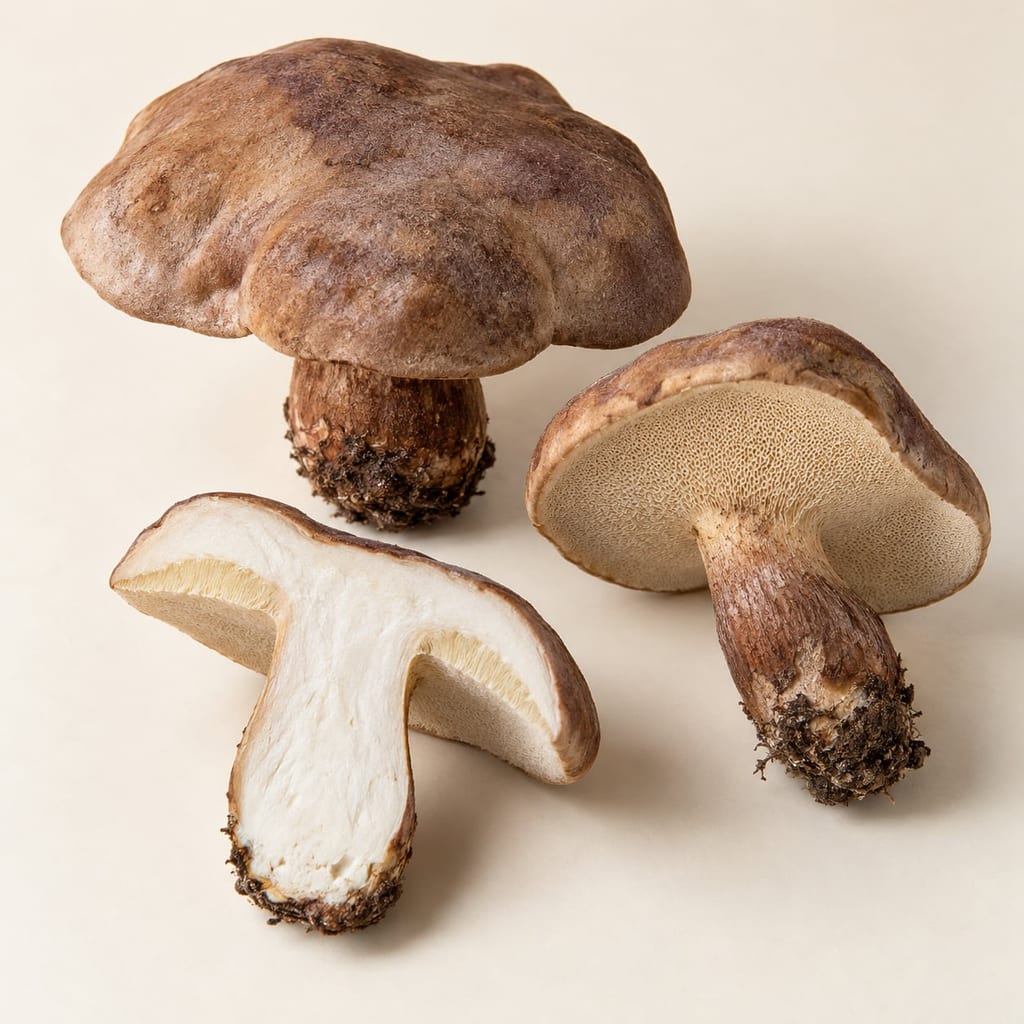
Wolfe's bolete, Fistulinella wolfeana, is a wild bolete of oak and oak-pine forest in eastern and southeastern Mexico, where Otomi communities in Amealco, Querétaro, gather and sell it as food.
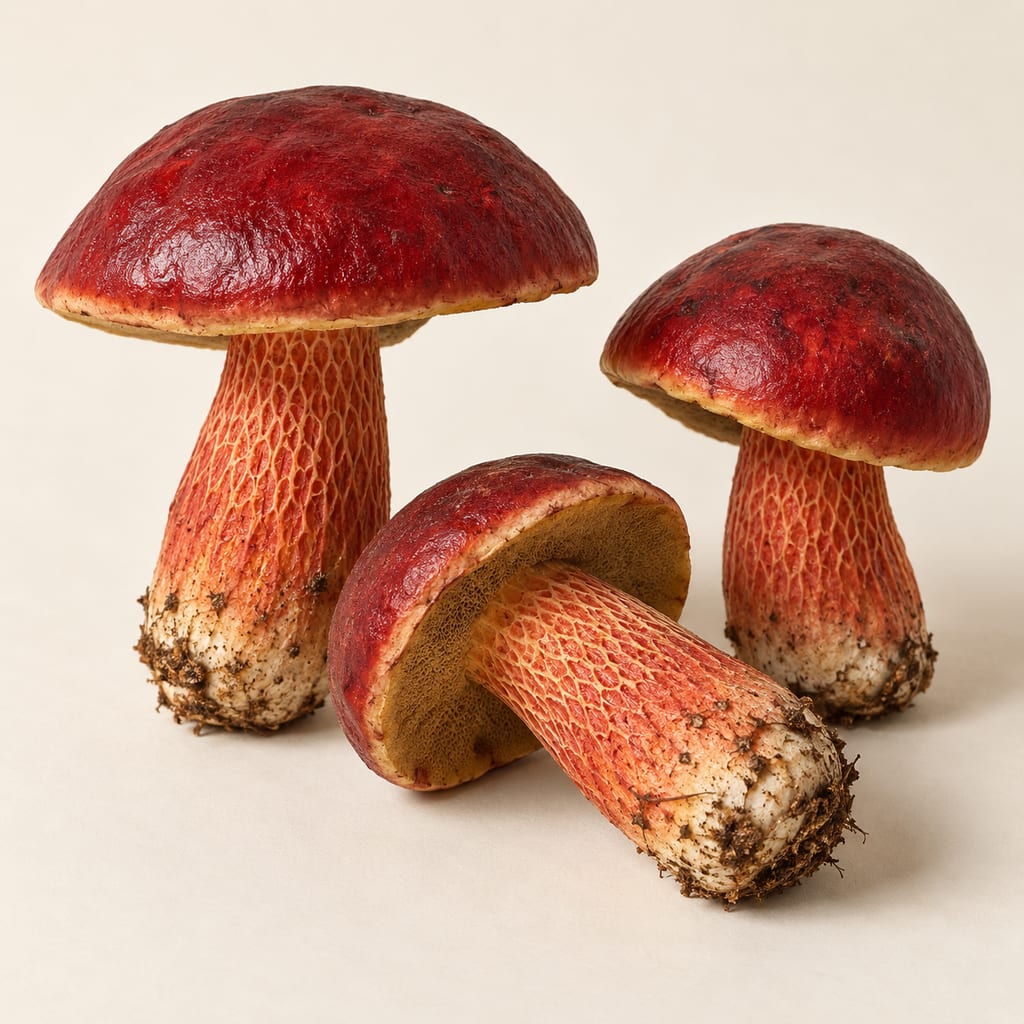
Frost's bolete, Exsudoporus frostii, is a red-pored bolete of oak woodland in eastern North America and Mexico. Its edibility is contested because it can be confused with poisonous red-pored boletes.
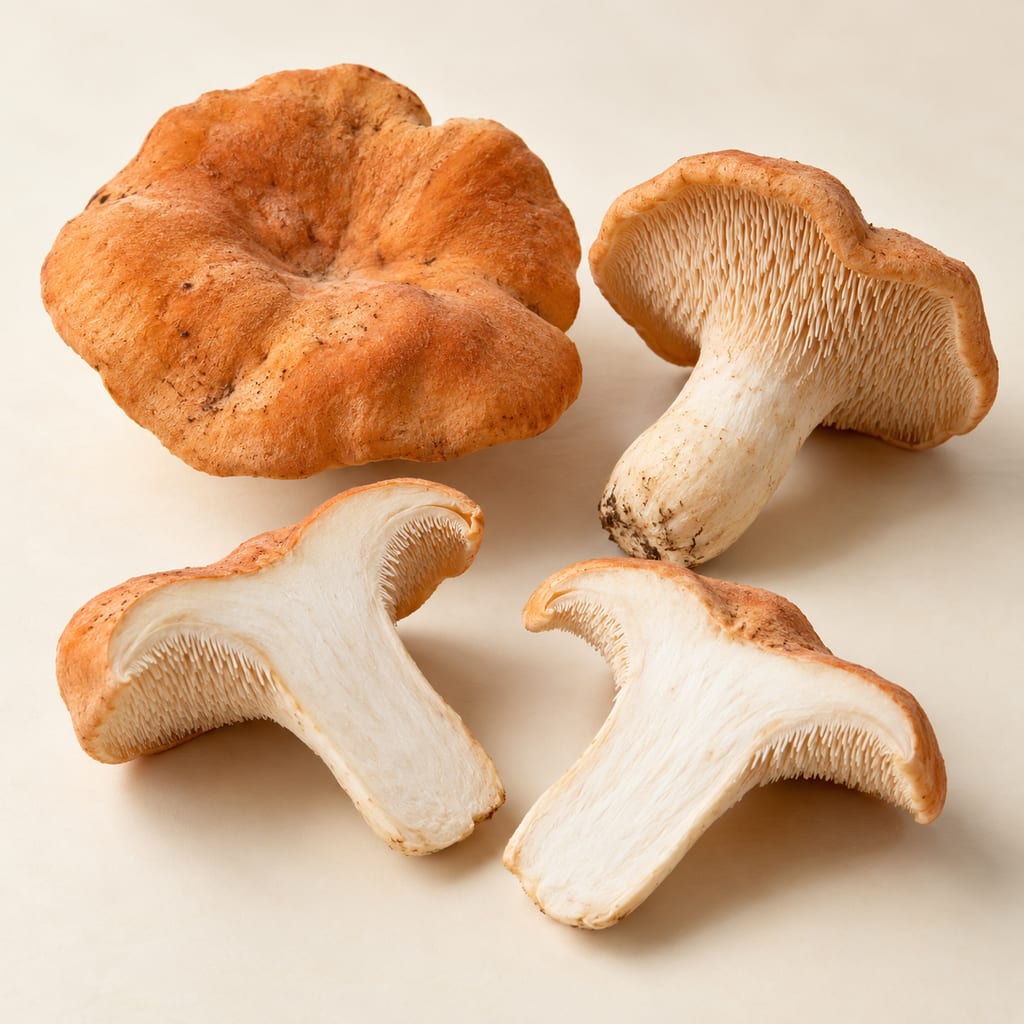
The terracotta hedgehog, Hydnum rufescens, is a wild hedgehog fungus of European woodland with a reddish-brown cap and soft spines beneath. Its identity is hard to separate from related species.
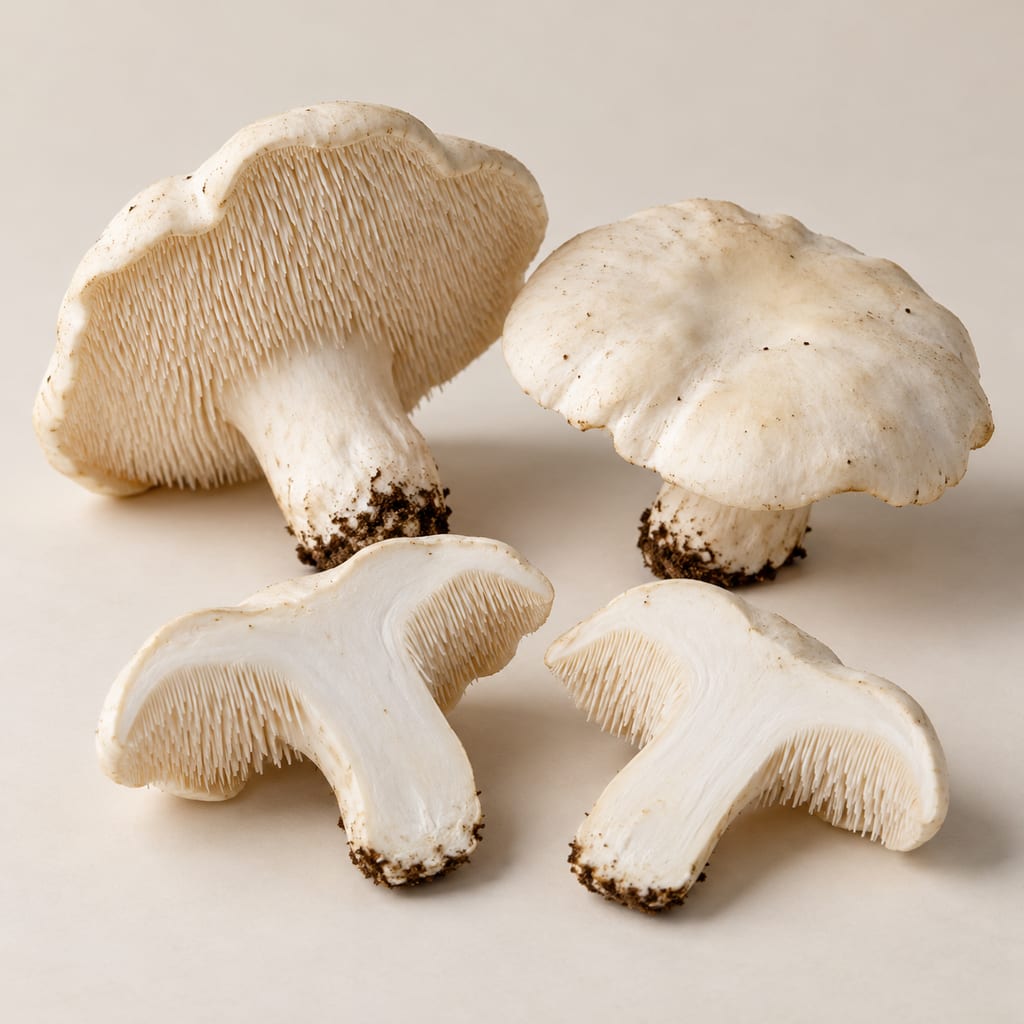
The white hedgehog mushroom, catalogued as Hydnum albidum, is a wild tooth fungus of tree roots and woodland. Its name and identity are unsettled, and its food status depends on which source is read.
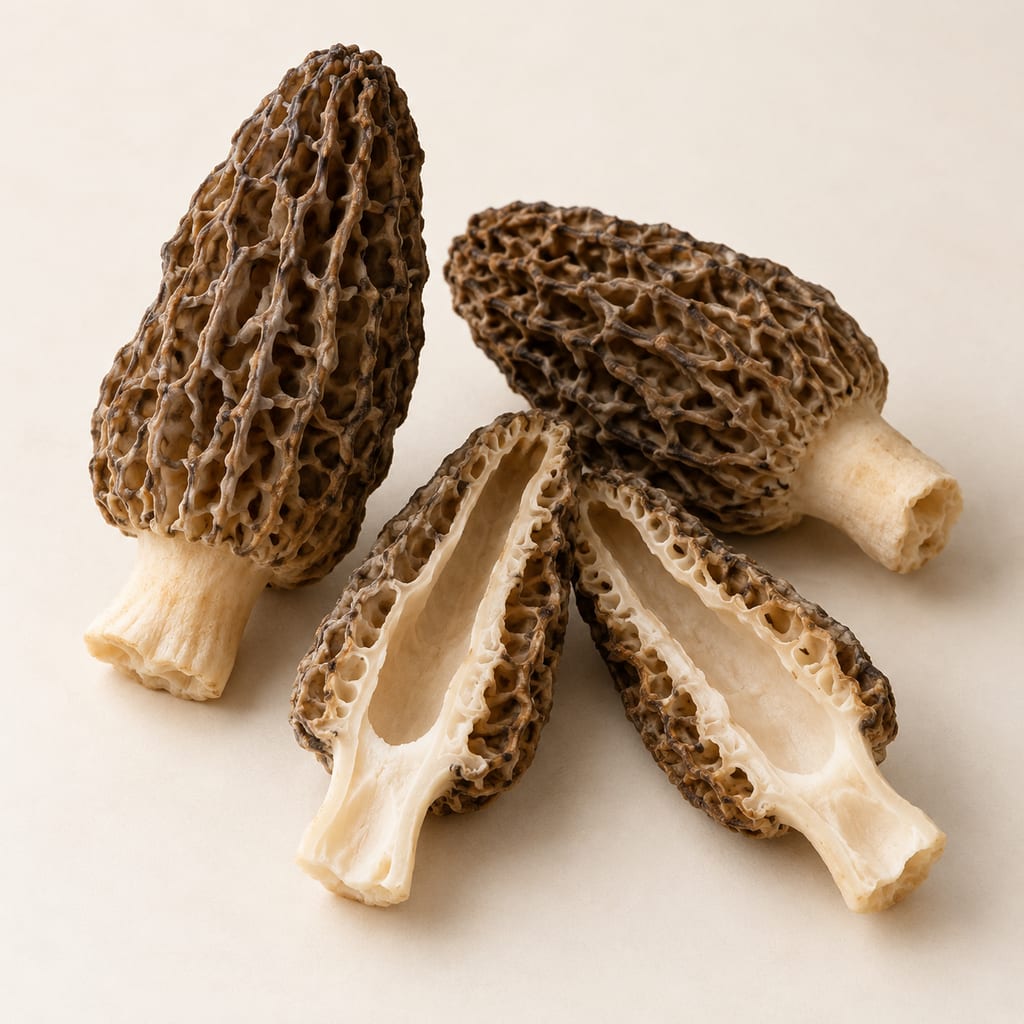
Morchella importuna is a black morel that is cultivated in China on soil beds, one of the few morel species that can be domesticated there. Raw or undercooked morels have caused illness, so cooking is the one safety rule the sources clearly support.
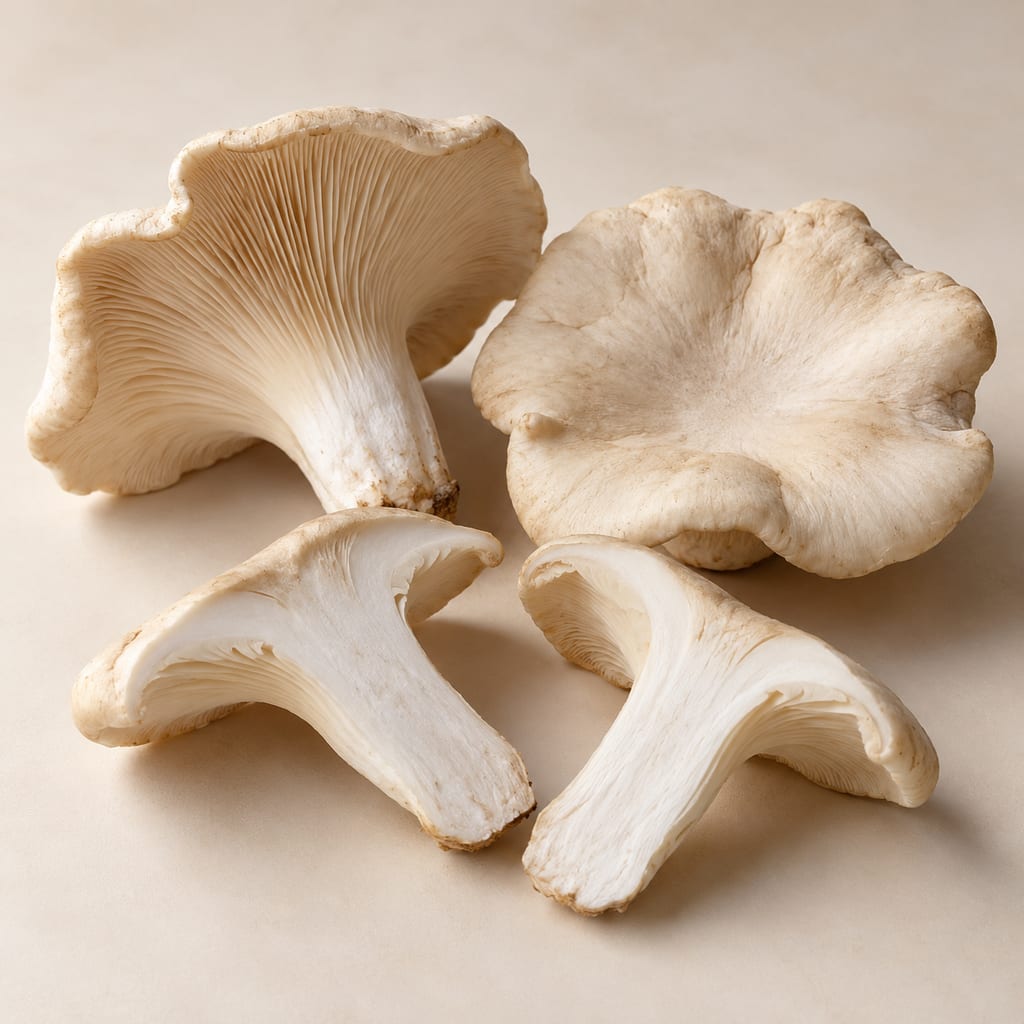
Nebrodi oyster, Pleurotus nebrodensis, is a pale, large oyster mushroom native to the Madonie mountains of Sicily, where it grows on the dead roots of a perennial umbellifer. Wild populations are fragmented and protected, and cultivation is being developed.
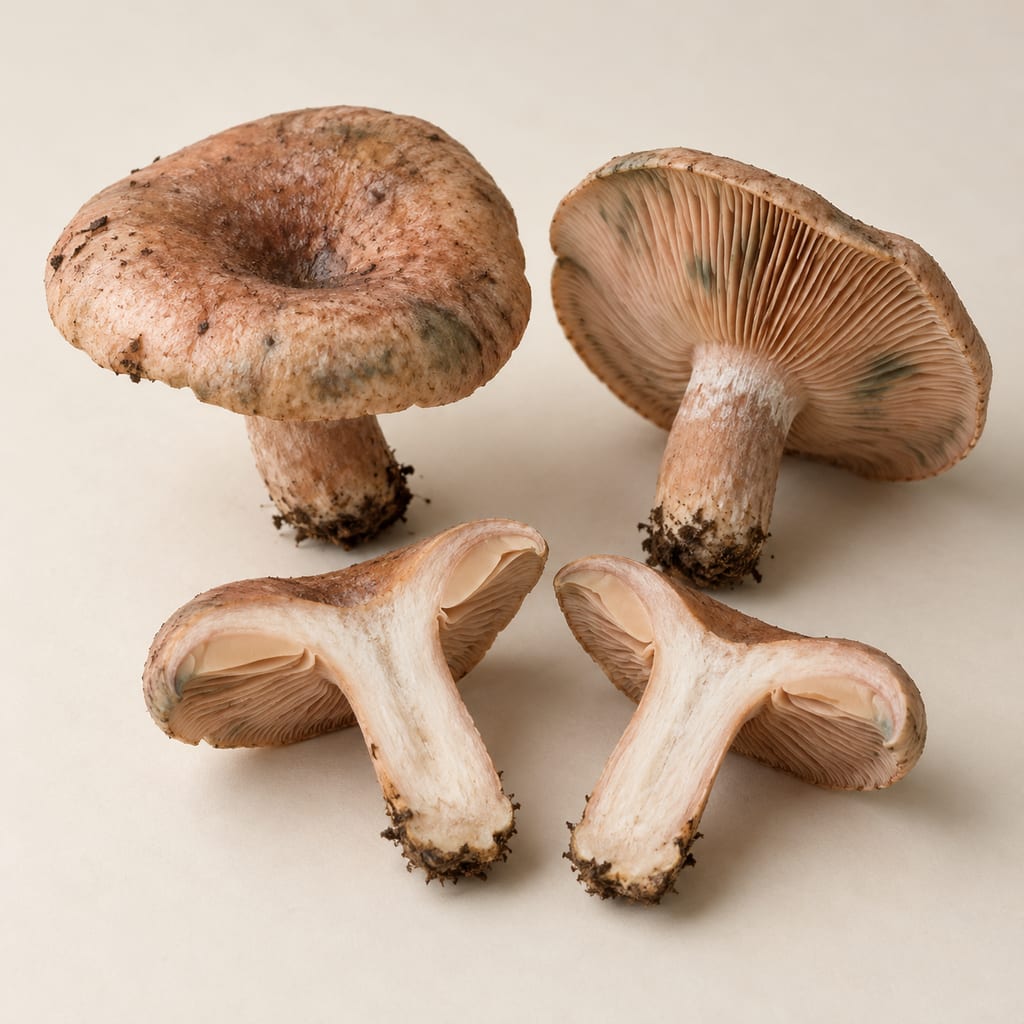
Hatsutake, Lactarius hatsudake, is a milkcap mushroom of forests in Yunnan Province, China, sold in the local markets of Pu'er Prefecture. It is an ectomycorrhizal wild fungus, known in English as the Asian saffron milkcap.