Recipes

1504 records with their sources, across 11 categories.

All condiments382Fermented, enzyme-ripened and mixed seasonings328Fruit preserves10Legume, seed and plant-protein ferments10Garum and fish sauces8Adjacent and excluded7Koji, mold starters and mold-ripened ferments4Acid and oil pickles3Fermented fruit and fruit-derived foods3Vegetable lactic3Dairy ferments2Smoked salted and dried foods2Cheese1Not yet classified1
Filtered to

Recipes

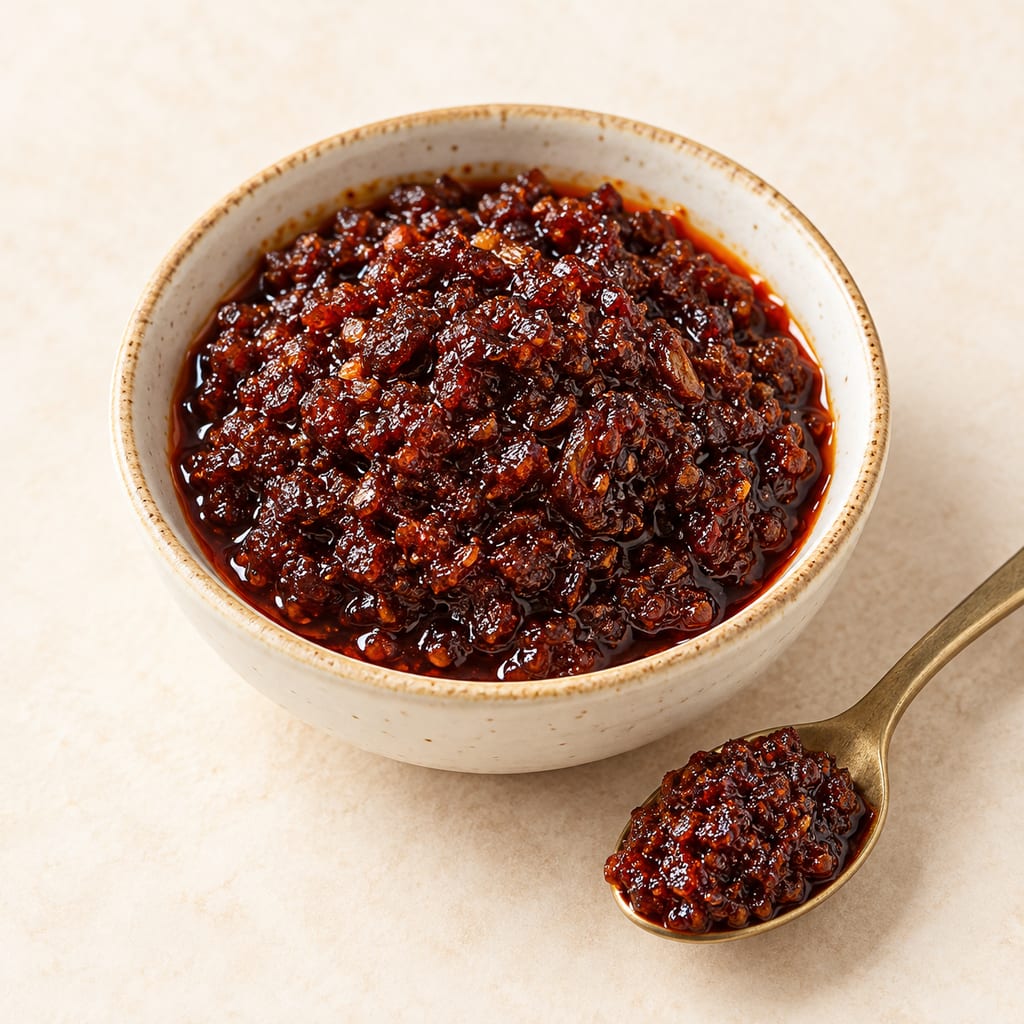
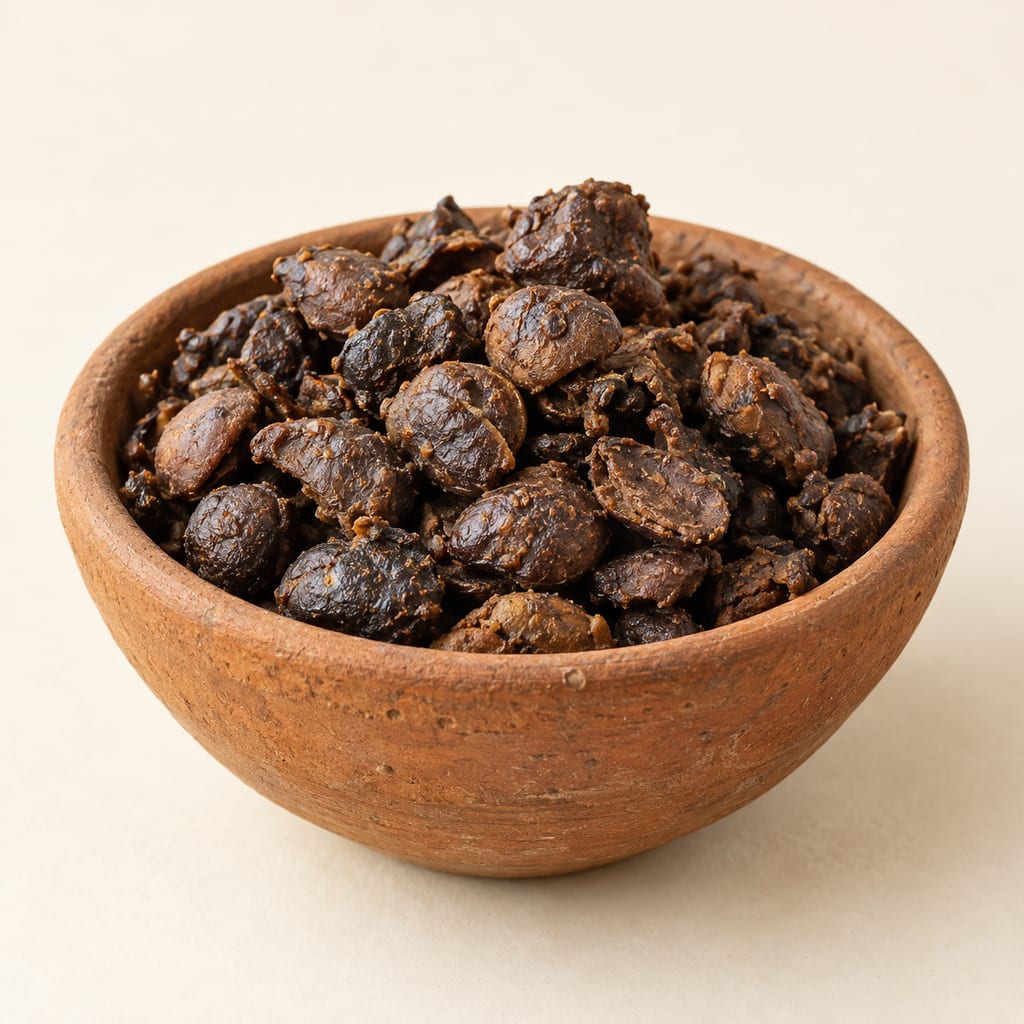
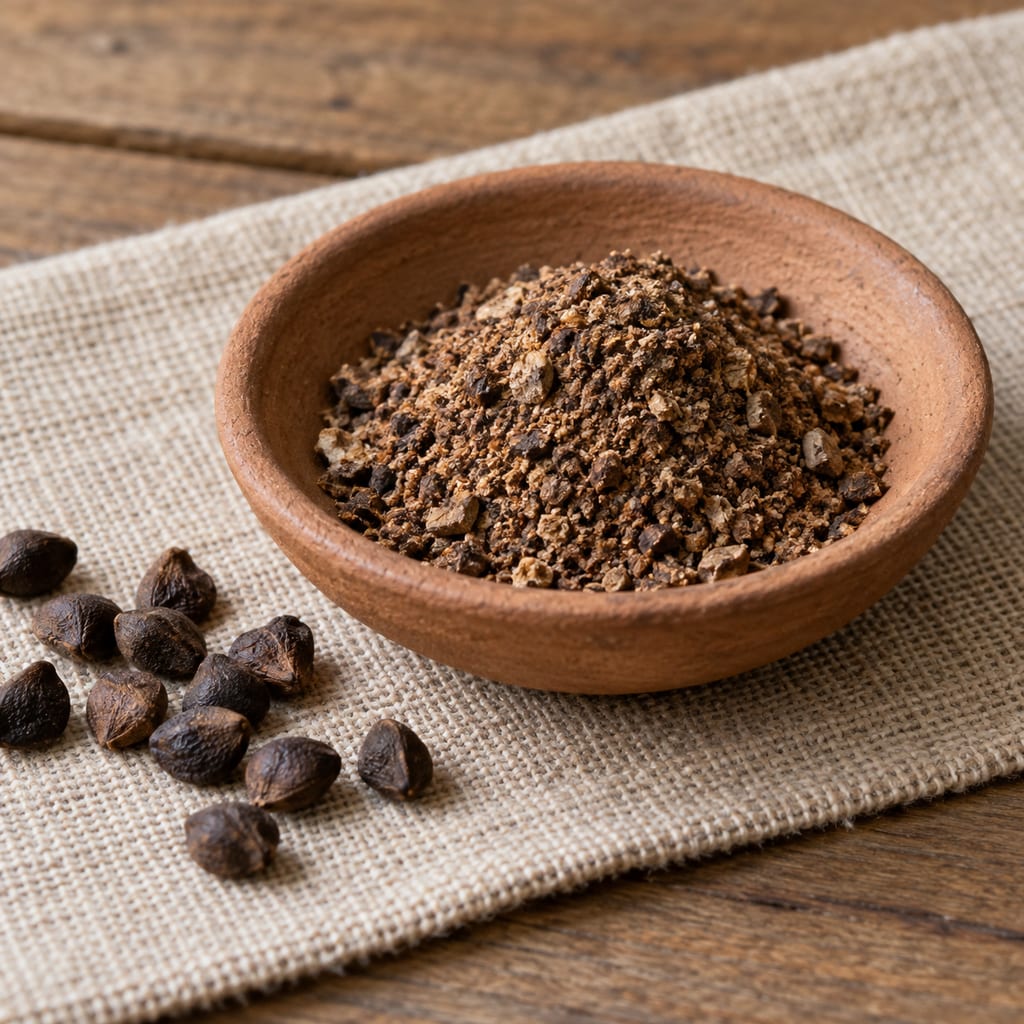
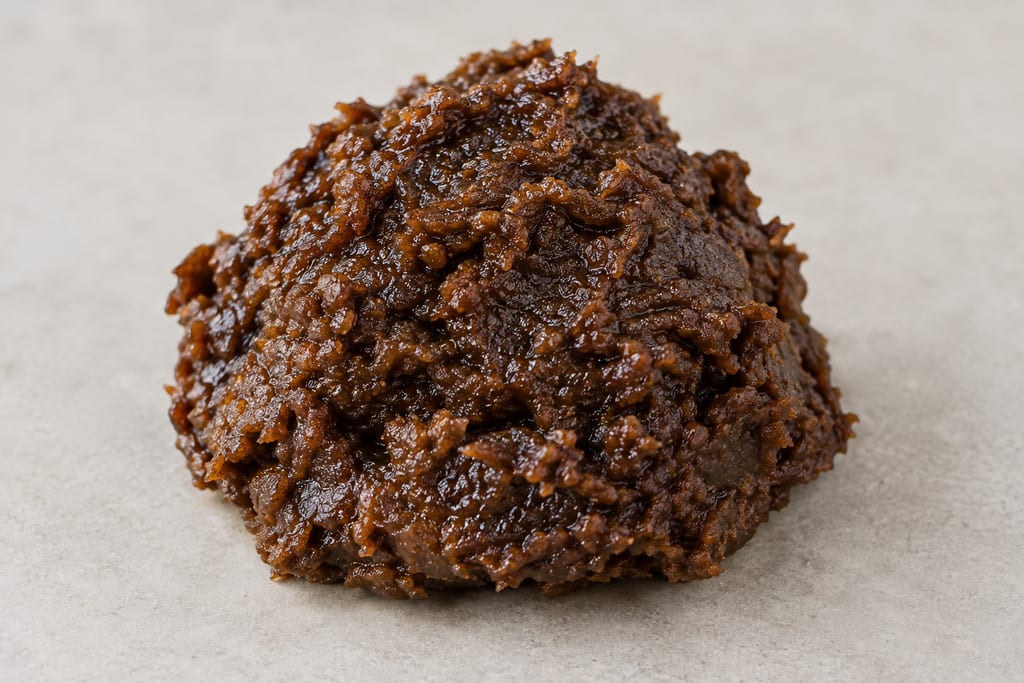
AI-generated visual interpretation of dark-brown, sticky Maari based on published descriptions; not a documentary photograph.

Maari (Burkinabè fermented baobab seeds)

Maari is a Burkinabè baobab-seed condiment documented in producer studies. This is a non-instructional account, not a home recipe: sources vary, omit key process details and establish no validated safety control.
Burkina Faso · Traditional method
· Condiments
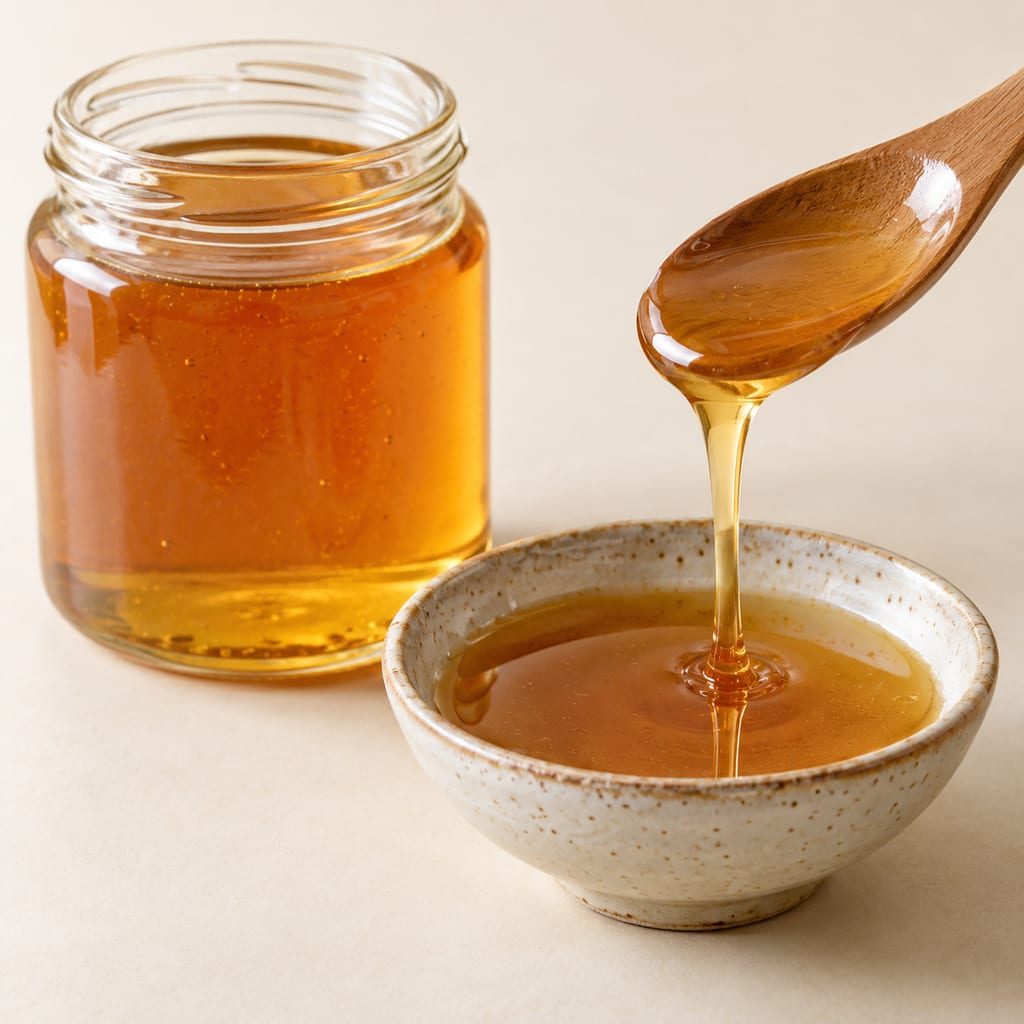
Photograph of Ssal-jocheong (rice syrup).

Ssal-jocheong (rice syrup)

A Korean rice syrup: cooked rice is converted by barley malt in a long warm hold, strained, and the sweet liquid is boiled down until it pours like maple syrup.

Korea · Modern method
· Condiments
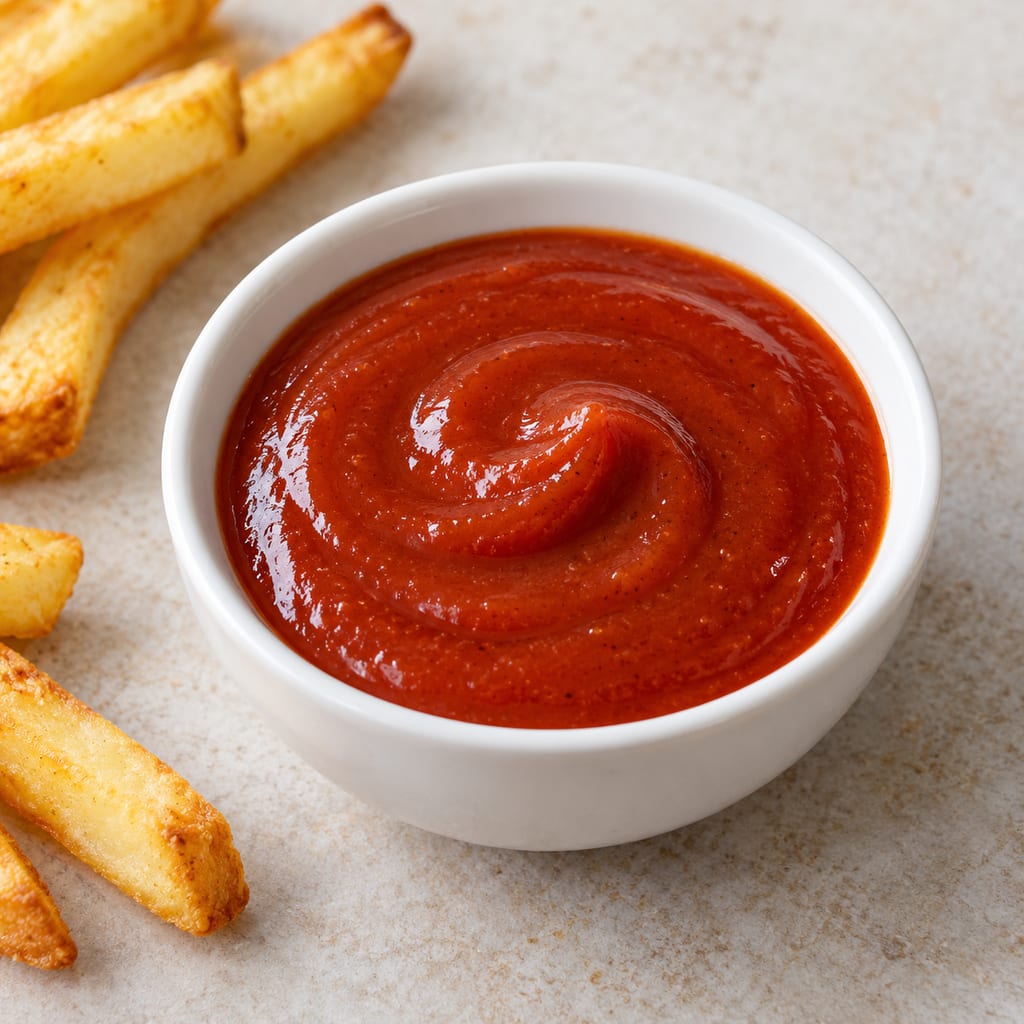
Illustrative smooth red kimchi ketchup, whisk-mixed and served in a small bowl with fries.

Kimchi ketchup

A modern tomato condiment sharpened with the spicy, savoury tang associated with kimchi; this measured version whisk-mixes prepared ketchup and commercial kimchi seasoning.

Dublin · Modern adaptation
· Condiments
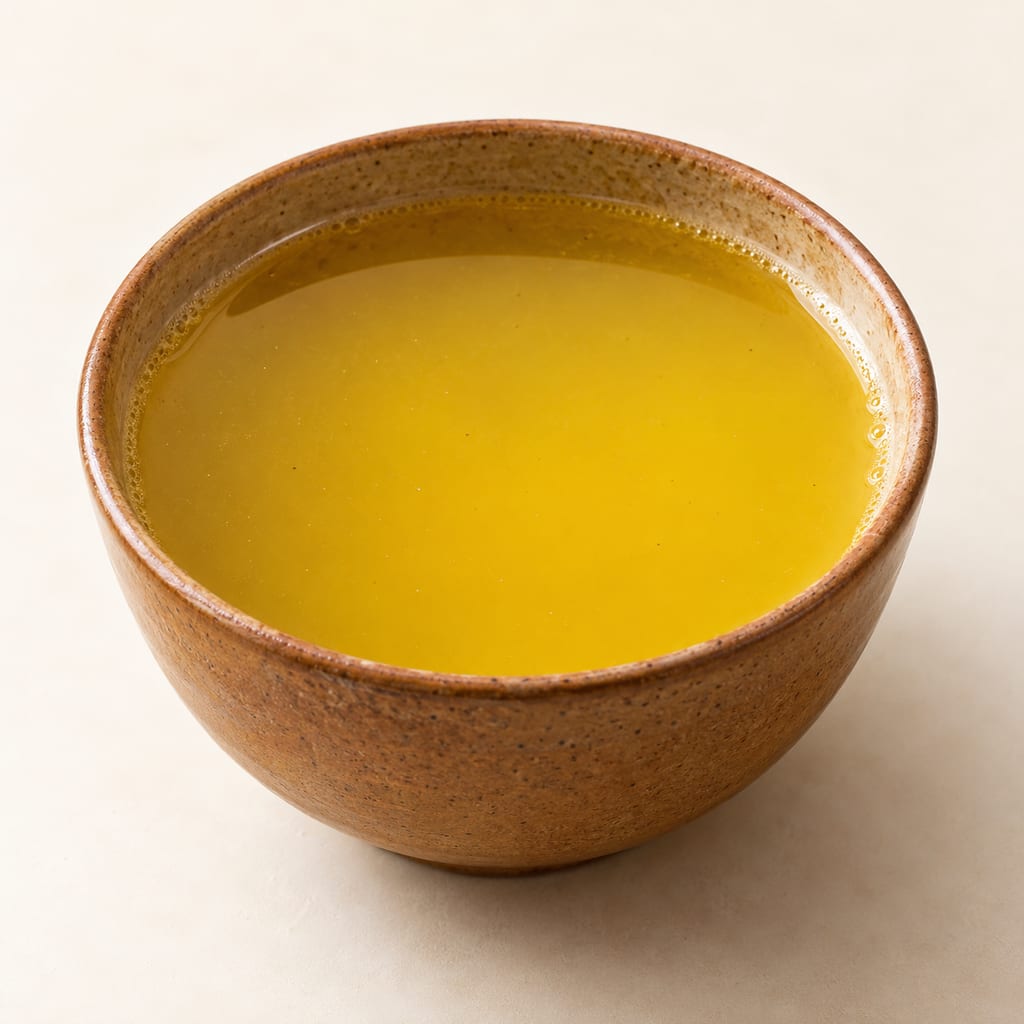
Photograph of Tucupi.
High risk

Tucupi

Tucupi is a yellow, sour liquid from the Brazilian Amazon, made from the juice of bitter manioc that is settled, fermented and cooked. It is the base of duck in tucupi and tacacá.

Pará
· Condiments
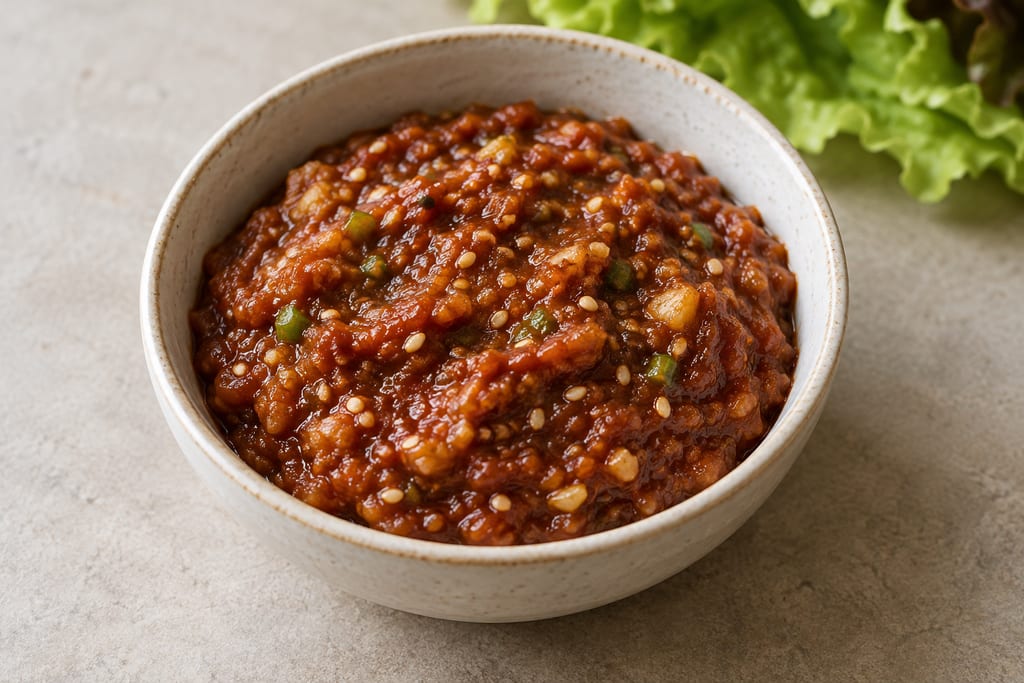
A small ceramic bowl of thick, reddish-brown ssamjang-style sauce with sesame seeds and fine green onion flecks.

Ssamjang-style wrapping sauce

Doenjang and gochujang stirred together with sesame oil and seeds, a little honey, water, raw garlic and spring onion: a thick, savoury sauce for lettuce wraps with rice.

Korea
· Condiments
Photograph of Shito.
Elevated risk

Shito

Shito is a hot Ghanaian pepper condiment with fish-rich, oil-cooked and fresh pepper forms; this measured version follows a recipe collected in Ghana’s Northern Region.

Ghana · Traditional method
· Condiments
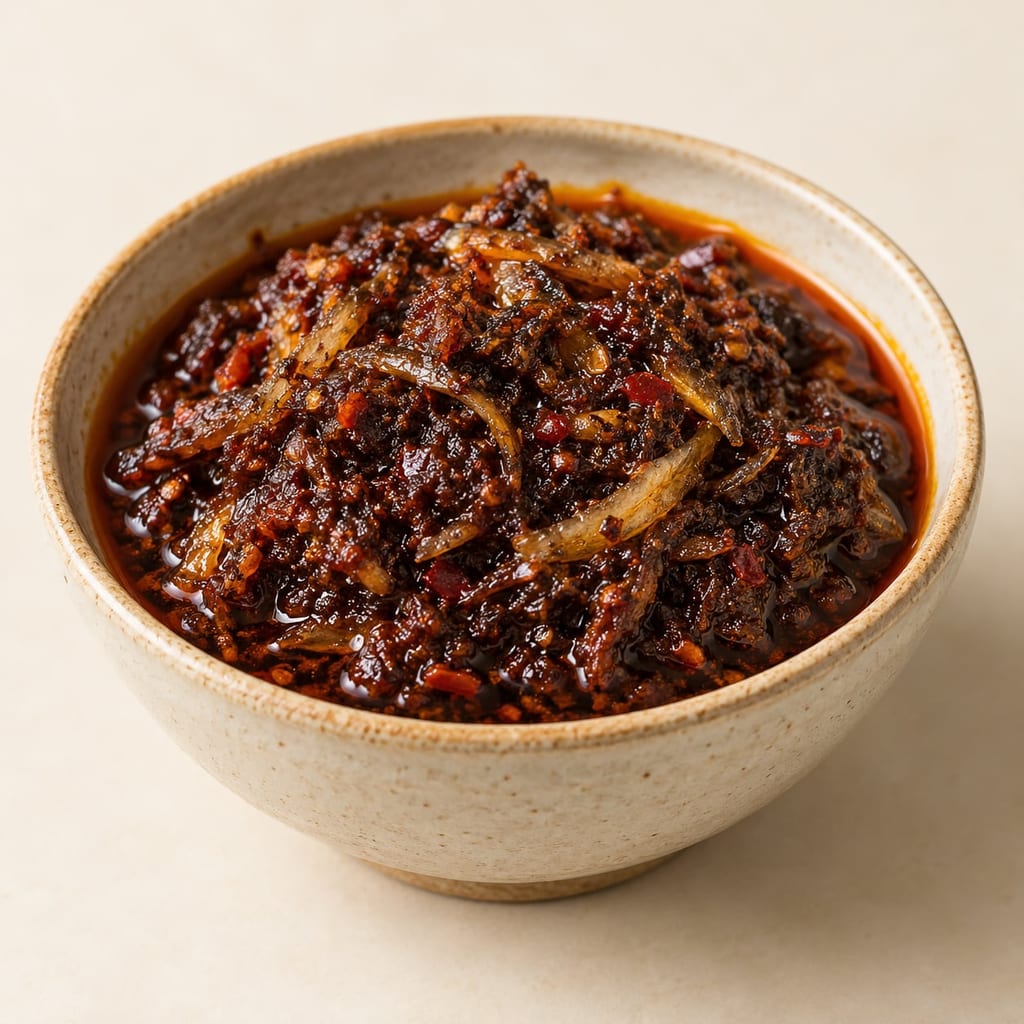
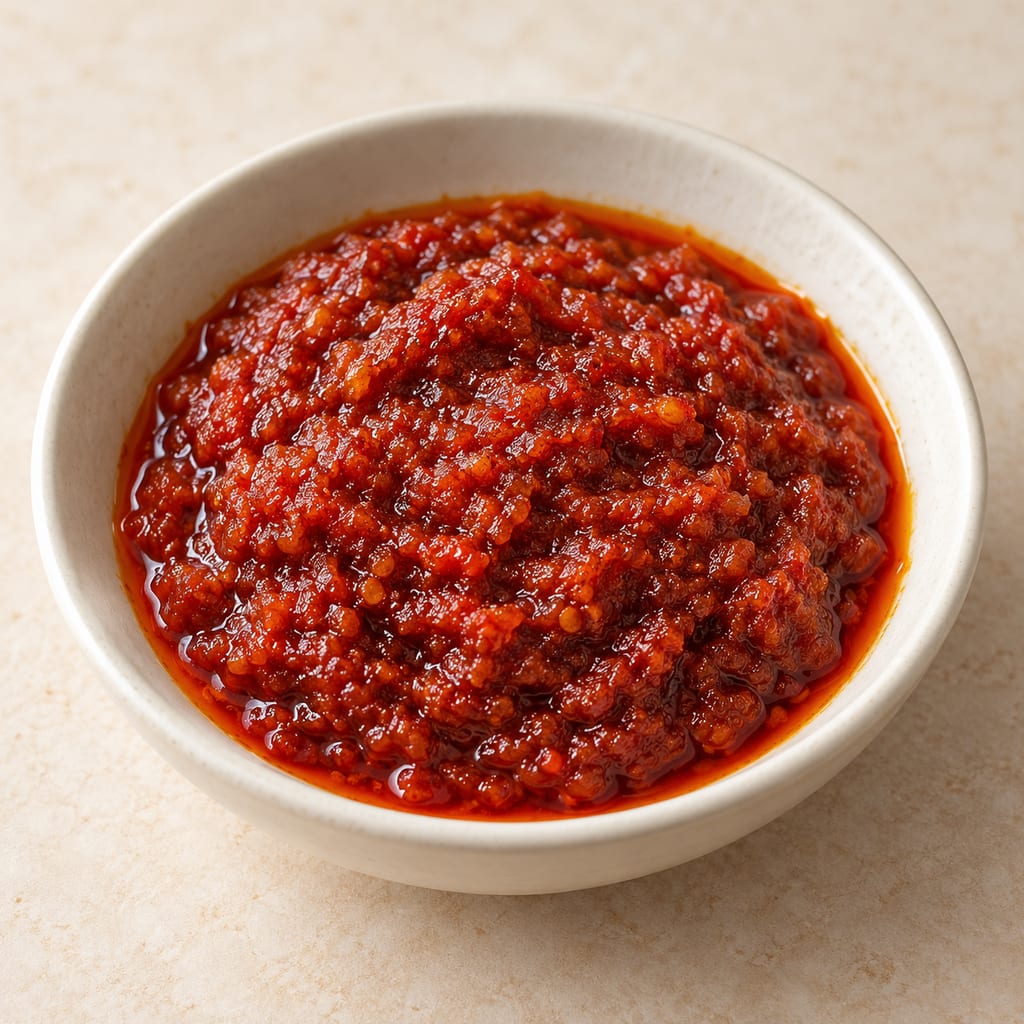
Illustrative Malaysian sambal tumis: thick cooked red chilli paste with a light ring of separated oil, in a plain ceramic bowl.

Sambal tumis

Sambal tumis is a Malaysian chilli paste fried in oil until it breaks, then simmered with tamarind and sugar, used as a condiment and as a cooking base.

Malaysia
· Condiments
Photograph of Shatta.
Elevated risk

Shatta

Shatta is a Palestinian chilli paste with many household forms. Abeer Najjar’s family-inspired version oven-dries salted fresh chillies, then mixes them with vinegar and olive oil for a source-described room-temperature ferment.

Palestine
· Condiments
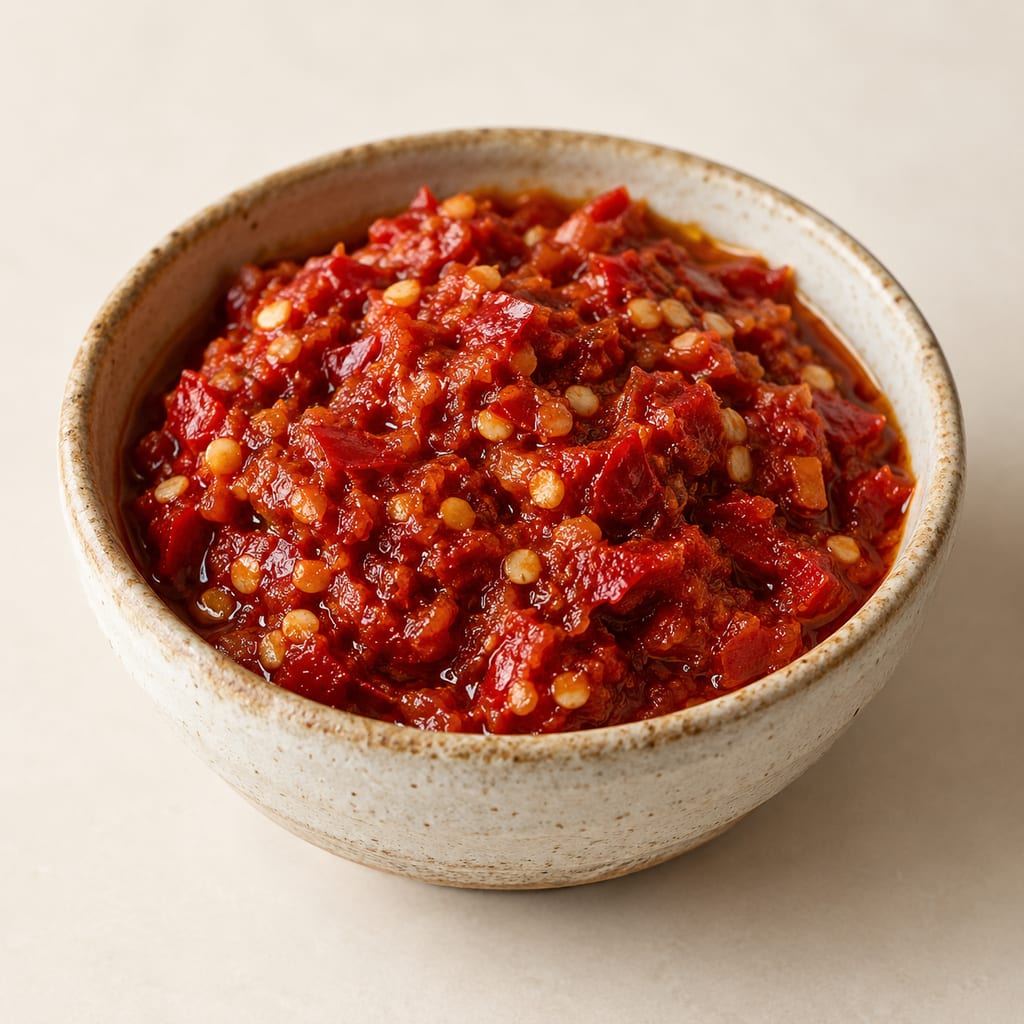
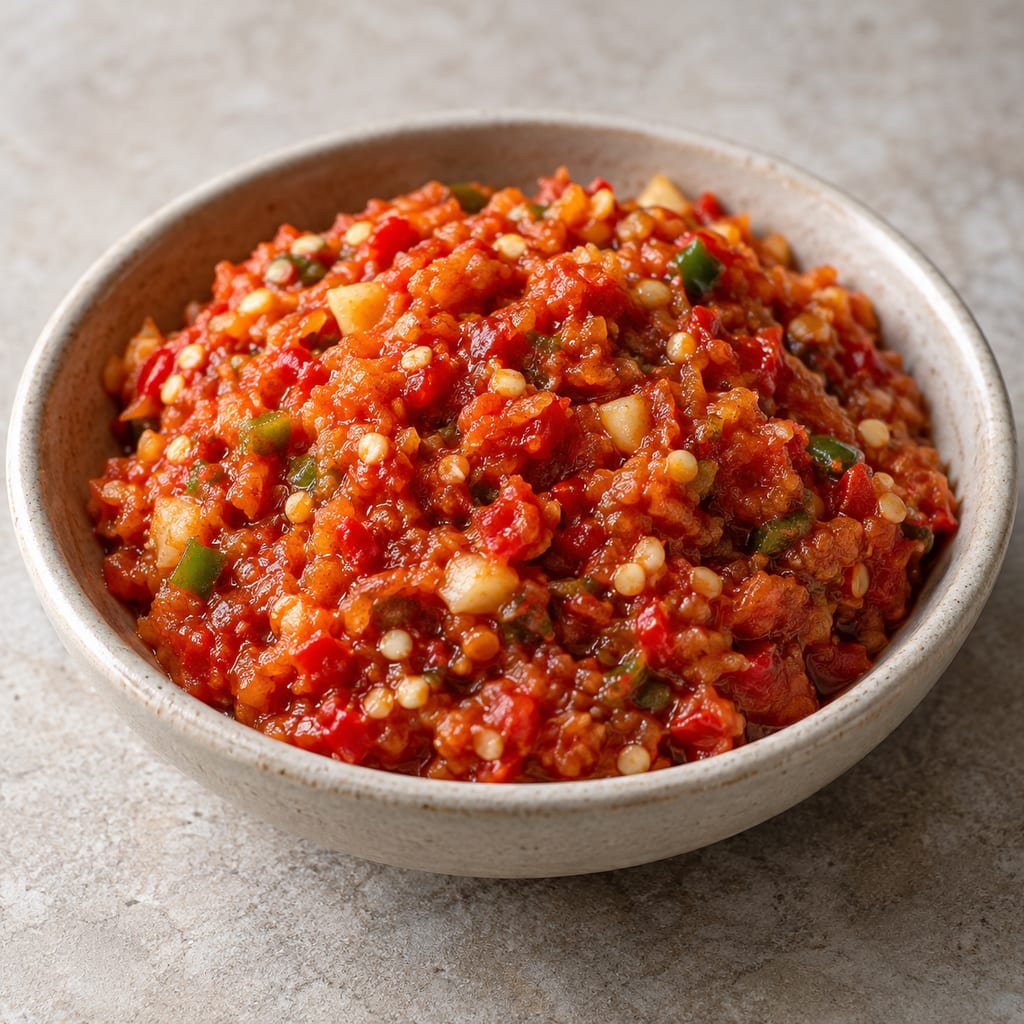
A small bowl of thick dark-red nam prik pao, Thai roasted chilli paste, with fine chilli flecks and a restrained oil sheen.

Nam prik pao

Nam prik pao is a Thai roasted chilli paste, sweet, salty and sour with only mild heat, used as a dip, a spread and a seasoning for cooked dishes.

Thailand
· Condiments
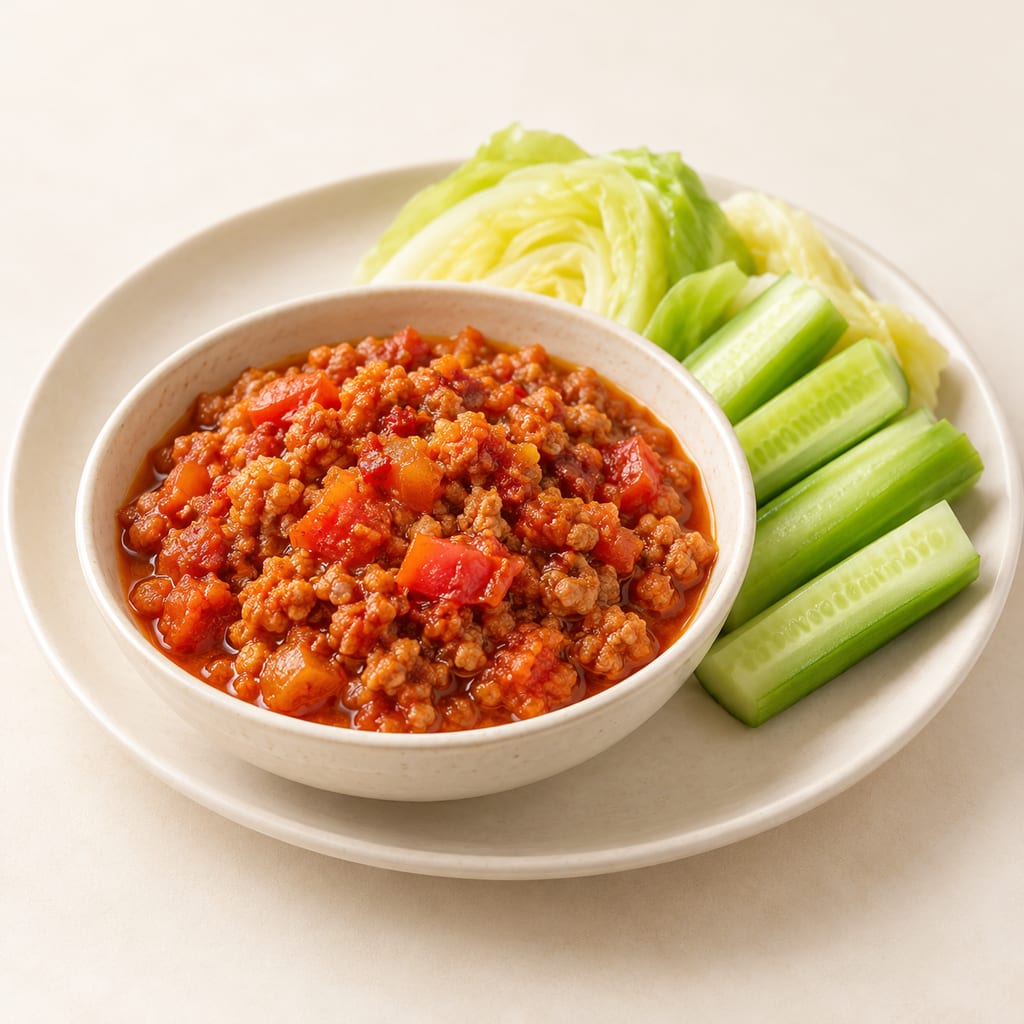
A chunky bowl of nam prik ong, cooked Northern Thai minced-pork and tomato chili dip, with a restrained vegetable accompaniment.

Nam prik ong

Nam prik ong is a cooked Northern Thai dip of chilli, tomato and minced pork, seasoned with fermented soybean and eaten with vegetables, pork rind and eggs.

Northern Thailand (Lanna)
· Condiments
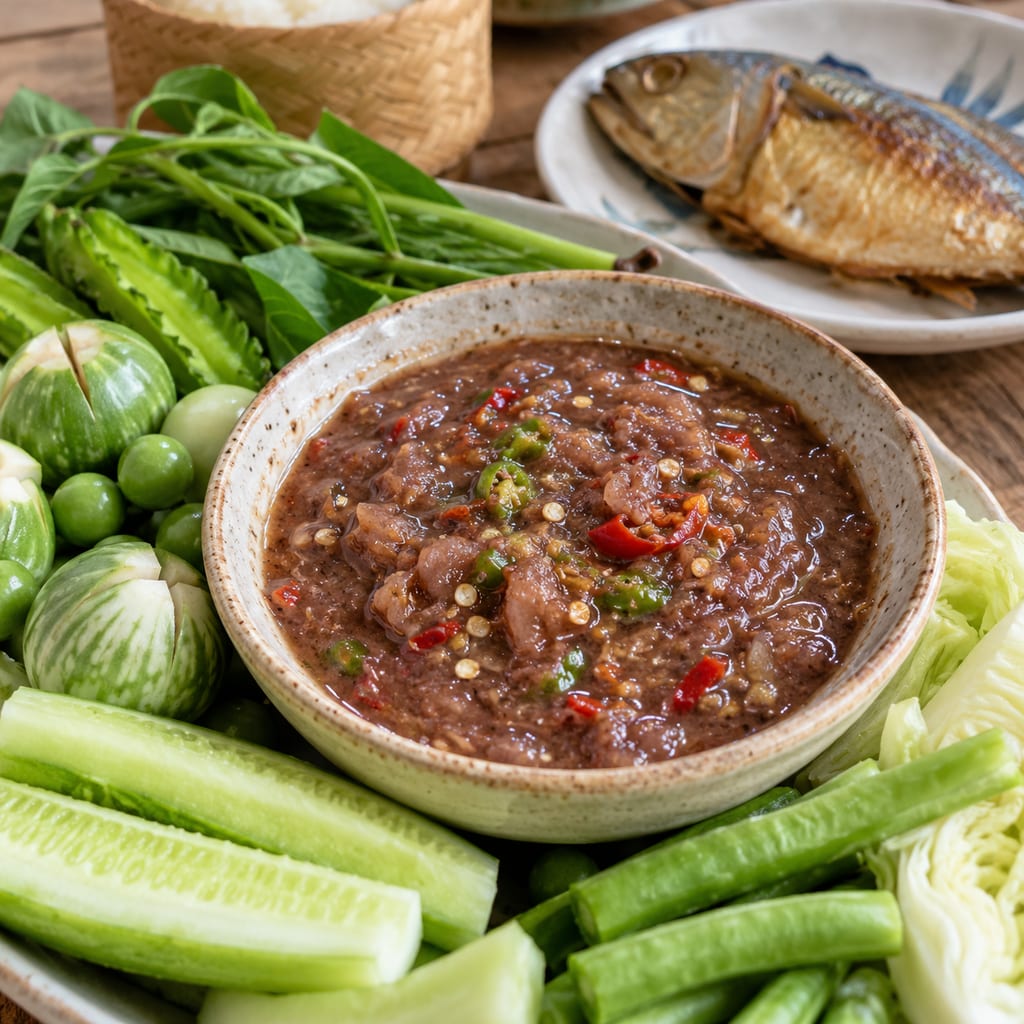
Nam phrik kapi, a coarse dark shrimp-paste dip with chilli, served with Thai vegetables and fried fish.

Nam prik kapi

Nam prik kapi is a Thai dip of matured shrimp paste pounded with garlic, bird's eye chilli and lime or tamarind, eaten with vegetables and rice.

Central Thailand
· Condiments
Photograph of Murrī.
High risk

Murrī

A dark, salty fermented condiment of the medieval Arabic kitchen, made from fermented barley and flour, which seasoned dishes where later cooks would use soy sauce, salt or sumac.


Condiments
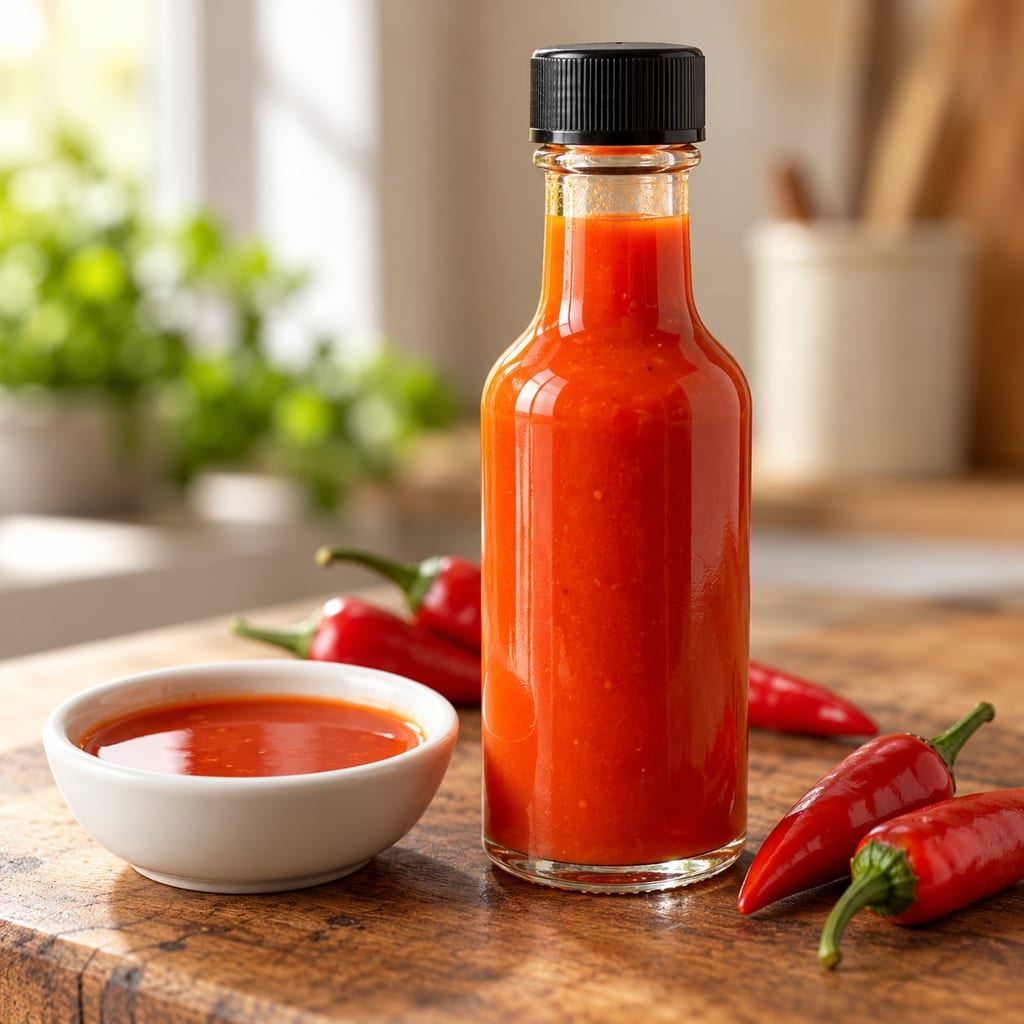
Finished red-orange Louisiana hot pepper sauce in an unlabeled glass bottle with a small dish and ripe red chiles.

Louisiana fermented pepper sauce

Documentary account of Louisiana pepper sauces, using TABASCO's published barrel-aged commercial process as one specific example; the source does not provide a validated home recipe.

Avery Island, Louisiana
· Condiments
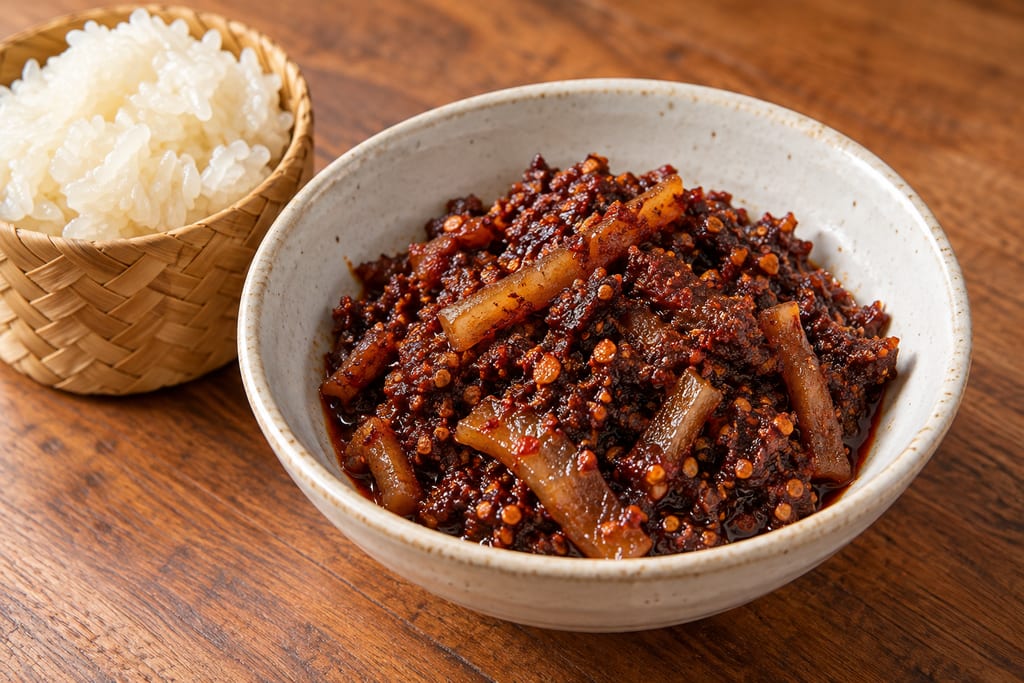
Fresh Jeow bong, a Lao chili paste with visible cooked cow-skin strips, served beside sticky rice.

Jeow bong

Jeow bong is a Lao paste of dried chilli, shallot, garlic and galangal cooked with buffalo or cow skin, a Luang Prabang specialty eaten with sticky rice and grilled meat.

Luang Prabang
· Condiments
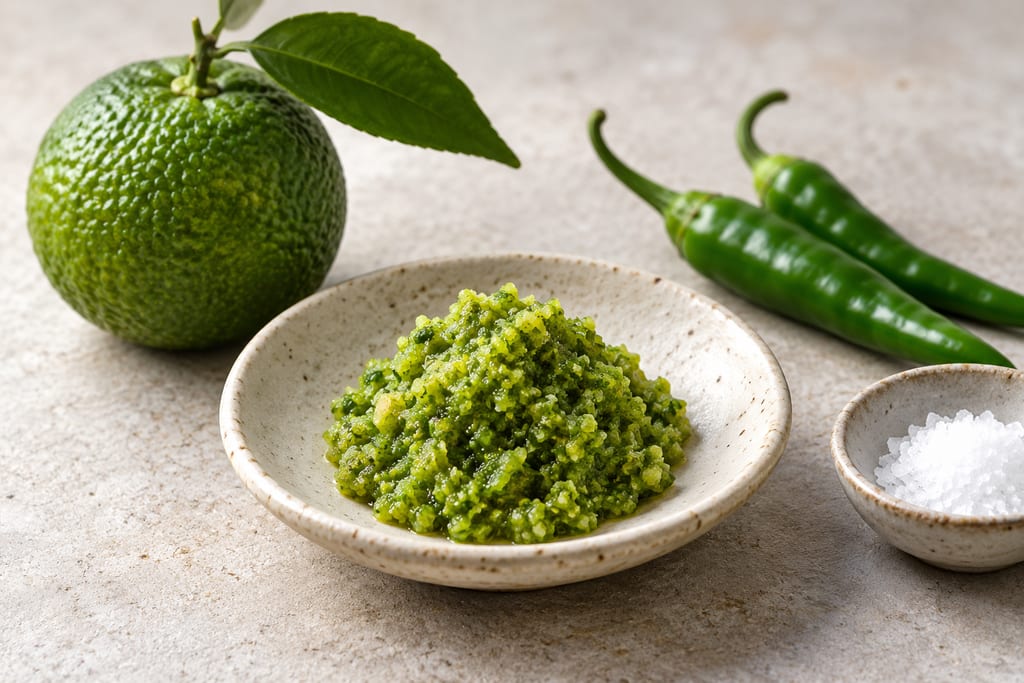
Fresh coarse green yuzu and chilli paste in a shallow ceramic dish with green yuzu, chillies and salt.

Fresh yuzu-chilli-salt paste

A fresh, uncooked yuzu and green chilli paste inspired by Kyushu’s yuzu kosho, made here as an untested small-batch seasoning rather than a preservation formula.

Kyushu
· Condiments
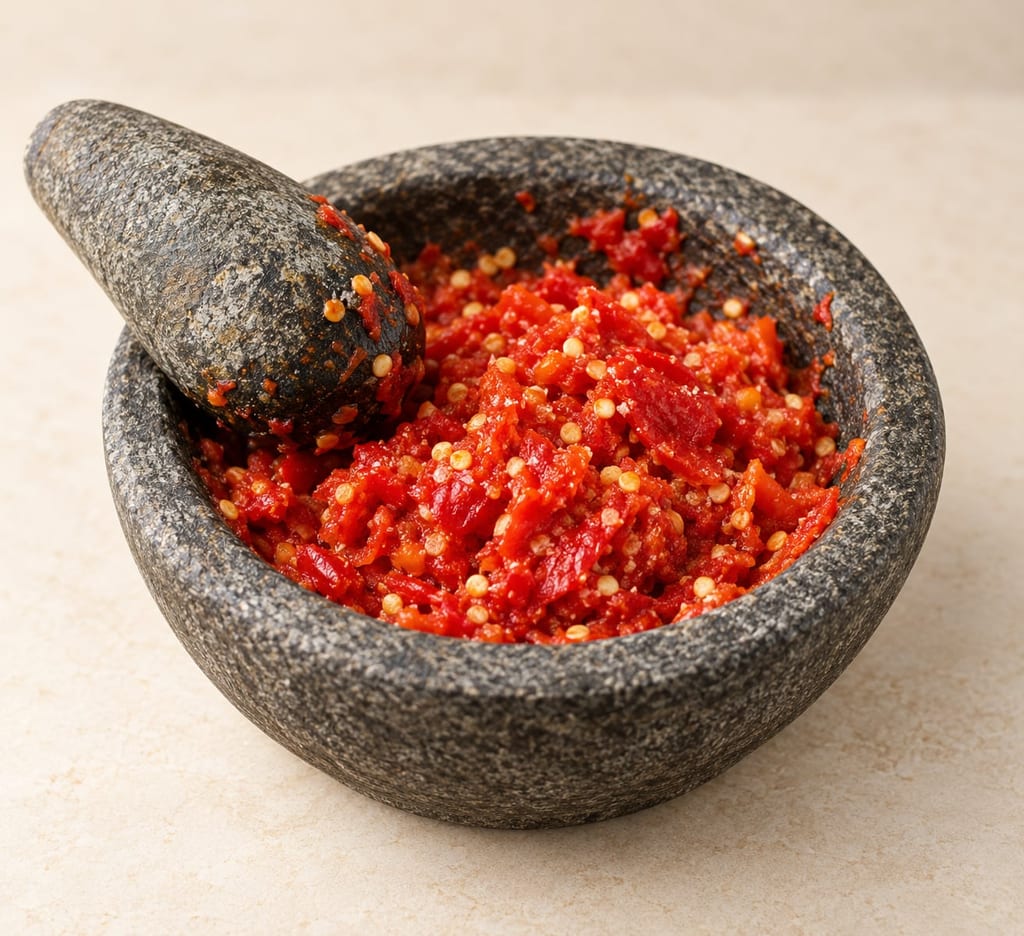
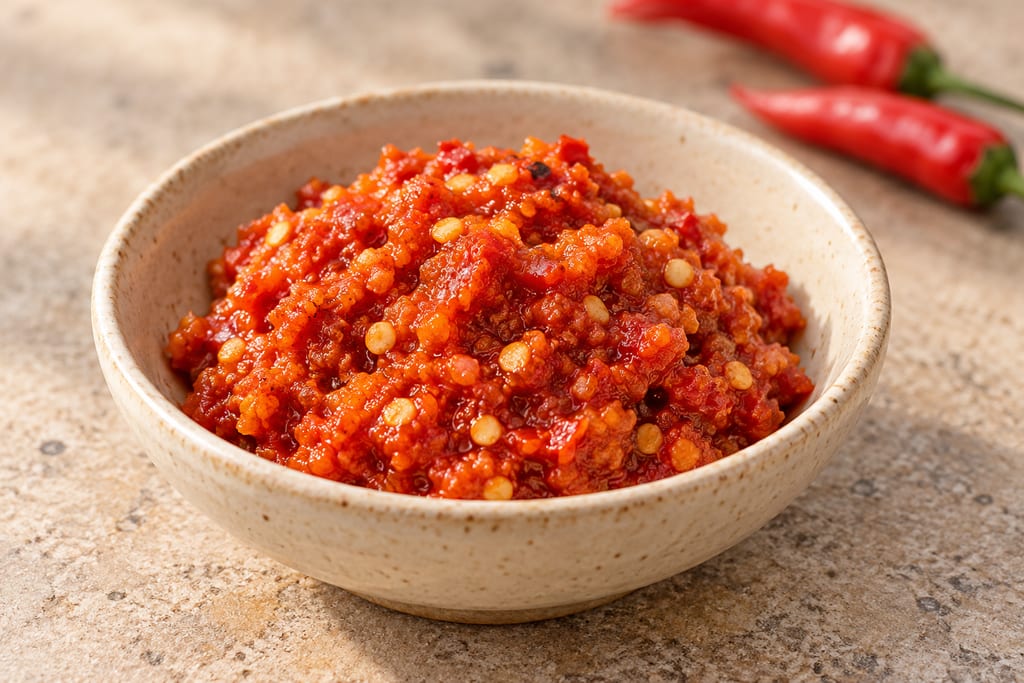
Coarse red Chamorro dinanche pepper paste in a shallow ceramic bowl.

Dinanche

Dinanche, or donne' dinanche, is a Chamorro hot pepper paste of crushed chillies that Guam cooks use on its own or stir into fina'denne'. Its versions range from pepper alone to ones with eggplant, miso or coconut milk.

Guam
· Condiments
Photograph of Soumbala (Burkinabè Parkia seed condiment).

Soumbala (Burkinabè Parkia seed condiment)

A Burkina Faso alkaline fermentation of African locust bean seeds (Parkia biglobosa), used to season sauces and cooked grain dishes. Local process details vary, and the sources do not give a measured household batch.

Burkina Faso · Traditional method
· Condiments
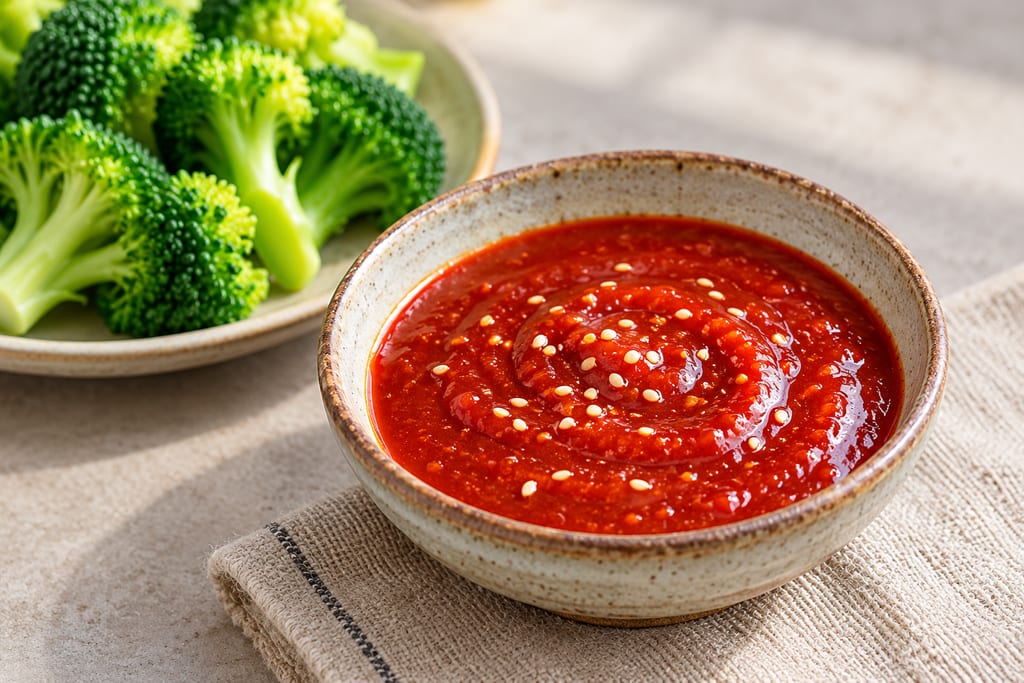
Glossy red-orange chogochujang with toasted sesame seeds in a ceramic bowl, beside blanched broccoli.

Chogochujang-style sour chilli dip

Chogochujang is a Korean sweet-sour sauce made by seasoning gochujang with vinegar and sugar. This development batch adds water and toasted sesame seeds, with optional garlic for the portion being served.

Gyeonggi-do
· Condiments
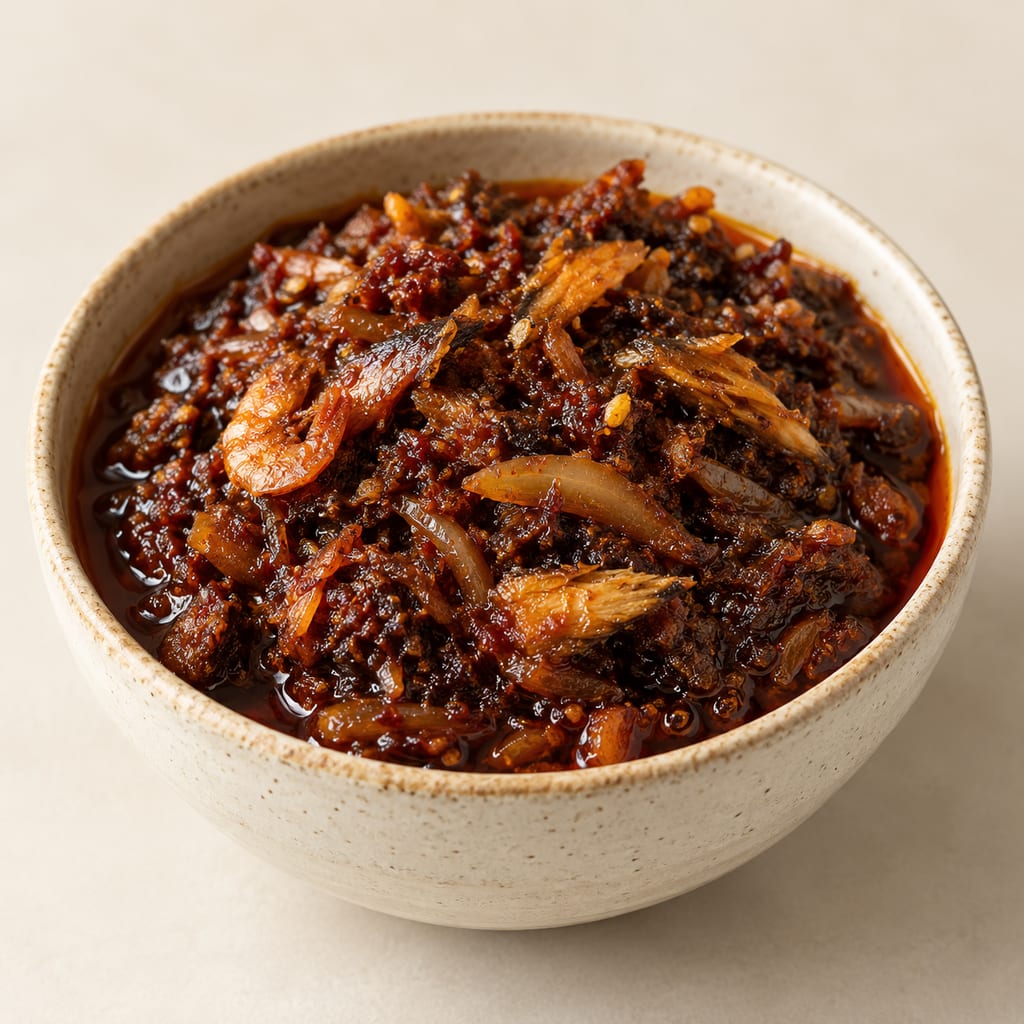
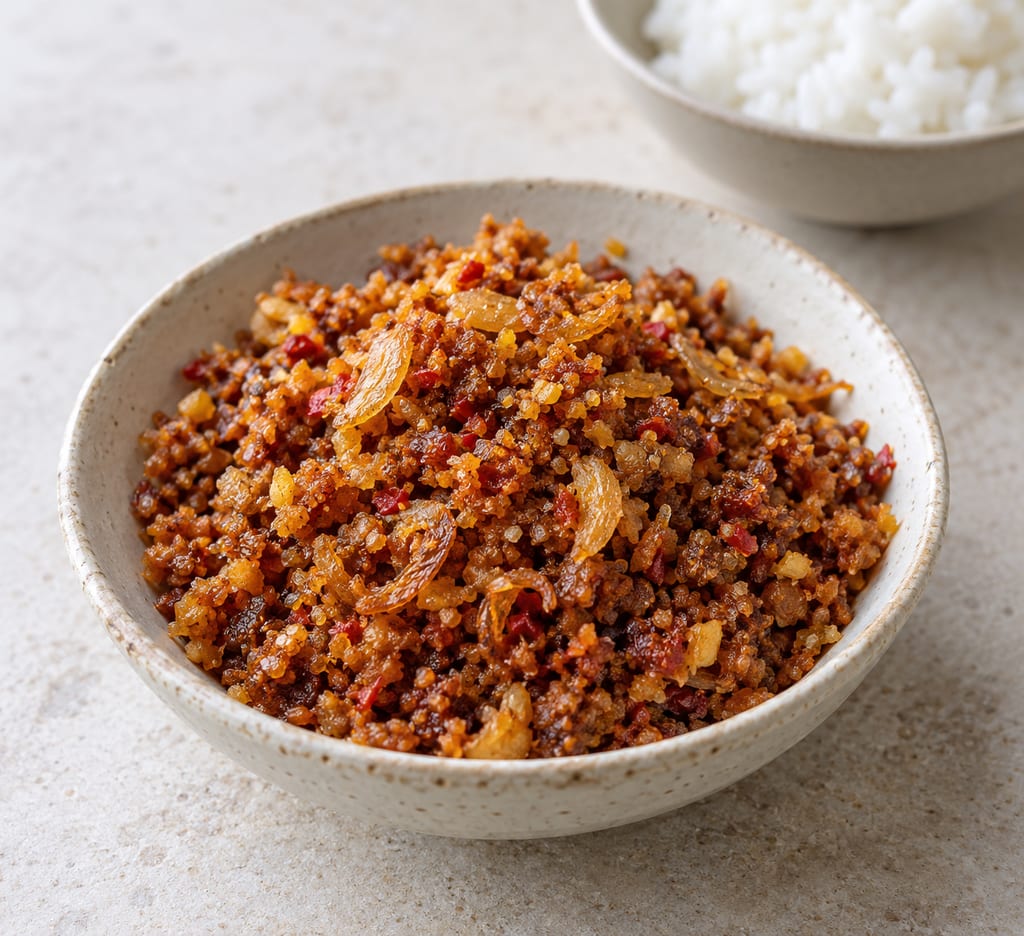
A coarse reddish-brown Burmese balachaung dried-shrimp relish with fried shallot, garlic and chilli in a shallow ivory bowl, with rice softly out of focus.

Balachaung

A Myanmar relish of dried shrimp, fried eschalot and garlic, chilli, turmeric, tamarind and ngapi. Naomi Duguid’s published recipe makes about 1 cup; it contains crustacean shellfish.

Myanmar · Traditional method
· Condiments
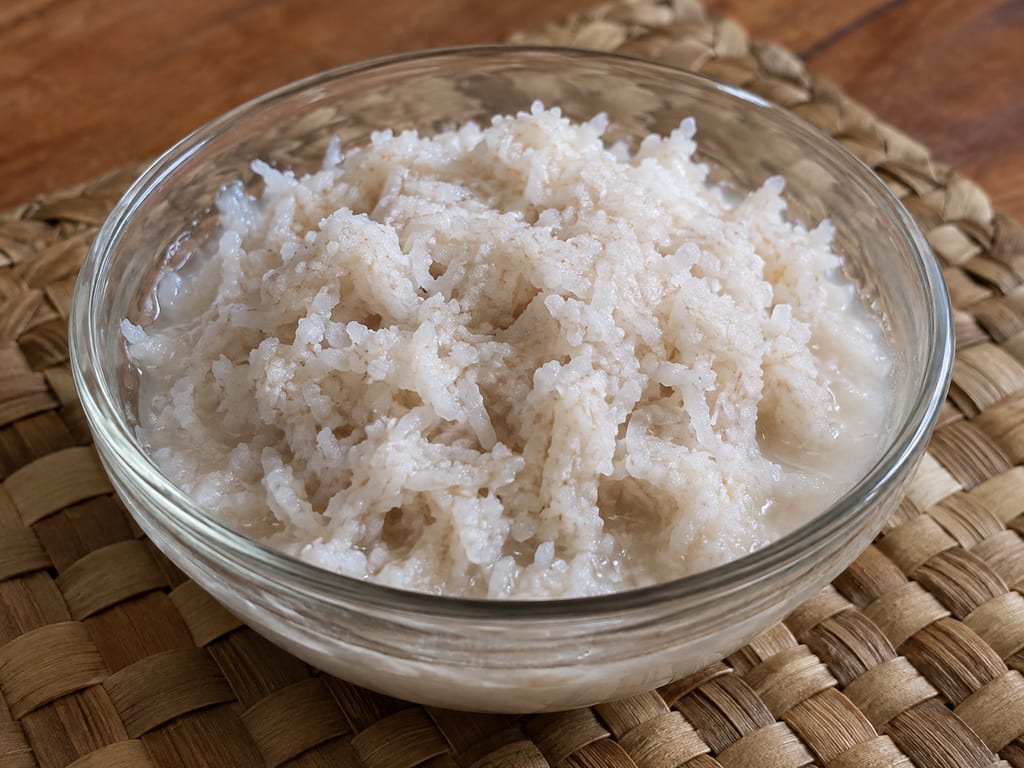
Taioro as a moist, coarse white coconut condiment with a little thin liquid in a glass bowl.

Taioro as documented in a CAPL manual

Taioro is a Polynesian condiment of grated coconut fermented with freshwater prawn heads in seawater, then rested in a cool place for a day before it is used.

French Polynesia · Traditional method
Condiments
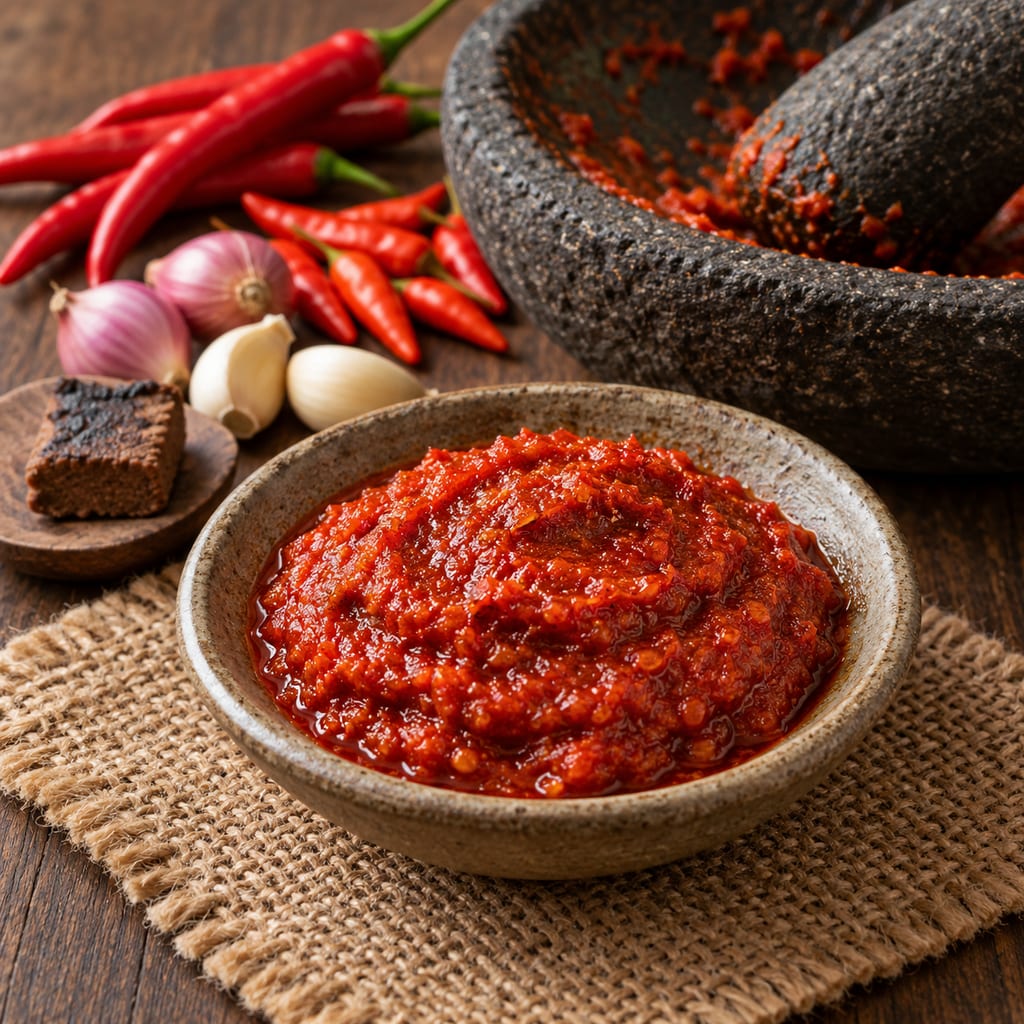
A bowl of smooth cooked brick-red sambal terasi with a subtle oil sheen, with red chiles, shallots, garlic and toasted shrimp paste nearby.
Elevated risk

Sambal terasi (West Java)

This documented West Java sambal grinds cooked red and bird’s-eye chiles with garlic, shallots and fermented shrimp paste, then simmers the paste before serving.

West Java
· Condiments
A coarse red-orange bowl of Mazavaroo, a Mauritian chilli paste with visible chilli flecks and seeds.

Mazavaroo

Mazavaroo is a Mauritian hot chilli paste of fresh chillies, garlic, salt and oil with lemon or lime. It is kept refrigerated, and the reviewed recipes say it should rest for days before use.

Mauritius
Condiments
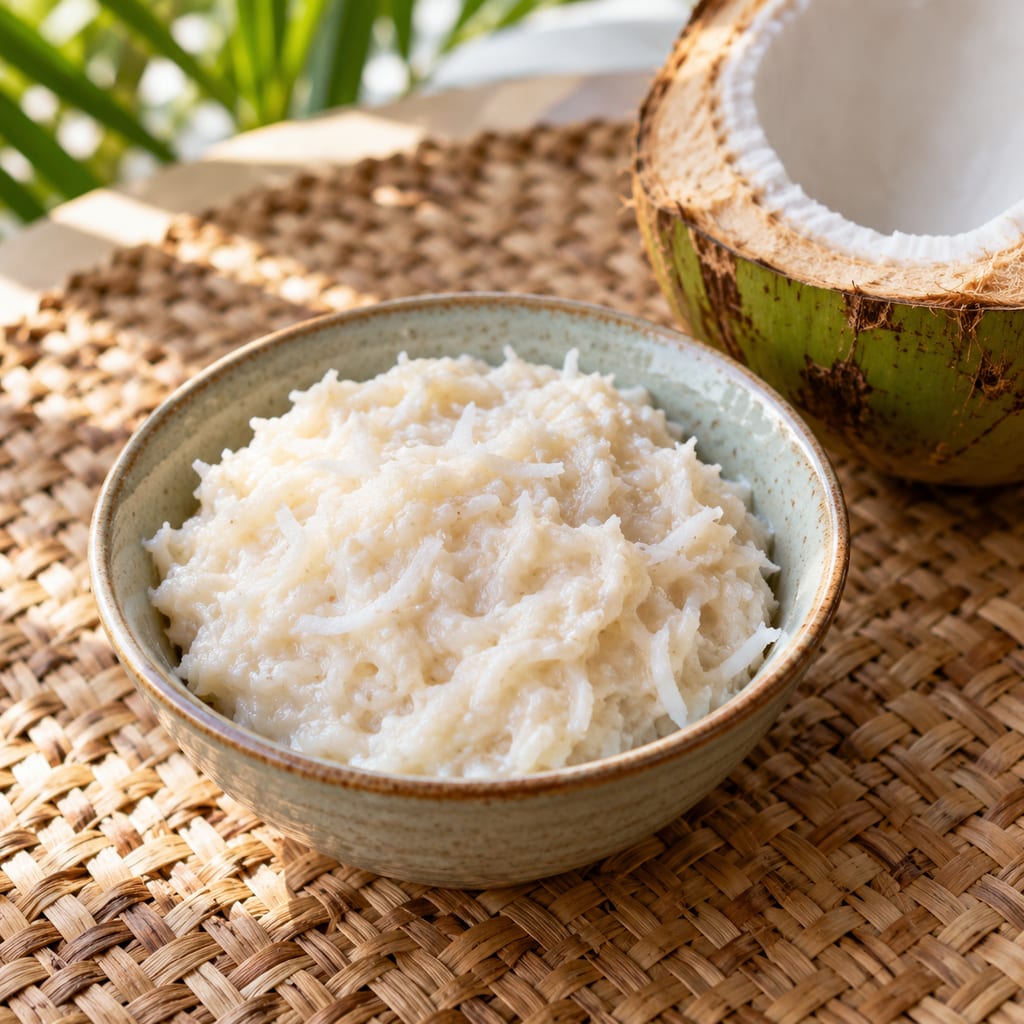
A small bowl of pale fermented coconut mitihue with fine coconut texture
High risk

Mitihue

A documentary account of Tahitian mitihue, a fermented coconut condiment traditionally associated with freshwater prawns. It records cultural context and source-reported risks without giving a household preparation method.

French Polynesia
Condiments
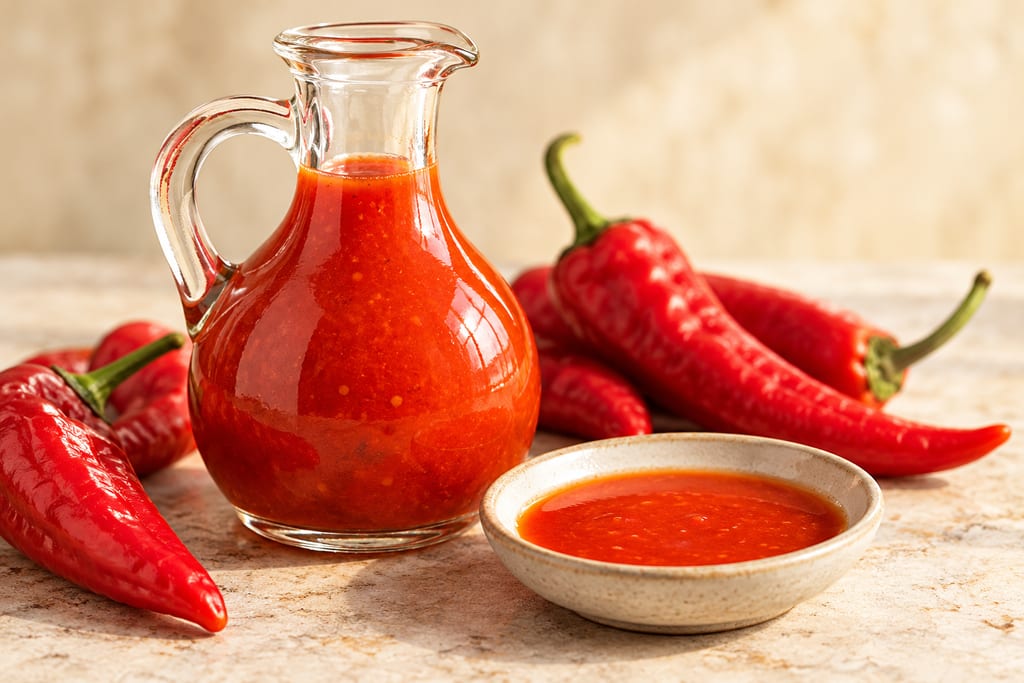
Thin red fermented pepper sauce in a glass cruet with fresh red peppers on a warm ivory background.
Elevated risk

Hot sauce (fermented pepper)

Fresh hot peppers ferment beneath a measured salt brine, then become a bright, tangy sauce blended from the peppers and their liquor.

Louisiana
· Condiments
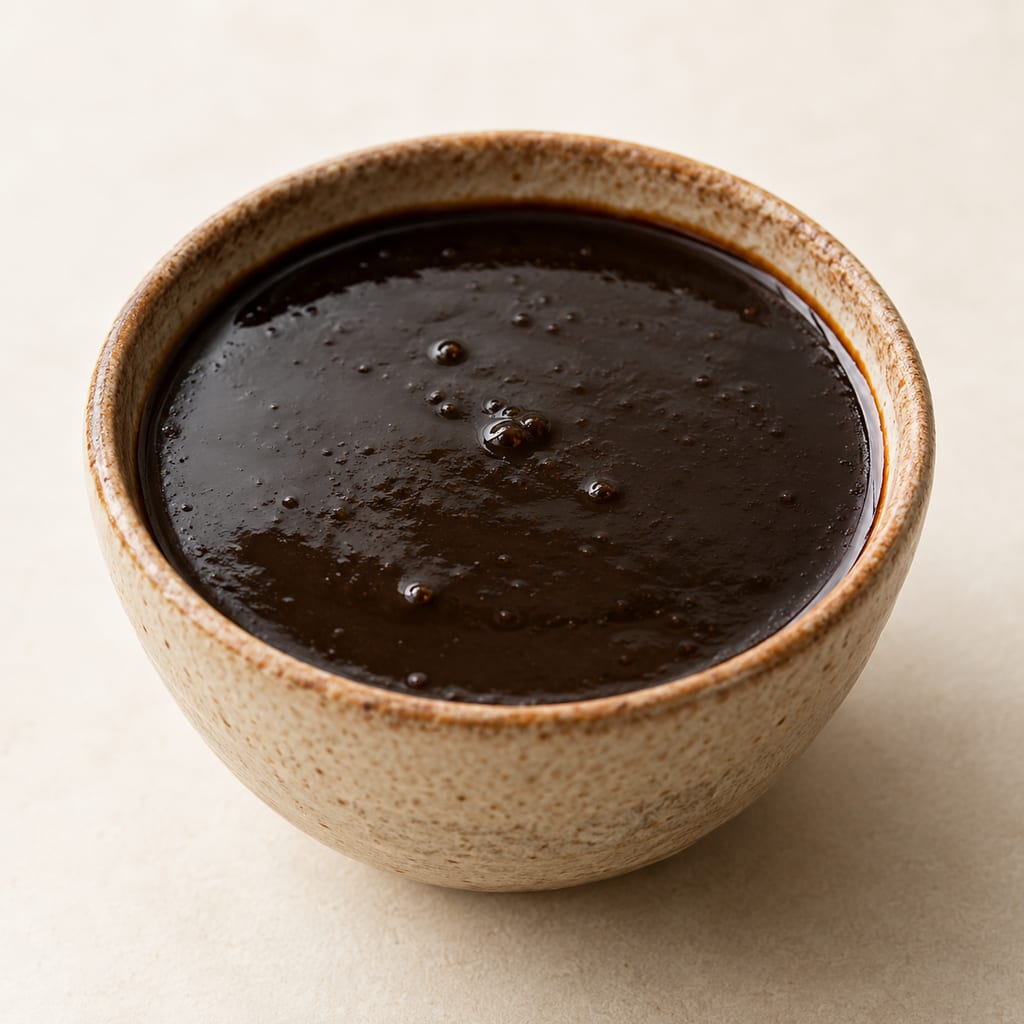
Photograph of Tucupi negro.
High risk

Tucupi negro

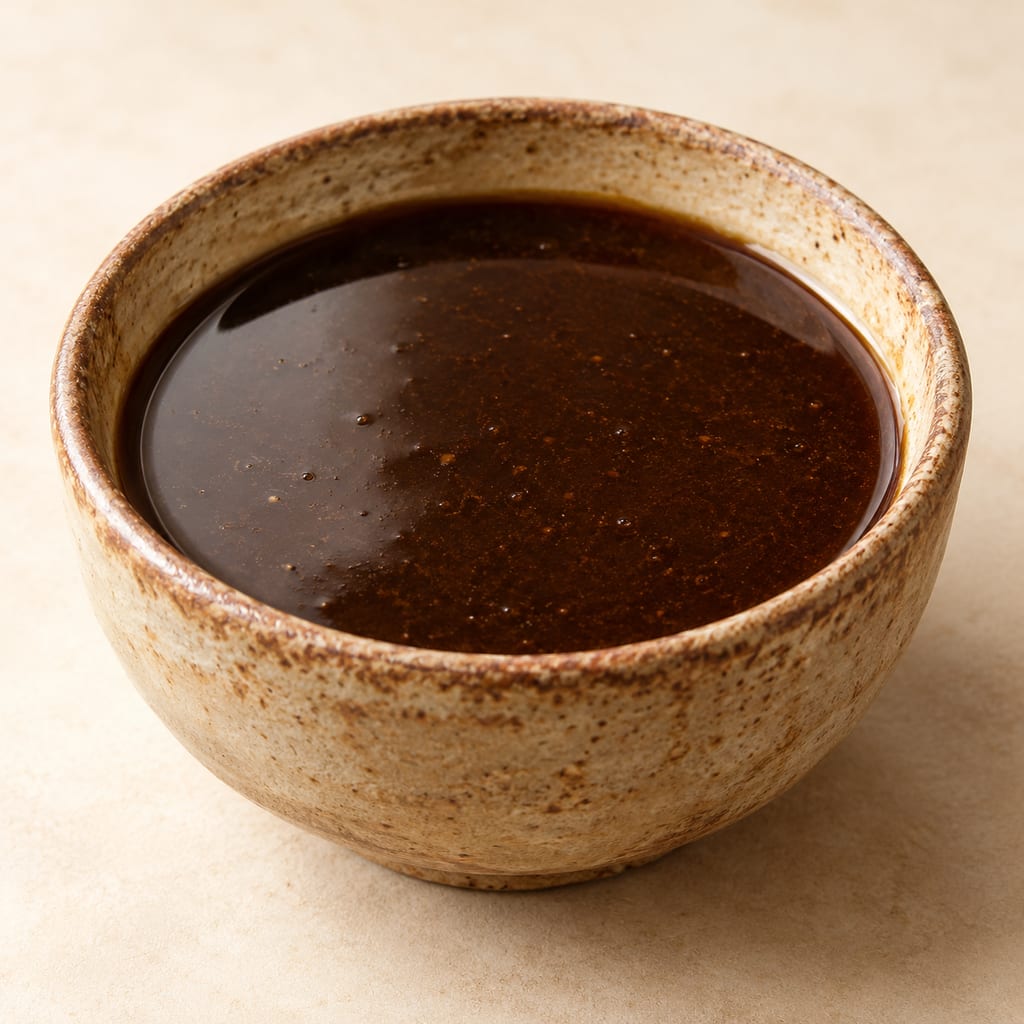
Tucupi negro is a dark, pungent sauce that Amazonian Indigenous women make by pressing bitter cassava, settling its starch and simmering the juice for hours until it thickens.

Pucaurquillo, Ampiyacu River, near Iquitos · Traditional method
· Condiments
Illustrative reconstruction of Yanyanku as ground dried fermented roselle seeds; the exact experimental batch appearance is not documented.

Yanyanku

A traditional Beninese inoculum made from fermented roselle, cotton or baobab seeds, rich in bacterial spores, added to cooked African locust beans to speed up fermentation and soften them into sonru.

Benin · Traditional method
· Condiments