Recipes

1504 records with their sources, across 11 categories.

All grains and starches40Cereal, grain, root and starch fermentations26Unfermented breads11Koji, mold starters and mold-ripened ferments2Beverages1
Filtered to

Recipes

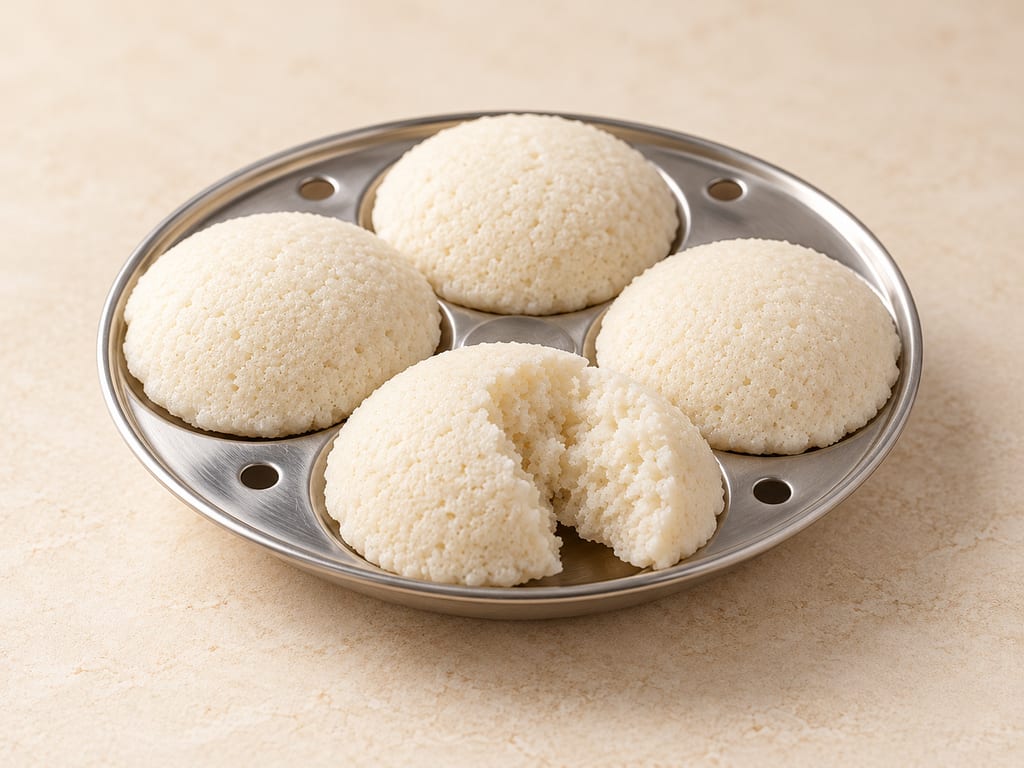
Soft, round South Indian idli on a stainless-steel mould plate against a warm ivory background.
Elevated risk

Idli batter

Rice and black gram are soaked separately, ground, salted and fermented into a thick batter for idli. The batter is portioned into moulds and steamed into soft savoury cakes.

South India · Traditional method
· Grains and starches
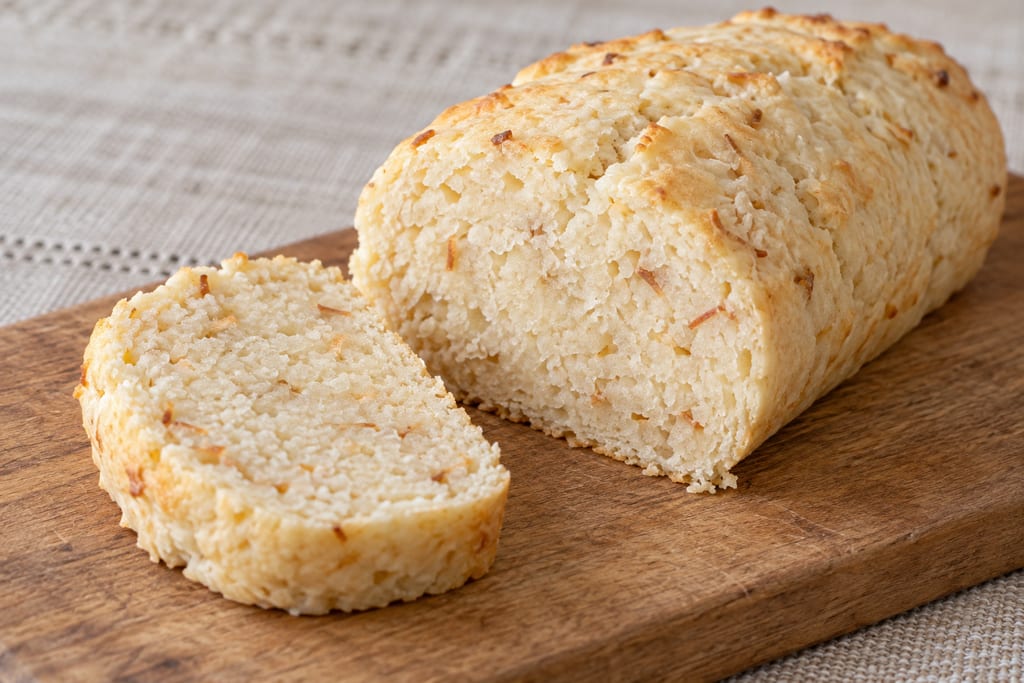
A pale Tahitian coconut bread log with a cut slice showing soft crumb flecked with toasted coconut.

Tahitian coconut bread

Sweet dough with grated coconut is divided into ten logs, wrapped in foil and baked slowly in this Polynesian Cultural Center version demonstrated by Gina Pasi.
French Polynesia · Traditional method
· Grains and starches
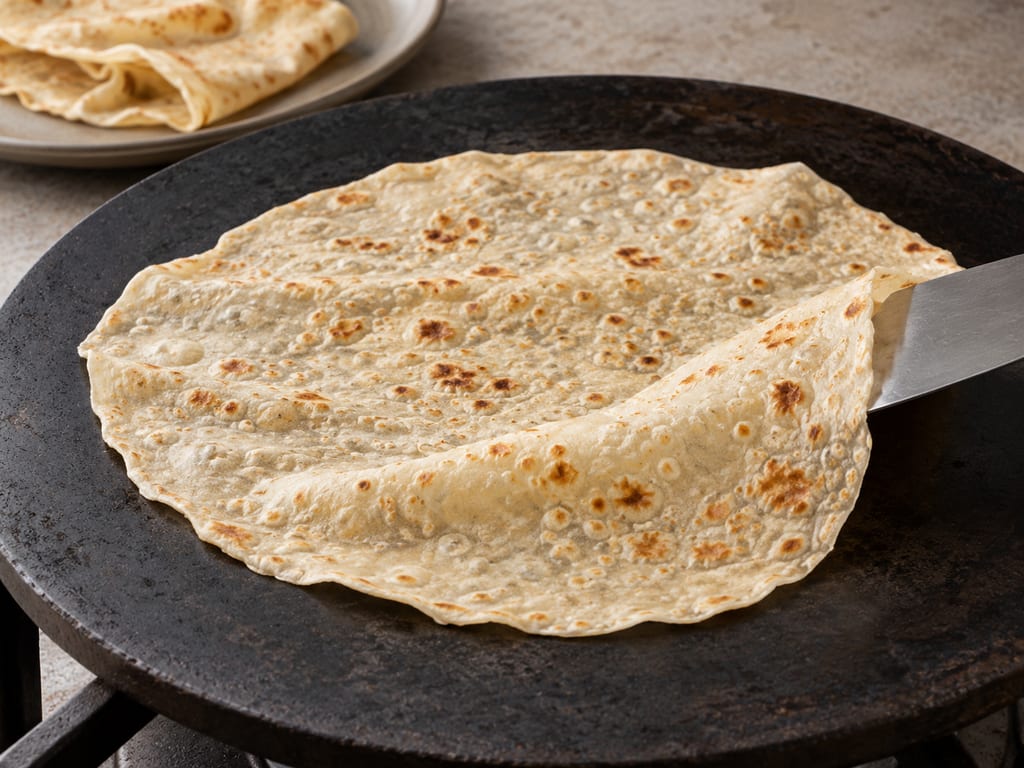
Plain Emirati regag: a paper-thin wheat griddle bread with delicate bubbles and scattered golden-brown spots, lifted at the edge with a palette knife.

Regag (Emirati paper-thin griddle bread)

Regag is a thin Emirati wheat bread cooked on an ungreased pan. This measured home method uses a soft dough that rests covered, then gets spread thin with a palette knife or bench scraper.
United Arab Emirates · Traditional method
· Grains and starches
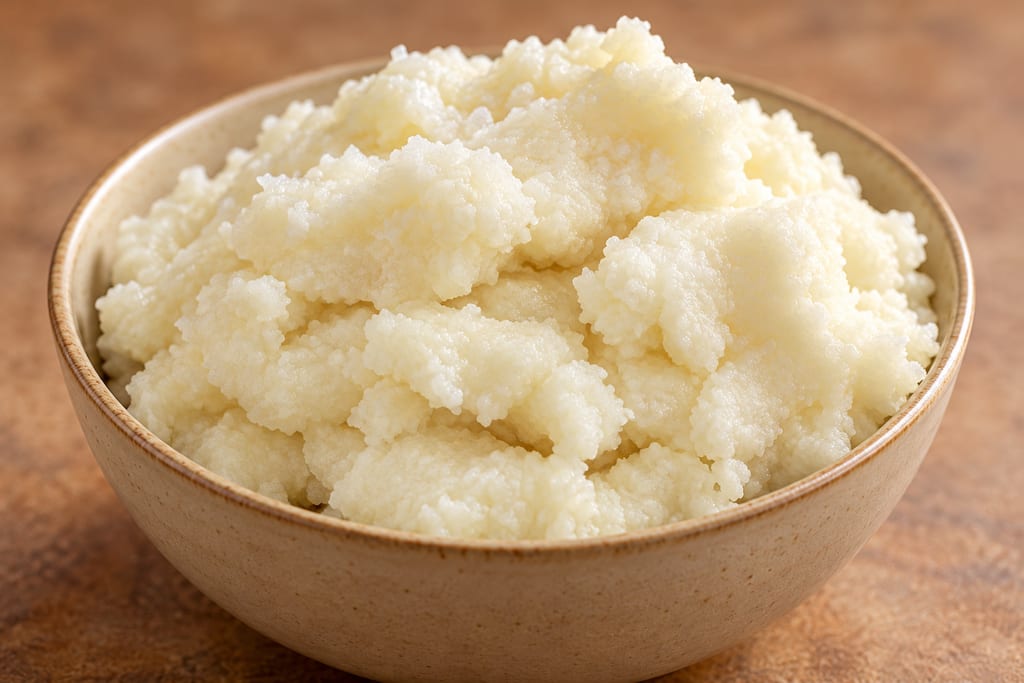
finished maize porridge

Mieliepap

South Africa's maize-meal porridge, which the same white meal turns into a soft breakfast pap, a firm sliceable mound or the separate moist granules of phuthu depending only on water and handling.
South Africa · Traditional method
· Grains and starches
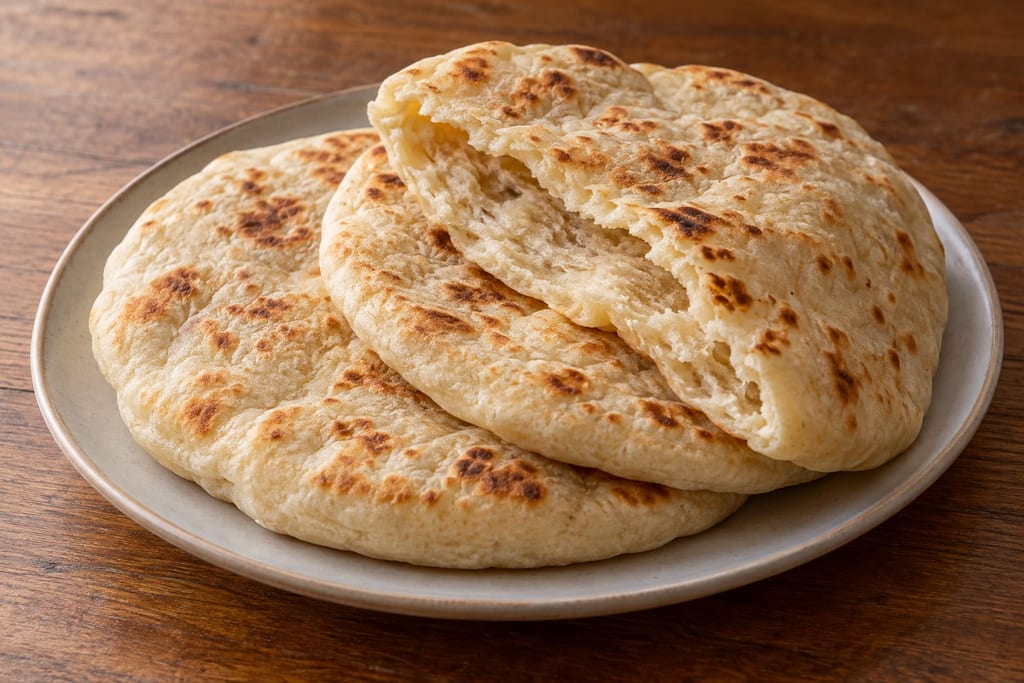
Original editorial photograph of plain Trinidadian sada roti with a soft interior and browned griddle marks. Illustrative rendering of the published baking-powder recipe, not a named cook’s batch.

Sada roti

A Trinidad and Tobago baking-powder flatbread cooked on a hot stone, then briefly exposed to direct heat to puff.
Trinidad and Tobago · Traditional method
· Grains and starches
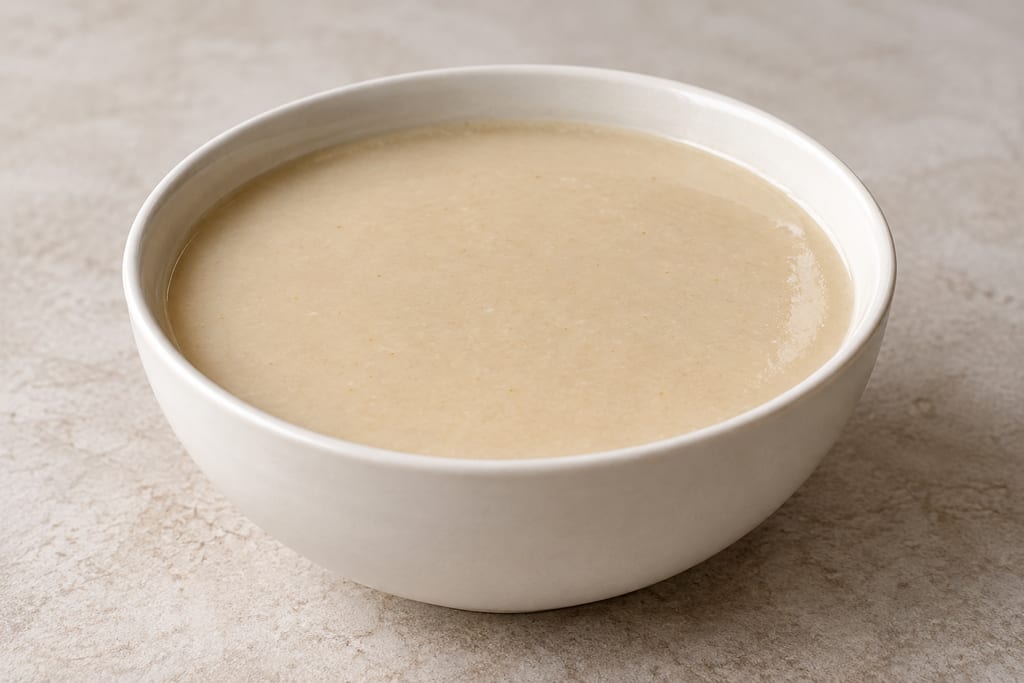
A smooth, fine-textured pearl-millet gruel, cooked and served in a plain bowl. This original illustration follows the documented fluid form of Ben-saalga; it does not depict a specific historical vessel or producer batch.
Elevated risk

Ben-saalga

A fermented pearl-millet gruel documented in Ouagadougou, Burkina Faso. Whole grain is soaked, wet-milled and sieved; the settled paste ferments again before it is cooked with its liquid.
Ouagadougou · Traditional method
· Grains and starches
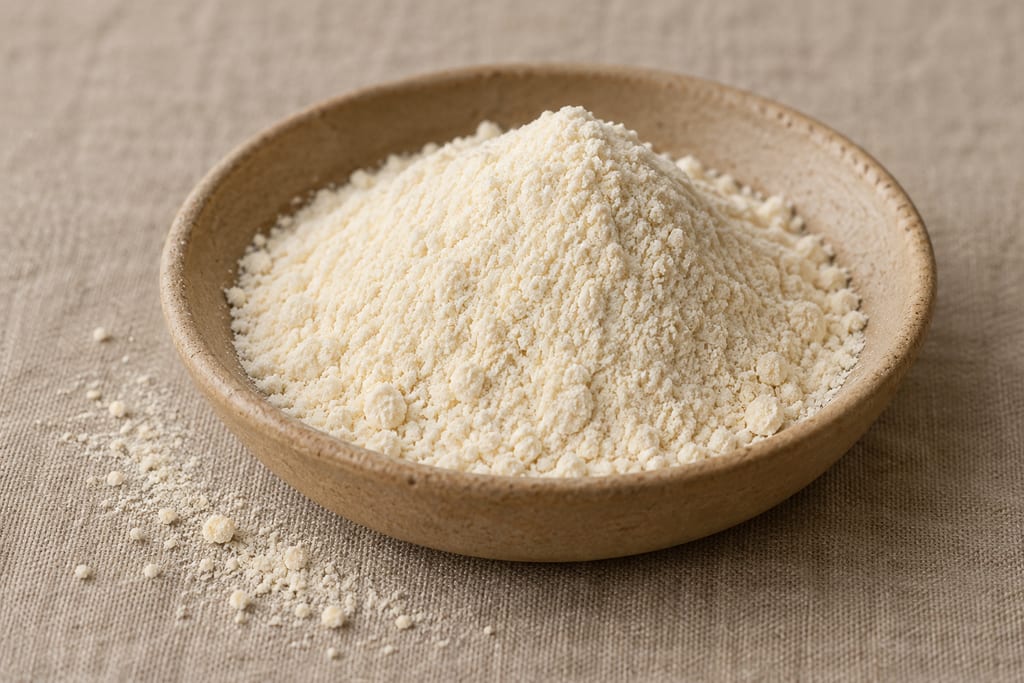
Illustrative still-life of pale maize flour, the milled end form described for fermented fuba; not a photograph of a specific Umbundu batch.
Elevated risk

Fermented fuba (Umbundu maize flour)

Fermented fuba is an Umbundu maize-flour preparation made by lactic fermentation of dehulled, degermed kernels before milling, sun-drying and sieving.
Angola · Traditional method
· Grains and starches
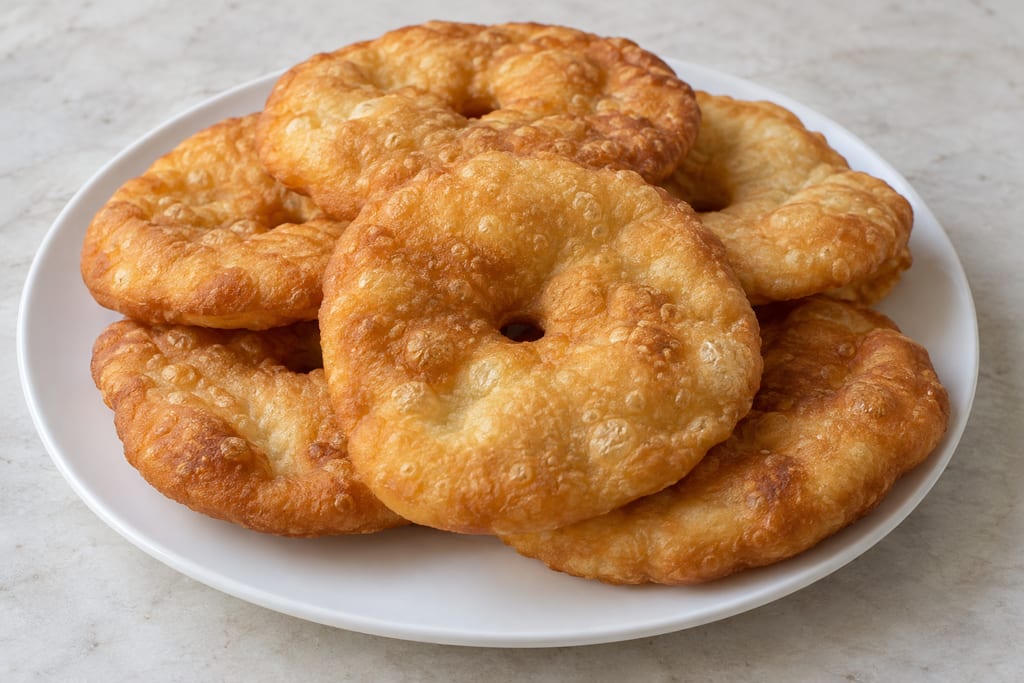
Unsweetened yeast-raised Uruguayan tortas fritas, golden fried rounds with small central holes.

Uruguayan tortas fritas (leavened, fried rounds)

A University of the Republic of Uruguay recipe for ten yeast-raised tortas fritas. The dough rests for an hour, is divided into ten rounds with a hole in each, then fried in fat at 160°C and drained.
Uruguay · Traditional method
· Grains and starches
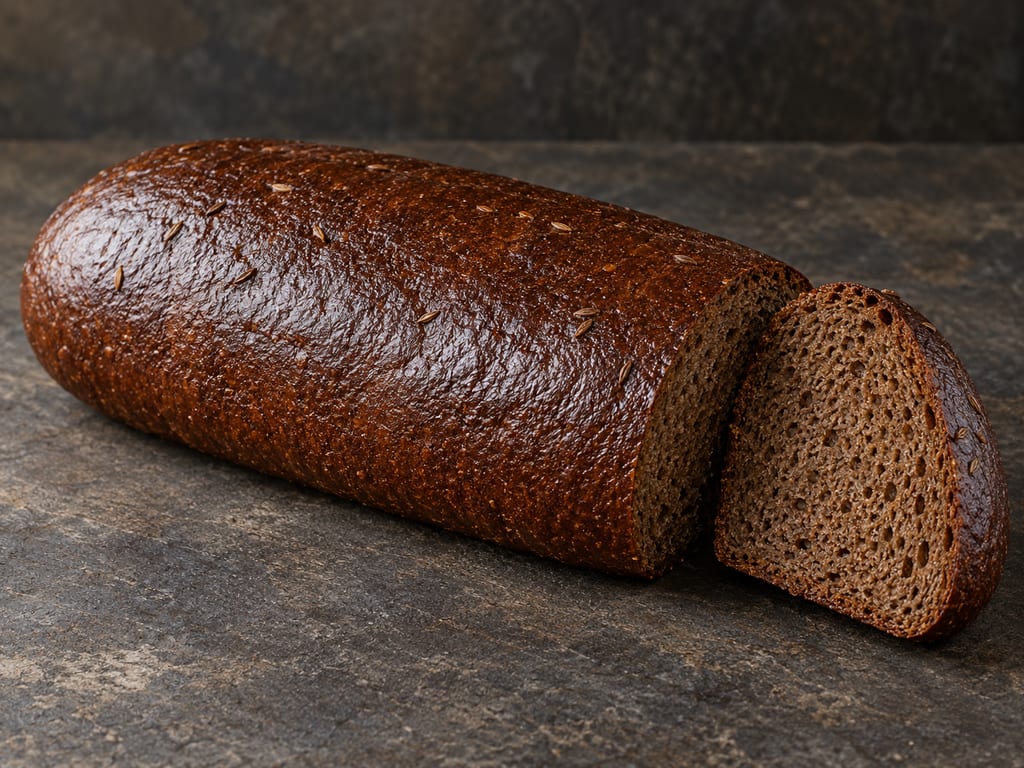
Illustrative Salinātā rudzu rupjmaize: a long dark Latvian rye loaf with rounded ends, glossy crust, sparse caraway seeds and a dark, lightly porous crumb.

Salinātā rudzu rupjmaize

Latvian naturally leavened rye bread made with a hot-water scald of part of the flour, unfermented rye malt and caraway; shaped as long loaves and hearth-baked.
Latvia · Traditional method
· Grains and starches
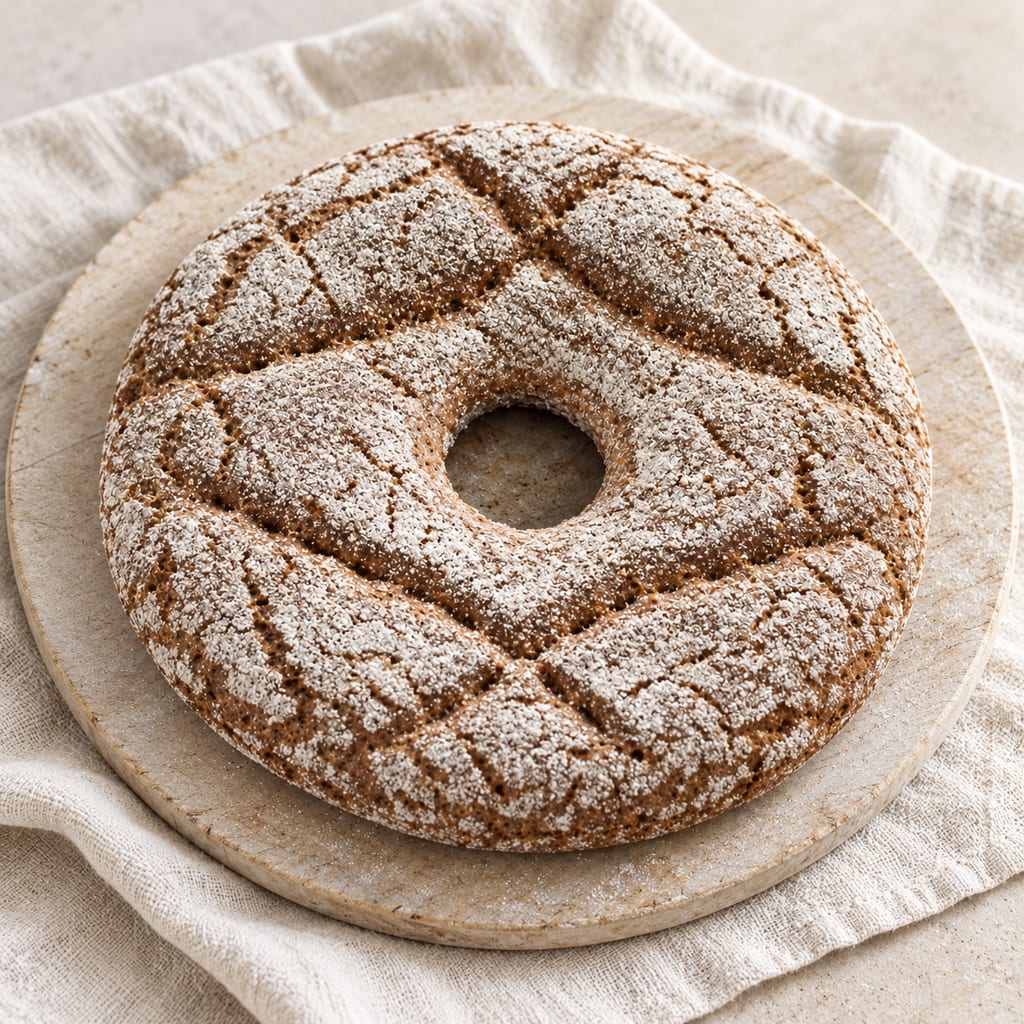
A dark, flour-dusted Finnish rye ring loaf with fork-pricked marks on a pale board.

Ruisleipä (Finnish sourdough rye bread)

A Finnish rye sourdough shaped here as two flat ring loaves, made from rye flour, water, salt and an established rye leaven.

Finland · Traditional method
· Grains and starches
White cultured rice in a shallow cream ceramic dish on a warm ivory surface.
High risk

Rice koji

Rice koji is steamed white rice through which koji mold has grown. It carries the enzymes that turn rice starch into sugar, and it is the starting point of sake, sweet miso, amazake and shio koji.
Japan · Traditional method
· Grains and starches
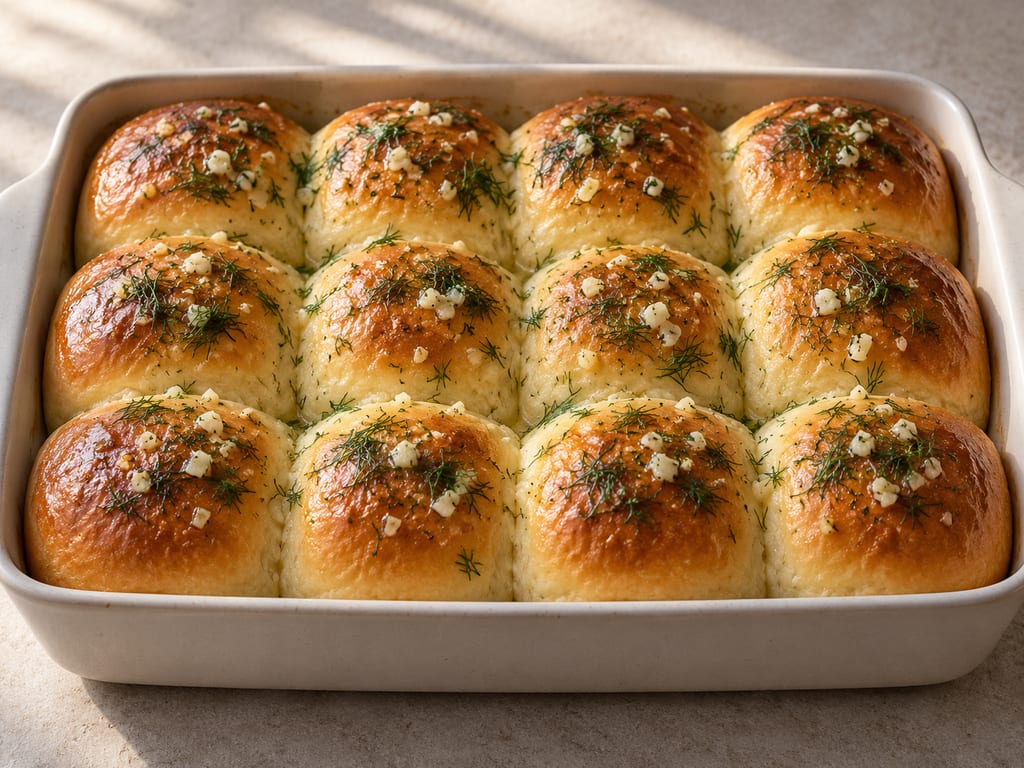
Twelve golden Ukrainian pampushky rolls topped with fresh garlic and dill in a rectangular baking dish; illustrative editorial image.

Pampushky (Ukrainian garlic rolls)

Soft Ukrainian wheat rolls are baked close together and brushed with fresh garlic, dill and oil. This savory garlic-topped baked form is separate from sweet fried pampushky.
Ukraine · Traditional method
· Grains and starches
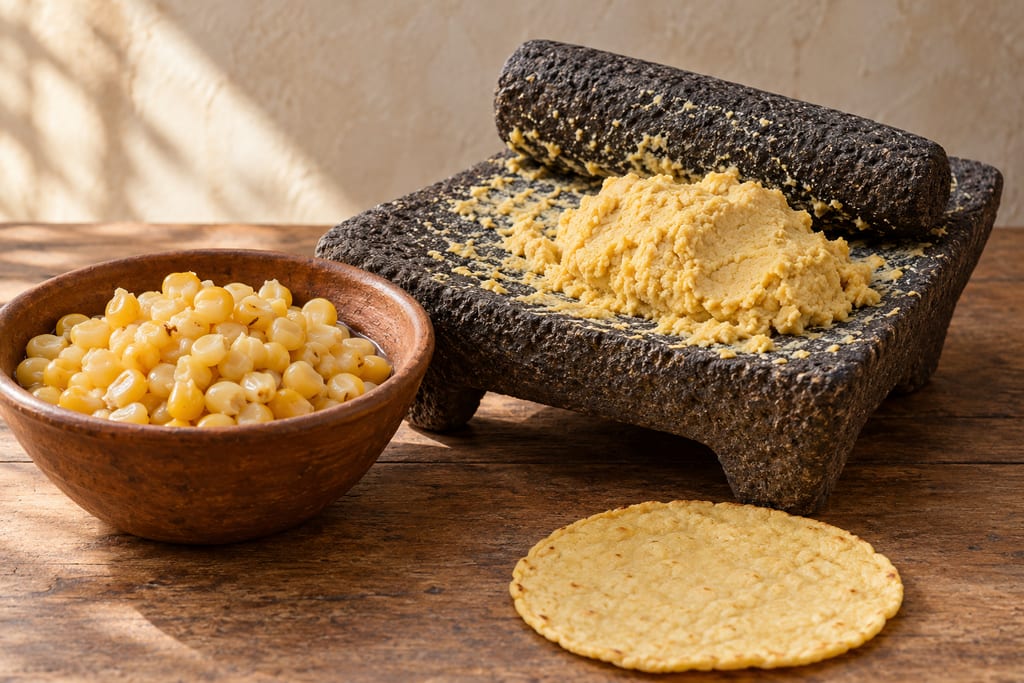
An illustrative still life of rinsed nixtamal kernels, freshly ground masa on a stone metate, and a plain tortilla; not a specific historical scene.

Nixtamal and masa

Whole maize cooked and steeped overnight in lime water, washed of its skins and excess lime, then ground into the moist dough used for tortillas.
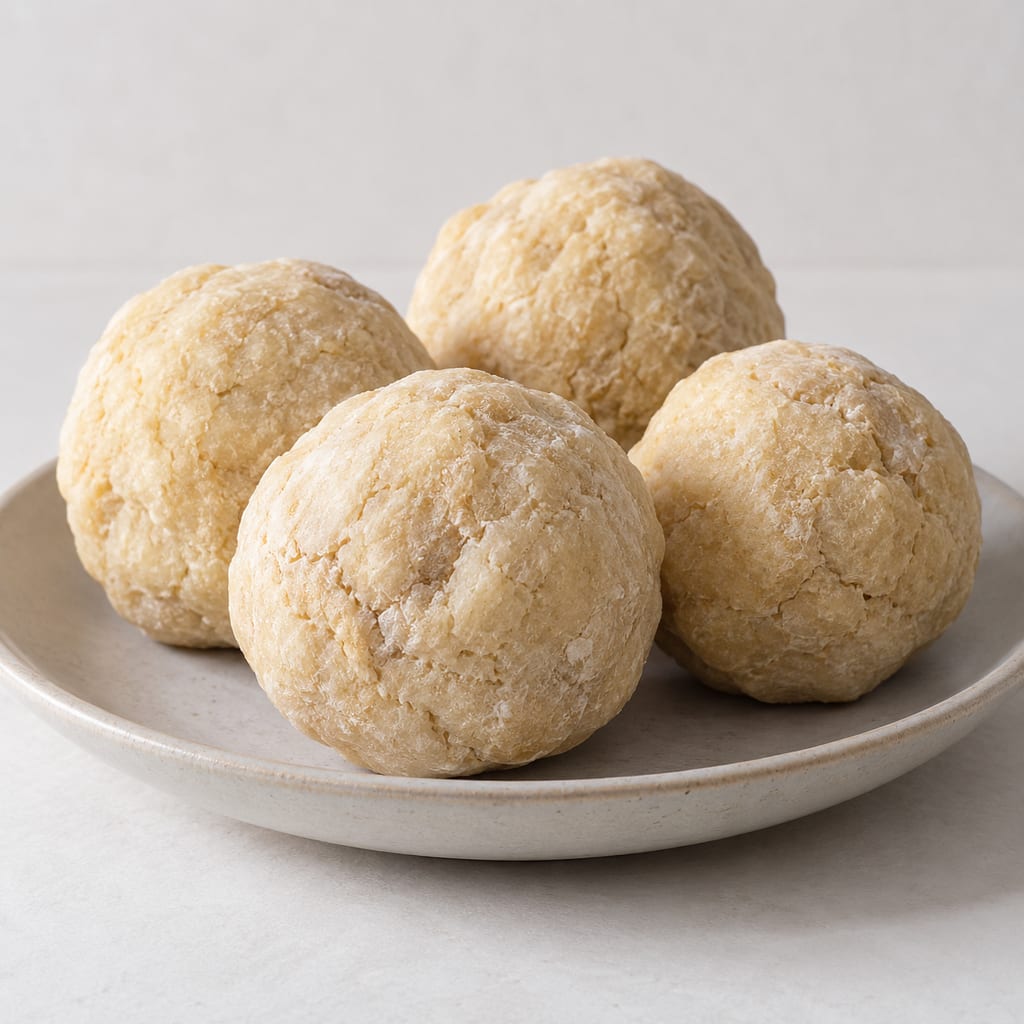
Mexico · Traditional method
Grains and starches
Illustrative rendering of Cameroonian Kumkum as round dried cassava balls described in IITA references; color and surface texture are interpretive because exact appearance is not specified.
High risk

Kumkum

Kumkum is a Cameroonian fermented-cassava preparation described as balls dried over a fireplace and stored or milled into flour. Sources also describe a sun-dried market form; they give no Kumkum-specific safety endpoint.
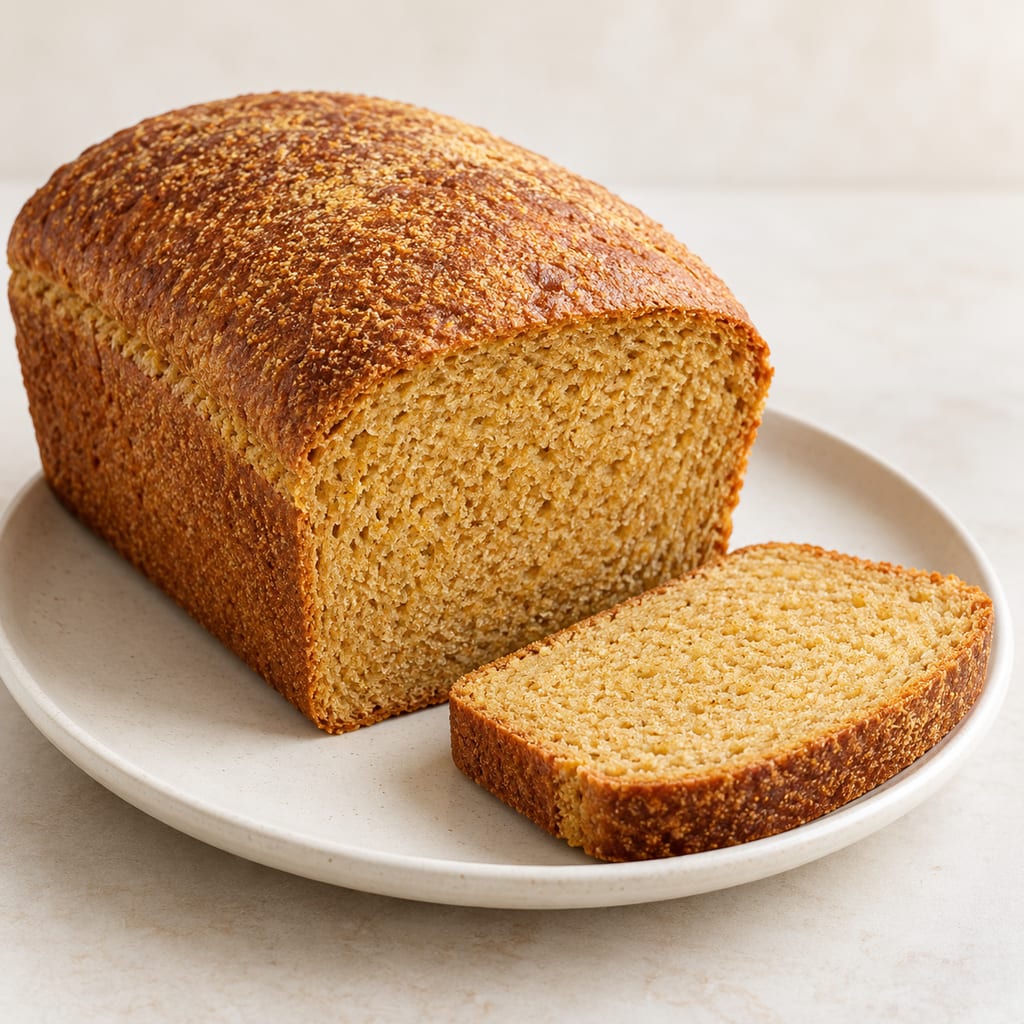
Cameroon · Traditional method
· Grains and starches
Finished Anadama loaf and slice showing a golden cornmeal crumb on an ivory plate.

Anadama

Anadama is a New England yeast loaf made with wheat flour, cornmeal and molasses. Scalded cornmeal enriches the dough, while molasses lends sweetness and a dark crust; it is especially good toasted or beside soup and baked beans.

New England · Traditional method
· Grains and starches
Golden, irregularly shaped boortsog fried pastries in a ceramic bowl, with a few twisted and rectangular pieces beside it.

Boortsog (Mongolian unyeasted fried pastry)

Firm Mongolian fried pastries made from an unyeasted wheat dough enriched with butter and sweetened with sugar; the dense dough is rested, cut or knotted, and fried until golden.
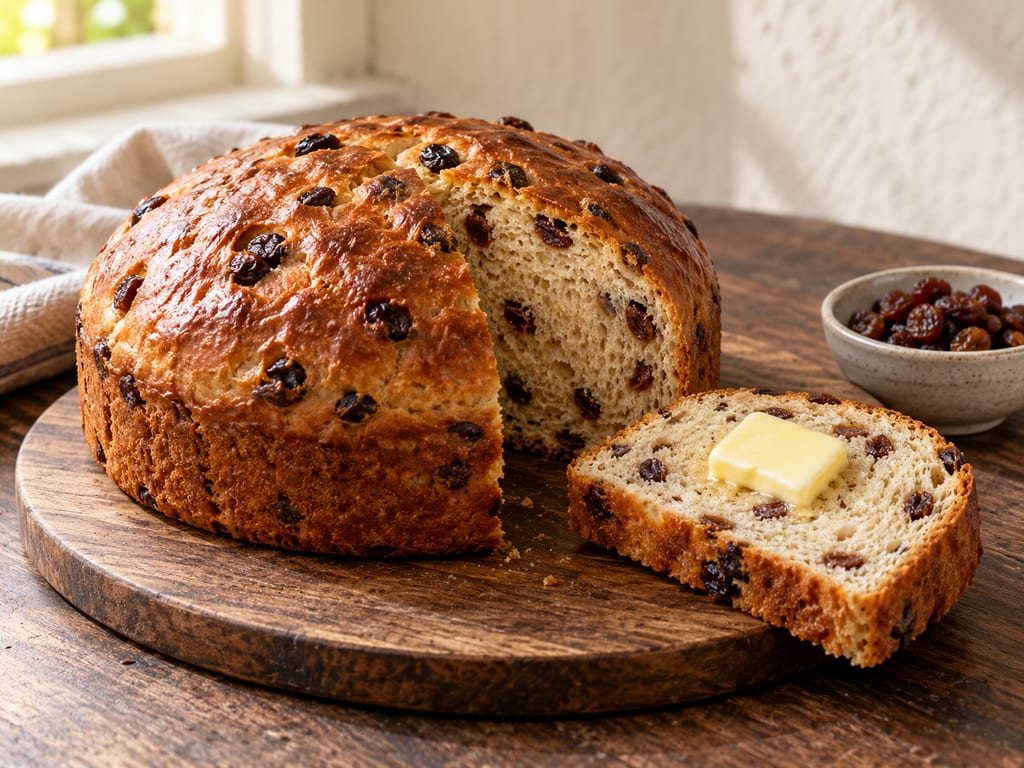
Mongolia · Traditional method
· Grains and starches
A round Barmbrack fruit loaf with a cut slice showing sultanas, beside a small bowl of sultanas and butter.

Barmbrack

An Irish fruit-studded yeast loaf, associated in a contemporary cultural account with Halloween and often served fresh or toasted with butter.
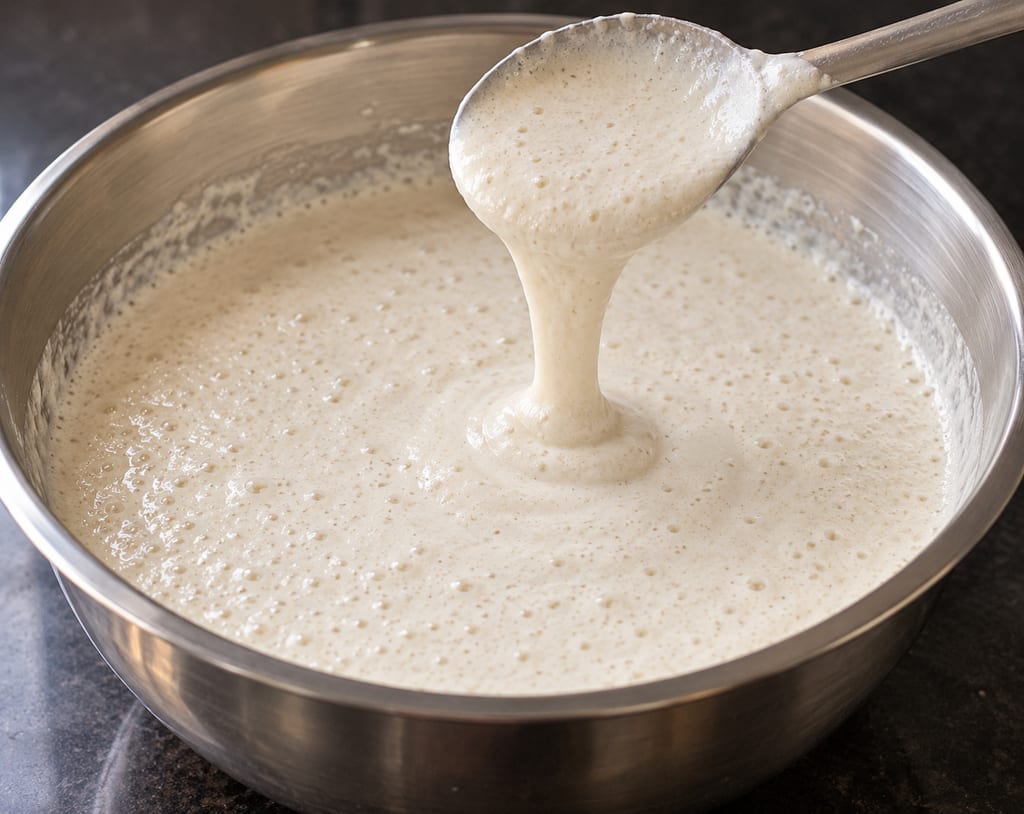
Ireland · Traditional method
· Grains and starches
Fermented dosa batter in a stainless-steel bowl, with a spoon showing its pourable consistency.
Elevated risk

Dosa batter

A naturally fermented South Indian rice-and-urad batter, ground fine and spread thin on a hot griddle. Fermentation lightens the batter and develops its gentle tang.
South India · Traditional method
· Grains and starches
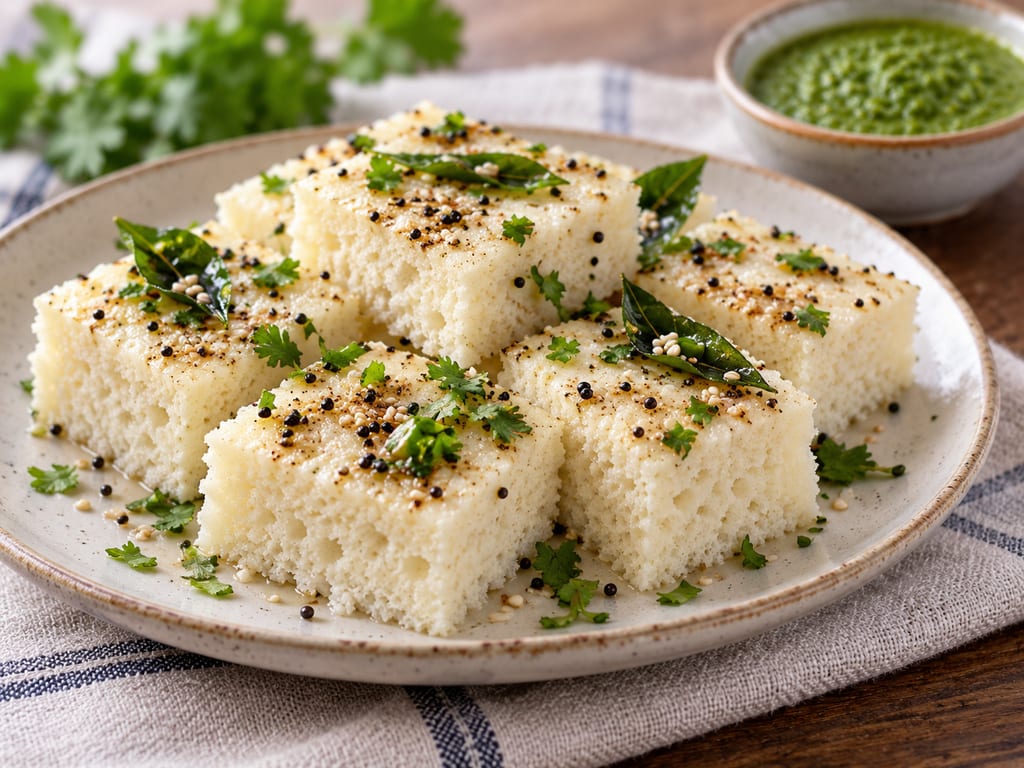
Pale, airy Gujarati khatta dhokla squares topped with mustard seeds, sesame and curry leaves.

Dhokla

Dhokla is a Gujarati savoury steamed cake made from a fermented rice-and-pulse batter, whose lactic bacteria and yeasts give acidity, aroma and a porous crumb before steaming.

Gujarat · Traditional method
· Grains and starches
Two sake brewers use long wooden paddles to grind pale rice-and-koji mash in a shallow wooden hangiri during kimoto yamaoroshi.

Kimoto and yamahai moto (traditional sake yeast starters)

Traditional Japanese sake yeast starters made from steamed rice, rice koji and water, acidified by naturally growing lactic acid bacteria. Kimoto grinds the rice mash with paddles; yamahai omits that step.
Japan · Traditional method
· Grains and starches
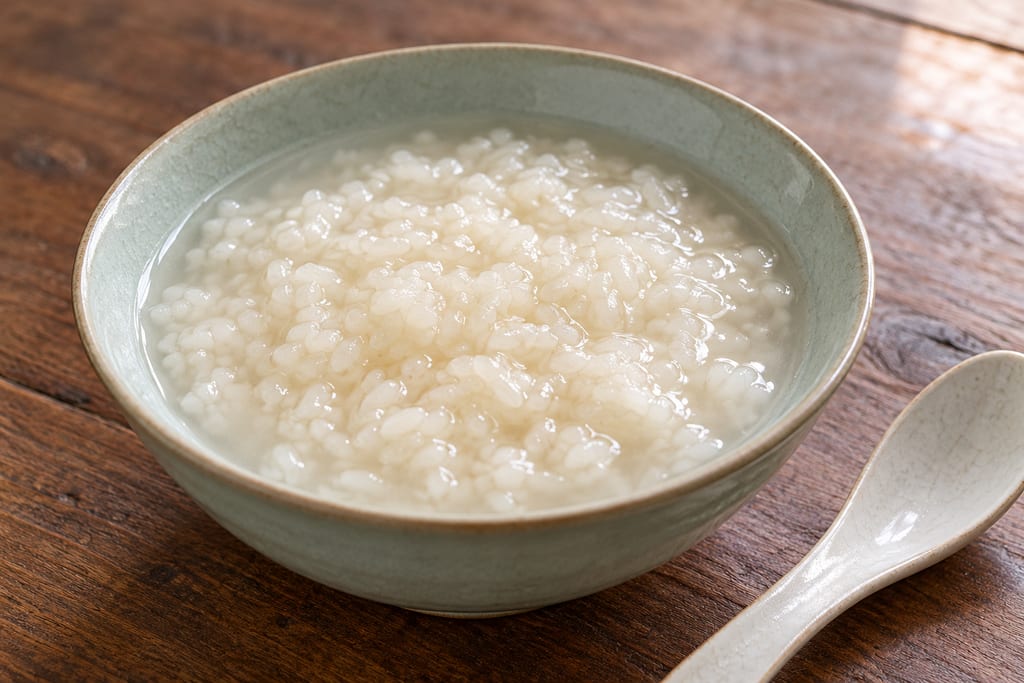
Pearly glutinous rice grains in a little cloudy sweet liquid in a pale celadon bowl.

Jiuniang (sweet fermented glutinous rice)

Chinese sweet fermented glutinous rice: steamed rice and a mixed jiuqu starter, where mould enzymes release sugar and yeast makes a little alcohol, eaten with its sweet liquid.
China · Traditional method
· Grains and starches
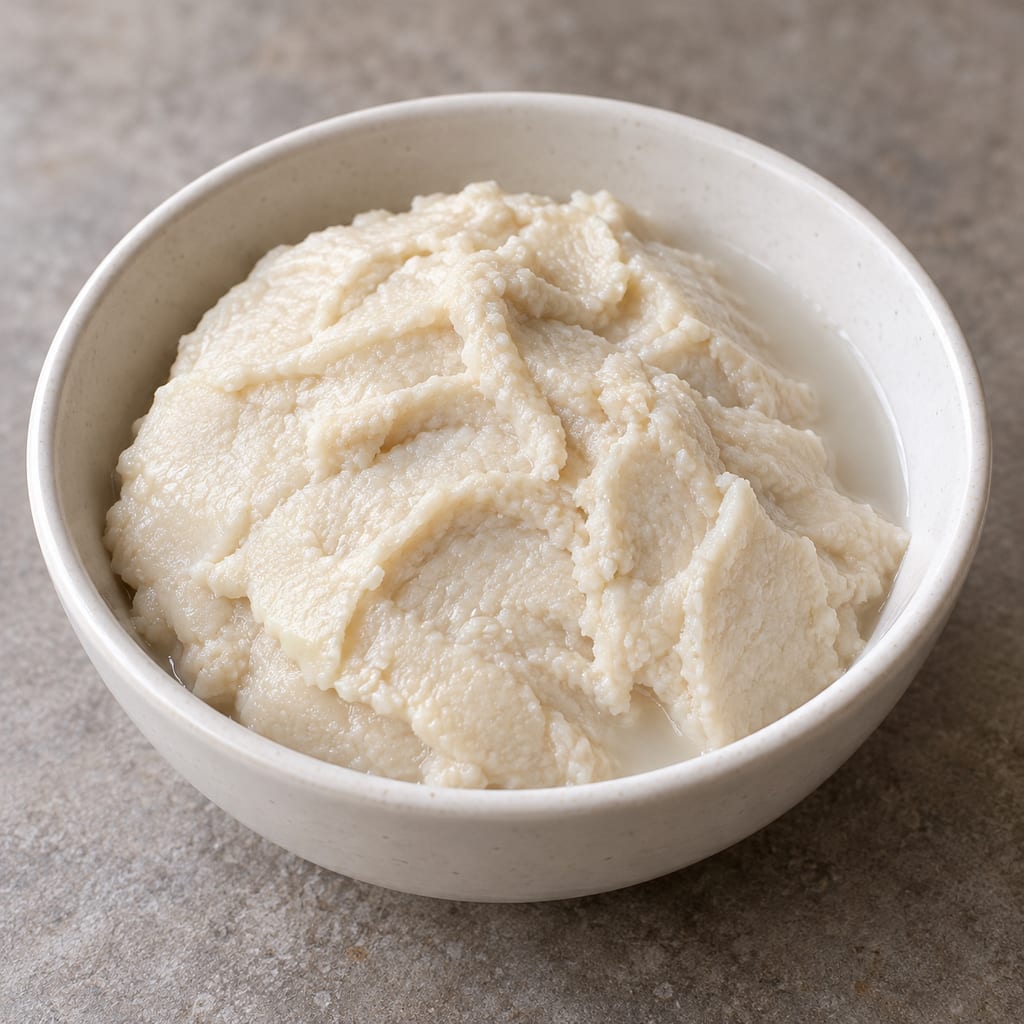
A bowl of thick, off-white fermented maize slurry at the drained settled-paste stage.
Elevated risk

Ogi and akamu, fermented cereal slurry

Ogi or akamu is a wet fermented cereal preparation documented in Nigeria and Benin. Grain or maize starch is steeped, milled or sieved, then fermented by process-specific routes; evidence supports no universal method or safety limit.
Nigeria · Traditional method
· Grains and starches
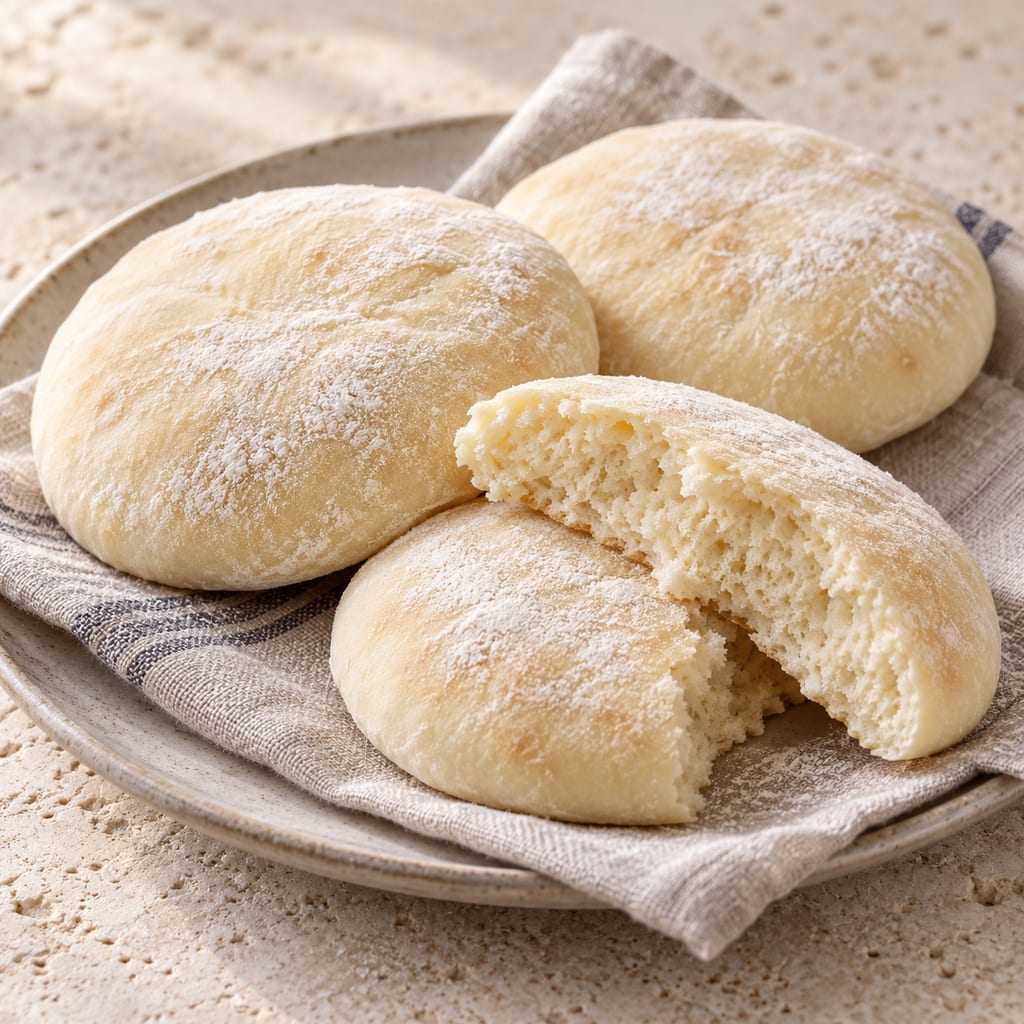
Pale, lightly flour-dusted Northern French faluches with soft white crumb

Faluche of Northern France

A pale, softly baked, low-profile bread associated with northern France and Tournai. This source-specific household method makes four large faluches; it differs from older accounts of leftover bread dough baked during communal bread baking.
Nord and Pas-de-Calais · Traditional method
· Grains and starches
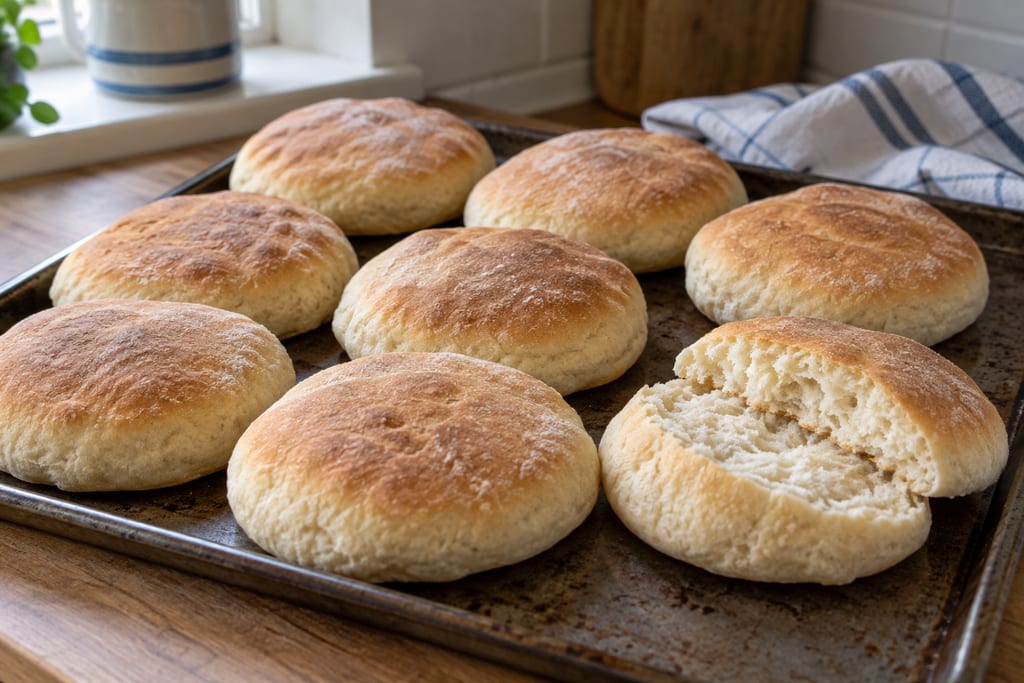
A tray of small round North East English stottie cakes from a twelve-round home recipe, softly browned with one showing its tender crumb.

Stottie cake

A North East England yeast bread baked as flat round cakes. Terence Laybourne's Newcastle home recipe makes twelve rounds about 1 inch thick and serves them warm.
Newcastle upon Tyne · Traditional method
· Grains and starches
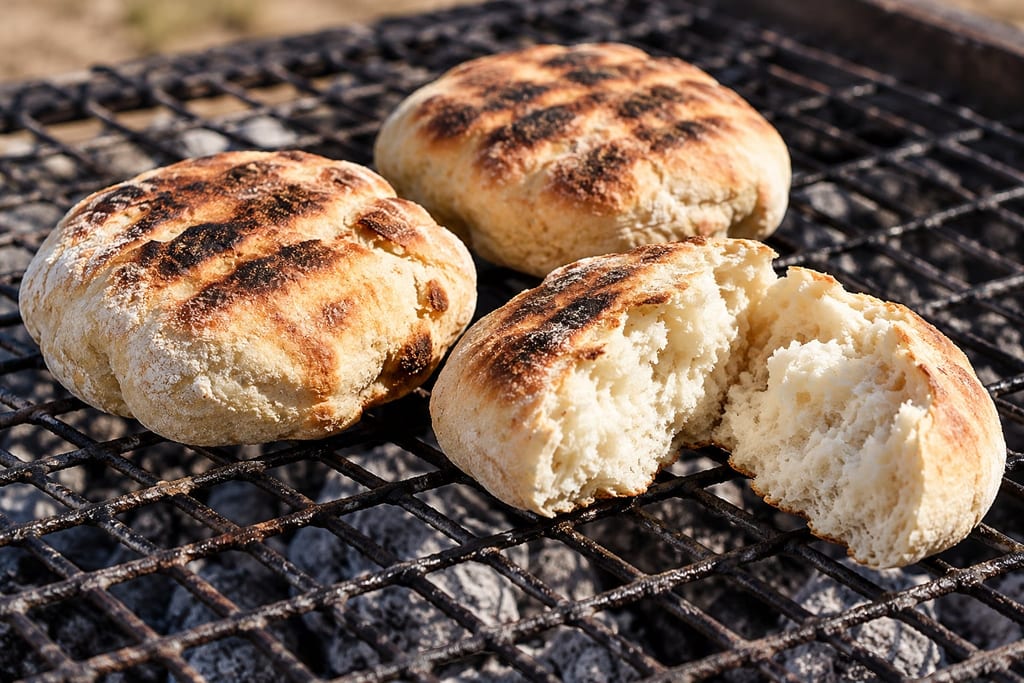
Illustrative South African roosterkoek: small golden, hand-shaped braai breads with irregular grid browning and a soft, cooked crumb.

Roosterkoek (South African braai bread)

Roosterkoek is a small yeast-raised South African bread cooked over gentle braai coals. This enriched dough rises twice and is turned on the grid until browned and cooked through.
South Africa · Traditional method
· Grains and starches
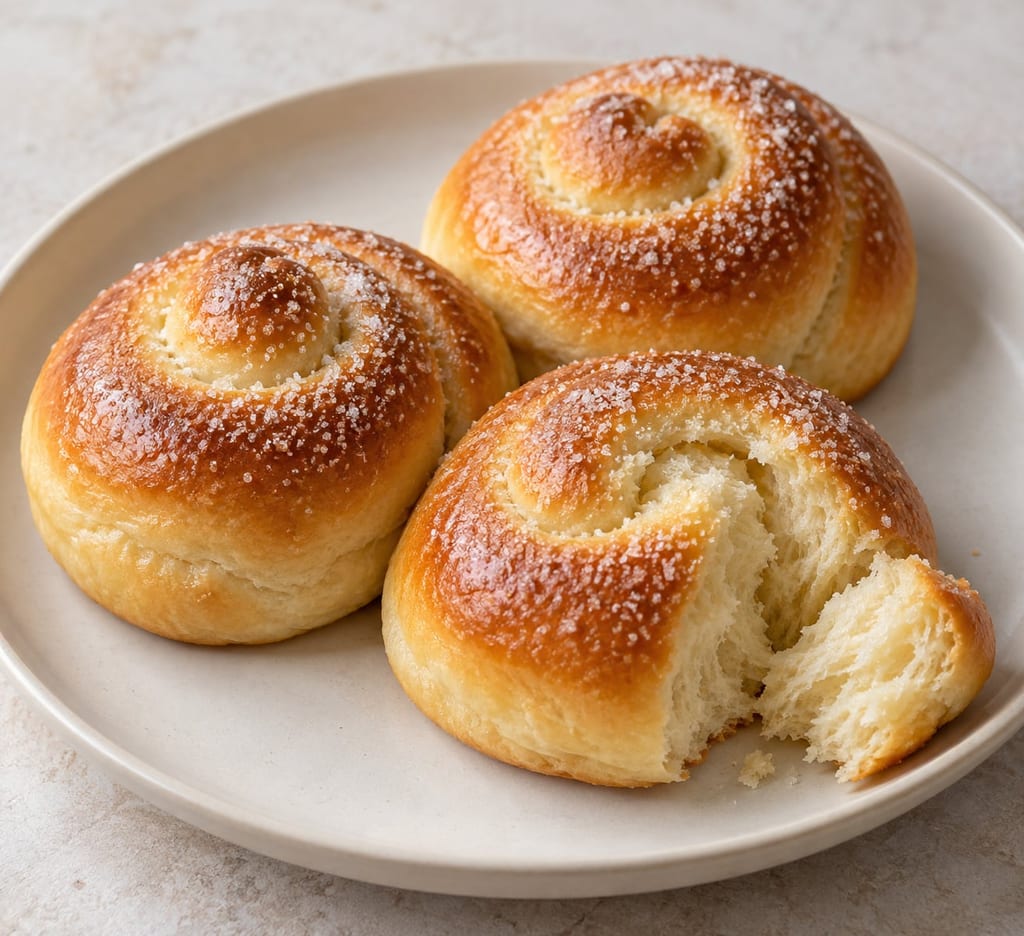
Egyptian shoreek sweet rolls, sugar-dusted golden spirals with a soft airy crumb.

Shoreek (Egyptian sweet rolls)

Egyptian sweet wheat rolls shaped into coils or braids, enriched with milk, egg and fat and eaten at breakfast, with tea or milk, and at family celebrations.
Egypt · Traditional method
· Grains and starches
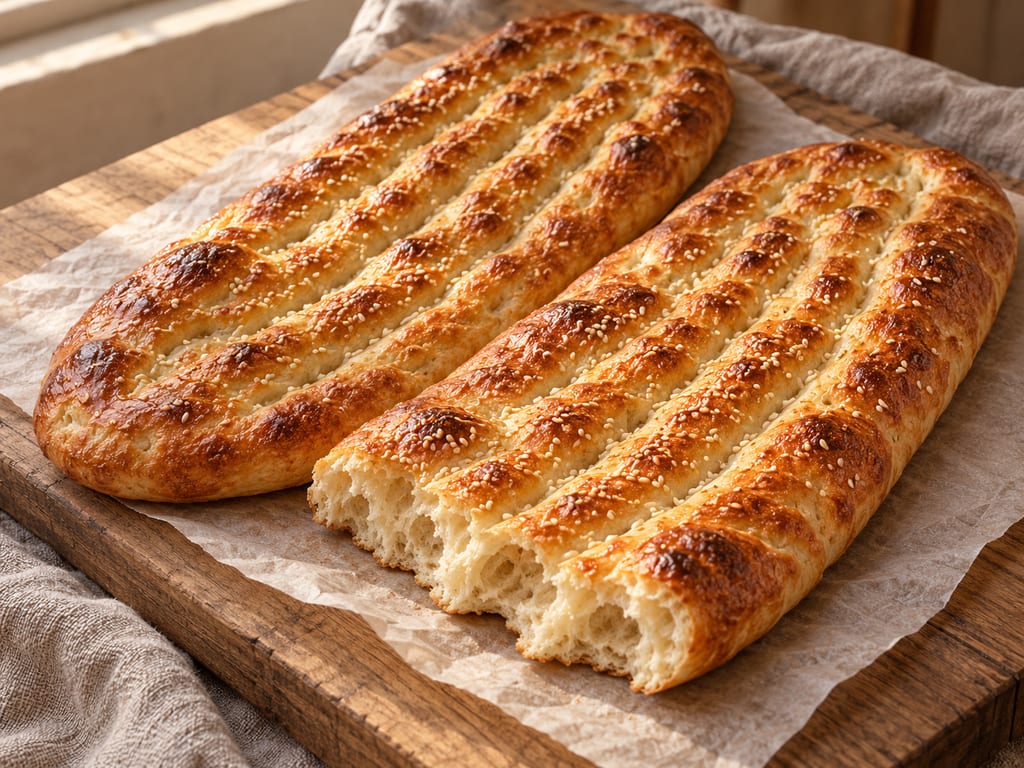
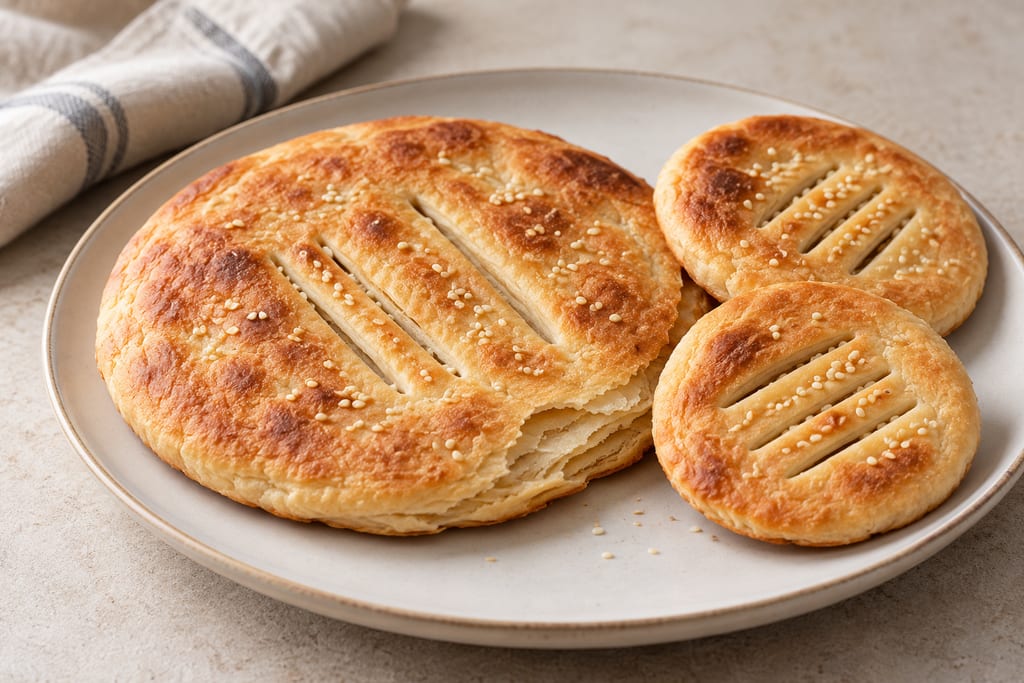
Two grooved oval Noon barbari loaves with golden roomal-glazed crust and sesame seeds.

Noon barbari

A yeast-raised Iranian flatbread with a crisp roomal-glazed crust, long grooves and a soft interior.
Iran · Traditional method
· Grains and starches
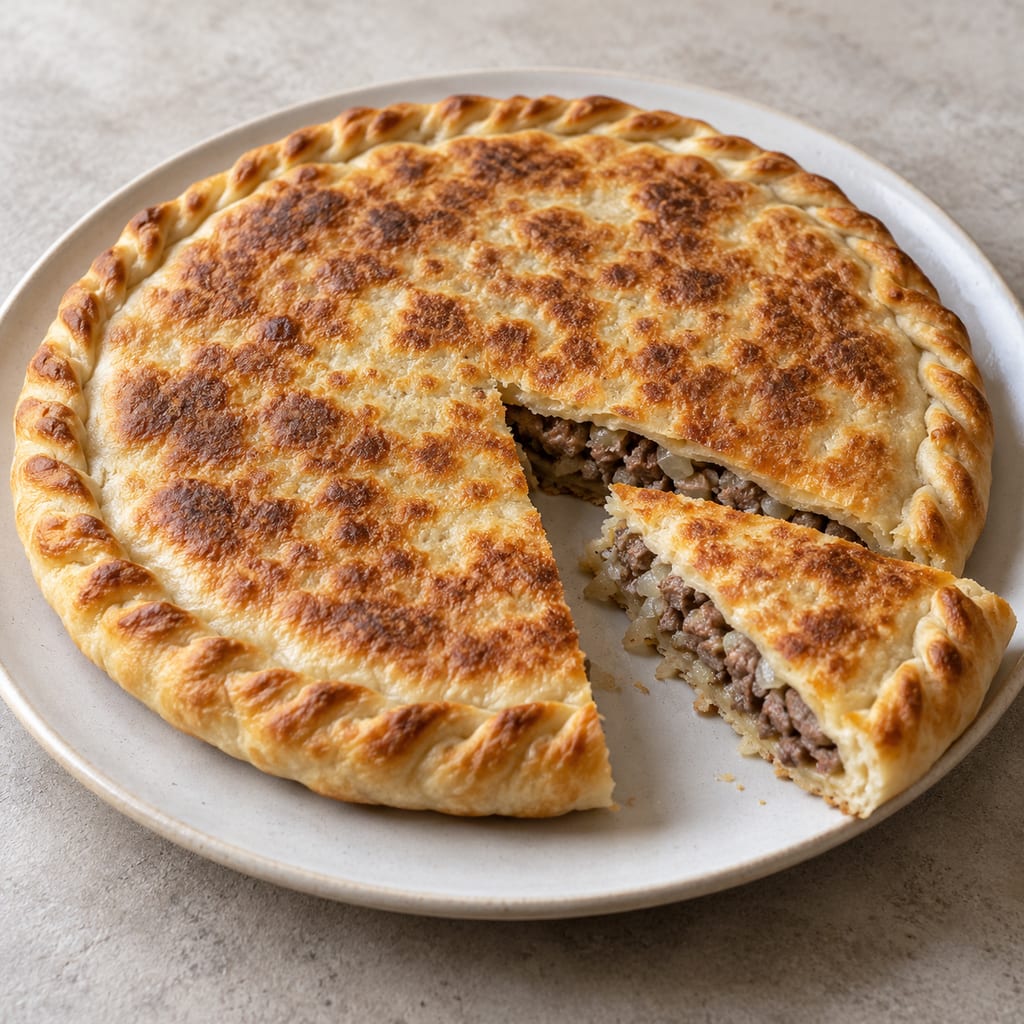
A golden round Uyghur gosh-naan, pan-fried and sealed around lamb and onion, with one wedge showing the cooked filling
Elevated risk

Gosh-naan

Gosh-naan is a Uyghur meat-filled bread in one family recipe: lamb, onion and cumin are sealed in yeast dough, pan-cooked, and checked at a safe centre temperature.
Uyghur communities · Traditional method
· Grains and starches
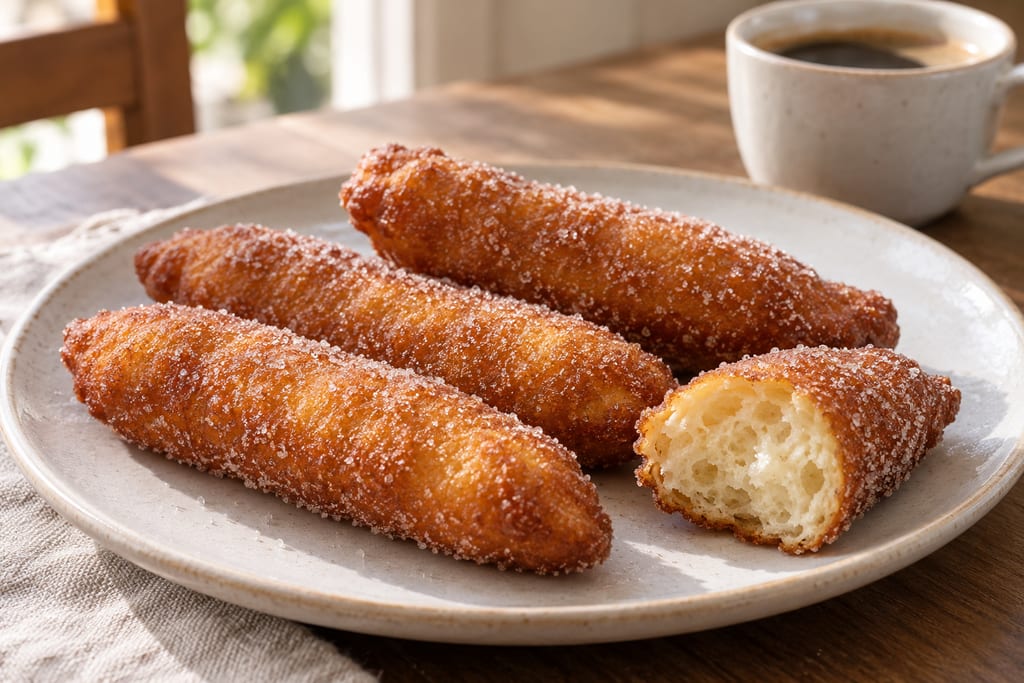
Straight golden Tahitian firi firi doughnuts lightly coated in sugar on a plate beside coffee.
Elevated risk

Firi firi (Tahitian coconut doughnuts)

Firi firi is a yeast-raised coconut doughnut piped into long pieces and deep-fried at 170°C, traditionally eaten for breakfast or dessert in Tahiti.
Tahiti, French Polynesia · Traditional method
· Grains and starches
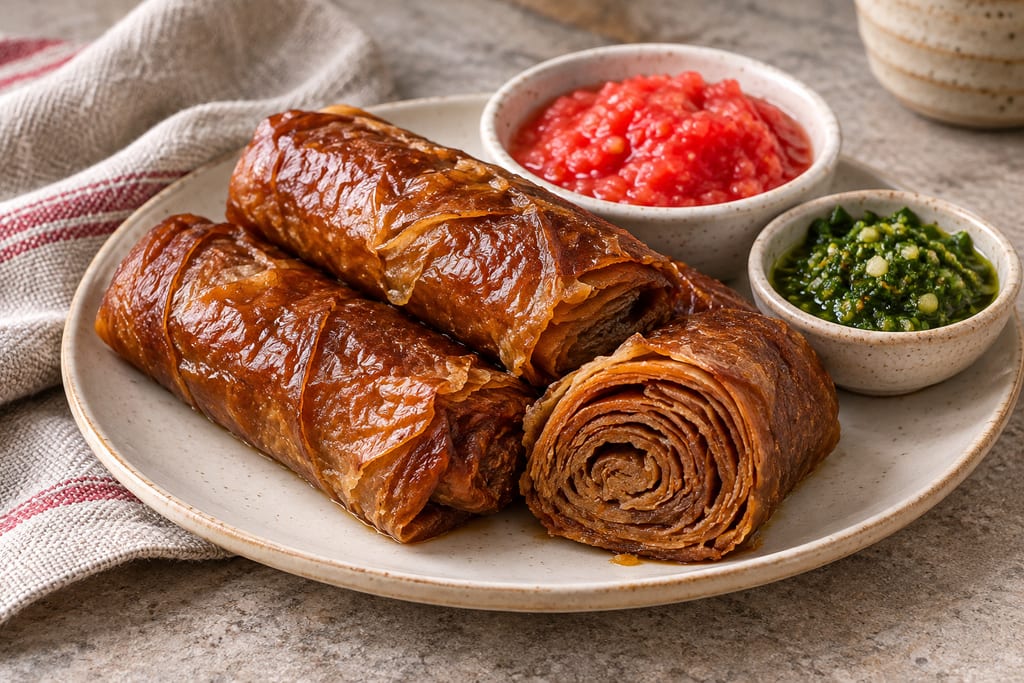
Deeply golden, butter-layered jachnun rolls with a cut spiral end, served with grated tomato and schug.

Jachnun (Yemenite Jewish overnight pastry)

Jachnun is a rolled, butter-layered wheat pastry baked covered for hours at very low oven heat and served warm, often with grated tomato and schug.

Yemen · Traditional method
· Grains and starches
A plain appam on a dark plate, its soft center surrounded by a golden, lacy rim.

Appam and hoppers

Appam, or hoppers, are South Indian and Sri Lankan rice pancakes made from a fermented coconut-and-rice batter and cooked in a curved pan to a crisp lacy rim and a soft, spongy centre.
Kerala · Traditional method
· Grains and starches
Round, lightly browned layered Old Dhaka bakarkhani with three slits and optional sesame seeds; illustrative of the linked home recipe.

Old Dhaka bakarkhani

A firm, layered bread from Old Dhaka, made with mawa and ghee and baked until lightly browned.
Dhaka · Traditional method
· Grains and starches
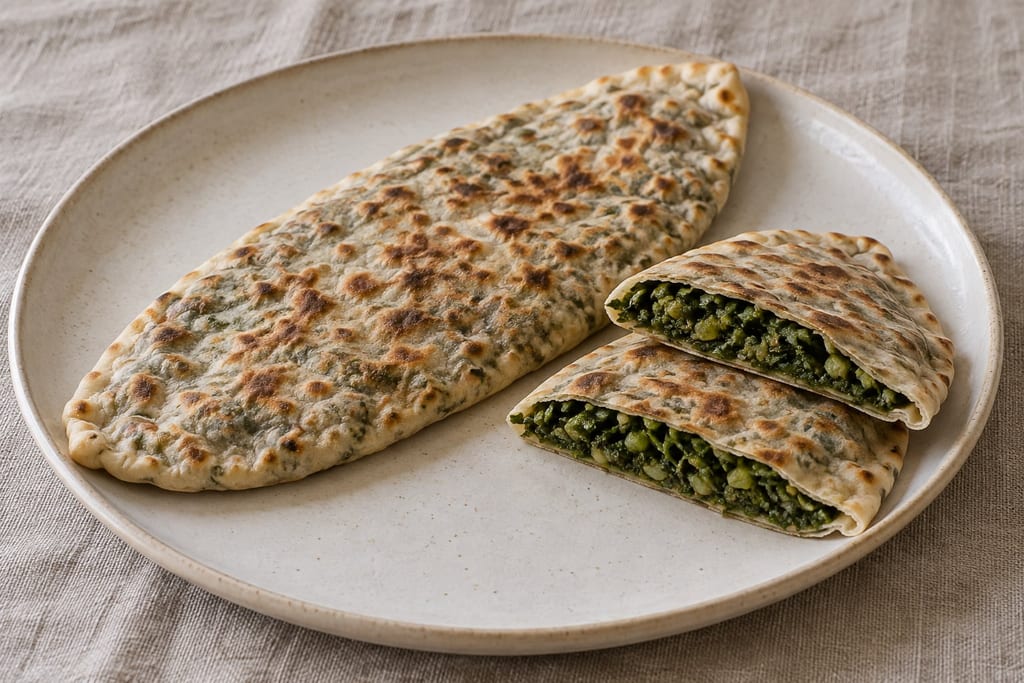
Thin, griddle-browned Armenian zhingyalov hats, one whole and one cut open to show finely chopped greens and herbs.

Zhingyalov hats (greens-filled flatbread)

An unleavened Armenian flatbread filled with mixed greens and herbs, sealed into an oval and cooked on a griddle.
Artsakh · Traditional method
· Grains and starches
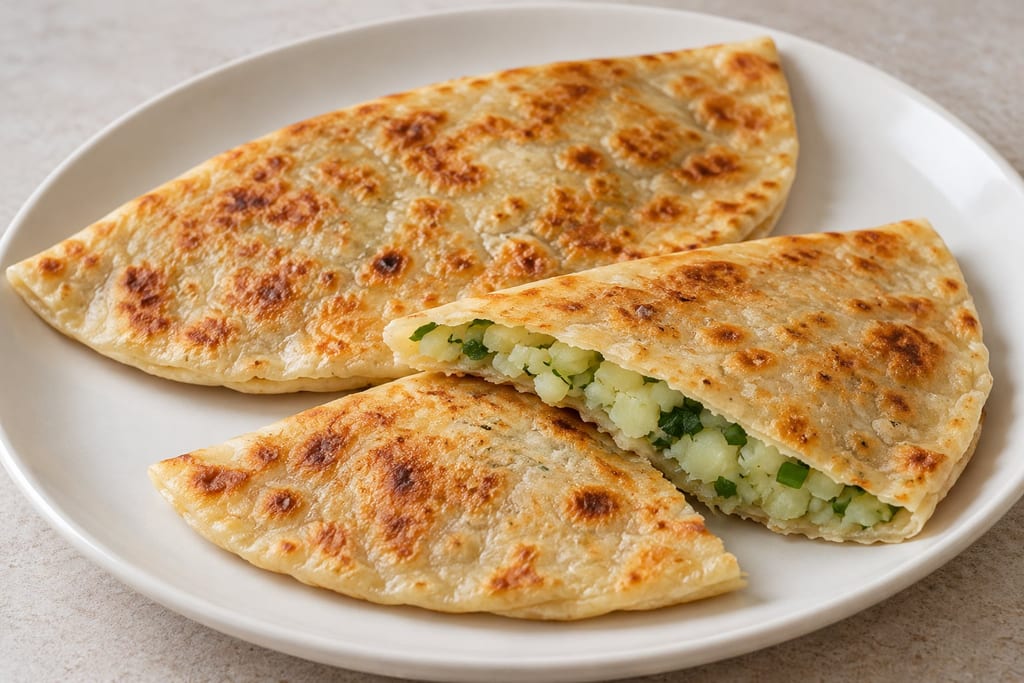
Two thin golden Afghan potato-and-scallion bolani, one cut open to show its mashed potato, scallion and cilantro filling.

Bolani e kachaloo (potato and scallion)

A thin, unleavened Afghan flatbread filled with mashed potato, scallion and cilantro, folded and pan-browned. This version uses a dough made from scratch.
Afghanistan · Traditional method
· Grains and starches
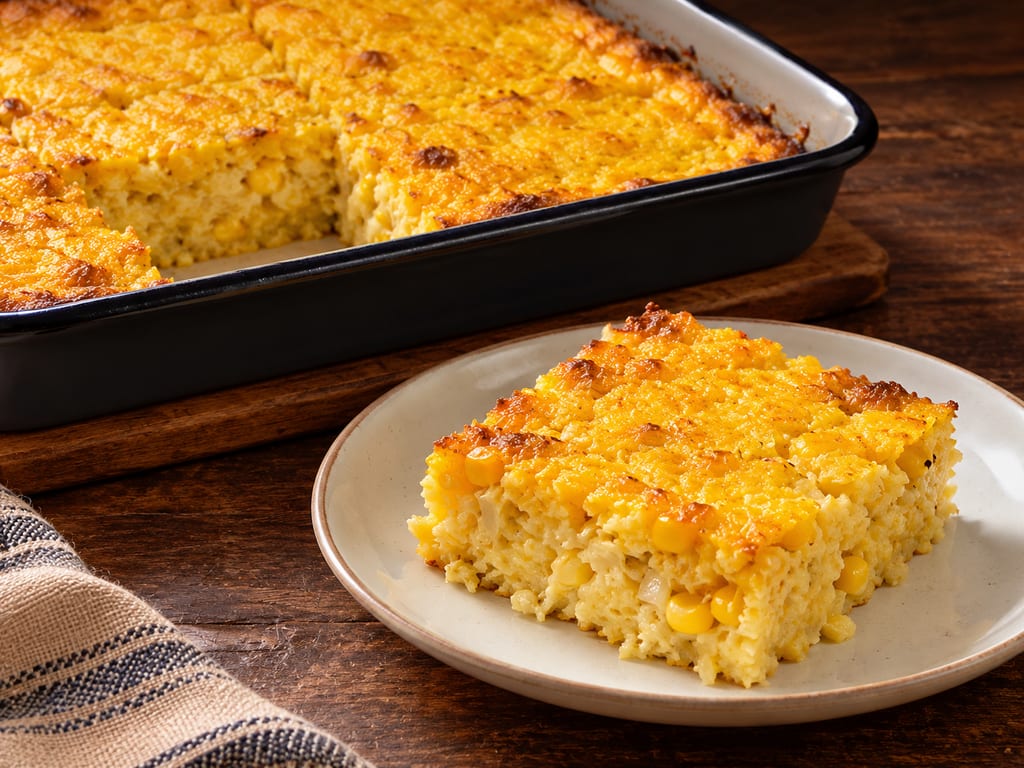
A golden chipa guazú fresh-corn bake in a shallow dish, with one moist corn-studded square served beside it.

Chipa guazú

A Paraguayan fresh-corn bake mixed with Queso Paraguay, onion, eggs and milk, served in moist squares.
Paraguay · Traditional method
· Grains and starches
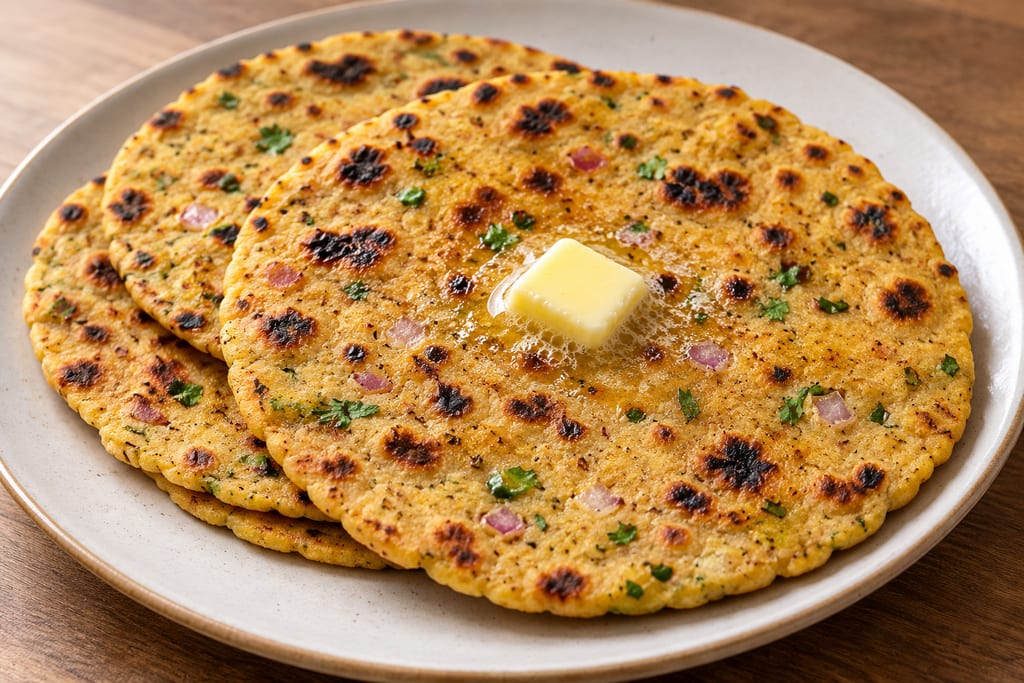
A stack of flat golden missi roti with browned tawa spots, onion, chilli and coriander flecks, topped with a small pat of butter.

Missi roti

A chickpea-and-wheat flatbread made with spices, onion and herbs, rolled and cooked on a tawa. This batch makes sixteen.
India · Traditional method
· Grains and starches
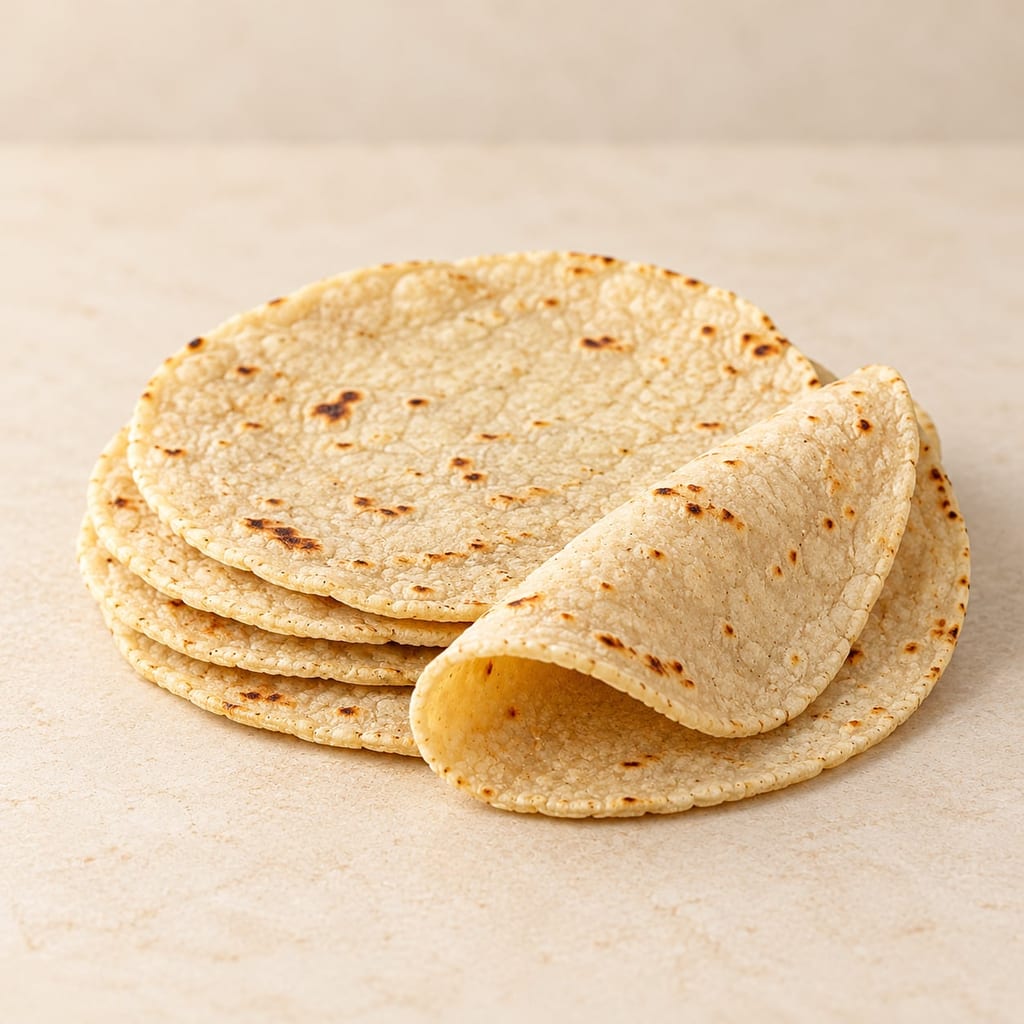
Plain maize tortillas made from nixtamalized masa, stacked with one folded to show their soft flexible structure; editorial image, not a photograph of a particular batch.

Maize tortillas

Fresh nixtamalized maize is ground into masa, pressed into thin rounds and cooked on a comal. This Mexican home formula uses food-grade cal viva and makes about 20 tortillas.
Mexico · Traditional method
· Grains and starches
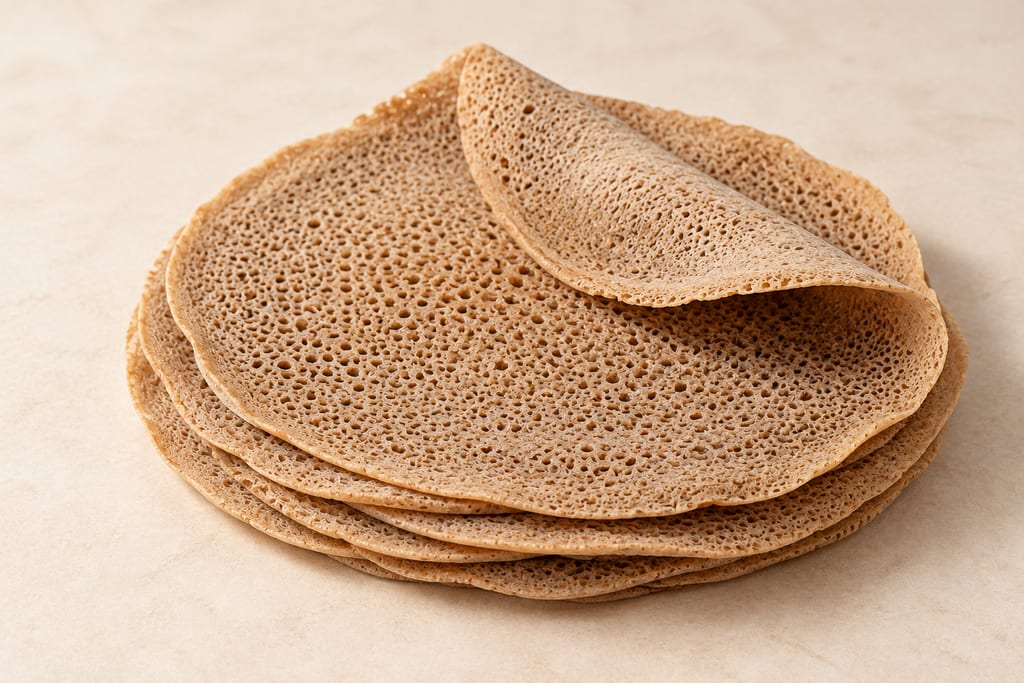
A stack of thin porous teff injera on a warm ivory surface, one round folded back to show its soft texture.
Elevated risk

Teff injera with saved ersho and absit

A two-stage Ethiopian teff injera method begins with saved ersho, ferments the main batter beneath refreshed surface water, then adds cooked absit before a final warm rest and griddle baking.
Ethiopia · Traditional method
· Grains and starches
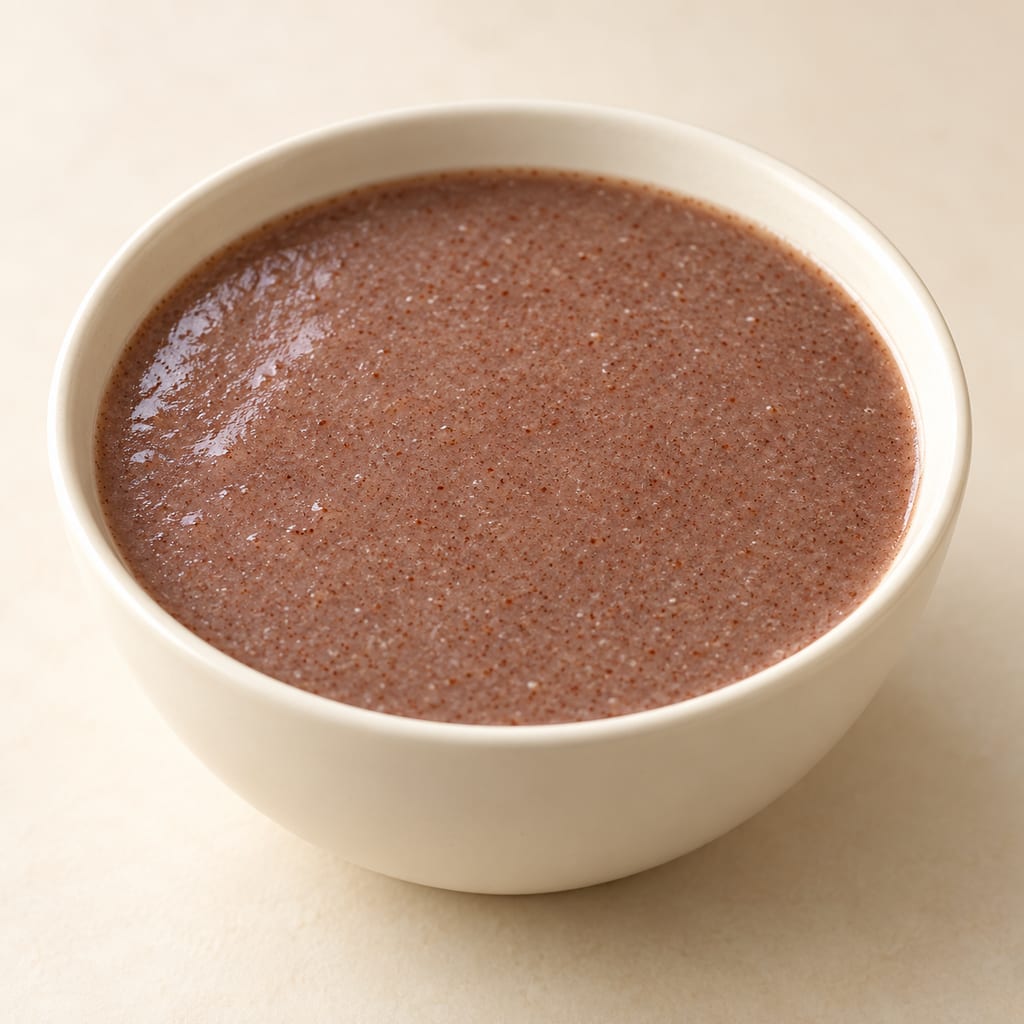
A plain bowl of Western Kenyan fermented finger-millet uji, shown as smooth thin brown porridge.
Elevated risk

Western Kenyan fermented finger-millet uji

A thin, sour porridge of western Kenya made by fermenting unroasted finger-millet flour in water for a day or two, then diluting it and cooking it through.
Western Kenya · Traditional method
· Grains and starches
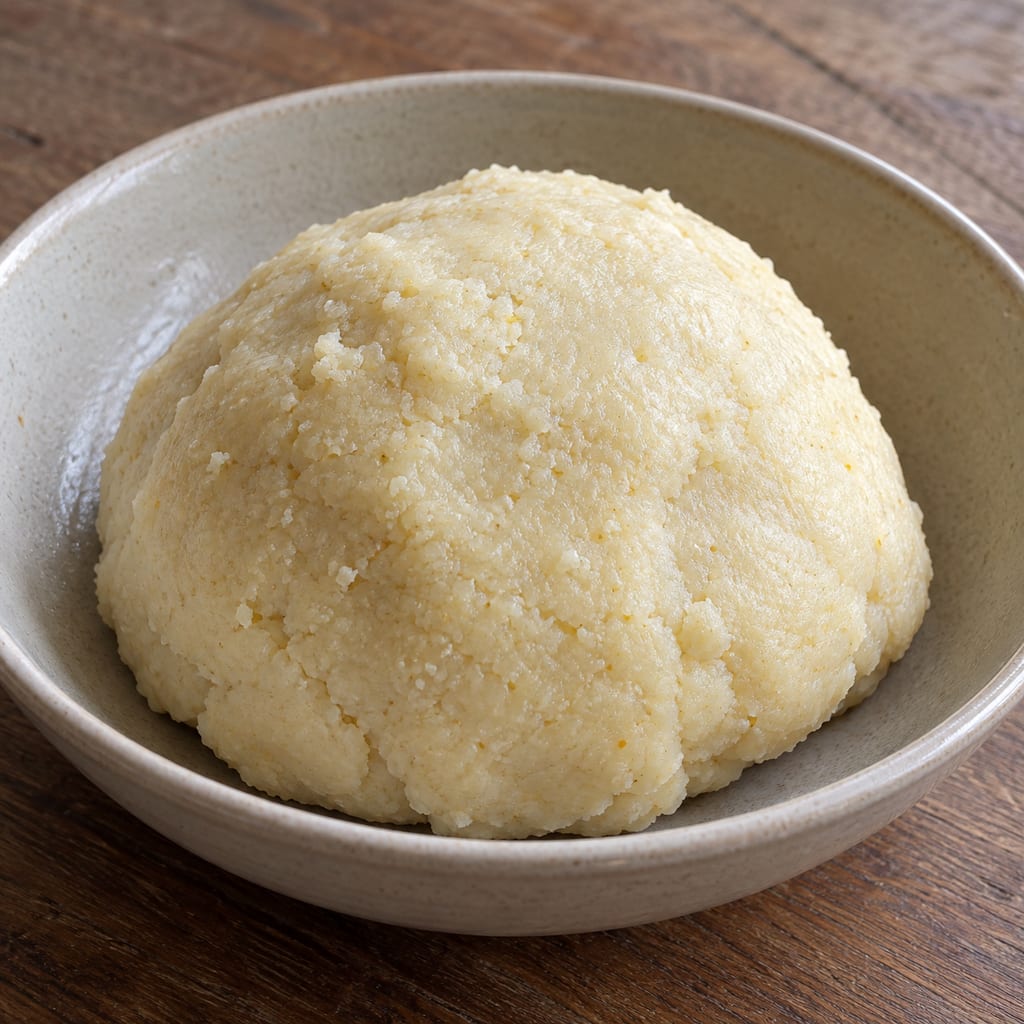
A moist mound of uncooked Mawè, fermented maize dough, in a plain shallow bowl.

Mawè

Mawè is a spontaneously fermented maize or other cereal dough from Benin and neighbouring West Africa, soured by lactic bacteria and yeasts and used as the base for cooked pastes, porridges, breads and drinks.

Benin · Traditional method
· Grains and starches