Nacuma
Crepidotus palmarum is a wood-dwelling fungus documented as food in Pauna, Boyacá, where local names include nacuma and orejas blancas; cultivation has also been studied.
 FermenteaWhere food goes to change
1086 articles on substrates, cultures and additives.
 Edible mushrooms319
 Brittlegills24
 Truffles19
 Milkcaps17
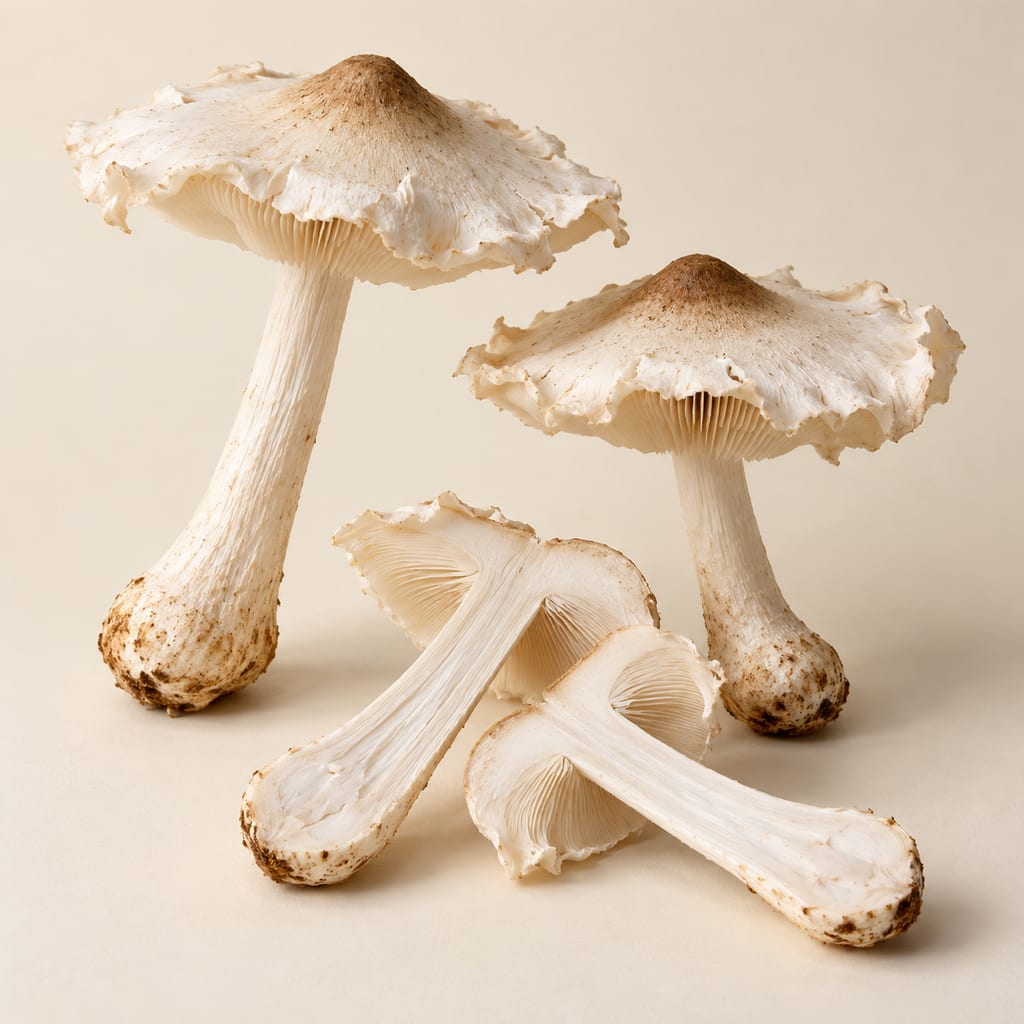 Termite mushrooms17
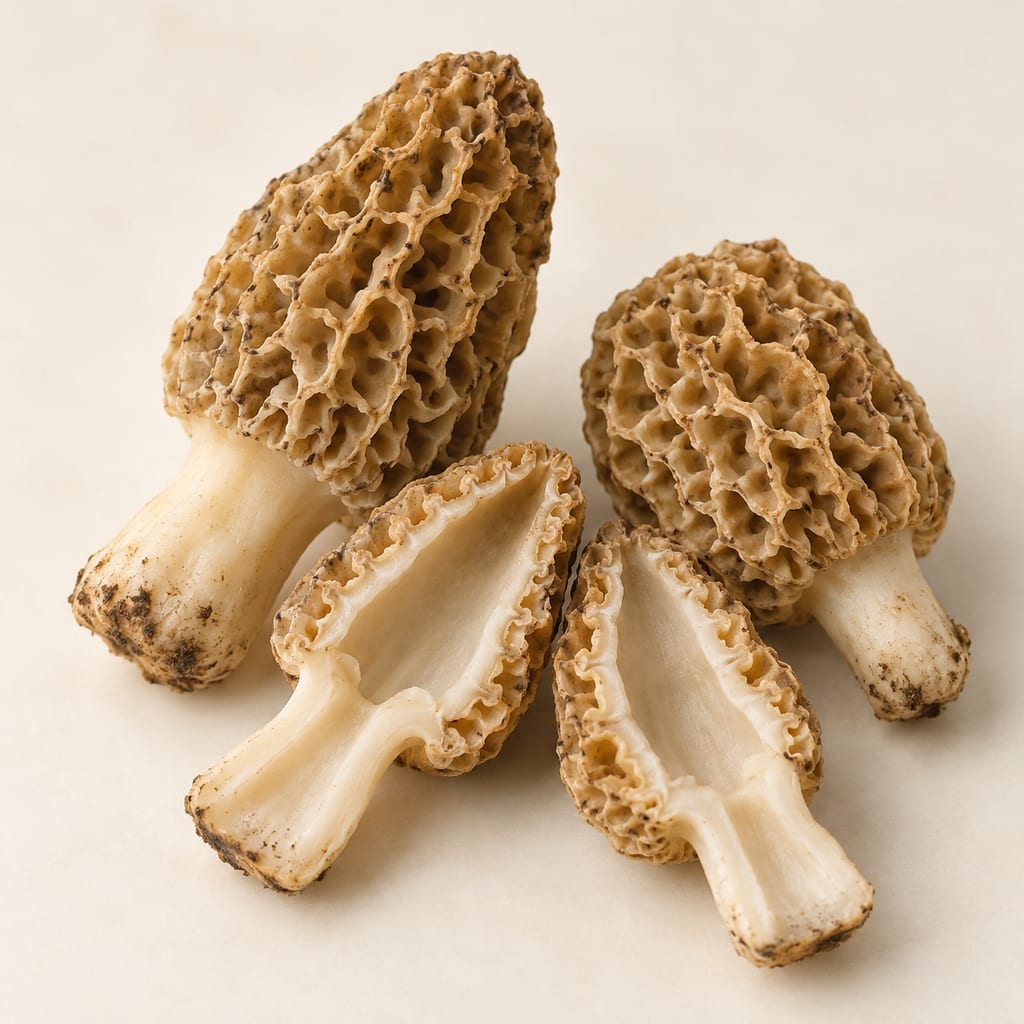 Morels4
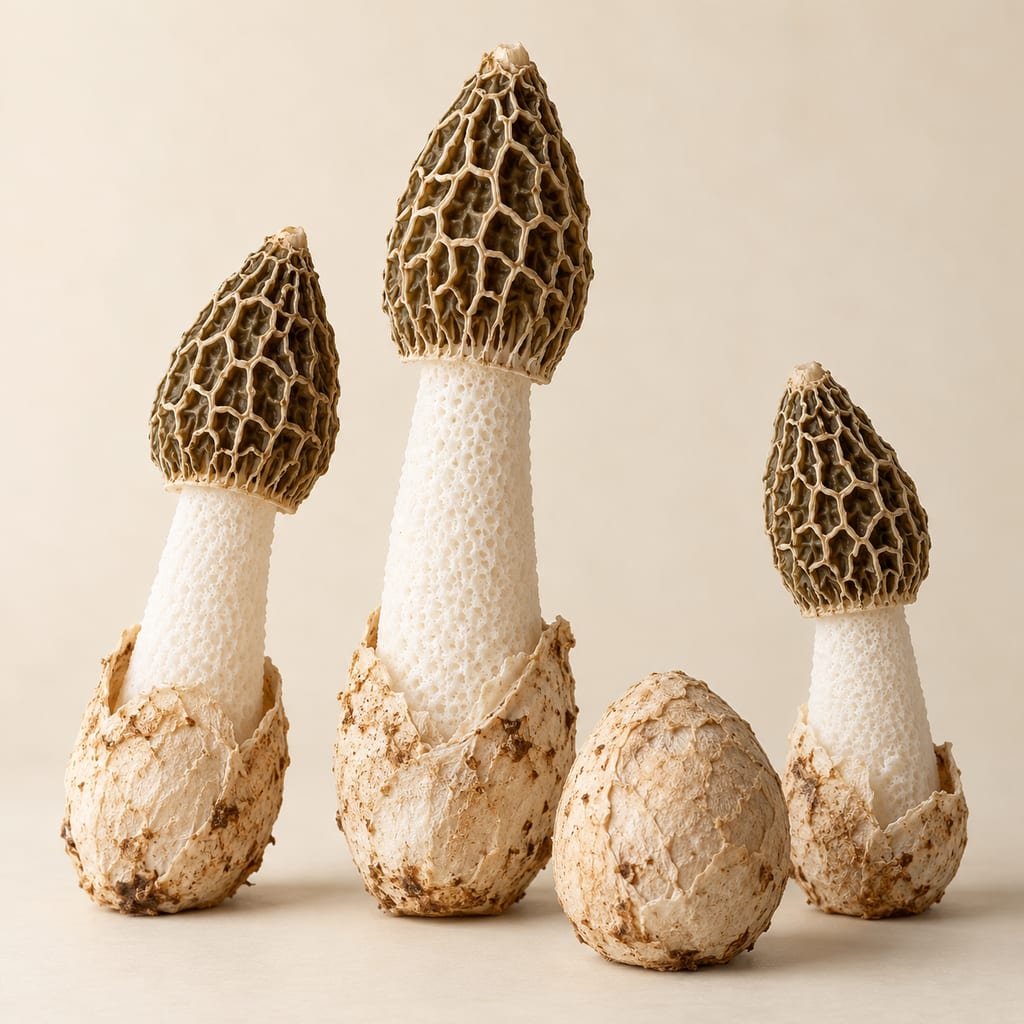 Stinkhorn fungi4
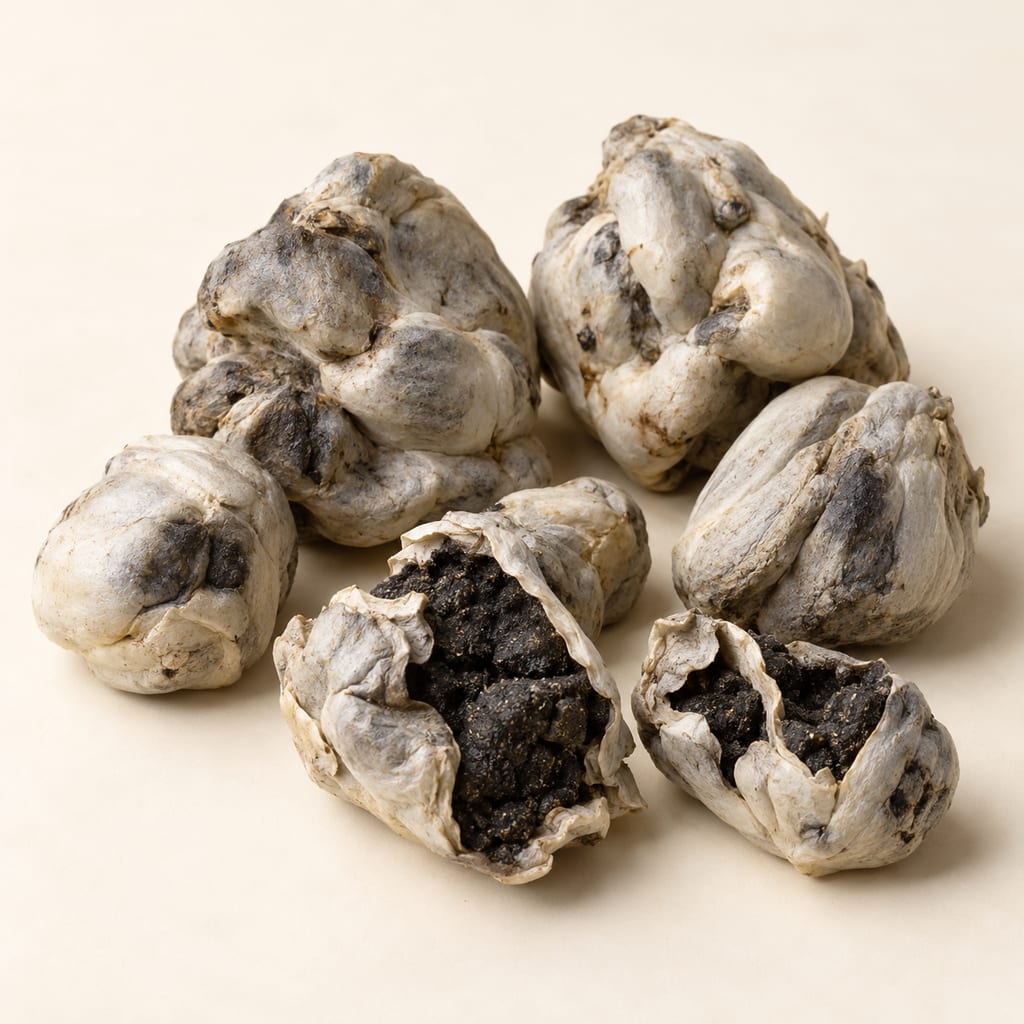 Fungi3
Crepidotus palmarum is a wood-dwelling fungus documented as food in Pauna, Boyacá, where local names include nacuma and orejas blancas; cultivation has also been studied.
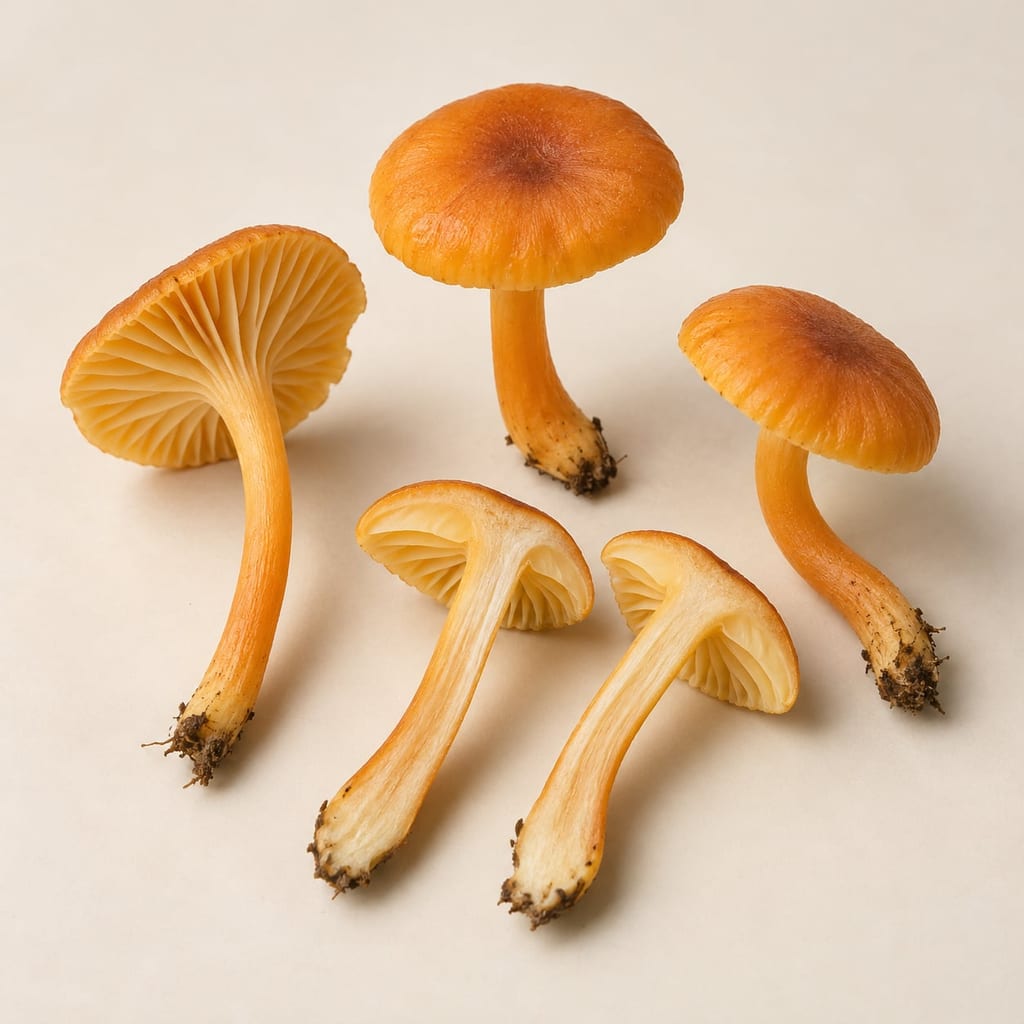
Hygrocybe cantharellus is a small orange waxy-cap agaric with a catalogued food record from Tshopo province, DR Congo, and a taxonomy that the sources read do not settle for that region.
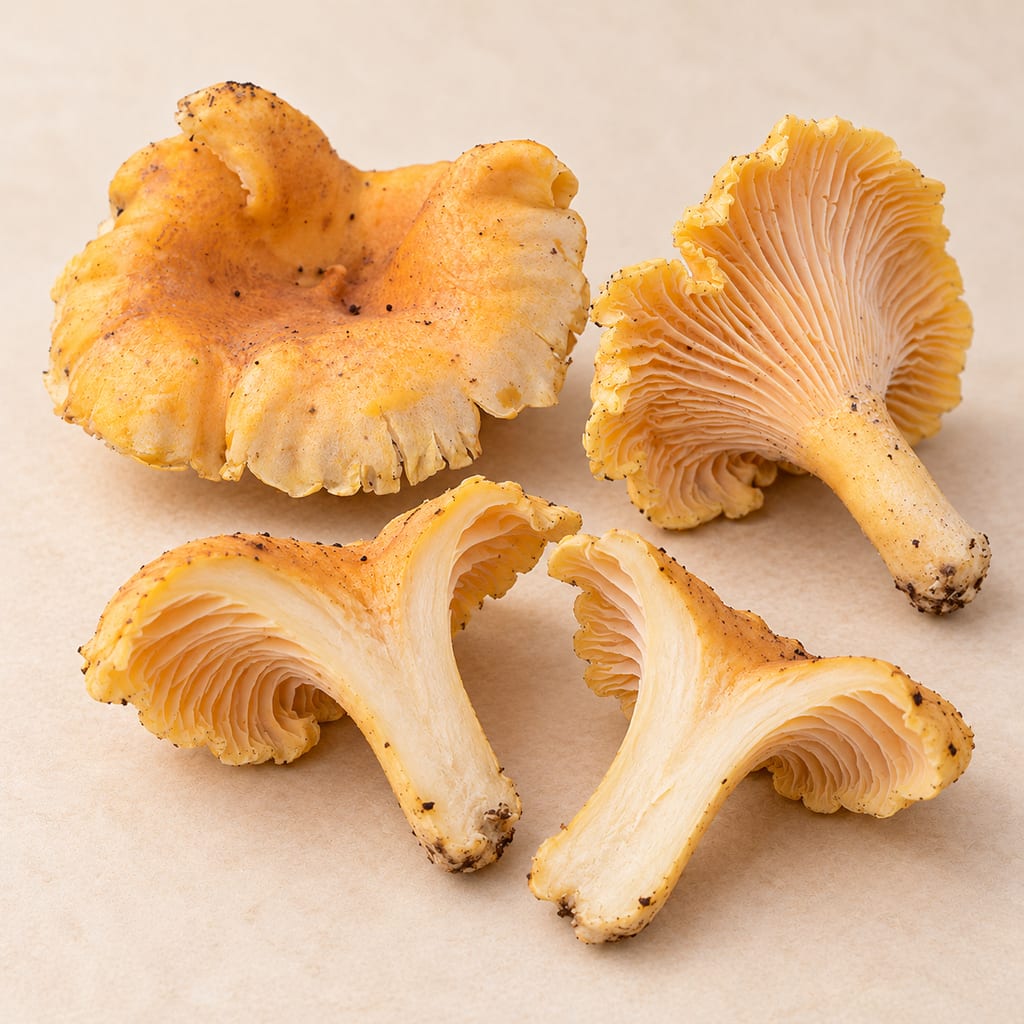
Cantharellus rufopunctatus is a rainforest chanterelle-group fungus that the catalogue records as eaten locally in Tshopo province, DR Congo, where no species-specific preparation has been established.
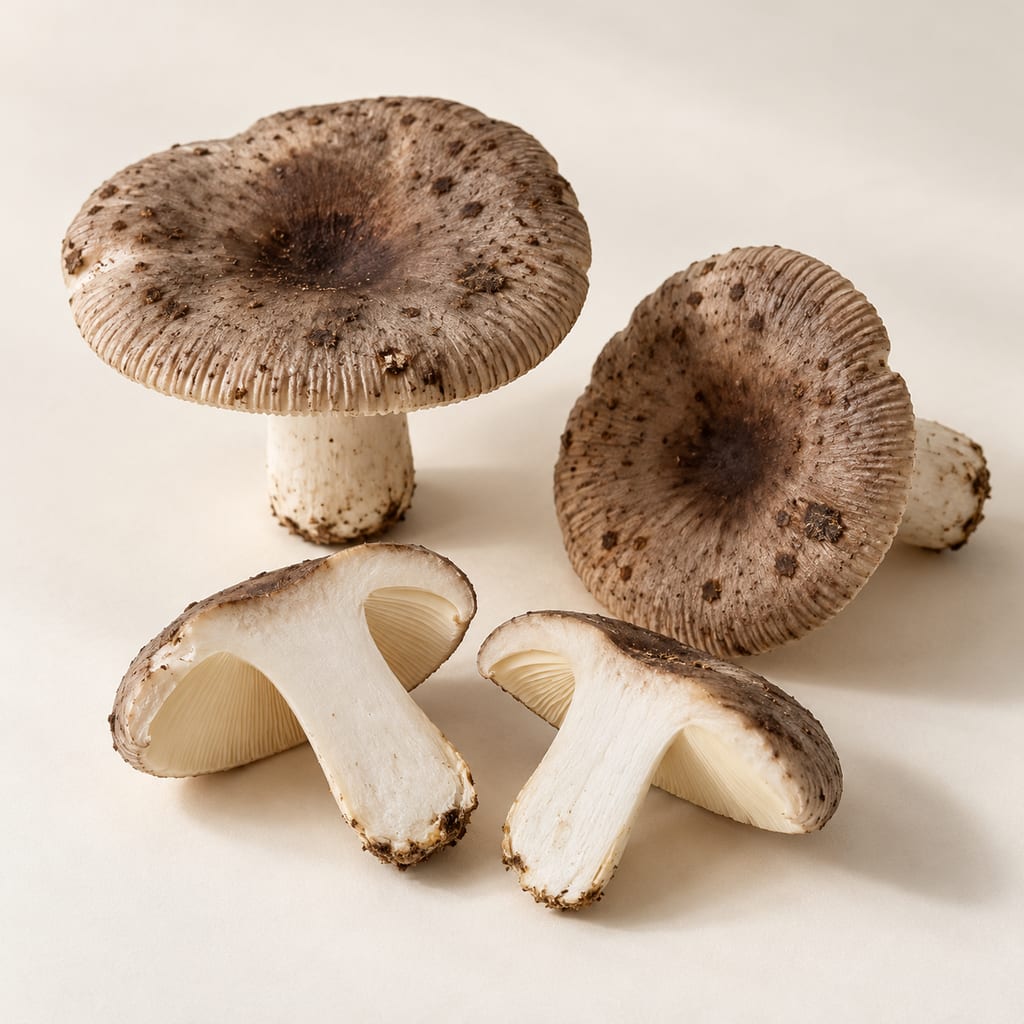
Russula meleagris is an ectomycorrhizal rainforest fungus recorded as locally eaten in Tshopo province, DR Congo, where some groups reject Russula as inedible. No species-level safety assessment exists.
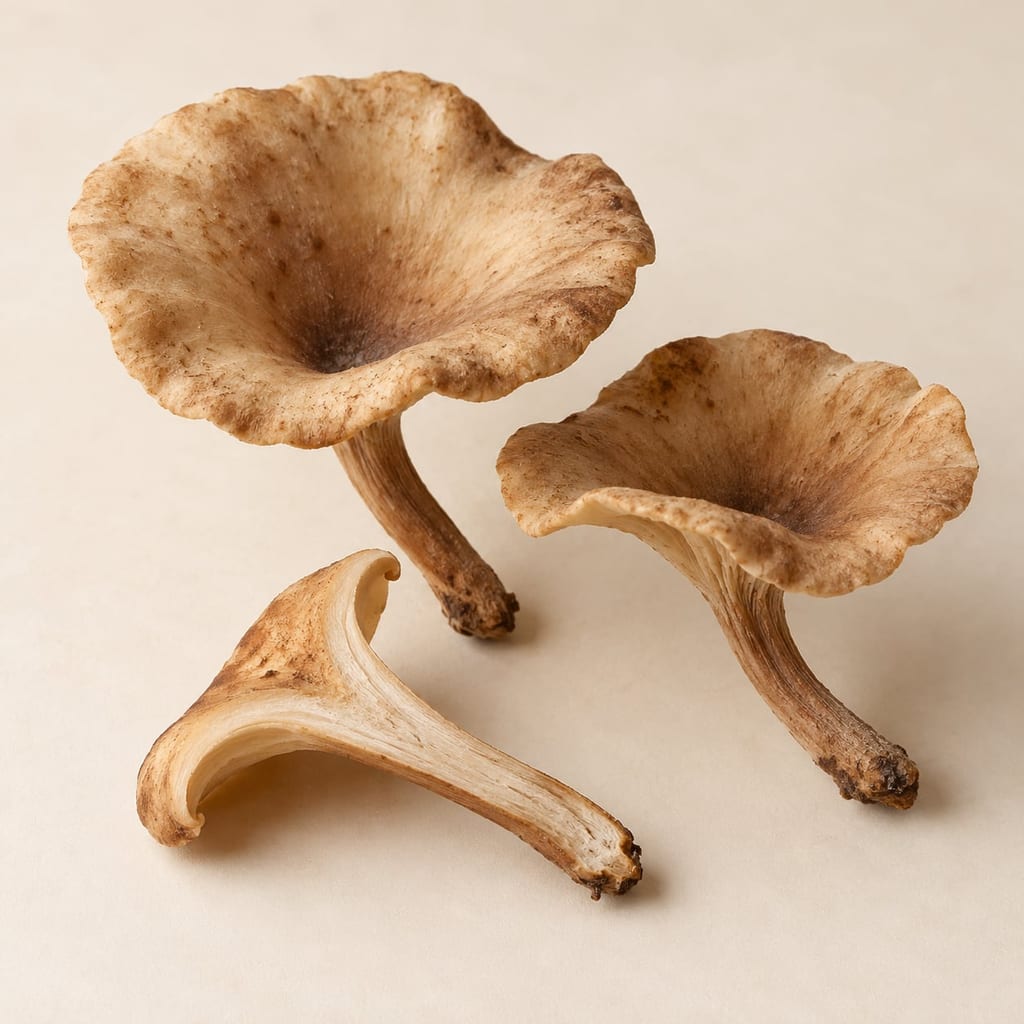
Panus velutinus, the velvety wood fungus, is a wood-rotting fungus recorded in Brazil, where a 2024 review of wild edible mushrooms lists it. Its food use is documented; no standardized safety assessment exists.
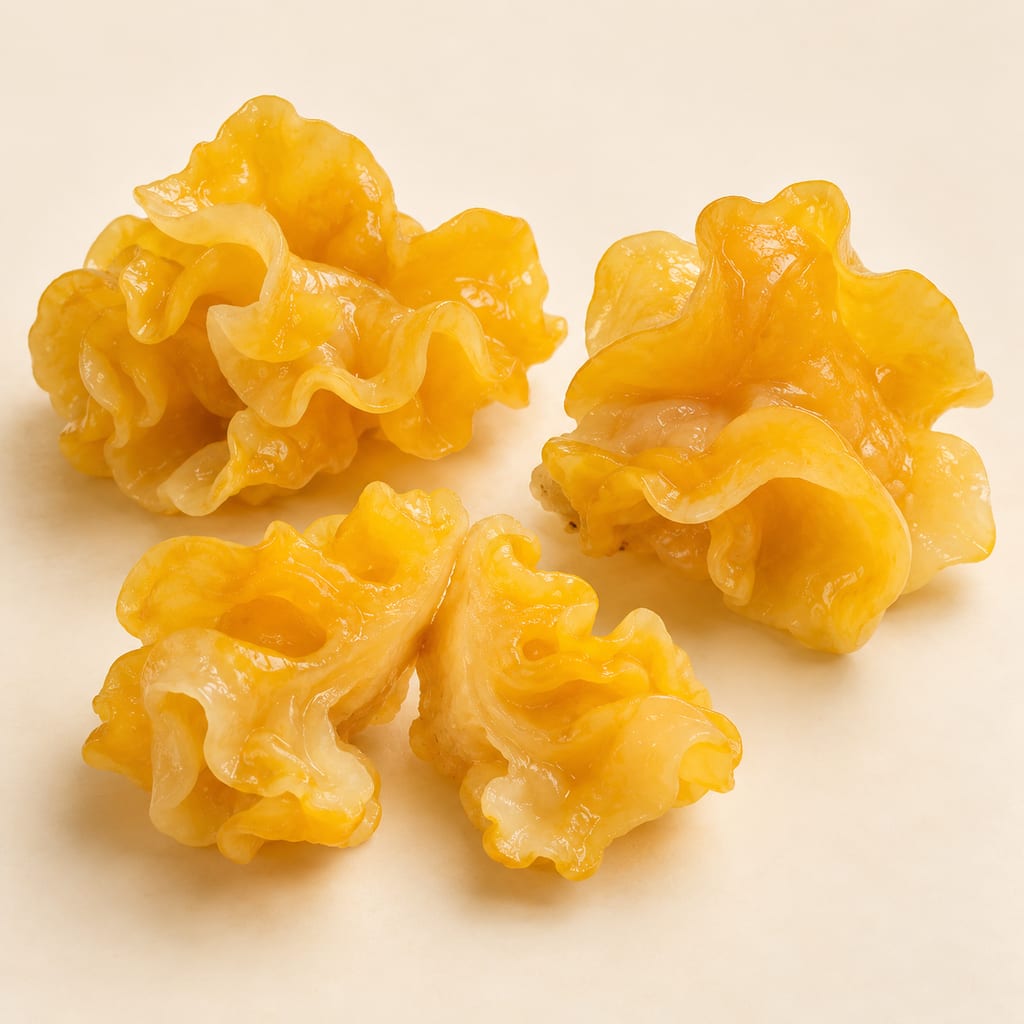
Naematelia aurantialba, golden ear, is a yellow gelatinous fungus that parasitises Stereum fruit bodies on broadleaf trees and is recorded as a wild edible relative of cultivated golden ear in southwestern China.
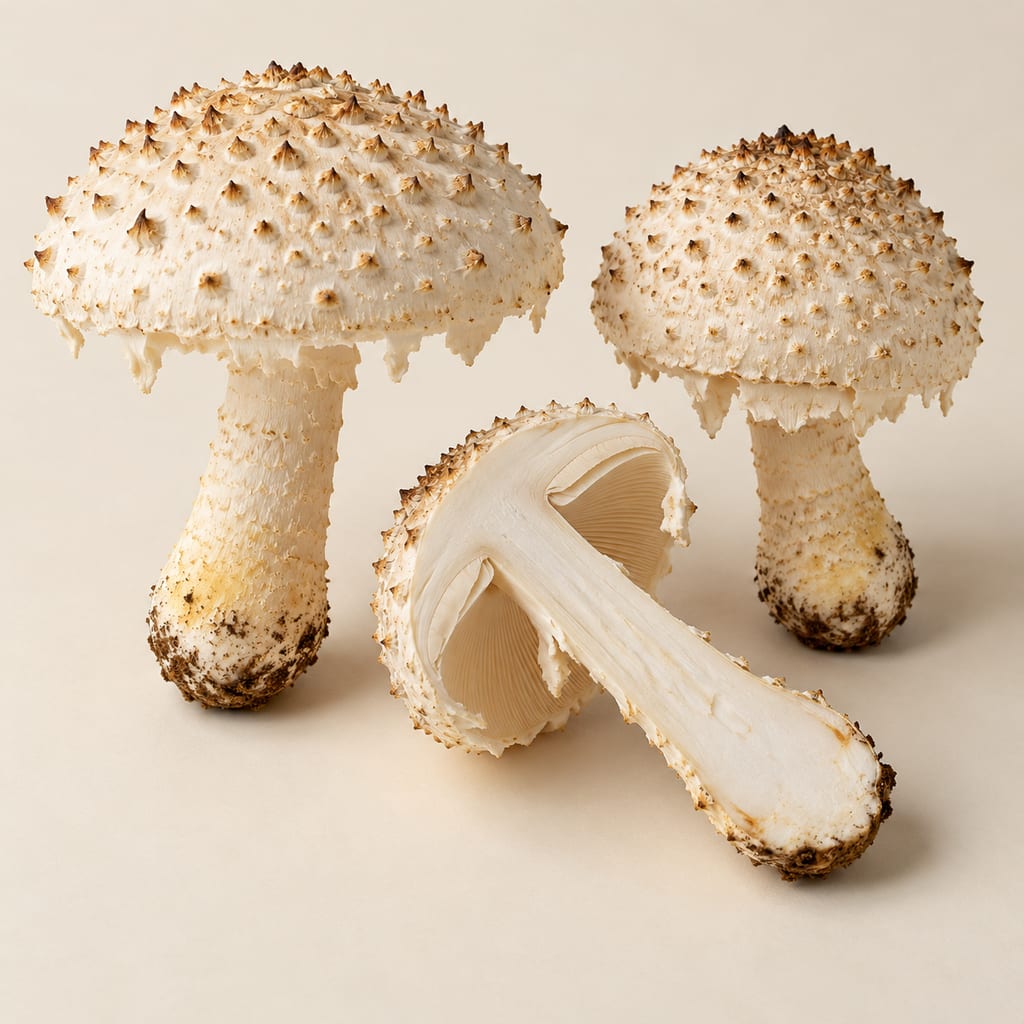
Amanita afrospinosa is a white, warted Amanita of miombo woodland in southern and central Africa. A regional food-use record exists, but the Amanita genus includes deadly species, so no safe use is established here.
Termitomyces heimii is a wild termite mushroom that grows with fungus-growing termites in Yunnan, Laos and across South and Southeast Asia. It is sold in local markets and cooked in soups and fried dishes.
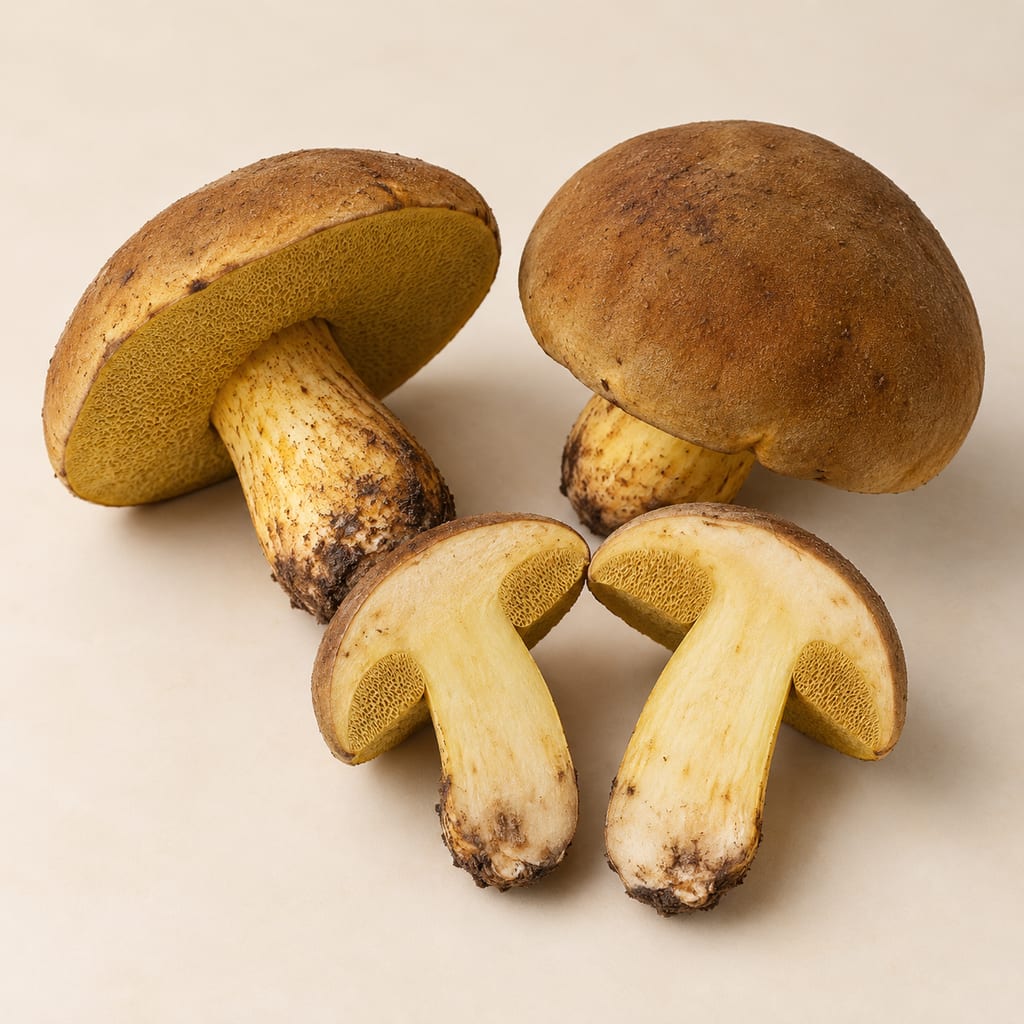
Suillus variegatus, the velvet bolete, is a wild bolete of pine woods in northern Europe that is eaten cooked or dried. Its cap and tubes are usually peeled and removed before cooking.
Russula porphyrocephala is an ectomycorrhizal rainforest mushroom recorded as eaten by people in Tshopo, DR Congo. The record is an ethnomycological food-use record, not a toxicological assessment.
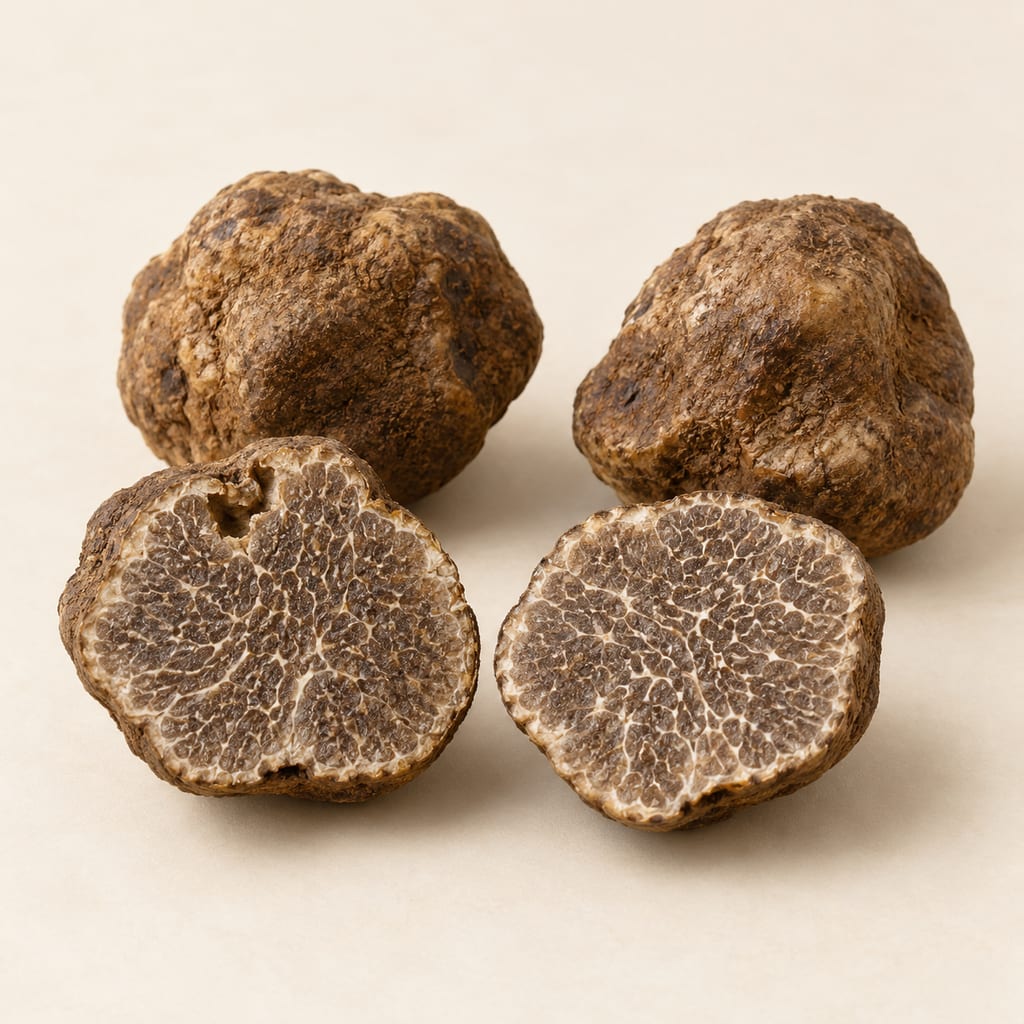
Tuber floridanum is a truffle that grows with pecan trees in orchards of the southeastern United States and has a recorded food use in Brazil. Sources describe its odour as unappealing, and the evidence for eating it is limited.
Mycoclelandia bulundari is a hypogeous desert fungus of northern and western Australia, recorded as a cooked food of Aboriginal people. Its identification and modern food safety are not established.
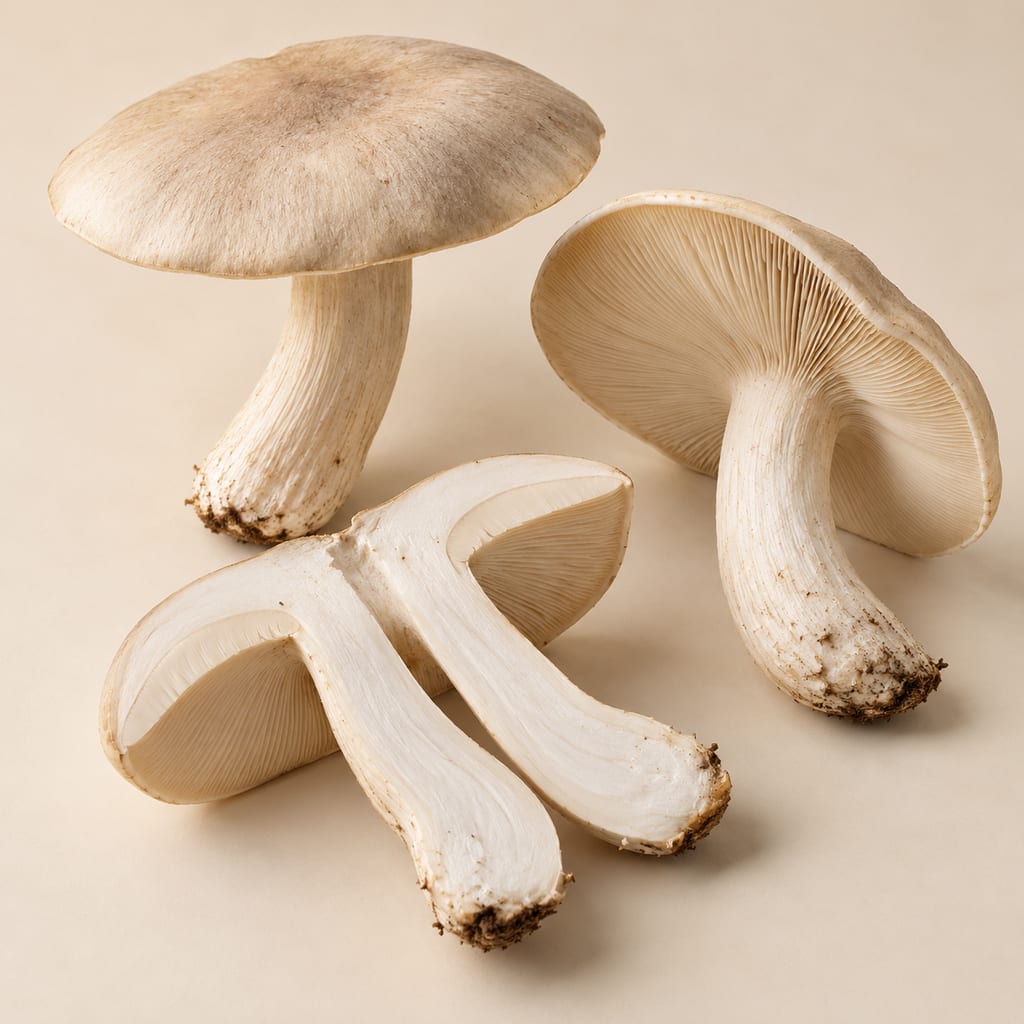
Macrocybe gigantea is a large wild mushroom of tropical and subtropical Asia that is sold in markets in Laos and Yunnan, China. Its local identification and safety still need species-level review.
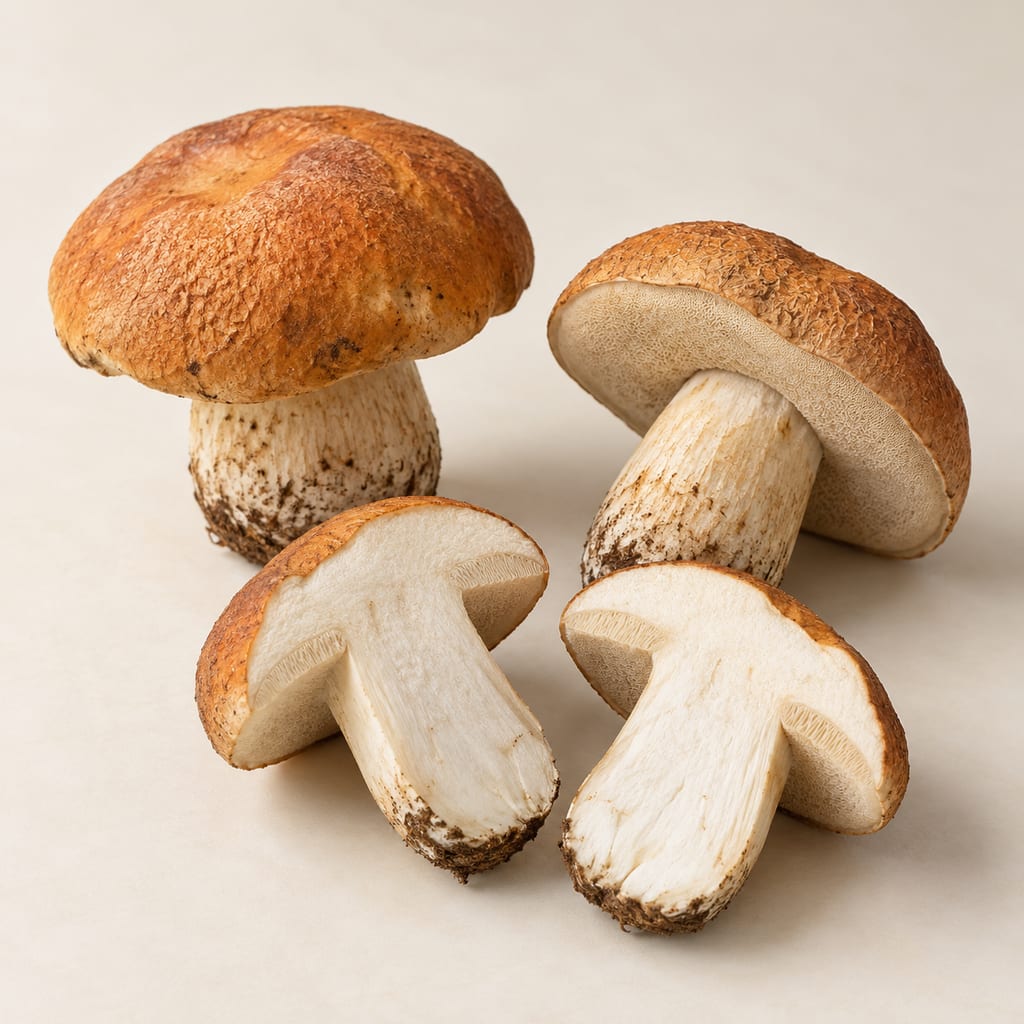
Tylopilus balloui, the burnt orange bolete, is a tropical bolete recorded as food in Guyana. Sources disagree on whether it is worth eating, and its species concept needs checking.
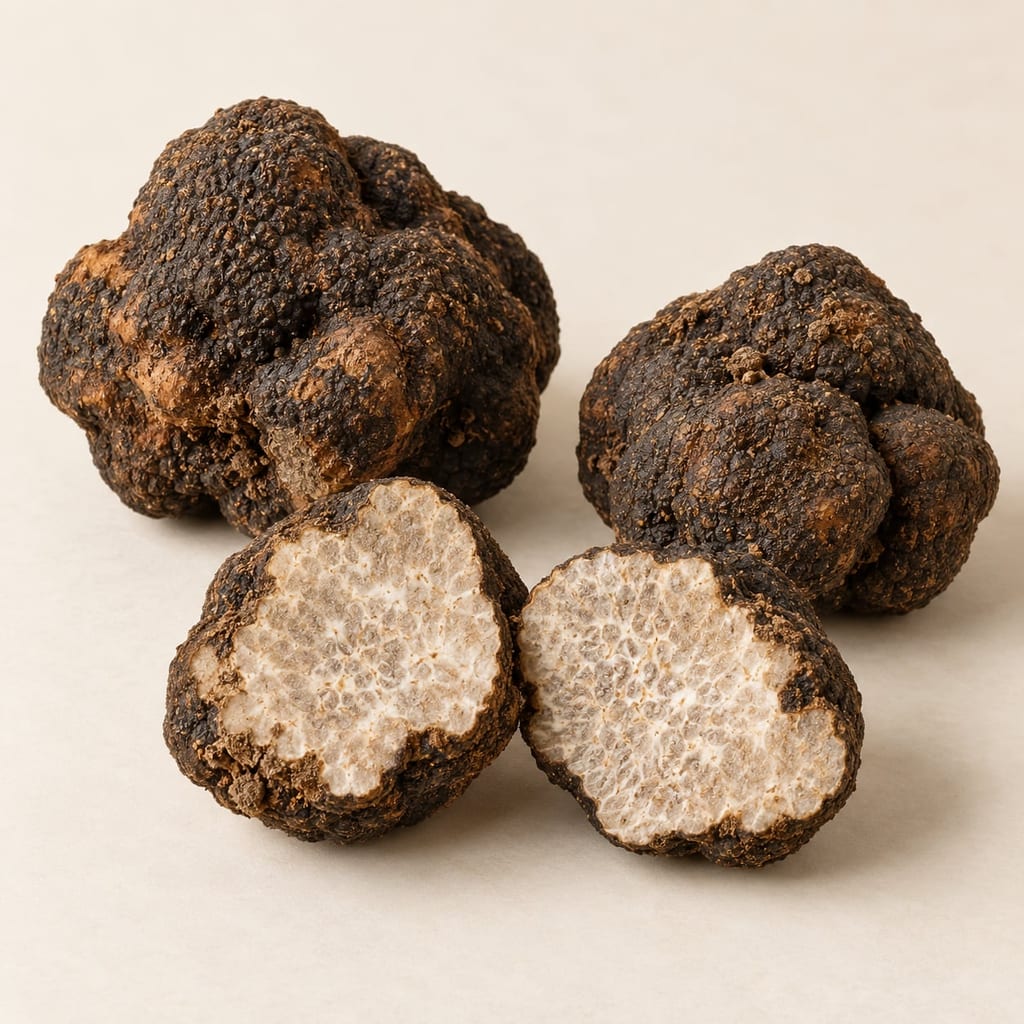
Kalapuya brunnea, the Oregon brown truffle, is a native truffle of the Pacific Northwest that is shaved raw over warm food. Sources describe it as a gourmet edible, and its safe identification needs an expert.
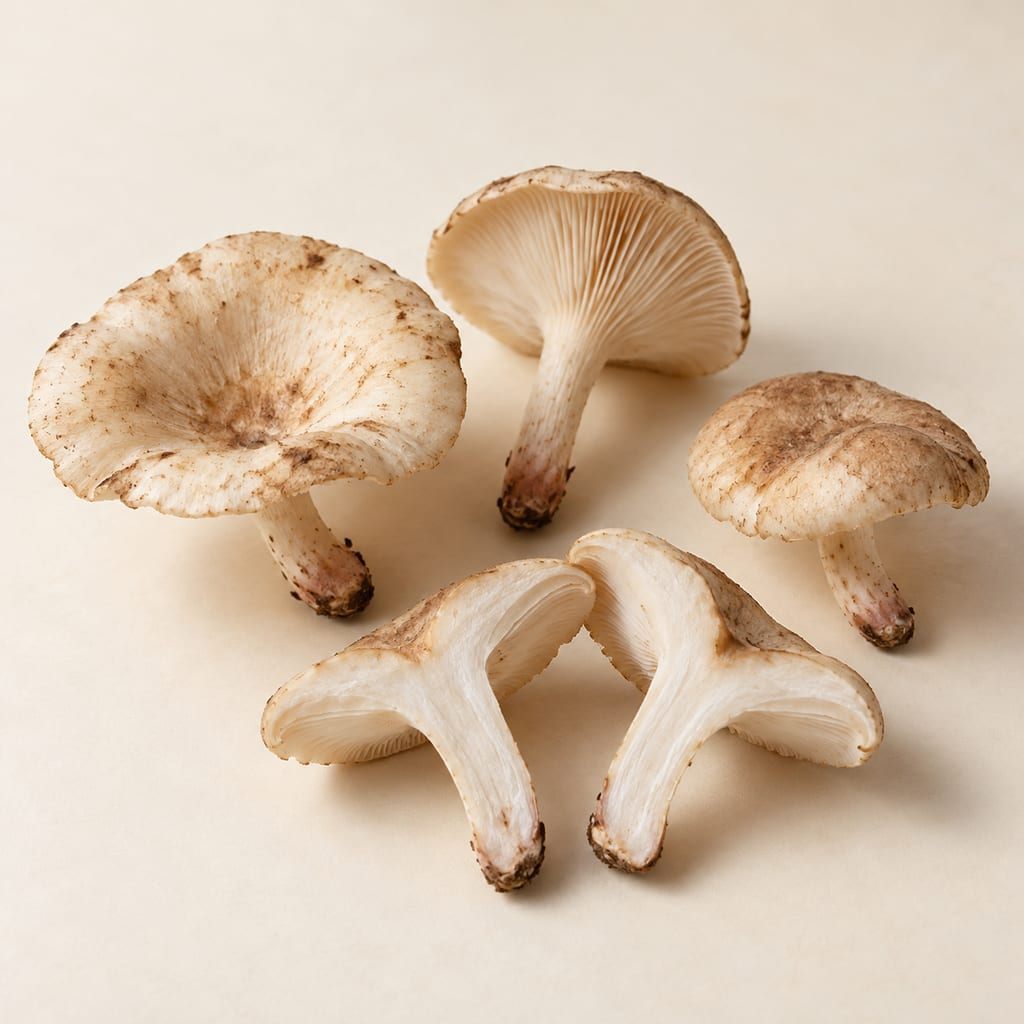
Lentinula raphanica is a wild wood-rotting mushroom of the Neotropics, a close relative of the cultivated shiitake, recorded as food by Amazonian communities and still poorly studied.
Lactarius acutus is a wild ectomycorrhizal milkcap of the Tshopo rainforests in the DR Congo, recorded as locally eaten in voucher-backed interviews; its preparation is not recorded.
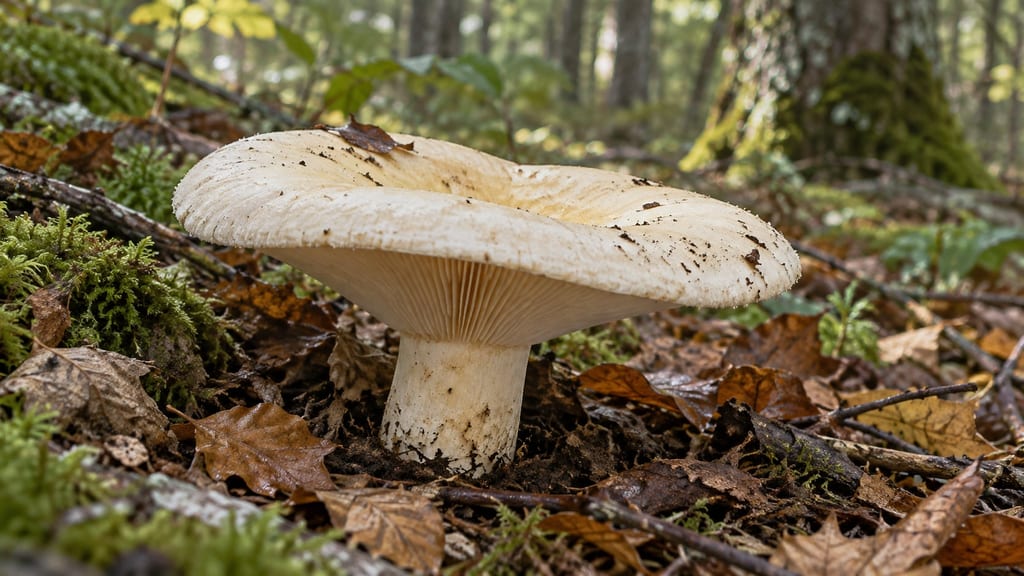
Lactifluus pilosus is a wild ectomycorrhizal milkcap recorded in Yunnan; the catalogue lists it as sold in Pu'er markets, but its species-level food use and safety are not yet confirmed.
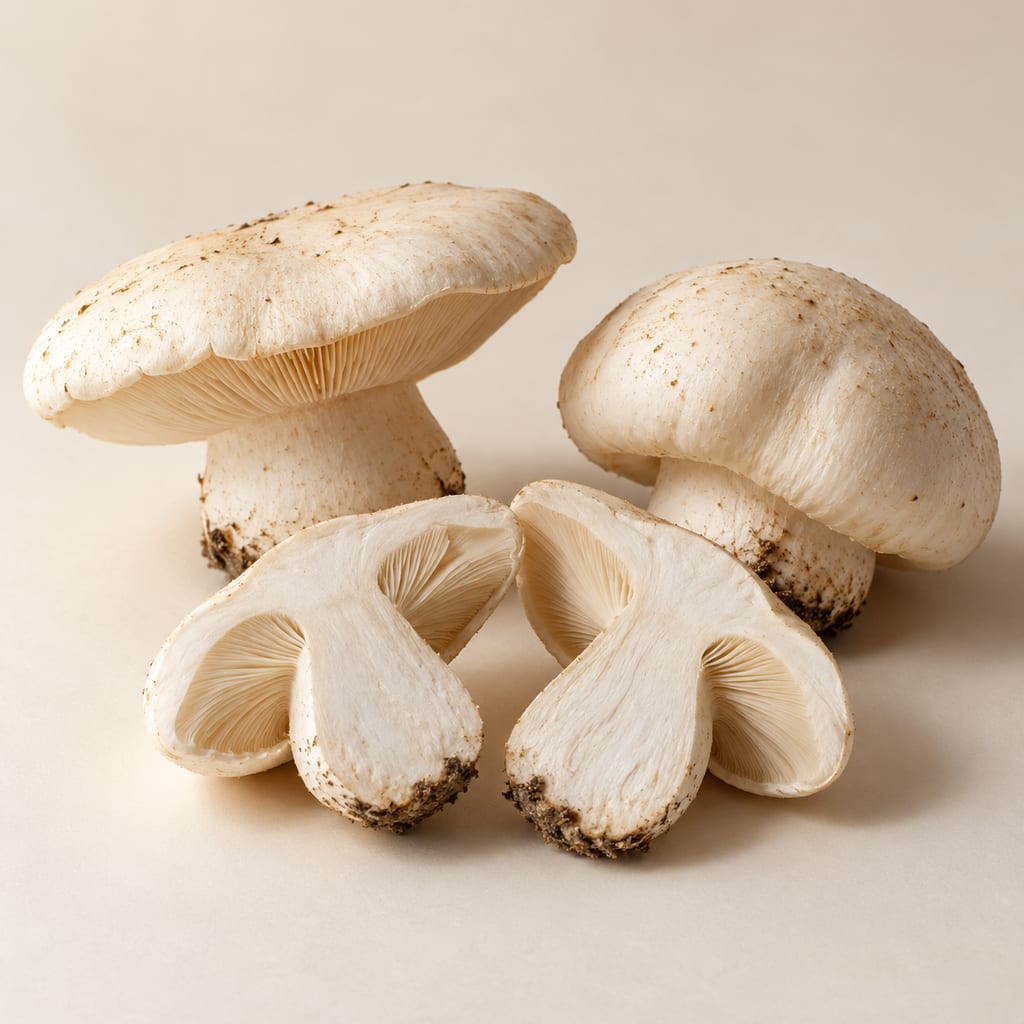
The Mongolian mushroom, Leucocalocybe mongolica, is a wild steppe fungus of the Mongolian Plateau, prized as food in Northeast Asia and listed as threatened by drought and over-collection.
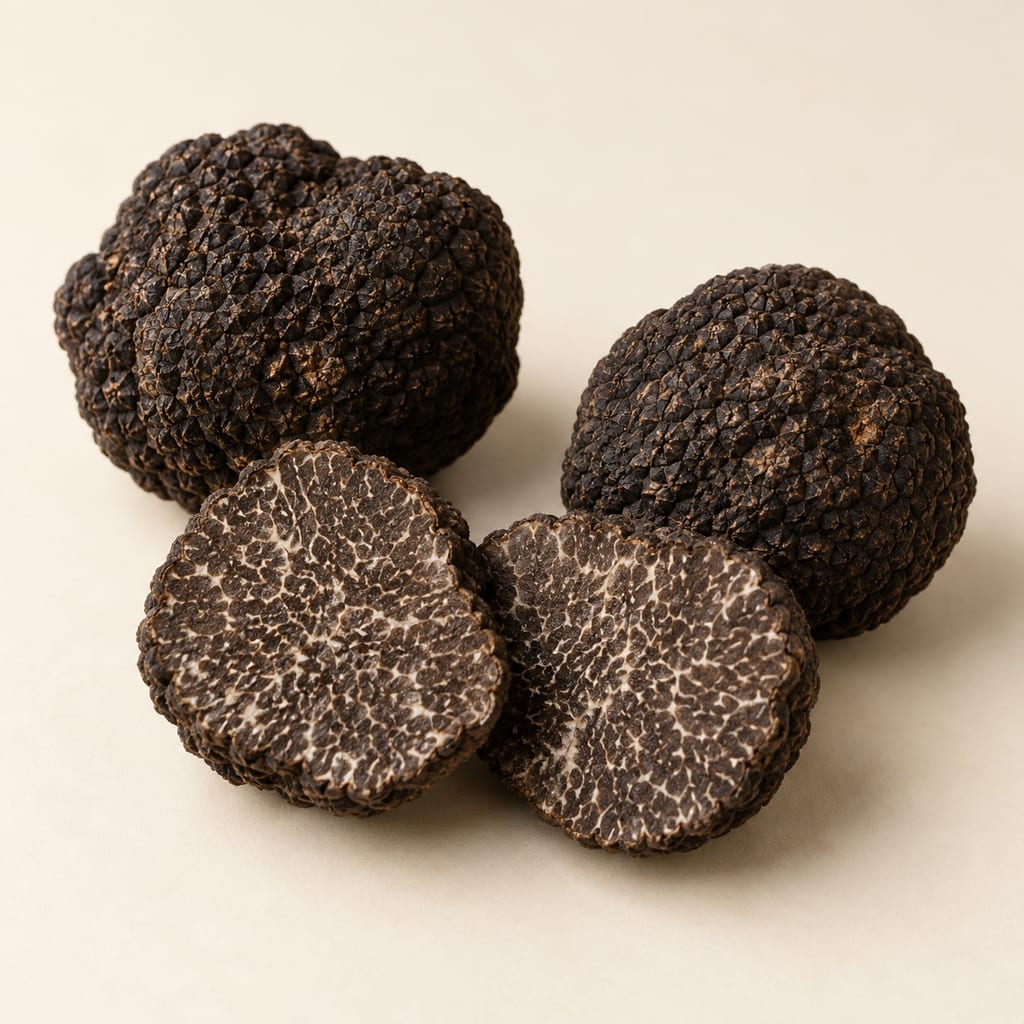
The winter truffle, Tuber brumale, is a dark, aromatic truffle of southern Europe, also called the Muscat truffle. It is sold as a cheaper relative of the Périgord truffle and is kept separate from Tuber melanosporum in records.
Tuber huidongense is a subterranean truffle of pine forests in south-western China, known from Sichuan and Yunnan. A recent Chinese catalogue lists it as edible, but no culinary tradition for it has been documented.
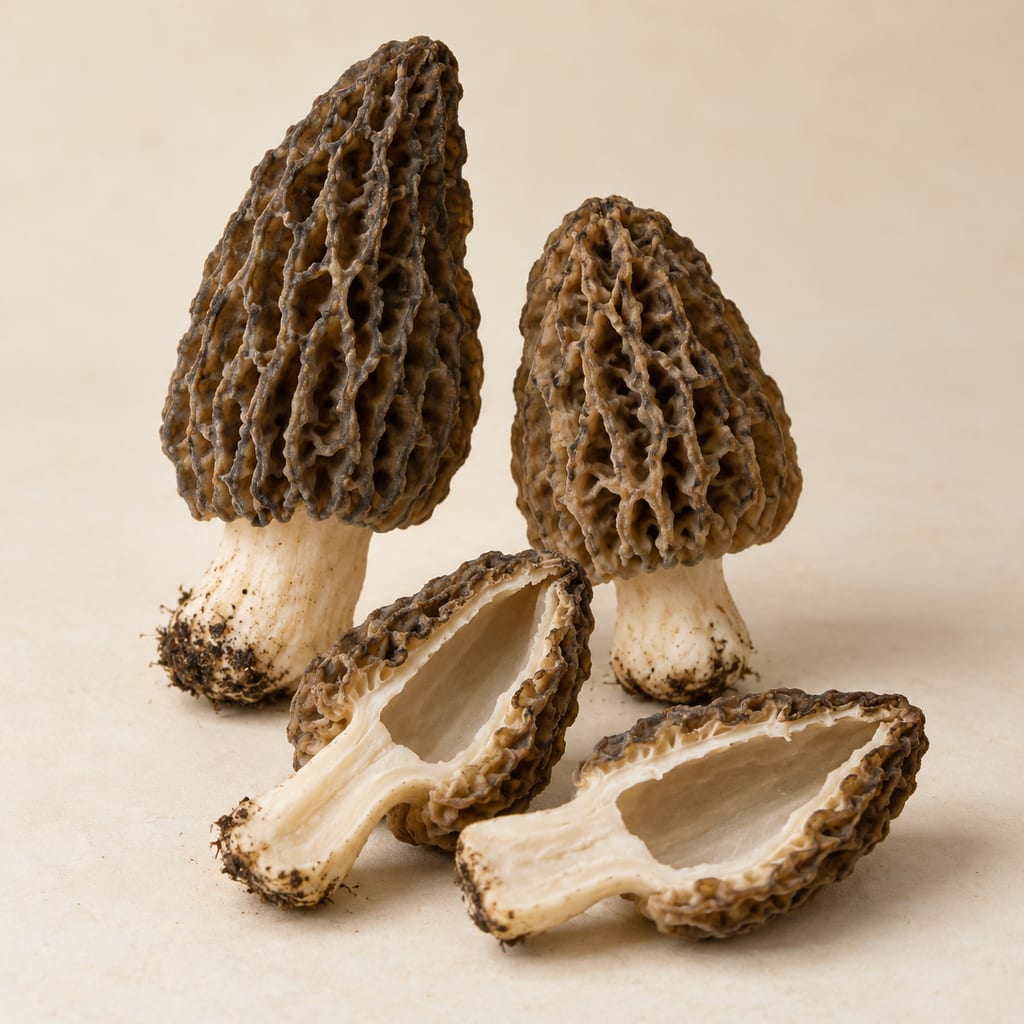
Morchella sextelata is a cultivated black morel of the Elata clade, grown in managed beds and greenhouses in China. Raw or undercooked morels are associated with illness, and cooking is the main control.
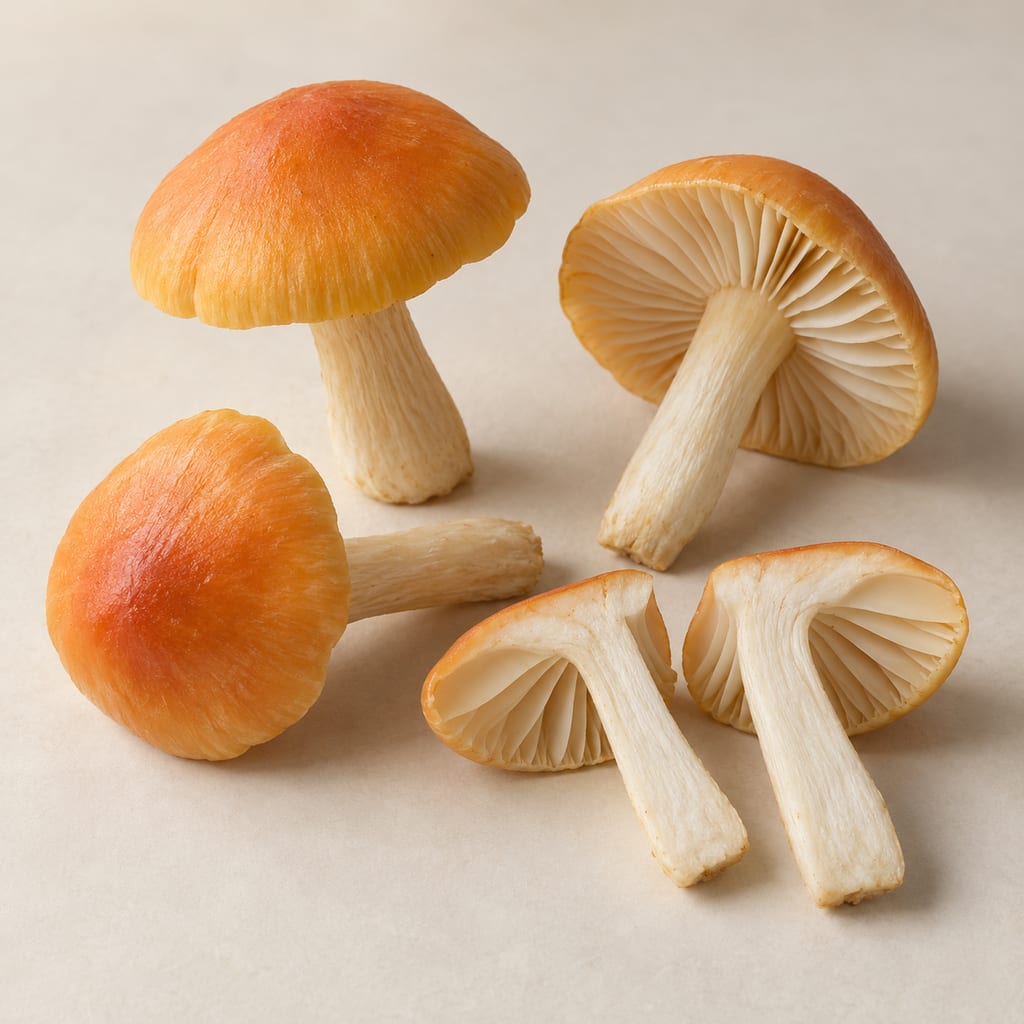
The meadow waxcap, Cuphophyllus pratensis, is a salmon-to-orange gilled mushroom of old grassland in Europe. Its fruit bodies are edible and gathered for sale in some countries, but its habitat is declining.
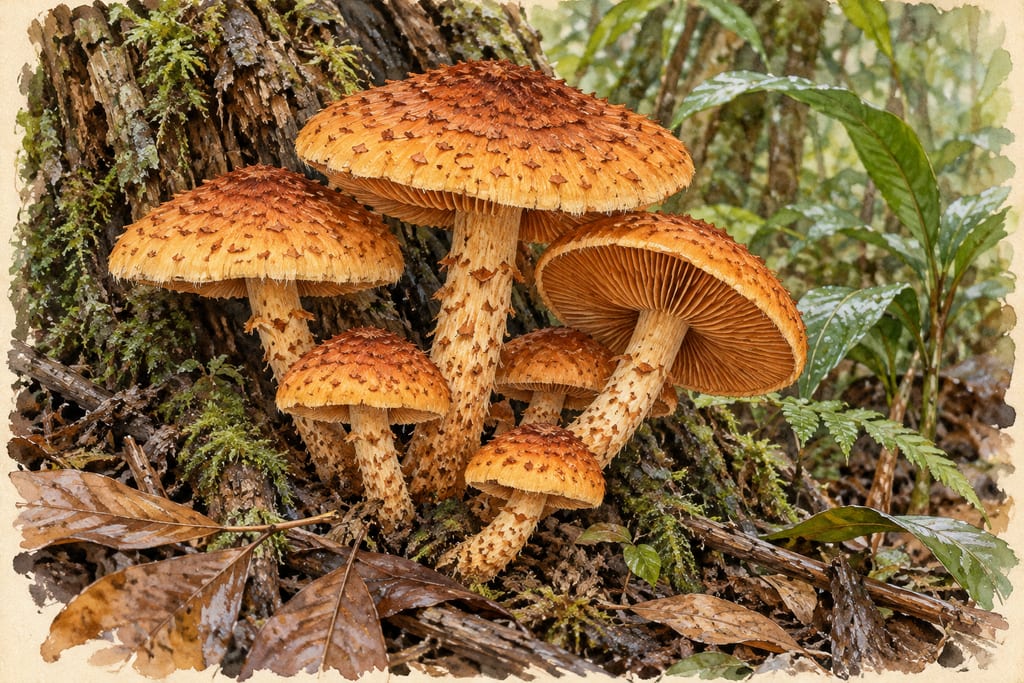
Gymnopilus zenkeri is a forest mushroom recorded as eaten locally in Tshopo province, DR Congo. The genus is described as unsafe to eat, and no preparation or safety assessment for this species has been established.
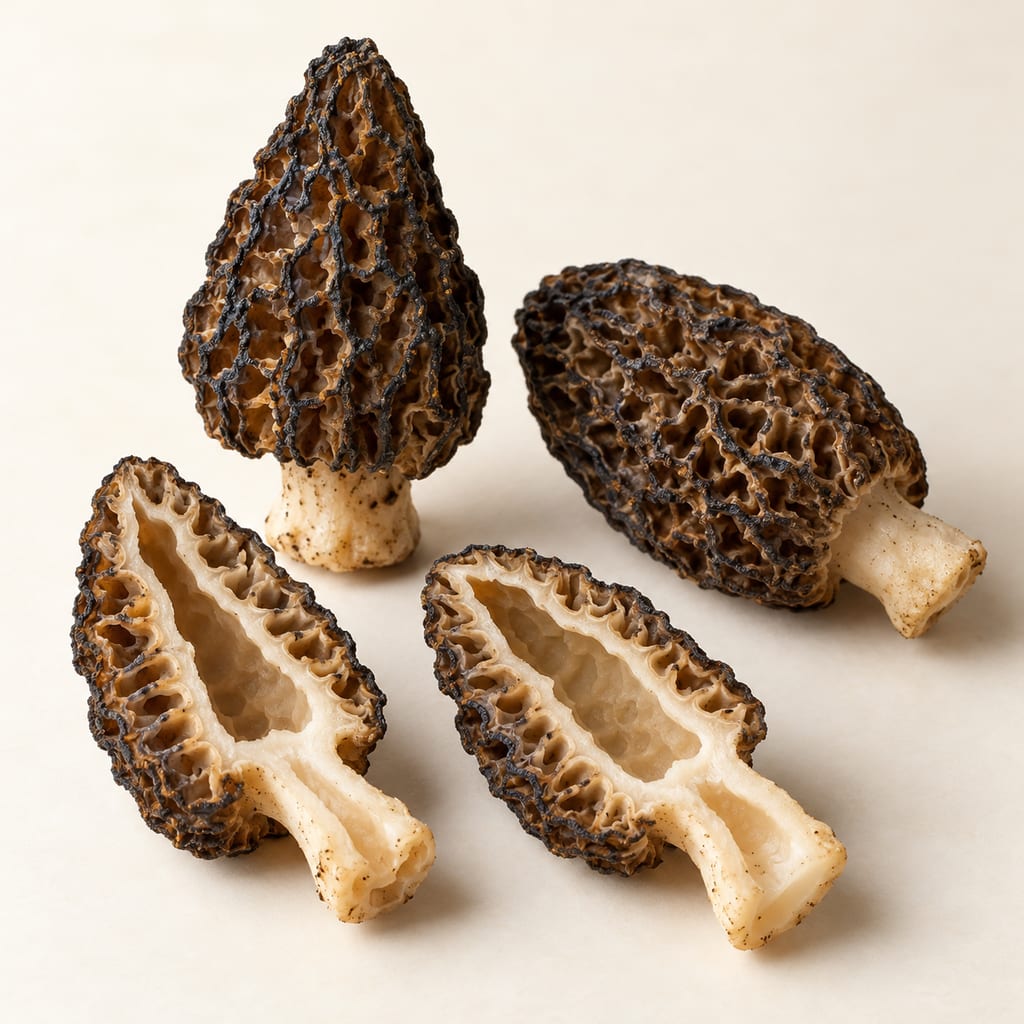
The burn-site morel, Morchella exuberans, is a wild morel that fruits in conifer forest in the year after a fire in western North America. It is eaten only after thorough cooking, because raw morels can cause serious poisoning.
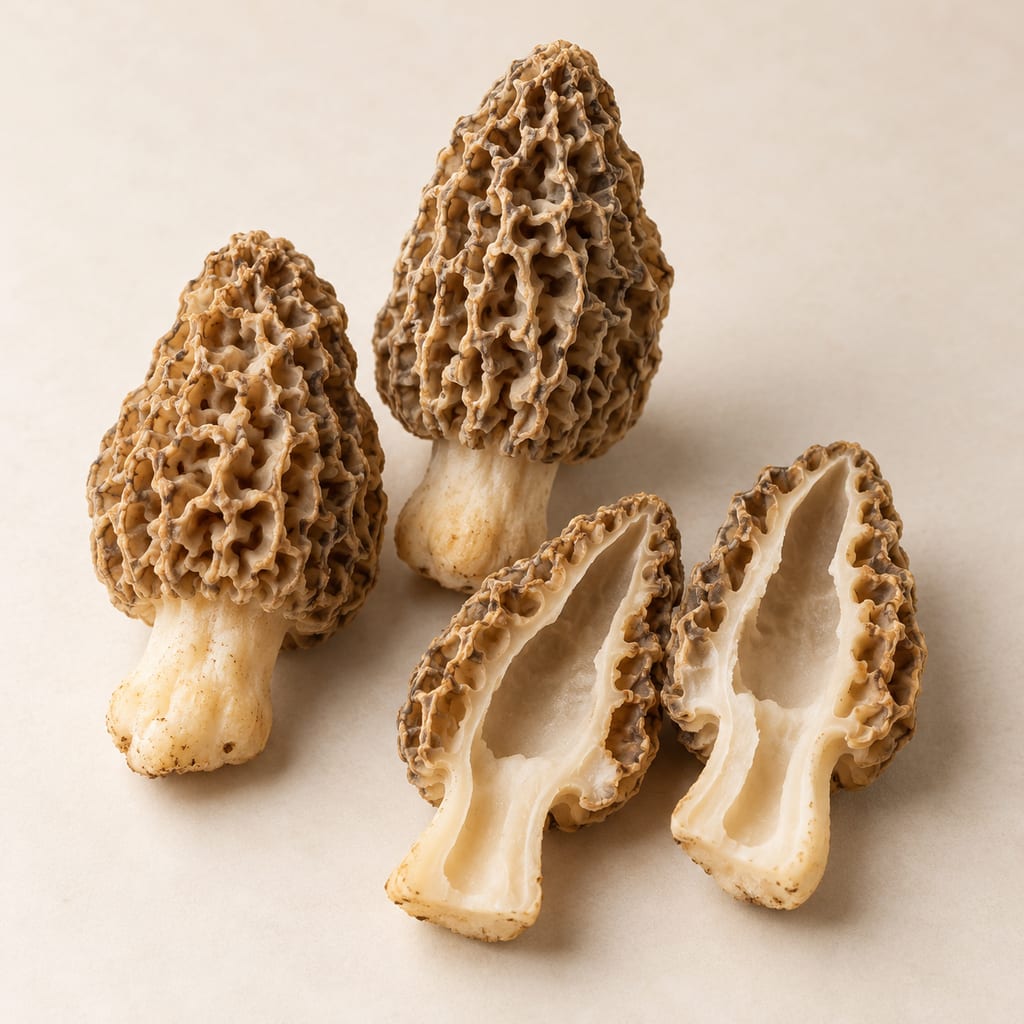
The American yellow morel, Morchella americana, is a wild spring morel of North America that is eaten only after thorough cooking, because raw or undercooked morels have caused serious illness.
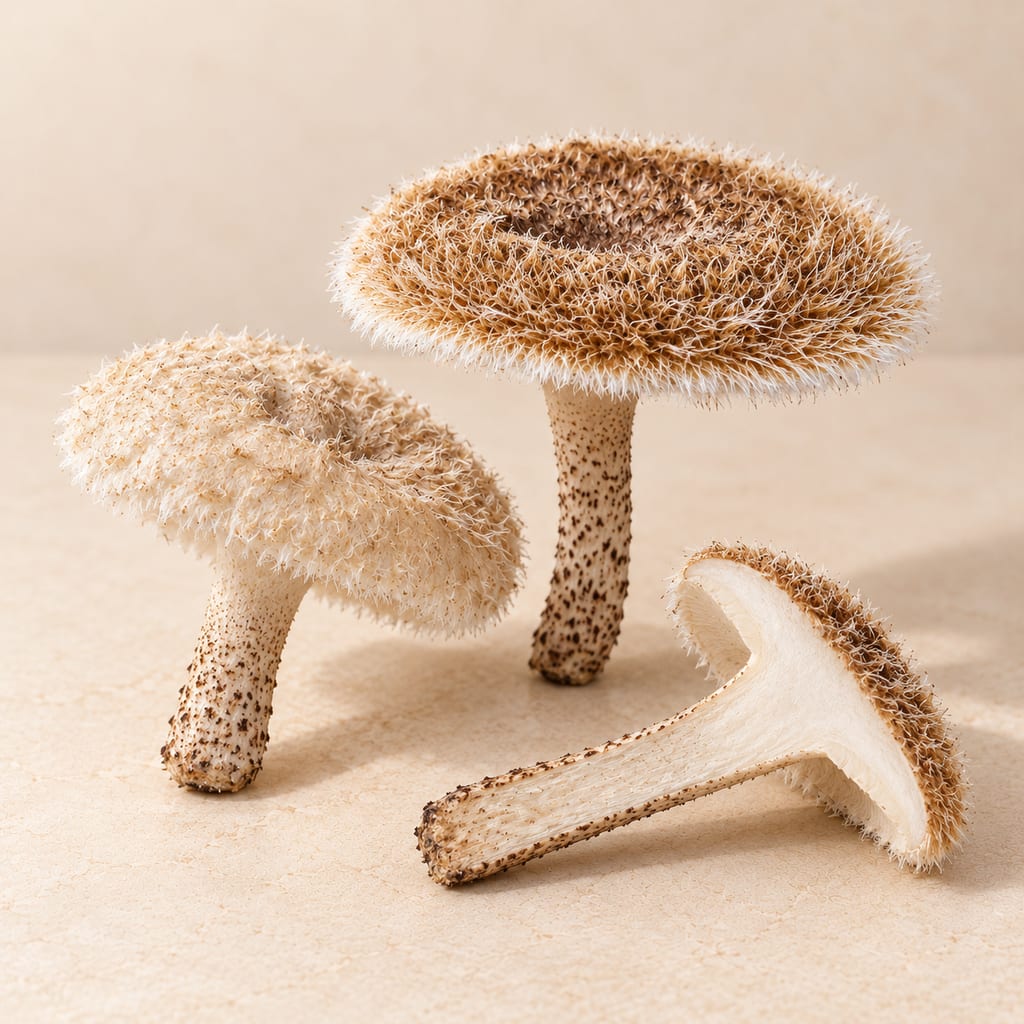
Lentinus berteroi is a sawgill mushroom of the tropical Americas, recorded as food in the Colombian catalogue and studied for cultivation in Brazil; a Brazilian food record for this species was not confirmed.
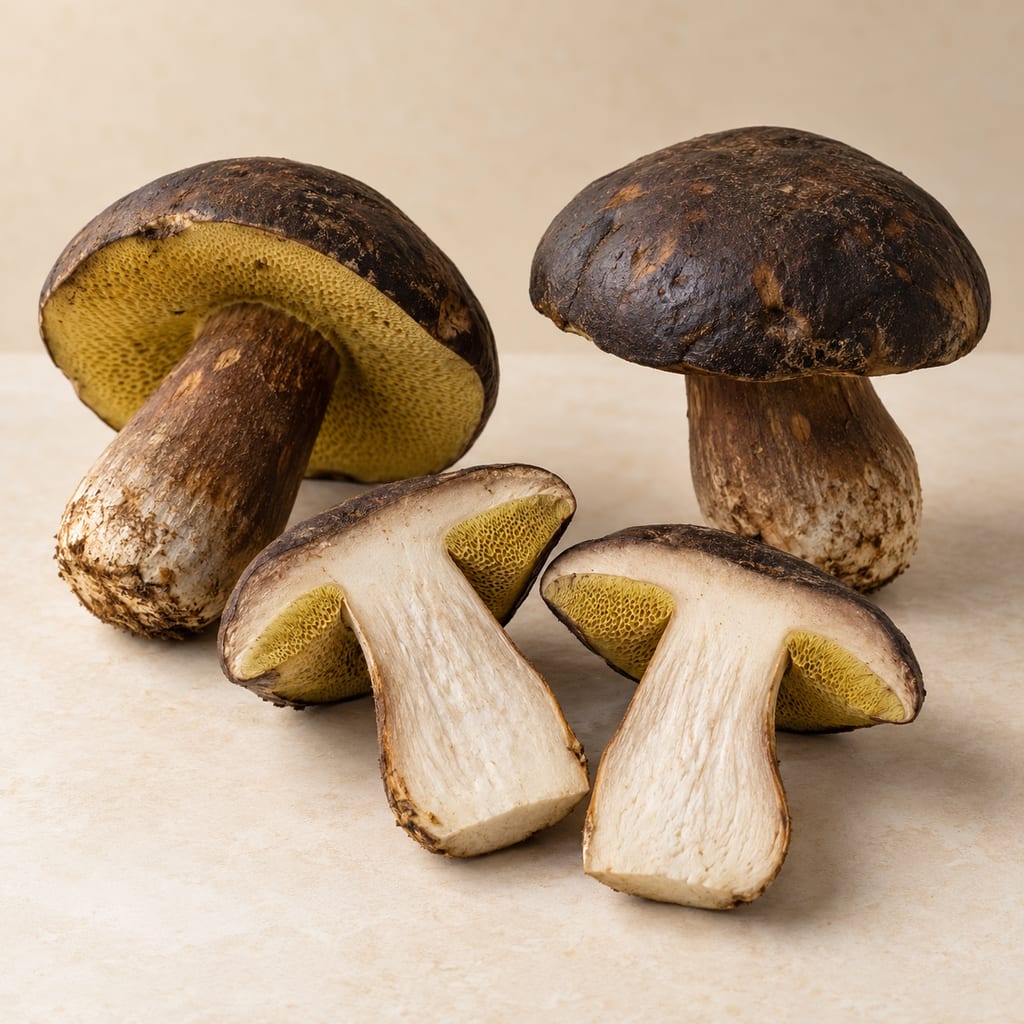
Phlebopus portentosus, the tropical black bolete, is a wild bolete prized in Yunnan and northern Thailand. It is one of the few boletes that has been fruited in culture on grain.
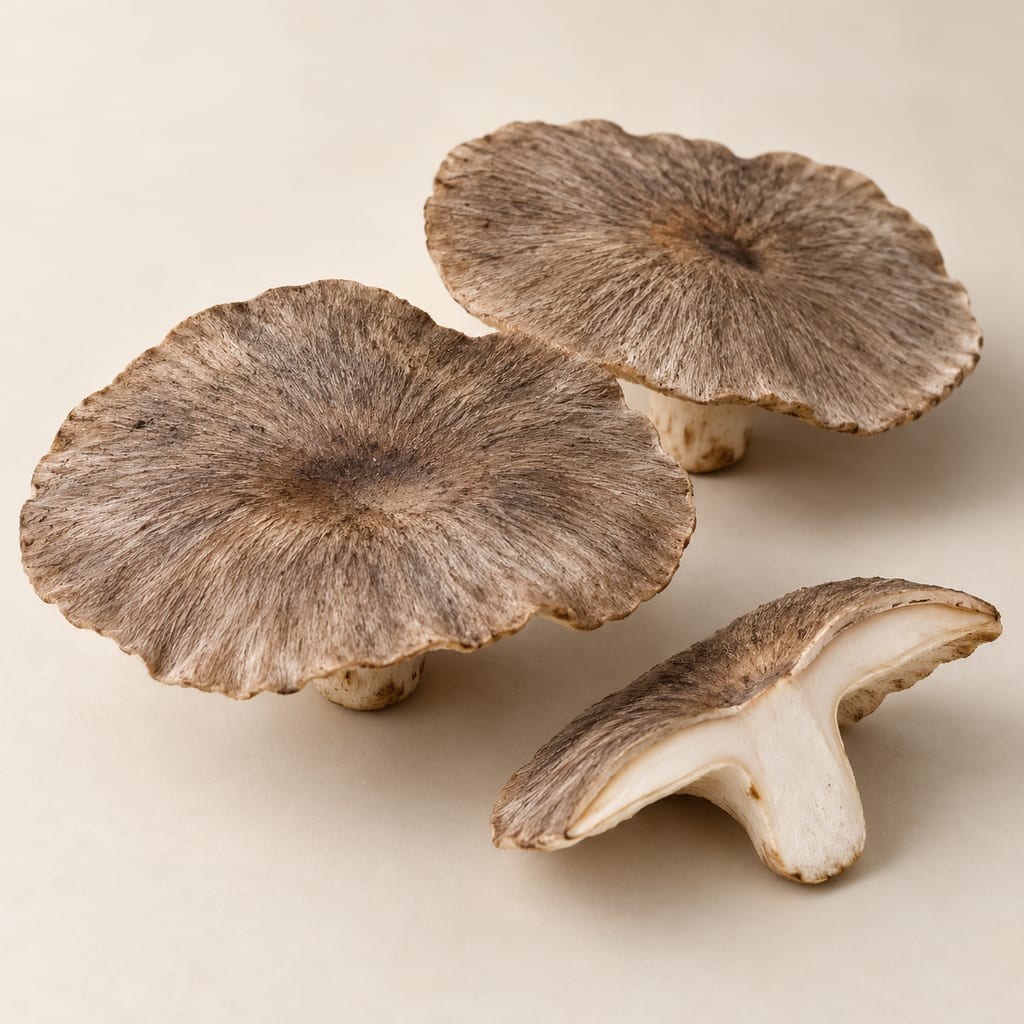
Bresadolia paradoxa is a large fungus of dead hardwood logs in Amazon and Atlantic Forest sites in Brazil and Colombia. Its only edibility source is a conservation assessment, so the claim is lightly documented.
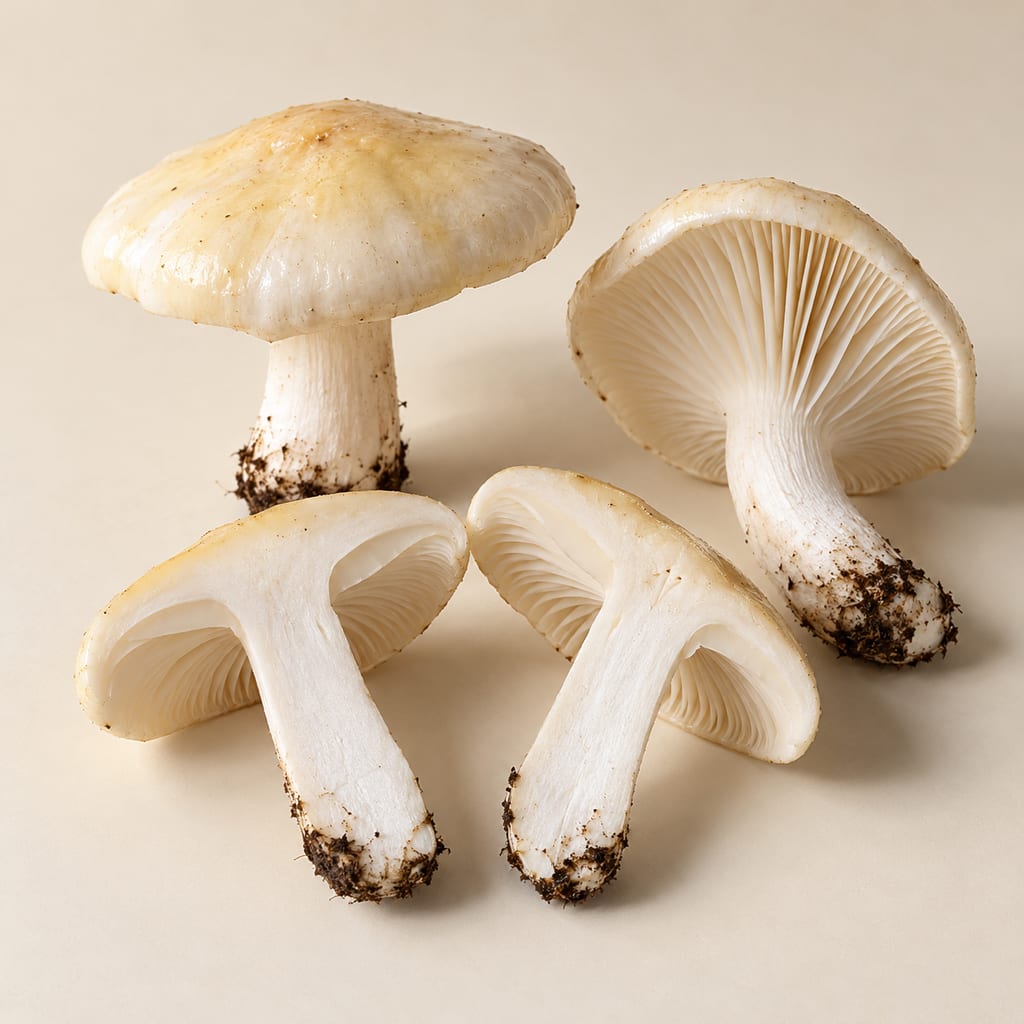
Hygrophorus gliocyclus is a slimy, cream-yellow wild woodwax of conifer woods. Spain lists it among wild mushrooms that may be sold fresh, and the sources read record little else about its food use.
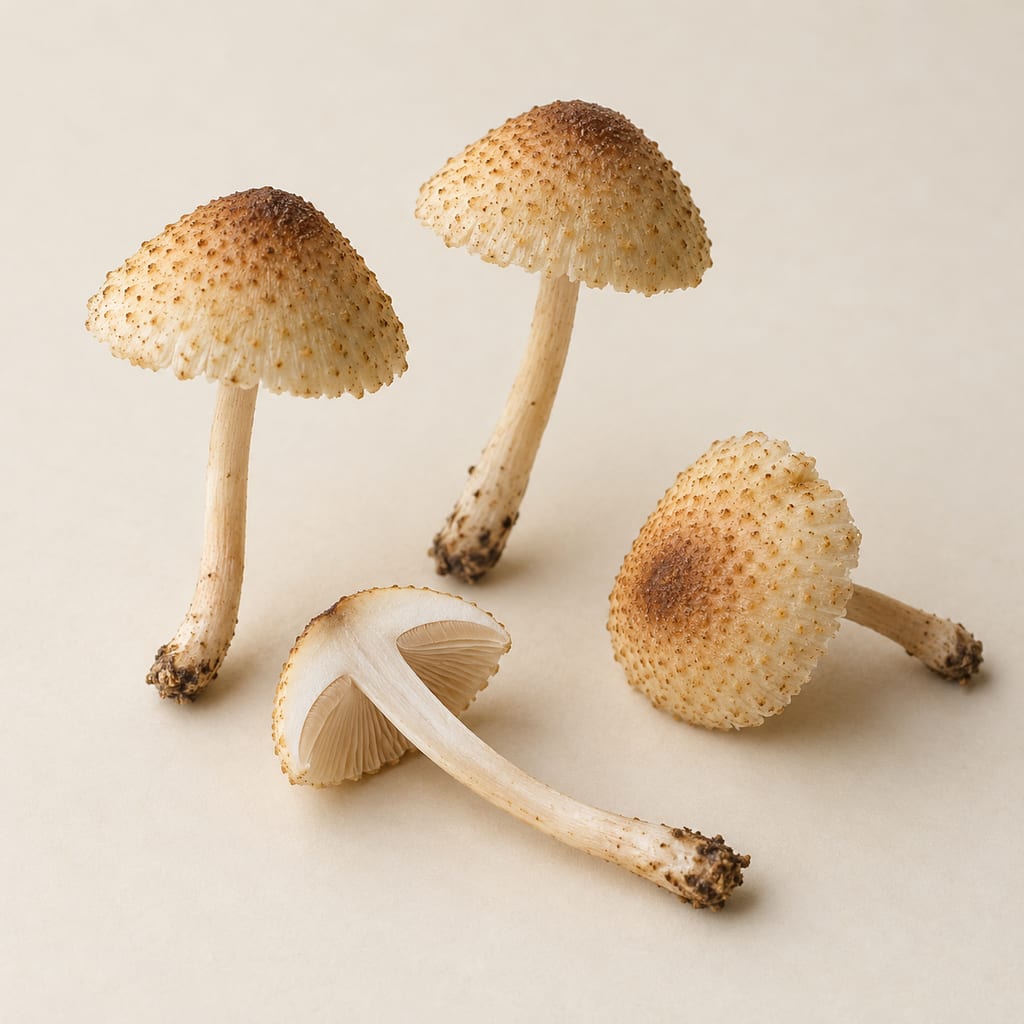
Hymenagaricus luteolosporus is a forest mushroom recorded as locally eaten in Tshopo Province, DR Congo, with no preparation or safety assessment established for it.
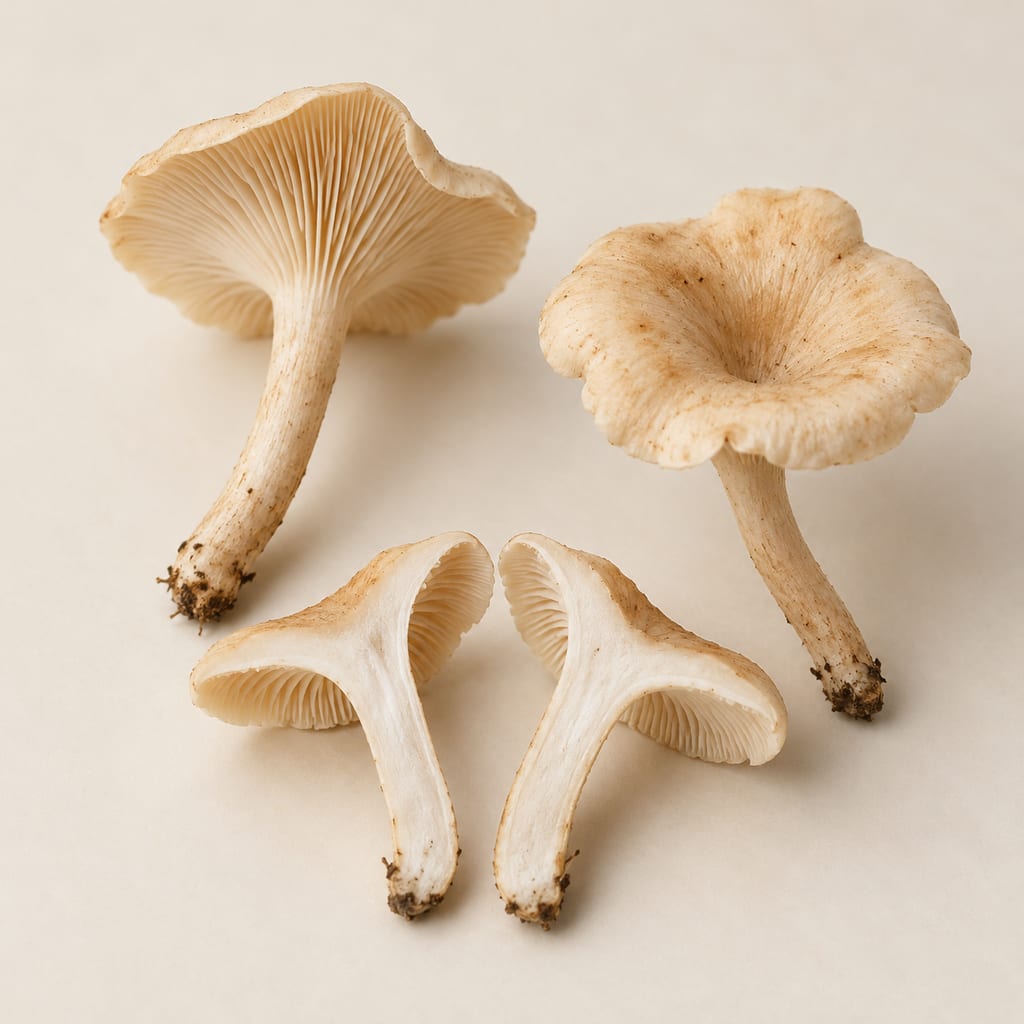
Lactarius tenellus is a small ectomycorrhizal milkcap of the Zambezian miombo woodlands of Africa, recorded in several countries but not established as a food by the sources consulted.
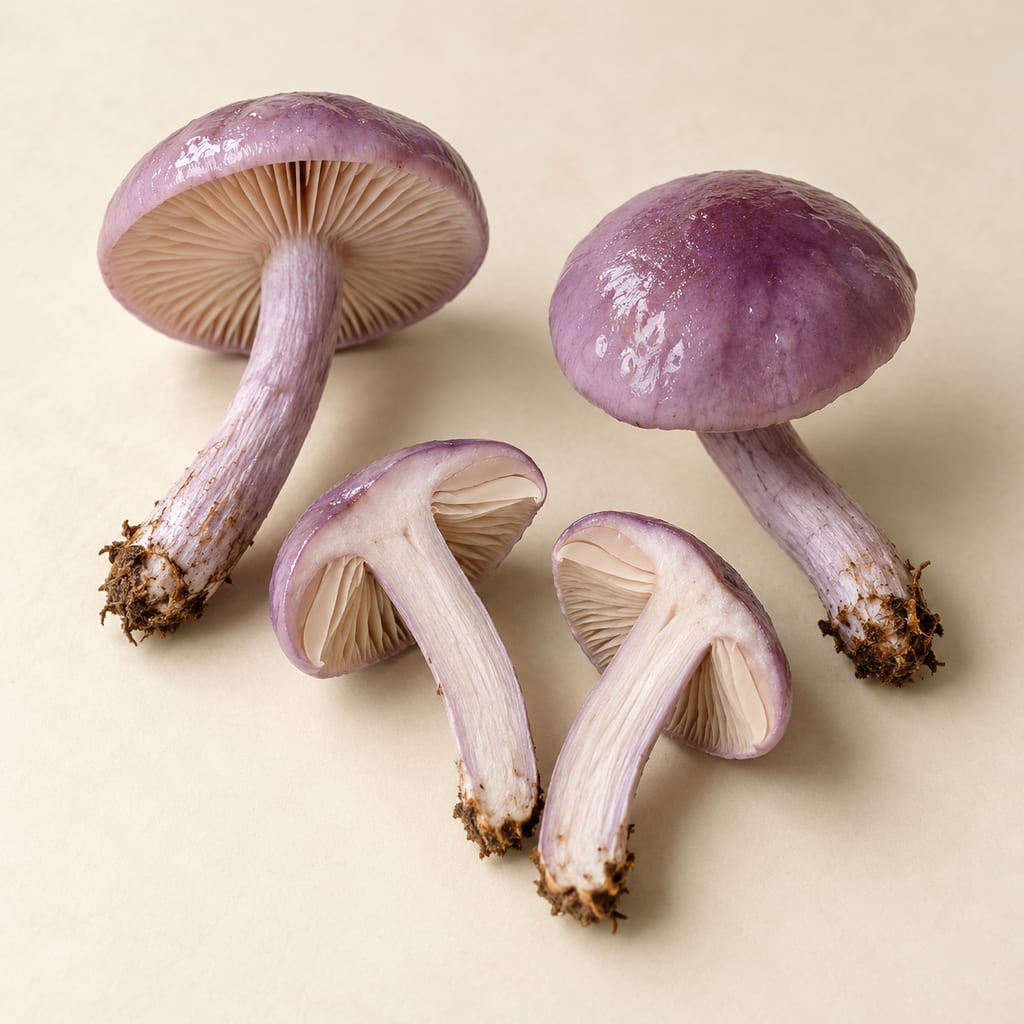
Cortinarius magellanicus is a webcap mushroom of Nothofagus forests in Patagonia, recorded in regional food use, but it belongs to a species complex and its genus contains deadly toxic species.
Desert truffle, Terfezia claveryi, is an underground fungus of dry Spanish and Moroccan ground that is gathered and sold seasonally, under names such as terfass, in local markets.
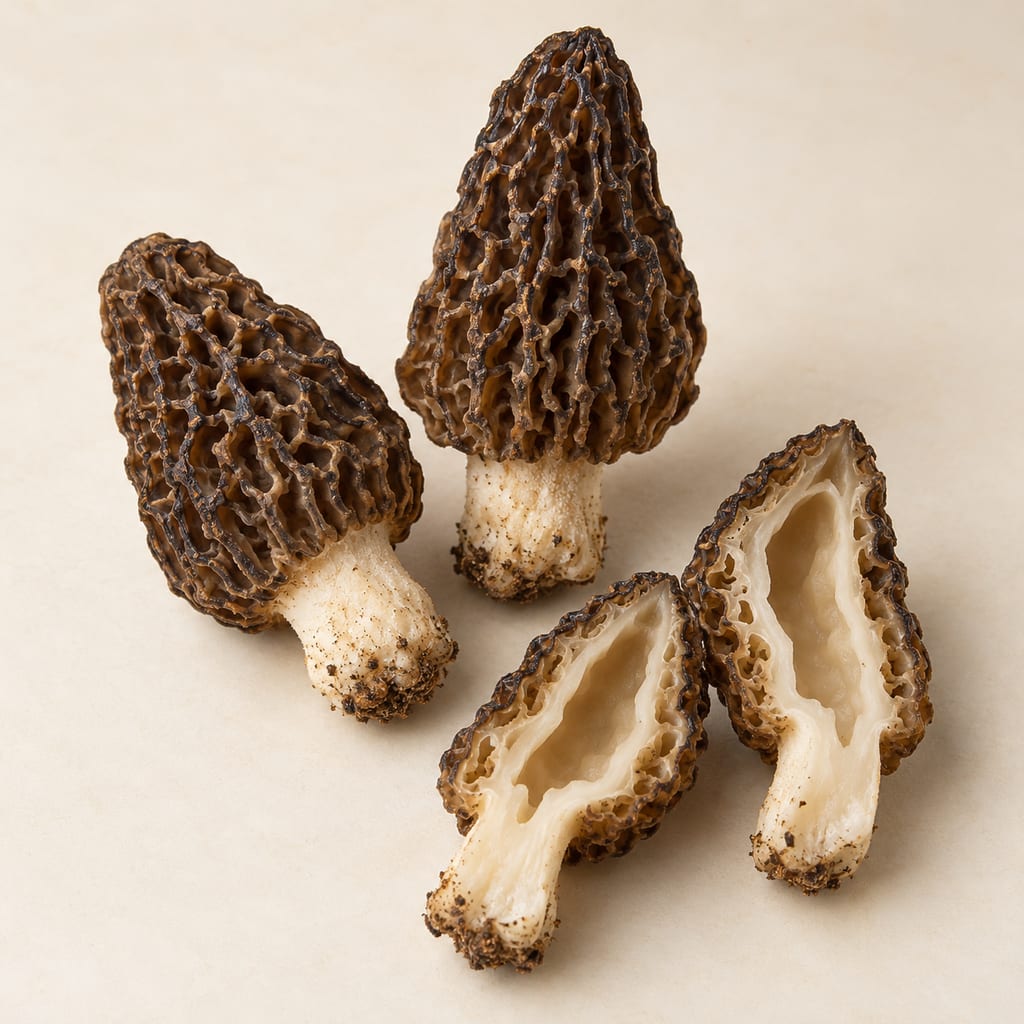
Western hardwood black morel, Morchella brunnea, is a wild true morel recorded in western North America. Morels must be cooked thoroughly before eating.
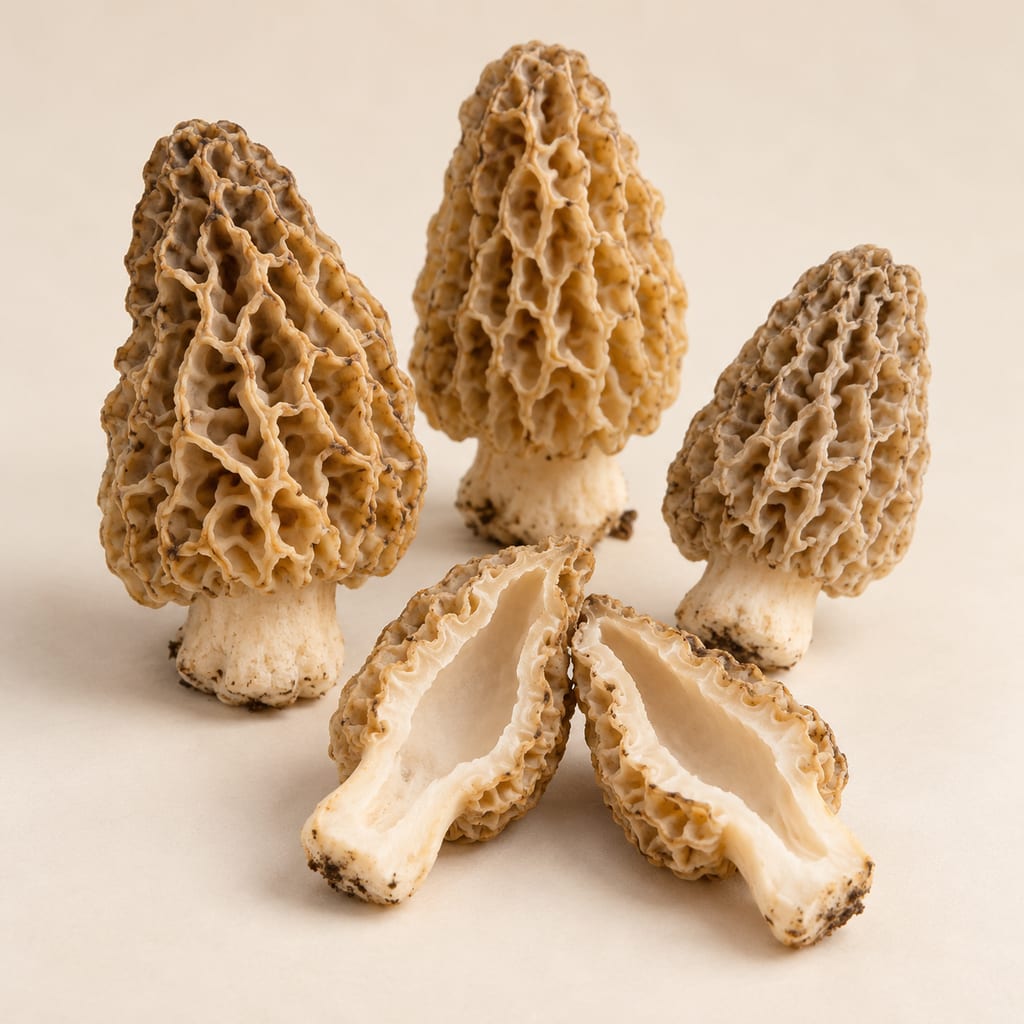
Blonde morel, Morchella tridentina, is a wild true morel recorded as gathered and traded in Patagonia. Morels are eaten only after thorough cooking.
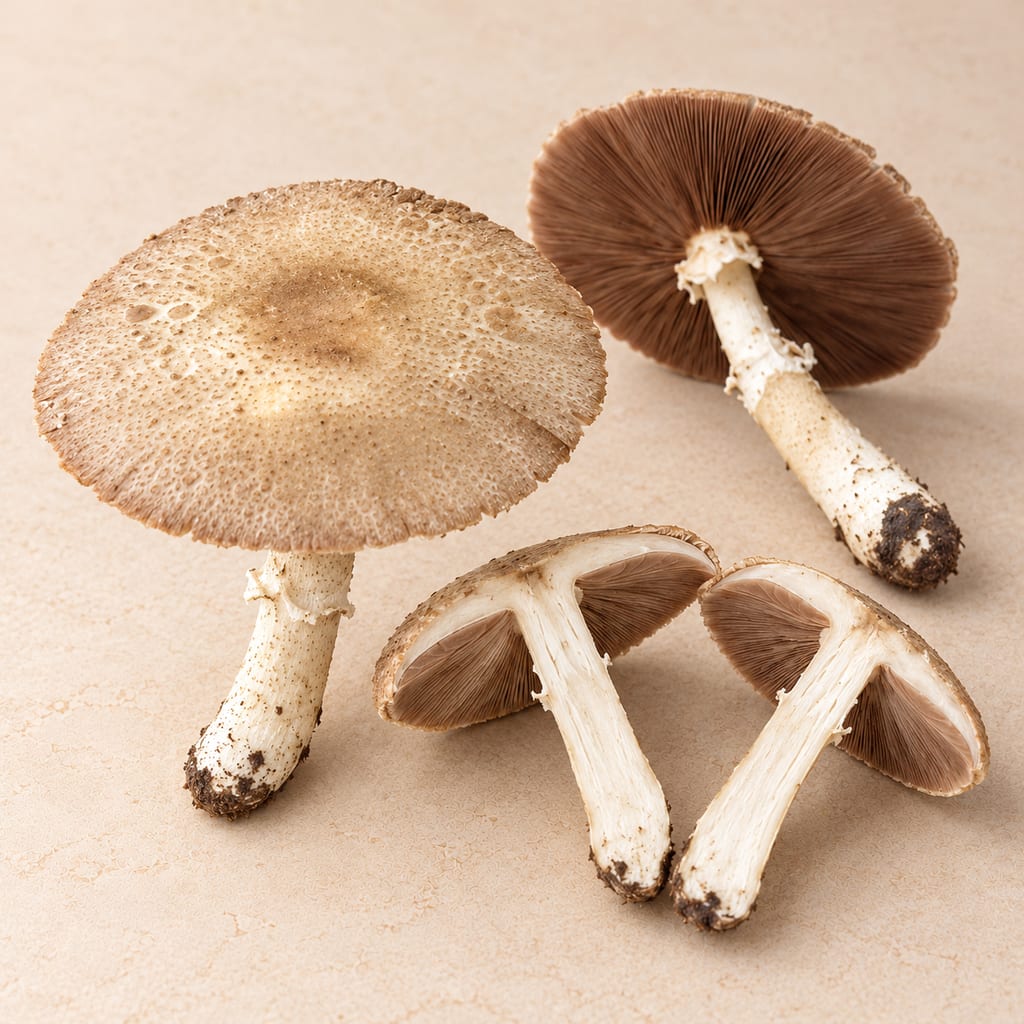
Termitomyces eurhizus, a wild mushroom that grows from the nests of fungus-growing termites in Yunnan and parts of South and Southeast Asia, recorded in soups, fried dishes and preserved in oil.
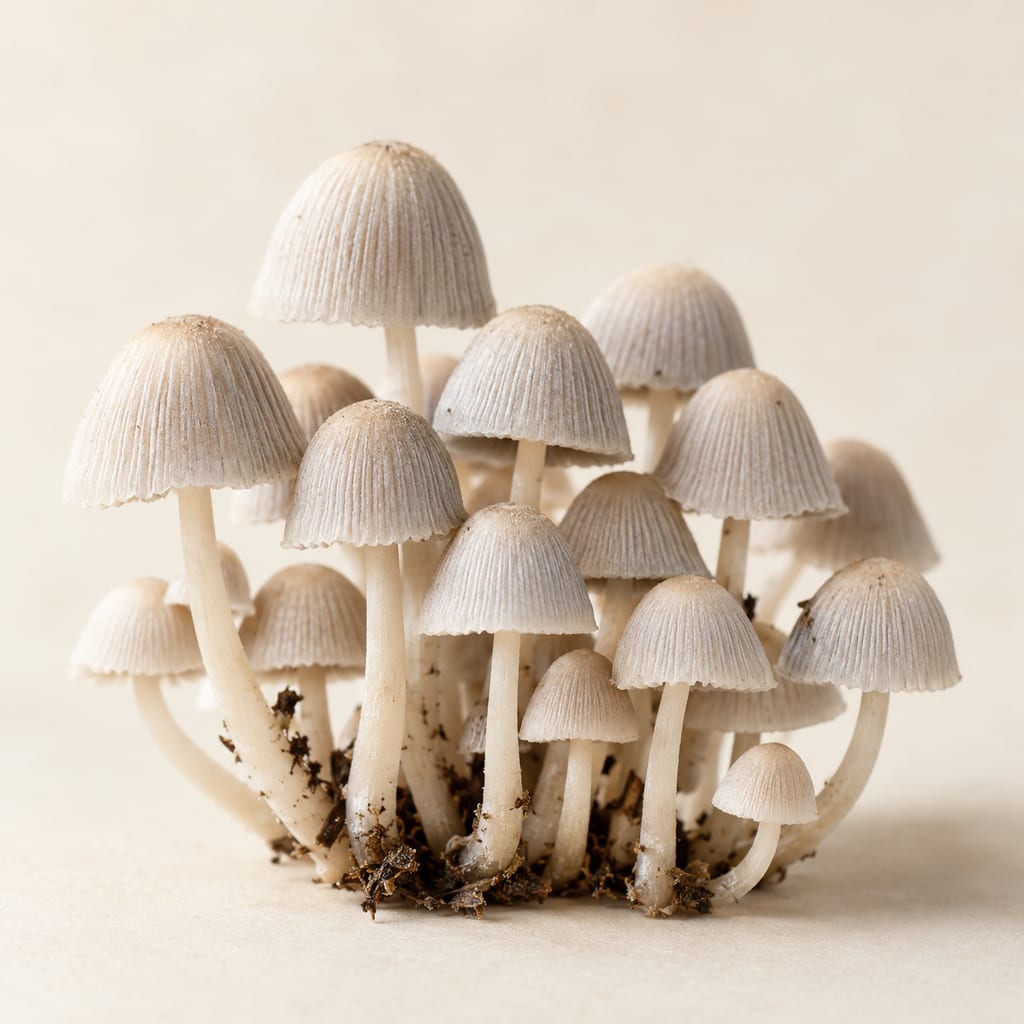
Coprinellus disseminatus is a small saprotrophic inky-cap mushroom that grows in clusters on wood and debris. A Congolese food-use record and a Colombian catalogue entry both call it edible, but neither describes its preparation.
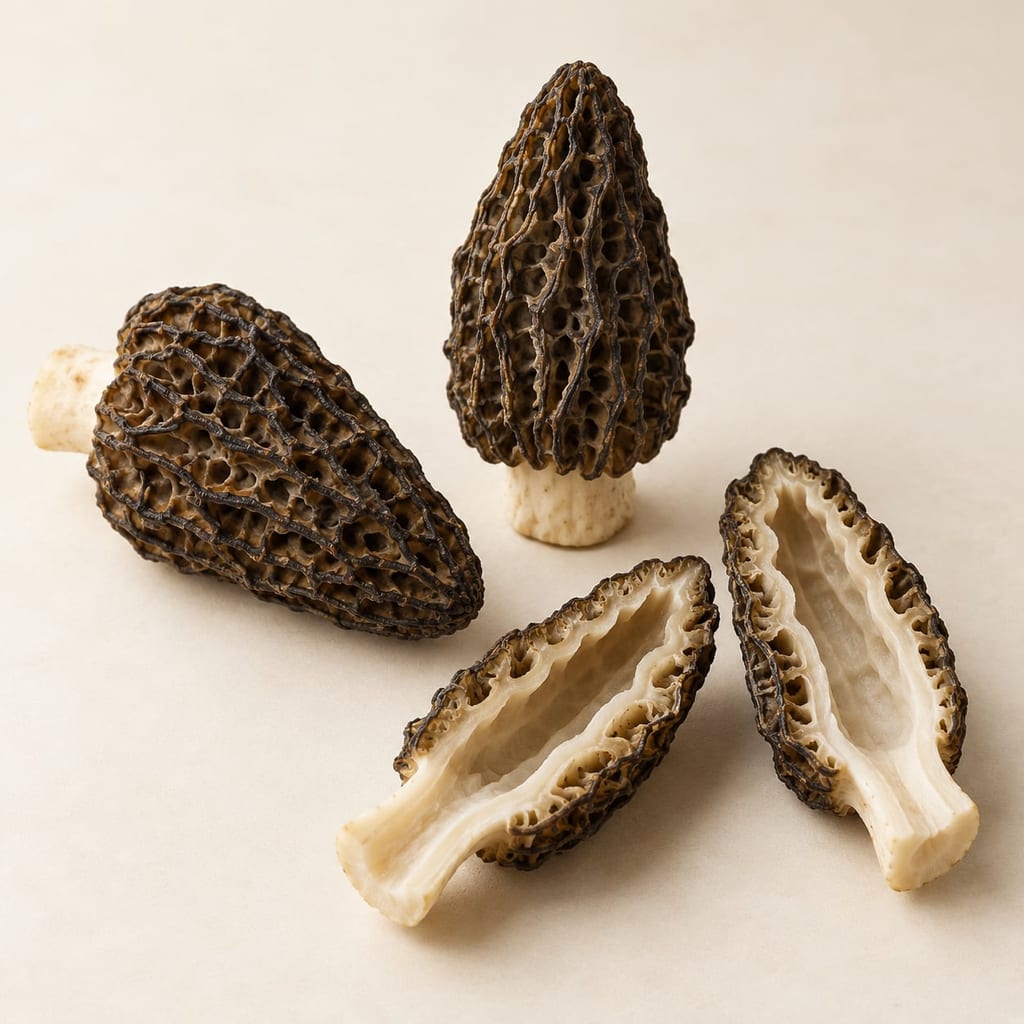
The black morel, Morchella elata, is a pitted, hollow fungus of conifer woods and disturbed ground. It is a popular edible in Europe, and its sources insist it must always be cooked thoroughly.
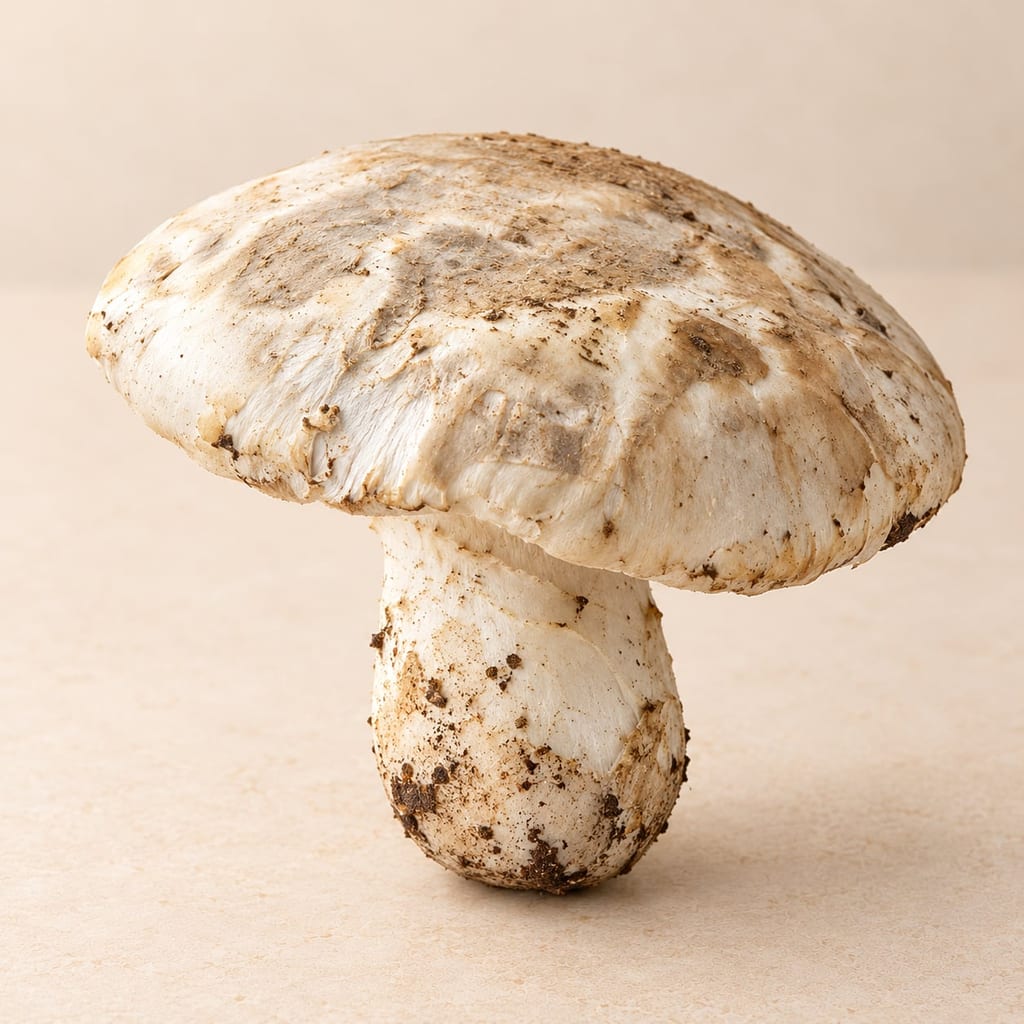
Subalpine catathelasma, Catathelasma subalpinum, is a wild ectomycorrhizal mushroom described from Yunnan in 2020. It is listed as edible in a 2026 Chinese catalogue, but its food use is not yet documented.
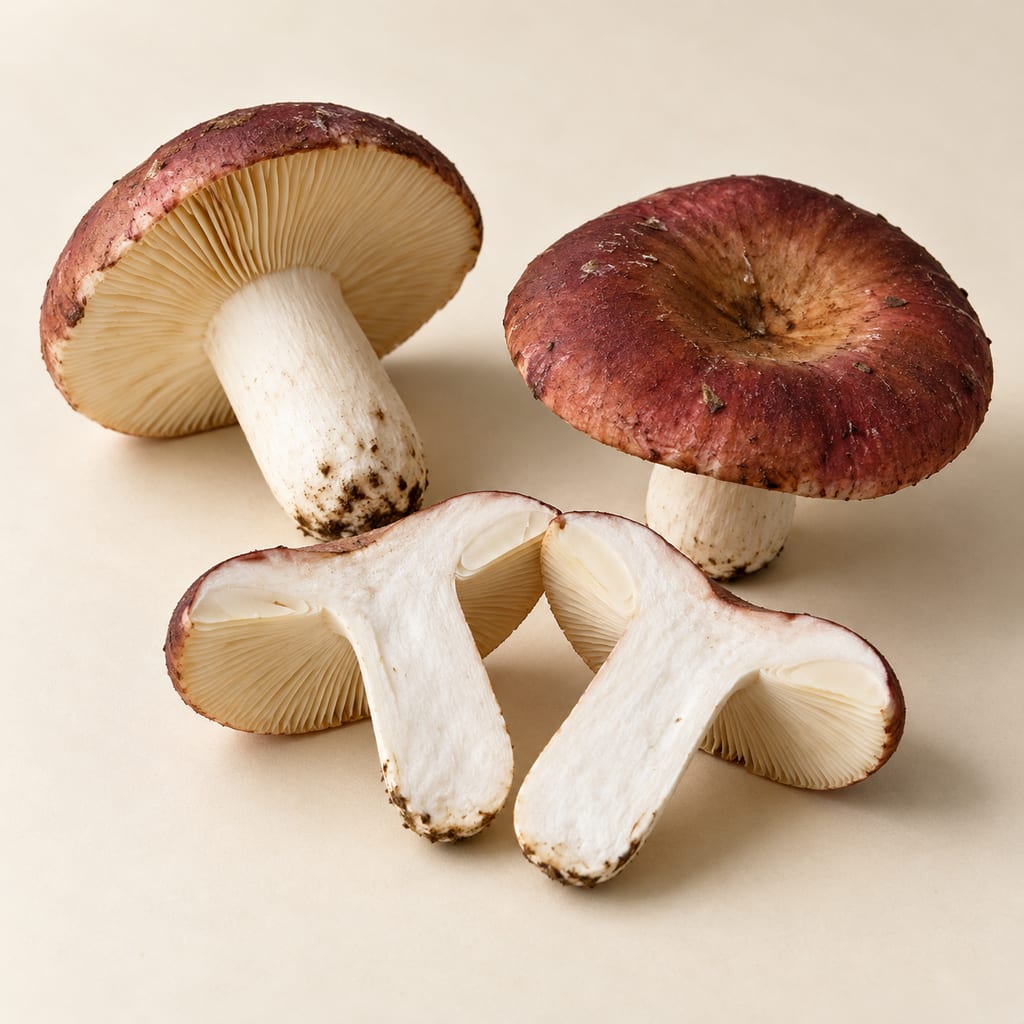
Nutty brittlegill (Russula integra) is a conifer-woodland mushroom with firm white flesh and a mild, nutty taste. Sources say it is edible when cooked thoroughly, and that quick cooking does not remove its toxins.
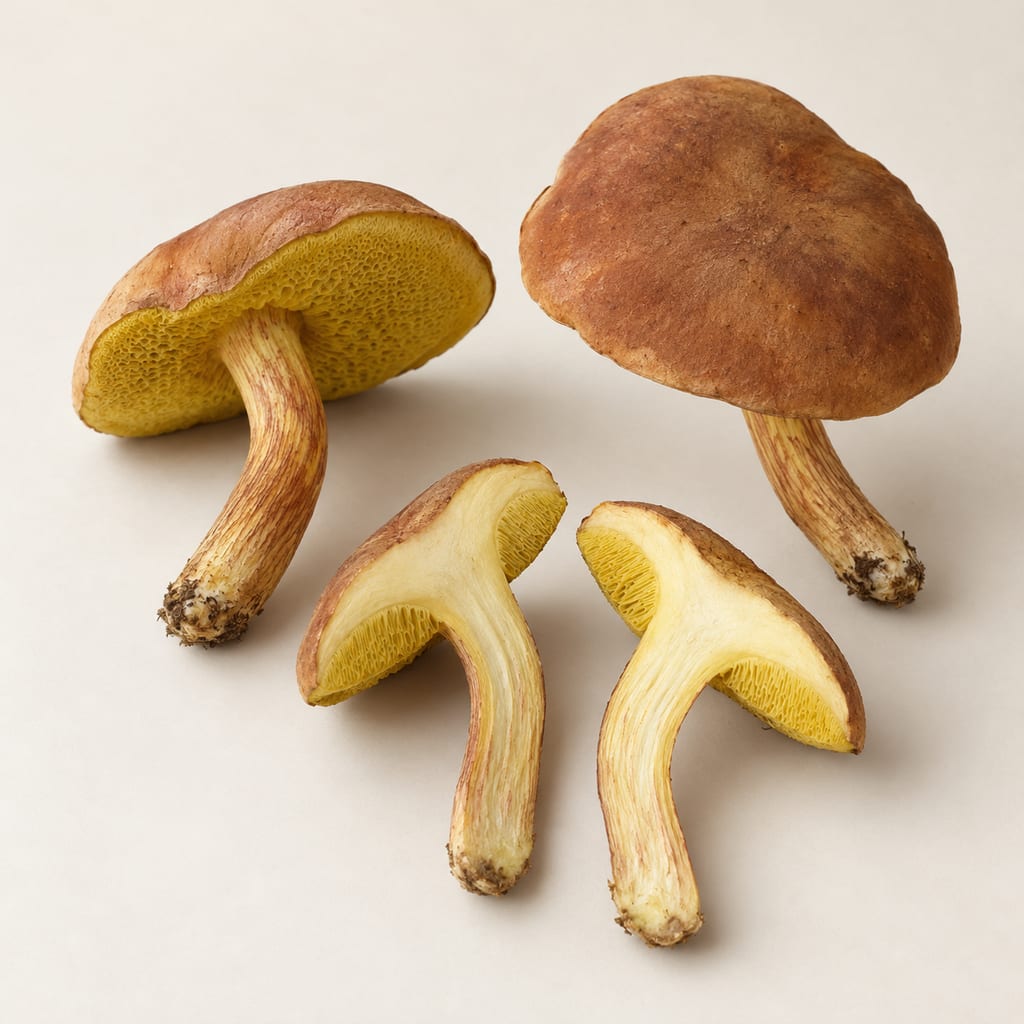
Xerocomus illudens, a forest bolete of Mexico that is gathered by some communities but was ranked low by others, partly because of its sour taste.
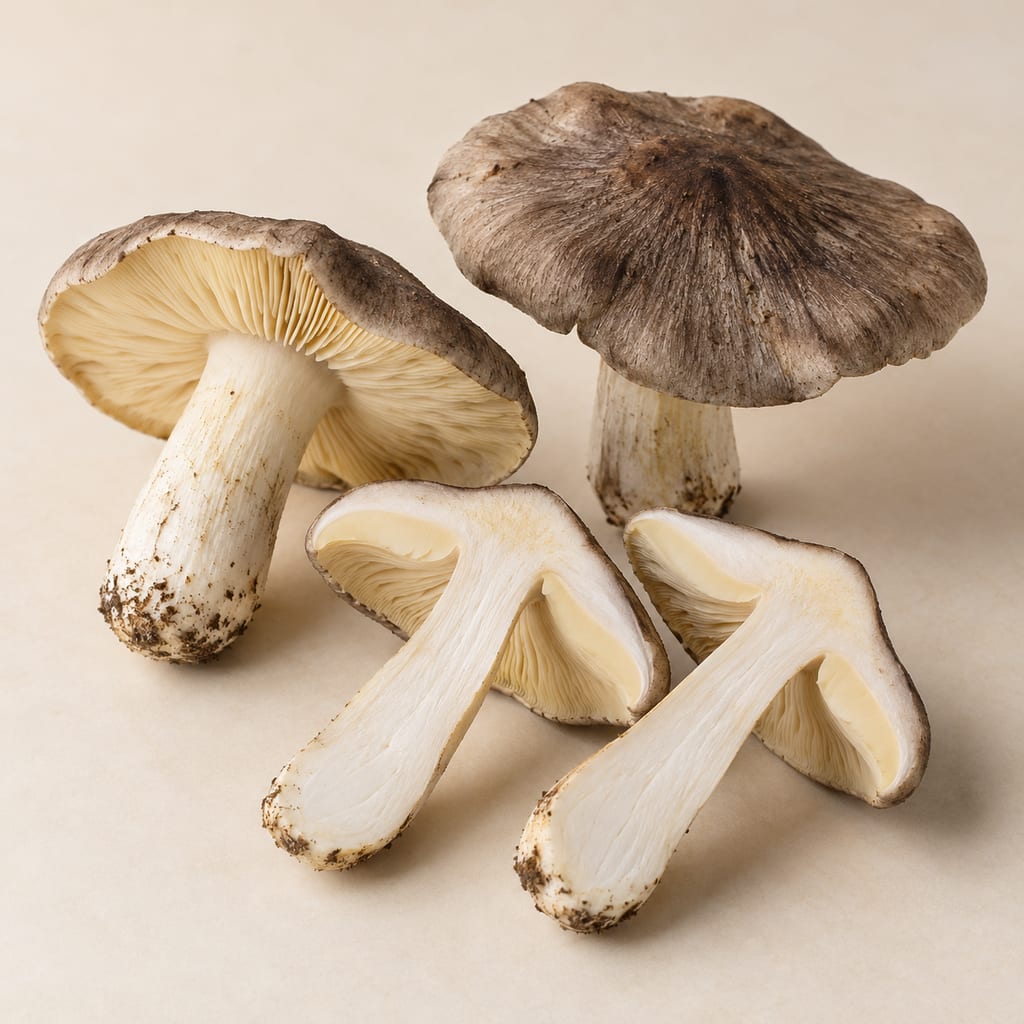
Charbonnier, Tricholoma portentosum, is a wild tree-associated mushroom of Europe that is sold as a seasonal market mushroom. Spanish law permits fresh sale of the species, and other grey Tricholoma species must not be assumed edible.
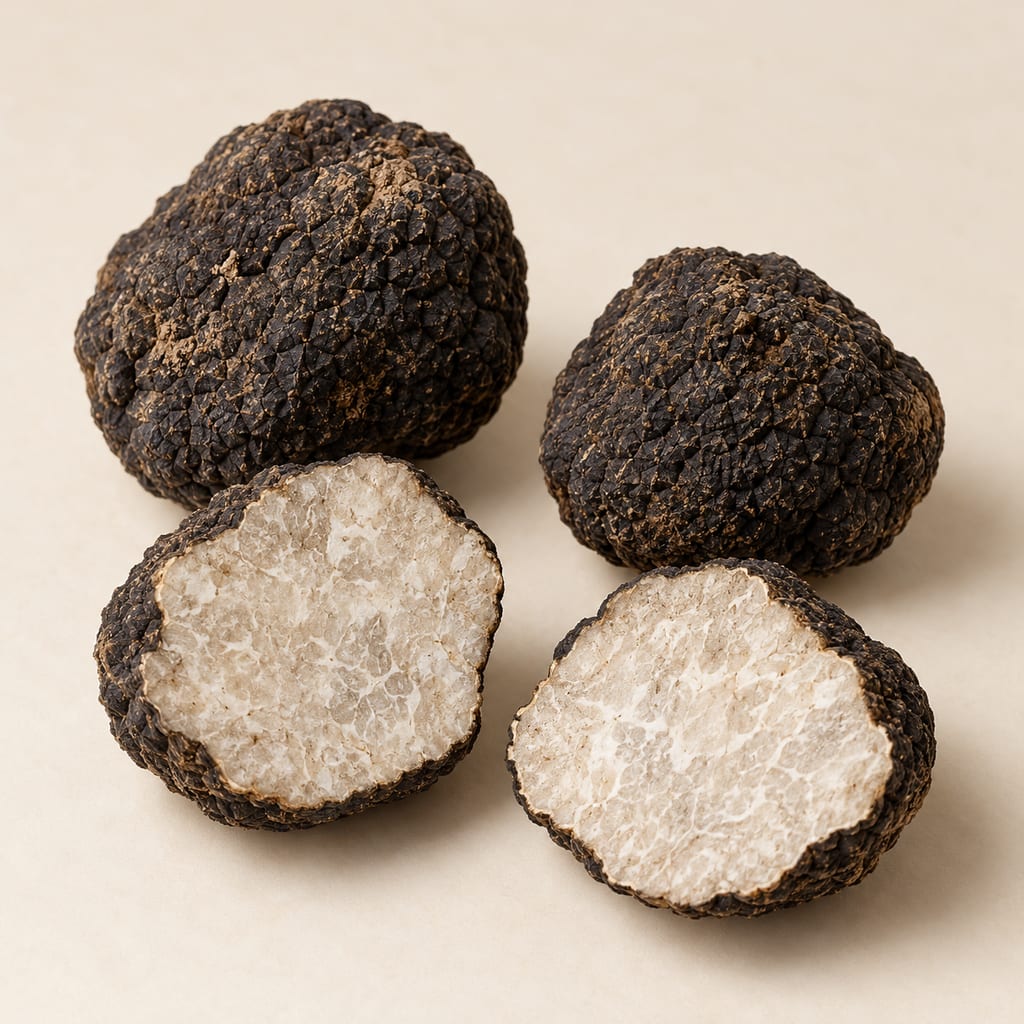
The black desert truffle, catalogued as Picoa juniperi, is a subterranean fungus gathered wild in arid and semi-arid lands. Eastern Anatolian households eat it, usually fried with eggs.
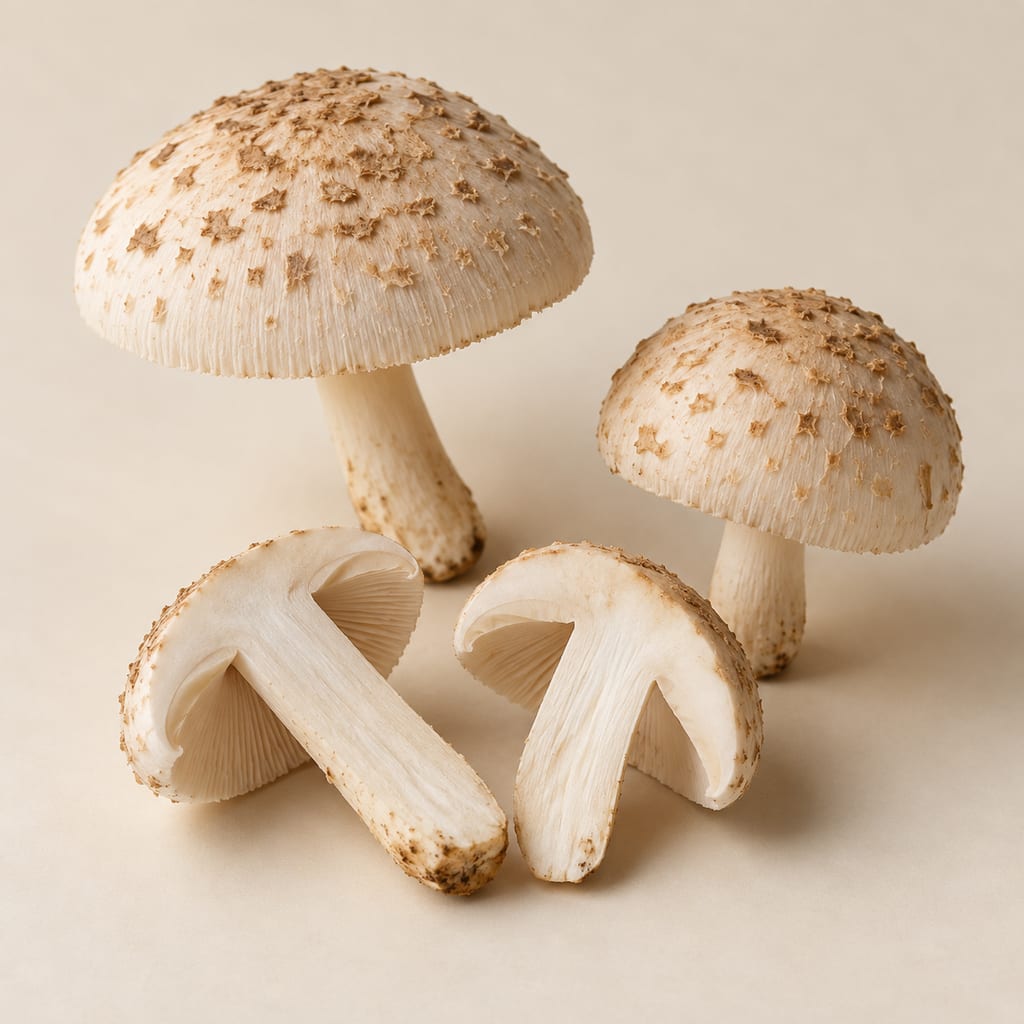
Oudemansiella platensis is a wood-rotting mushroom of the Brazilian Atlantic Forest and Cerrado, recorded in one Brazilian food-use source. The evidence for human consumption is thin, and no edibility verdict follows from it.
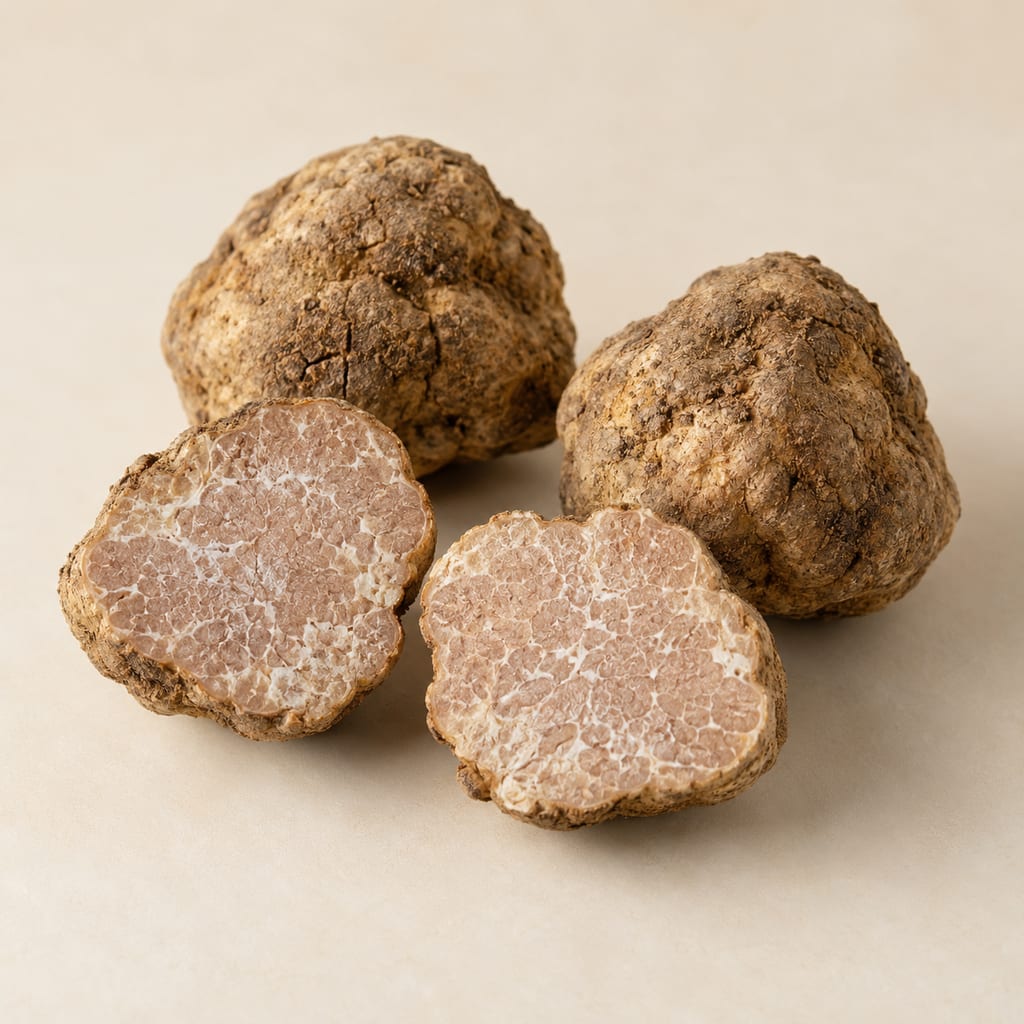
The sand desert truffle, Terfezia arenaria, is an underground fungus of sandy, arid soils around the Mediterranean Basin. It is widely harvested and traded, but the European Union does not list it as an edible truffle authorised for sale.
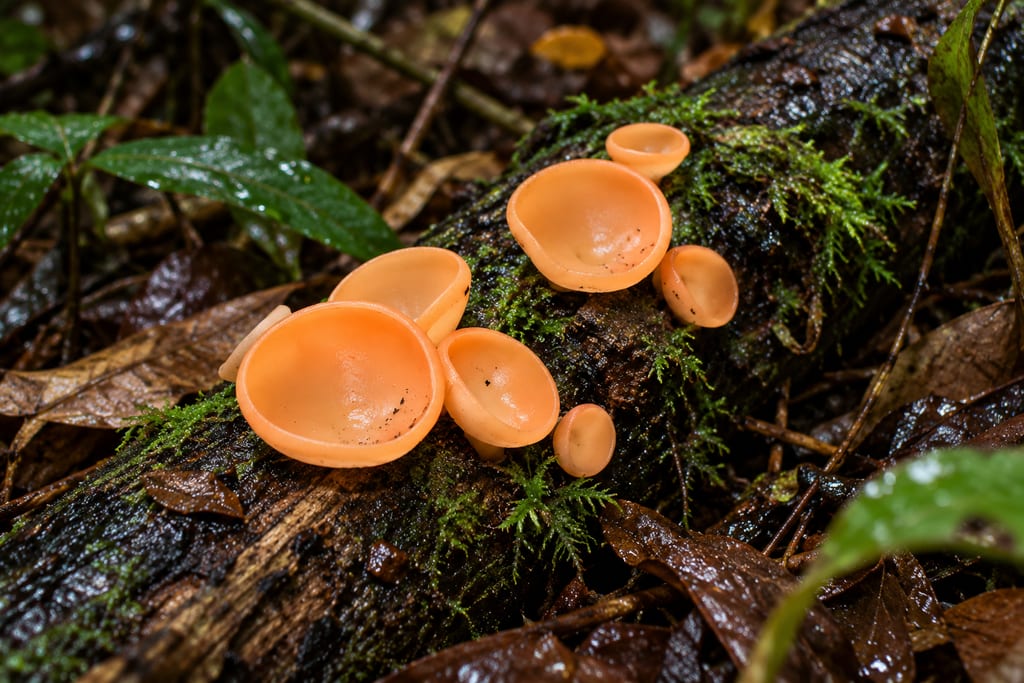
Cookeina venezuelae, a cup fungus that grows on wood in Brazilian Atlantic rainforest, whose food use was newly recorded in a 2024 audit of wild edible mushrooms from Brazil.
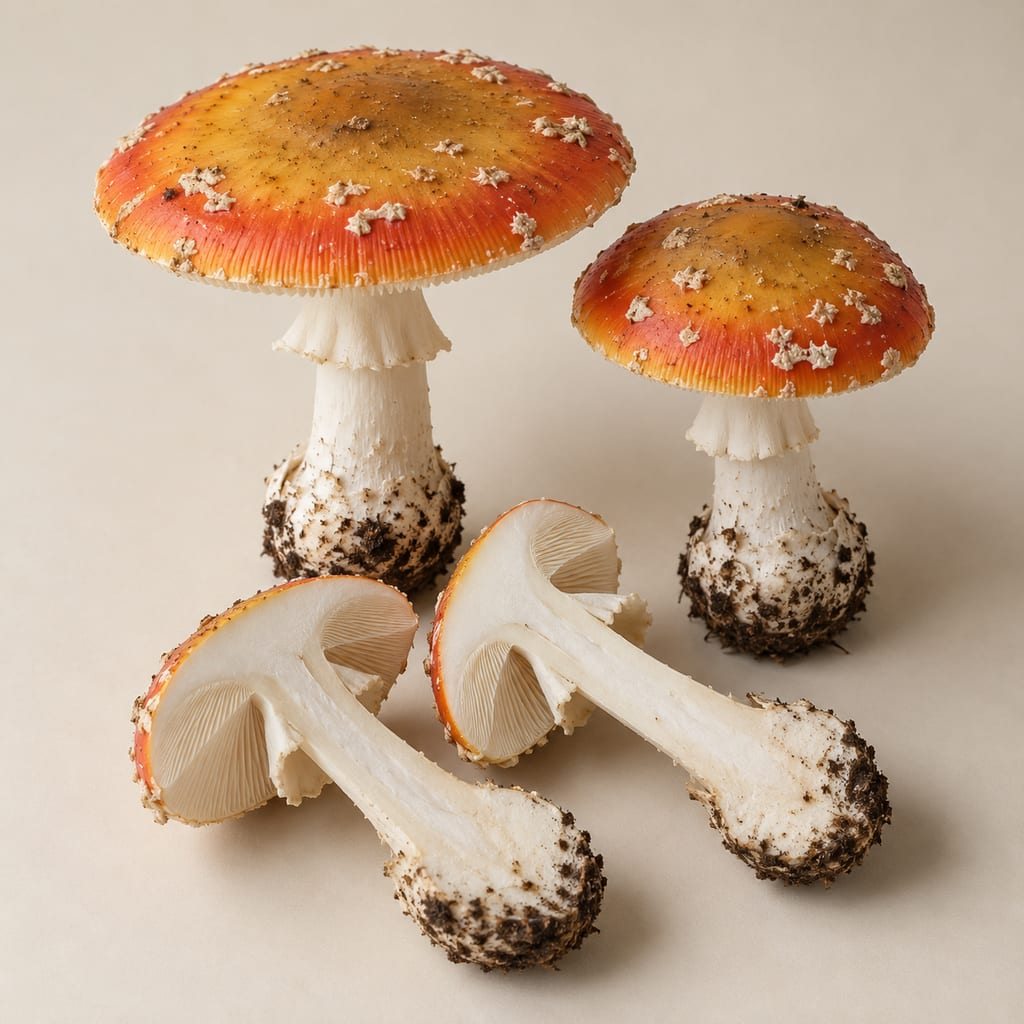
Amanita mafingensis is a reddish Amanita described from Tanzania in 1994, where local people regard it as edible. Its genus includes some of the most dangerous mushrooms, so this page gives no edibility verdict for any other place.
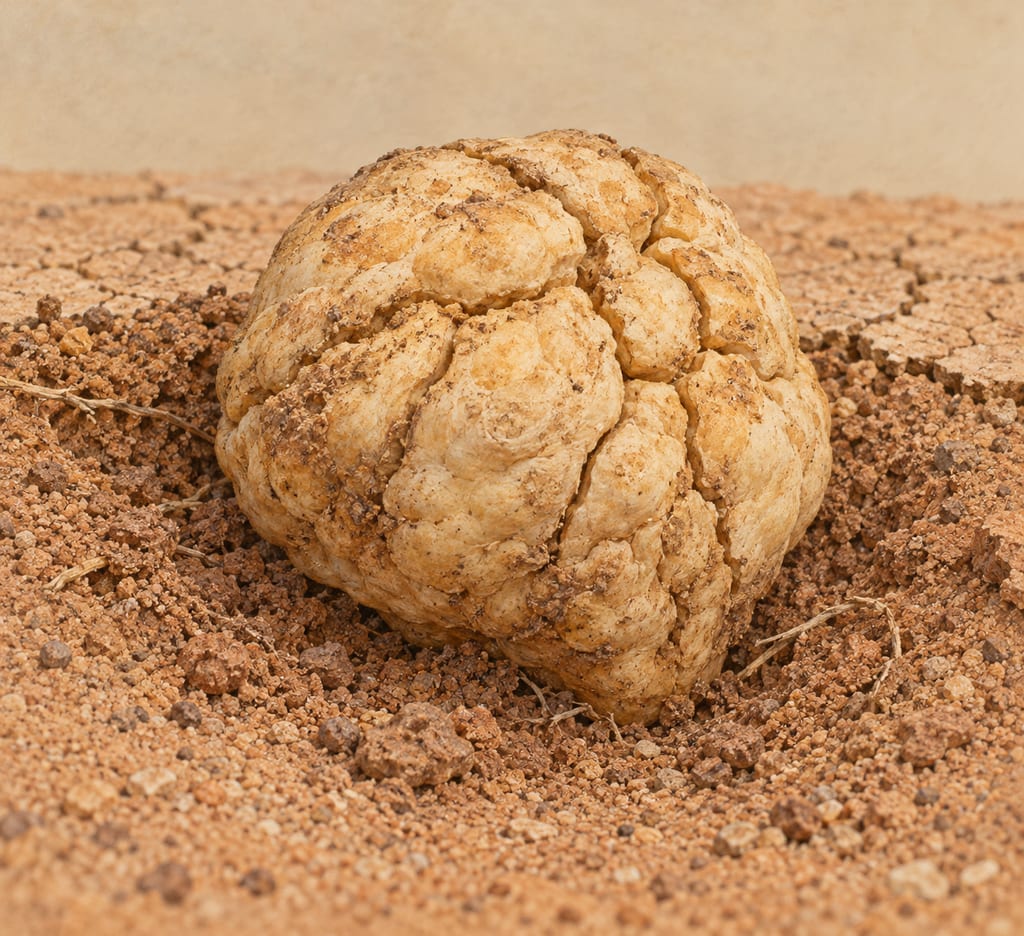
Choiromyces aboriginum is an underground desert truffle of Australia's dry interior. Aboriginal peoples ate its fruiting bodies raw or cooked and also drew water from it. Its accepted scientific name is disputed.
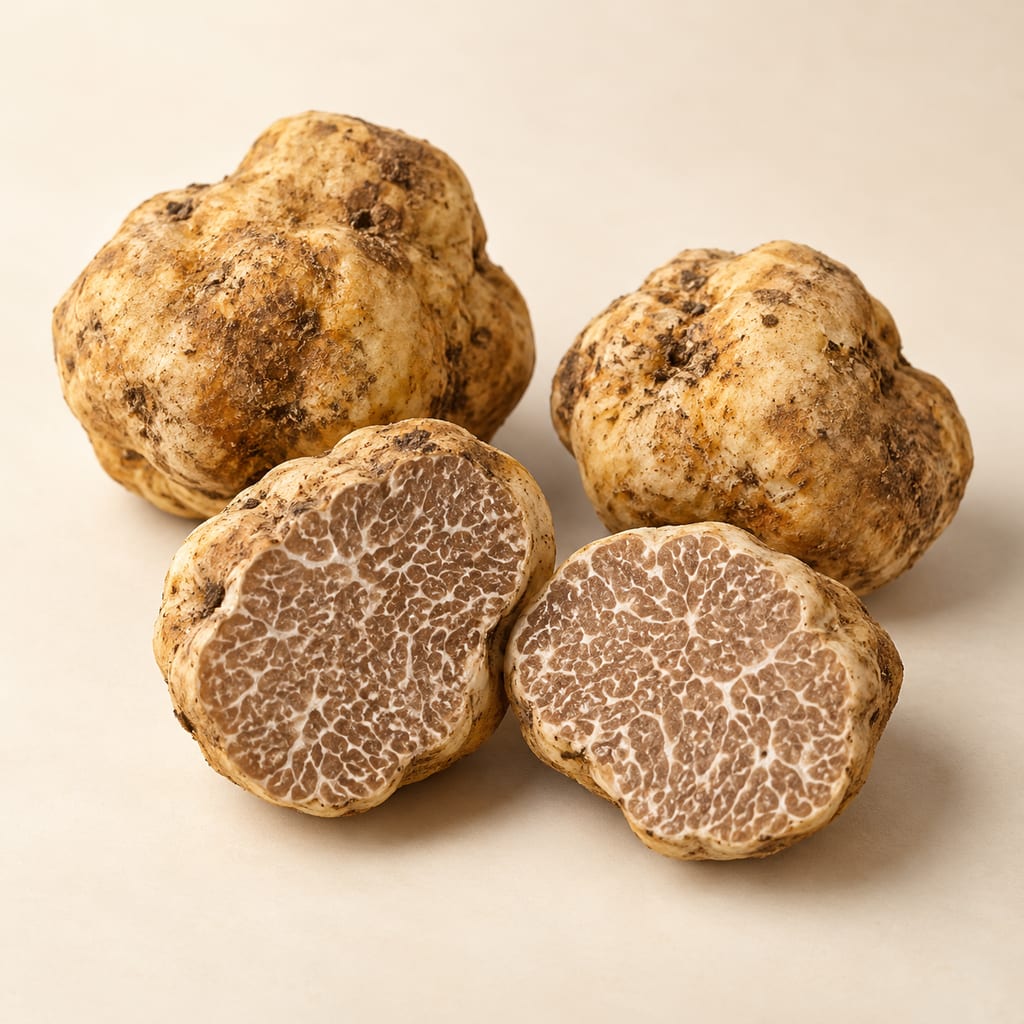
Tuber cumberlandense, an aromatic truffle described as a new species in 2024, native to eastern North America and sold from truffle orchards and woodlands dominated by broadleaf trees.