



























































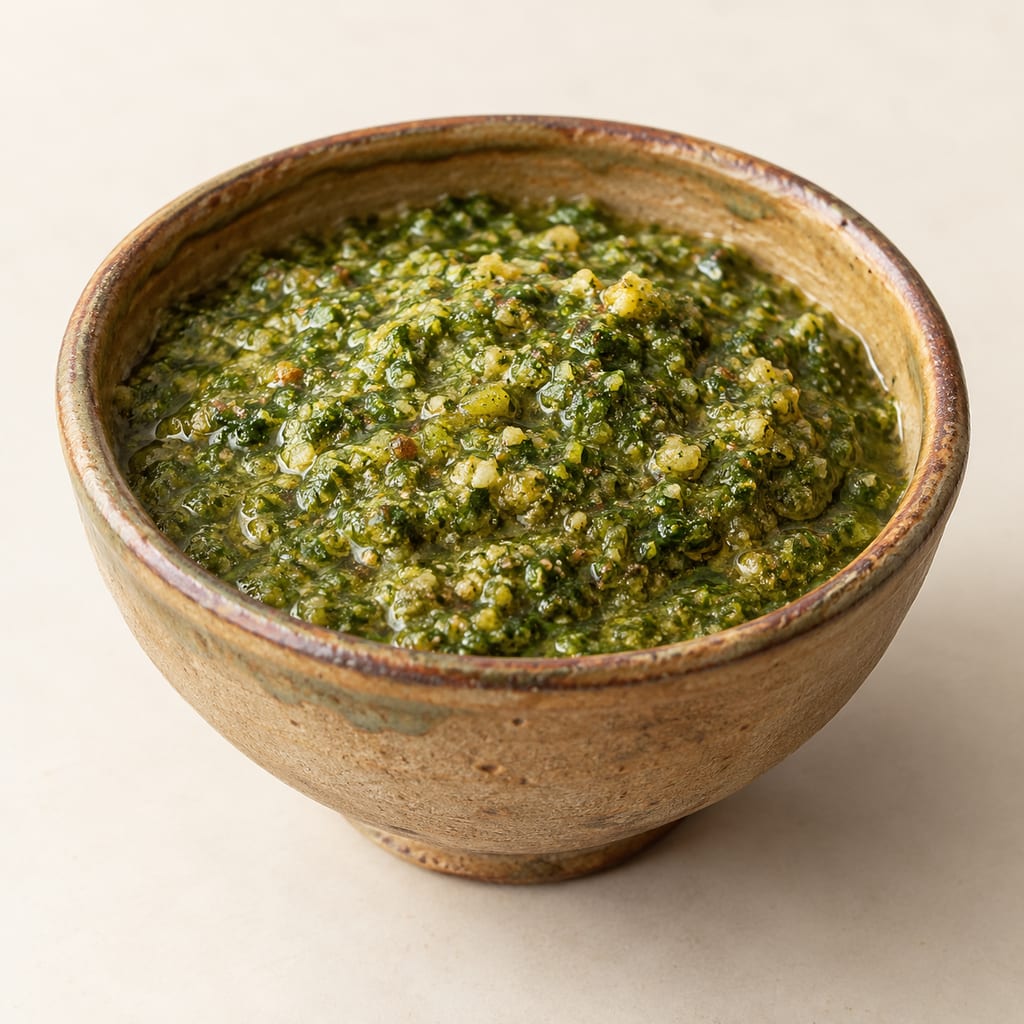
Verde sawse (medieval green herb sauce)
A green herb sauce from The Forme of Cury, about 1390, of parsley, mint, garlic and sage ground with bread, wine, vinegar and warm spices, coloured and flavoured with saffron. It is not fermented.
 FermenteaWhere food goes to change
1504 records with their sources, across 11 categories.
 Fermented, enzyme-ripened and mixed seasonings328
 Fruit preserves10
 Legume, seed and plant-protein ferments10
 Garum and fish sauces8
 Adjacent and excluded7
 Koji, mold starters and mold-ripened ferments4
 Acid and oil pickles3
 Fermented fruit and fruit-derived foods3
 Vegetable lactic3
 Dairy ferments2
 Smoked salted and dried foods2
 Cheese1
 Not yet classified1
A green herb sauce from The Forme of Cury, about 1390, of parsley, mint, garlic and sage ground with bread, wine, vinegar and warm spices, coloured and flavoured with saffron. It is not fermented.
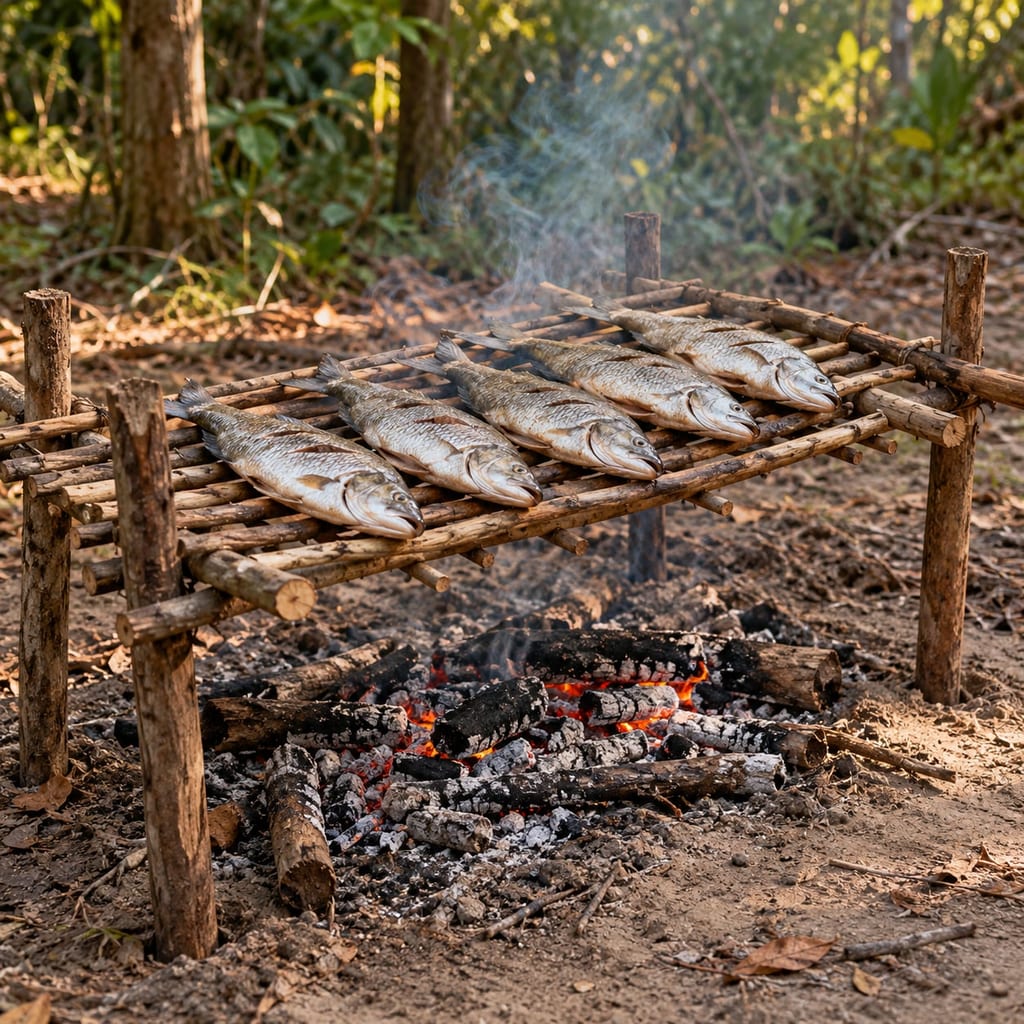
Moquém is the Brazilian Indigenous method of laying meat or fish on a grill of wooden sticks to roast, dry or smoke it, and also the name of the grill itself.
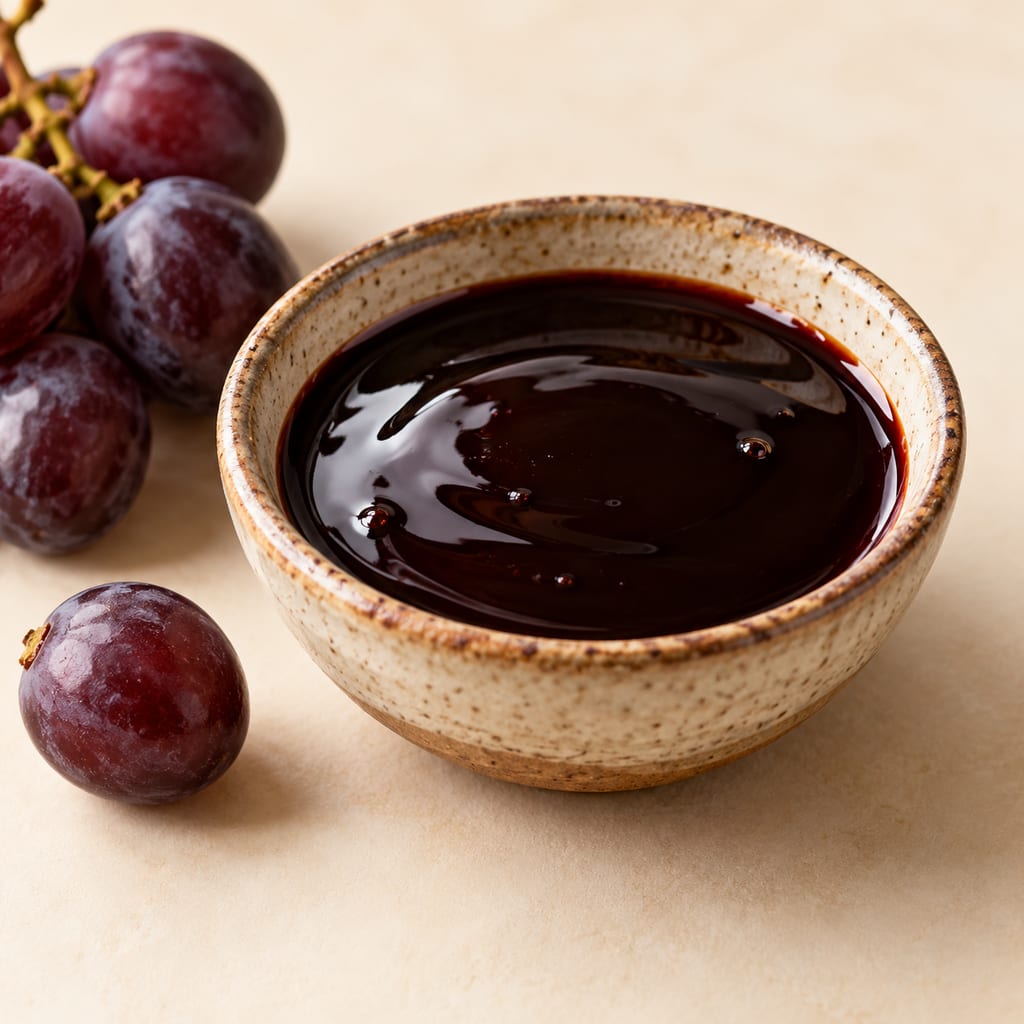
Vincotto is a dark, thick, sweet paste made by slowly cooking down unfermented grape must in rural Italy, used as a seasoning for savoury dishes and desserts.
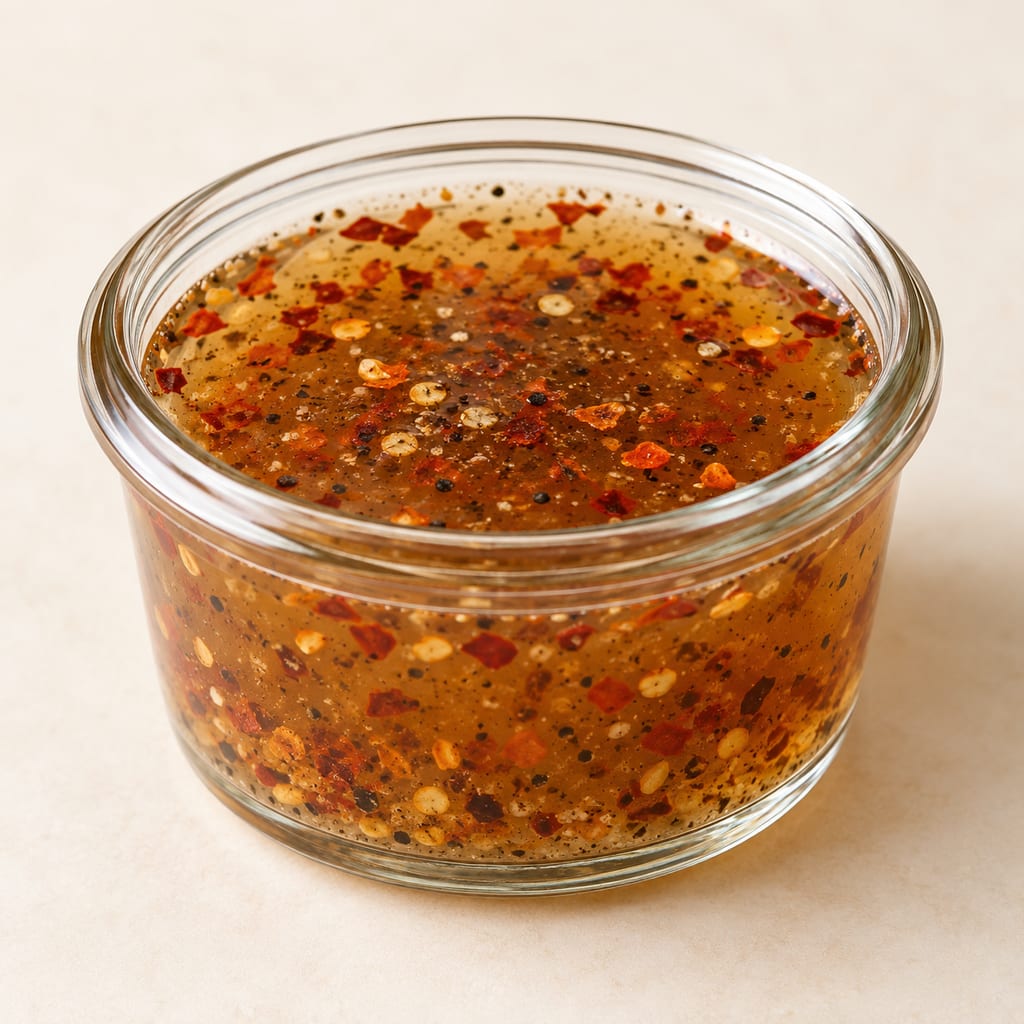
A thin eastern North Carolina sauce of distilled vinegar, pepper flakes, black pepper and salt, mixed cold and used to season chopped or pulled pork.
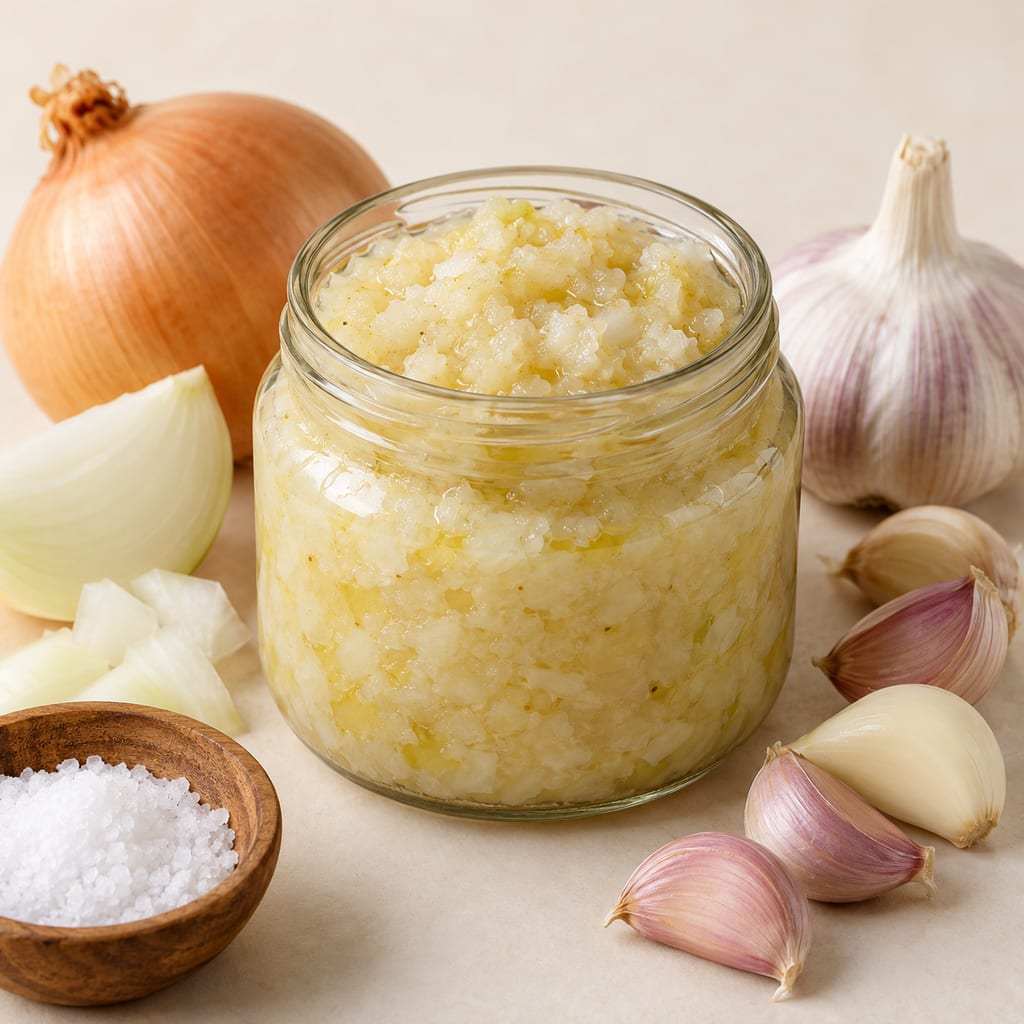
Tempero pronto is a fresh Brazilian paste of garlic, onion and salt, ground with oil and kept ready to start a dish. It is the Brazilian counterpart of sofrito and refogado.
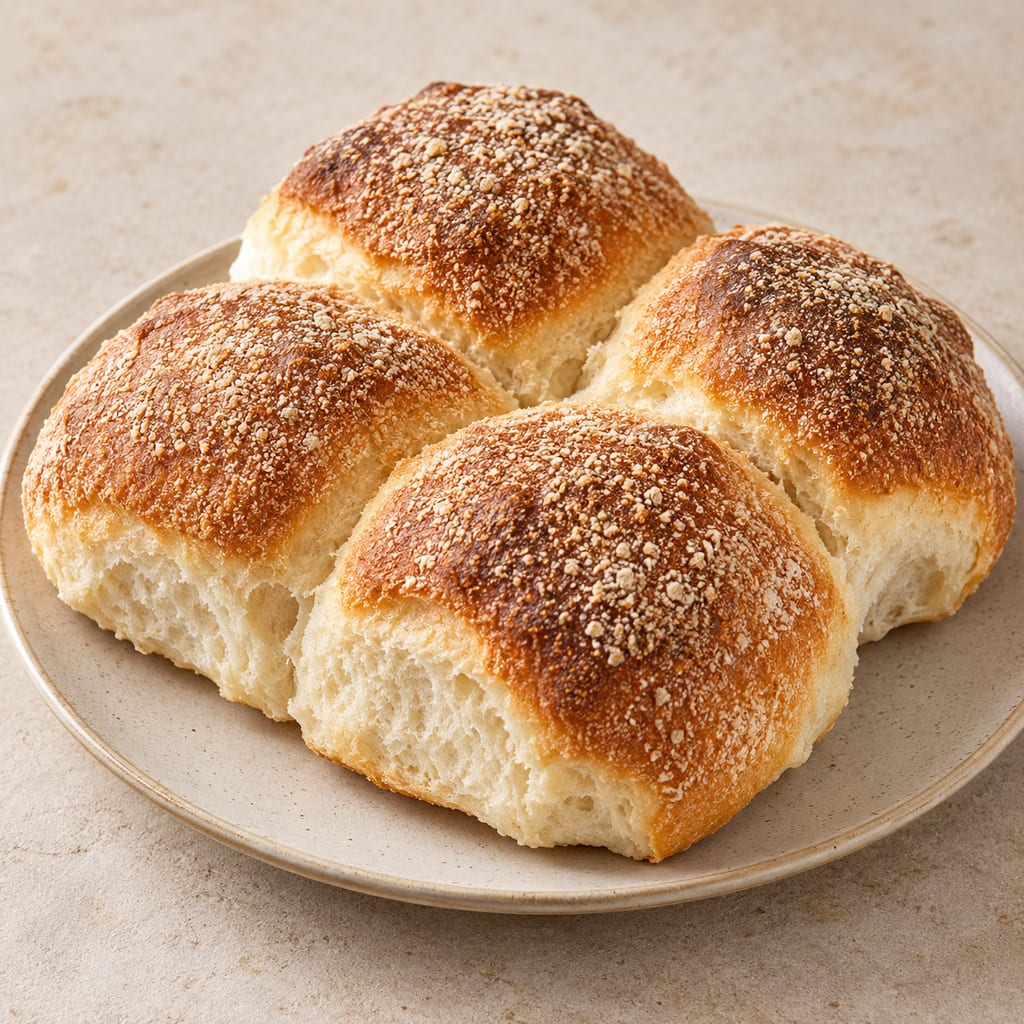
A wet, cold-fermented wheat dough is coated in rice flour and baked close together at high heat for Glasgow-style rolls with a crisp, dark crust and light interior.
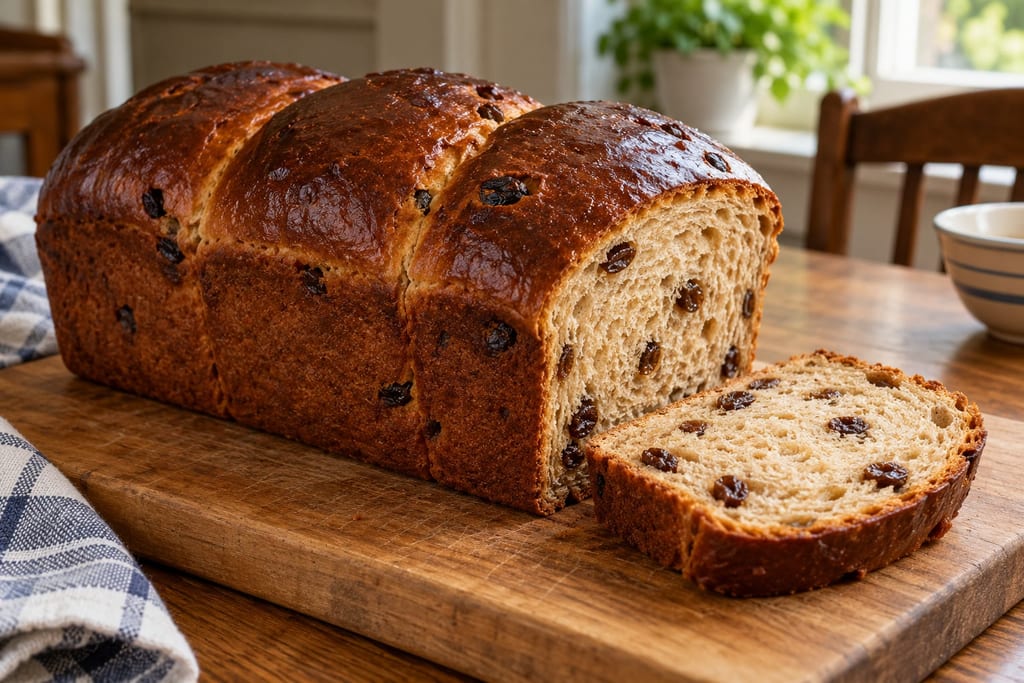
A Newfoundland family-style sweet yeast loaf with molasses, raisins, cinnamon and cloves. This version follows a half-batch adaptation of Nanny Hemeon's family formula; it is not a standard recipe for all Newfoundland households.
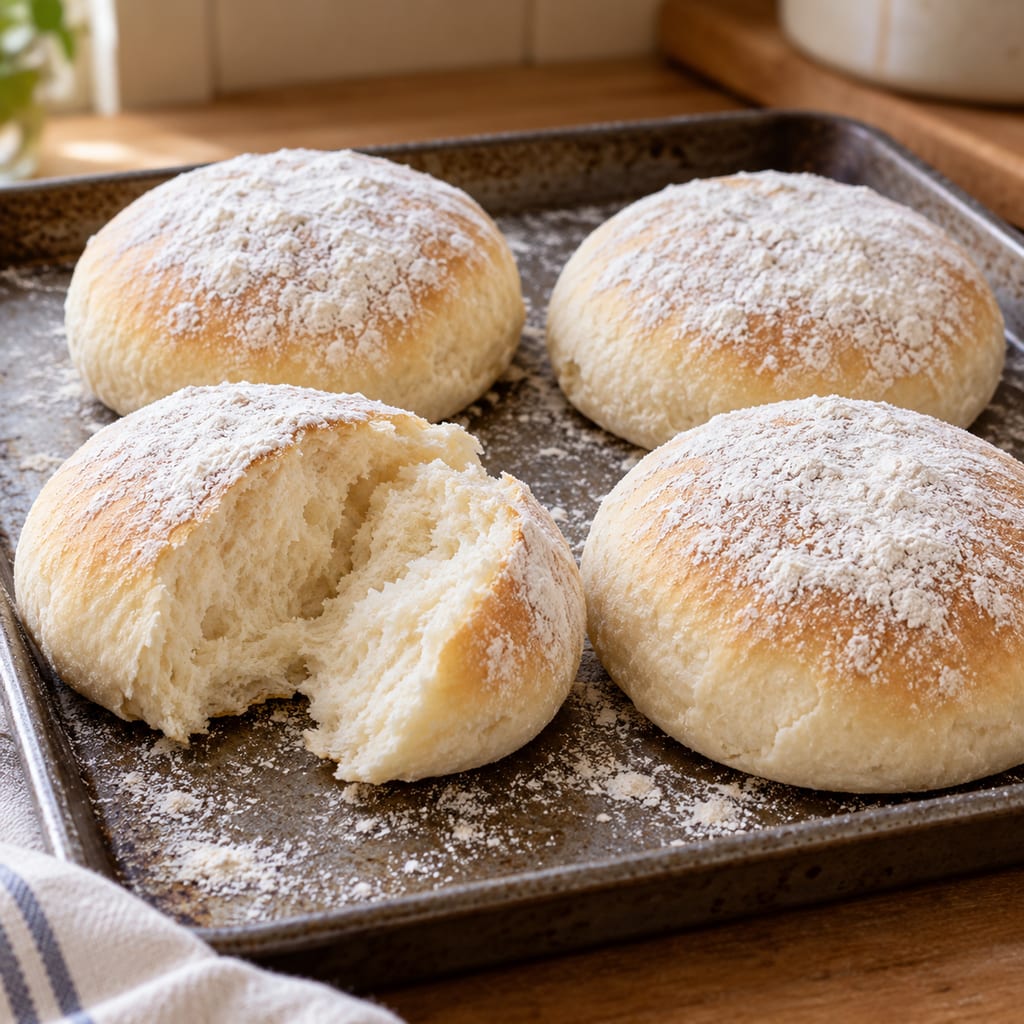
A home adaptation of a measured blaa recipe attributed to Waterford baker Dermot Walsh: plain yeast dough, rounded portions flattened on a tray, generously dusted with flour and baked. Home baking does not confer Waterford Blaa PGI status.

A Kenyan mandazi made with self-raising flour, lemon and optional cardamom, cut into triangles and deep-fried. This baking-powder-raised version is distinct from yeast-raised coastal mahamri.
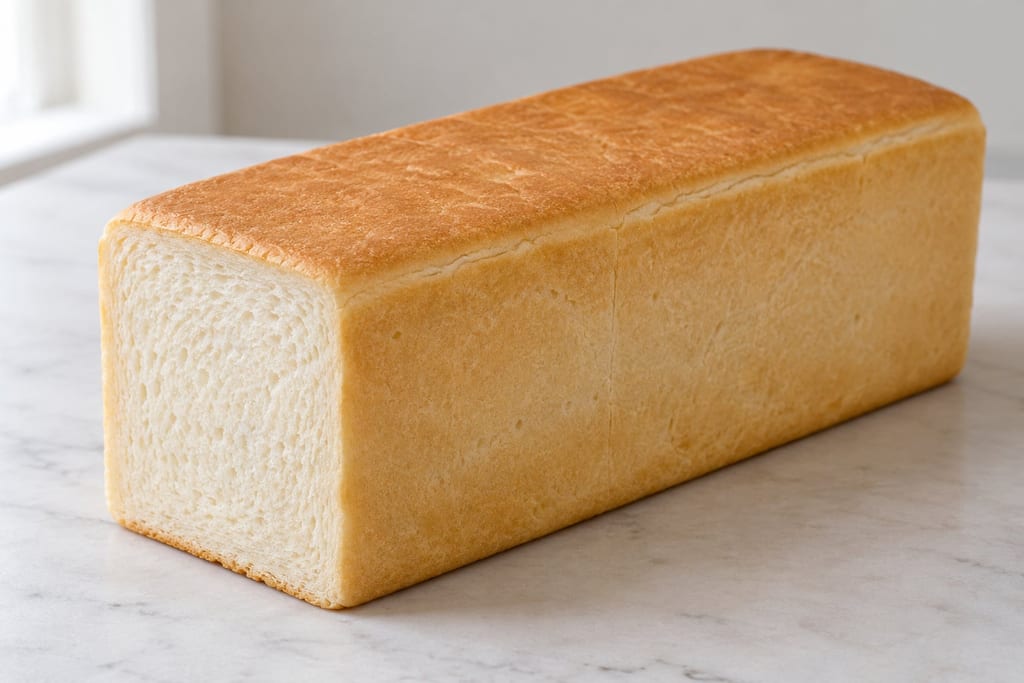
A soft, fine-crumbed pan de miga for thin sandwich slices, made with wheat flour, milk powder, butter and dry yeast in a lidded loaf pan.
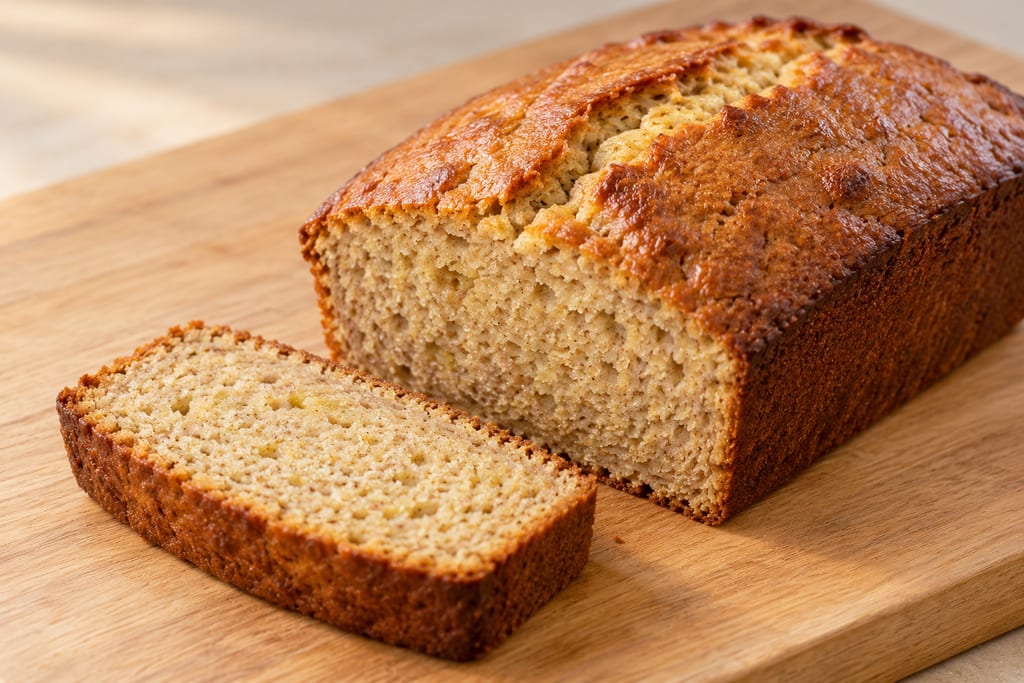
A Hawaiʻi ʻUlu Cooperative home loaf made with ripe banana, ʻulu, or a mixture of the two, leavened with baking powder.
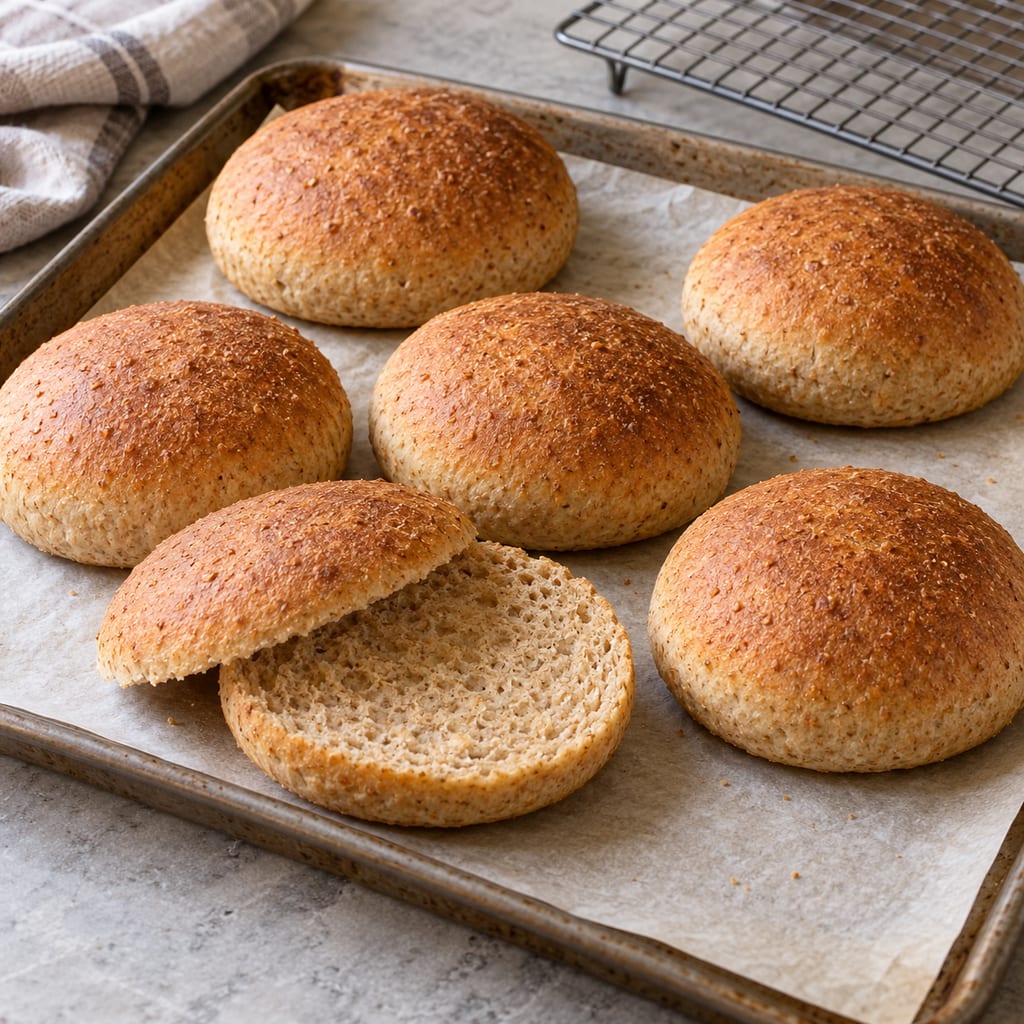
Whole-wheat burger buns gain a soft crumb from potato starch, yeast and a short rise, then bake on a home sheet pan.
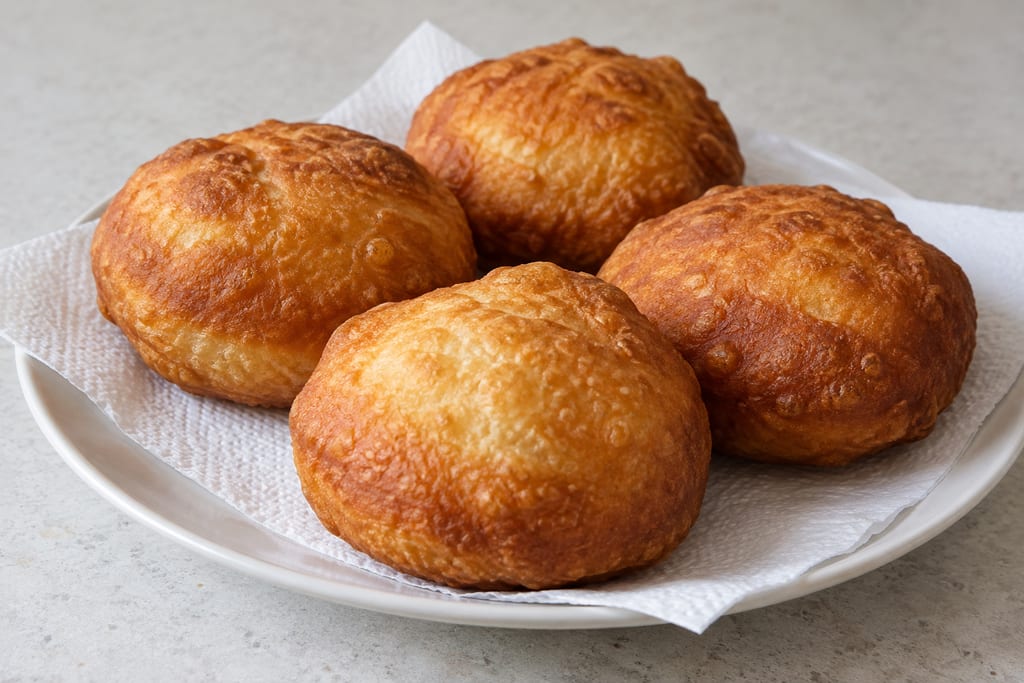
This South African vetkoek batch uses margarine-enriched wheat dough with instant yeast, shaped into 24 portions and deep-fried until golden.
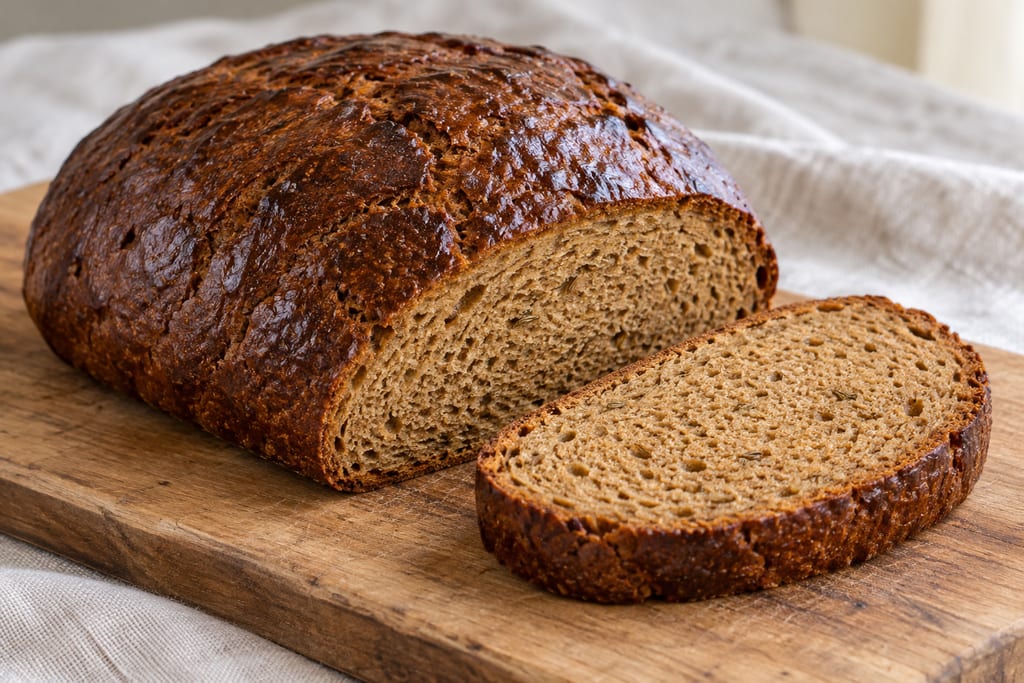
Sirapslimpa is a sweetish Swedish rye-and-wheat loaf with dark syrup, honey, fennel and anise, made with an overnight rye scald and a long room-temperature rise.
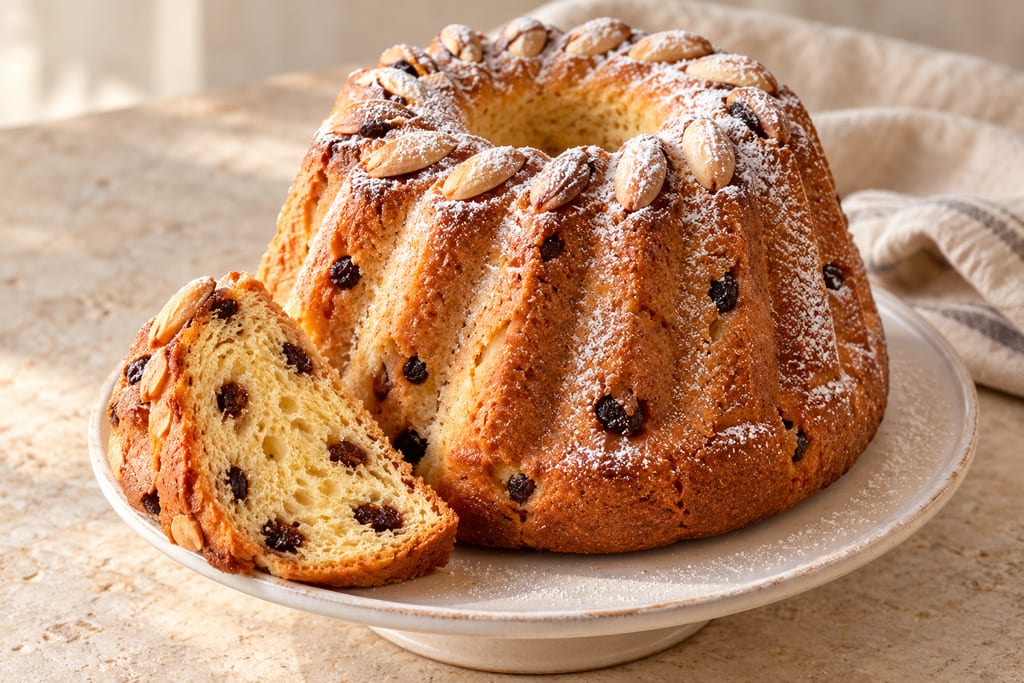
An enriched Alsatian yeast ring with raisins and almonds, kneaded with butter, proofed in a fluted mould and baked until browned.
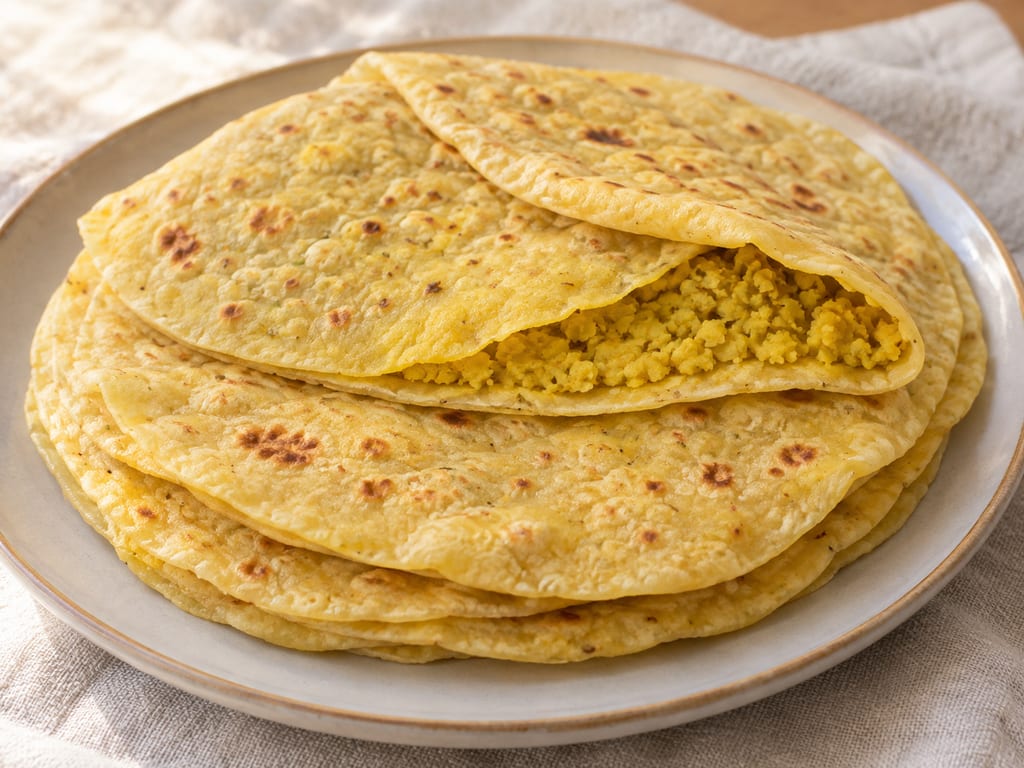
Soft Surinamese dhalpuri filled with seasoned yellow split peas, rolled into thin rounds and cooked on a tawa or skillet.
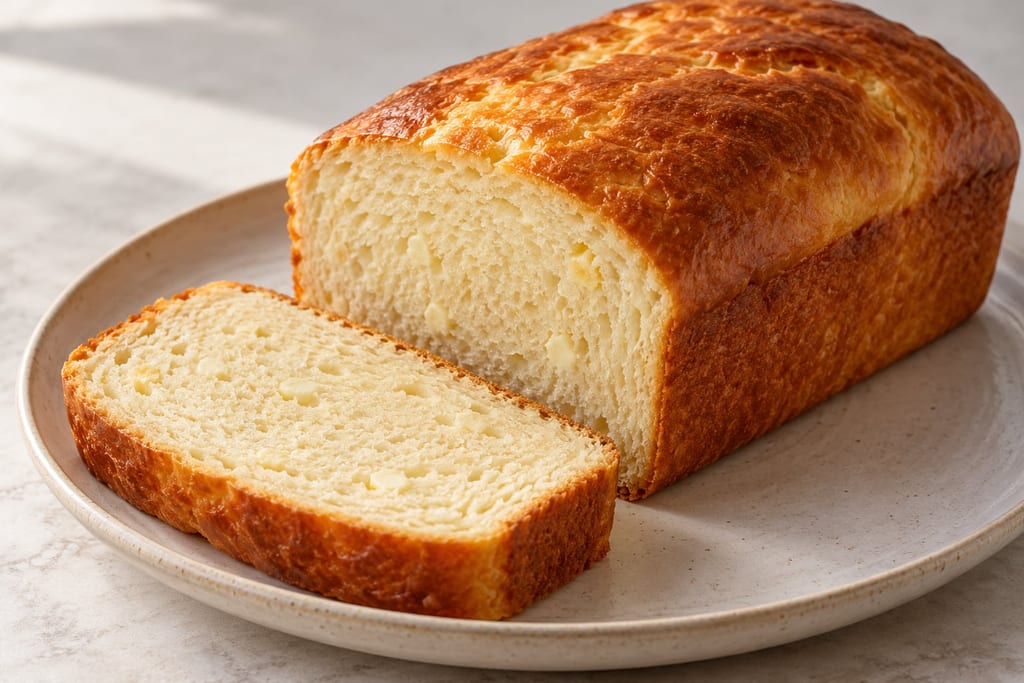
A soft Colombian wheat loaf enriched with milk powder, butter and crumbled fresh cheese.
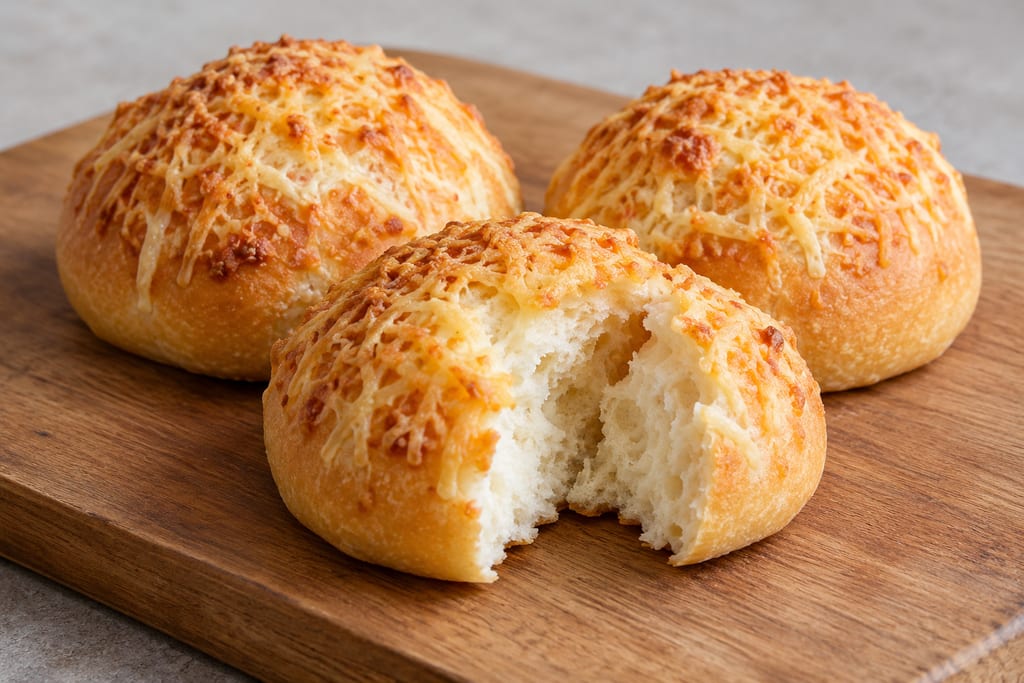
A Potosí yeast bread made with a soft wheat dough and a grated-cheese topping bound with egg yolk and milk.

Ecuadorian filled sweet bread figures with a rounded head and wrapped body, made from an enriched yeast dough. This home method shapes small filled ovals, proofs them on trays and serves them with colada morada.
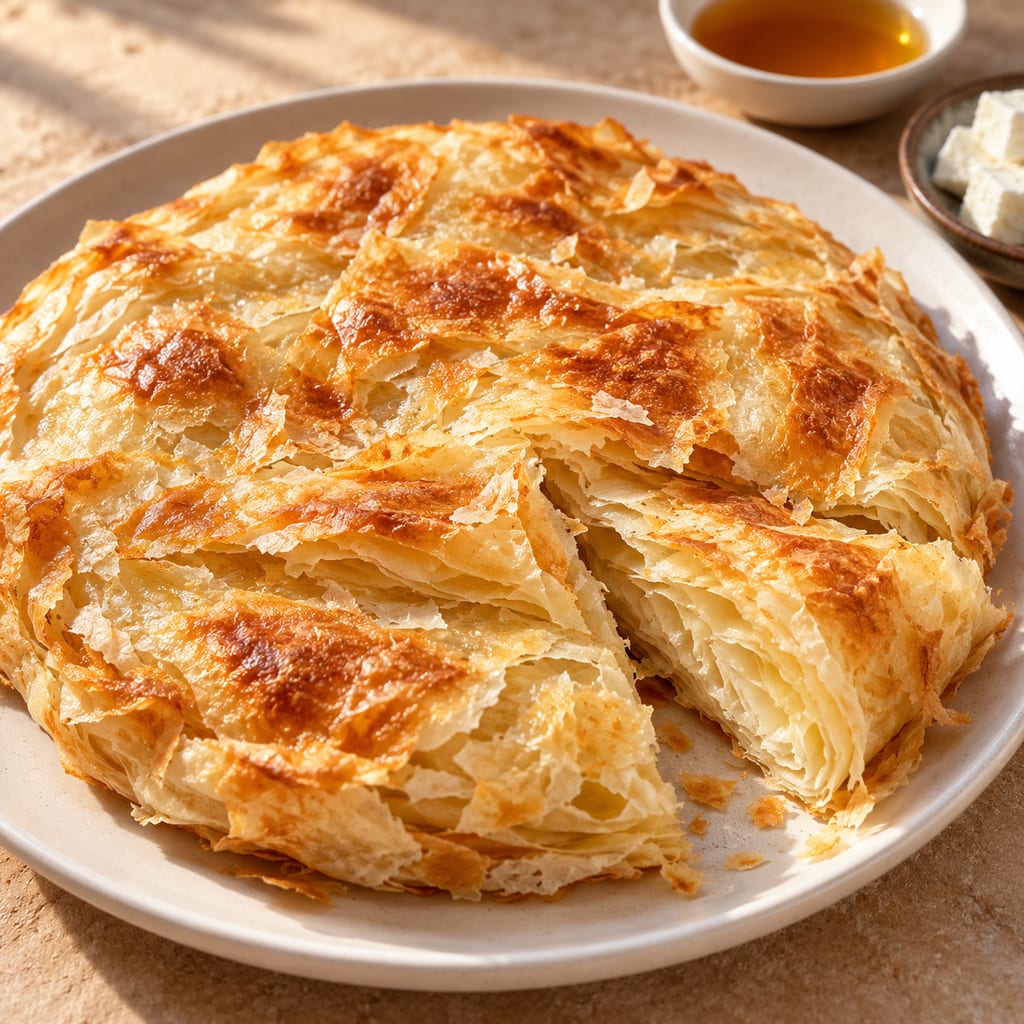
Egyptian layered pastry made from a soft wheat dough stretched thin, folded with ghee, and baked until crisp and golden. Serve plain with sweet or salty accompaniments.
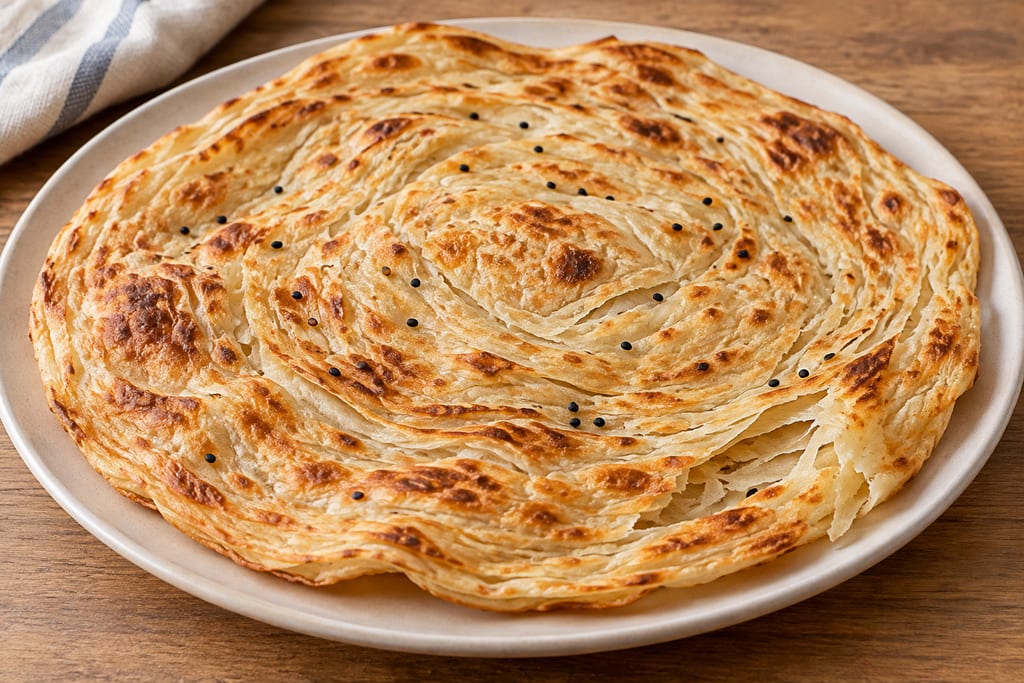
A Yemeni layered wheat bread made by stretching an unleavened dough thin, folding butter or ghee through it, and baking it on a very hot stone.
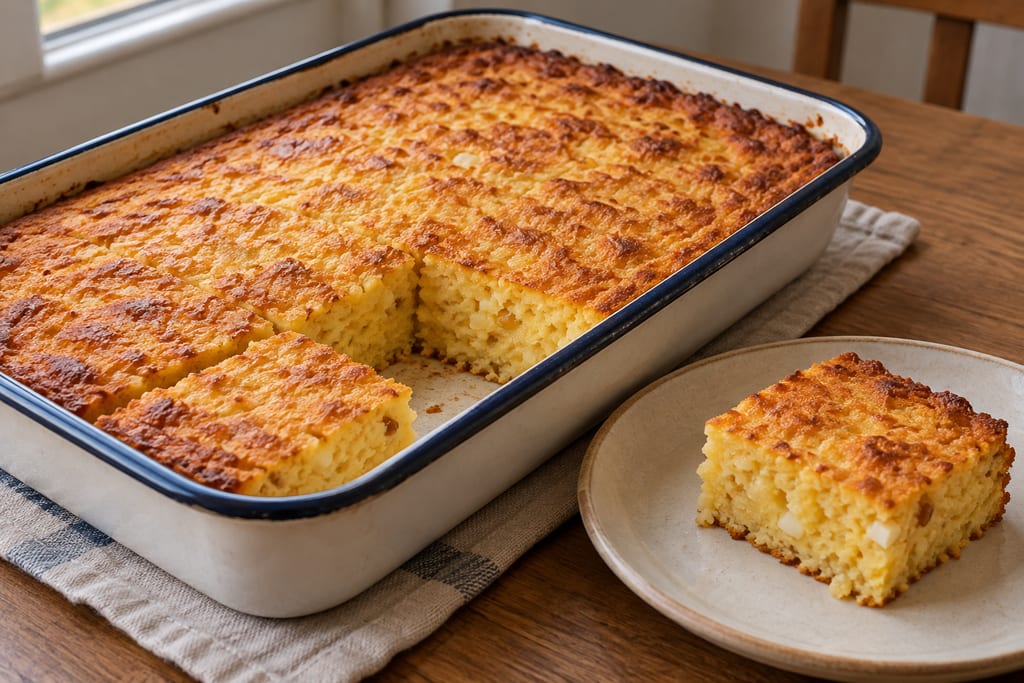
Sopa paraguaya is a savory Paraguayan bake made with fine maize flour, cheese, onion, eggs and milk. This flour-based cake is distinct from chipa guazú, which FUPACEL makes with fresh maize.
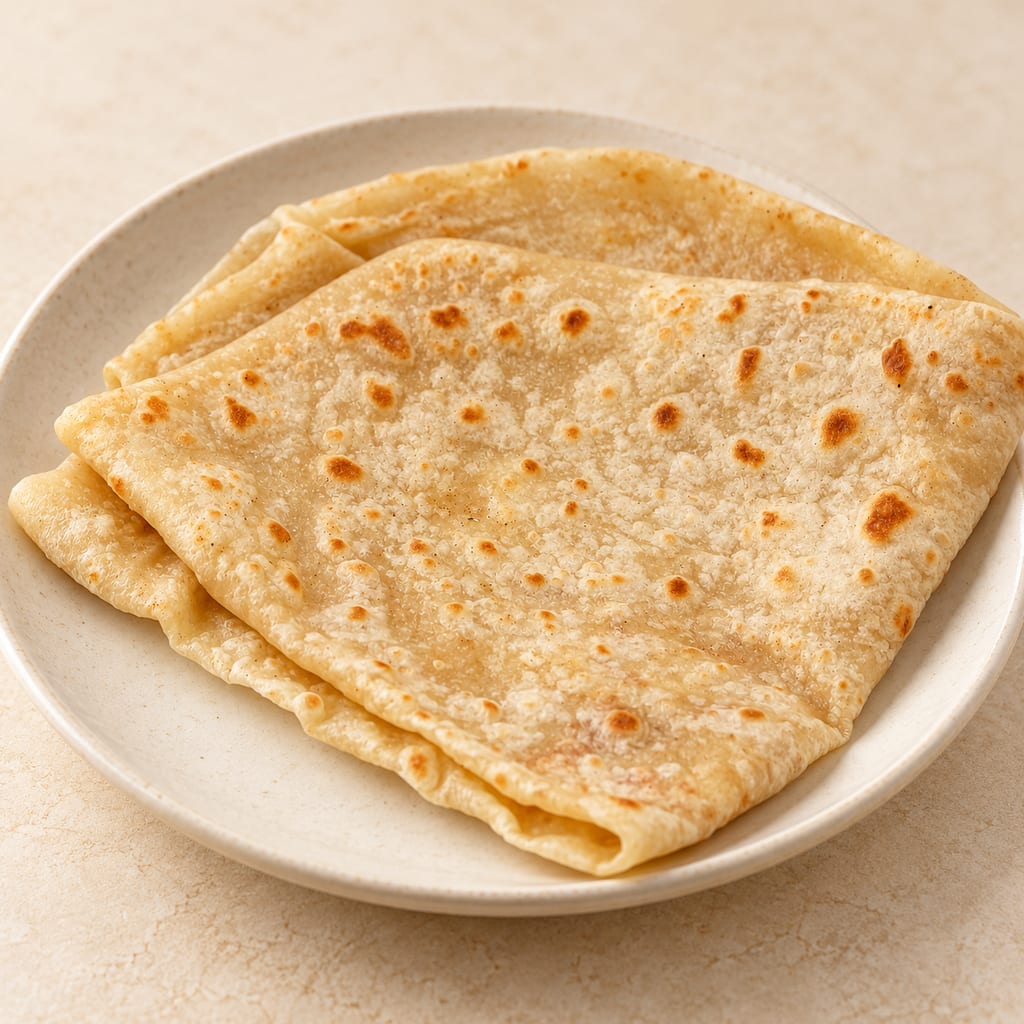
A Sri Lankan wheat flatbread made from thinly stretched, oil-rested dough and cooked briefly on a dry griddle until soft.
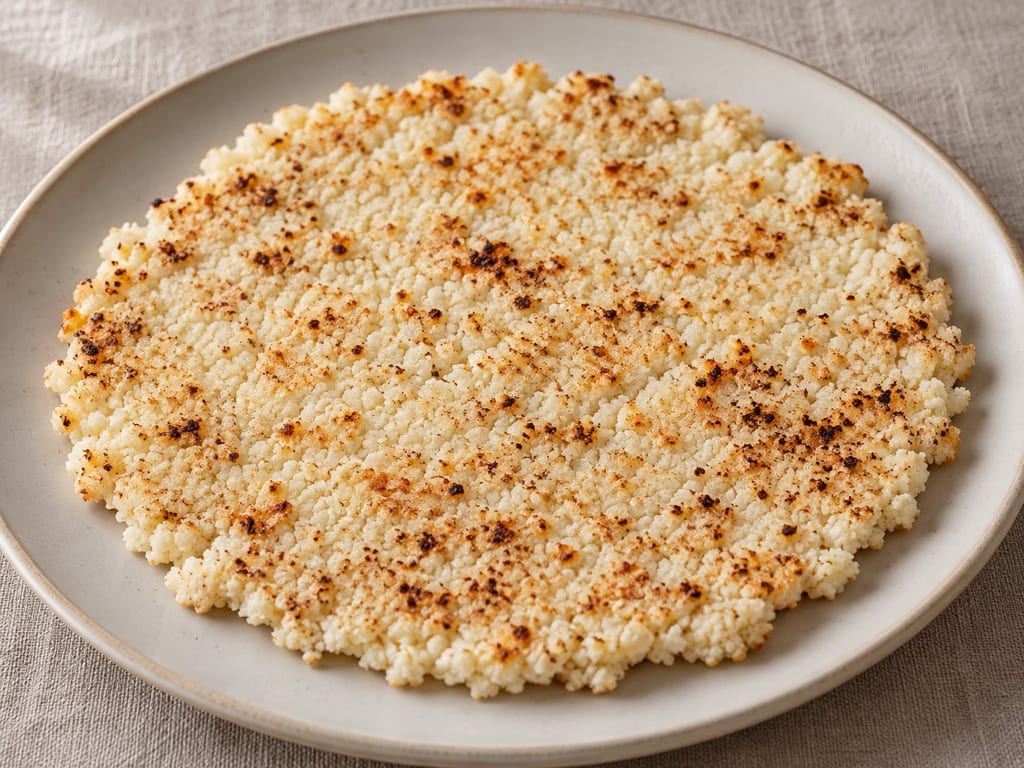
A Paraguayan mbejú campaña made by rubbing cassava starch, queso Paraguay and fat into a loose, sandy mixture. Small scoops are gently pressed into skillet cakes, which bind as the cheese heats.
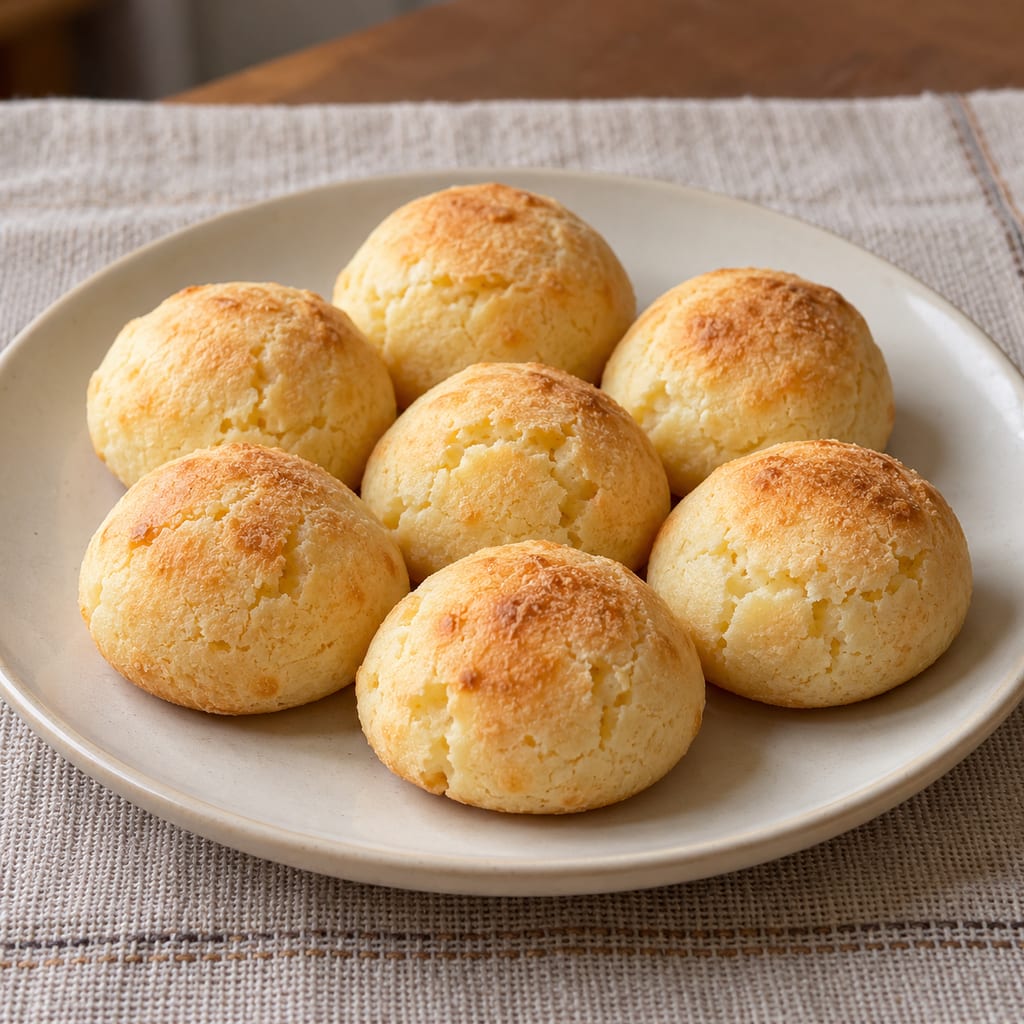
A Santa Cruz cheese-and-starch bread made with grated cheese, eggs, butter and milk as needed; optional cooked yuca makes the dough. This municipal formula bakes small balls on a tray.
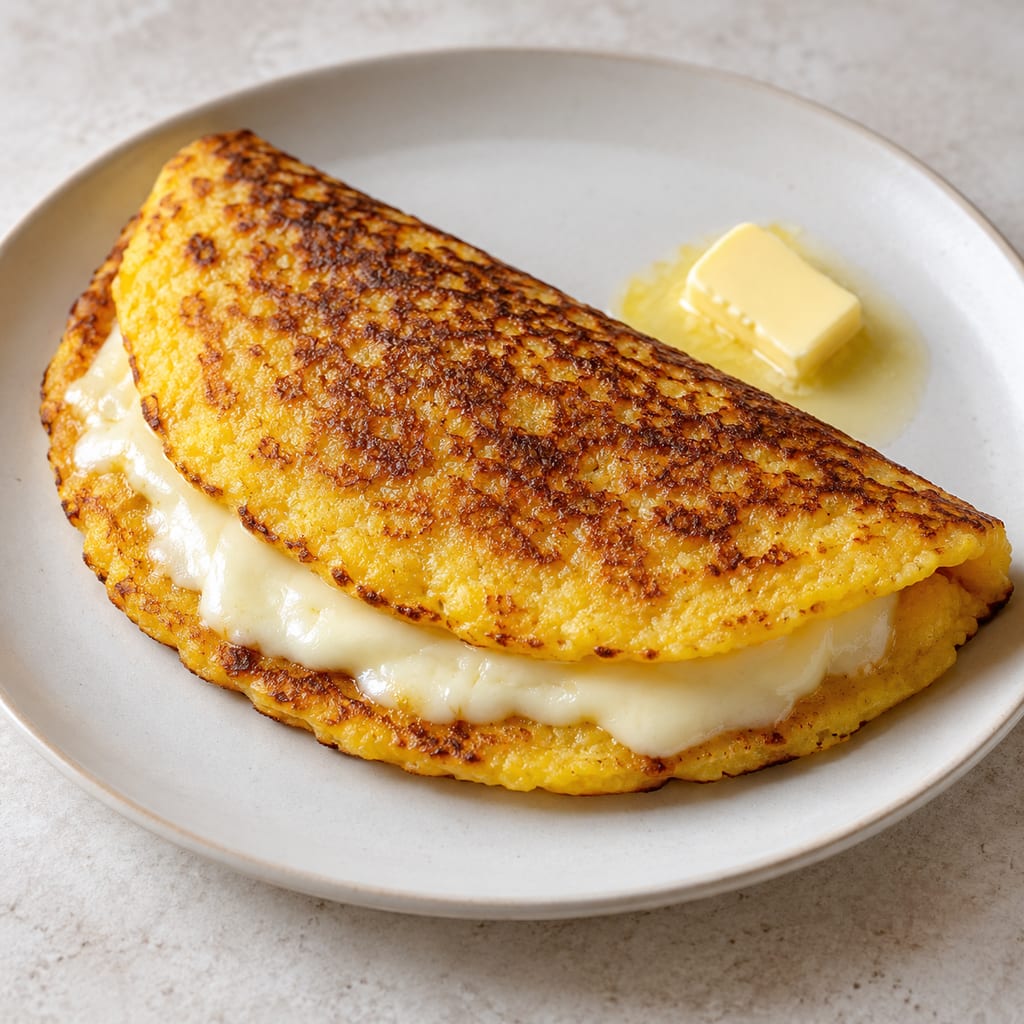
Two thick, tender Venezuelan griddle cakes made from fresh corn batter with milk, egg, cornstarch and sugar, then folded around white cheese and butter.
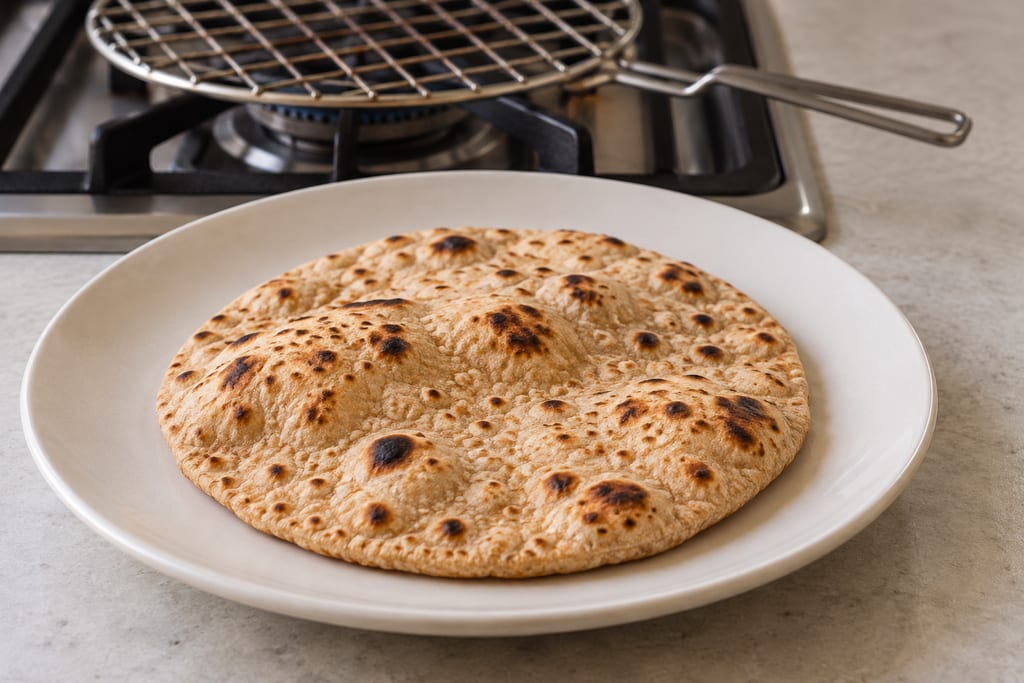
This unleavened North Indian tandoori roti uses atta, salt and water, then cooks on a handled wire rack over a low-to-medium flame. It makes 13 medium breads with tandoor-style browning.
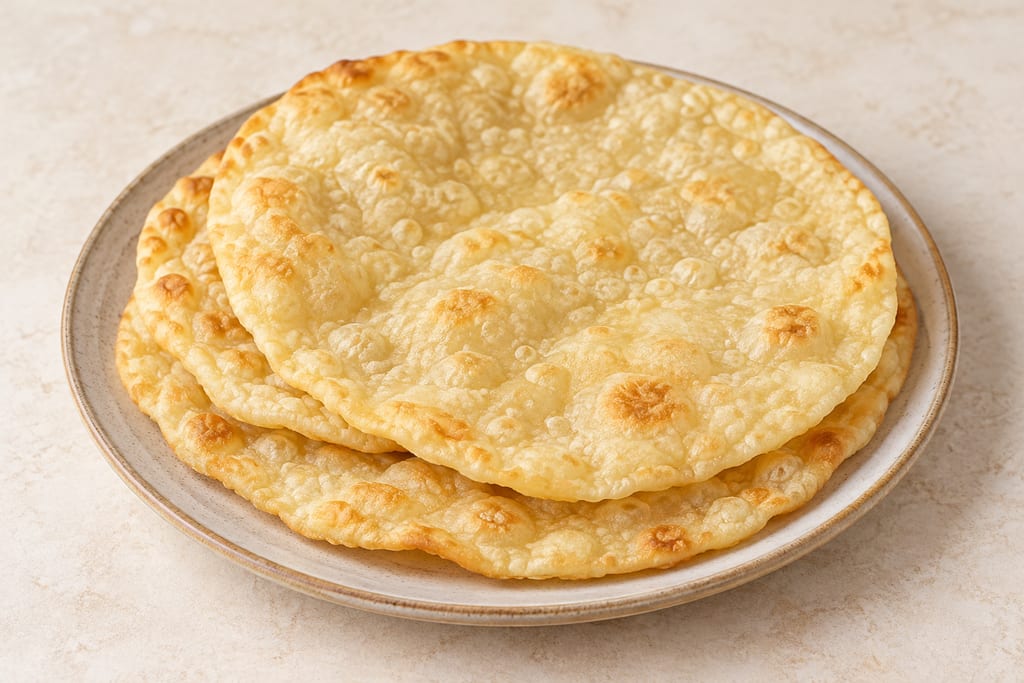
Shelpek is a round Kazakh flatbread fried in oil. This ten-piece flour-and-water version follows a documented Kazakh home-cooking demonstration; zheti shelpek ritual contexts remain distinct.
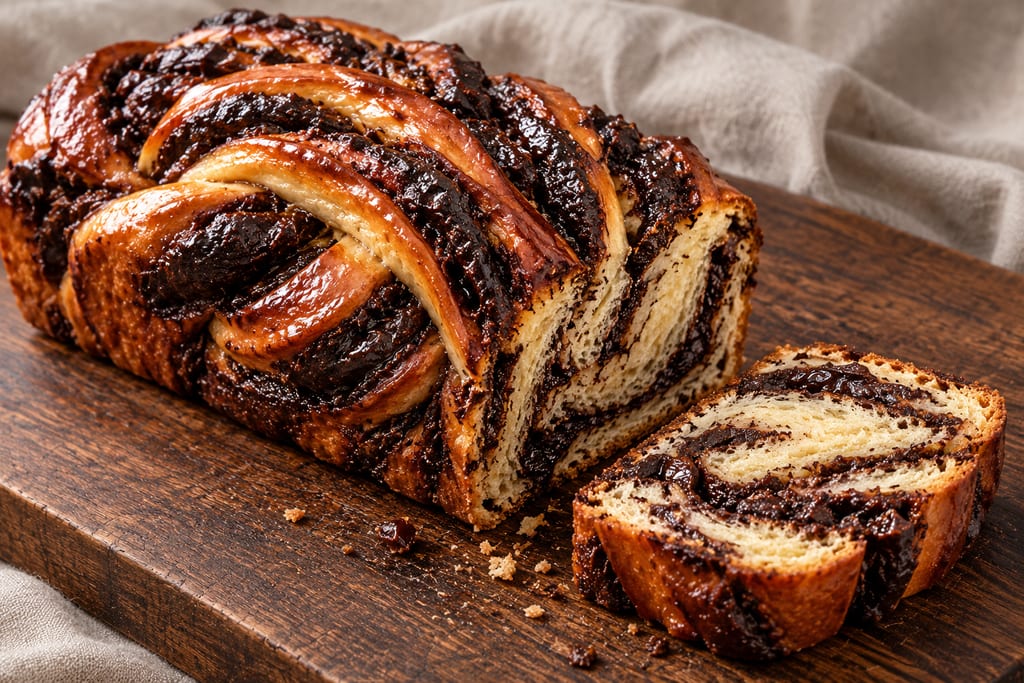
A yeasted enriched dough is rolled with cocoa, chocolate, nuts and cinnamon, twisted into two loaf pans, topped with streusel and baked.
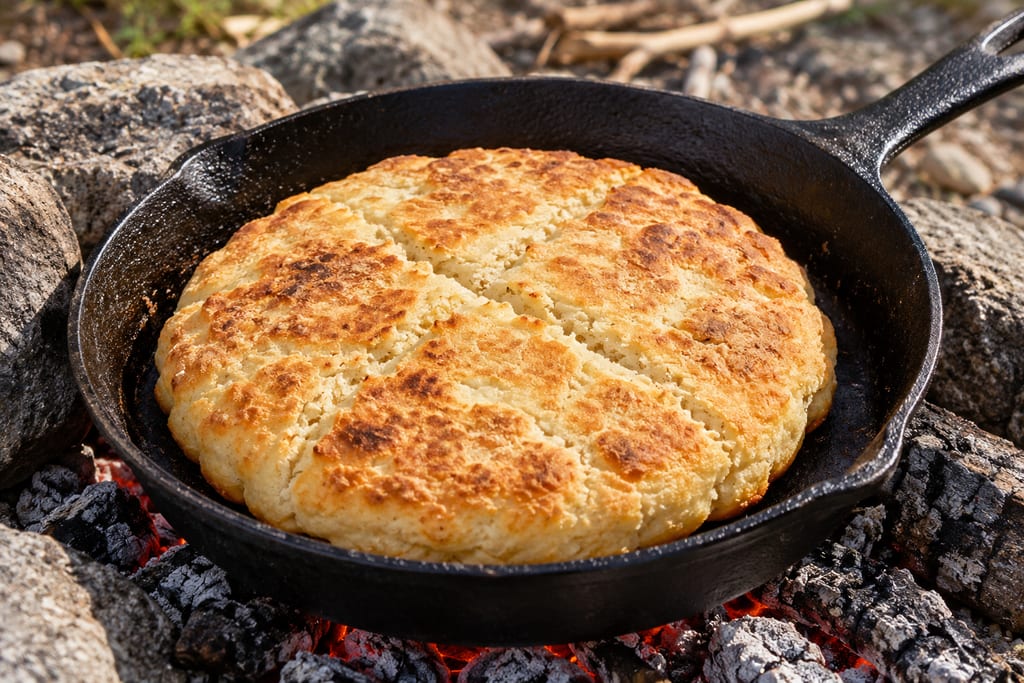
This flour, baking-powder and oil dough is Parks Canada’s contemporary Métis-interpreter version prepared at Rocky Mountain House; its specific recipe origin is unknown.
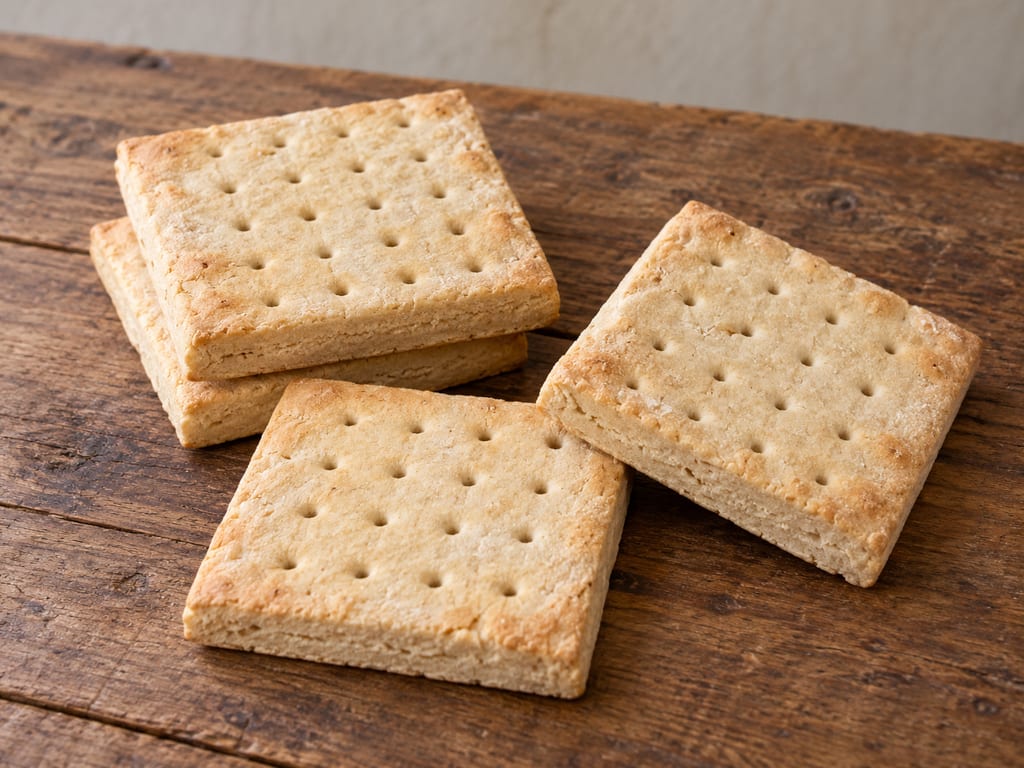
A flour-and-water biscuit baked hard for transport; this home version follows the measured National Park Service Manassas interpretation.
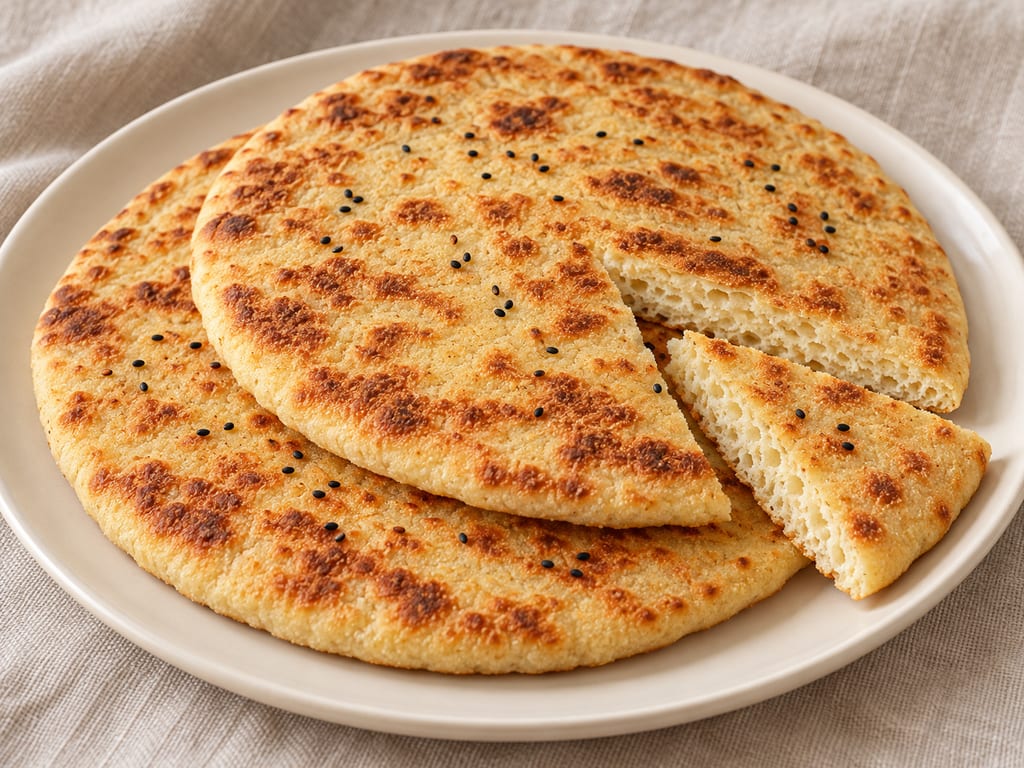
This Algerian semolina and wheat flatbread rises with yeast, browns in an oiled skillet and finishes crisp in the oven. It is the author's leavened adaptation, not the unleavened semolina baseline.
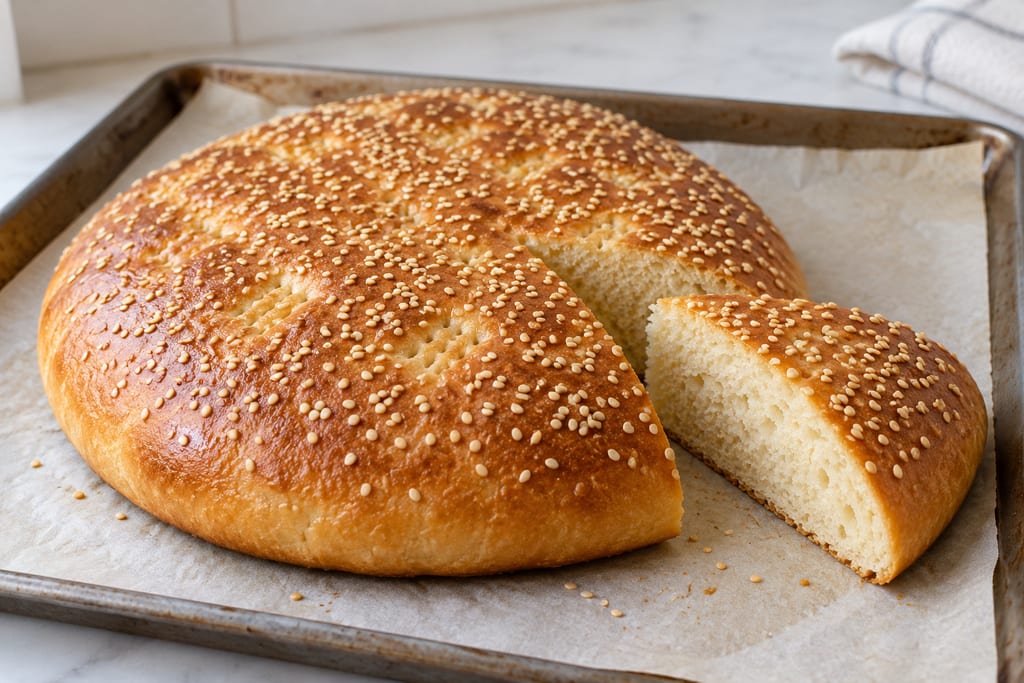
An Algerian round loaf made with semolina, wheat flour, milk, egg and sesame; this source version uses an overnight-free yeast method with three rests and an egg glaze.
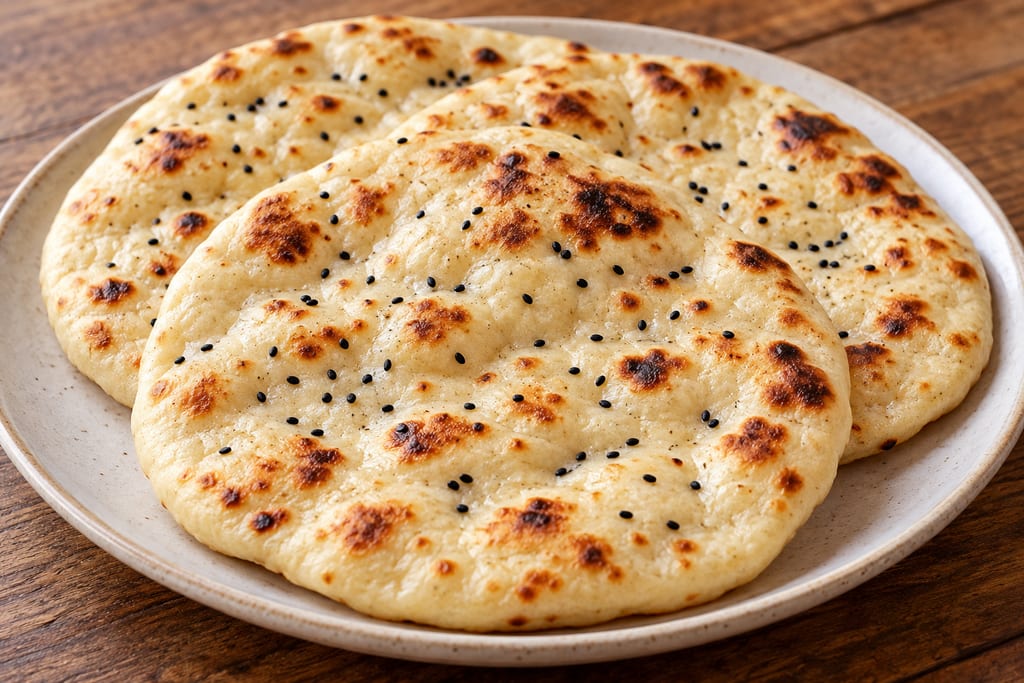
A plain North Indian kulcha uses an all-purpose wheat dough with yogurt, baking powder and soda, then rests and cooks on a hot tawa; optional seeds and roasting fat finish it.
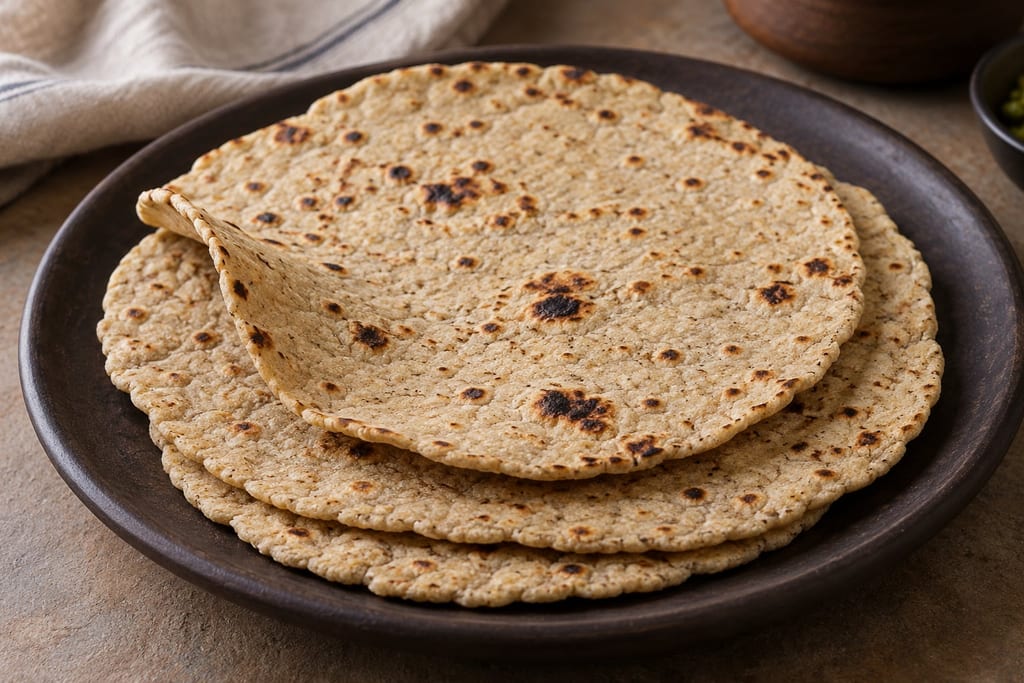
Jowar bhakri is an unleavened sorghum flatbread, hand-patted or gently rolled and griddle-cooked across parts of Maharashtra and Karnataka.
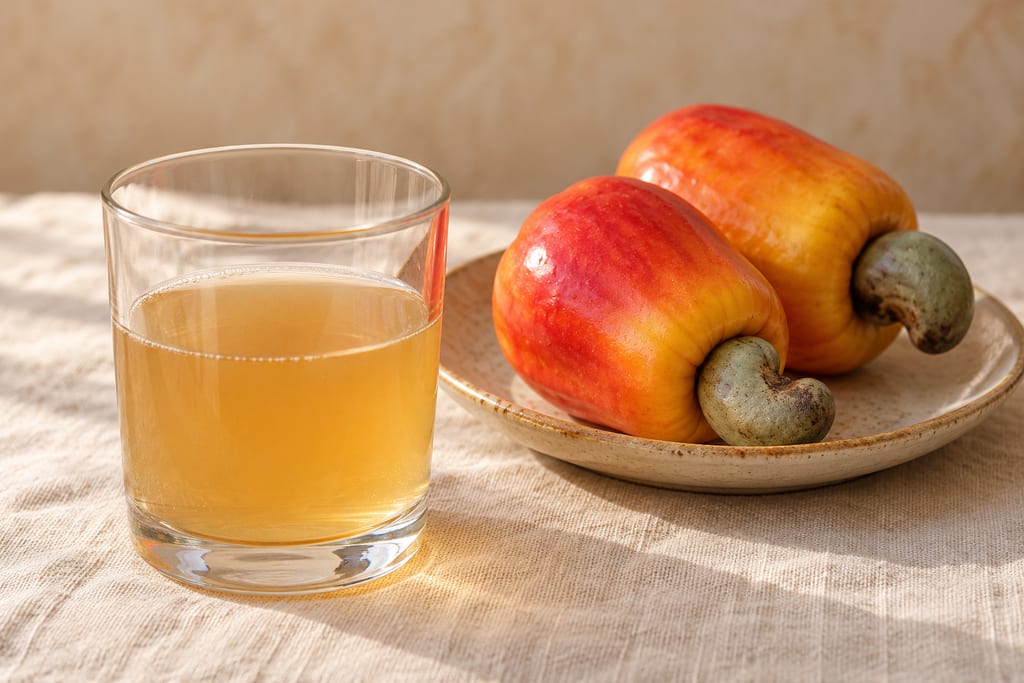
Vinho de caju is a seasonal alcoholic drink made from expressed cashew-apple juice. In southern Guinea-Bissau, an ethnographic account records a simple press-and-strain method, while harvest timing and local trade shape its place.
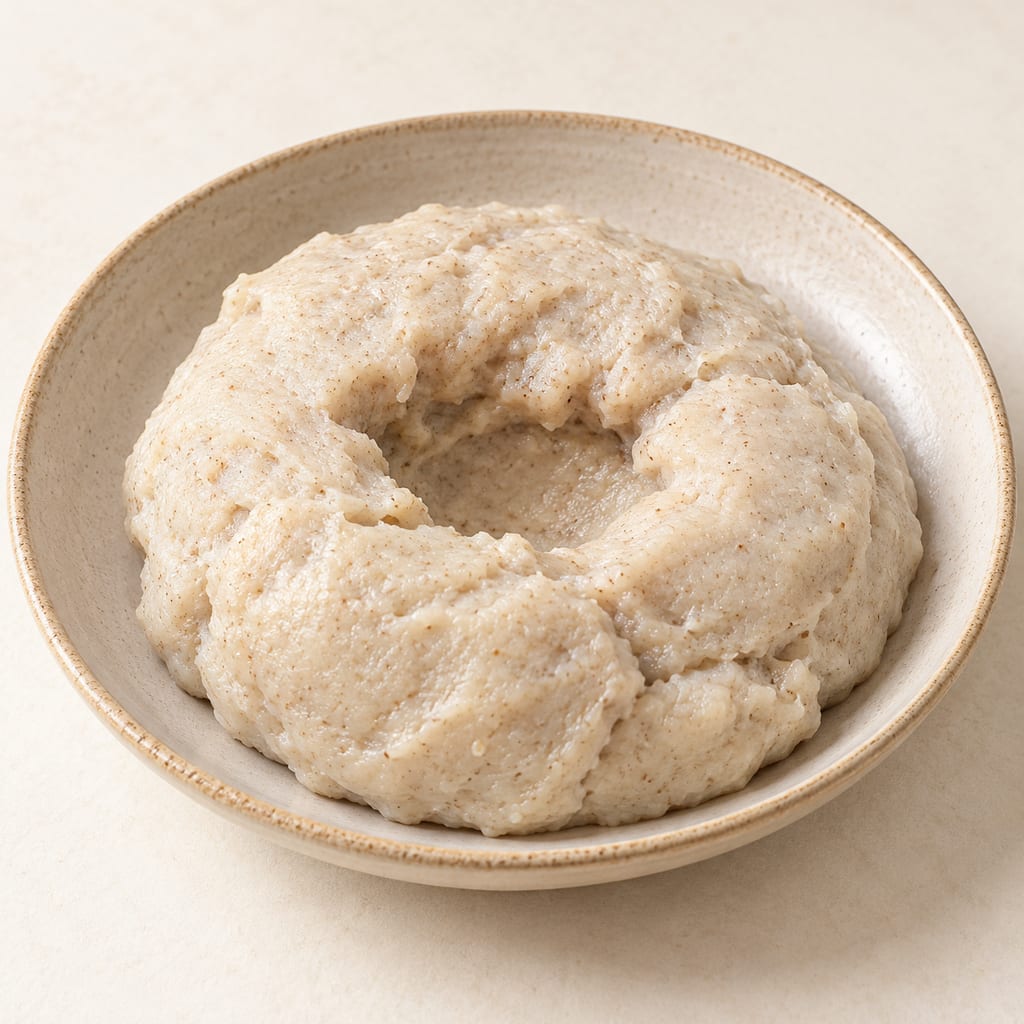
Aceda is Sudan’s firm cereal porridge, commonly made from sorghum and shaped into a smooth mound. Some versions use fermented dough; fermentation is not universal.
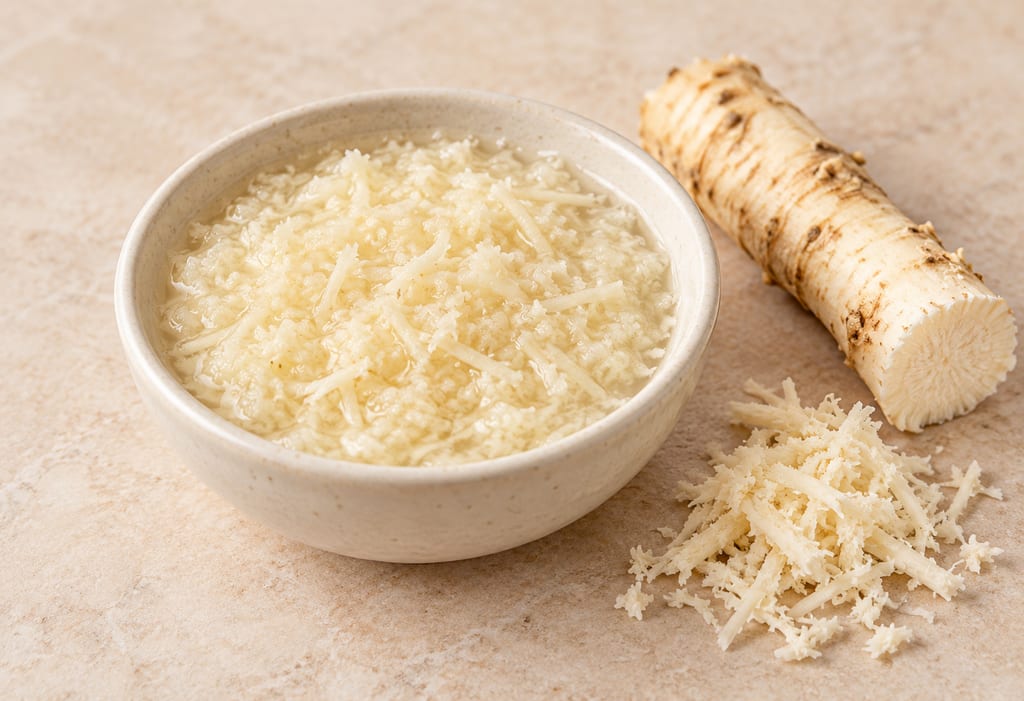
Prepared horseradish is freshly grated horseradish root mixed with vinegar and salt. This refrigerated relish holds the root’s sharp, nasal pungency in a spoonable form.

Achcharu is a family of Sri Lankan vinegar pickles made with mixed vegetables or seasonal fruit and a piquant spice dressing. This version is a quick, refrigerated, non-fermented mixed-vegetable pickle.