Equipment
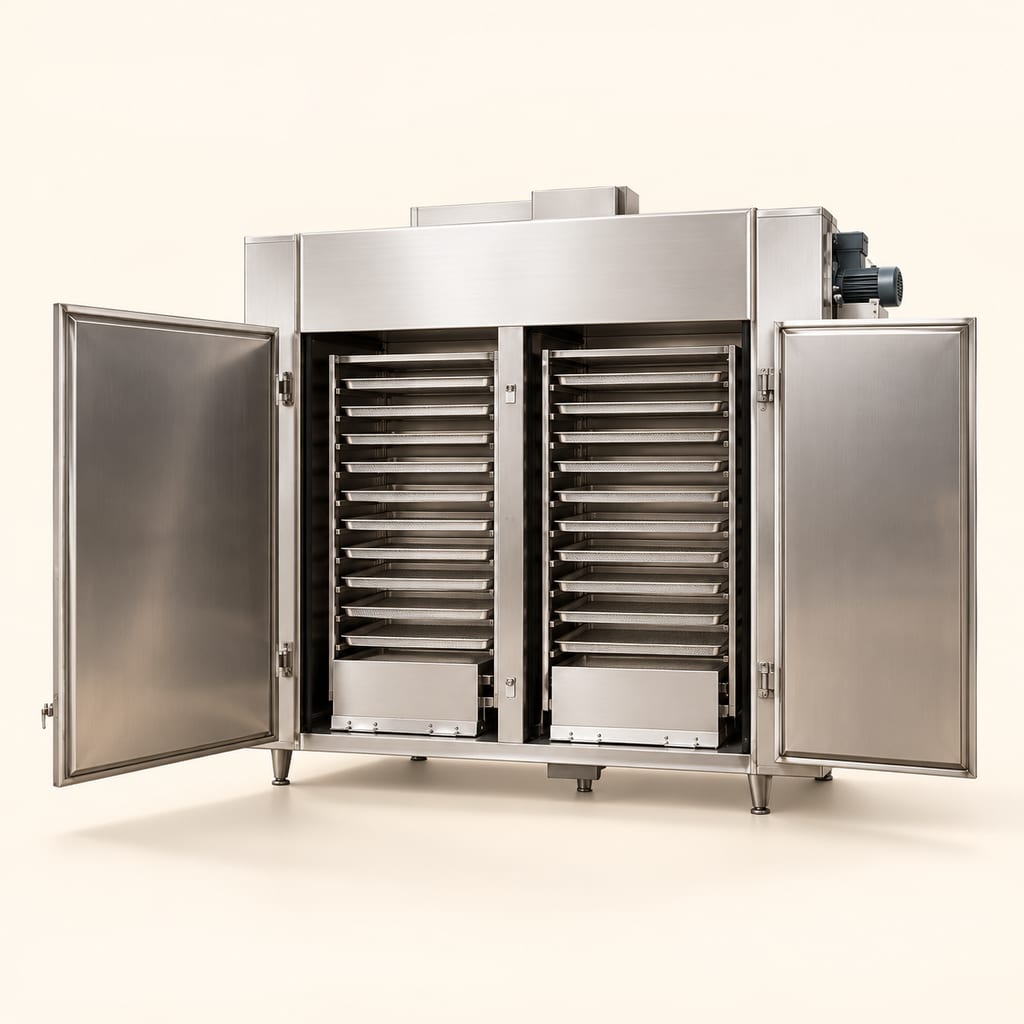
Cabinet and convection dryer
A heated-air cabinet with trays for drying fruit and other crops; PHilMech documents cabinet/convection dryers in Cebu's dried-mango trade and several Philippine equipment variants.
 FermenteaWhere food goes to change
626 sourced equipment pages: vessels, tools, appliances and built structures.
What sets the temperature, the smoke and the air: kettles, incubators, cold stores, smokers and dryers.
A heated-air cabinet with trays for drying fruit and other crops; PHilMech documents cabinet/convection dryers in Cebu's dried-mango trade and several Philippine equipment variants.
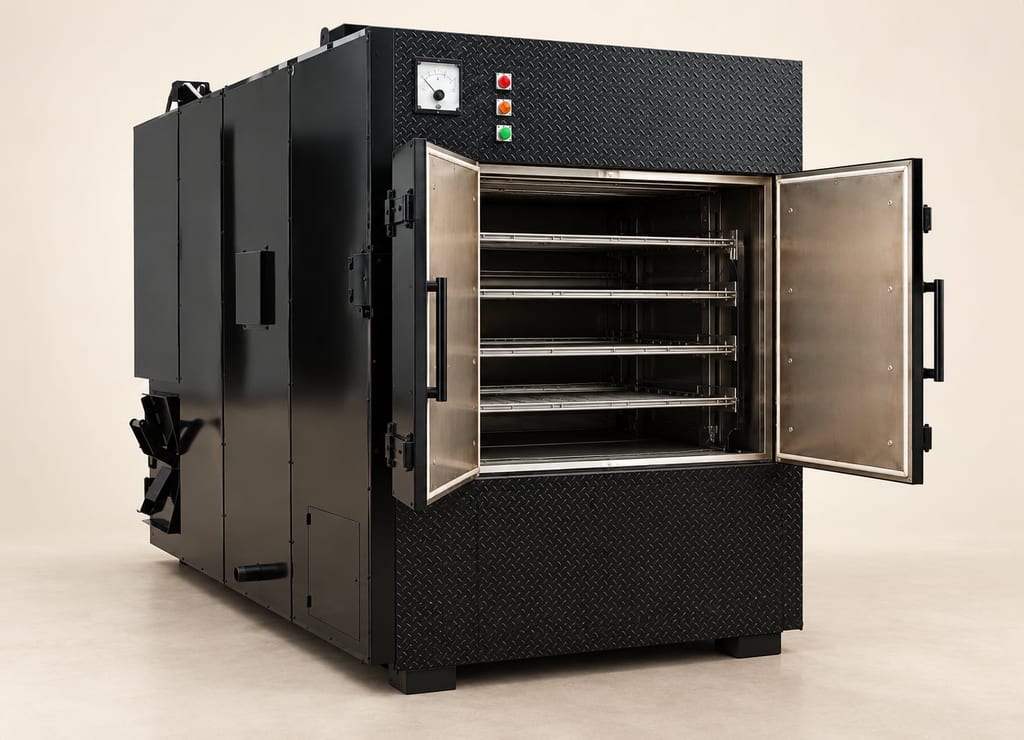
A large, wood-fired commercial smoker with thermostatically controlled rotating racks. J&R lists 18 racks, 1,000 lb maximum meat load, and a 56 × 104 × 79 inch body.
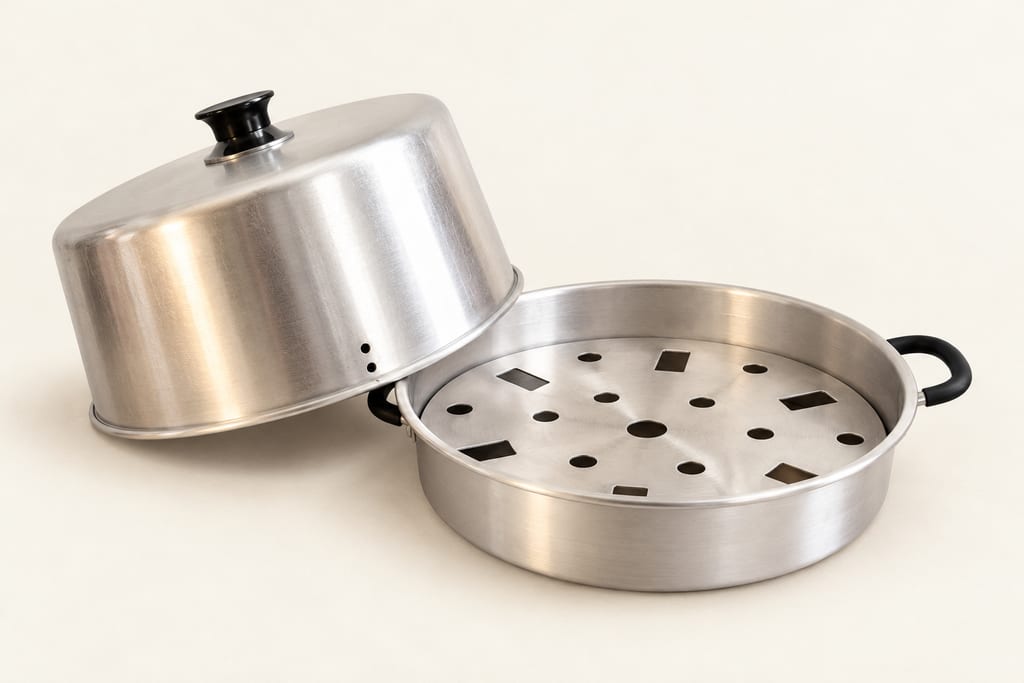
A shallow rack base and tall vented cover process jars in atmospheric steam. NCHFP limits the method to tested high-acid or acidified recipes requiring no more than 45 minutes, including altitude adjustment; this is not pressure canning.
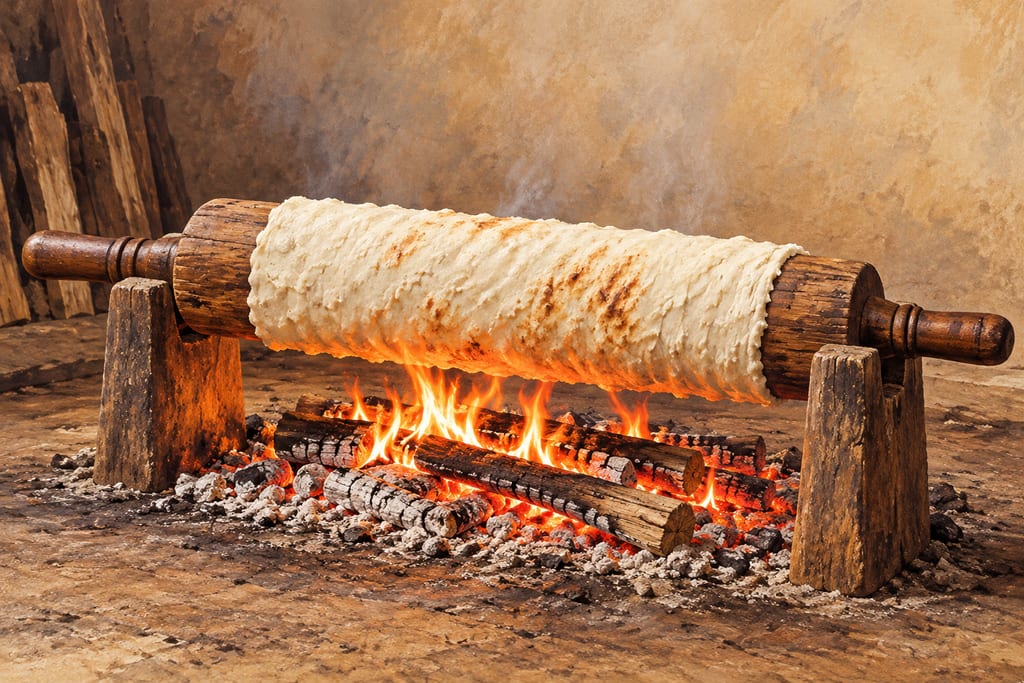
A palo chochoquero is a large wooden roller used to cook Chiloé’s potato-based chochoca. Dough coats the pole as it turns above a hearth, browning in place of a pan.
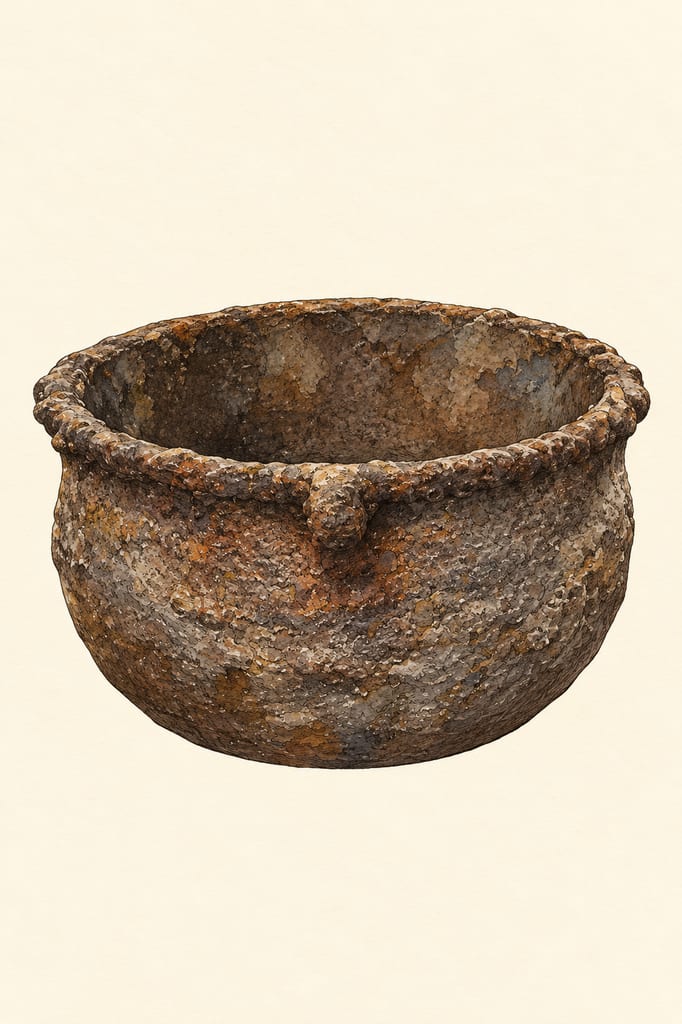
A heavy cast-iron cauldron used aboard whaling ships to render blubber; James Macrae also records Hawaiian chiefs distilling ti-root liquor in iron try-pots in 1825.
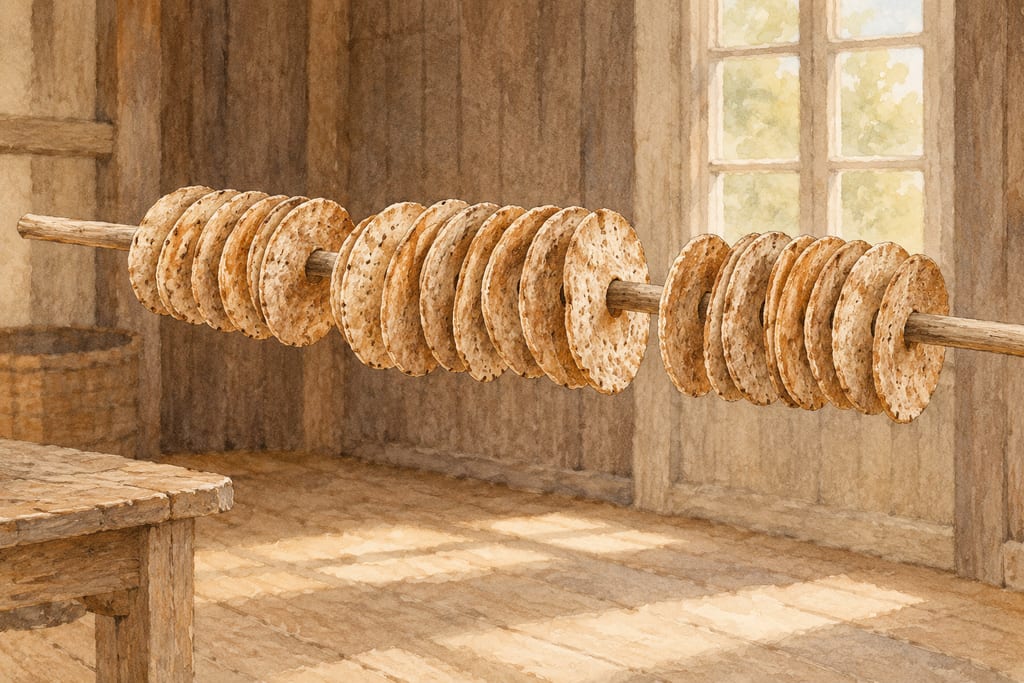
A wooden pole threaded through the central holes of dry Swedish storage loaves lets them hang for drying and storage. Swedish sources document the practice as an old way to keep bread dry; the surviving accounts do not give a standard pole size or one universal arrangement.
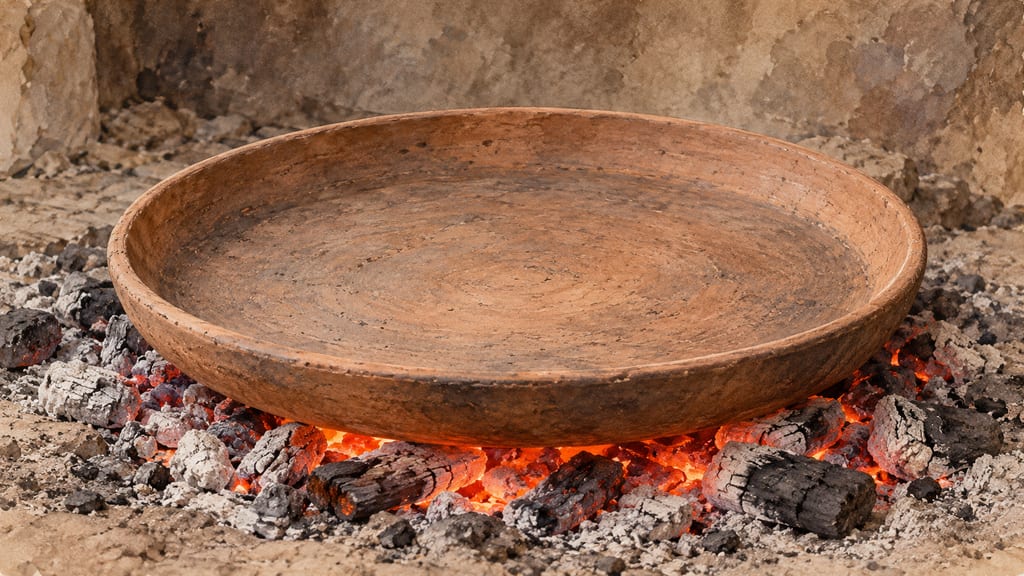
A ketsi is a Georgian cooking pan traditionally used over hearth embers. Sources document clay pans in Imereti and a Gurian maker of stone or clay examples; they do not describe one standardized design.
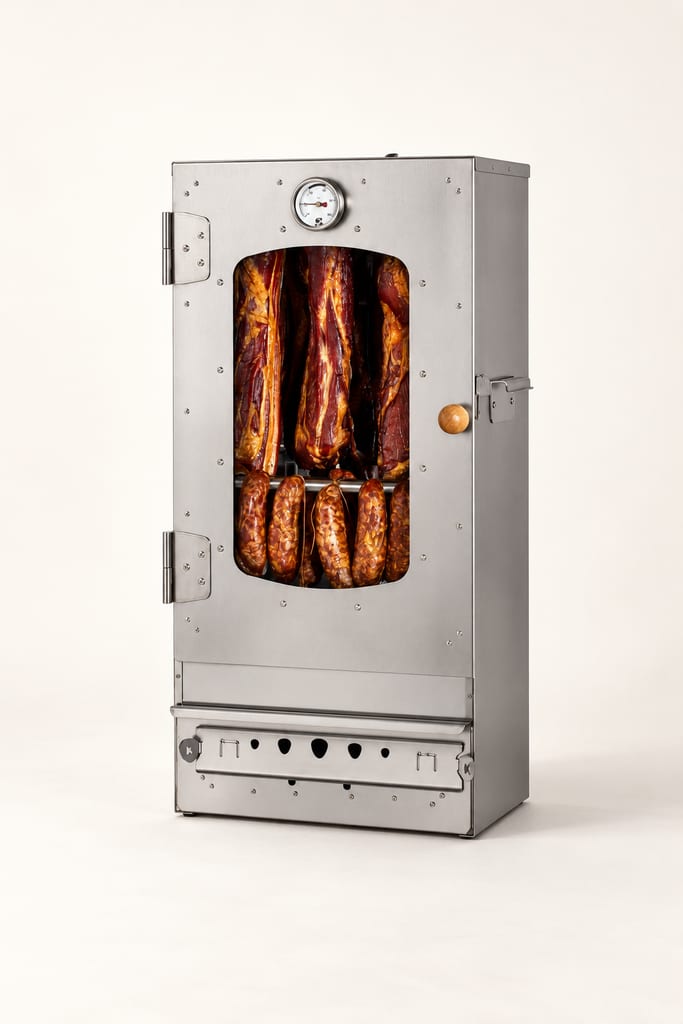
The KAISER 50 is a portable single-wall stainless-steel cabinet smoker made in Křižanov, Czechia. Its manufacturer lists a wood-fired firebox, glazed door and load up to 10 kg; the details are model-specific.
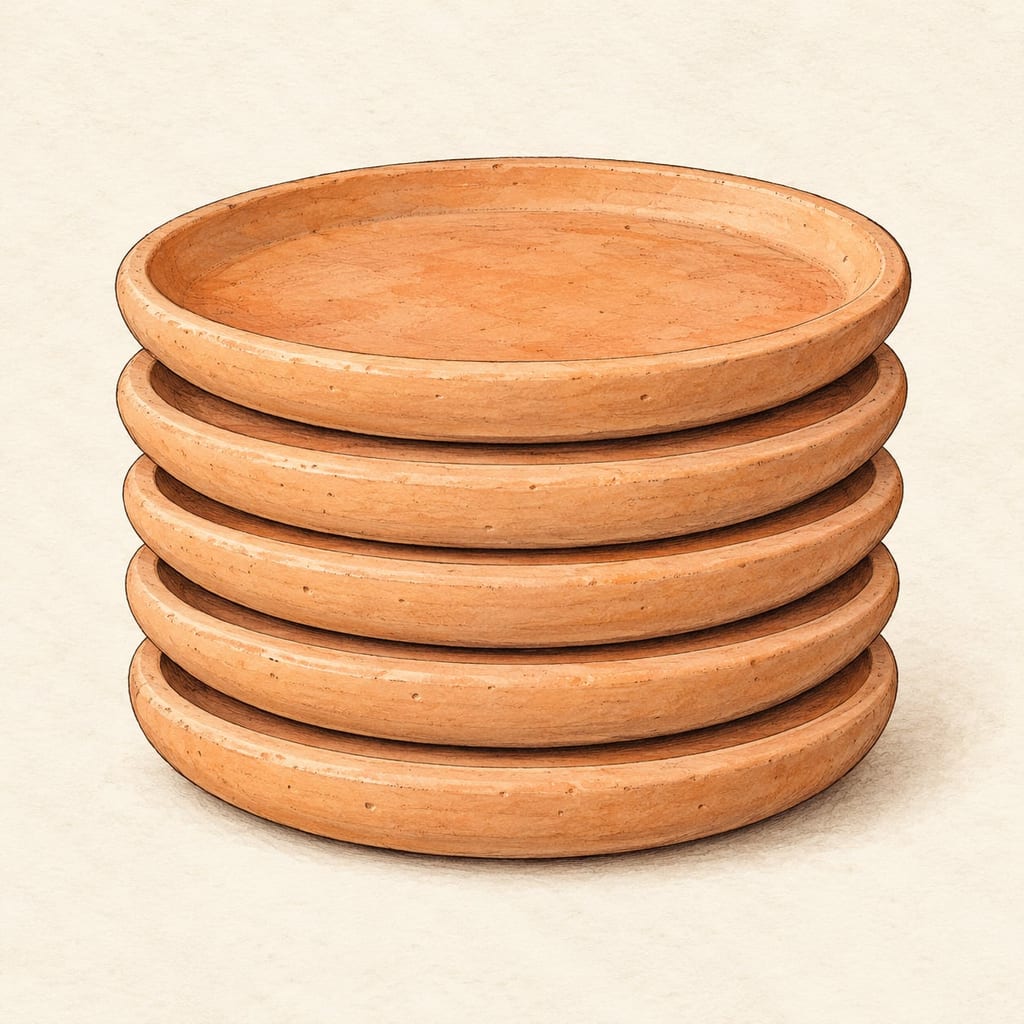
Small, shallow terracotta dishes called testi or testelli are heated over a fire and stacked with panigacci batter between them. Each hot dish bakes one side of a small bread while serving as the lid for the next.
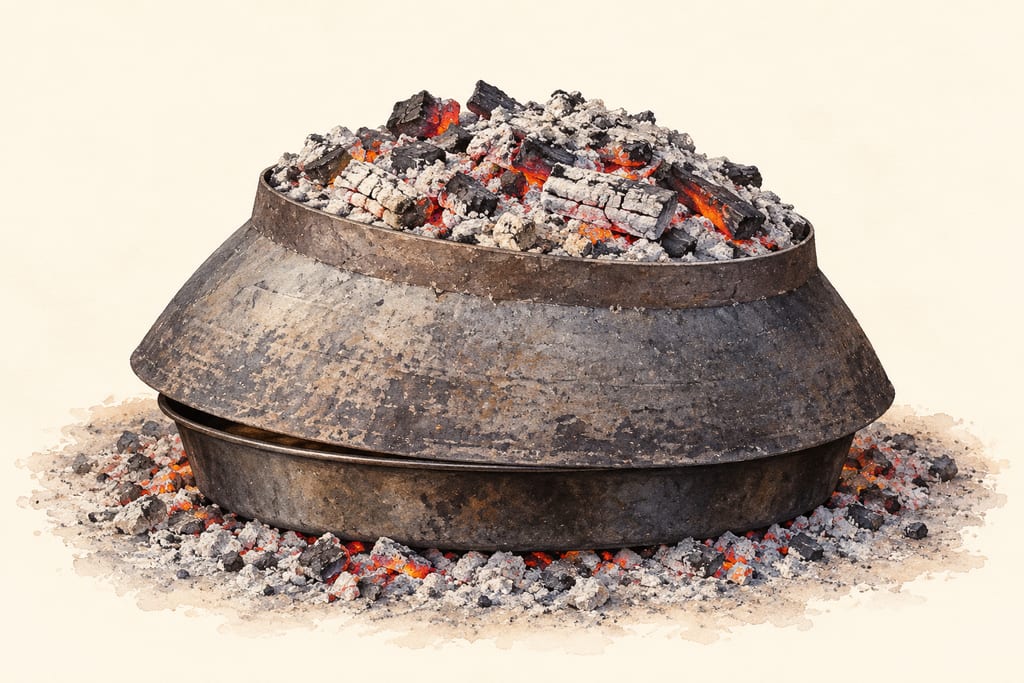
Peka names a family of hearth-baking lids: a domed clay or metal bell carries embers above food. In the later Dinaric assembly, a shallow pan sits beneath the lid, sometimes with a ring to hold coals in place.
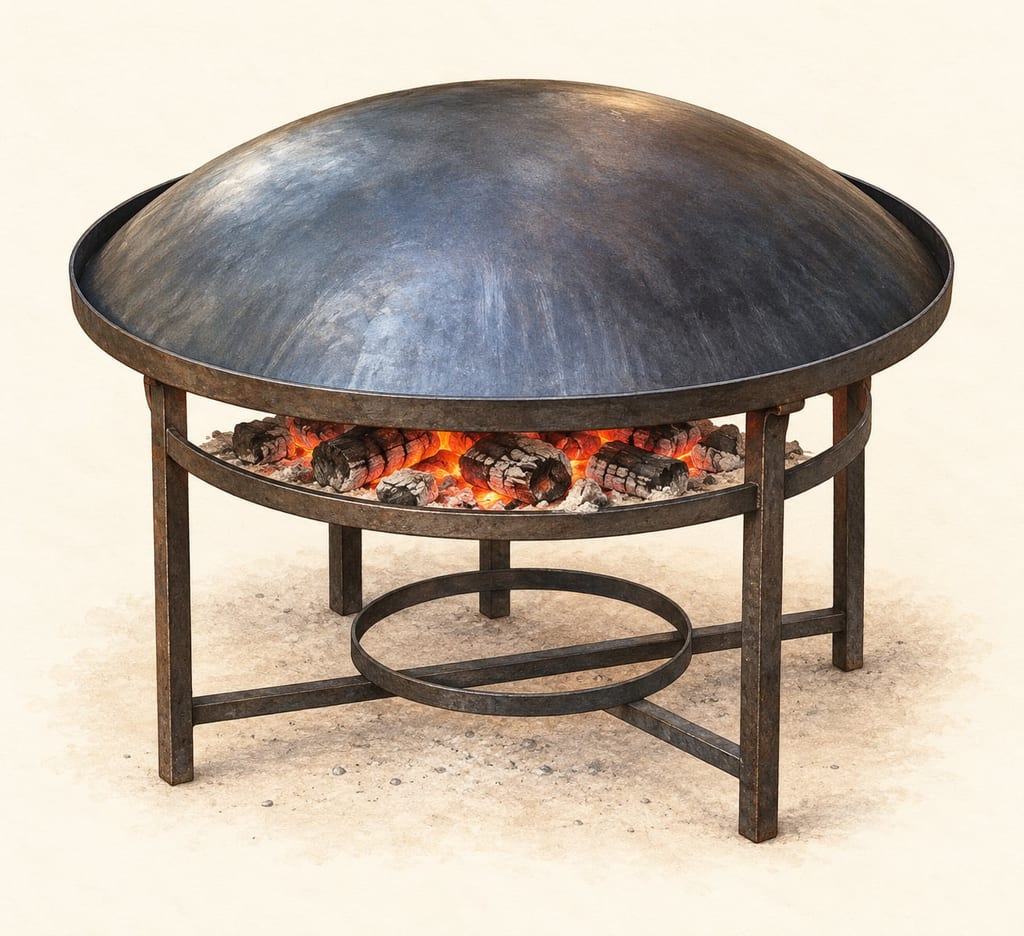
A portable convex metal griddle used for thin flatbreads. Surveyed forms are about 50 cm across and set over embers; regional names and modern heat sources vary.
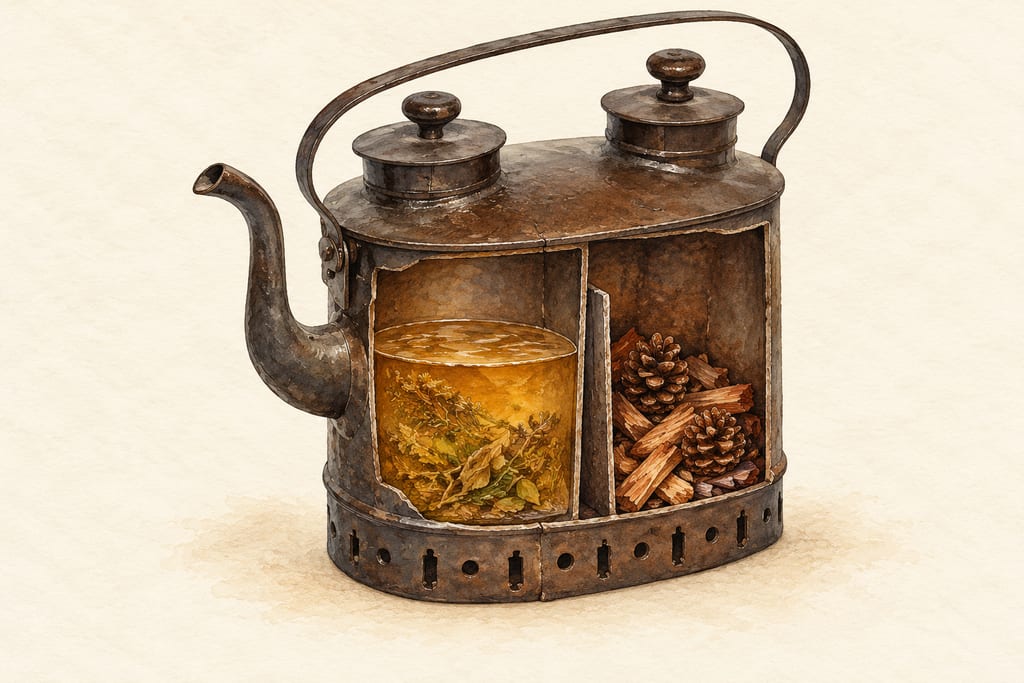
A sbitennik is a portable vessel for heating and pouring sbiten. Museum records show a divided fire-and-liquid chamber and several nineteenth-century forms, from Nevyansk ironwork to copper and brass examples.
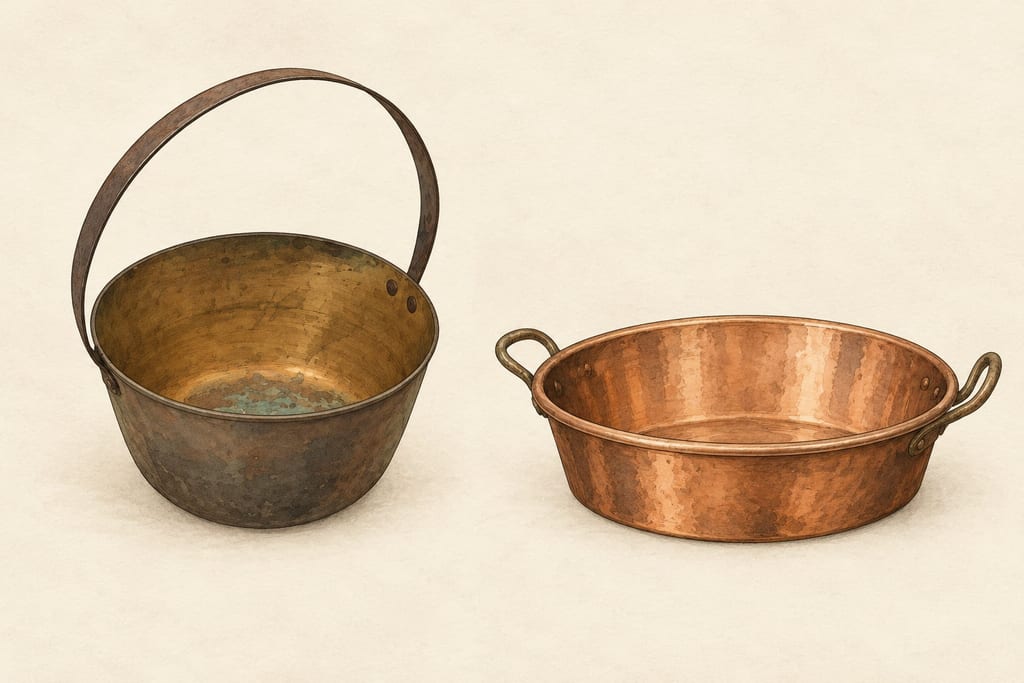
Open, heated pans cooked fruit into preserves before transfer to jars. Historical records document copper and enamelled cast-iron forms, while museum objects show variation in material and shape.
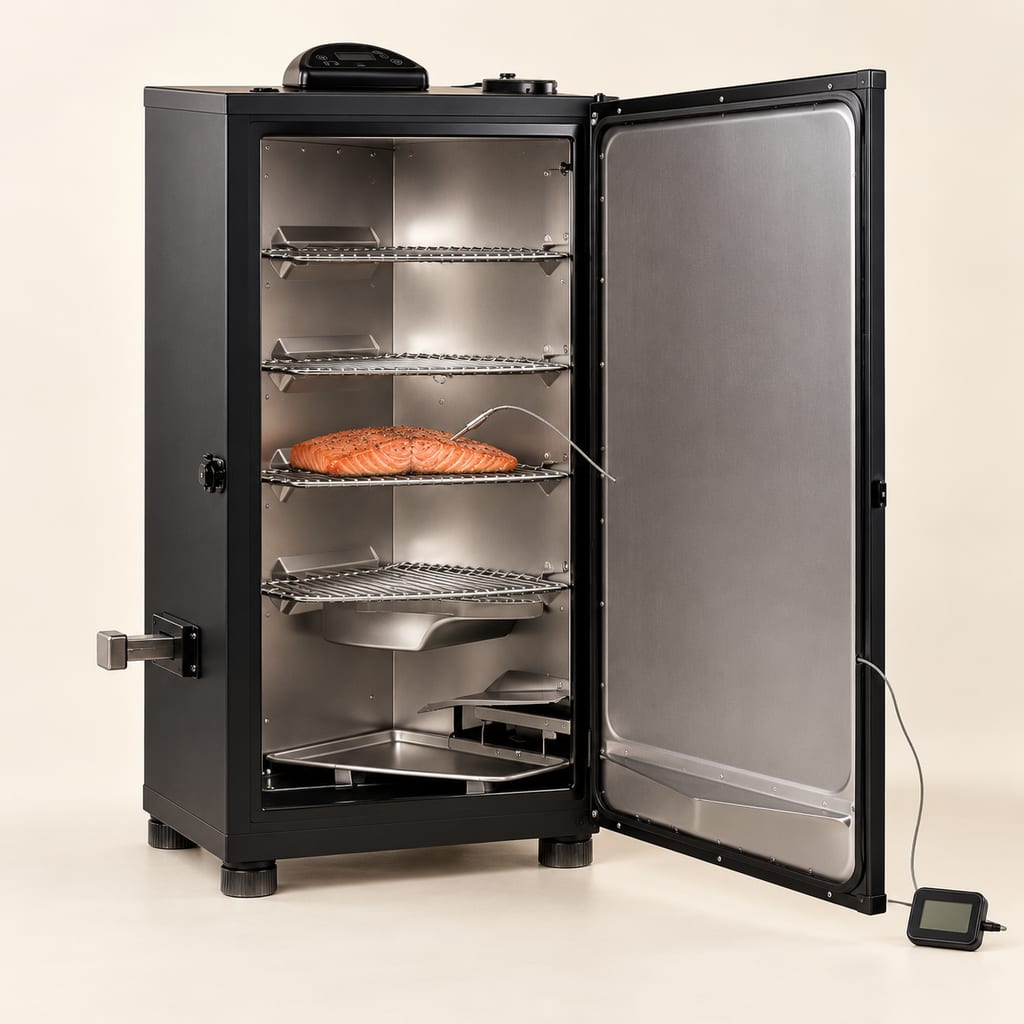
An electric smoker heats an enclosed cabinet while wood chips make smoke. A thermostat controls chamber heat; a separate thermometer checks the fish. Models vary, and smoking does not make lightly salted fish shelf-stable.
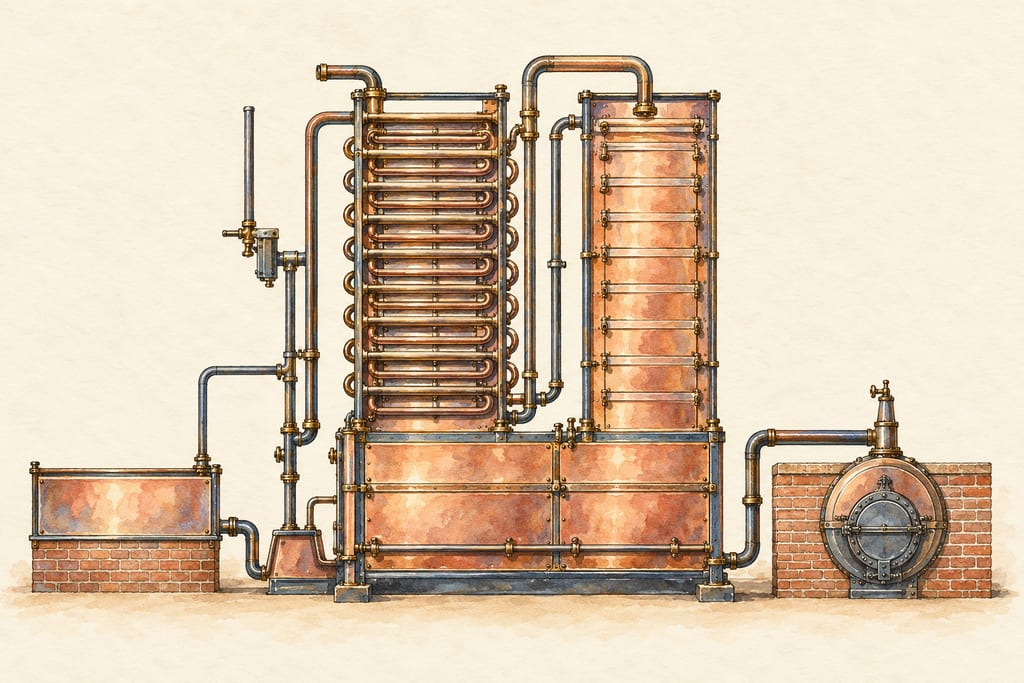
A column still is a distillation apparatus built around one or more vertical columns. Its continuous and rectifying designs appear in several spirits traditions, but materials and product character vary by installation.
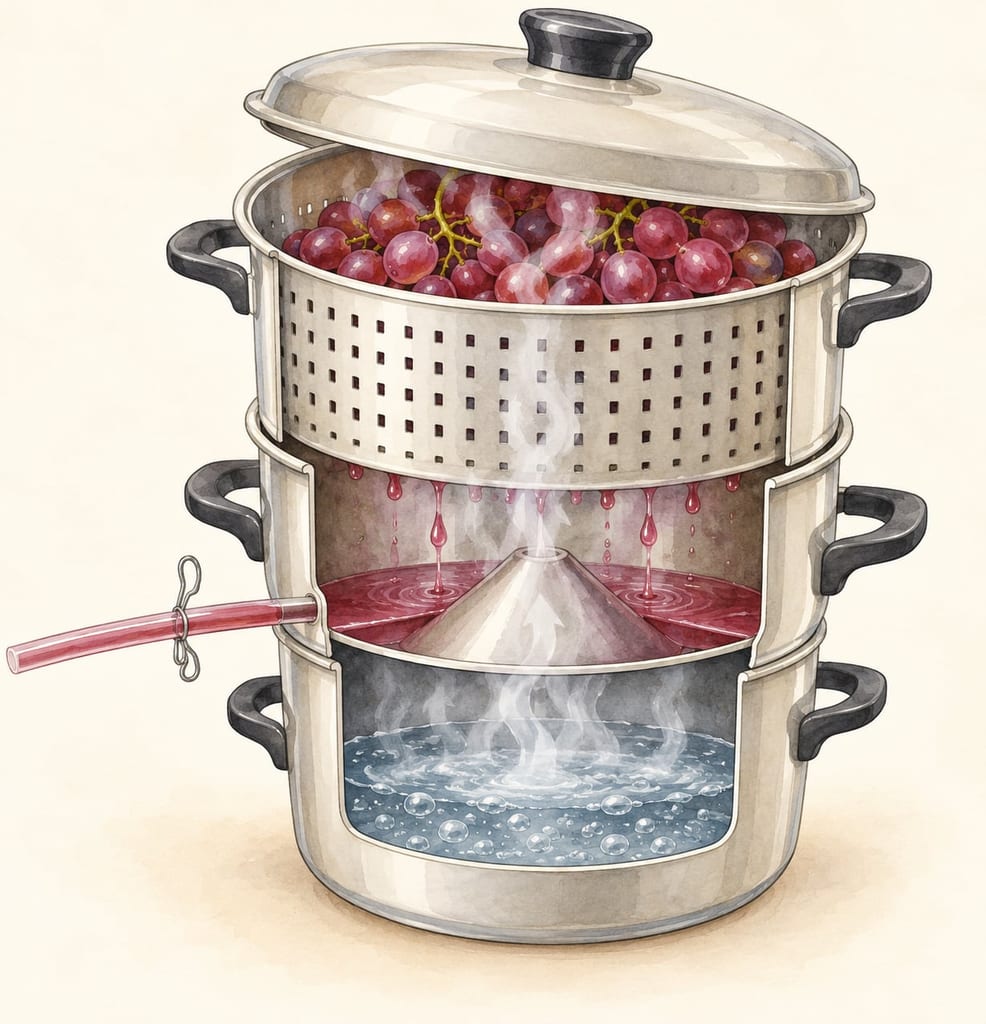
A steam juicer stacks a water pan, juice collector and perforated fruit basket so steam releases juice that drains through an outlet hose. It extracts juice; it does not itself concentrate or preserve it.
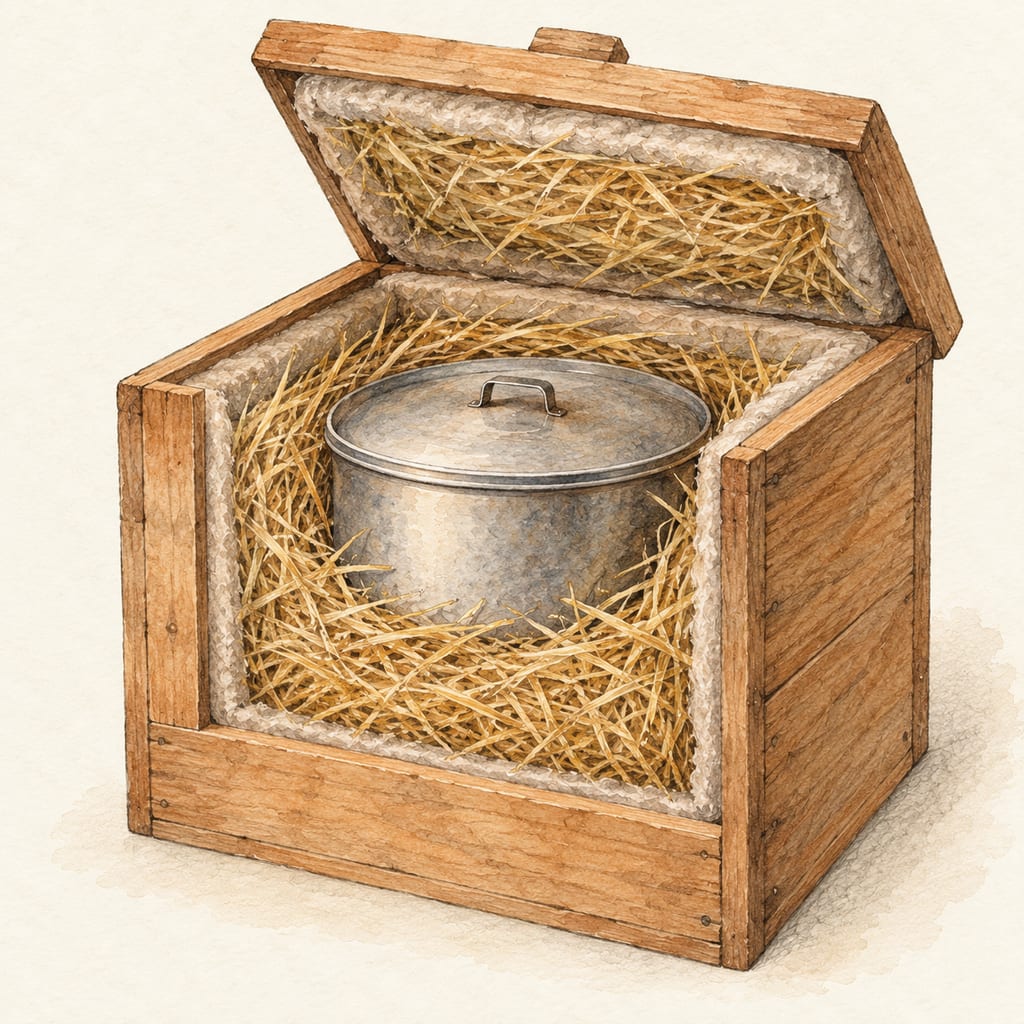
A haybox, also called a fireless or retained-heat cooker, is an insulated enclosure that lets a lidded pot finish cooking in heat already stored in the food after it leaves a stove. It generates no heat and is not a preservation method.
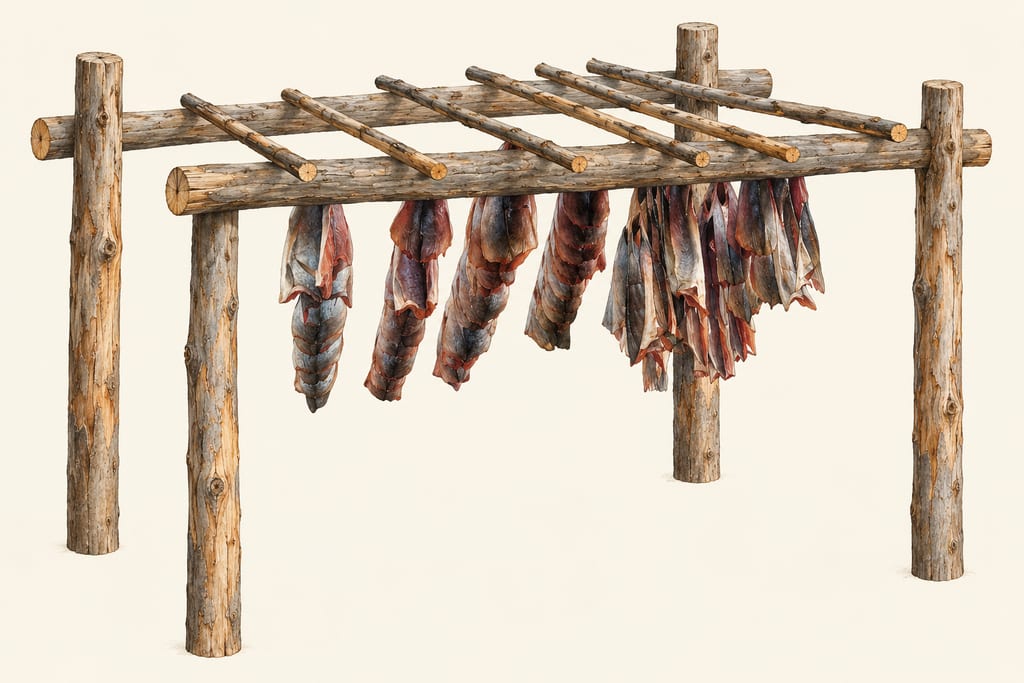
Daguma is an Udege open-air rack for hanging fish to dry, including yukola. The documented frame has four upright posts, two rails and cross-poles; its dimensions are not recorded.
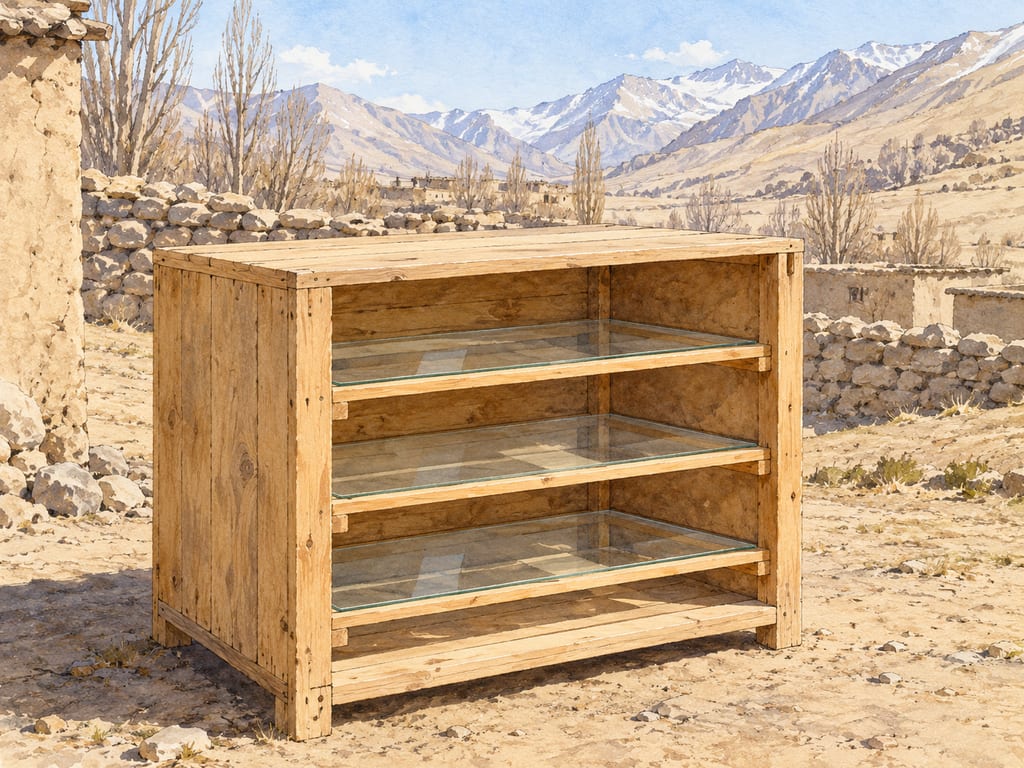
Tajik apricot growers use protected dryers to shield fruit from insects and weather. Documented equipment includes cabinet and portable tent designs; fixed greenhouse units are site installations.
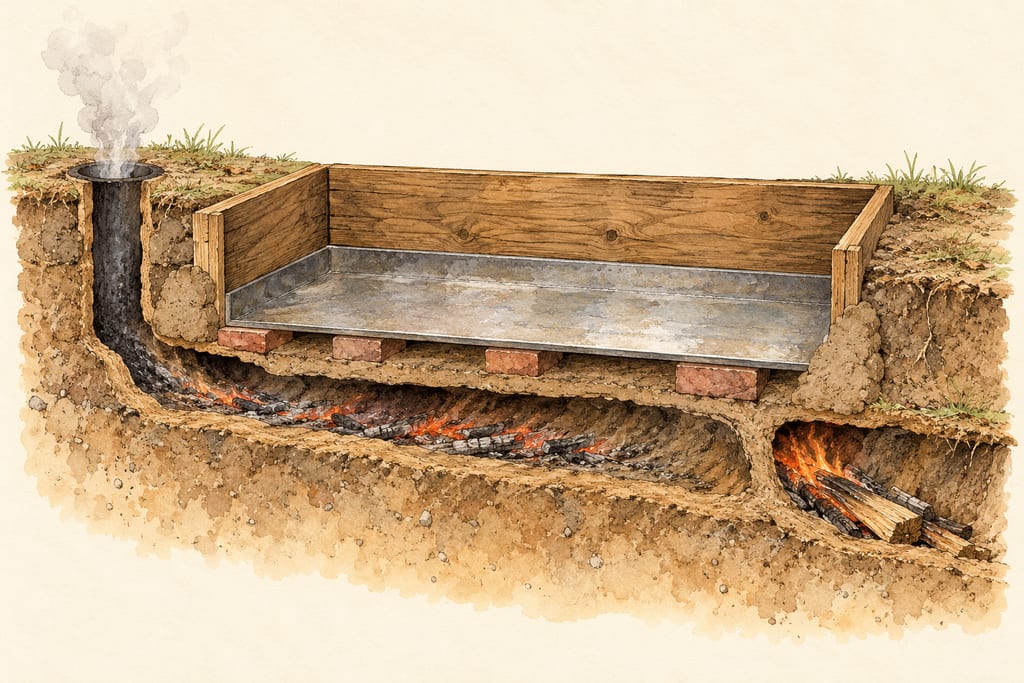
A separate cooking box heats ripened eulachon so grease rises for skimming. Nuxalk sources describe wooden or cedar sides, a metal bottom and, in one setup, a fire trench beneath the box.
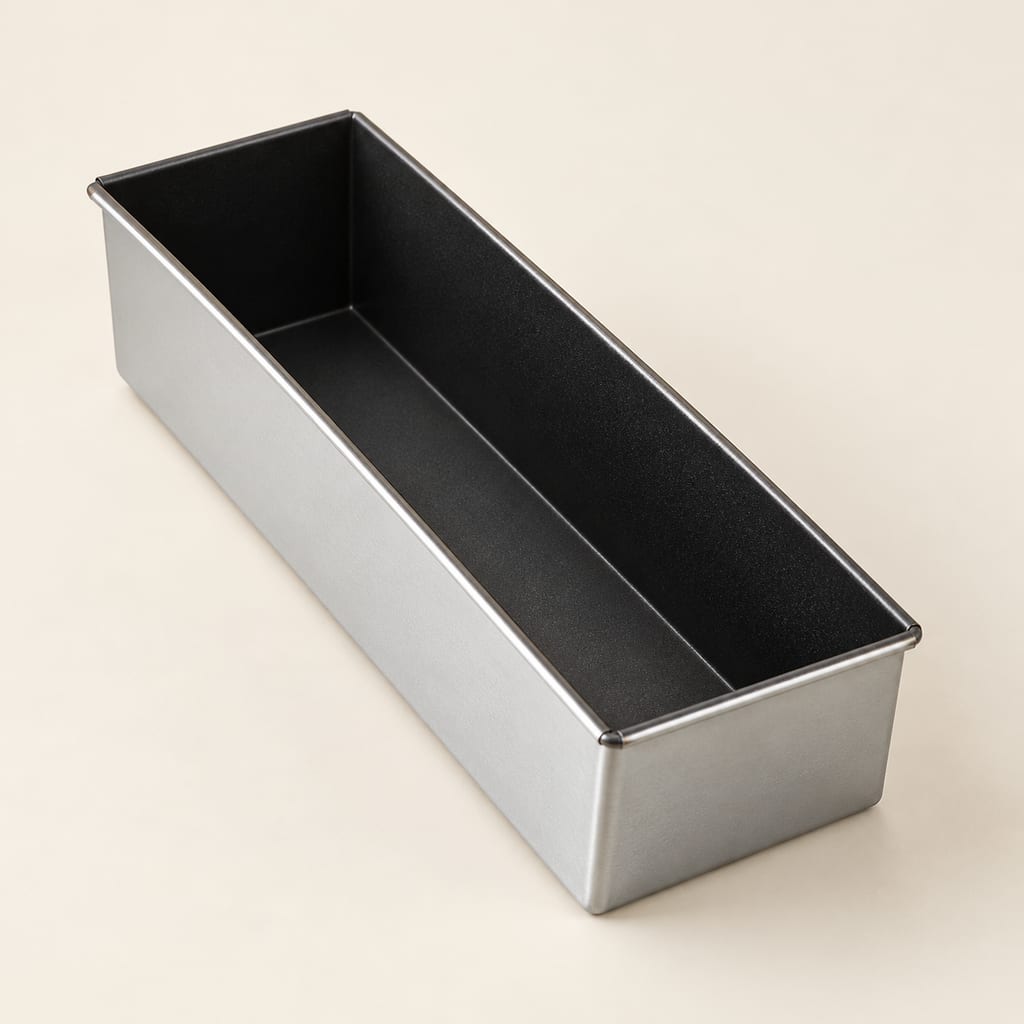
A greased rye-bread tin holds rugbrød dough while it proofs and bakes. Denmark’s National Museum documents a family recipe using three tins, but does not specify their material, shape or capacity.
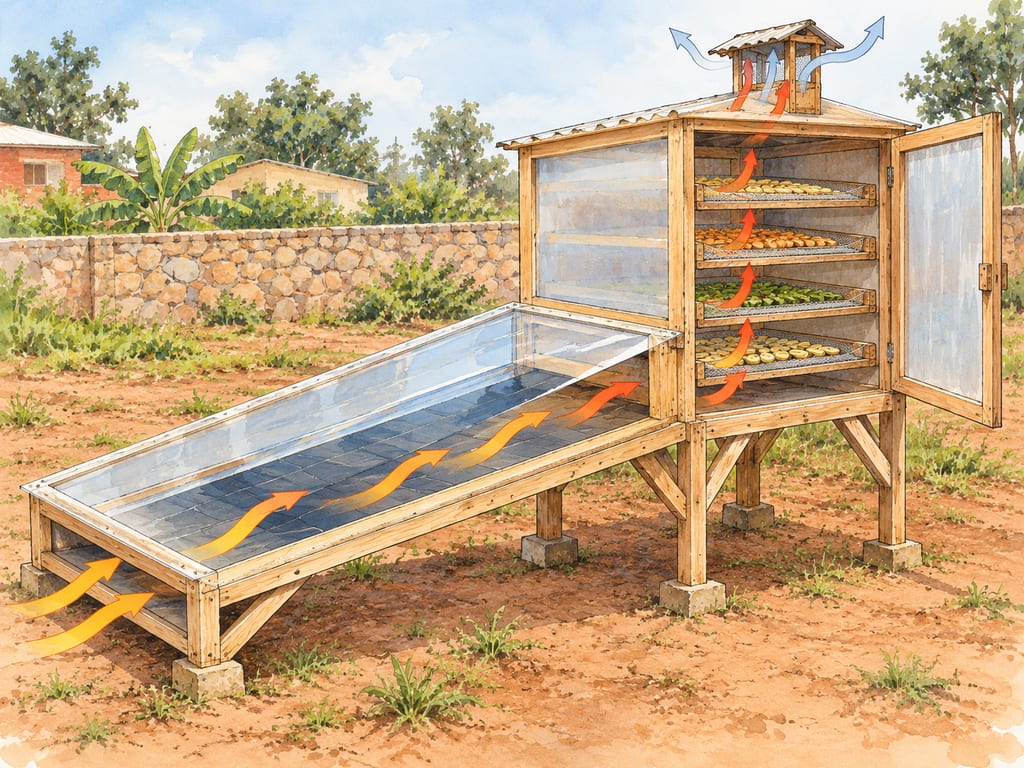
An indirect solar dryer heats air in a separate collector, then moves it through a covered food chamber. Designs vary in size, materials and airflow.
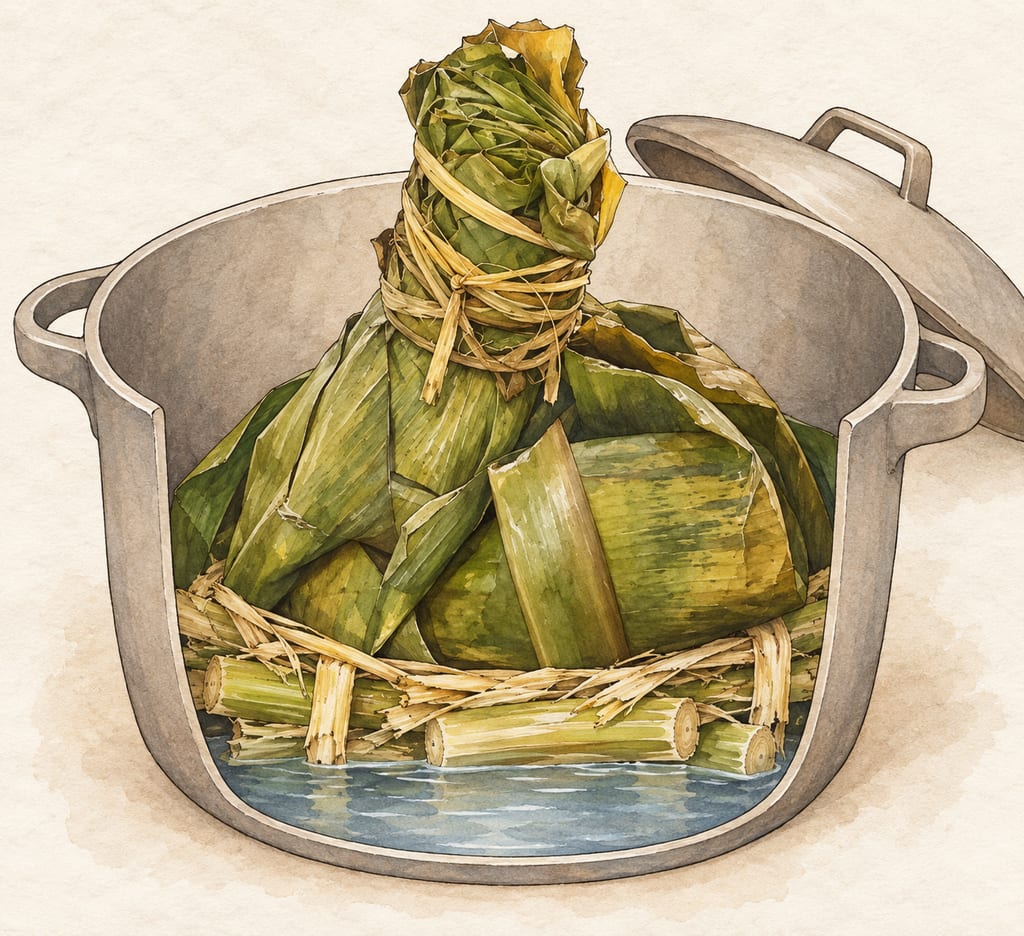
A temporary leaf-and-stalk support inside a cooking pot keeps leaf-wrapped food above boiling water.
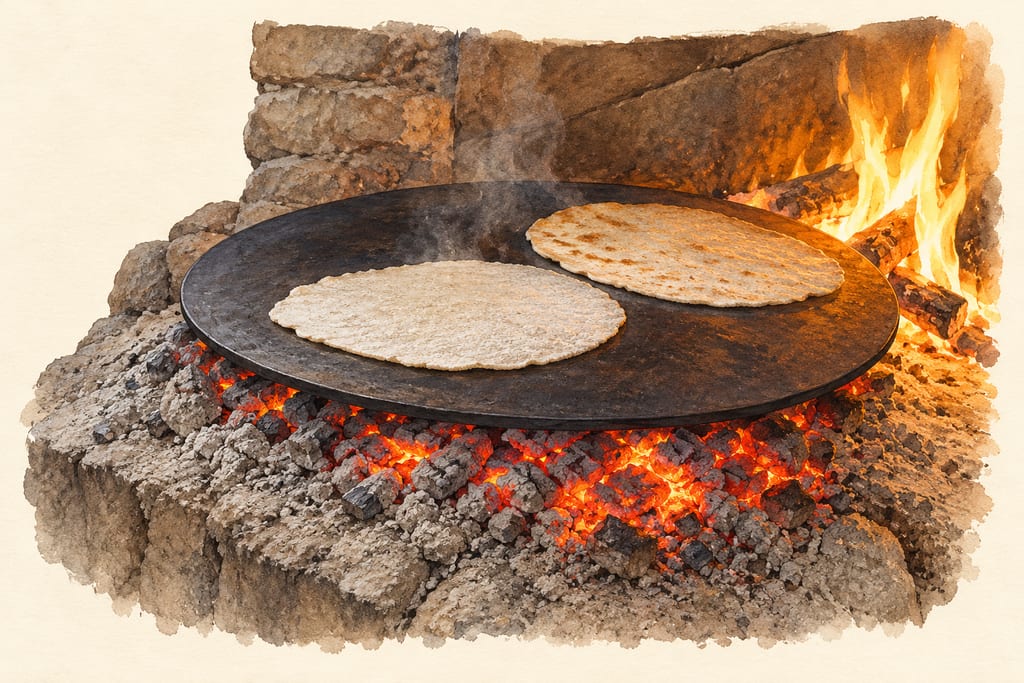
A heated iron or stone plate for fat-free baking of thin breads. Norwegian sources document the takke and stone bakstehelle, from wood-fired hearths to modern electric models.
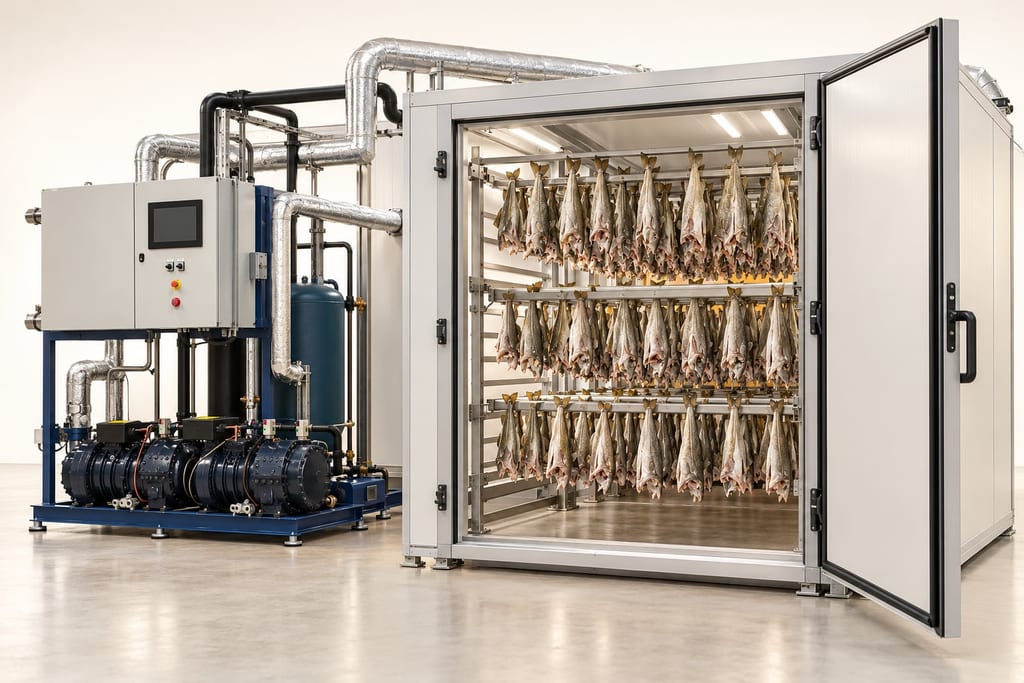
A modern industrial system for controlled indoor drying of stockfish. Documented Norwegian examples combine a drying chamber or duct with heat-pump dehumidification and process monitoring; the evidence does not describe a household cabinet.
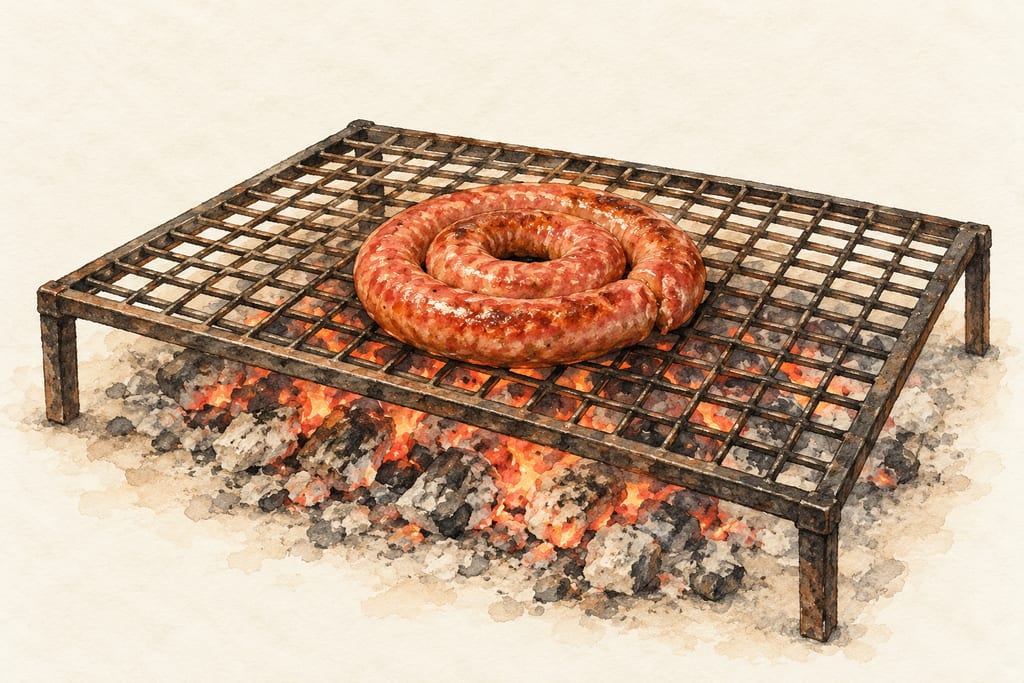
A braai is a South African open-fire cooking practice. This record focuses on the movable cooking grid over coals shown in a documented photograph; sources do not establish one standard grill design or size.
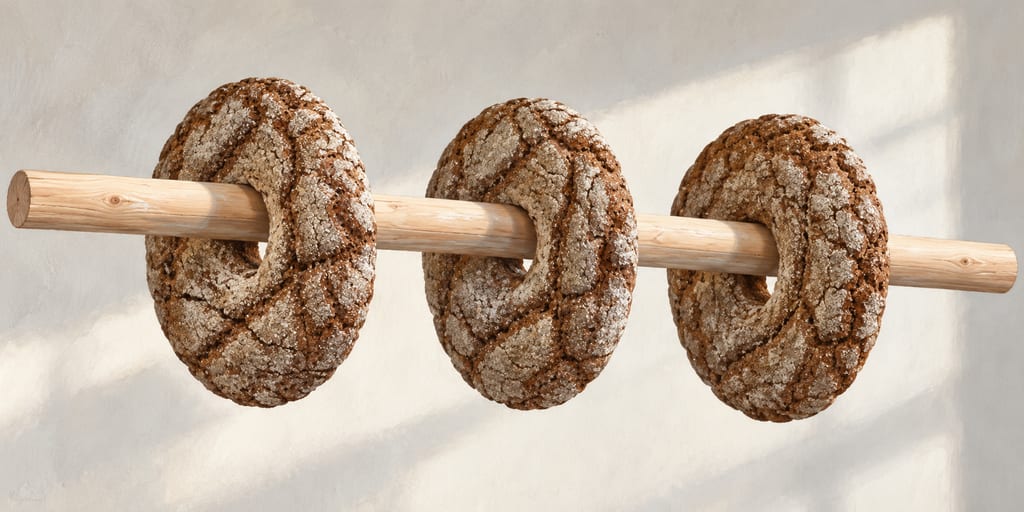
A simple wooden pole stores Finnish ring-shaped rye loaves by passing the pole through each loaf’s central hole. Finnish accounts describe the poles as ceiling-suspended and connect the hole-shaped loaf with a tradition of drying bread.
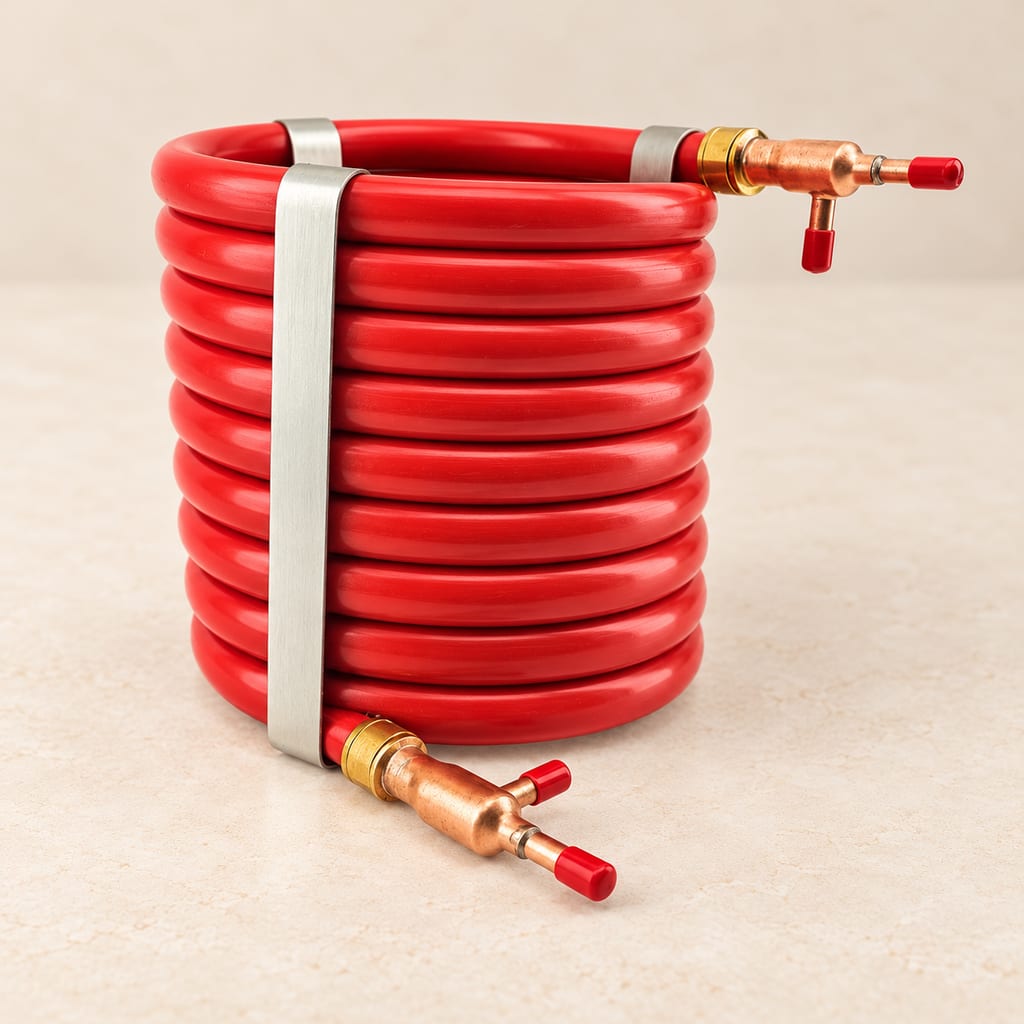
A counterflow wort chiller cools hot wort through separate, counter-moving coolant passages. Tube-in-tube and coil-in-jacket designs vary by materials and fittings; capacity and performance are model-specific.
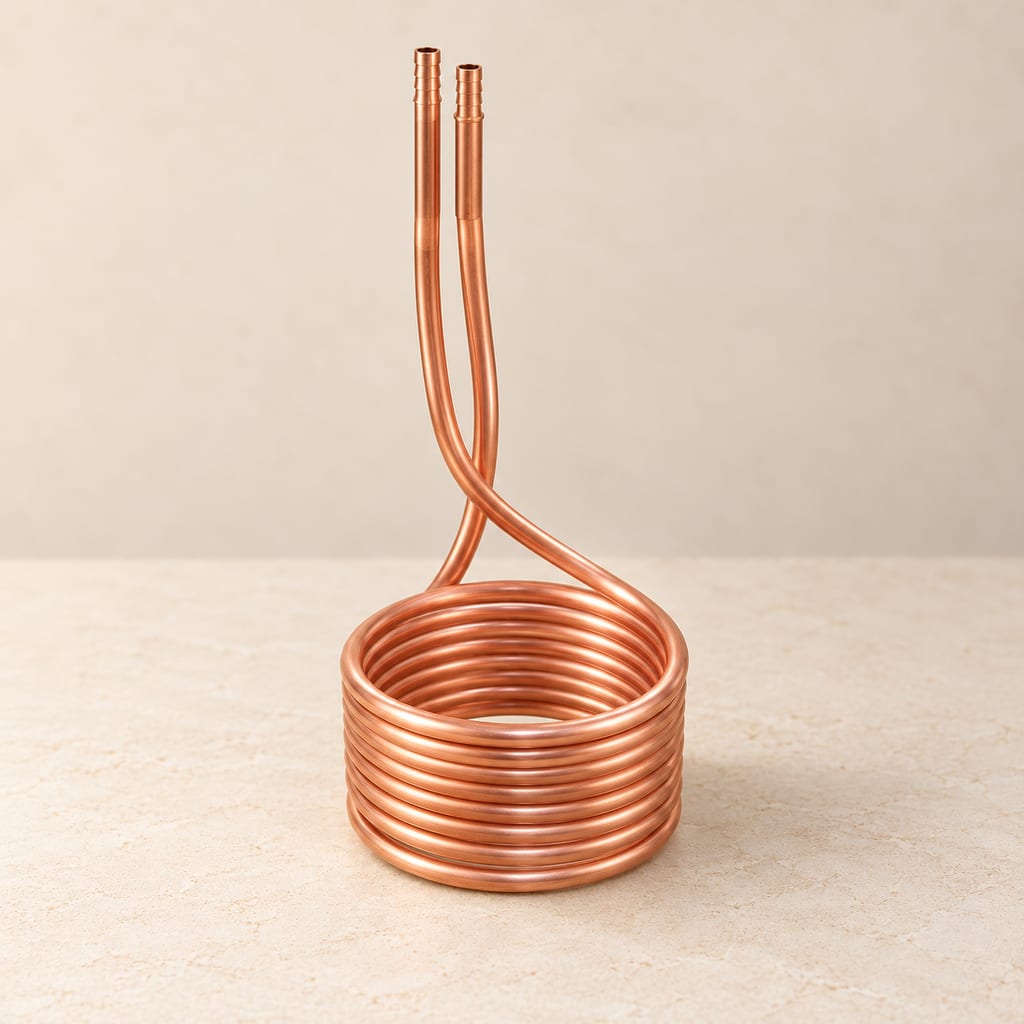
An immersion wort chiller is a manufactured coil heat exchanger placed directly in hot wort; cooling water flows through the coil while the wort stays in its kettle. Cooling depends on the chiller, water supply and wort conditions, so no single time or batch capacity describes the whole type.
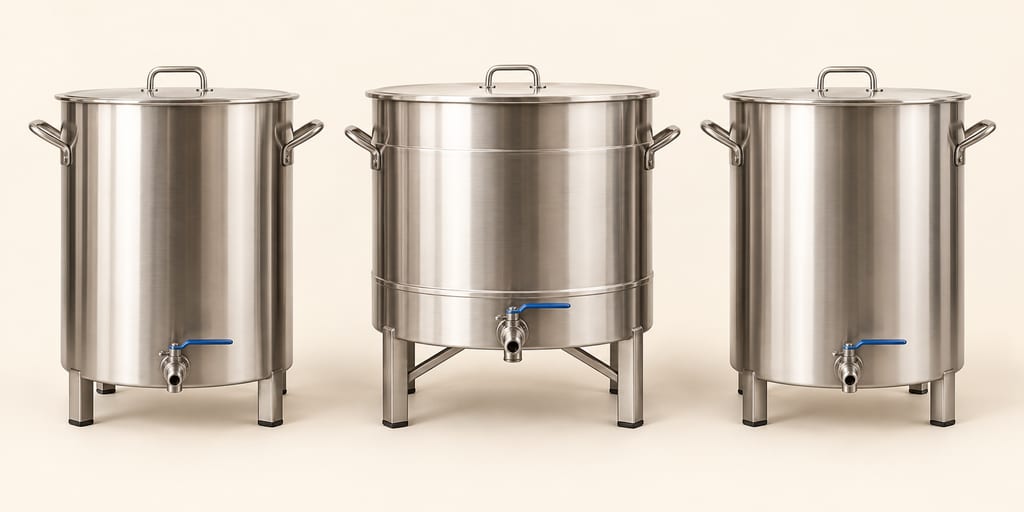
A three-vessel all-grain setup separates heated water, mashing and lautering, and wort boiling into an HLT, mash/lauter tun, and boil kettle. Other methods may combine vessels.
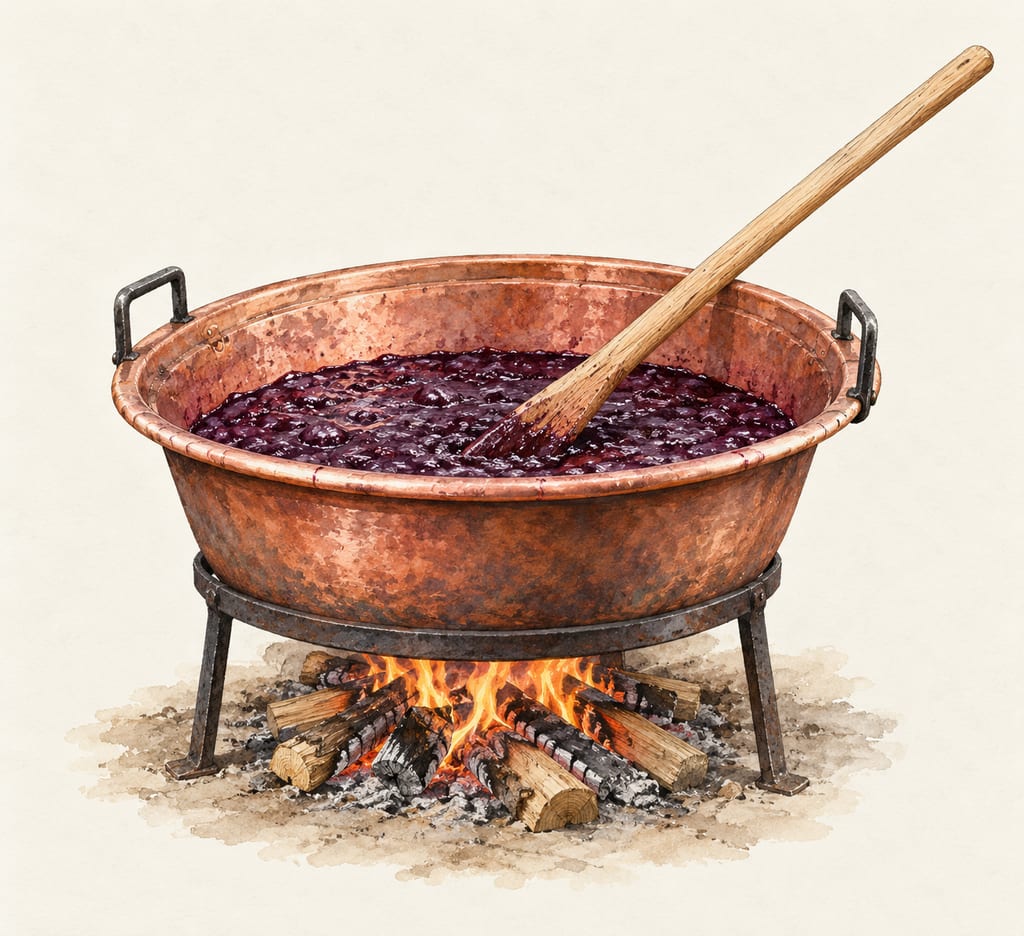
A large copper cauldron and long wooden bocian paddle were used to cook Lower Vistula plum powidła over an open fire. The vessel and stirrer form a regional equipment pair.
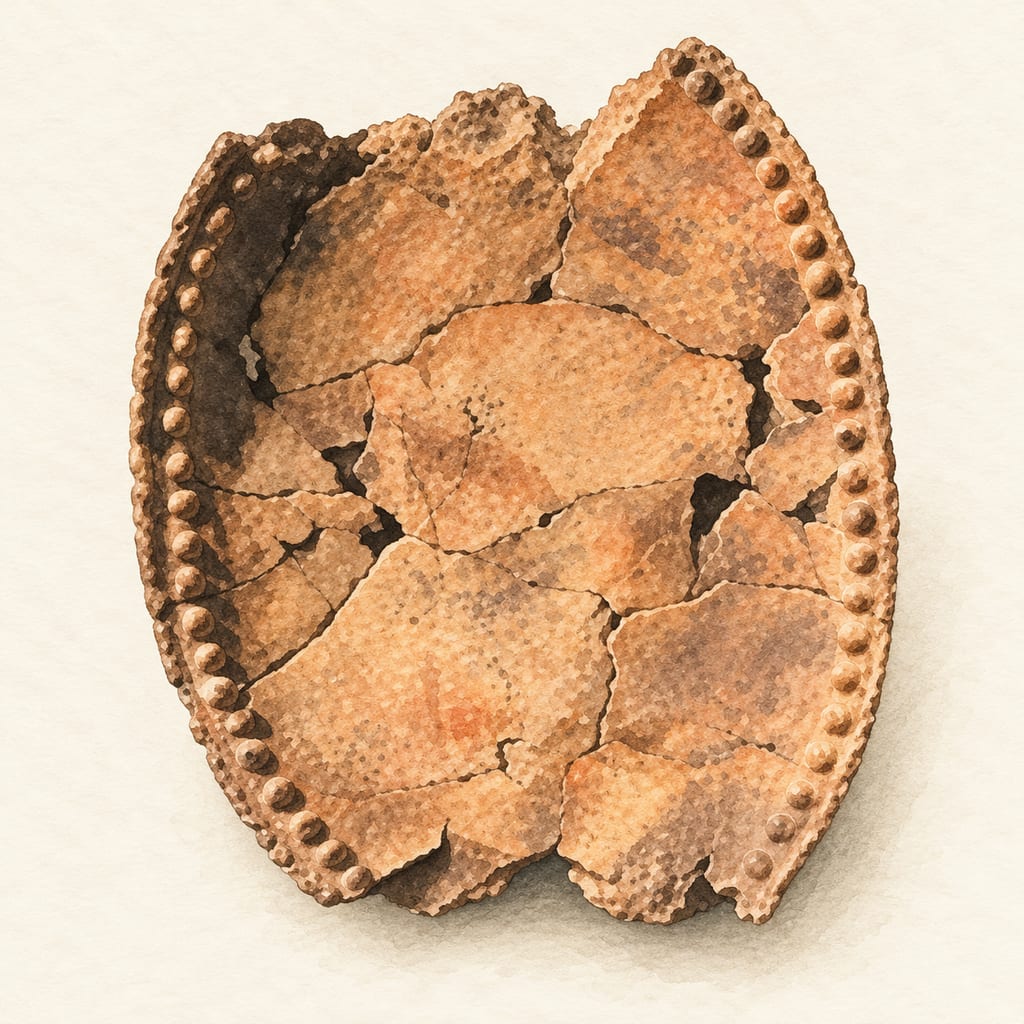
A Rocky Cree clay lamp dated approximately 1200–1500 is recorded from Southern Indian Lake, northern Manitoba. The Manitoba Museum links this lamp tradition to cooking, drying, heating and lighting lodges.
Show on map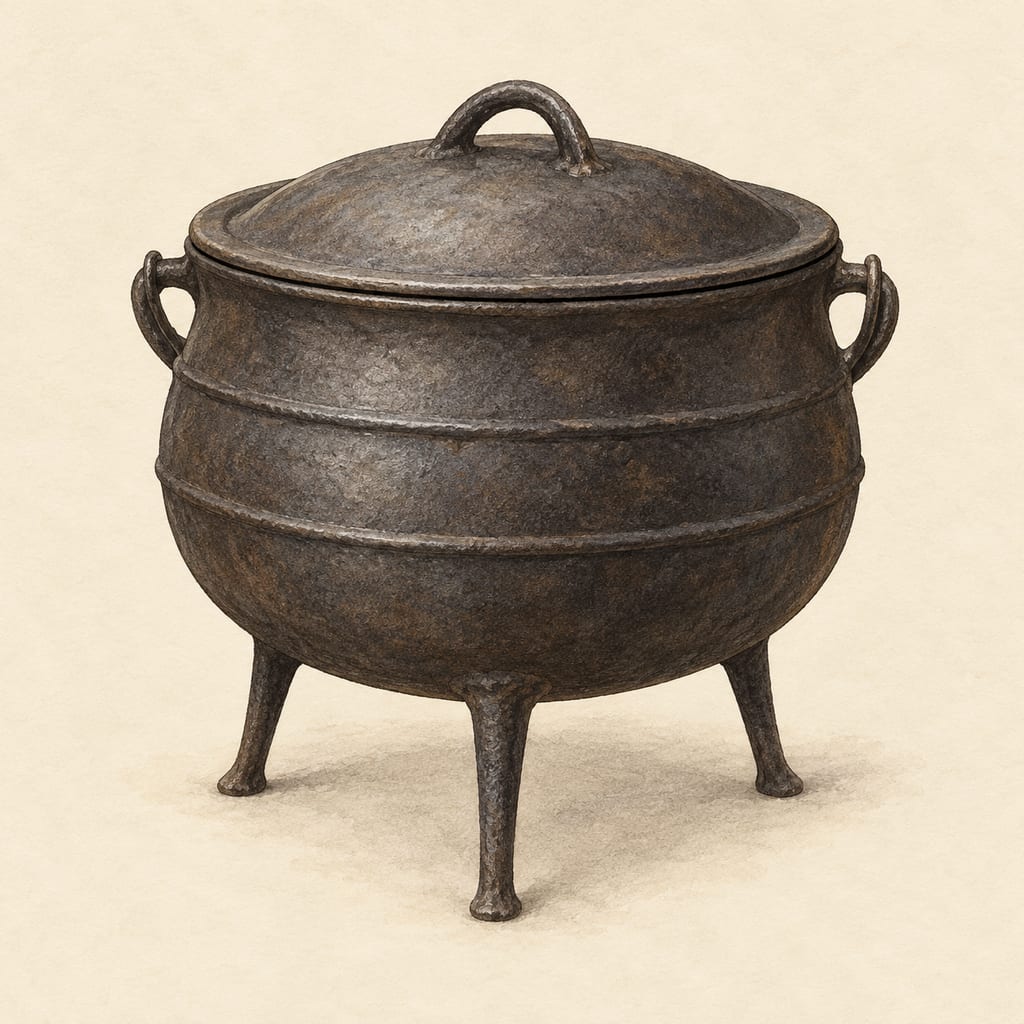
A lidded, rounded cast-iron pot with three legs, used over open fires and embers across southern Africa. Its African history belongs to the vessel's adoption and use, not a claim of European invention.
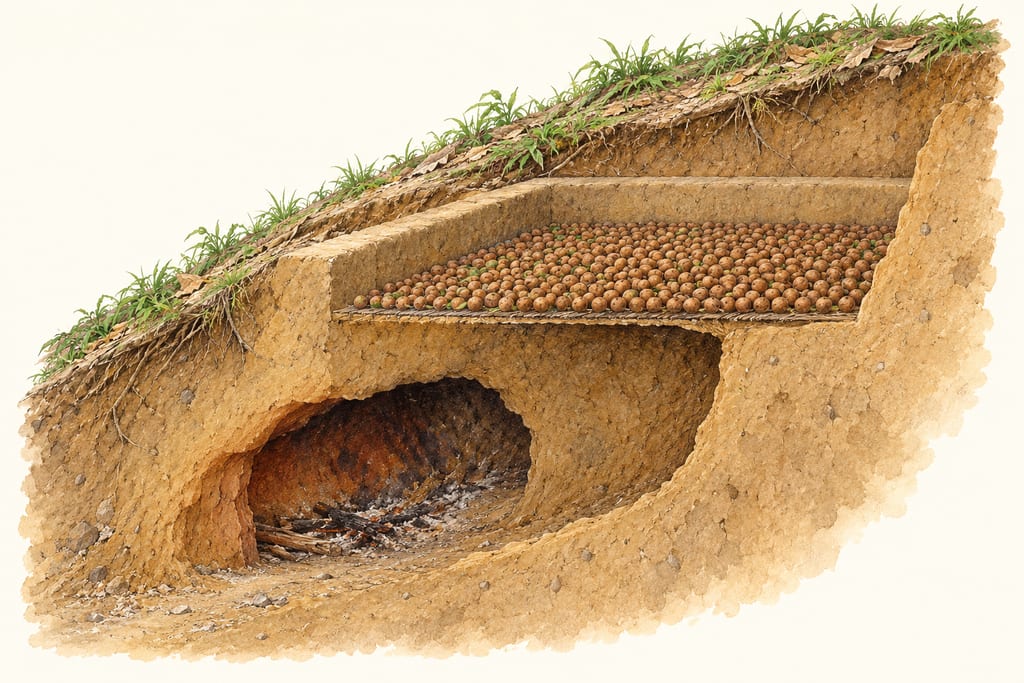
Traditional longan-drying kilns documented in Dongshan, Tainan, include distinct hillside earth-pit and built masonry forms. A roasting bed sits above the fire space; longan wood fuels a slow roast over several days.
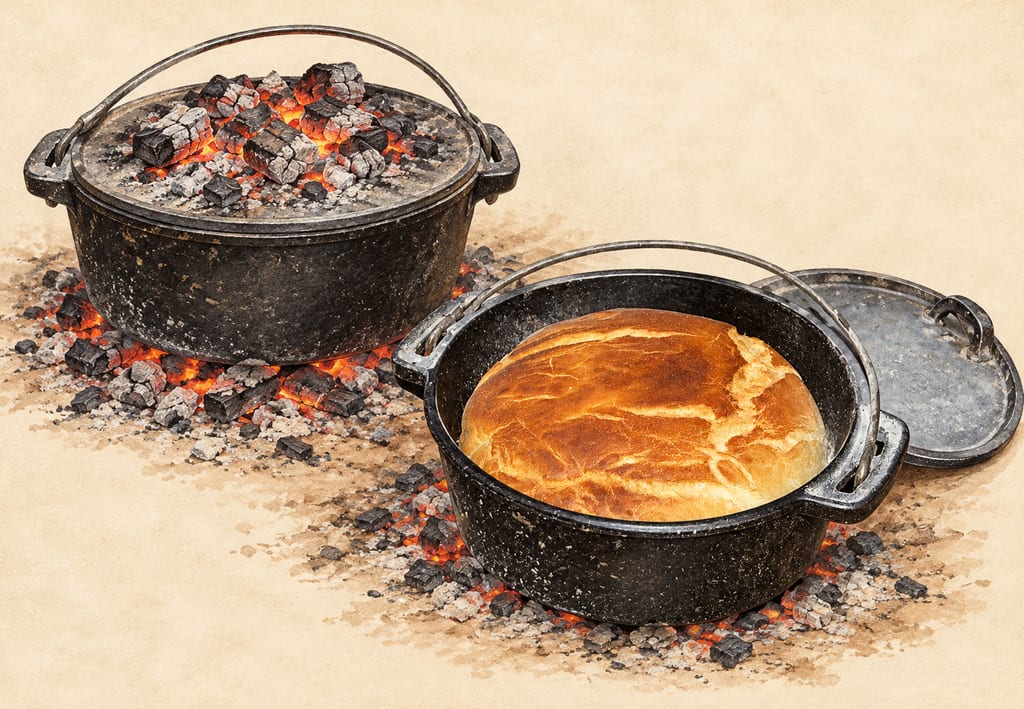
A closed cast-iron pot used to bake potbrood with heat from the hearth or embers; documented in South African English by 1883 and in a contemporary Namibian recipe.
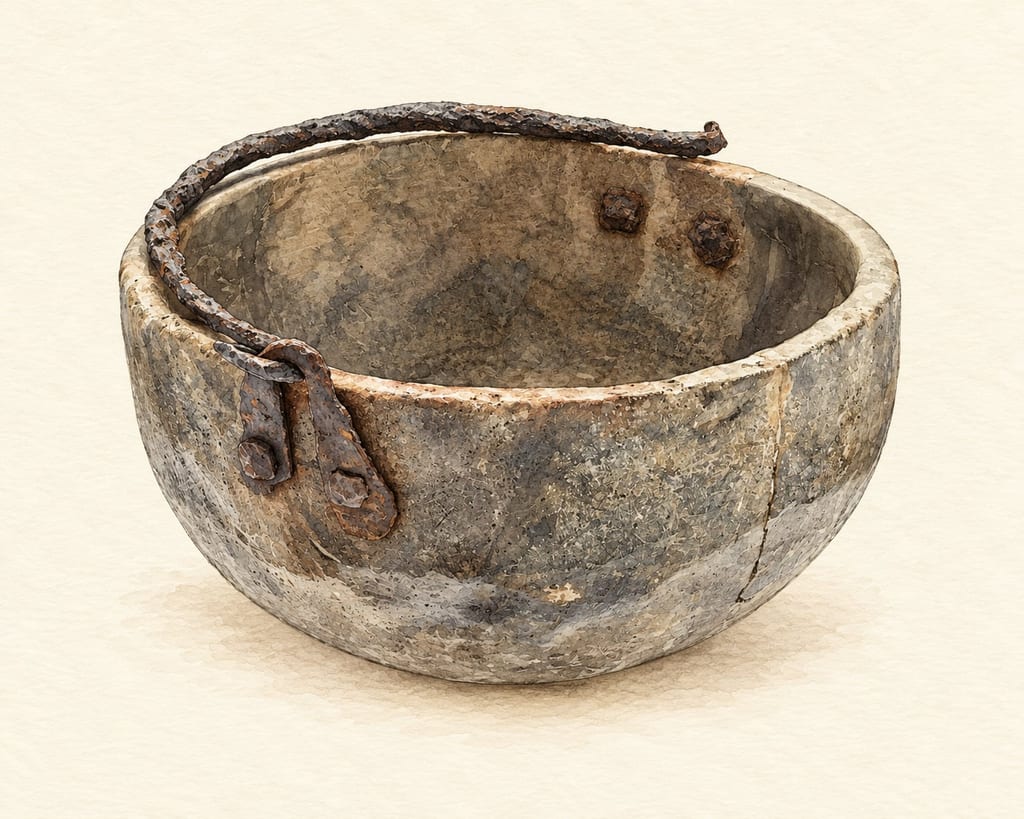
A Viking Age cooking pot carved from soapstone, exemplified by a partly reconstructed Birka grave find with iron handle fittings. Similar vessels were used across Scandinavia, but their forms and later handles changed over time.
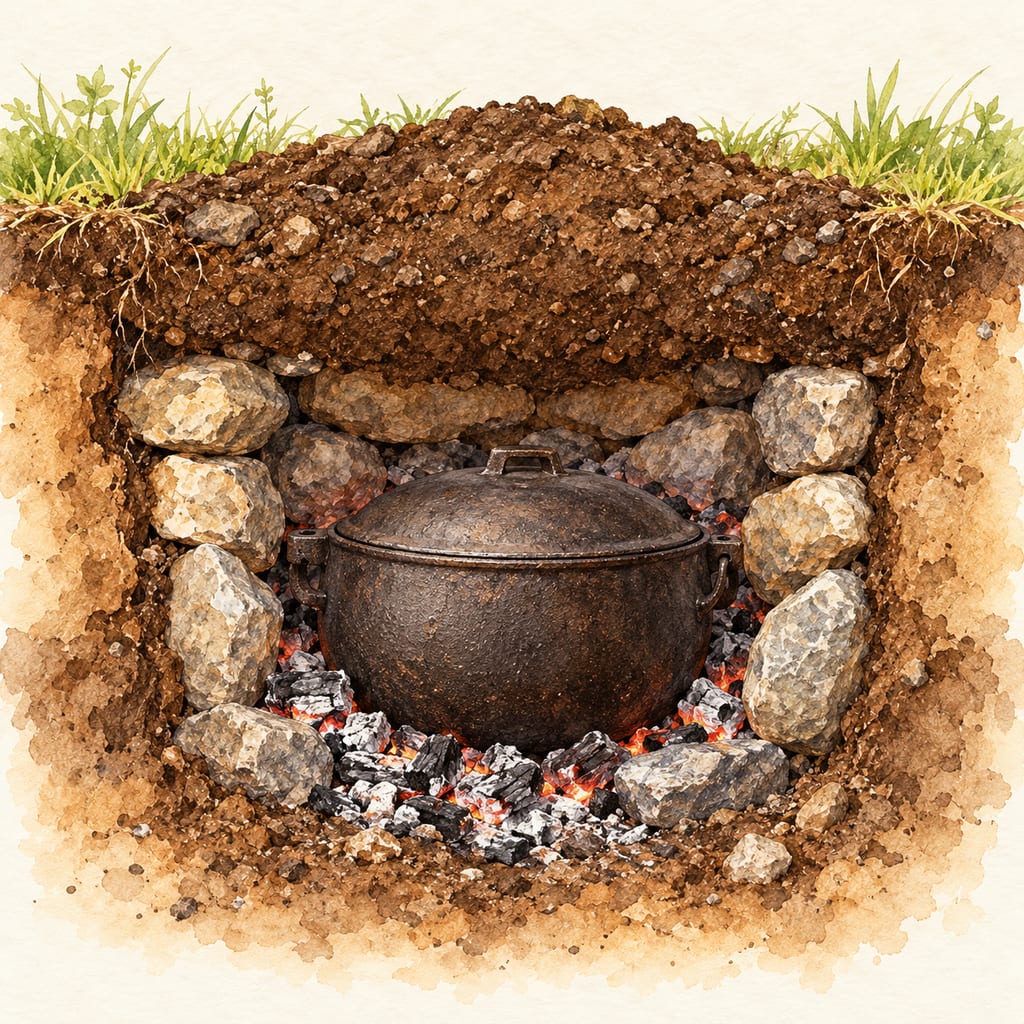
A covered iron vessel used in Maine bean-hole cooking, set into a preheated stone-lined pit and buried for a slow cook.
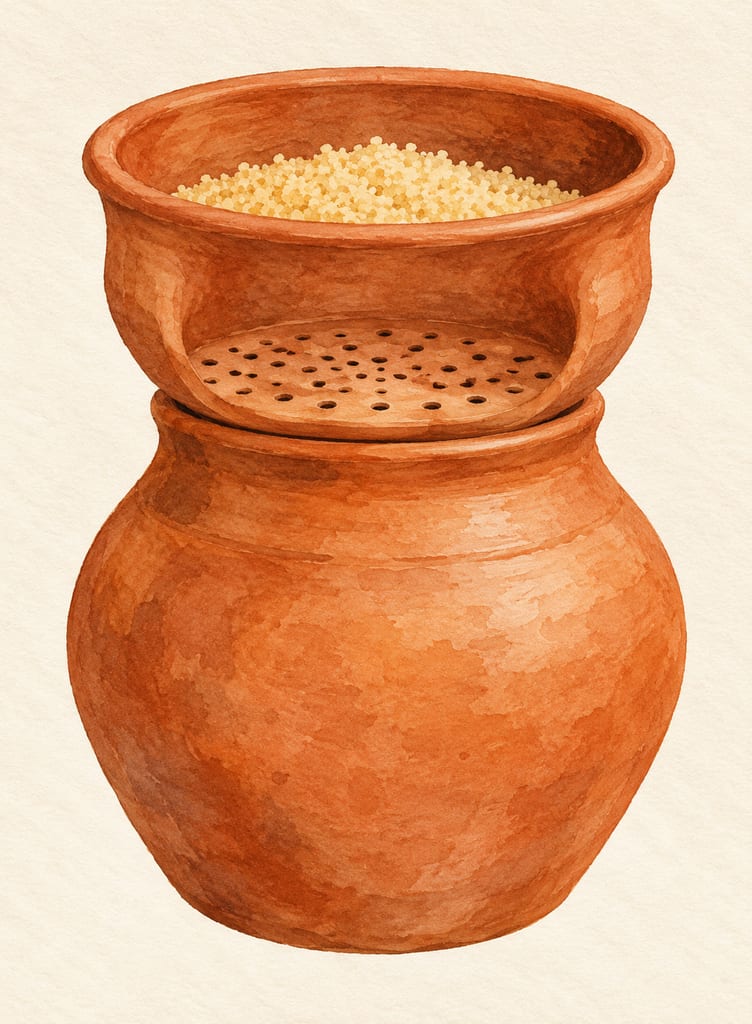
A two-part steamer for couscous: a perforated upper chamber sits over a lower pot that produces steam. Clay, basketry and metal forms are documented in different places and periods.
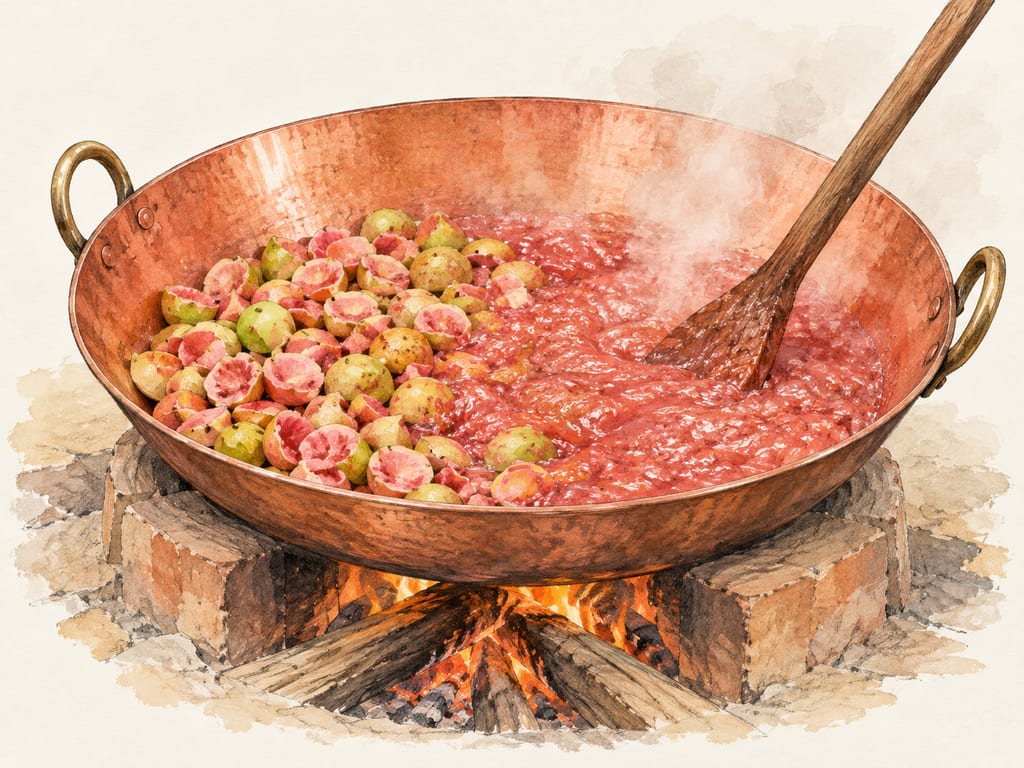
The tacho de cobre is a broad copper kettle used to cook guava and sugar into goiabada cascão in São Bartolomeu, Minas Gerais. Local accounts pair it with a wood-fired brick hearth.
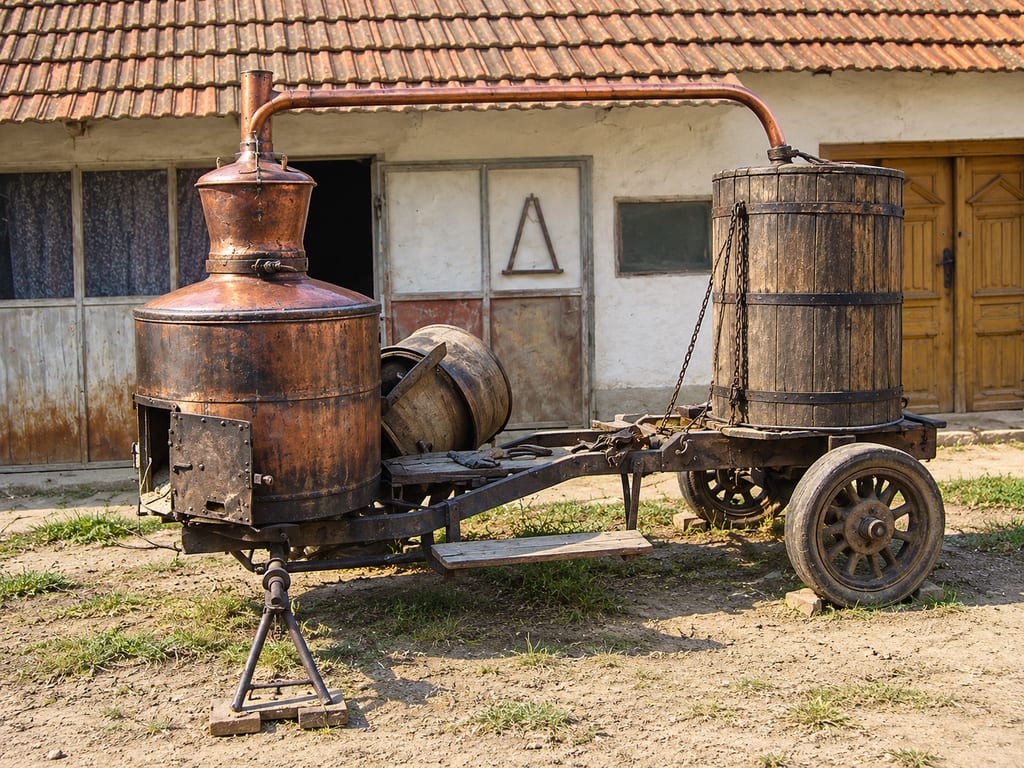
A copper pot still is a portable batch-distillation apparatus with a boiler, vapour path and condenser. Serbian rakija traditions and Montenegrin plum-spirit production document varied forms, not one universal blueprint.
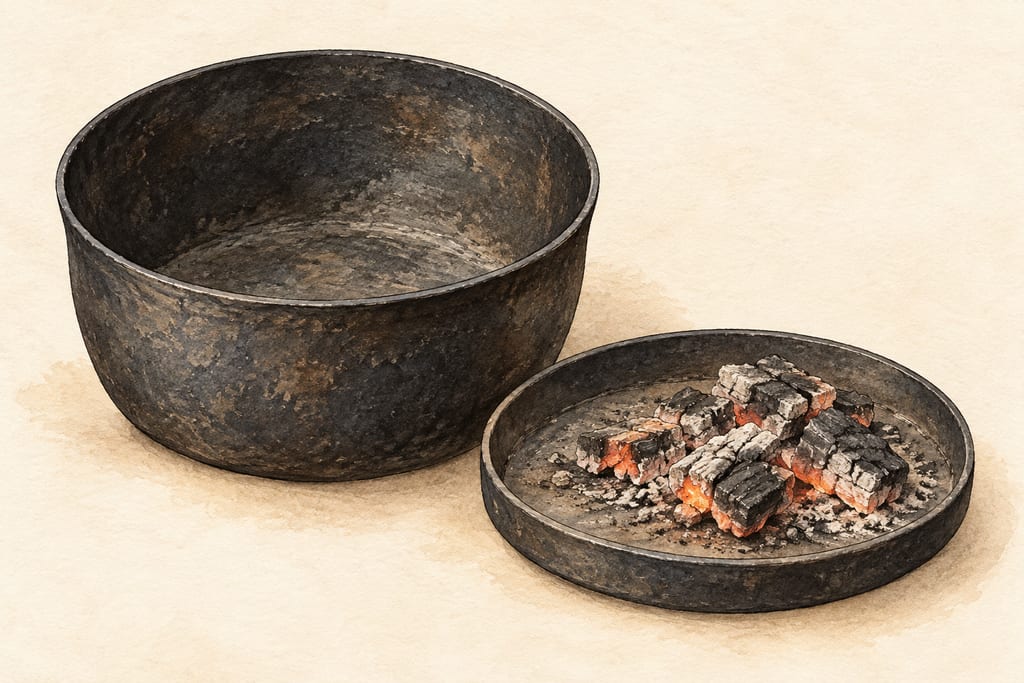
A portable cast-iron Irish hearth pot that became a small oven when embers were placed on its lid, baking bread, meat and poultry.
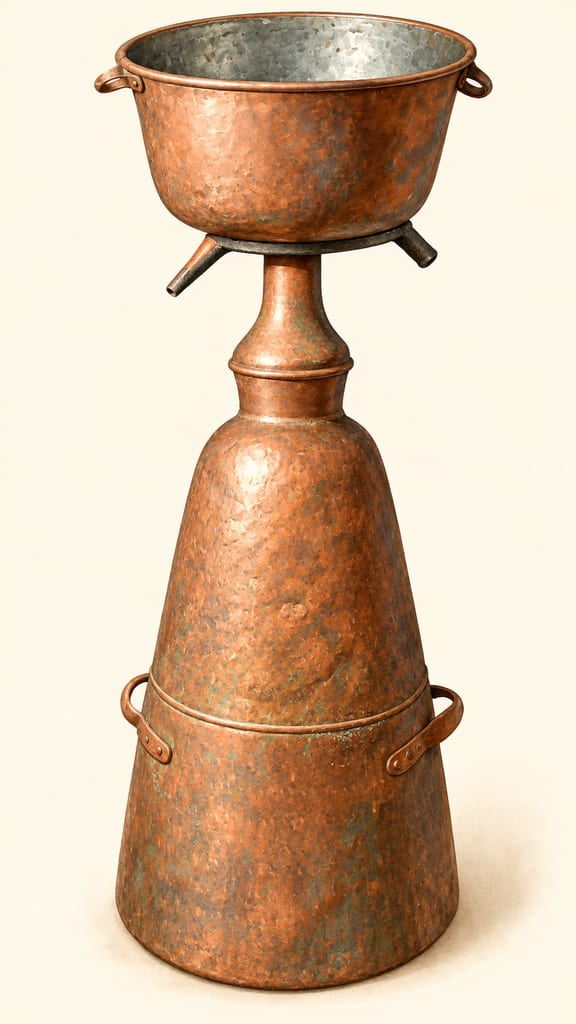
A traditional Galician direct-fire pomace still: its copper pot and cap condense vapour in a water-cooled chamber, then send the distillate through a short biqueira.
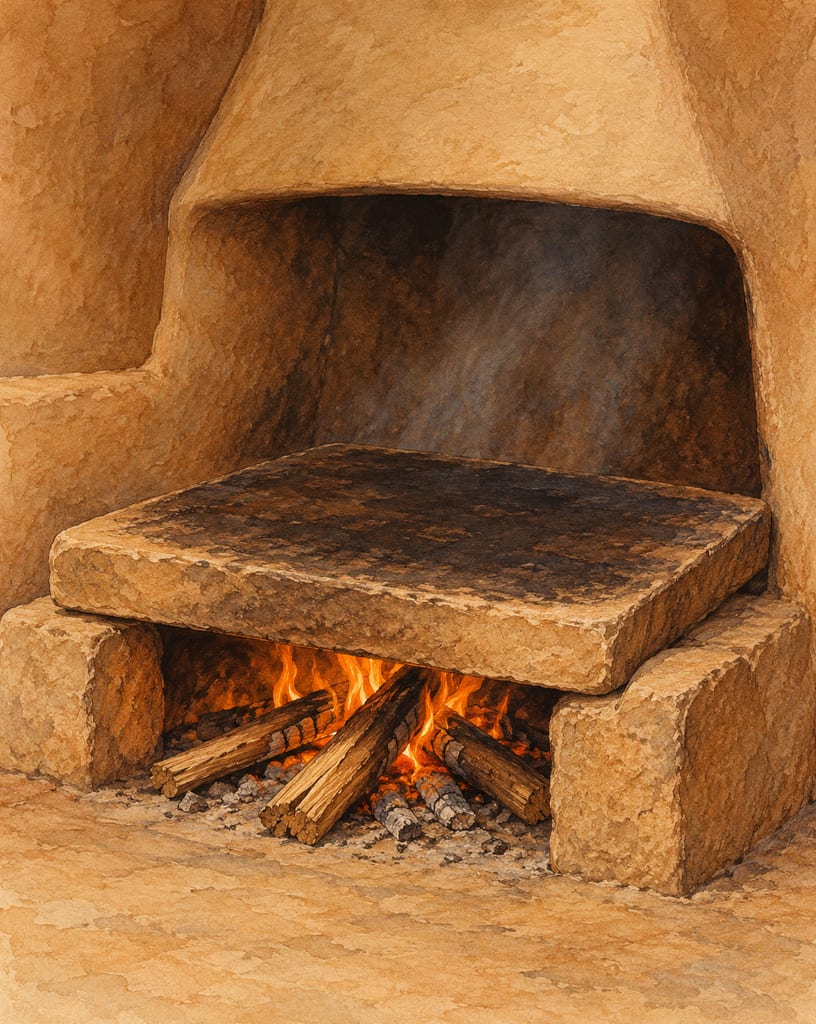
A carefully smoothed sandstone slab used by Hopi piki makers as a heated cooking surface, set above a fire in a dedicated piki-making space.
A thin stone griddle used over an open hearth. Norwegian archaeology documents the established tradition from the early Middle Ages; a Viking-period origin is only a cautious suggestion linked to Shetland.
A dhumashi is a raised rack used in the Maldives to smoke cooked fish before it is dried in the sun. Traditional racks use dried coconut-palm stalks; metal is a more recent variant.