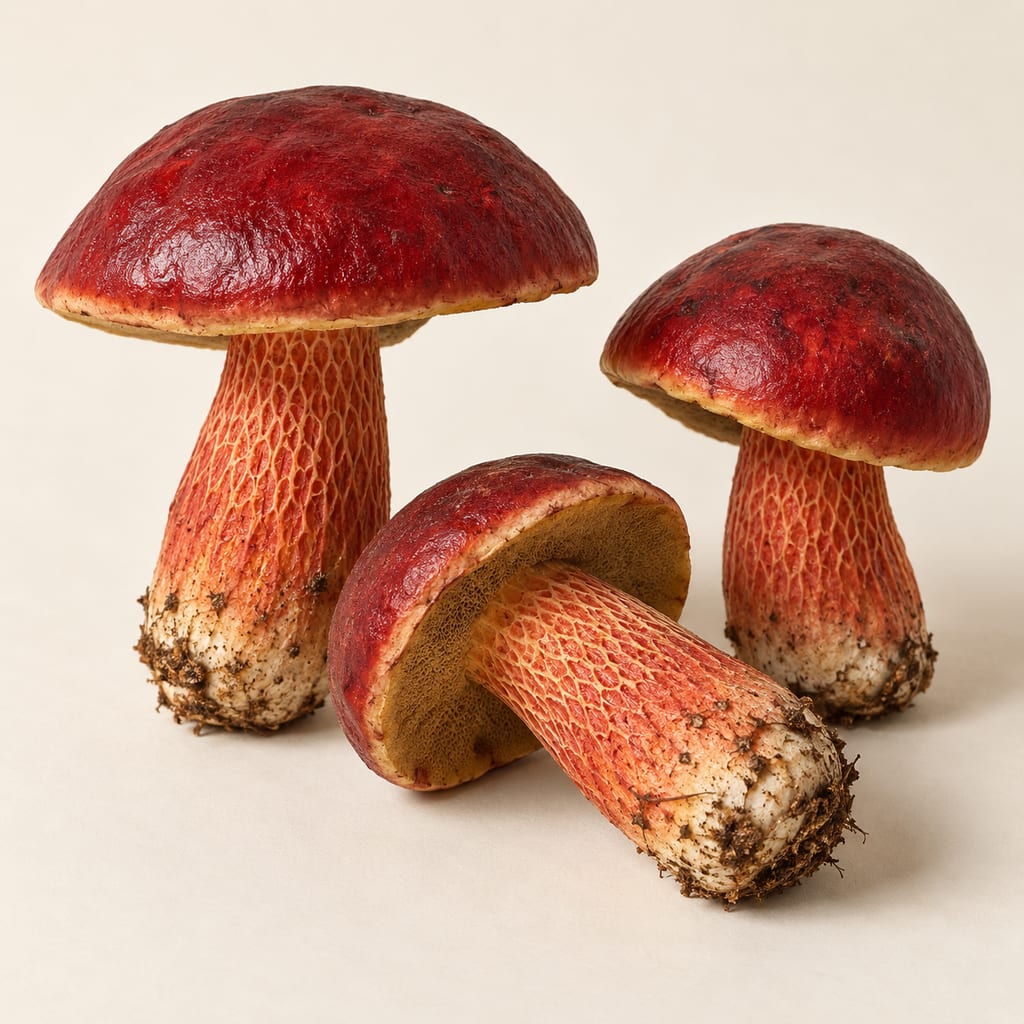
Frost's bolete
Frost's bolete, Exsudoporus frostii, is a red-pored bolete of oak woodland in eastern North America and Mexico. Its edibility is contested because it can be confused with poisonous red-pored boletes.
 FermenteaWhere food goes to change
1086 articles on substrates, cultures and additives.
 Edible mushrooms319
 Brittlegills24
 Truffles19
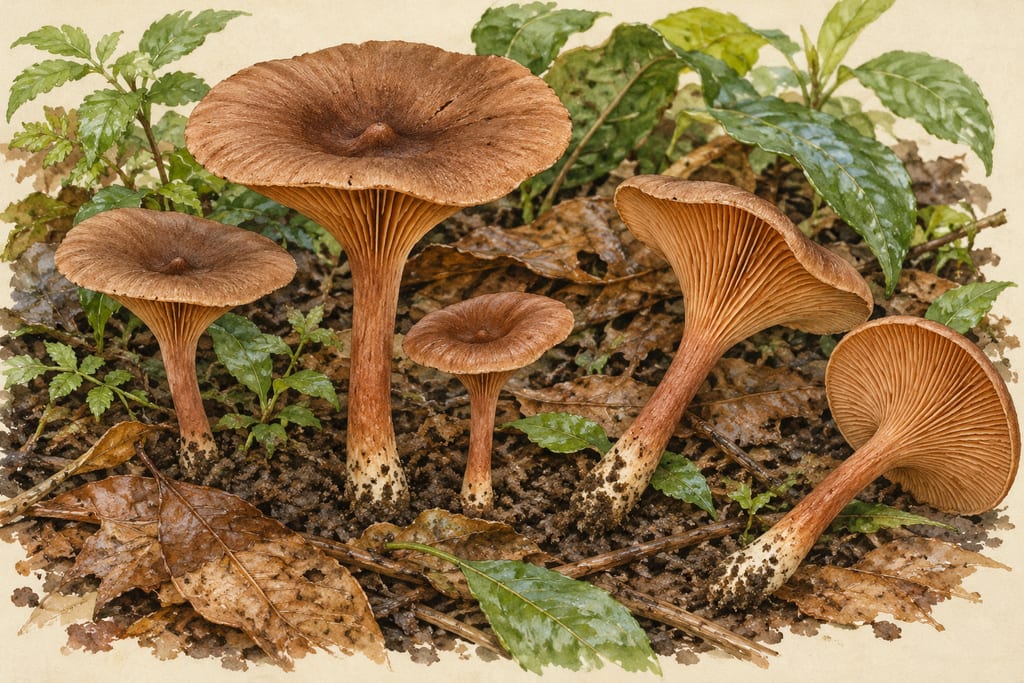 Milkcaps17
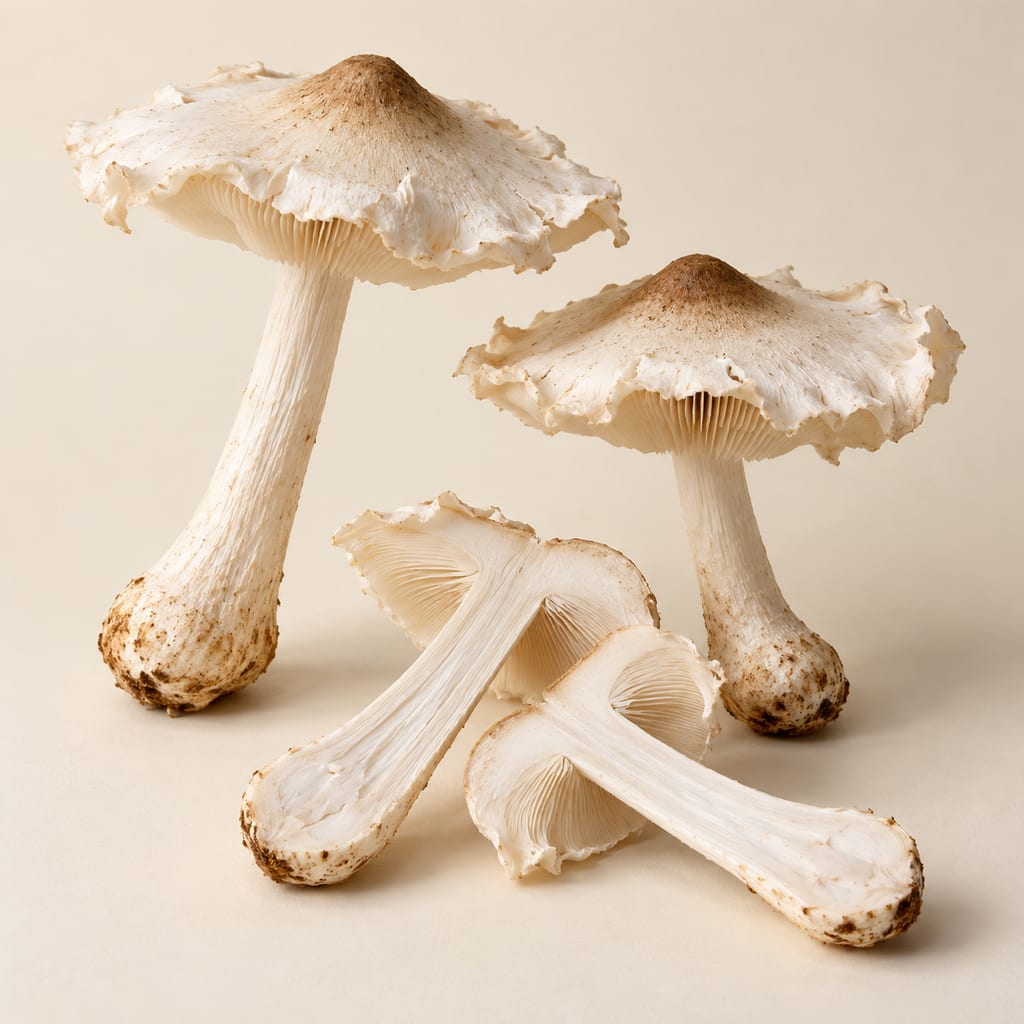 Termite mushrooms17
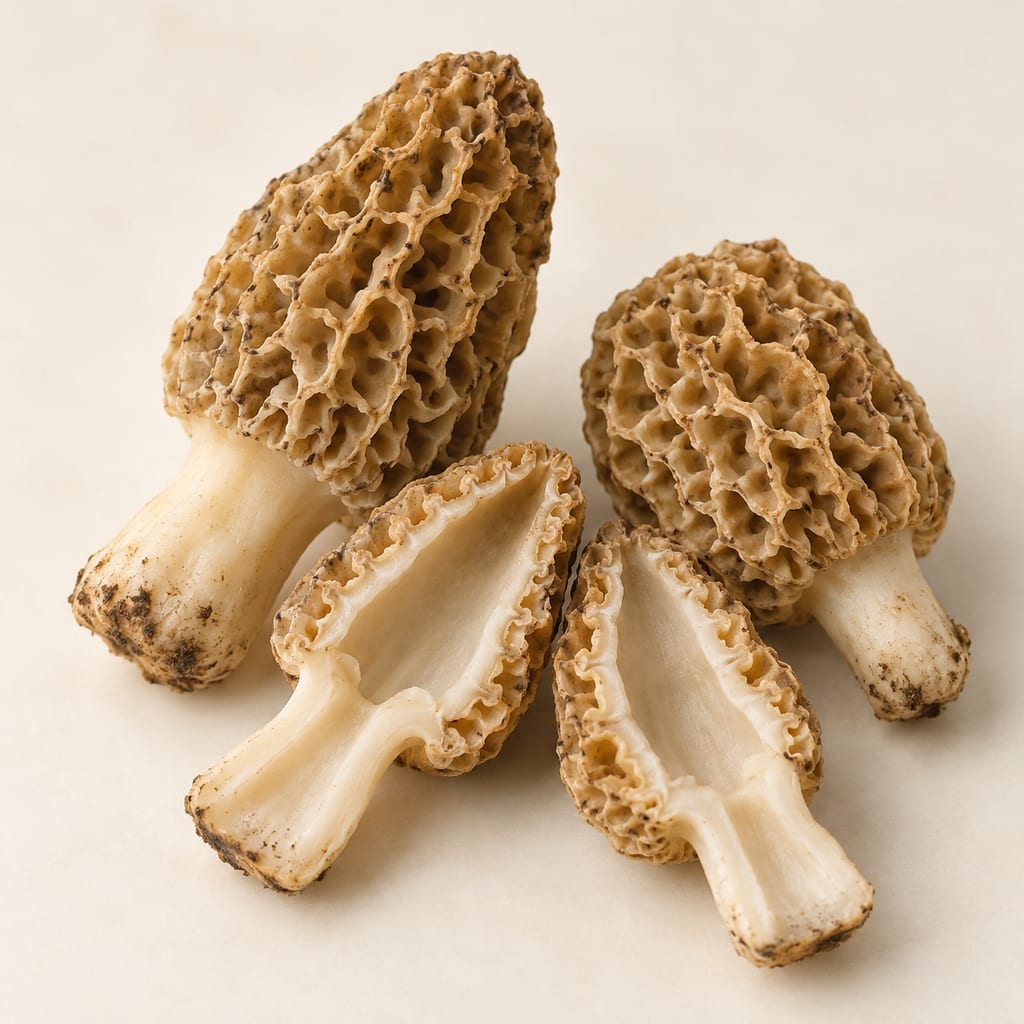 Morels4
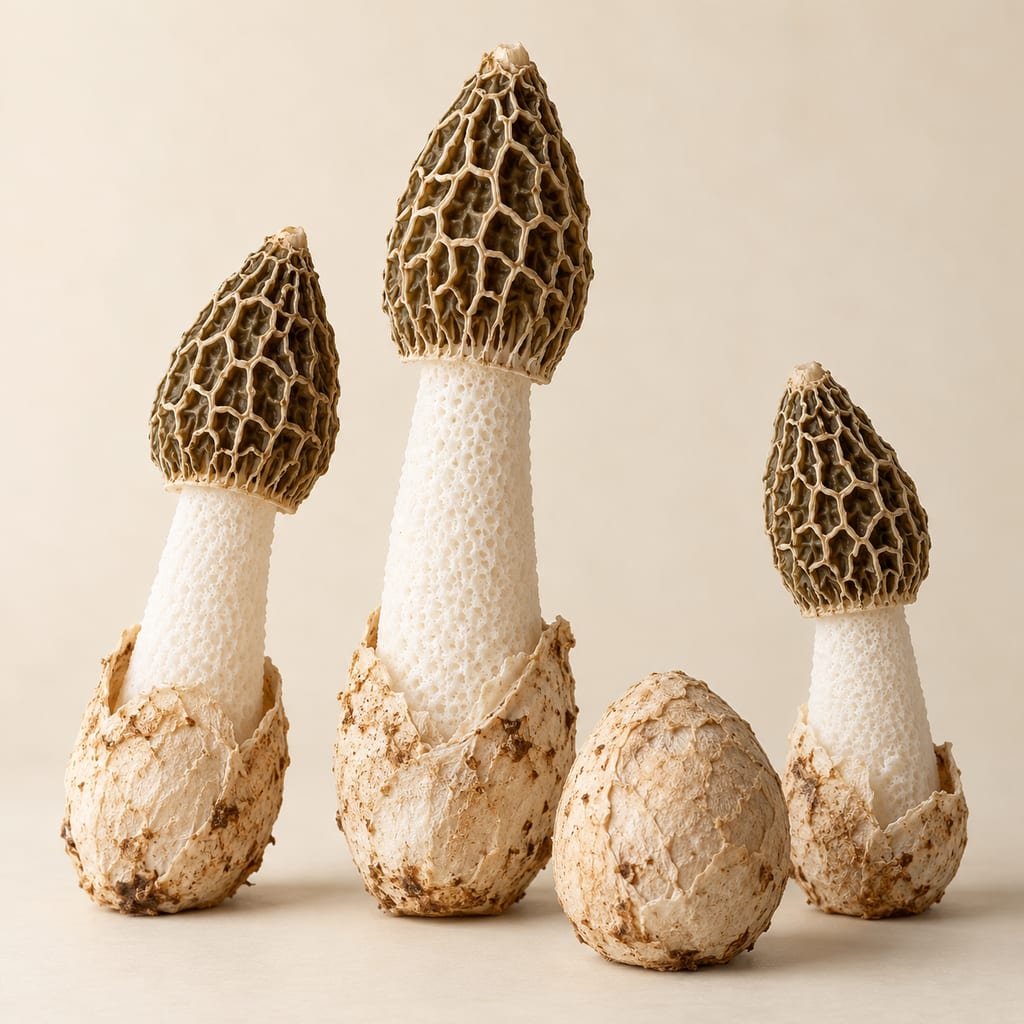 Stinkhorn fungi4
 Fungi3
Frost's bolete, Exsudoporus frostii, is a red-pored bolete of oak woodland in eastern North America and Mexico. Its edibility is contested because it can be confused with poisonous red-pored boletes.
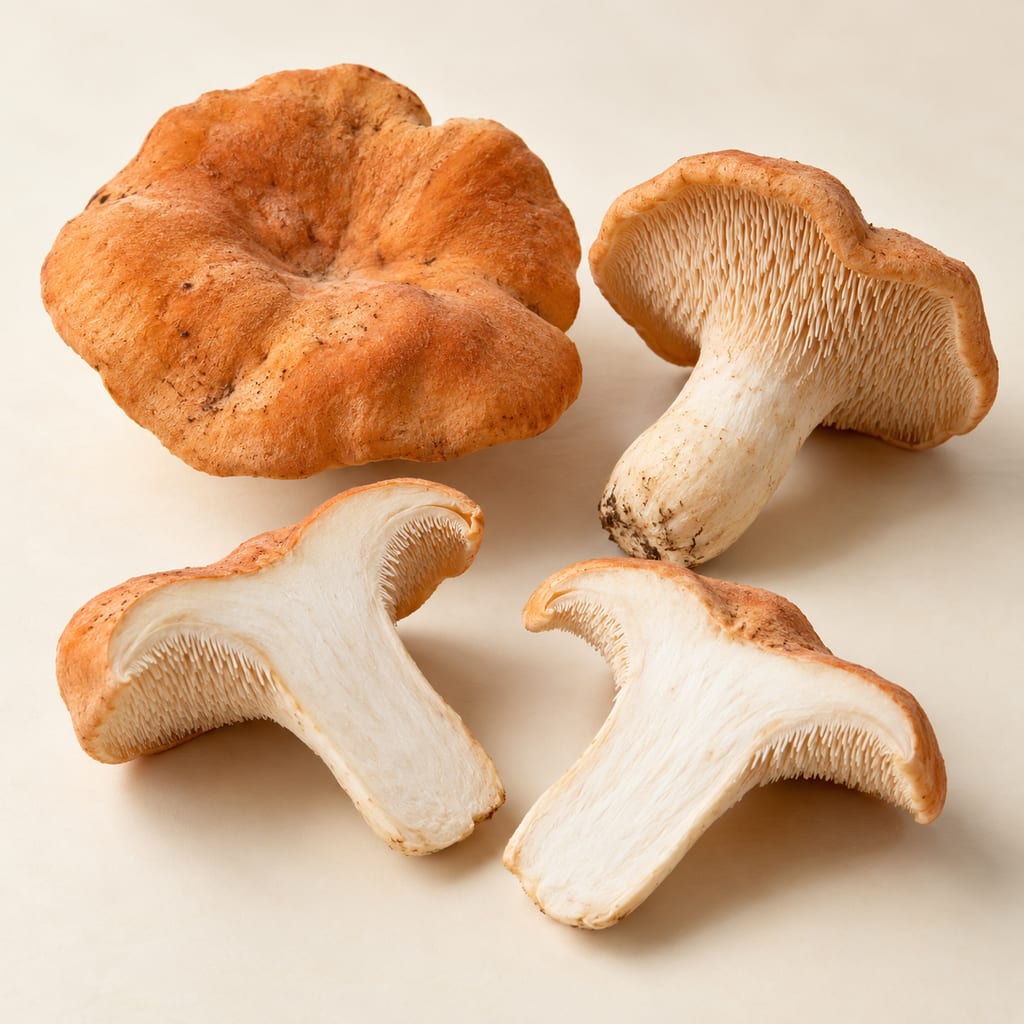
The terracotta hedgehog, Hydnum rufescens, is a wild hedgehog fungus of European woodland with a reddish-brown cap and soft spines beneath. Its identity is hard to separate from related species.
Russula acuminata, the African brittlegill, is a wild ectomycorrhizal mushroom of humid forest in Cameroon and DR Congo. An institutional inventory lists it as edible; its preparation and identity still need validation.
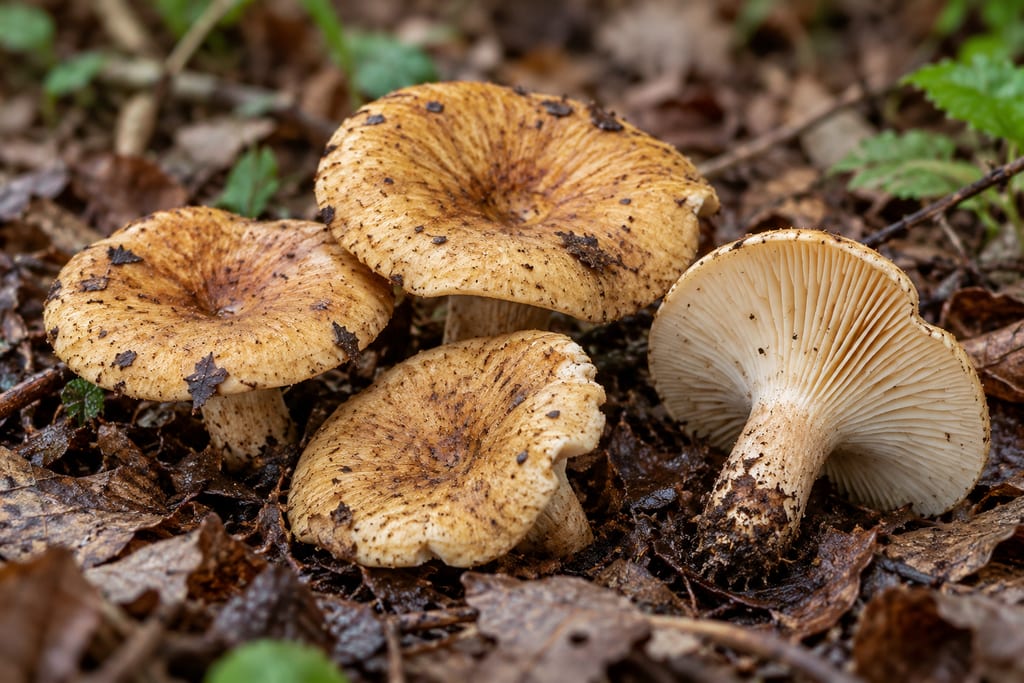
Lactifluus pinguis is a wild milk cap fungus of forests in Yunnan, China, and Laos, where the catalogue records it as marketed. Its identity and local safety still need species-level review.
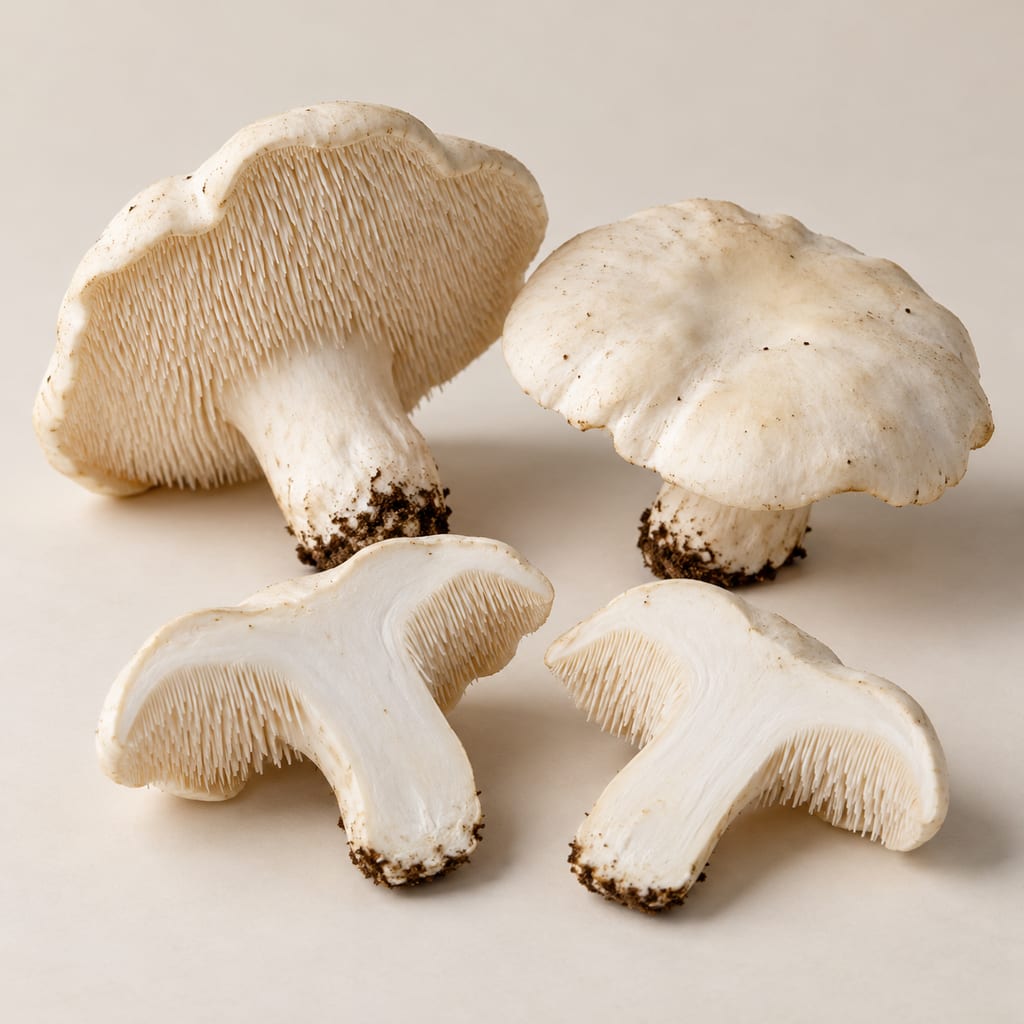
The white hedgehog mushroom, catalogued as Hydnum albidum, is a wild tooth fungus of tree roots and woodland. Its name and identity are unsettled, and its food status depends on which source is read.
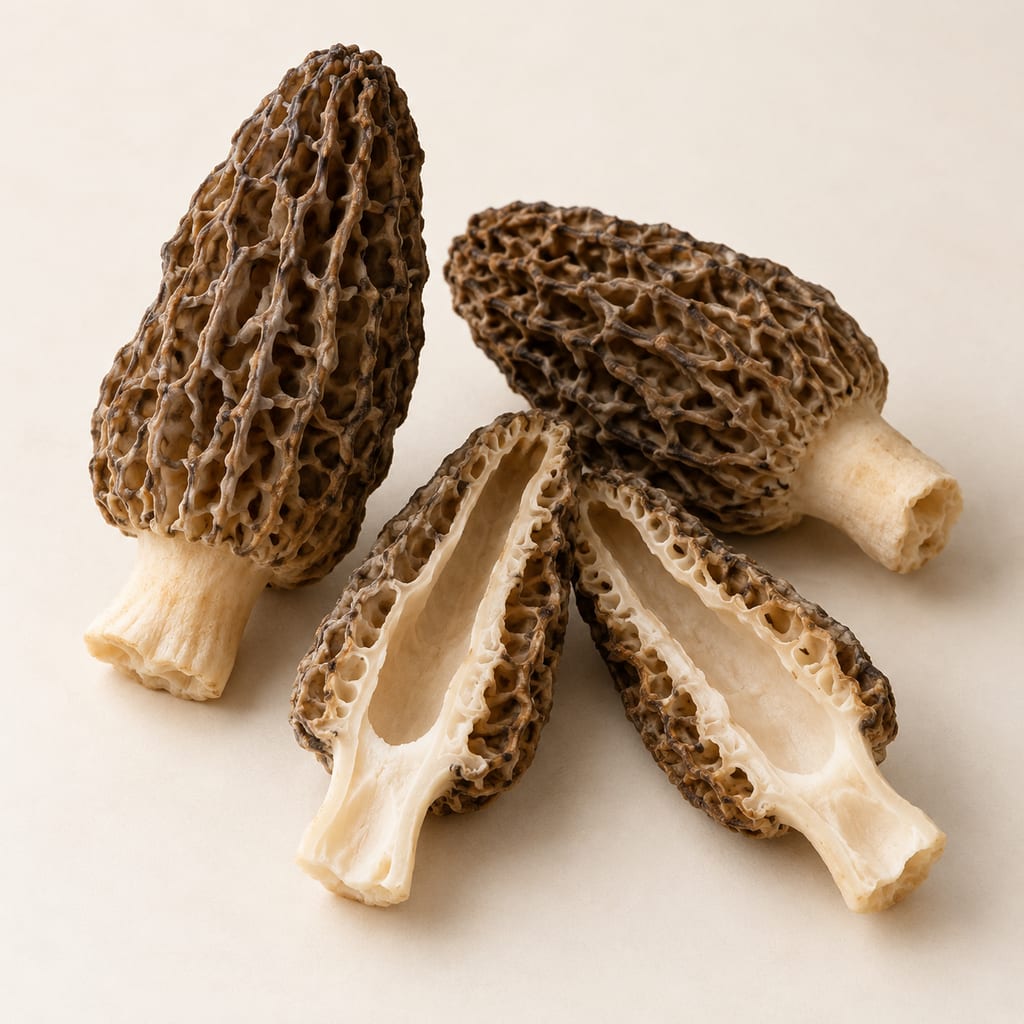
Morchella importuna is a black morel that is cultivated in China on soil beds, one of the few morel species that can be domesticated there. Raw or undercooked morels have caused illness, so cooking is the one safety rule the sources clearly support.
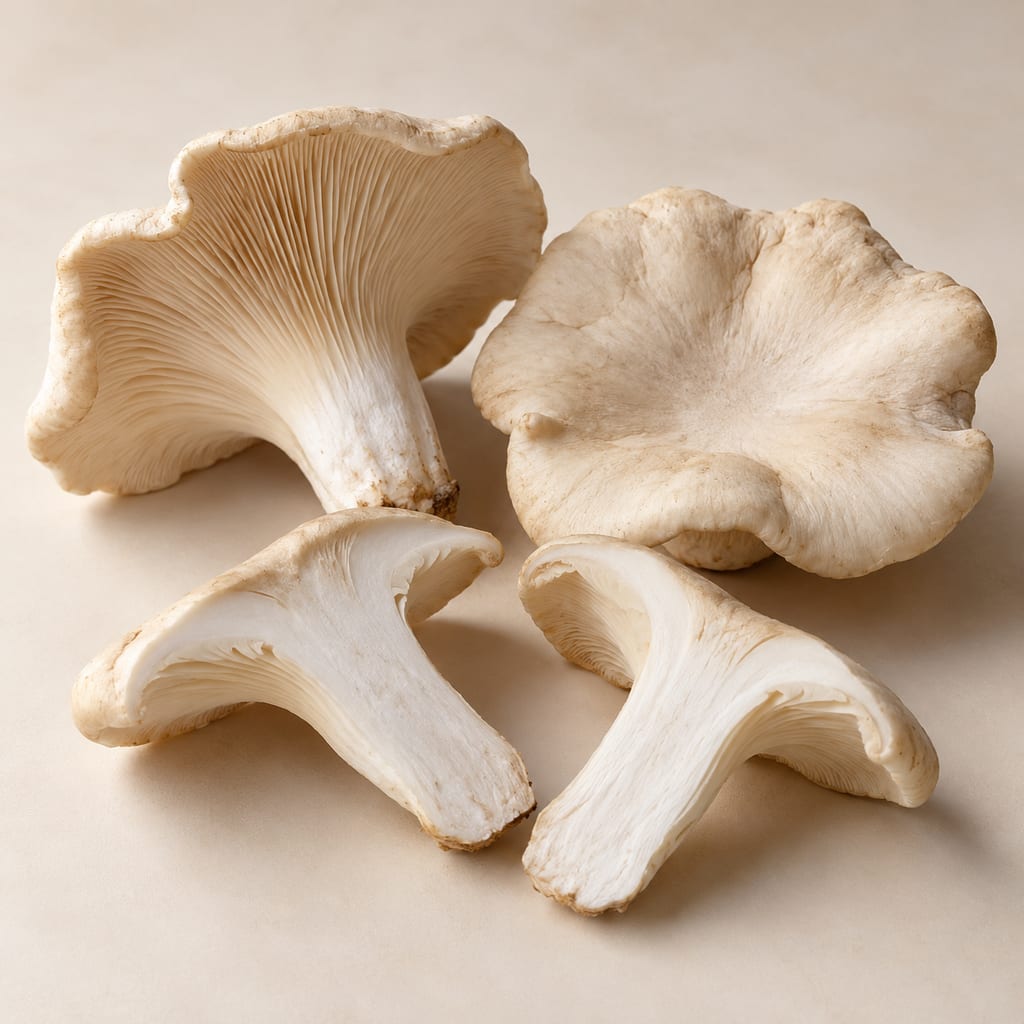
Nebrodi oyster, Pleurotus nebrodensis, is a pale, large oyster mushroom native to the Madonie mountains of Sicily, where it grows on the dead roots of a perennial umbellifer. Wild populations are fragmented and protected, and cultivation is being developed.
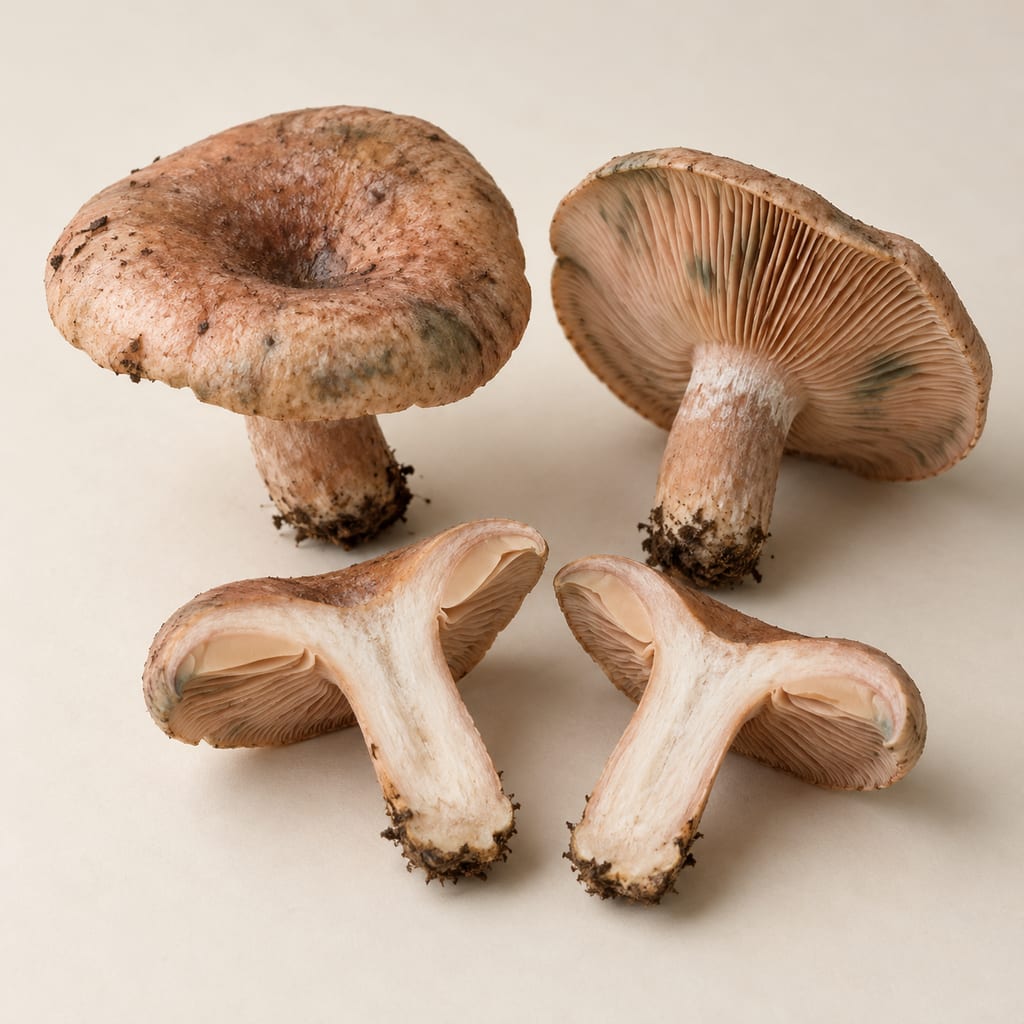
Hatsutake, Lactarius hatsudake, is a milkcap mushroom of forests in Yunnan Province, China, sold in the local markets of Pu'er Prefecture. It is an ectomycorrhizal wild fungus, known in English as the Asian saffron milkcap.
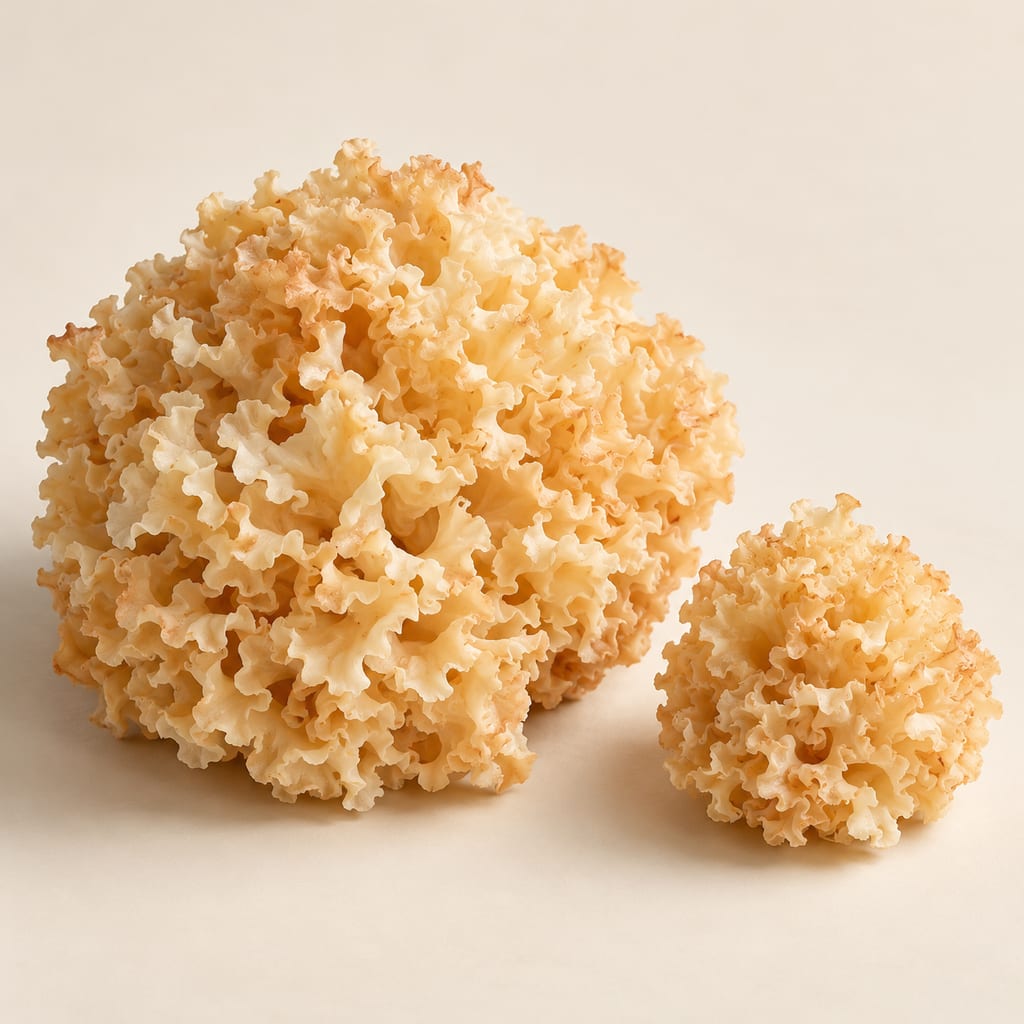
Cauliflower fungus, Sparassis crispa, is a conifer-associated fungus with frilled, pliable lobes. It is eaten fresh or dried, and is also grown commercially on larch sawdust in several countries.
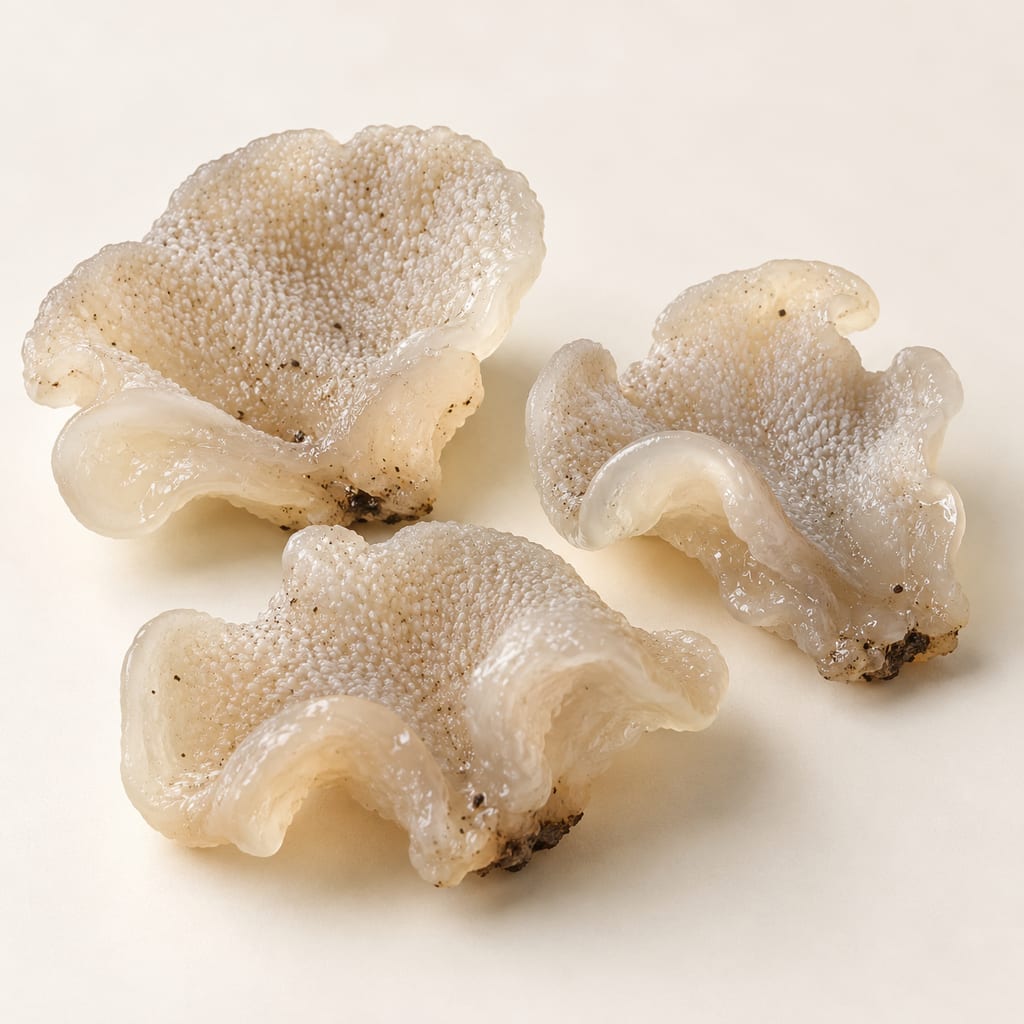
Pseudohydnum viridimontanum is a jelly-tooth fungus that grows on wood in the Atlantic Forest of Brazil. A 2024 ethnomycological record documents its use as food; no preparation, local name or safety assessment is established.
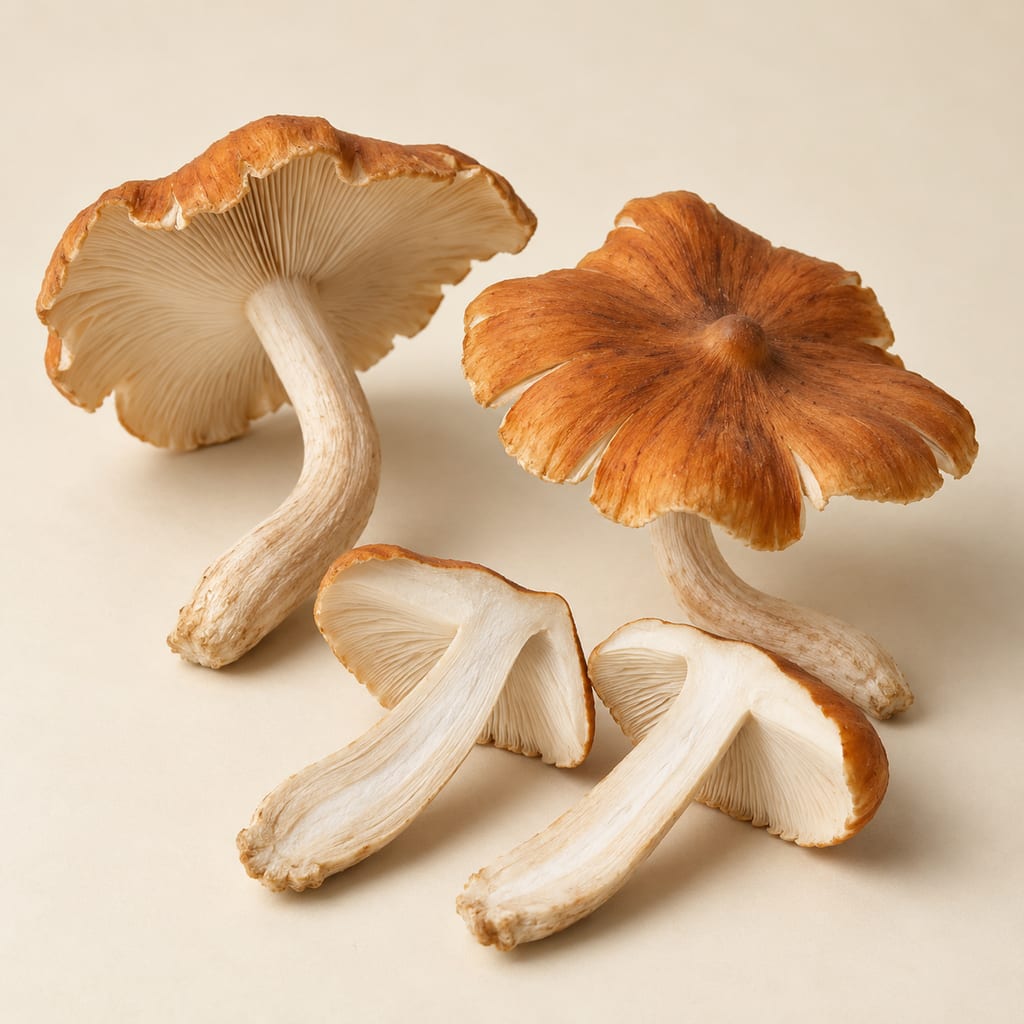
Termitomyces aurantiacus is a termite mushroom that grows with fungus-growing termites in savanna and garden habitats across West, Central and East Africa and parts of Asia. It is eaten as a wild food in soups and fried dishes.
Micropsalliota bambusicola, listed in the catalogue under the older name Agaricus bambusicola, is a saprotrophic fungus that informants in Tshopo province, DR Congo, eat in voucher-backed interviews. Its preparation is not recorded.
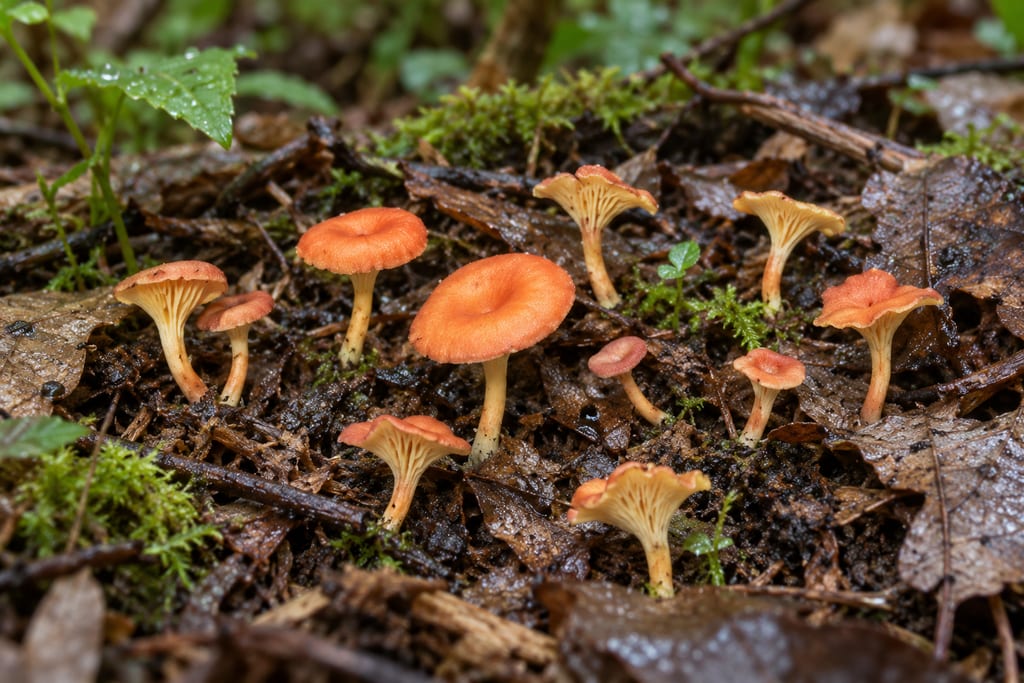
Cantharellus floridulus is an ectomycorrhizal rainforest fungus that informants in Tshopo province, DR Congo, eat in voucher-backed interviews. Its preparation is not recorded, and the source gives no toxicity statement.
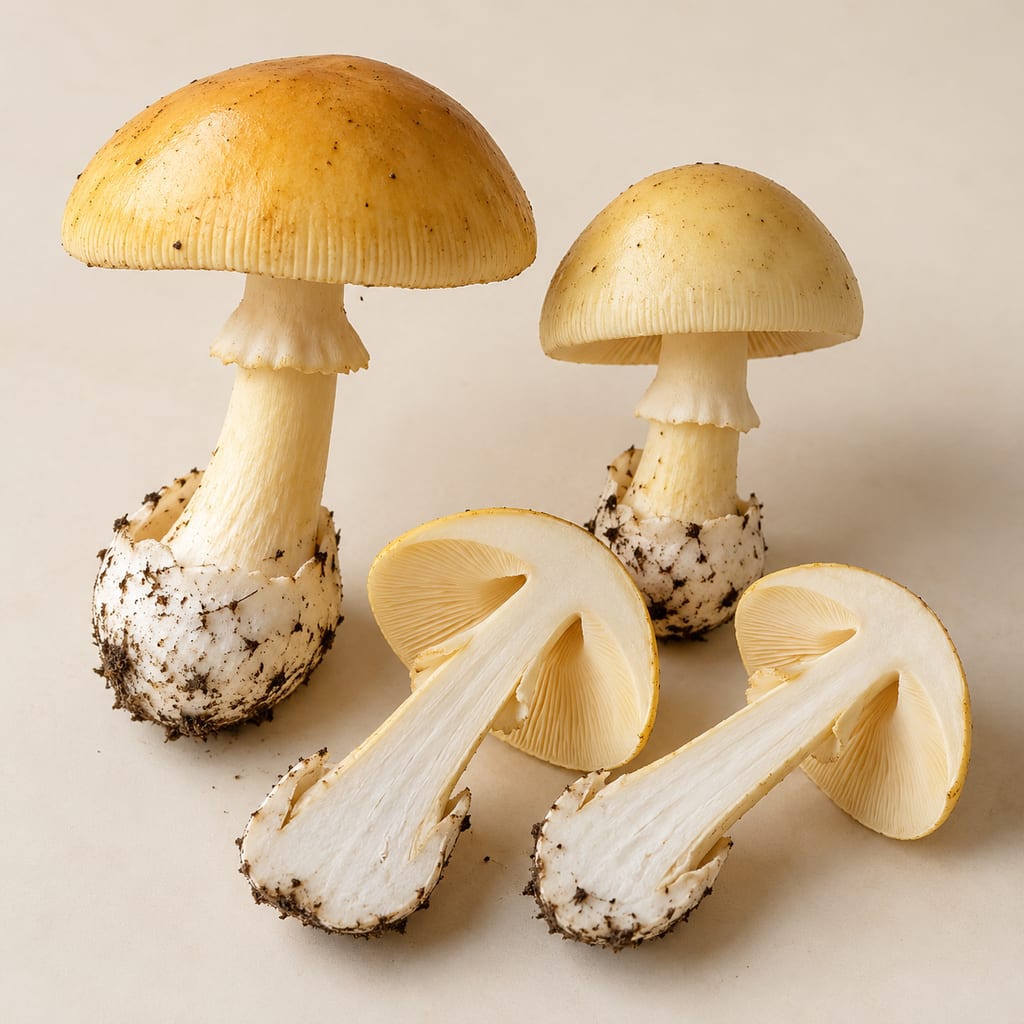
Hongo real is the Spanish name recorded in Mexico for Amanita laurae, a forest mushroom that the Wixaritari of Jalisco have a documented food-use record for. The name is a local label, not an identification.
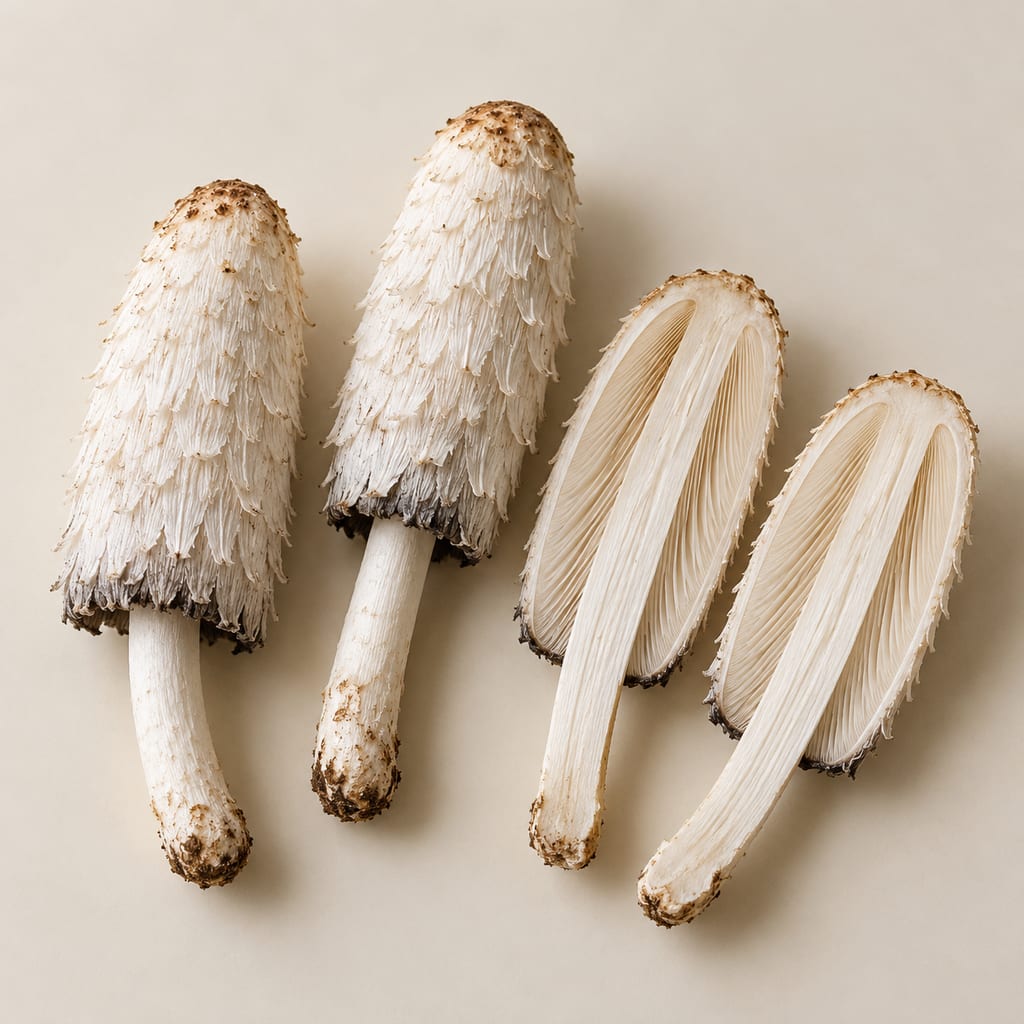
Shaggy mane is an inky cap with scaly white caps that is eaten only when young. Its gills blacken quickly after picking, and it has a poisonous green-gilled lookalike.
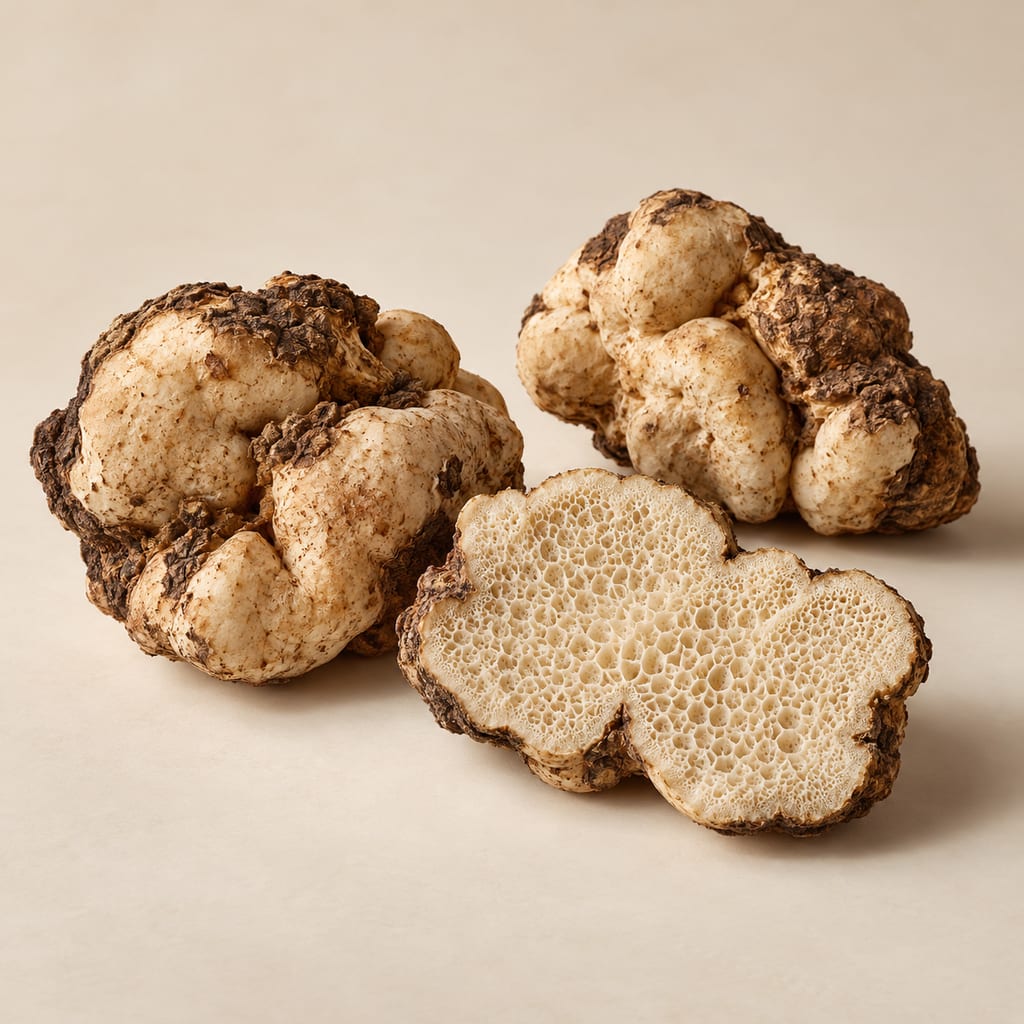
Native bread is the underground sclerotium of the Australian polypore Laccocephalum mylittae, eaten raw or roasted by Aboriginal people. Its identity and food use rest on historical and ethnographic accounts.
Russula sesemoindu is a wild ectomycorrhizal mushroom with a local name in Tshopo province, DR Congo. It is recorded as eaten by several informant groups, with no preparation or safety assessment.
Russula striatoviridis is a wild ectomycorrhizal mushroom recorded as locally eaten in Tshopo province, DR Congo. No preparation method or safety assessment is established for it.
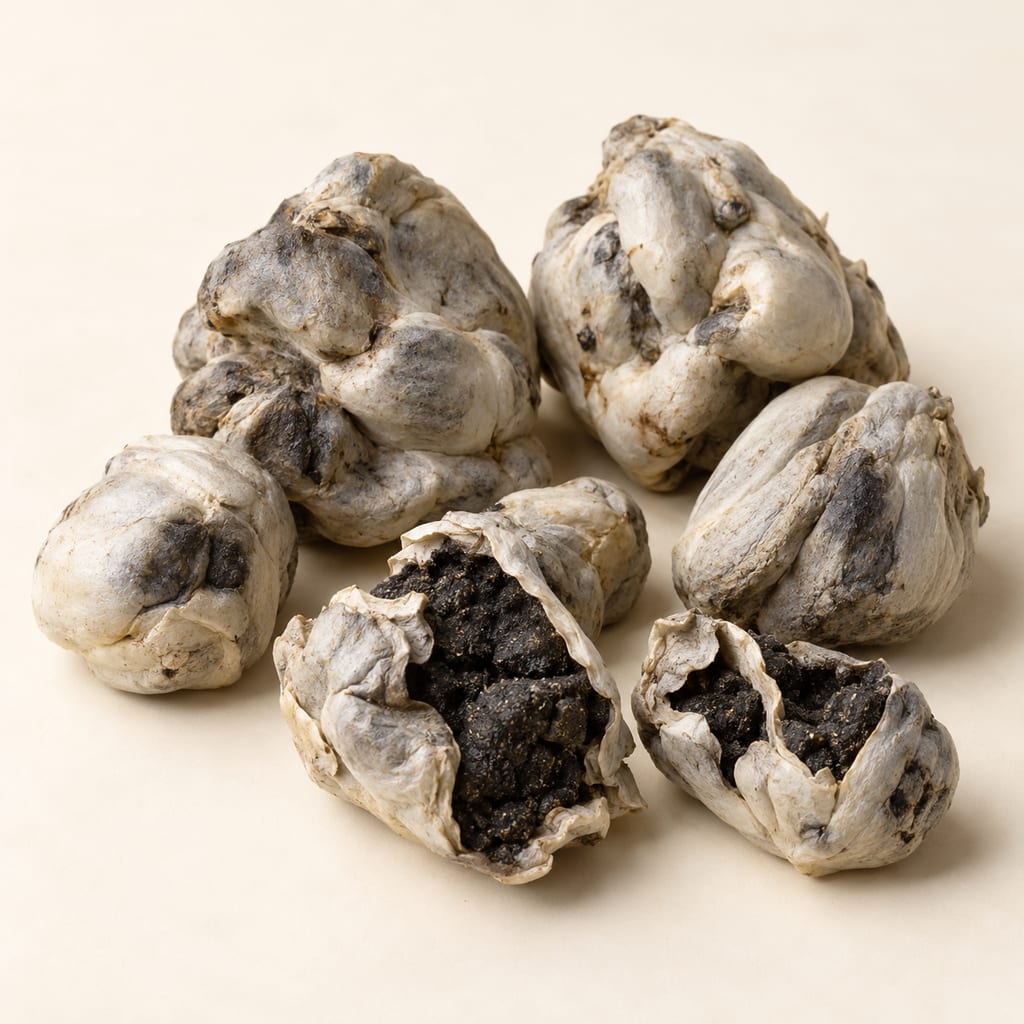
Tuber latisporum, the Chinese truffle, is a wild ectomycorrhizal truffle listed as edible in the 2026 Chinese species catalogue and sold in Chinese markets, but its culinary tradition and host are not yet documented.
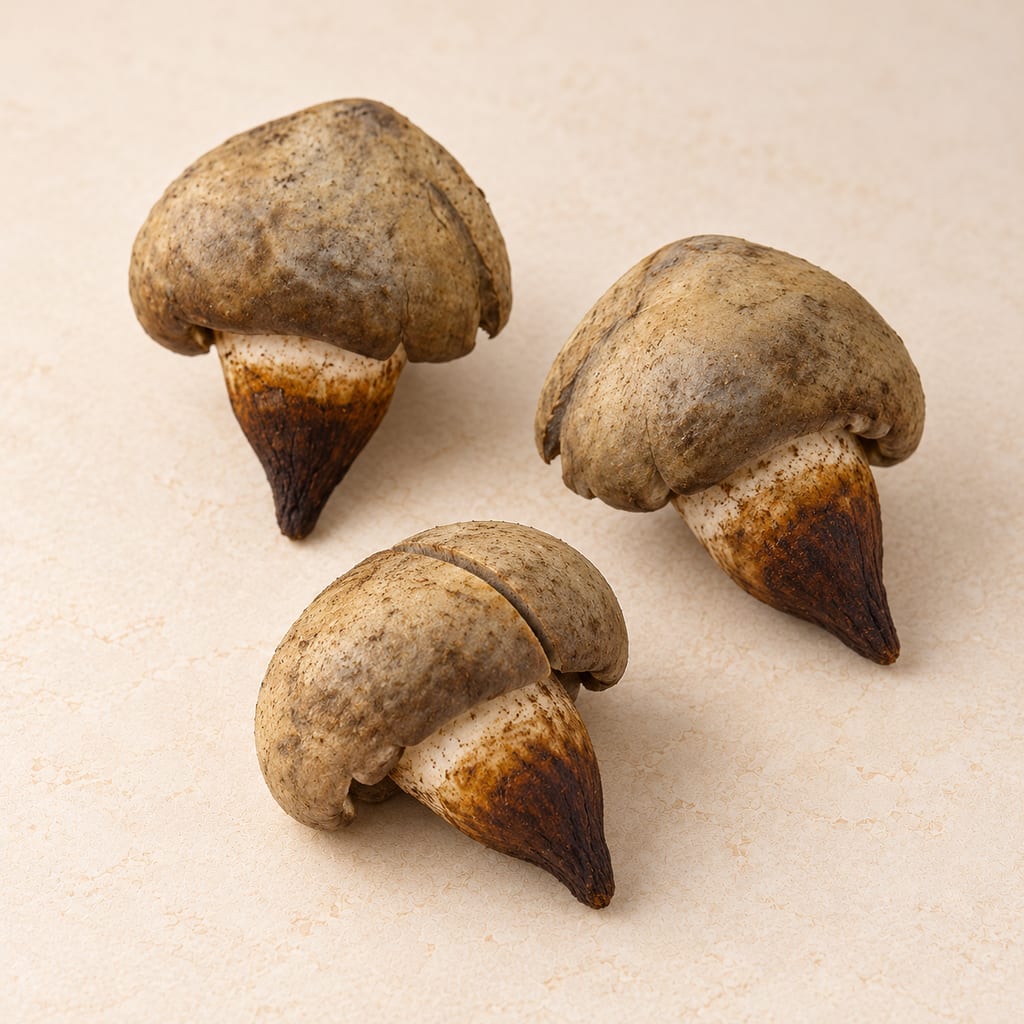
Termitomyces bulborhizus is a large agaric of the termite mushroom genus, described in 2004 from Sichuan and listed as edible in the 2026 Chinese species catalogue; its culinary use is not yet documented.
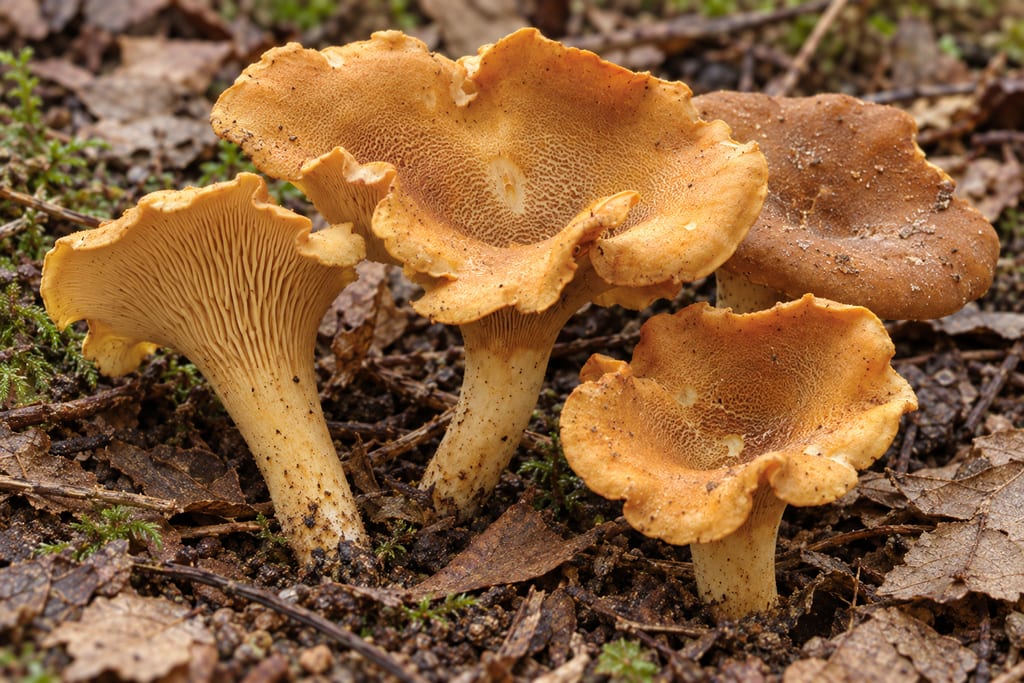
This page records a Tshopo food-use report under the epitypified name Cantharellus densifolius; it is not an identification or safety assessment of a wild specimen.
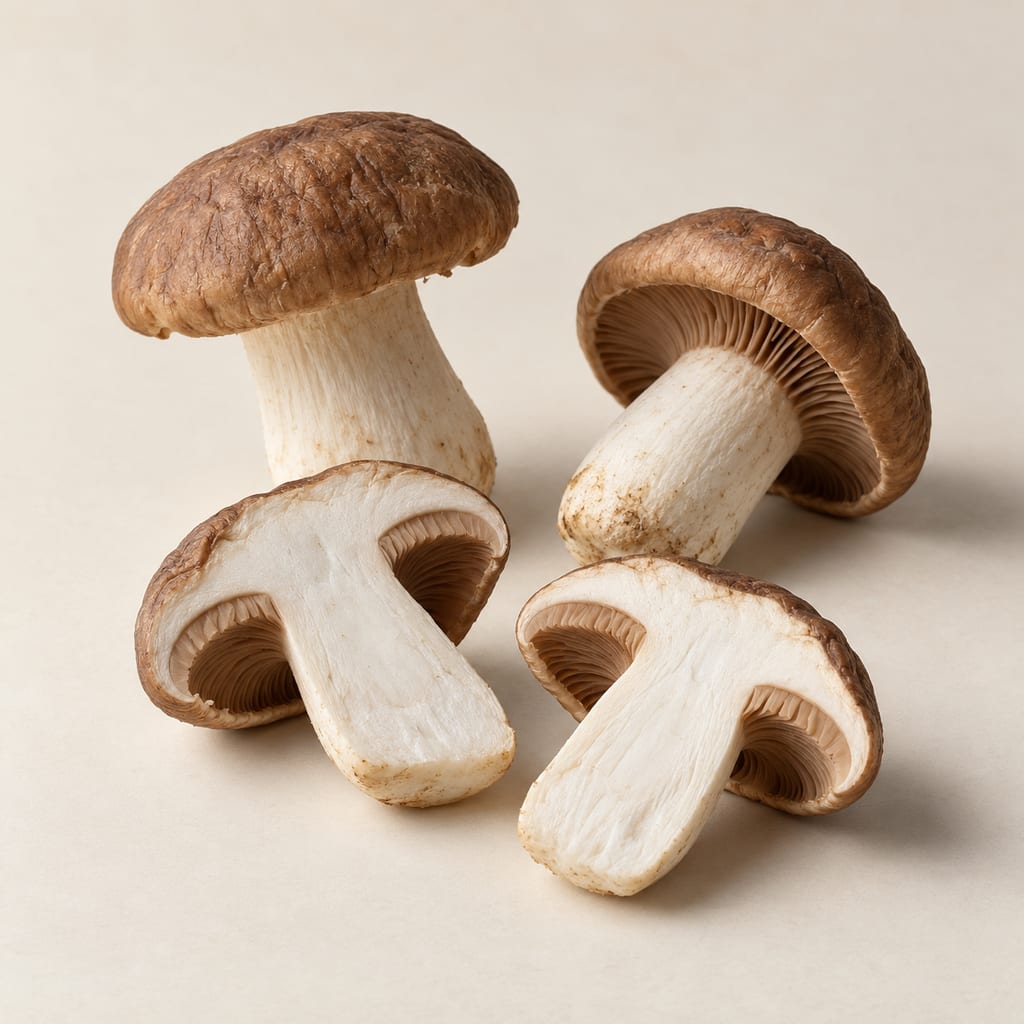
Pioppino, Cyclocybe cylindracea, is a wood-rotting mushroom of poplars and other broadleaf trees, cultivated and gathered in Mediterranean Europe and used fresh or rehydrated in Southern European and Chinese cooking.
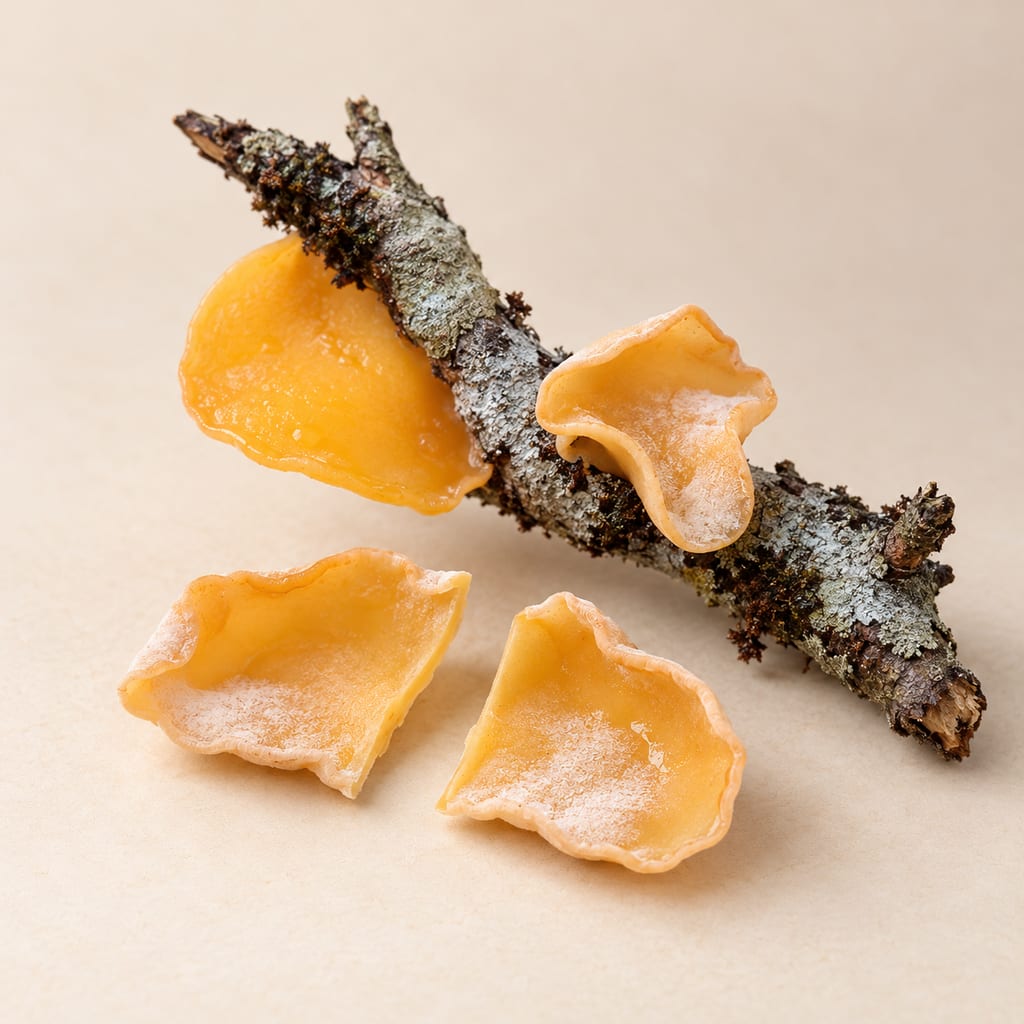
Aleurodiscus vitellinus, the yellow disc fungus, is a wood-growing fungus of the Nothofagus forests of Patagonia recorded as a regional food; its safety and local species identity are not established.
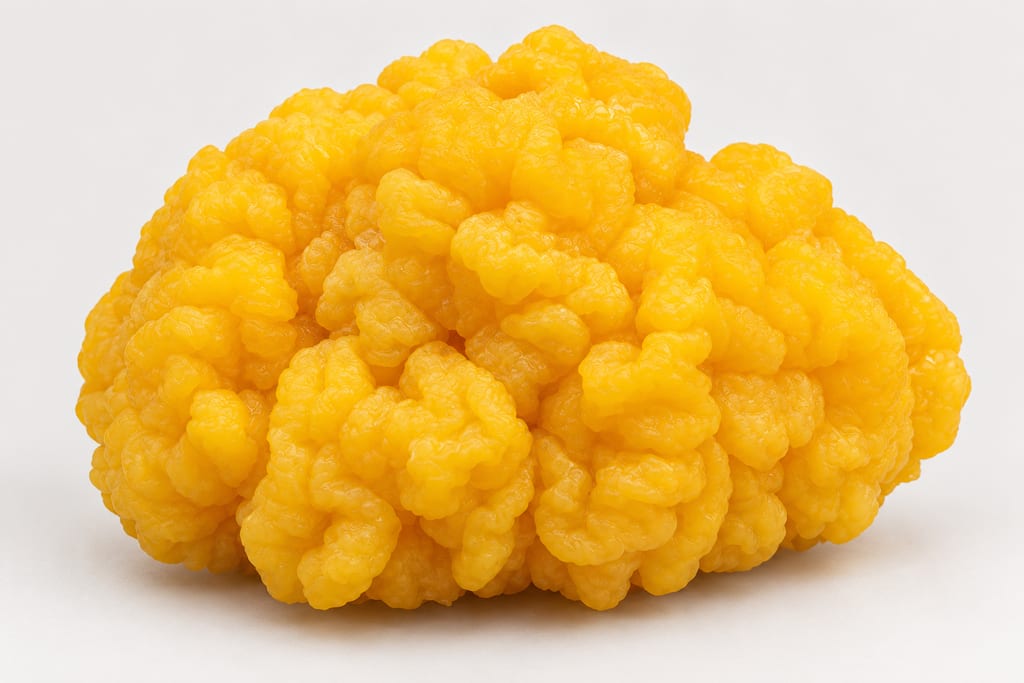
Cultivated golden ear, Naematelia sinensis (jin'er), is a gelatinous yellow-orange fungus of southwestern China, eaten and used as a medicinal fungus and grown on Stereum wood-fungus partners.
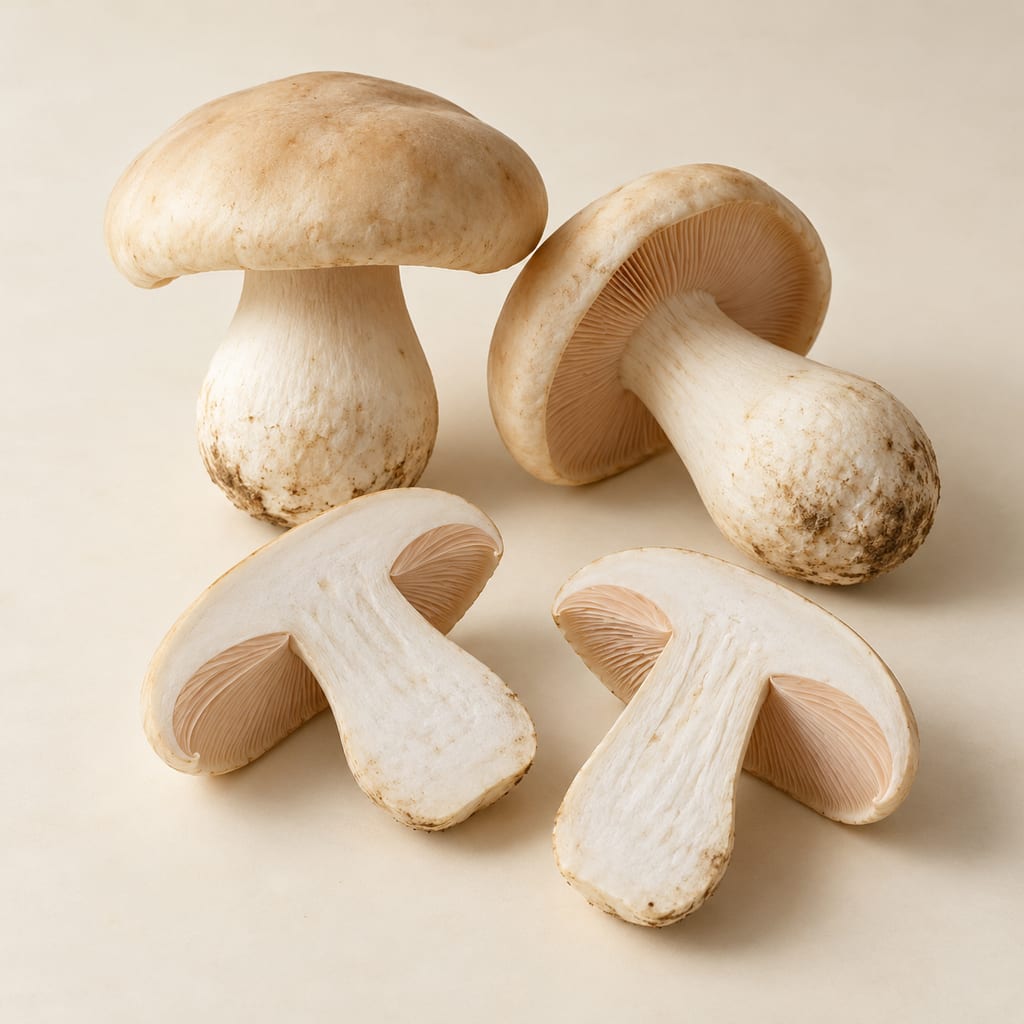
Macrocybe lobayensis is a large, floury-tasting wild mushroom of West African savanna and crop land, described by the EFTA species account as very common and highly valued there.
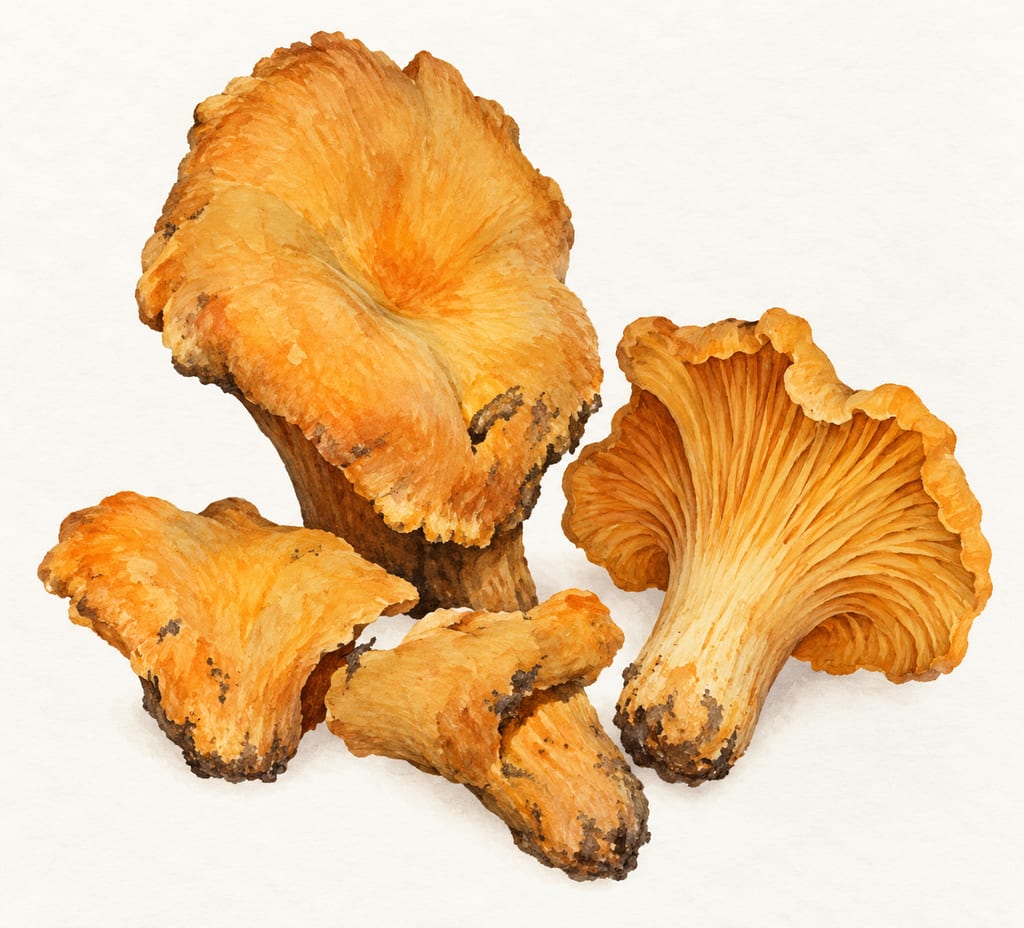
Cantharellus miomboensis is a large yellow chanterelle of African miombo woodland. Its edibility is reported but not established by the sources read.
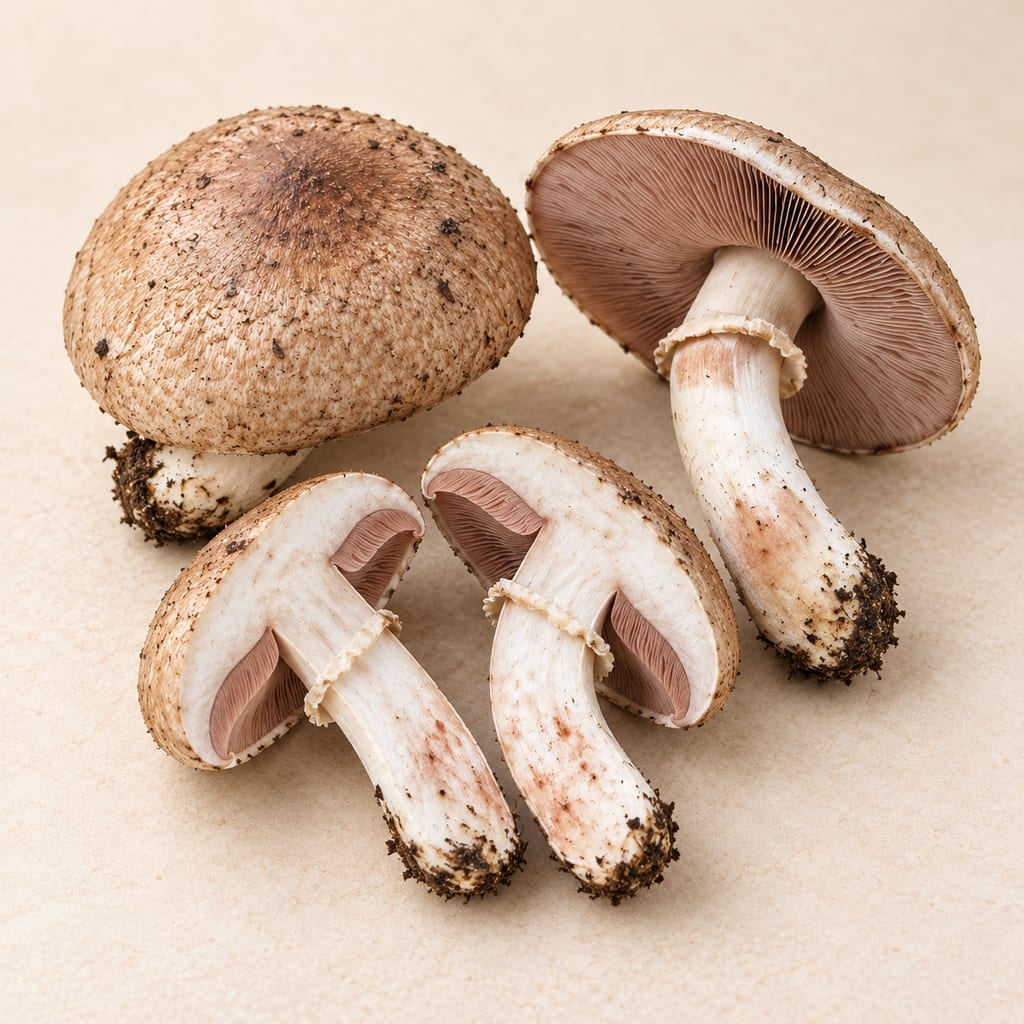
Agaricus sylvaticus, the blushing wood mushroom, is a scaly woodland mushroom of conifer and mixed litter. It is regarded as edible when cooked, and its flesh reddens when cut, which separates it from yellow-staining toxic species.
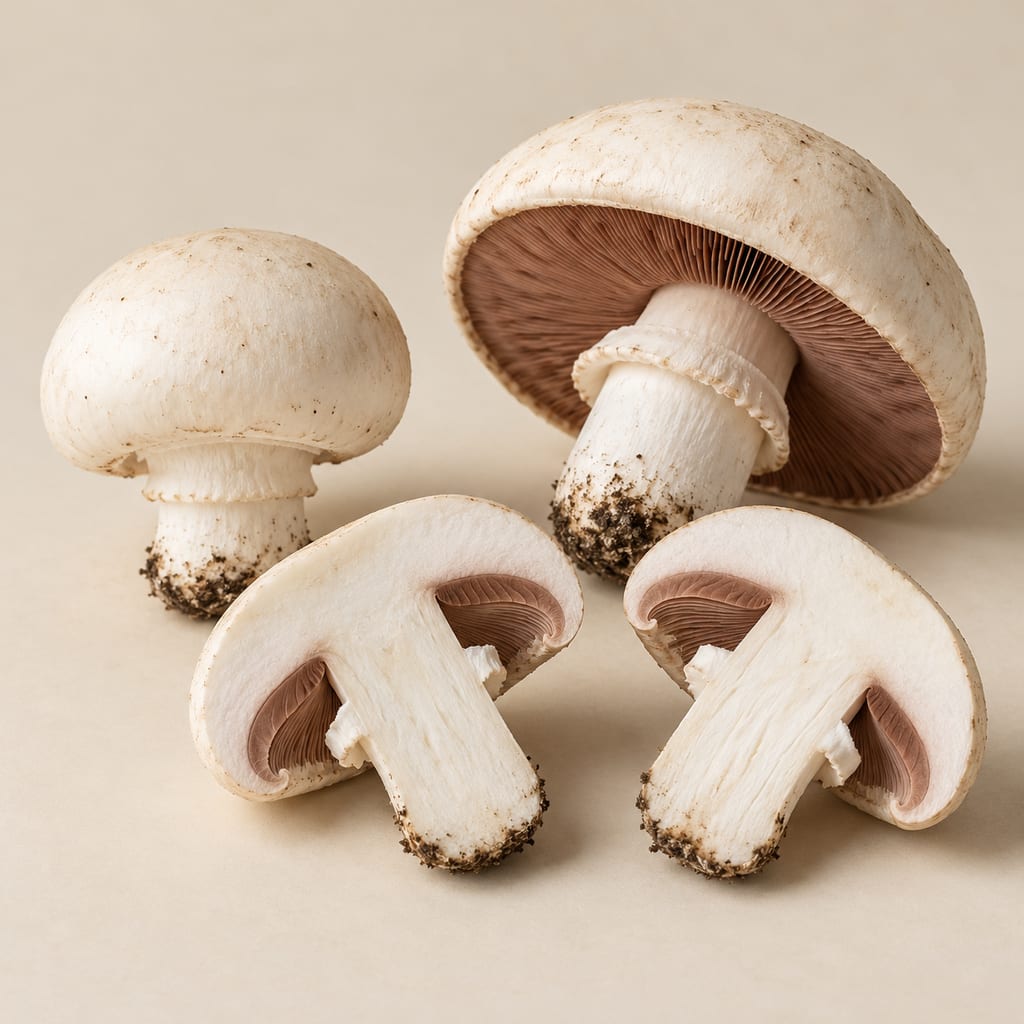
Agaricus arvensis, the horse mushroom, is a large white field mushroom of manured pasture. European sources describe it as a prized edible, and its toxic yellow-staining lookalike must be ruled out first.
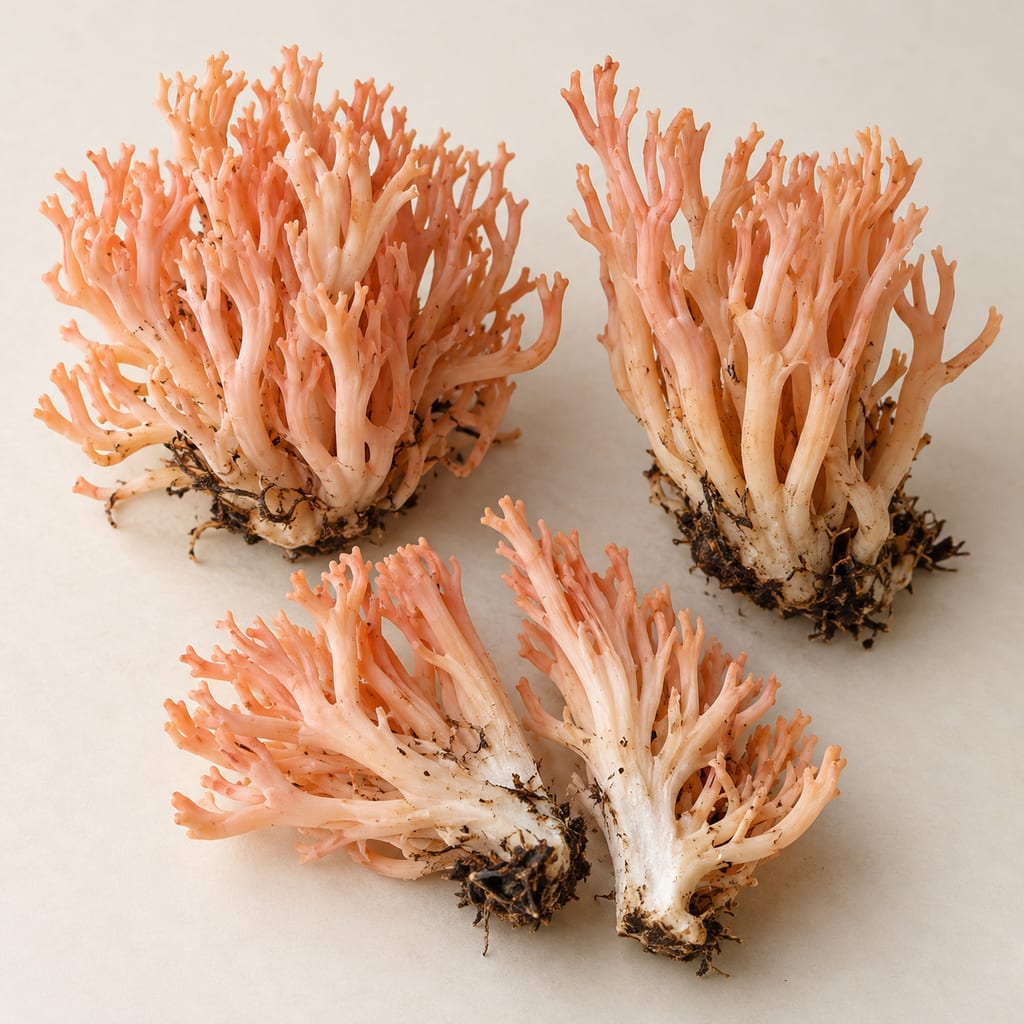
Clavulina kunmudlutsa is a coral fungus of white-sand forest in the Pakaraima Mountains of Guyana. The Patamona people, who give it the local name kunmudlutse, eat it; its preparation is not recorded in the sources read.
Scleroderma yunnanense is an earthball from Yunnan and parts of India that is eaten locally, but the genus contains poisonous species, and look-alike mix-ups have caused poisoning.
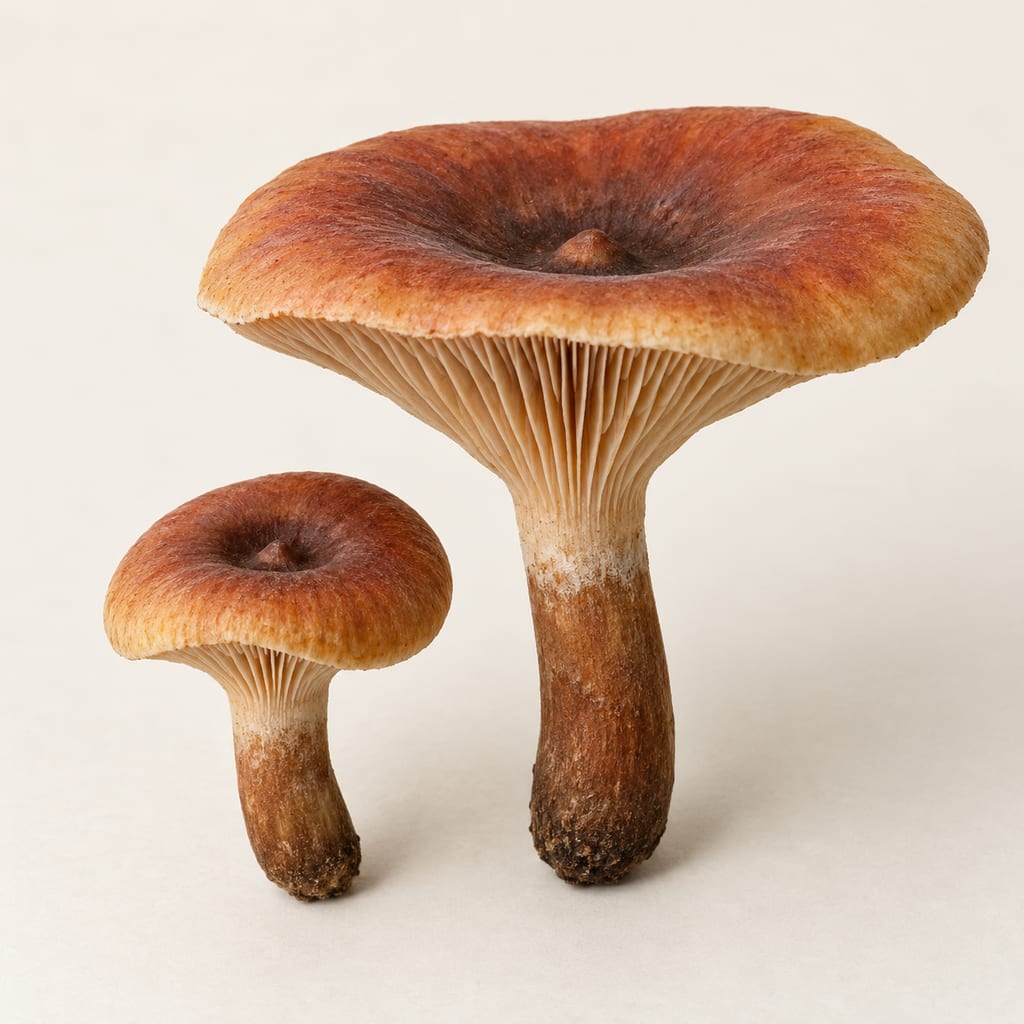
Lactarius rubrobrunneus is a taxonomically described Southeast Asian milk cap; food use is not established by a culinary source in this record.
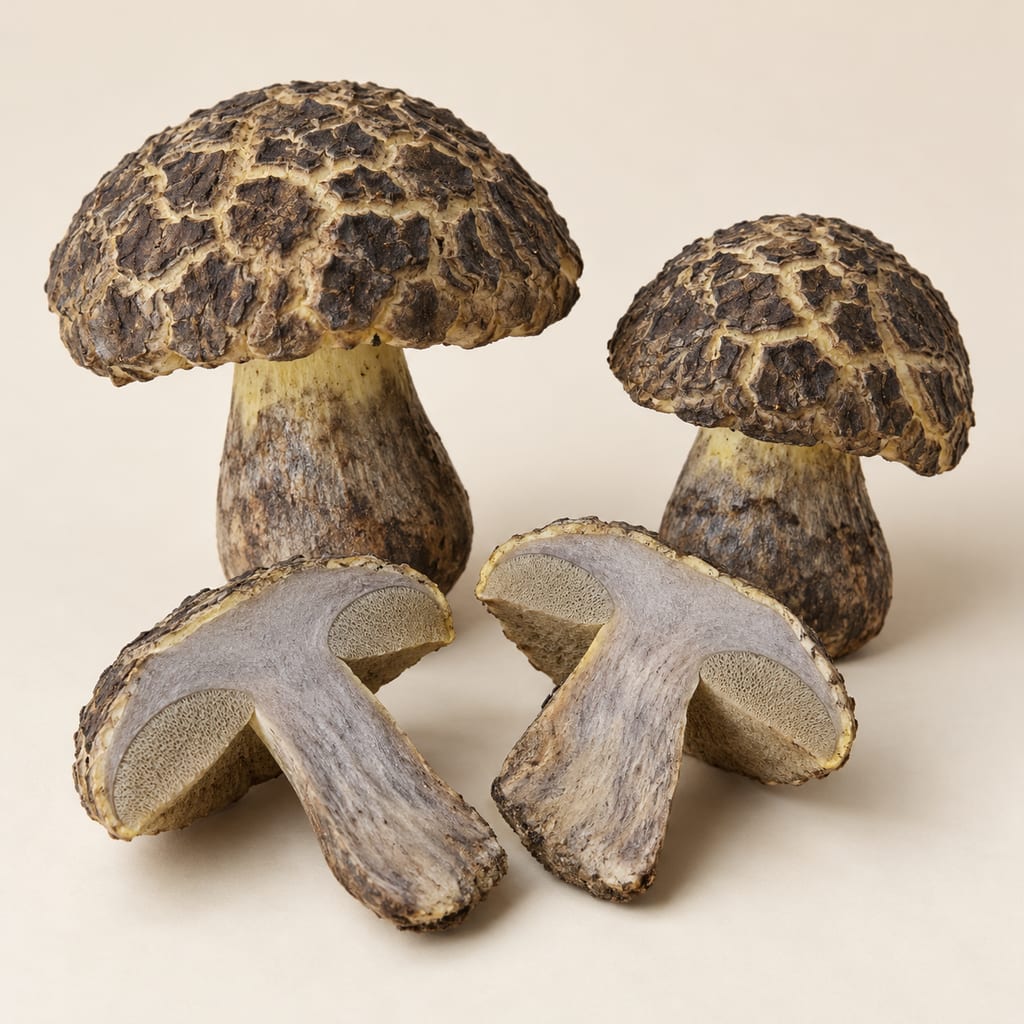
Afroboletus luteolus is a bolete of tropical Africa, one of seven species in its genus; the genus is reported to contain two food species, and this one's local food record remains to be confirmed.

Pleurotus cystidiosus is the abalone mushroom, a cultivated oyster-type fungus with dark brown caps that grows more slowly and is more demanding than other Pleurotus species.

Auricularia tremellosa is a wood ear fungus of the genus that supplies most dried wood ear sold in China; its own food record is thin, and the culinary practice described here comes from the closely related wood ear species.
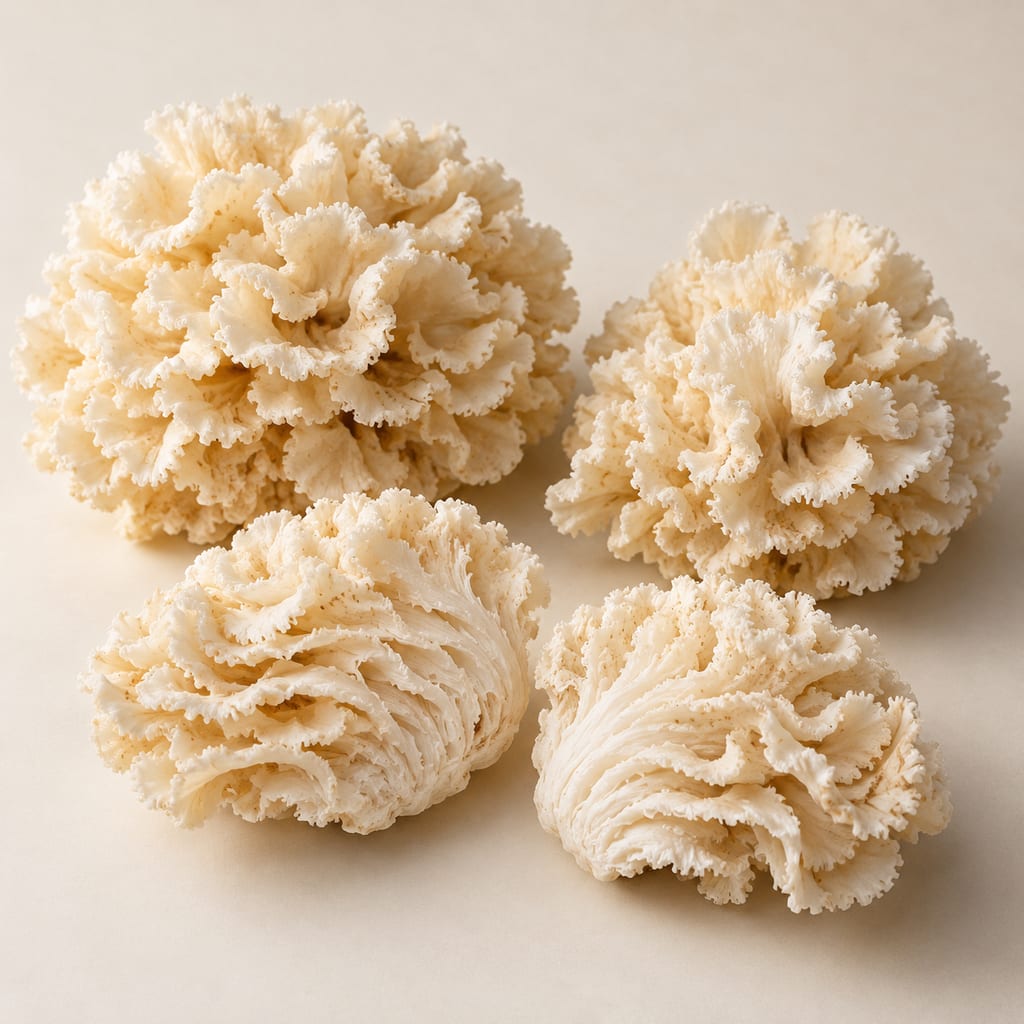
Irpex rosettiformis is a wood-decaying polypore of the Americas, reported by a 2025 study as edible and cultivated from wild Brazilian strains, with no traditional culinary record yet found.
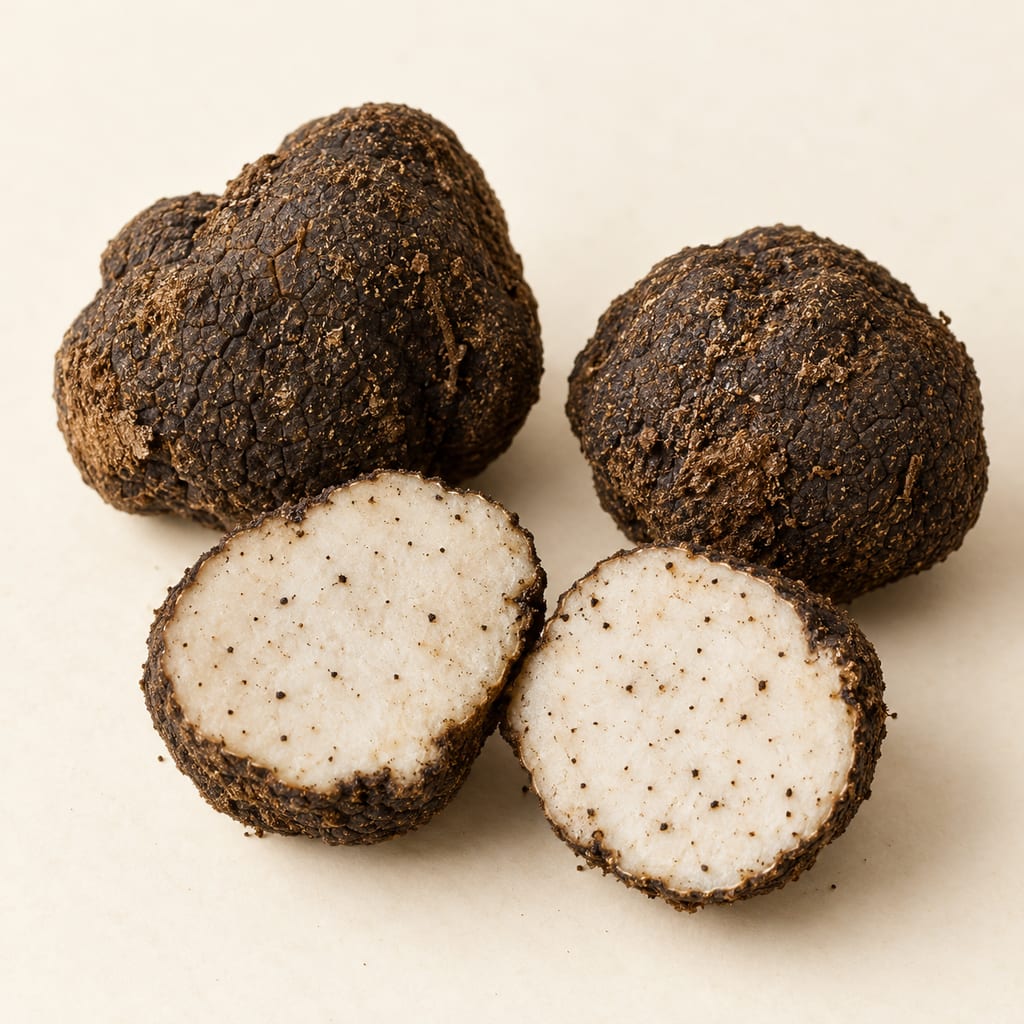
Picoa lefebvrei is a small hypogeous desert fungus of North Africa and the Middle East, called the bird truffle, whose fruiting bodies are described as edible and eaten by birds, with no food record in Africa confirmed yet.
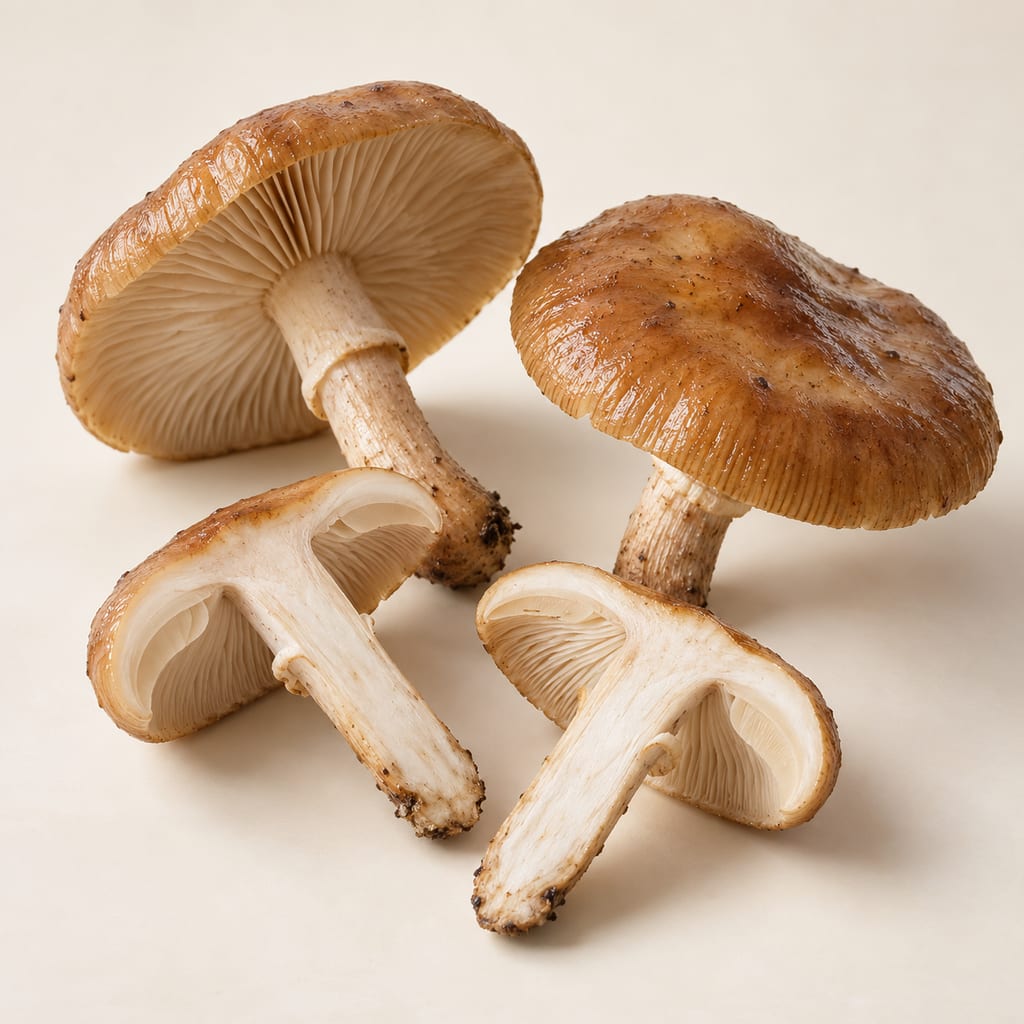
Harore, Armillaria novae-zelandiae, is a New Zealand honey fungus that grows in clusters on wood and is gathered as a traditional food by Tuhoe, with a cooking rule and close look-alikes to know.
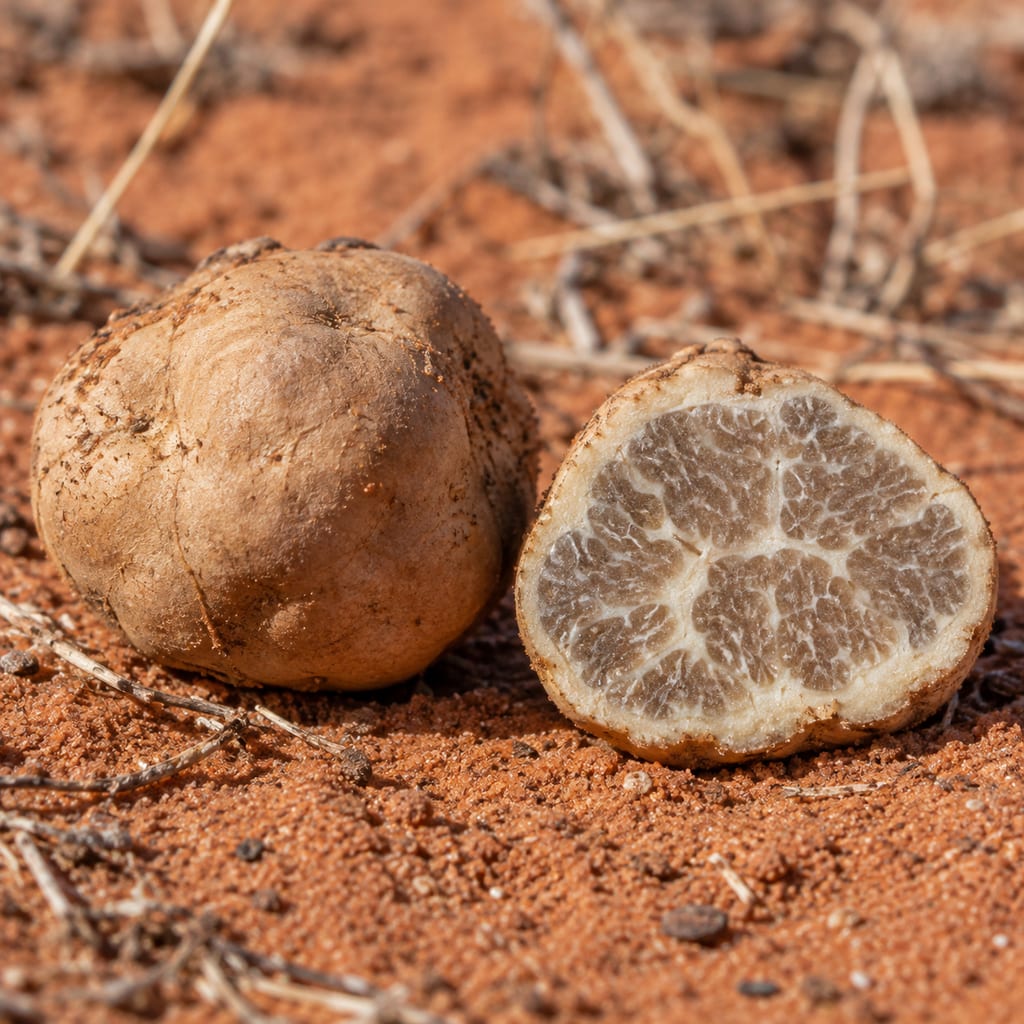
Eremiomyces echinulatus is a subterranean desert truffle of the Kalahari, recorded as food in regional ethnomycology and easily confused with the better-known Kalahari truffle, Kalaharituber pfeilii.
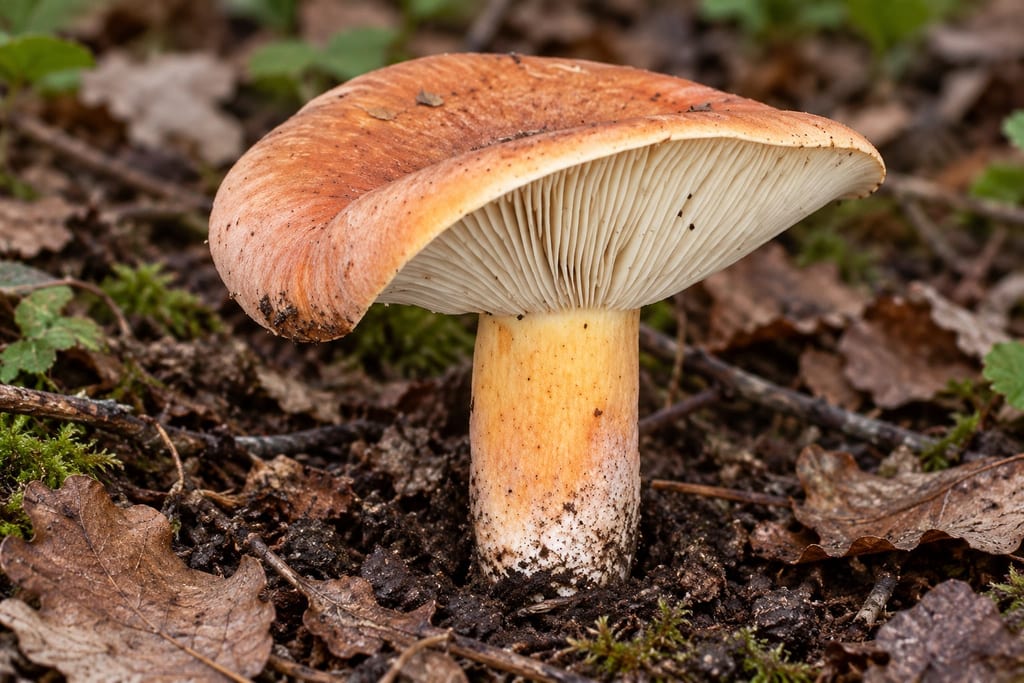
Lactifluus rubroviolascens is an orange-brown African milkcap of miombo and savanna woodland, listed among edible fungi, with its preparation and safety still needing validation.

Akahatsu, Lactarius akahatsu, is a wild milkcap of East Asian pine and mixed forests that is sold in Yunnan markets, with its edibility and identity still needing species-level review.
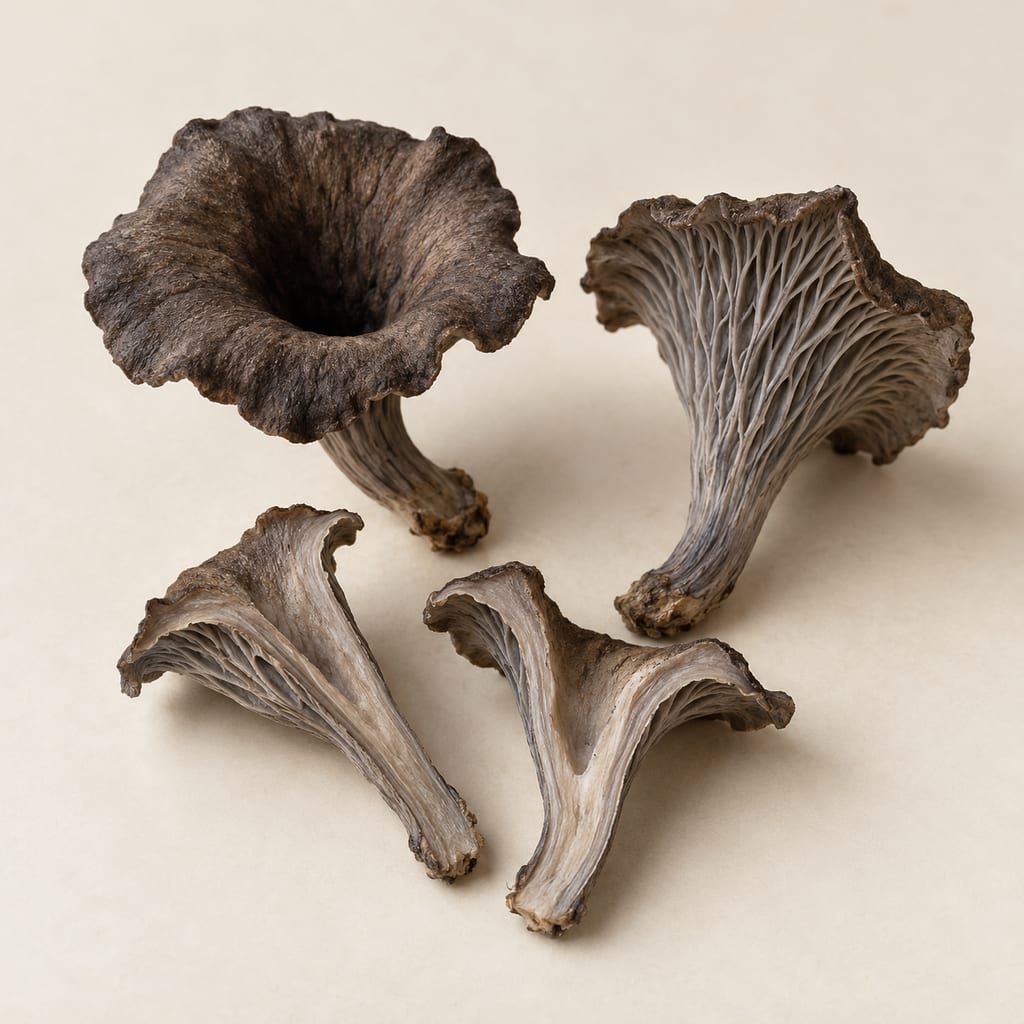
Ashen chanterelle, Craterellus cinereus, is a dark, funnel-shaped wild mushroom of European woodland, valued as a mild flavouring and easily confused with black trumpets.
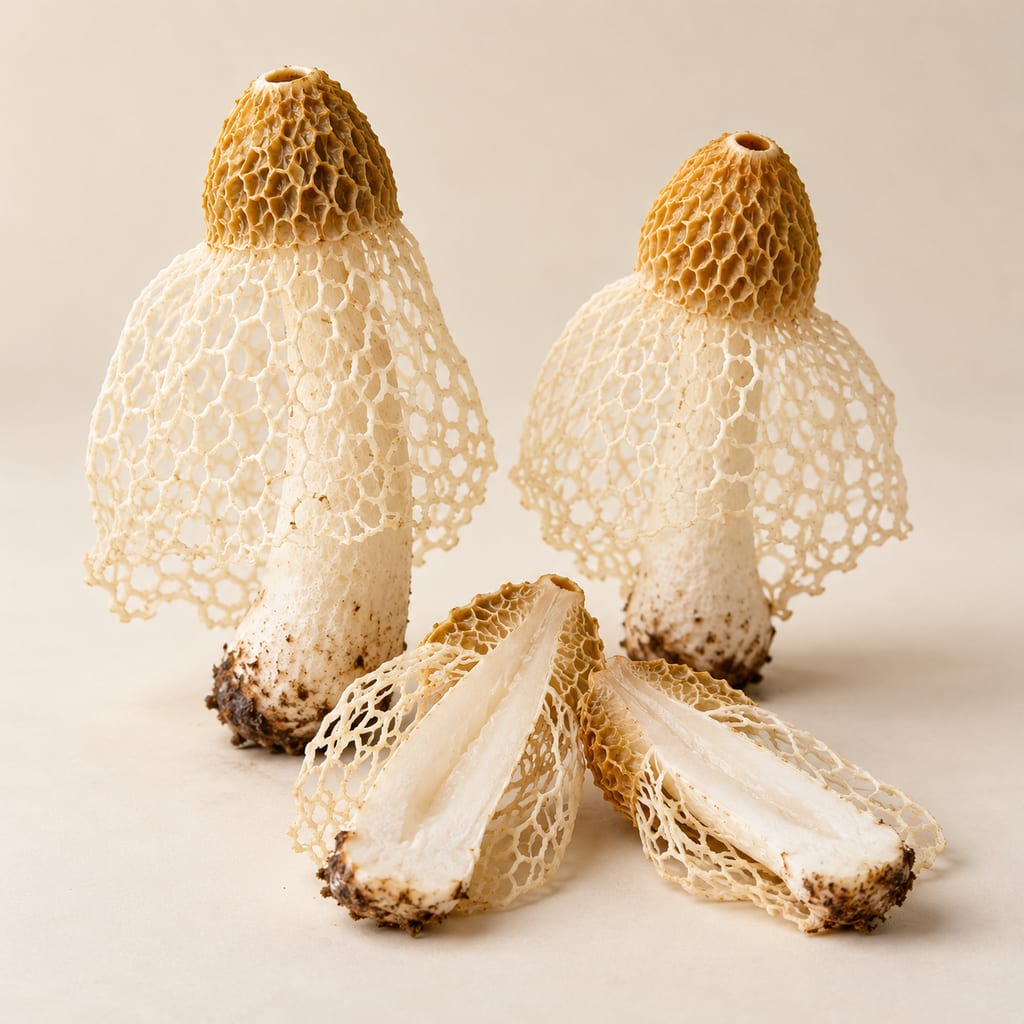
Phallus cremeo-ochraceus is a stinkhorn traded as bamboo fungus in China, where dried products labelled Phallus indusiatus often belong to several species; the species-level facts here are not yet settled.
Trogia infundibuliformis is a thin, translucent forest mushroom of Central Africa recorded as eaten in Tshopo, DR Congo; it is easily confused with the poisonous Trogia venenata, so identification matters.
The Malagasy brittlegill, catalogued as Russula edulis, is an ectomycorrhizal mushroom of Madagascar's central plateau that is locally eaten and sold; Russula is the genus most eaten in Madagascar.
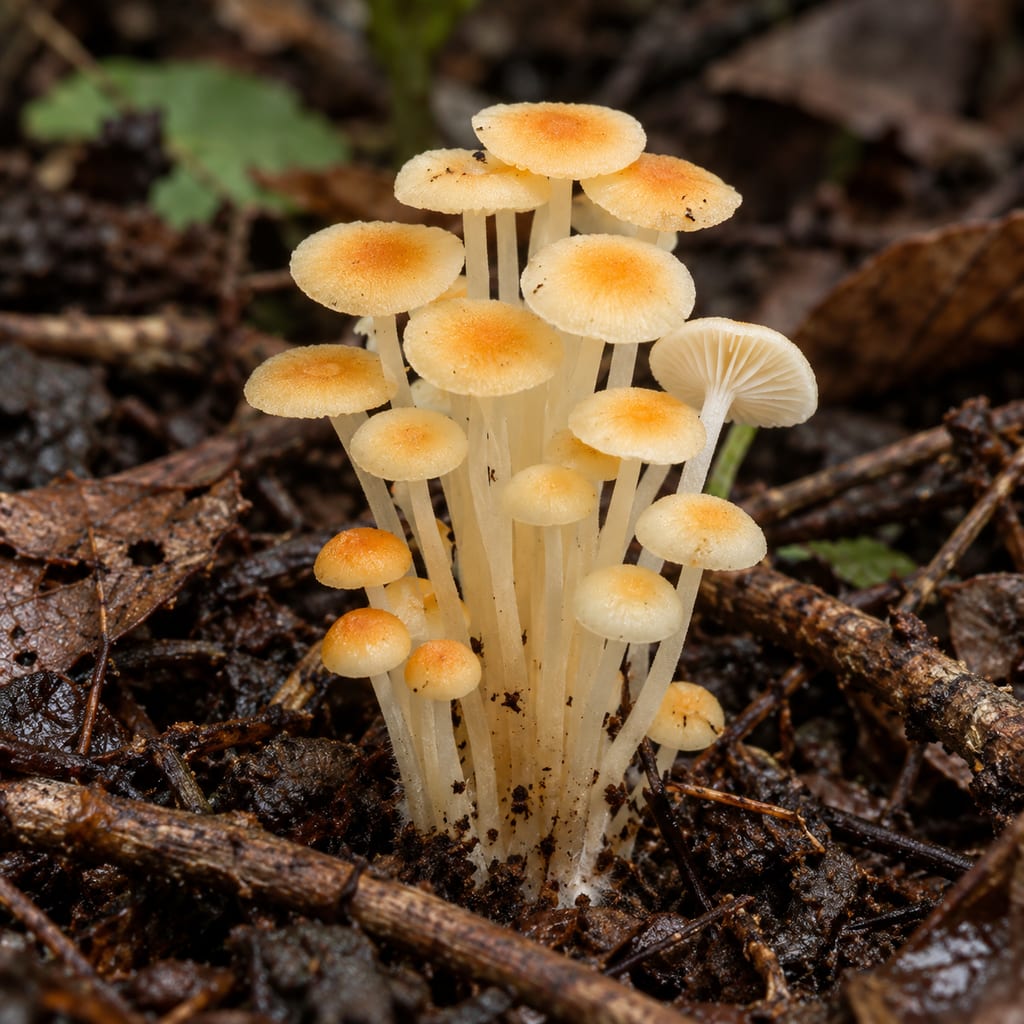
Marasmius arborescens is a forest saprotroph recorded as eaten by people in Tshopo province, DR Congo, in voucher-backed interviews; the species-specific preparation and safety are not established.
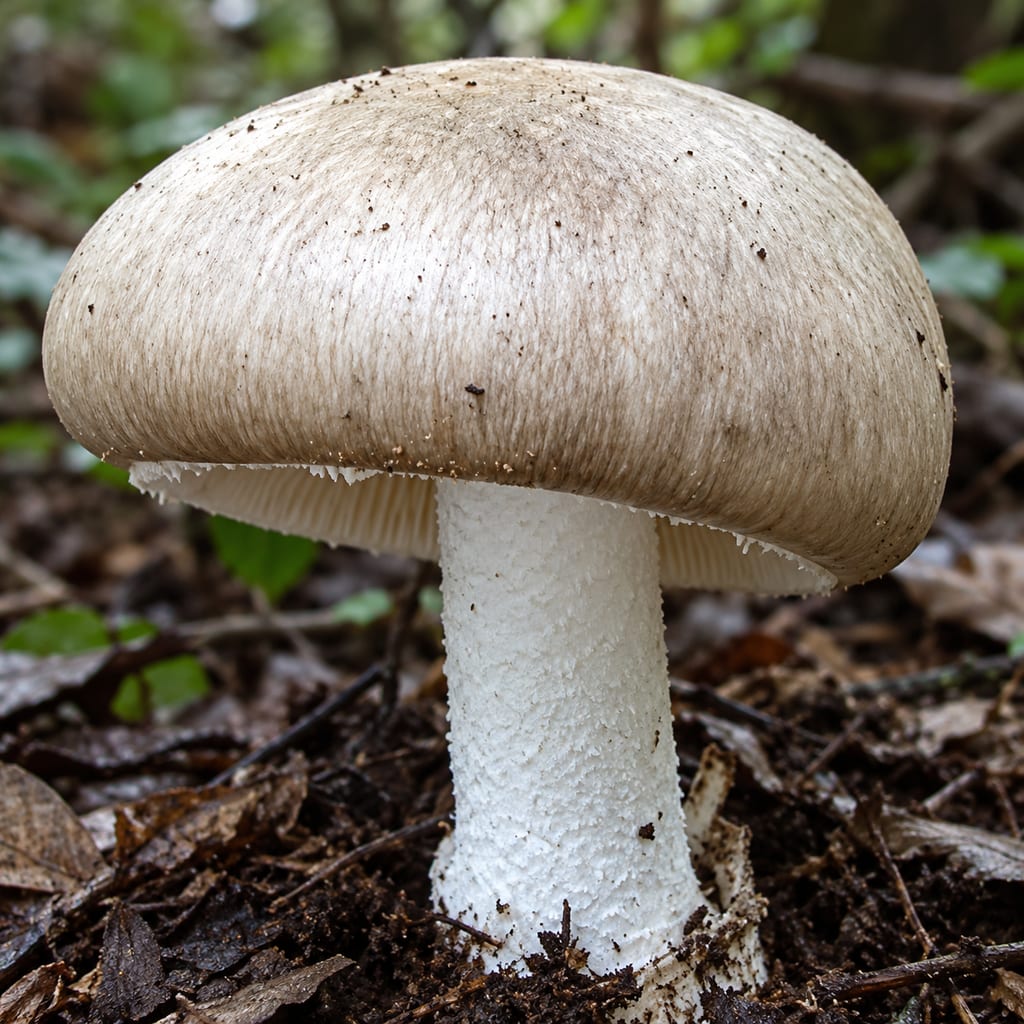
Caojizong, Amanita caojizong, is a wild mushroom traded in Pu'er markets in Yunnan, China, recorded as edible; it belongs to a genus with deadly species and is sold beside a poisonous look-alike.
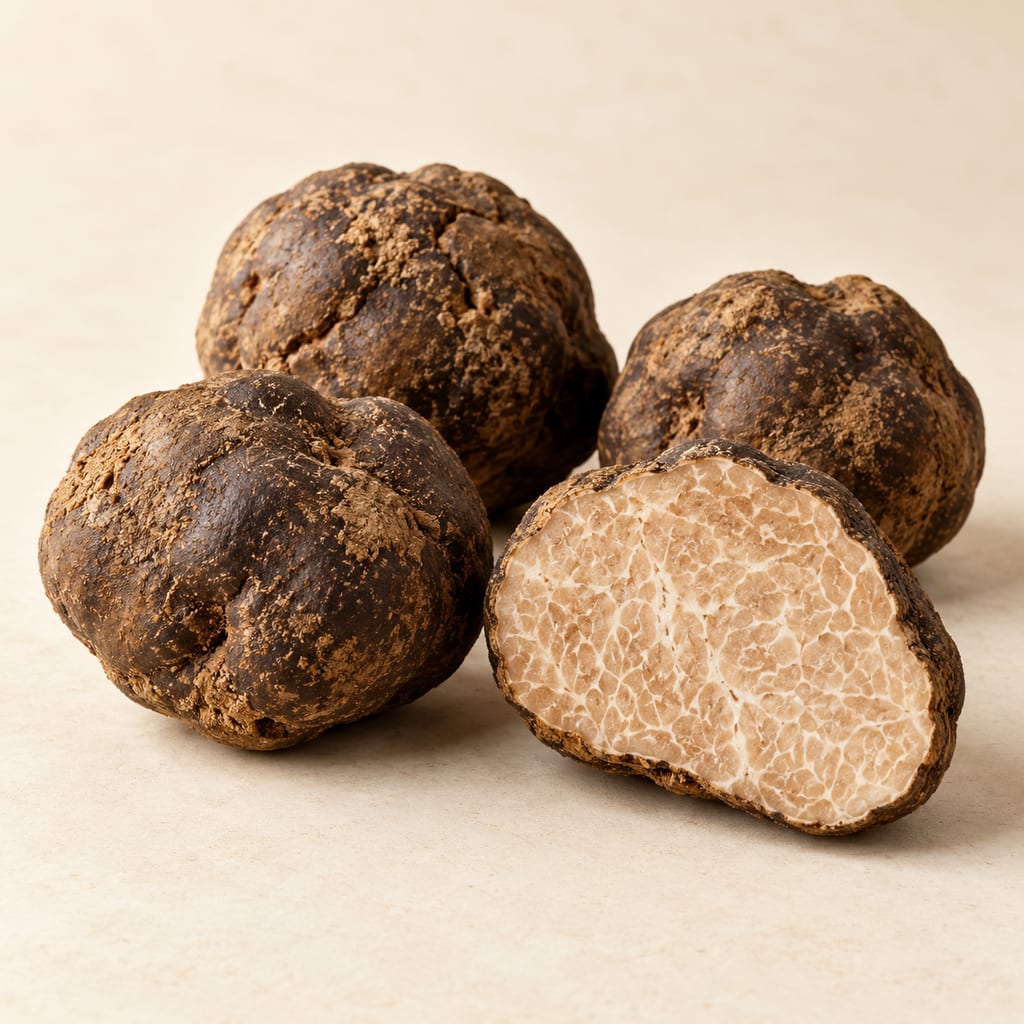
The brown desert truffle, Terfezia boudieri, is an underground fungus of arid soils around the eastern Mediterranean and North Africa, gathered and sold in Turkey and eaten fried with eggs.
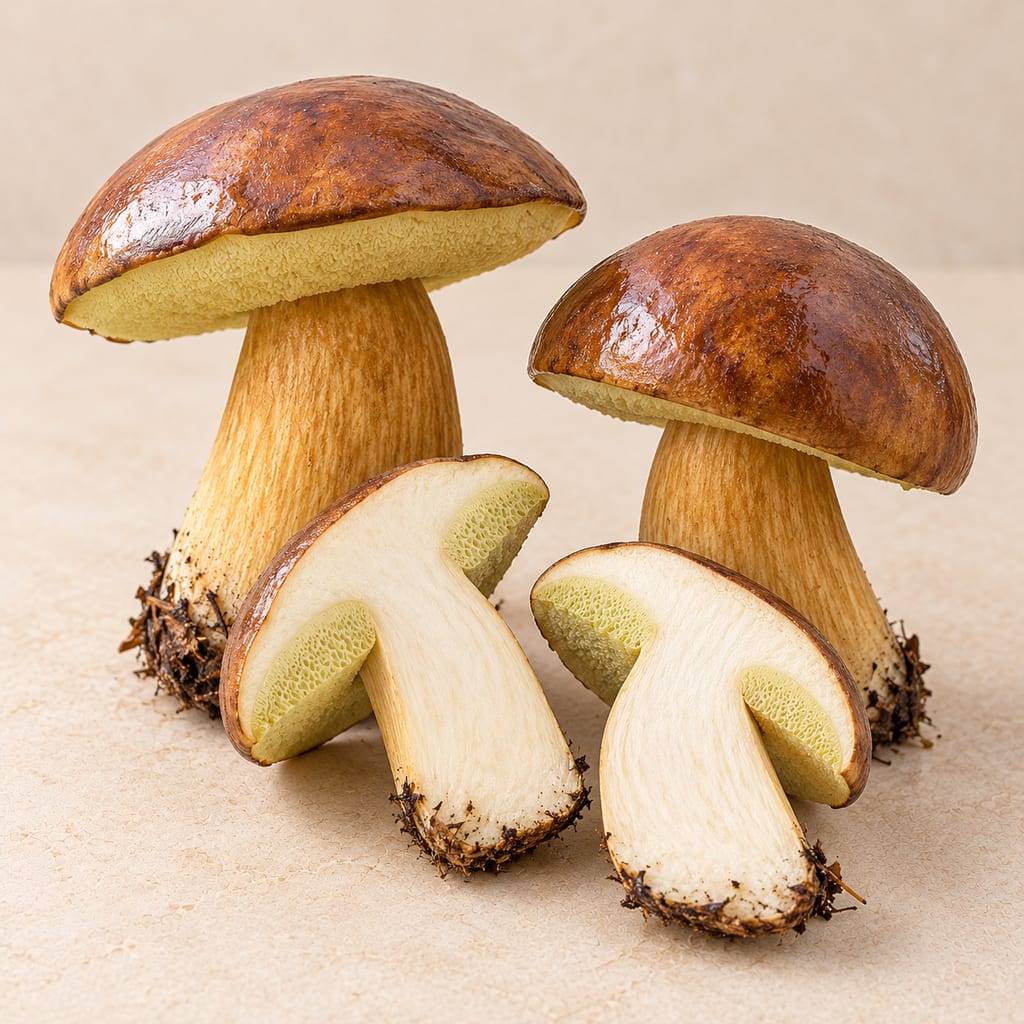
The bay bolete, Imleria badia, is a pored mushroom of Eurasian and North American conifer and mixed woods, valued for cooking and drying; it should always be cooked and identified with care.
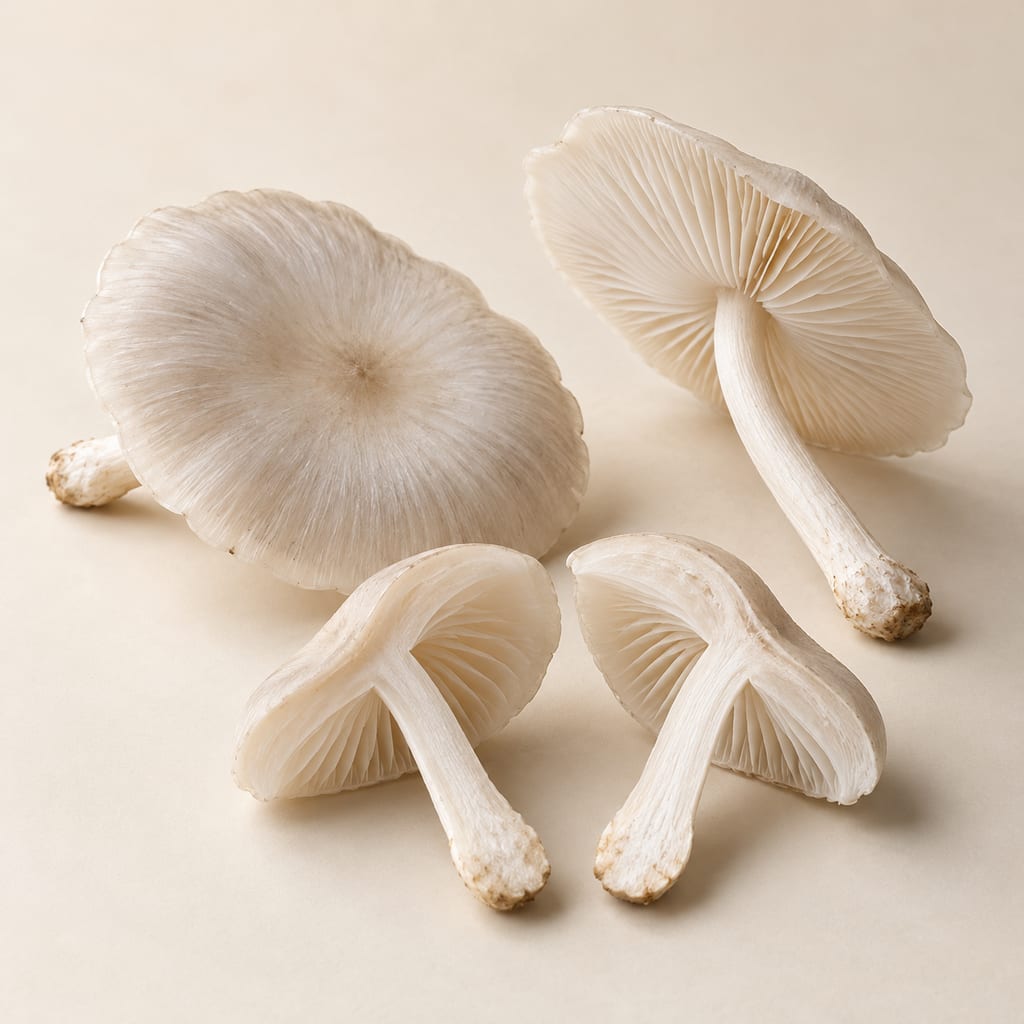
Oudemansiella cubensis is a wood-decaying mushroom recorded as a food in Brazil, where the name is also applied to Oudemansiella canarii; its edibility has no standardized safety assessment.
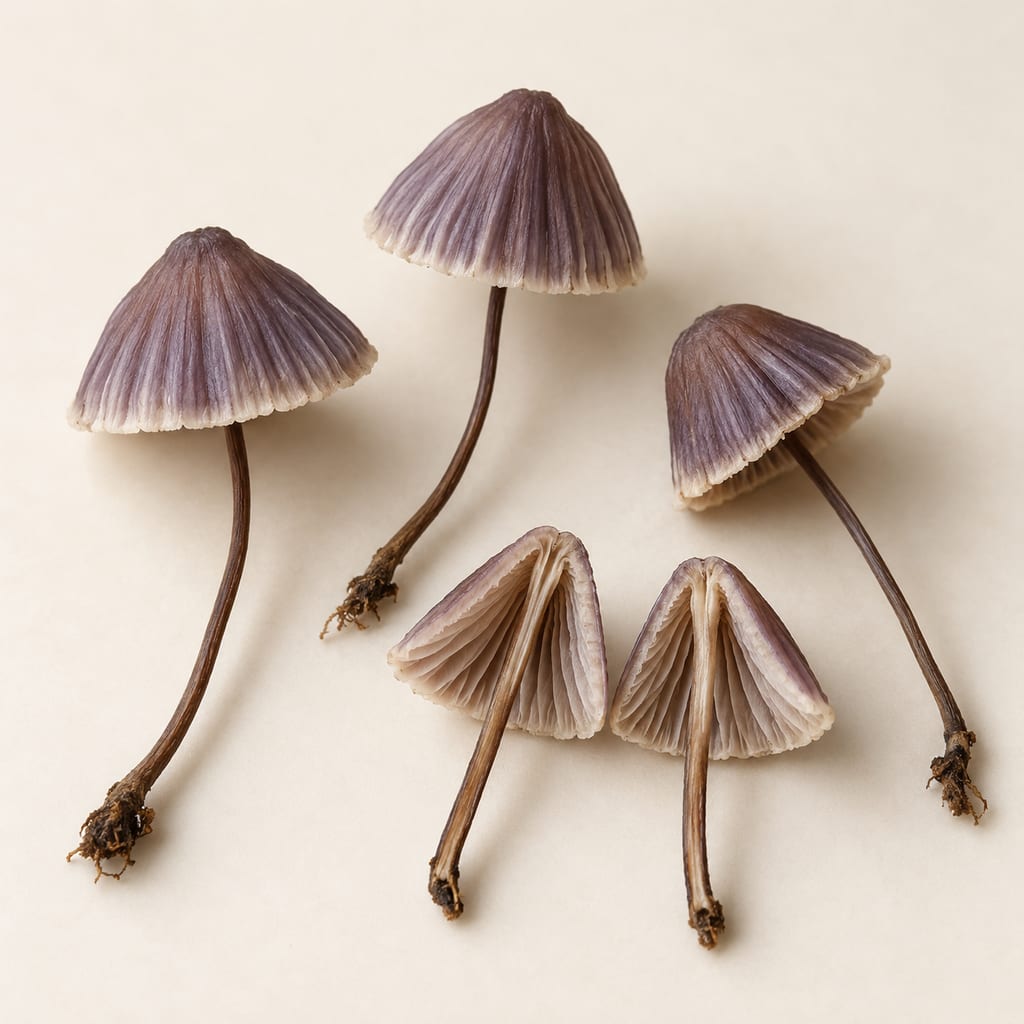
Marasmius bekolacongoli is a wild mushroom of Central African rainforest that field surveys in Cameroon, Gabon and the Democratic Republic of the Congo record as eaten by local people.