



























































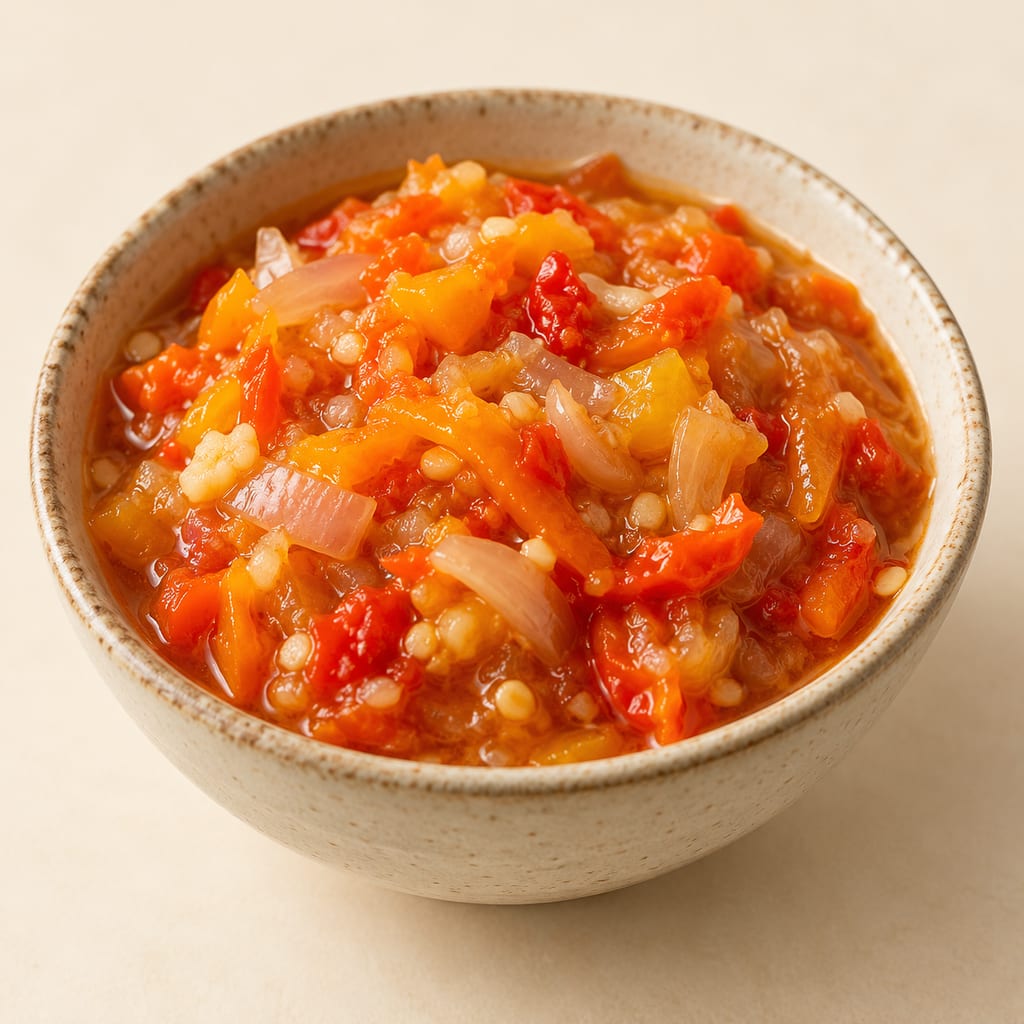
Sos ti malis
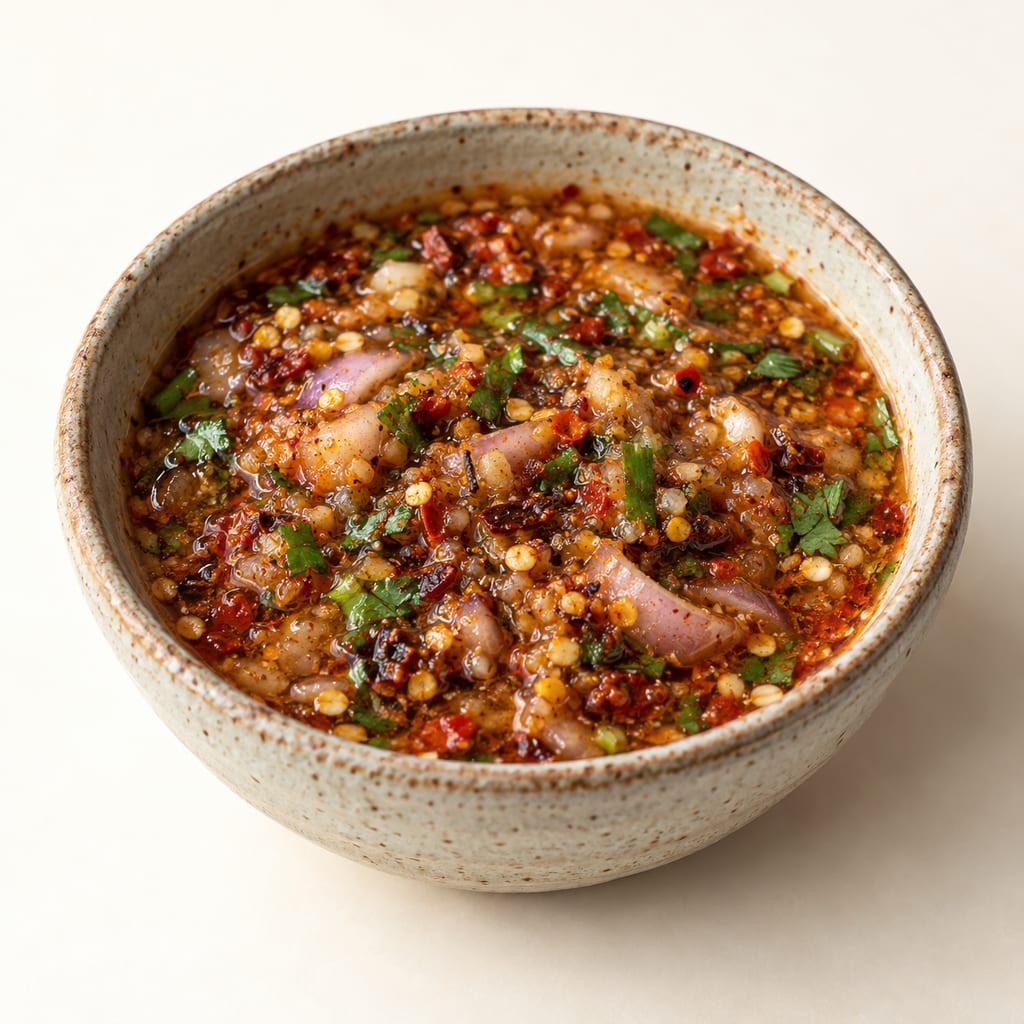
A Haitian hot sauce of habanero or Scotch bonnet, onion, shallot and garlic, softened in vinegar and lime, simmered briefly and served on grilled or fried meat and seafood.
 FermenteaWhere food goes to change
1504 records with their sources, across 11 categories.
 Fermented, enzyme-ripened and mixed seasonings328
 Fruit preserves10
 Legume, seed and plant-protein ferments10
 Garum and fish sauces8
 Adjacent and excluded7
 Koji, mold starters and mold-ripened ferments4
 Acid and oil pickles3
 Fermented fruit and fruit-derived foods3
 Vegetable lactic3
 Dairy ferments2
 Smoked salted and dried foods2
 Cheese1
 Not yet classified1Fermented, enzyme-ripened and mixed seasonings328Fruit preserves10Legume, seed and plant-protein ferments10Garum and fish sauces8Adjacent and excluded7Koji, mold starters and mold-ripened ferments4Acid and oil pickles3Fermented fruit and fruit-derived foods3Vegetable lactic3Dairy ferments2Smoked salted and dried foods2Cheese1Not yet classified1
A Haitian hot sauce of habanero or Scotch bonnet, onion, shallot and garlic, softened in vinegar and lime, simmered briefly and served on grilled or fried meat and seafood.
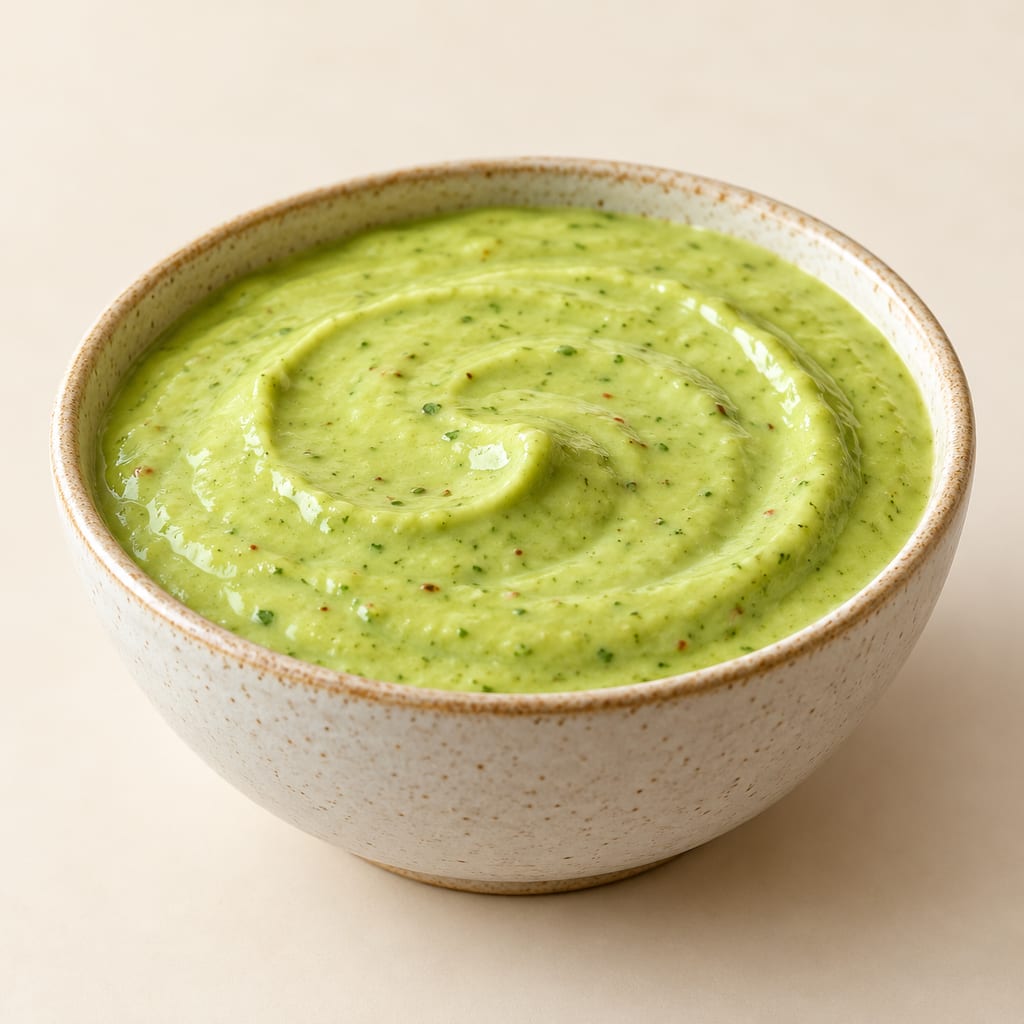
A pourable sauce of ripe avocado, lime, chile, herbs and onion, blended or mashed to a smooth body. It is an avocado sauce, not every green taquería sauce.
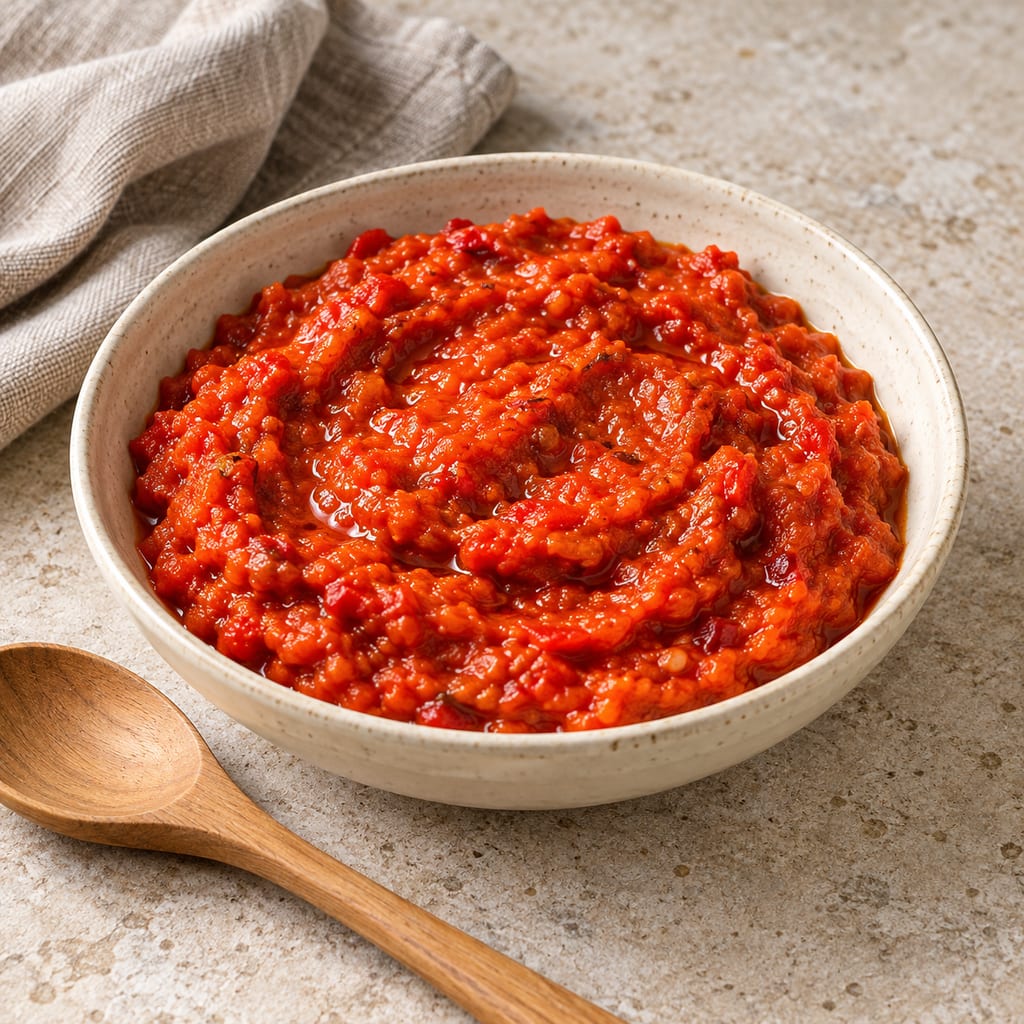
A small roasted red-pepper and eggplant relish with sunflower oil, wine vinegar, garlic and salt. It is a modern ajvar-style trial, not a validated winter preserve or a copy of a commercial formula.
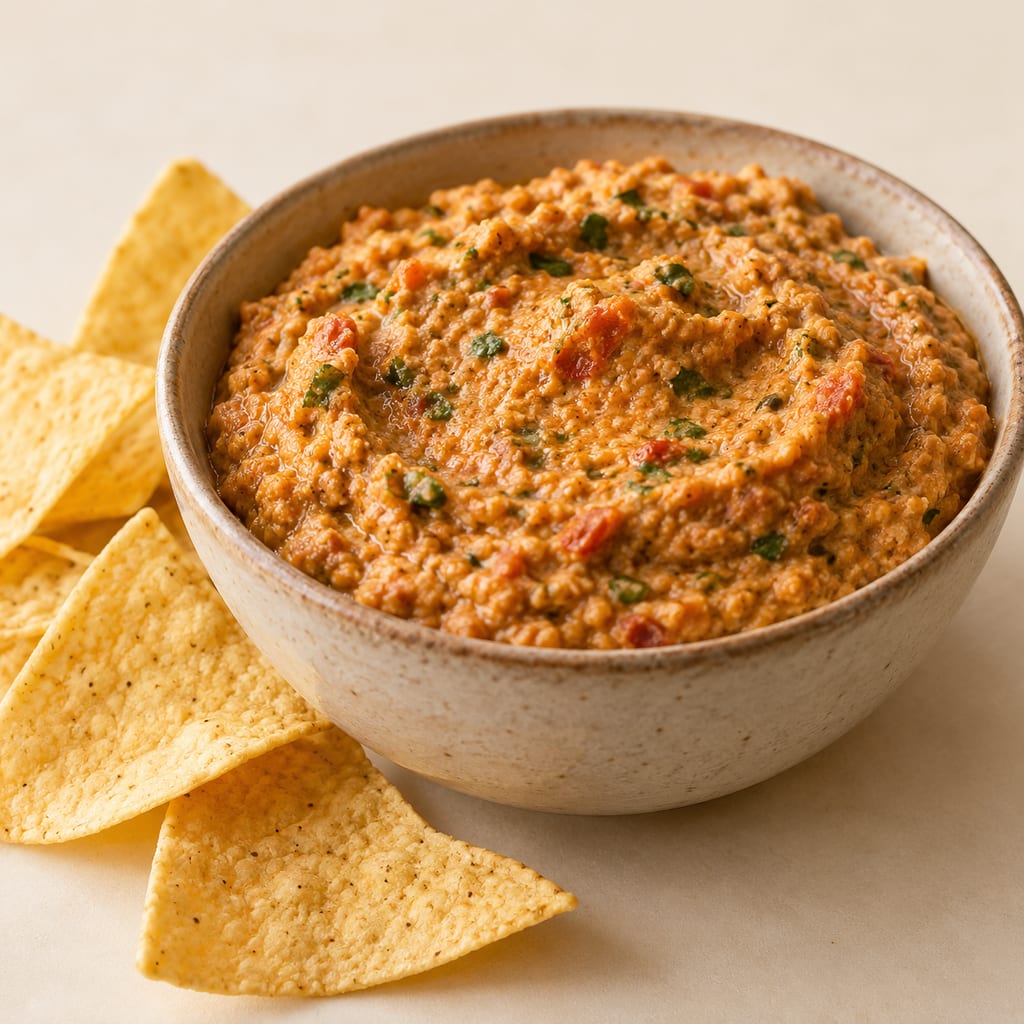
Sikil p’ak is a Yucatecan dip of toasted, ground pumpkin seeds mixed with roasted tomato, habanero, onion and herbs, served with tortilla chips or warm tortillas. Its name is built from Maya words for pumpkin seed and tomato.
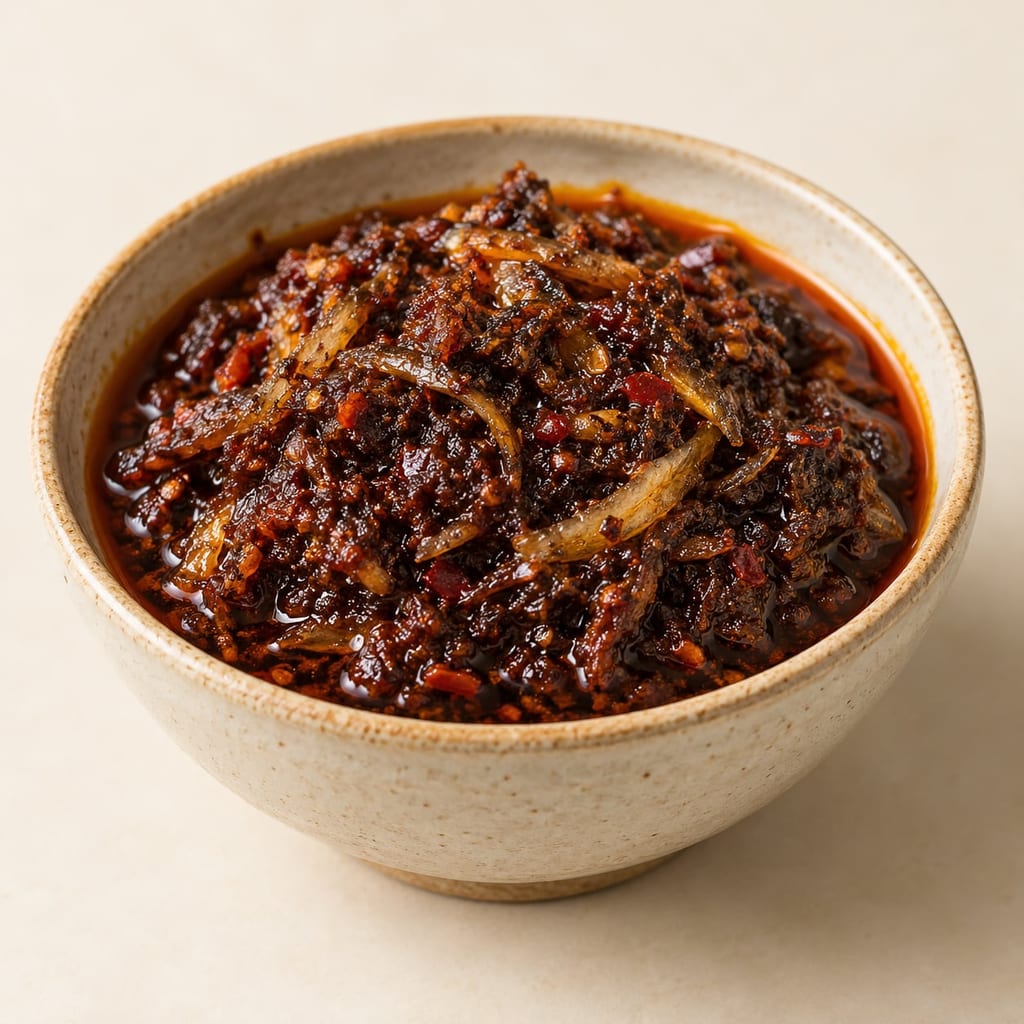
Shito is a hot Ghanaian pepper condiment with fish-rich, oil-cooked and fresh pepper forms; this measured version follows a recipe collected in Ghana’s Northern Region.
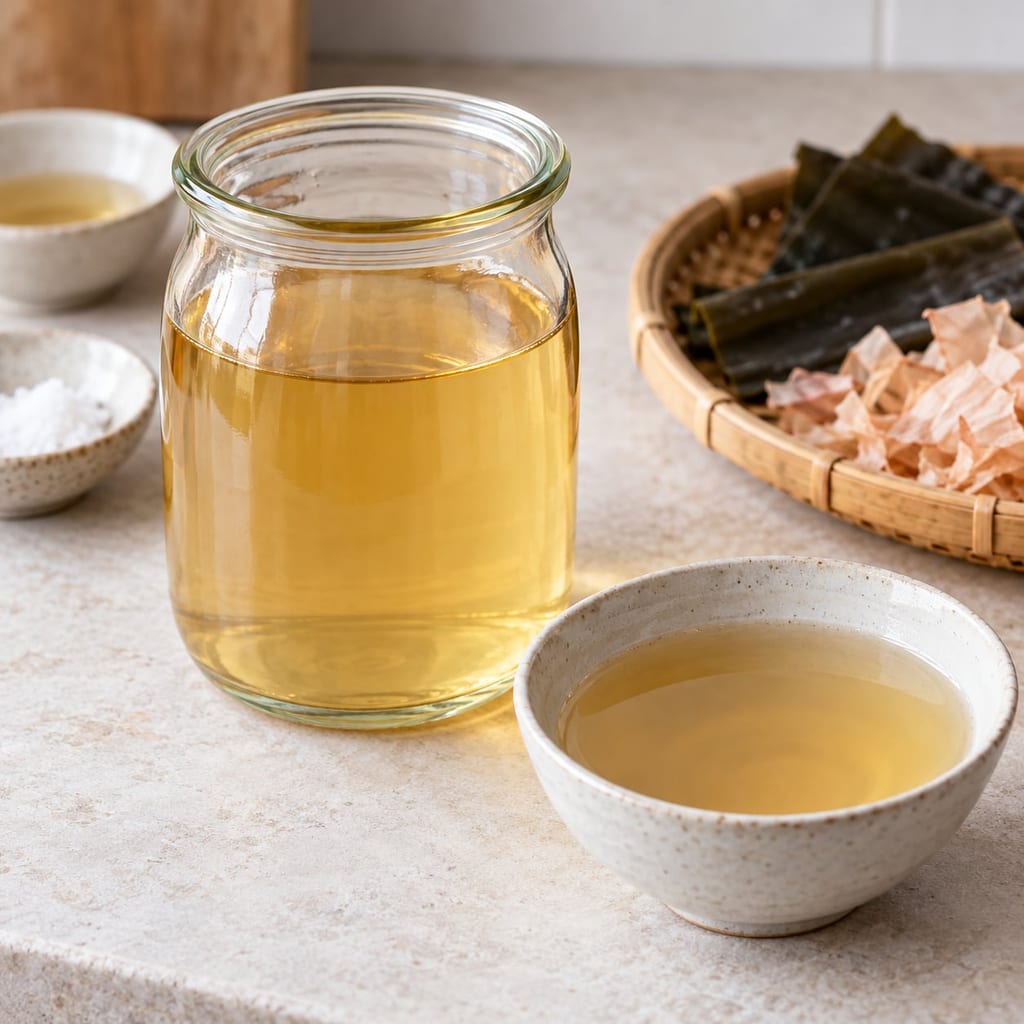
Shiro dashi is a pale Japanese seasoning stock of kombu and bonito dashi, light soy sauce, mirin and salt, used to flavour dishes without darkening them.
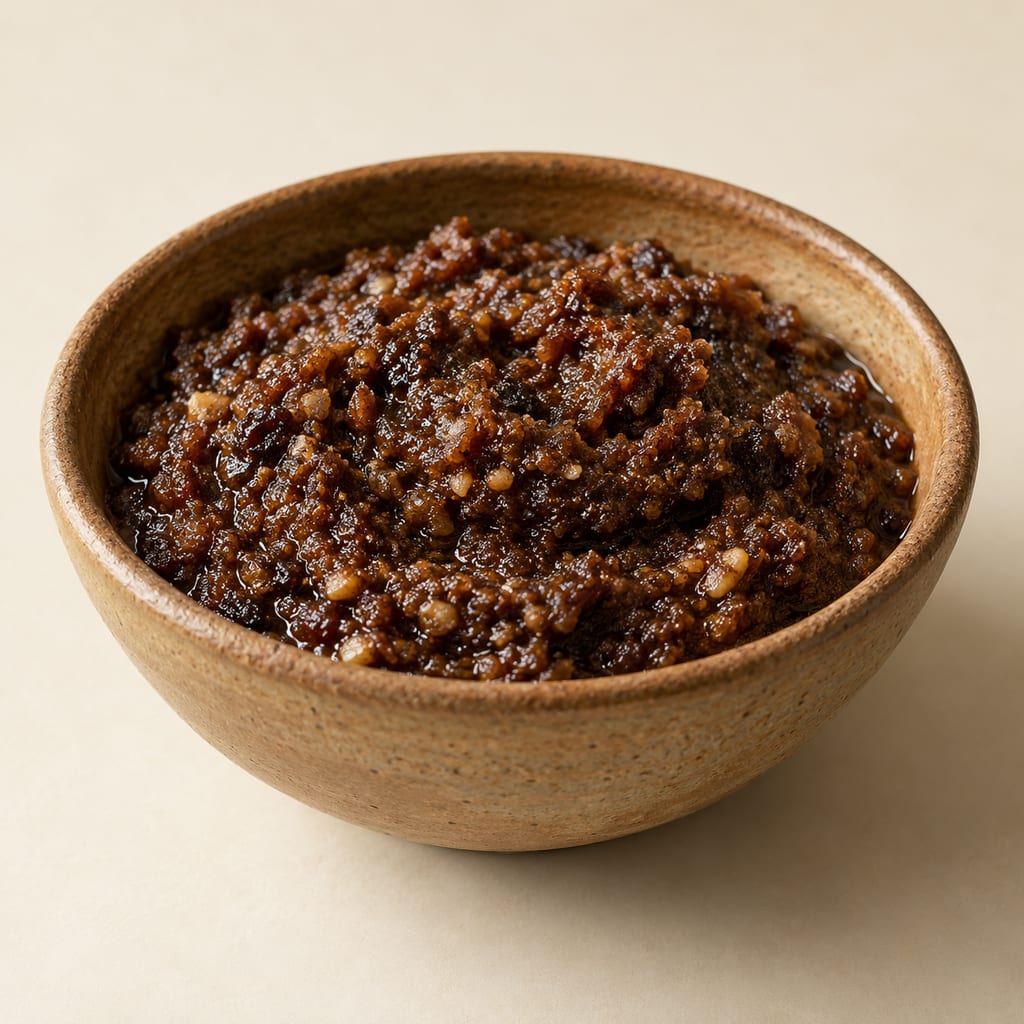
A medieval English sauce of pounded dried currants, nut kernels, bread crusts and warm spices, tempered with vinegar. It is an unfermented sauce from The Forme of Cury, not a preserving recipe.
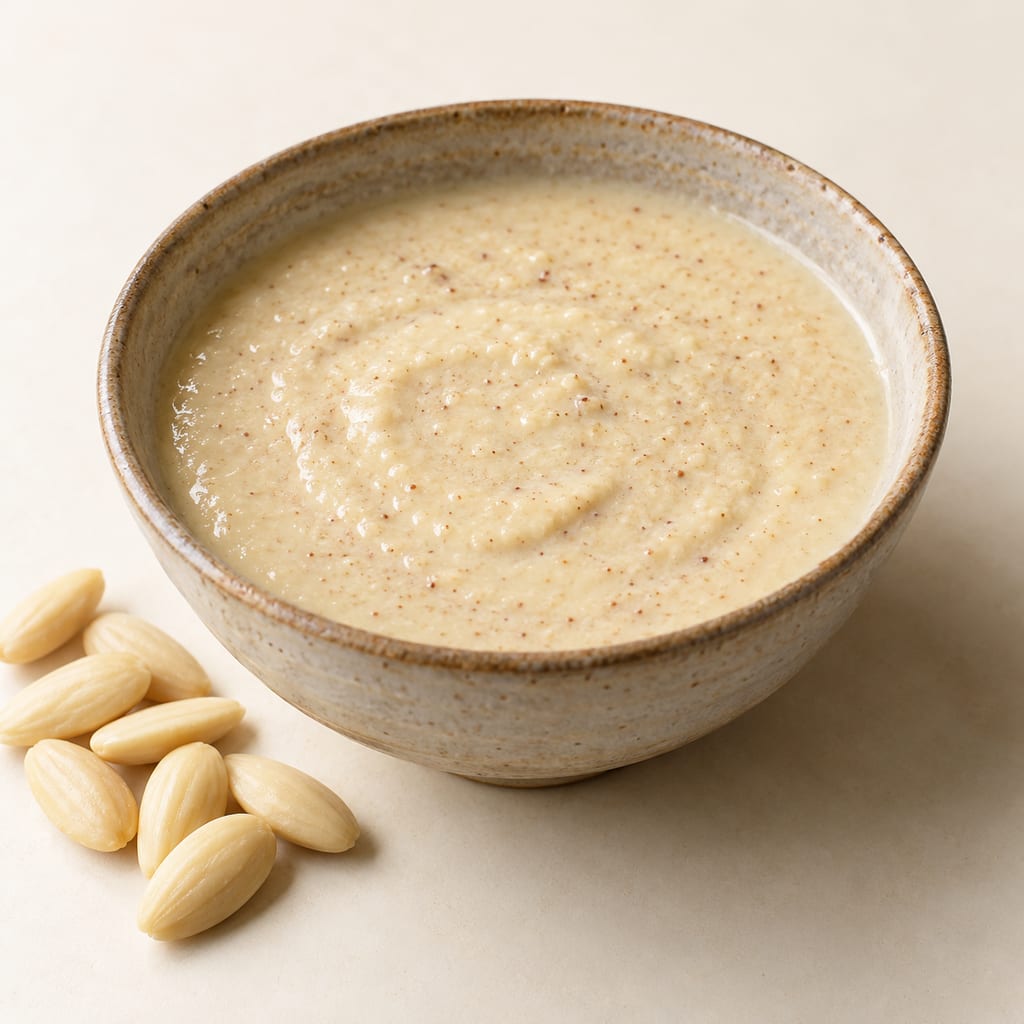
A pale English sauce from The Forme of Cury, about 1390, of blanched almonds ground to a dust, tempered with verjuice and seasoned with powdered ginger. It is a historical sauce, not a modern bechamel.
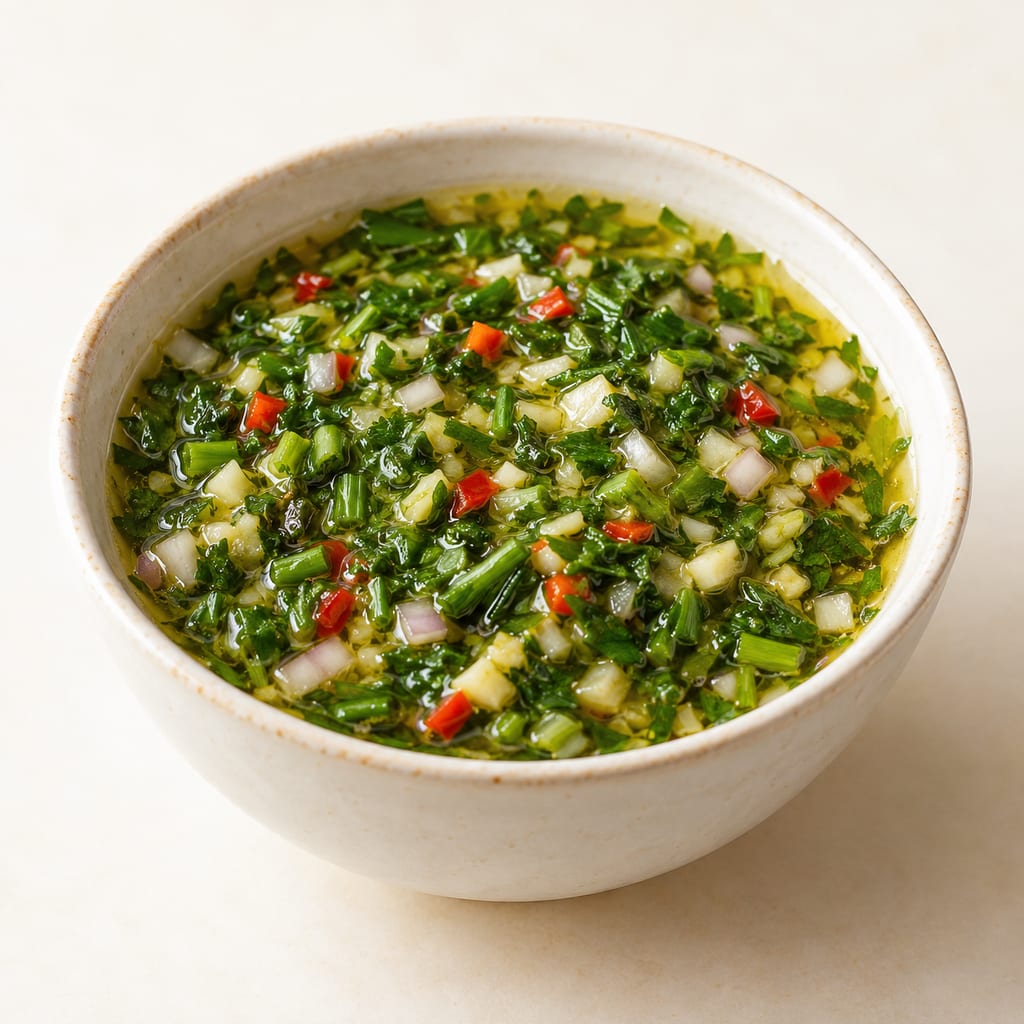
Sauce chien is a fresh French Antillean sauce of chopped chives, parsley, garlic, shallot and hot pepper, steeped in hot water with oil and lime.
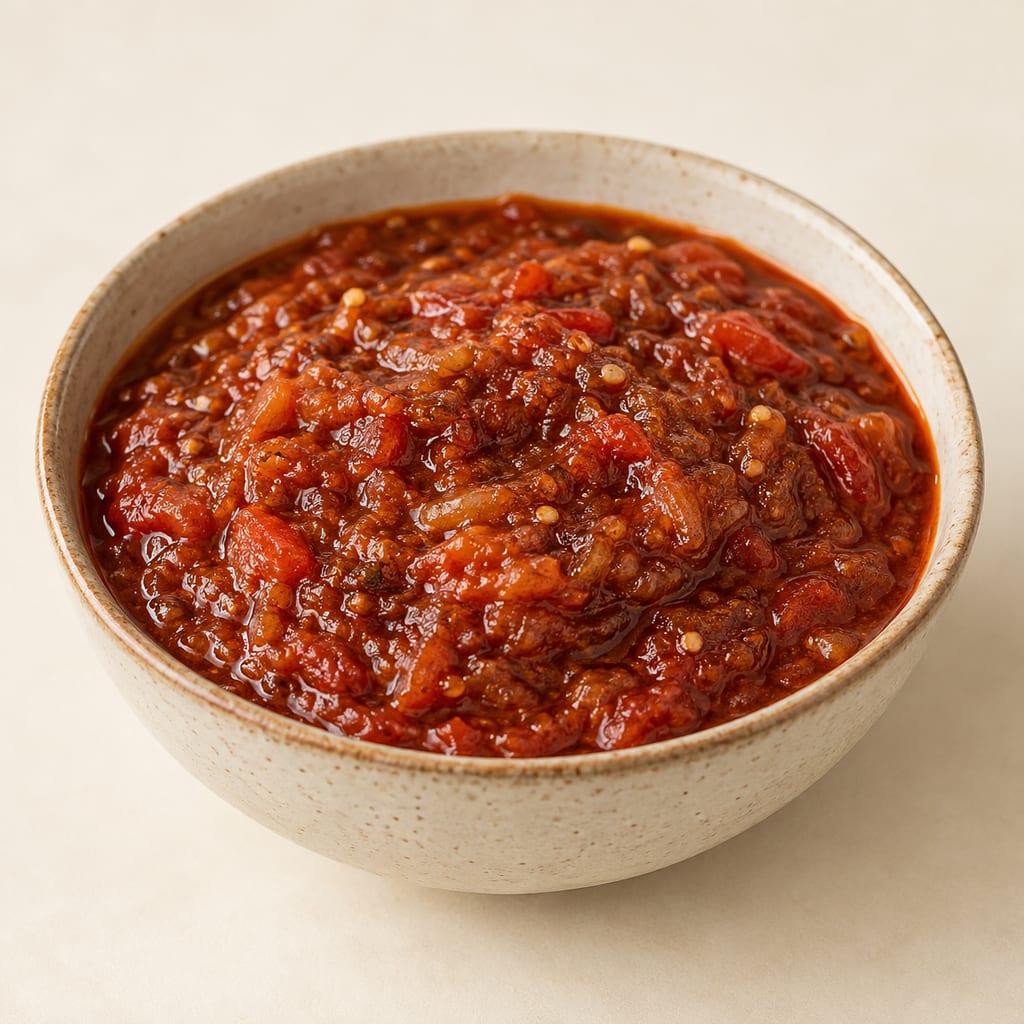
Shidni, also called shigni, is a Somali tomato, chilli and tamarind sauce. An everyday version is fried for about five minutes; a festive chutney with dates and mango cooks for about two hours under the name basbaas alla-bari.
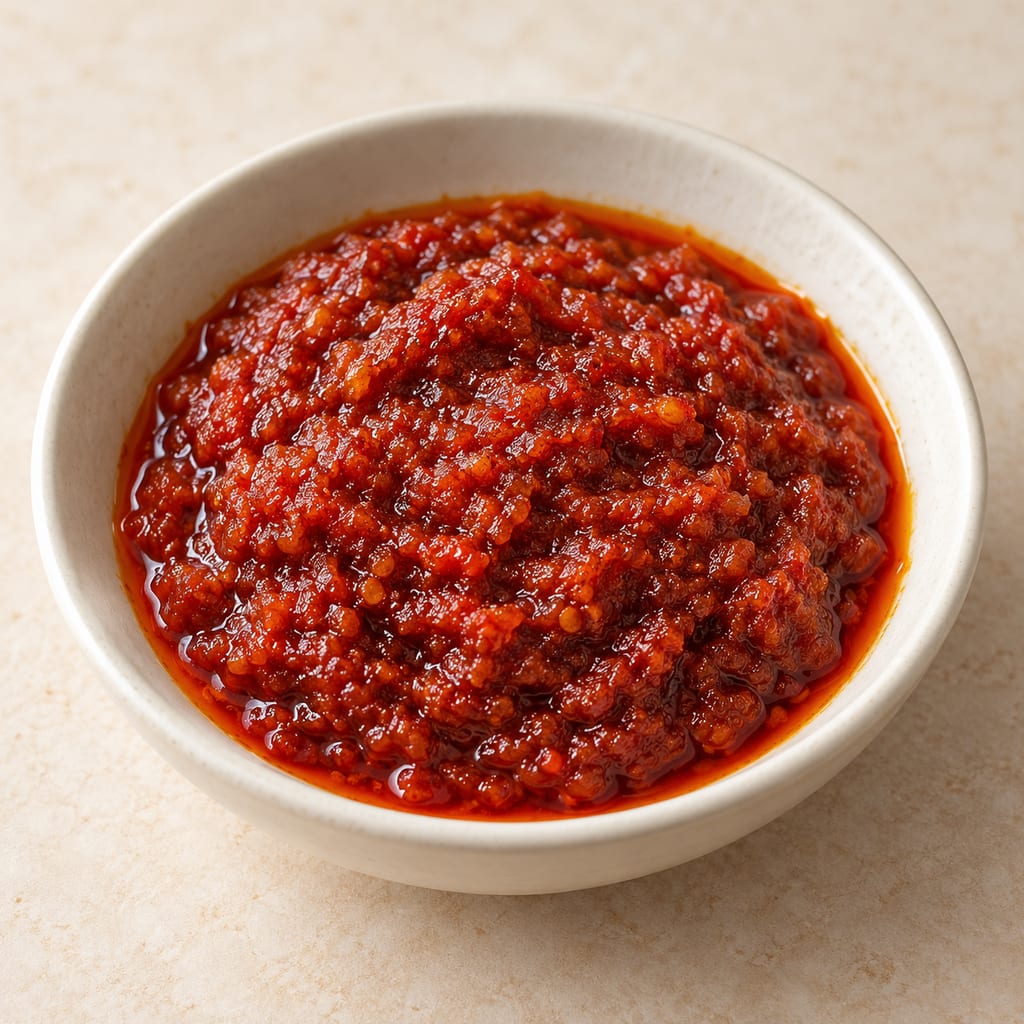
Sambal tumis is a Malaysian chilli paste fried in oil until it breaks, then simmered with tamarind and sugar, used as a condiment and as a cooking base.
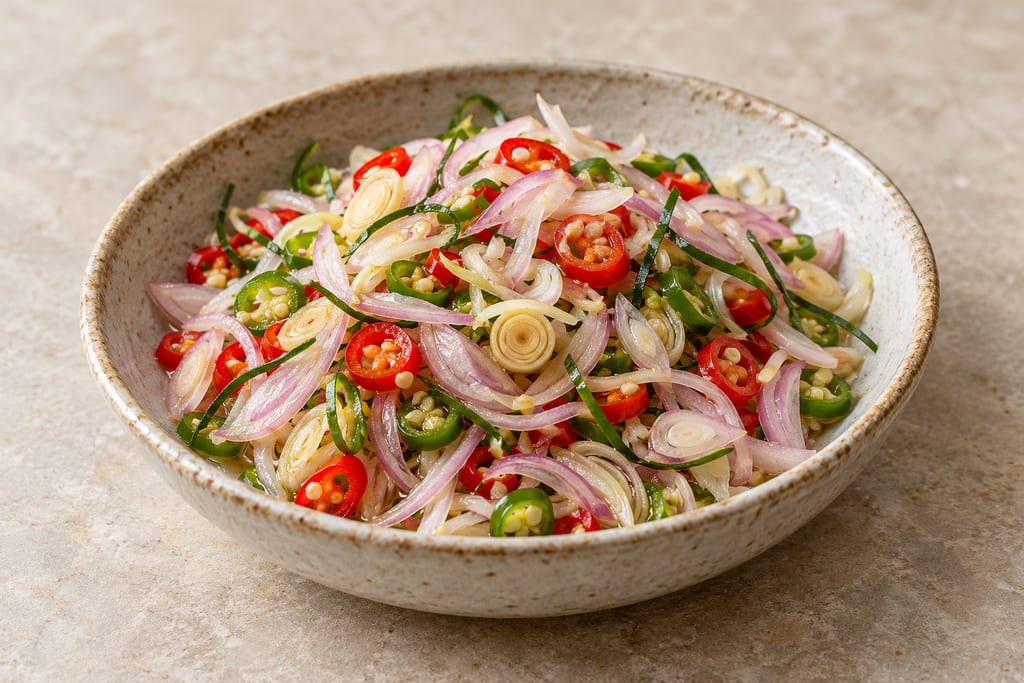
A small fresh relish of sliced shallots, chillies, lemongrass and lime leaf with lime juice, oil and salt, inspired by Balinese sambal matah.
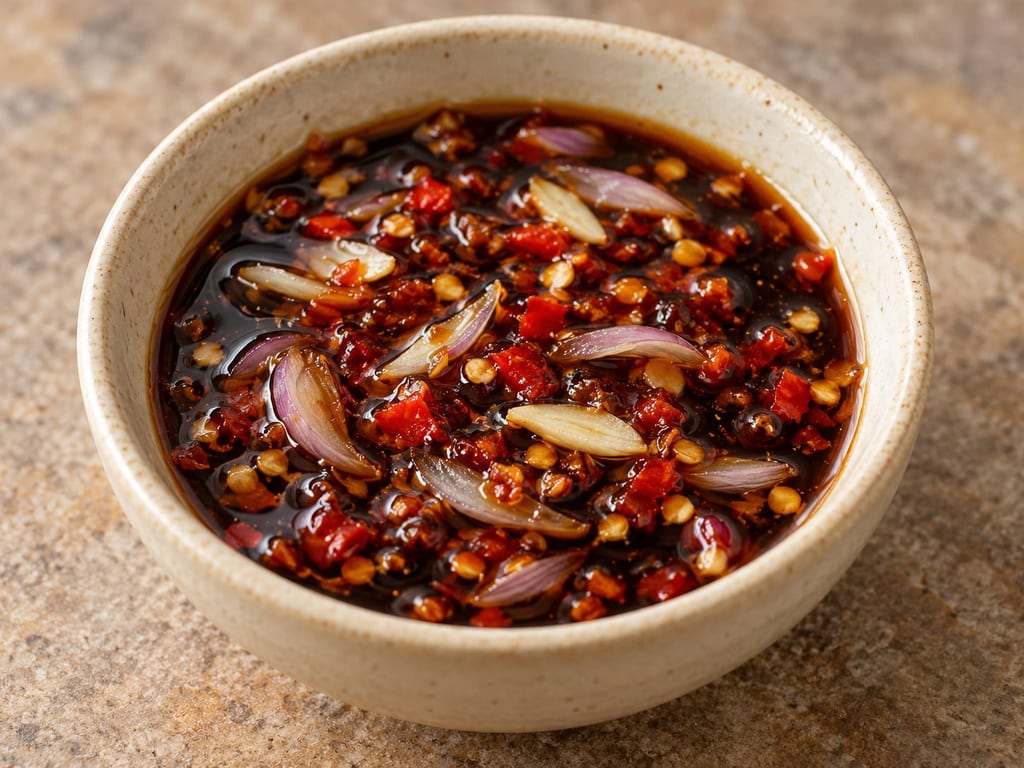
Sambal kecap is an Indonesian table condiment of fresh bird's eye chilli and shallot stirred into sweet soy sauce, served with grilled food, satay and tempe.
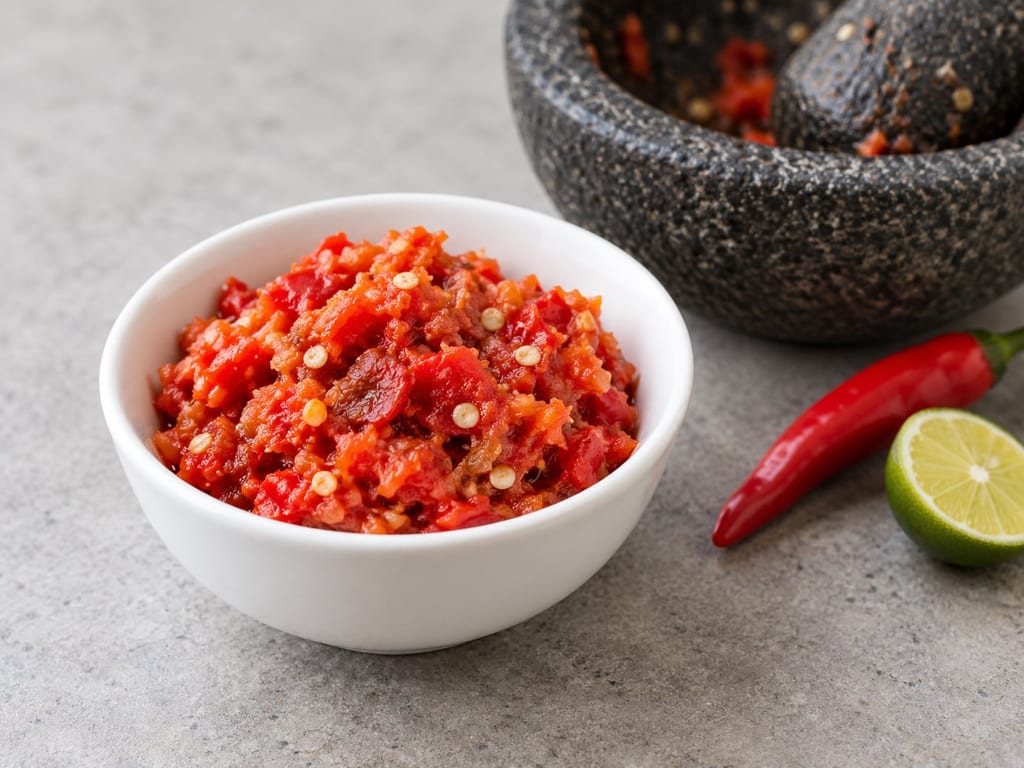
Red chillies pounded with belacan shrimp paste, then mixed with lime or calamansi and sugar for a fresh relish. Contains crustacean shellfish.
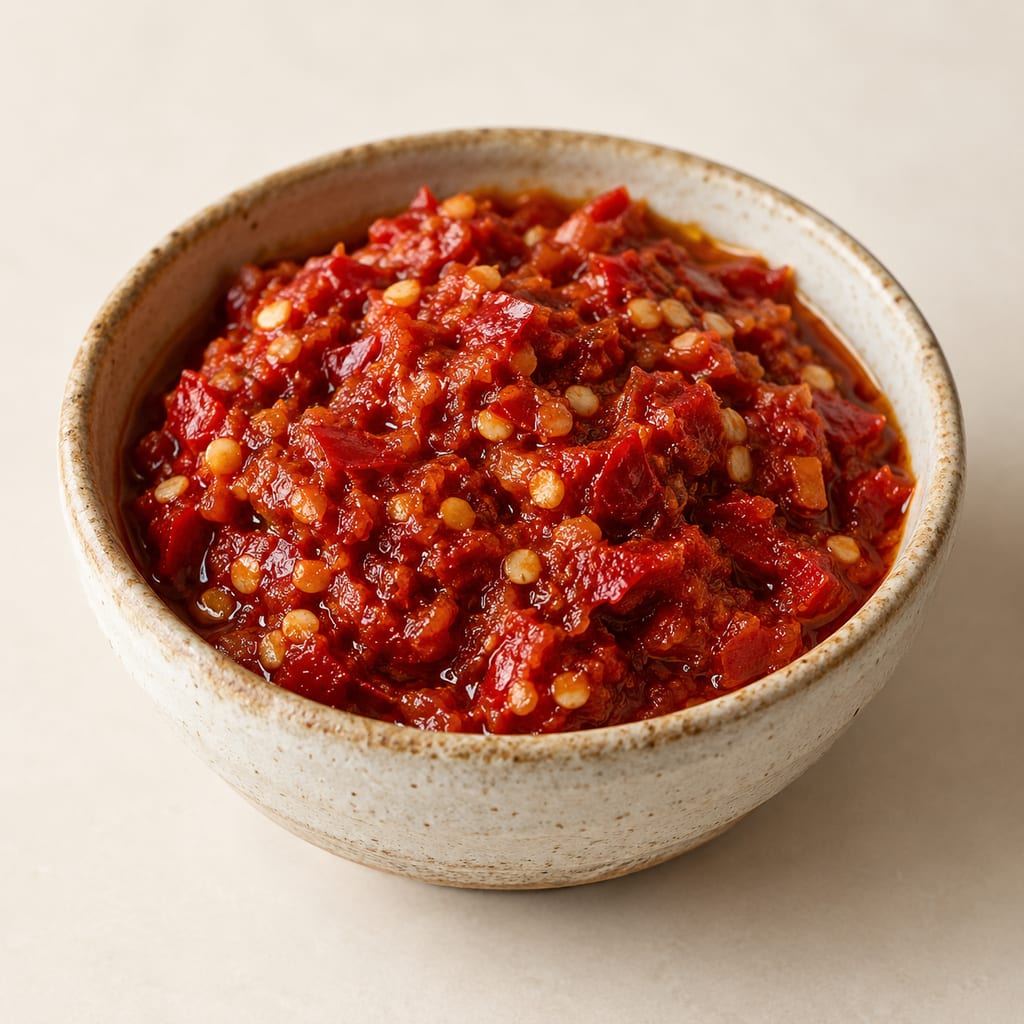
Shatta is a Palestinian chilli paste with many household forms. Abeer Najjar’s family-inspired version oven-dries salted fresh chillies, then mixes them with vinegar and olive oil for a source-described room-temperature ferment.
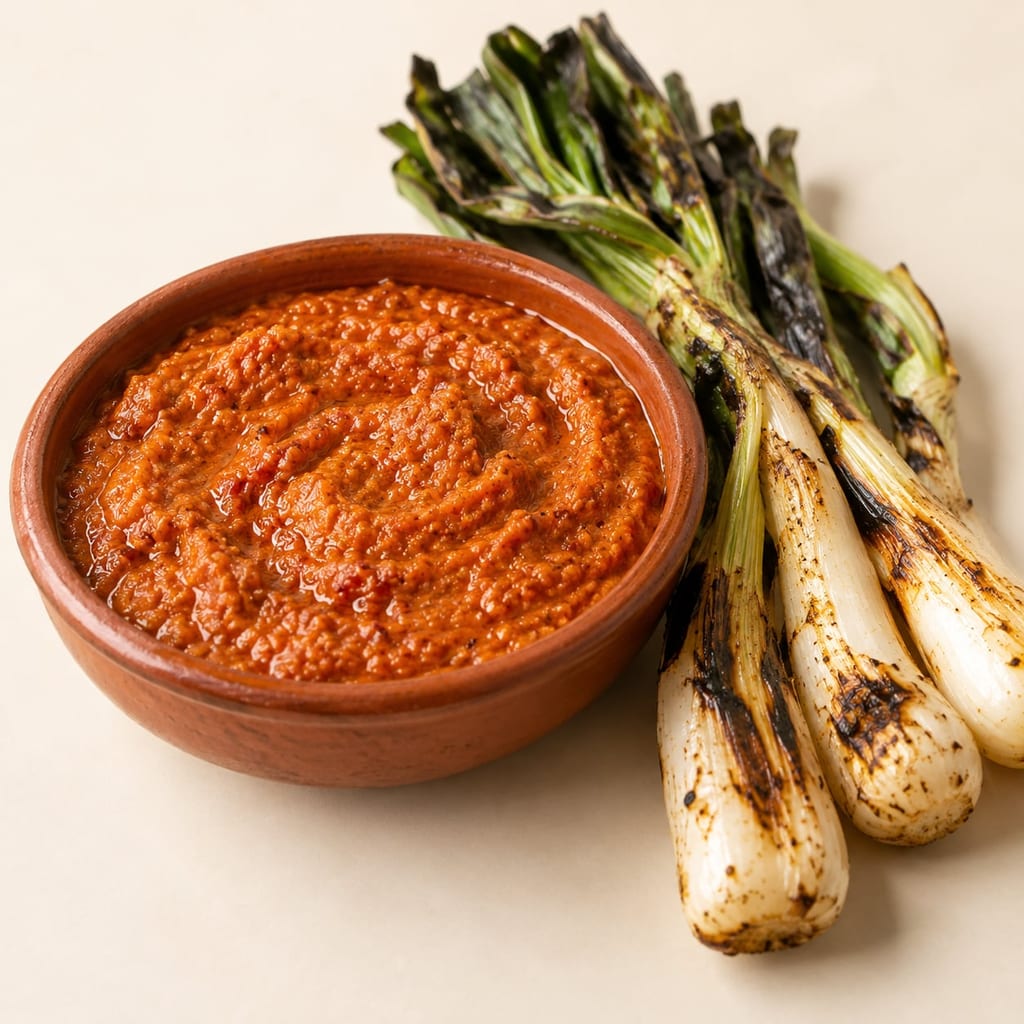
Salvitxada is a Catalan sauce from Valls, thickened with toast rubbed with garlic, served almost only with calcots at the calcotada barbecue.
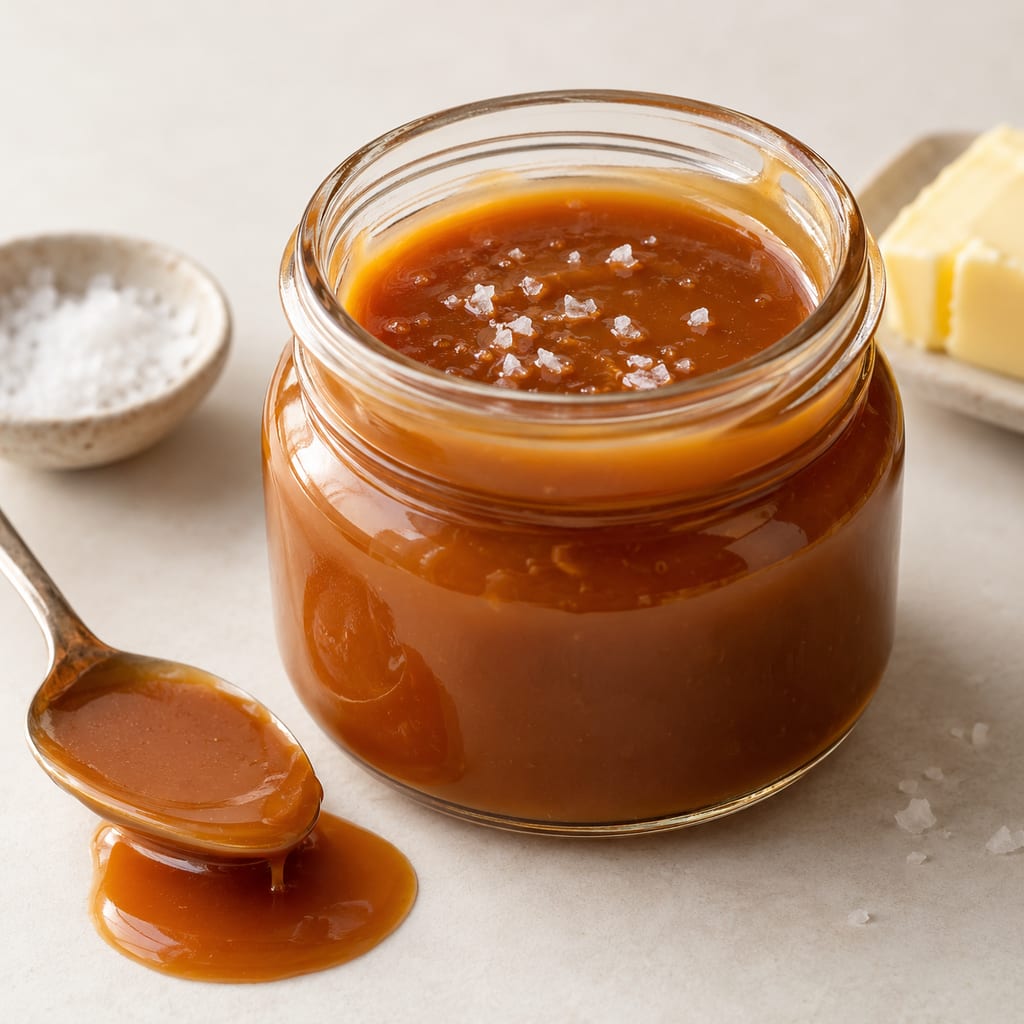
A pourable caramel of sugar and butter, cooked dark and then loosened with cream and finished with flaky salt.
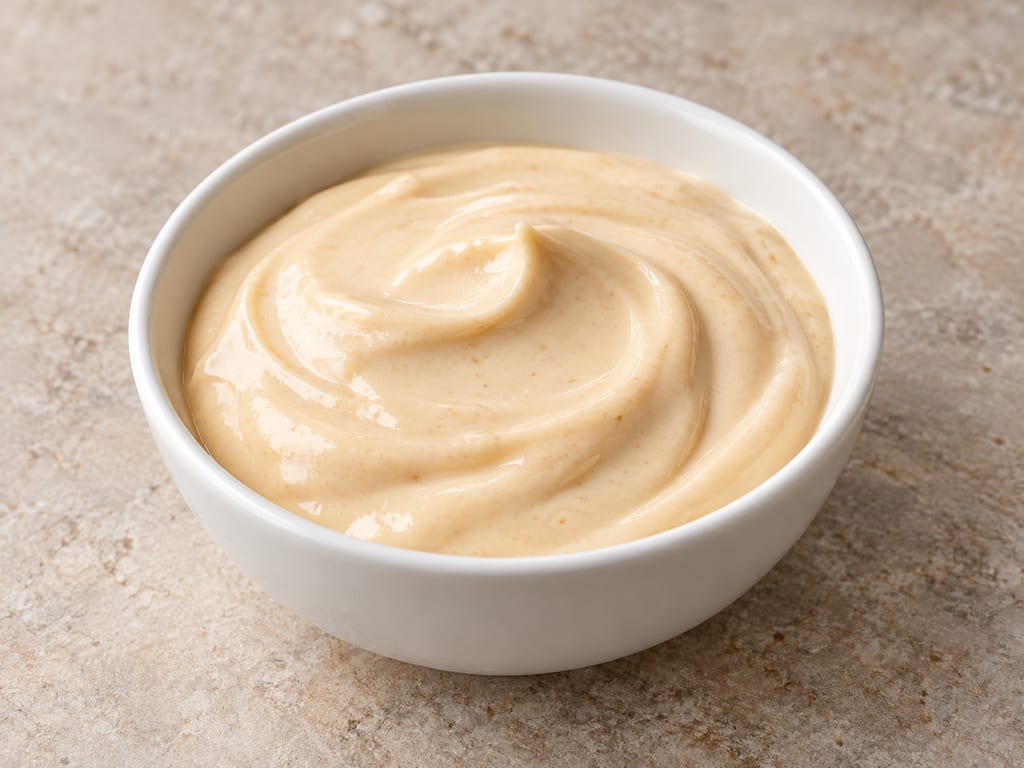
A sesame-forward, fresh sauce made by mixing tahini, toasted sesame oil and rice vinegar into finished mayonnaise; the archived amounts are untested starting points.
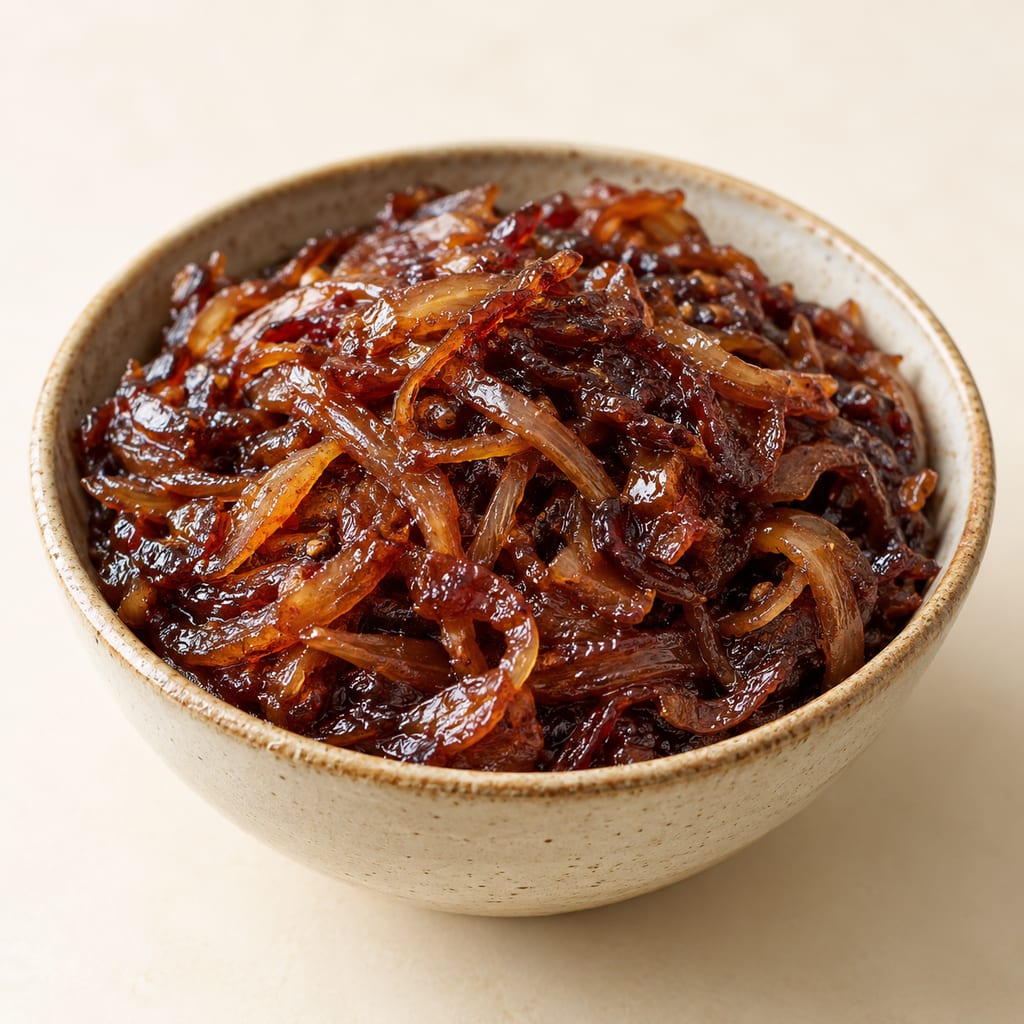
Sri Lankan cooked onion relish: onions fried in oil until dark and jammy, then sharpened with tamarind and sweetened with sugar. Not a fermented condiment.

A Japanese mixed seasoning of vinegar, sugar and salt for sushi rice. Ratios vary with the rice batch and style; this version follows Marukan Vinegar's formula for two go of rice.
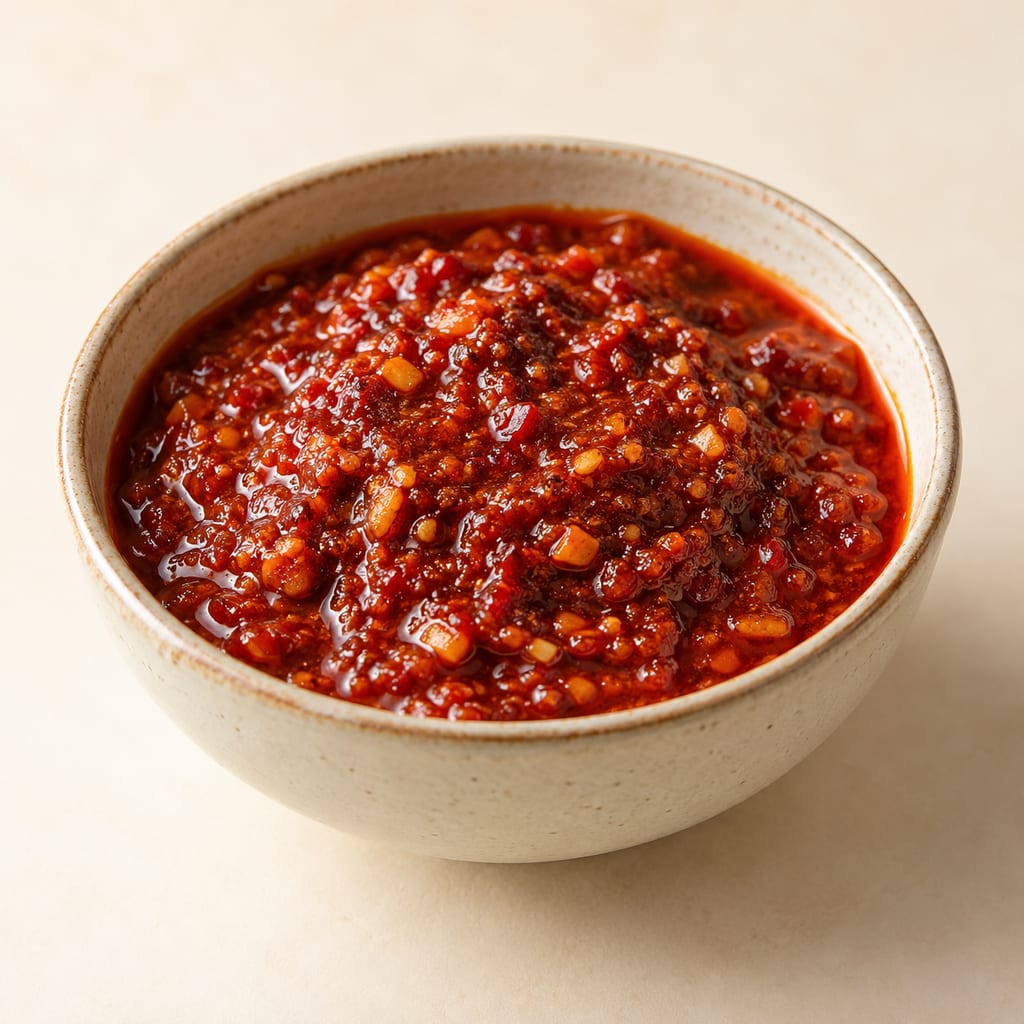
A cooked Indo-Chinese chilli sauce made with soaked dried chillies, aromatics, soy and vinegar.
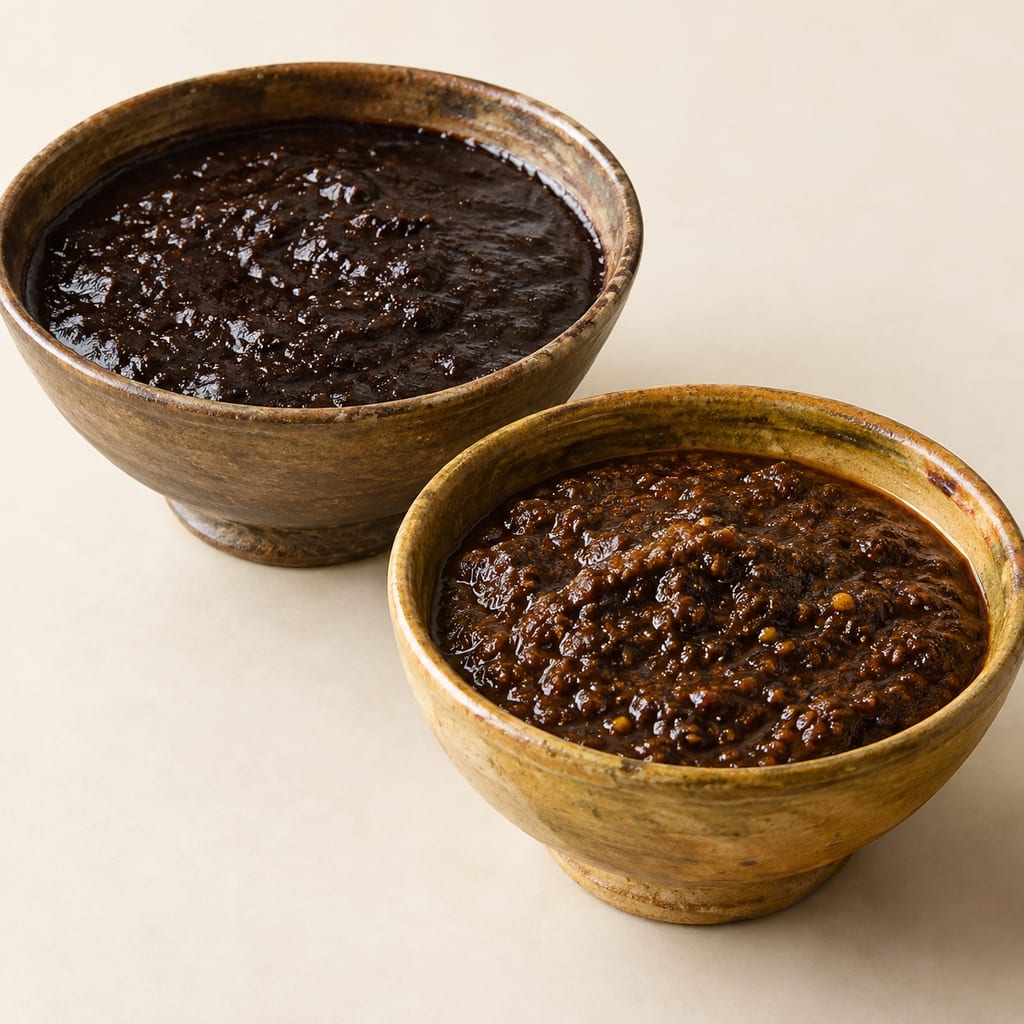
Two dark sauces from The Forme of Cury, about 1390: one for mallard from bread and boiled blood, the other for roast capon from liver, bread and spices. Both are historical preparations.
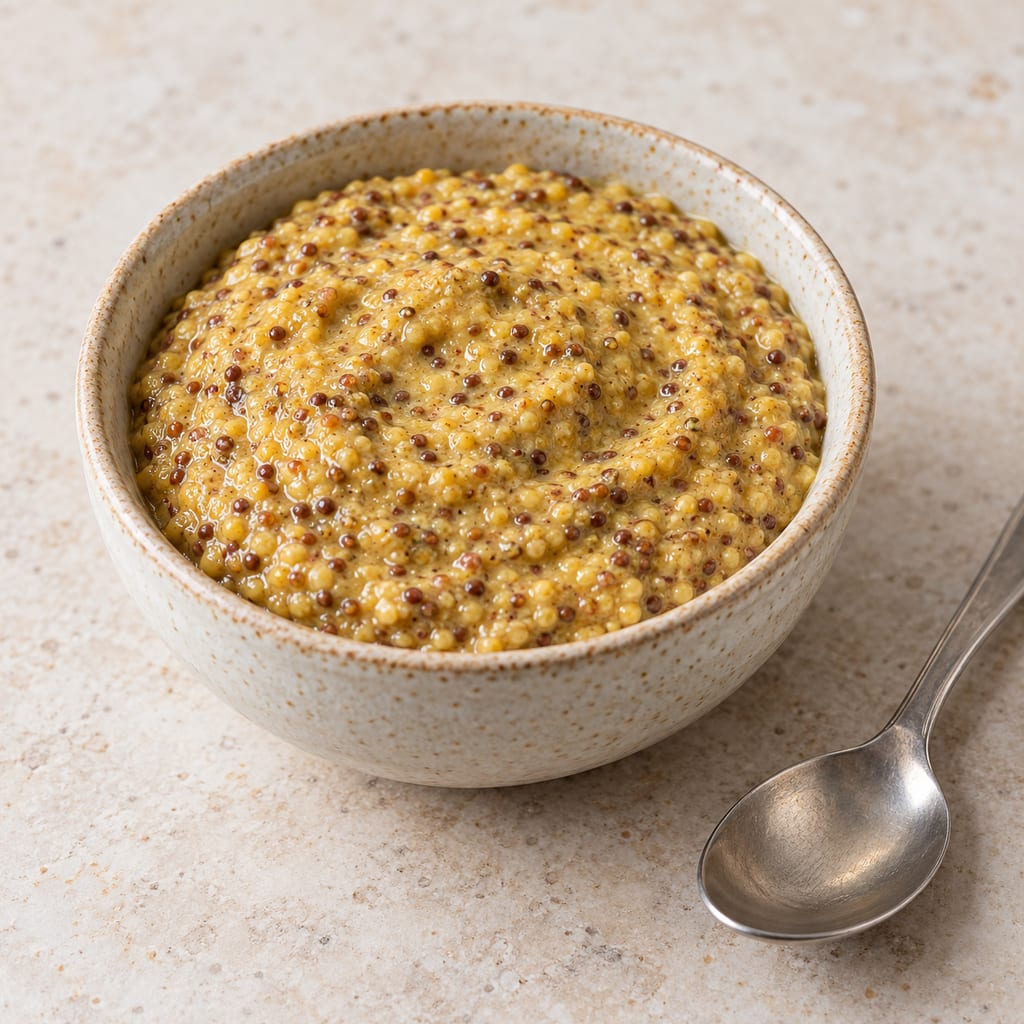
A coarse mustard of brown and yellow seeds soaked whole in cider or white-wine vinegar, with about a third blended to a paste and folded back so the rest stay whole.
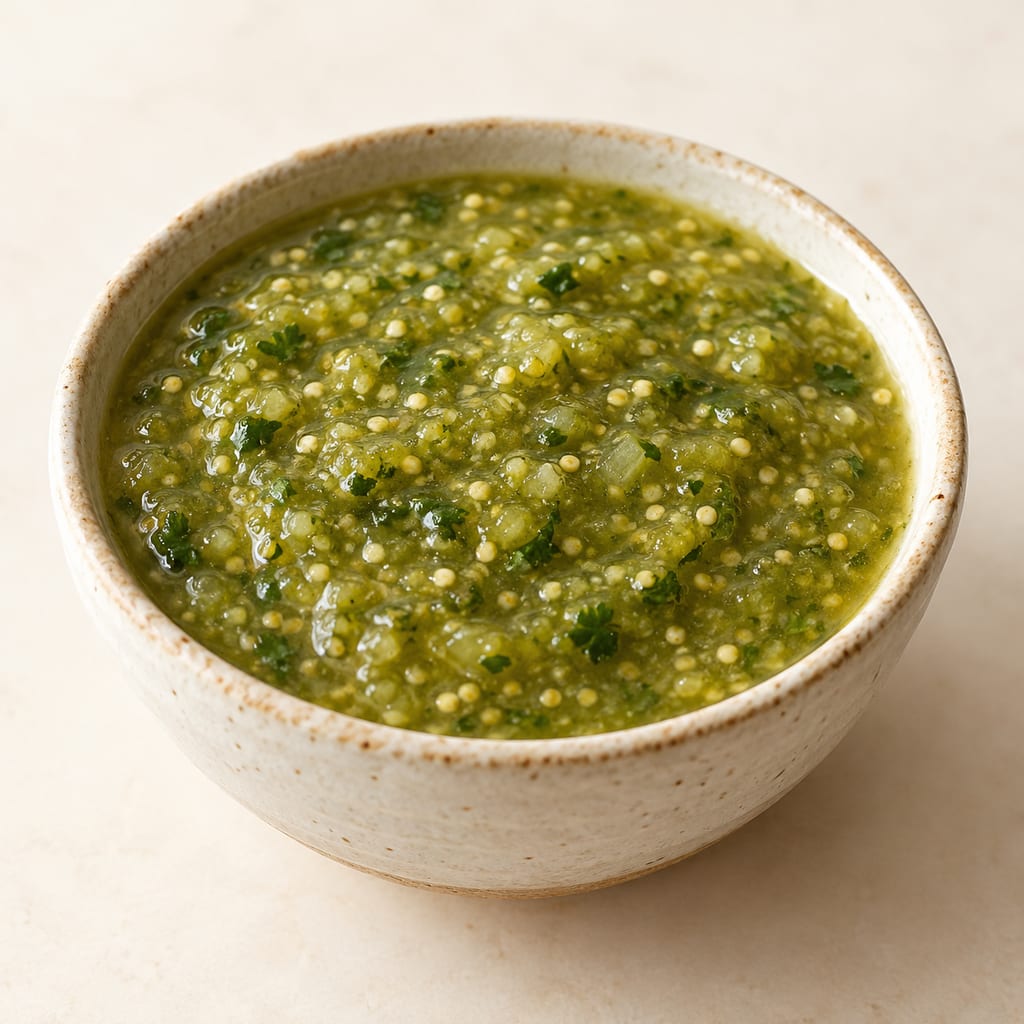
The green Mexican sauce of tomatillos and green chiles, which may be raw, boiled or roasted before grinding. It is distinct from European herb-based green sauces.
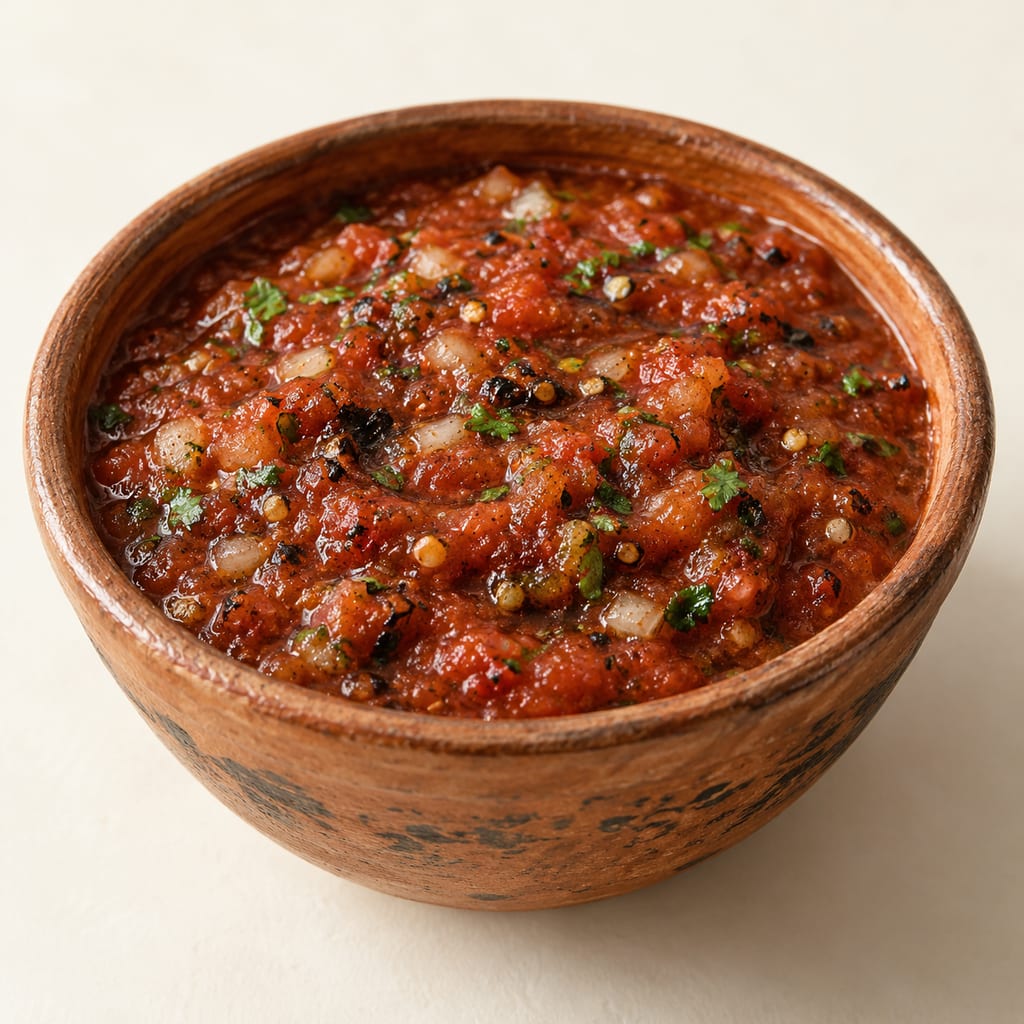
The red tomato and chile sauce of Mexican tables, most often cooked or charred before grinding. It is a family of preparations, not one formula.
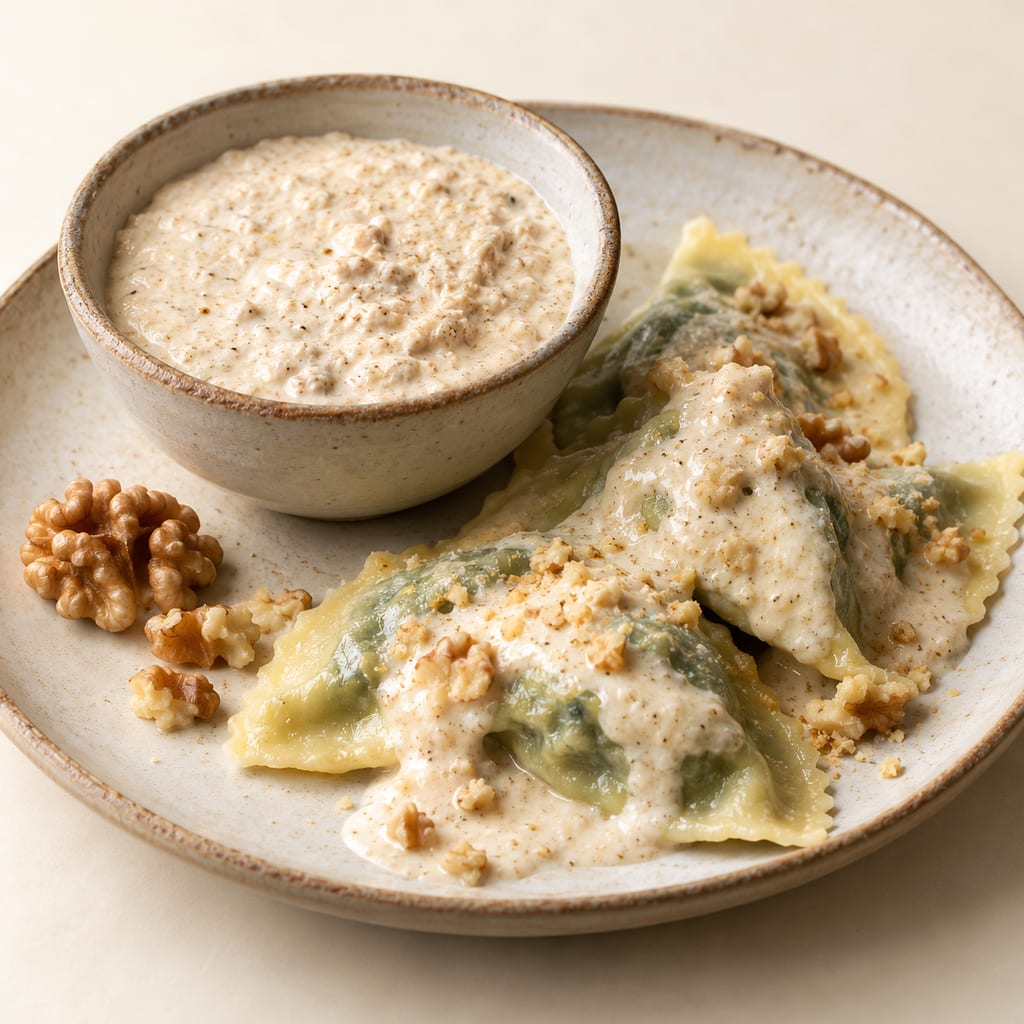
Salsa di noci is a cold Ligurian sauce of walnut kernels, garlic, marjoram, soaked bread, cheese and olive oil, served with pansoti.
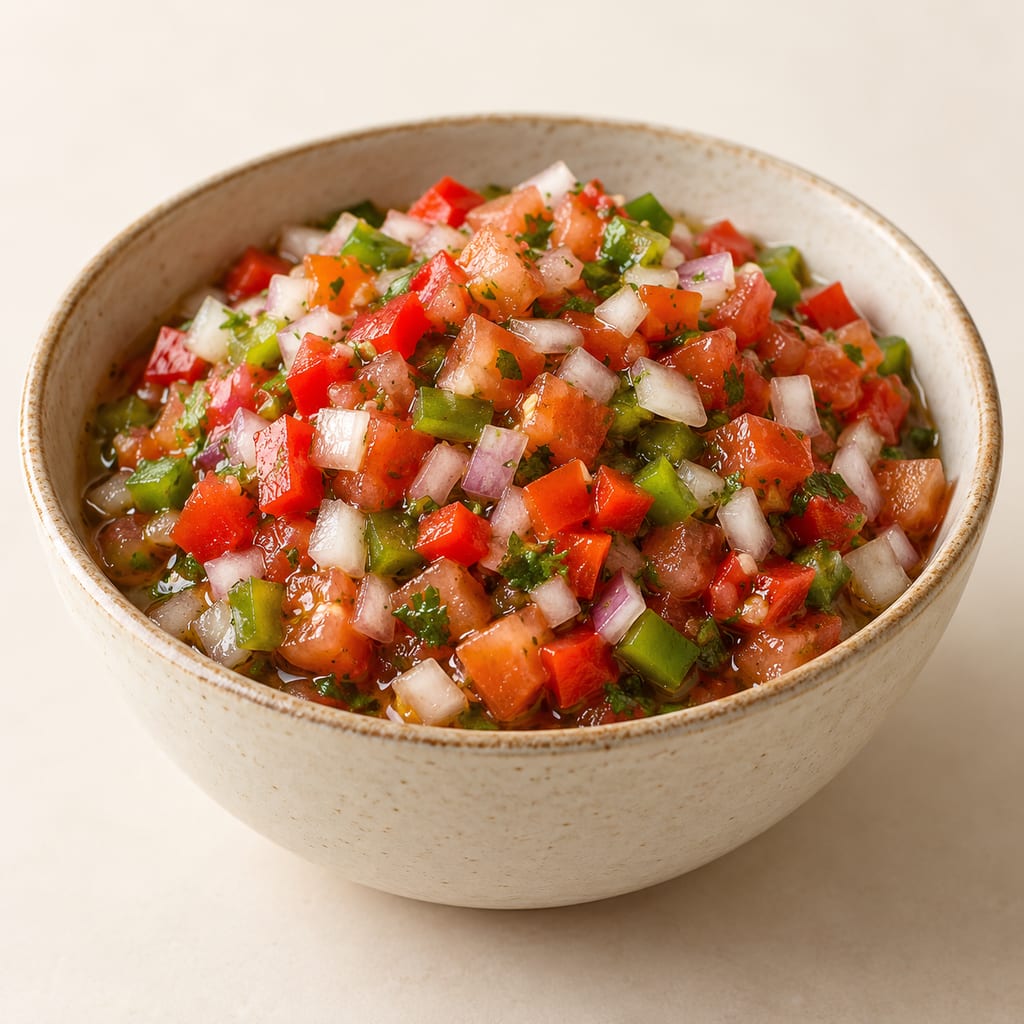
Argentine salsa criolla is a raw relish of finely diced peppers, onion and tomato dressed with olive oil, vinegar and lemon, served cold with grilled meat. The name covers different sauces across Latin America.
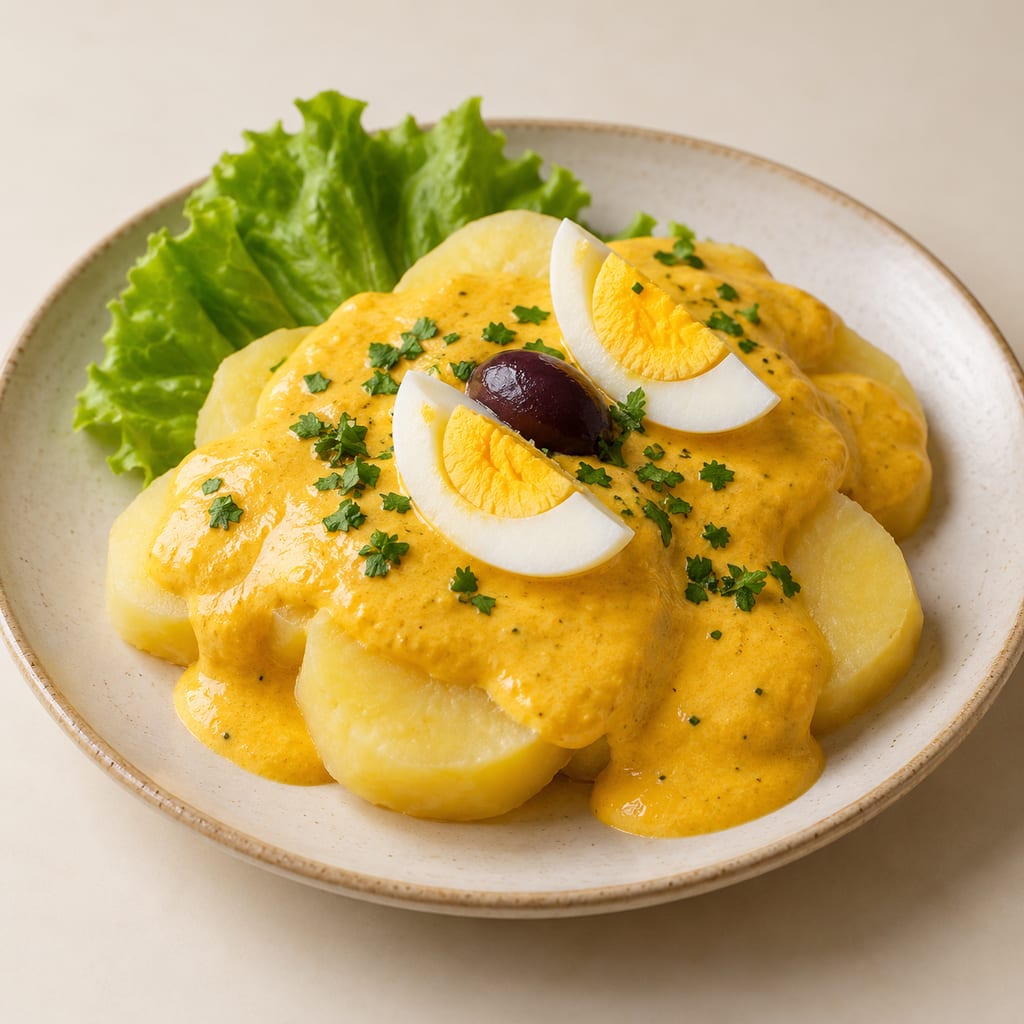
A creamy Peruvian sauce of ají amarillo, fresh cheese and milk, served with potatoes. This source-based version sautés aromatics before blending the sauce.
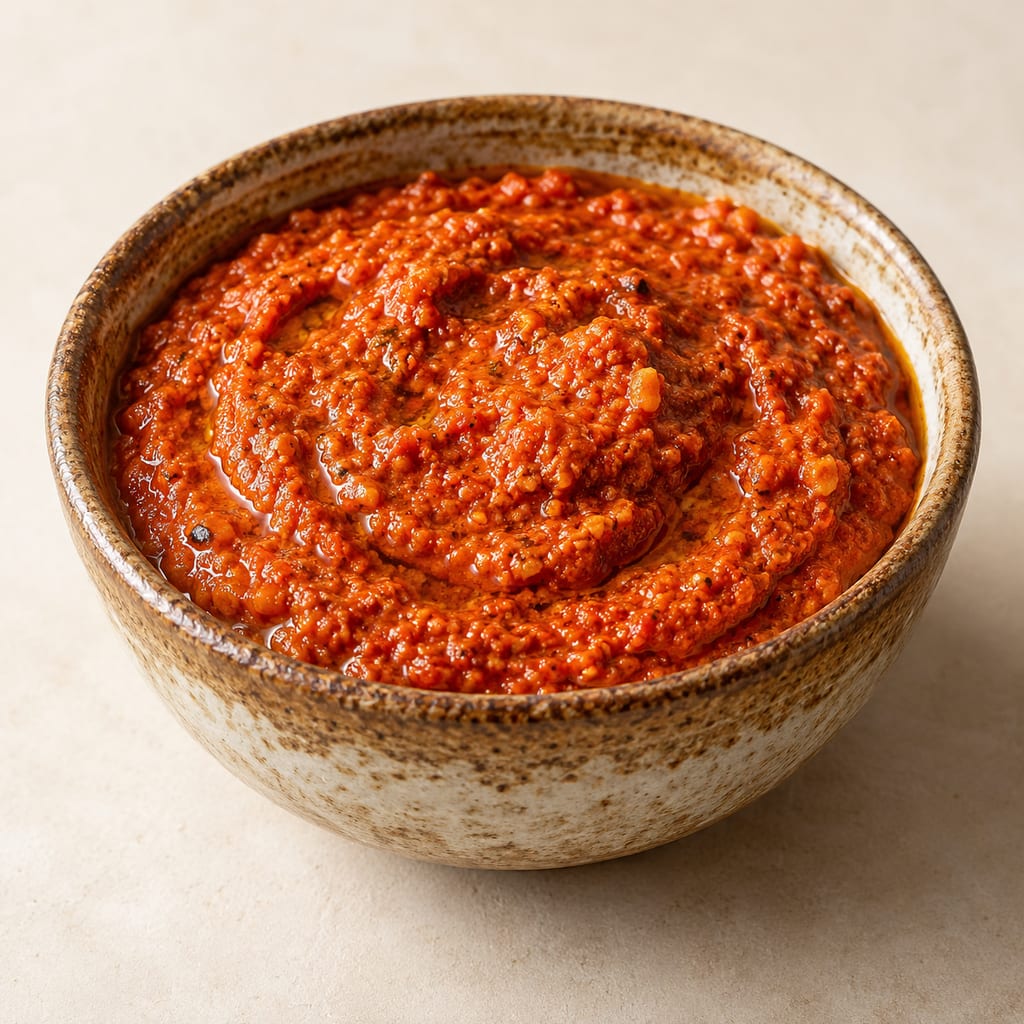
Romesco is a Catalan sauce of roasted tomatoes and garlic, toasted nuts, dried nyora peppers, bread and oil, traditionally served with seafood, grilled meat and calcots.
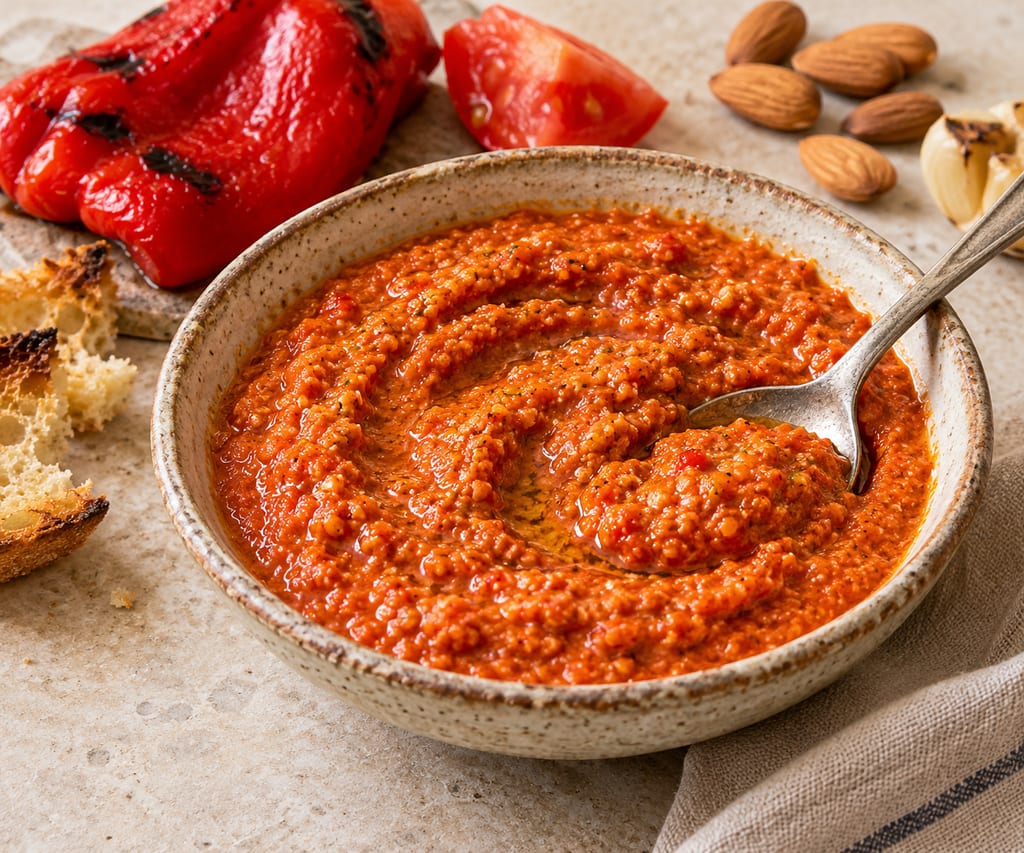
A coarse Catalan-inspired sauce of roasted tomato and red pepper, almonds, bread, garlic, olive oil and sherry vinegar. This modern pepper version is distinct from ñora-based romesco formulations and is not a preserve.
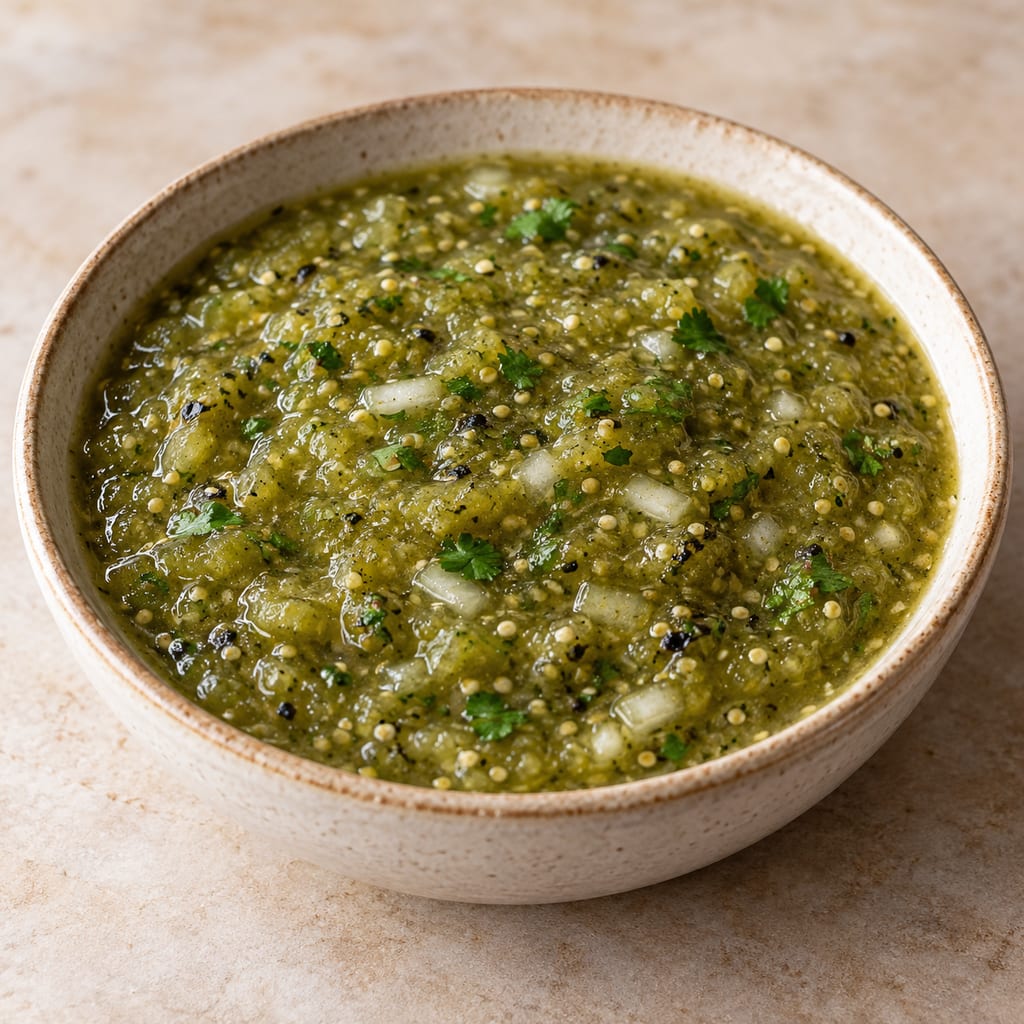
A modern small batch of roasted tomatillos and green chile finished with raw onion, coriander, lime and salt. Its measured weights are an untested adaptation; this is fresh salsa, not a canning recipe.
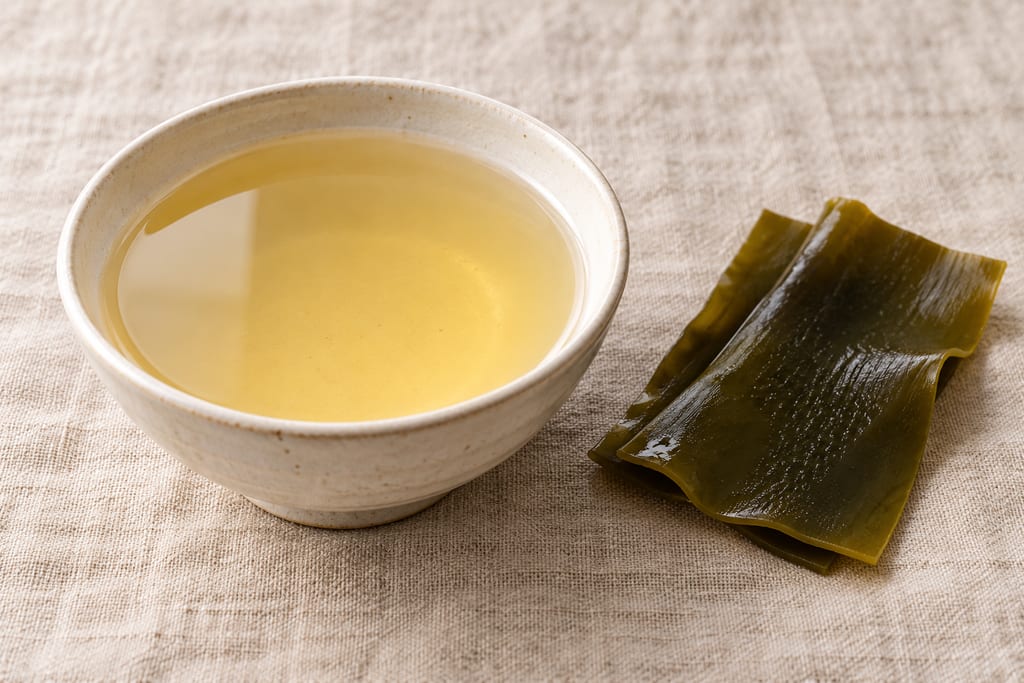
A clear Japanese broth made by gently extracting kombu’s savoury taste into water. Use it on its own for delicate dishes or as the kelp base for a separate bonito or dried-fish dashi.
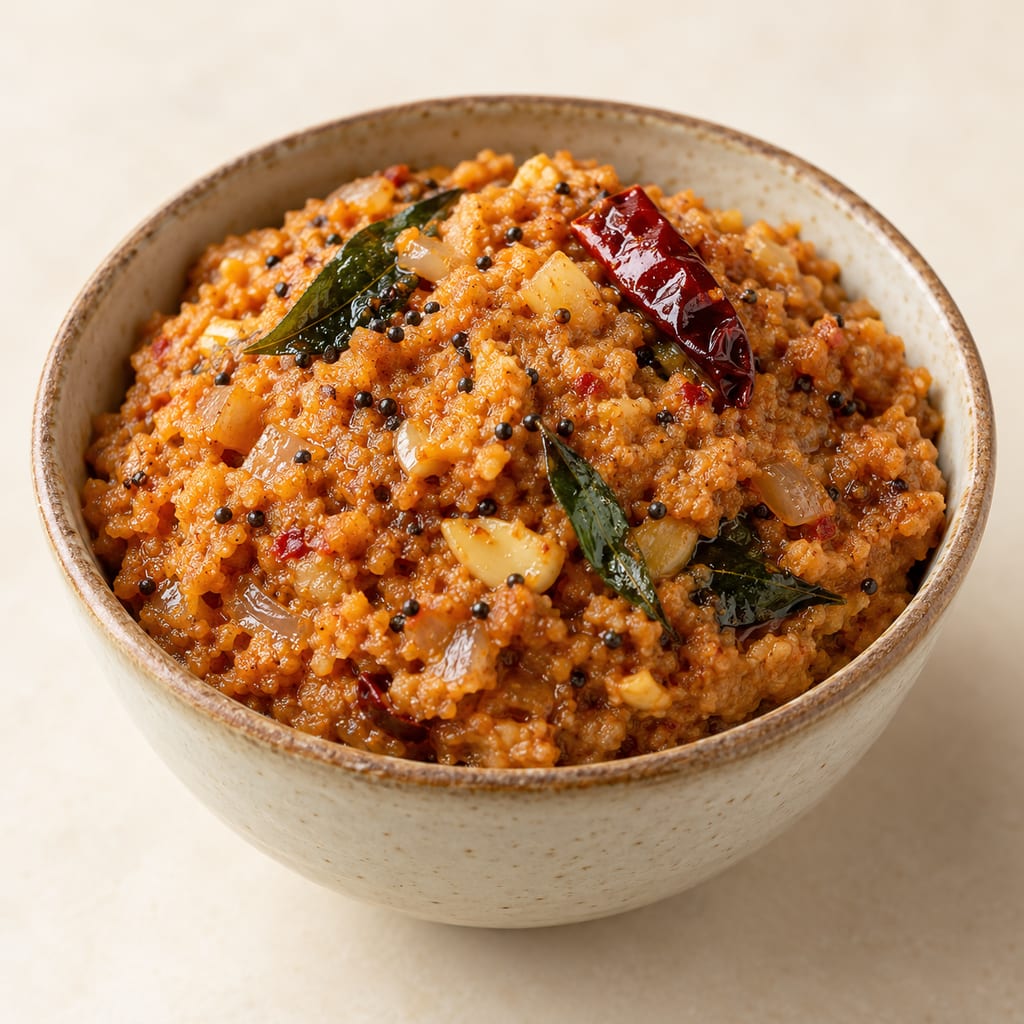
A source-specific groundnut pacchadi with roasted peanuts, cooked onion, garlic, dried chile and tamarind, finished with mustard and curry leaves.
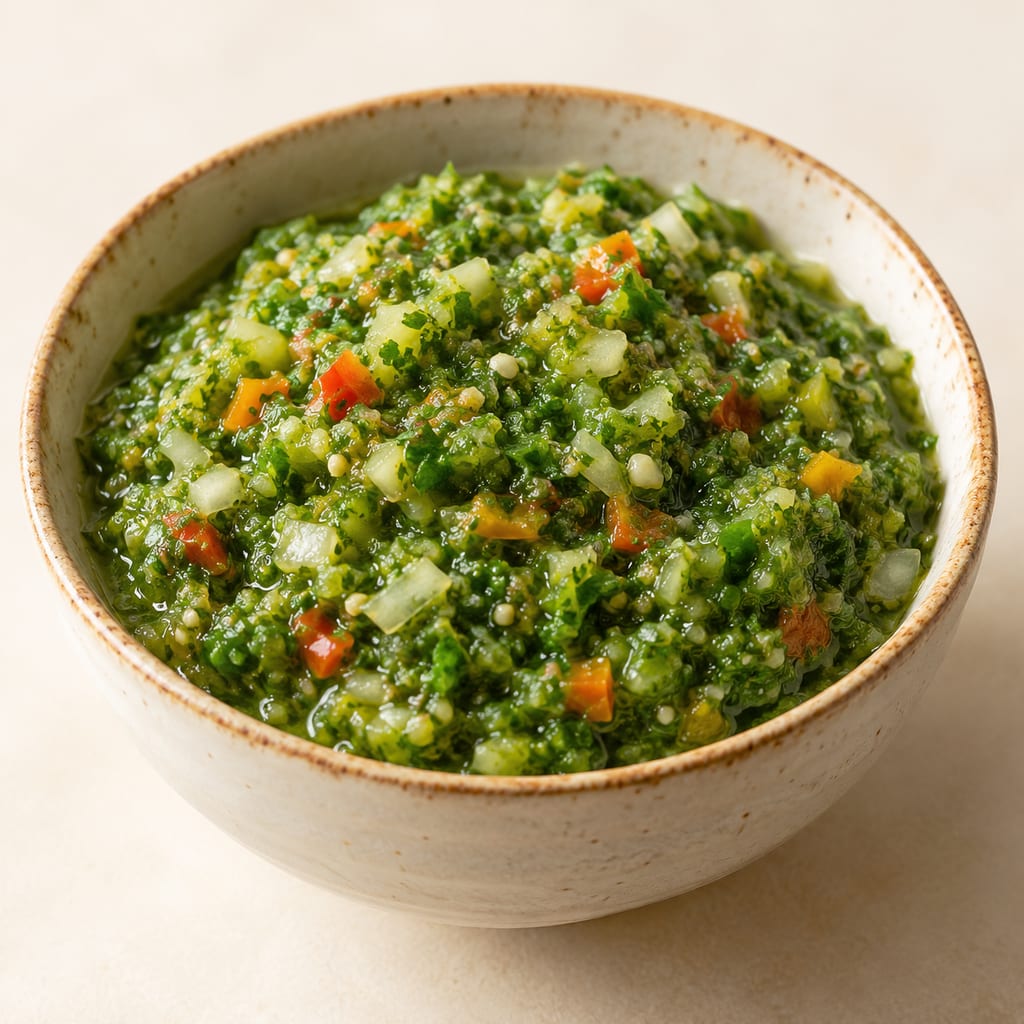
Puerto Rican sofrito, also called recaíto, is a raw paste of culantro, ají dulce, onion, garlic and peppers that starts many island dishes.
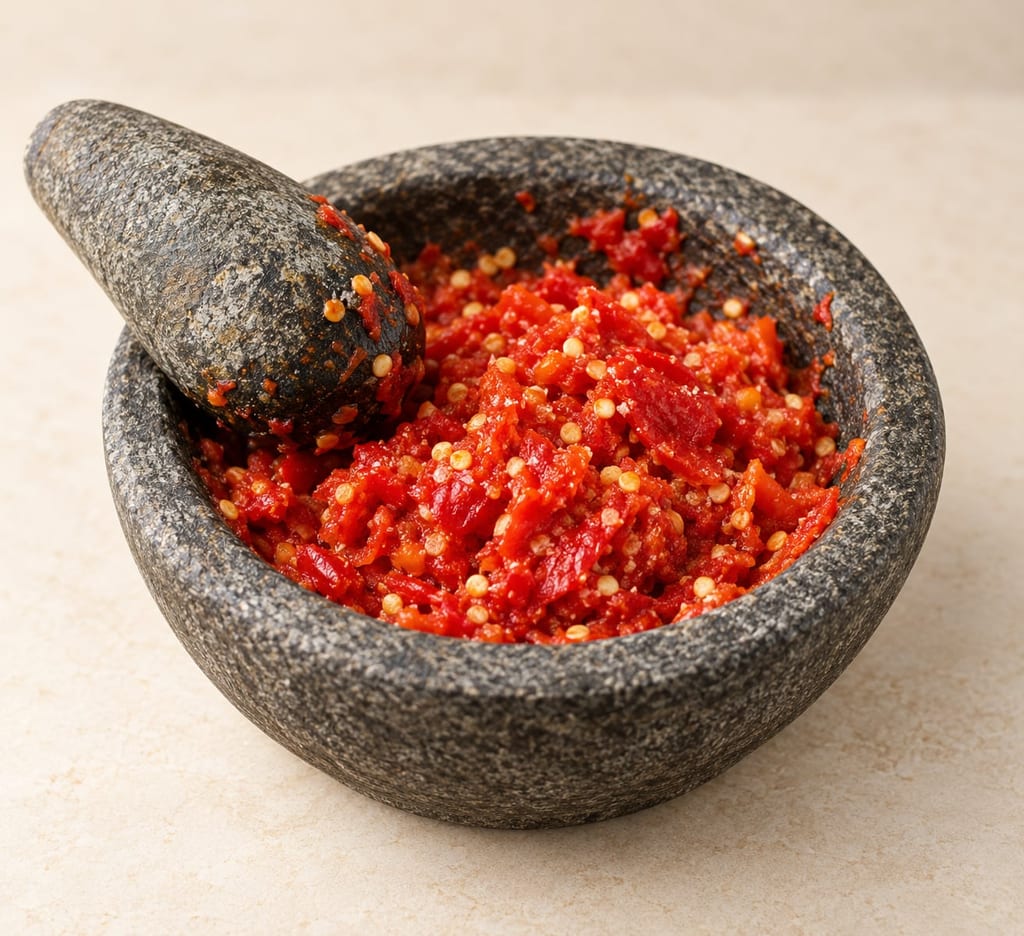
Sambal ulek or oelek is Indonesian chilli paste in its plainest form: red chillies pounded or ground with salt, here with a little vinegar.
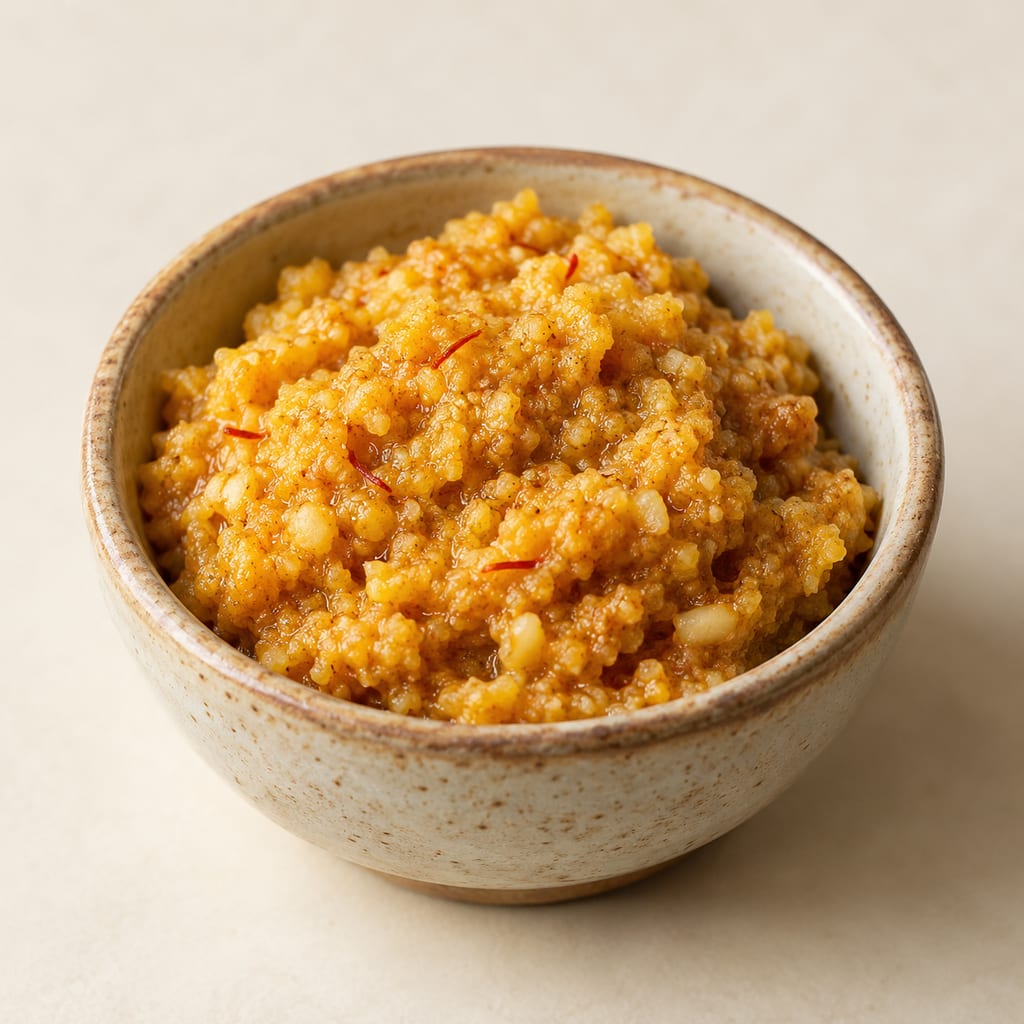
Picada is a Catalan pounded paste of toasted almonds, dry bread, garlic and saffron, stirred into a dish near the end of cooking to thicken and flavour it.
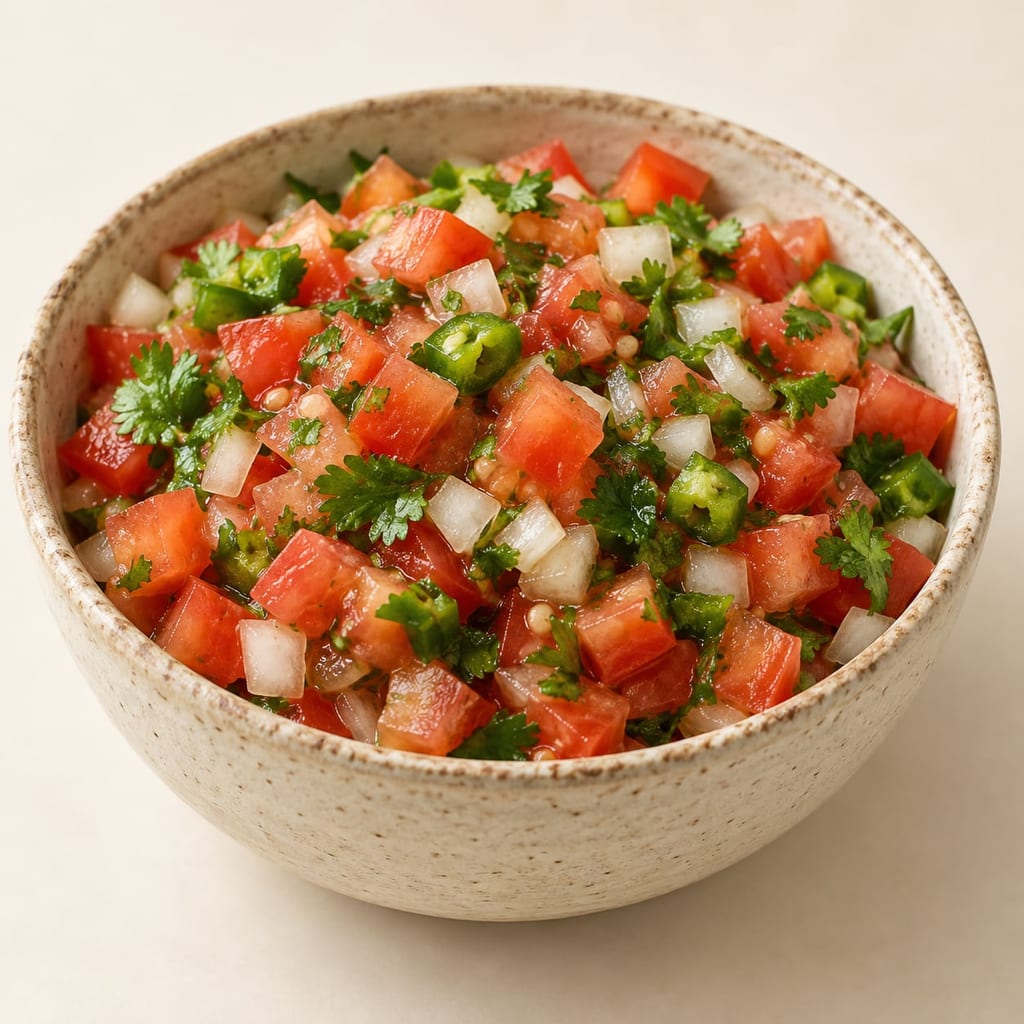
A fresh Mexican condiment of chopped tomato, onion, chile, cilantro and lime, served raw so that its pieces stay distinct. Its name translates as rooster's beak, and its origin is disputed.
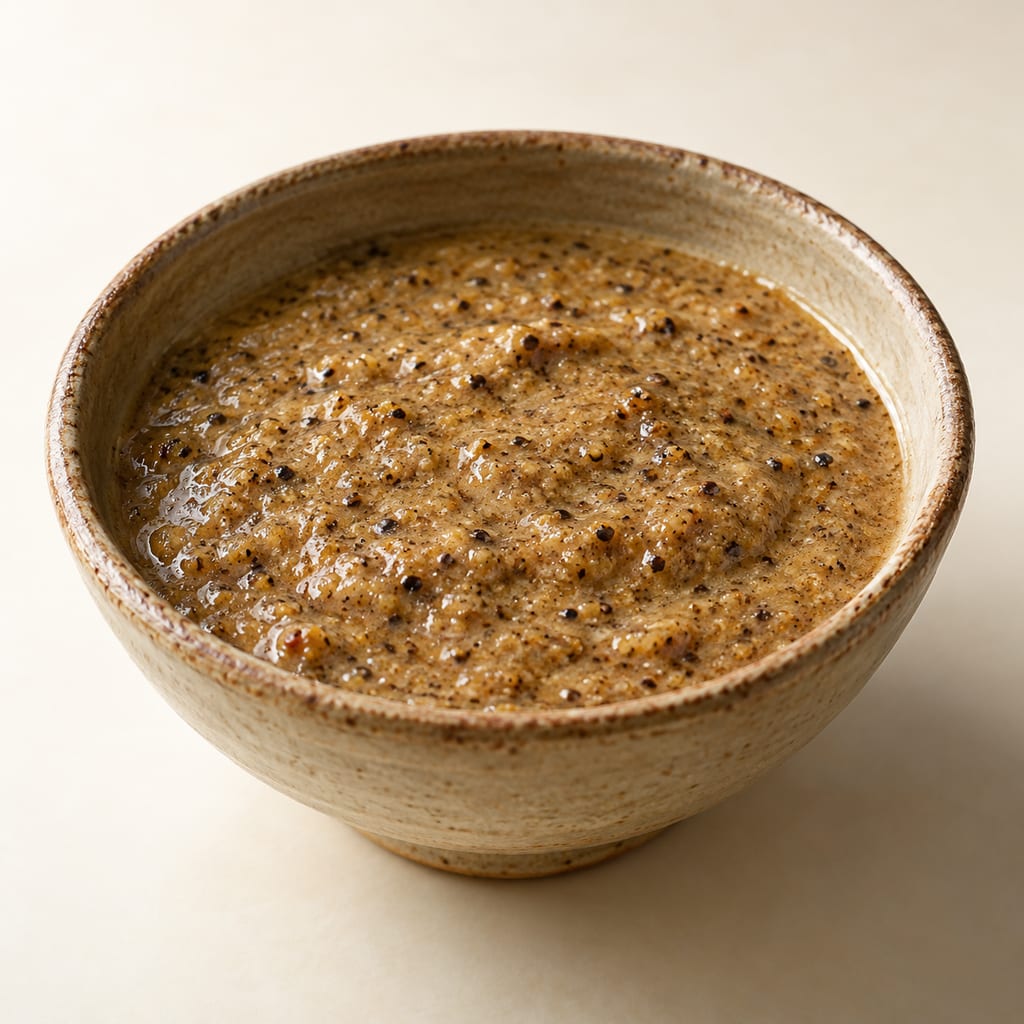
A pepper sauce of fried bread, broth and vinegar, given in The Forme of Cury, about 1390, for veal and venison. It is a historical sauce; the record gives no amounts or holding times.
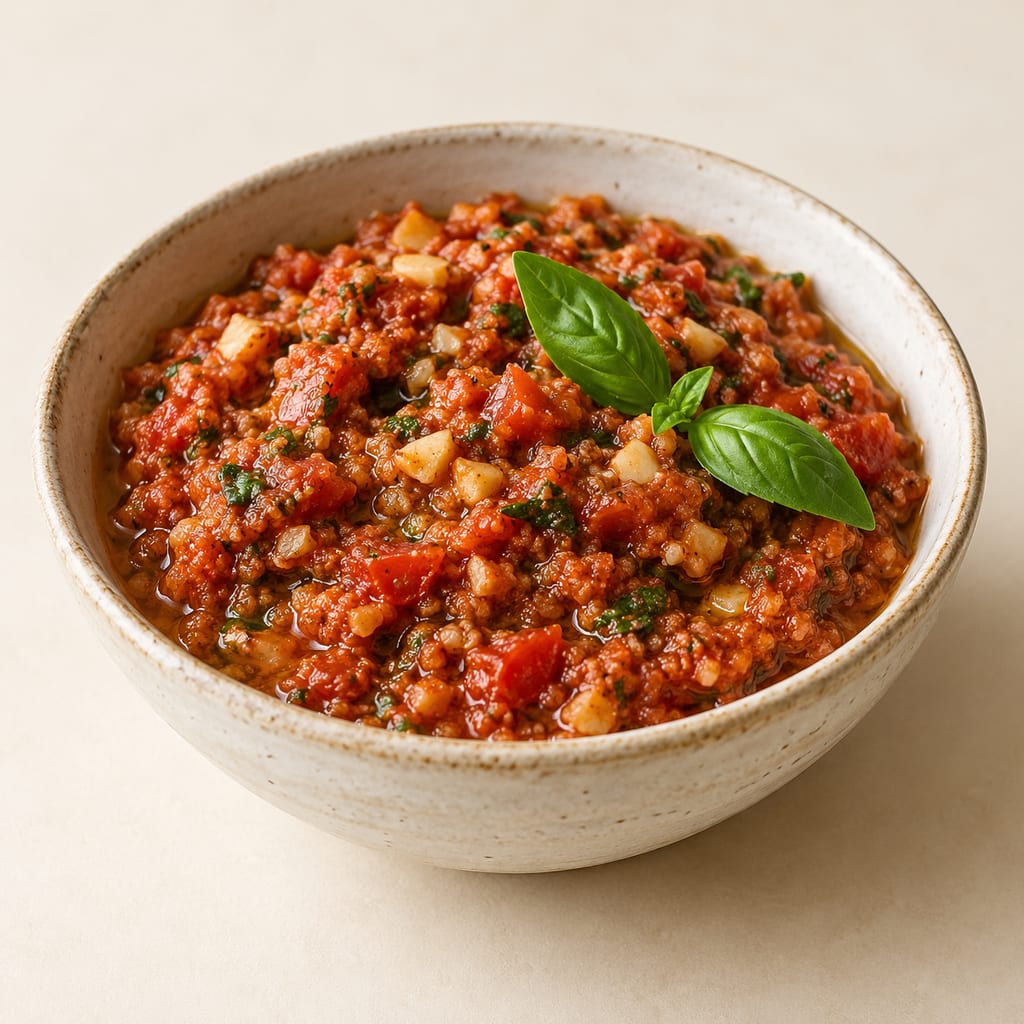
Pesto alla trapanese is a Sicilian sauce of fresh tomato and almonds pounded with basil, a red counterpart to Genoese pesto.
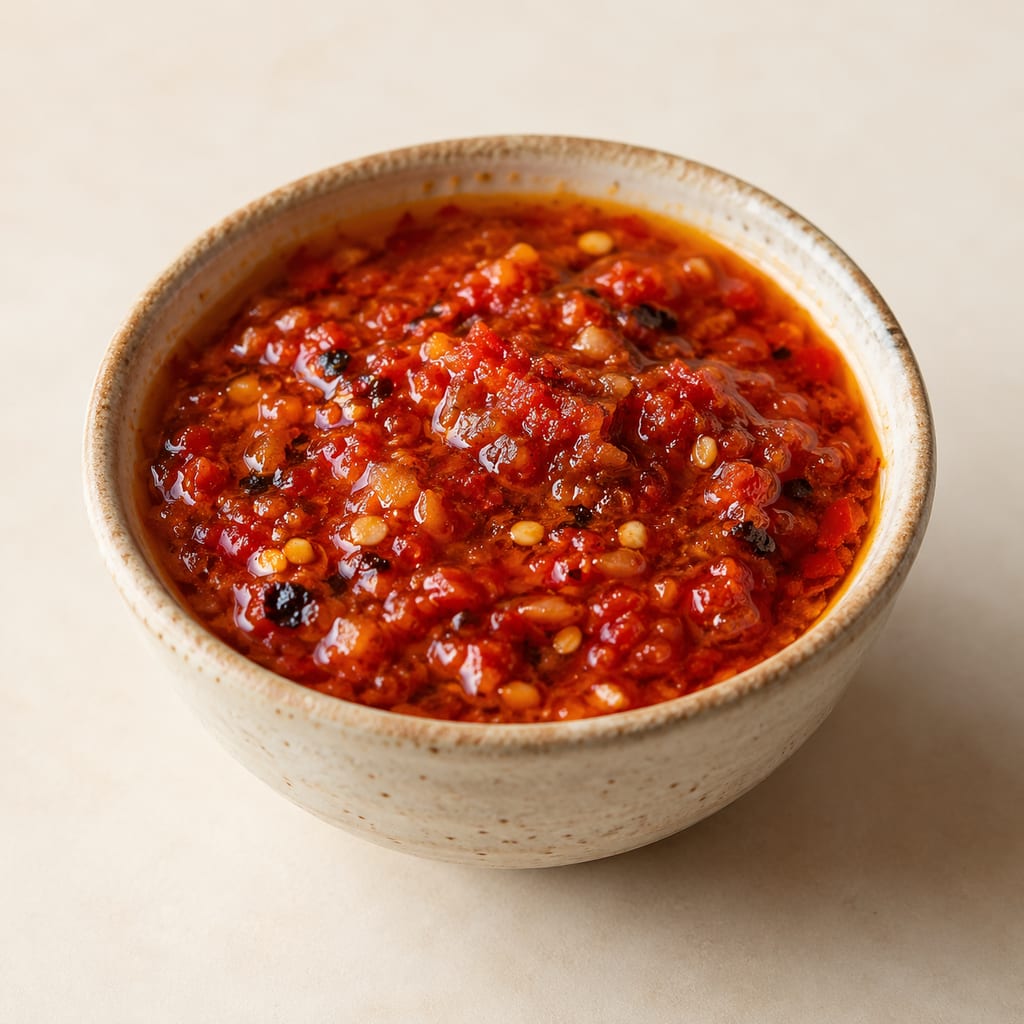
A chilli sauce built on the African bird's eye chilli, the cultivar called piri piri, with garlic, citrus and an oily or acidic base; its origin is uncertain and linked to Portuguese trade in southern Africa.
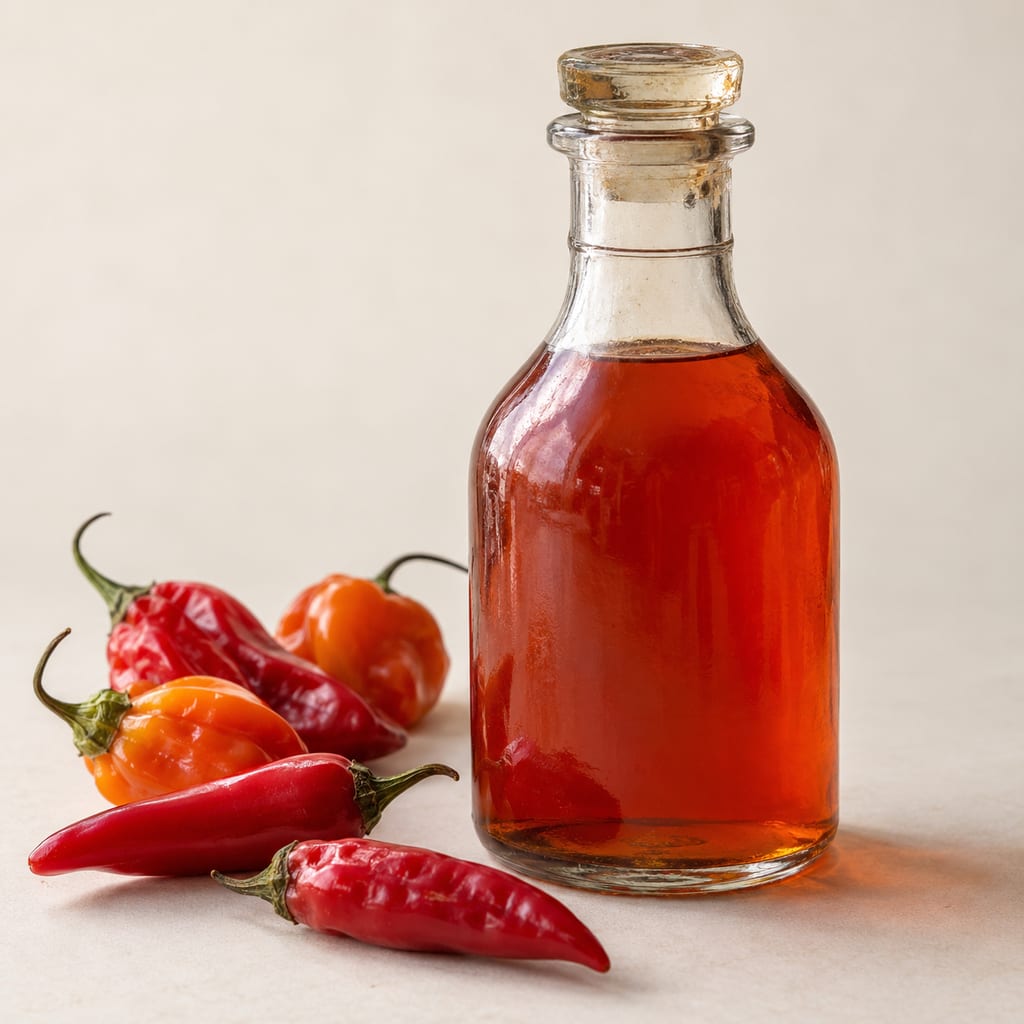
Mary Randolph's pepper vinegar: ripe pepper pods simmered in vinegar until the liquid is reduced to one quart, then strained for use in gravies and catsups. From The Virginia Housewife.
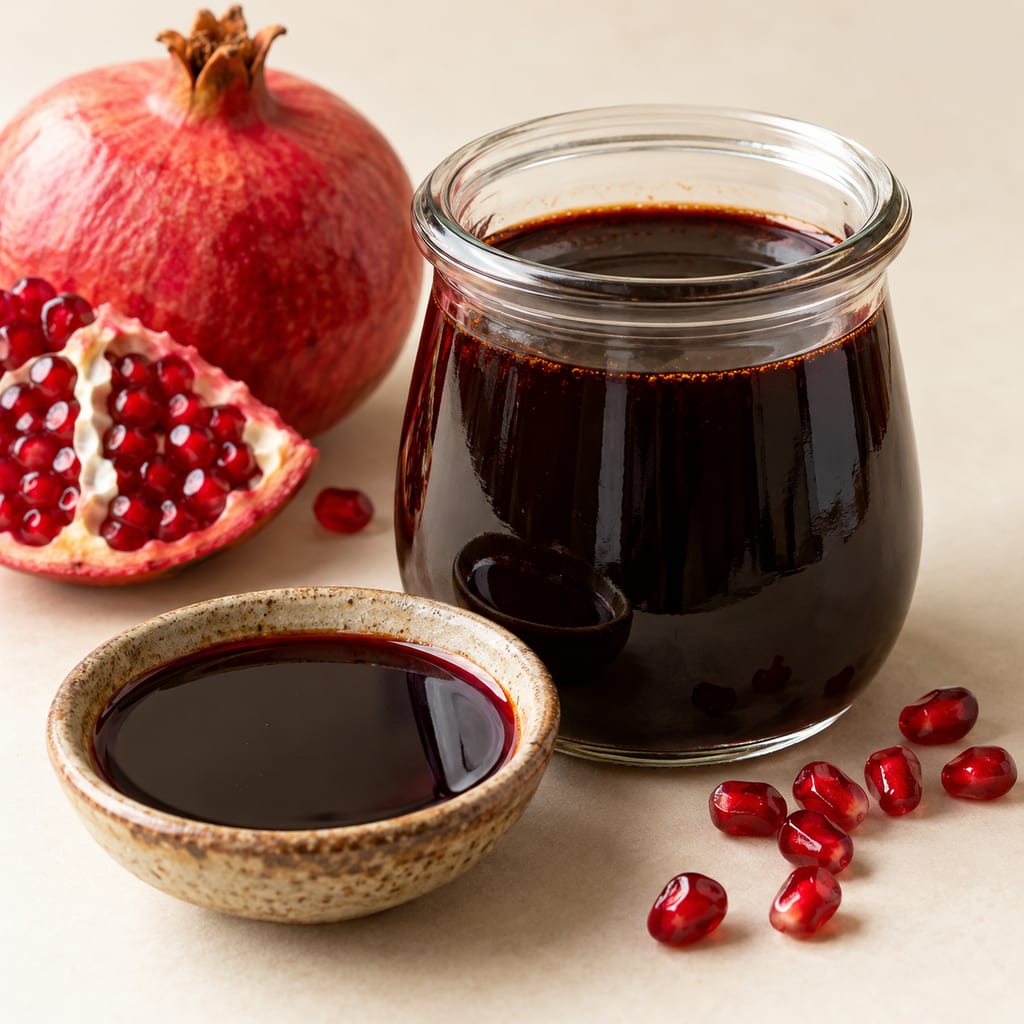
A thick, sour condiment made by reducing pomegranate juice over heat until it is concentrated, used across the Middle East, the South Caucasus and the Balkans in dressings, stews and grilled dishes.
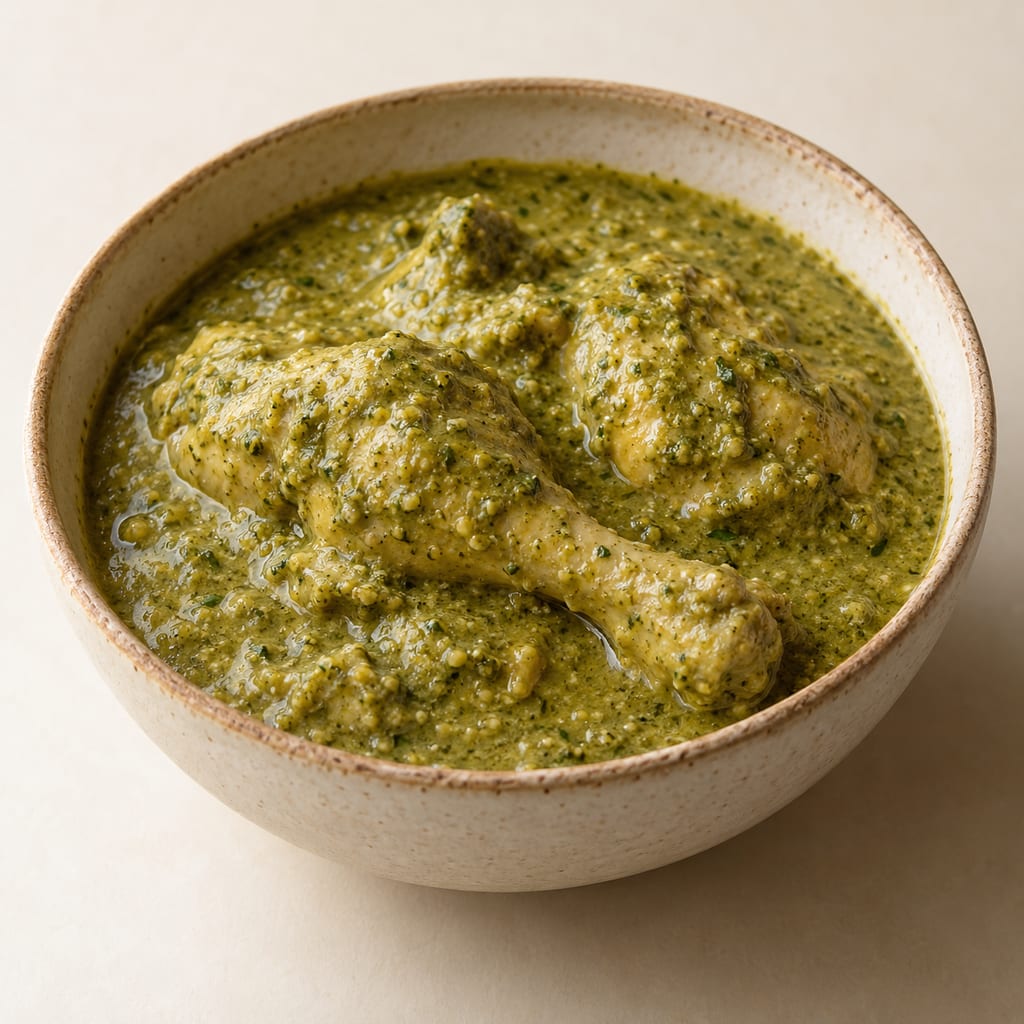
Pipián is a Mexican sauce family built on ground squash seeds, cooked with tomatillo or chile and herbs. The green version uses tomatillo and hoja santa; red versions add peanut, sesame and dried chile.
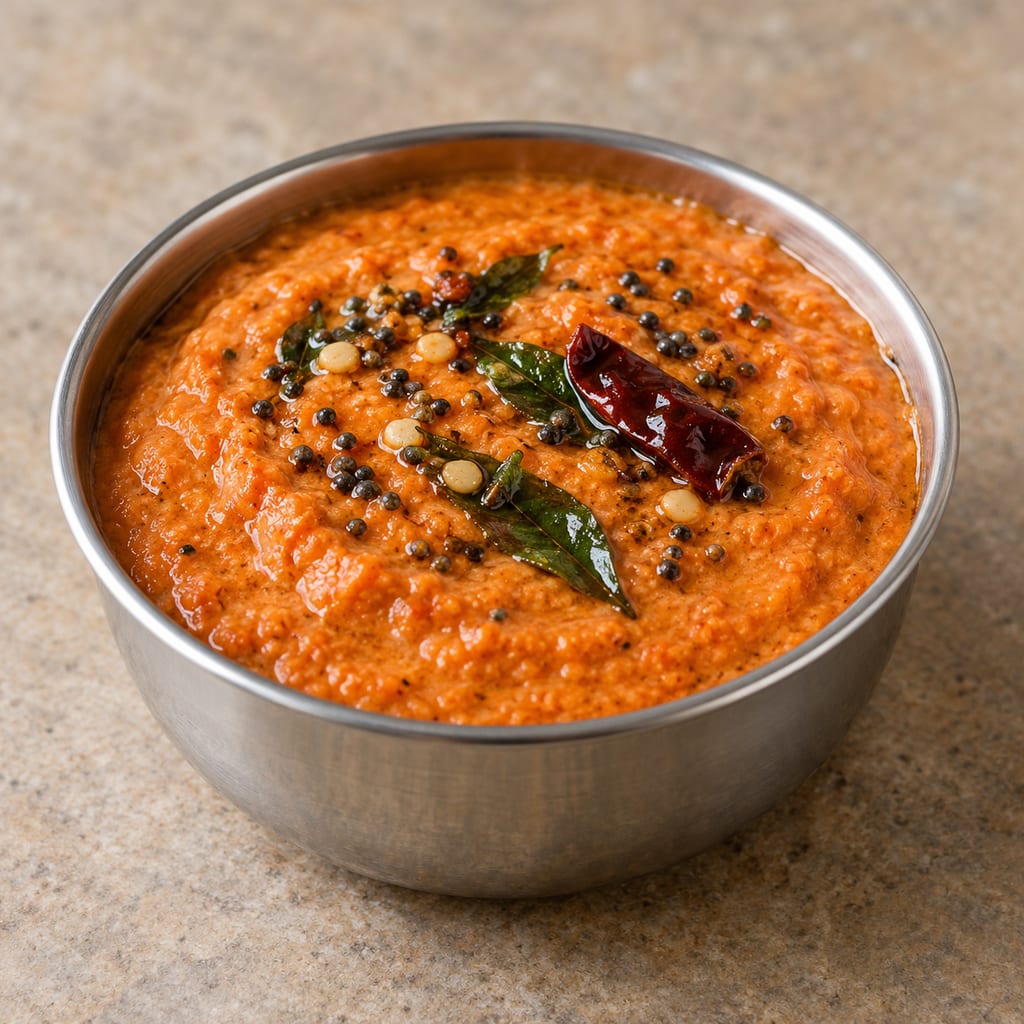
A South Indian chutney of onion and tomato cooked soft with chillies, ginger, tamarind and coconut, cooled, blended and finished with a mustard and curry-leaf tempering, for idli and dosa.
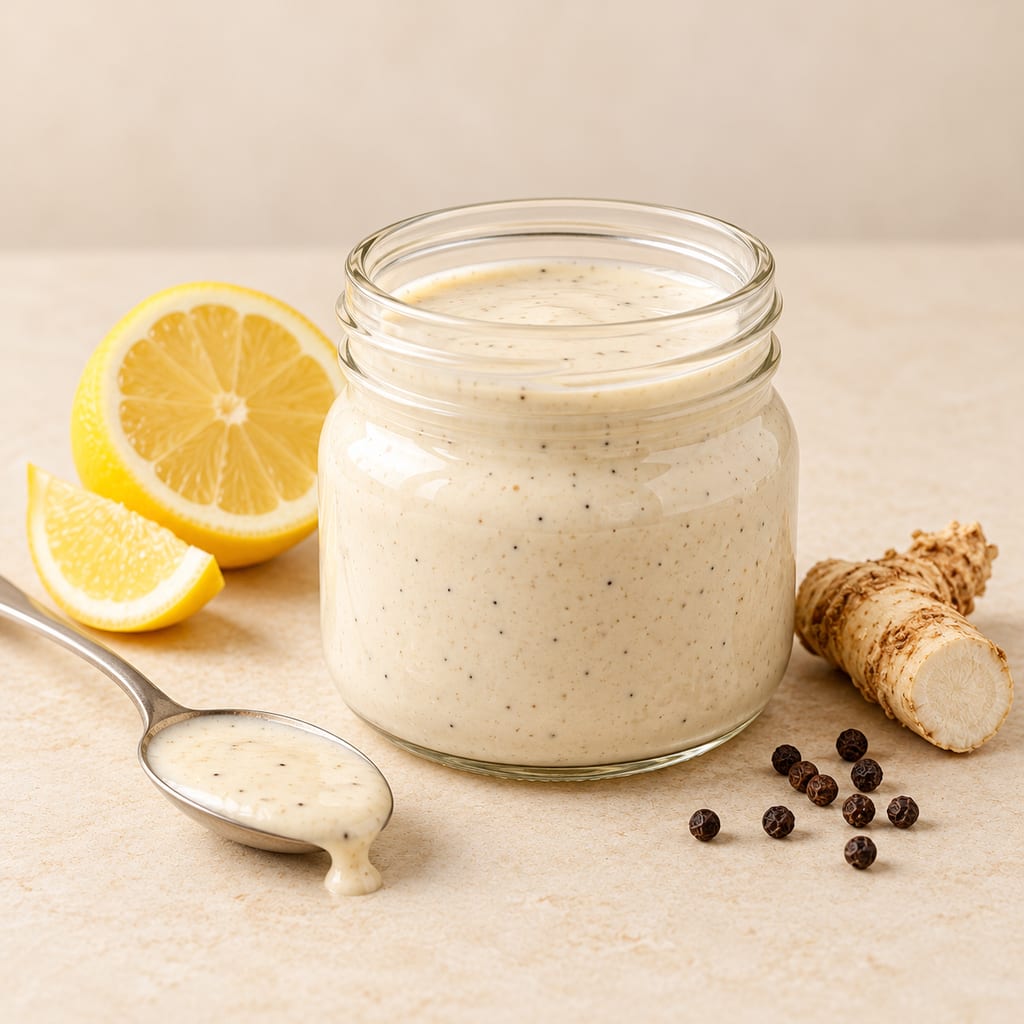
A whisked, mayonnaise-based Alabama-style sauce with vinegar, lemon, honey and horseradish. The measured batch below comes from a contemporary published recipe; it is not presented as Big Bob Gibson’s original or secret formula.
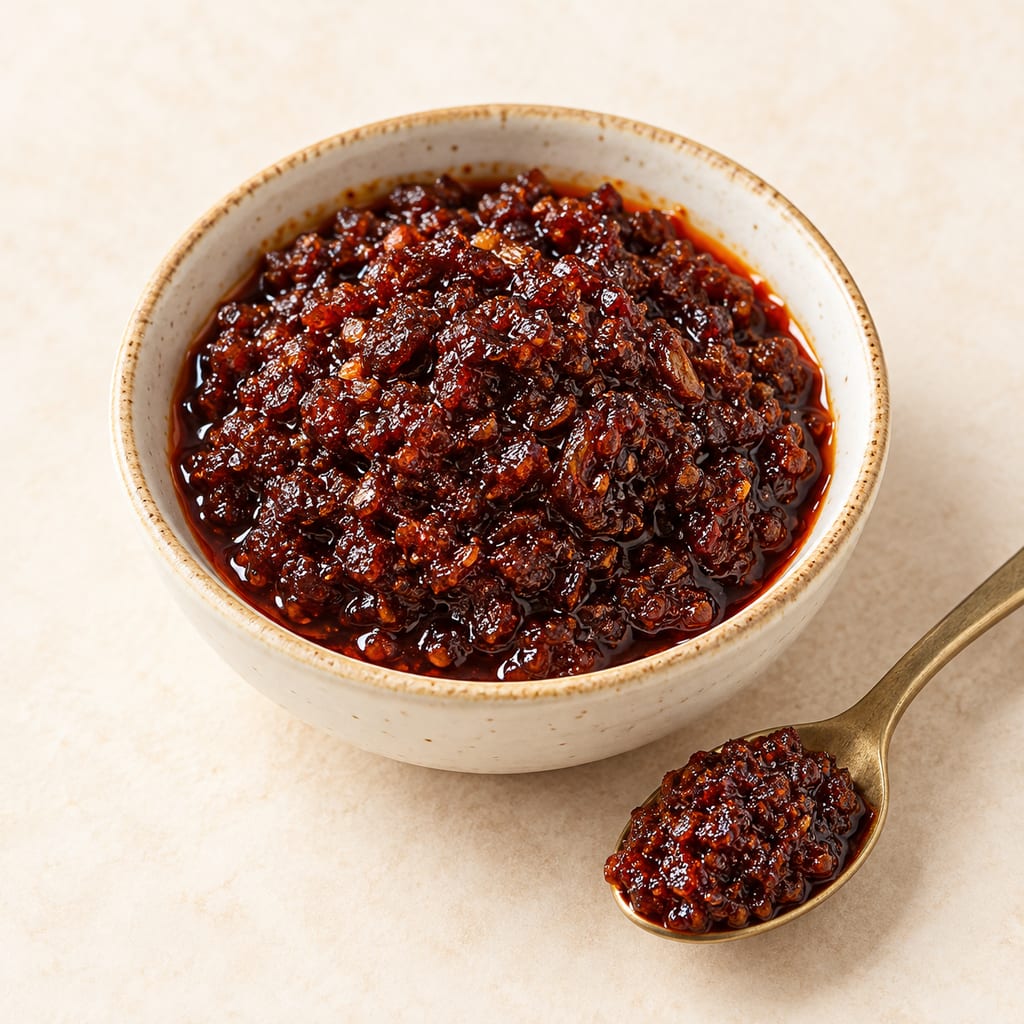
Nam prik pao is a Thai roasted chilli paste, sweet, salty and sour with only mild heat, used as a dip, a spread and a seasoning for cooked dishes.
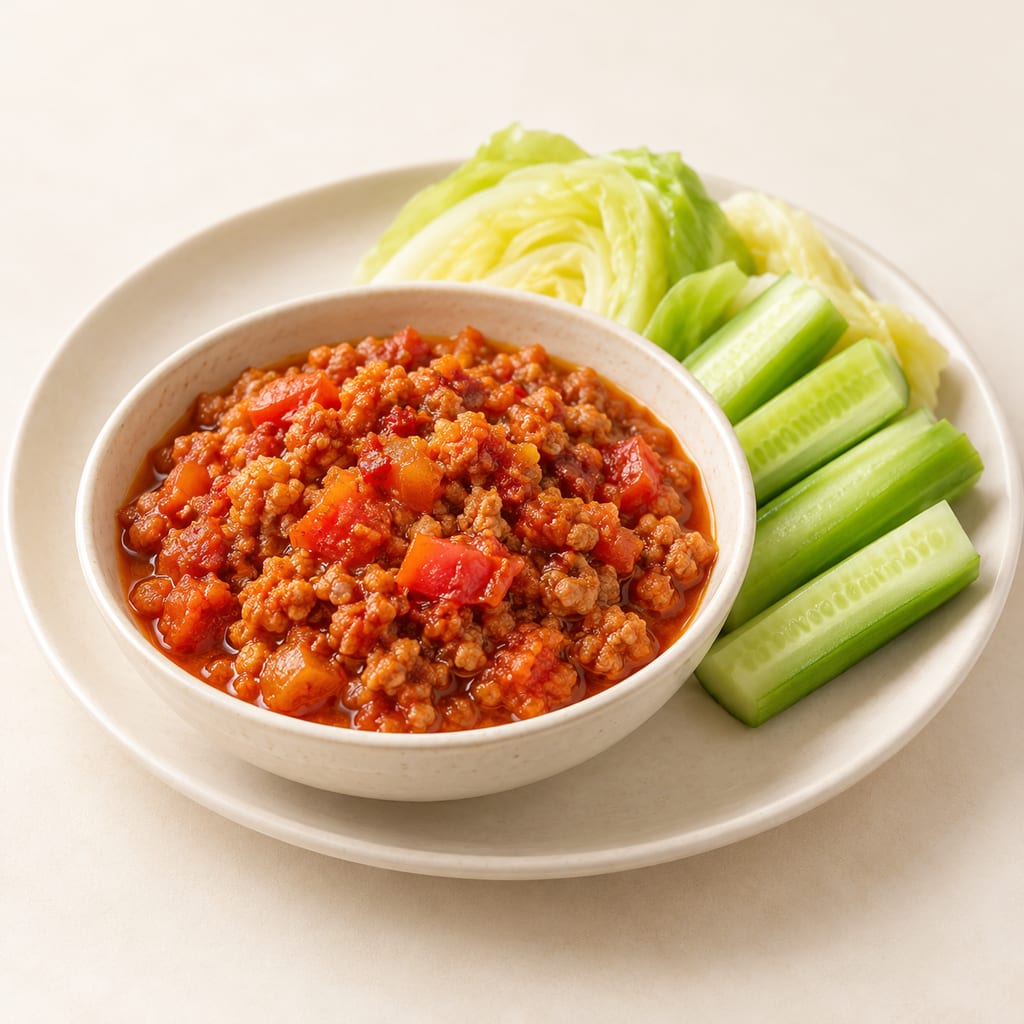
Nam prik ong is a cooked Northern Thai dip of chilli, tomato and minced pork, seasoned with fermented soybean and eaten with vegetables, pork rind and eggs.
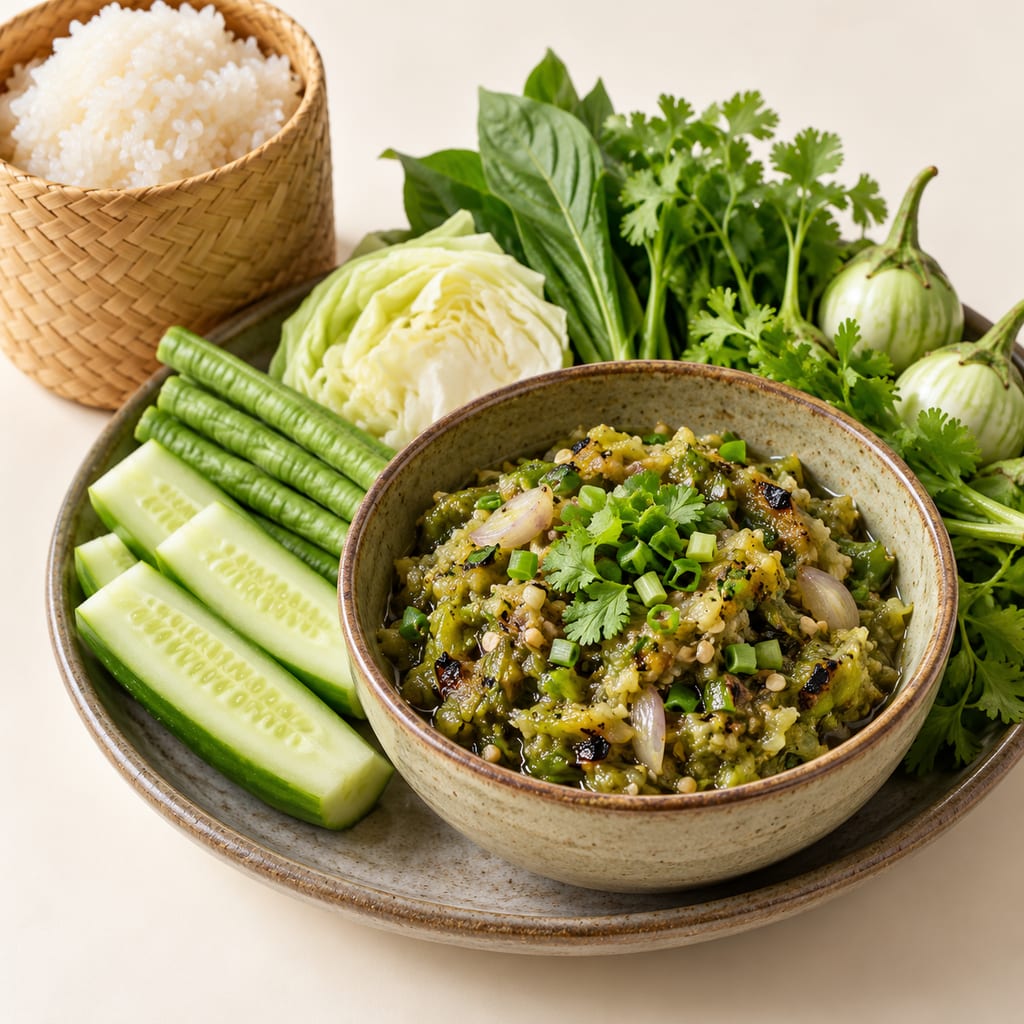
Grilled young green chillies, shallots and garlic are pounded with salt into a coarse northern Thai dip, finished with coriander and spring onion and eaten with sticky rice and vegetables.
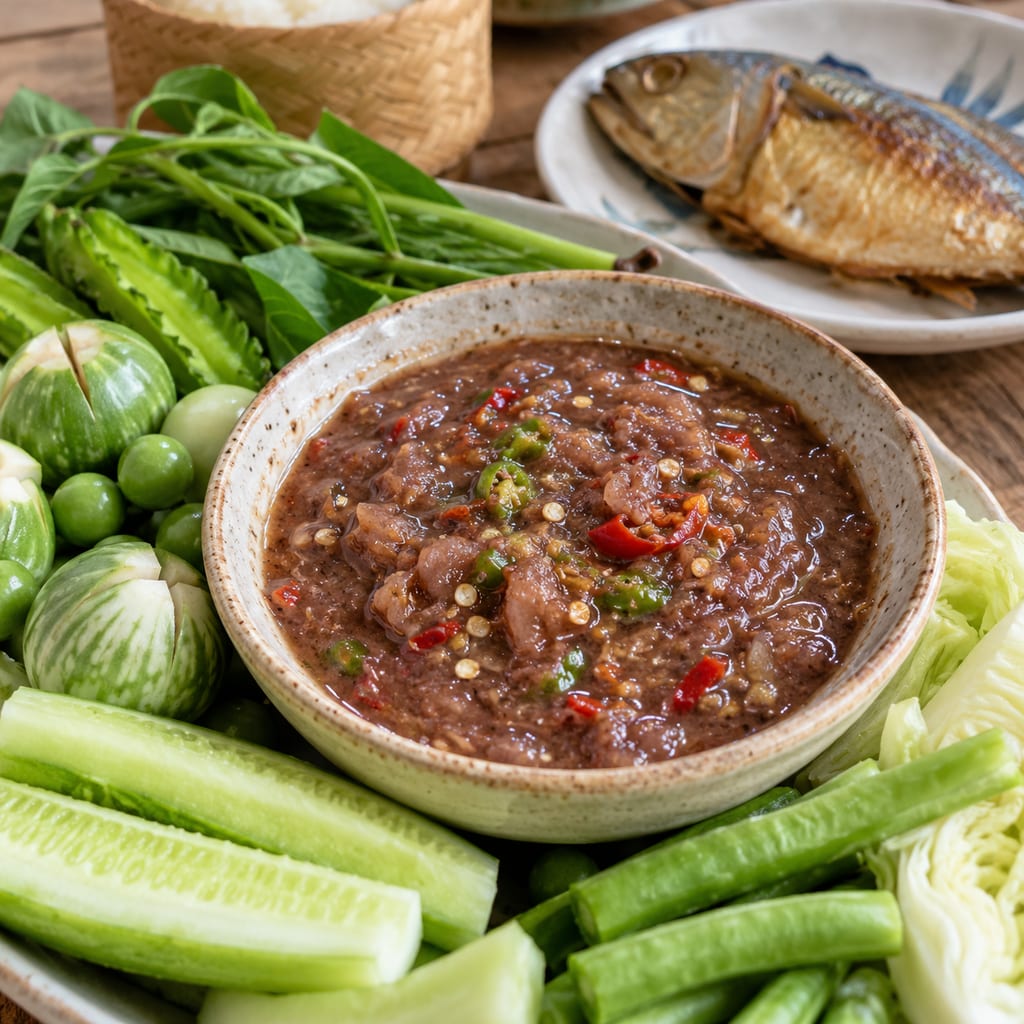
Nam prik kapi is a Thai dip of matured shrimp paste pounded with garlic, bird's eye chilli and lime or tamarind, eaten with vegetables and rice.
Roasted chillies, shallot and garlic are pounded and loosened with fermented and plain fish sauce, boiled water and lime into a sharp Isan dip for grilled meat and fish.