









































Elevated risk
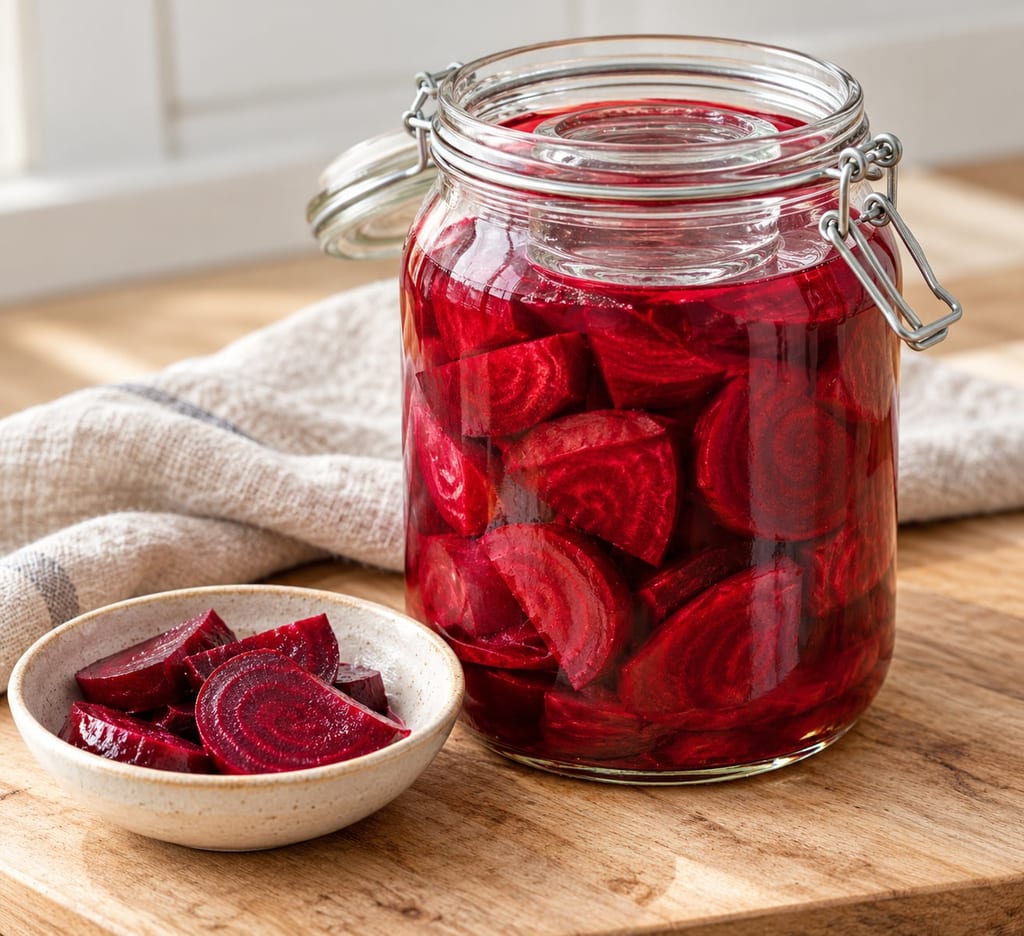
Lacto-fermented beets
Raw beetroot cut and packed into a jar under a salt-water brine, fermented until sour and deeply coloured; the batch weight is not recorded.
 FermenteaWhere food goes to change
1504 records with their sources, across 11 categories.
 Fermented, enzyme-ripened and mixed seasonings328
 Fruit preserves10
 Legume, seed and plant-protein ferments10
 Garum and fish sauces8
 Adjacent and excluded7
 Koji, mold starters and mold-ripened ferments4
 Acid and oil pickles3
 Fermented fruit and fruit-derived foods3
 Vegetable lactic3
 Dairy ferments2
 Smoked salted and dried foods2
 Cheese1
 Not yet classified1
 Lactic-fermented vegetables and shoots93
 Fruit preserves20
 Acid and oil pickles11
 Adjacent and excluded7
 Grain and starch ferments5
 Condiments and enzymatic seasonings4
 Smoked salted and dried foods2
 Not yet classified1
 Unfermented breads1
Raw beetroot cut and packed into a jar under a salt-water brine, fermented until sour and deeply coloured; the batch weight is not recorded.
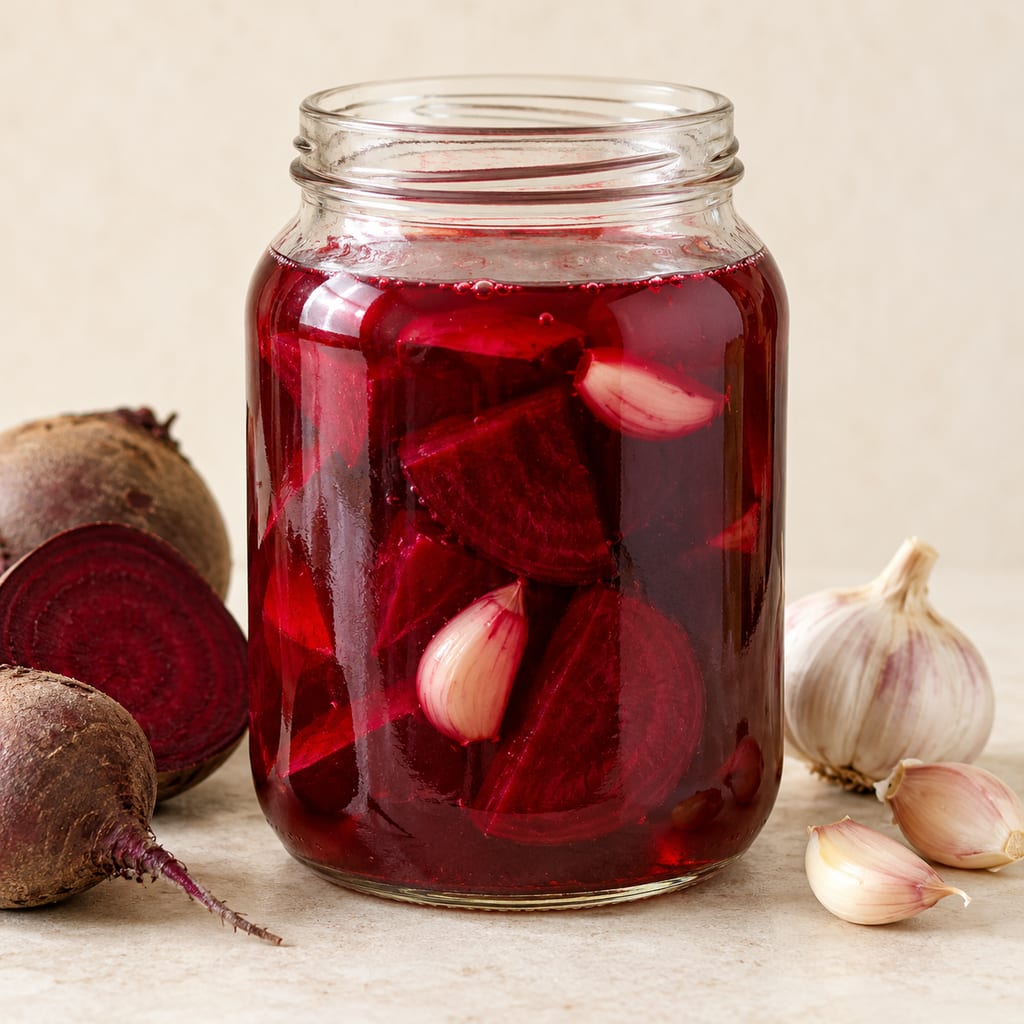
Zakwas buraczany is the fermented red-beet liquid used as the sour base for Polish beet barszcz. The liquid is made from beetroot, garlic, salt and water, and the official sources give no quantities.
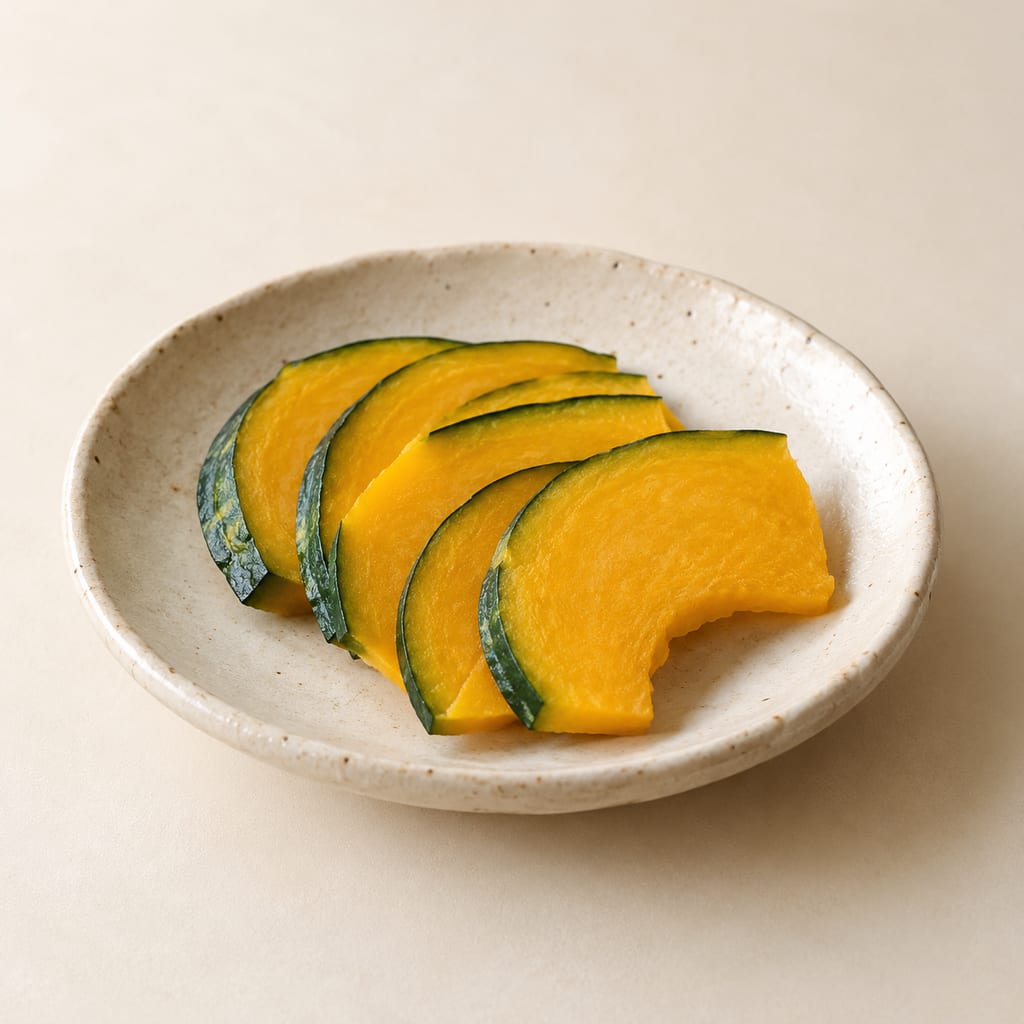
Kabocha no nukazuke: Refrigerated commercial fermented bed; use removed portions the same day.
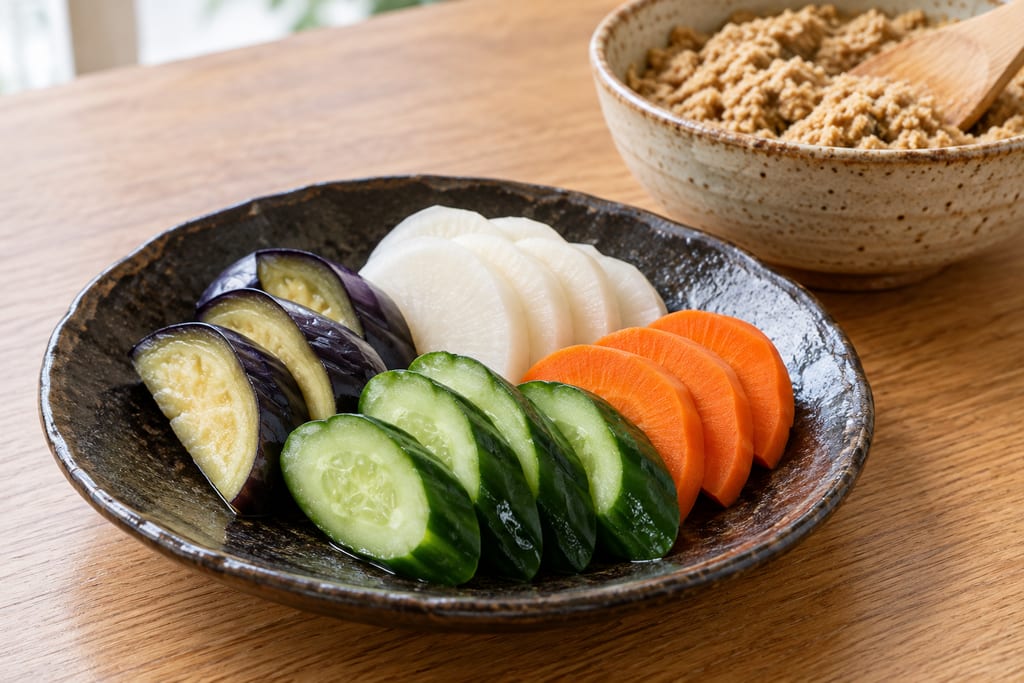
Japanese pickles made by burying vegetables in nukadoko, a reusable bed of rice bran, salt and water that is turned daily and ripened by lactic and yeast fermentation.
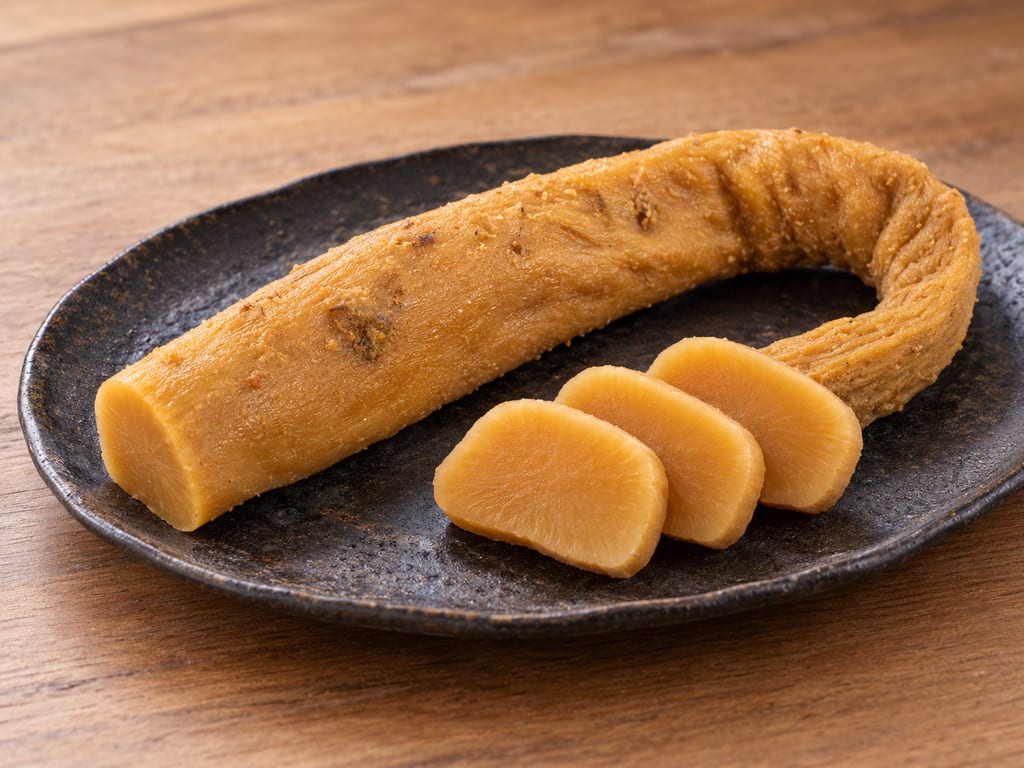
Regional takuan from Ise City, Mie, made with Misono daikon dried on a rack, then matured in a weighted barrel of rice bran and salt for months to years.
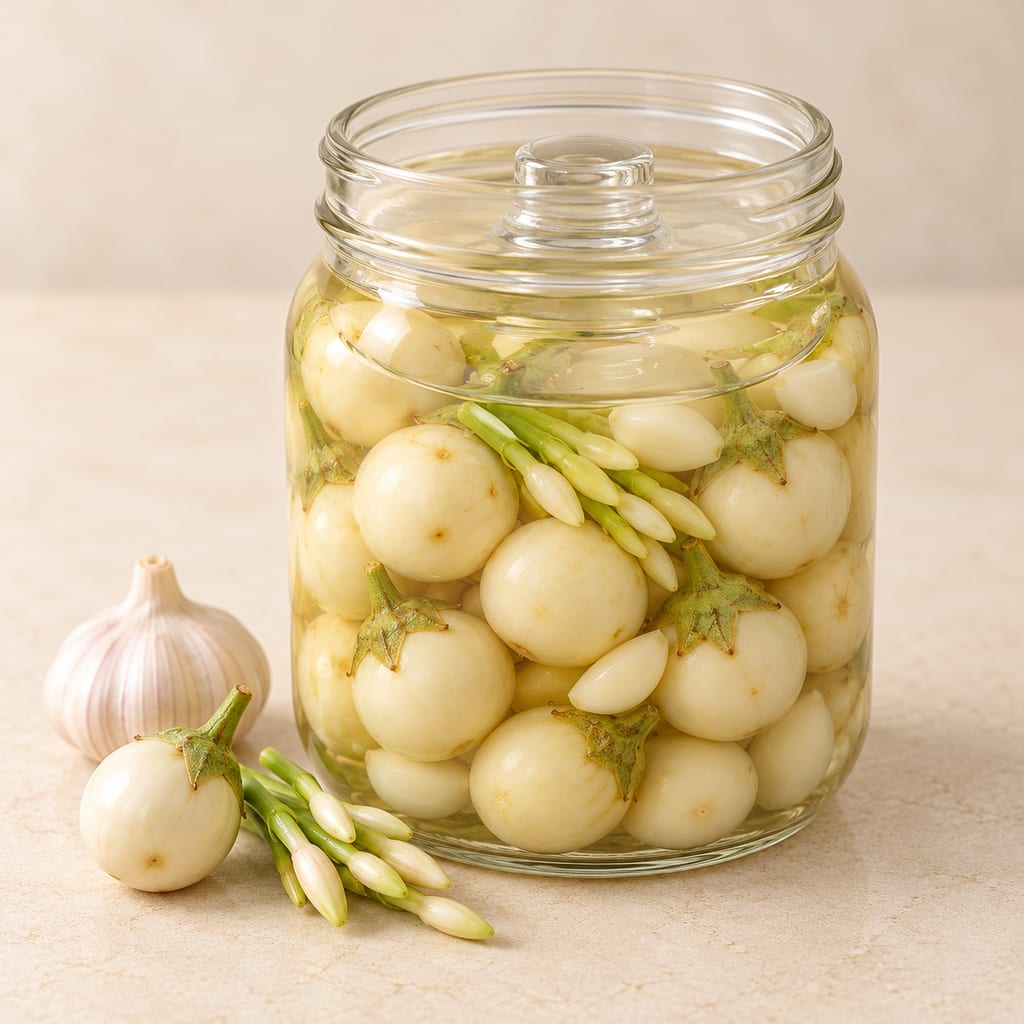
Vietnamese salted and fermented small eggplant, dried on the day of purchase, then held submerged in warm salty water with garlic and galingale flower for a week or longer.
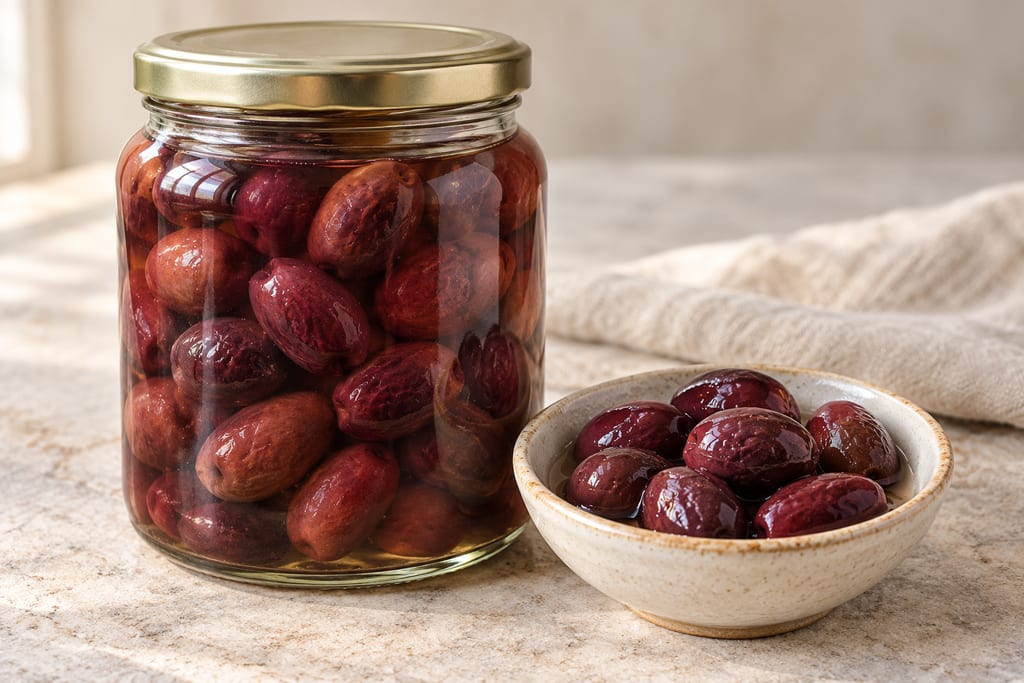
Ripe olives go straight into brine with no lye and cure for months, mostly by yeasts. The home method here is the University of California two-stage brine.
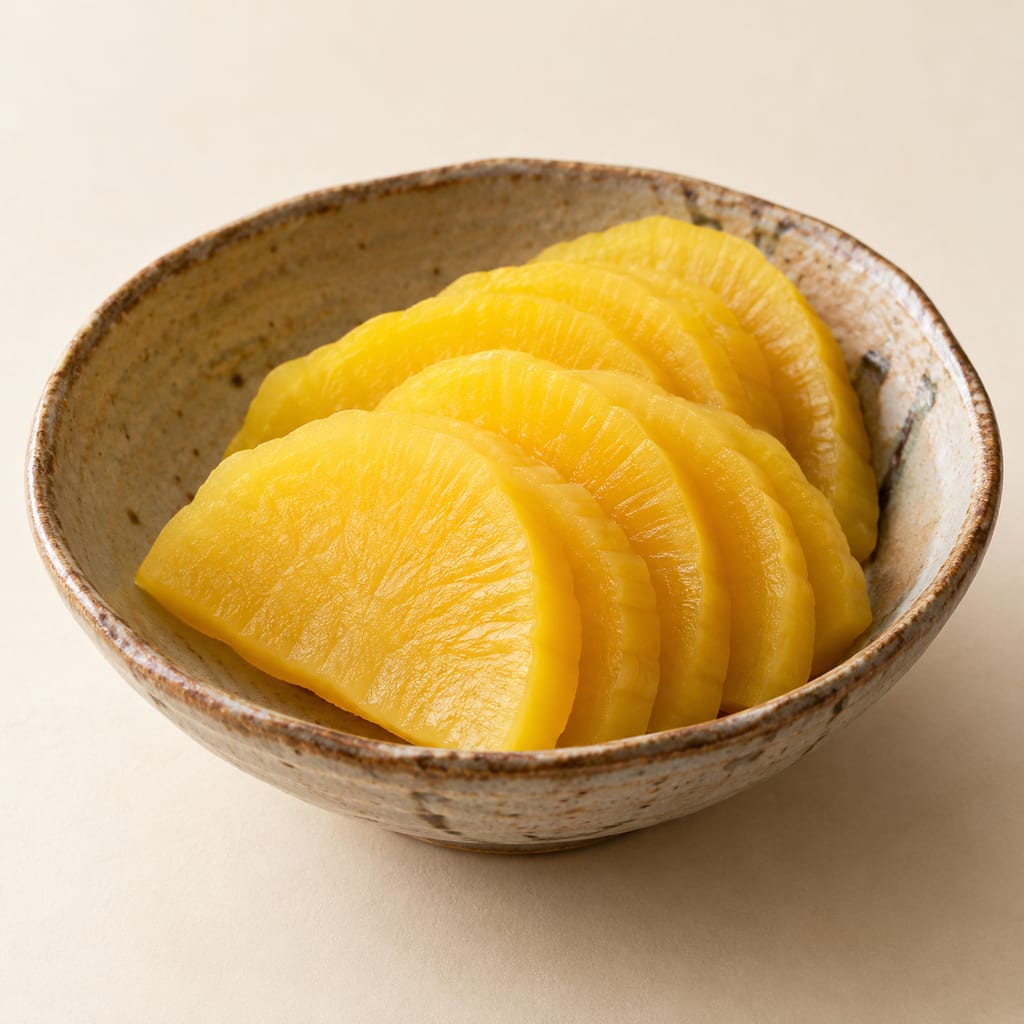
Japanese pickle of daikon roots dried for about two to three weeks, then matured for months in rice bran and salt under weight. Yamagata is its named association.
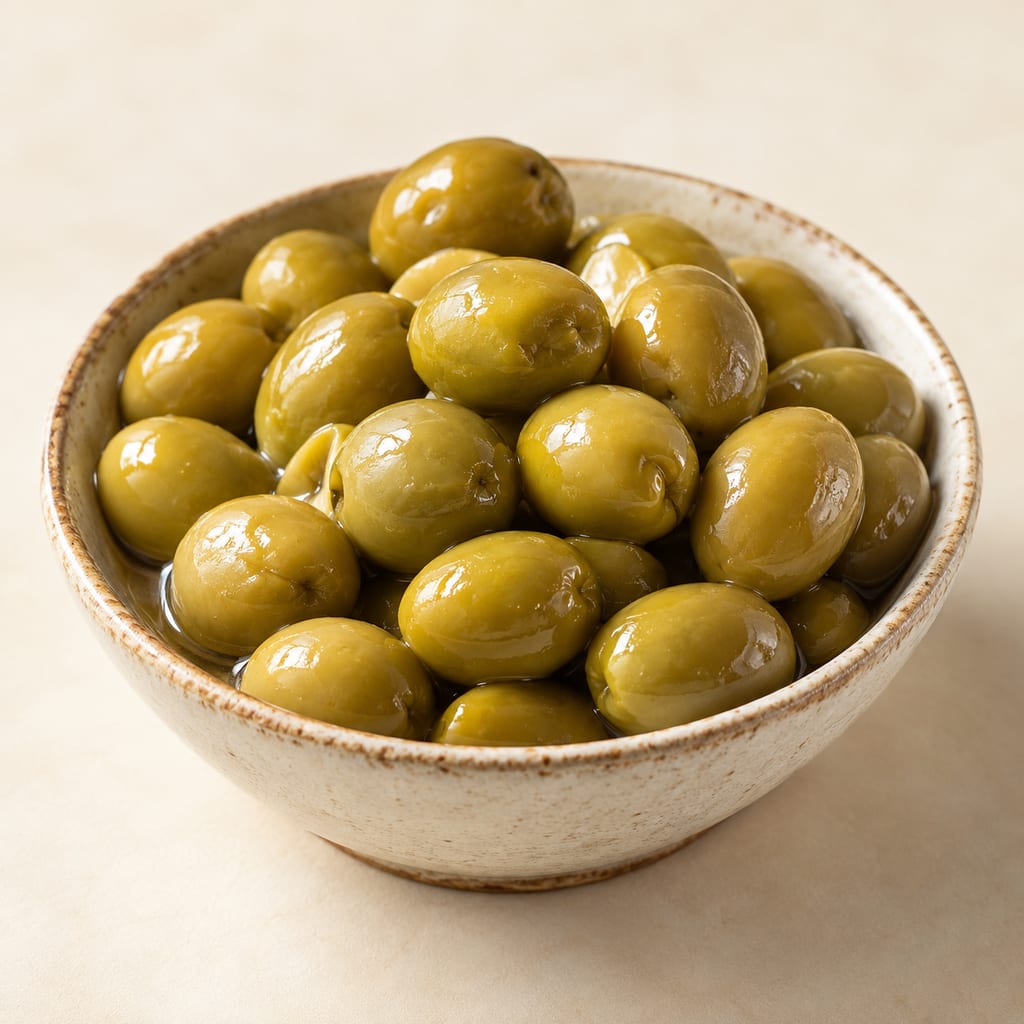
Spanish-style green olives, or Sevillian green olives, are green fruit treated with lye, rinsed, then fermented in brine for two to six months. The household batch here is a UC ANR method.
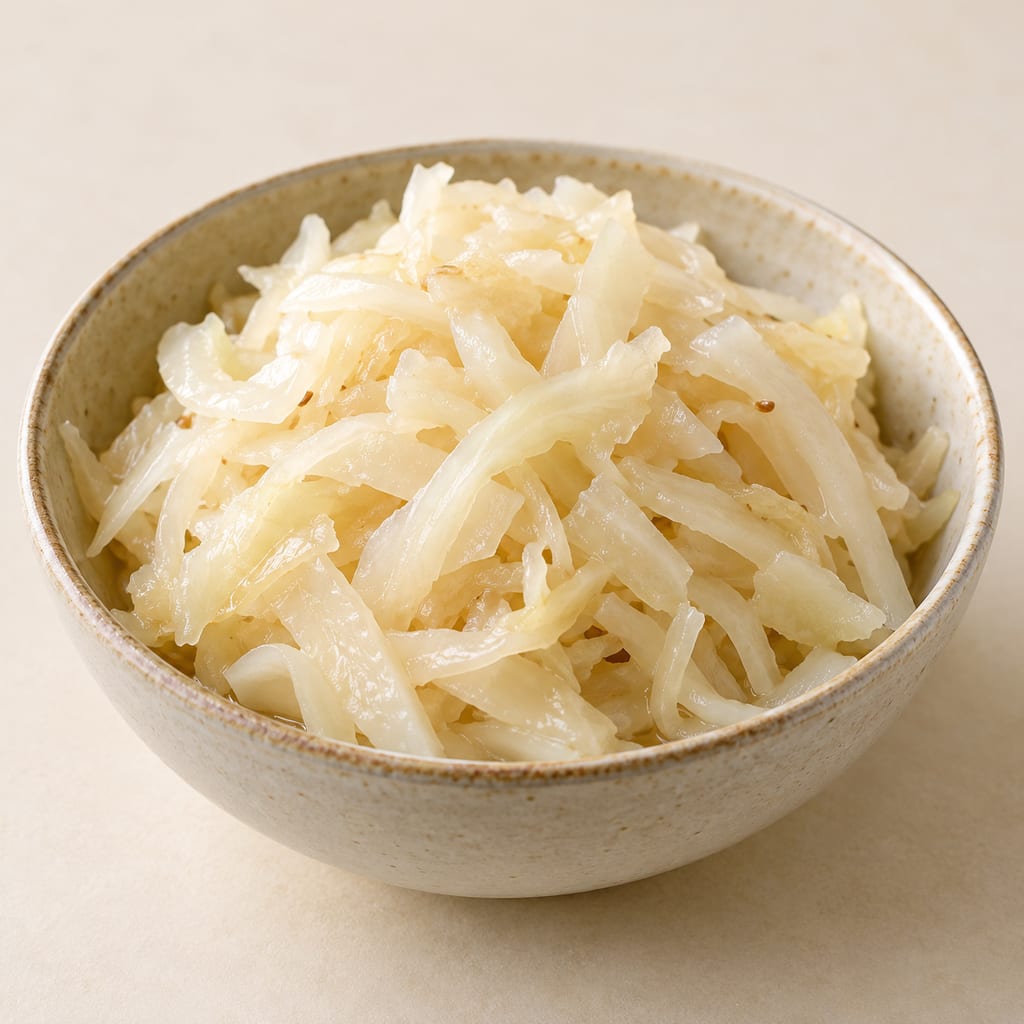
Swiss fermented white turnips, cut into strips, salted and fermented like sauerkraut; called compote aux raves in French-speaking Switzerland.
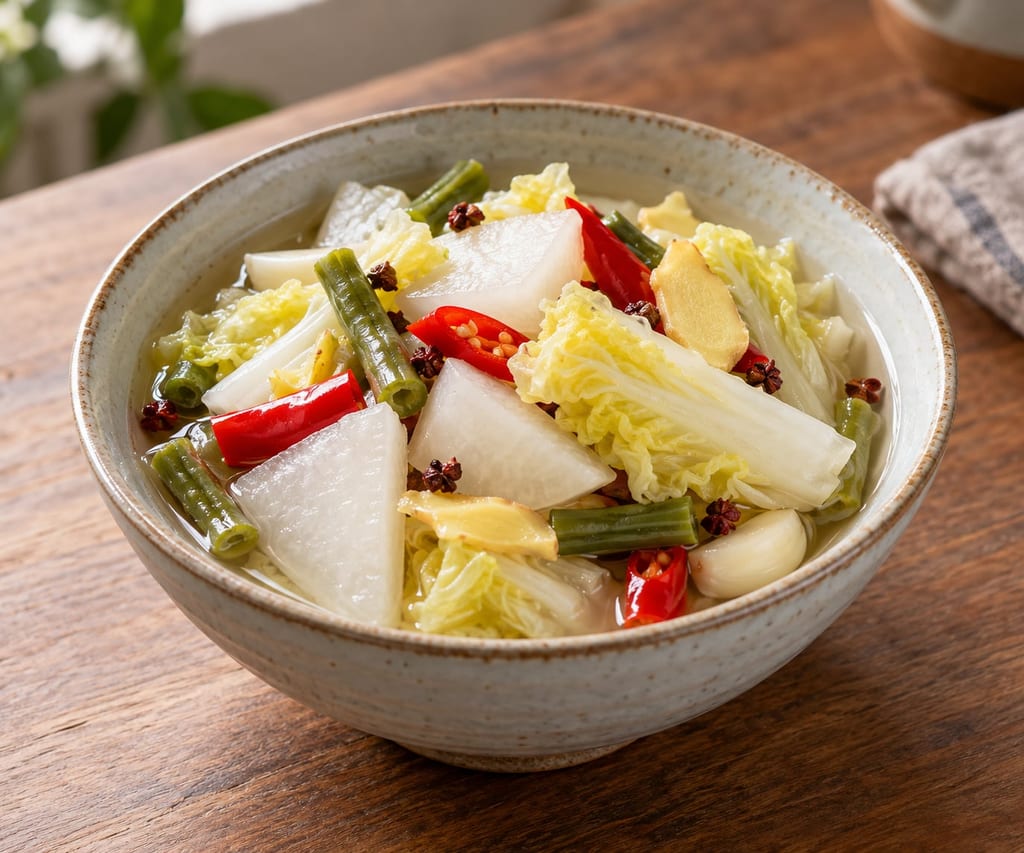
Sichuan paocai is a family of vegetables, most often radish, fermented by lactic-acid bacteria in a salted, spiced brine in a water-sealed pottery jar, with mature brine kept and reused.
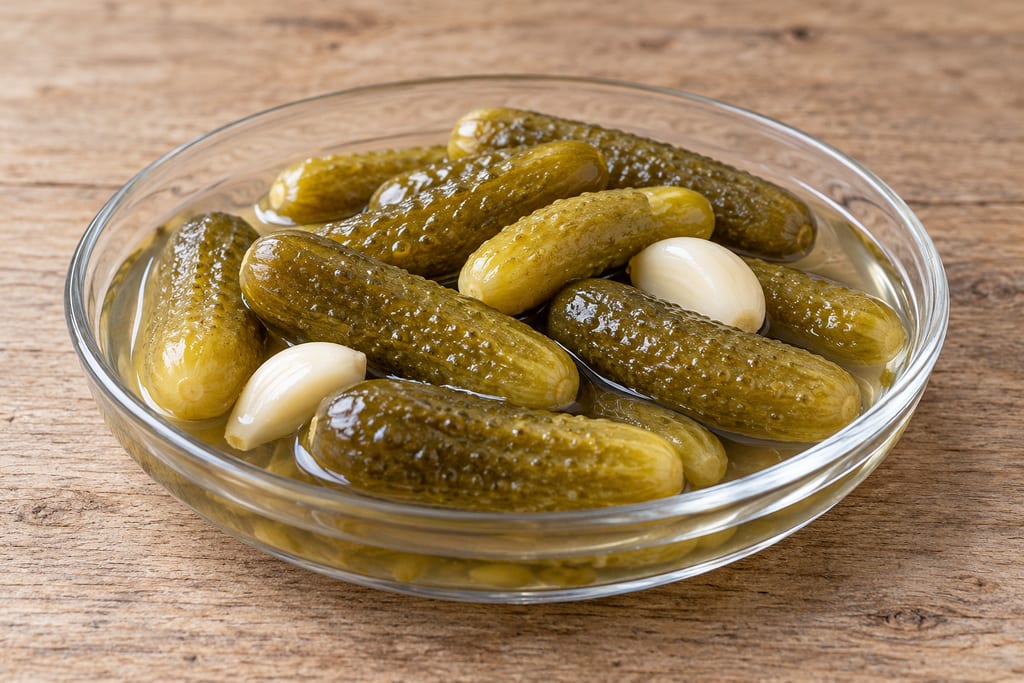
Cucumber variant of the registered Gedelek pickle family from Orhangazi, Bursa: cucumbers in a salt brine with garlic and a small amount of acid, held for about 20 to 30 days.
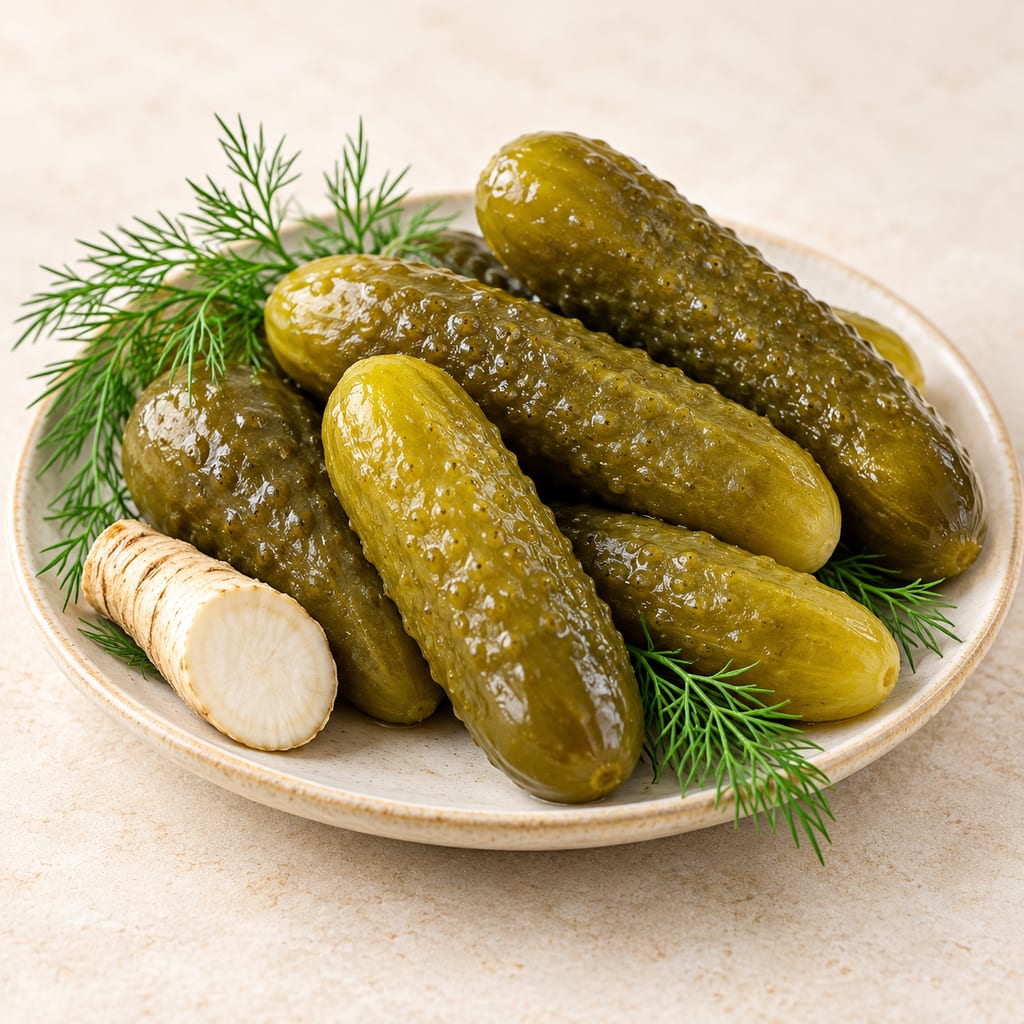
Ogórki kiszone are Polish brine-fermented cucumbers. Two registered local practices keep the barrels in a well near Zakliczyn and under lake water at Kalisz Pomorski. Neither gives a validated process.
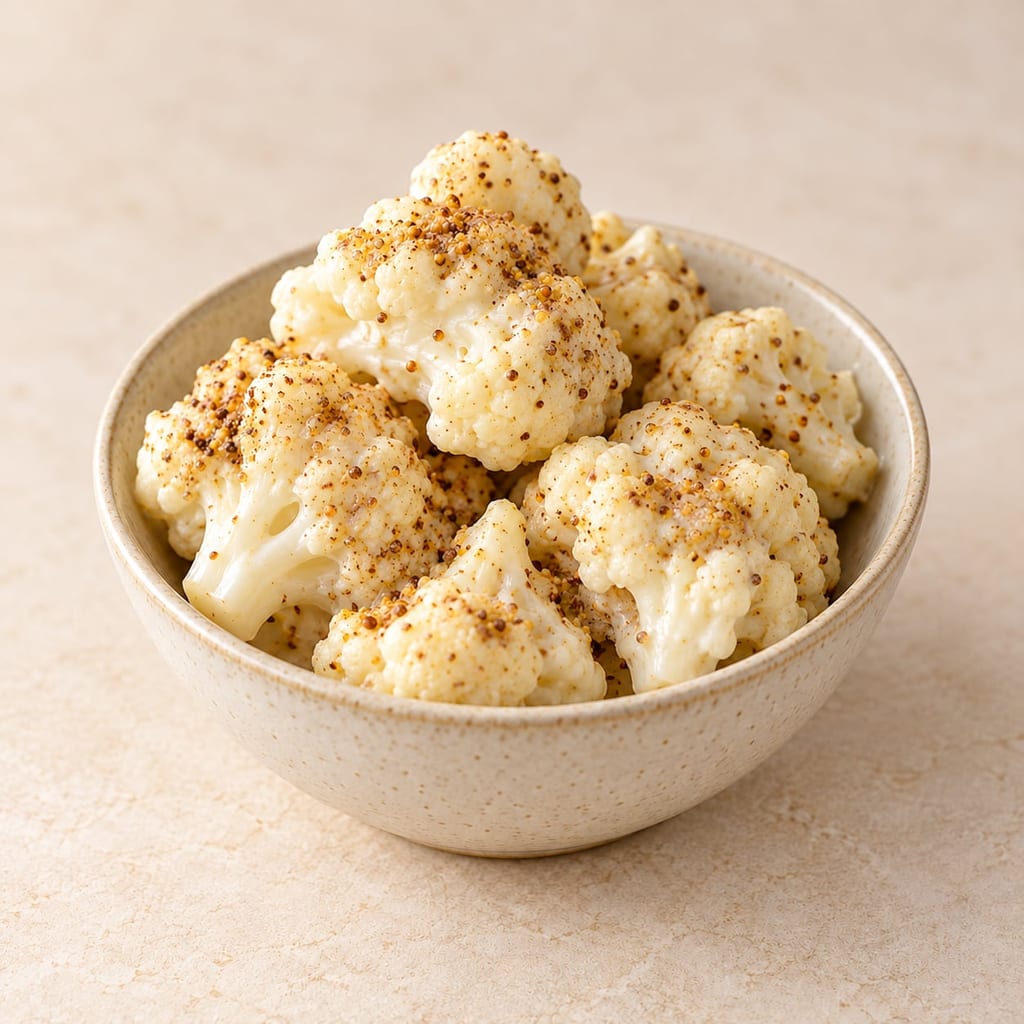
Moungra is a Cypriot preparation of blanched cauliflower coated in mustard and sourdough slurry and matured about a week; the Cyprus Food Museum records three versions with different measures.
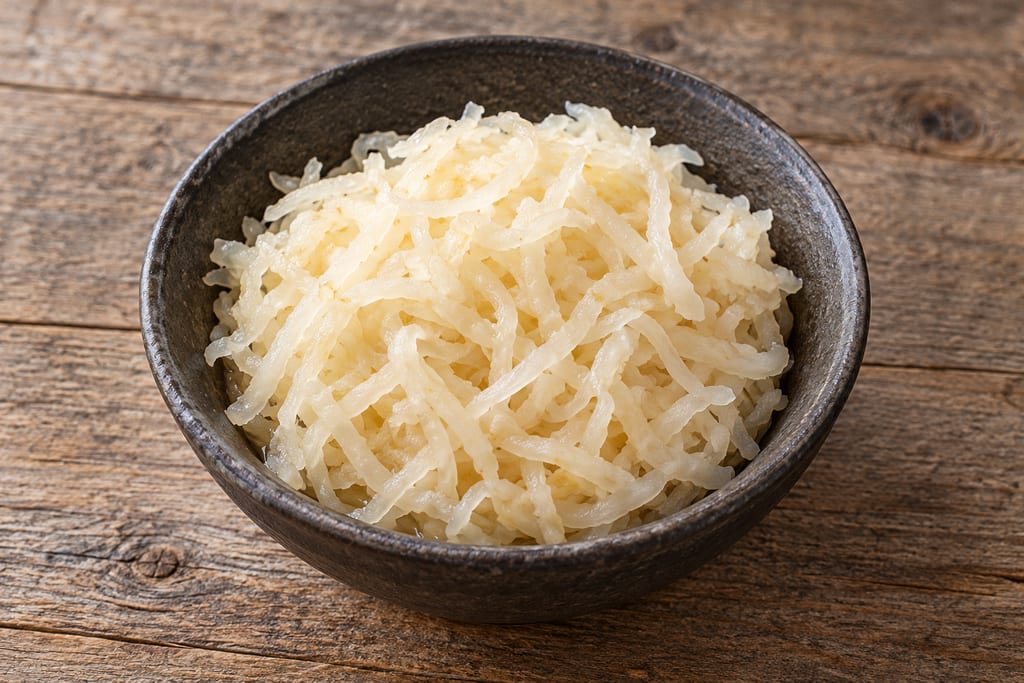
Kisla repa is Slovenian sour turnip, made either from grated turnip or from whole roots; a 2023 household guide gives a 1 kg grated batch salted with 20 g salt.
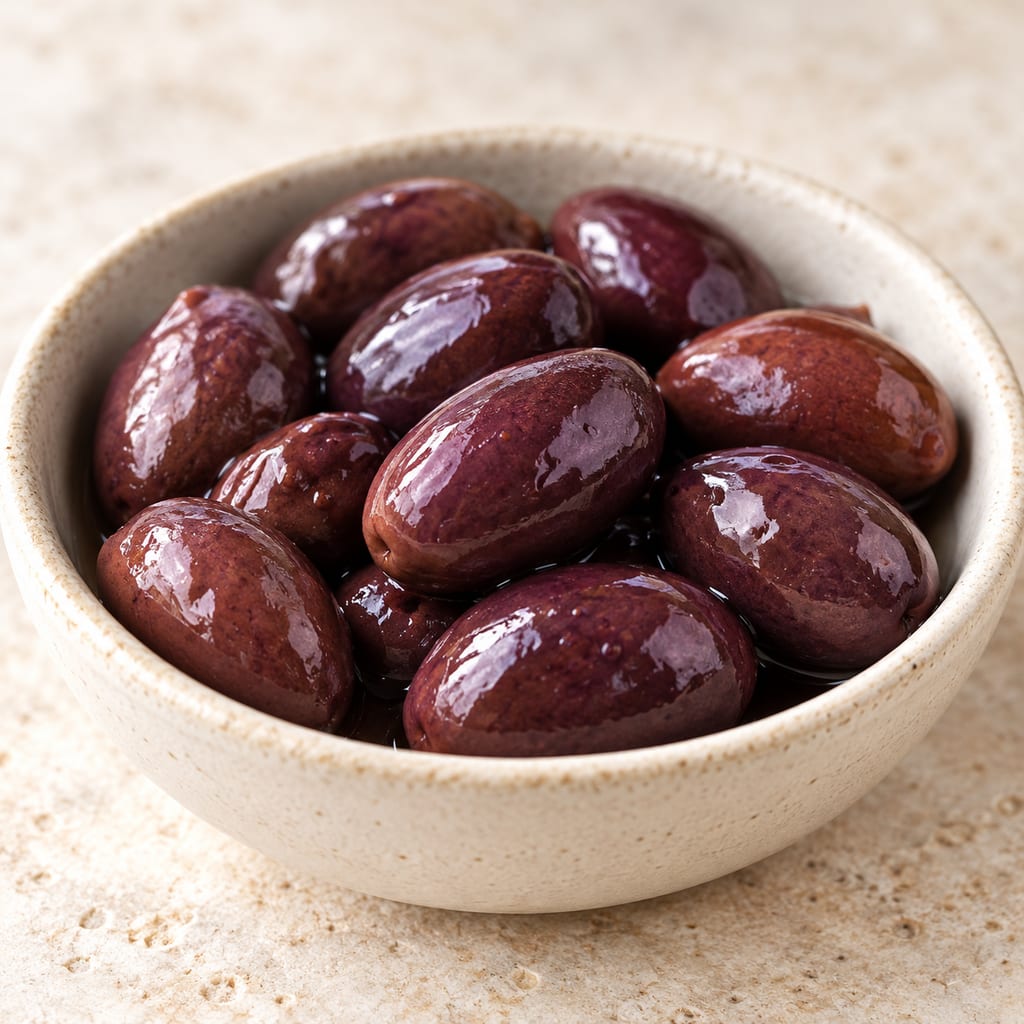
Elia Kalamatas is a Messinia table olive of the Kalamon variety, picked before full ripeness and fermented in brine for six to nine months; it is a PDO product, not a generic black olive.
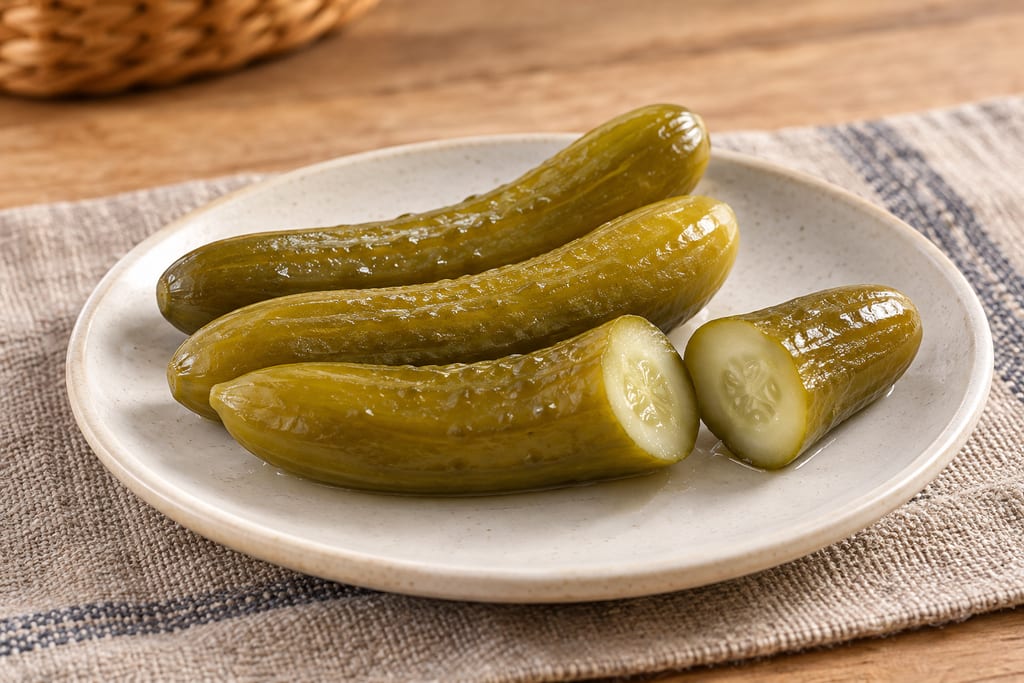
Çubuk turşusu is a registered pickle from Çubuk district in Ankara. Its cucumber variant is sold as Salatalık Turşusu, and a commercial specification sets its brine and room-temperature period.
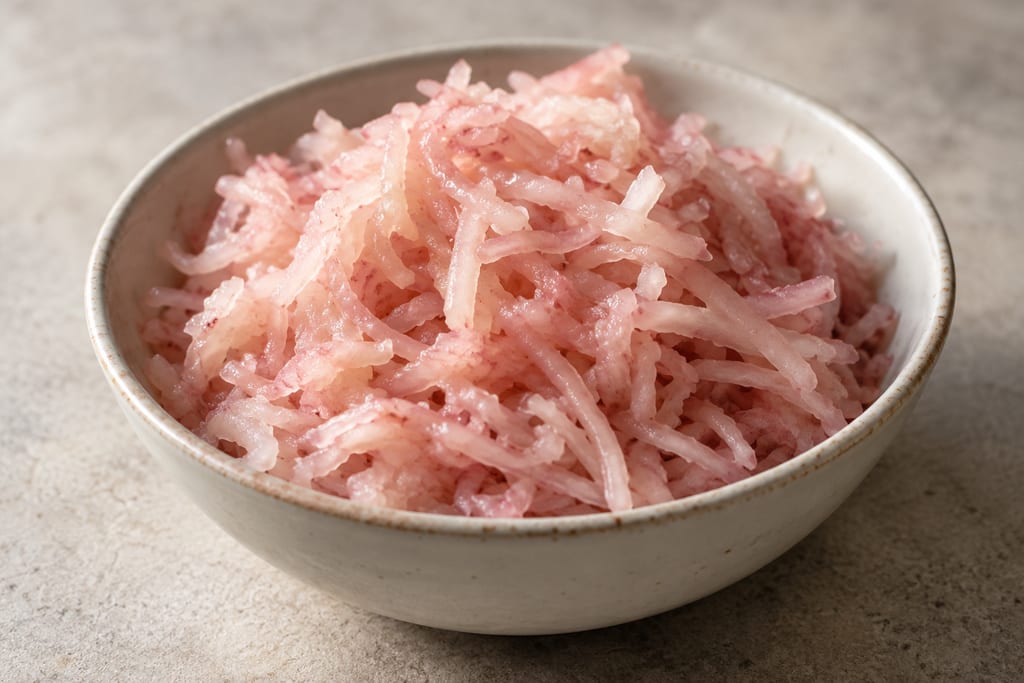
Source-specific Brovada DOP producer method for Friuli Venezia Giulia turnips and red-grape marc. This records a regulated producer process; it is not a validated home-scale recipe.
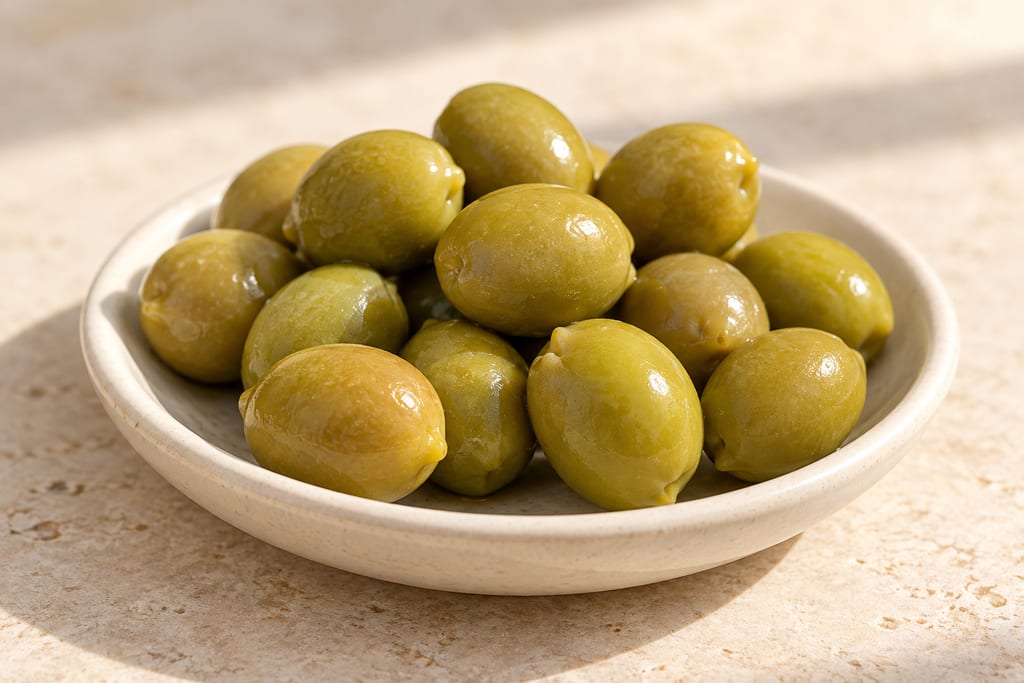
A Portuguese table-olive product from the Negrinha cultivar in northeastern Portugal, sold in three commercial styles, two of them brined fermentations and one oxidised to black.
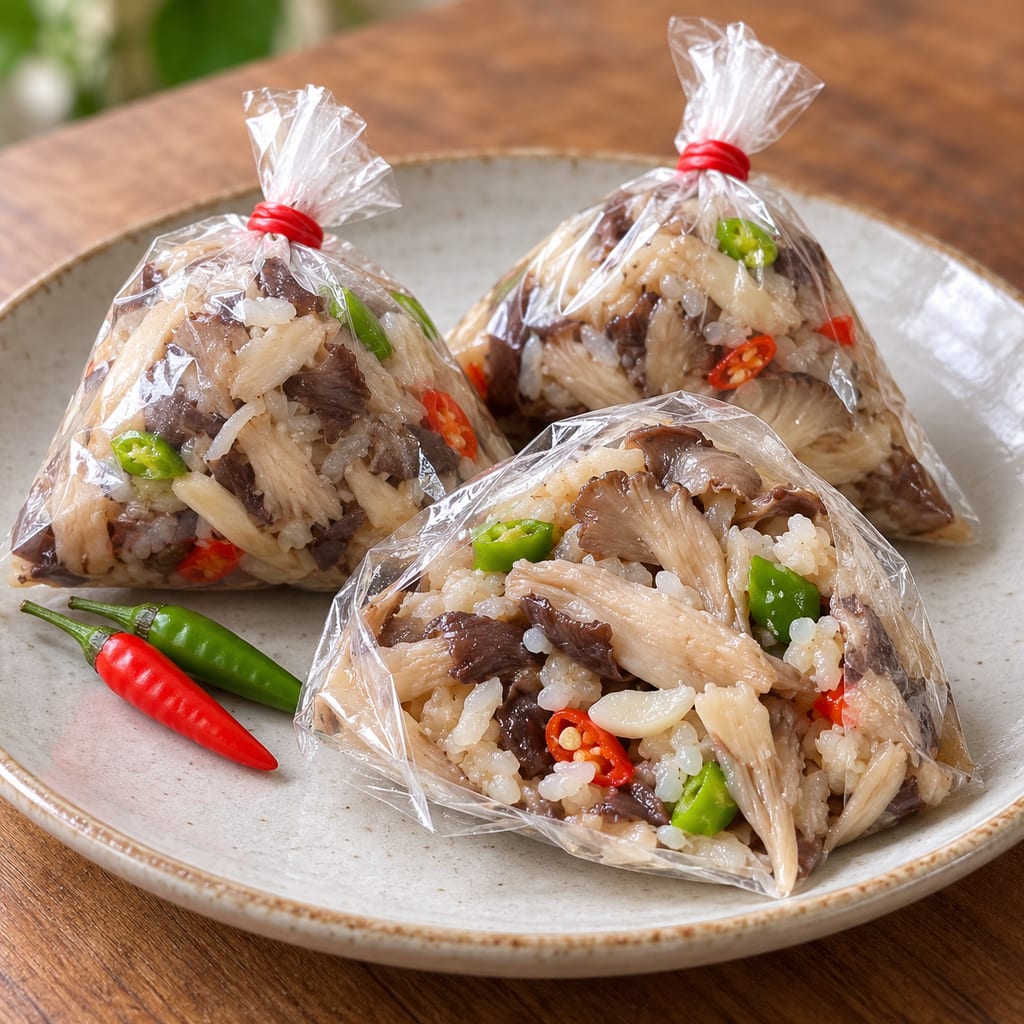
A Thai sour mushroom preparation: shredded steamed oyster mushrooms, cooked rice, garlic and salt packed into small parcels and soured by lactic acid bacteria over a few days.
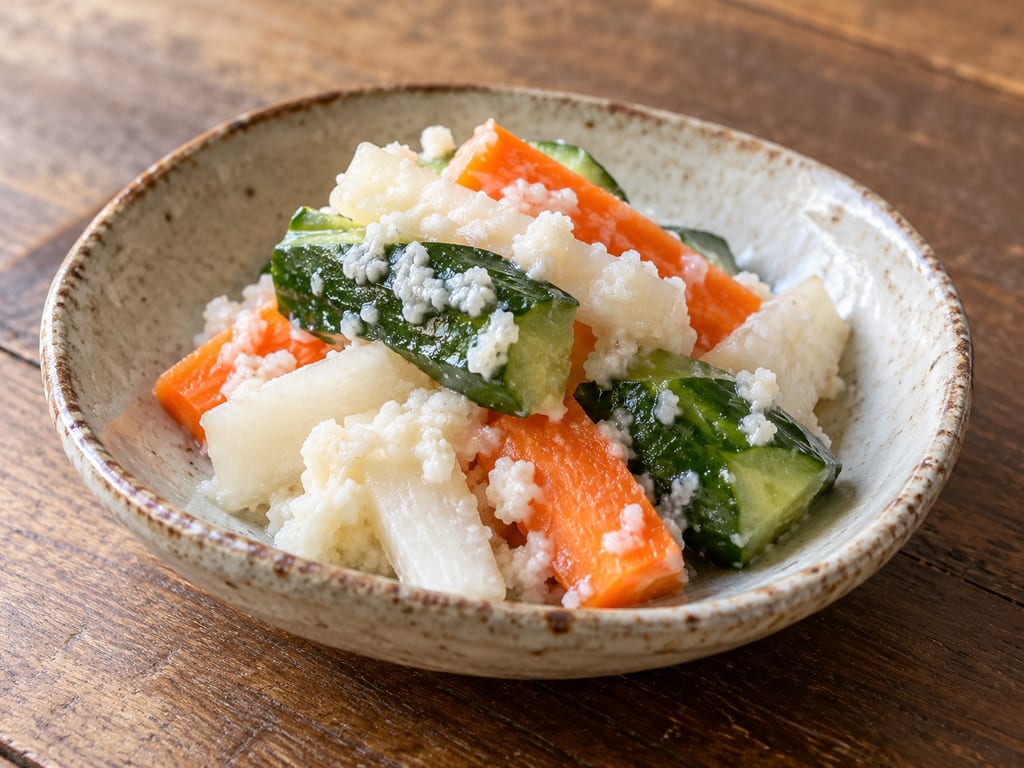
A traditional Japanese koji pickle from the Tohoku region: vegetables pickled in a matured bed of cooked rice, rice koji and salt, where koji enzymes bring sweetness alongside the salt.
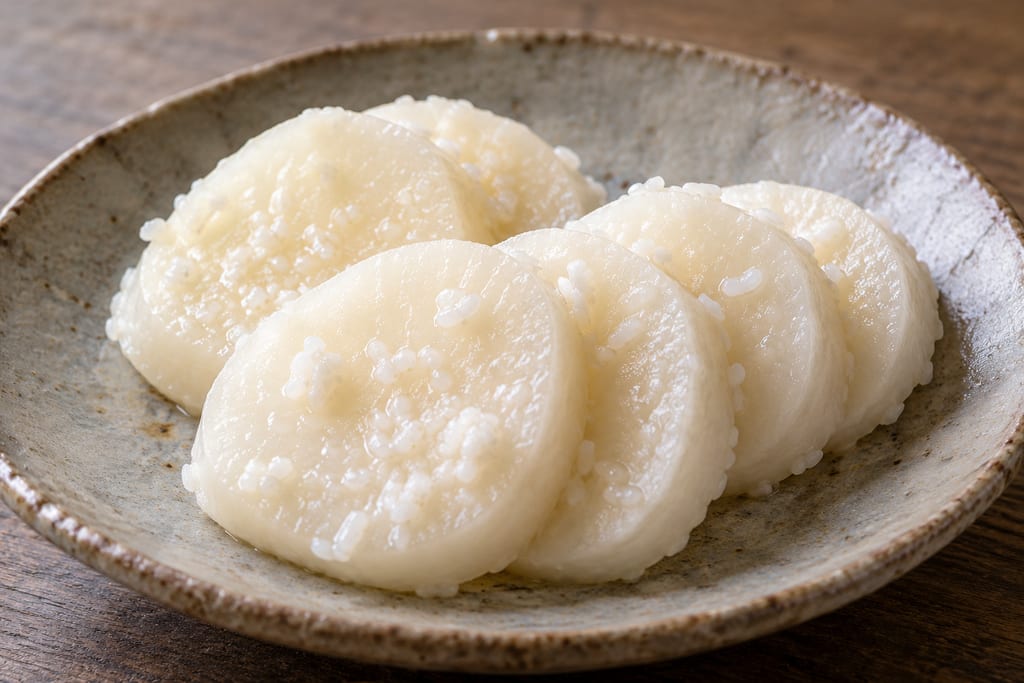
A sweet, crisp Japanese daikon pickle from Tokyo's Nihonbashi district, made by salting fresh radish and dressing it in rice koji, sugar or koji amazake without the heavy drying used for takuan.
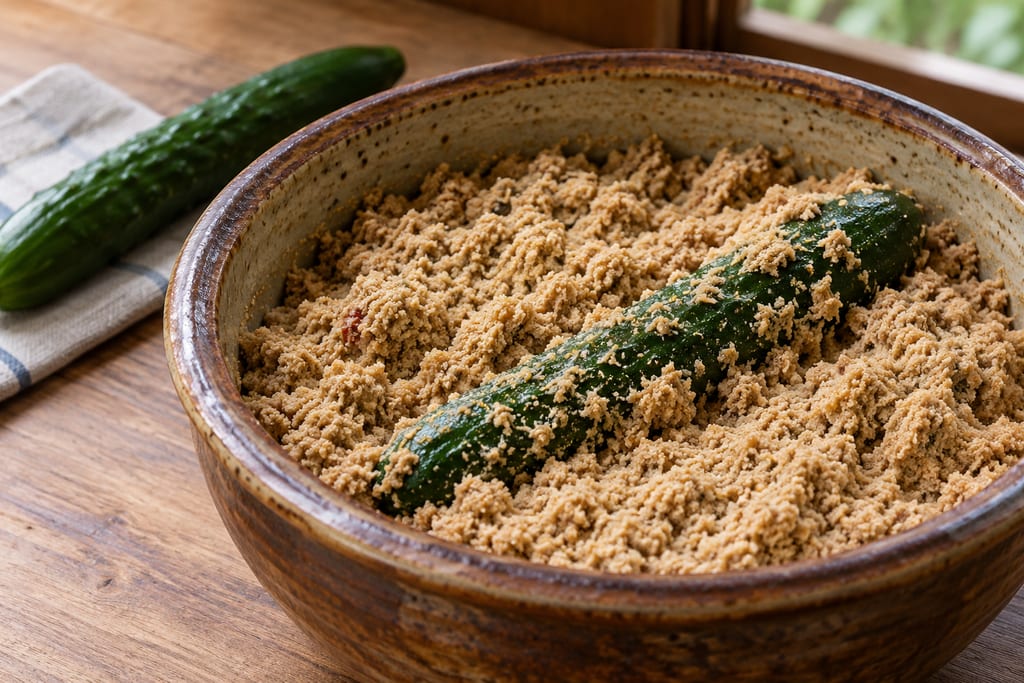
Cucumber ferments in a maintained rice-bran bed seeded through repeated vegetable scrap picklings; the record includes the starter-bed method.
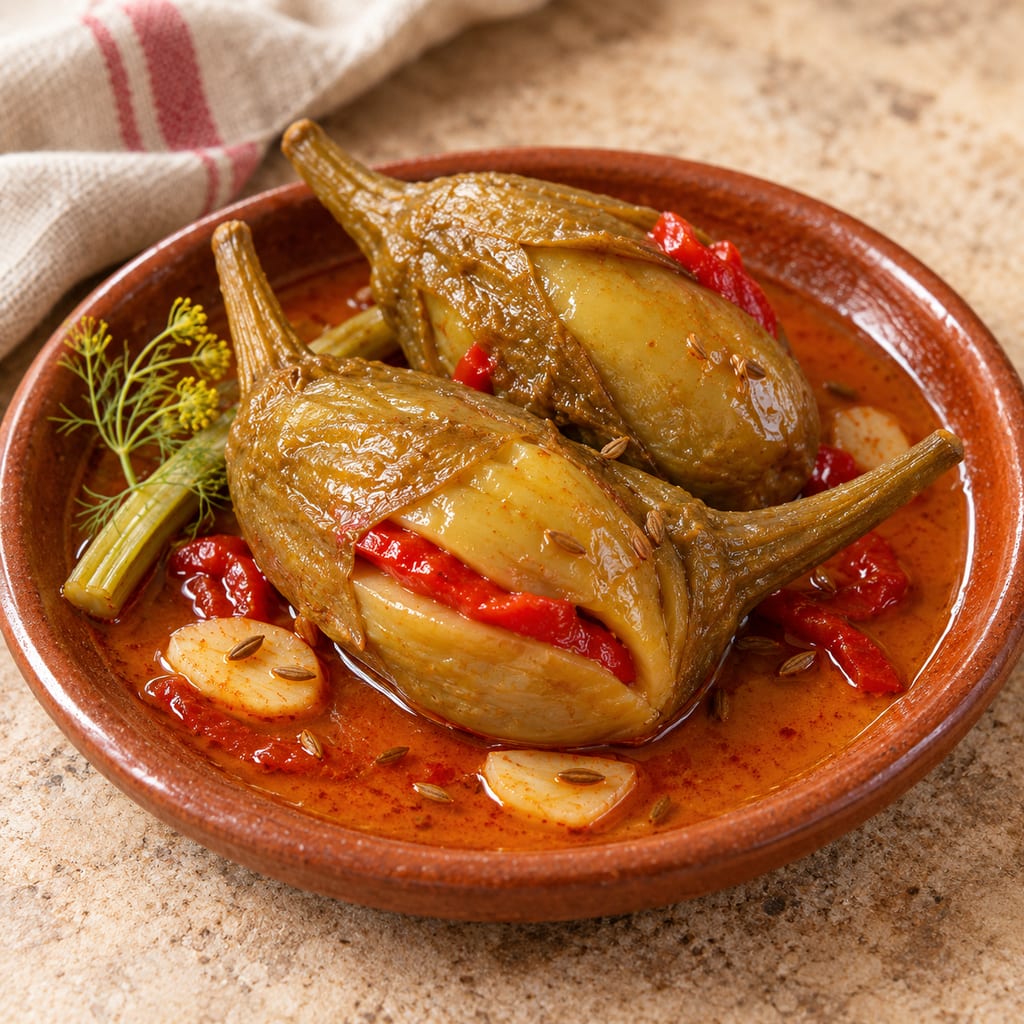
A protected aubergine preserve from Ciudad Real in Spain: tender fruit of the local Dealmagro variety, cooked briefly and then fermented in a vinegared, paprika-seasoned dressing.
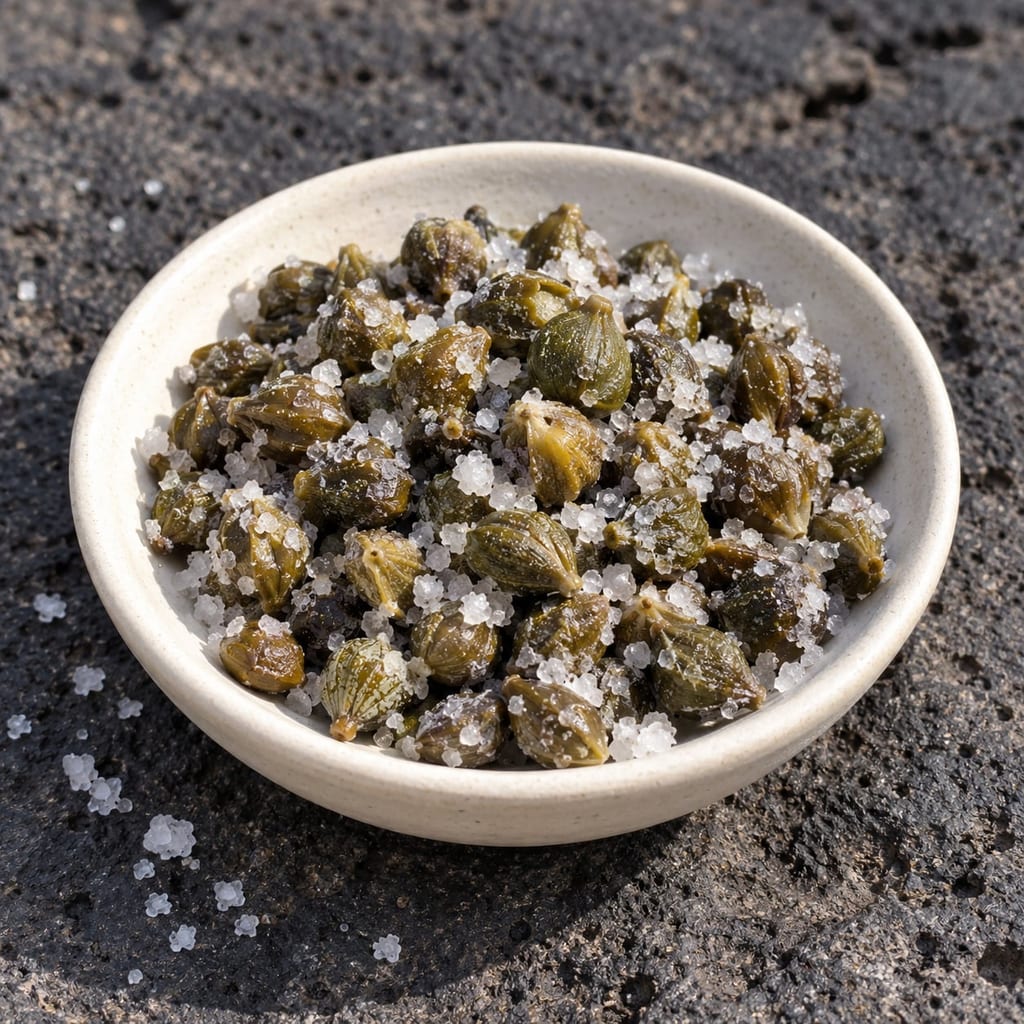
A protected Sicilian product: unopened caper buds from the island of Pantelleria, dry-salted with sea salt in a two-stage process that encourages lactic fermentation.
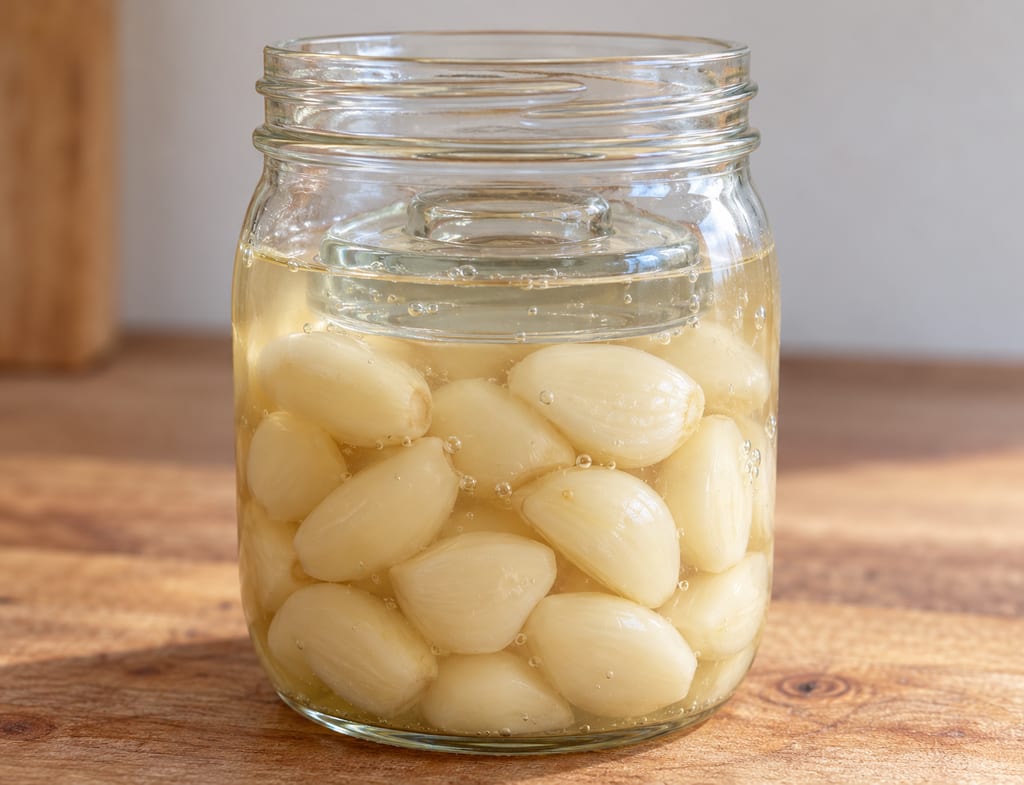
A small brine ferment of peeled garlic; the video also demonstrates optional onion and herbs.
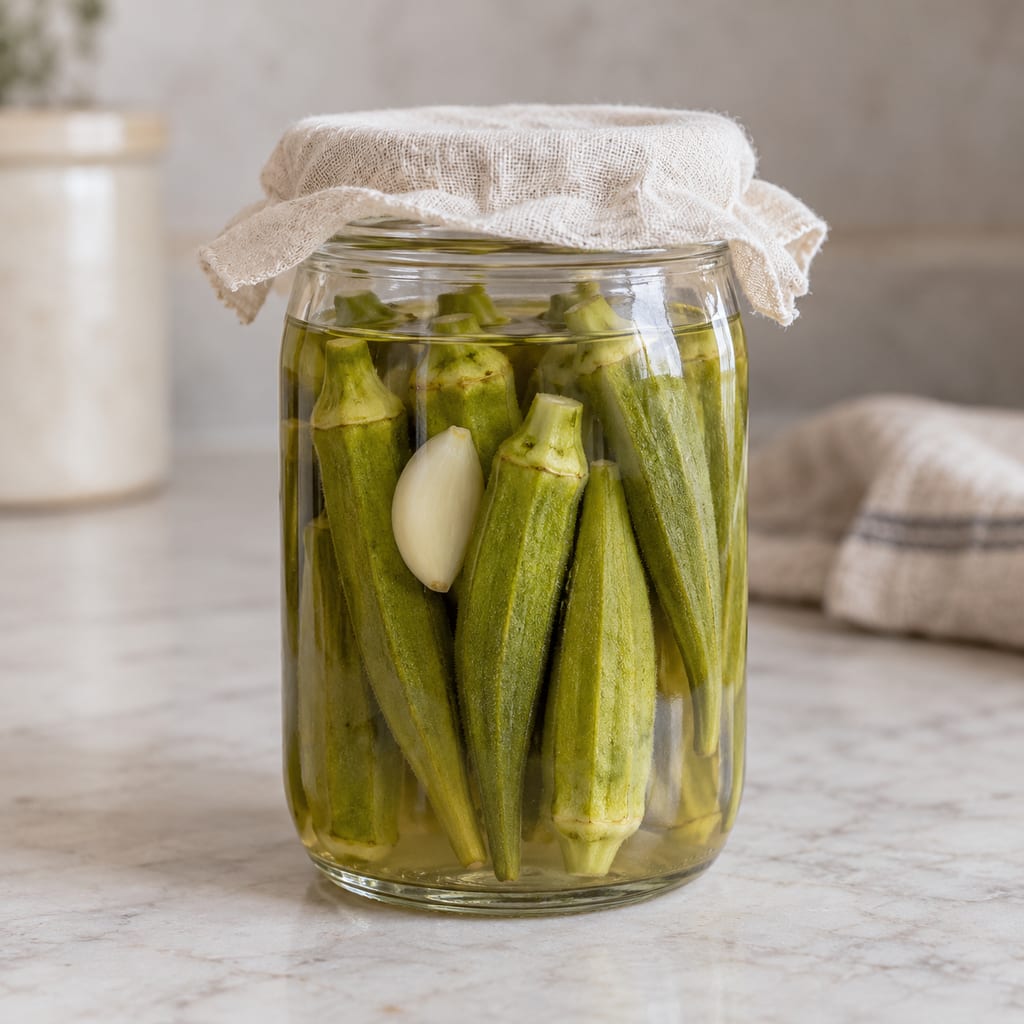
Whole okra packs into a pint jar with garlic, salt, whey and water for a short room-temperature fermentation.
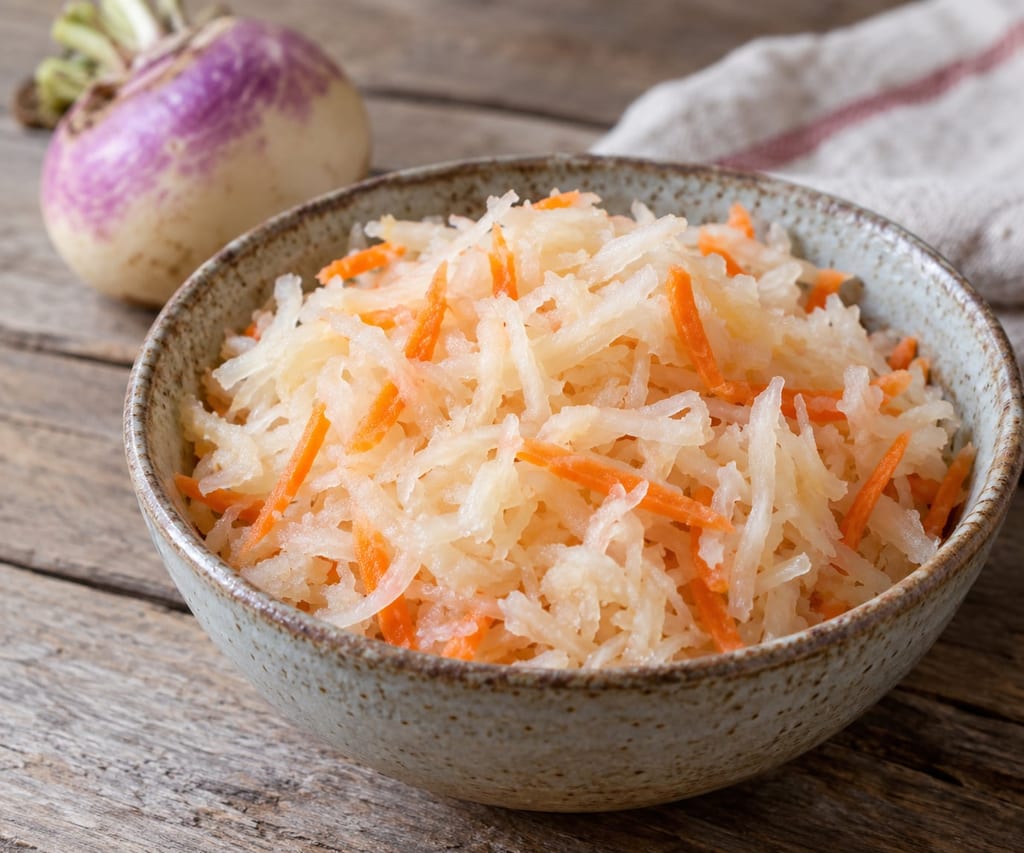
Shredded turnips and carrots are dry-salted, pressed beneath their juice and fermented as a cabbage-free kraut-style preserve.
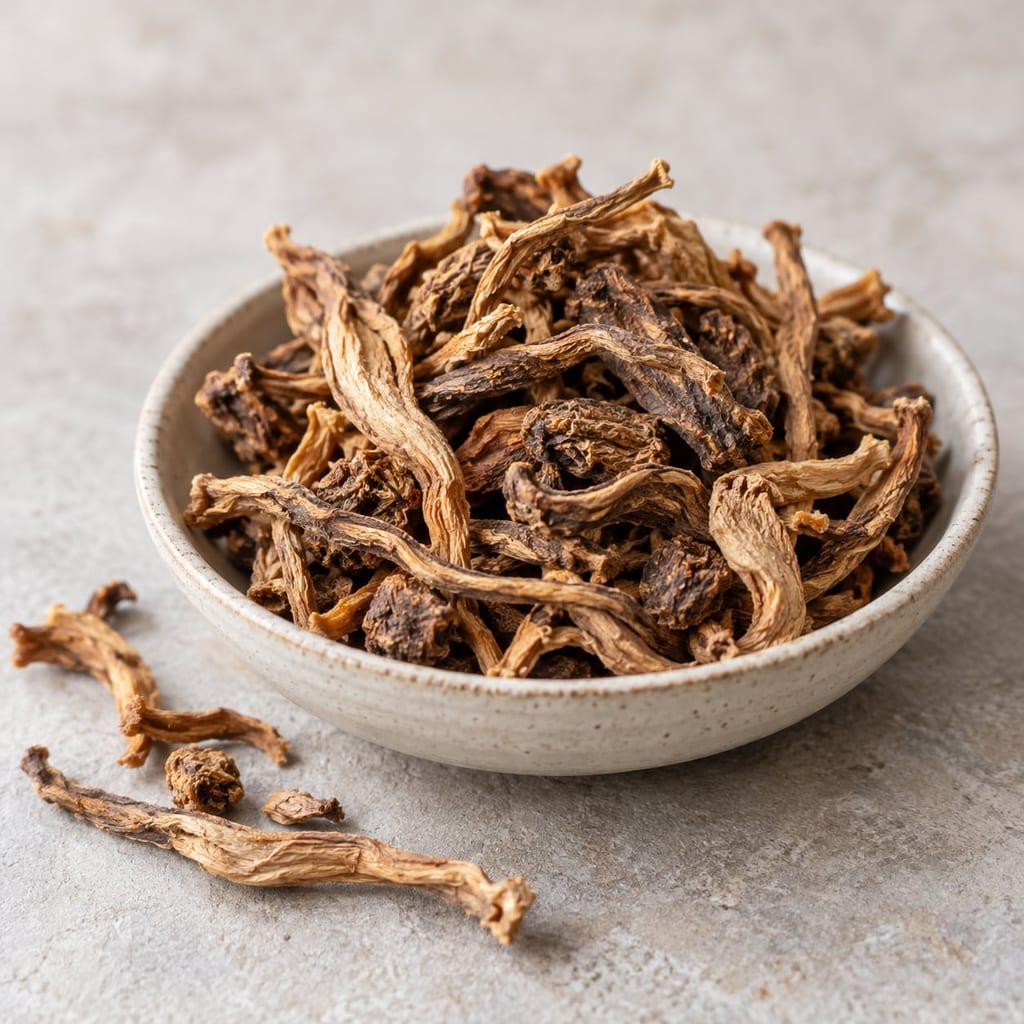
Sinki is a salt-free, fermented radish-taproot product dried after fermentation. Published jar and pit accounts use different conditions; neither supplies a validated home-preservation endpoint.
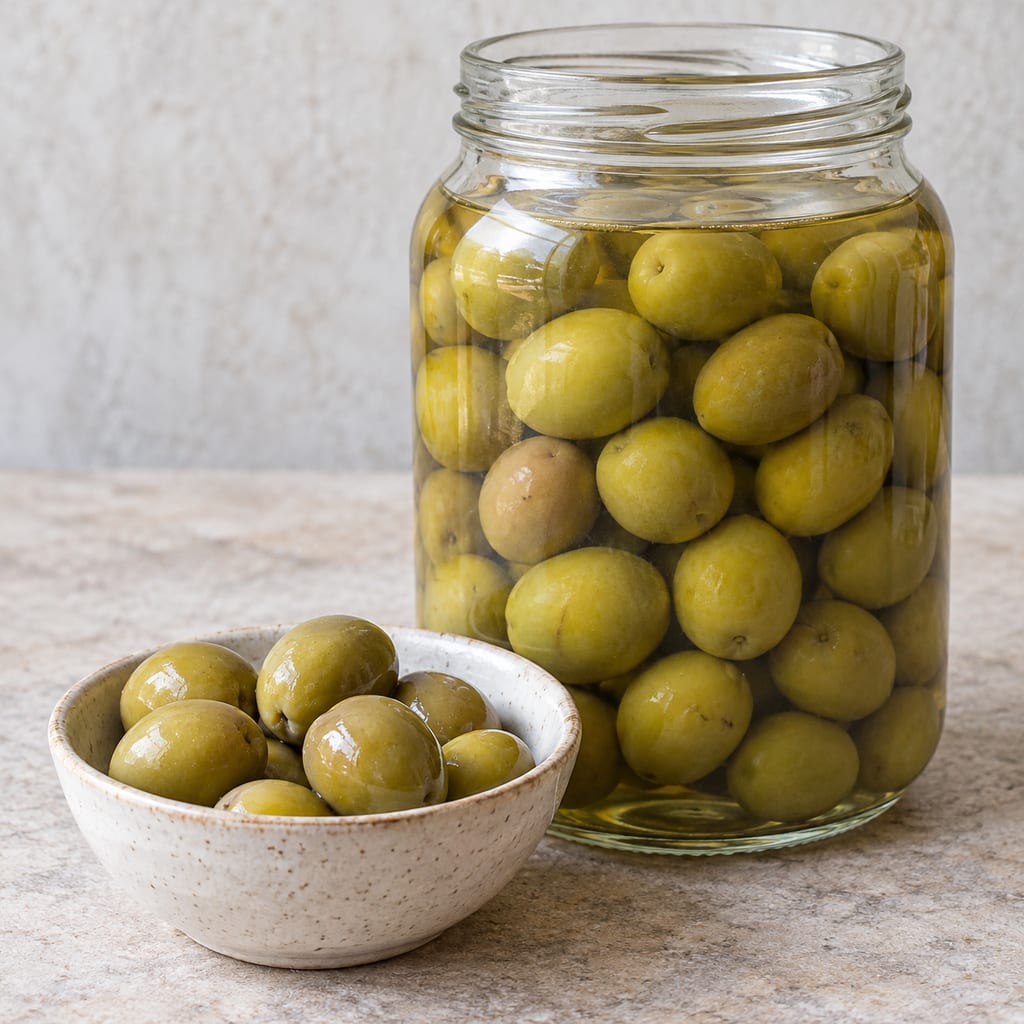
Green-ripe olives are fermented in seasoned, vinegar-adjusted brine; UC ANR gives size-dependent salt concentrations and multi-month handling.
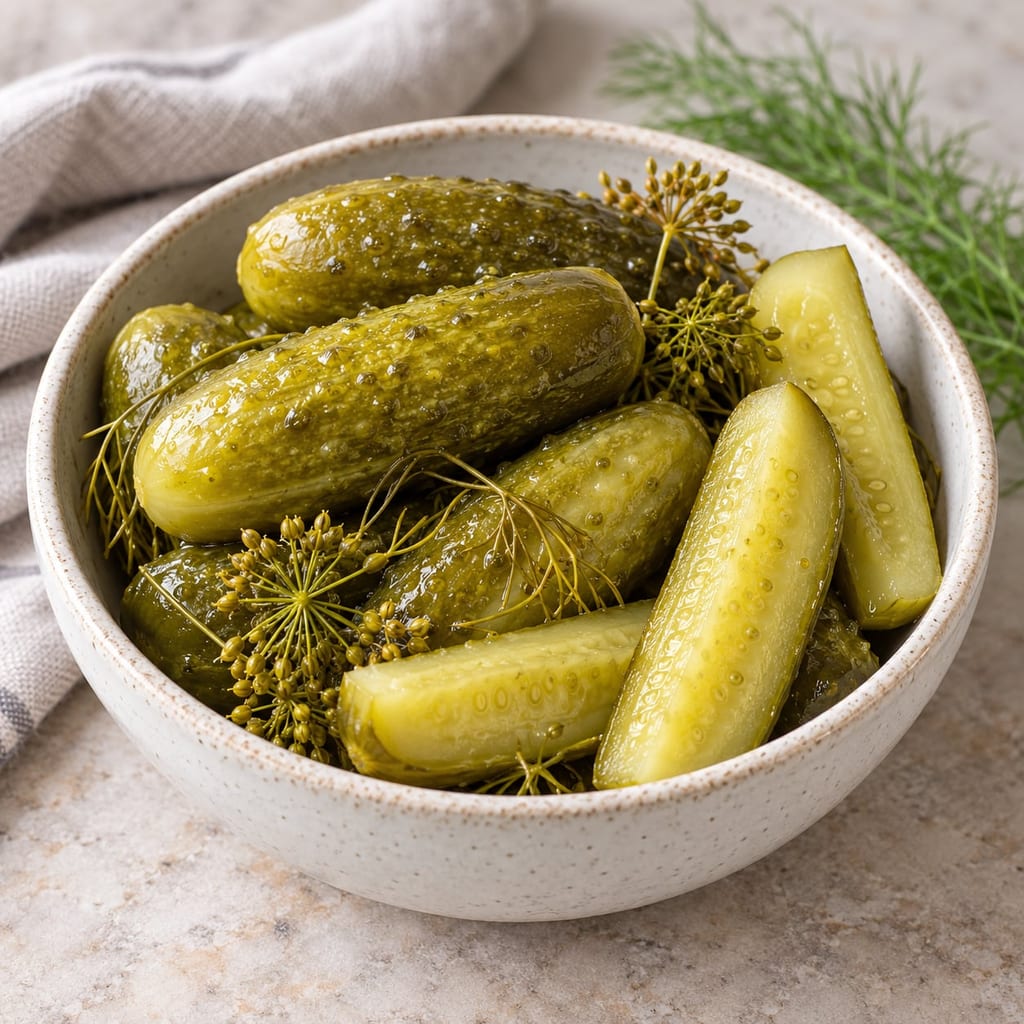
Trimmed cucumbers layered with dill and covered with a salt brine containing 5% vinegar, weighted and fermented three to six weeks.
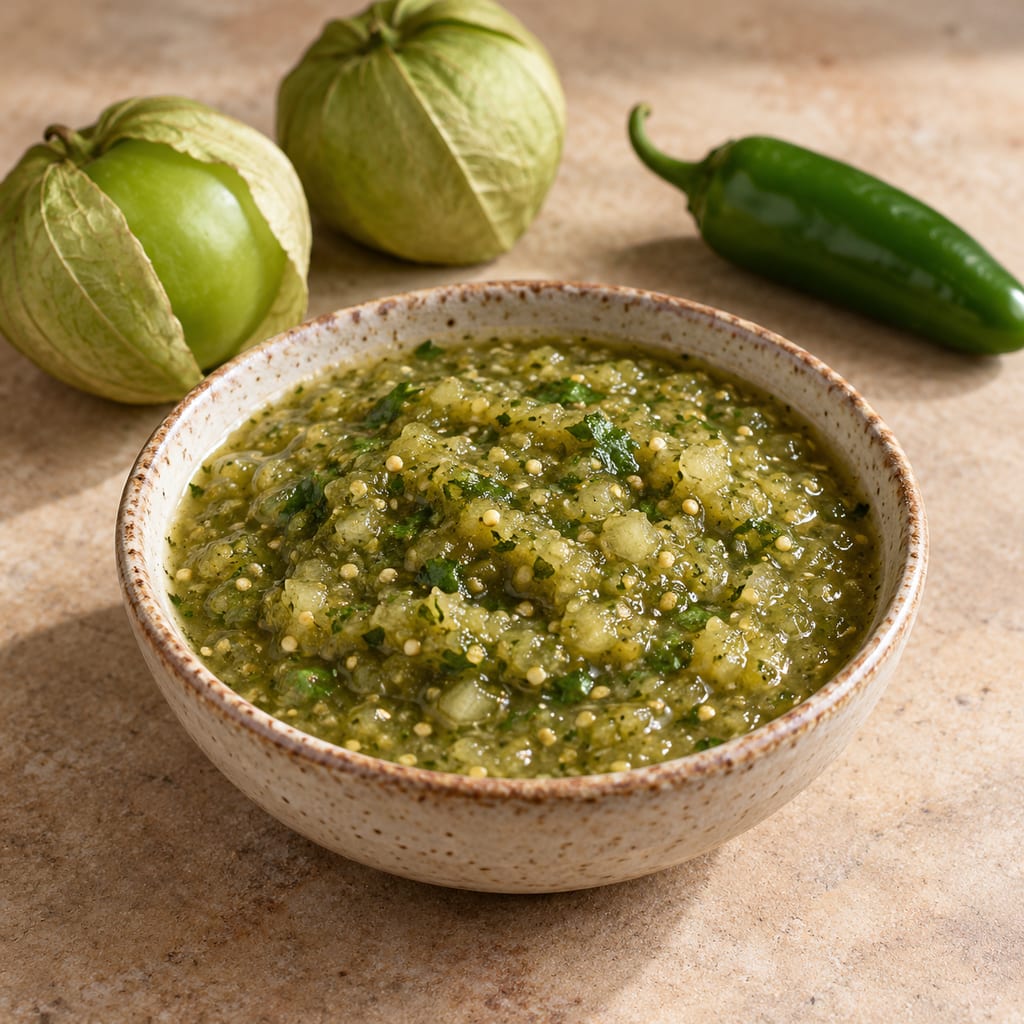
Tomatillos, chiles, onion, lime and herbs are salted and fermented together as a mixed salsa.
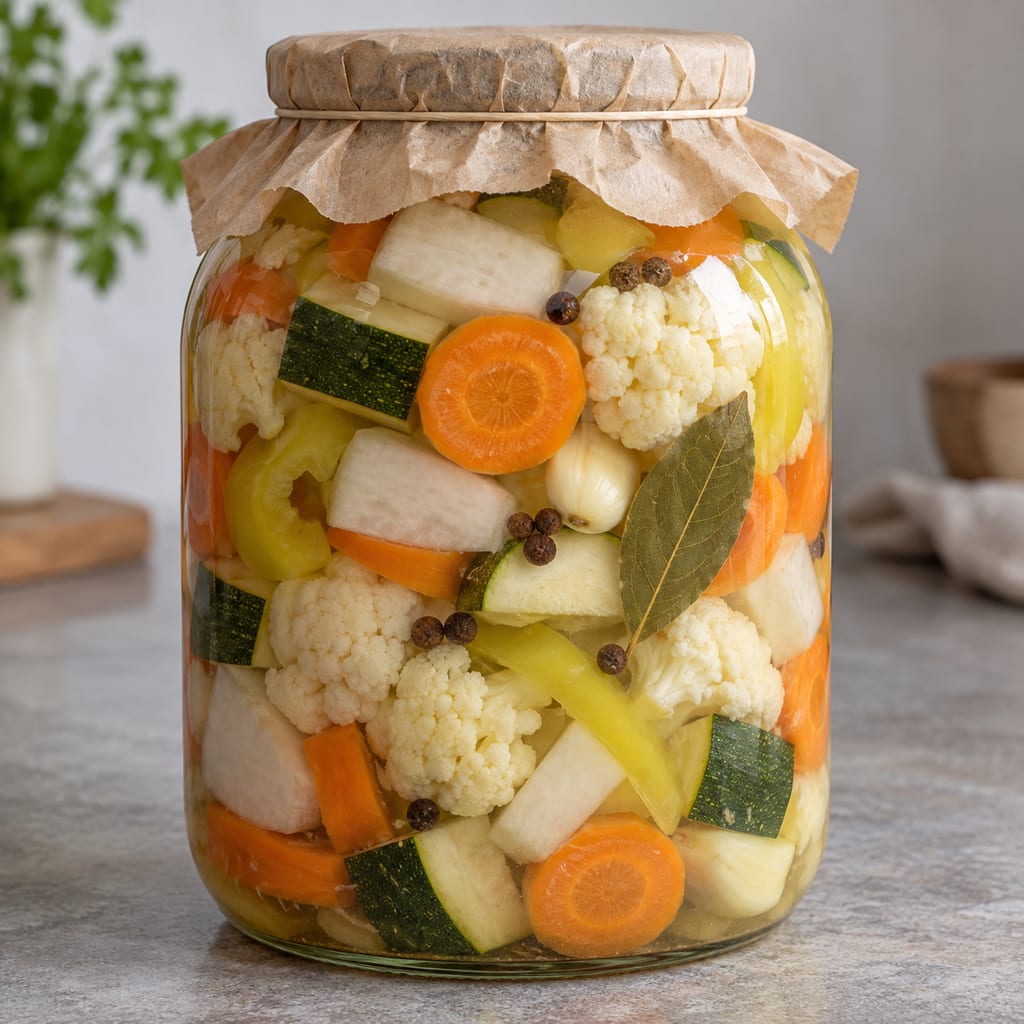
A 2 L jar holds cut carrot, radish, cauliflower, zucchini and pepper under a one-litre salt brine with aromatics; the source gives no produce mass or qualified endpoint.
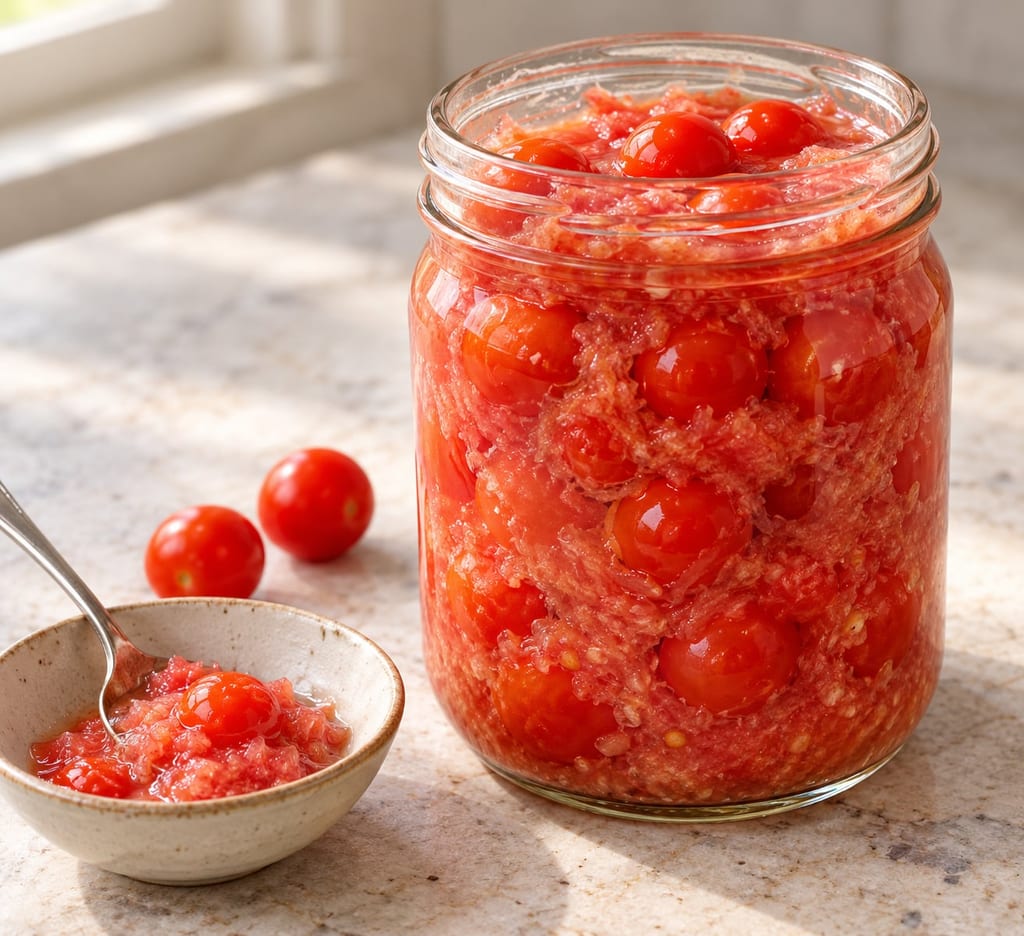
Cherry tomatoes sit beneath a salted grated-tomato layer for a five-to-seven-day room-temperature fermentation.
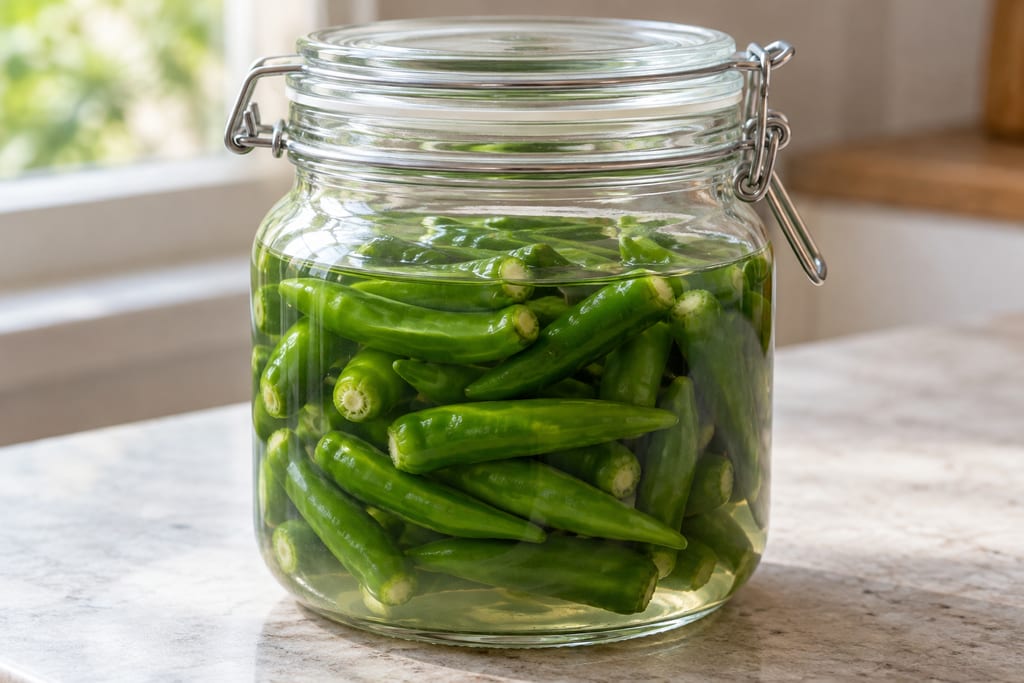
Whole green chiles are blanched briefly, then fermented in 3% salt brine with sake in a modern Japanese presentation of a wider Asian preparation.
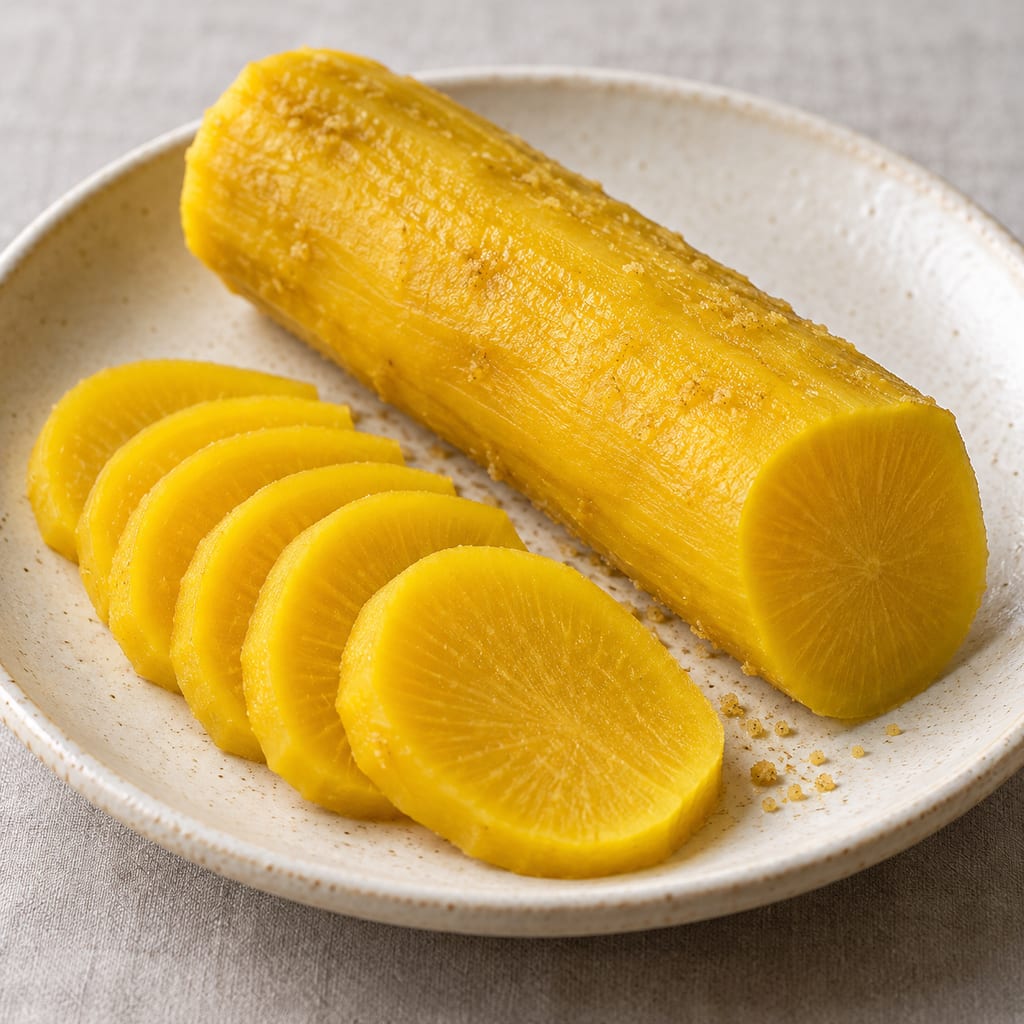
Daikon is dried until pliable, then layered in seasoned rice bran and pressed for a long fermentation.
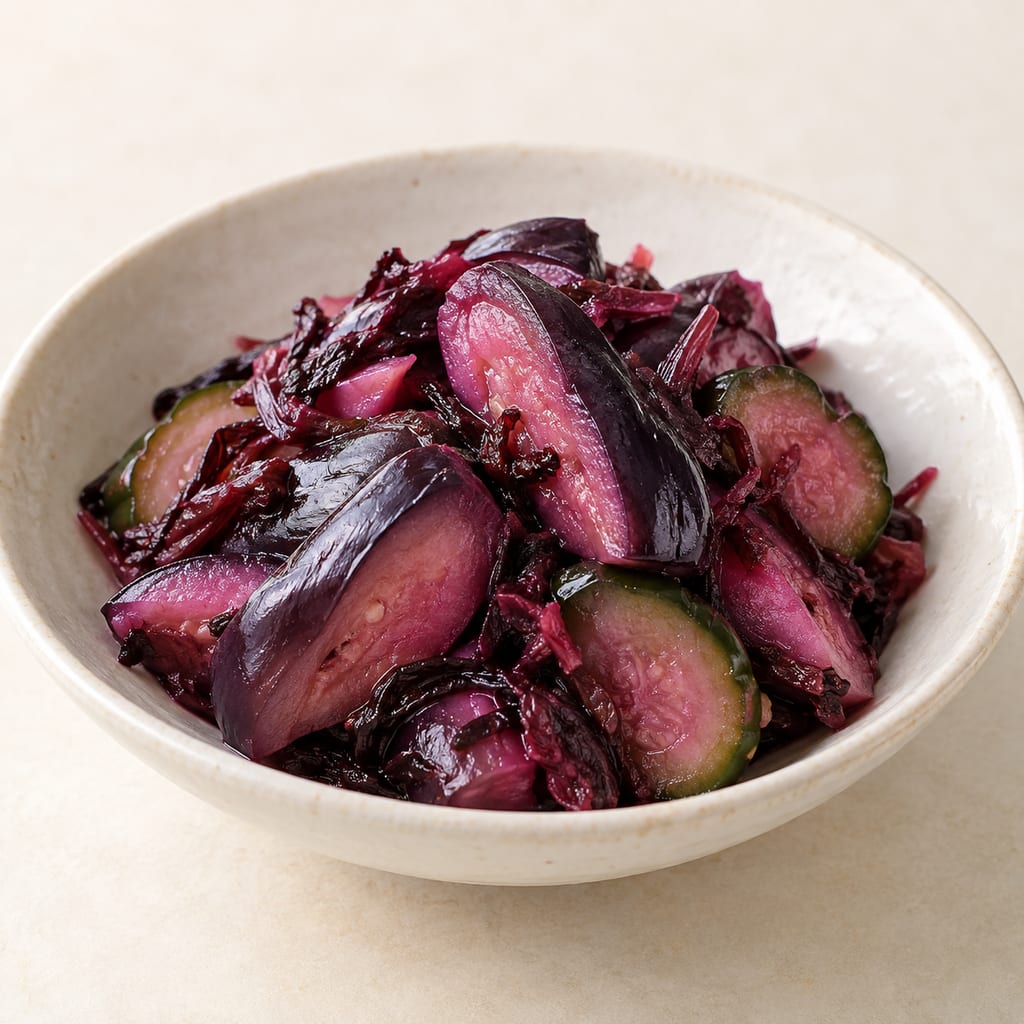
Eggplant and perilla are layered with cucumber, myoga and chiles, pressed with salt and left to mature into Kyoto’s sour purple pickle.
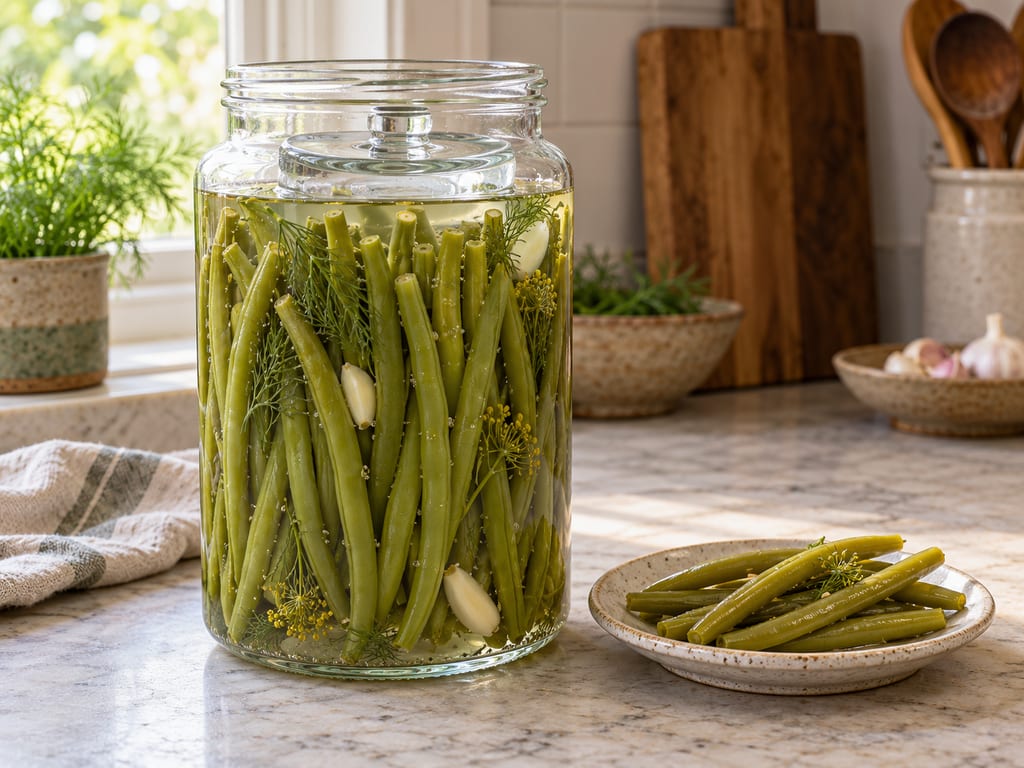
Whole green beans fermented in a salt brine, with dill and garlic as optional seasonings, staying crisp as they sour.
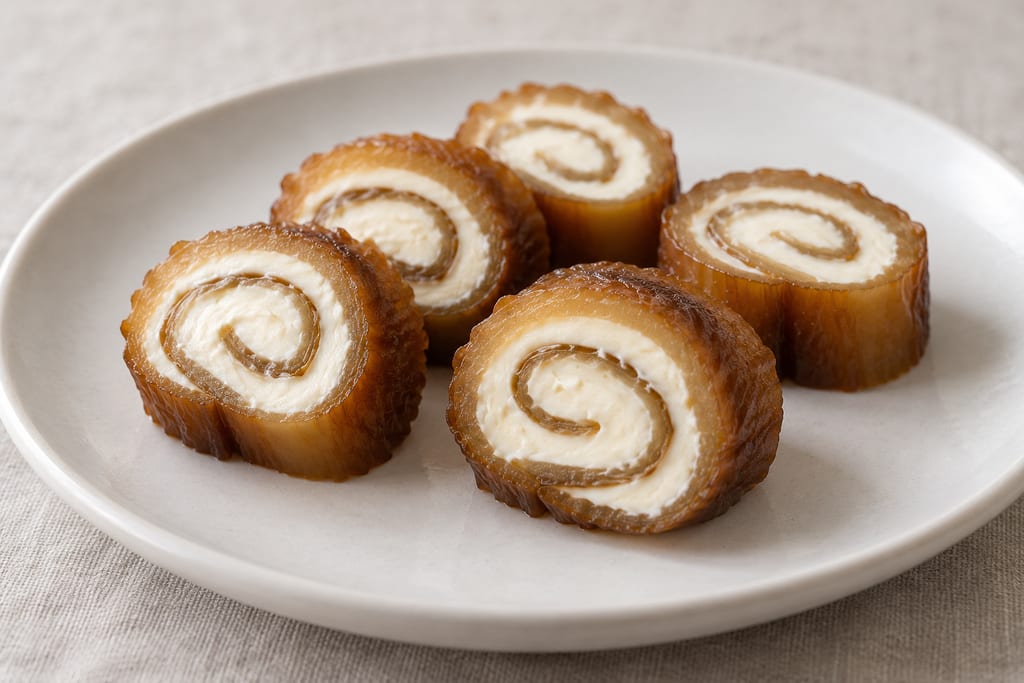
A Morinaga snack pairs thin ribbons of iburigakko with cream cheese, then chills the roll before cutting it into portions.
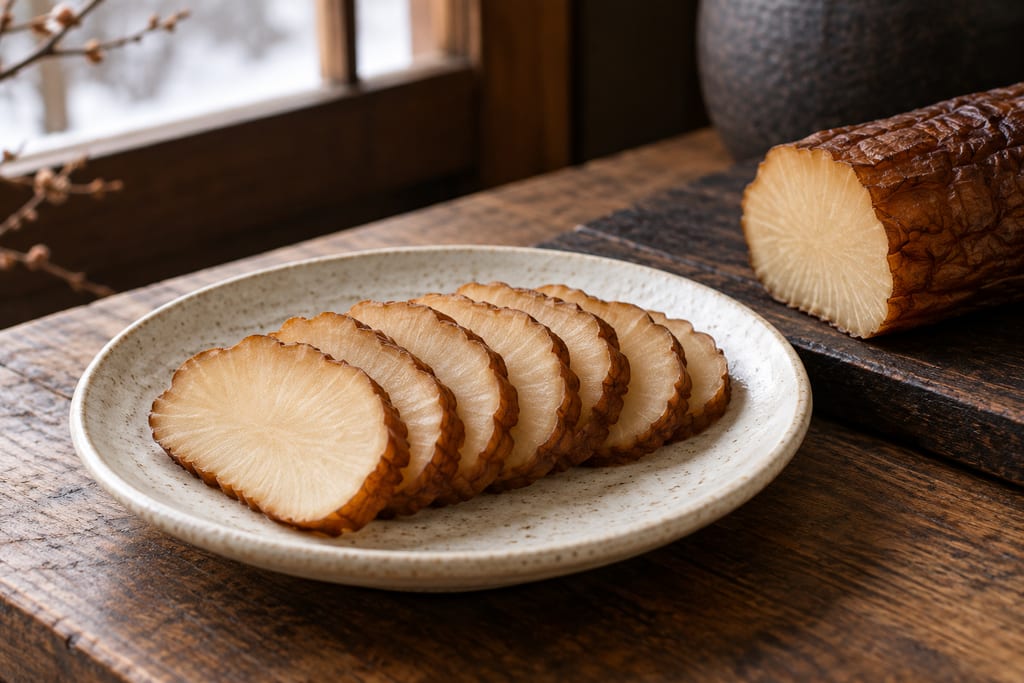
Iburigakko is Akita pickled daikon dried with smoke before it is fermented in rice bran.