


















































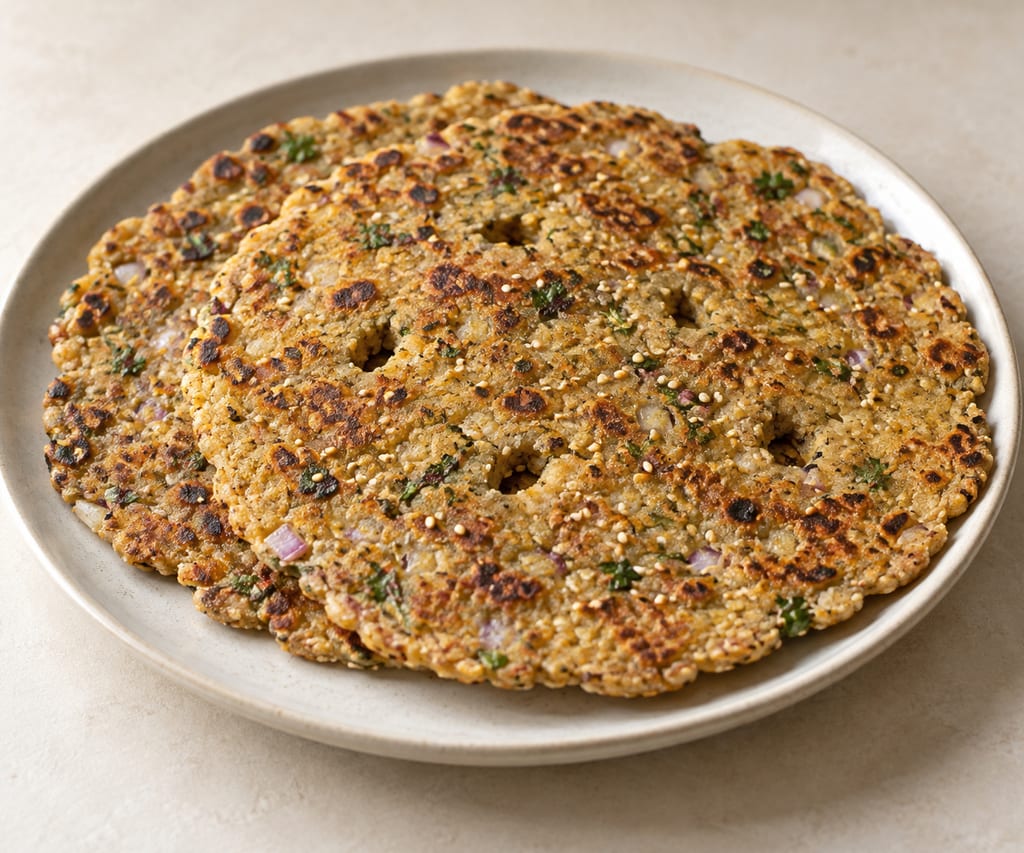
Thalipeeth
A Maharashtrian multigrain flatbread, patted by hand and cooked on a hot griddle. This home version mixes five flours with onion, sesame and spices.
 FermenteaWhere food goes to change
1504 records with their sources, across 11 categories.
 Fermented, enzyme-ripened and mixed seasonings328
 Fruit preserves10
 Legume, seed and plant-protein ferments10
 Garum and fish sauces8
 Adjacent and excluded7
 Koji, mold starters and mold-ripened ferments4
 Acid and oil pickles3
 Fermented fruit and fruit-derived foods3
 Vegetable lactic3
 Dairy ferments2
 Smoked salted and dried foods2
 Cheese1
 Not yet classified1
 Cereal, grain, root and starch fermentations275
 Unfermented breads105
 Koji, mold starters and mold-ripened ferments3
 Not yet classified3
 Adjacent and excluded1
 Beverages1
 Fruit preserves1
 Smoked salted and dried foods1
 Tea cocoa and coffee ferments1
A Maharashtrian multigrain flatbread, patted by hand and cooked on a hot griddle. This home version mixes five flours with onion, sesame and spices.
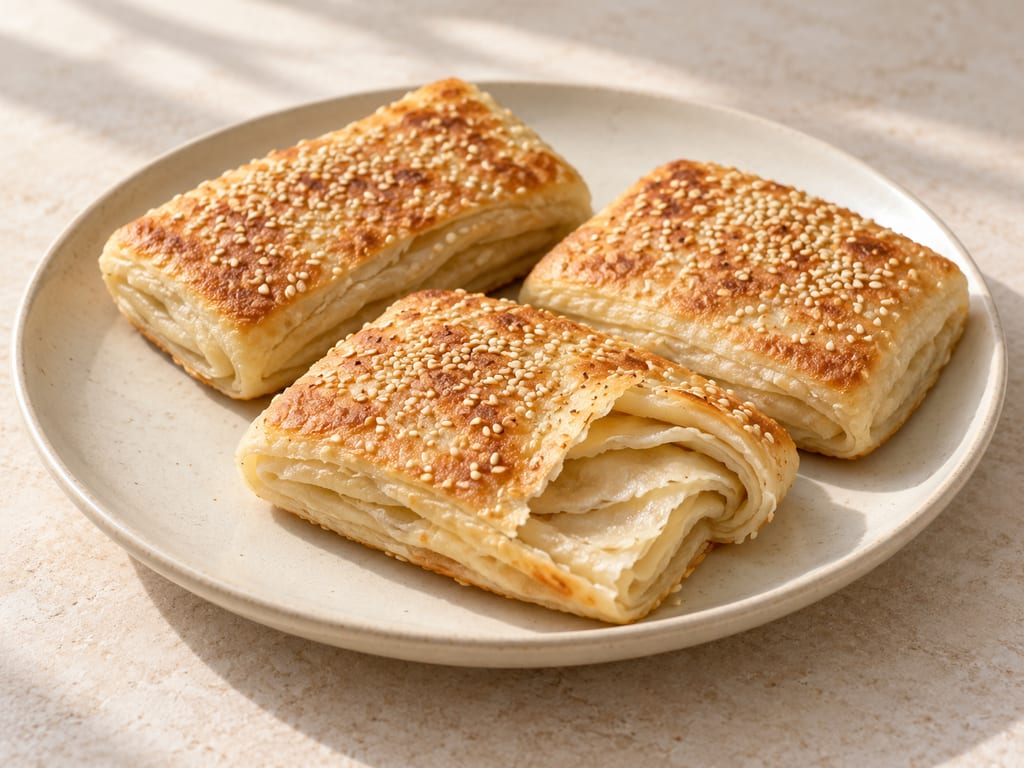
A Taichung family recipe uses a hot-and-cool water dough, vegetable-oil roux, repeated folds and sesame seeds for crisp, layered shaobing.
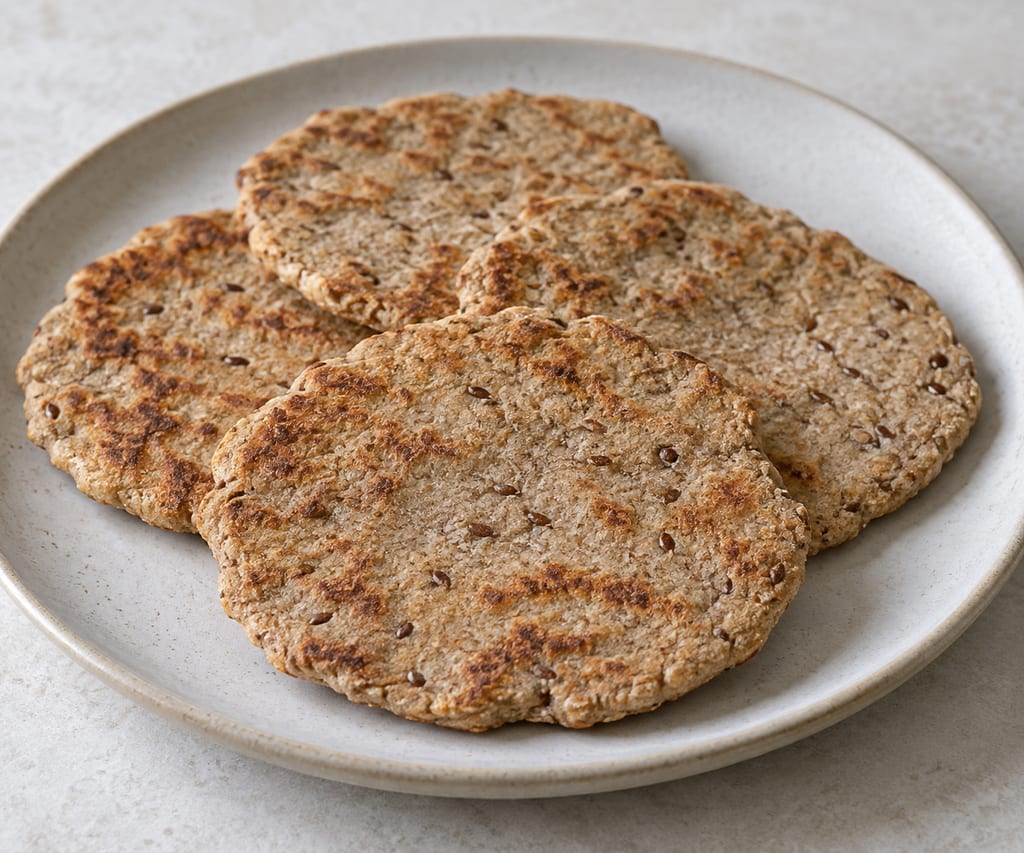
A small, dense cake of ground barley mixed with liquid and cooked against a hot surface, the form a low-gluten northern cereal takes when a household turns stored grain into bread.
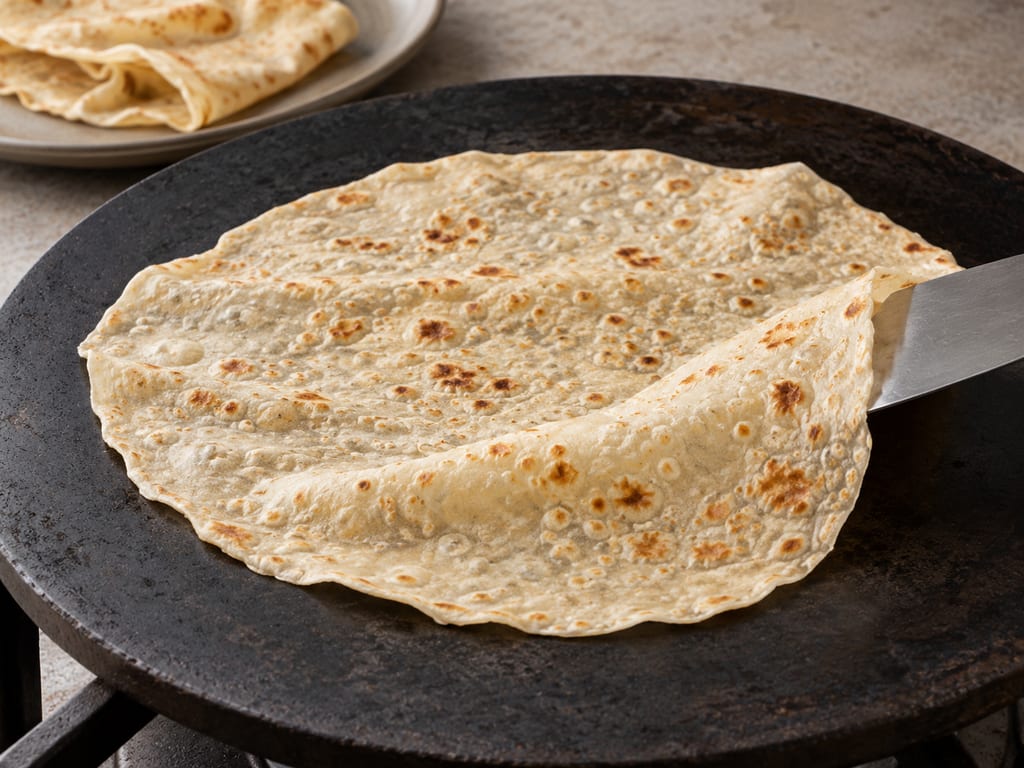
Regag is a thin Emirati wheat bread cooked on an ungreased pan. This measured home method uses a soft dough that rests covered, then gets spread thin with a palette knife or bench scraper.
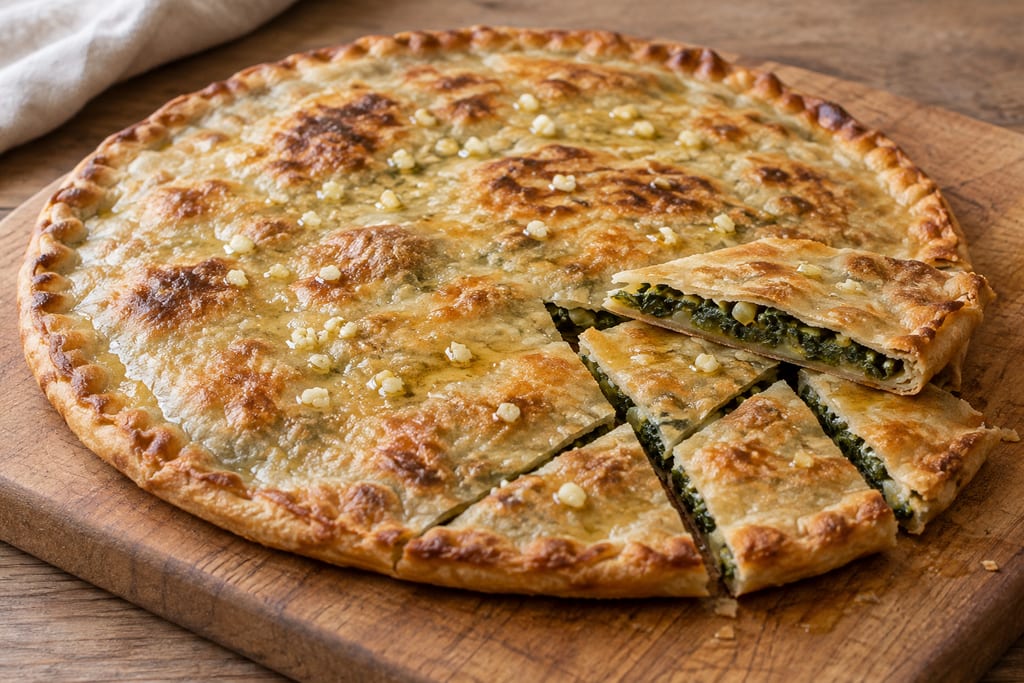
A Croatian chard-filled flatbread baked in a home oven and finished with garlic oil.
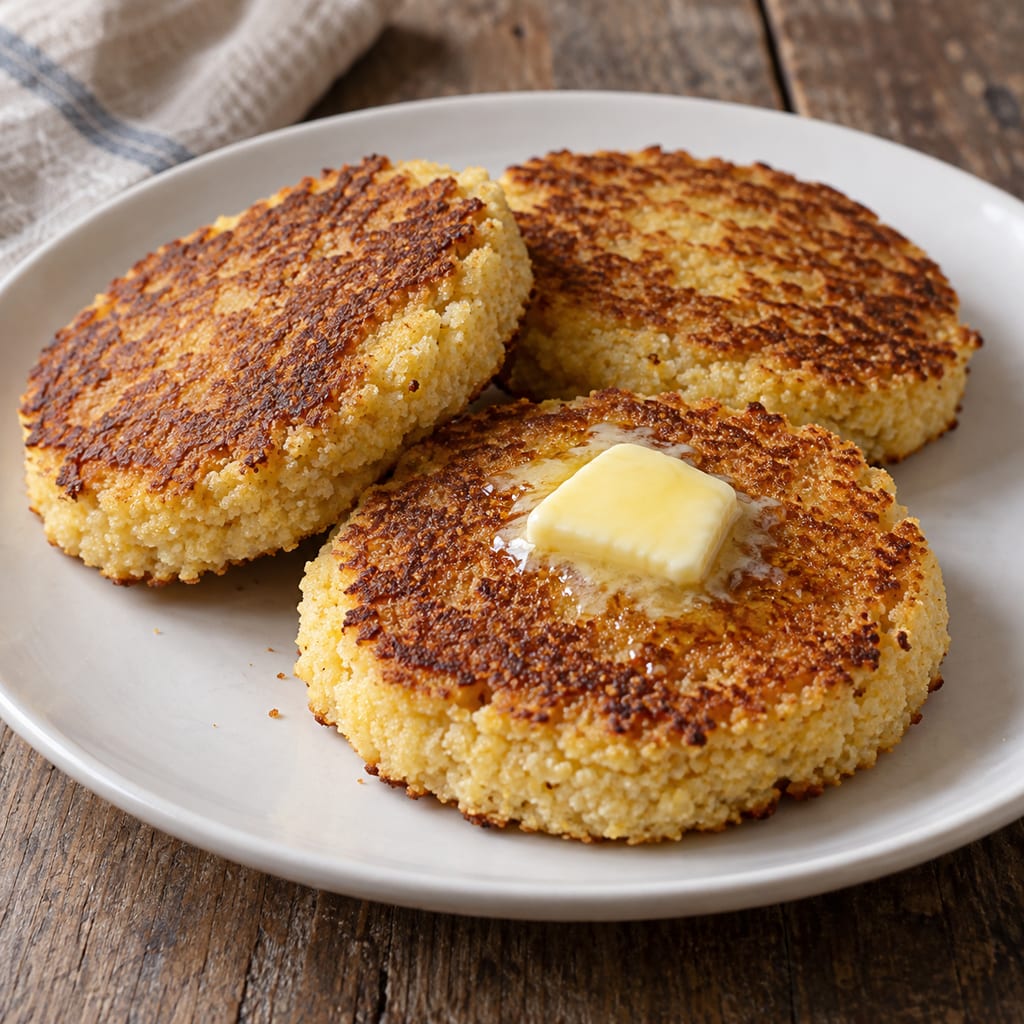
Thicker cornmeal cakes scalded with boiling water and cooked in butter. This South County formula is separate from thin Newport milk-batter cakes and Caribbean wheat breads.
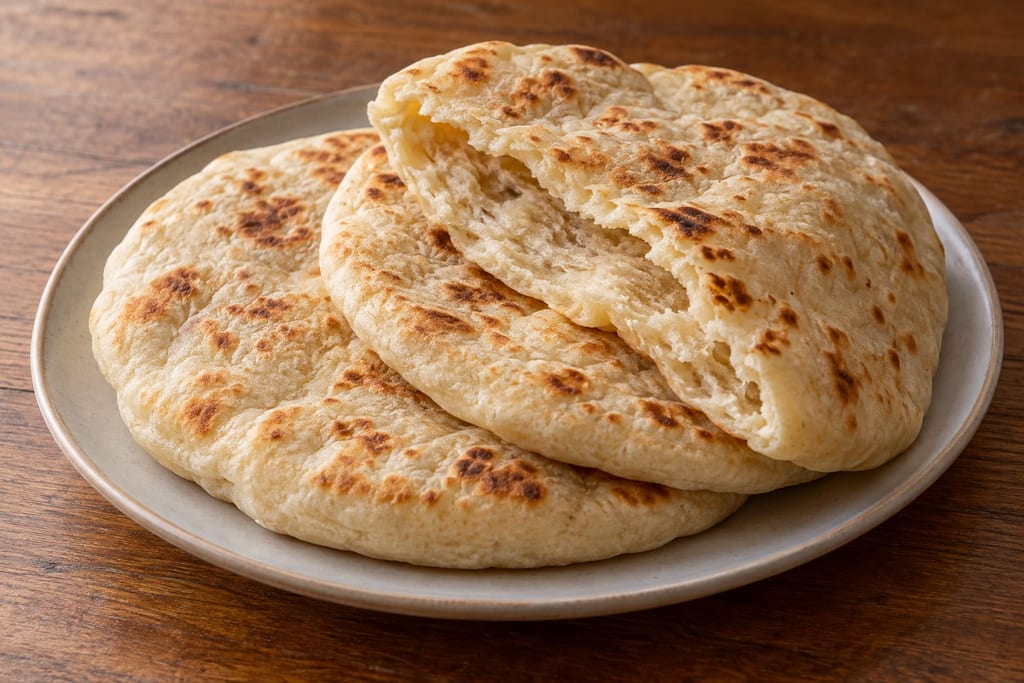
A Trinidad and Tobago baking-powder flatbread cooked on a hot stone, then briefly exposed to direct heat to puff.
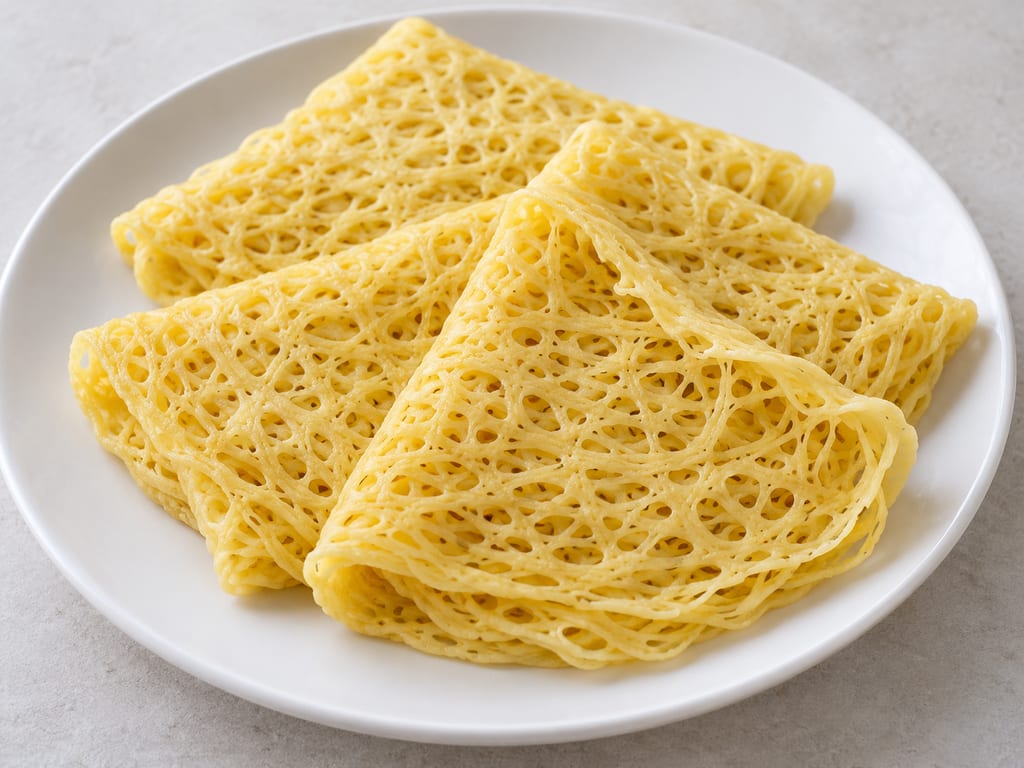
Malaysian lacy pancakes made by pouring coconut-milk batter in a net on a hot pan.
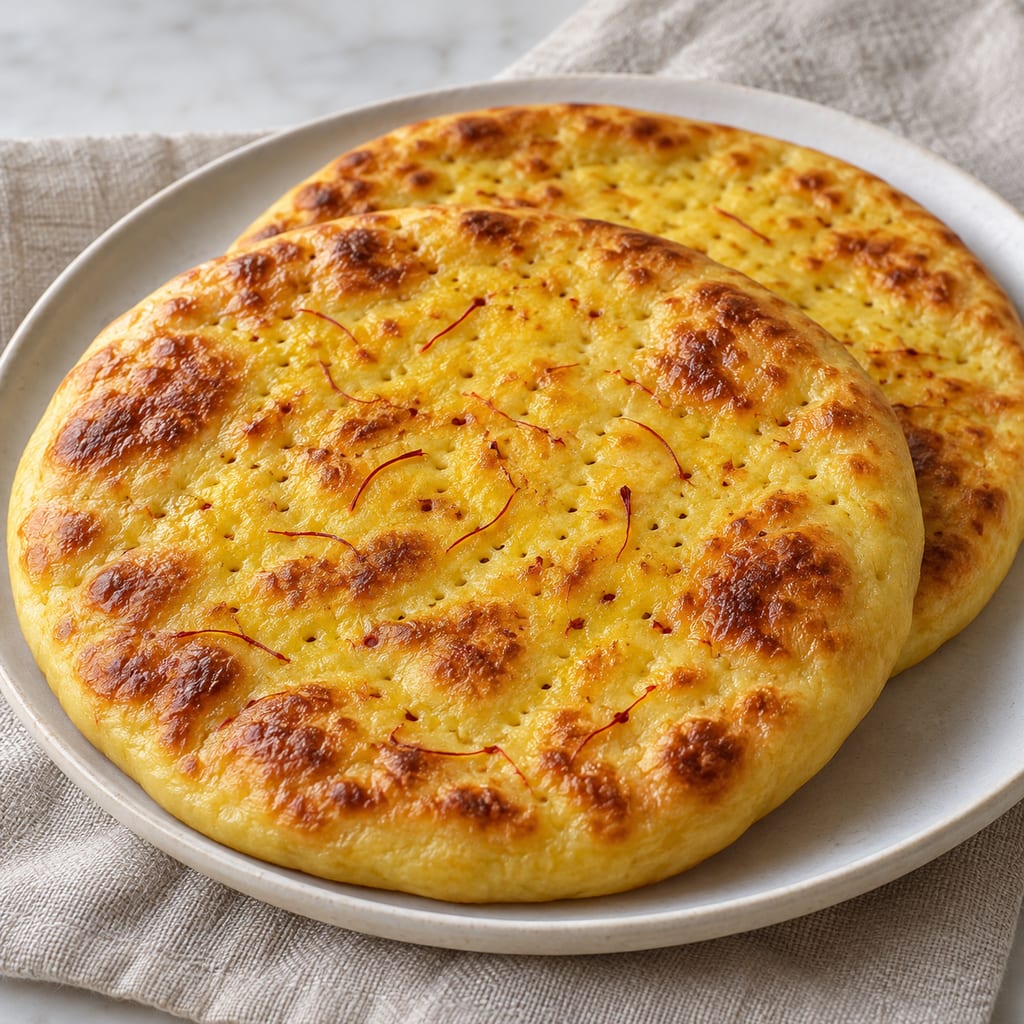
Dassana Amit’s measured sheermal makes eight mildly sweet, saffron-brushed flatbreads without a leavener. Milk, cardamom and a large quantity of ghee enrich the dough, which can be cooked on a covered skillet or baked.
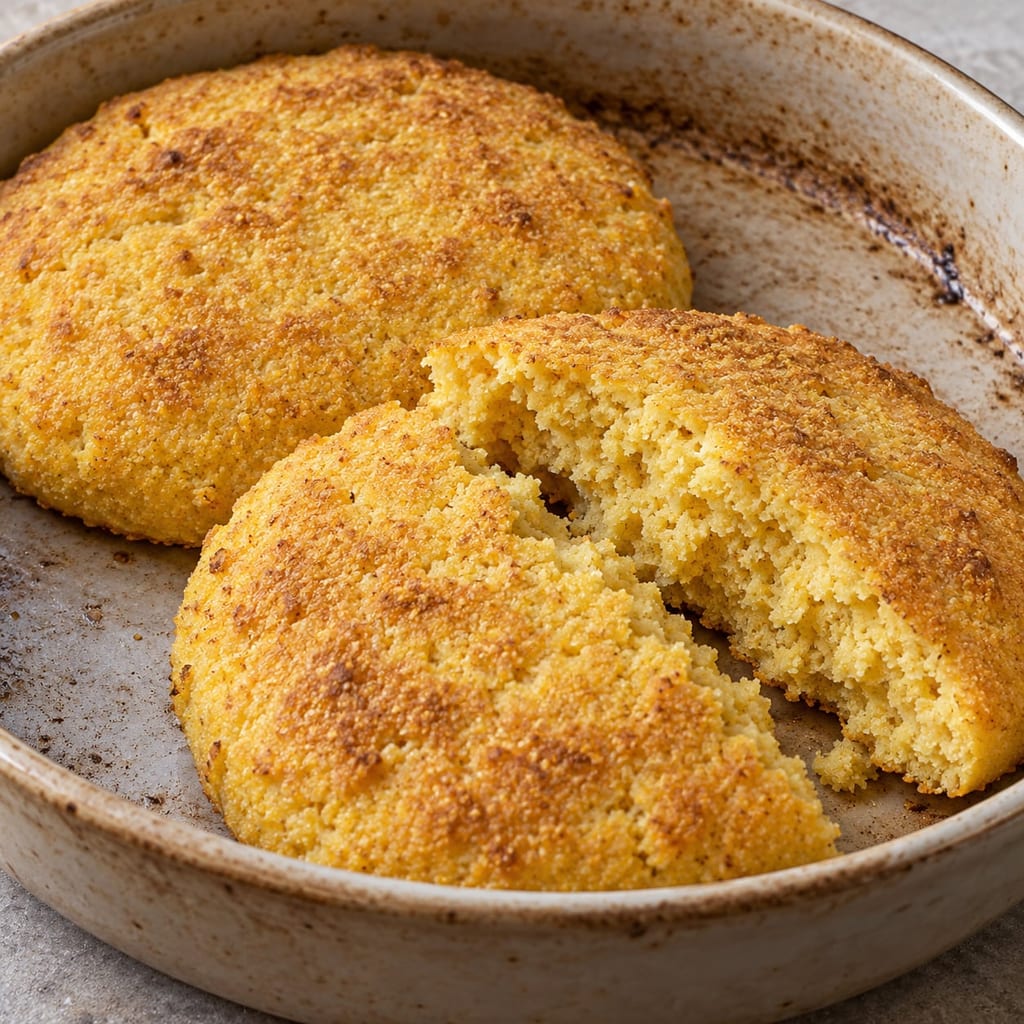
A plain Serbian cornmeal bread made with heated water and salt, shaped into low rounds and baked in a preheated shallow dish. This home method keeps the simple cornmeal form separate from richer dairy-filled projara.
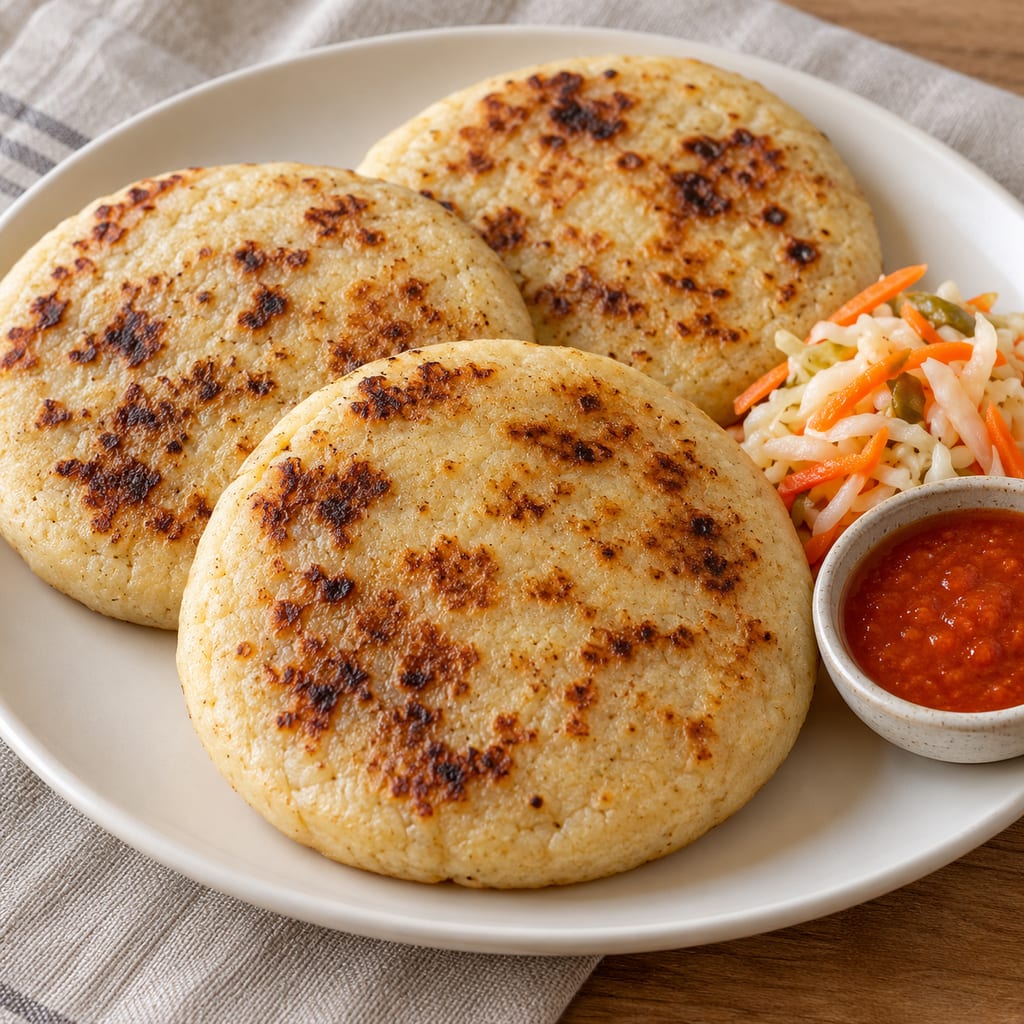
Salvadoran-style masa harina cakes filled with refried beans and cheese, sealed and cooked on an oiled skillet.
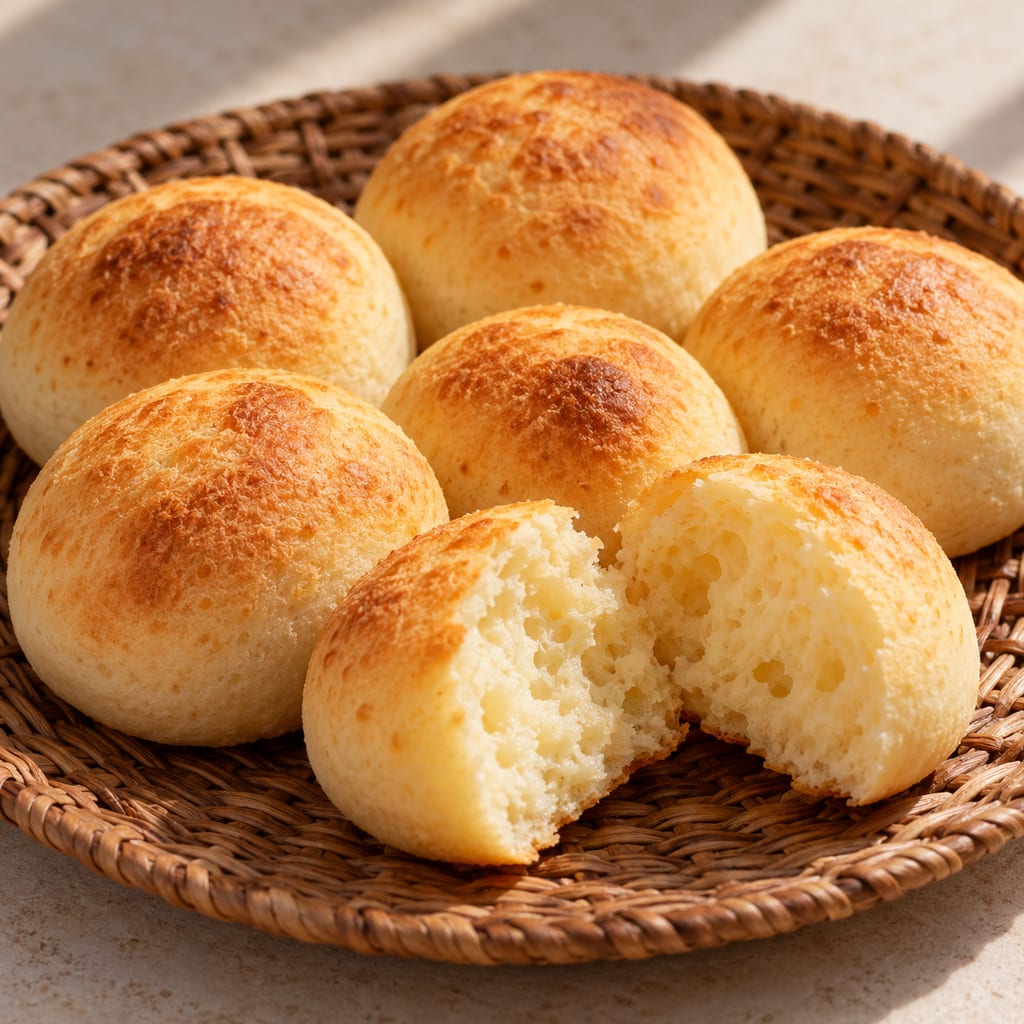
Colombian cheese breads made from cassava starch, precooked cornmeal, queso fresco or quesito, feta and egg; this source's version makes 12 warm, round rolls.
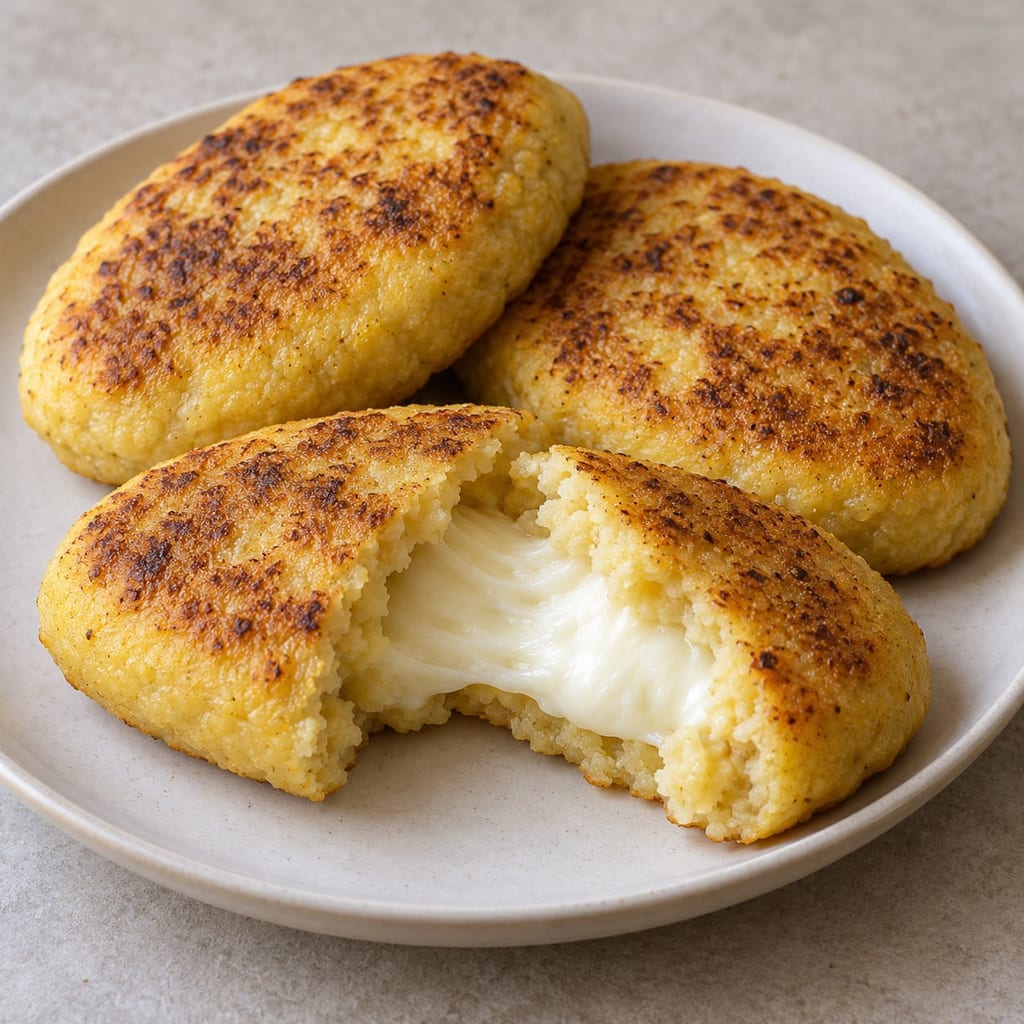
Megrelian chvishtari uses a maize dough with sulguni wrapped around a cheese piece, then cooks covered over low heat in a skillet.
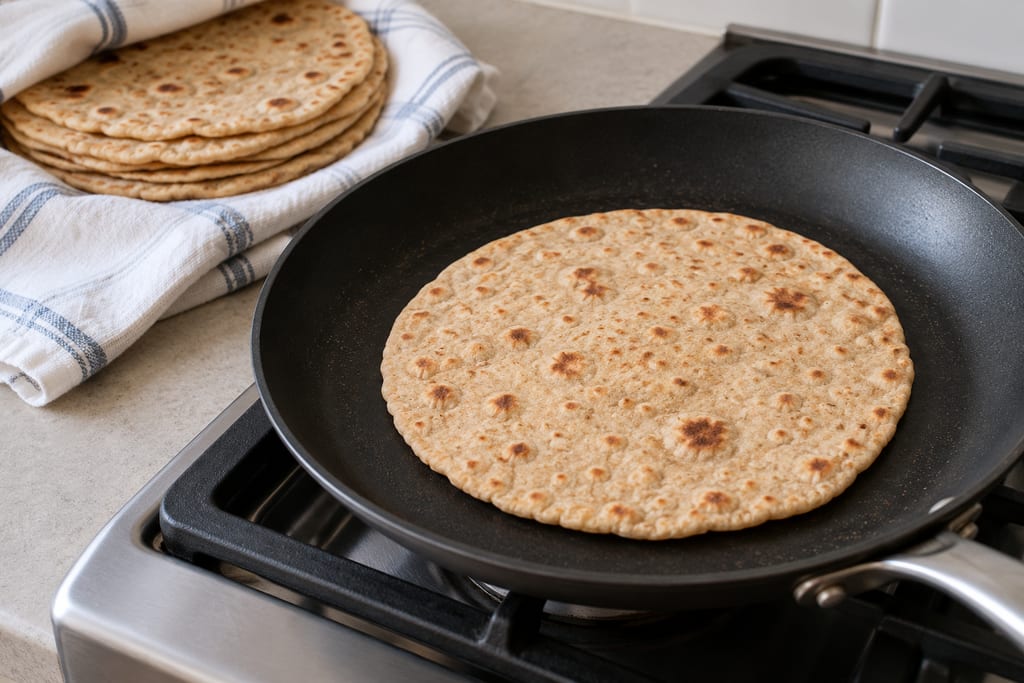
A small home-pan adaptation of Levantine markouk: rested wheat dough rolled into small rounds and cooked quickly on a hot flat pan. It is thicker and smaller than the hand-stretched sheets made on a saj.
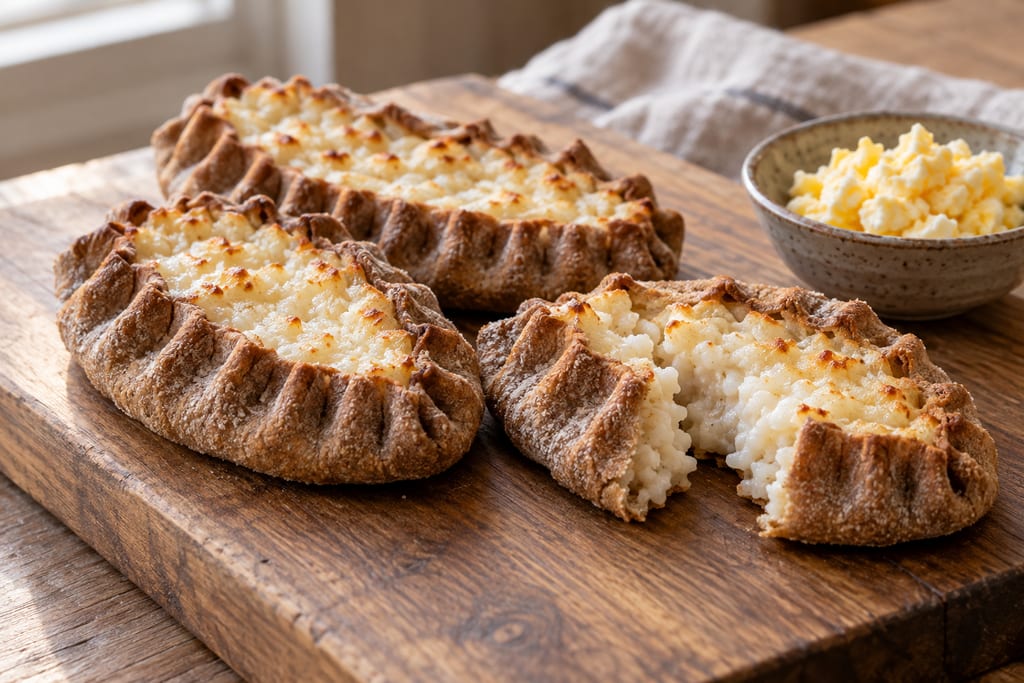
Karjalanpiirakka are open, pleated rye-and-wheat pastries filled with creamy rice porridge, baked hot and brushed with butter and milk.
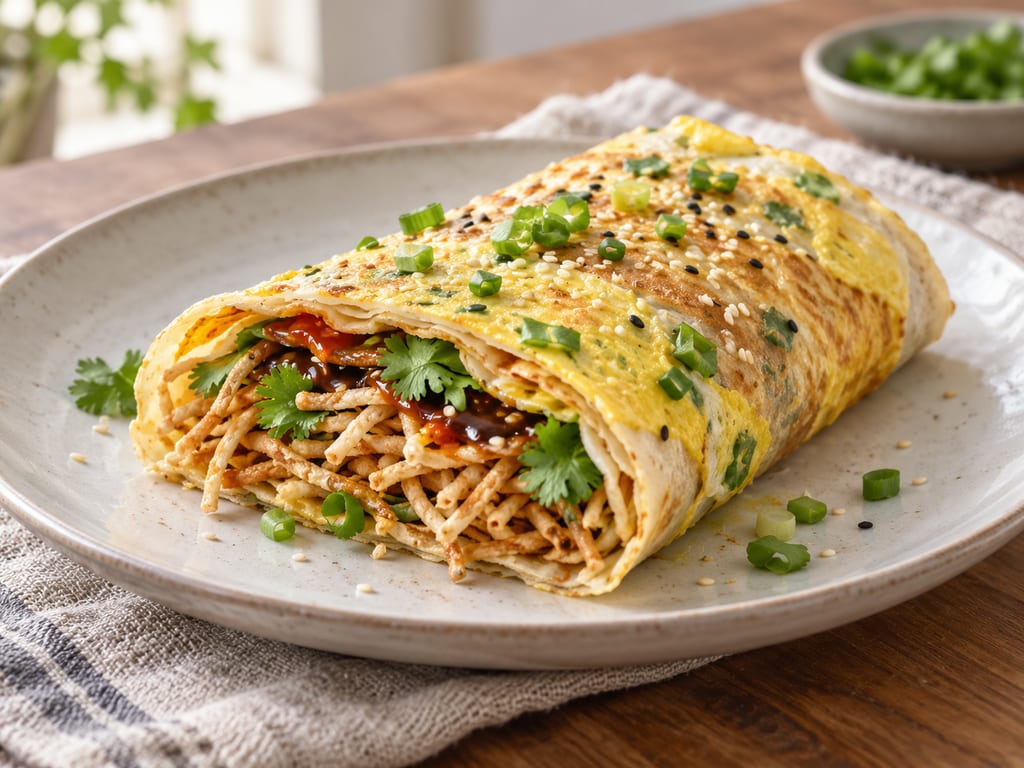
A four-serving home adaptation of jianbing: thin wheat batter cooked with egg, spring onion and sesame, then folded around crisp fried noodles and sauce.
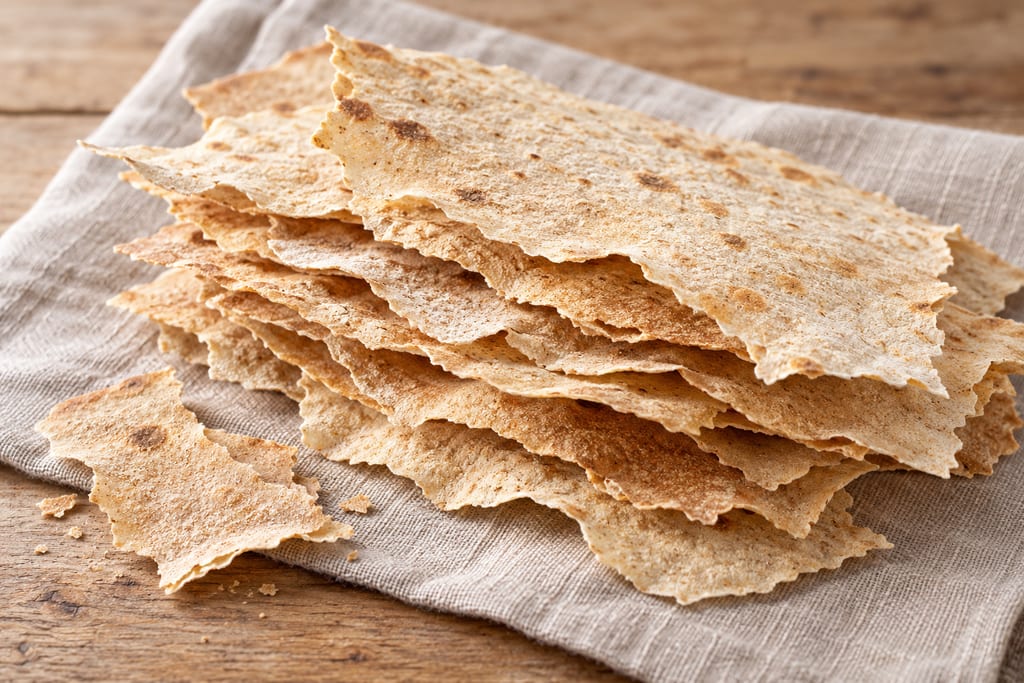
Thin, unleavened Norwegian flatbread made from sifted wheat and oat flours, fine whole rye, salt and water, then rolled with barley flour and cooked on a takke.
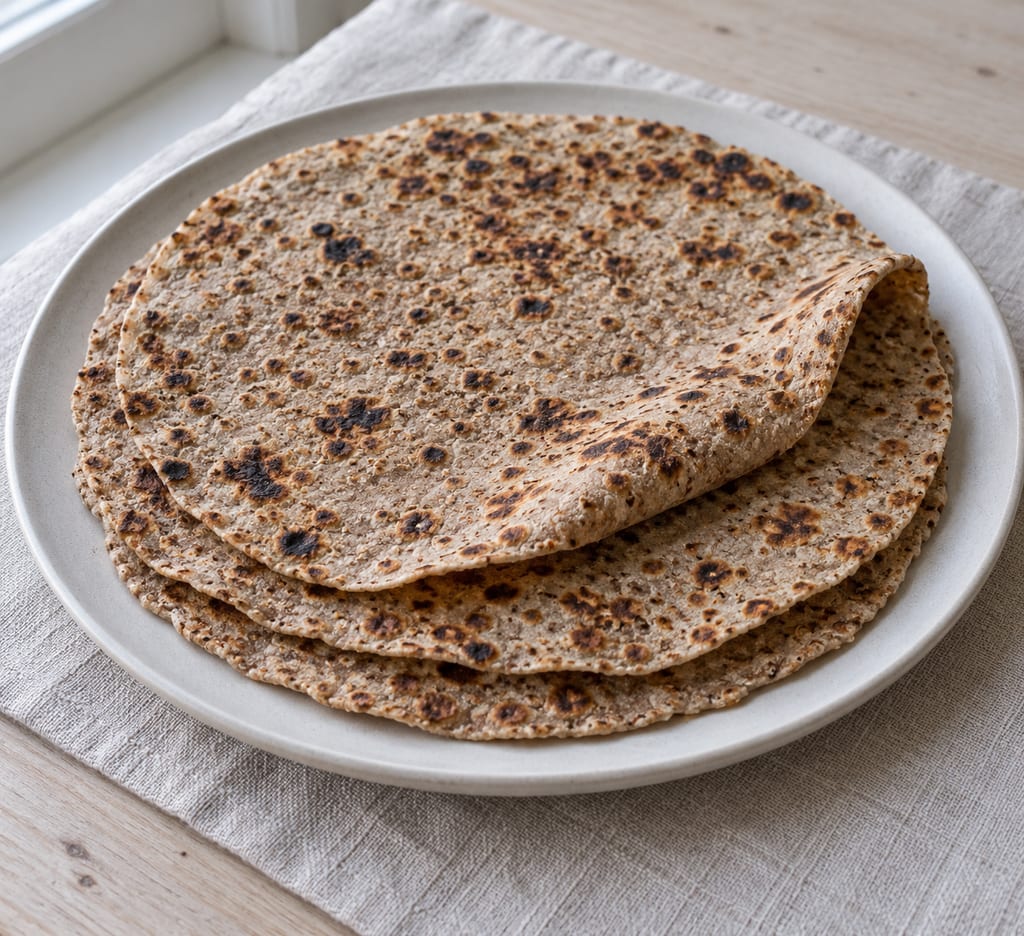
Thin Icelandic flatbreads made from rye and whole-wheat flour with boiling water, shaped into rounds, docked and cooked on a hot stovetop or gas grill.
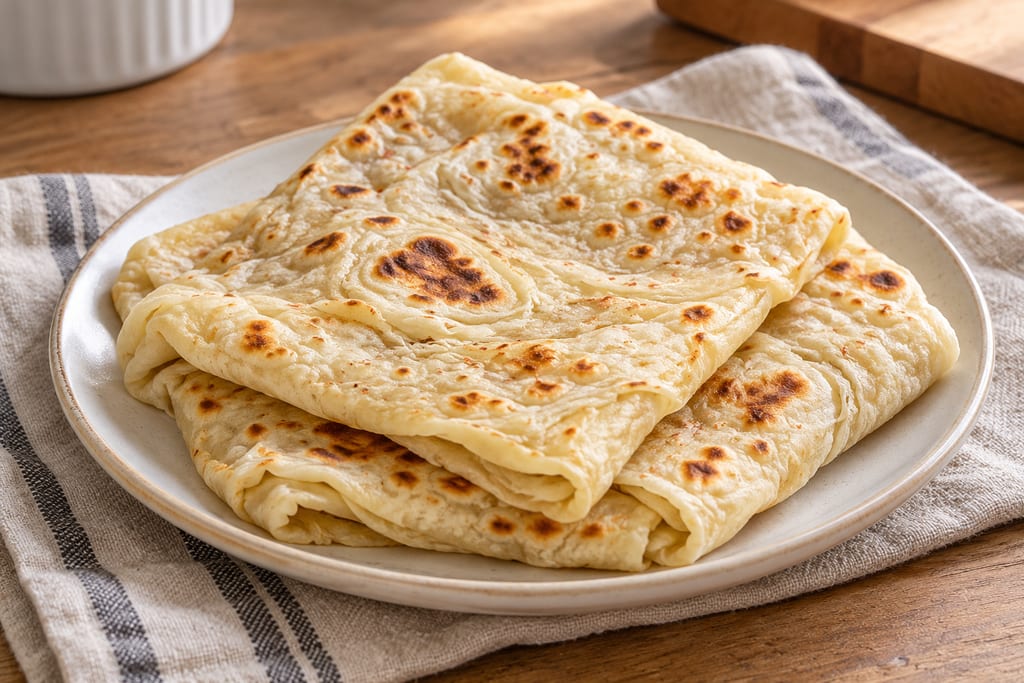
Teenuja Dahari’s oil-free Mauritian farata uses hot-water wheat dough, folded square parcels and a tawa to make six soft, layered flatbreads.
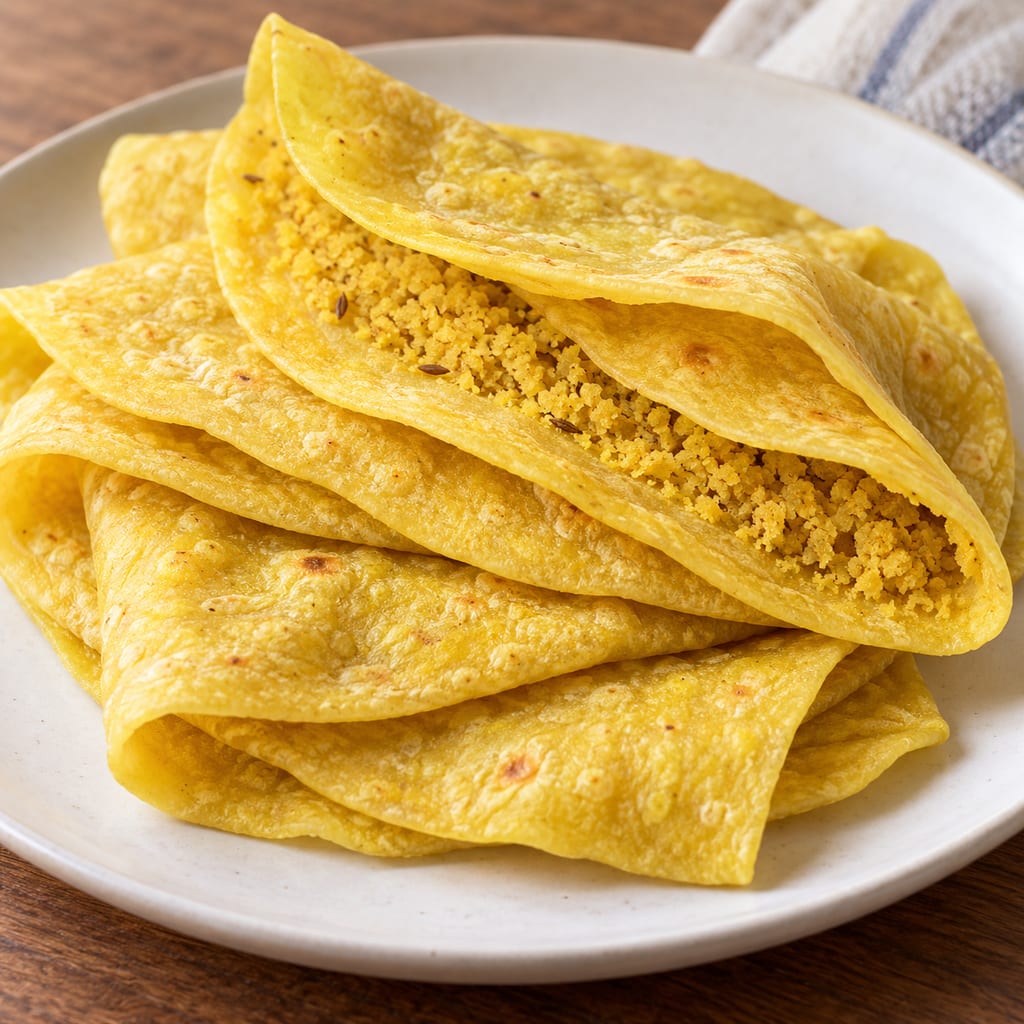
Kavi Hurrydoss’s Mauritian dholl puri encloses finely ground cumin-seasoned yellow split peas in wheat dough, then rolls and griddle-cooks each filled bread.
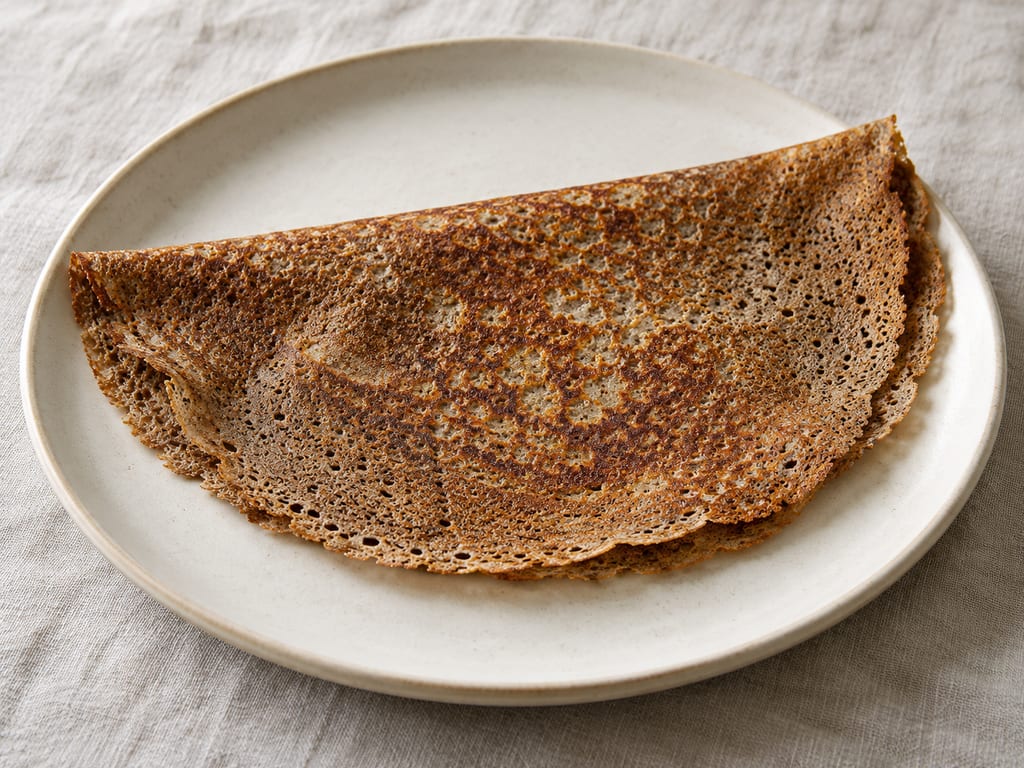
A thin Brittany galette made from buckwheat flour, water and Guérande salt. This Atelier de la Crêpe method rests the batter in a refrigerator before cooking it on a hot crêpière.

Firm Mongolian fried pastries made from an unyeasted wheat dough enriched with butter and sweetened with sugar; the dense dough is rested, cut or knotted, and fried until golden.
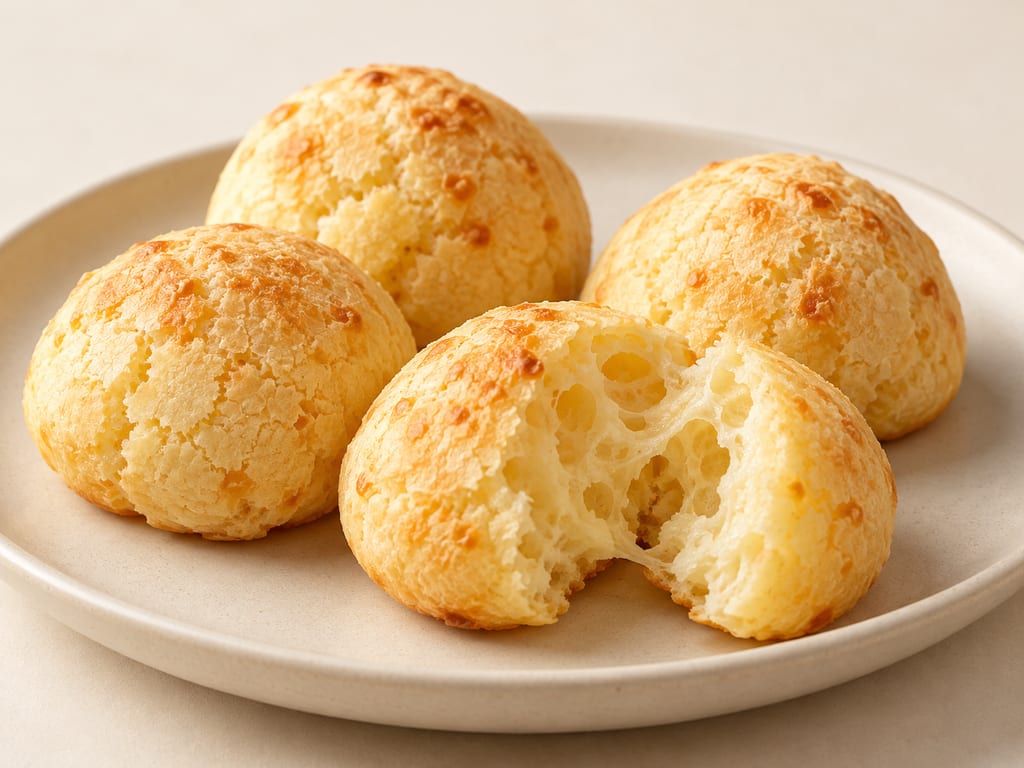
Scooped tapioca-starch buns made by scalding the starch, then beating in garlic, cheese and eggs. This named version has no dough-fermentation stage.
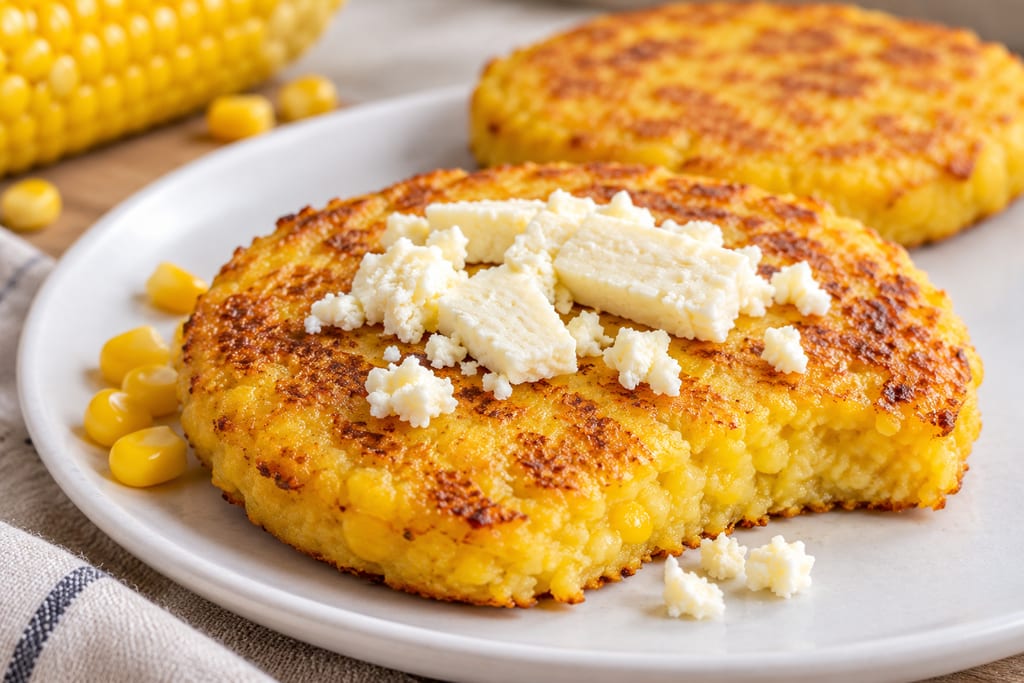
A Colombian Andean griddle cake made from fresh sweet-corn batter, cooked in butter and served with white cheese.
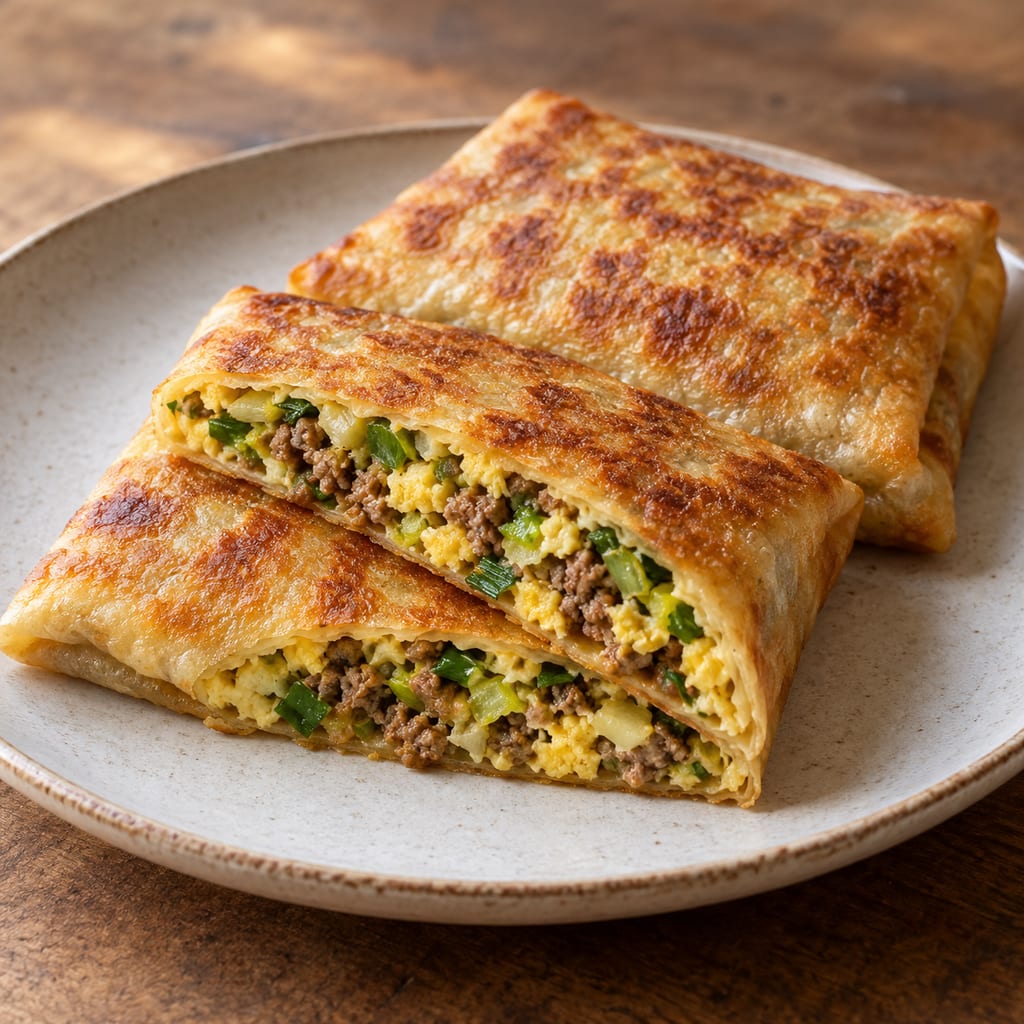
A Javanese-style Indonesian savoury parcel of thin rested wheat dough folded around curry-seasoned beef and egg, then cooked in an oiled skillet.
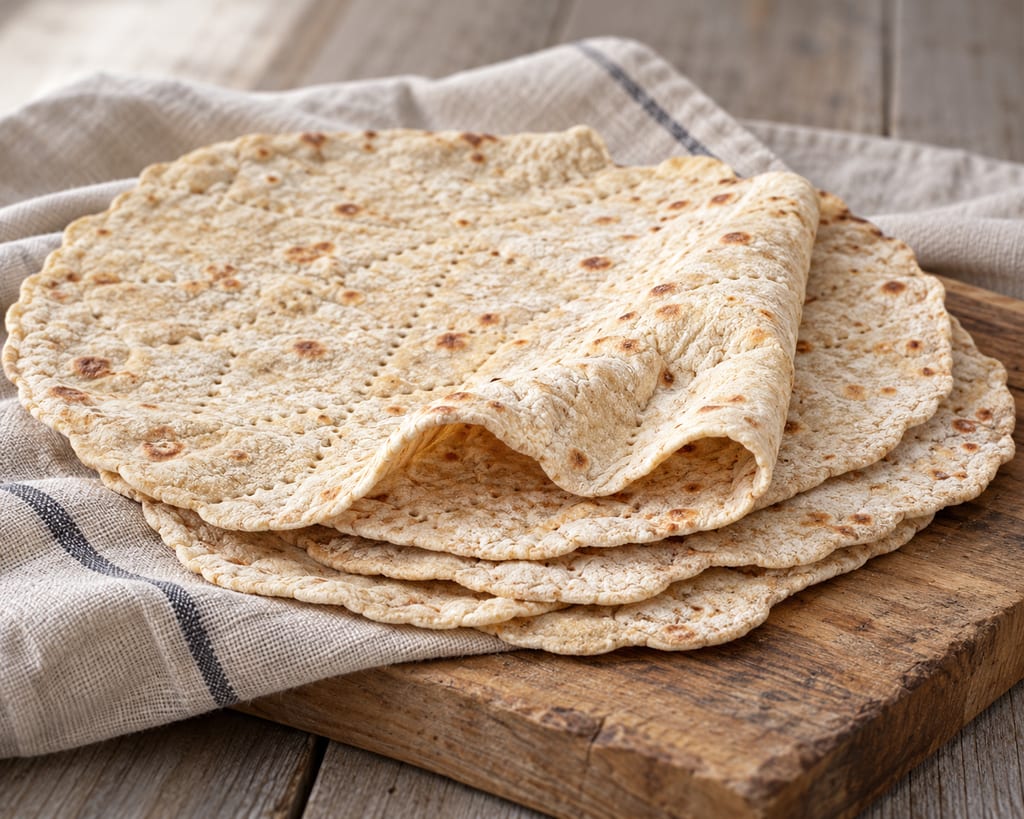
Tunnbröd is Sweden’s family of thin, docked flatbreads, baked soft for immediate meals or dried crisp for the pantry. This home recipe follows a northern Swedish soft rye-and-wheat version scented with anise and fennel.
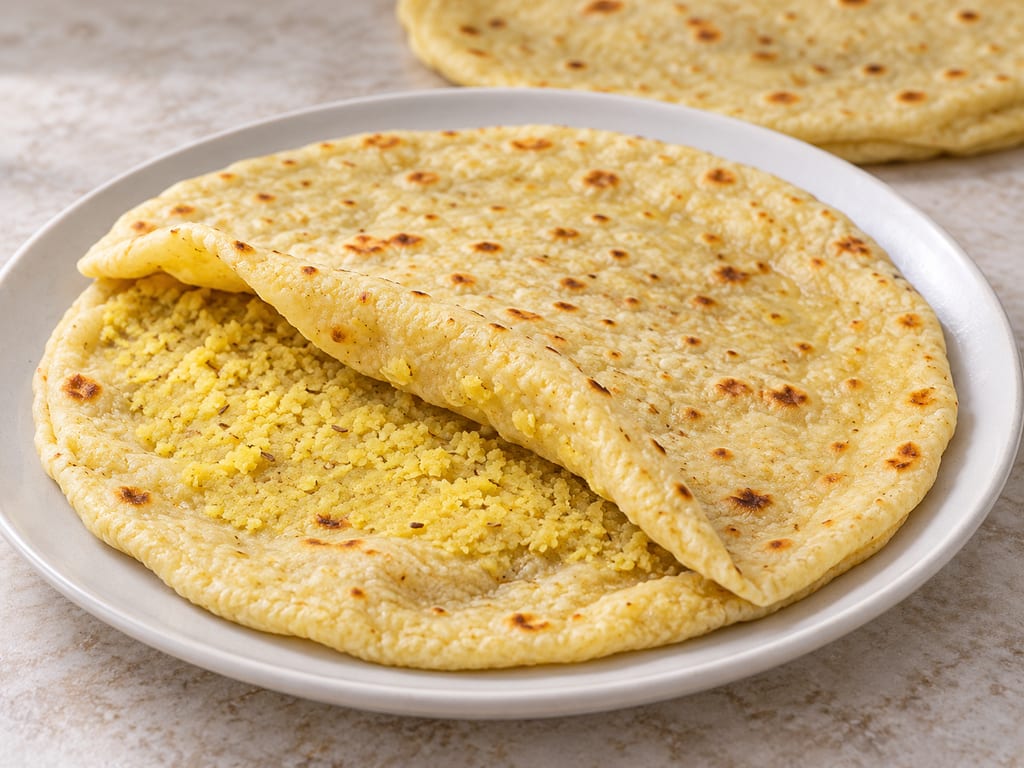
Trinidadian stuffed roti with a fine split-pea filling sealed inside soft wheat dough, rolled thin and cooked on a hot tawa.
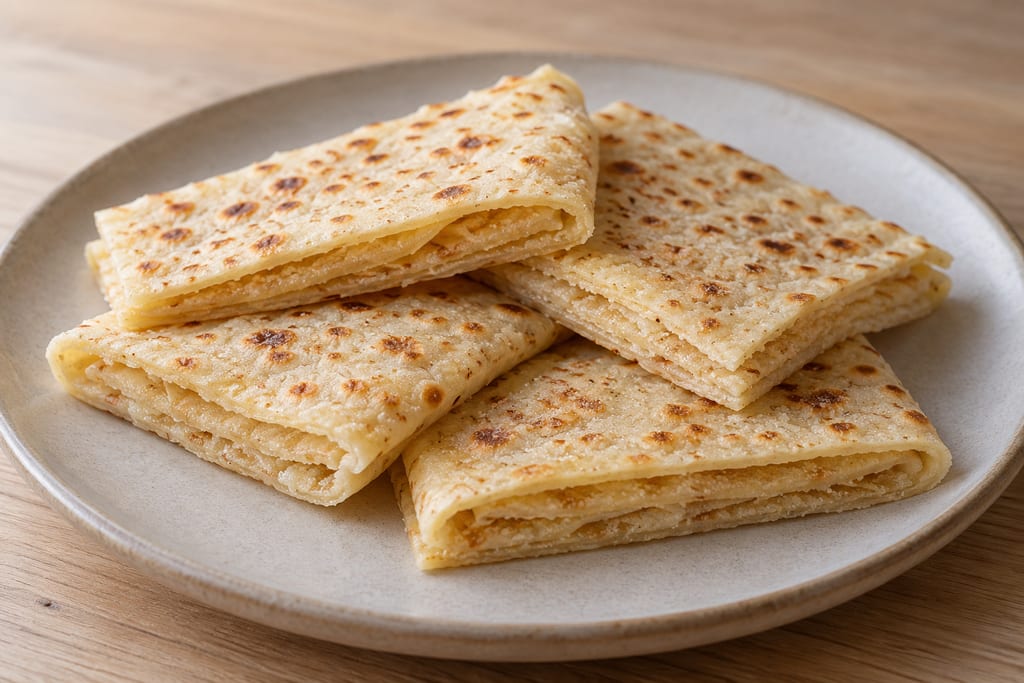
Soft Norwegian wheat and semolina flatbreads, cooked thin on a griddle and finished with butter and sugar.
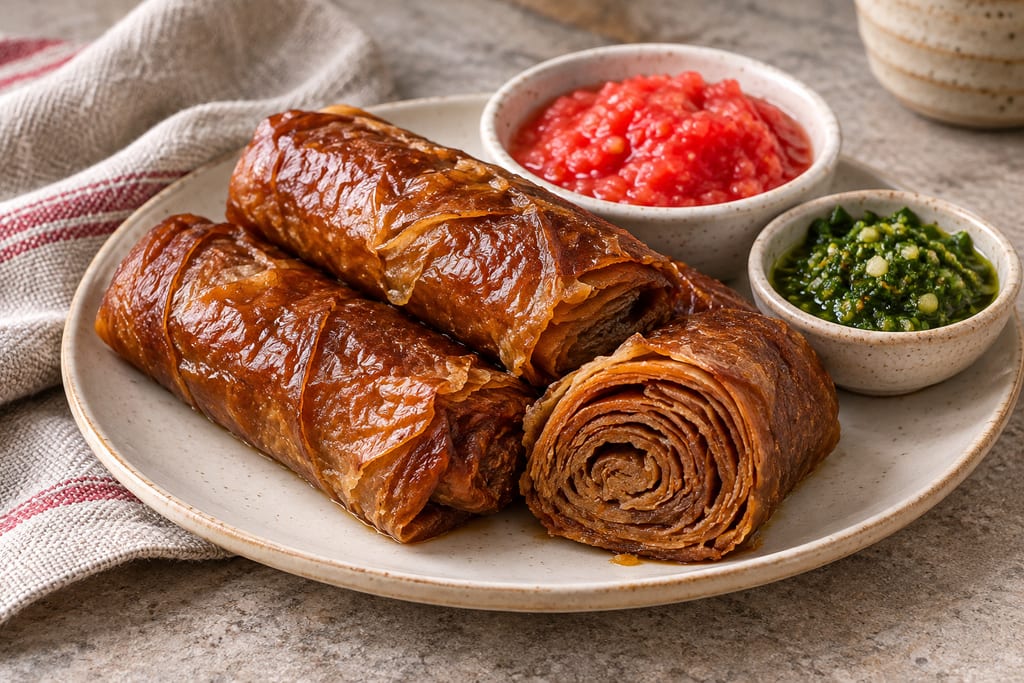
Jachnun is a rolled, butter-layered wheat pastry baked covered for hours at very low oven heat and served warm, often with grated tomato and schug.
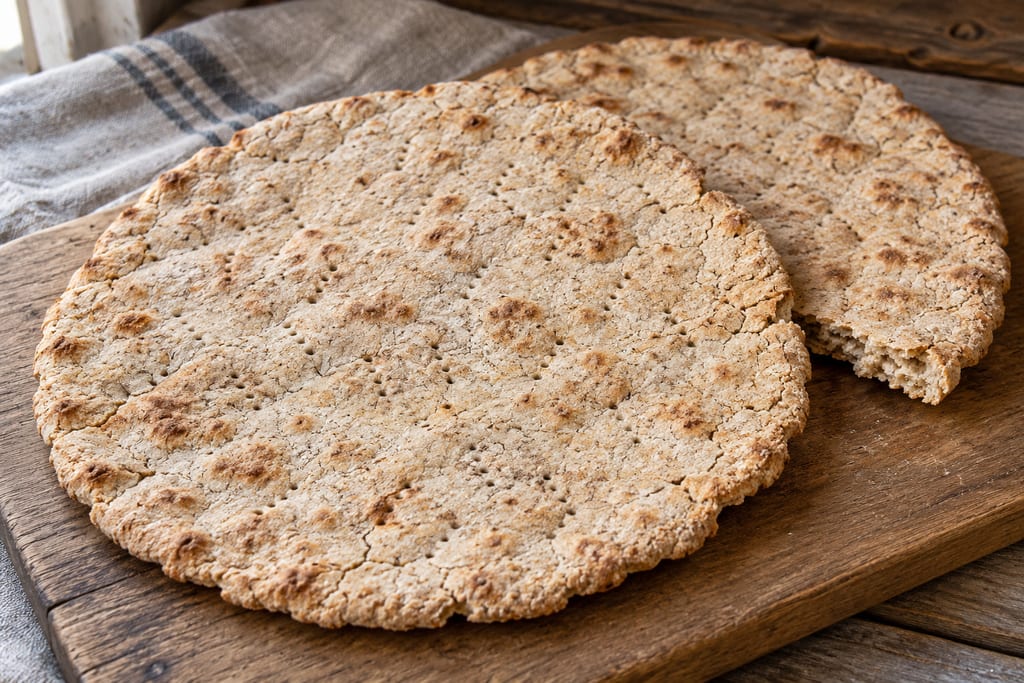
Two barley flatbreads made with cold dough and baked rapidly on a hot sheet, following Timo Lepistö's northern Finnish formula.
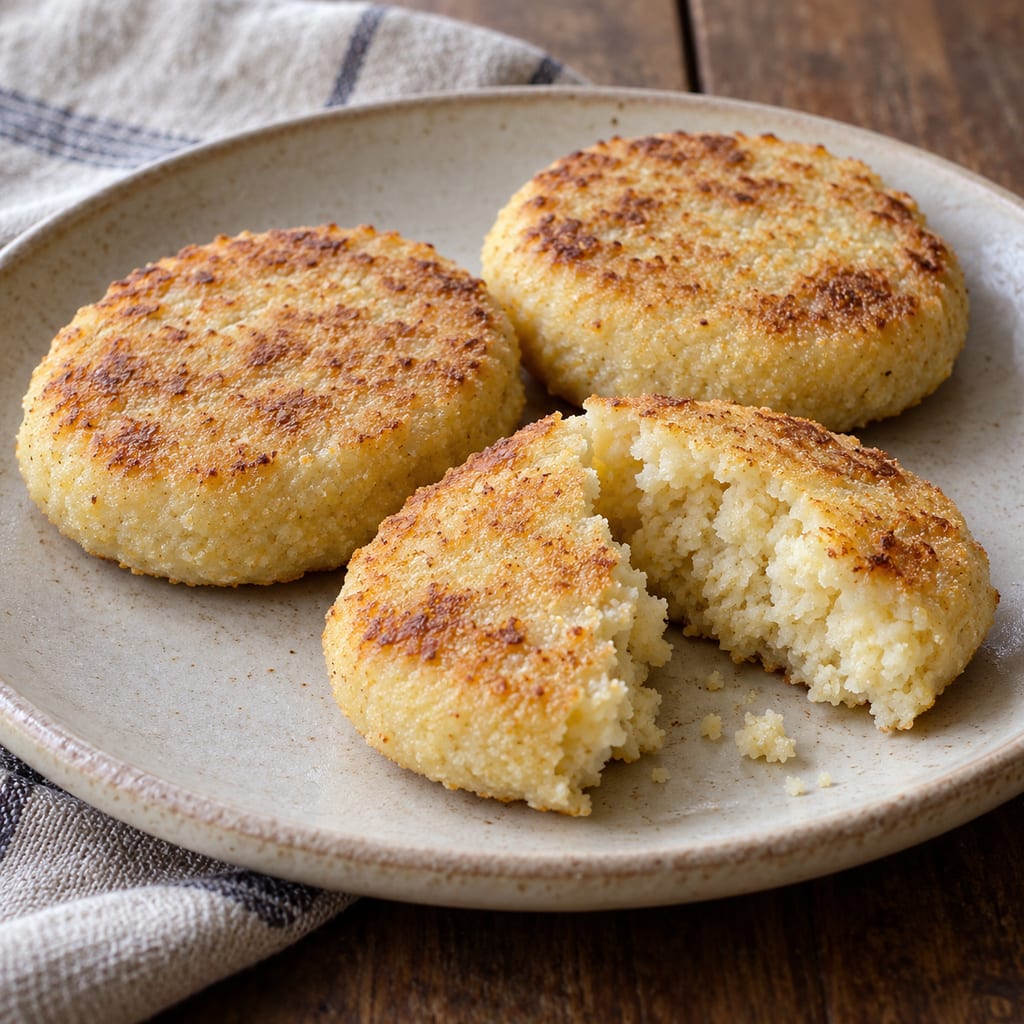
Unleavened cornmeal cakes mixed with cold water and cooked on both sides in a covered-then-uncovered pan. Cheese is served alongside rather than mixed into this dough.
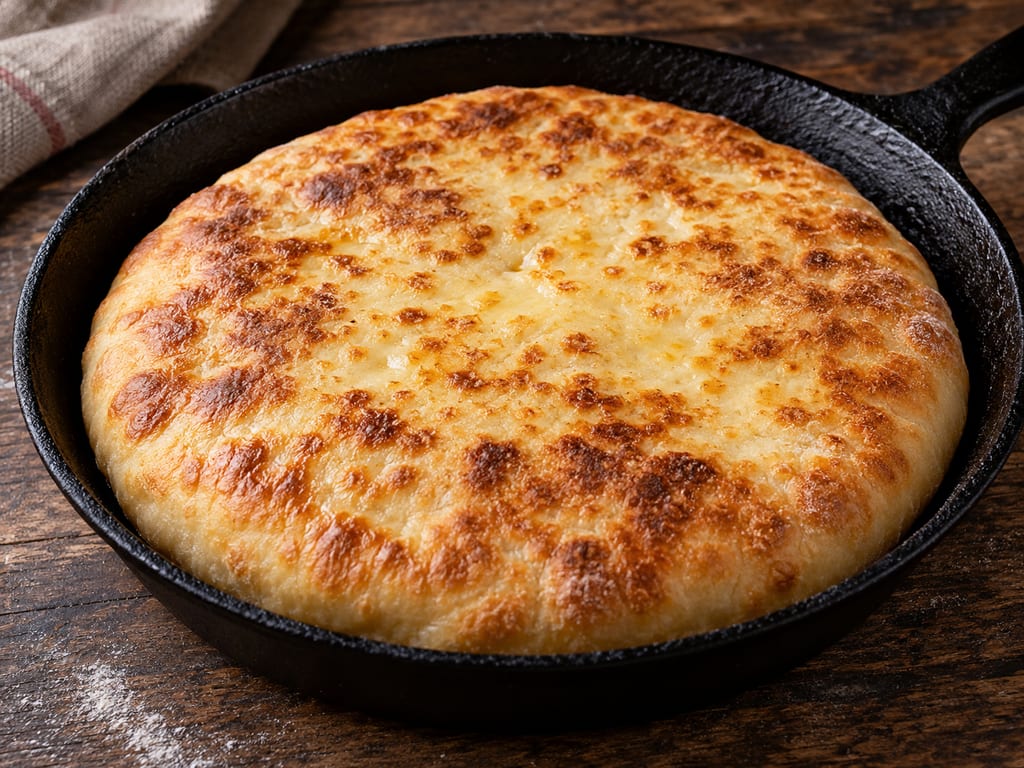
Closed round cheese breads made with sour-cream dough and cooked in a frying pan. This named Gunda version has no added yeast or proofing stage.
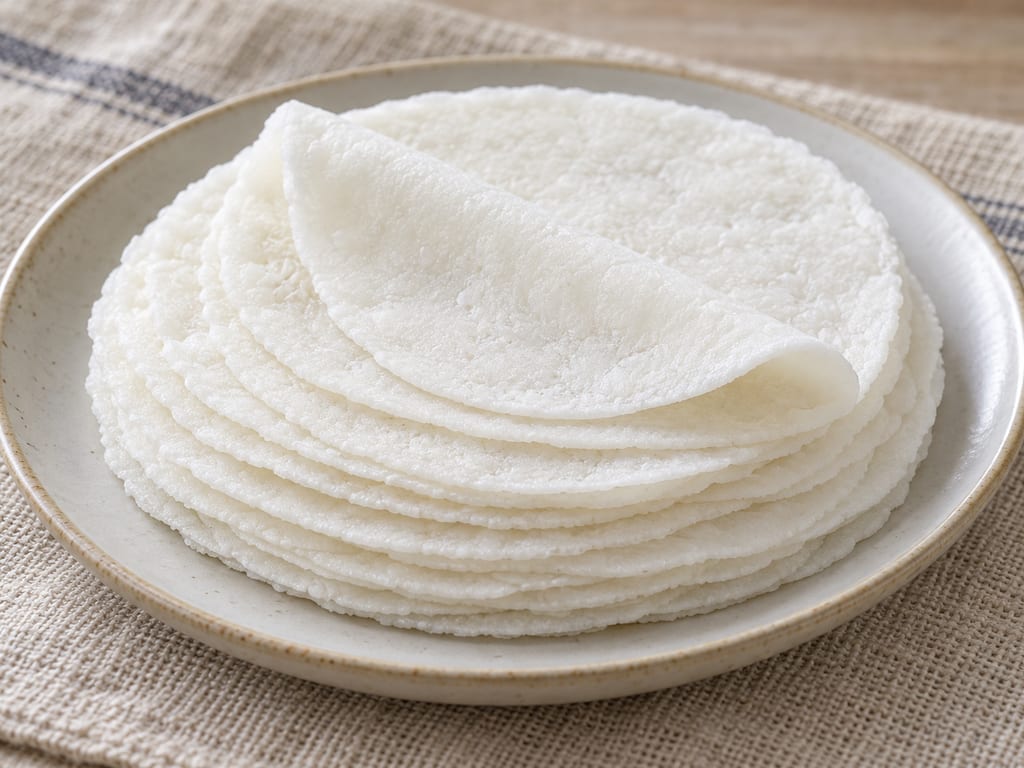
Thin Malabar rice-flour rounds made from roasted rice flour cooked into salted boiling water, kneaded after cooling, and rolled to about 1 mm. They cook on a hot griddle without taking on colour.
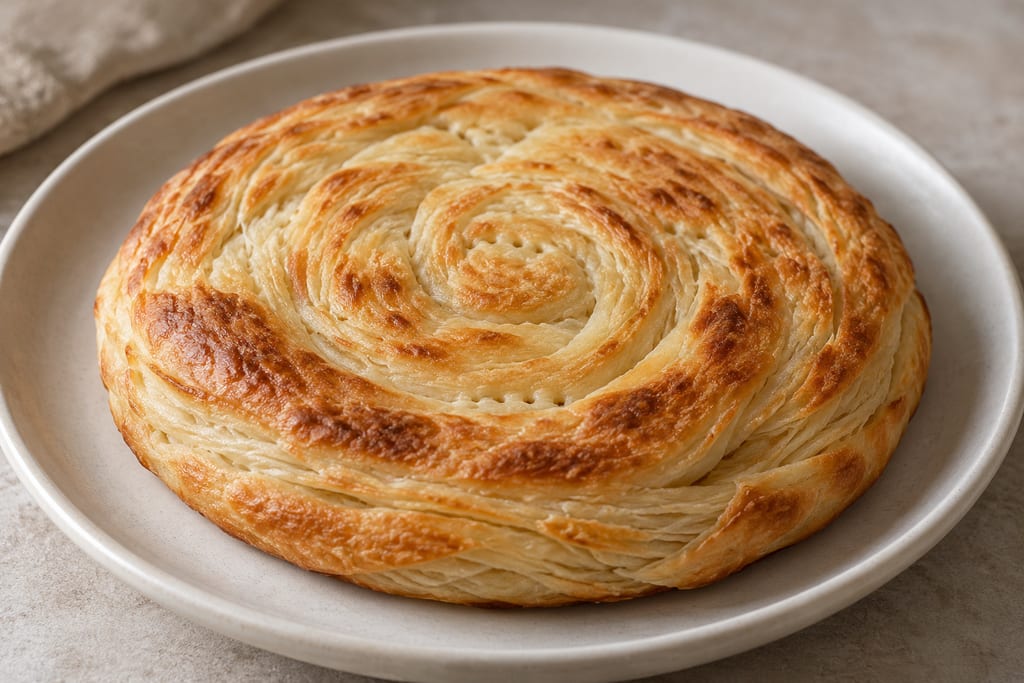
A small Uzbek-style layered flatbread, made with wheat dough and ghee and baked in a home oven.
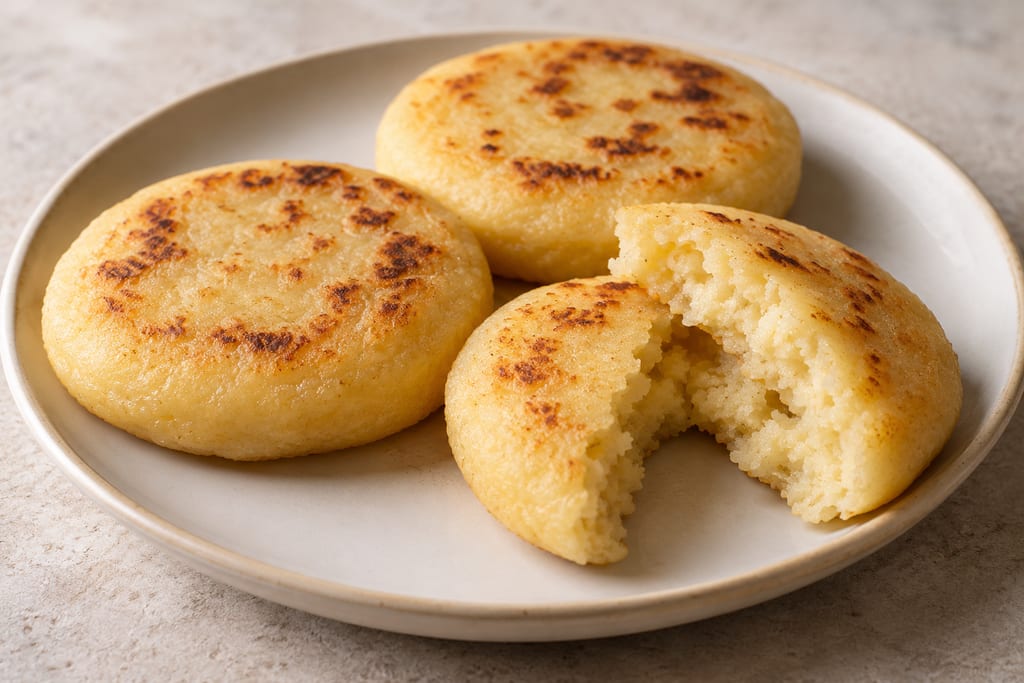
This household version combines precooked corn flour, warm water and salt, then cooks thick rounds on a lightly oiled skillet or griddle. It is one source-specific arepa method, not a universal Colombian or Venezuelan formula.
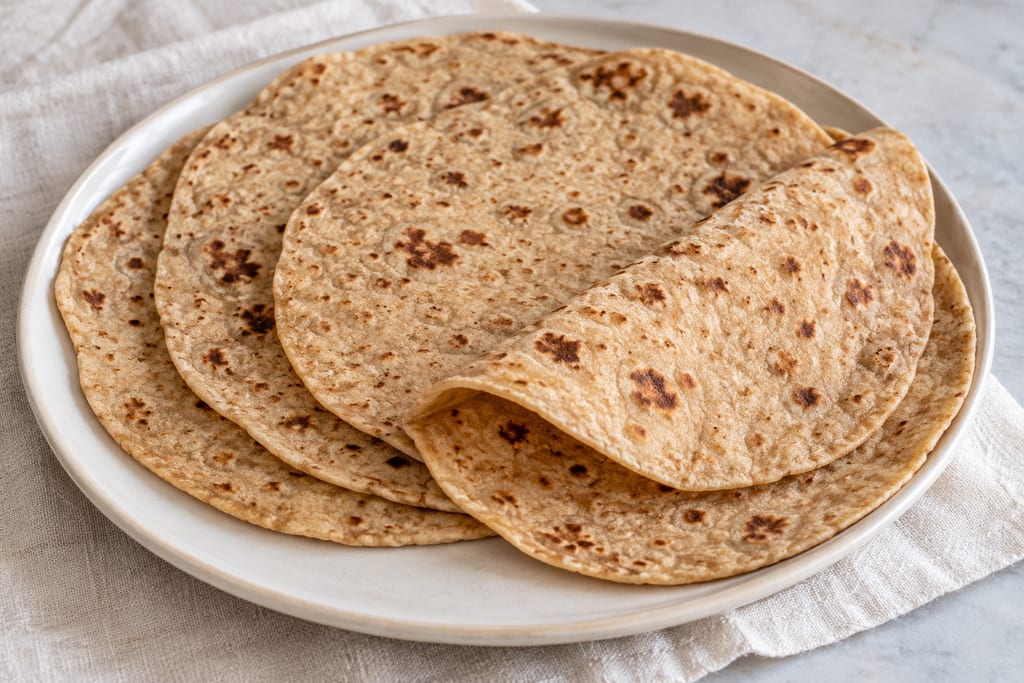
A Maldivian flatbread made with whole-wheat atta, rolled thin and cooked on a hot pan. This batch makes four.
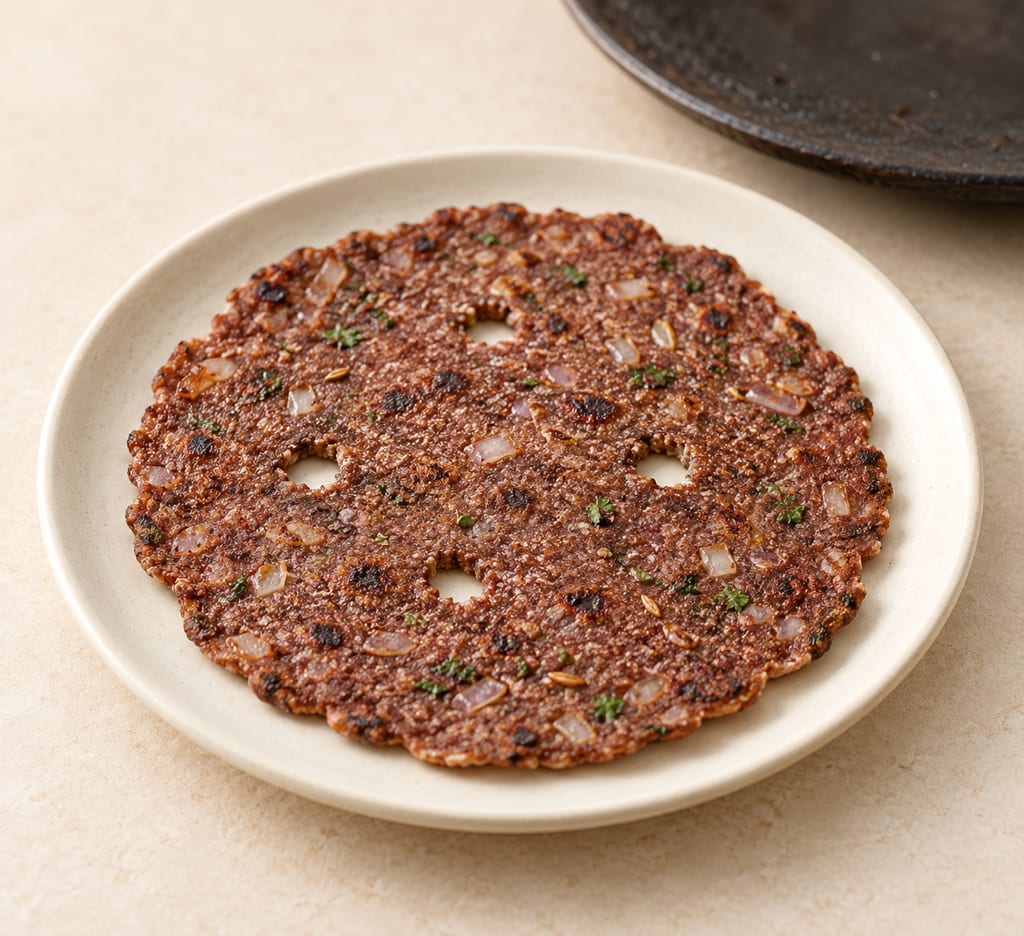
A Karnataka finger-millet flatbread with onion and spices, hand-patted and cooked on a covered tawa. This batch makes four.
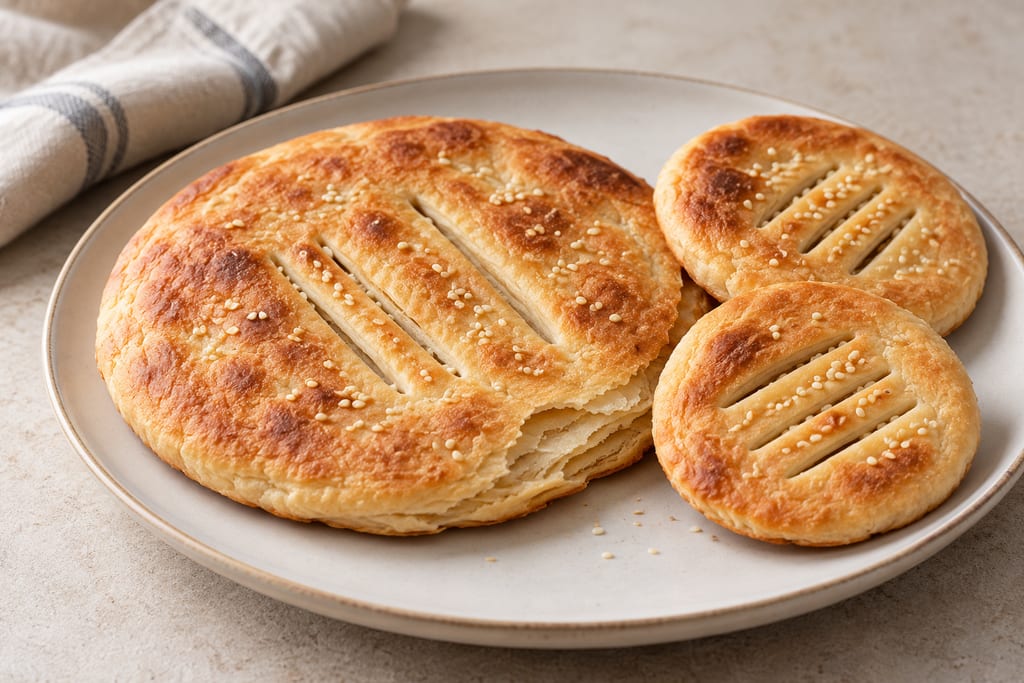
A firm, layered bread from Old Dhaka, made with mawa and ghee and baked until lightly browned.
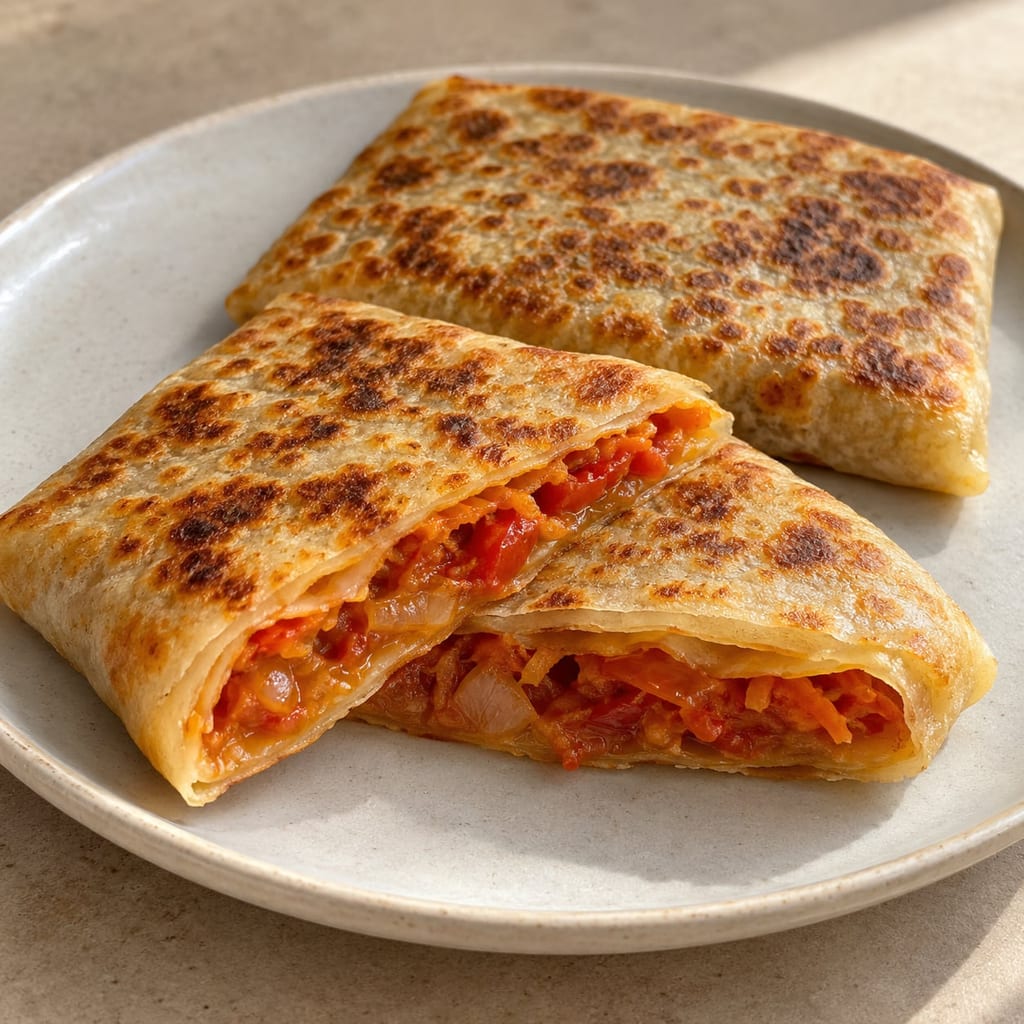
An Algerian stuffed flatbread made from wheat flour and fine semolina, filled with spiced tomato, onion and carrot, folded into packets and griddled.
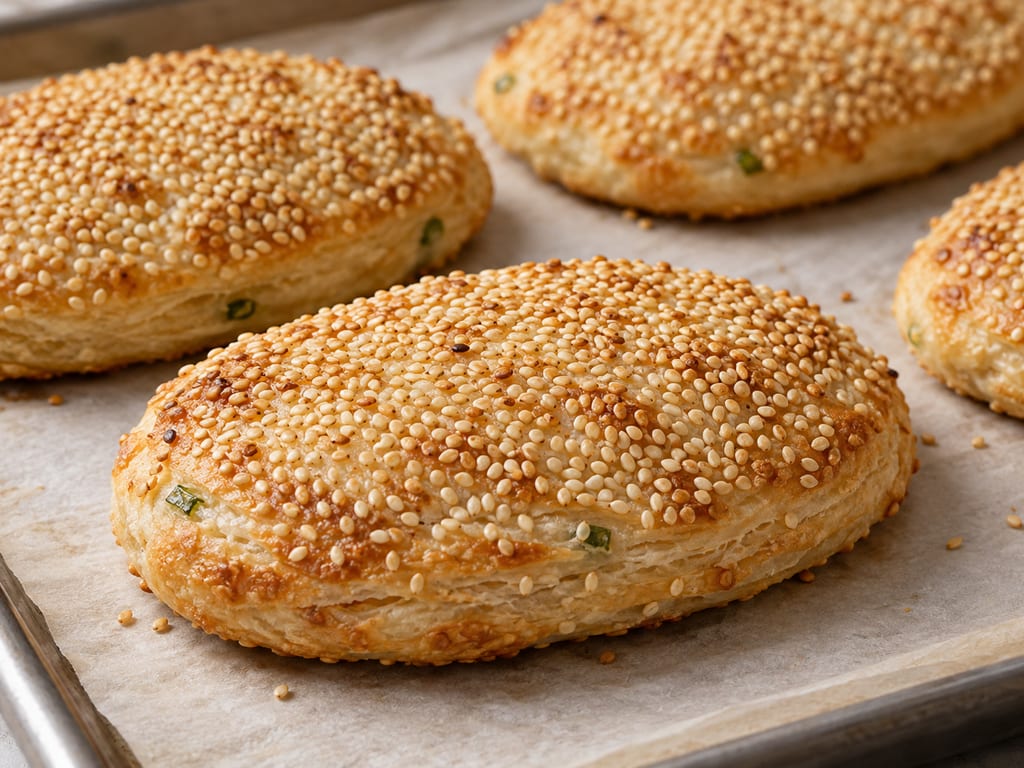
Shanghai breakfast flatbreads layered with butter, scallion and pepper, then topped with sesame and baked.
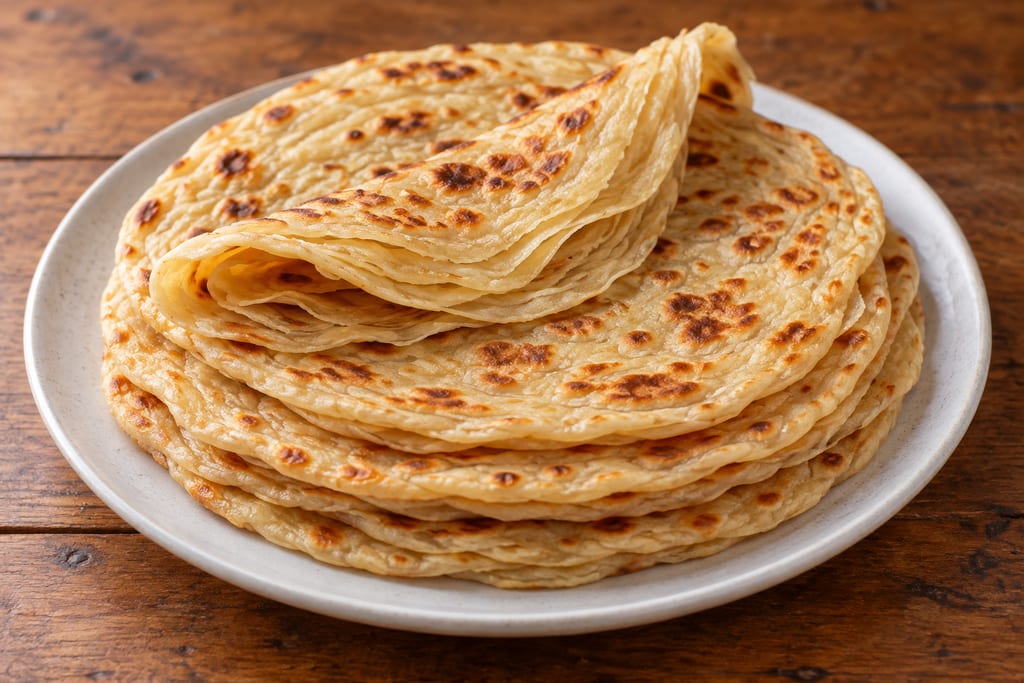
Six Kenyan layered wheat flatbreads, pleated with ghee, coiled and cooked on a griddle.
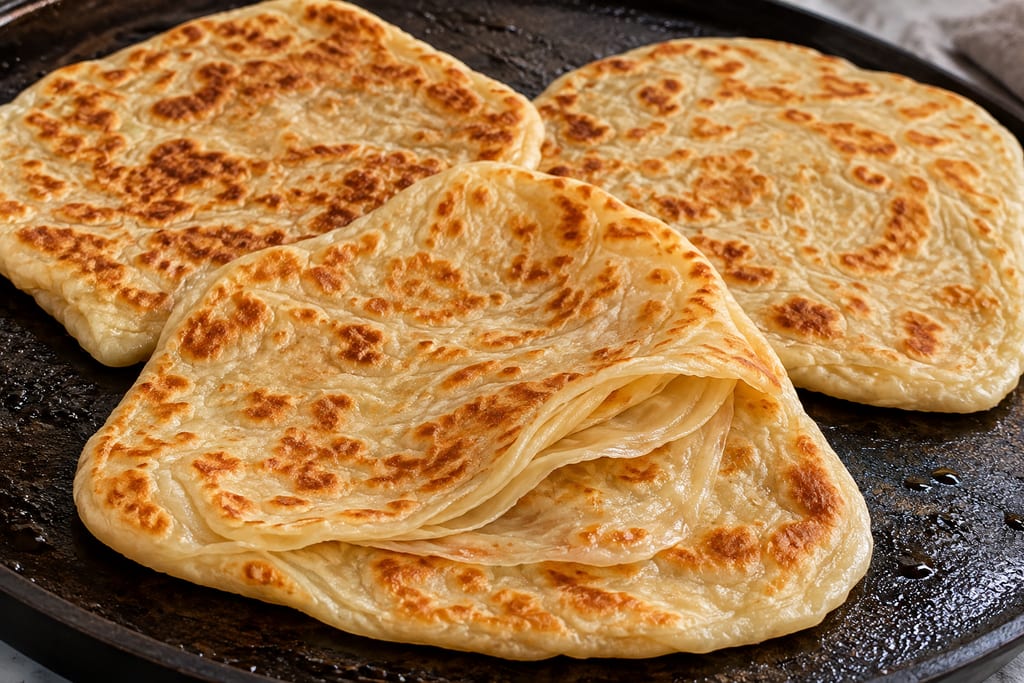
An unleavened Somali wheat flatbread made by oiling and folding soft dough into layers, then griddle-cooking it until browned.
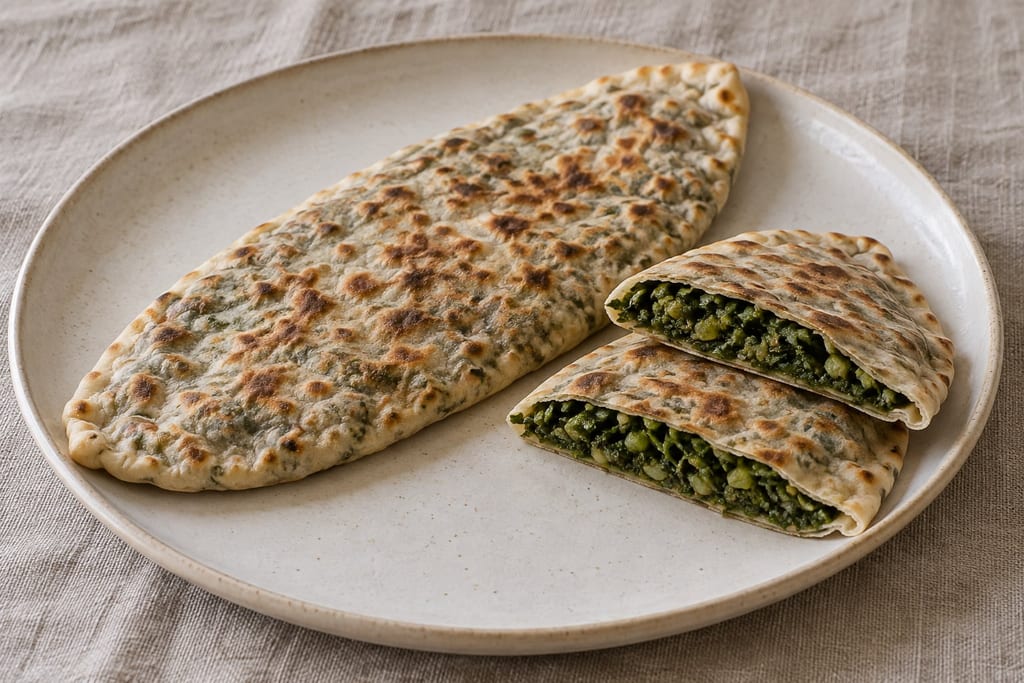
An unleavened Armenian flatbread filled with mixed greens and herbs, sealed into an oval and cooked on a griddle.
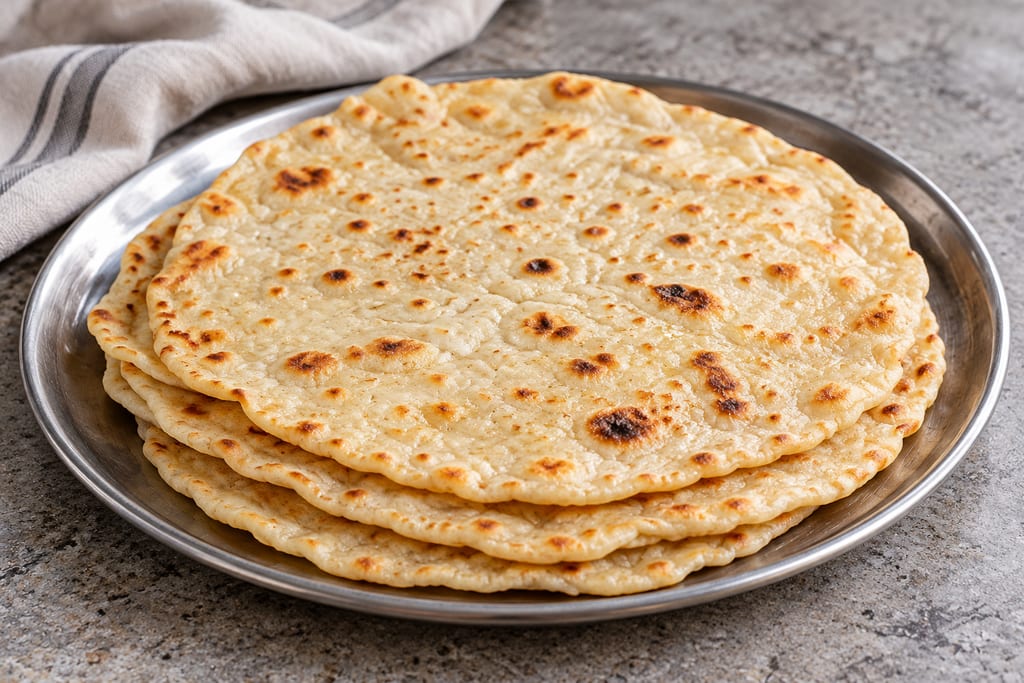
An unleavened Ethiopian and Eritrean wheat flatbread, rolled thin and cooked in clarified butter.
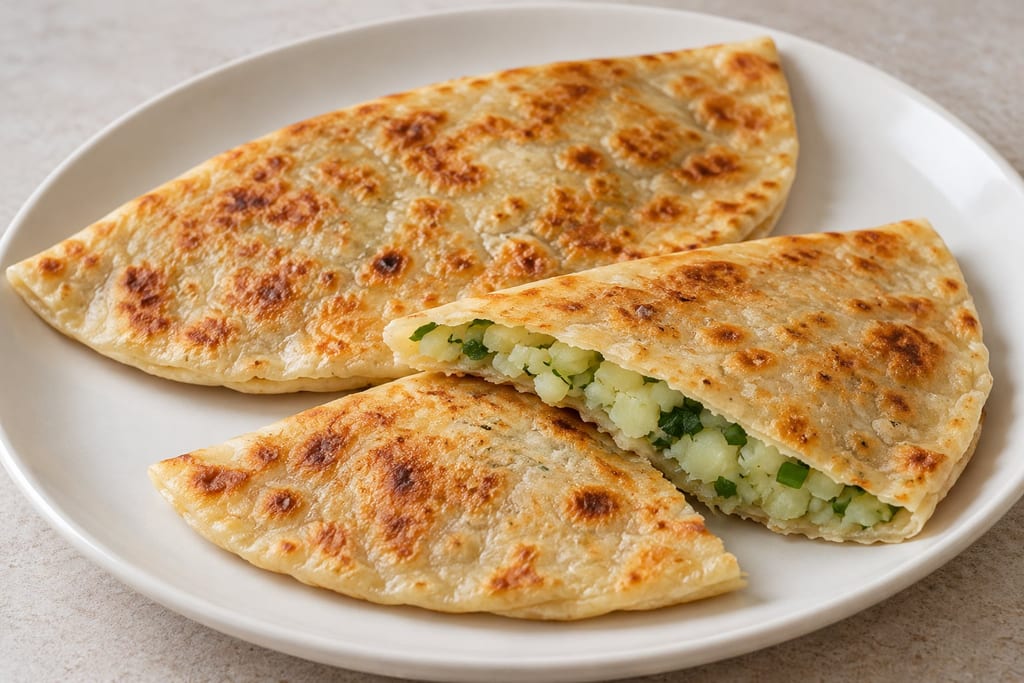
A thin, unleavened Afghan flatbread filled with mashed potato, scallion and cilantro, folded and pan-browned. This version uses a dough made from scratch.
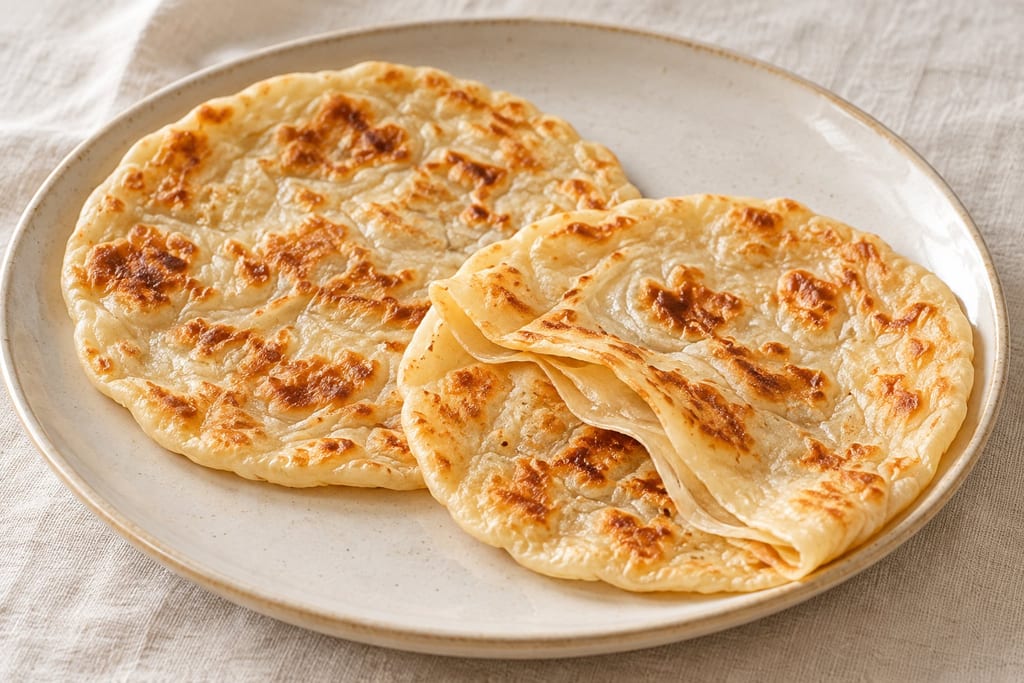
An unleavened wheat dough is rested in oiled portions, stretched almost transparent, coiled, flattened and fried on an oiled griddle. This source batch serves plain roti with optional condensed milk and sugar.
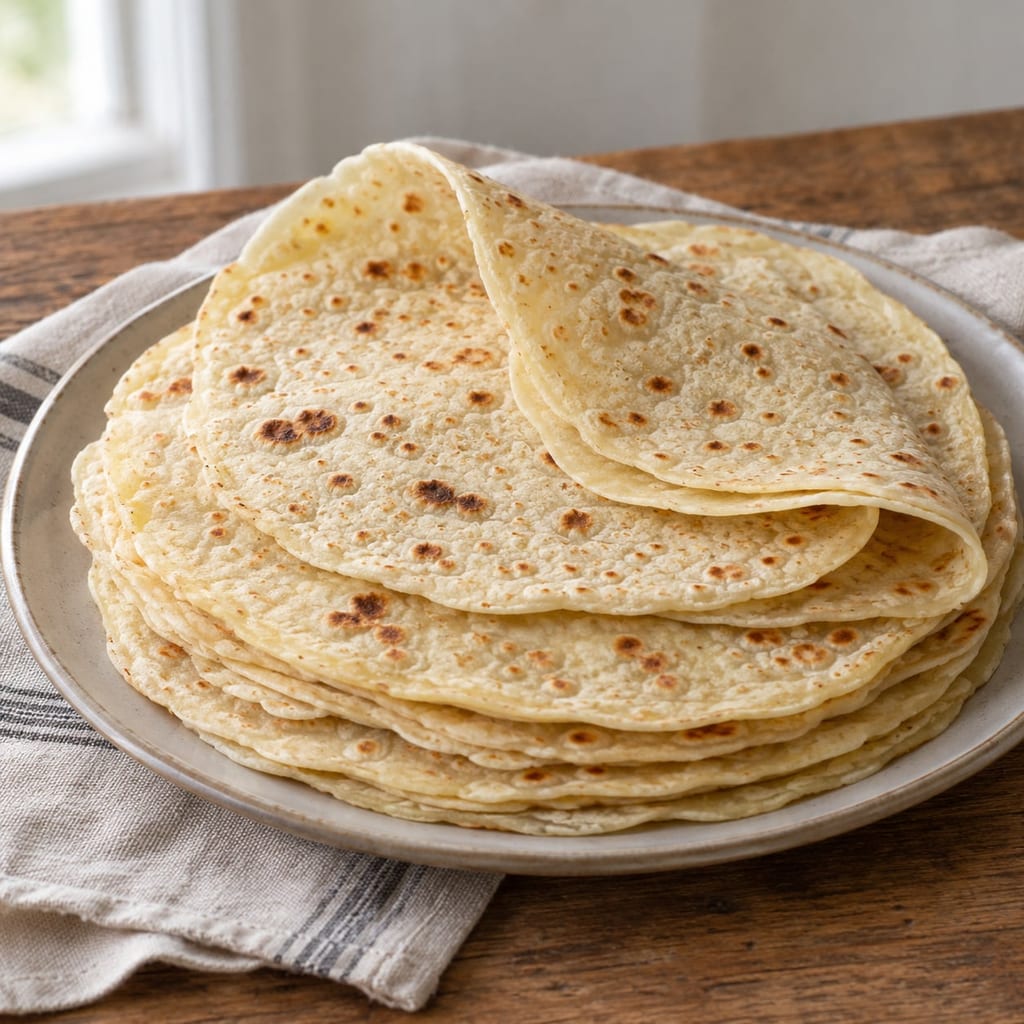
Soft Norwegian potato flatbreads with wheat and sifted rye flour, rolled into rounds and cooked on a dry griddle.
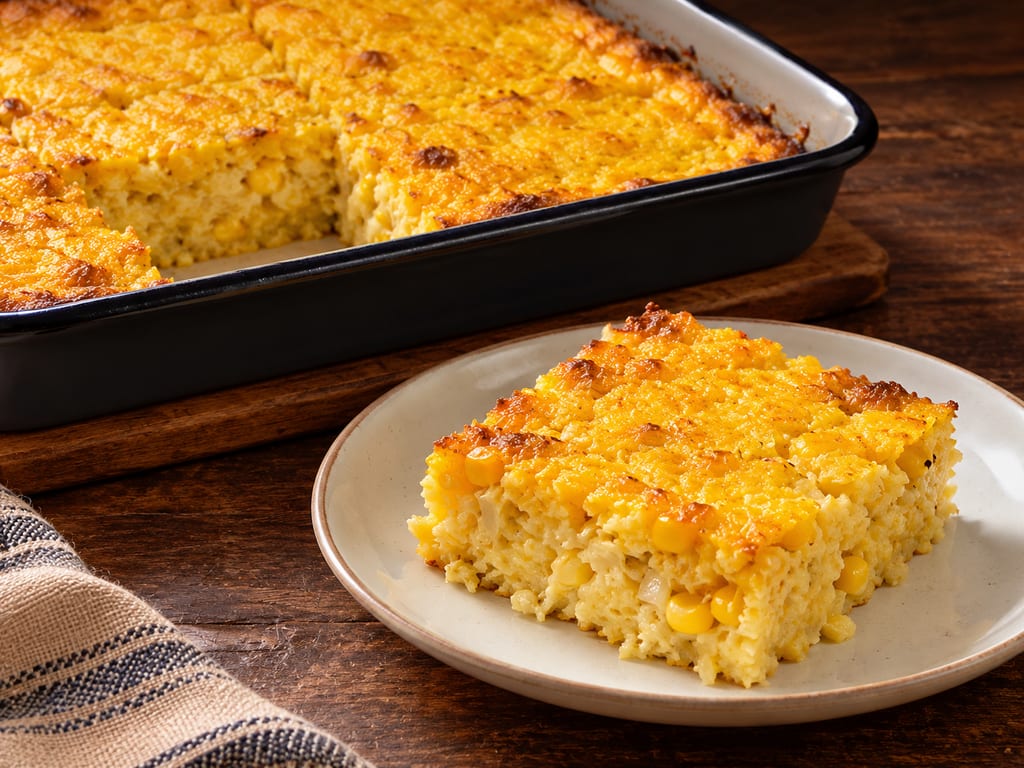
A Paraguayan fresh-corn bake mixed with Queso Paraguay, onion, eggs and milk, served in moist squares.
Mongolian pan-fried flatbreads made by folding sugar and oil through a simple wheat dough.
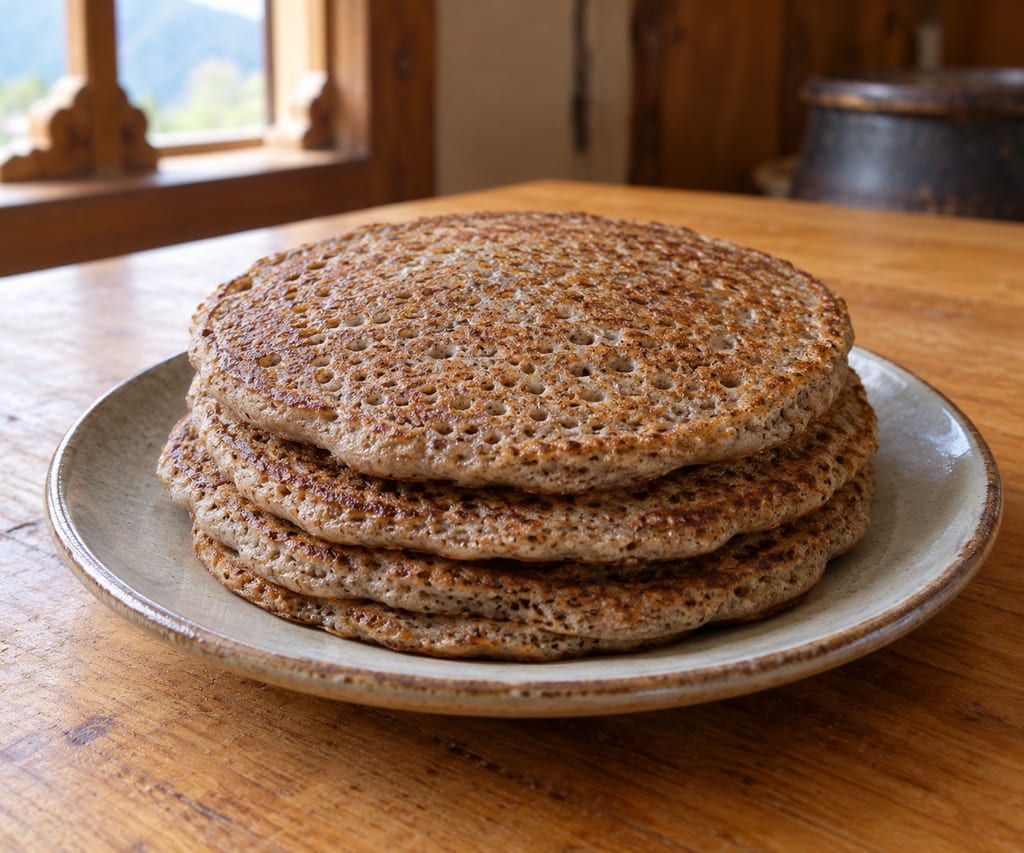
Bhutanese-style buckwheat pancakes made with milk and egg, cooked on a hot pan. This home version serves three.