Equipment

626 sourced equipment pages: vessels, tools, appliances and built structures.

Everything

626 items

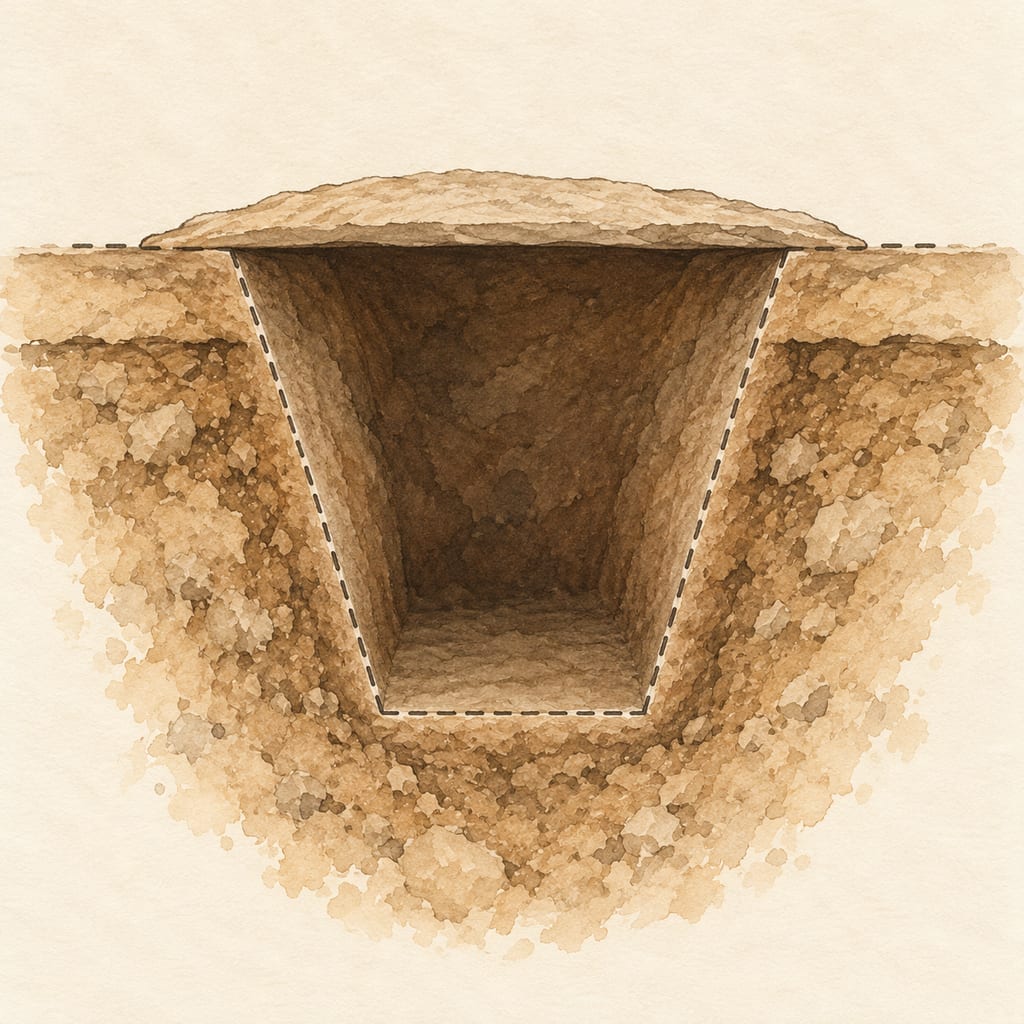
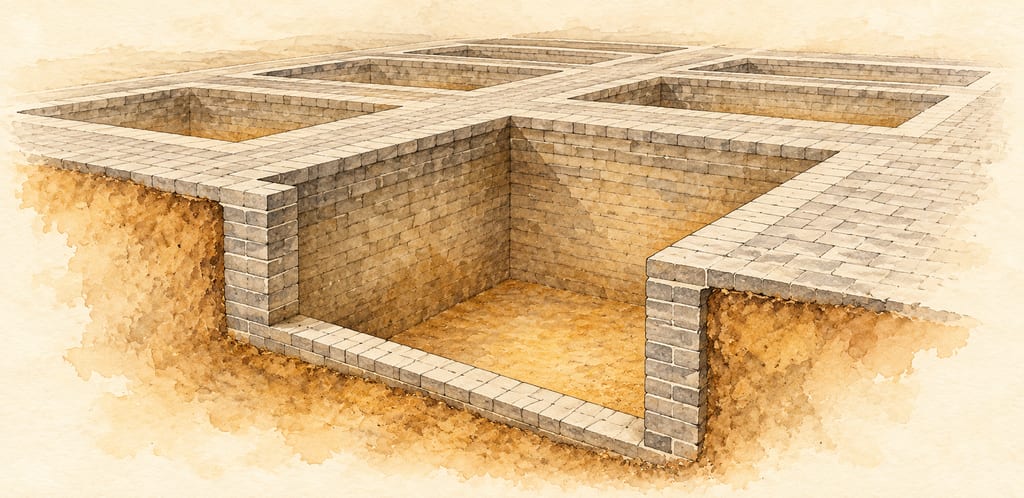
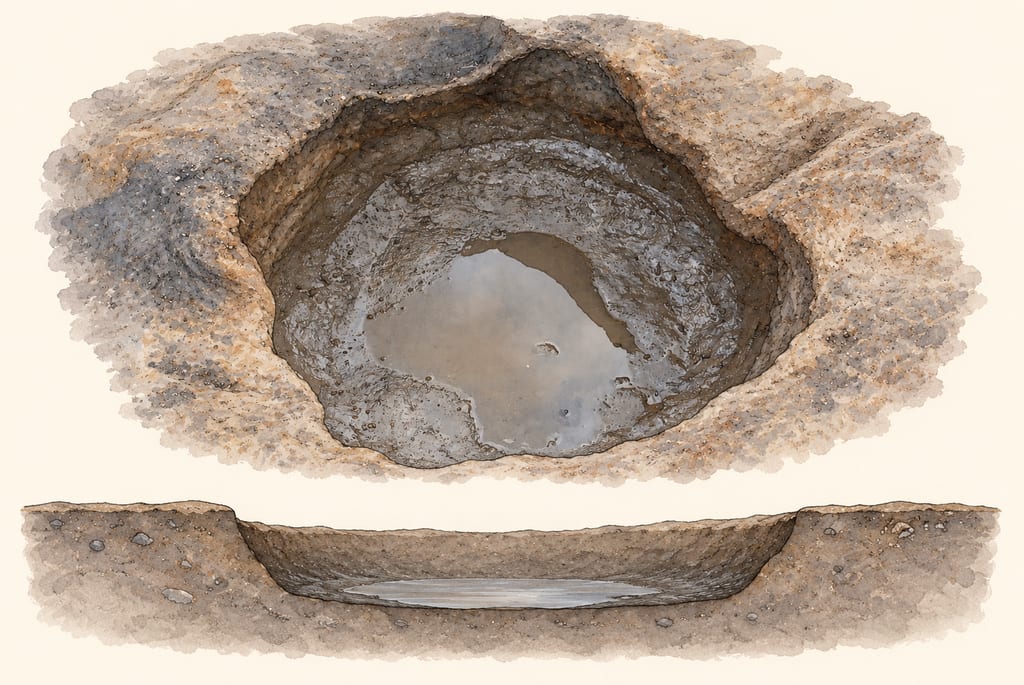
Editorial cutaway of a shallow water-filled pit in wetland soil at Maeda Site; shown for form only, without contents or lining.
Built structures · Place

Maeda Jōmon acorn storage pits

At Maeda Site in Aira, southern Kyushu, a late Middle Jōmon wetland held 72 pits associated with more than 100,000 acorns. The pits were dug in a groundwater-fed valley; their use may have included storage or soaking and sorting.

Show on map
Pits and cavities
Maeda Site, Aira City
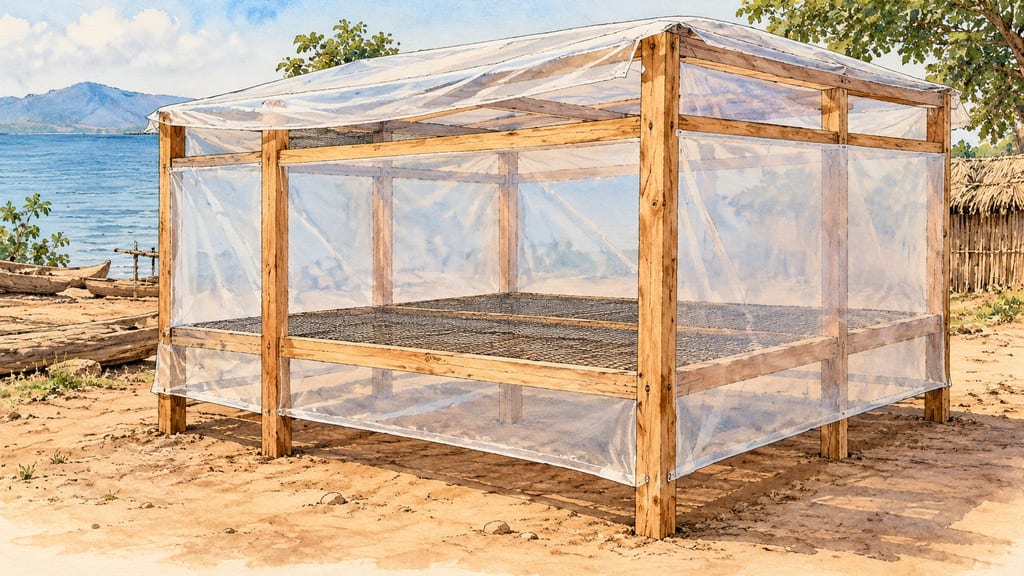
Illustration of an empty wooden-framed solar tent dryer with translucent sheeting and internal mesh racks near Lake Malawi.
Built structures

Solar tent dryer (Lake Malawi)

A UV-treated polythene sheet over a wooden frame shelters internal drying racks, with low inlets and high side vents for natural airflow during fish drying.

solar-drying-tents
Lake Malawi basin
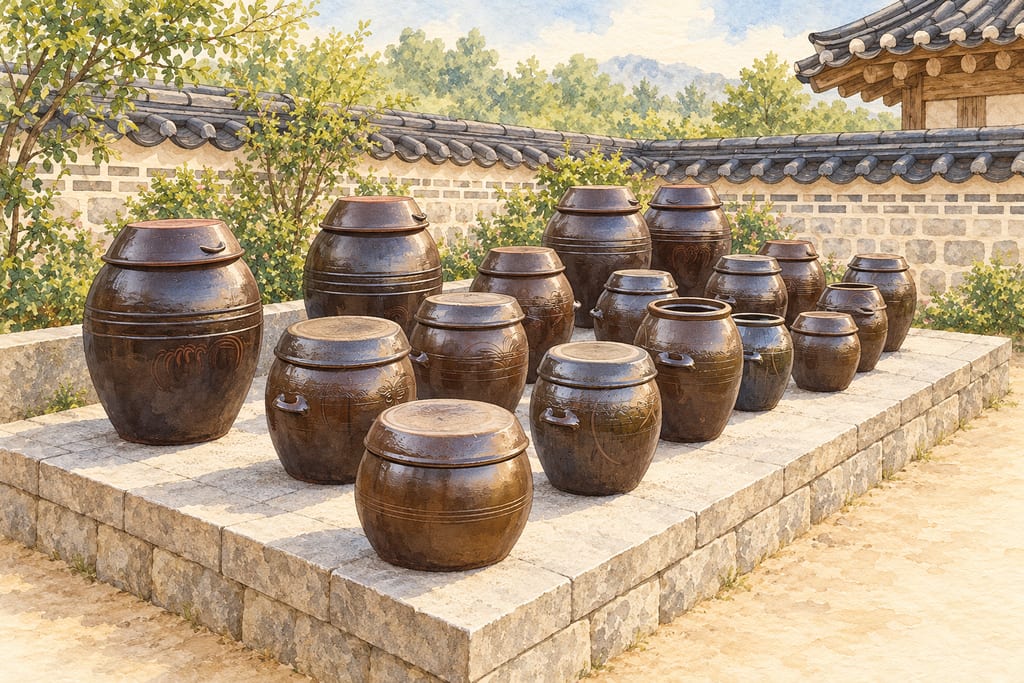
Watercolor illustration of brown onggi jars of different sizes on a raised stone jangdokdae platform in an outdoor courtyard.
Built structures

Jangdokdae

An outdoor platform where households arrange onggi jars for fermenting, aging and storing Korean jang sauces. Platform materials and layouts vary; no single standard design is established.

Terraces, platforms and stands
Republic of Korea
Built structures

Rama tapesco smoking rack

A Rama cultural account distinguishes a small kitchen tapesco from a larger courtyard rack covered with bijagua leaves and placed over firewood. It records a particular smoking arrangement, not a standard design.

Terraces, platforms and stands
Nicaragua
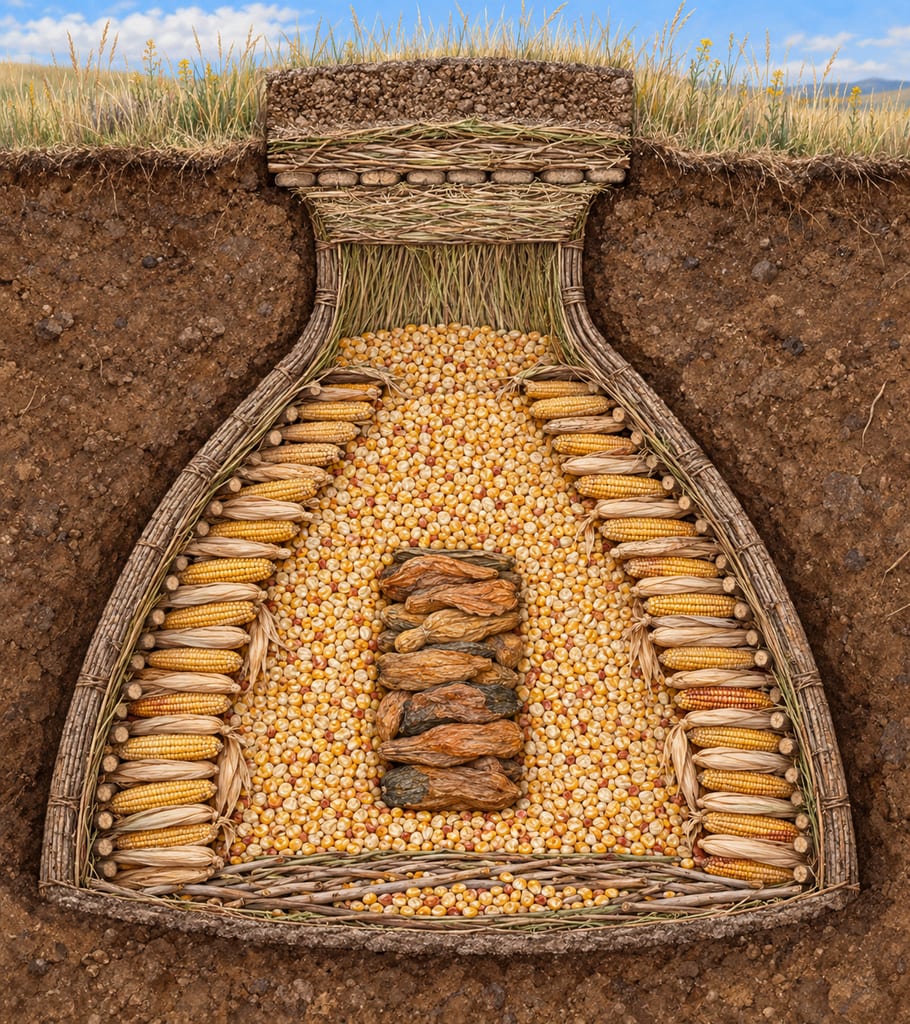
Source-grounded illustrated cutaway of a Hidatsa cache pit, showing its narrow mouth, broad below-ground body, grass and willow lining, corn around the wall, and dried squash at the center.
Built structures

Hidatsa cache pit

A Hidatsa underground storage chamber described by Buffalo Bird Woman in a first-person account published in 1917: a narrow-necked, jug-shaped pit lined with dry willow and grass, used to protect stored crops and other provisions.

Pits and cavities
Missouri River villages
Comparative cutaway illustration of a Yemeni madfan with an intentionally broken outline; the shared Somalia-and-Yemen profile is not a universal plan.
Built structures

Yemeni Madfan: Underground Grain Store

A madfan is a covered underground grain chamber documented in Yemen, excavated in rock or firm earth. Sources do not establish one universal shape, locality or performance.

Pits and cavities
Yemen
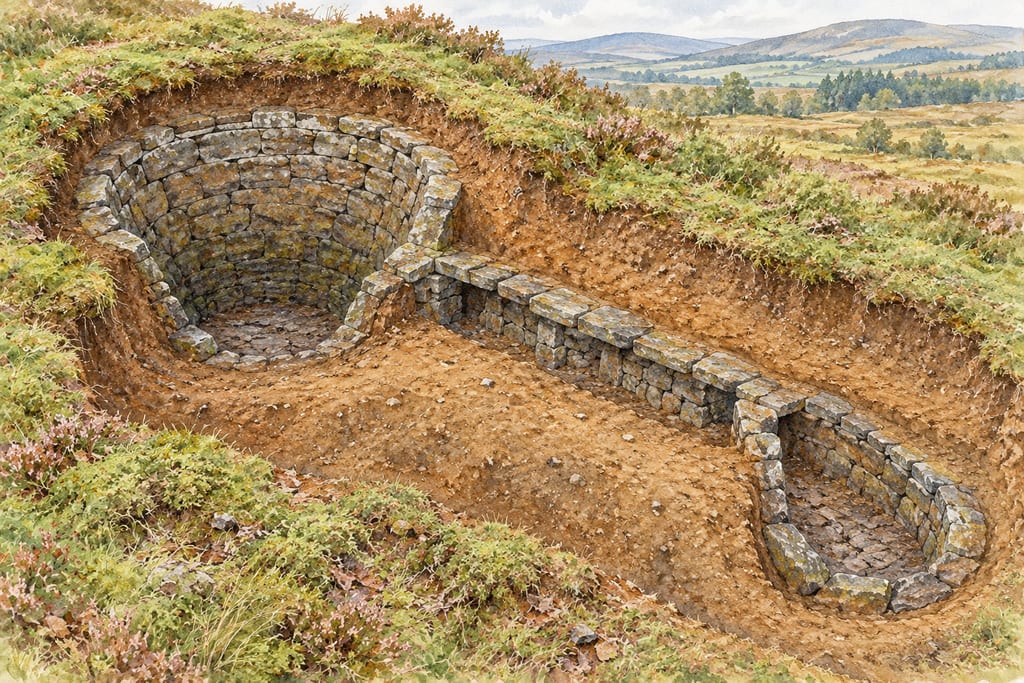
Interpretive cutaway of the Lockerbie Academy corn-drying kiln, showing its stone-lined bowl in a knoll, separate firepit and connecting flue.
Built structures · Place

Lockerbie Academy corn-drying kiln

An excavated Scottish grain-drying kiln at Lockerbie Academy, with a deep stone-lined bowl connected by a flue to a separate firepit.

Show on map
Drying kilns and dryers
Lockerbie Academy, Dumfries and Galloway
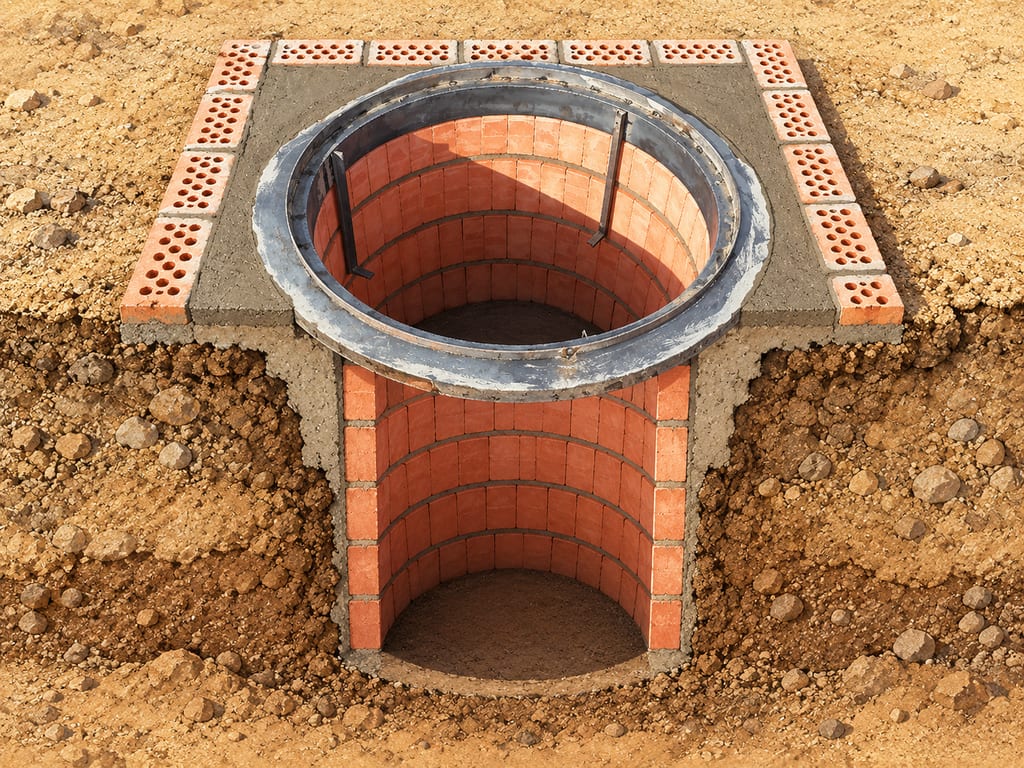
Illustrated cutaway of an empty Mandi pit oven, showing a brick-lined circular shaft, a dark metal rim and two hanger rods set into dry ground.
Built structures

Mandi pit oven

Mandi ovens are ground-built pits for cooking a regional dish. A 2024 Seiyun report describes wood-fired pits dug into the earth; Saudi sources describe separate clay or iron restaurant pits and a tannour form.

Pits and cavities
Seiyun
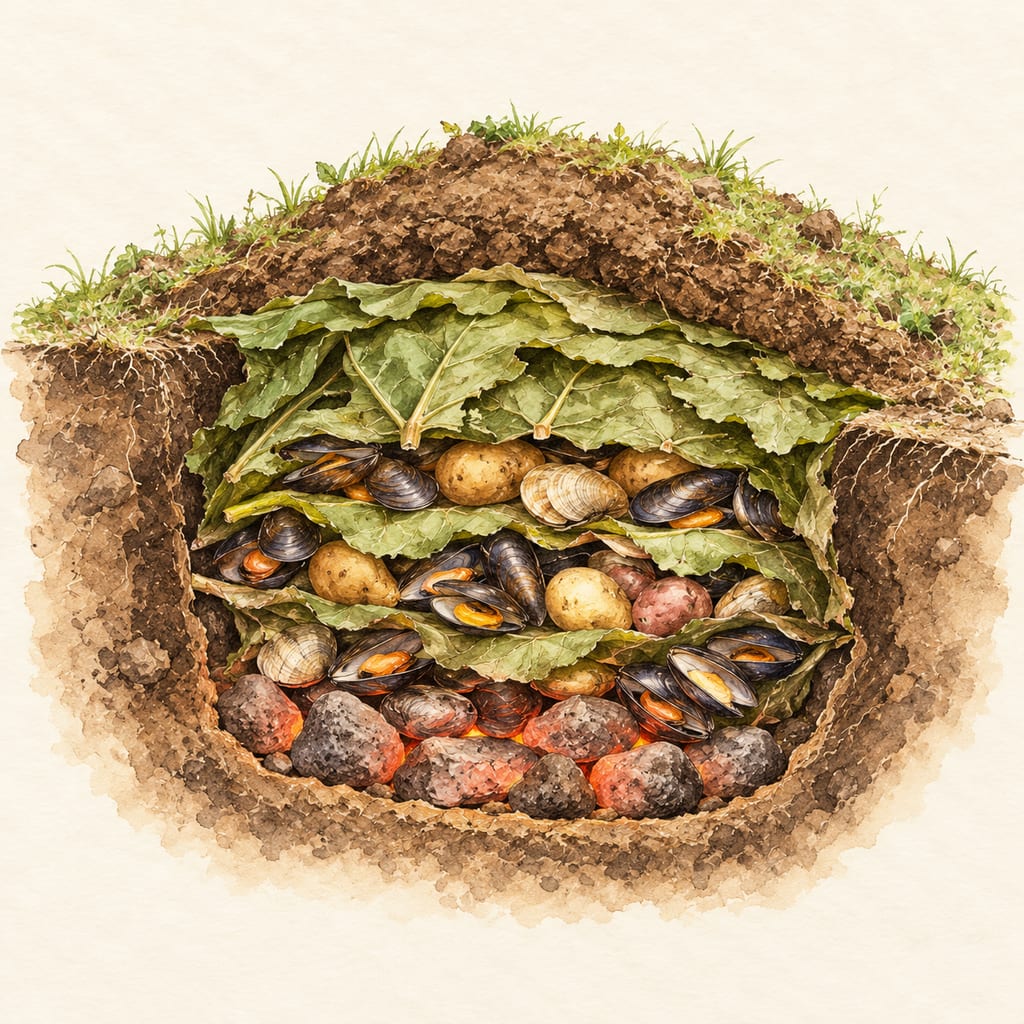
Cutaway illustration of a Chiloé curanto pit with heated stones, nalca leaf layers, shellfish and potatoes beneath an earth and turf cover.
Built structures

Curanto pit

The Chiloé curanto en hoyo is a fixed outdoor cooking pit heated with stones and covered with nalca leaves and earth or turf. It is distinct from curanto cooked in a pot; ingredients and layer order vary by household and occasion.

Pits and cavities
Chiloé Archipelago
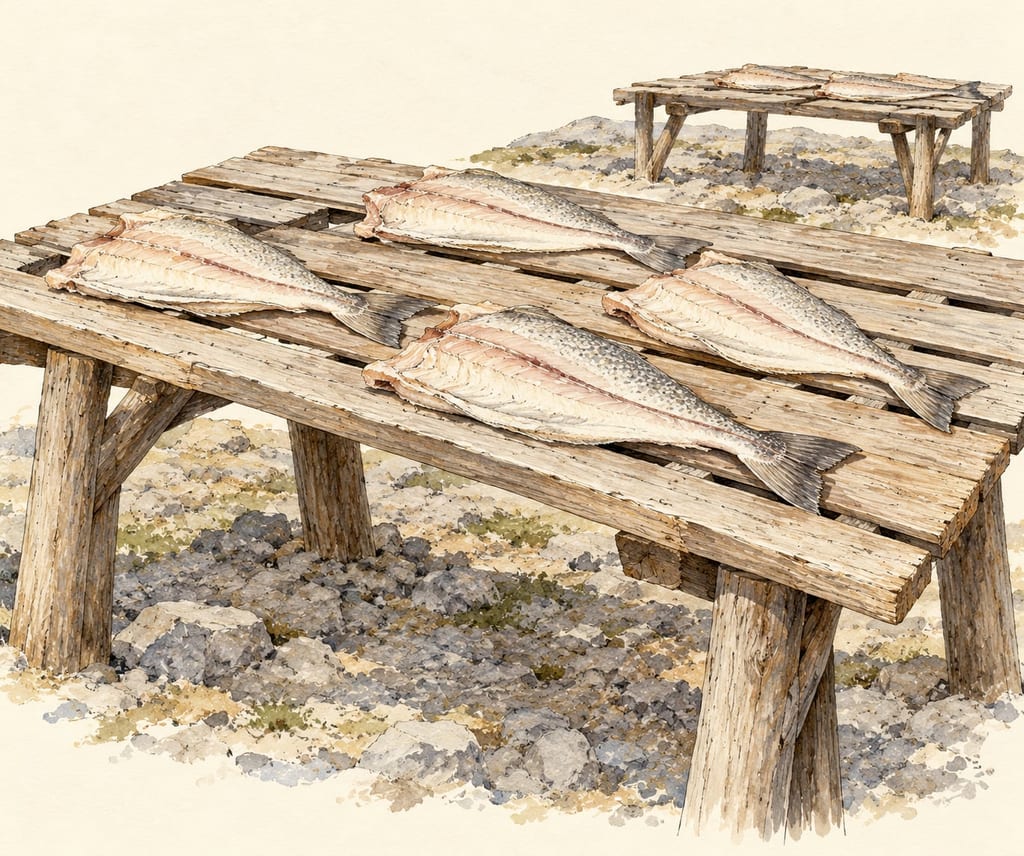
Historical illustration of split salted cod laid directly on a raised wooden Newfoundland flake; an editorial reconstruction, not a photograph or construction plan.
Built structures

Flake (fish-drying structure)

A Newfoundland flake was an open wooden platform where split, salted cod was laid in the sun to dry. It belongs to the historic coastal fishery, not to smokehouses.

Terraces, platforms and stands
Newfoundland
Illustration of a Manoka earth-brick fish smoker under a simple roof, shown empty.
Built structures

Manoka smoking house

Manoka's fish smoking takes place on pole racks inside airy houses; local partners later tested earth-brick and insulated metal prototypes to reduce wood use and processing time.

smoking-sheds
Manoka Island
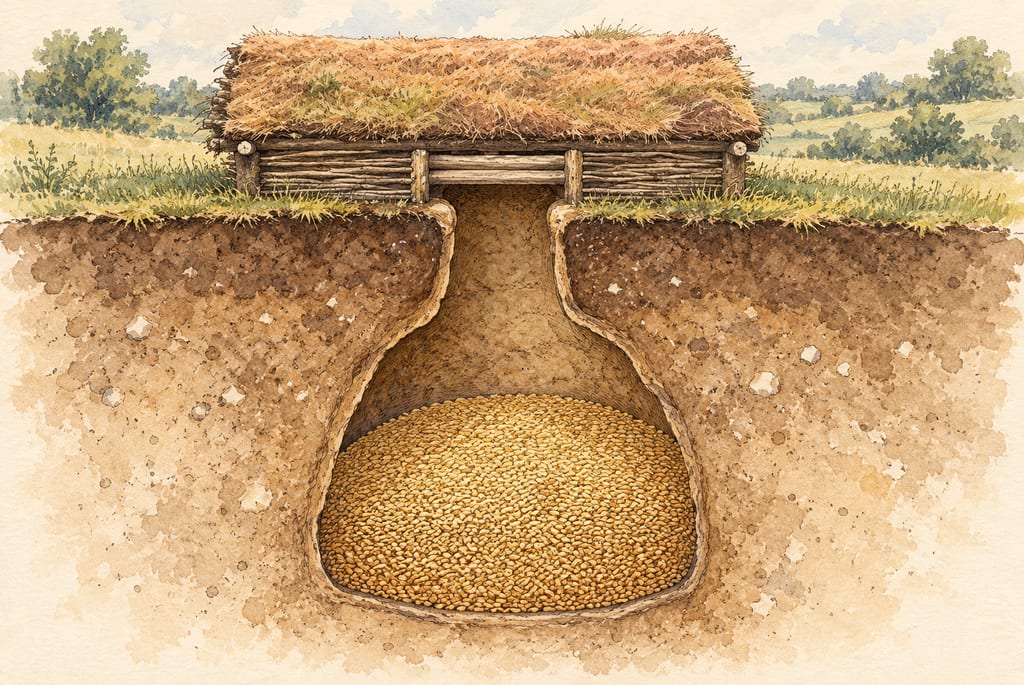
Interpretive cutaway illustration of a dry-grain storage pit below a thatched surface cover, showing its narrow opening, wider chamber, surrounding soil and stored grain.
Built structures

Dry grain-storage pit (Iron Age Britain)

An underground grain-storage pit is a dug cavity for keeping dry grain, distinct from raised granaries and portable silos. Iron Age British examples are archaeological interpretations; experimental forms and results varied.

Pits and cavities
Britain
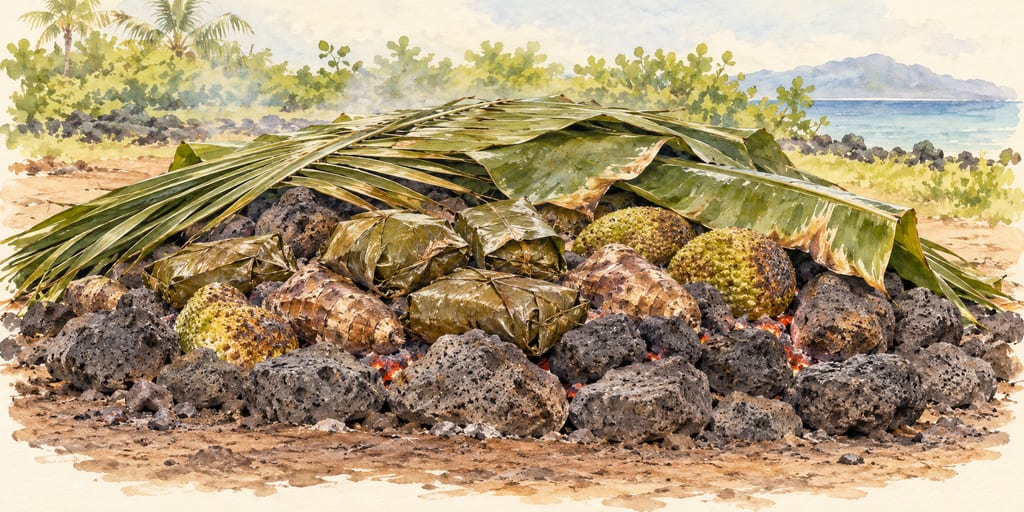
Watercolor illustration of a Samoan umu above ground: volcanic stones support leaf-wrapped foods beneath a covering of banana leaves and coconut fronds.
Built structures

Samoan umu

The Samoan umu is an above-ground cooking build in which a fire heats volcanic stones, and foods cook on the surface beneath leaf coverings.

above-ground-stone-ovens
Samoa
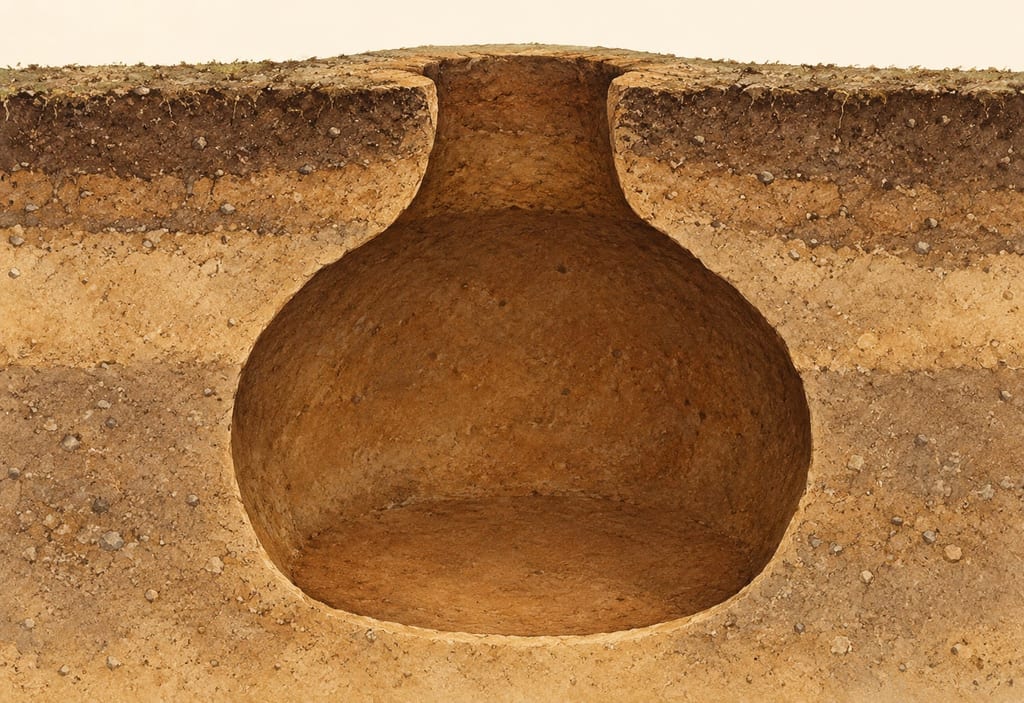
Cutaway illustration of a narrow-mouth pit widening beneath the ground at Sannai Maruyama; its empty chamber shows the reported flask-like form.
Built structures · Place

Jōmon flask-shaped storage pit

At Sannai Maruyama in Aomori, some Jōmon storage pits had a narrow mouth and broad floor, with larger examples reaching two metres deep; nuts or chestnuts are the proposed stores.

Show on map
Pits and cavities
Sannai Maruyama Site, Aomori City
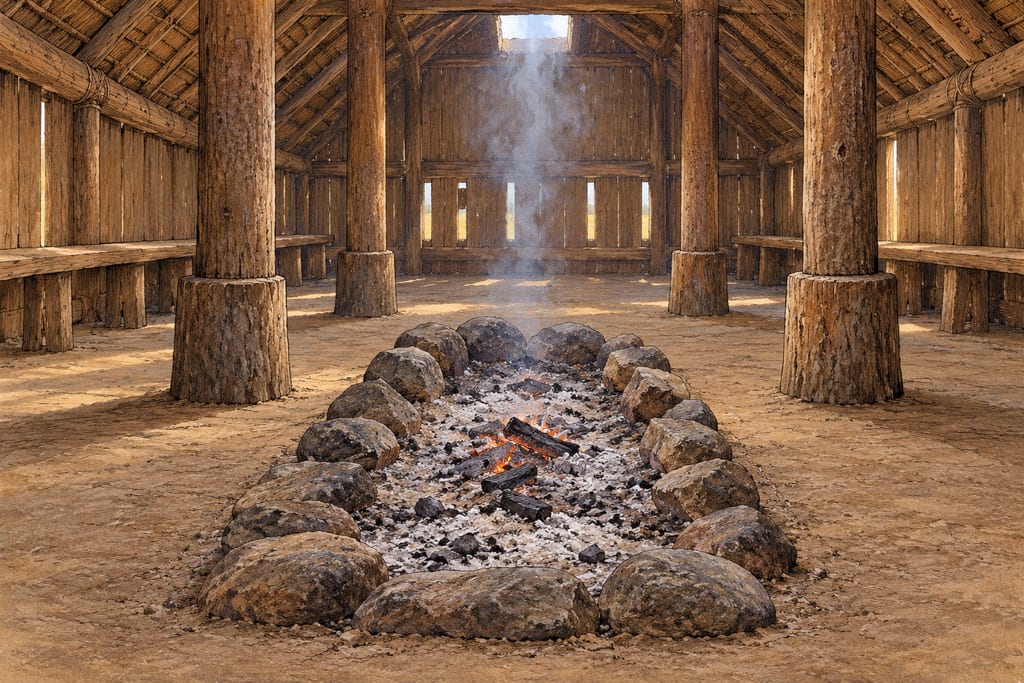
Interpretive ink-and-watercolor illustration of an elongated central hearth in a Danish Viking-Age longhouse, with smoke leaving through a roof opening; guided by a modern Trelleborg reconstruction, not an archaeological reconstruction.
Built structures

Danish Viking longhouse central hearth

The Danish National Museum describes an oblong central long-fire inside Viking-Age longhouses, used for cooking while smoke escaped through a roof opening.

central-long-hearth
Denmark
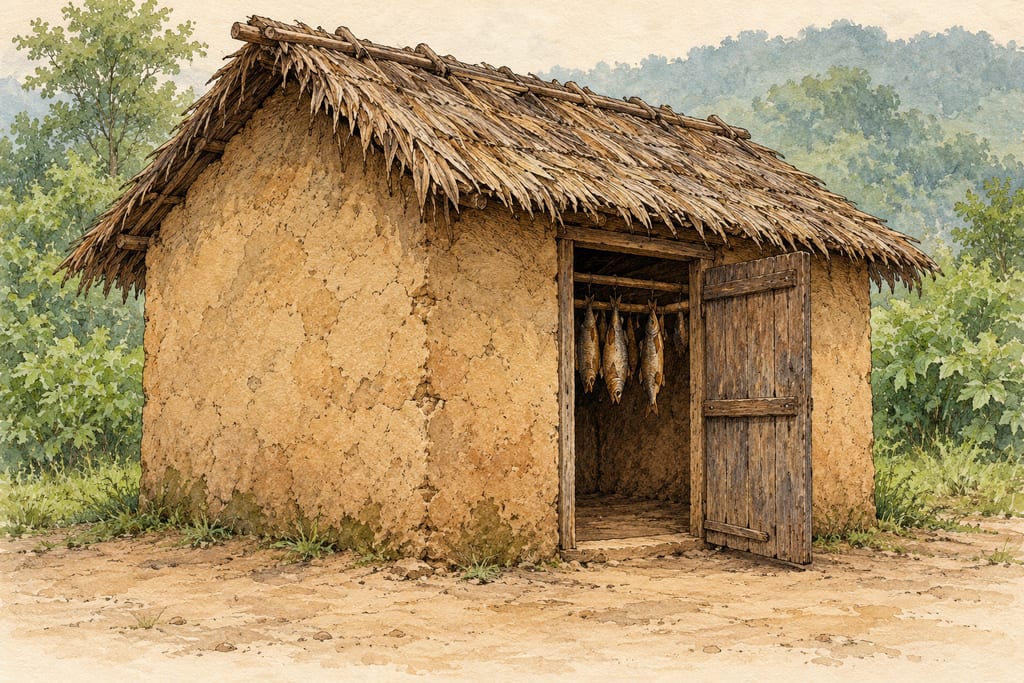
Historical-style illustration of one reported Gilan fish smoke room at Mobandan, with mud-plastered walls, plant-thatch roof, timber door and fish hanging inside.
Built structures

Dudkhāneh (Gilan fish-smokehouse)

Dudkhāneh is a smokehouse term used in Gilan. A field report documents one fish-smoking workshop at Mobandan; its mud-plastered room and thatched roof are one local example, not a universal plan.

Smokehouses and smoke rooms
Iran
Watercolor cutaway of a rectangular brick-lined Liu Ling Zui fermentation pool, set into the ground with neighboring pool rims in parallel rows.
Built structures · Place

Liu Ling brick-lined fermentation pools

Fixed rectangular brick-lined fermentation pools at the Liu Ling Zui distillery in Xushui, Hebei. Heritage accounts disagree on their date and total number.

Show on map
Pits and cavities
Liu Ling Zui, Xushui
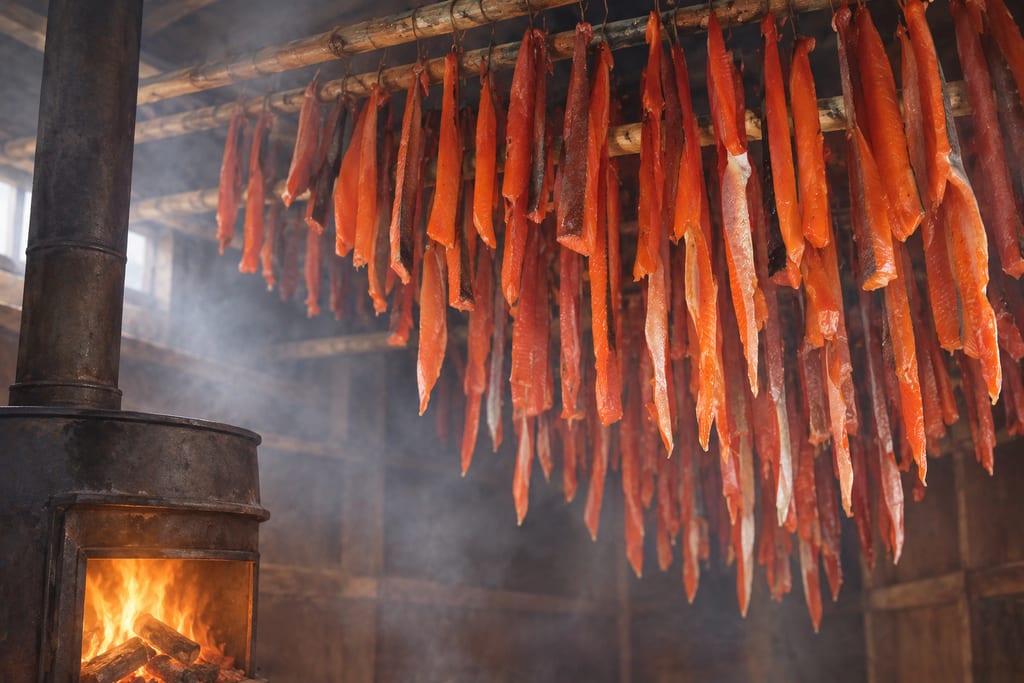
Generated documentary-style illustration of salmon strips hanging from racks beside a wood stove in an indistinct smokehouse interior.
Built structures

Yup’ik family smokehouse

A 2015 report documented a Yup’ik family smokehouse in Bethel, Alaska, where silver salmon strips hung from racks and cottonwood fed a wood stove. It is one household example, not a standard design.

Smokehouses and smoke rooms
Bethel
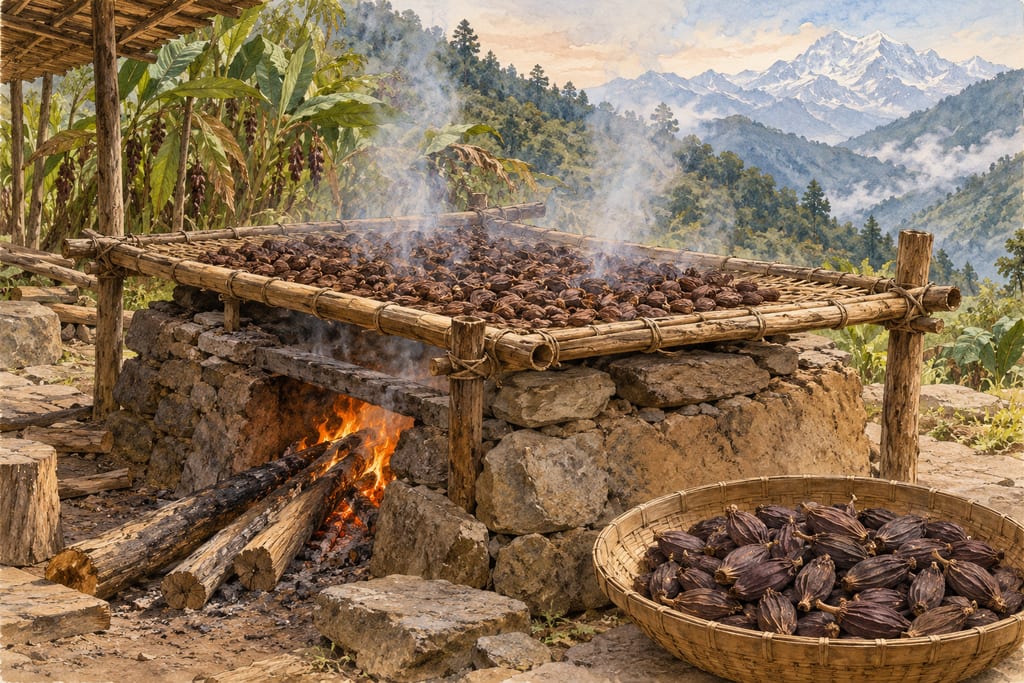
Illustration of Bhatti.
Built structures

Bhatti

A traditional Sikkim large-cardamom bhatti is a fixed, field-side curing structure: a stone or earth-sided fire chamber supports a raised bamboo-mat drying bed, where capsules are exposed to direct heat and smoke.

crop-curing-kilns
Sikkim
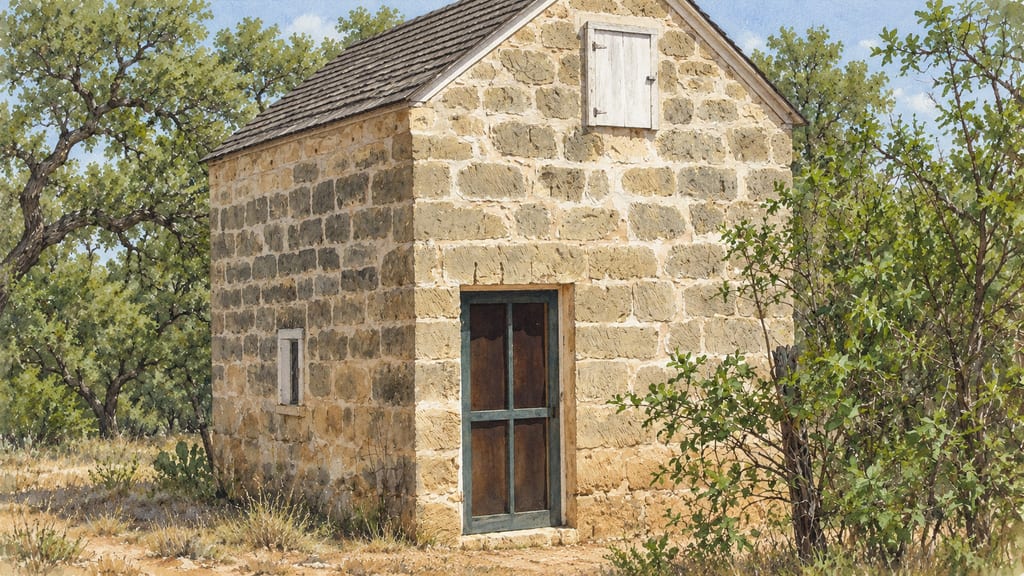
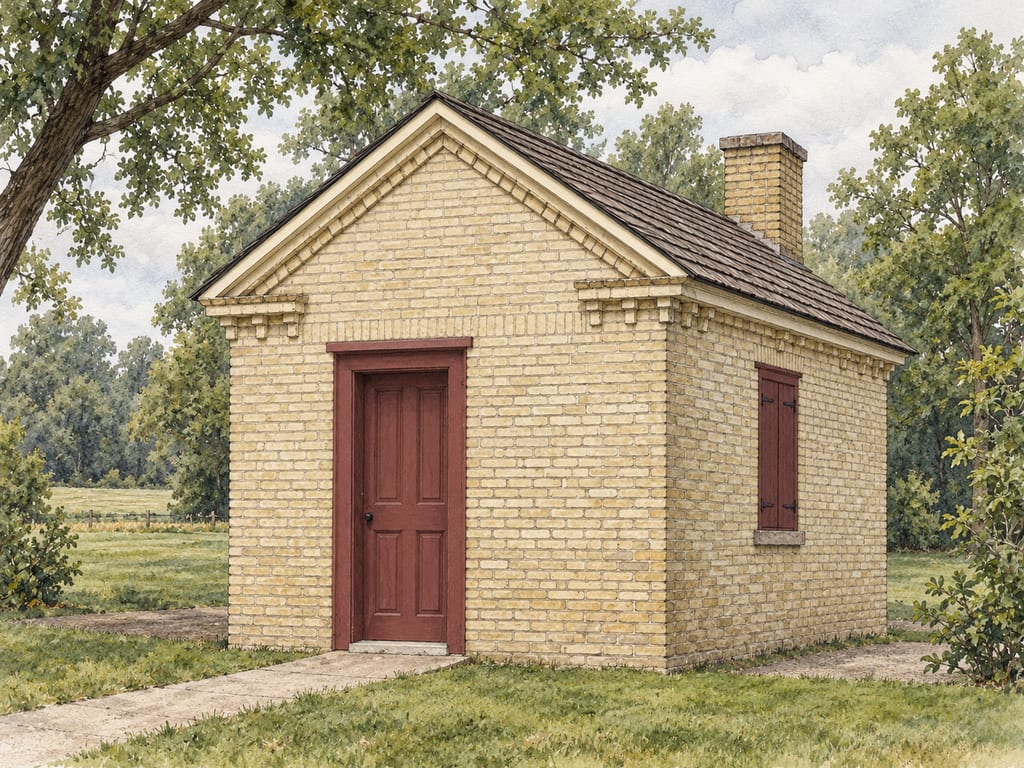
Documentary watercolor of the Sauer–Beckmann Farm smokehouse: a tall limestone outbuilding with a shingled roof, screened entrance and upper hatch.
Built structures · Place

Sauer–Beckmann Farm Smokehouse at Stonewall

A limestone smokehouse on the Sauer–Beckmann farm near Stonewall, Texas, with a lower smoking room and an upper storage level. Built before 1900, it remains part of a living-history farm.

Show on map
Smokehouses and smoke rooms
Stonewall
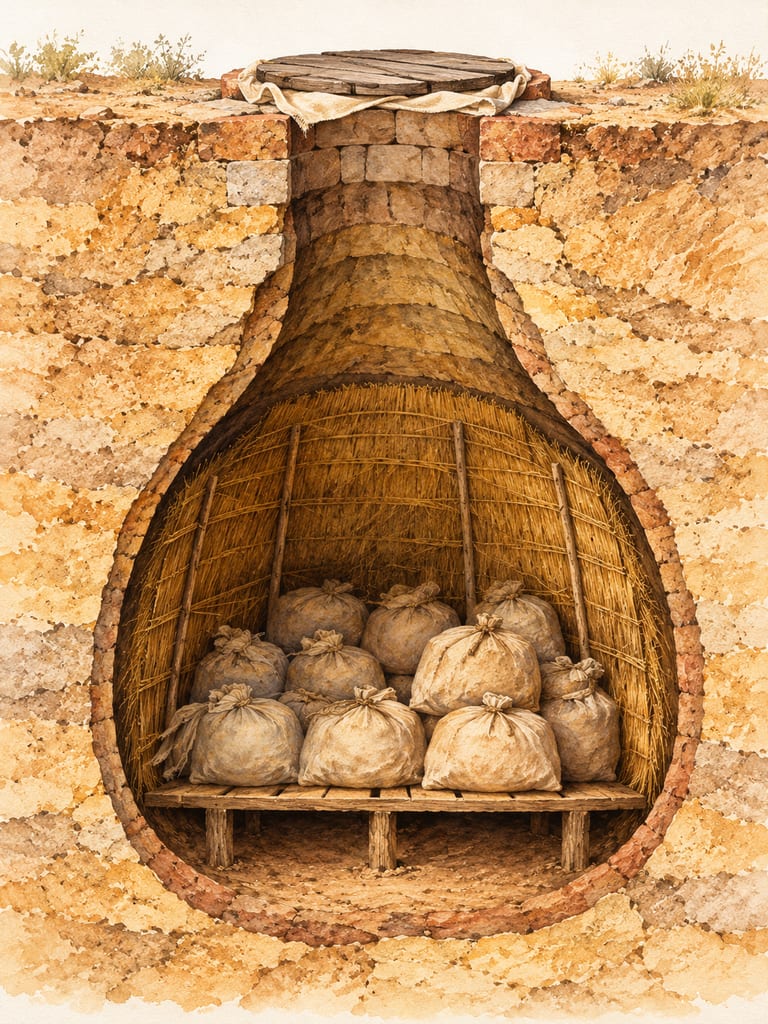
Watercolor cutaway of a traditional sandstone Fossa cheese pit: a flask-like underground chamber lined with straw holds cloth sacks on a raised wooden floor beneath a covered wooden lid.
Built structures

Fossa cheese pit

A sandstone pit near Sogliano al Rubicone finishes the ripening of already-made cheese. Sources describe flask-like forms, straw lining and sealed wooden lids, but no universal excavation plan.

Pits and cavities
Sogliano al Rubicone
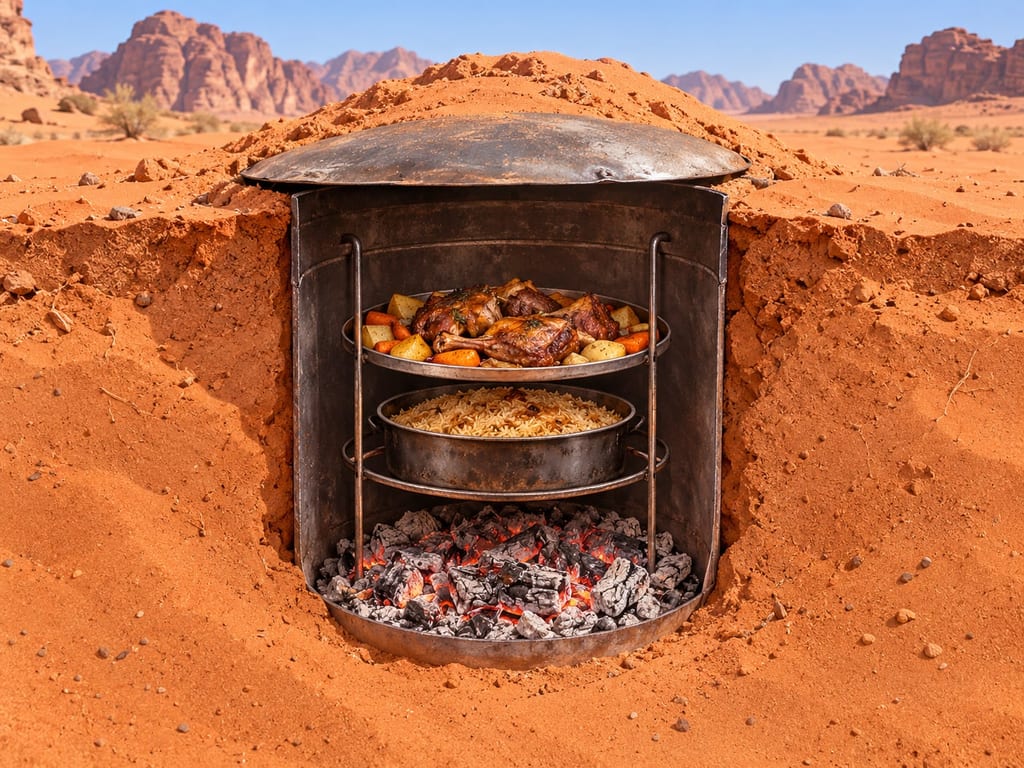
Illustrated cutaway of a zarb: a metal barrel sunk in Wadi Rum sand, with a rack above coals and sand covering the lid.
Built structures

Zarb (Bedouin underground oven)

The zarb is a ground-built oven used by Bedouin cooks in Jordan. A fire heats the bottom of a broad pit; food is then lowered on a rack, covered and slow-cooked with the surrounding earth helping retain heat.

Pits and cavities
Wadi Rum
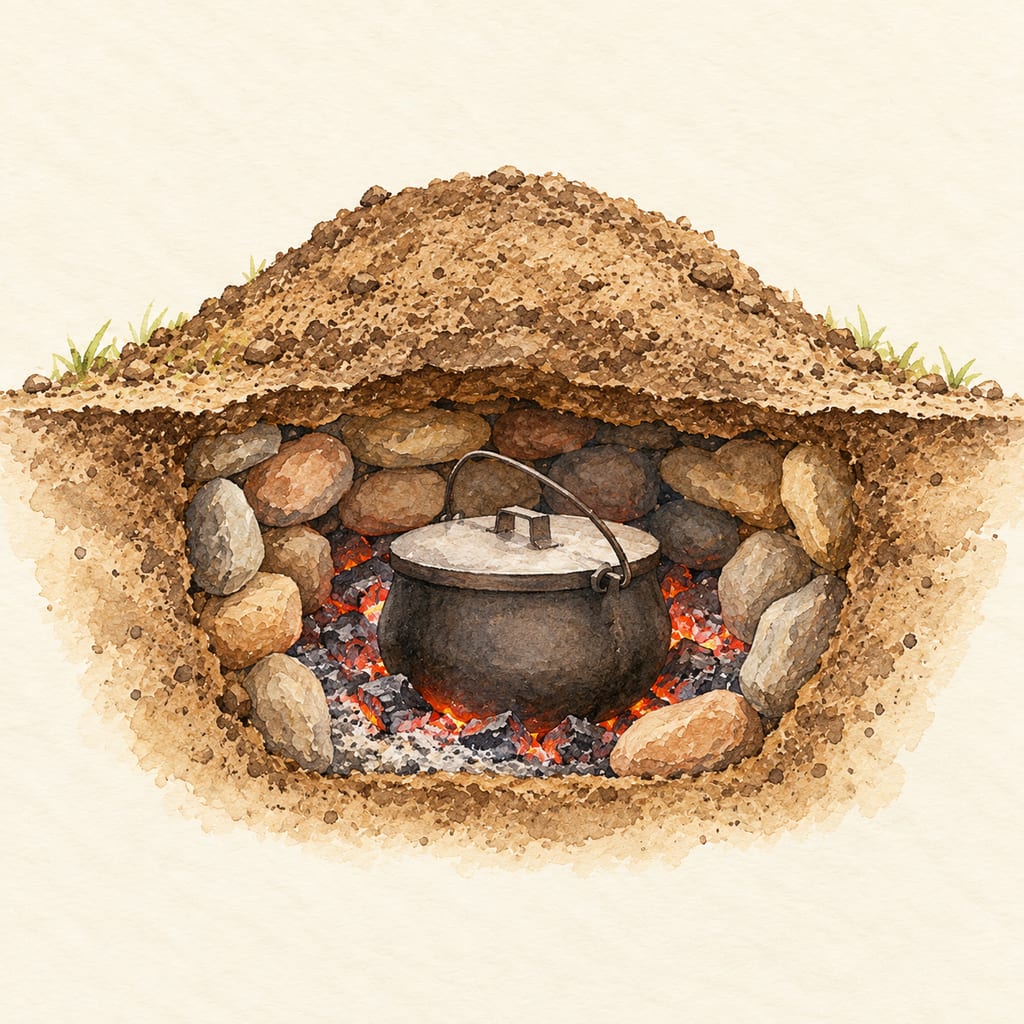
Watercolour cutaway of a Maine bean hole: a covered iron pot sits among coals in a stone-lined pit beneath an earth mound.
Built structures

Bean hole

A Maine bean hole is a fixed, stone-lined pit that holds a covered iron pot among coals beneath earth. Logging-camp testimony and present-day demonstrations document related local practices.

Pits and cavities
Maine
Built structures

CIMAV hybrid chipotle dryer

A CIMAV industrial chipotle oven combines solar-heated water and recirculated air with auxiliary gas heat and a separate wood smoker. It differs from Camargo’s traditional open masonry cocedores; reports describe capacity differently.

Drying kilns and dryers
Chihuahua
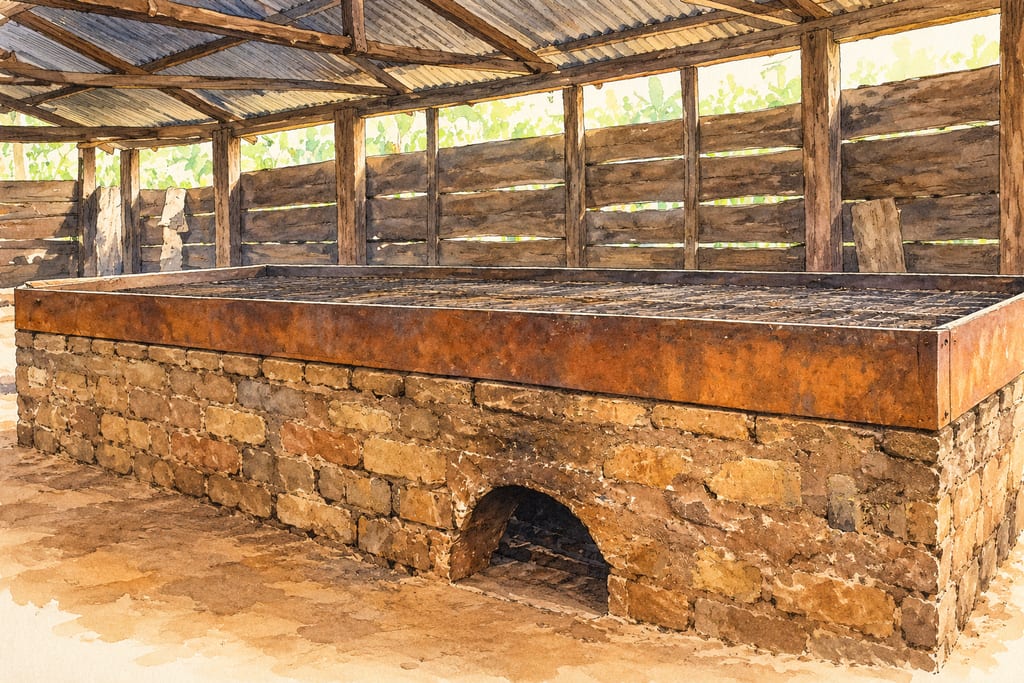
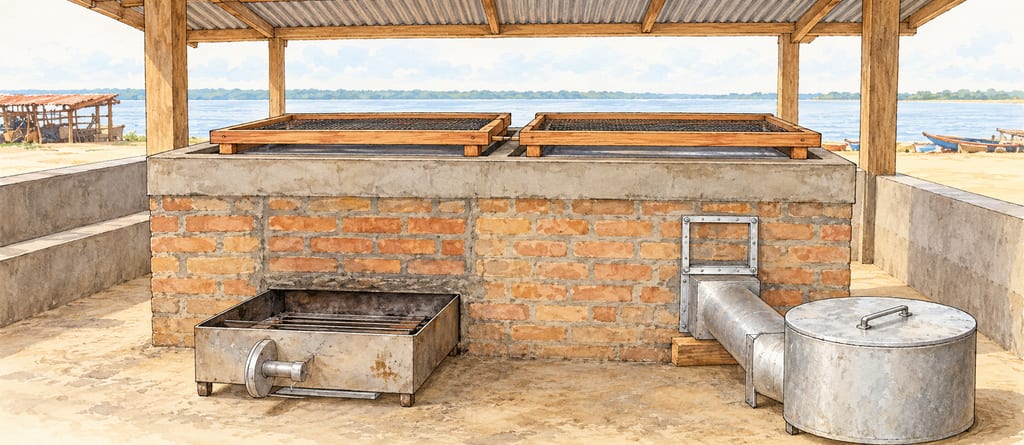
Illustration of an FTT fish-processing installation: a masonry oven, metal firebox, smoking racks and filter pipe under an open-sided shelter.
Built structures

FTT-Thiaroye smoking kiln

The FAO-Thiaroye Processing Technique separates fish cooking from smoke flavouring. A heat-retaining cooking unit, fat collector, filtered smoke generator and smoking chamber reduce direct smoke and fat contact; installations vary by place.

Masonry smoking ovens
Senegal
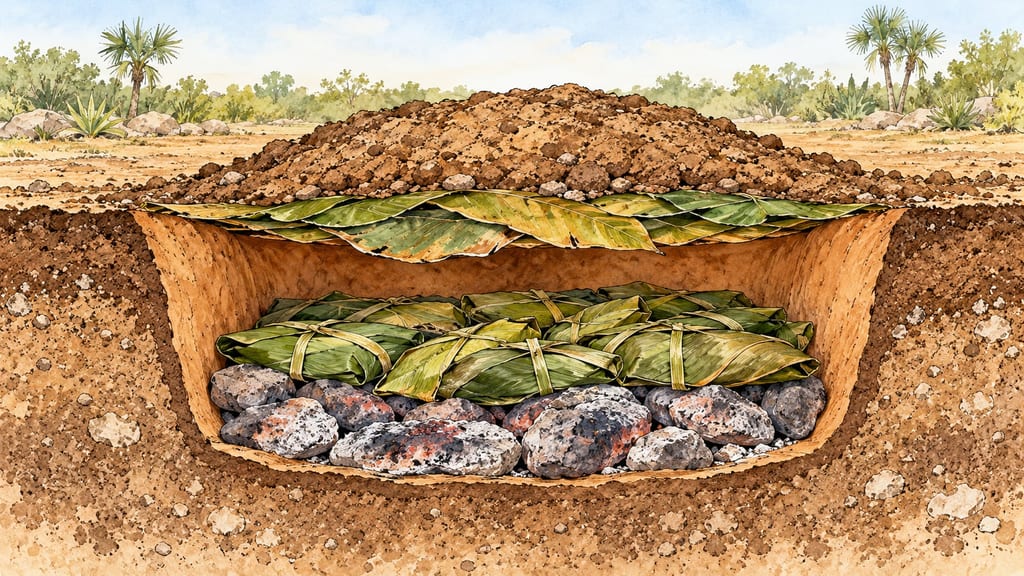
Hand-painted cutaway illustration of a Yucatecan Maya píib, showing an earth pit below ground with heated stones, wrapped food and a partial leaf-and-earth cover.
Built structures

Píib (Maya earth oven)

An in-ground Yucatecan Maya oven that uses fire-heated stones and a covered pit to cook food slowly. Documented pit depth, coverings and loading sequence vary; this page presents sourced examples rather than one standard design.

Pits and cavities
Yucatán
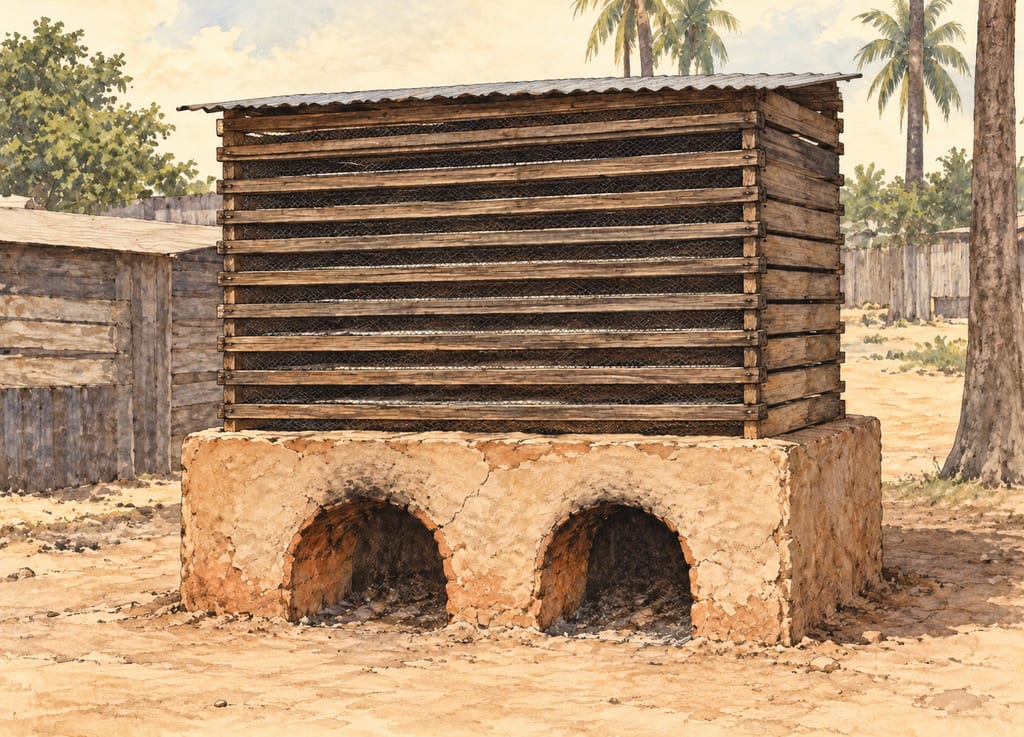
Illustration of the Chorkor smoker: a rectangular mud/clay oven base with two front openings and a tall stack of wooden-framed wire-mesh trays under a flat sheet-metal cover.
Built structures

Chorkor smoker

The Chorkor, also called the Kagan smoker in early FAO documentation, pairs a low rectangular mud/clay oven with stacked removable wooden-frame, wire-mesh trays. FAO records its use at Chorkor, Ghana, from 1971.

Masonry smoking ovens
Chorkor, Accra, Ghana
Built structures

Sundarbans bamboo shrimp-smoking kiln

A 2003 study describes a bamboo smoking kiln near the Sundarbans, with a sloping golpata roof, raised reed-and-bamboo platform and multiple fireplaces.

smoking-sheds
Sundarbans
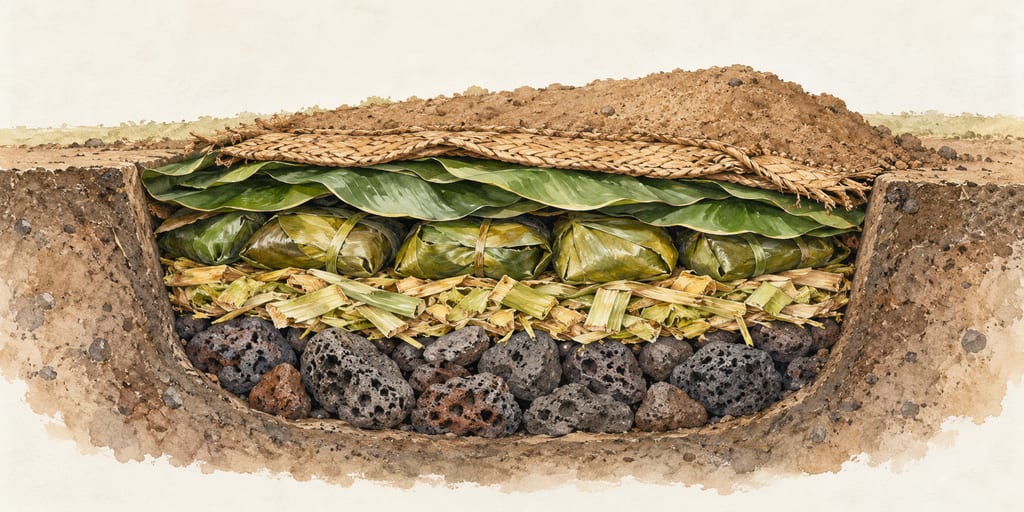
Watercolor cutaway of a Tahitian ahimā‘a pit in the ground, showing porous volcanic stones, crushed banana stalks, leaf-wrapped food, leaves, a woven-fibre mat and an earth covering.
Built structures

Ahimā‘a

The Tahitian ahimā‘a is a ground oven built in a pit, where hot volcanic stones and layered leaves and earth cook food slowly.

Pits and cavities
Tahiti
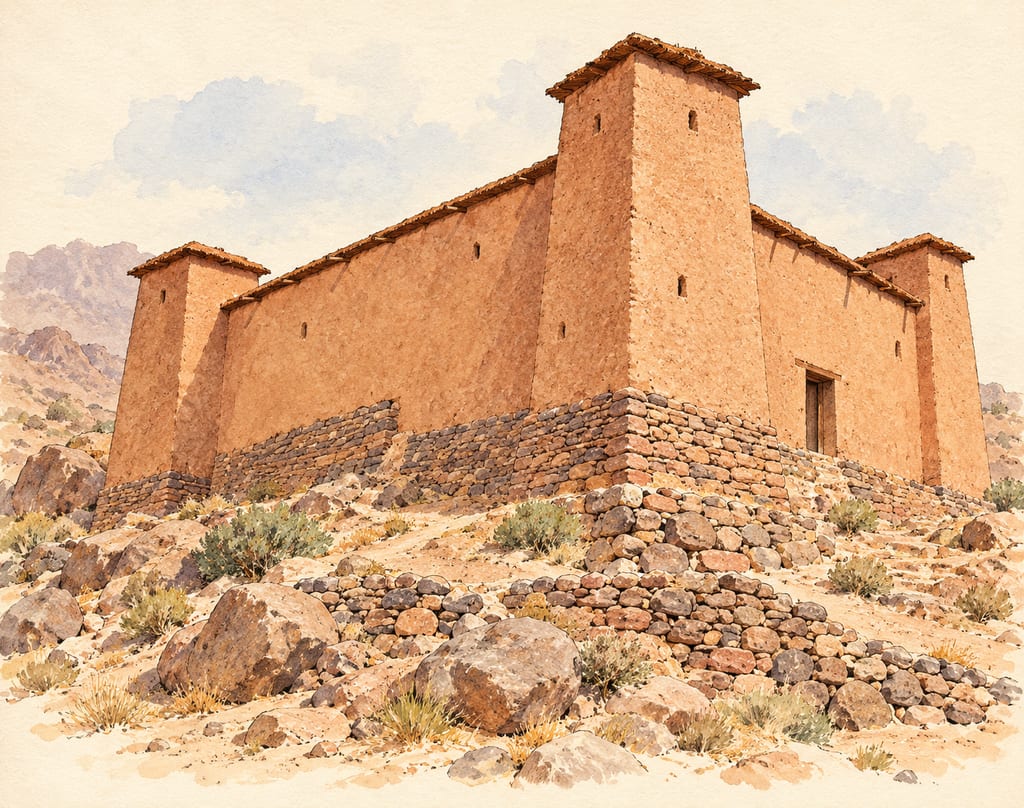
Interpretive watercolor-and-ink illustration of an Amazigh fortified granary with earth-colored walls, raised sections and a rough stone base on rocky ground.
Built structures

Agadir (igoudar, Amazigh collective granary)

An agadir (plural igoudar) is a fixed Amazigh communal storehouse in Morocco for harvests and other valuables. Layout, materials and community rules vary by site; no single plan describes every granary.

collective-granary
Souss
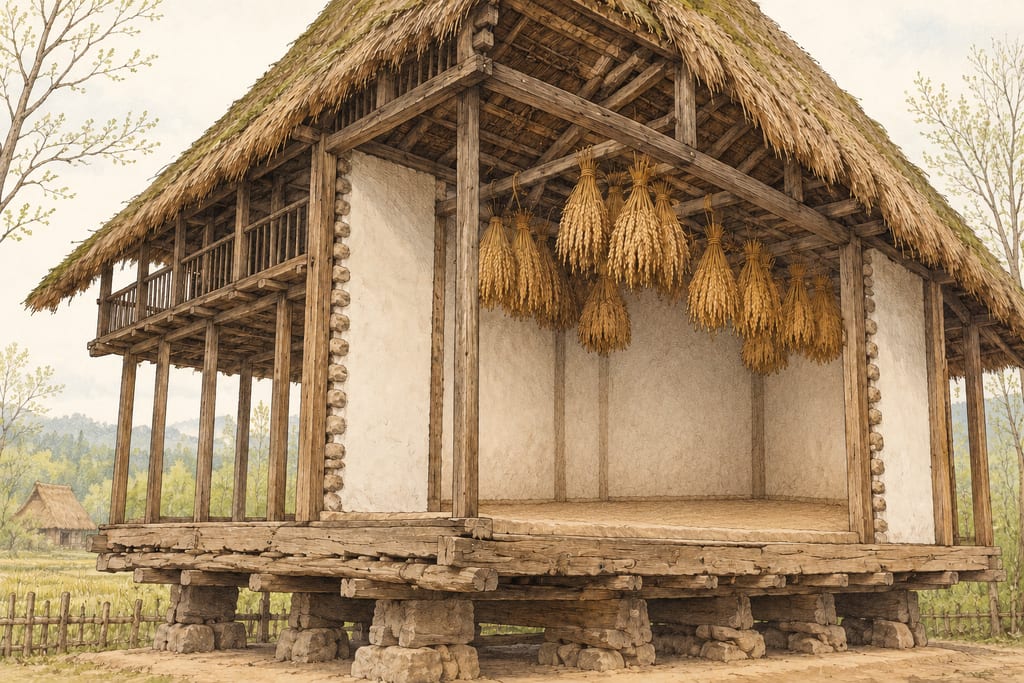
Historical cutaway illustration of a traditional Gilan house showing a documented high-ceiling rice smoke-room variant, with rice sheaves hanging beneath the roof beams.
Built structures

Bojkhāne

Bojkhāne names a rice-smoking room in some Gilan accounts. It was part of a flexible household room tradition, not a single standardized plan.

Smokehouses and smoke rooms
Iran
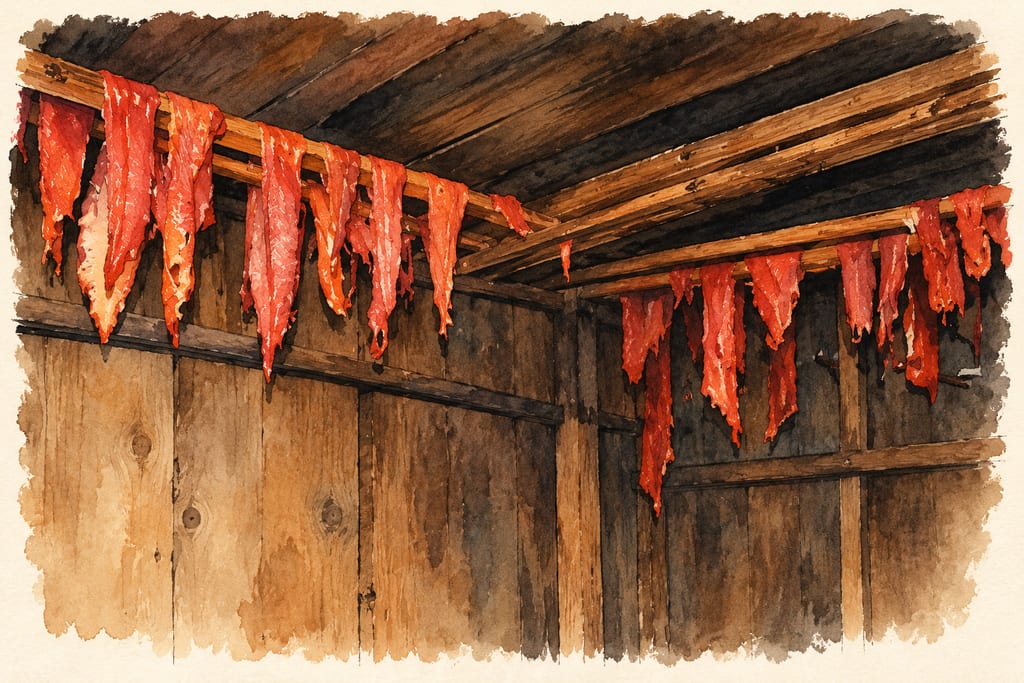
Interpretive ink-and-watercolor illustration of salmon bellies and thin strips hanging on cedar sticks inside one reported Somass River family smokehouse arrangement.
Built structures

Nuu-chah-nulth family smokehouse

A household smokehouse used for salmon by named Tseshaht and Hesquiaht families near the Somass River. A 2019 report records different supports and smoking outcomes; it gives no standard building plan.

Smokehouses and smoke rooms
Port Alberni
Built structures

Bangladesh shrimp-smoking shed

A 2007 training manual records one covered shrimp-smoking shed in coastal Bangladesh, with bamboo racks above fires and a site-specific 15 × 45 ft footprint.

smoking-sheds
Patuakhali
Built structures · Place

Craster kipper smoke room

A surviving nineteenth-century stone smokehouse at Craster, Northumberland. Its tall, narrow rooms, hanging racks and roof vents belong to a commercial herring-curing works; the evidence describes this listed building, not a universal smoke

Show on map
Smokehouses and smoke rooms
Robson's Smokehouse, Craster
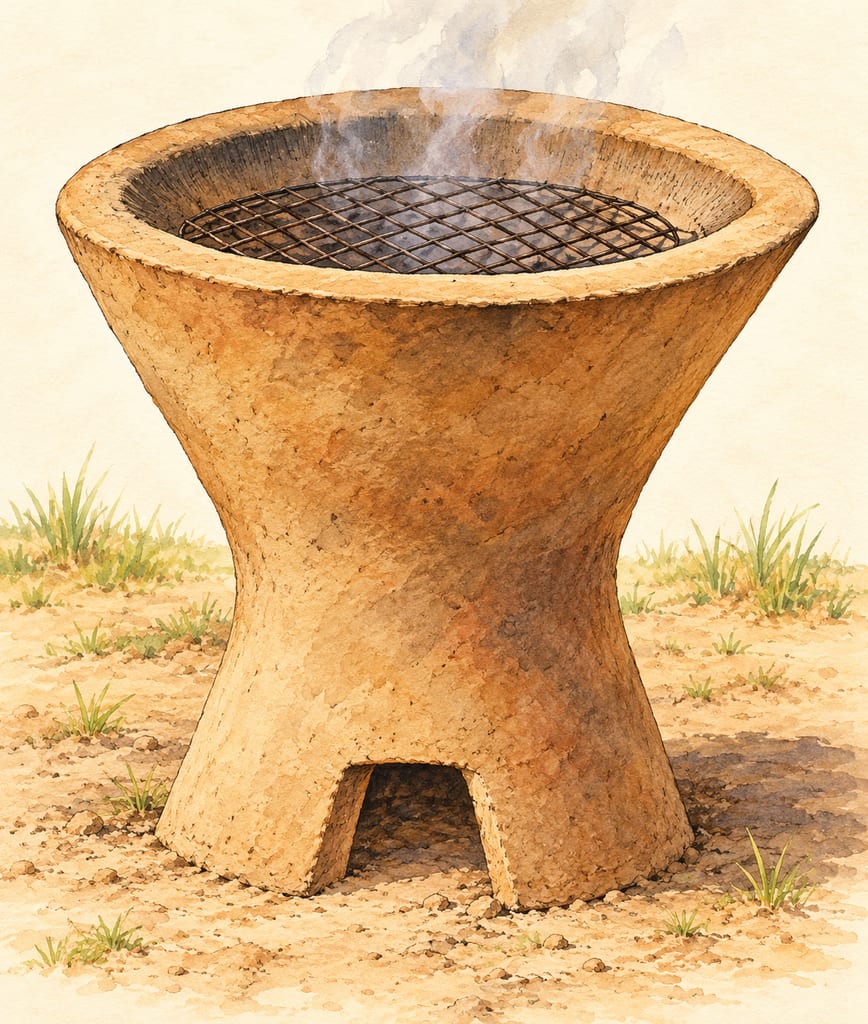
Editorial watercolor illustration based on FAO Figure 3: an hourglass-shaped mud smoking oven with a mesh support spanning its broad top and a small opening at the base.
Built structures

Kainji Lake earthen smoking kiln

A 1974 FAO report describes varied mud fish-smoking ovens around Nigeria’s Kainji Lake basin, including an hourglass form in its northern parts. It documents the form and broad use, but gives no dimensions or construction sequence.

Masonry smoking ovens
Kainji Lake basin, western Nigeria
Built structures

Buried manioc store (Omagua flood storage)

A flood-season pit store described for Omagua communities along the Amazon: manioc tubers were buried before inundation and recovered as waters receded. Its shape and lining are not recorded.

Pits and cavities
Omagua islands, Amazon River floodplain
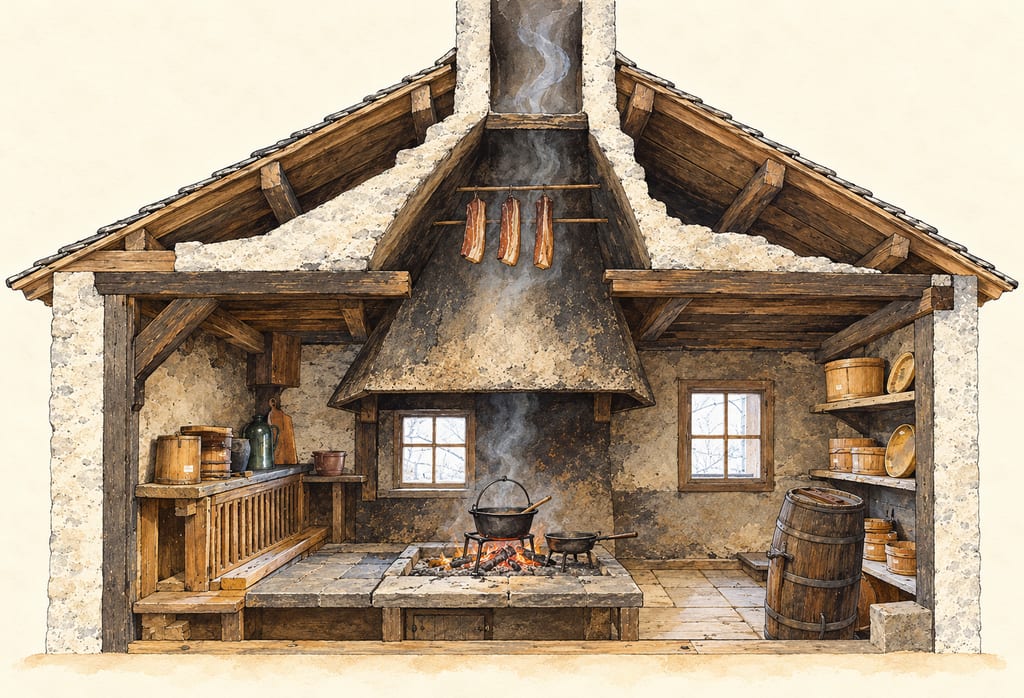
Editorial cutaway illustration of a Tyrolean Rauchkuchl, showing one integrated smoke hood and the open hearth; it is a reconstruction, not a photograph or construction plan.
Built structures

Broad hood or chimney chamber

A family of domestic smoking structures that used smoke rising from a hearth: from the Austrian Rauchkuchl spark hood to the Jougne farmhouse meat hood and the Franche-Comté tuyé.

Smokehouses and smoke rooms
Jougne
Built structures

Swazi cattle-kraal grain pit (ingungu)

A Swazi ingungu is an underground grain store beneath a homestead cattle kraal in Eswatini; stored grain could ferment slightly, while pest protection was the stated primary benefit.

Pits and cavities
Eswatini
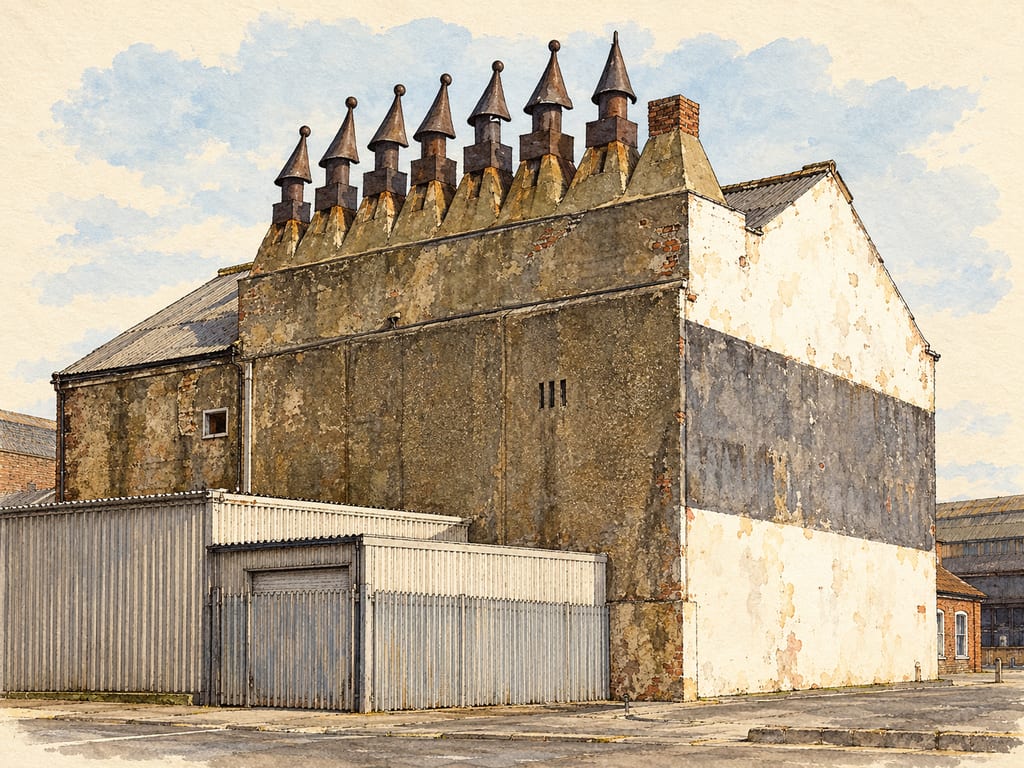
Hand-painted architectural illustration of Alfred Enderby’s Grimsby smokehouse exterior, showing its distinctive row of tall roof chimneys.
Built structures

Grimsby chimney smokehouse

A brick chimney smokehouse associated with Grimsby's traditional fish-curing trade. Individual buildings varied; one working Alfred Enderby example documents tall chimney bays with smoke pits and speats for hanging fish.

Smokehouses and smoke rooms
Grimsby
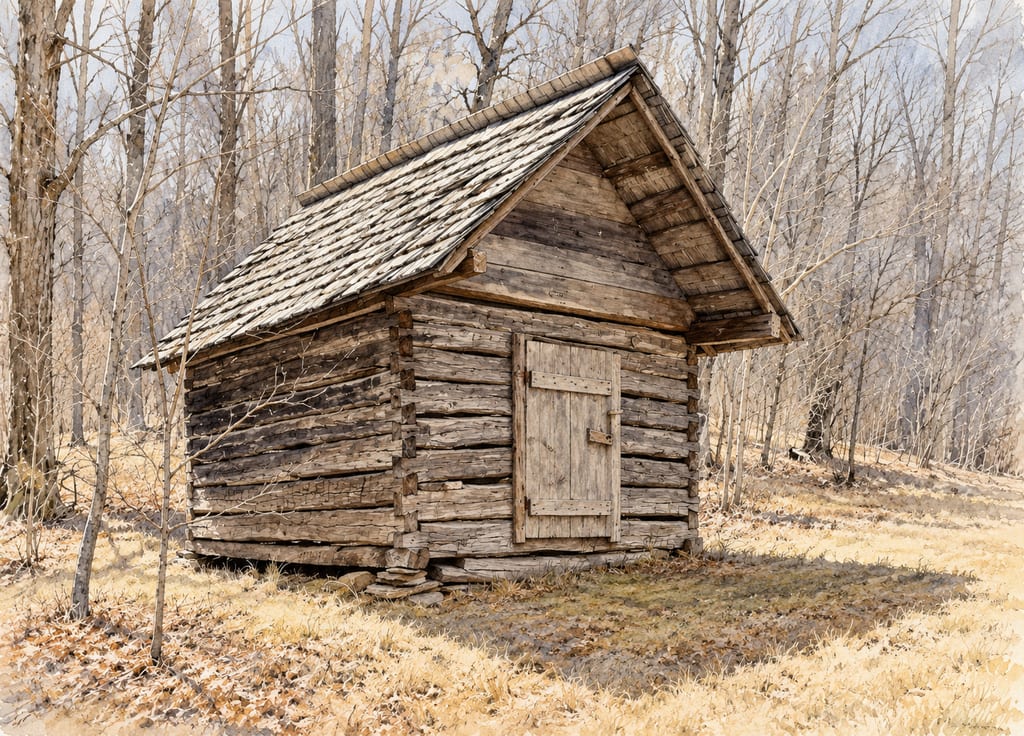
Archival-style watercolor illustration of the circa-1898 Henry Whitehead Place smokehouse, a small oak-log building at Cades Cove; one documented example, not a universal plan.
Built structures

Appalachian meathouse

A source-based account of Appalachian meat-curing outbuildings, centered on the Henry Whitehead Place smokehouse at Cades Cove, Tennessee. Regional practice and this one building are kept distinct.

Smokehouses and smoke rooms
Cades Cove, Blount County, Tennessee
Built structures

Bwiru pit

A small household pit dug into sandy ground on Namu Atoll to ferment breadfruit as bwiru. Nancy J. Pollock's 1968 field account describes its lagoon-side setting, leaf lining and stone-covered opening.

Pits and cavities
Majkin, Namu Atoll
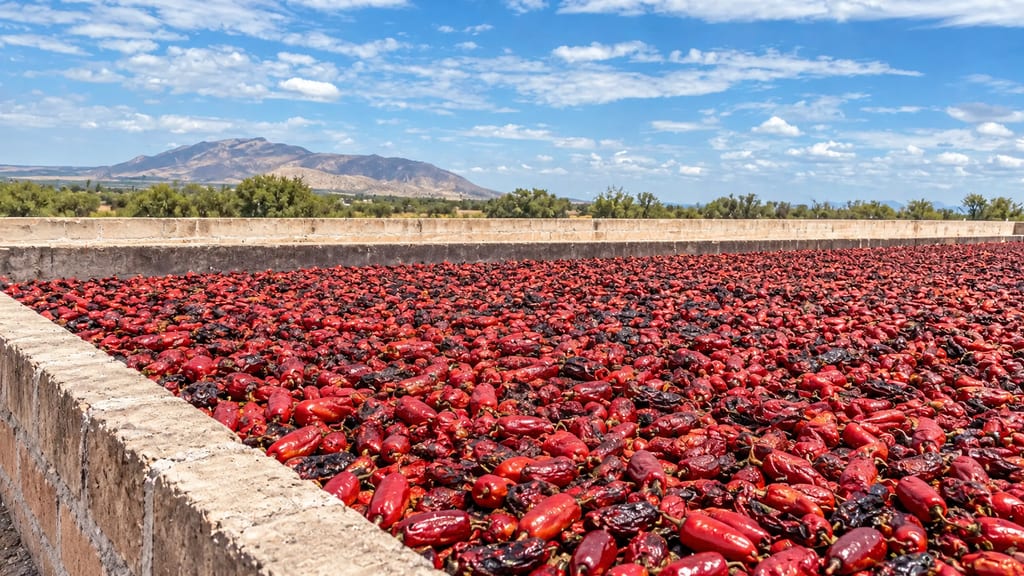
Open masonry chipotle cocedor with red peppers spread across its broad surface.
Built structures

Chipotle cocedor

A fixed masonry-and-wood structure used in Camargo to smoke and dry ripe jalapeños into chipotle. Sources give regional dimensions and one separate experimental oven, not a safe construction plan.

Drying kilns and dryers
Camargo
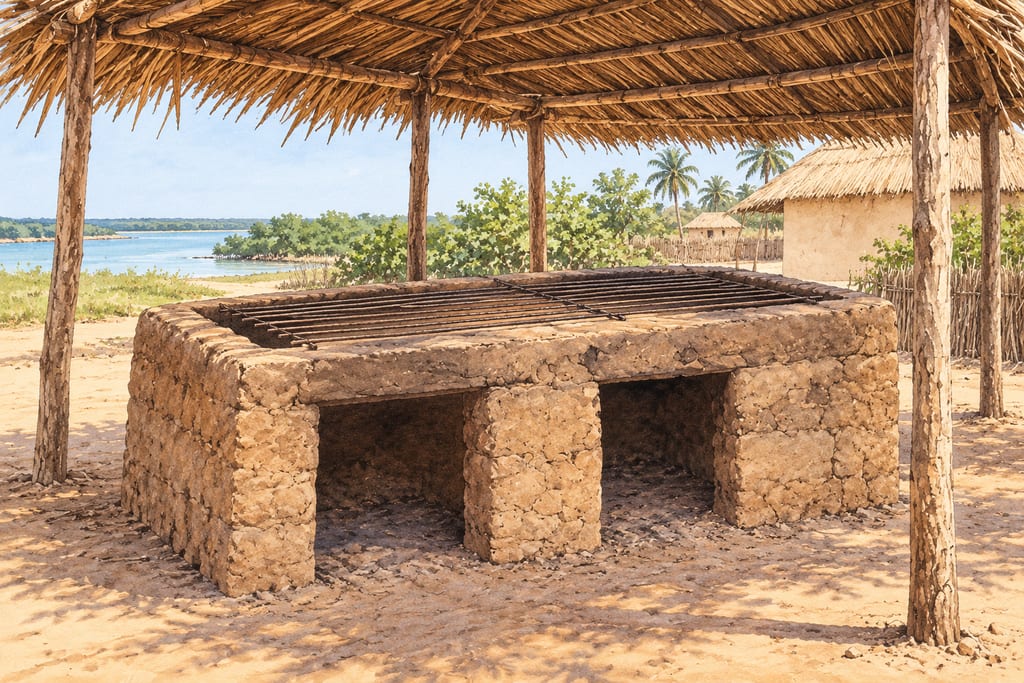
Editorial illustration of a closed mud-block Banda oven, showing a fixed earthen body, front fuel openings and an empty grill beneath a thatched shelter.
Built structures

Closed Banda oven

A closed Banda is a fixed fish-smoking oven with enclosing mud-block or compacted-clay walls around a rectangular fire and a grill or wire-mesh platform. Its regional forms are not one standardized plan.

Masonry smoking ovens
Senegal
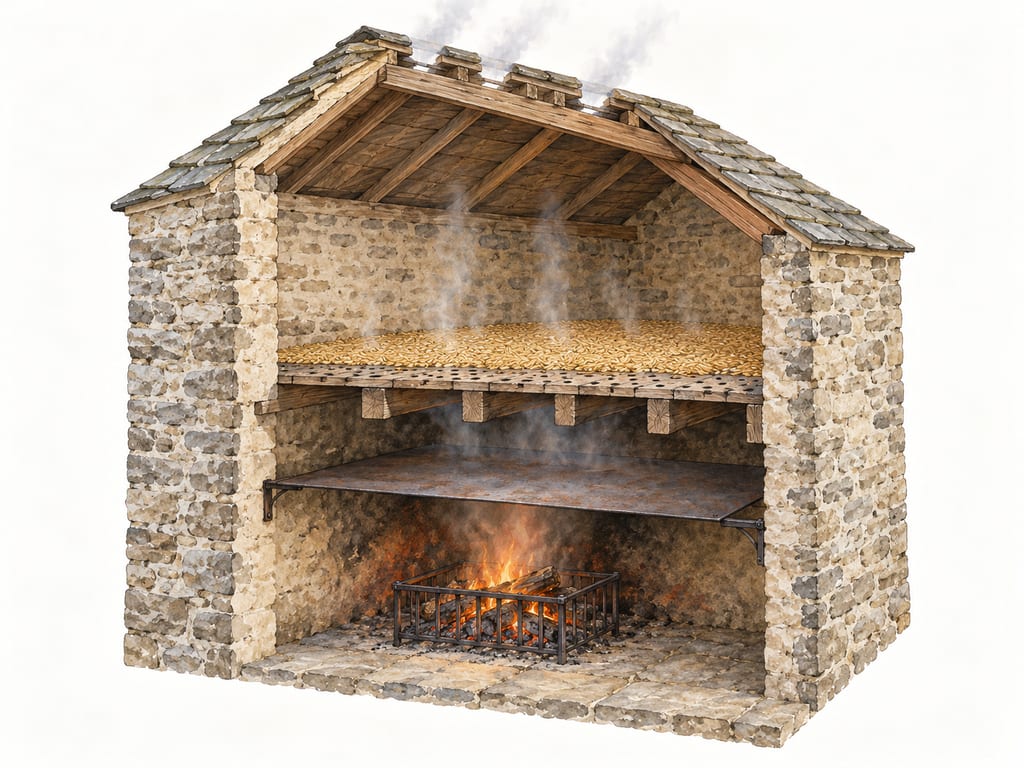
Interpretive cutaway of Acorn Bank’s reconstructed grain-drying kiln, showing a lower fire grate and baffle beneath an upper perforated oat-drying floor, with smoke leaving the roof ridge.
Built structures · Place

Acorn Bank grain-drying kiln

A reconstructed two-level grain-drying kiln at Acorn Bank Watermill in Temple Sowerby, Cumbria. A lower fire grate warms oats on a raised perforated floor; a baffle spreads heat, while smoke historically escaped through the roof ridge.

Show on map
Drying kilns and dryers
Acorn Bank Watermill, Temple Sowerby
Built structures

Alutiiq clay-lined subfloor pit

A large clay-lined depression built beneath some Alutiiq house floors in the Kodiak region, documented in Koniag contexts for food storage and possibly fermentation.

Pits and cavities
Afognak Island
Built structures

Below-ground fish-fermentation tank (Senegal)

A concrete fermentation tank installed below ground at a Senegalese fish-processing site was documented as an adaptation that emulated the older practice of burying fish during fermentation.

Floors, basins and masonry tanks
Senegal
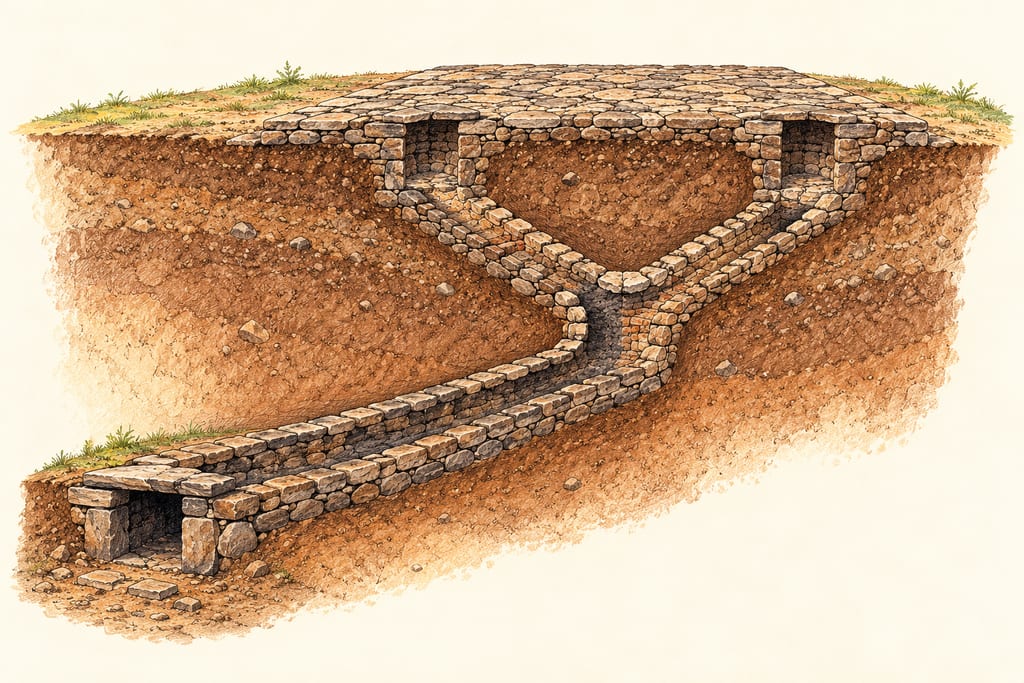
Archaeological cutaway of the Mártires Barbacuá: a paved stone platform at ground level above a rising, Y-branched underground flue.
Built structures

Barbacuá

The Barbacuá is a fixed batch dryer for yerba mate. Its documented forms use a raised drying surface warmed by wood fire; one excavated example in Misiones preserves a stone flue below ground.

Drying kilns and dryers
Argentina
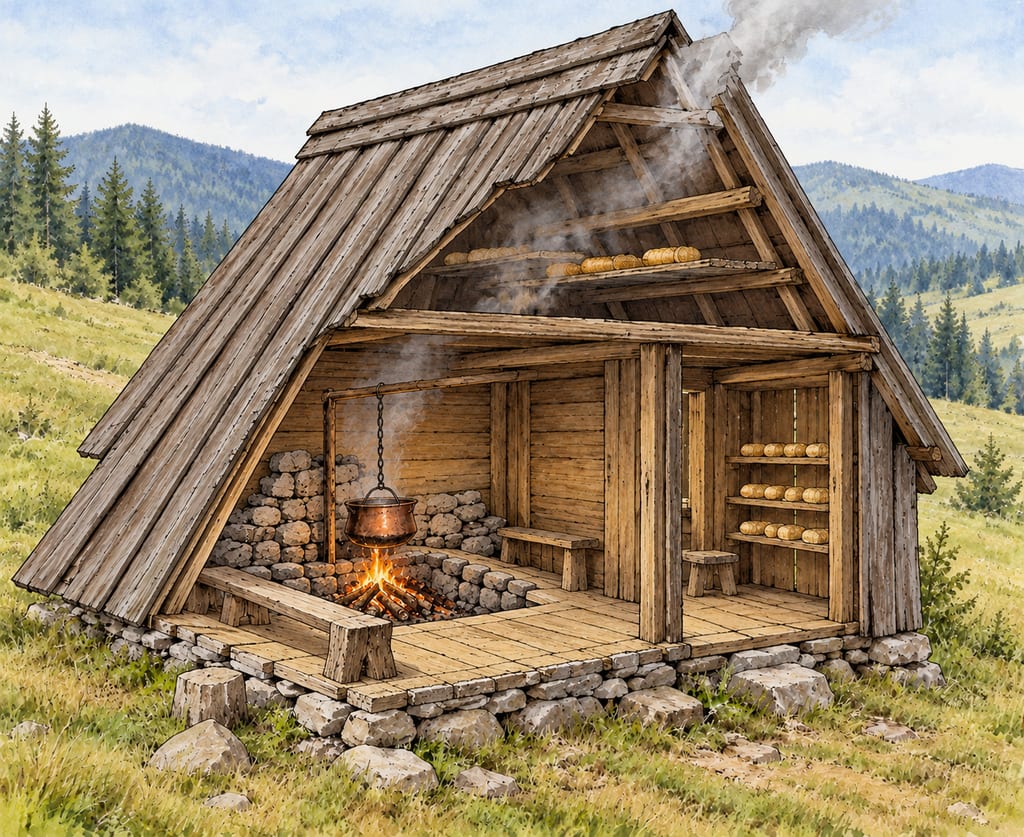
Historical cutaway illustration of a timber Carpathian shepherd hut with two work rooms, a sunken stone-protected hearth and cheese shelves beneath the roof.
Built structures

Bacówka (Carpathian shepherd hut)

A bacówka is a seasonal shepherd’s hut built in place in the Polish Carpathians. Its documented hearth, cheese rooms and roof-space smoking link it to pastoral work; sources do not define one universal plan.

Pastoral huts
Polish Carpathians
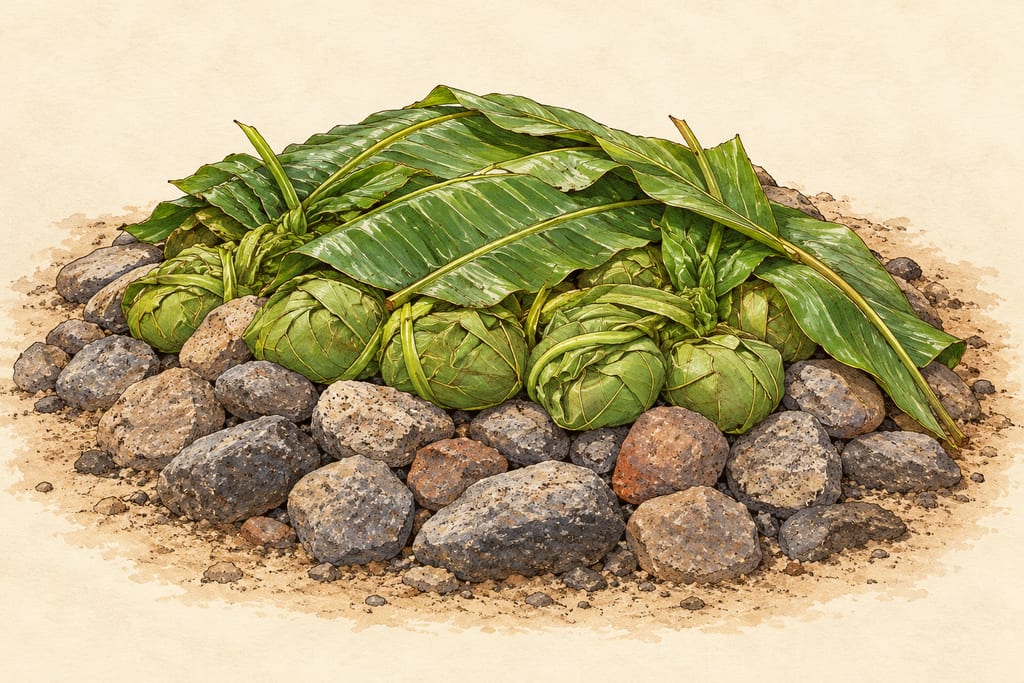
An above-ground bed of hot stones supports leaf-wrapped food beneath a partial leaf covering.
Built structures

Above-ground stone oven

A fire-heated stone bed or mound holds food arranged on the stones and covered with leaves. The Samoan umu is one documented regional instance, not a universal blueprint.

above-ground-stone-ovens
Samoa