Equipment
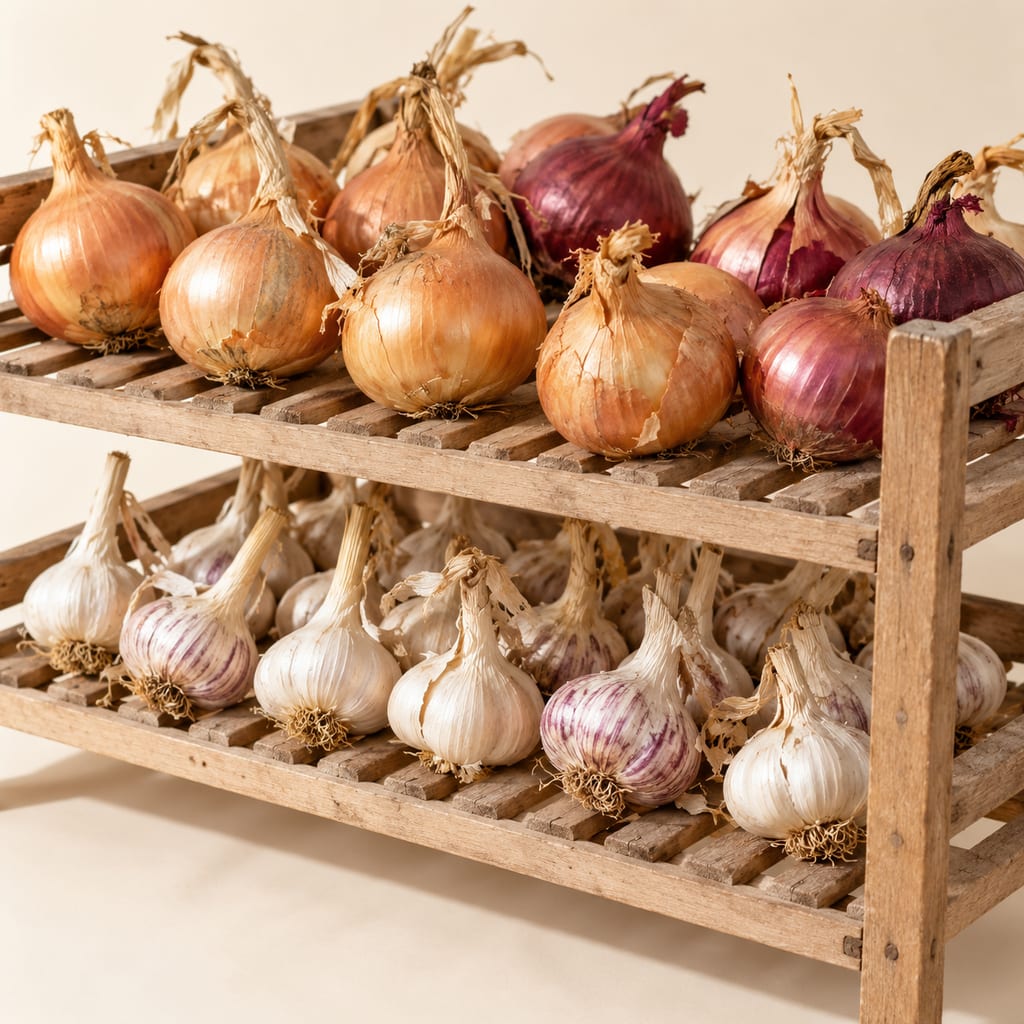
Onion and garlic curing rack
A ventilated rack or shelf on which harvested onion and garlic bulbs dry for about two to three weeks, closing the neck and drying the outer skins before dry storage.
 FermenteaWhere food goes to change
626 sourced equipment pages: vessels, tools, appliances and built structures.
What the food sits in while it changes: jars, barrels, tanks, skins, gourds, baskets and wraps.
A ventilated rack or shelf on which harvested onion and garlic bulbs dry for about two to three weeks, closing the neck and drying the outer skins before dry storage.
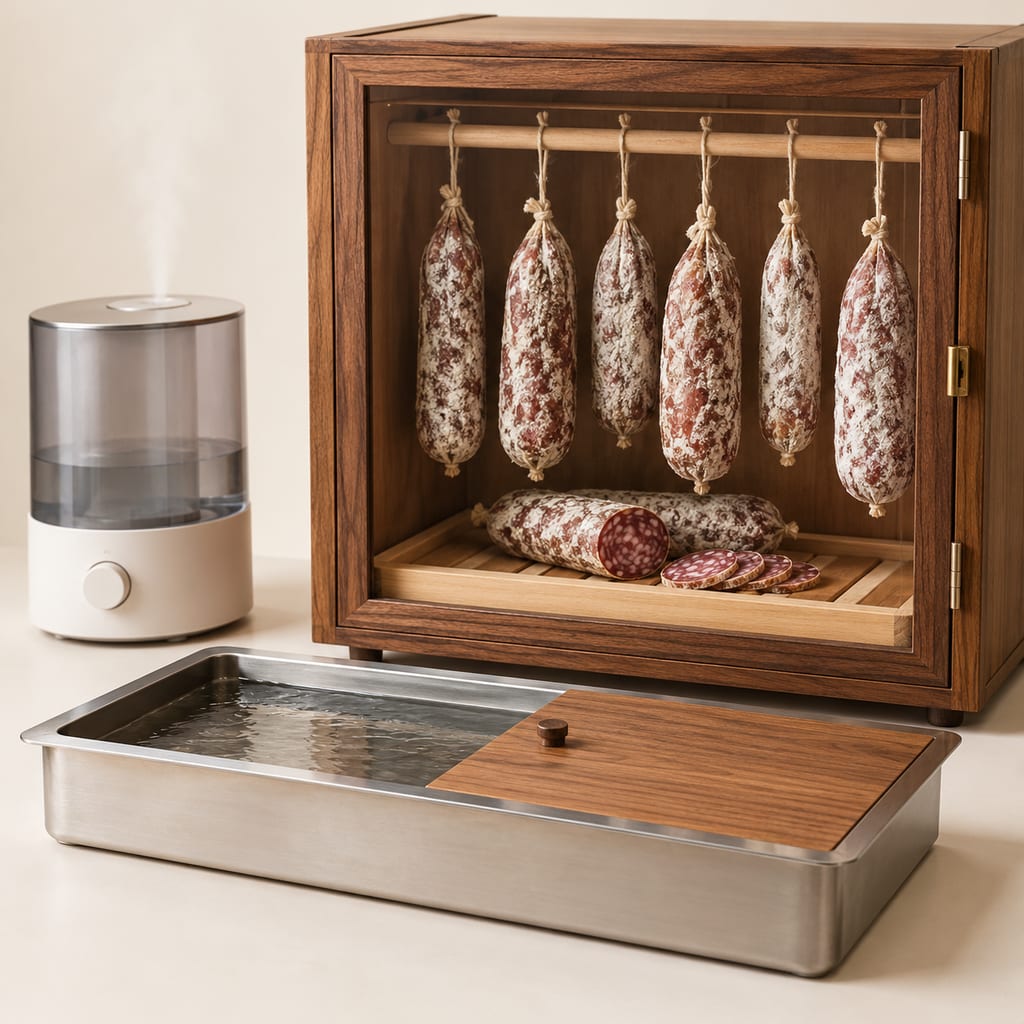
A cleanable open water reservoir with variable exposed surface, used as a passive moisture source for a food chamber, compared with an active humidifier.
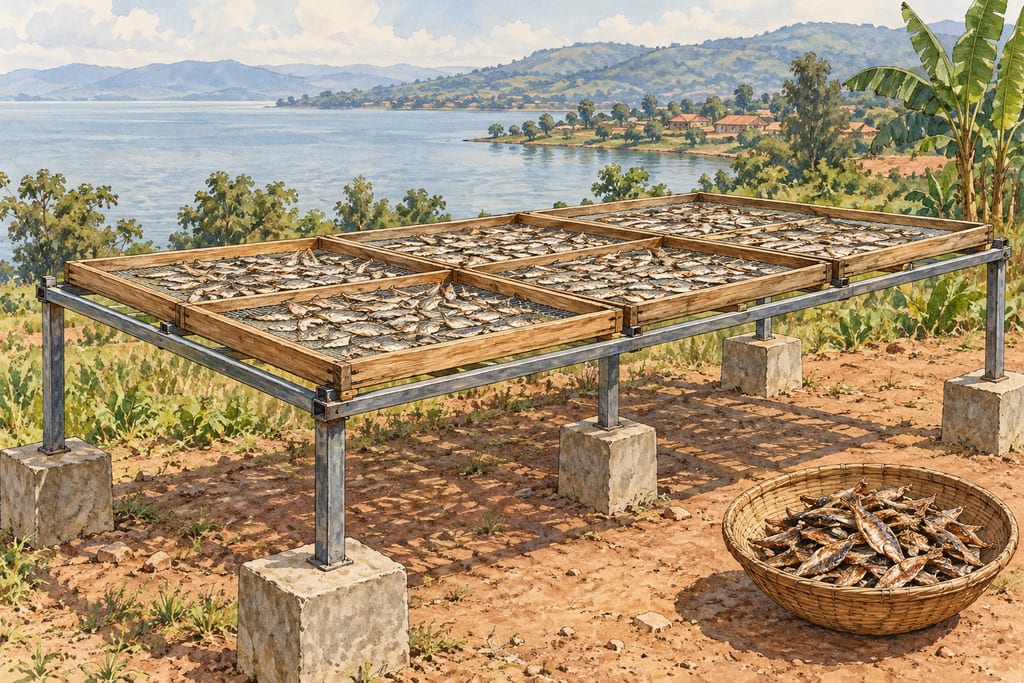
A metal-frame rack set on concrete footings, with removable hardwood trays under mesh, raises fish above the ground for air-drying. The design was promoted in Burundi and documented by FAO in 2014.
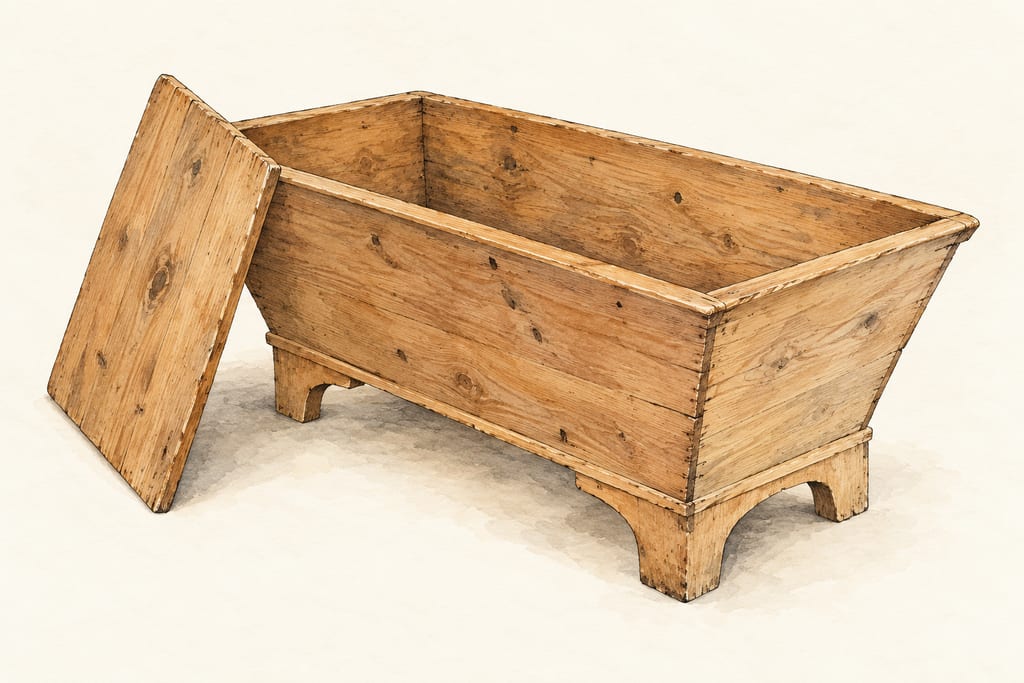
A French maie is a legged wooden chest for hand-kneading bread dough and, in some Auvergnat forms, storing the baked loaves. Its shape and materials vary by region.
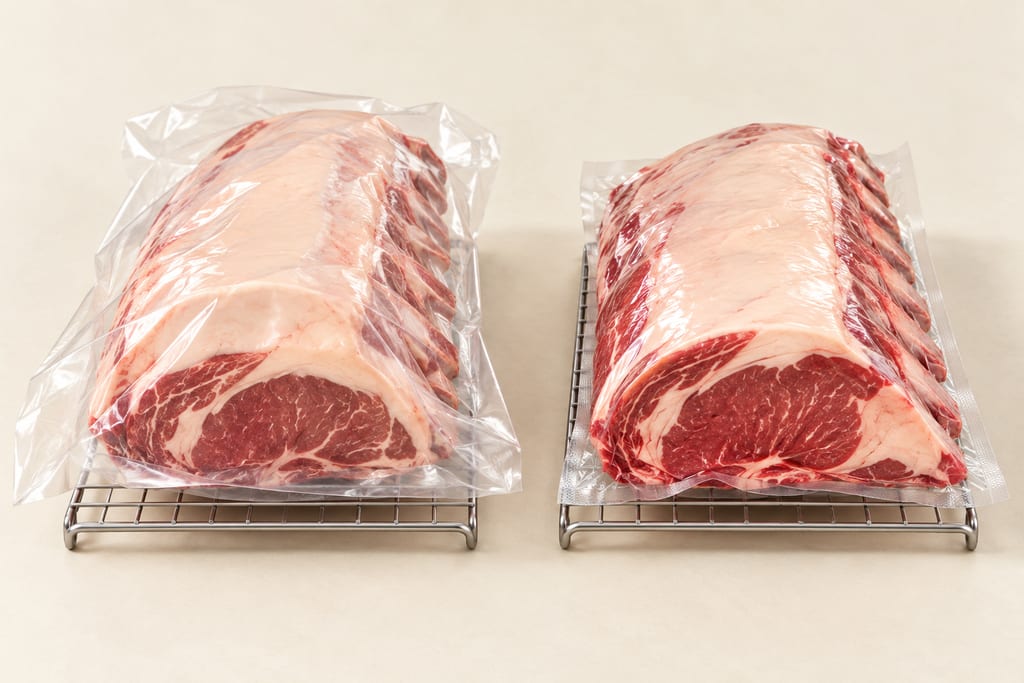
A moisture-permeable ageing membrane lets water vapour escape; a conventional vacuum pouch is designed to remove air and retain purge. Similar appearance cannot identify the film or validate an ageing process.
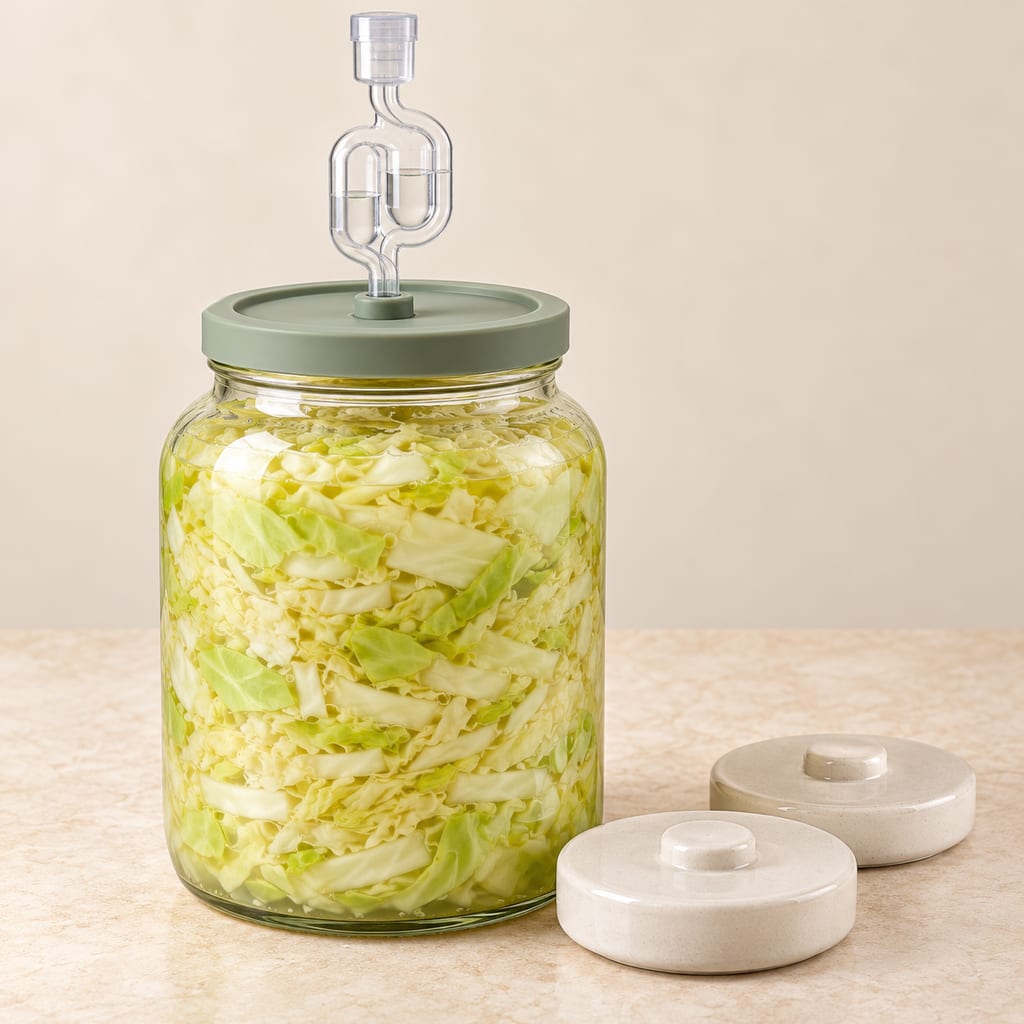
A modern wide-mouth glass jar for vegetable fermentation, often paired with a gas-release lid or airlock and follower weights. This accessory arrangement distinguishes it from general preserving jars and stoneware crocks.
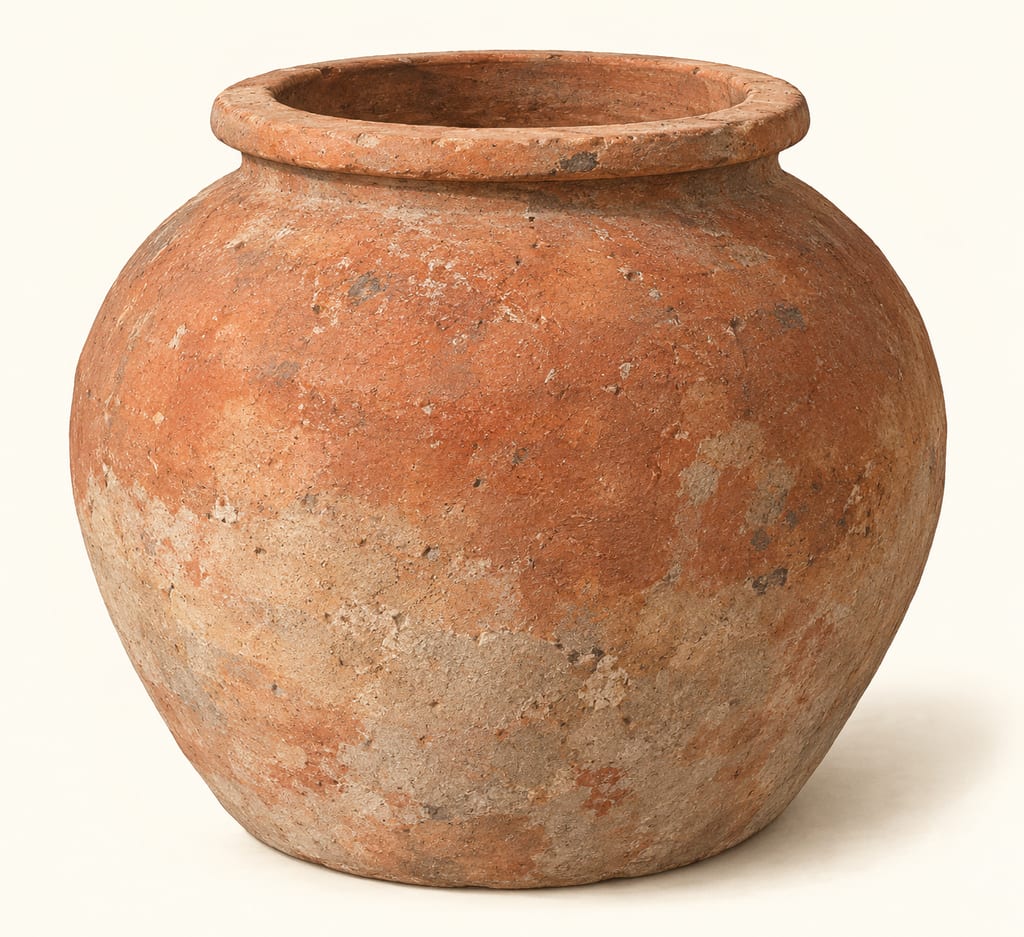
Six ceramic dolia at Pompeii’s Garum Shop held fish-processing remains. They are vessels, distinct from masonry fish-salting vats; the evidence does not establish whether these specimens were portable or fixed in place.
Show on map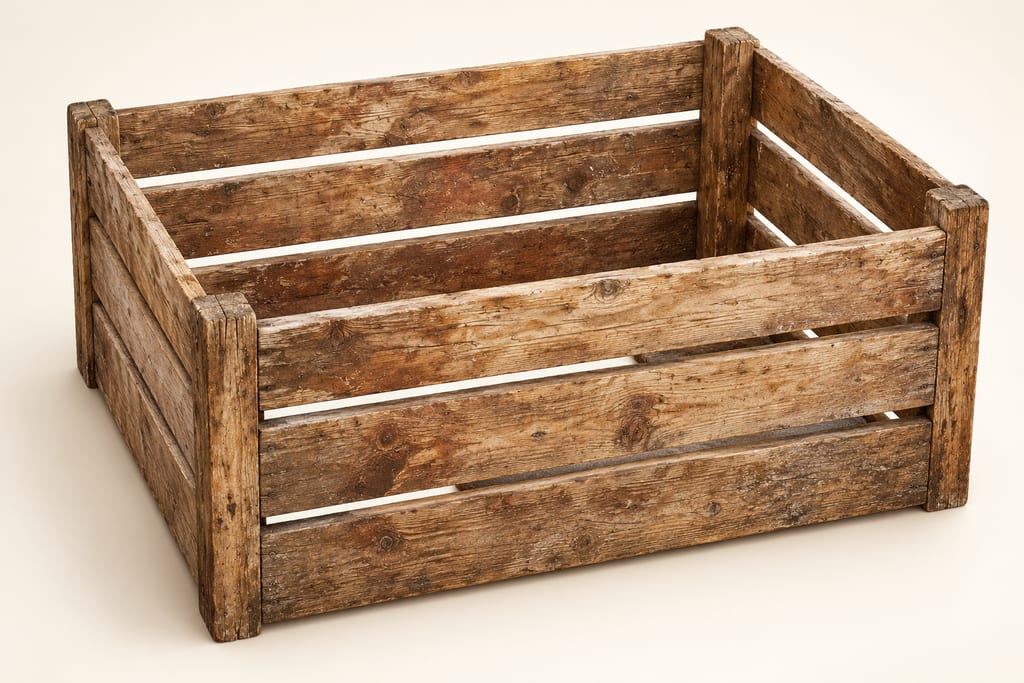
Movable perforated containers hold Greenland-shark cuts during the modern Icelandic maturation of hákarl, letting liquid drain; the best-documented example is a wooden box used in a 2021 study.
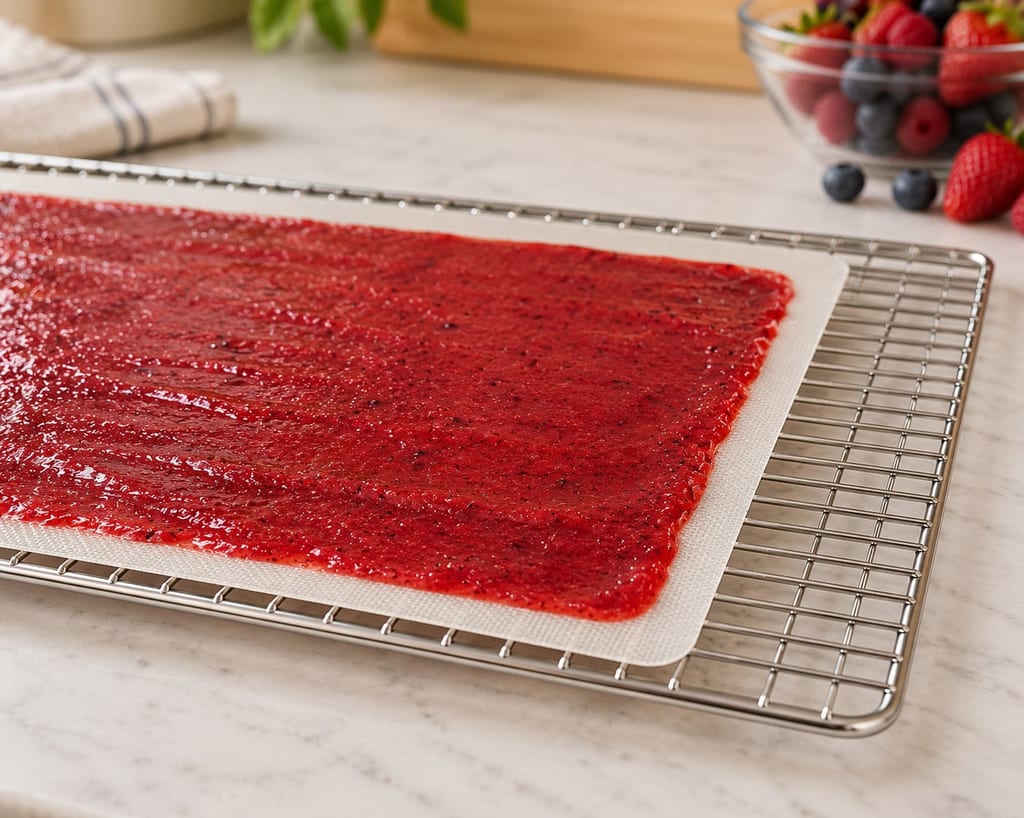
A removable food-contact sheet fitted to a dehydrator shelf holds purée and small sticky foods that would otherwise pass through an open tray. Materials and fit vary; a solid liner changes airflow at the covered surface.
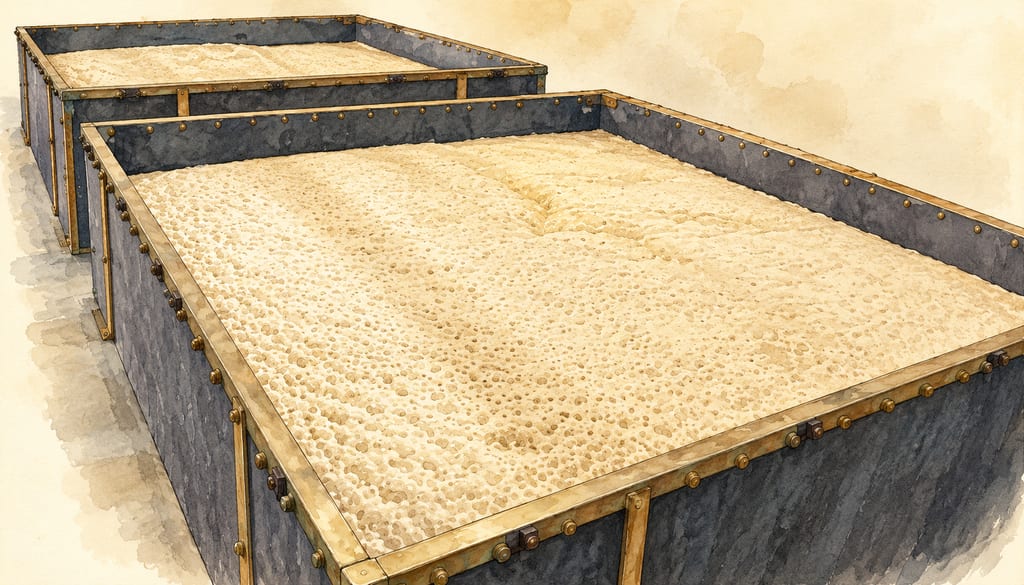
The Yorkshire square is a slate fermentation vessel and linked process system, documented in continued use at Samuel Smith’s Old Brewery in Tadcaster. Its form and operation vary by brewery.
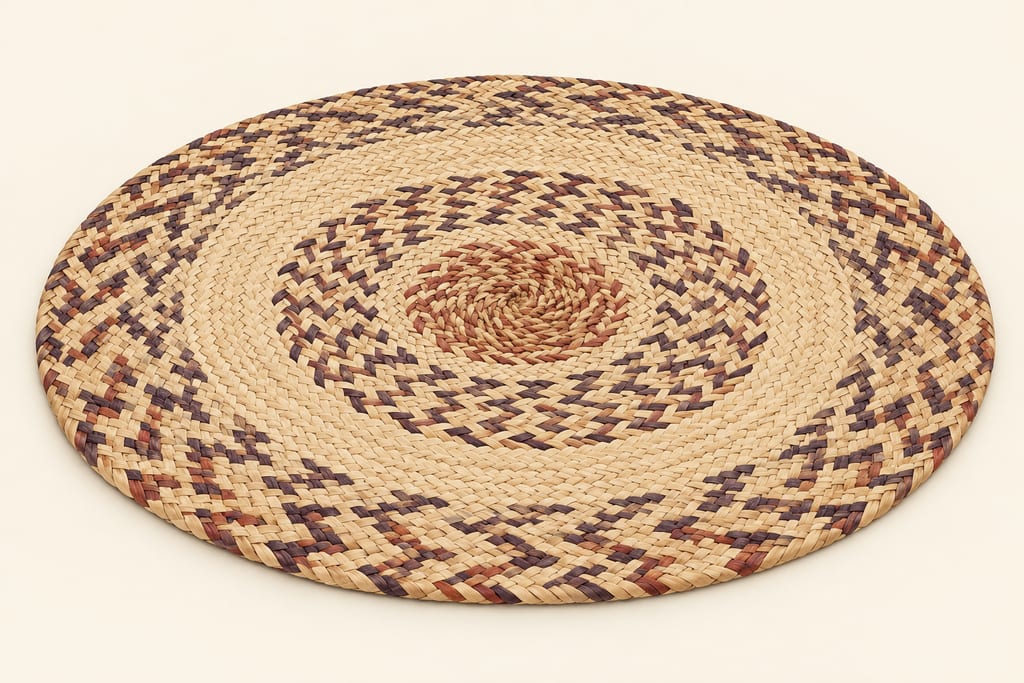
The Kuwaiti sofra is a broad, round palm-woven mat. Made through saf al-khous, the palm-frond weaving craft, it served at home and was also used as a surface for drying shrimp, locusts and some herbs.
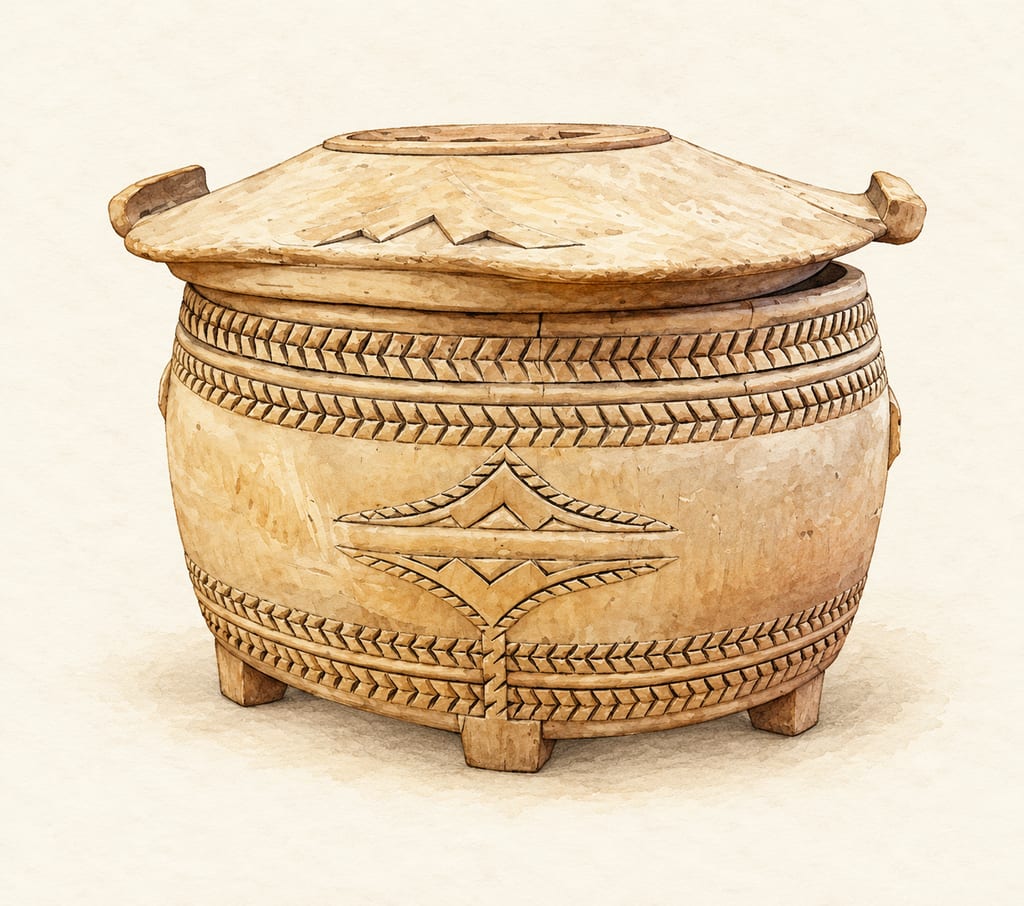
Tepen (тәпән) is a low Bashkir hollowed-linden tub used for serving kumys. A National Museum of Bashkortostan object preserves one carved, lidded example; the taller siläk tub had a different preparation role.
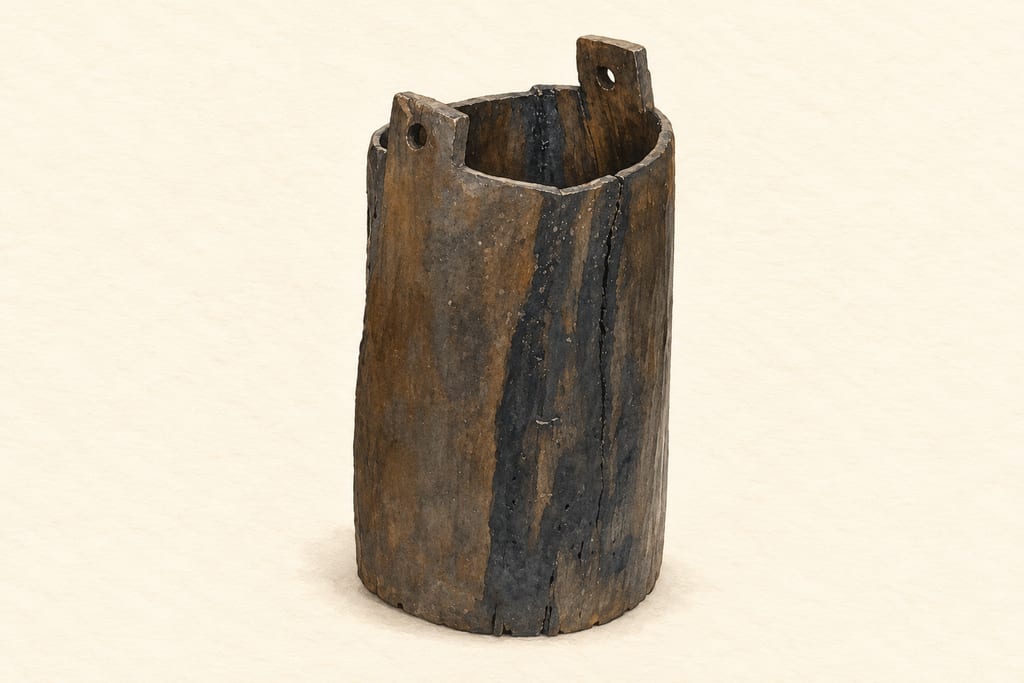
Irish bog-butter finds include wooden containers in several forms, from kegs and tubs to bowls and a mether. The Rosberry museum example is a carved open vessel; no single design or reason for depositing butter in bogs is established.
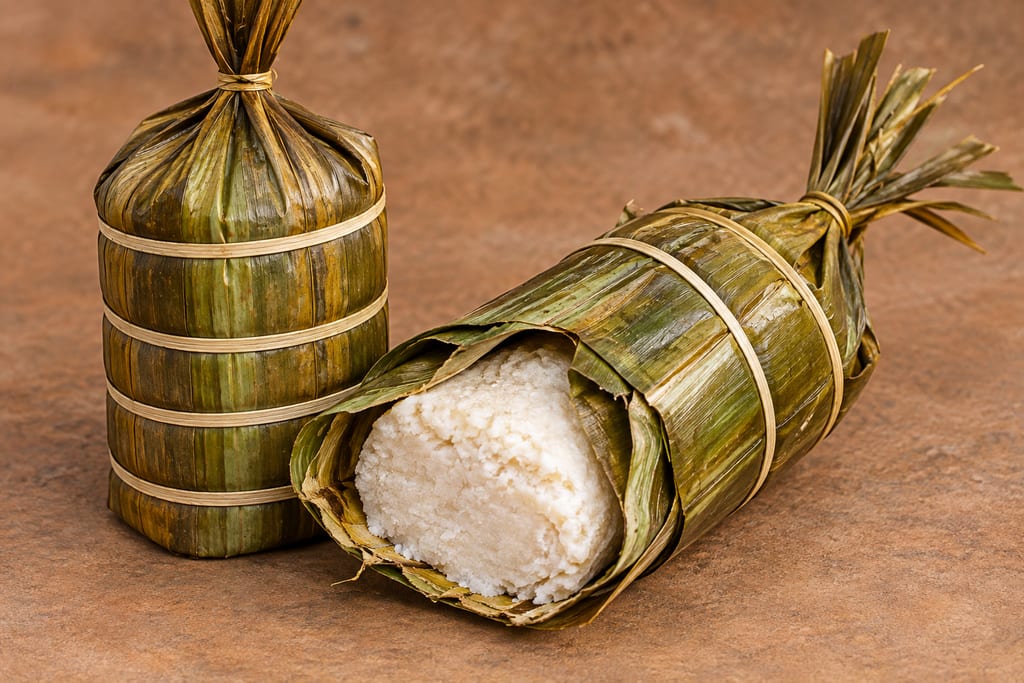
In Papua New Guinea, moist sago starch may be packed tightly inside leaves for storage. Greenhill’s field study records this as a preferred Western Province method and contrasts it with water-covered vessels in East Sepik.
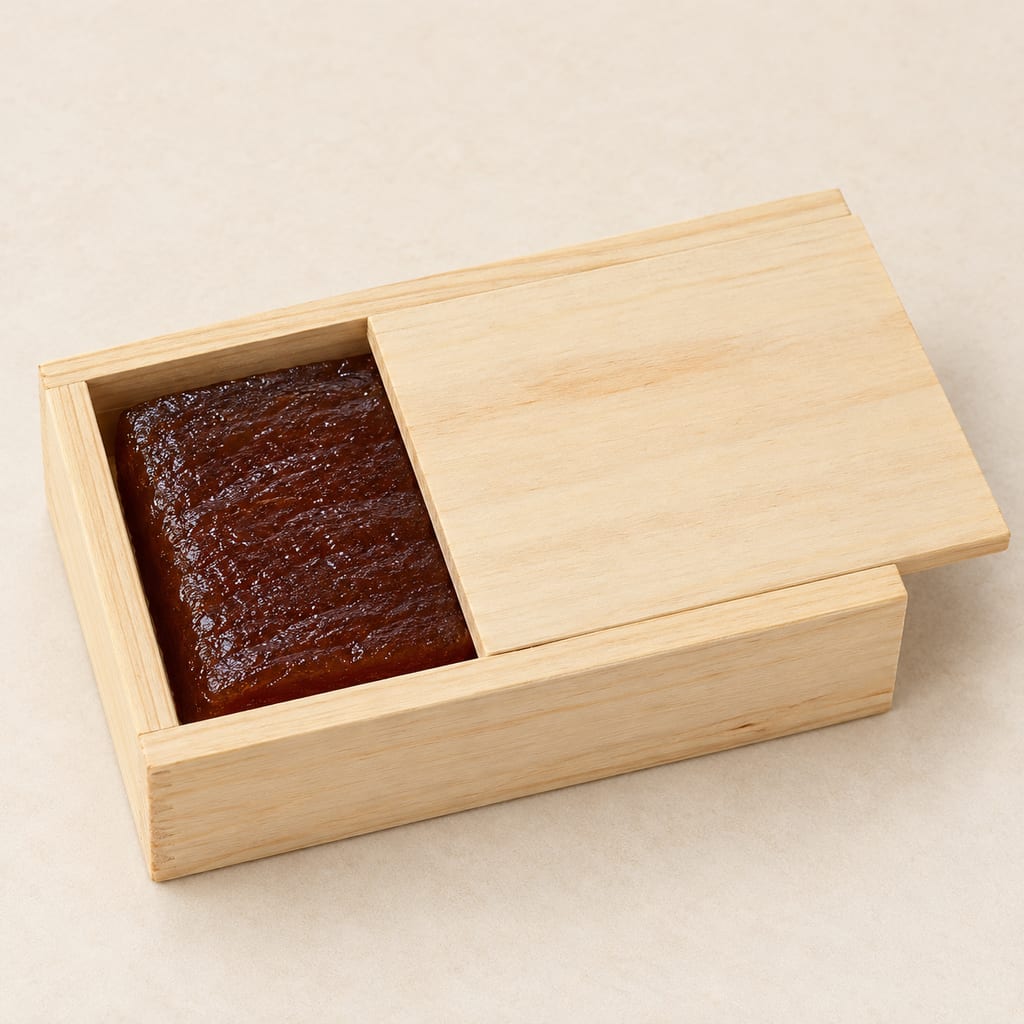
Handmade wooden boxes package Santa Luzia’s firm quince paste in Goiás. Their exact dimensions, wood species and construction are not documented.
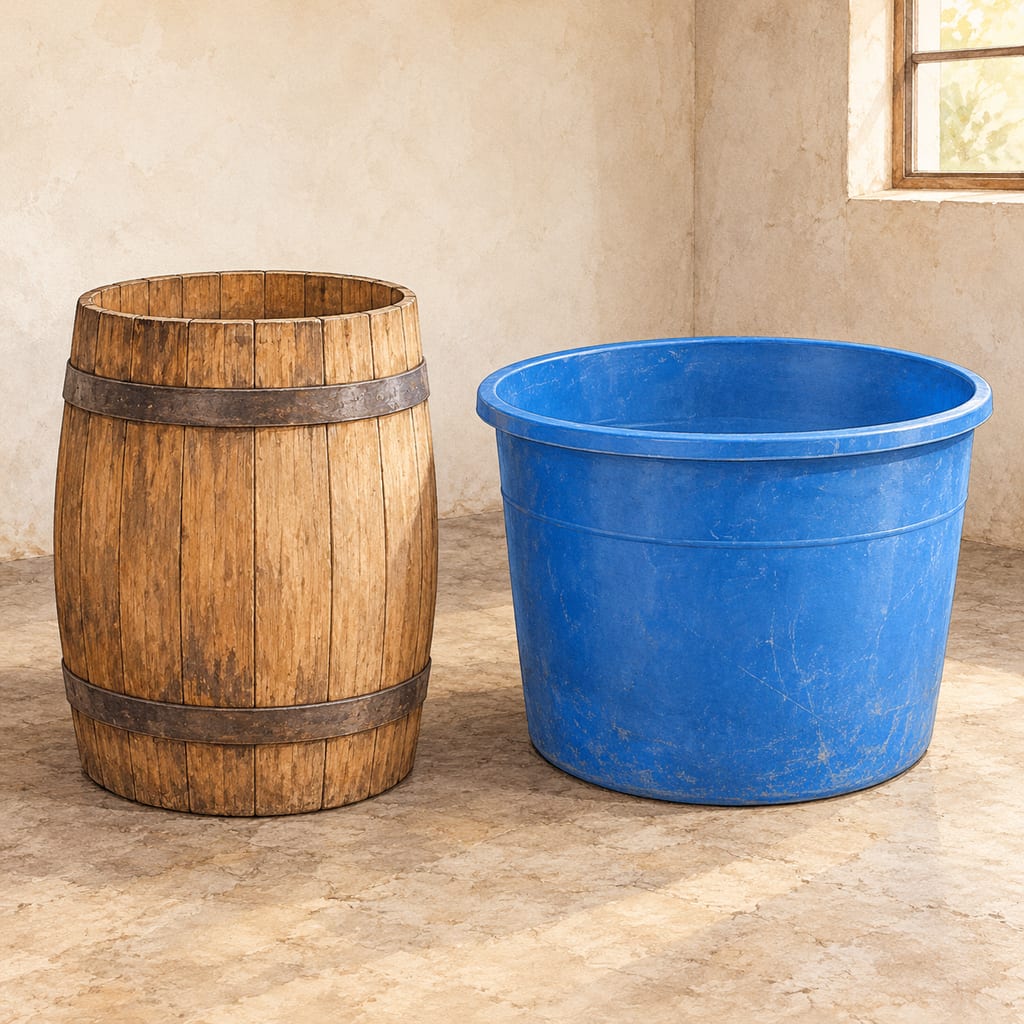
Pulque fermentation may use a wooden barrel or a modern plastic or fibreglass tub. The tinacal is the room or place where the vessels stand, not a name for either container.
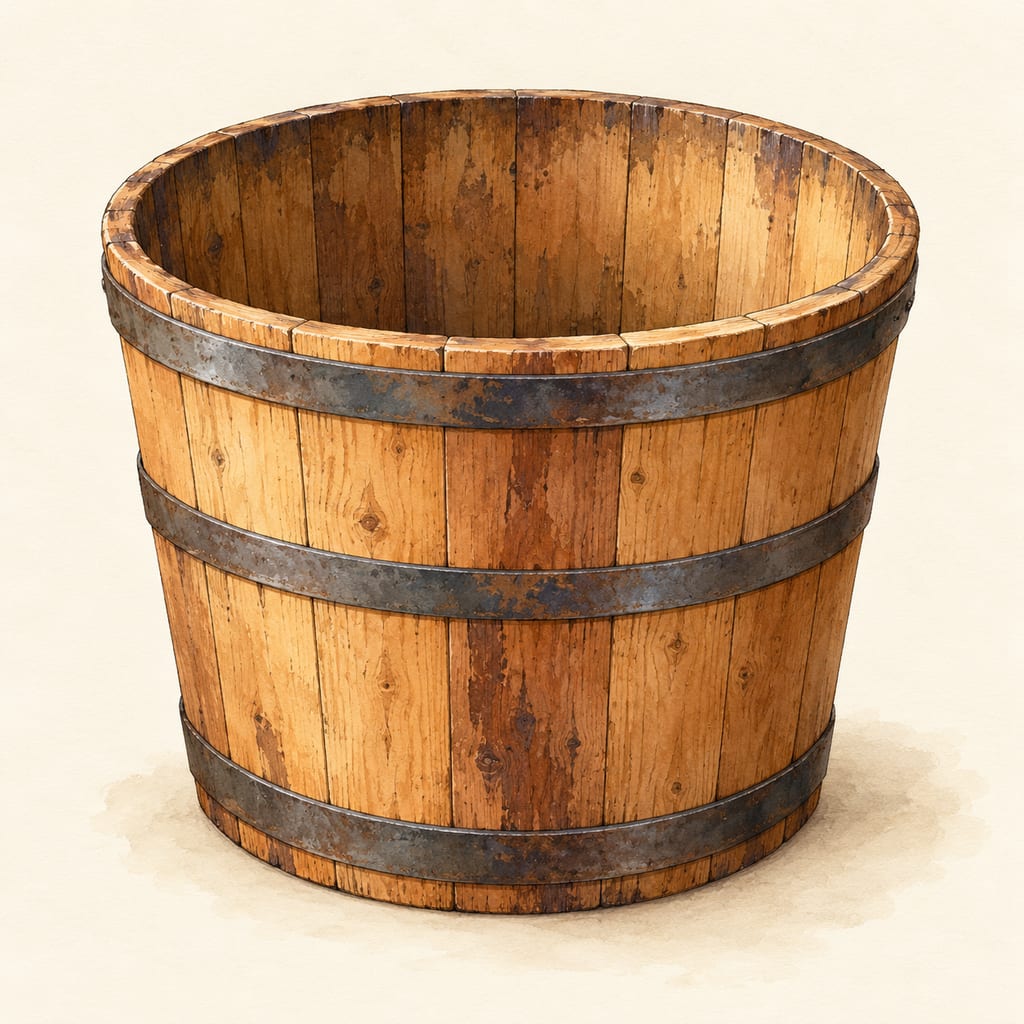
A tina is the open coopered wooden vat used for Ragusano cheesemaking in Sicily’s Hyblean region. Its inner biofilm contributes lactic-acid bacteria to milk, so this particular vat is part of the process rather than a neutral container.
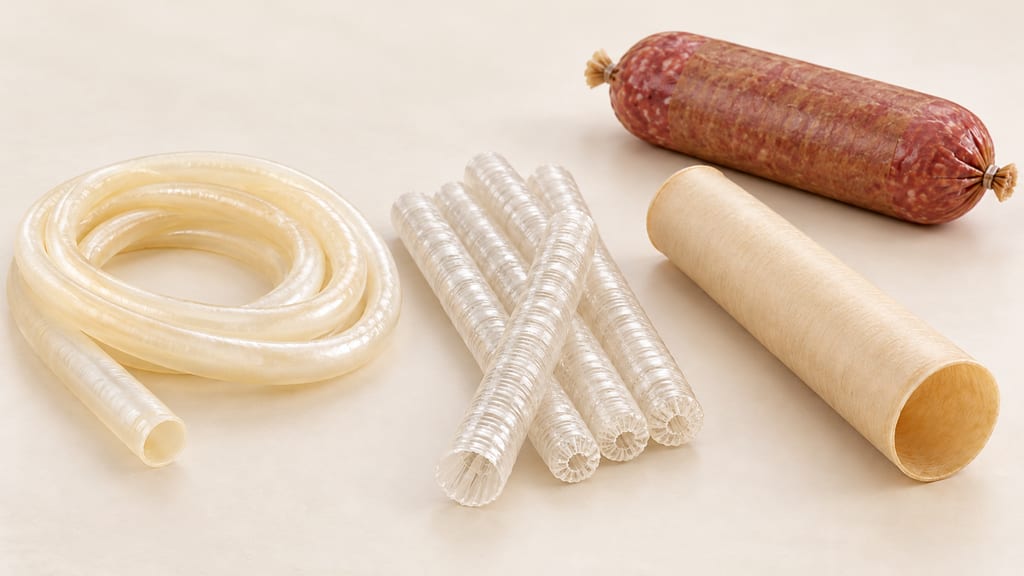
Three manufactured casing families: collagen from animal protein, regenerated cellulose, and cellulose reinforced with fibrous paper. Edibility and process properties vary by grade.
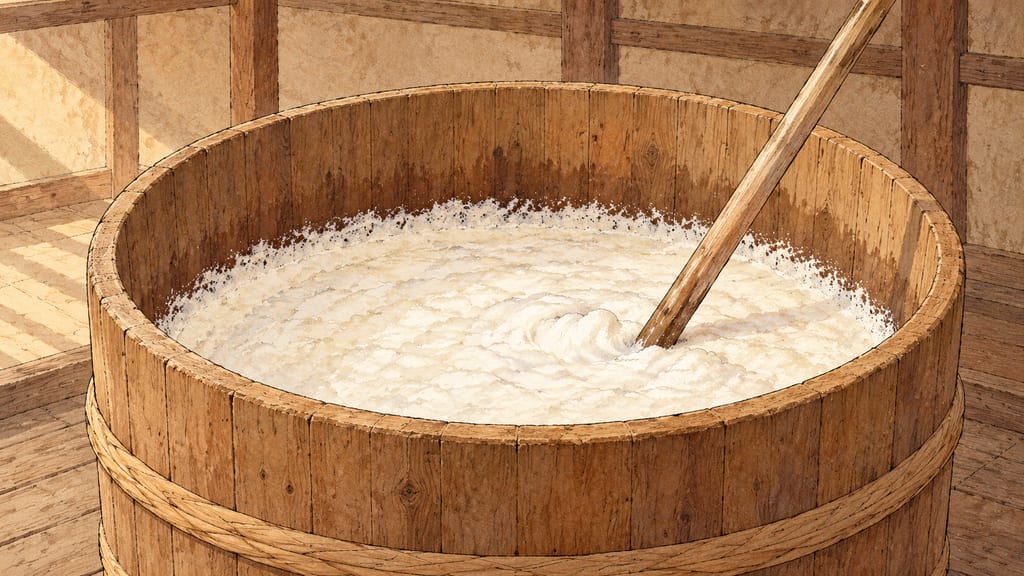
An upright, open-topped stave vat used for fermenting sake mash. Terada Honke documents a current wooden-vat practice and a new Sanbu-sugi cedar vat completed in 2023.
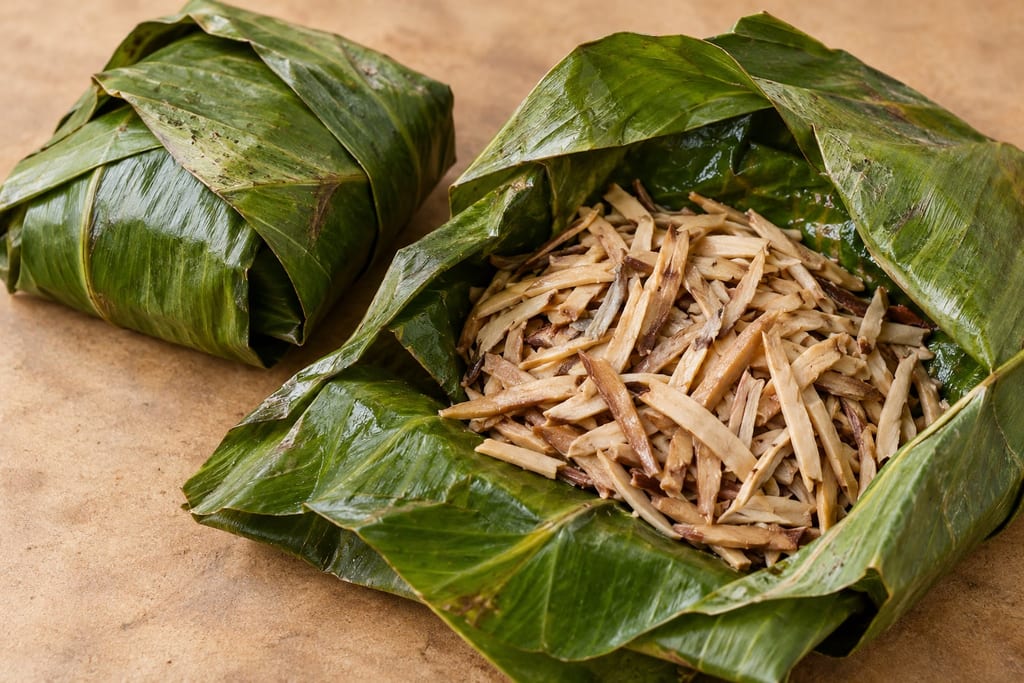
A flexible leaf parcel encloses sliced African oil-bean cotyledons during some Ugba preparations in southeastern Nigeria. Leaf species and layers vary by documented method.
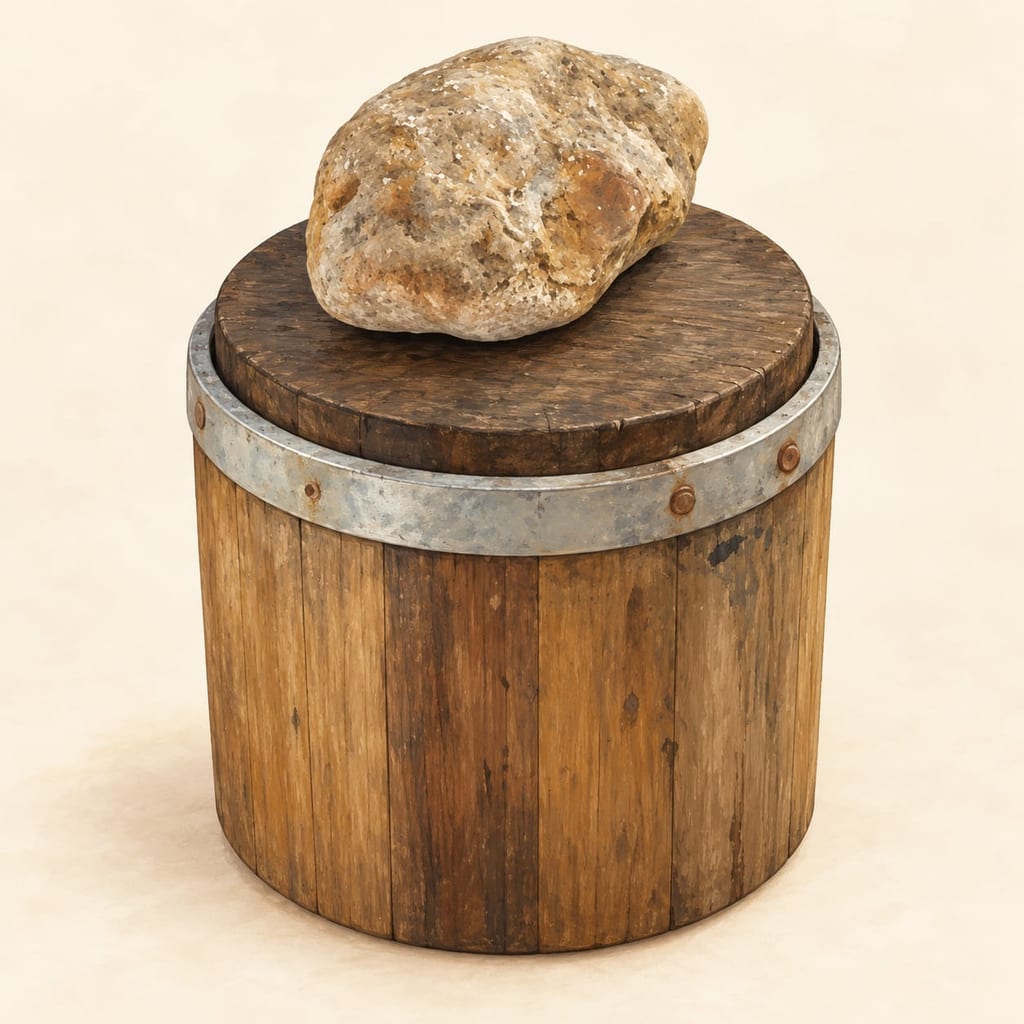
A terzigno is a small wooden cask used in Cetara’s anchovy colatura tradition. A wooden follower and weights press its contents; the 2024 specification describes withdrawal through a hole in the cask’s bottom.
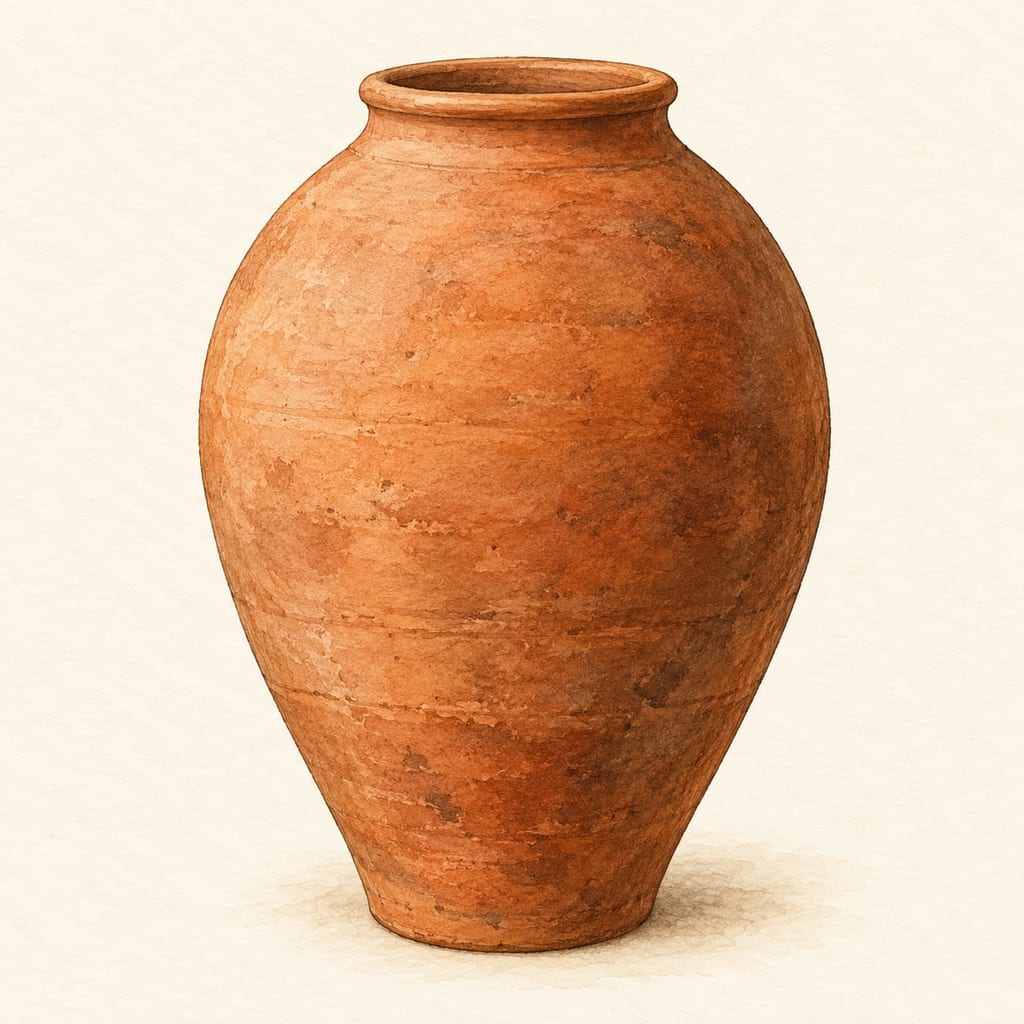
A tinaja is a fired-clay jar used in Spain for wine making and storage, with a particularly well-documented hand-building tradition in La Mancha. Sizes range from domestic vessels to monumental winery jars.
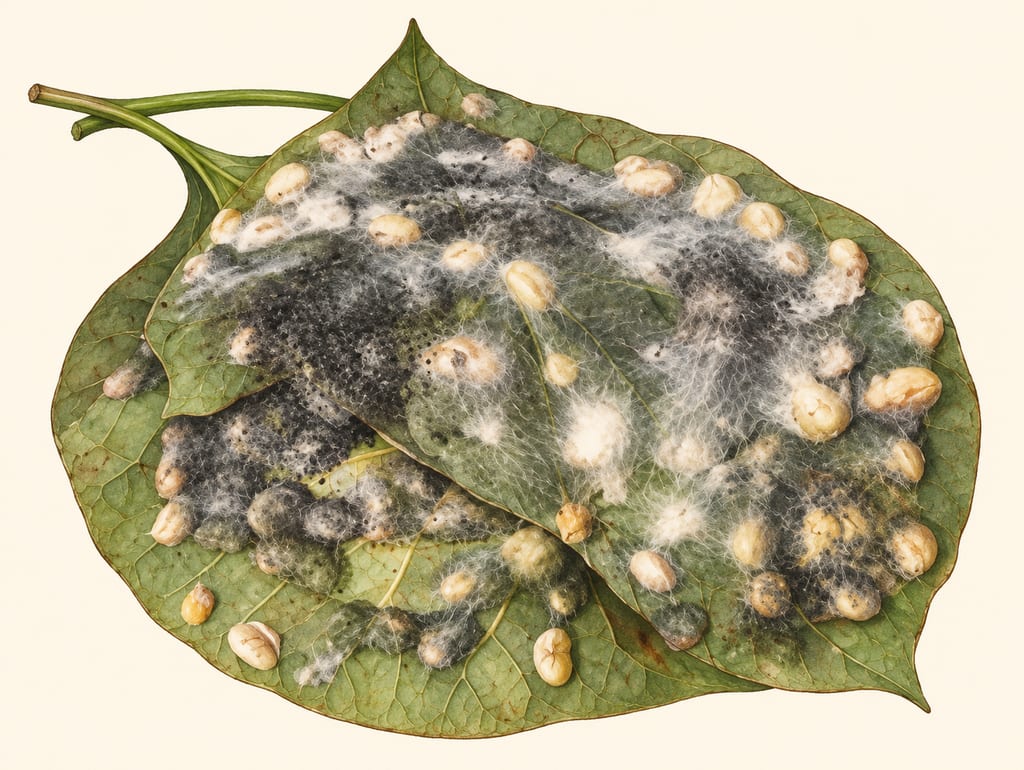
Usar is a traditional Indonesian inoculum carrier: leaves such as waru hold Rhizopus growth for transfer to tempeh beans. It carries starter between stages; it is distinct from the leaf packet used for bulk fermentation.
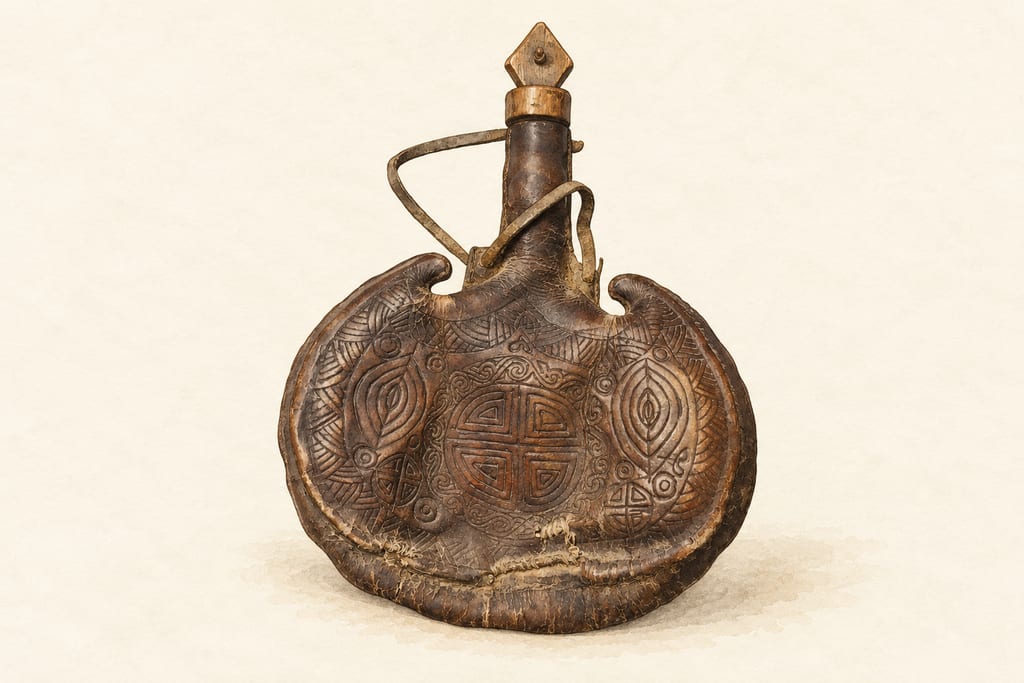
Torsyk is a portable Kazakh leather flask for carrying and keeping drinks such as kumis and shubat. Museum examples have a flattened decorated body, a narrow neck and a stopper; evidence for fermentation inside the travel flask is lacking.
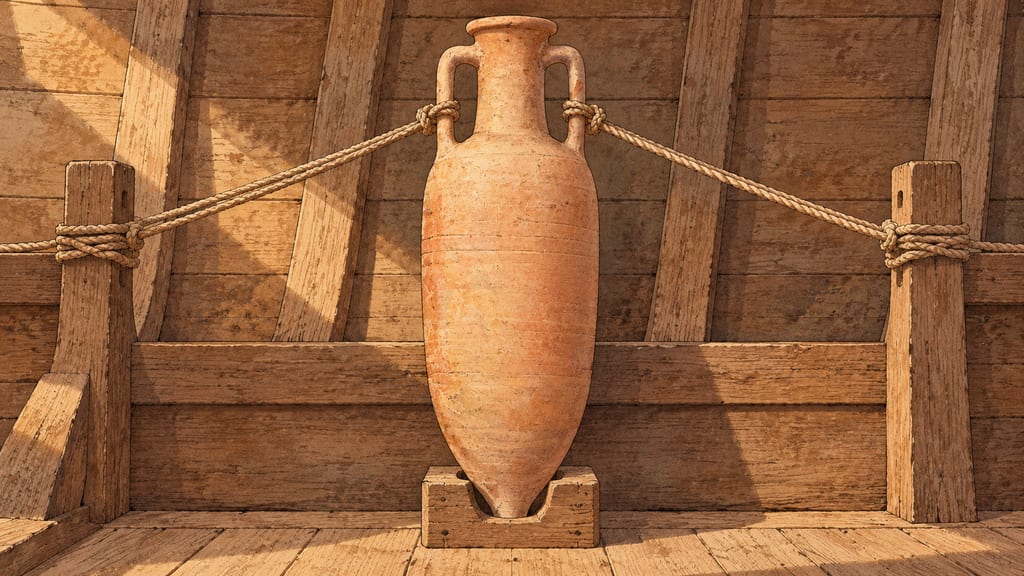
An ancient Mediterranean ceramic shipping container for wine, oil, fish products and other goods. Its handles, restricted mouth and varied bases suited closure, lifting and cargo stowage; it should not be assumed to have been a fermenter.
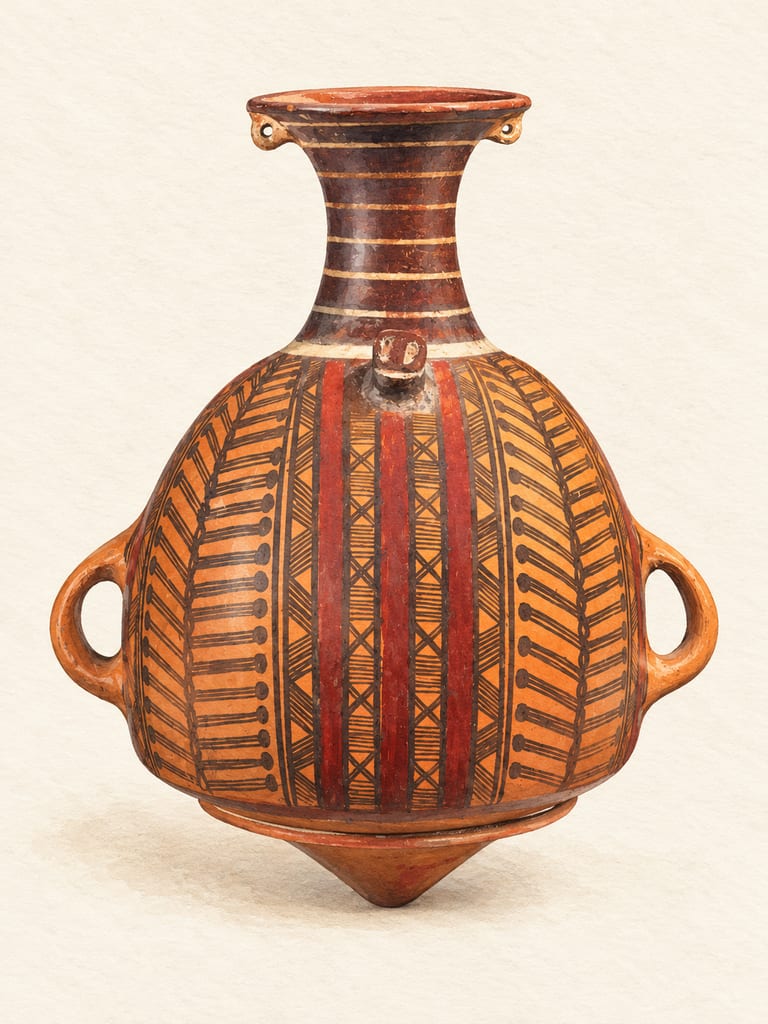
Urpu is an Inca ceramic jar with a globular body, high flared neck, carrying handles, shoulder lug and pointed base; museum examples show that size shaped whether a vessel served, carried or held chicha.
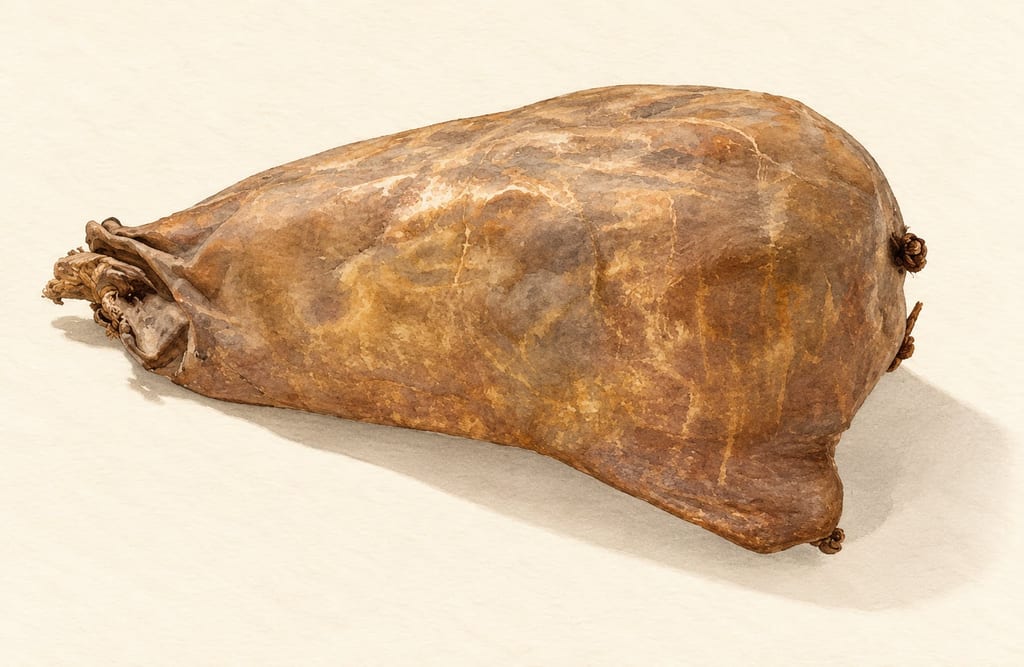
A surviving Australian Museum wallaby-skin water carrier made from a single hide, with a knotted, resin-tanned base and tied neck. Purchased in 1885; its maker, specific community and making date are not recorded.
Show on map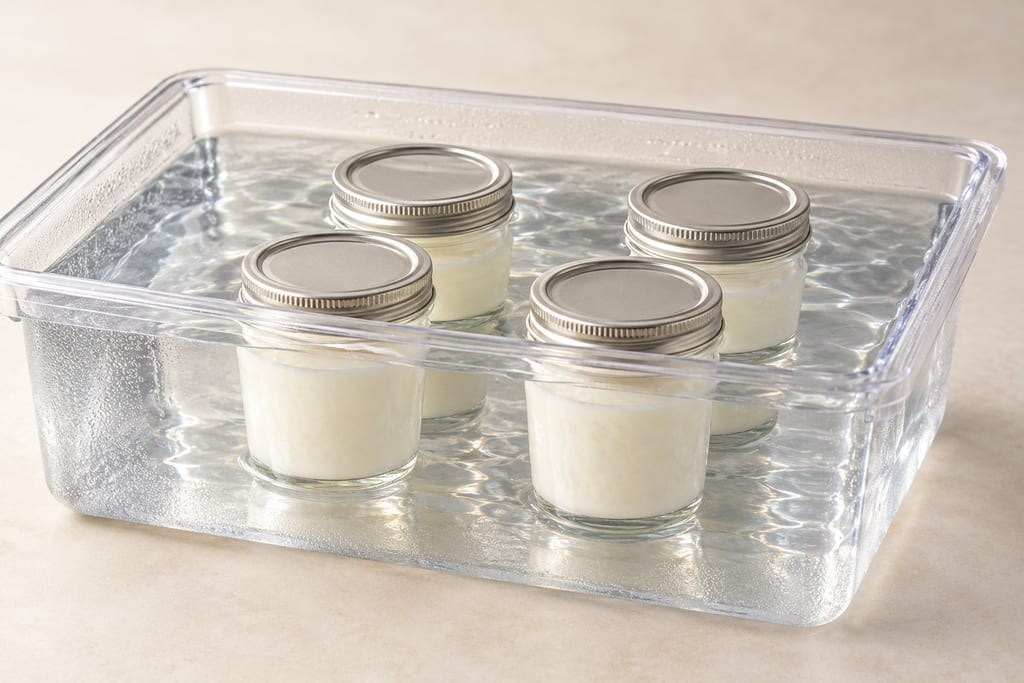
Small glass jars hold inoculated milk during warm-water yogurt incubation. The documented jar sizes and incubation setups vary by method; this is not canning equipment guidance.
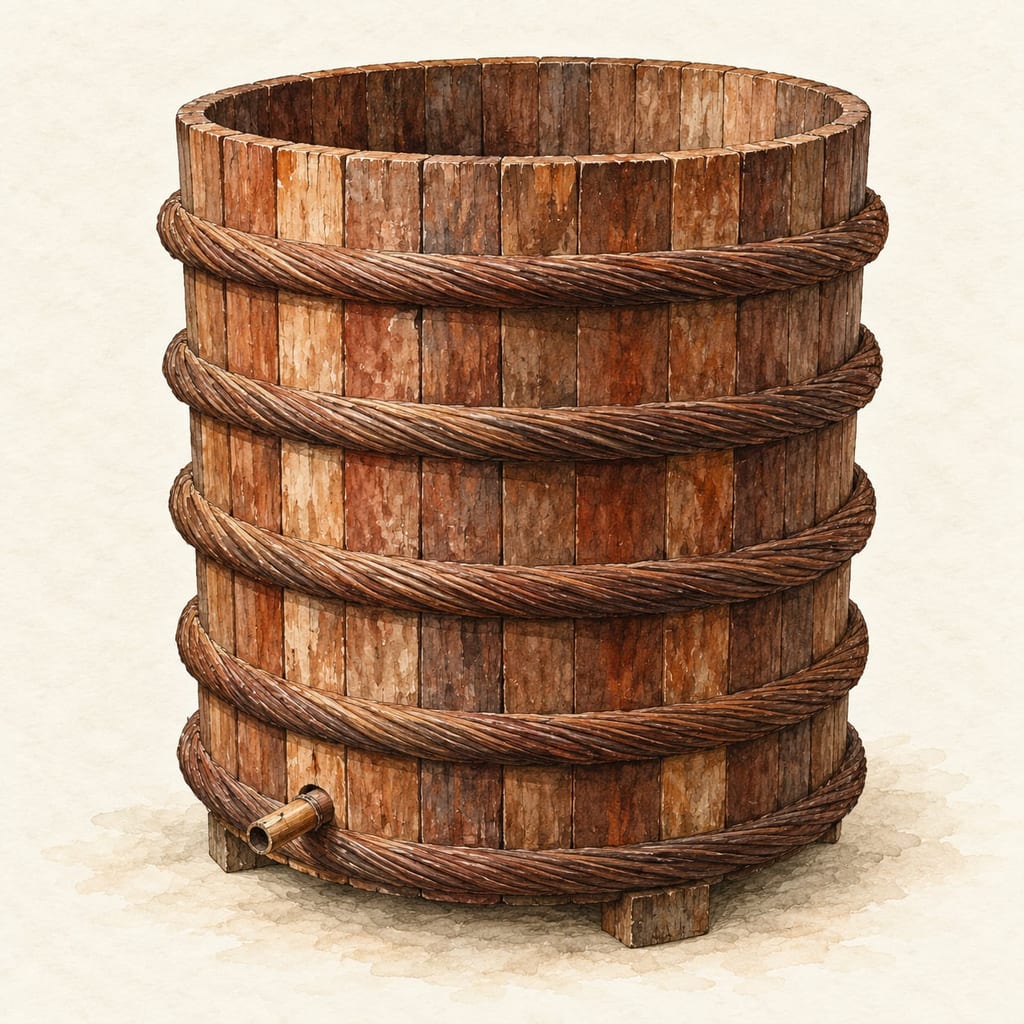
A large upright stave-built vat used in documented Vietnamese fish-sauce production, with a weighted or covered top and a low outlet for drawing liquid; Phu Quoc examples belong to a living regional craft.
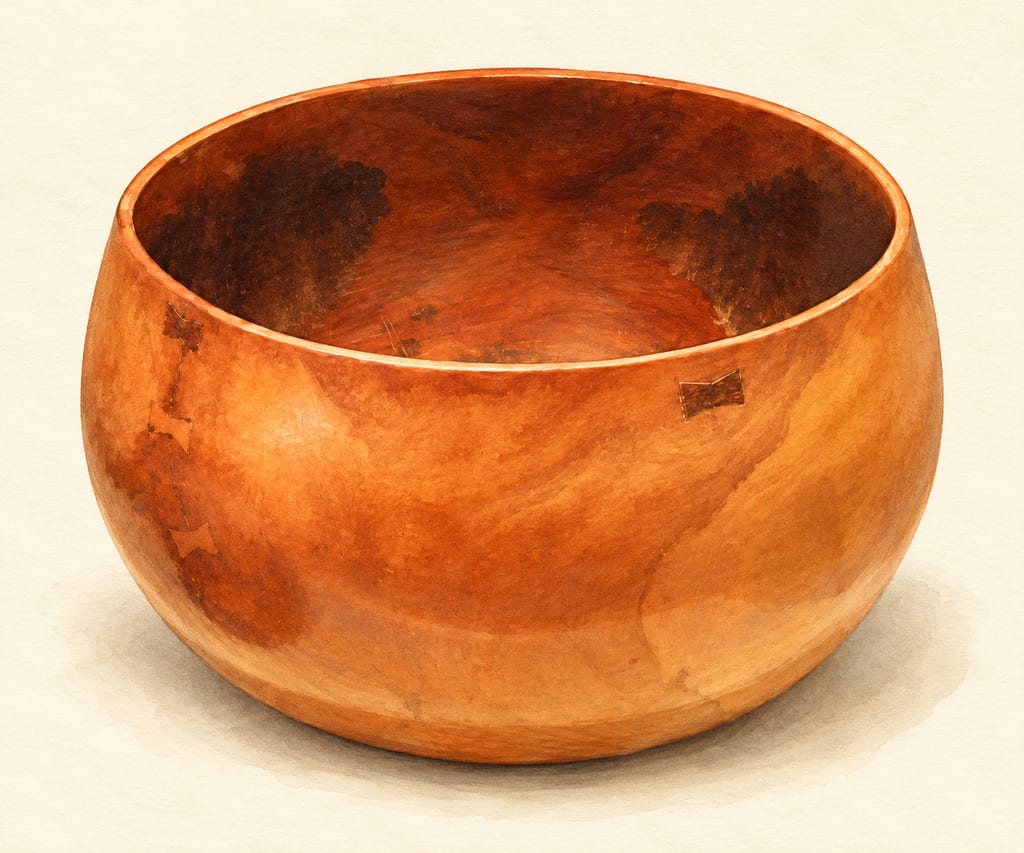
A Hawaiian bowl for holding, storing, and serving poi. ʻUmeke poi include carved wooden and gourd forms; their shape, material, and role vary by object and bowl type.
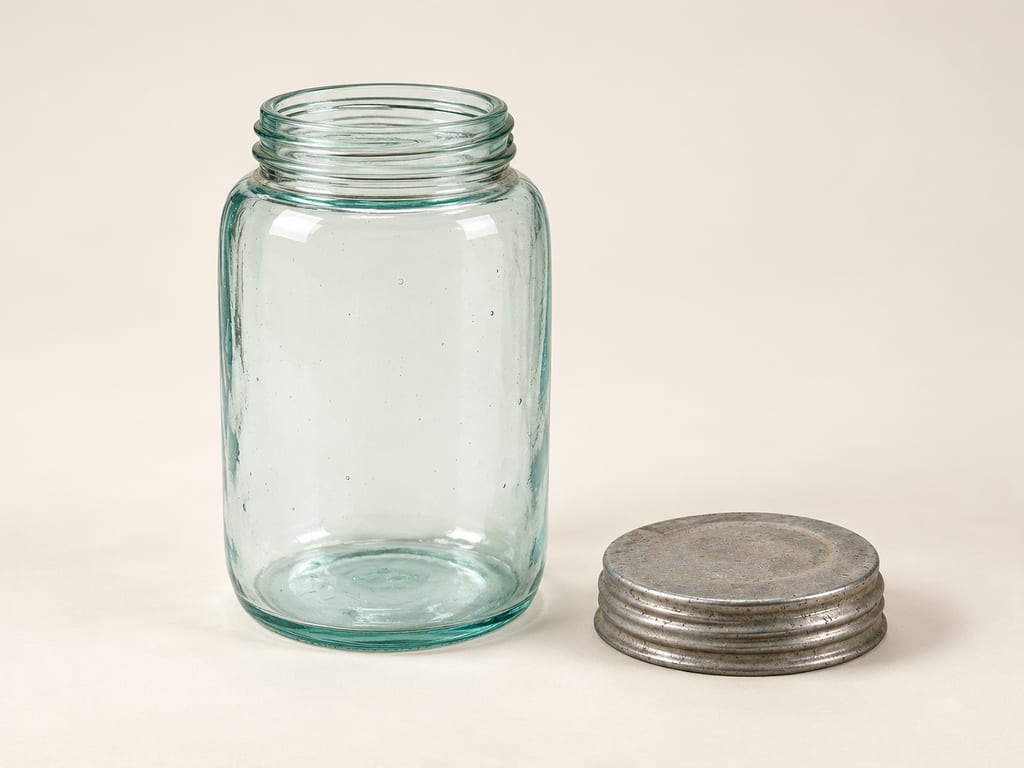
Threaded, heat-processing jars hold food and a fitted lid during a tested canning process; jar size and process belong to the specific recipe.
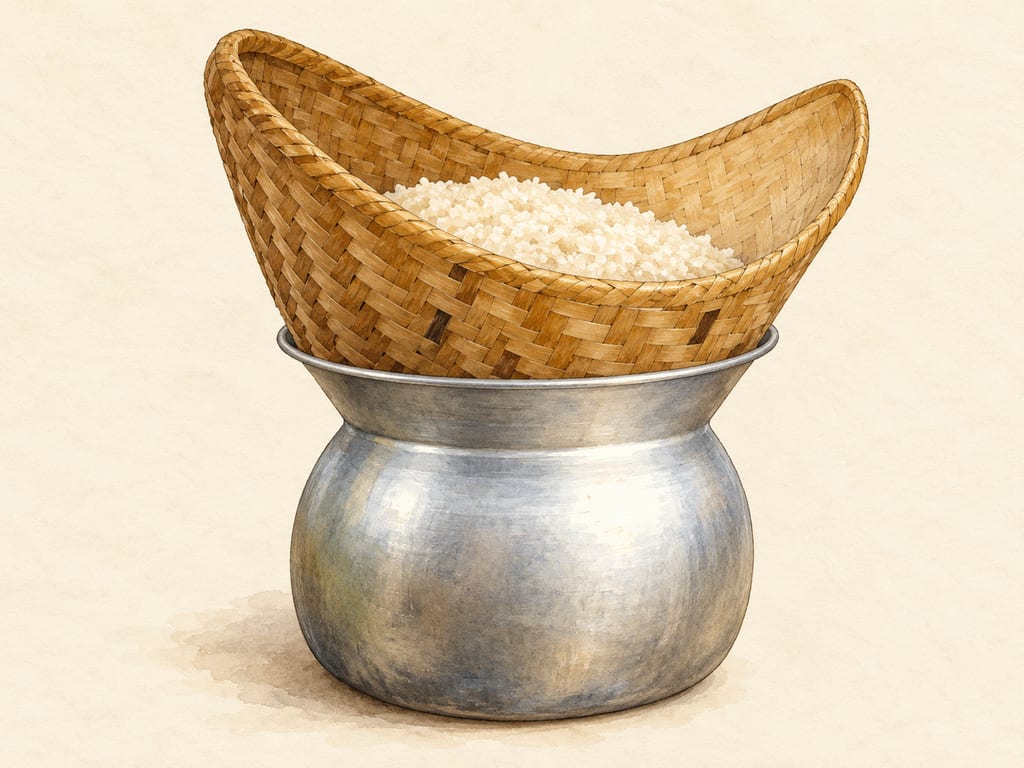
A woven upper basket used to steam Lao glutinous rice over a separate water pot. It holds the drained rice above the water; a different lidded basket, the katip khao, is used to carry and serve the cooked rice.
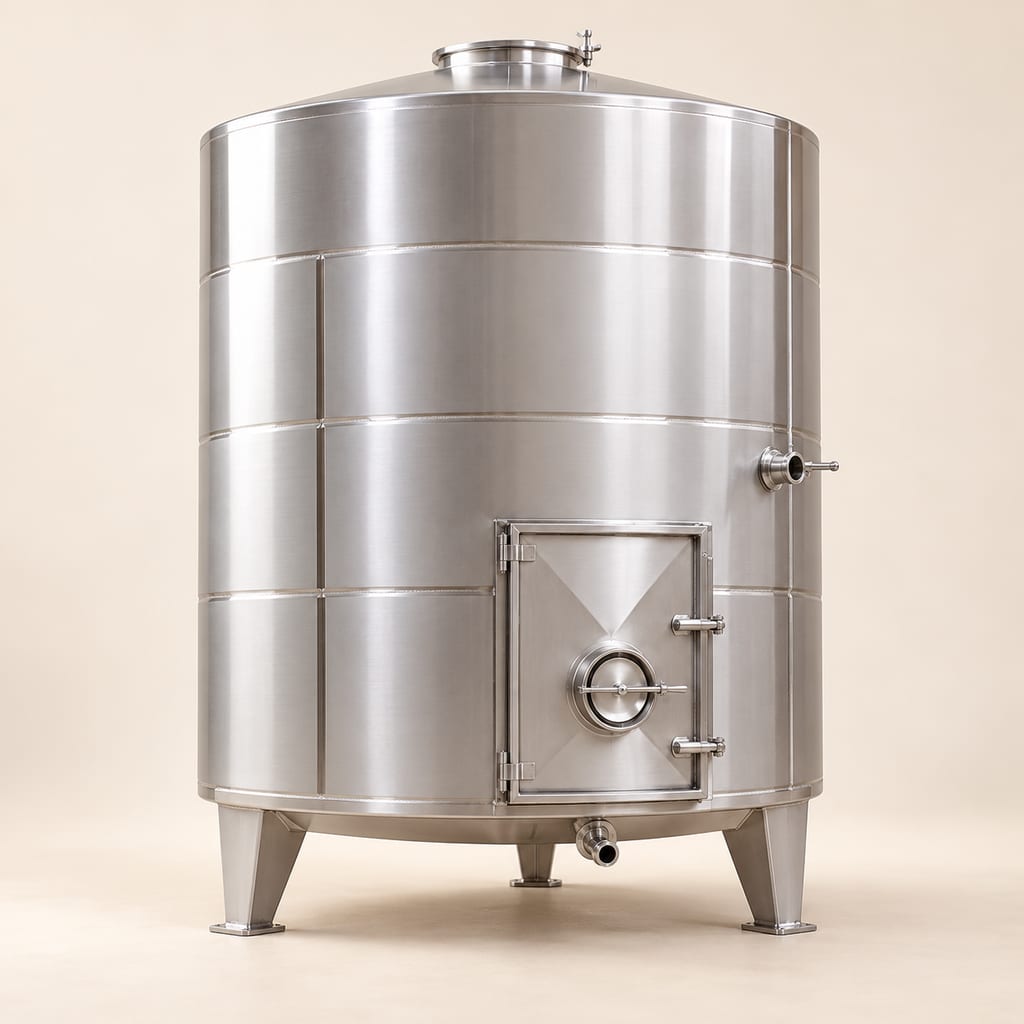
A modern stainless wine-fermentation tank whose bottom-level access on red-wine models helps remove grape skins and seeds; door, outlet, cooling and capacity details vary by model.
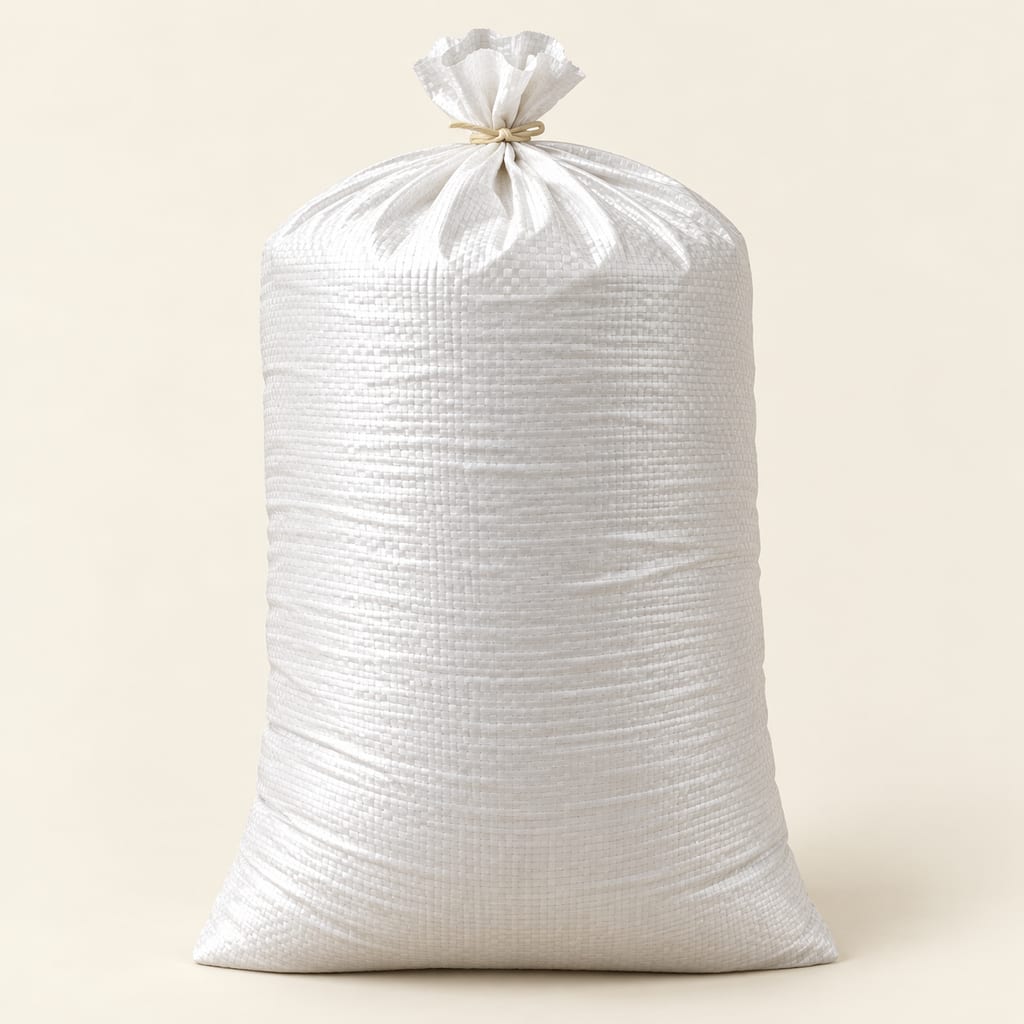
A hermetic grain bag stores suitably dried grain in an airtight, multilayer package. The PICS design pairs two inner liners with a woven outer sack; it is a storage tool, not a fermenter or dryer.
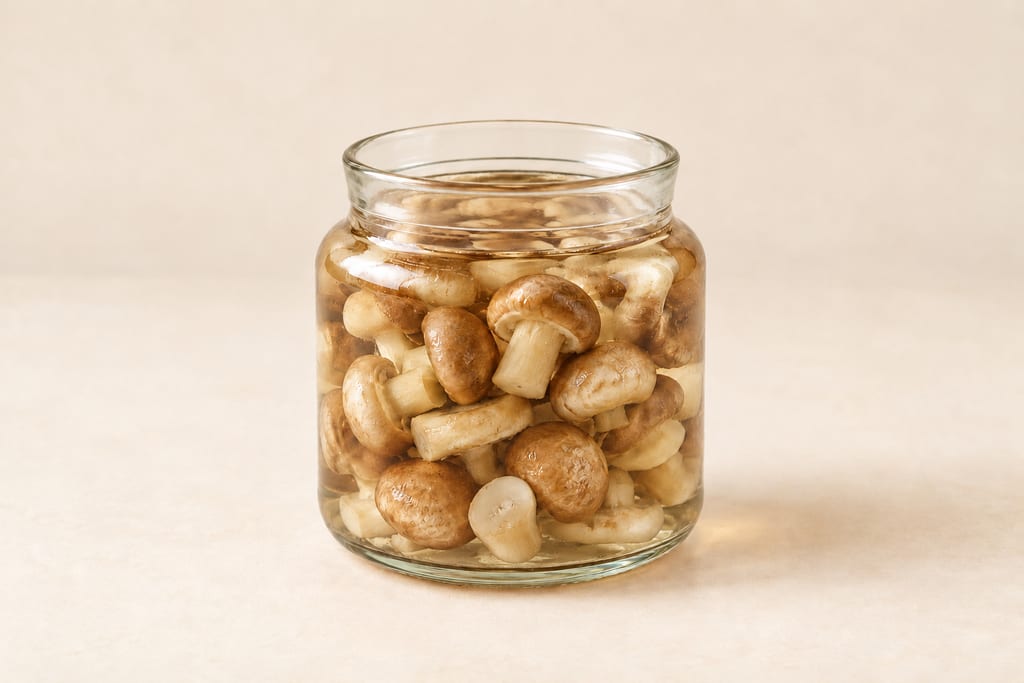
A clean, heat-tolerant food jar holds hot ingredients or liquor when a method calls for it. Its temperature limits depend on its design and maker; a jar does not make food shelf-stable.
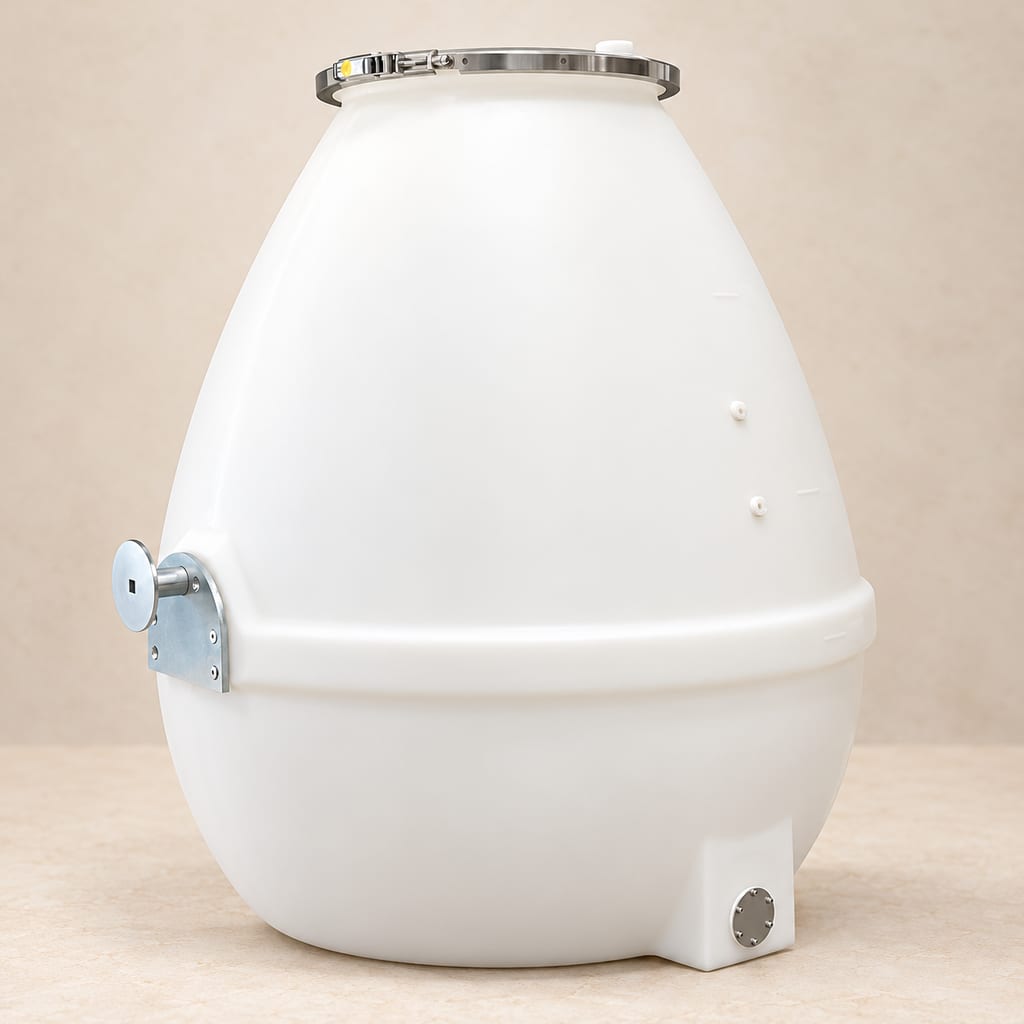
Flextank Apollo and Orion are PE vessels for beverage fermentation and maturation, engineered for stated oxygen transmission. Their material, scale and use differ from generic tanks, pressure-rated PET fermenters and coopered barrels.
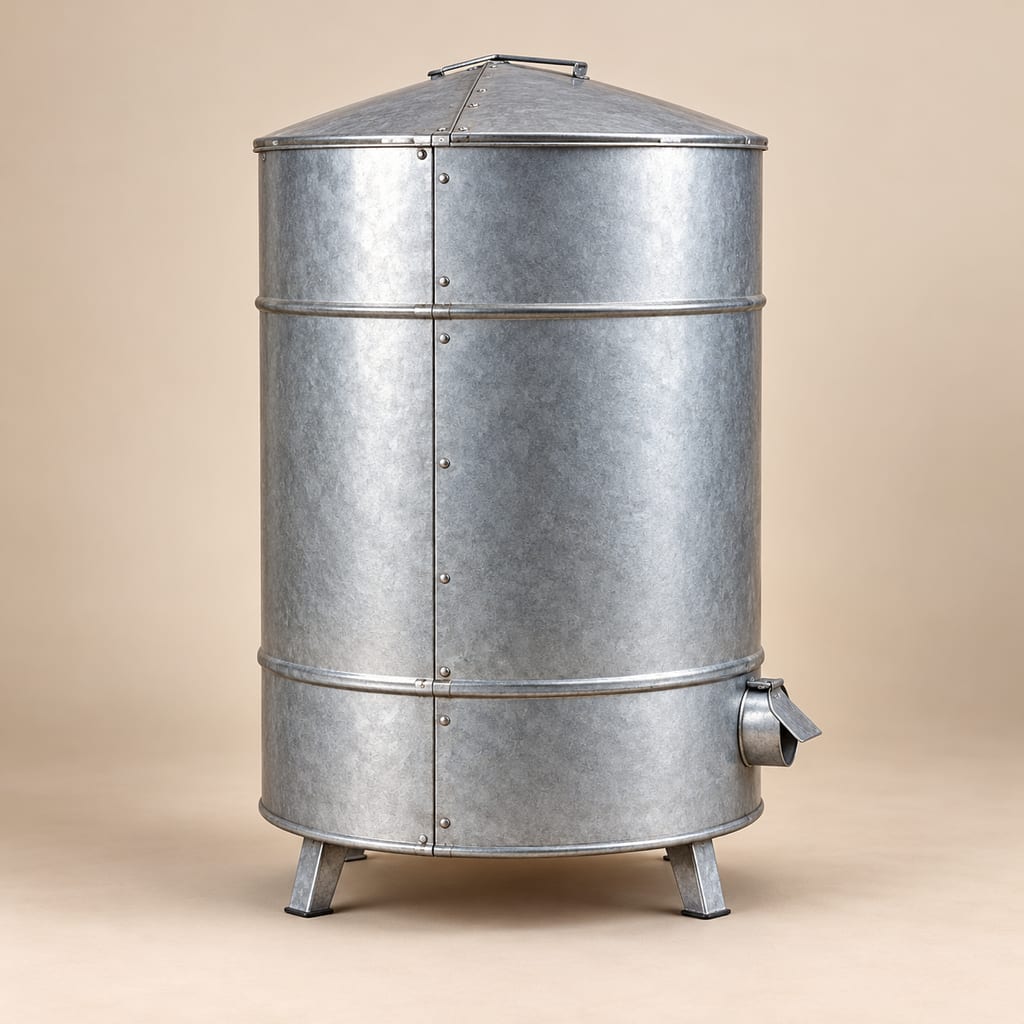
A locally fabricated galvanized-metal vessel for dry-grain storage. Household models sit on raised platforms and seal at inlet and outlet; they are movable containers, not granary buildings or fixed industrial installations.
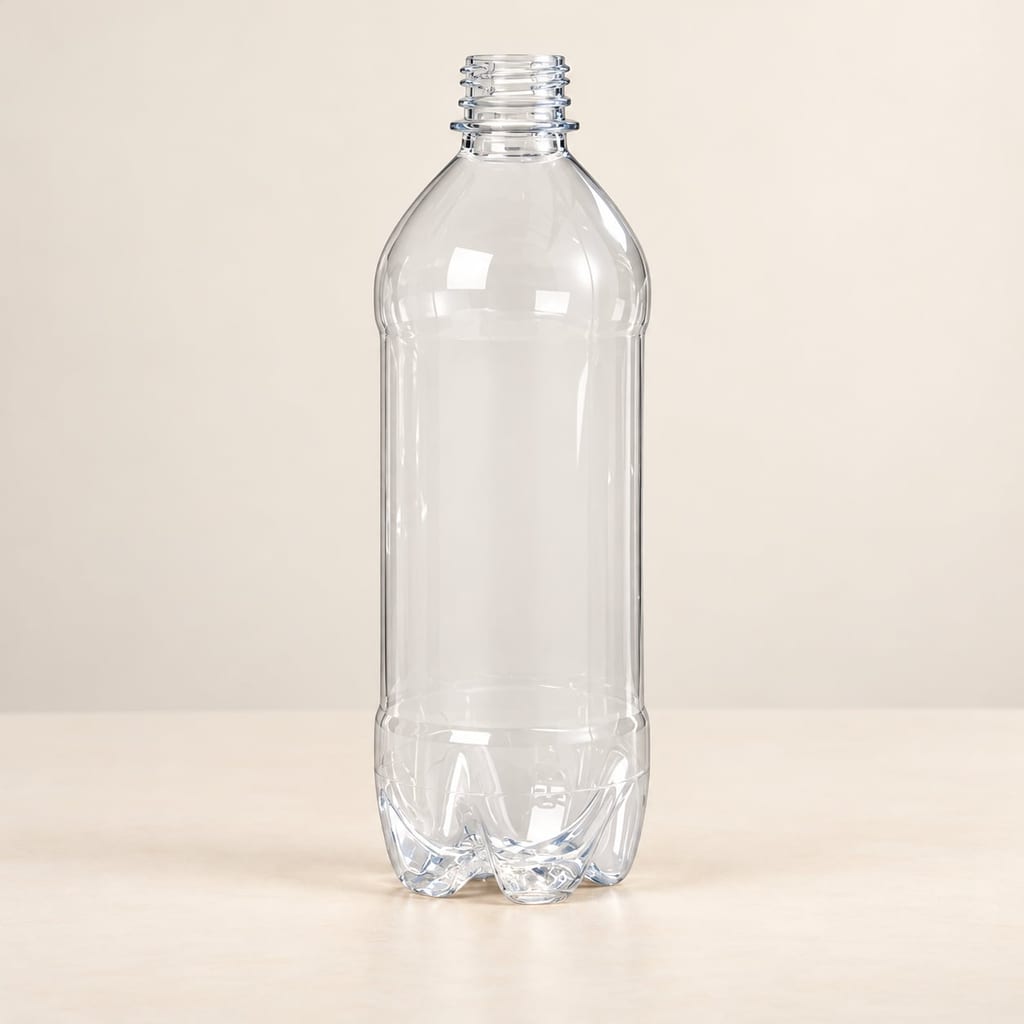
Bottles and other packages made and specified to contain carbonated or actively fermenting drinks. A package rating belongs to its exact design and use; it does not make ordinary jars or bottles suitable for pressure.
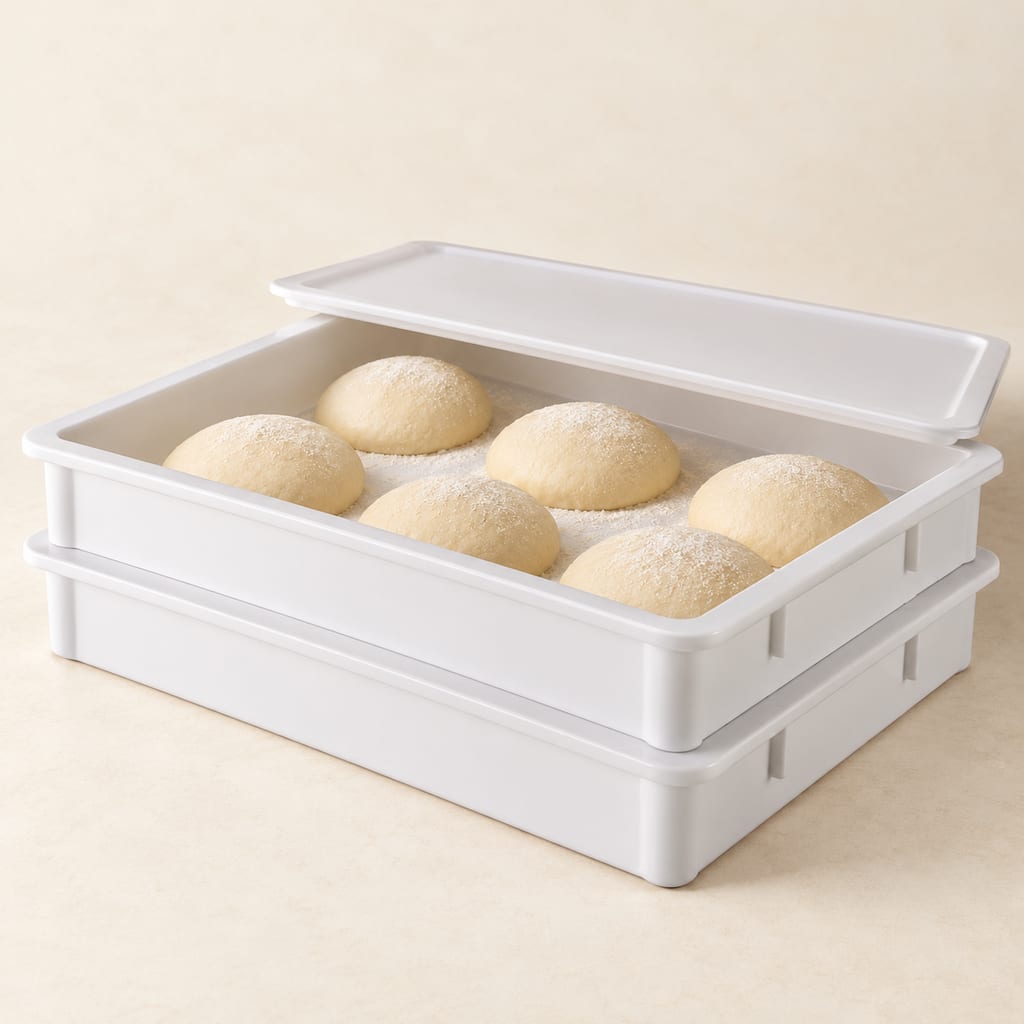
A dough fermentation box is a shallow or deeper food container for holding dough during a rise or proof. Its job is to contain, cover and move dough; it does not provide the controlled heat of a bread proofer.
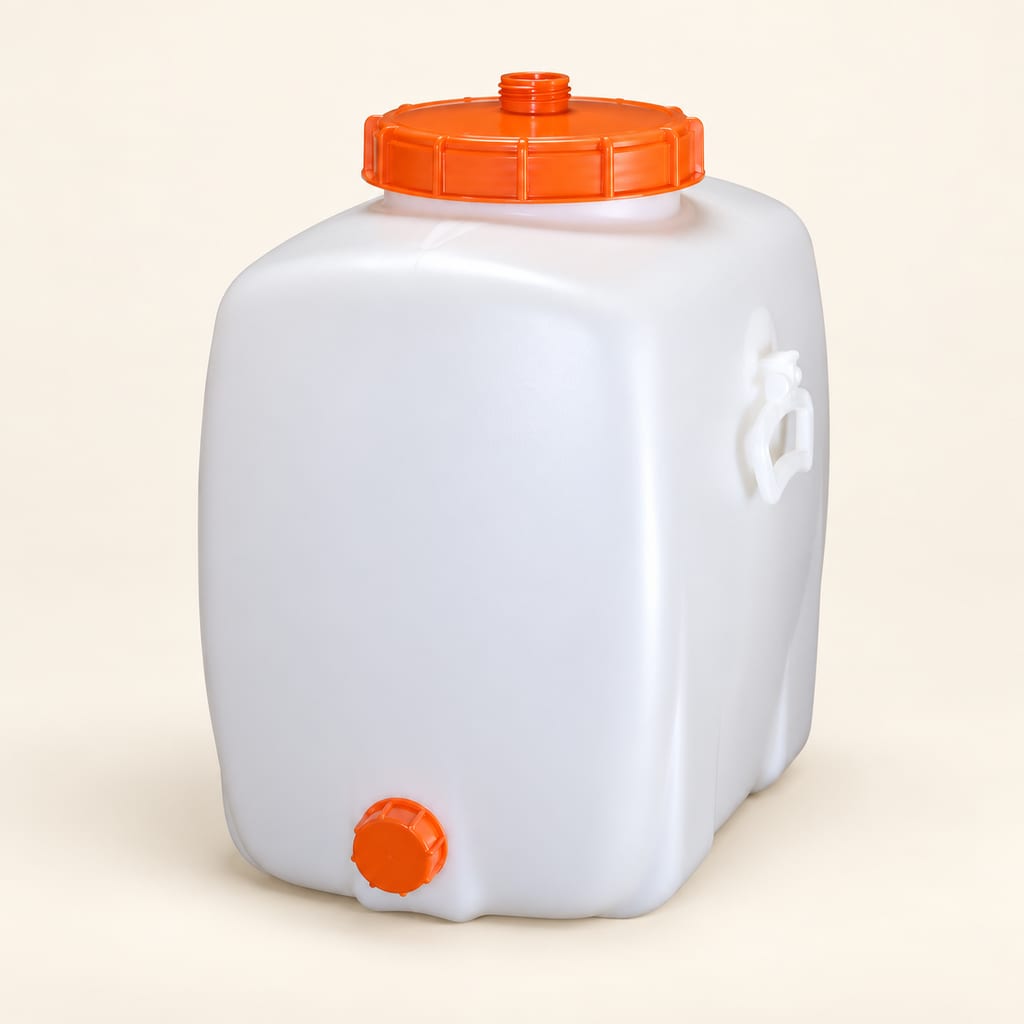
An oval, broad-shouldered polyethylene vessel sold by Speidel as a beverage barrel. Its 60-litre example has a large closure, molded side grips and a lower outlet cap; it is distinct from an open homebrew pail and a coopered wooden cask.
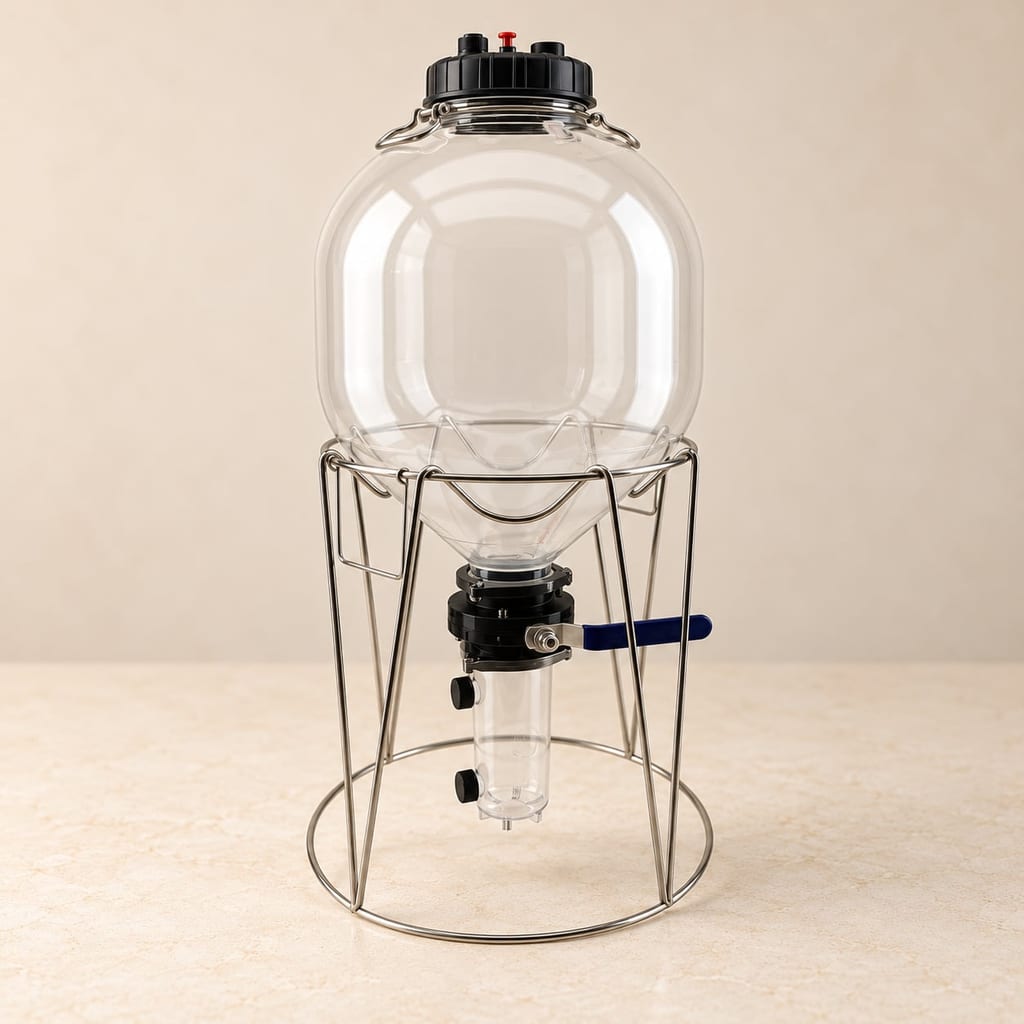
A purpose-built PET fermenter is engineered for a specific pressure range, closure and fittings. The FermZilla Tri-Conical is one modern example; its rating does not extend to ordinary PET bottles or other vessels.
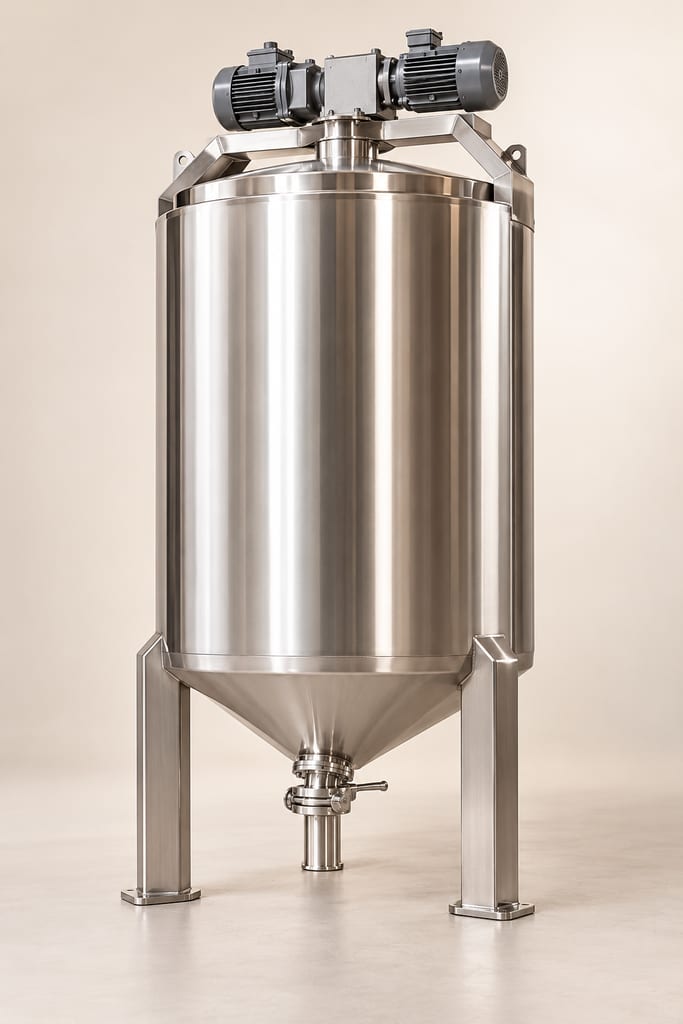
Contemporary vessels used to ferment coffee cherries or pulped coffee with restricted air exchange. Drums, rigid tanks and hermetic bags differ in material and monitoring; “anaerobic” alone does not describe a batch's conditions.
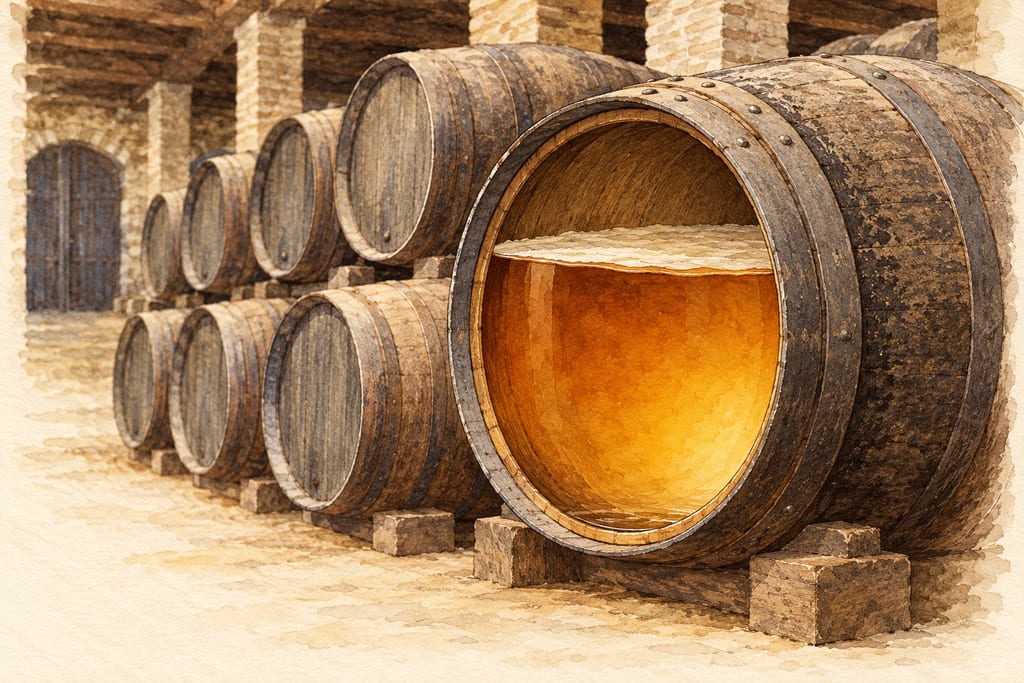
A Jerez bota is a coopered oak butt used for wine ageing. In a criaderas-and-solera array, butts at successive ages are arranged in scales and partly drawn and replenished; the bota's capacity and fill depend on the documented system.
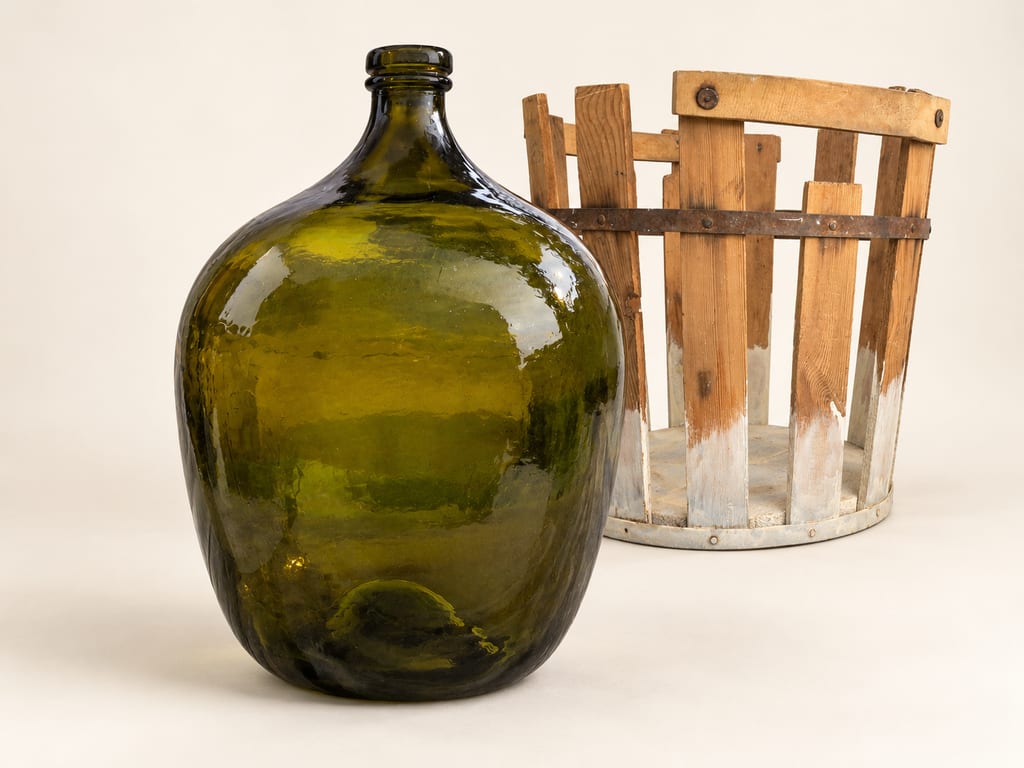
A glass demijohn or carboy is a stout, usually rounded bottle with a narrow neck, used for beverage fermentation, maturation, storage or transport. Its glass body, closure and any protective carrier are distinct parts of the vessel system.
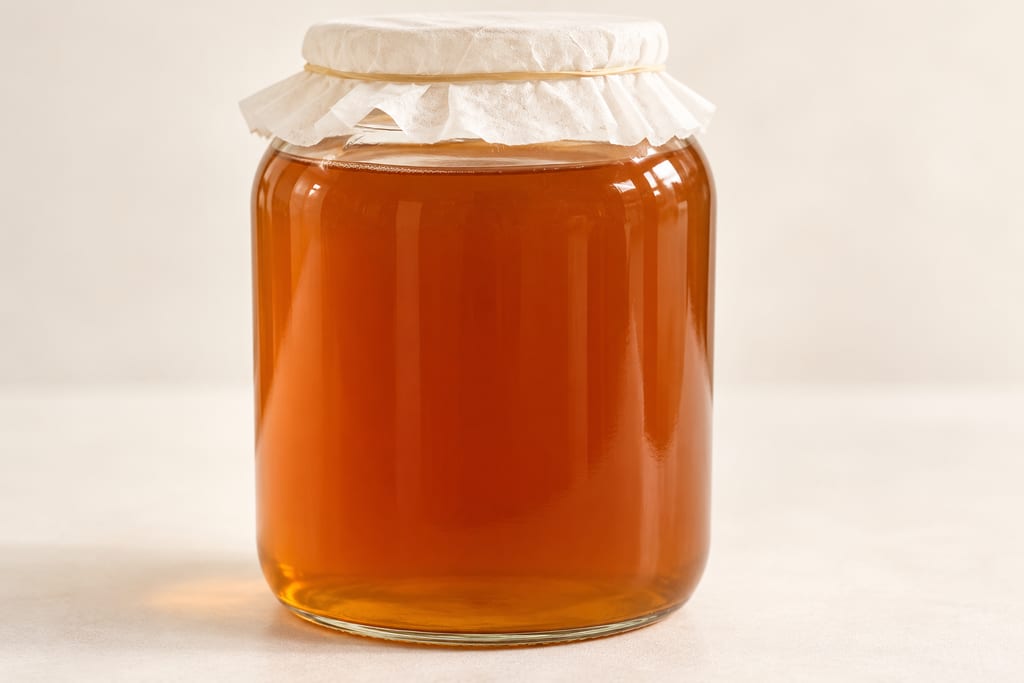
A wide-mouth jar or broader tank holds sweetened tea beneath a breathable cover as kombucha acidifies at an oxygen-accessible surface. Surface area relative to liquid volume can change oxygen transfer and fermentation.
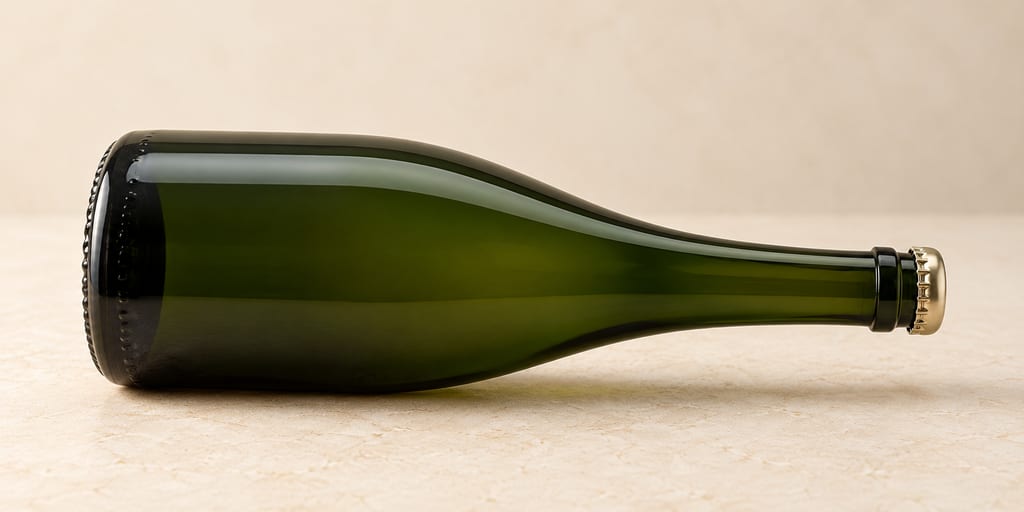
Champagne’s traditional-method bottle holds wine through its second fermentation and subsequent maturation on lees. At tirage it has a crown cap and internal insert; bottle formats and specifications vary.
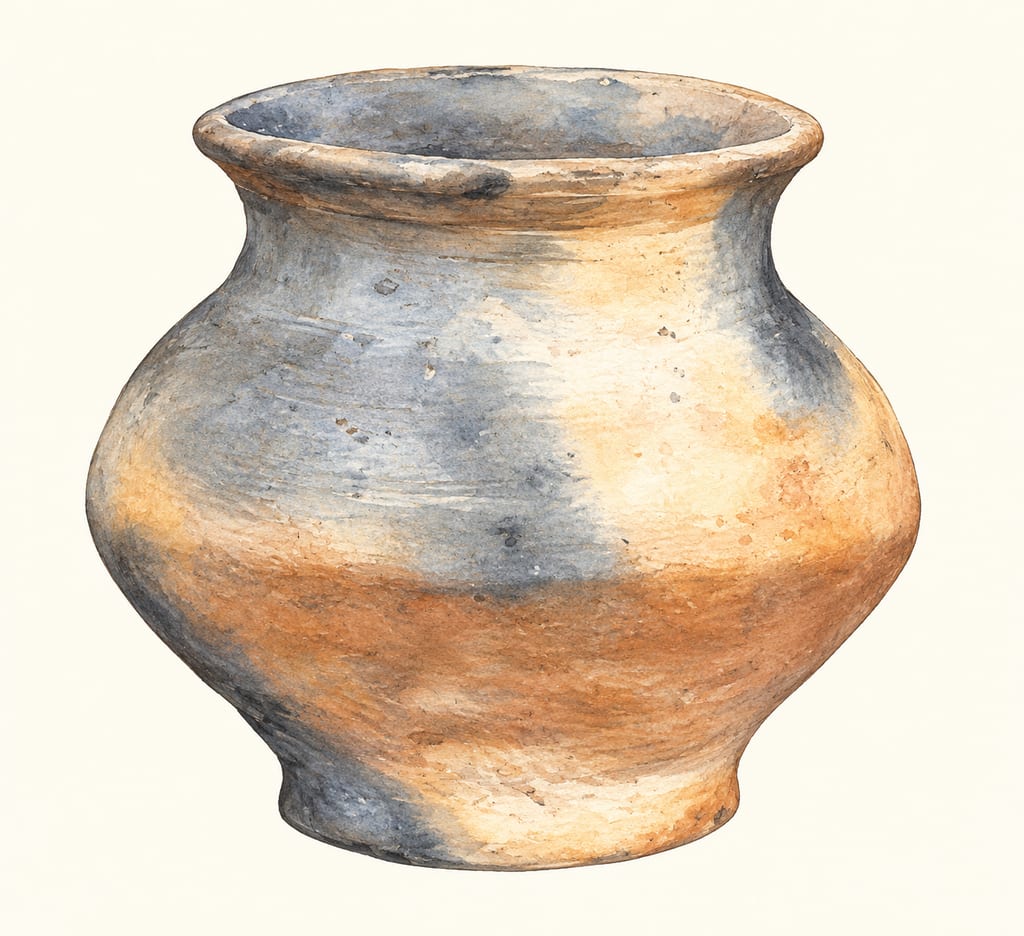
A muits is a large Shuar clay vessel associated with chicha. The Sucumbíos life-plan gives its size and profile; sources describe both storing and fermenting chicha, but do not establish one uniform form or use across Shuar communities.
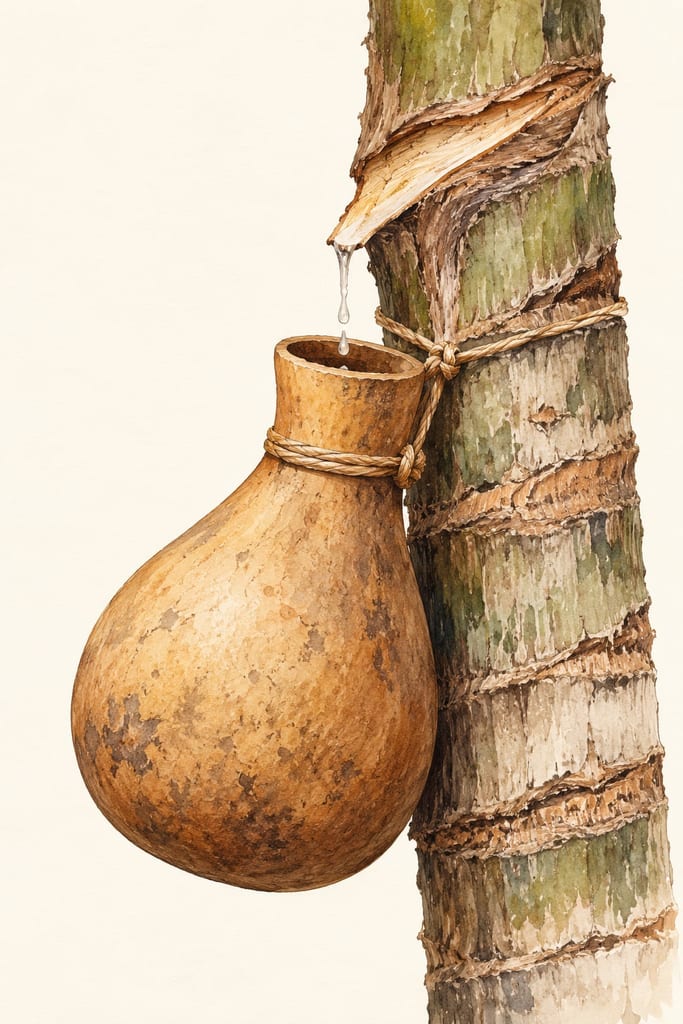
A hollowed gourd tied below a palm opening to collect sap. Sierra Leone records a Limba bulle/buli; Nso sources describe a calabash steadied by stick and plant material. These are related local forms, not one standard design.
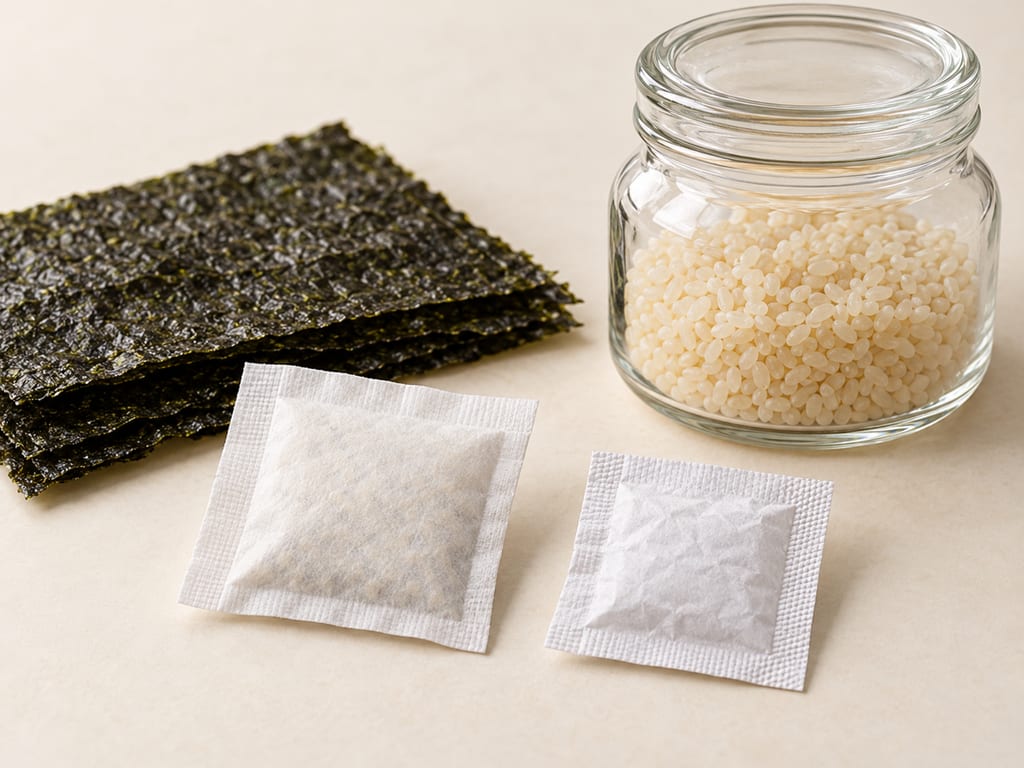
Sachets can remove oxygen or absorb water vapour in a sealed package. They help manage suitable dry foods, but cannot replace adequate drying, a sound seal or a validated preservation method.
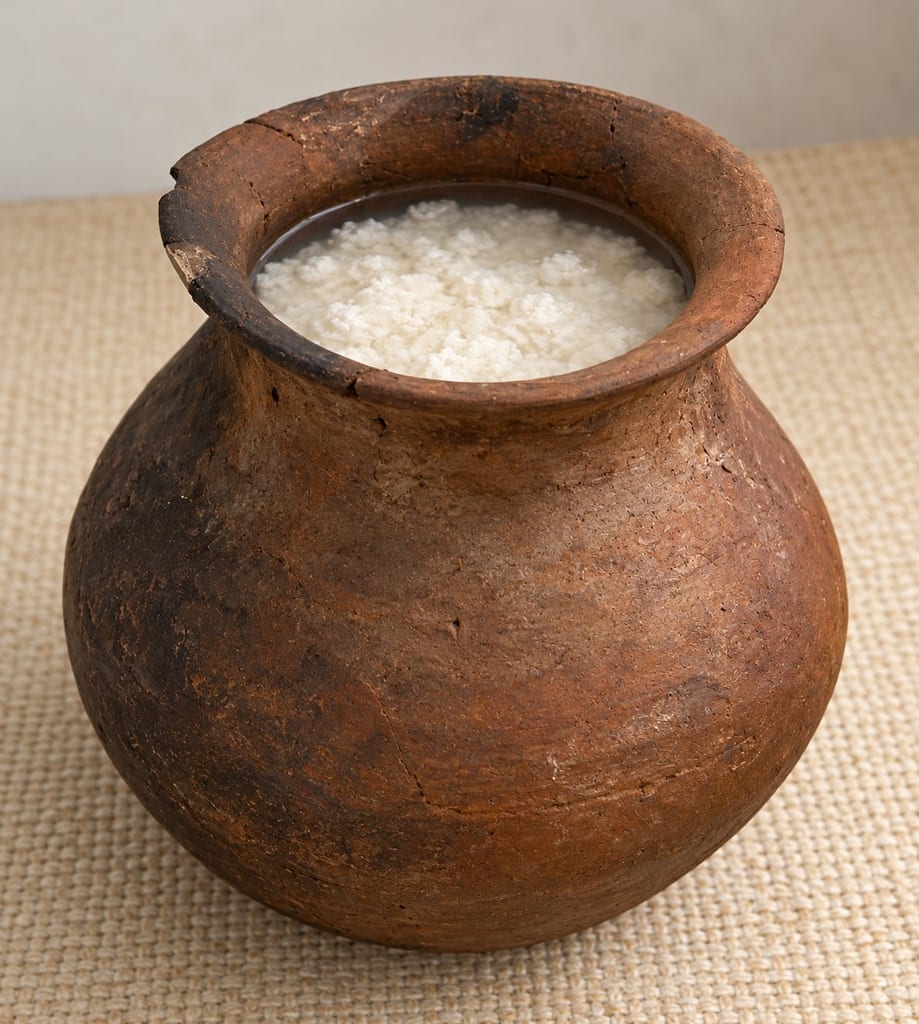
In lowland Papua New Guinea, sago starch may be kept beneath water in a pot, saucepan or bucket. The method is documented in East Sepik; moist storage can support spontaneous fermentation but does not guarantee it or safety.