











































Elevated risk
Steam-extracted fruit juice
Clear juice that a stacked steam juicer draws out of ripe fruit by steam alone, without crushing it. It is the base for jelly, syrup or cordial and still needs its own keeping step.
 FermenteaWhere food goes to change
1504 records with their sources, across 11 categories.
Clear juice that a stacked steam juicer draws out of ripe fruit by steam alone, without crushing it. It is the base for jelly, syrup or cordial and still needs its own keeping step.
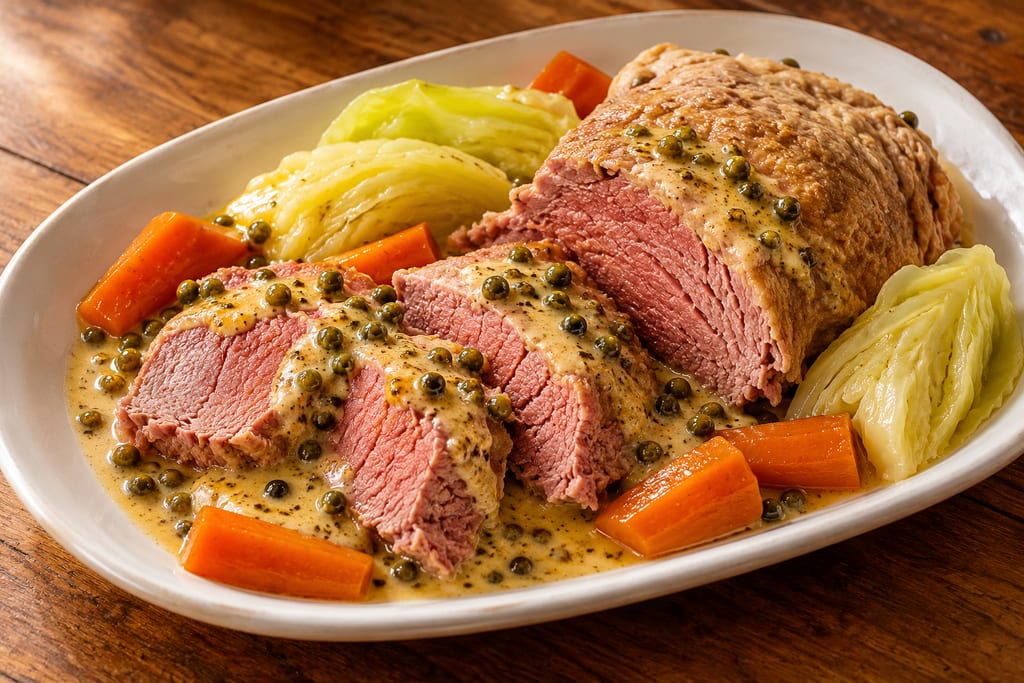
A Karoo-style festive dish of already cured salt beef simmered with vegetables and aromatics, served with a cream sauce of brined green peppercorns and wholegrain mustard.
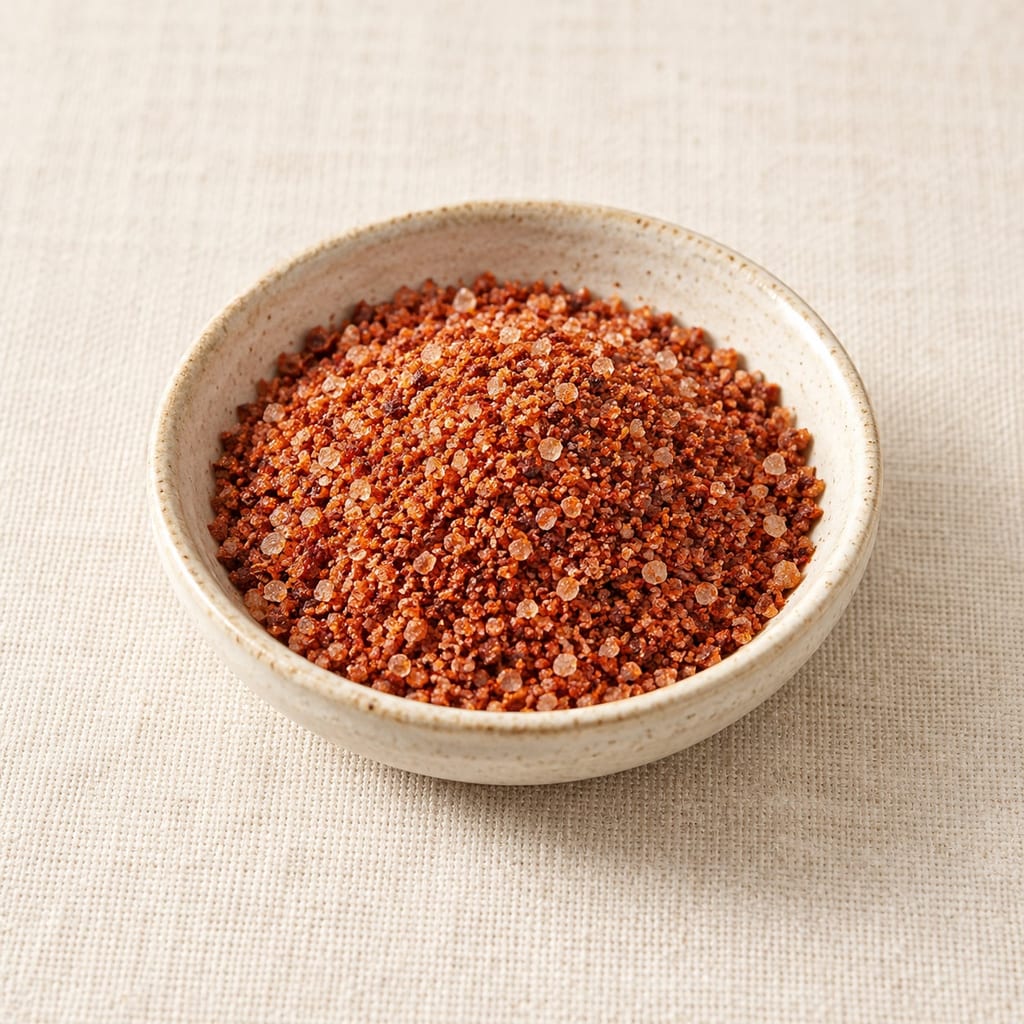
A dry Mexican seasoning of maguey worm, salt and chile, most closely associated in published accounts with Oaxaca and commonly served with mezcal, citrus and fruit.
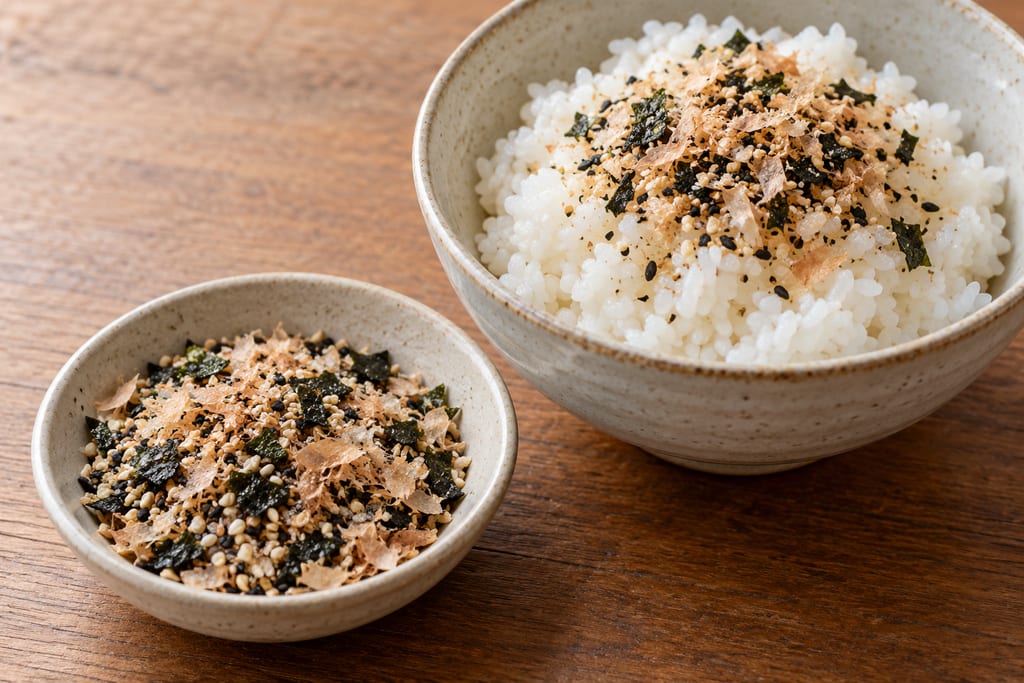
A dry Japanese rice seasoning of sesame, bonito, nori, sugar and salt. This documented home blend is one specific formula within a varied category with several early product histories.
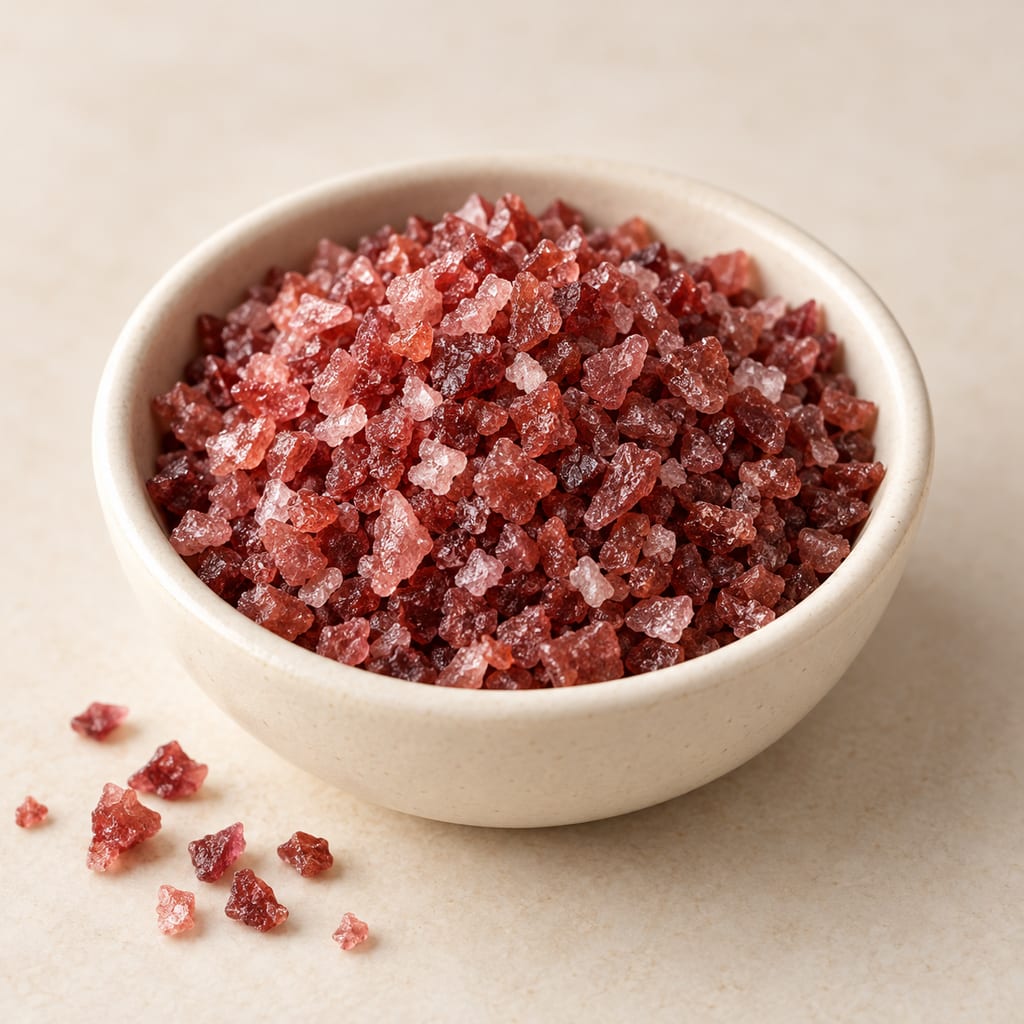
Wine-infused salt is coarse food salt carrying wine colour and aroma after a wine-and-salt mixture is reduced and dried. This version follows a Missouri Wines method at a one-to-three salt-to-wine ratio.
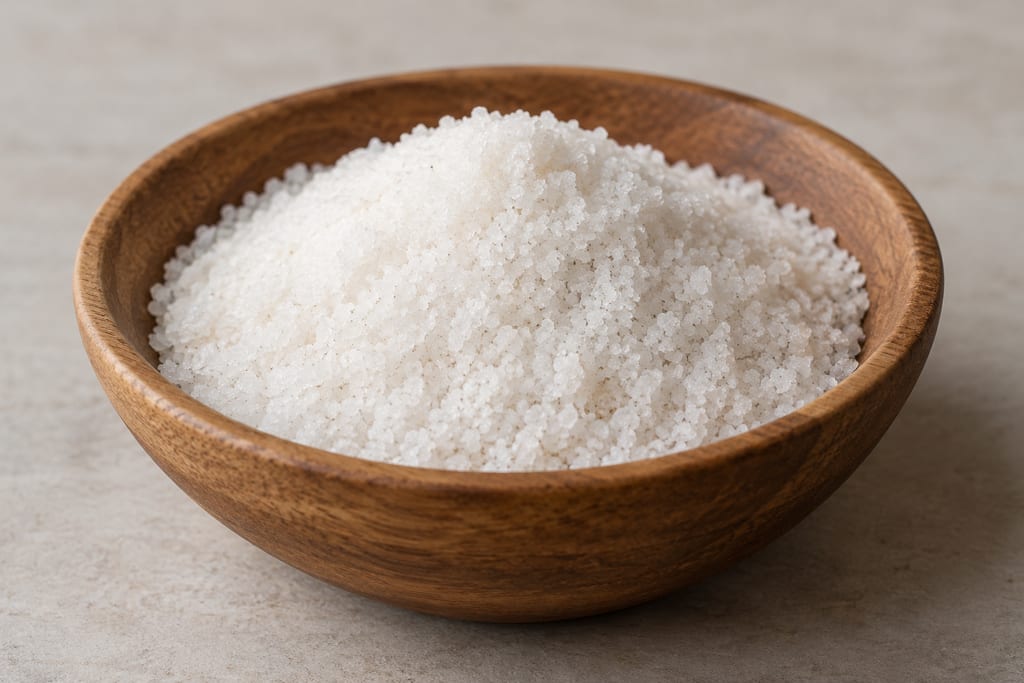
Asin sa buy-o is a fine sea salt made in Panayunan, Botolan, and packed in a woven nipa pouch called a buy-o. Salt-bearing coastal earth is leached with seawater, and the brine is boiled to crystals.
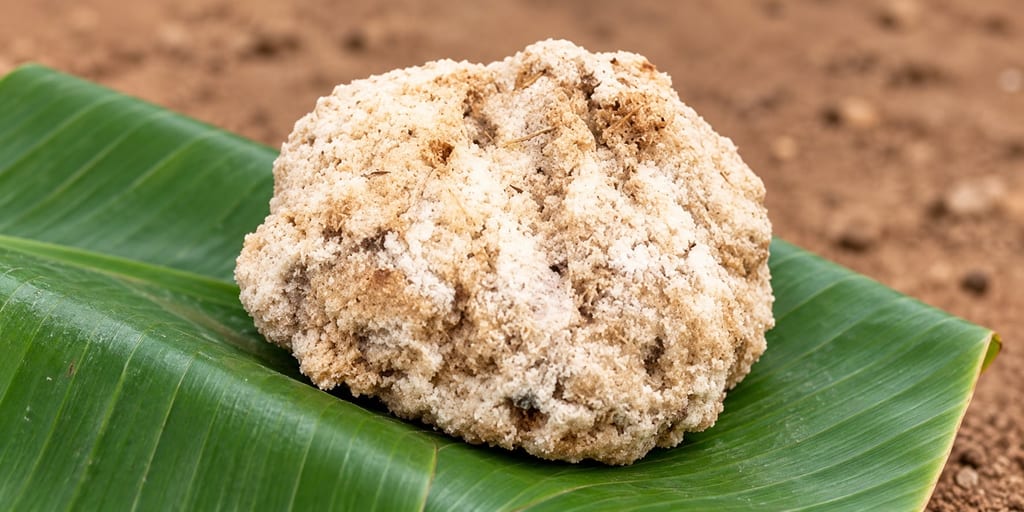
Nzoia River reed salt is a Bukusu seasoning made by leaching and evaporating the ash of mature muchua reeds. Its sources document a local method, but provide neither a measured formula nor verified mineral composition.
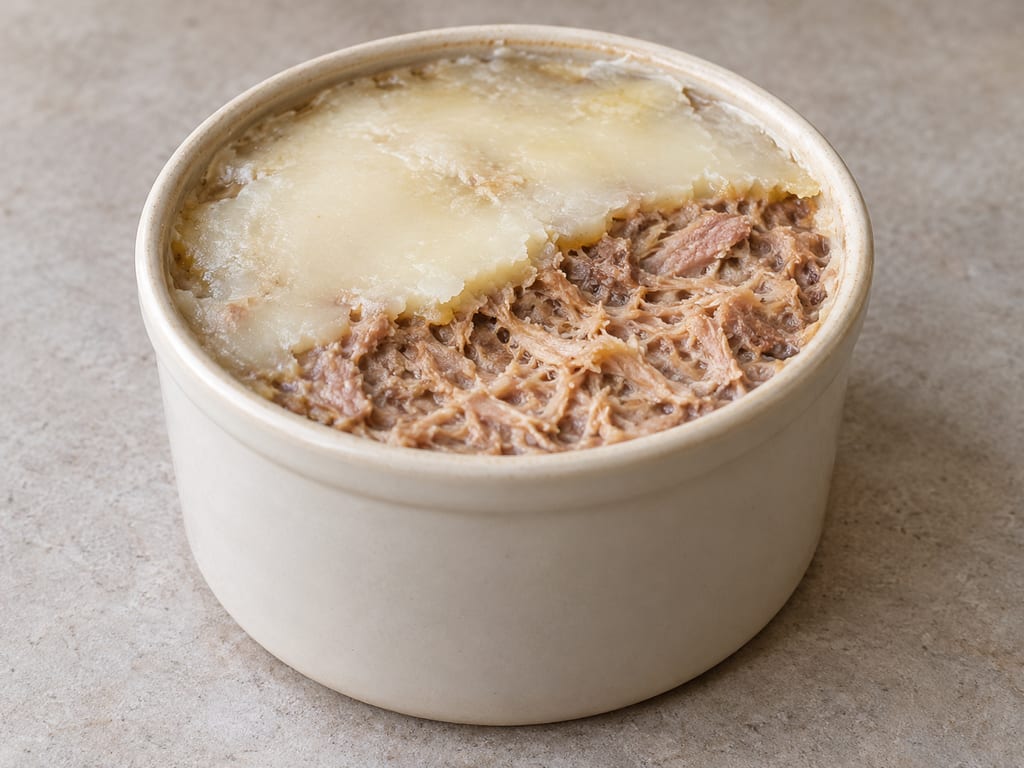
Cooked meat or fish shredded or pounded, packed into pots and covered with fat. Heat, salt, moisture reduction and the fat cover work together, and the texture separates rillettes from whole-piece confit.
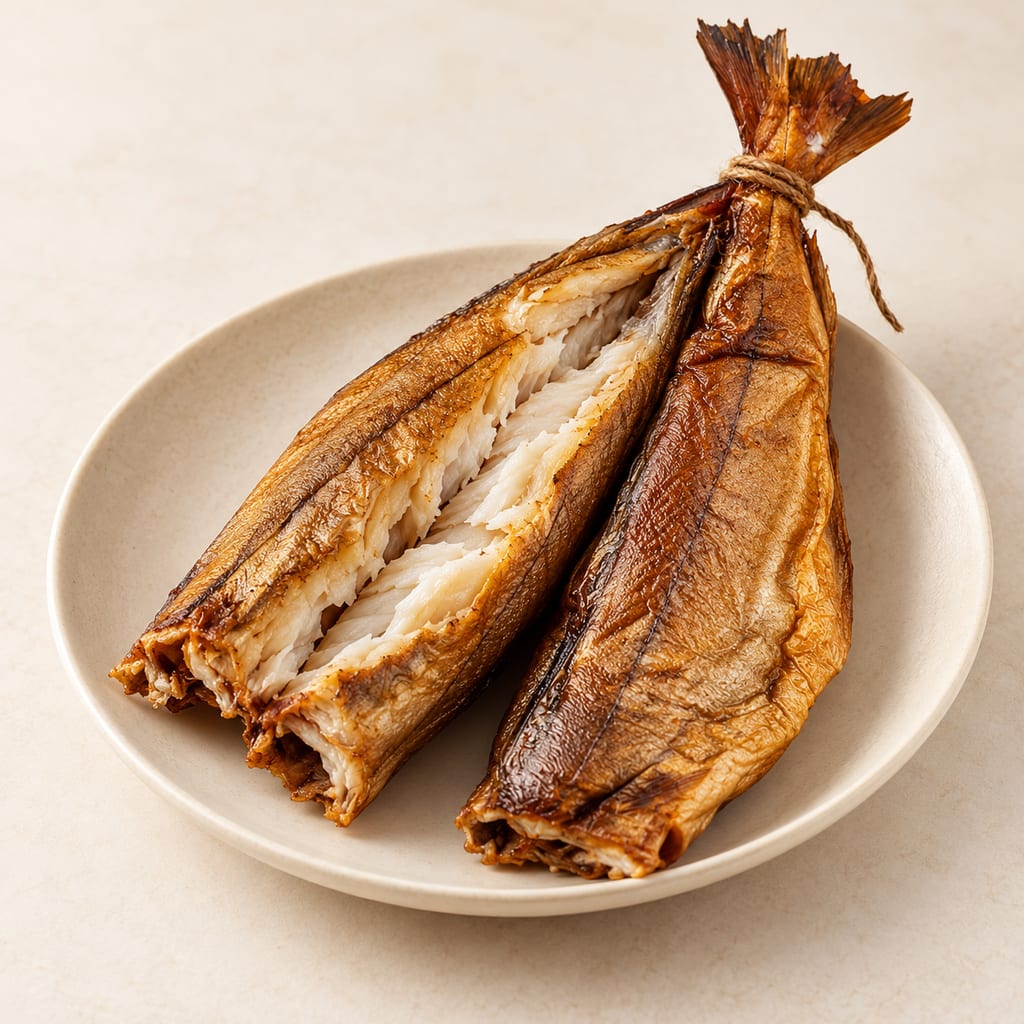
Arbroath smokies are whole haddock dry-salted, paired by the tail and hot-smoked in a protected coastal area. Their recorded history links Auchmithie and Arbroath, though the exact origin is unsettled.

South Africa's regulated grilling-sausage class, looser than boerewors: a minimum of 40% meat, vegetable protein and mechanically recovered meat allowed, and sold raw.

Zacusca is a Romanian and Moldovan spread of roasted eggplant and sweet peppers cooked down with onion, tomato and oil, made in quantity in autumn and kept in jars for winter.
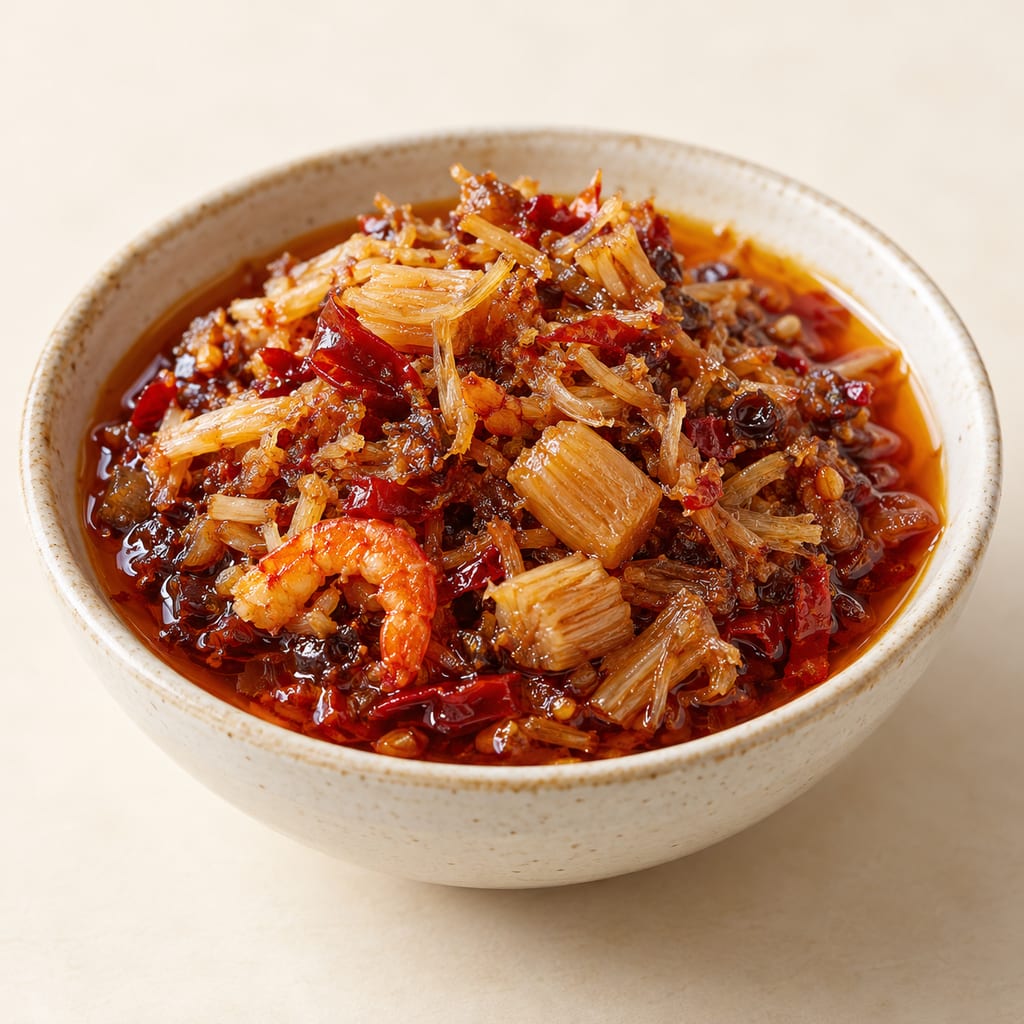
XO sauce is a Hong Kong condiment of dried scallop and shrimp, chilli, aromatics and oil, cooked rather than fermented, whose restaurant and home versions differ widely.
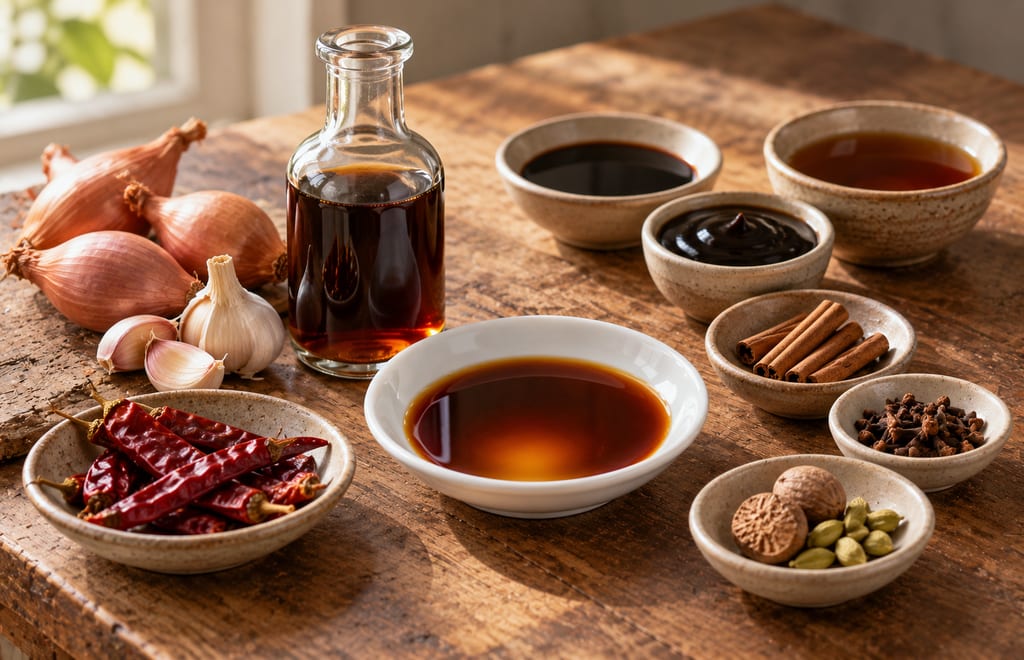
A thin, dark, sharply savoury table sauce associated with Worcester, England. This recipe preserves one historical formula printed in 1932 and distinguishes it from modern proprietary Worcestershire sauces.
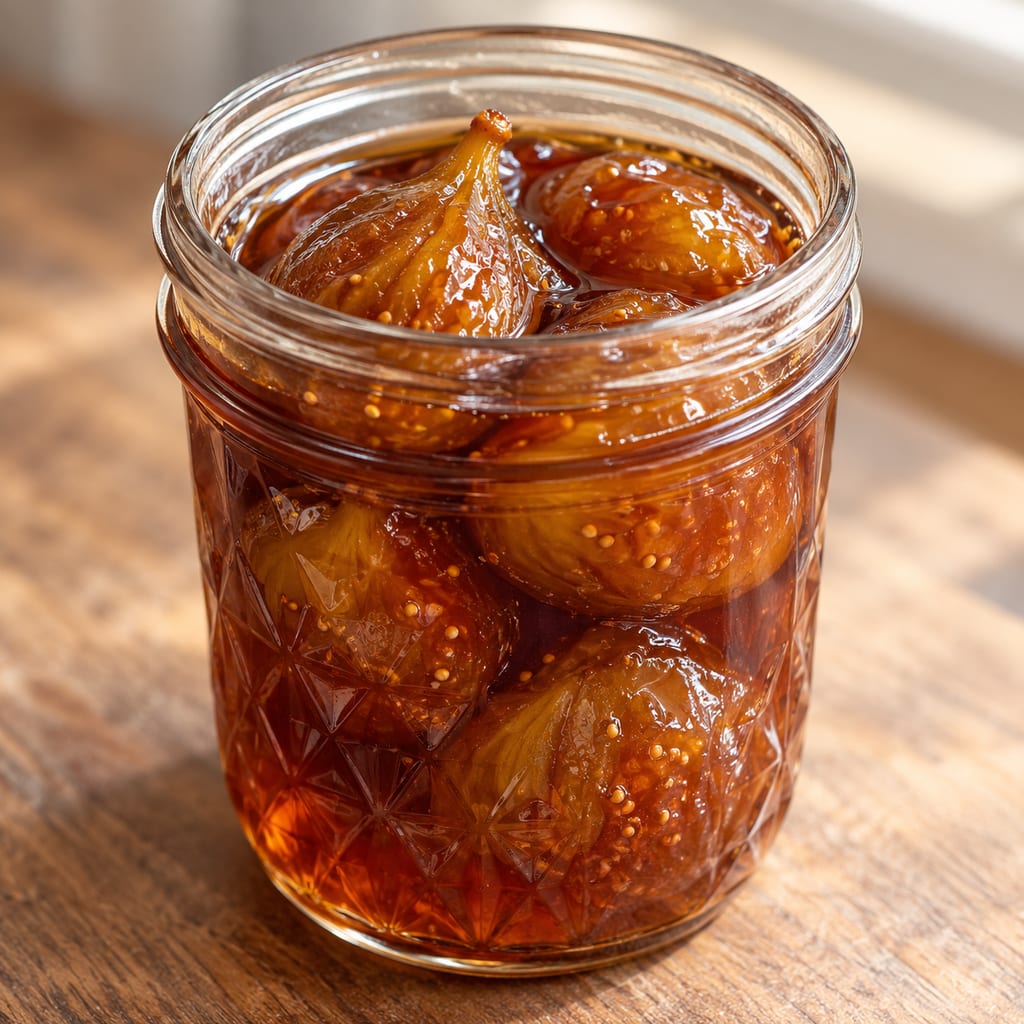
Whole figs are softened, cooked in a measured sugar syrup, rested in the refrigerator, then reheated and canned. This NCHFP formula specifies the fruit and syrup quantities, optional lemon and elevation-adjusted water-bath schedule.
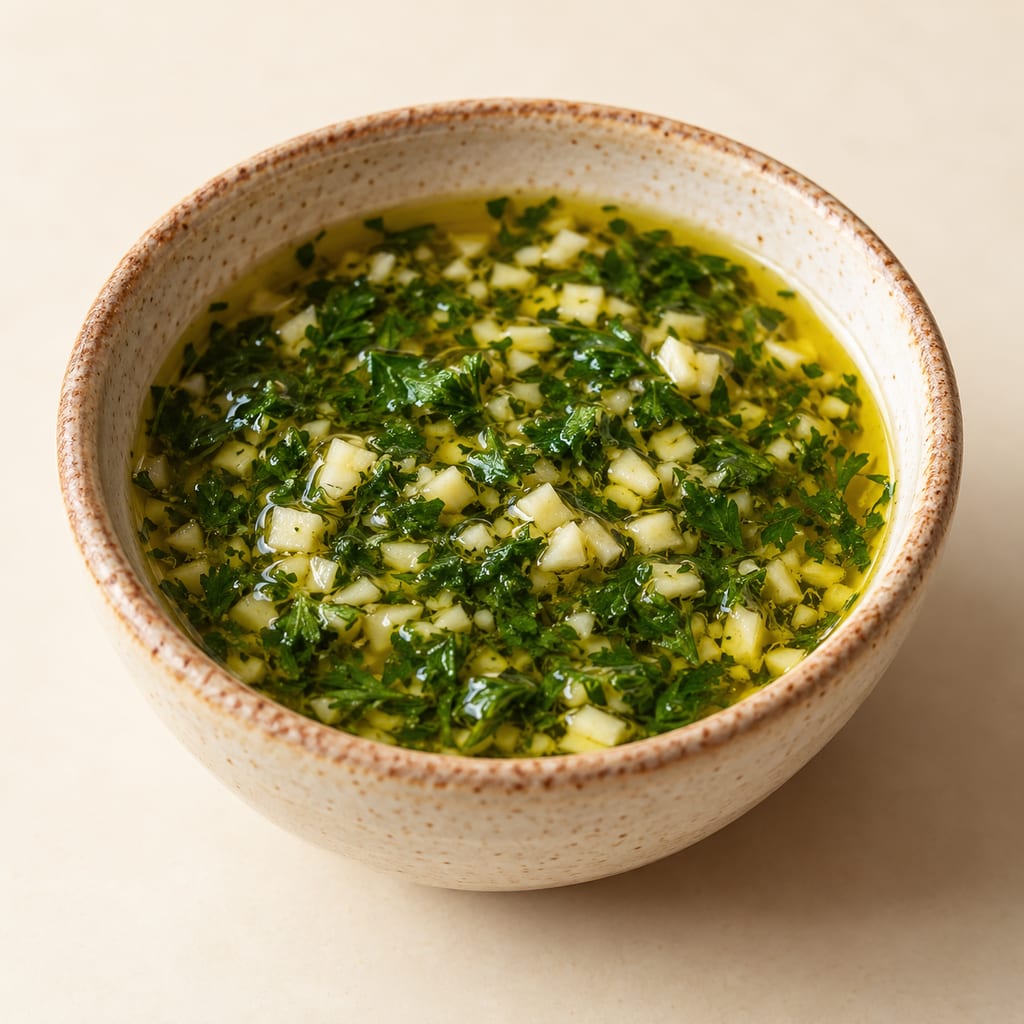
A Dominican garlic sauce of olive oil, garlic, parsley, sour orange or lime juice and salt, simmered until reduced and served over roast chicken, boiled yuca or meat.
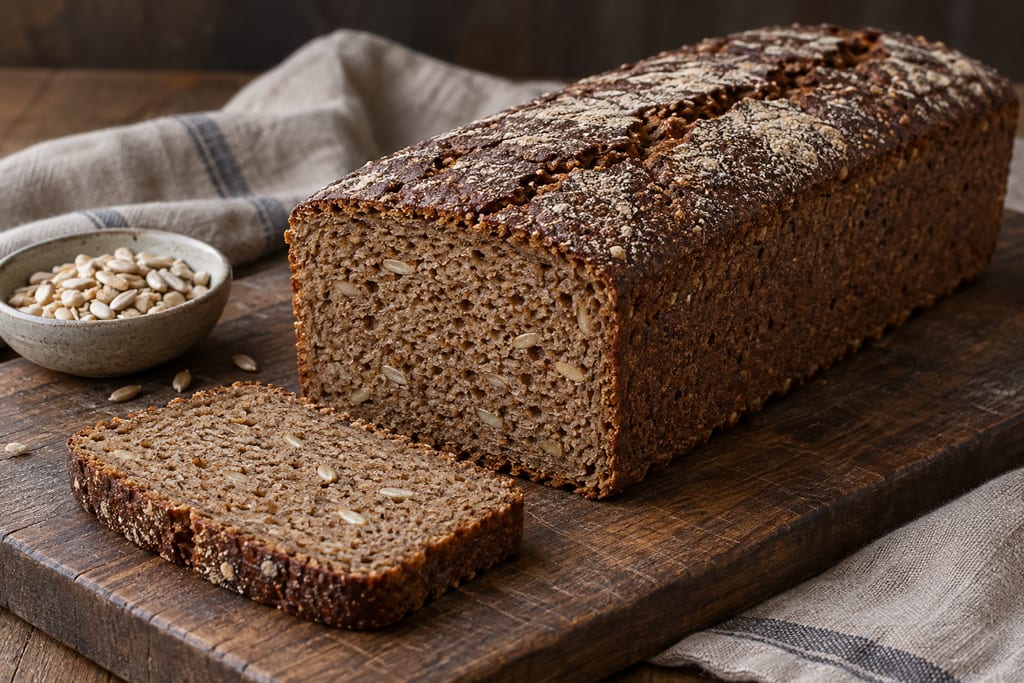
A dense whole-rye loaf with a sourdough preferment, soaked rye chops and sunflower seeds. It bakes in a long loaf pan and rests for 24–48 hours before slicing.
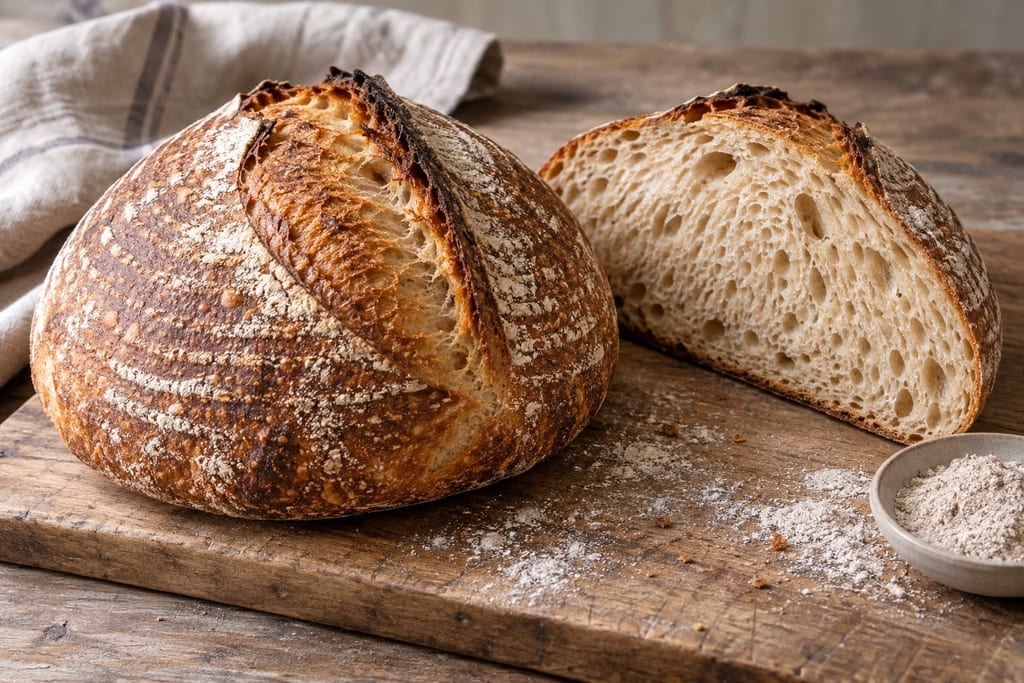
Jeffrey Hamelman's Vermont sourdough builds a liquid wheat levain before adding a modest measure of rye flour blend. The dough is folded, shaped and baked as two crusty loaves with a tender, open crumb.
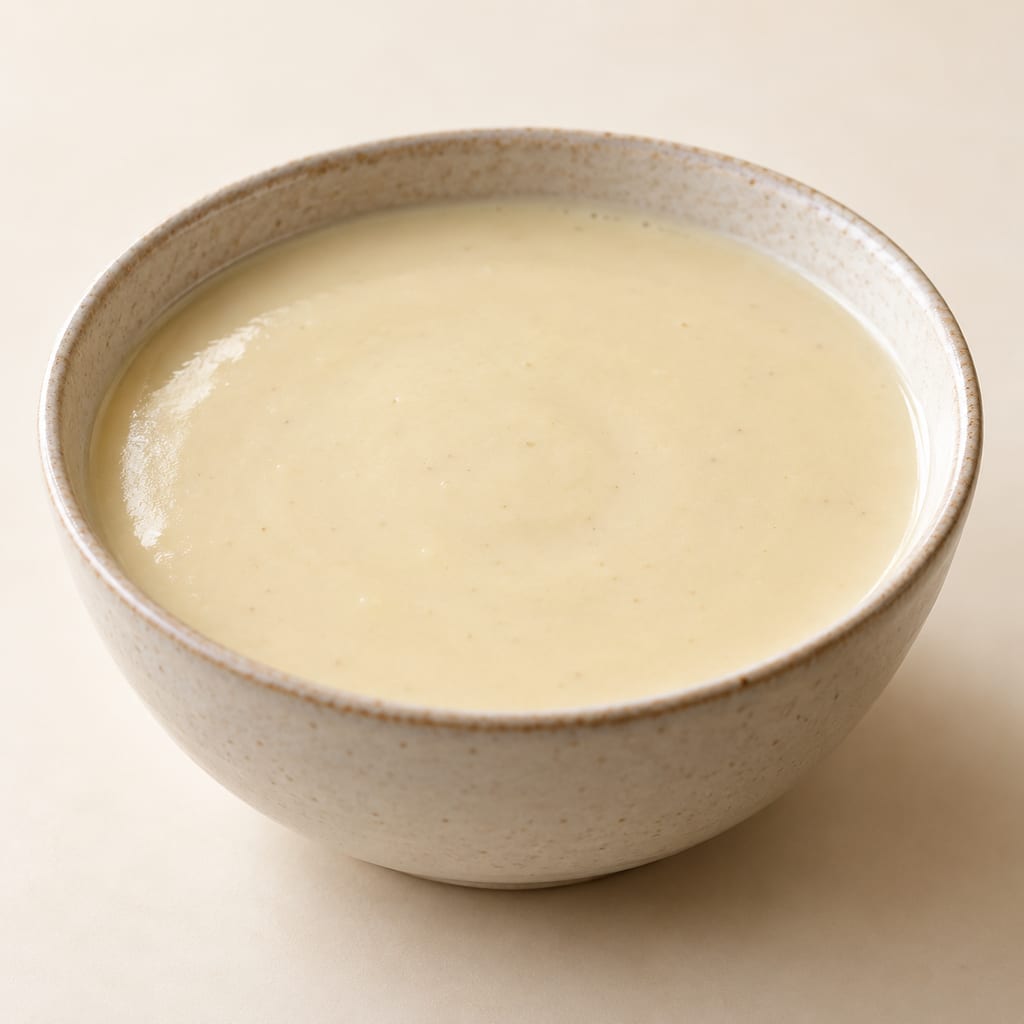
Veloute is a light stock sauce thickened with a blond roux, one of the French mother sauces, and the base for named sauces built on chicken, fish or veal stock.
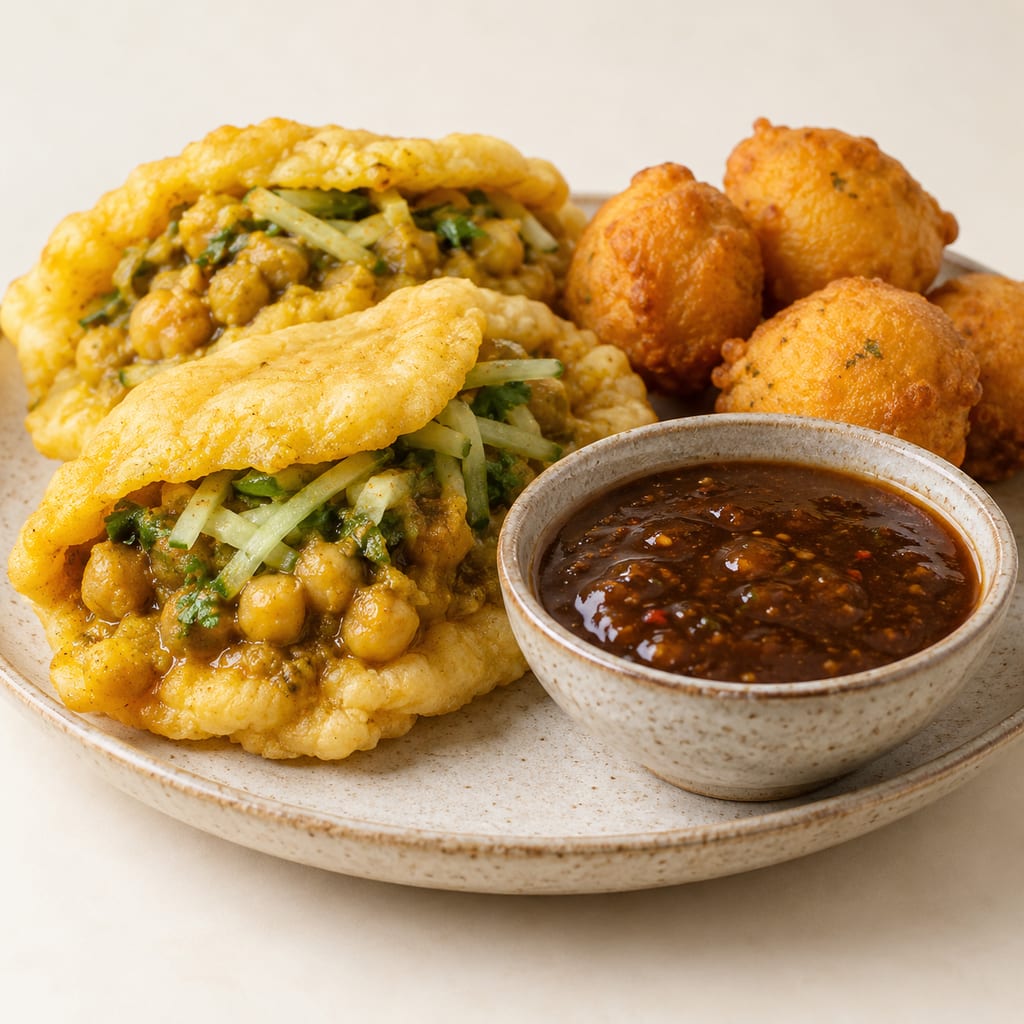
A sweet, sour and spiced tamarind sauce from Trinidad, made from tamarind pulp with garlic, Scotch bonnet, culantro, cumin, anchar masala and brown sugar, served with doubles and pholourie.
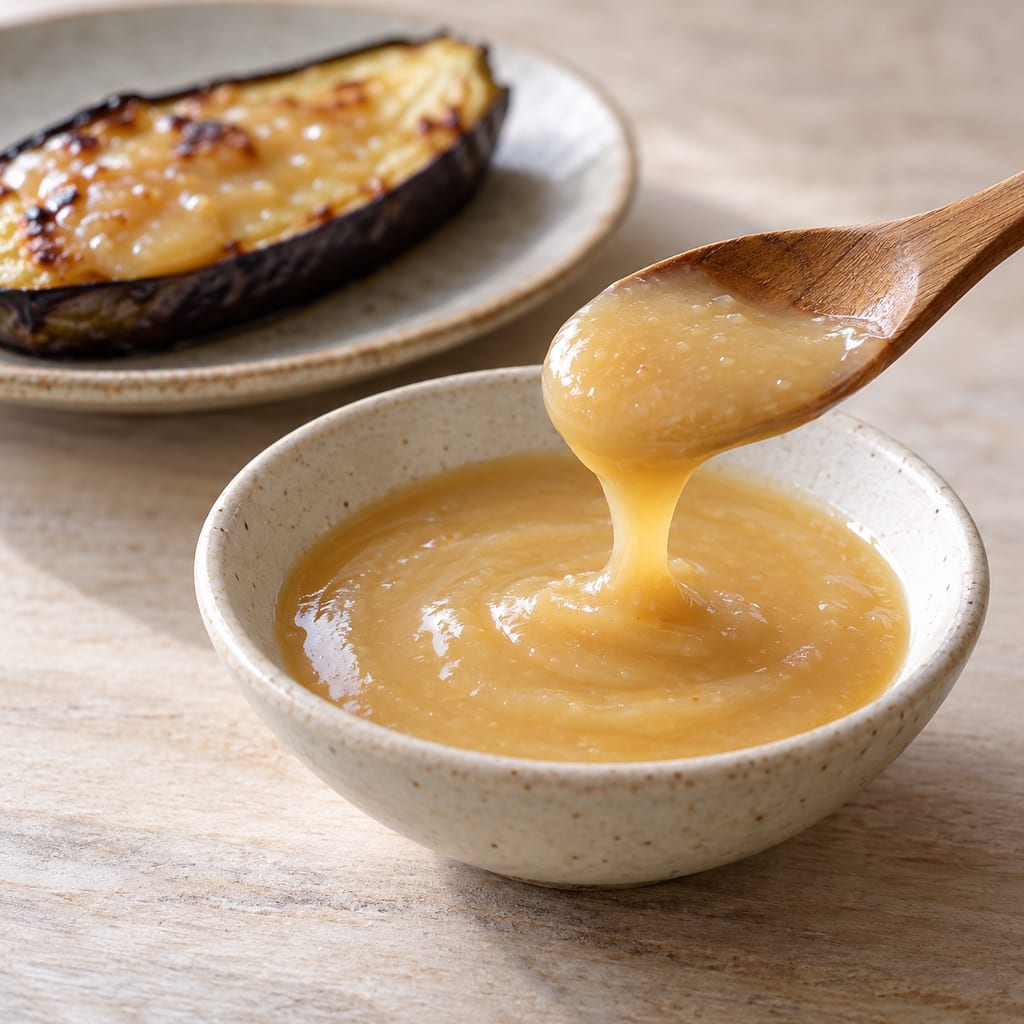
A Japanese-style glaze of pale rice miso, water, sugar and rice vinegar, heated gently until it coats a spoon and spread over cooked aubergine, tofu or vegetables.
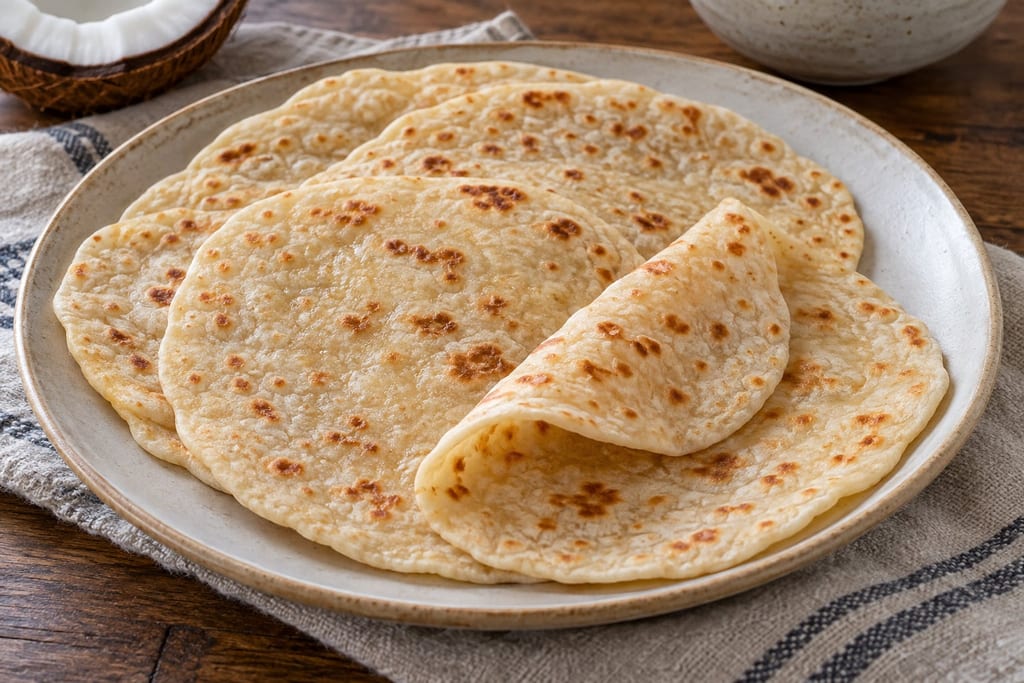
A sweet, soft CHamoru flour titiyas made with wheat flour, coconut milk, butter and cream of coconut, rolled thin and cooked on a dry skillet.
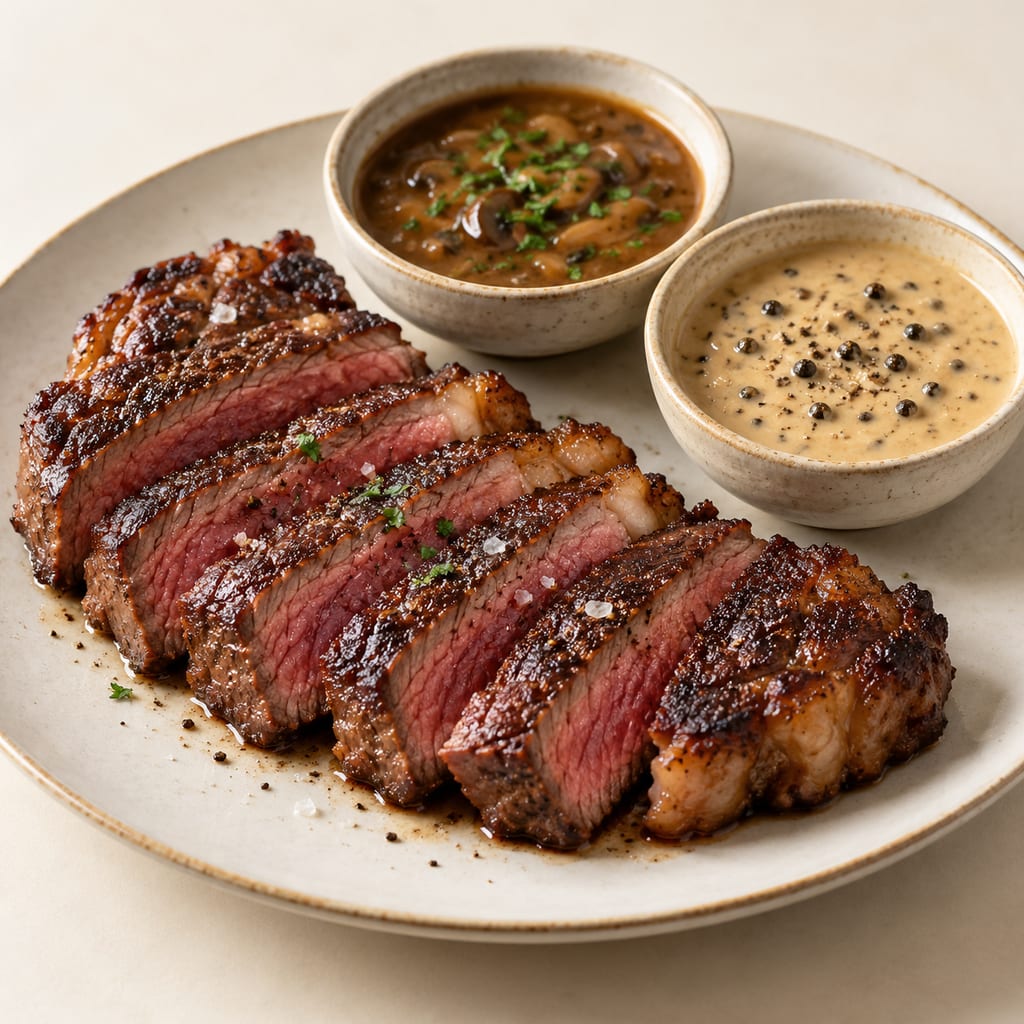
Steak Diane is a restaurant pan sauce of seasoned butter, Worcestershire and parsley, often flamed; the related peppercorn cream sauce is reduced from cream and crushed peppercorns for steak.
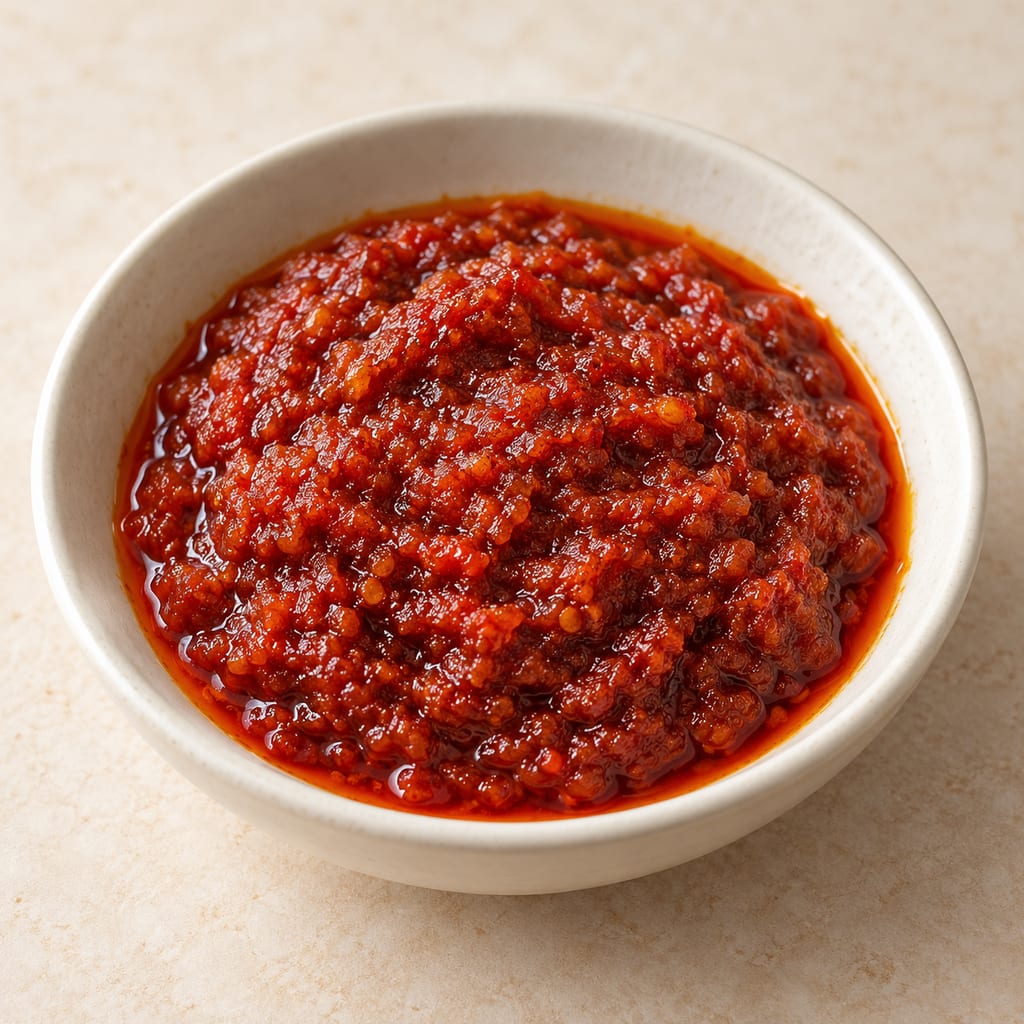
Sambal tumis is a Malaysian chilli paste fried in oil until it breaks, then simmered with tamarind and sugar, used as a condiment and as a cooking base.
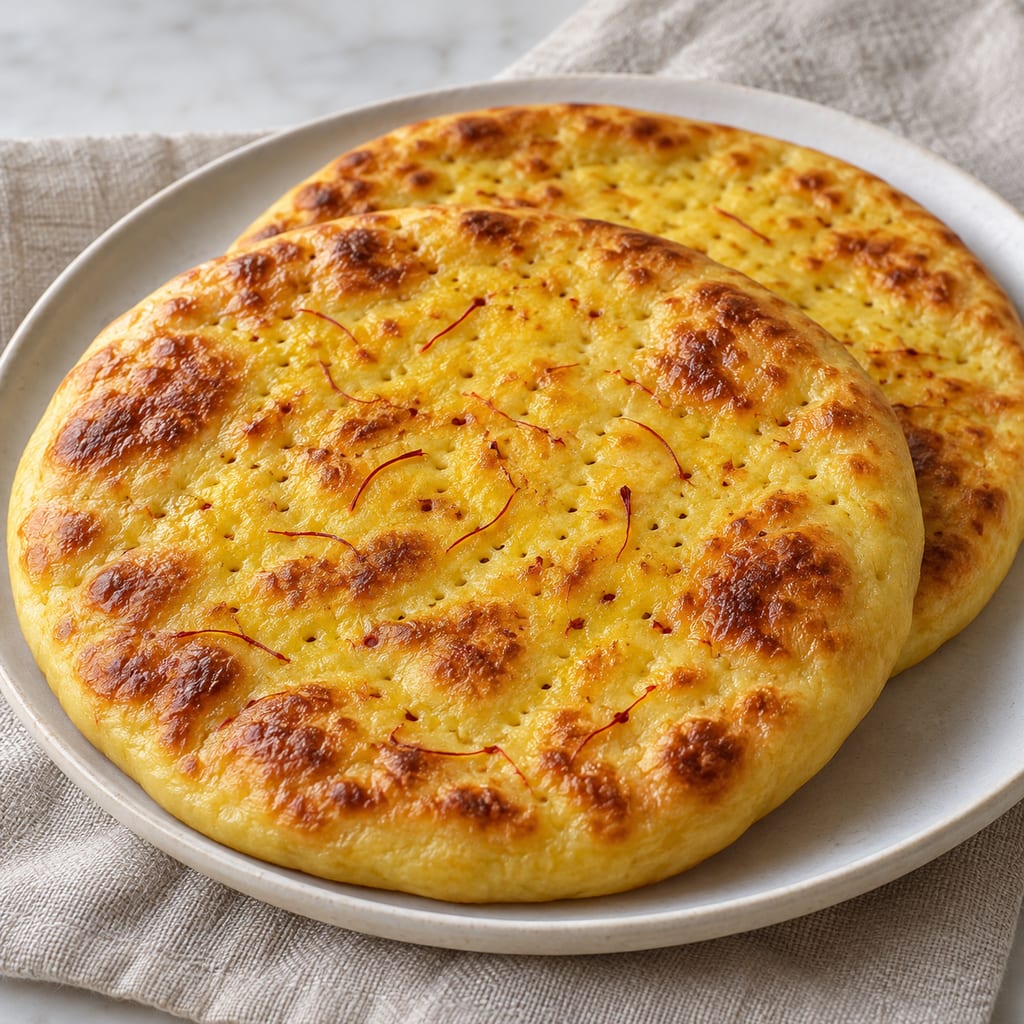
Dassana Amit’s measured sheermal makes eight mildly sweet, saffron-brushed flatbreads without a leavener. Milk, cardamom and a large quantity of ghee enrich the dough, which can be cooked on a covered skillet or baked.
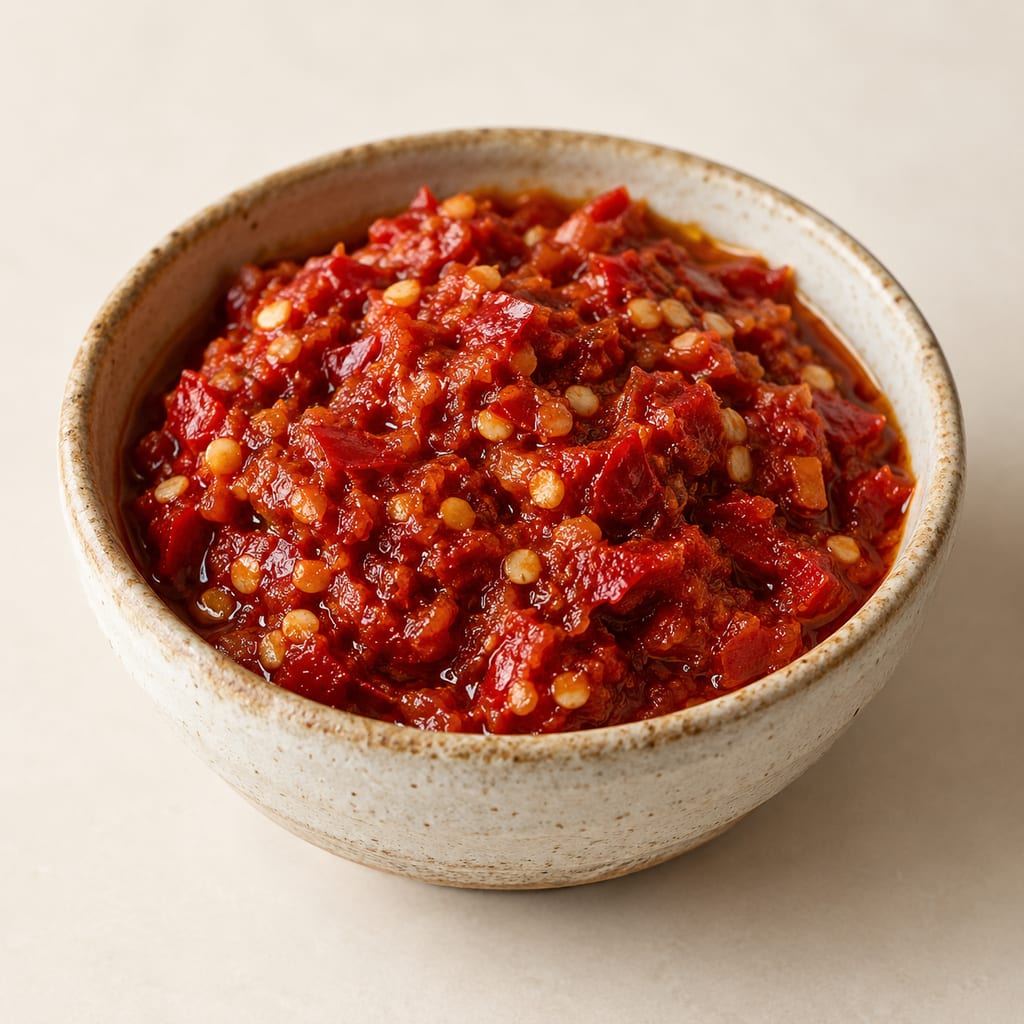
Shatta is a Palestinian chilli paste with many household forms. Abeer Najjar’s family-inspired version oven-dries salted fresh chillies, then mixes them with vinegar and olive oil for a source-described room-temperature ferment.
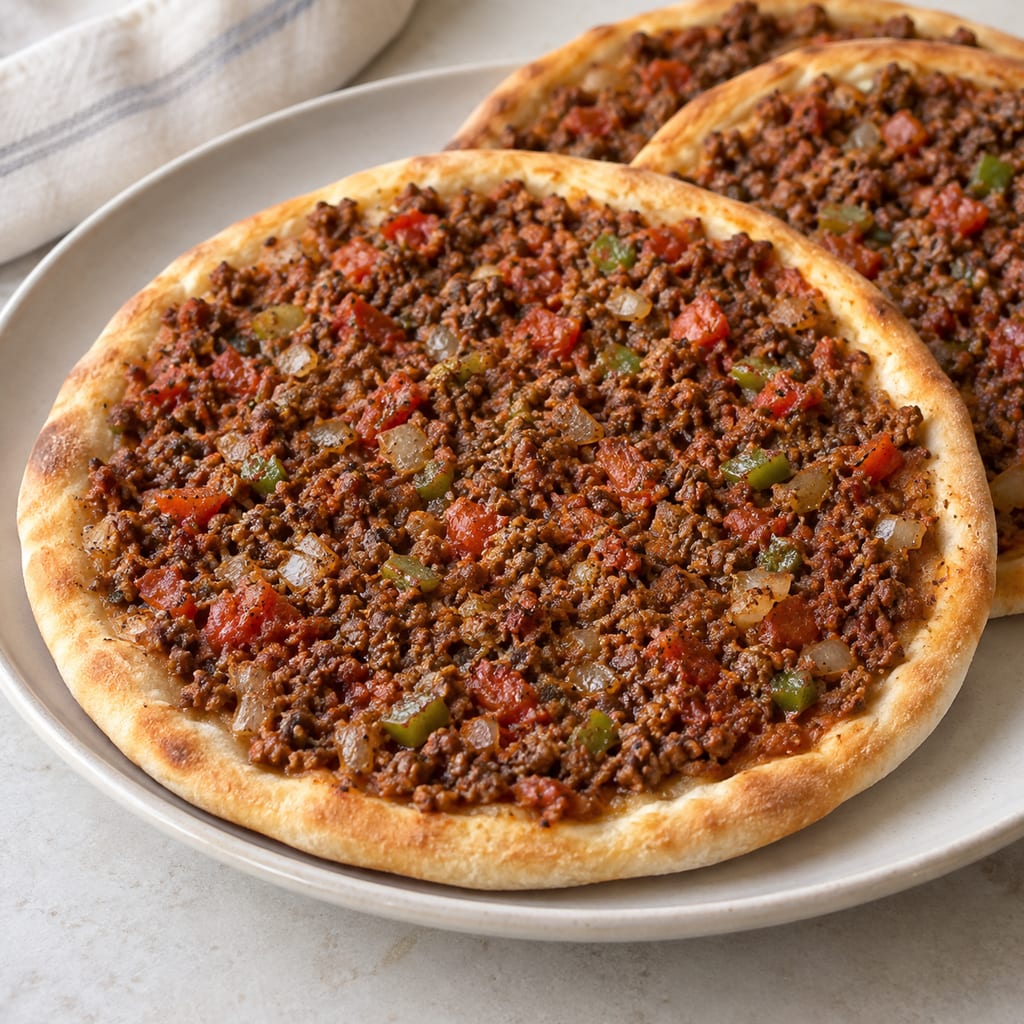
A yeast-raised 8-inch flatbread topped with an evenly spread onion, tomato, pepper and spiced ground-beef mixture. This version follows a Palestinian family recipe shared with Amira Ibrahim and adapted for home baking.
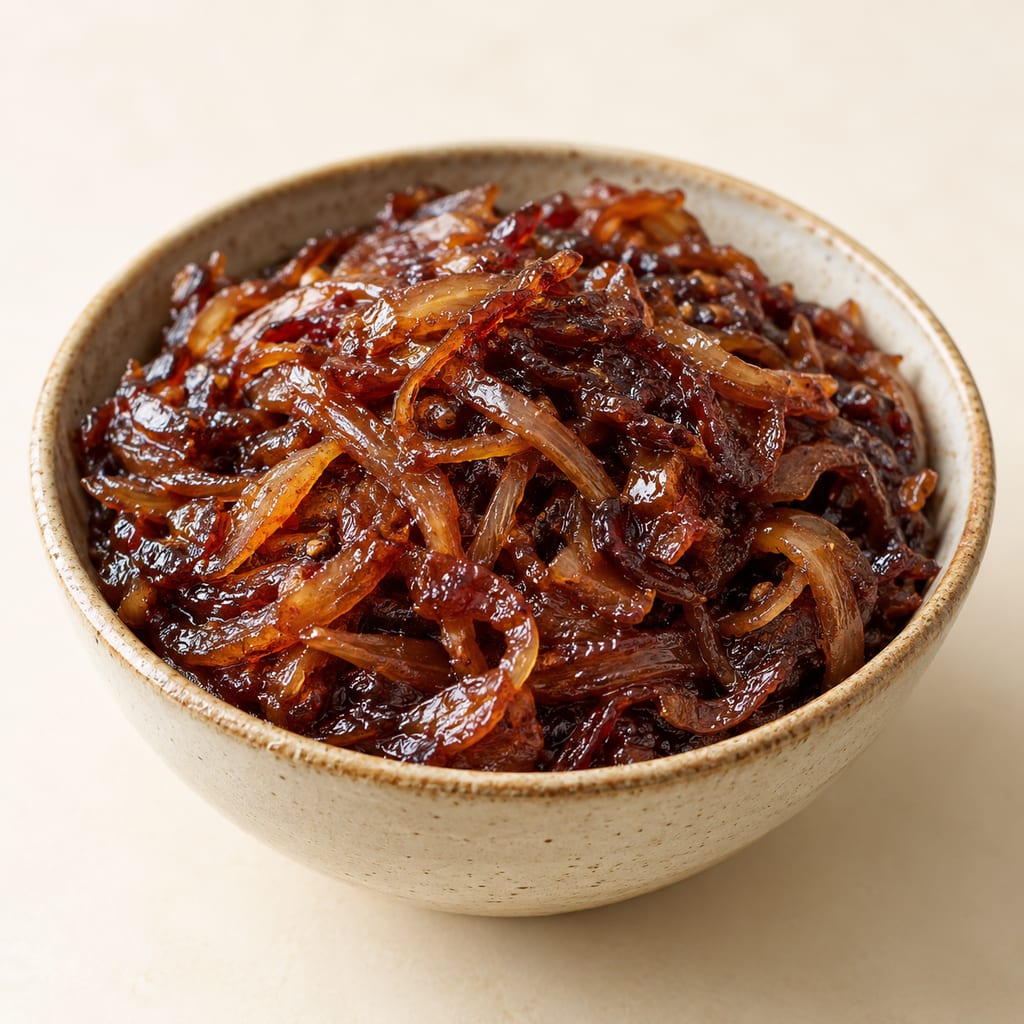
Sri Lankan cooked onion relish: onions fried in oil until dark and jammy, then sharpened with tamarind and sweetened with sugar. Not a fermented condiment.
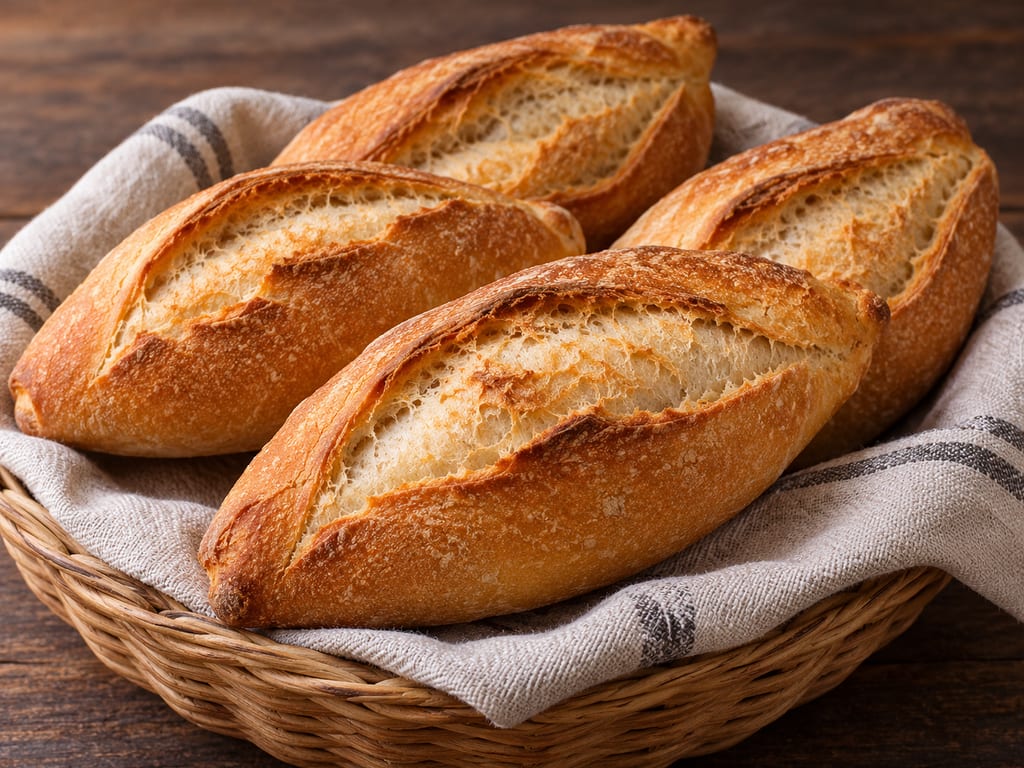
A measured, commercial-yeast home method for Guadalajara-style birote salado, with a six-hour preferment, shaped rolls and a two-temperature steam bake. This formula contains no egg.

A Finnish rye sourdough shaped here as two flat ring loaves, made from rye flour, water, salt and an established rye leaven.
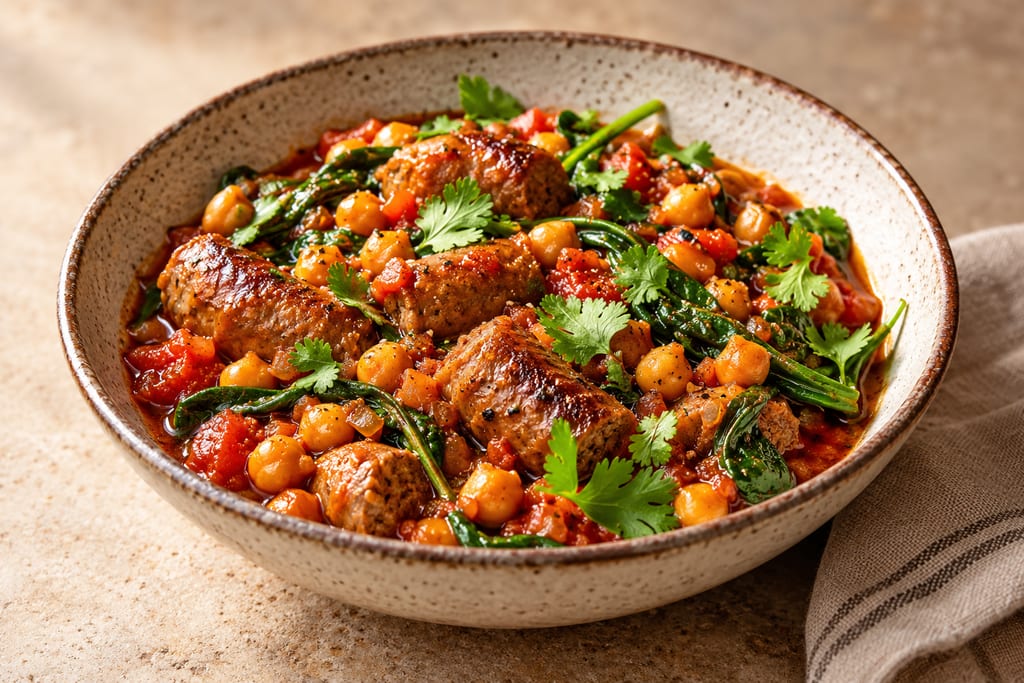
Lesego Semenya’s contemporary South African stew combines browned boerewors, chickpeas, tomato, spinach and warm spices.
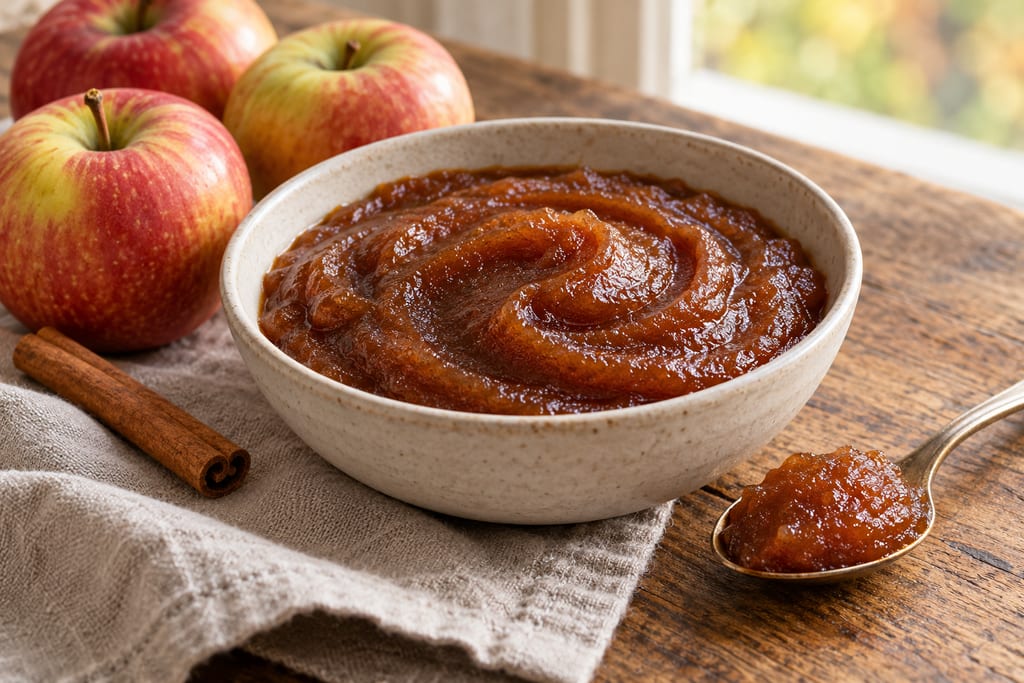
A smooth fruit pulp cooked down with sugar and spice until it holds its shape on a spoon, made by three documented routes in a slow cooker, a microwave or an electric multicooker.
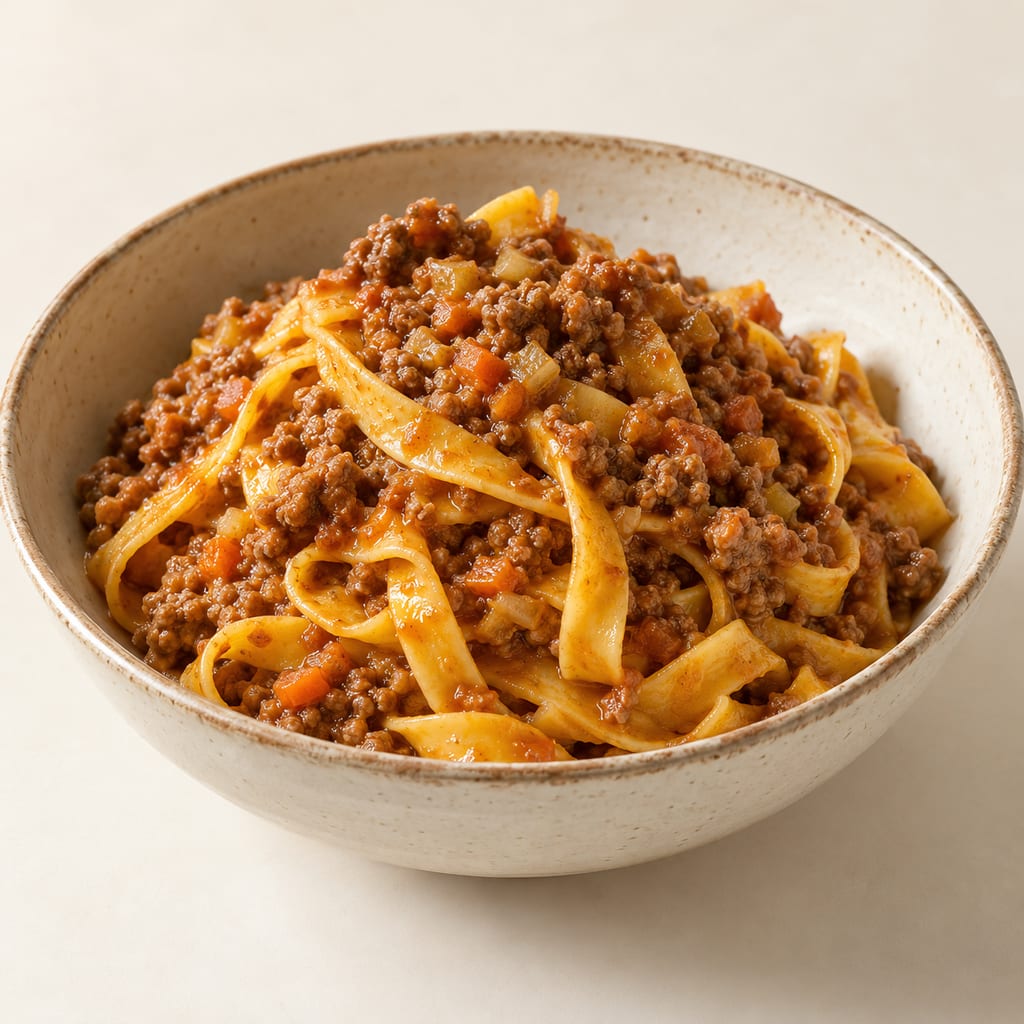
Ragu alla bolognese is a slow-cooked meat sauce of minced beef and a little pork, cooked with soffritto, white wine, milk and a little tomato, served with fresh tagliatelle in Bologna.

Rice koji is steamed white rice through which koji mold has grown. It carries the enzymes that turn rice starch into sugar, and it is the starting point of sake, sweet miso, amazake and shio koji.
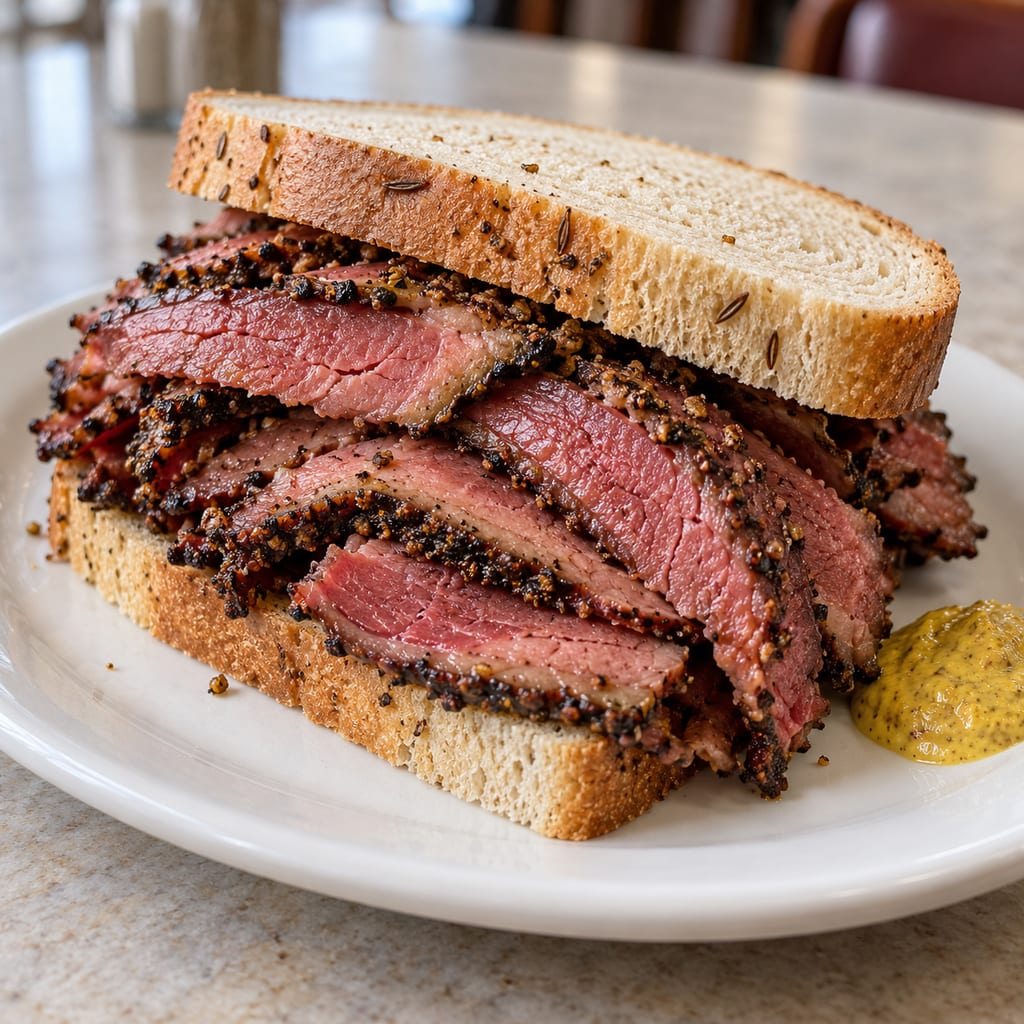
Pastrami is beef brined, rubbed with spices, smoked and steamed, the New York Jewish deli meat served hot and hand-carved on rye. Its origin is argued between competing accounts.
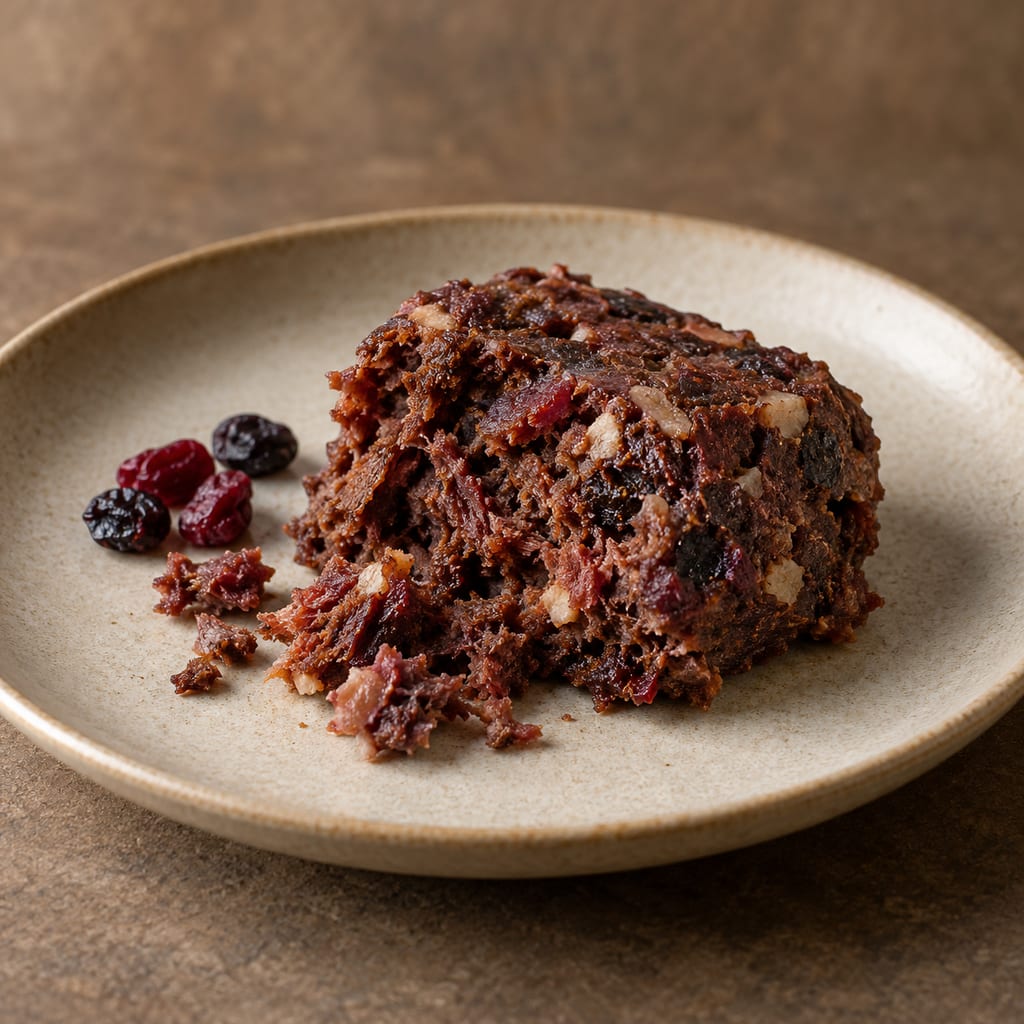
Pemmican is dried meat mixed with rendered animal fat, sometimes with berries. Sources link it to Indigenous North American food traditions and later fur-trade provisioning. This documentary entry gives no home preparation or storage method.
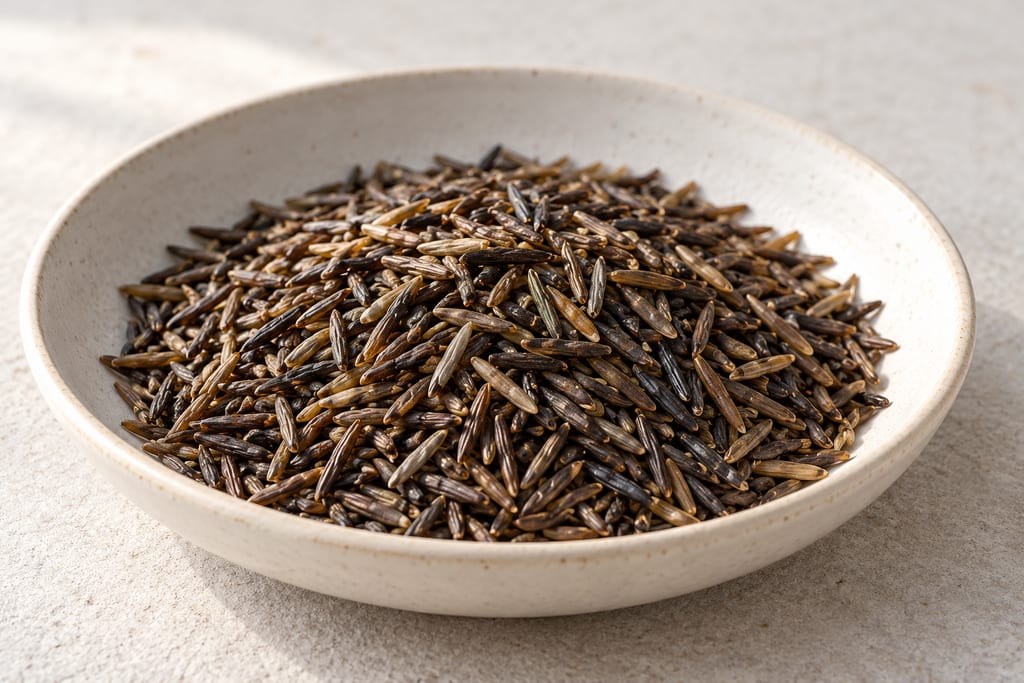
Harvested wild rice dried, parched over heat and hulled, a step that keeps the grain for storage in Ojibwe food systems and does more than cook it.
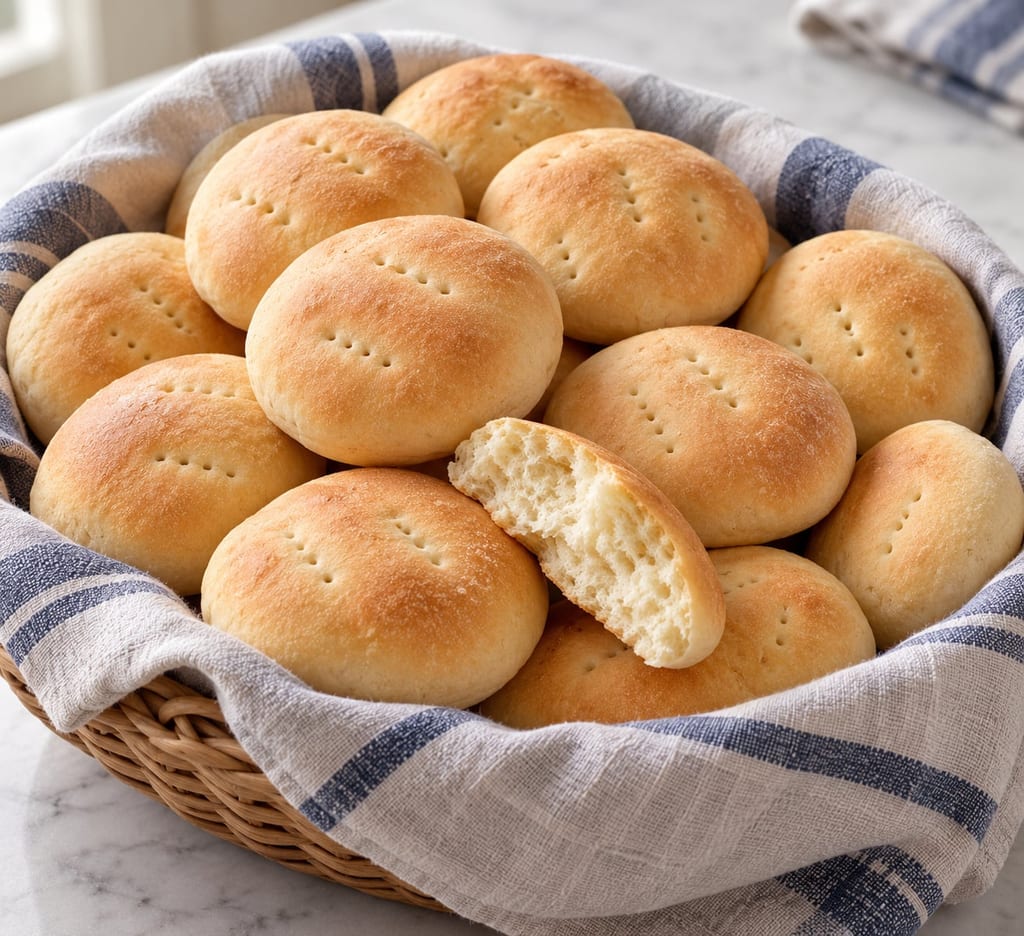
Small, fork-docked wheat rolls made with yeast, water, sugar and butter, a modern home version of Chilean pan amasado.
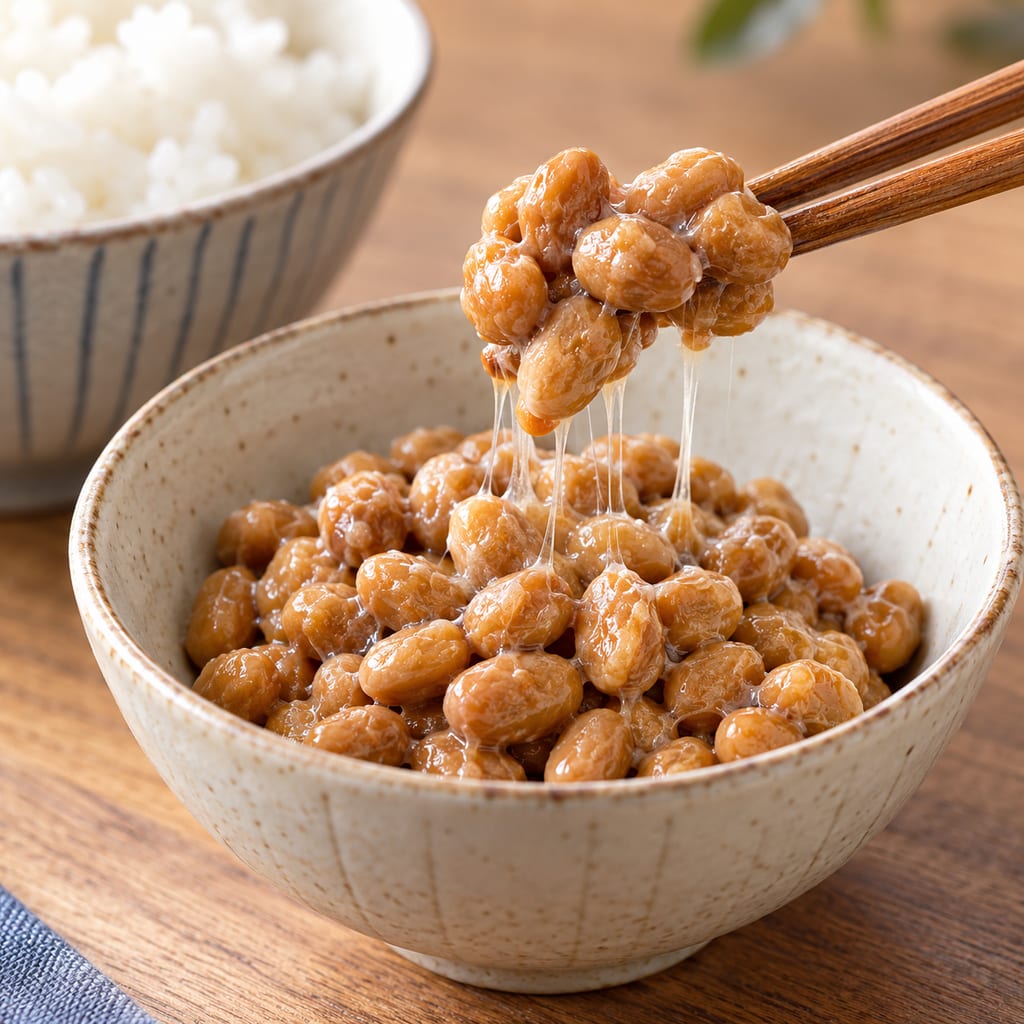
Natto is a Japanese fermented soybean food with a sticky coat and long strings, made by steaming soybeans and inoculating them with a natto Bacillus starter, then keeping them warm.
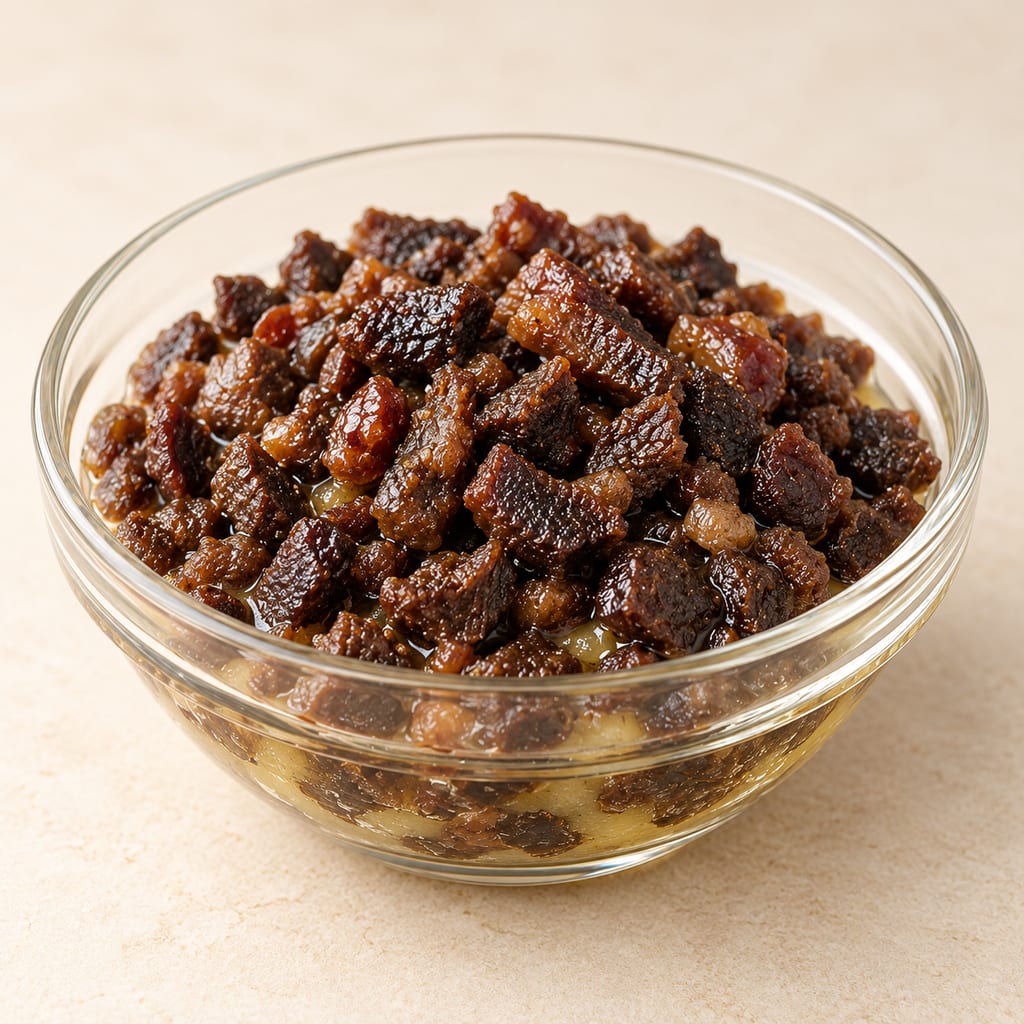
Odka, also called muqmad, is Somali meat that is dried, cut small, fried and kept under fat. It is a dried-meat preserve whose keeping depends on the whole sequence.
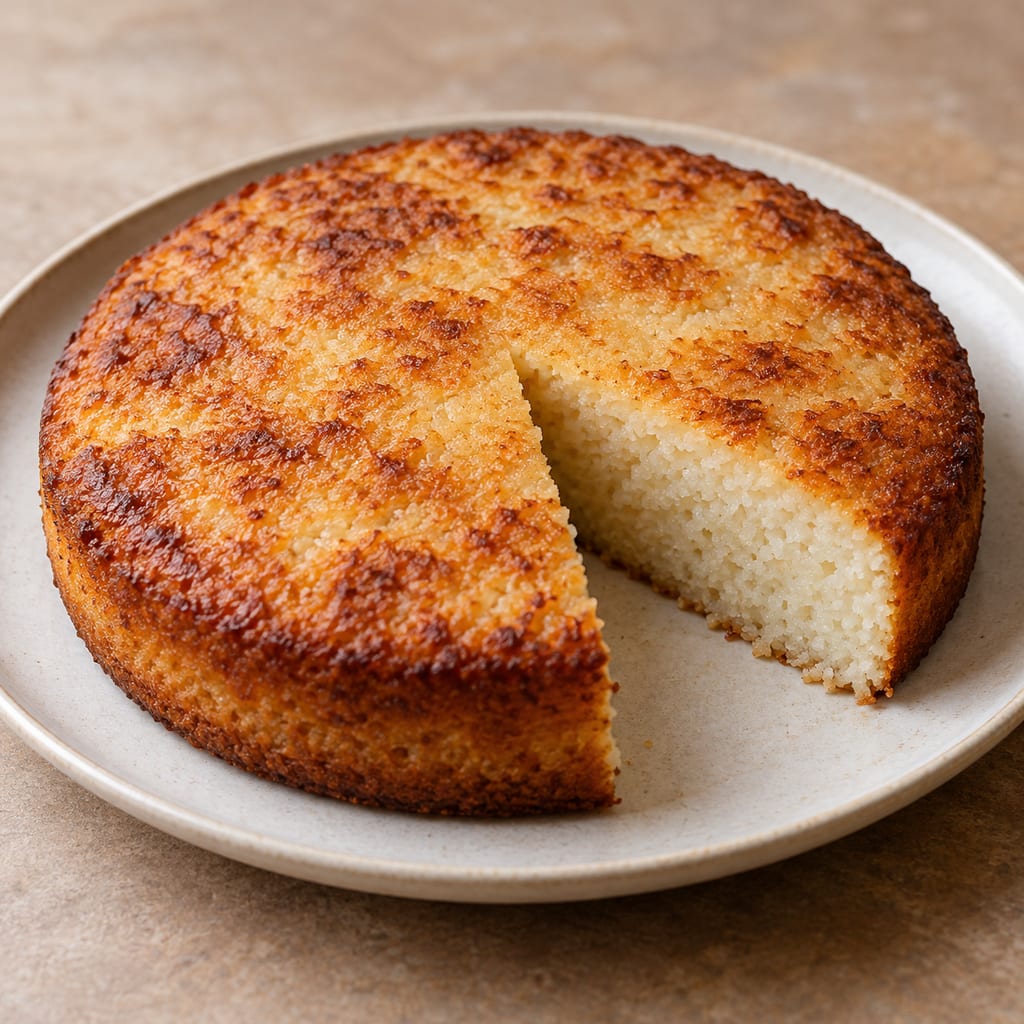
Fauzia’s Mombasa mkate wa sinia blends soaked rice with coconut milk, sugar, cardamom and yeast, then sets it covered on the hob and browns the top under a grill.

Masi ʻulu is a Samoan breadfruit paste fermented in a leaf-lined pit, kneaded, formed into loaves, wrapped in leaves and baked. A secondary FAO account describes the method; no household batch is established.
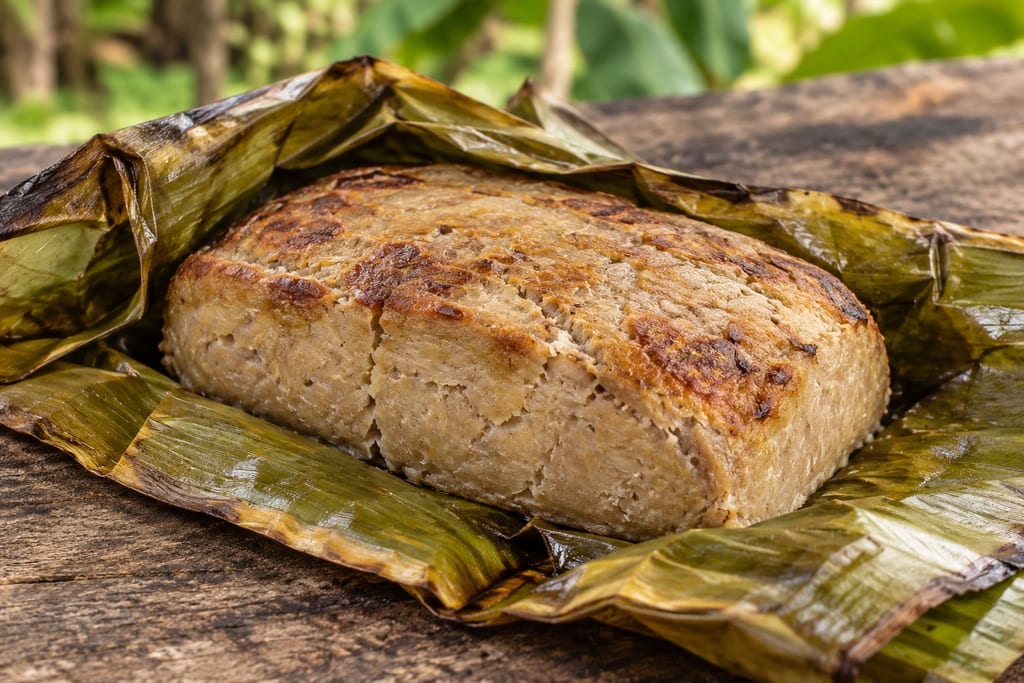
Masi fa‘i is a Western Samoan paste made by fermenting unripe banana in leaf-lined pits, later formed into loaves and baked. A secondary FAO account describes the method; no modern household batch is established.
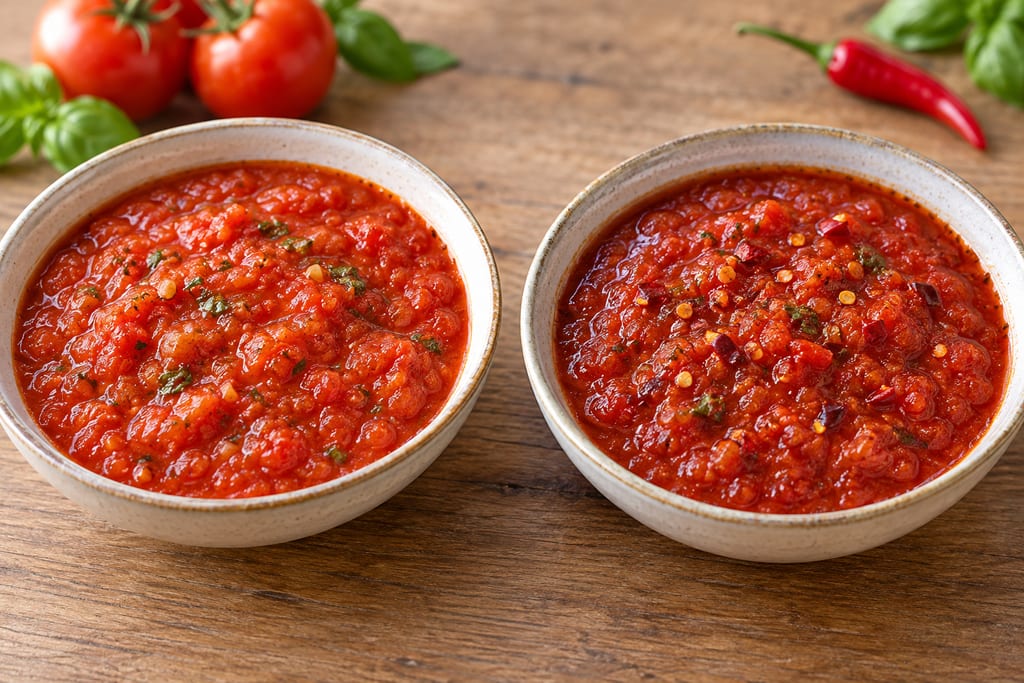
Marinara is a quick Italian-American tomato sauce; arrabbiata is a distinct Roman tomato sauce with red chilli. They share a simple cooked tomato-and-garlic base but are not the same sauce.
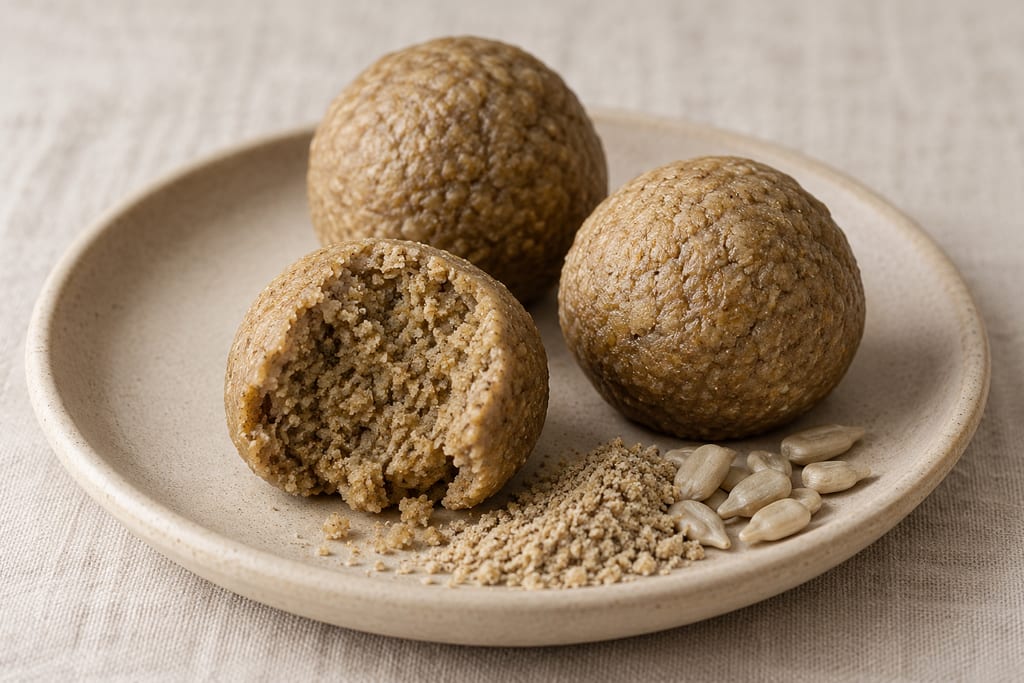
Mapi' are Hidatsa sunflower-seed balls formed from parched meal. This modern, untested kitchen adaptation uses toasted kernels and keeps the historical method distinct.
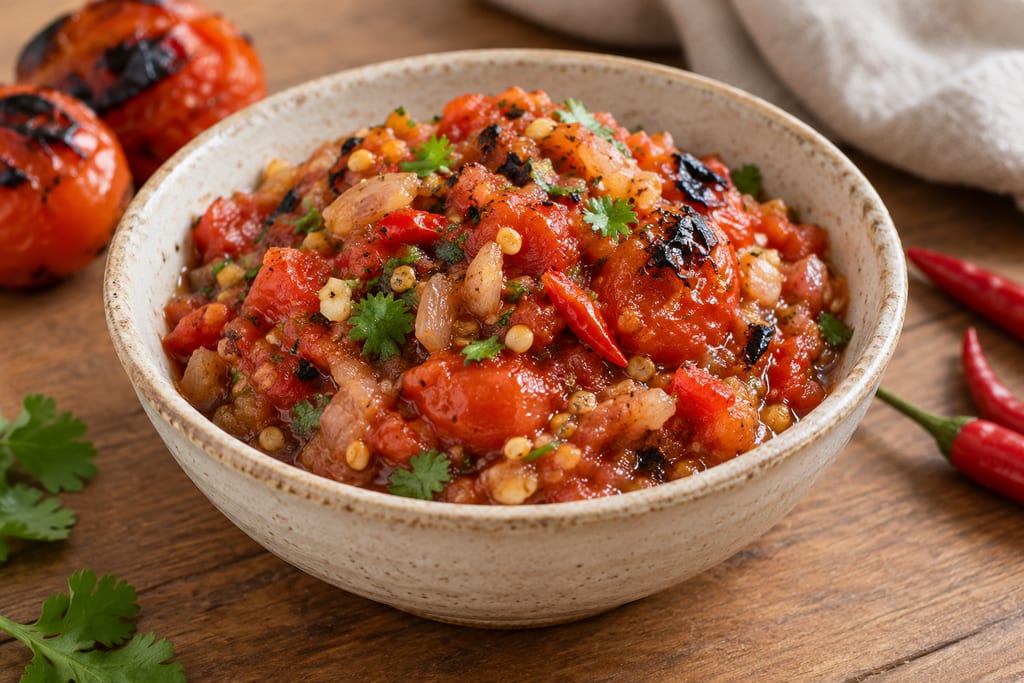
Roasted tomatoes, shallots, garlic and chillies are pounded into a coarse Lao-style dip, then seasoned with fish sauce, optional lime and coriander.
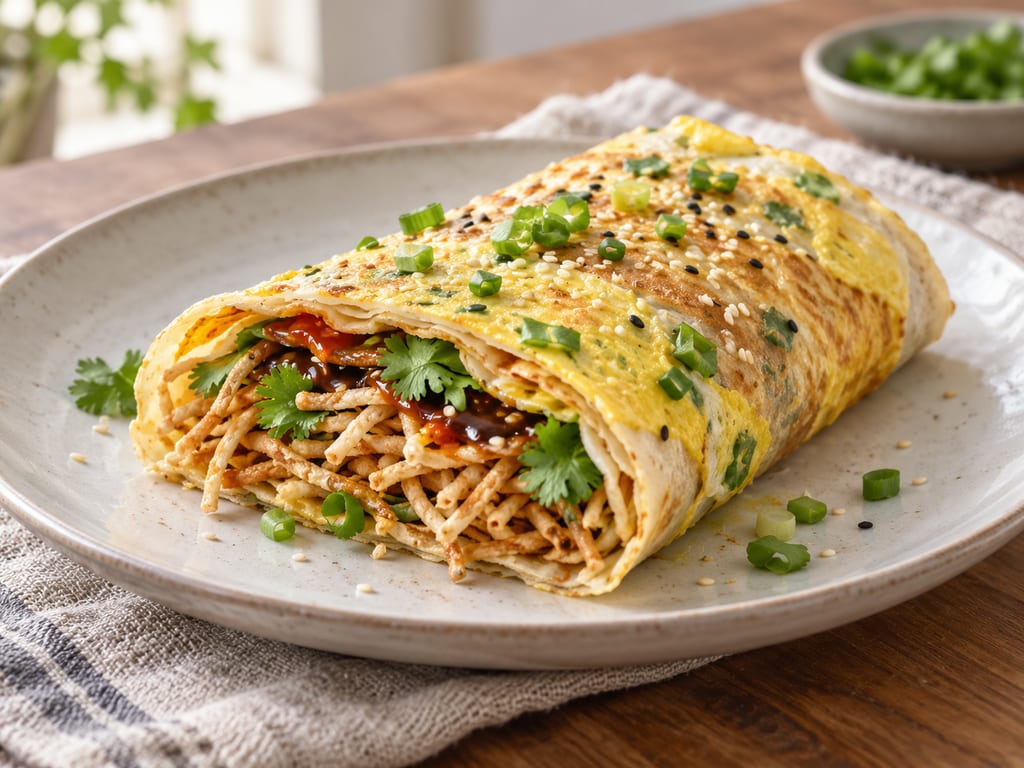
A four-serving home adaptation of jianbing: thin wheat batter cooked with egg, spring onion and sesame, then folded around crisp fried noodles and sauce.
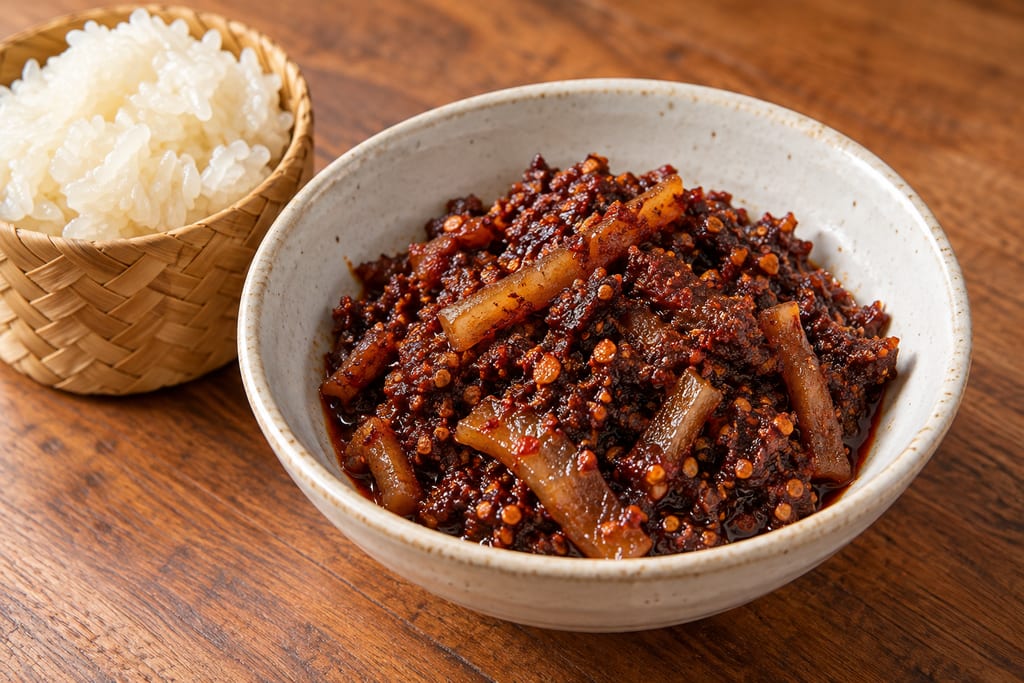
Jeow bong is a Lao paste of dried chilli, shallot, garlic and galangal cooked with buffalo or cow skin, a Luang Prabang specialty eaten with sticky rice and grilled meat.

A coarse South African farmhouse sausage of beef with pork or mutton fat, defined by its coriander seasoning and cooked fresh over coals rather than preserved.
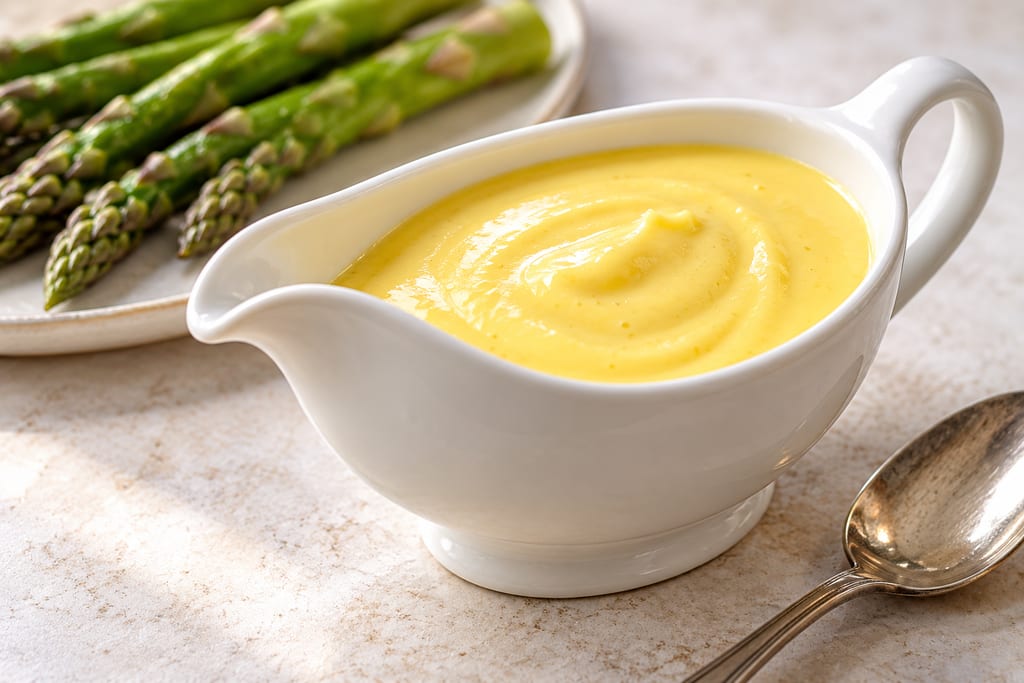
Hollandaise is a warm emulsion of egg yolk and butter finished with lemon juice, one of the French mother sauces, and the base for Bearnaise and other derived sauces.

Jam is fruit cooked with enough sugar and concentration to reduce the water available to microbes. Jelly uses clarified juice and firmer fruit pastes lose still more moisture.