












































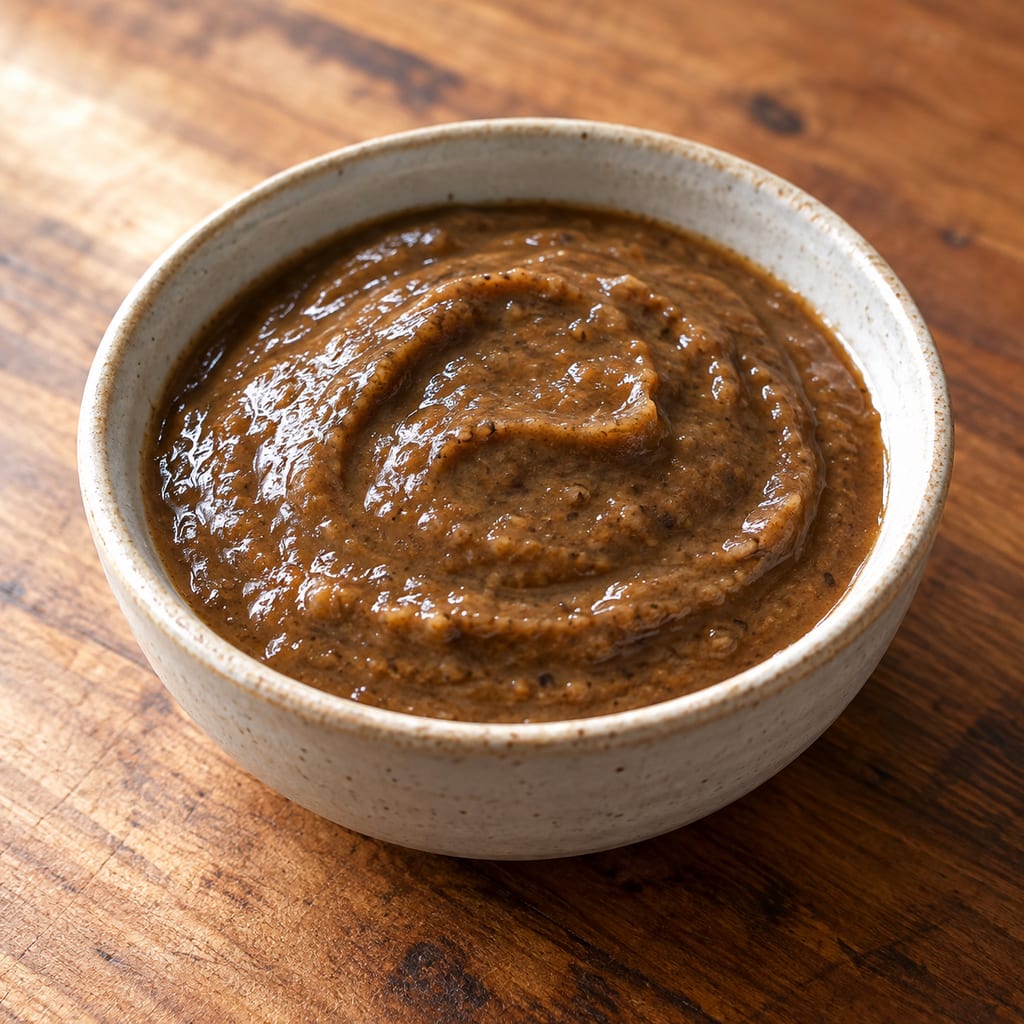
Mushroom catsup, modern refrigerated interpretation
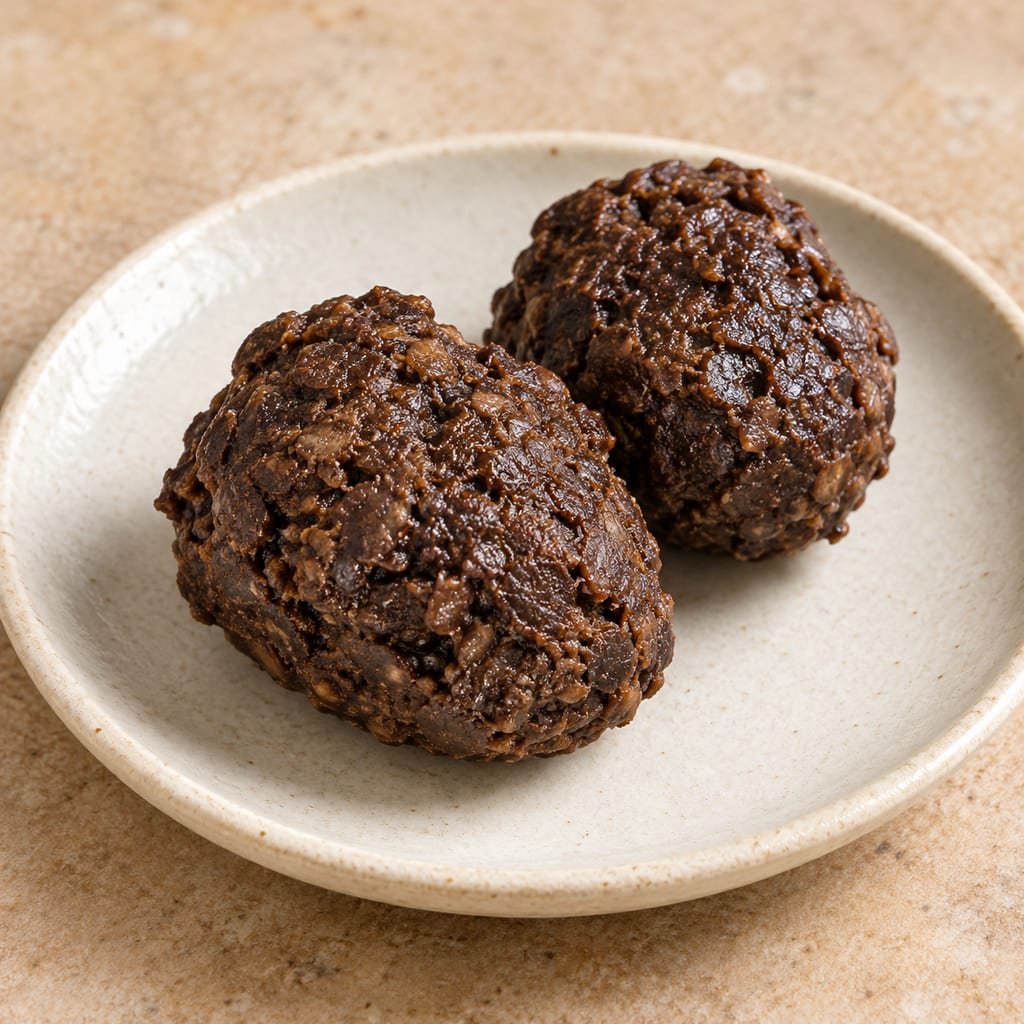
A modern, non-fermented mushroom catsup: mushrooms simmer with cider vinegar, shallot and spices, then become either a thin seasoning or a thicker sauce.
 FermenteaWhere food goes to change
1504 records with their sources, across 11 categories.
 Fermented, enzyme-ripened and mixed seasonings328
 Fruit preserves10
 Legume, seed and plant-protein ferments10
 Garum and fish sauces8
 Adjacent and excluded7
 Koji, mold starters and mold-ripened ferments4
 Acid and oil pickles3
 Fermented fruit and fruit-derived foods3
 Vegetable lactic3
 Dairy ferments2
 Smoked salted and dried foods2
 Cheese1
 Not yet classified1Fermented, enzyme-ripened and mixed seasonings328Fruit preserves10Legume, seed and plant-protein ferments10Garum and fish sauces8Adjacent and excluded7Koji, mold starters and mold-ripened ferments4Acid and oil pickles3Fermented fruit and fruit-derived foods3Vegetable lactic3Dairy ferments2Smoked salted and dried foods2Cheese1Not yet classified1
A modern, non-fermented mushroom catsup: mushrooms simmer with cider vinegar, shallot and spices, then become either a thin seasoning or a thicker sauce.
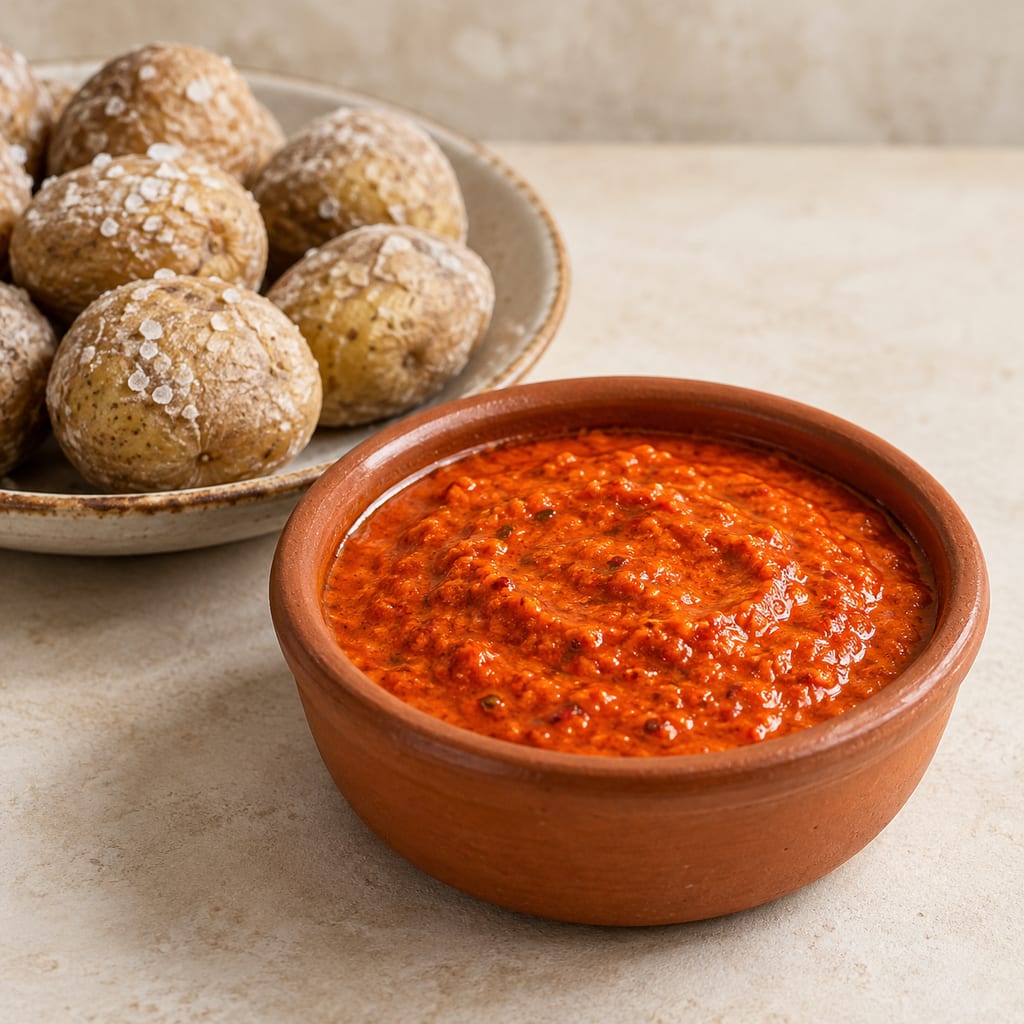
A red sauce of garlic, dried or fresh red pepper, paprika and cumin in olive oil and vinegar, served with salt-cooked potatoes across the Canary Islands.
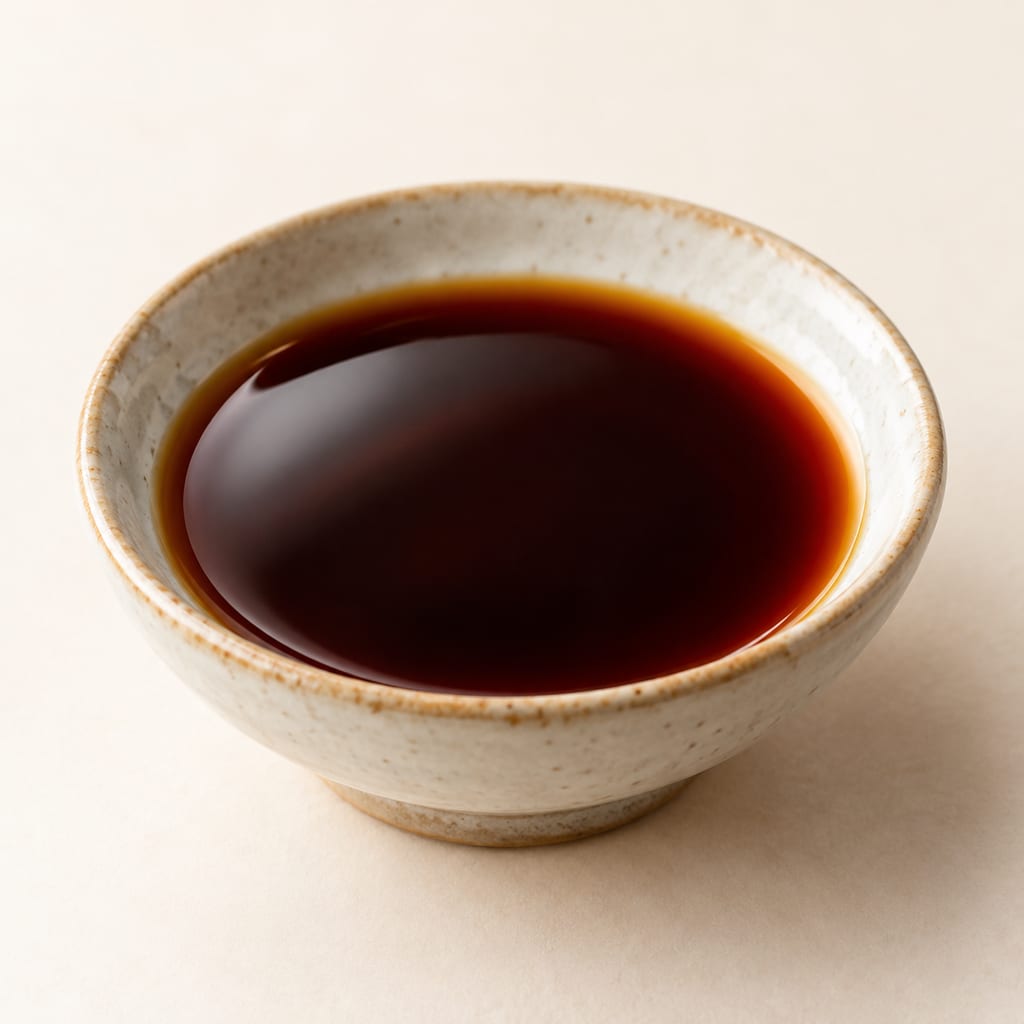
Japan's standard all-purpose soy sauce: soybeans and wheat grown over with koji mould, brined, fermented for months, pressed and usually heated into a reddish-brown, savoury liquid.
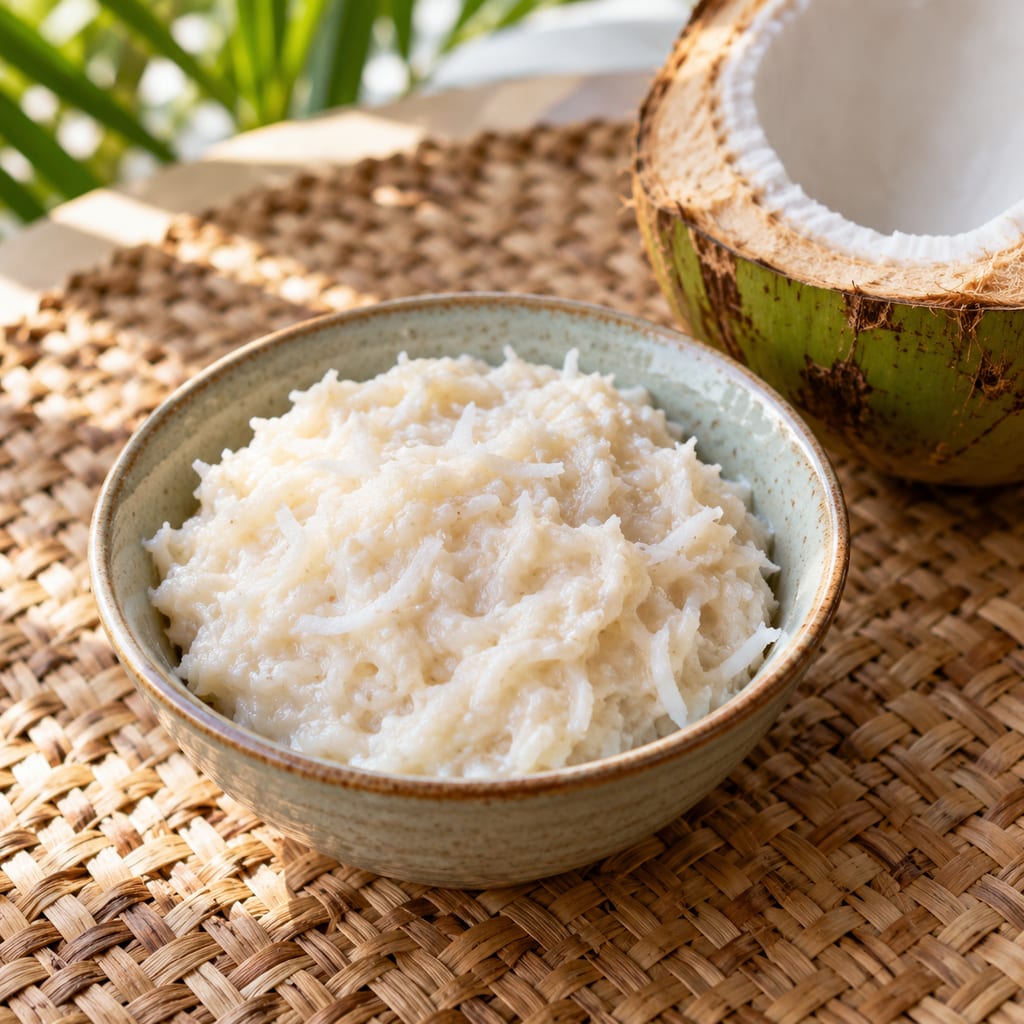
A documentary account of Tahitian mitihue, a fermented coconut condiment traditionally associated with freshwater prawns. It records cultural context and source-reported risks without giving a household preparation method.
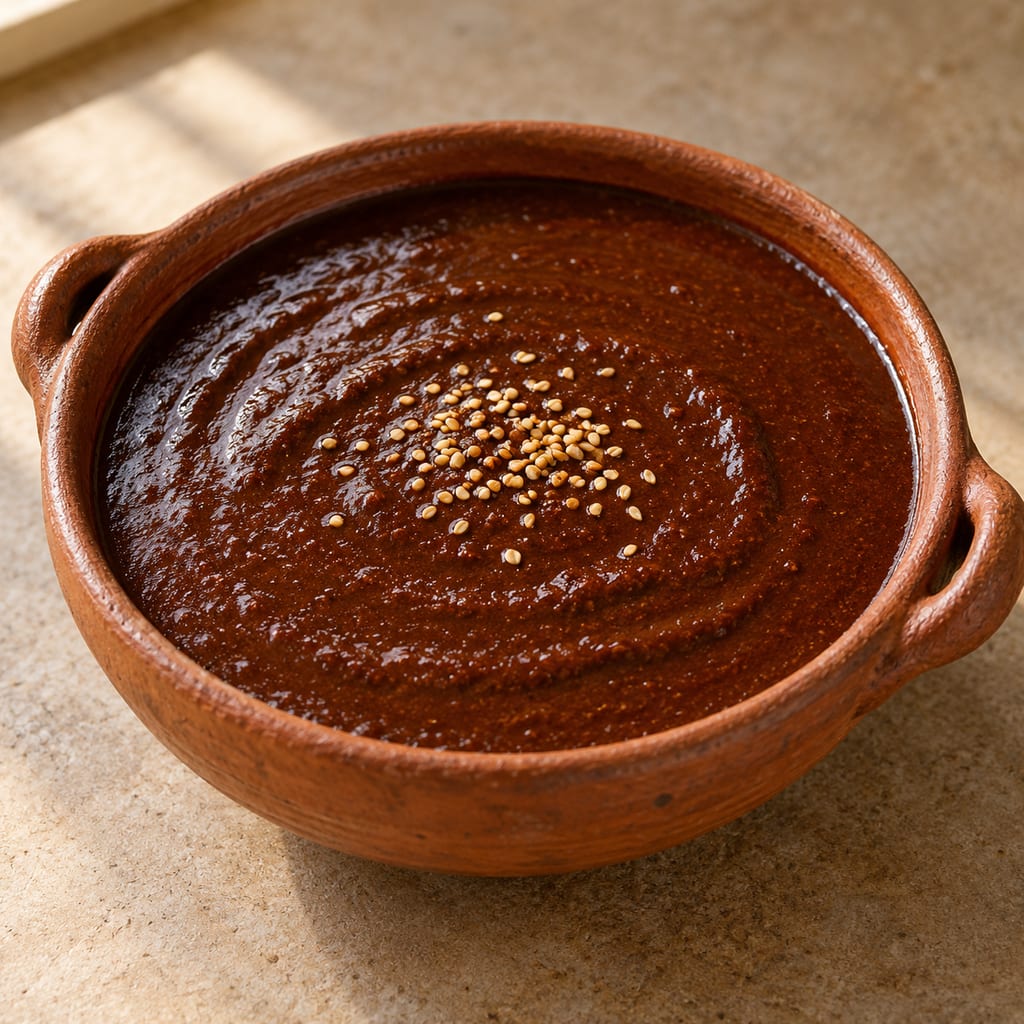
A complex Mexican sauce from Puebla of dried chiles, nuts, seeds, spices and often chocolate, roasted, ground and simmered for a long time. Chocolate is one component, not its definition.
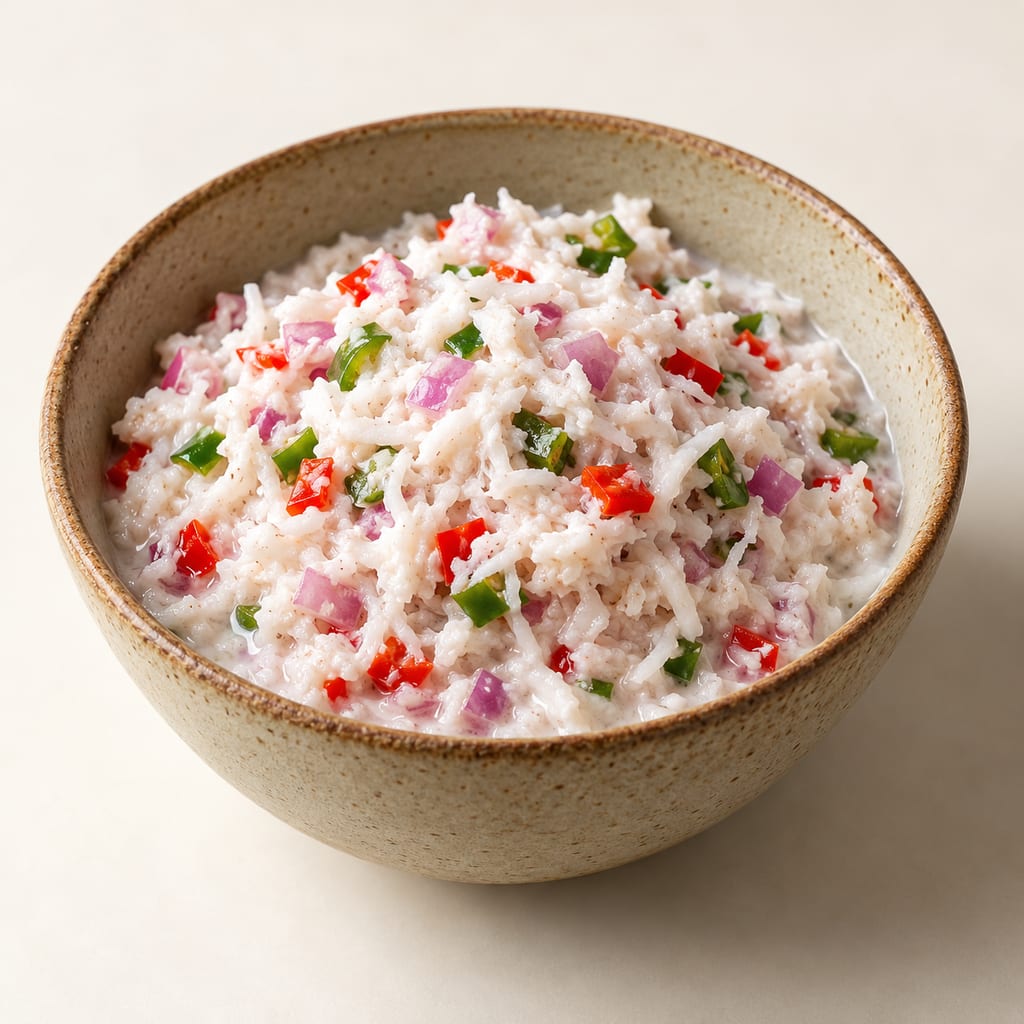
Miti is a fresh Fijian coconut sauce of grated coconut cream with onion, chilli, citrus and salt. It is served raw with fish and is distinct from the fermented miti of Tahiti.
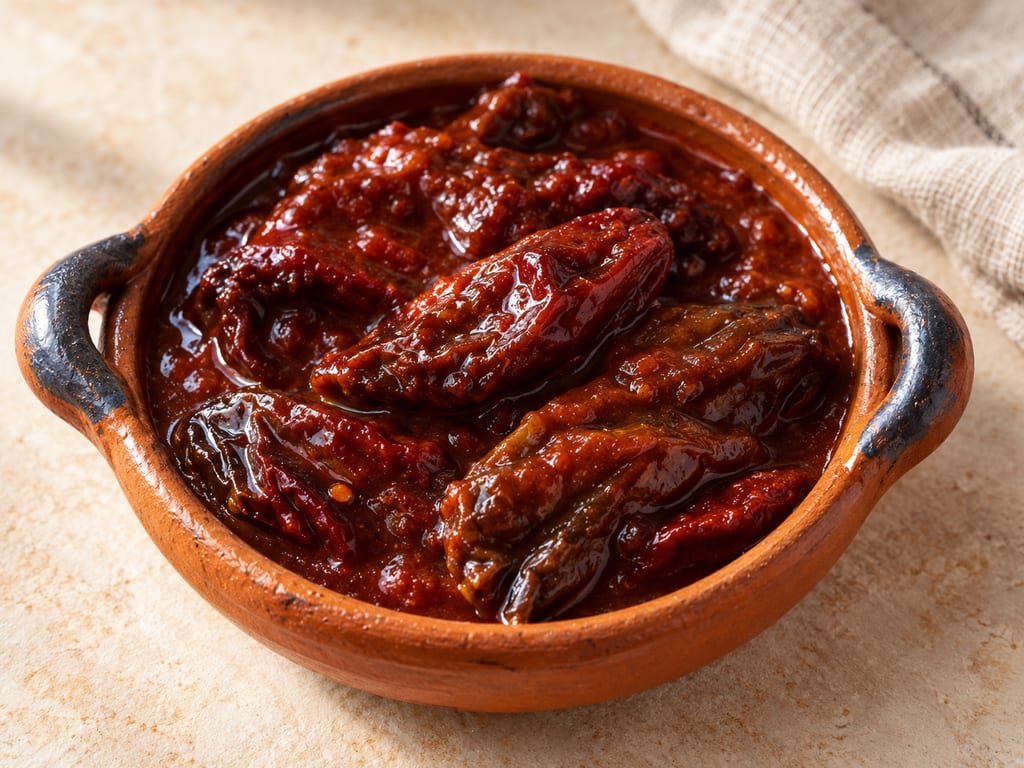
Whole smoked-dried chipotles simmer in a tomato, vinegar and spice adobo: a Mexican condiment with smoky heat and a sauce that seasons the chile as it softens.
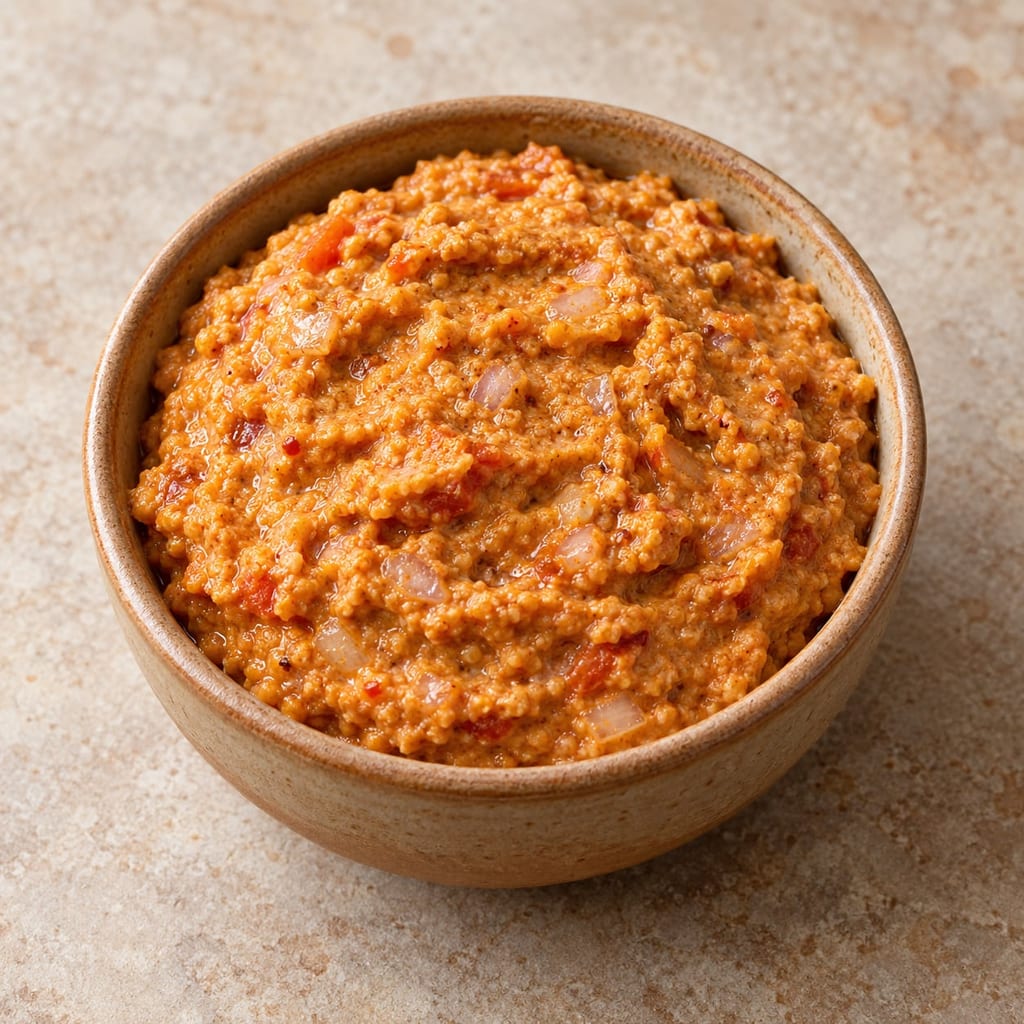
A moist Andhra peanut chutney: roasted groundnuts ground with fried dried chillies and tamarind, folded into a roasted tomato-and-spice mix with raw onion, and eaten with khichdi, attu or idli.
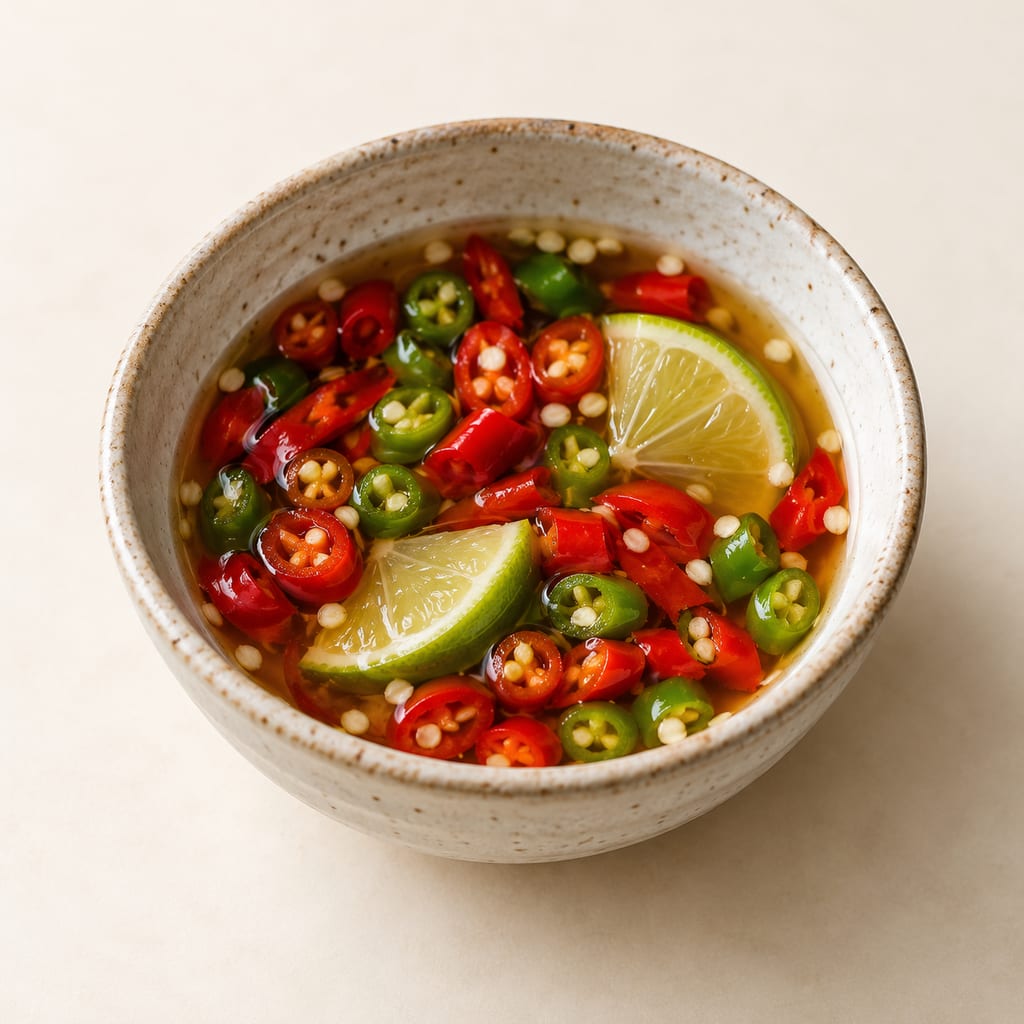
Fresh sliced chillies, fish sauce and lime form a sharp Thai table condiment. Spoon a little alongside rice, eggs or other cooked dishes.
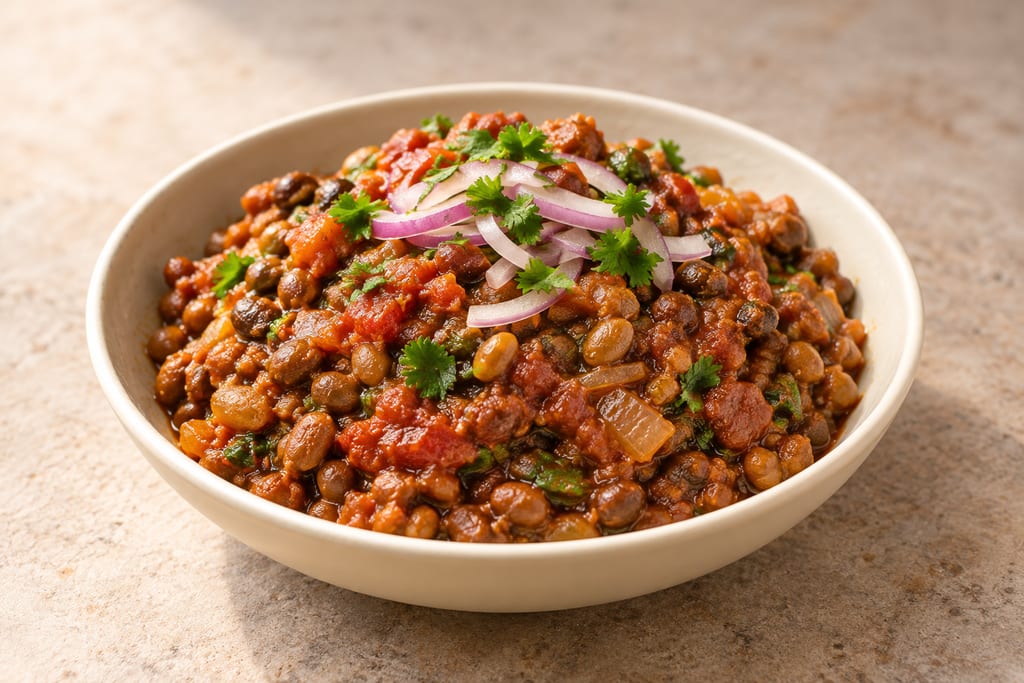
Kinema ra golbheda ko achar combines already-fermented soybean kinema with tomatoes, onion, garlic and spices, finished with sesame powder and fresh garnish, and is eaten with rice or toast.
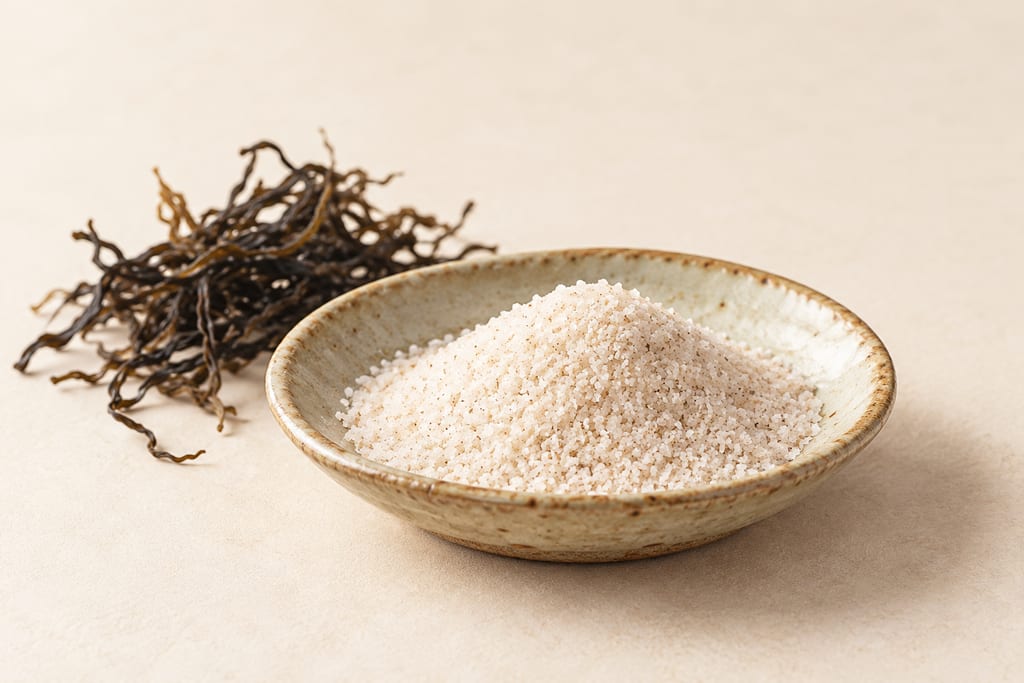
Amabito no Moshio is a modern, pale beige Japanese seaweed salt made from Seto Inland Sea water and hondawara seaweed. Its documented factory method concentrates filtered brine in kettles, then separates and dries the salt.
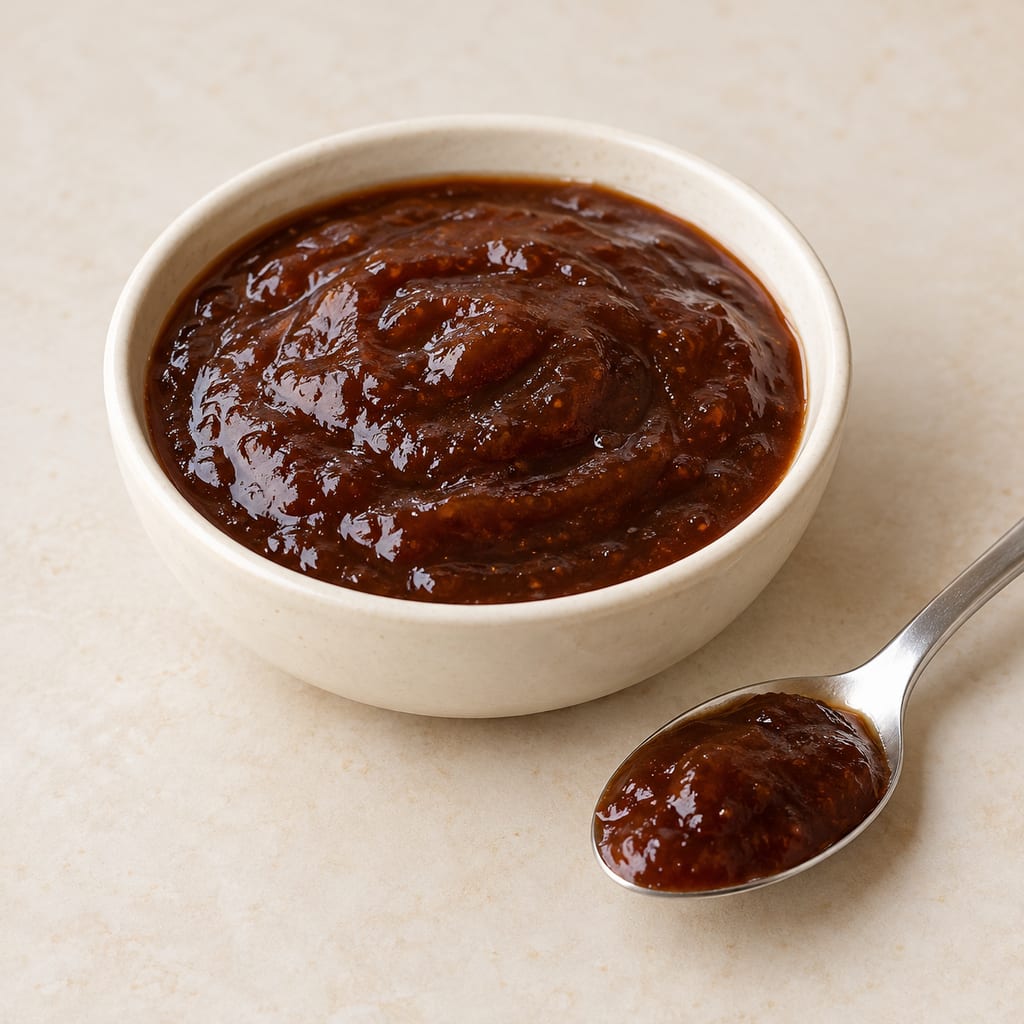
A sweet-sour cooked chutney of tamarind, dates, jaggery, ginger and roasted cumin. An untested measured batch is given beside four documented Indian formulas and their storage claims.
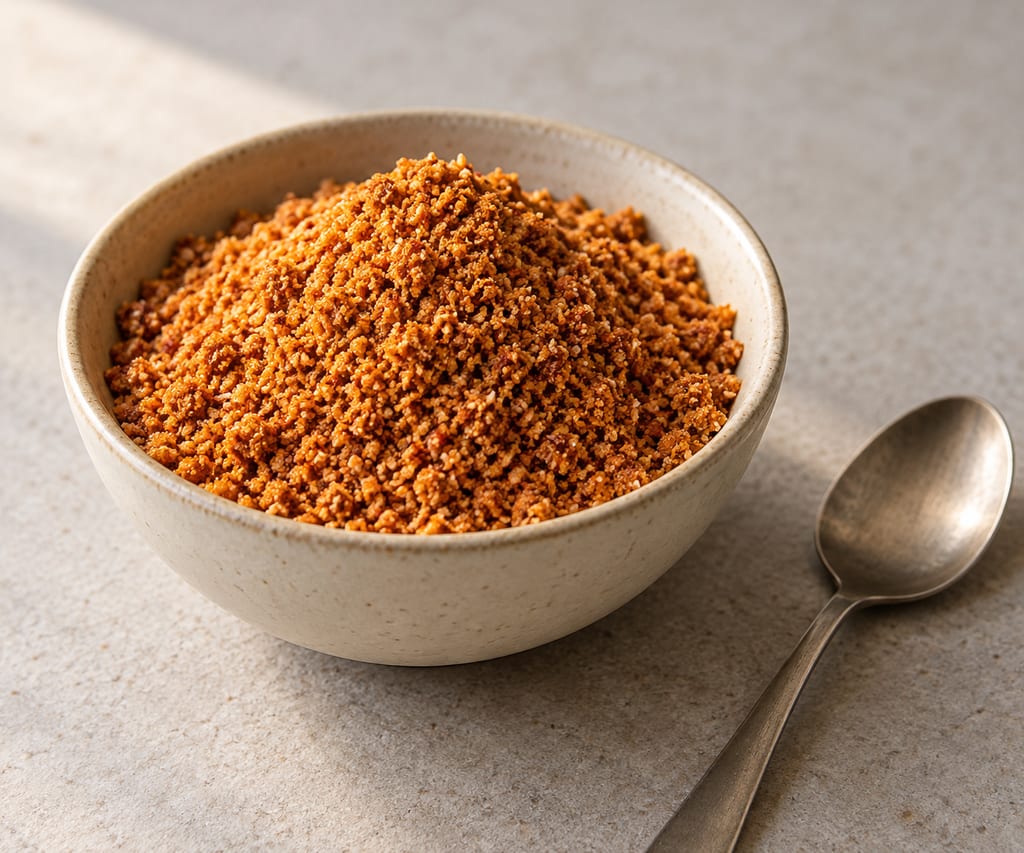
A Maharashtrian dry chutney of slowly roasted sesame and coconut ground fine with garlic, chilli powder, cumin, tamarind and sugar, kept in a bottle and eaten as a winter side.
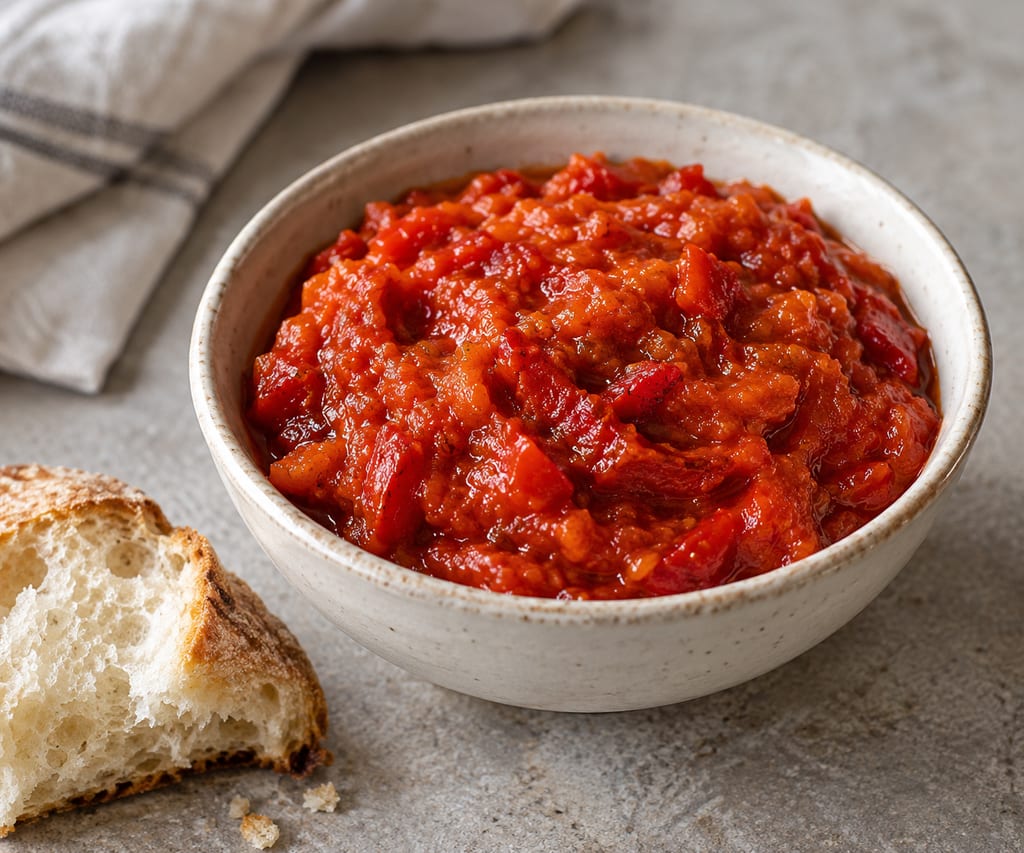
A Balkan relish of cooked peppers, tomatoes, aubergine and garlic in oil, sometimes made hot, served cold and named for its spiciness.
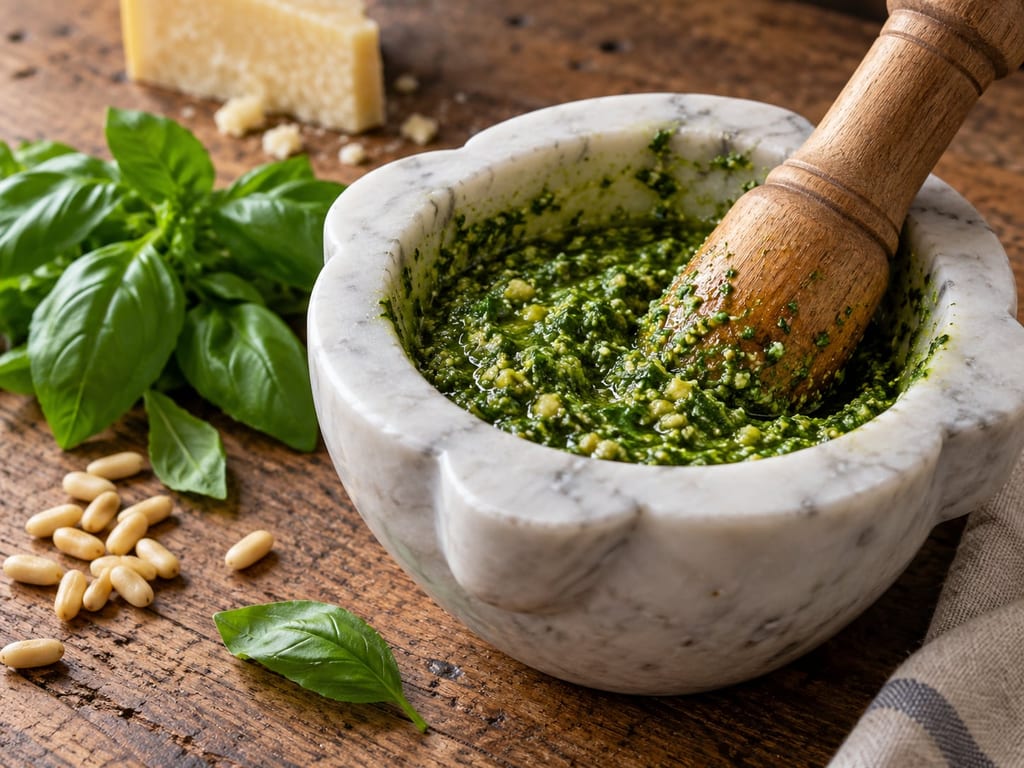
Pesto Genovese is a Ligurian uncooked basil sauce pounded with garlic, pine nuts, salt, hard cheeses and olive oil, traditionally made in a mortar.
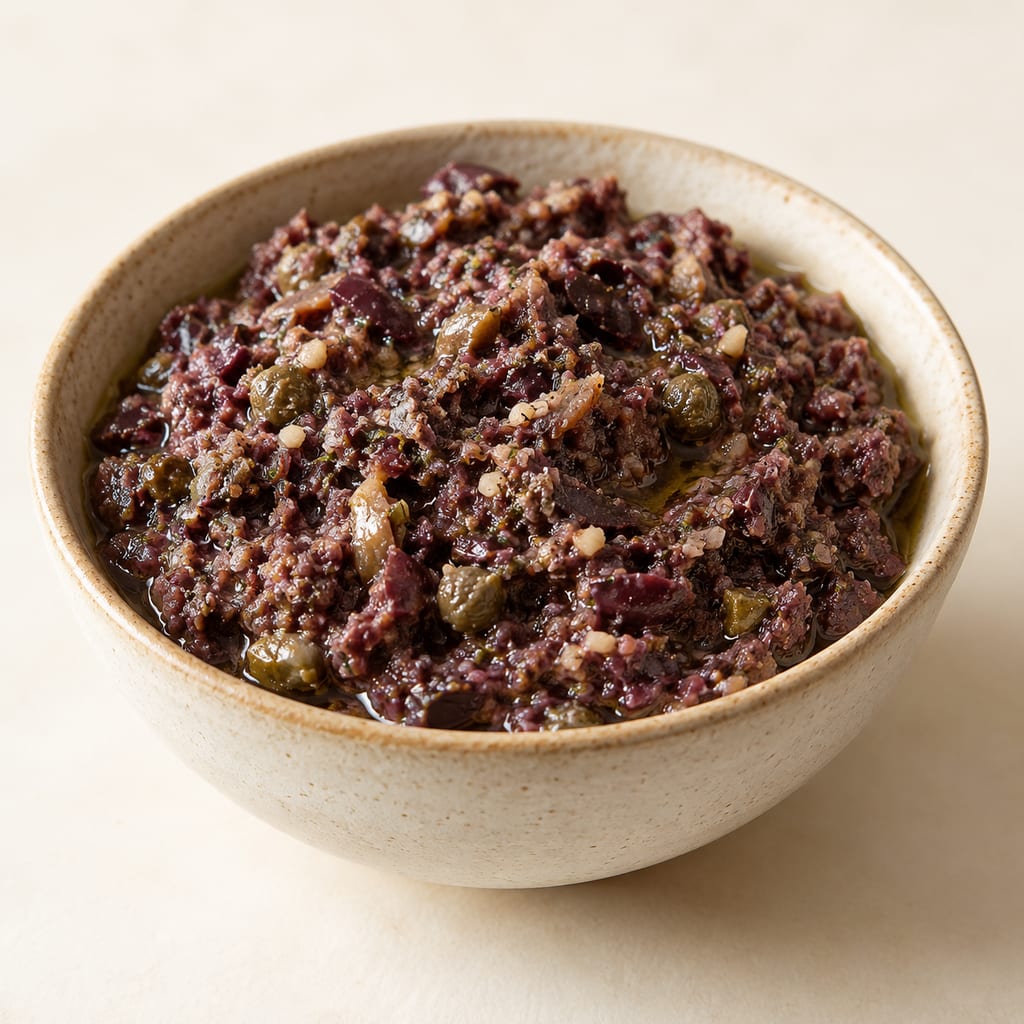
A Provençal olive spread built around olives and capers, with anchovy, garlic, lemon and olive oil in Marseille’s current recipe. Both coarse and finely worked versions are documented.
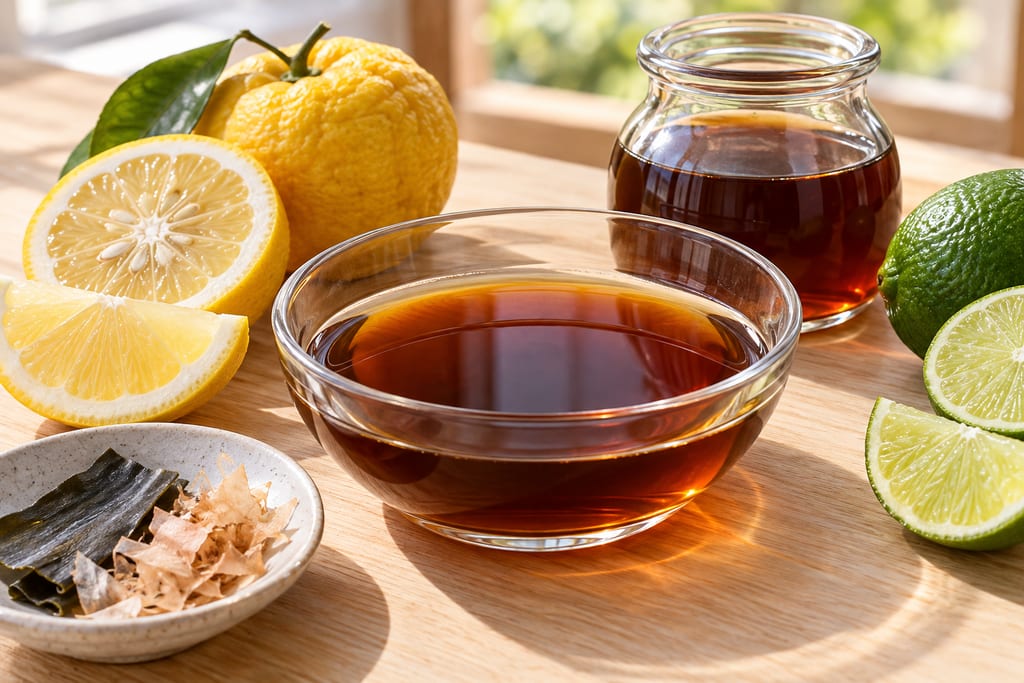
This fresh ponzu-shoyu mixes Japanese koikuchi soy sauce with yuzu or a lemon-lime blend, rice vinegar, water and sugar; optional kombu and bonito give a short chilled infusion.
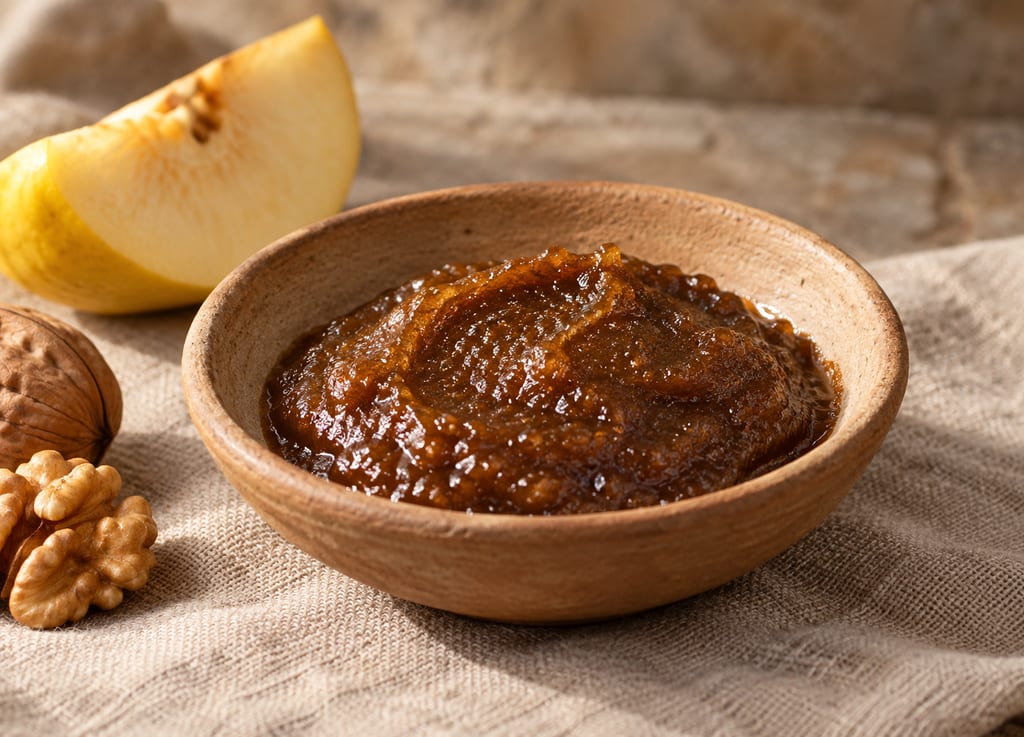
Byzantine murrī is a cooked imitation of murrī from the medieval Arabic repertoire, made from scorched honey, toasted bread, walnuts, quince, carob and spices rather than from a long grain fermentation.
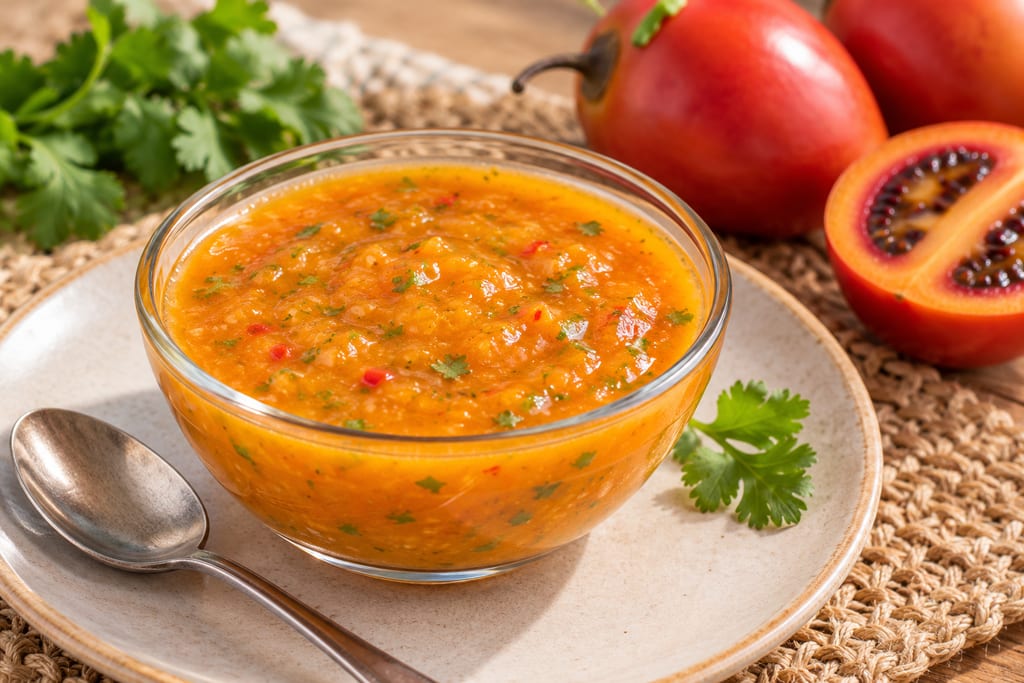
An Ecuadorian hot sauce built on tamarillo, a tart fruit that gives a sharper, fleshier base than ordinary tomato salsa.
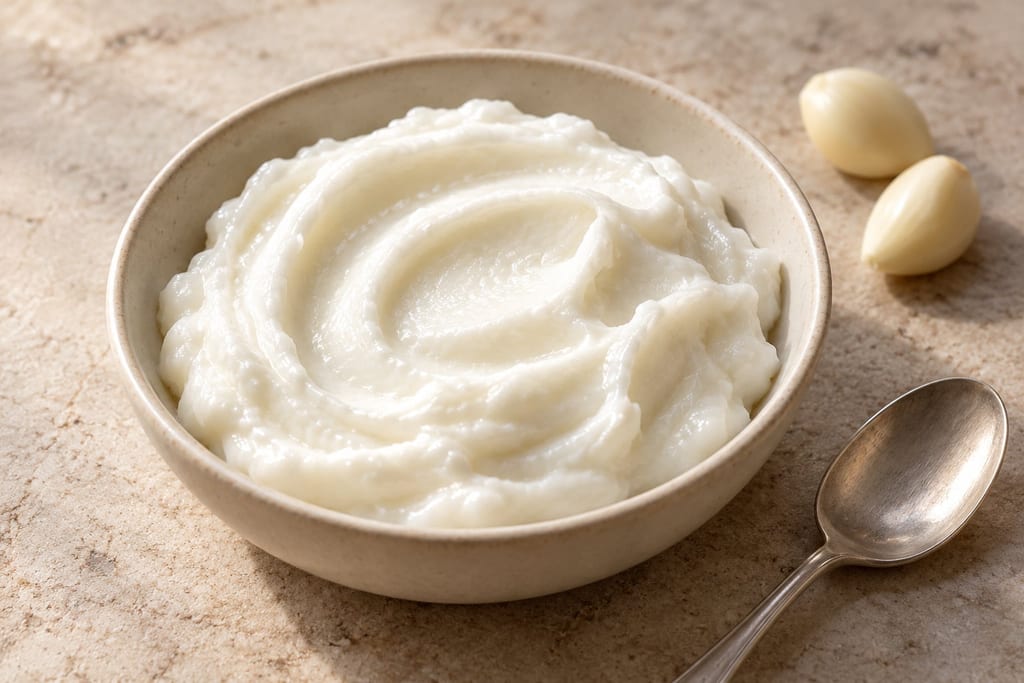
Toum is a Lebanese garlic-and-oil emulsion: raw garlic, salt, lemon and a little water are processed into a dense, pale, egg-free sauce. Slow oil addition builds its fluffy texture; it is served with grilled foods, sandwiches and mezze.
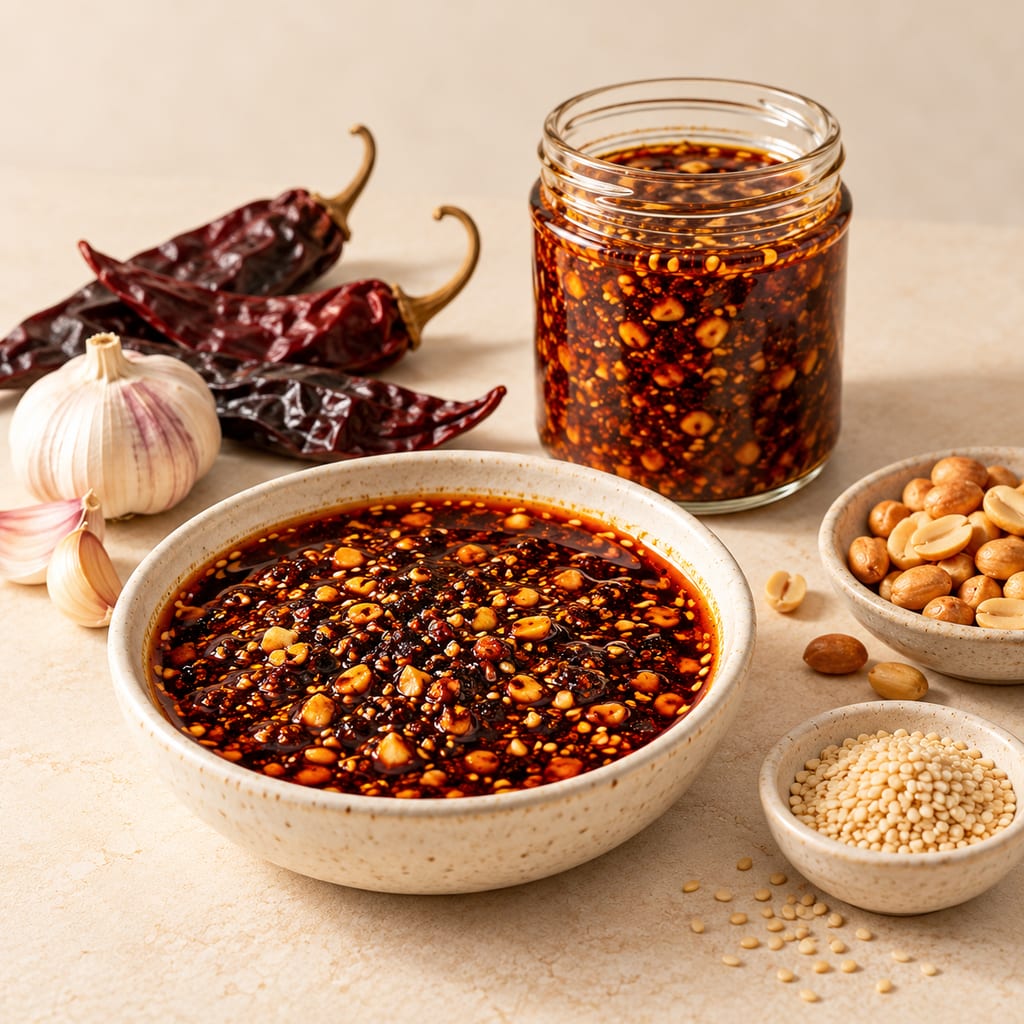
Salsa macha is a Mexican chile-and-oil condiment, often coarse with garlic, peanuts and sesame; this version follows a documented gentle-cook method and stays refrigerated.
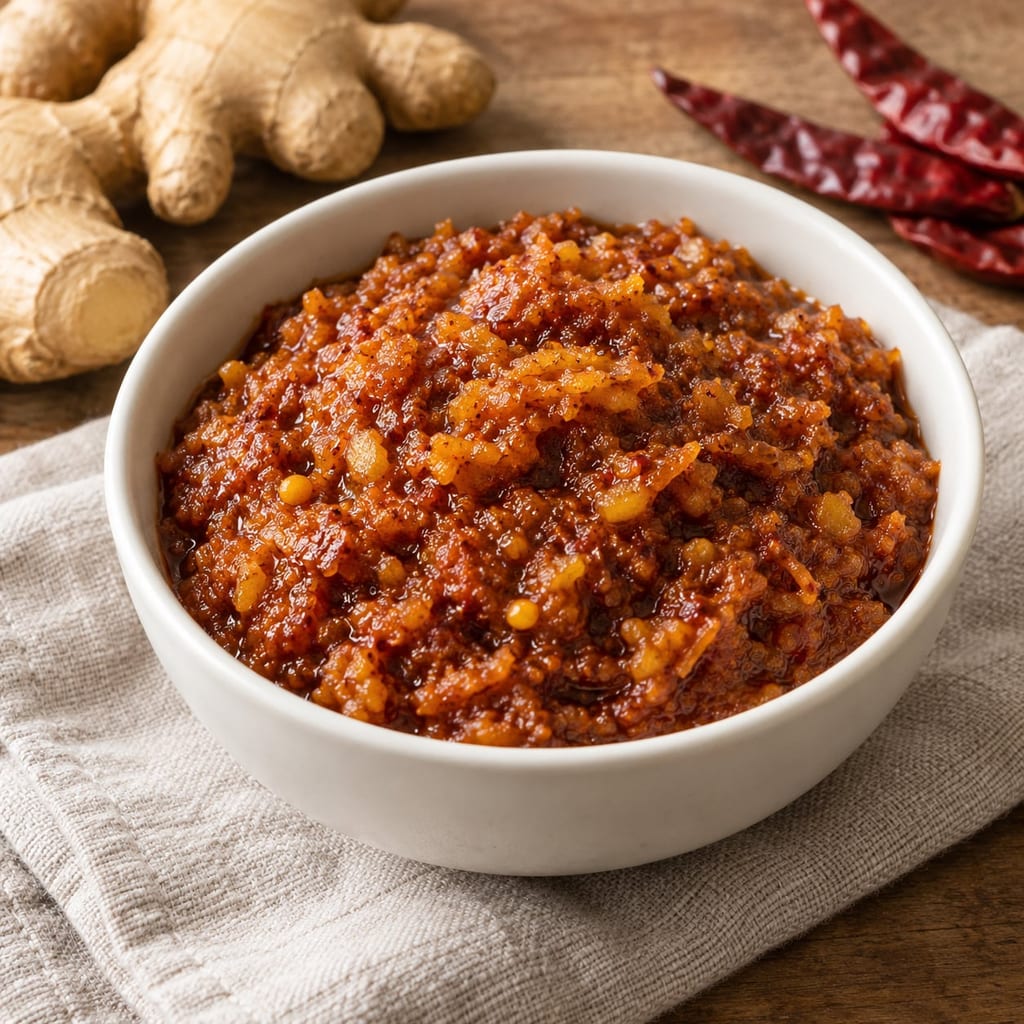
An Andhra ginger-and-urad chutney in which browned dal and briefly fried ginger and chillies are cooled, then ground with jaggery to a coarse paste.
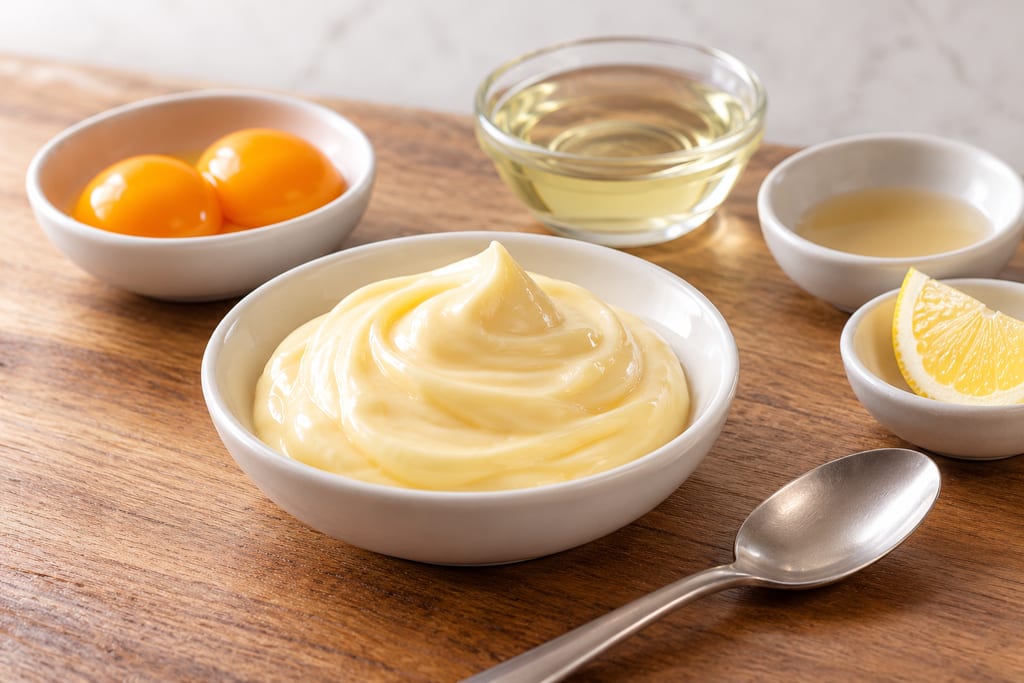
A one-cup Japanese mayonnaise batch made in a small food processor with pasteurized room-temperature egg yolks and oil added in three stages around the seasonings and acids.
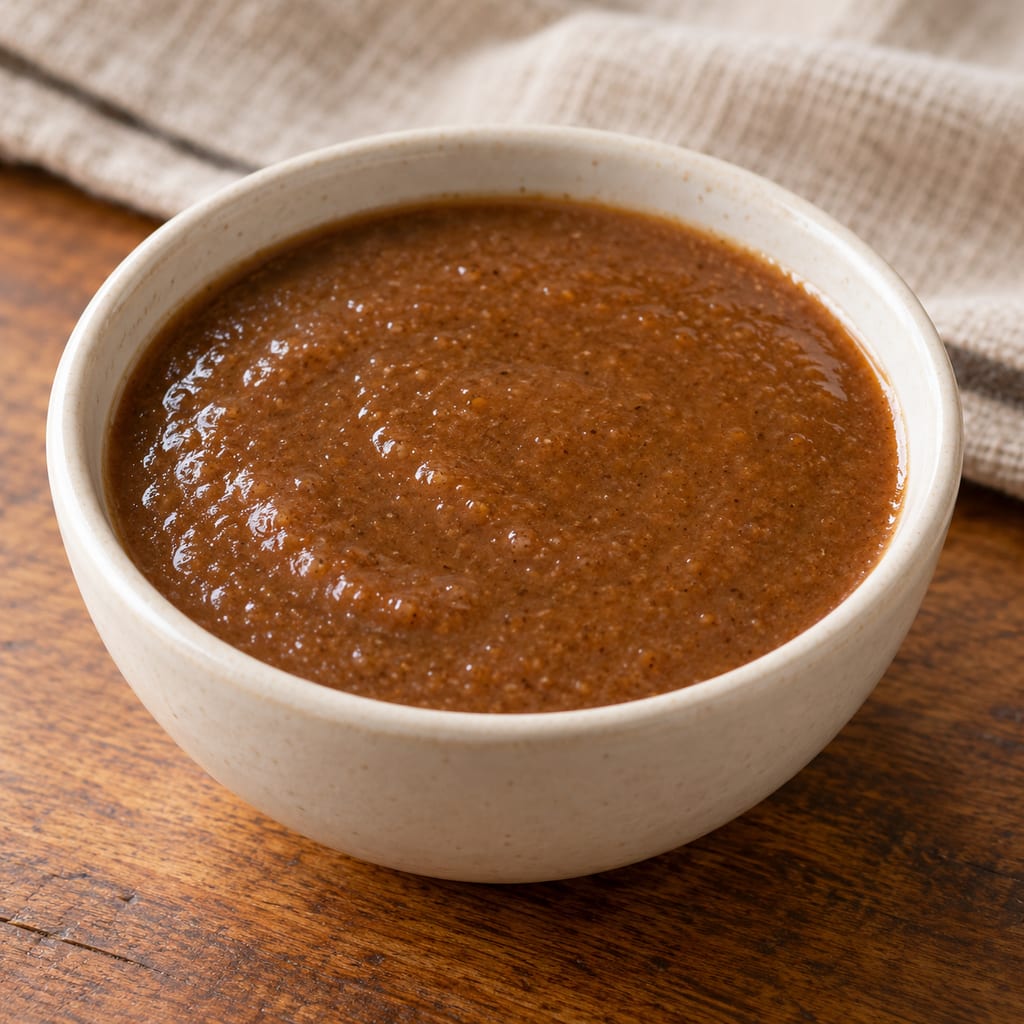
A cooked Filipino roast-meat sauce thickened from canned liver spread, vinegar, water, sugar and breadcrumbs, with browned garlic and softened onion.
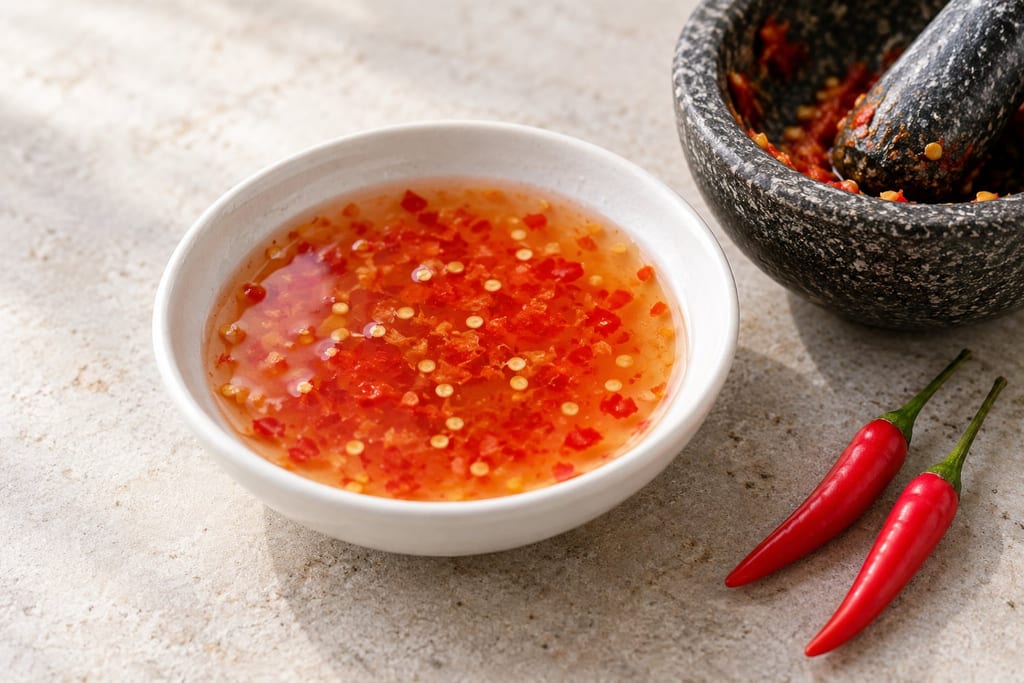
Pailin Chongchitnant's fresh prik nam som card pounds two or three Thai chillies, optionally with garlic, before stirring in white vinegar; charring is a separate optional step.
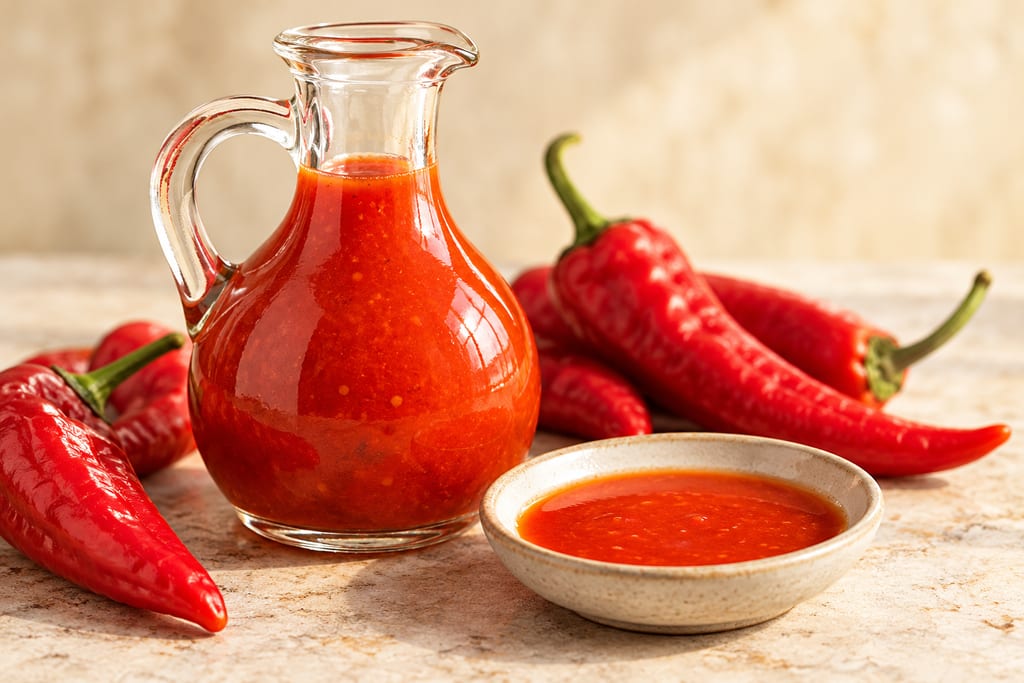
Fresh hot peppers ferment beneath a measured salt brine, then become a bright, tangy sauce blended from the peppers and their liquor.
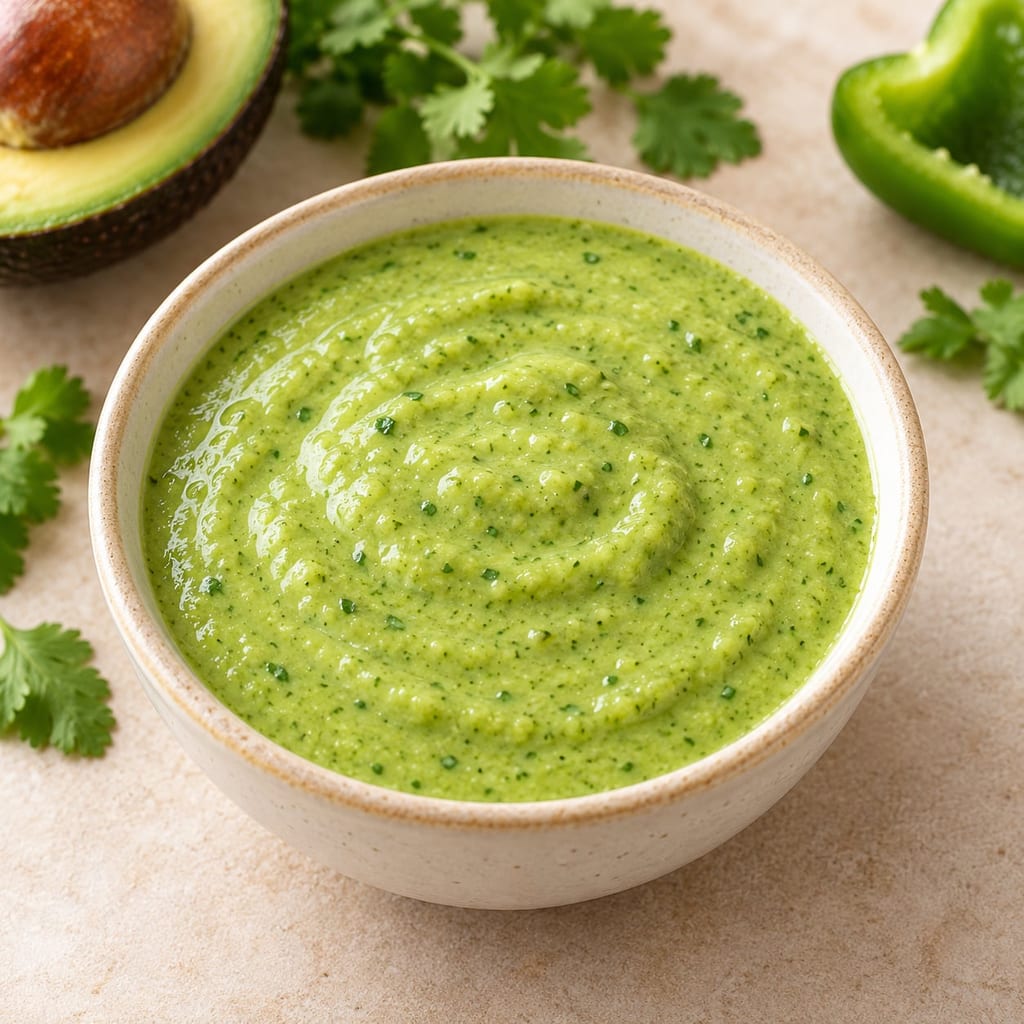
Guasacaca is a Venezuelan green sauce of avocado, herbs, sweet pepper and onion, sharpened with vinegar or lime. It is served with grilled meat, arepas and empanadas.
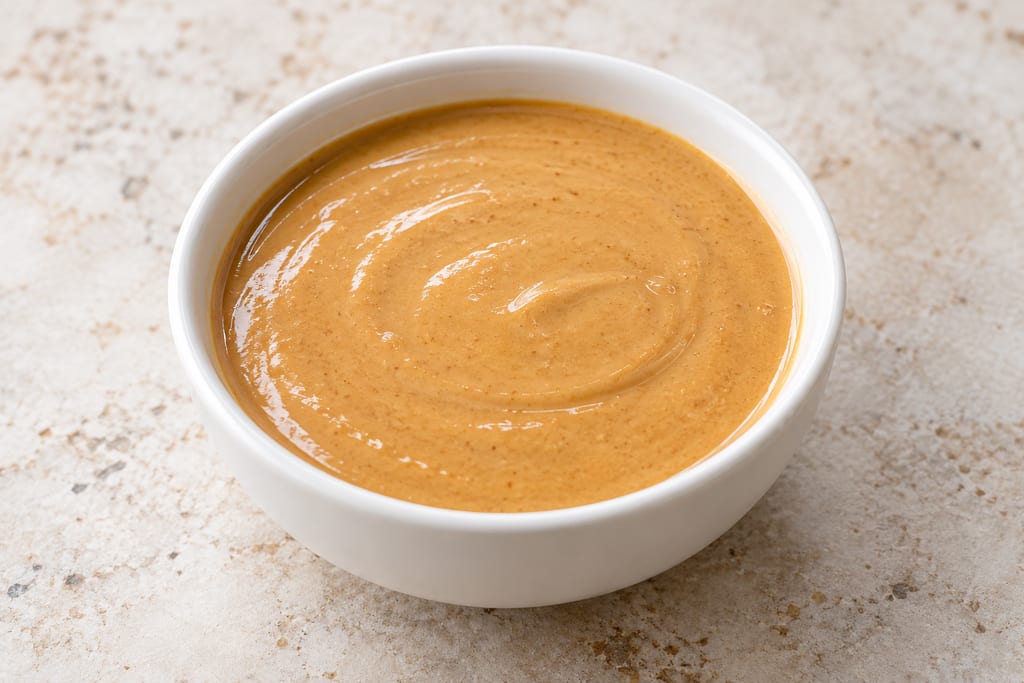
A smooth dressing of peanut butter, oil and lime, tossed into a Sudanese-style tomato salad and served at once.
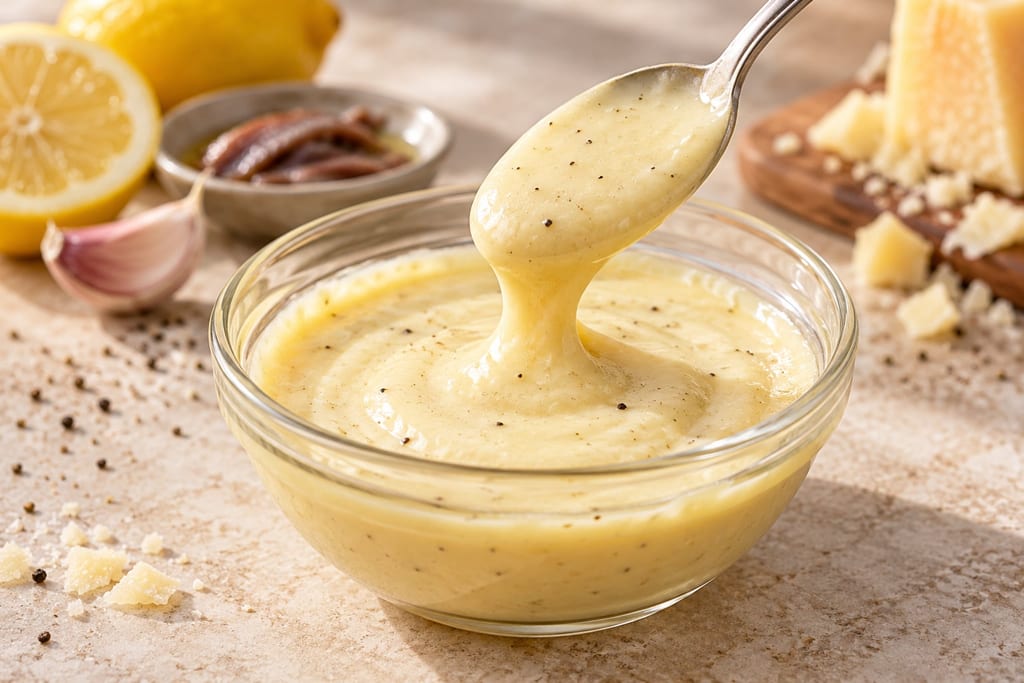
A source-specific Caesar dressing made with pasteurized egg yolks, Parmesan, lemon, anchovy, garlic, mustard and olive oil. This modern Vitamix formulation is distinct from the salad’s disputed 1924 origin accounts.

A warm dip of garlic, anchovy and olive oil, often enriched with butter, that Piedmont serves over a flame with raw and cooked vegetables and bread.
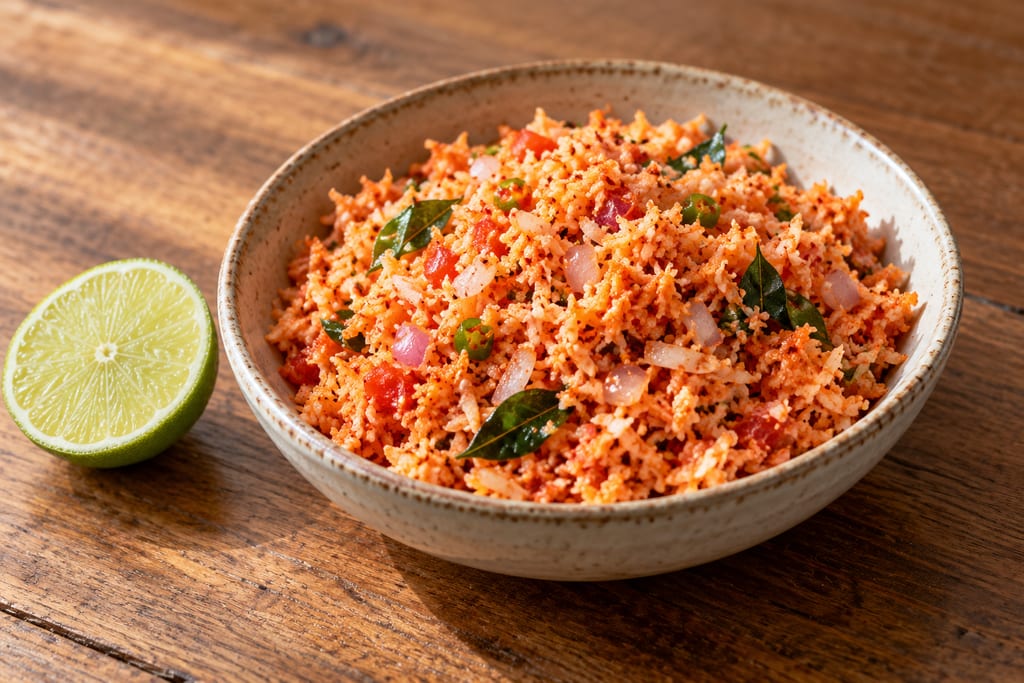
A Sri Lankan coconut relish made from grated coconut, aromatics, chilli, lime and optional Maldive fish; a seasoned paste is folded through the coconut by hand.
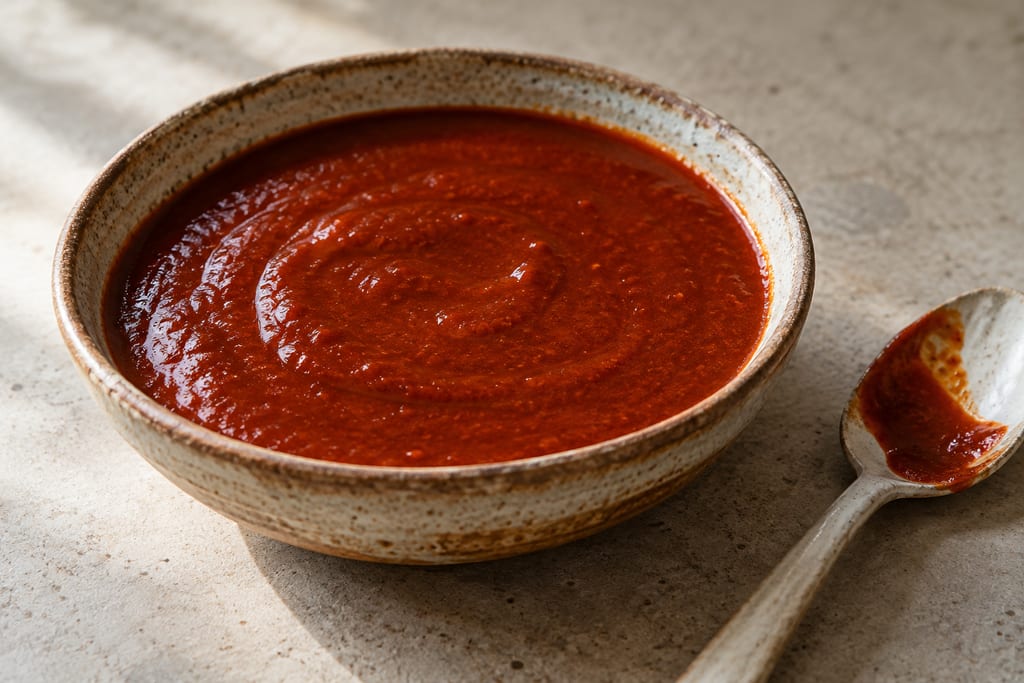
New Mexican red chile sauce is a smooth, cooked sauce of dried red chile, thickened with a little flour and loosened with water, and used to coat enchiladas and to build chile con carne.
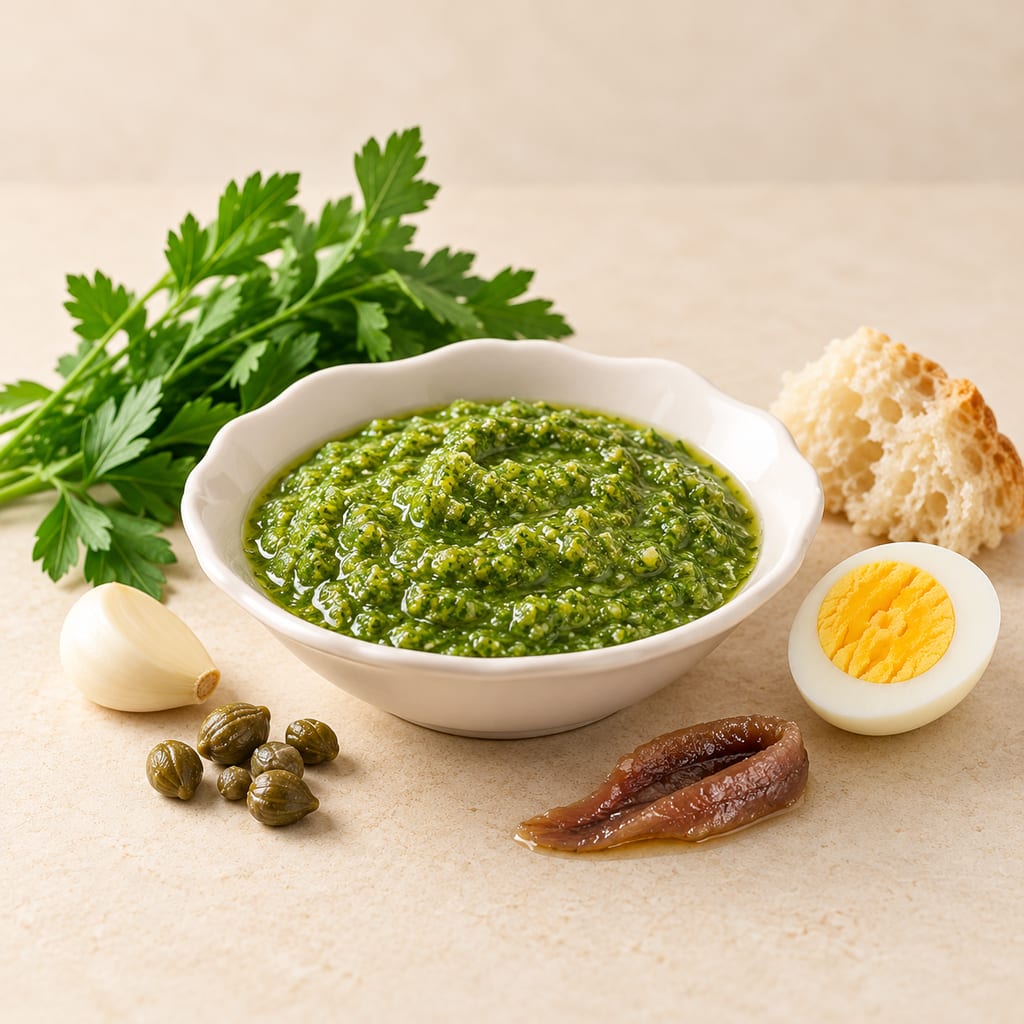
A cold parsley sauce of capers, anchovy, garlic, olive oil and vinegar, with bread or egg in some regional versions, served across Italy with boiled meats and fish.
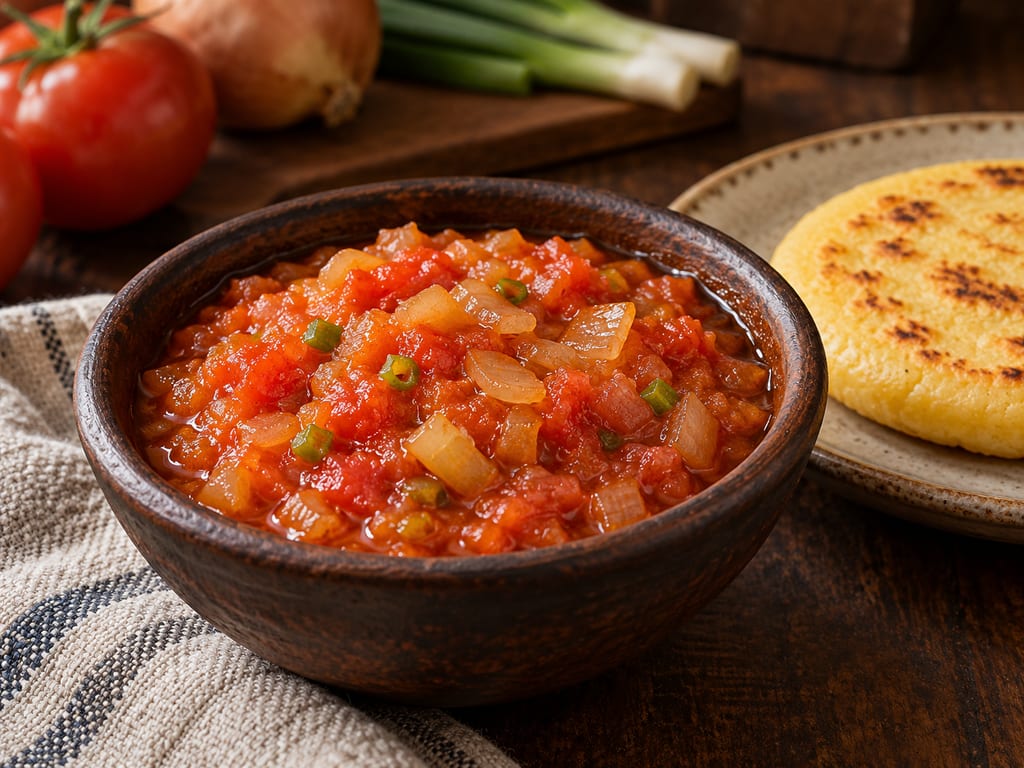
A slow-cooked Colombian sauce of tomato, onion and scallion that serves as the base of many dishes and as a topping for arepas and patacones.
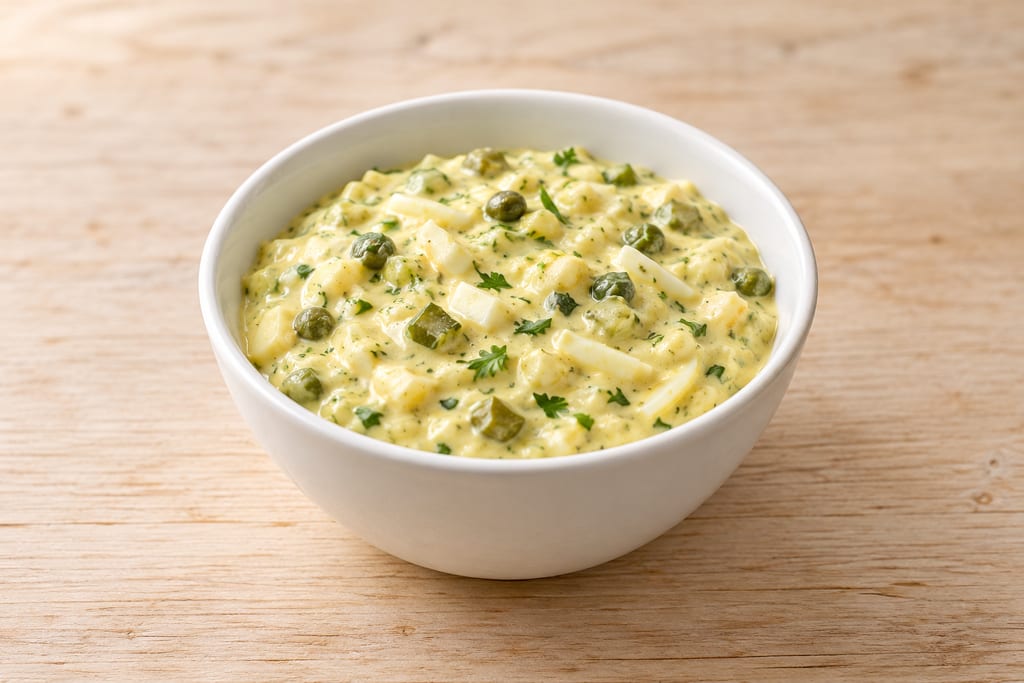
A cold French sauce of emulsified hard-boiled egg yolk and mustard, finished with chopped pickled cucumber, capers and herbs and julienned egg white.
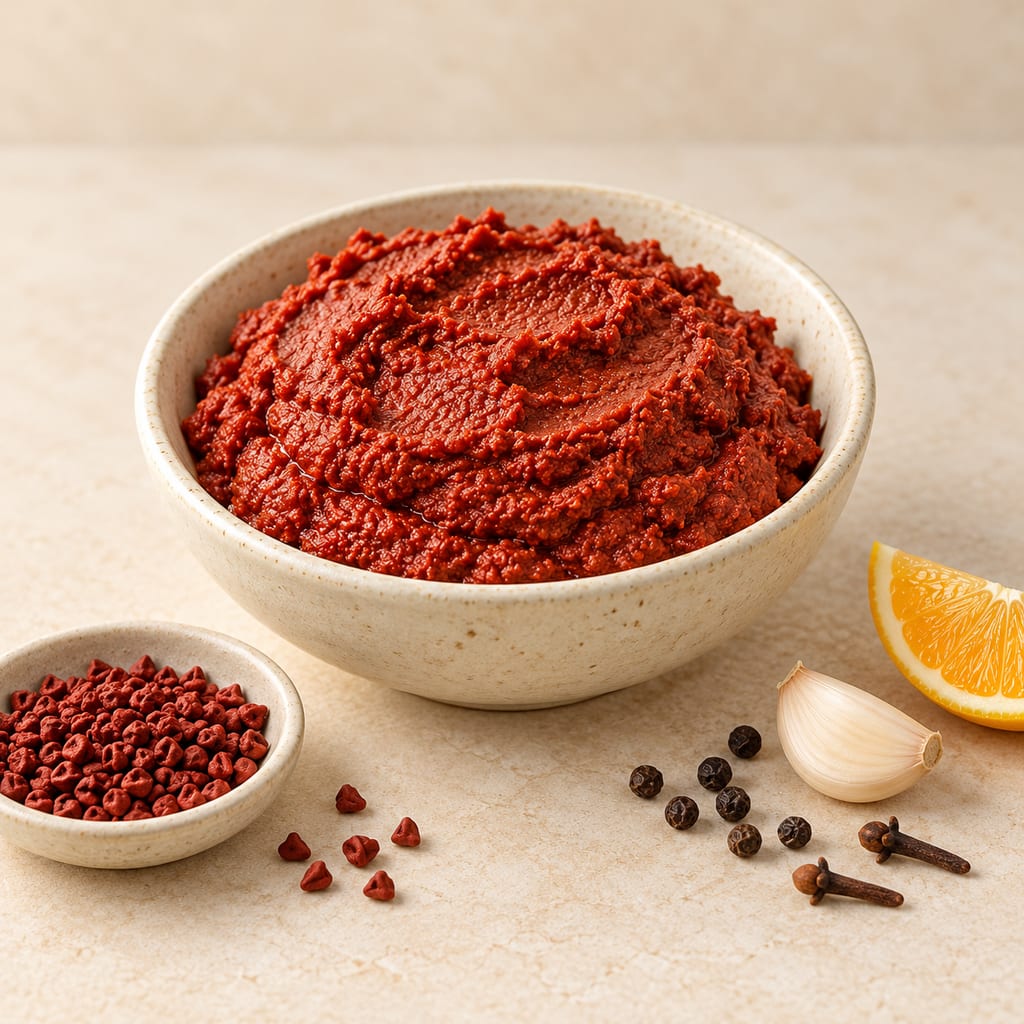
A Yucatecan recado rojo is a brick-red seasoning paste built on annatto seed, garlic and sour orange. This measured home version shows one route into a much wider family of market and household recados.
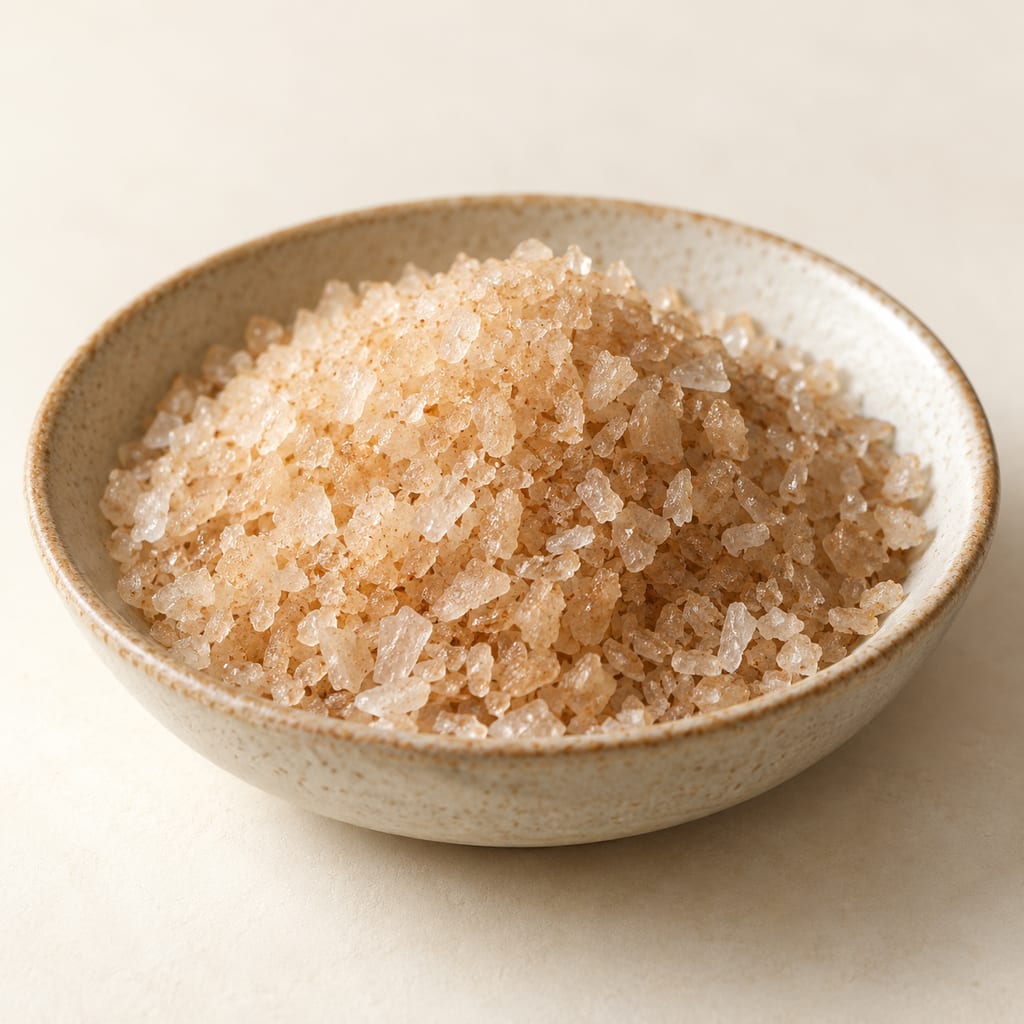
Flaky or coarse sea salt takes on hickory smoke in a pellet grill. A shallow tray lets the smoke reach the crystals before they cool for airtight storage.
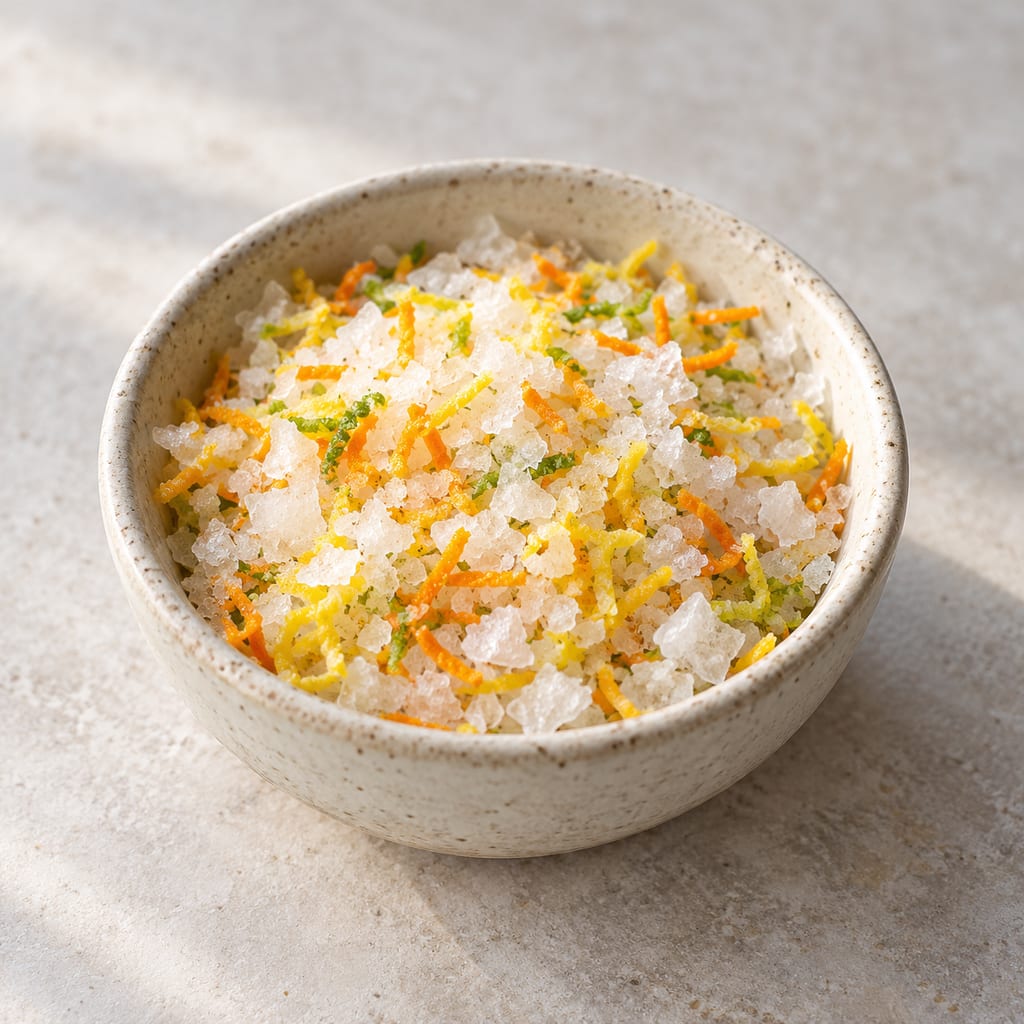
Citrus zest is rubbed into coarse or flake salt and dried on a tray. This peel-based seasoning preserves the chosen citrus aroma without adding juice.
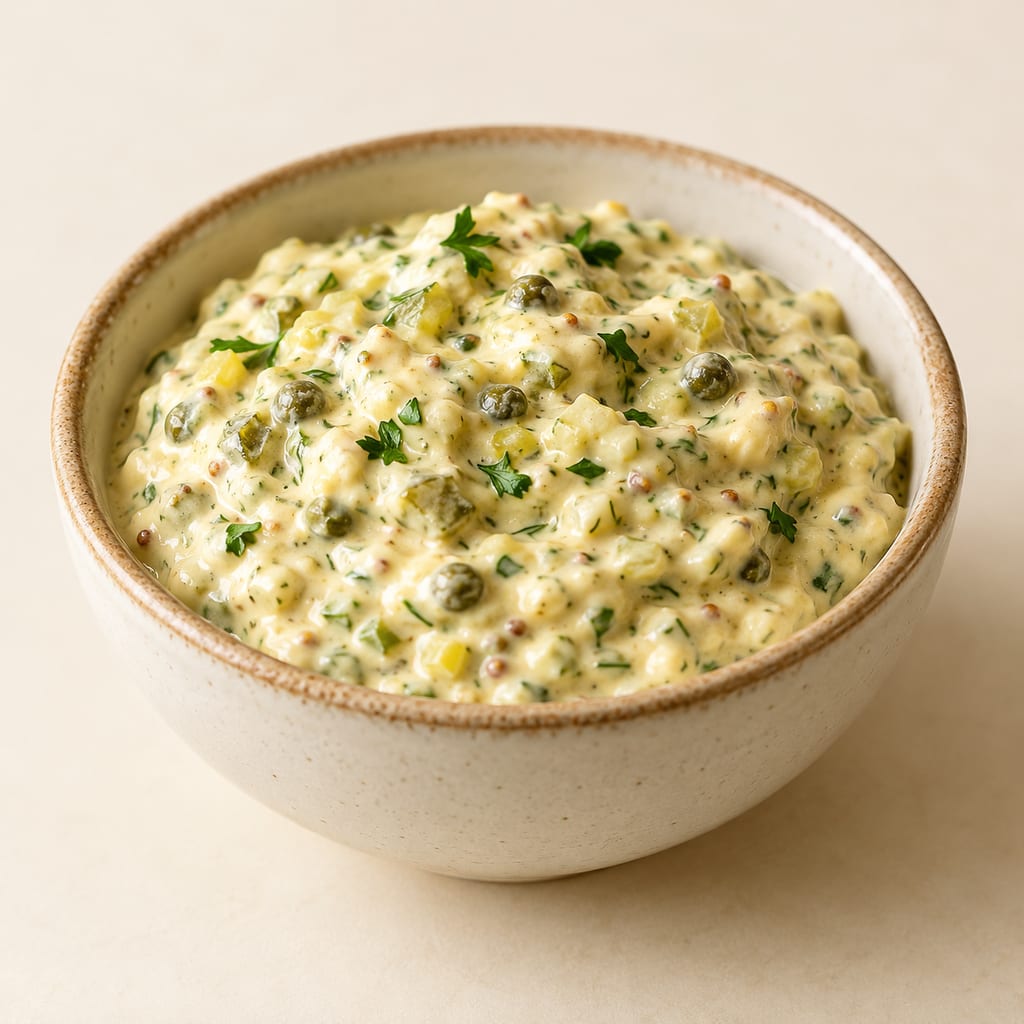
A French cold sauce made from mayonnaise with mustard, capers, cornichons and fresh herbs, served with fish, shellfish and red meats.
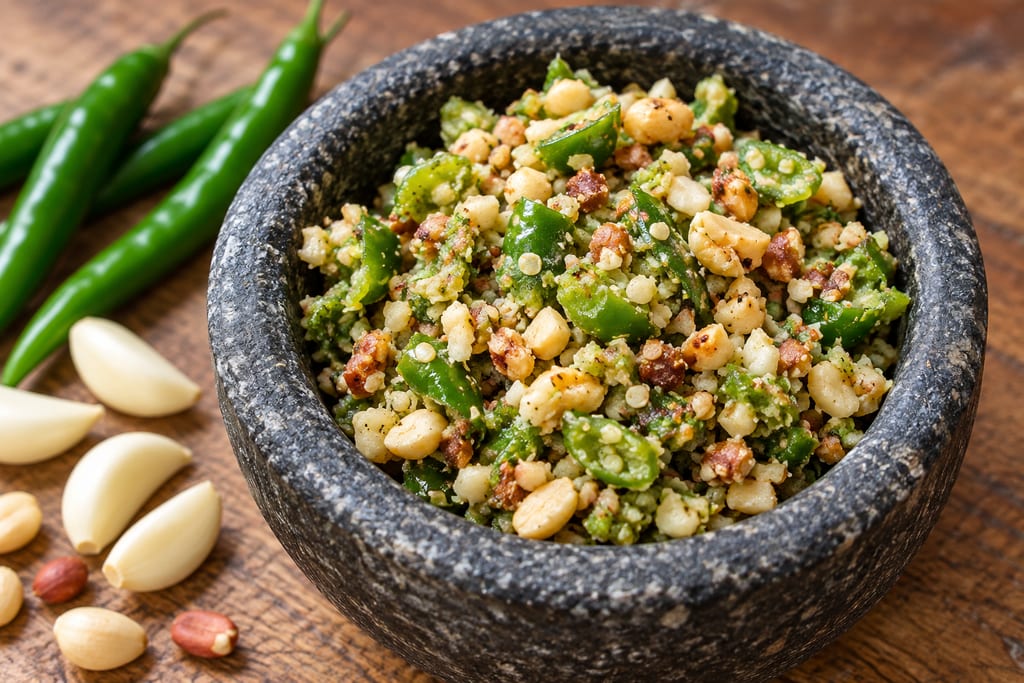
A fresh Maharashtrian thecha of green chillies, peanuts and garlic, roasted separately in the same oil and crushed with salt. Optional coriander joins the pan before grinding; serve with bhakari.
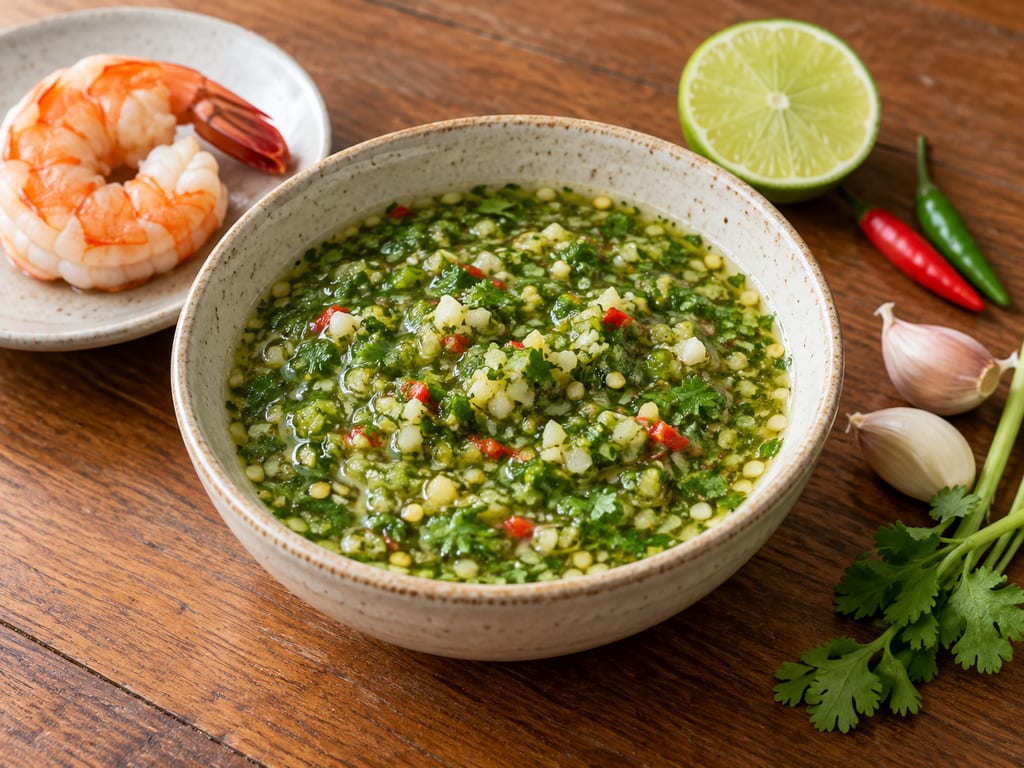
A Thai seafood dipping sauce of chiles, garlic, cilantro stems, fish sauce, lime juice and palm sugar, pounded or briefly blended for a coarse texture.
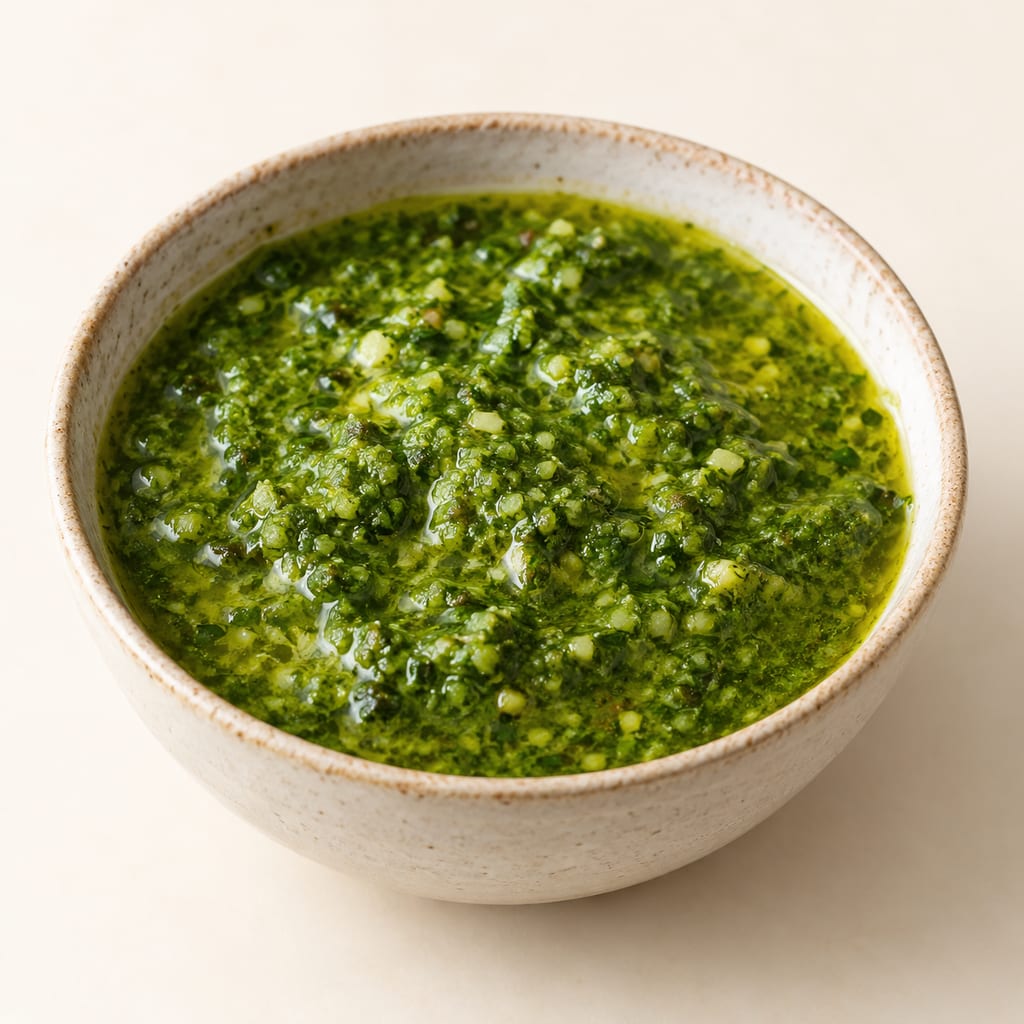
A green sauce of garlic, cumin, green chilli and fresh coriander or parsley in olive oil and vinegar, traditionally served with fish in the Canary Islands.
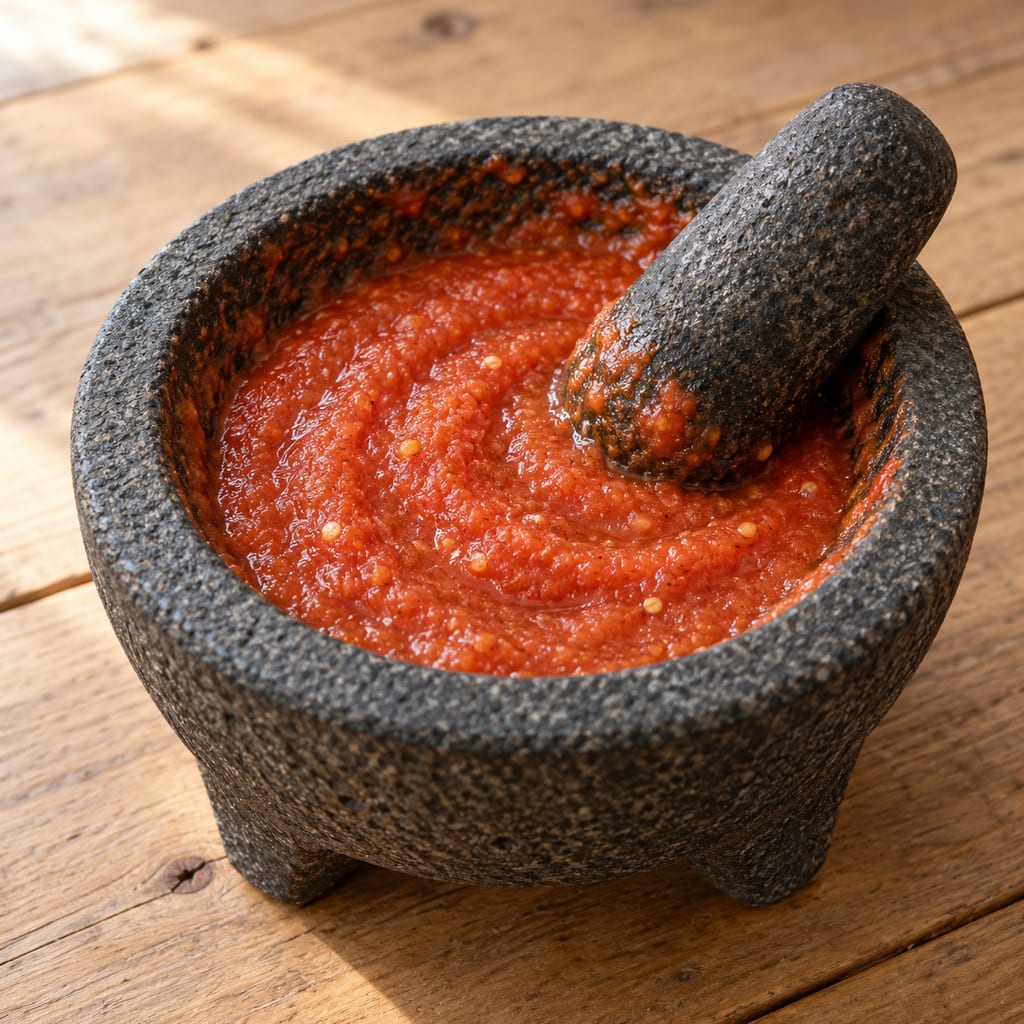
Chancho en piedra is a Chilean sauce of tomato, garlic, cumin and chilli, ground by hand in a stone mortar. Its name refers to the stone, not to pork.
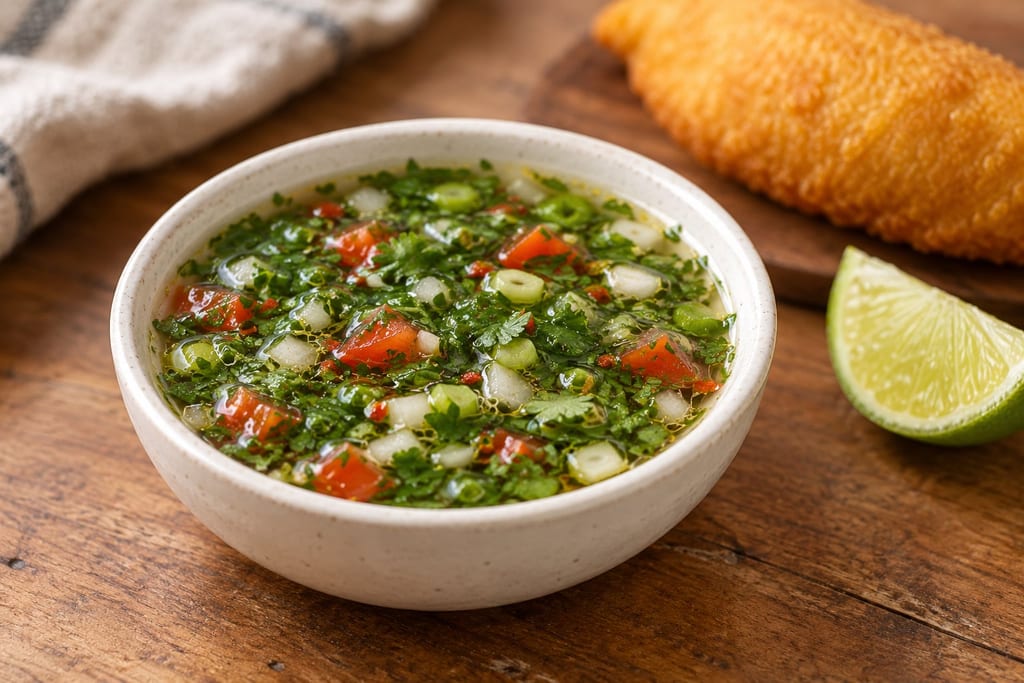
A fresh Colombian table condiment of chopped herbs, scallion and tomato in a vinegar and chile base, served beside fried and filled dishes.
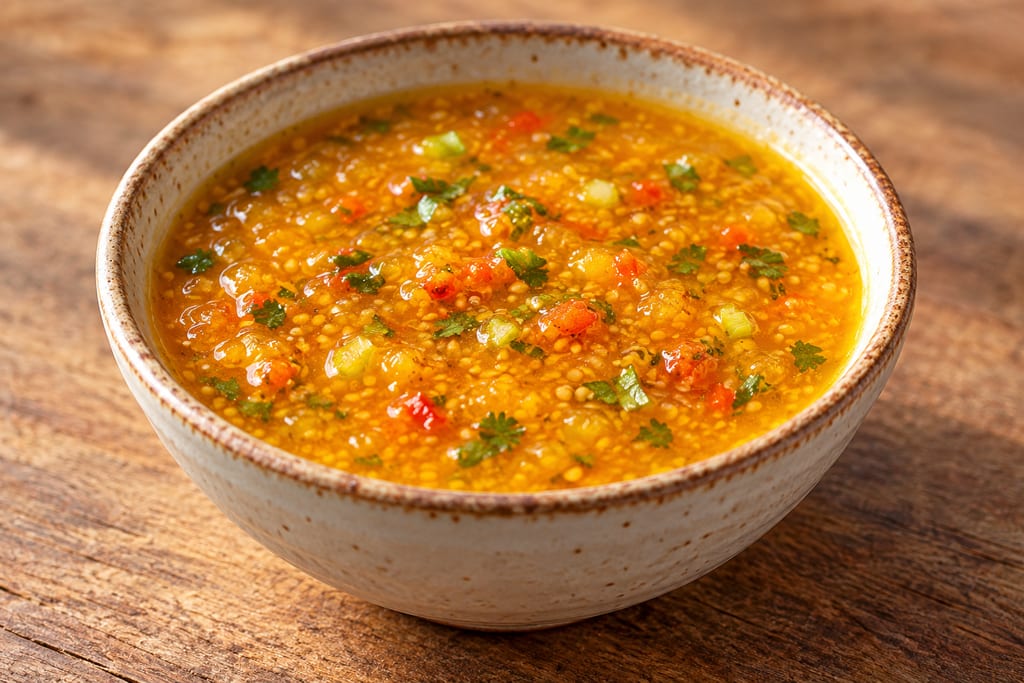
A sweet, tart and spicy Colombian sauce of uchuva, the yellow physalis fruit, with hot pepper, scallion, cilantro and lime.
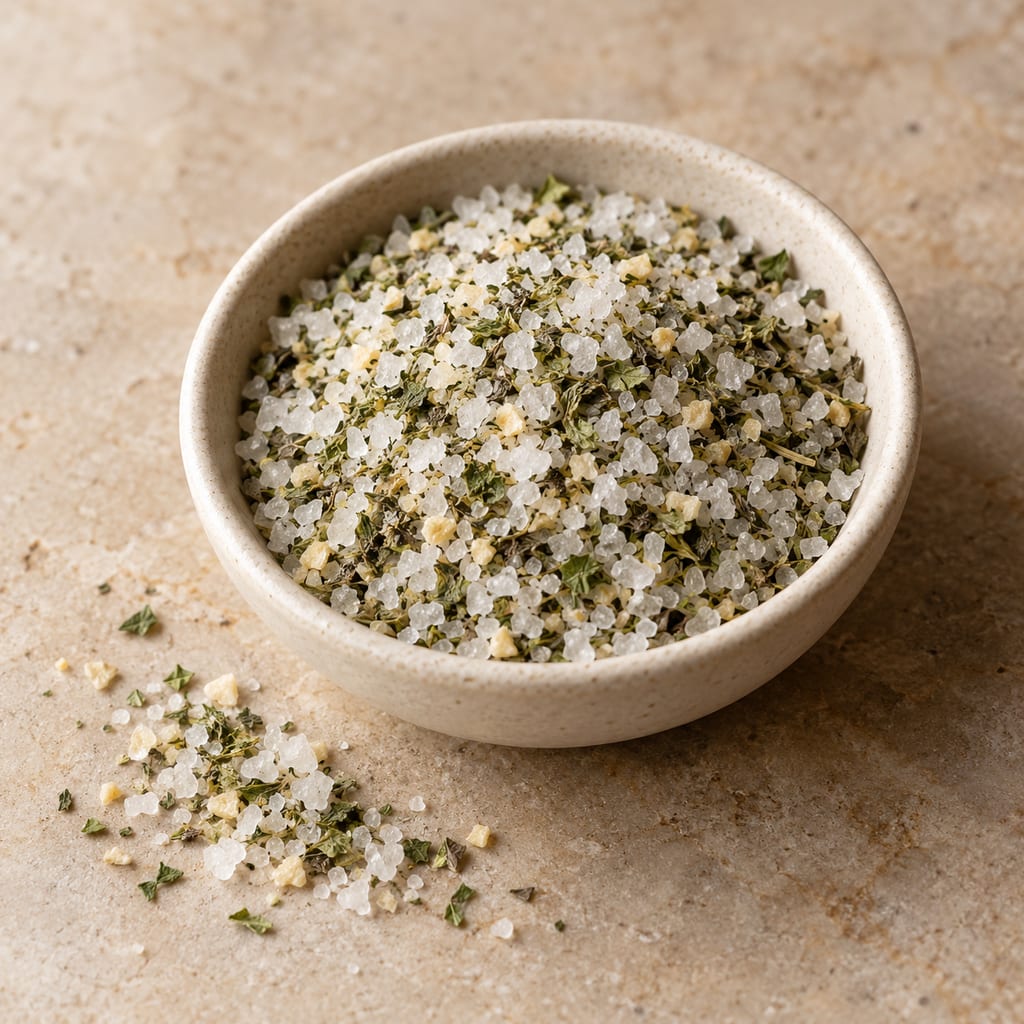
Fresh garlic and pungent herbs are chopped with kosher salt, then dried in the warmth of a switched-off oven. The blend keeps the selected herbs together in one seasoning.
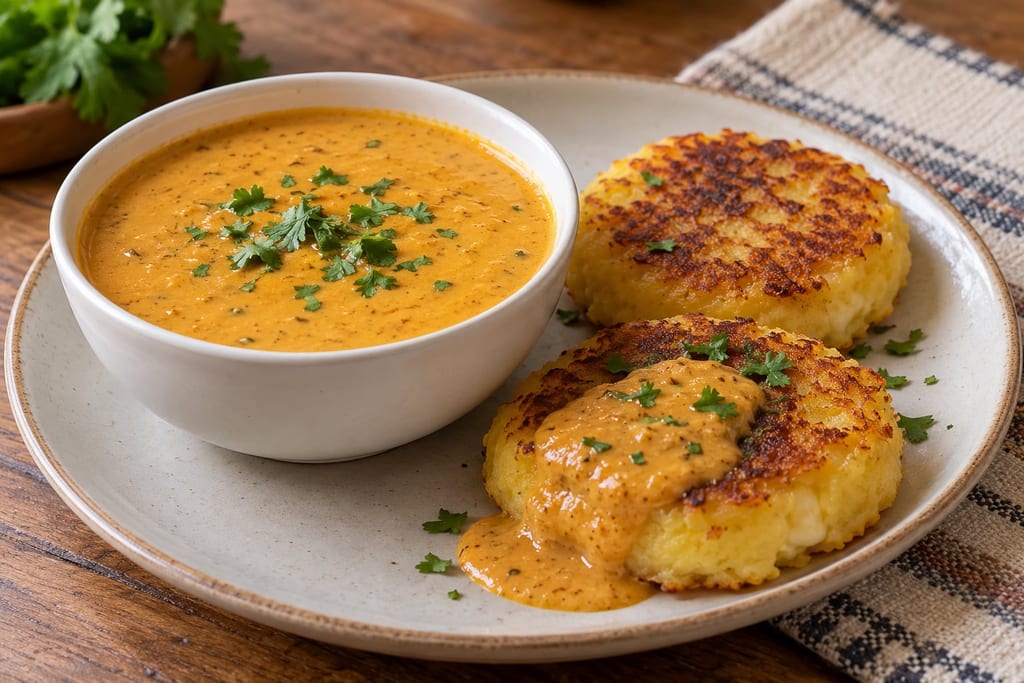
A warm, creamy peanut sauce thickened with milk and seasoned with onion, cumin and achiote, served over potatoes and llapingachos in Ecuador.
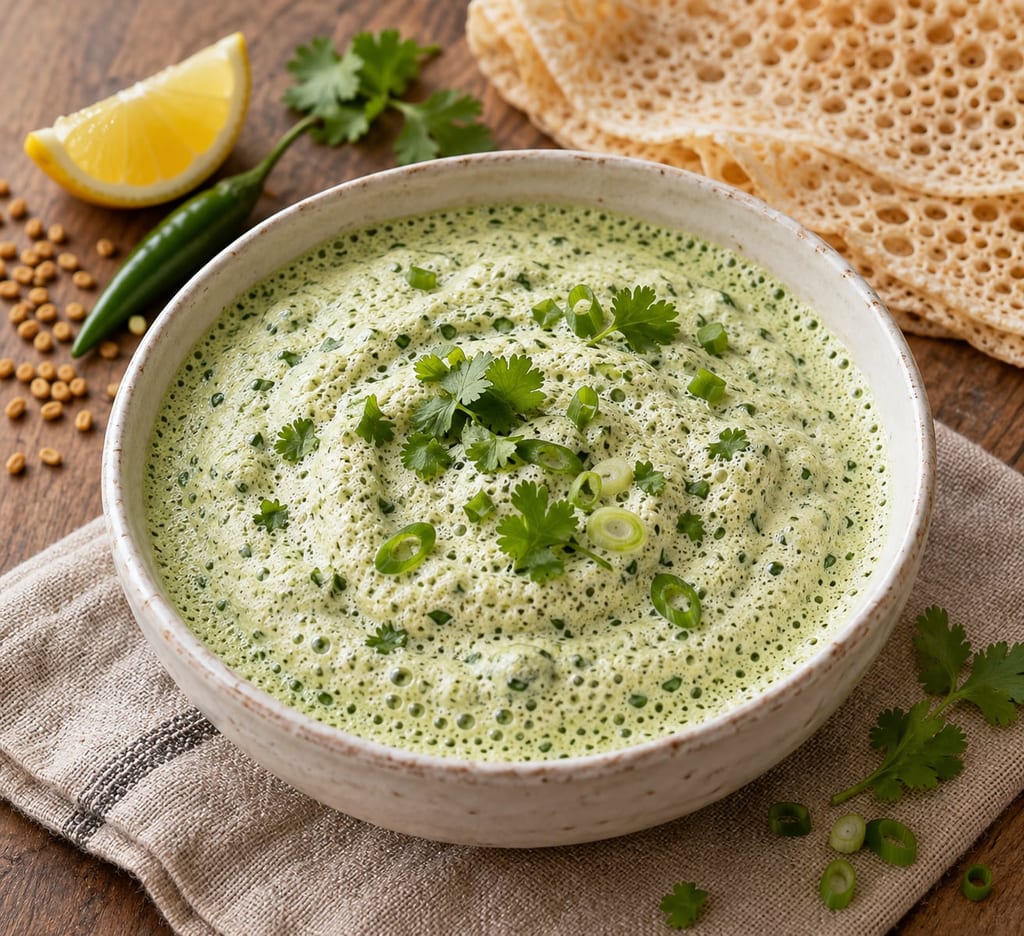
A whipped condiment of soaked ground fenugreek seed, aerated until foamy and finished with herbs, chilli and lemon. It comes from Yemen.
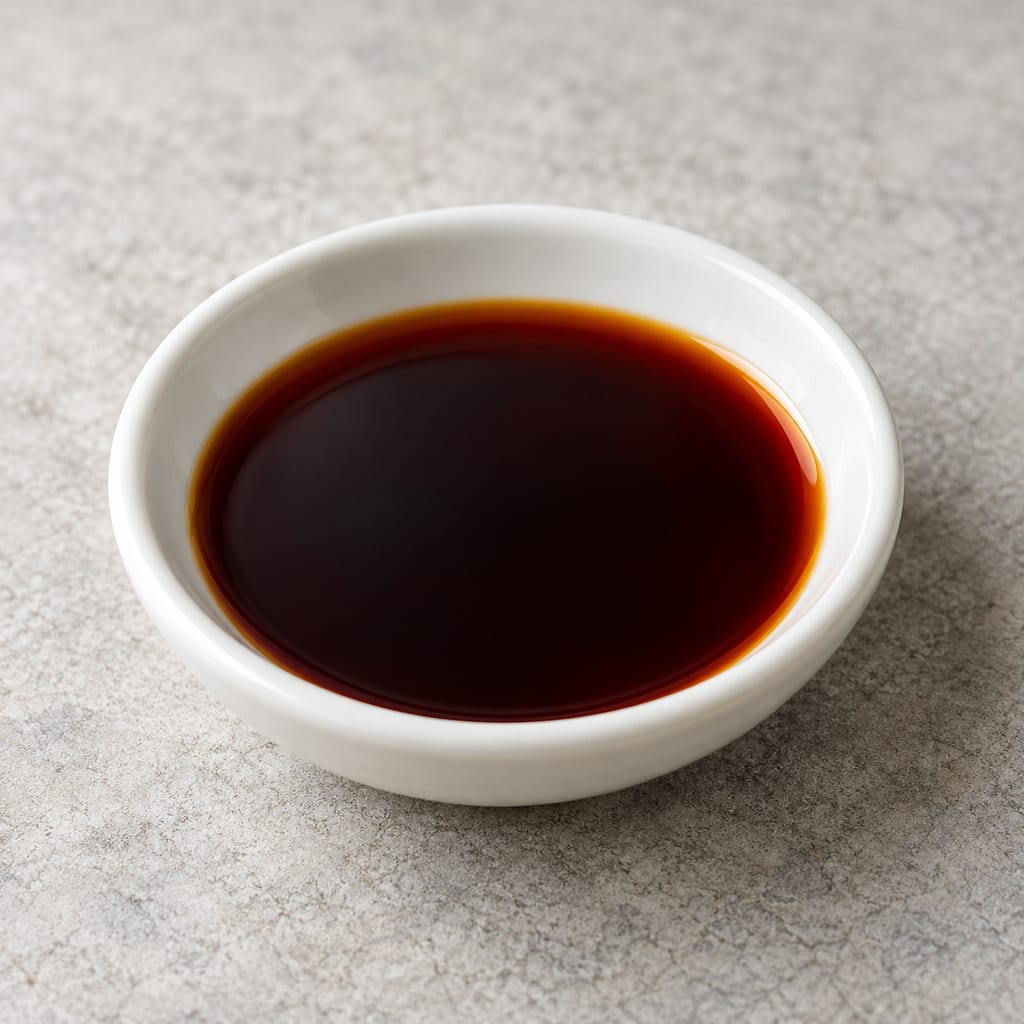
Soy sauce is a salted liquid seasoning made by growing koji mould on soybeans and grain, maturing the mash in brine and pressing out the liquid. Japan's shoyu is the best-documented form.
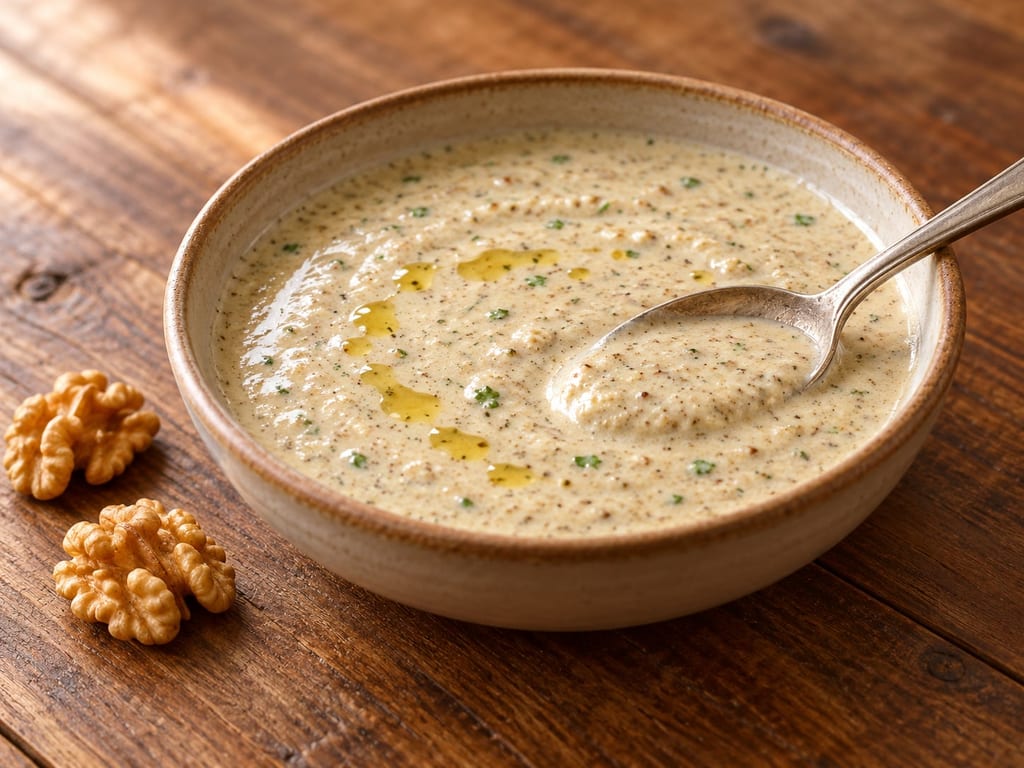
A Georgian walnut sauce of ground walnuts, garlic, vinegar and spices, thinned with water or broth. It is served with poultry, vegetables and bread, and is the sauce of the dish satsivi.