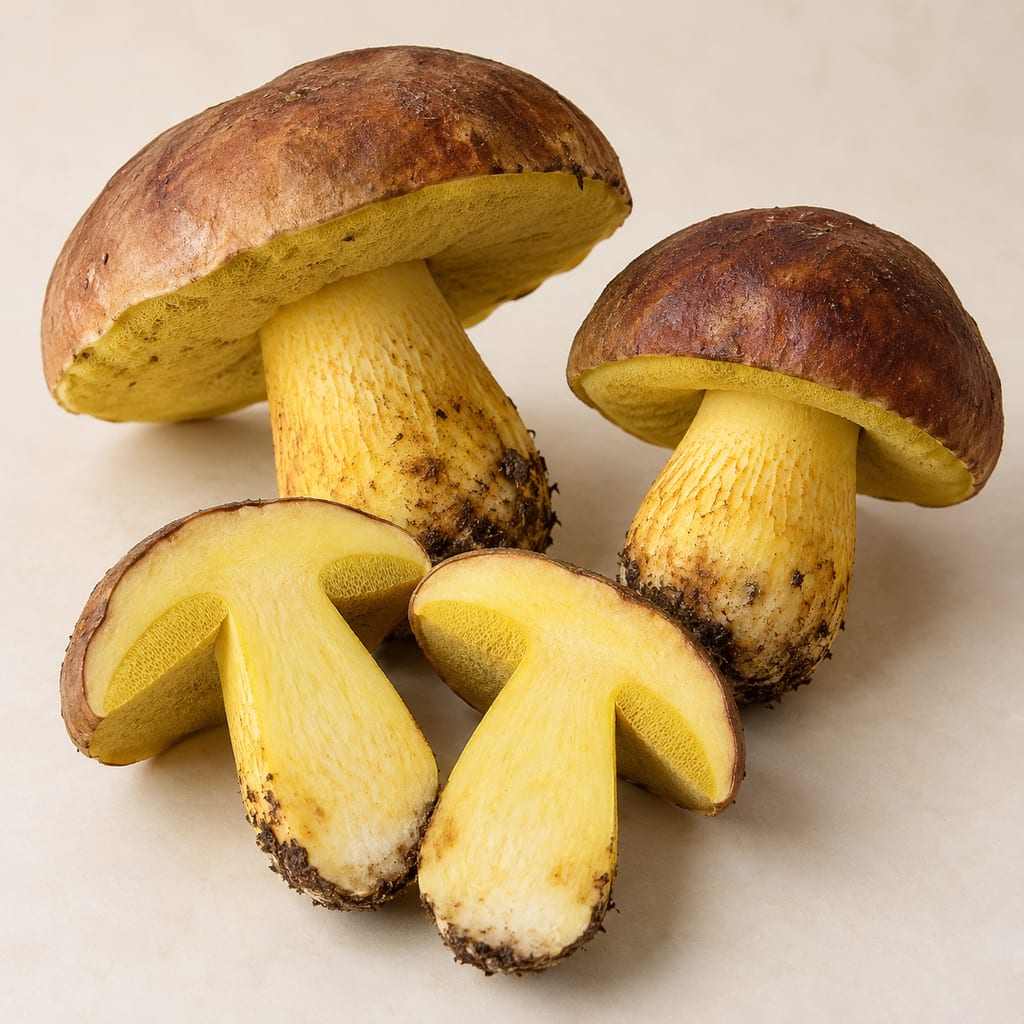
Yellow-stemmed bolete
Boletus auripes, the yellow-stemmed bolete, is a forest bolete with yellow fruit bodies under a brownish cap. The catalogue records a regional food use in Mexico, and the paper behind that record could not be read.
 FermenteaWhere food goes to change
1086 articles on substrates, cultures and additives.
Boletus auripes, the yellow-stemmed bolete, is a forest bolete with yellow fruit bodies under a brownish cap. The catalogue records a regional food use in Mexico, and the paper behind that record could not be read.
B. shiyong is a Yunnan bolete identified in a 2014 study of dried Chinese porcini sold commercially; a 2018 review also reports local collection and consumption, but neither gives a species-specific preparation or safety assessment.
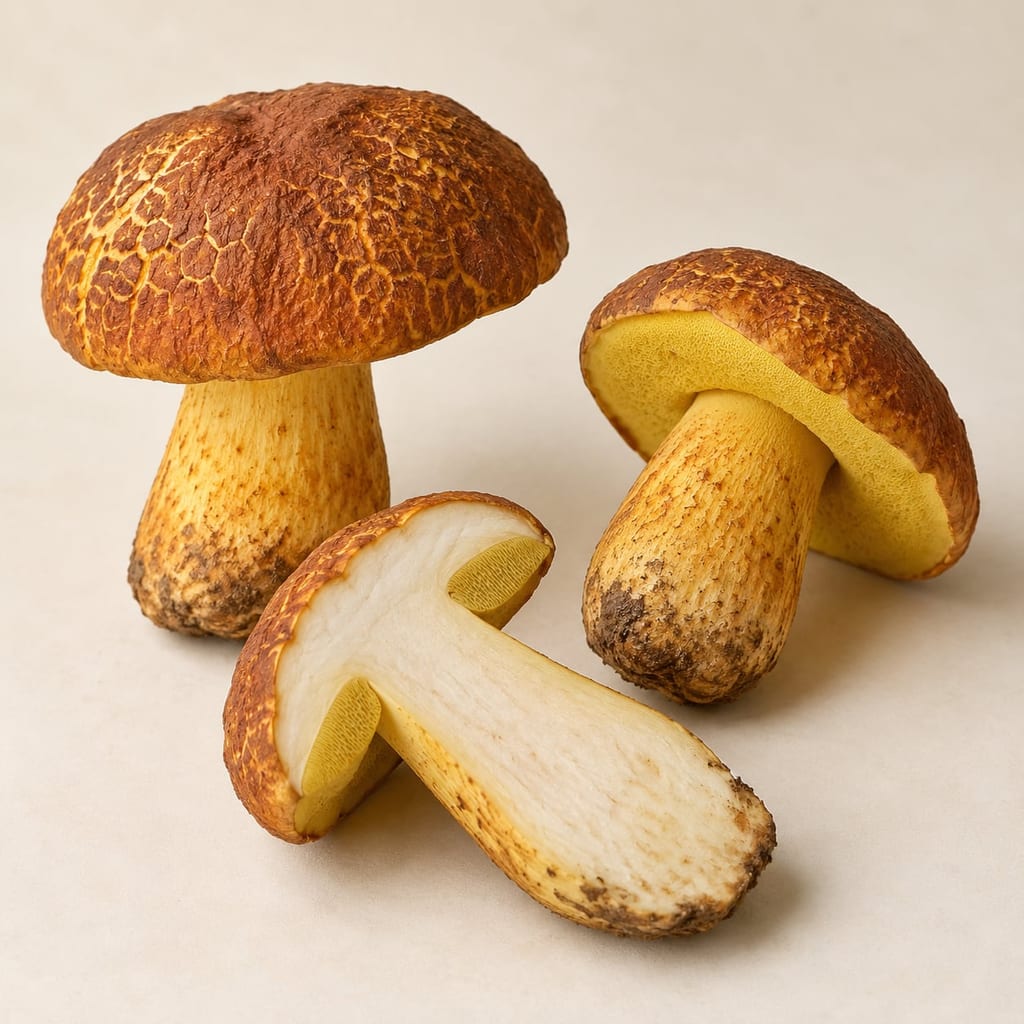
Rugiboletus extremiorientalis is an alpine bolete of eastern Asia, placed in the genus Rugiboletus. The catalogue records it as a food bolete sold in Yunnan markets, a record the evidence reviewed do not confirm.
Termitomyces robustus is an African termite mushroom that grows on termite mounds, is eaten cooked in several countries, and has not been cultivated by people.
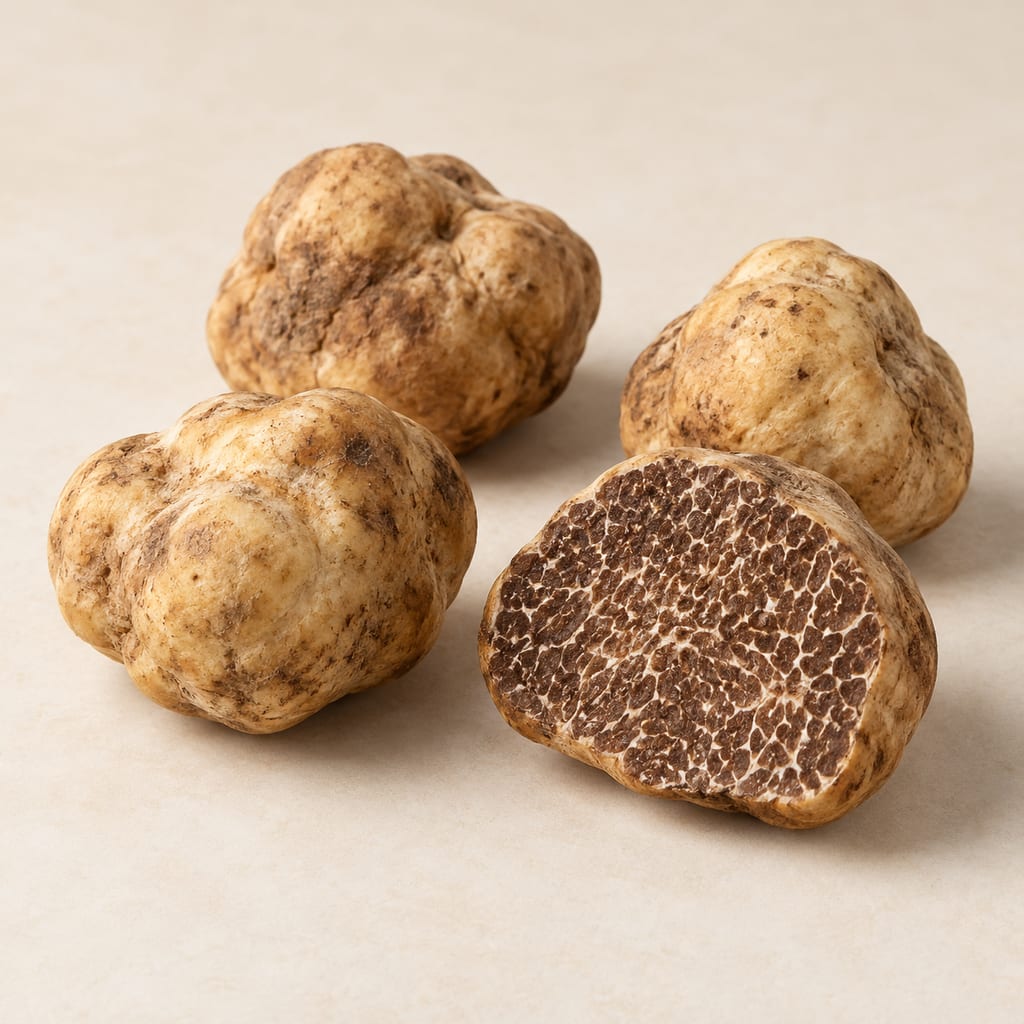
Tuber borchii, the bianchetto truffle, is a pale, pungent truffle that grows with trees and is now cultivated in Italy. It is used as a seasoning and is distinct from the costly white truffle, Tuber magnatum.
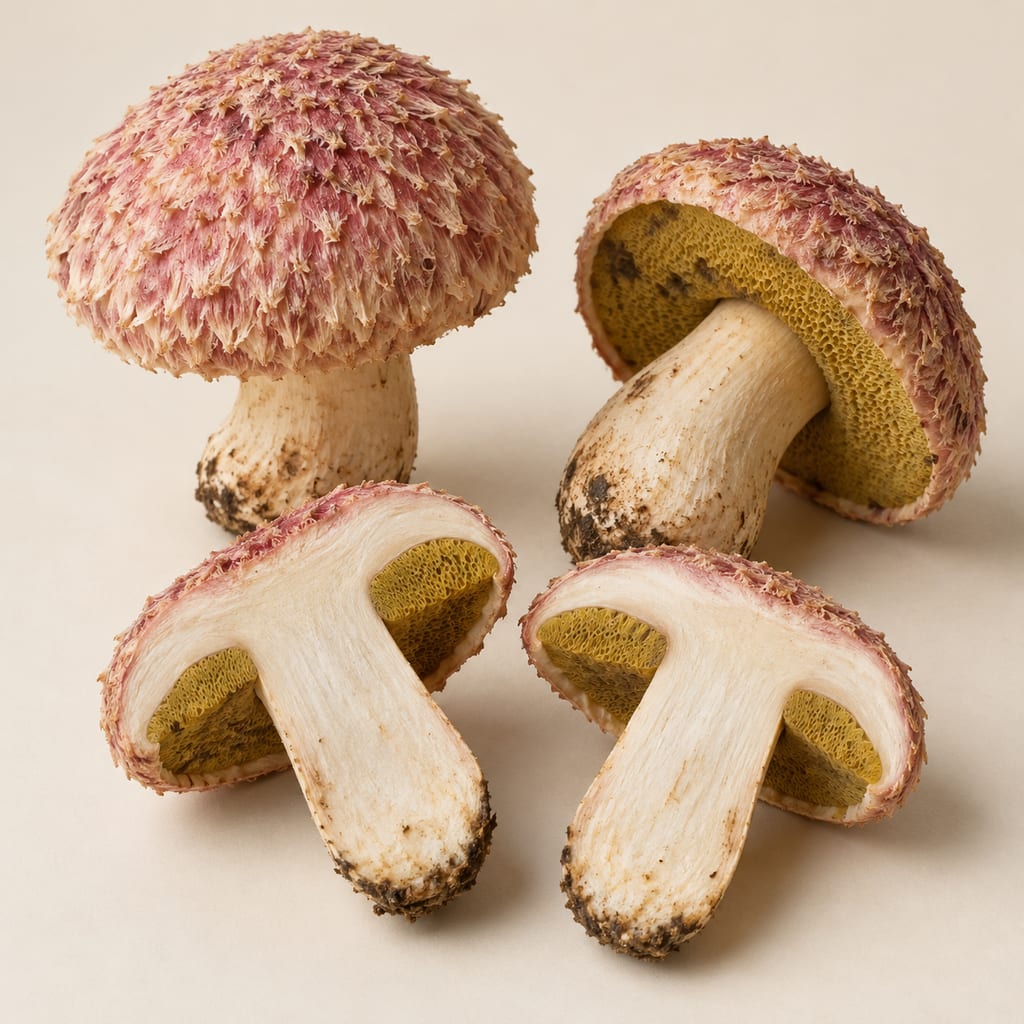
Boletellus ananas, the pineapple bolete, is a forest bolete of Guyana that one Patamona group eats and others avoid; a researcher reported mild stomach upset after eating it, so it is not a recommended edible.
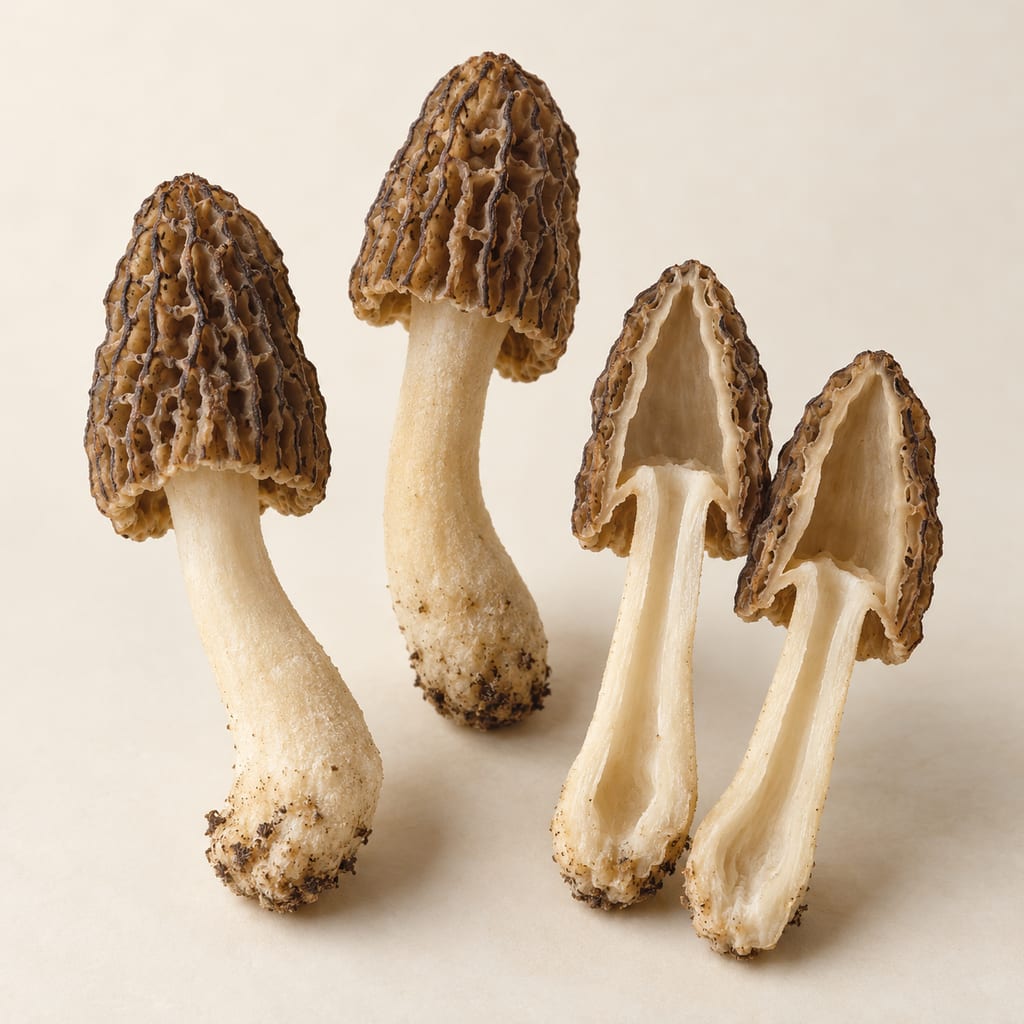
The eastern half-free morel, Morchella punctipes, is a wild morel of eastern North American forests that is eaten after cooking. Raw or undercooked morels can cause serious poisoning.
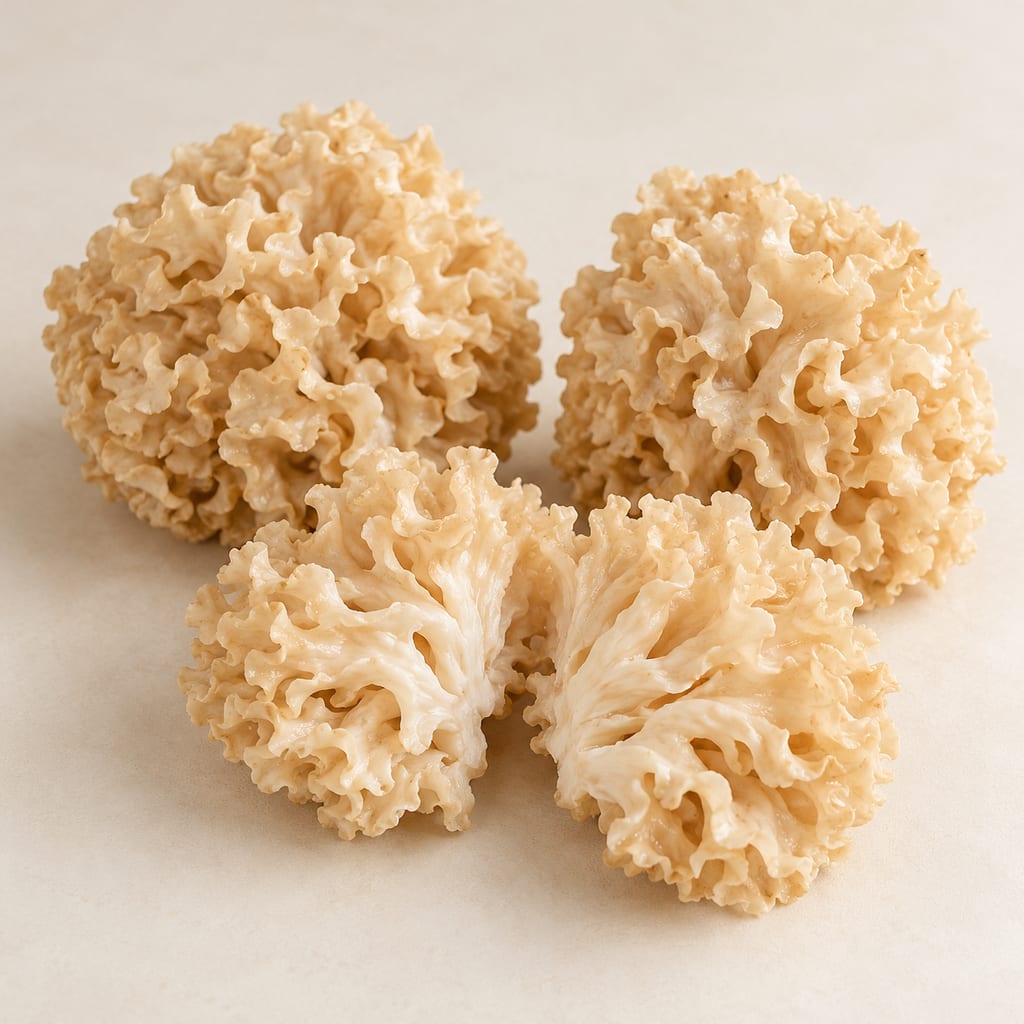
The Asian cauliflower mushroom, Sparassis latifolia, is a cultivated fungus with a frilled, fronded form that is eaten in China, Japan and Korea. Many Asian records under the name Sparassis crispa refer to this species.
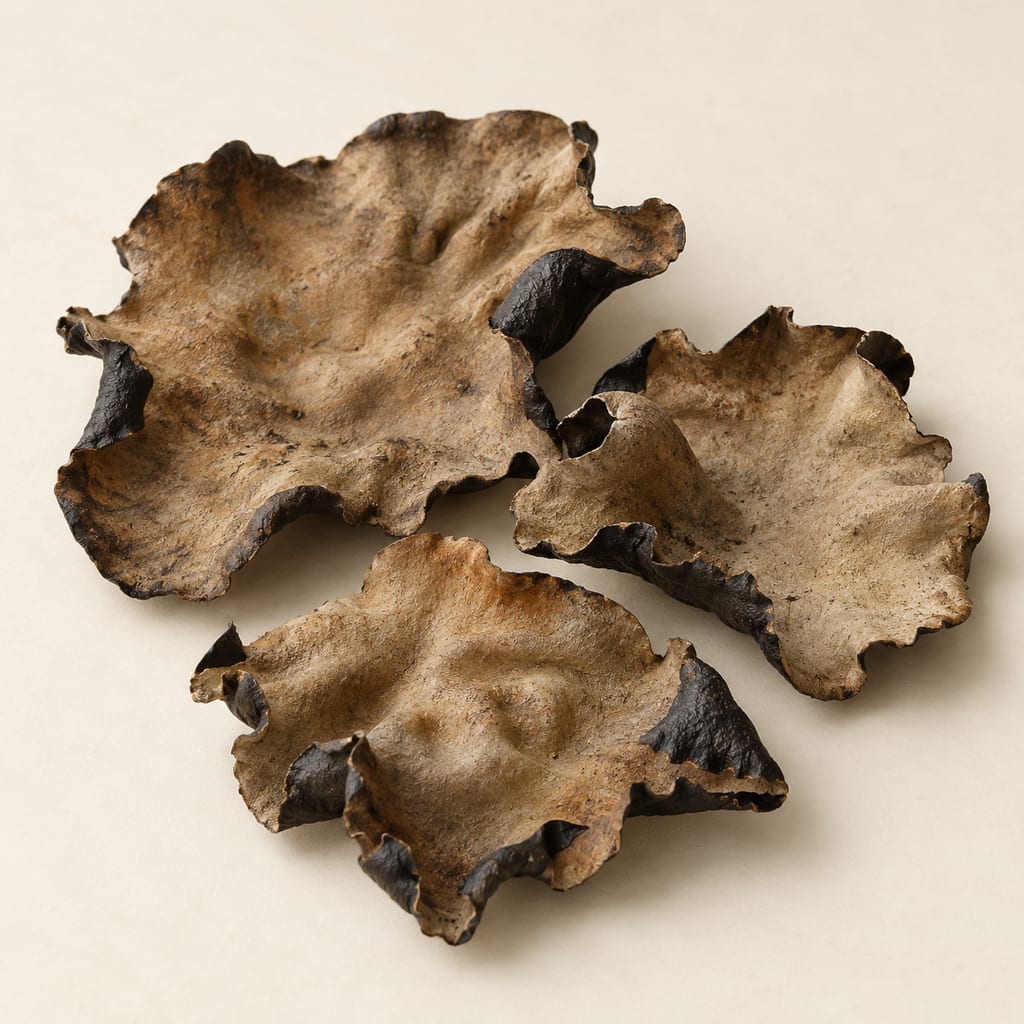
Iwatake, Umbilicaria esculenta, is a rock-dwelling lichen from East Asia, eaten in Japan, Korea and China after extensive preparation.
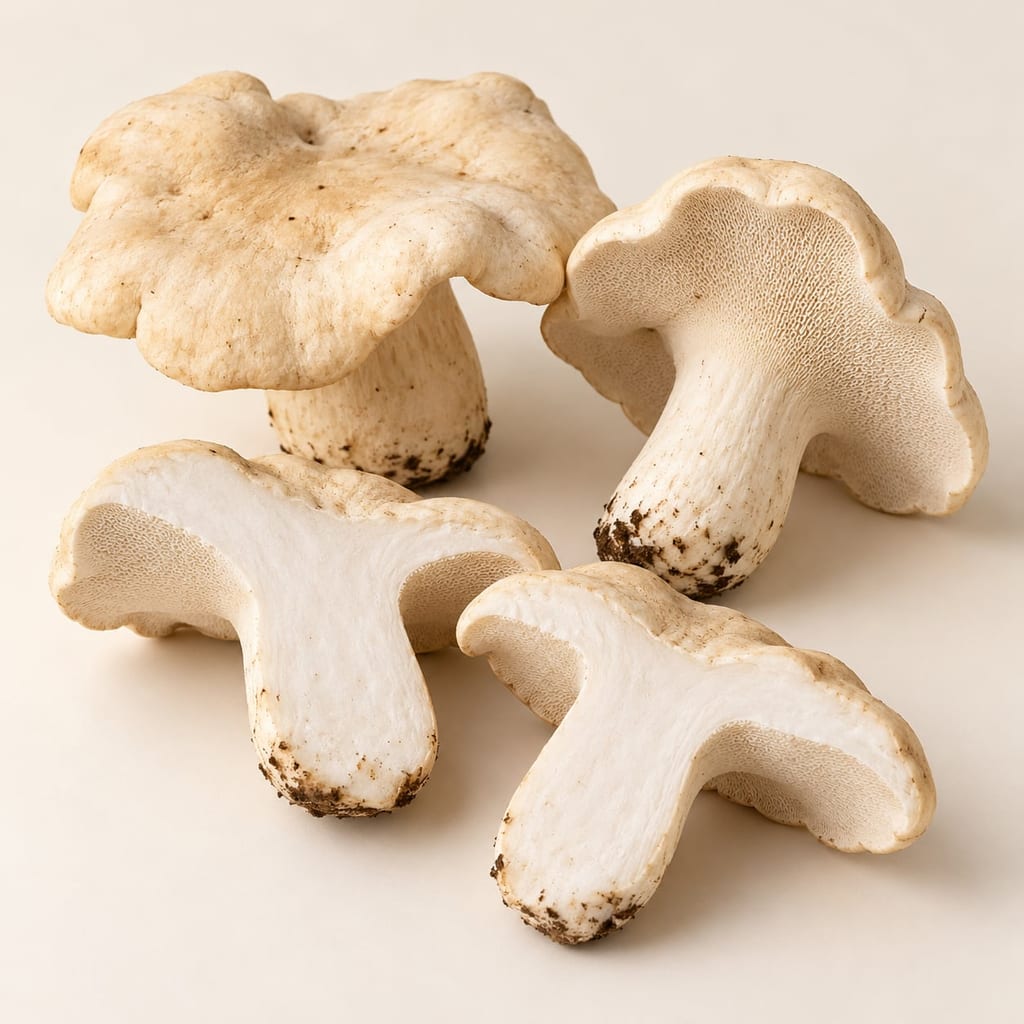
Albatrellus ovinus is a firm, terrestrial polypore of conifer woods in northern Europe. Nordic guides describe it as edible when young and clean, and it is often confused with the fused polypore.
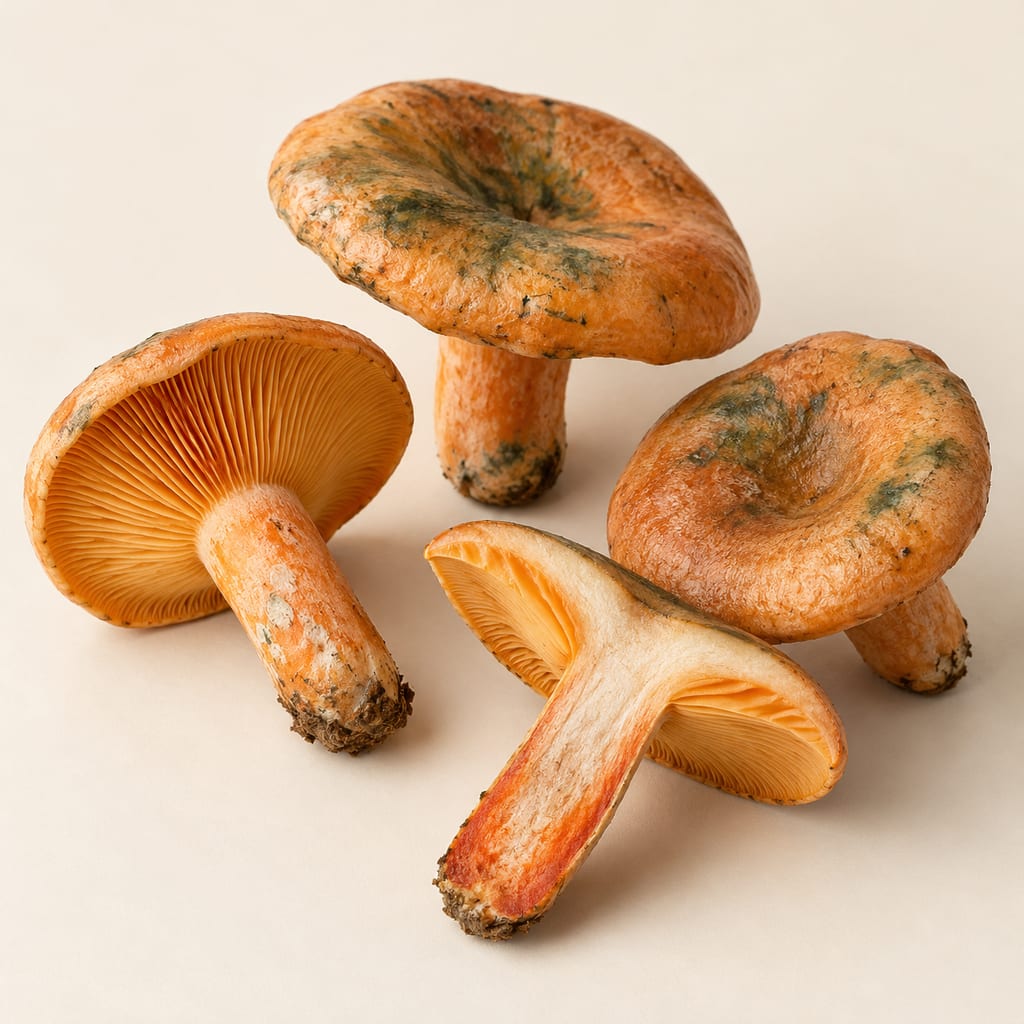
Lactarius semisanguifluus is a pine-associated milkcap with orange latex that turns wine-red in air. Nordic sources call it edible but seldom gathered; it is kept distinct from L. sanguifluus.
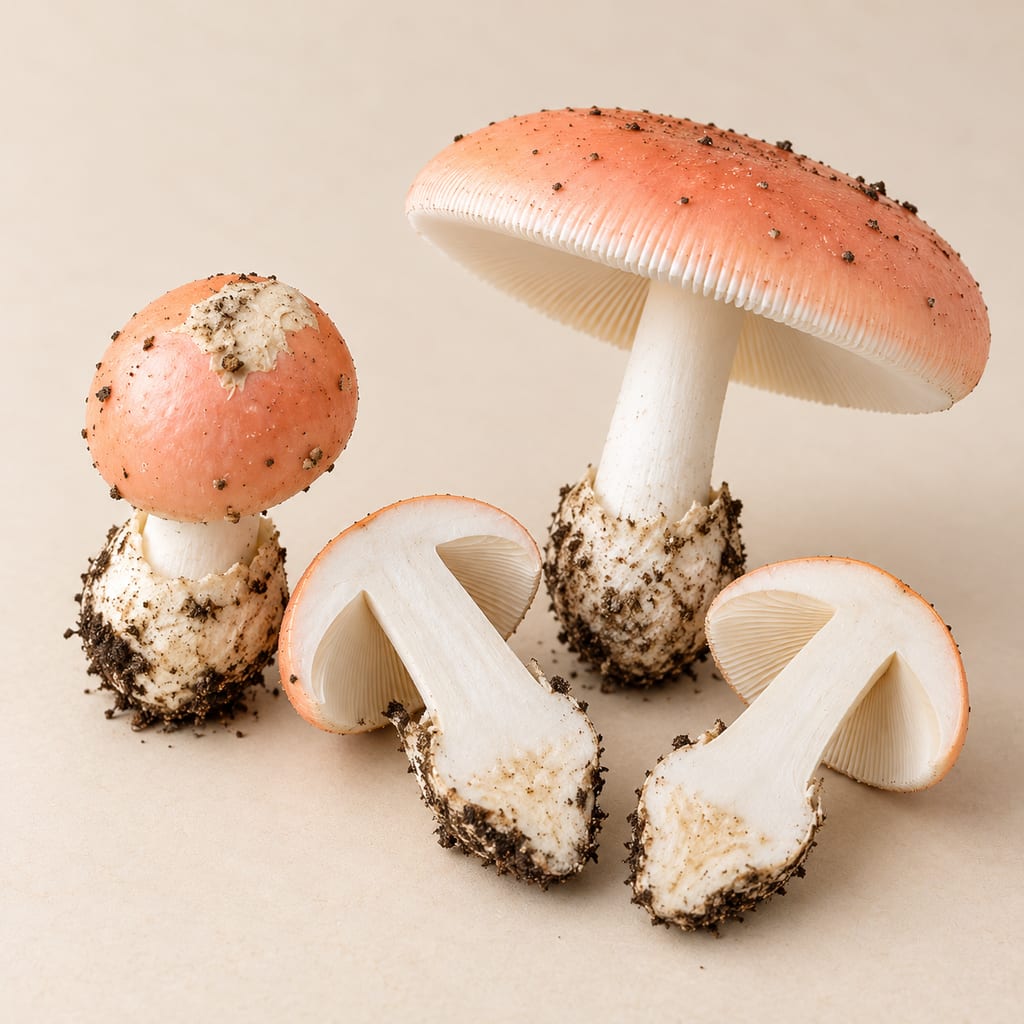
Amanita pudica is a wild rainforest fungus of Tshopo Province in the DR Congo, recorded as locally eaten in interviews. The genus contains deadly poisonous species, so identification by a specialist is essential.
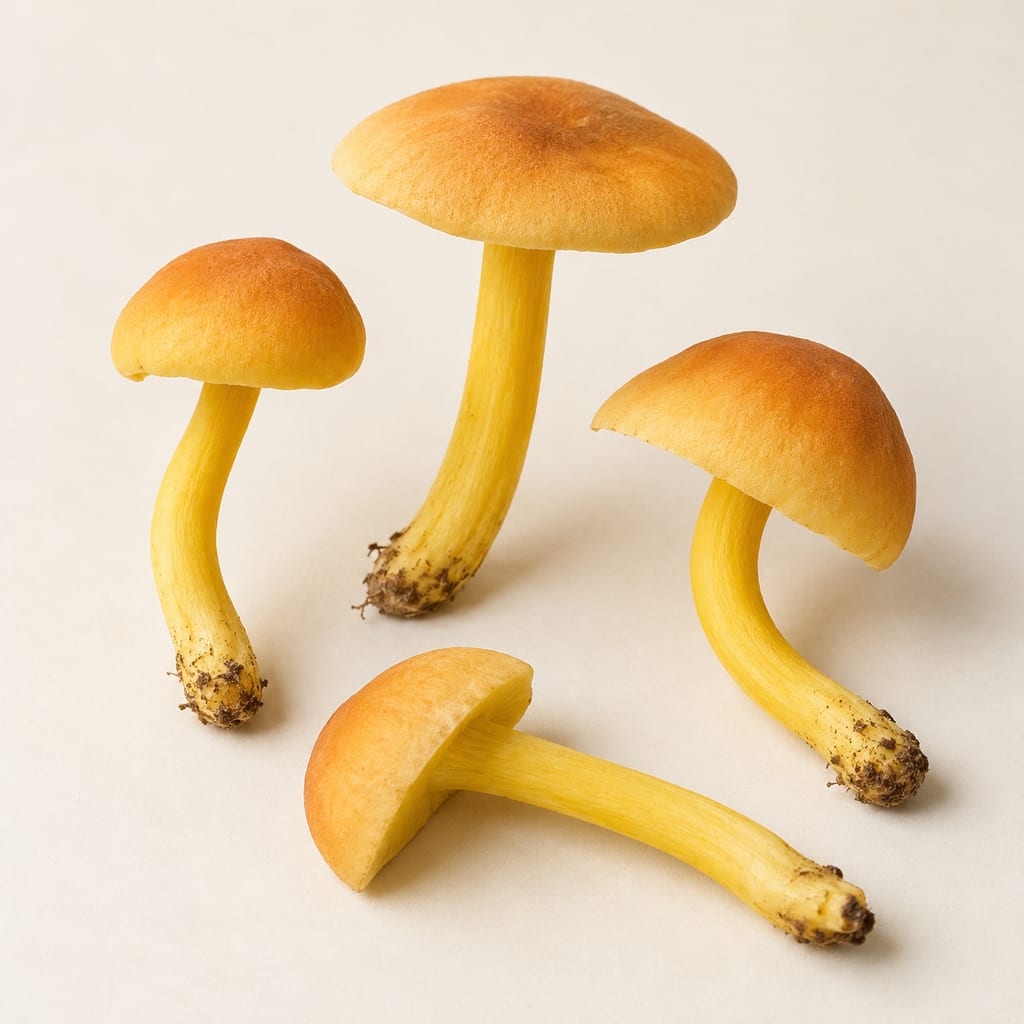
A wild forest fungus of the Tshopo province in the Democratic Republic of the Congo, recorded in local interviews as eaten. The species name is a research label, and no preparation is established.
A termite-associated wild mushroom recorded as eaten by communities in the Tshopo province of the Democratic Republic of the Congo. Its preparation and its name are not yet established.
A termite-associated wild mushroom listed as edible or edible-and-medicinal in a 2026 Chinese species catalogue. The culinary tradition that uses it is not yet documented.
A wild termite mushroom recorded as food in Yunnan, China, and across South and Southeast Asia, eaten in soups and fried dishes and sometimes preserved in oil. Its species name still needs molecular checking.
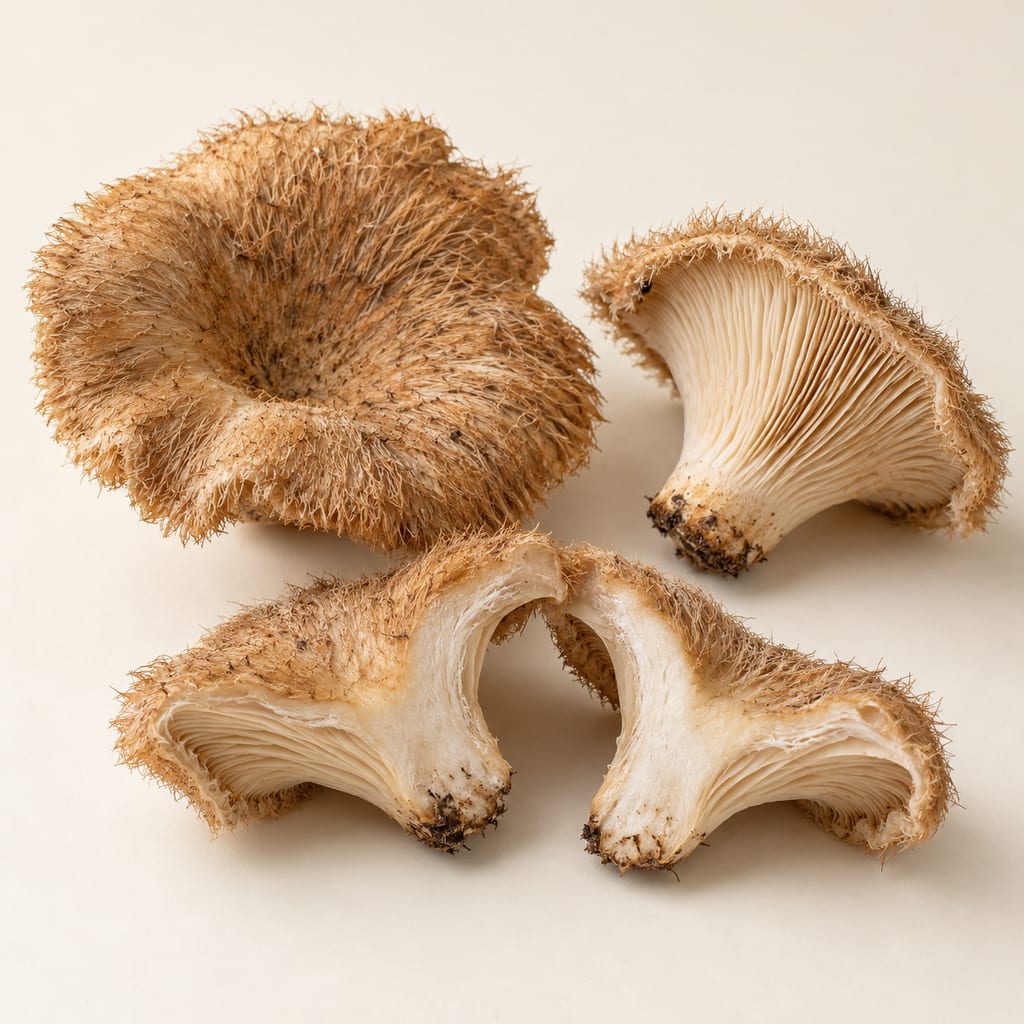
A wood-rotting bracket fungus of Brazil and Guyana that Indigenous Amazonian communities eat as a staple. Its edibility is contested in some field guides, and no standardised food-safety assessment exists.
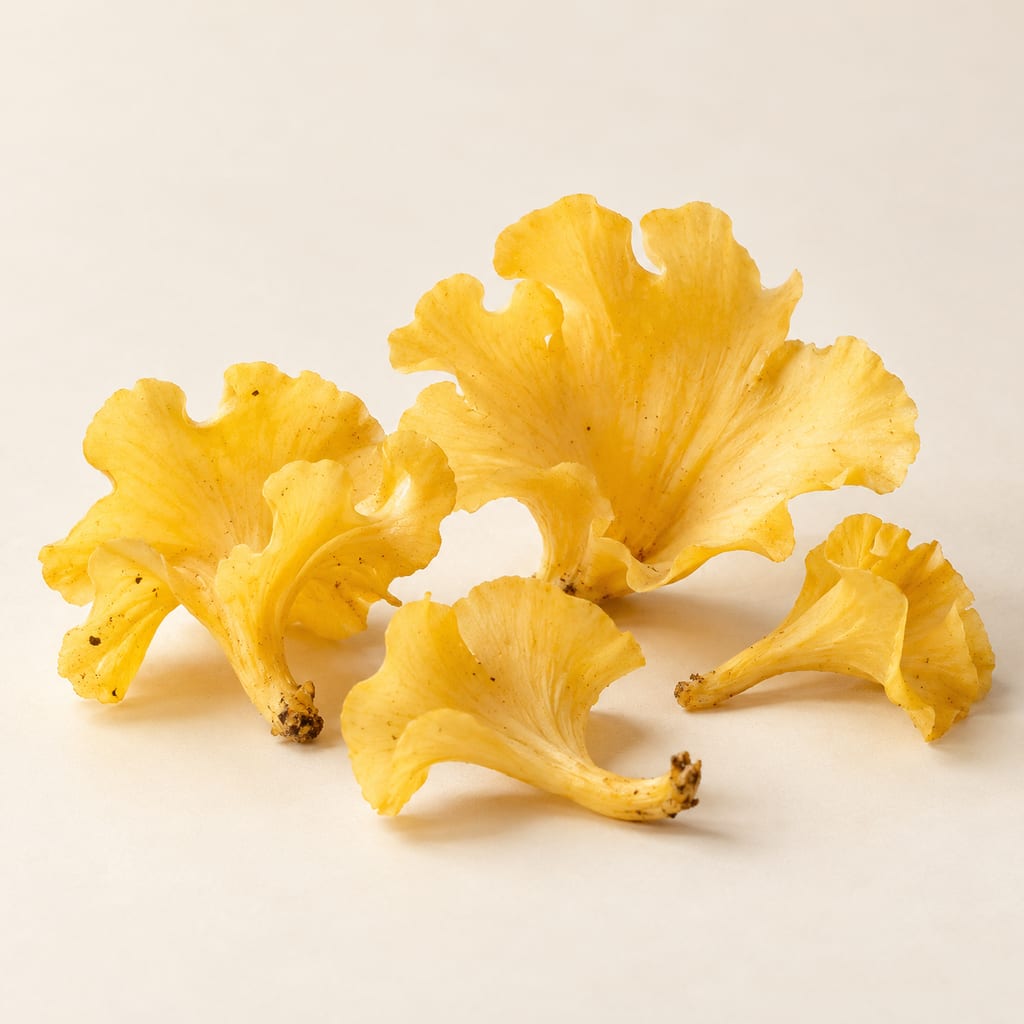
A forest wood-decay fungus of the Tshopo province in the Democratic Republic of the Congo, recorded in local interviews as eaten. The name is a research label and no preparation is established.
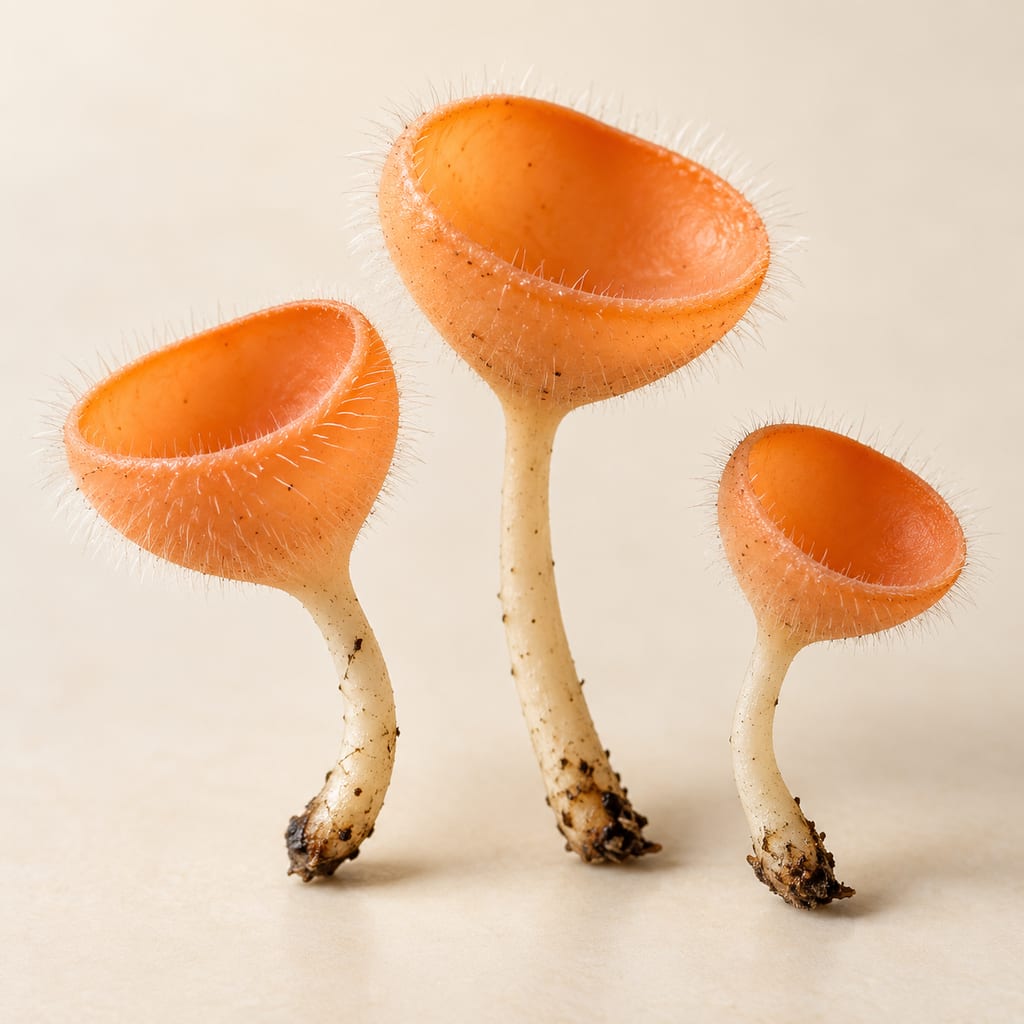
A forest cup fungus of the Tshopo province in the Democratic Republic of the Congo, recorded in local interviews as eaten. The species-level preparation is not established.
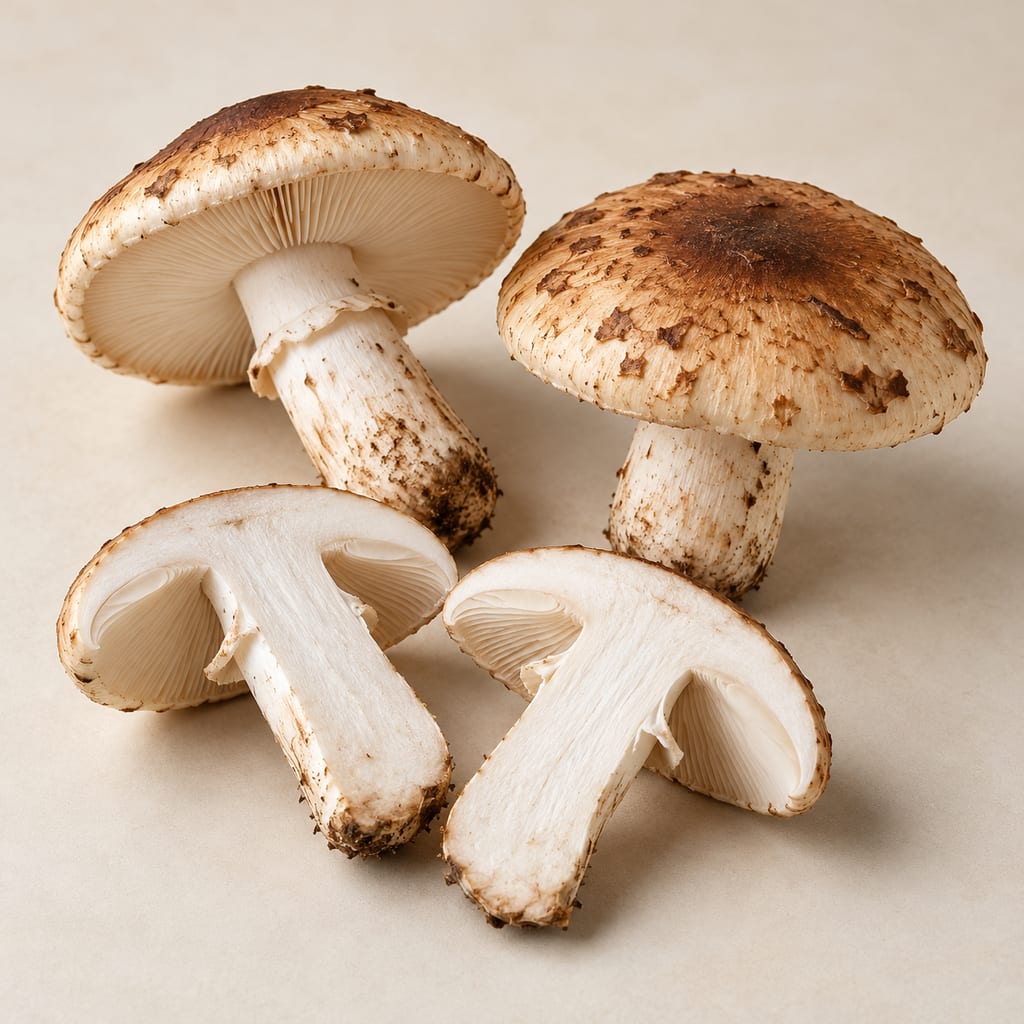
A forest mushroom of Yunnan in China, sold in regional markets as a relative of matsutake. It grows with Fagaceae trees, has a lower market value than matsutake, and its edibility needs species-level review.
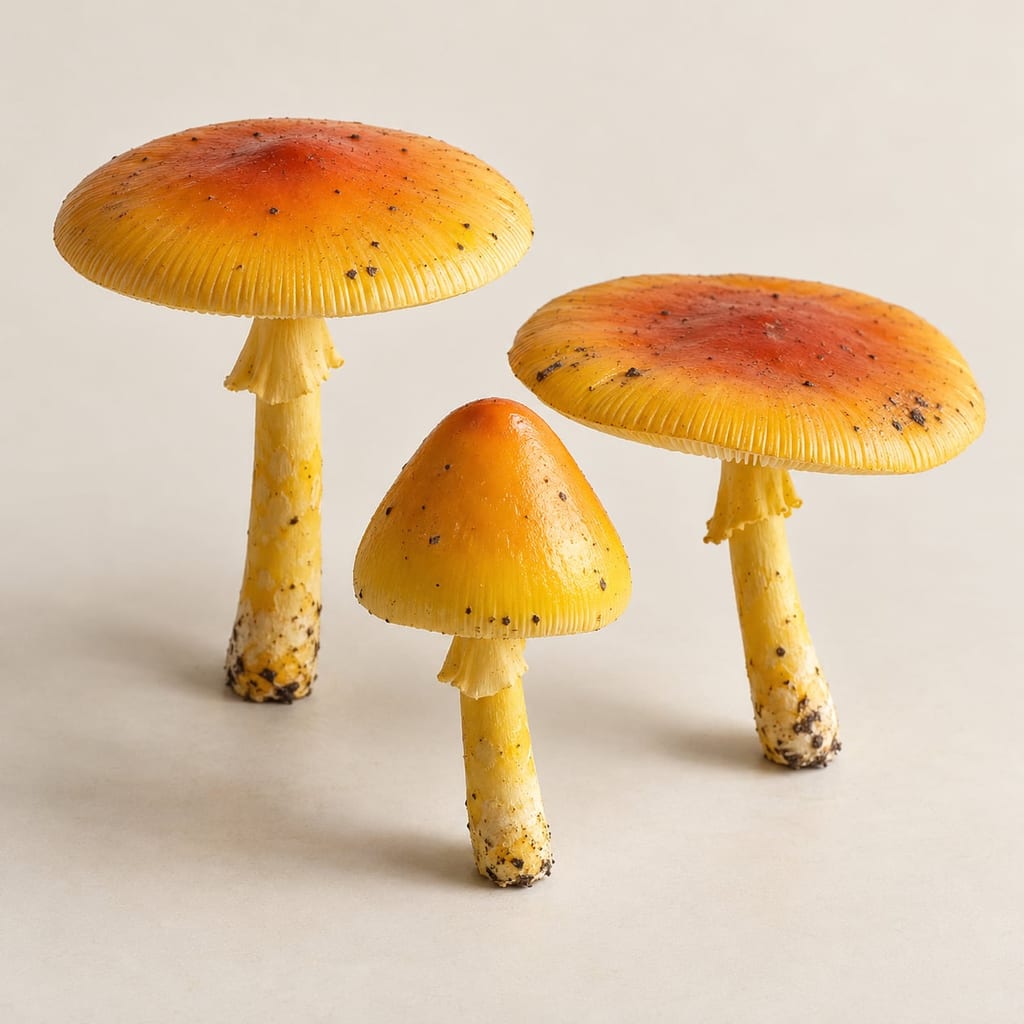
A wild Amanita recorded from China in a 2026 checklist of edible and medicinal fungi. The genus holds deadly species, so this page gives no identification or edibility verdict.
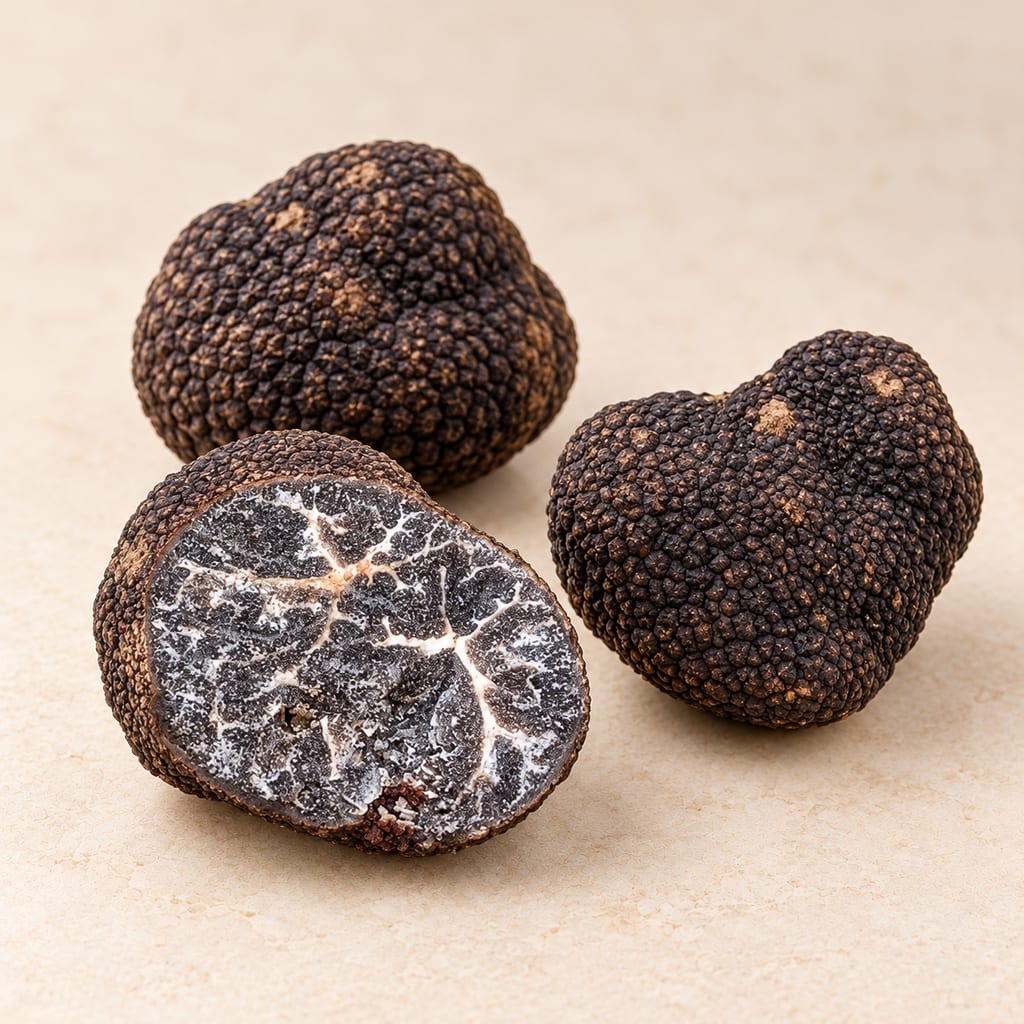
The dog-revealed truffle, Tuber canirevelatum, is a North American truffle found in a truffle orchard by a trained dog. Its aroma resembles that of European truffles, but its edibility and its range are not yet settled by the sources read.
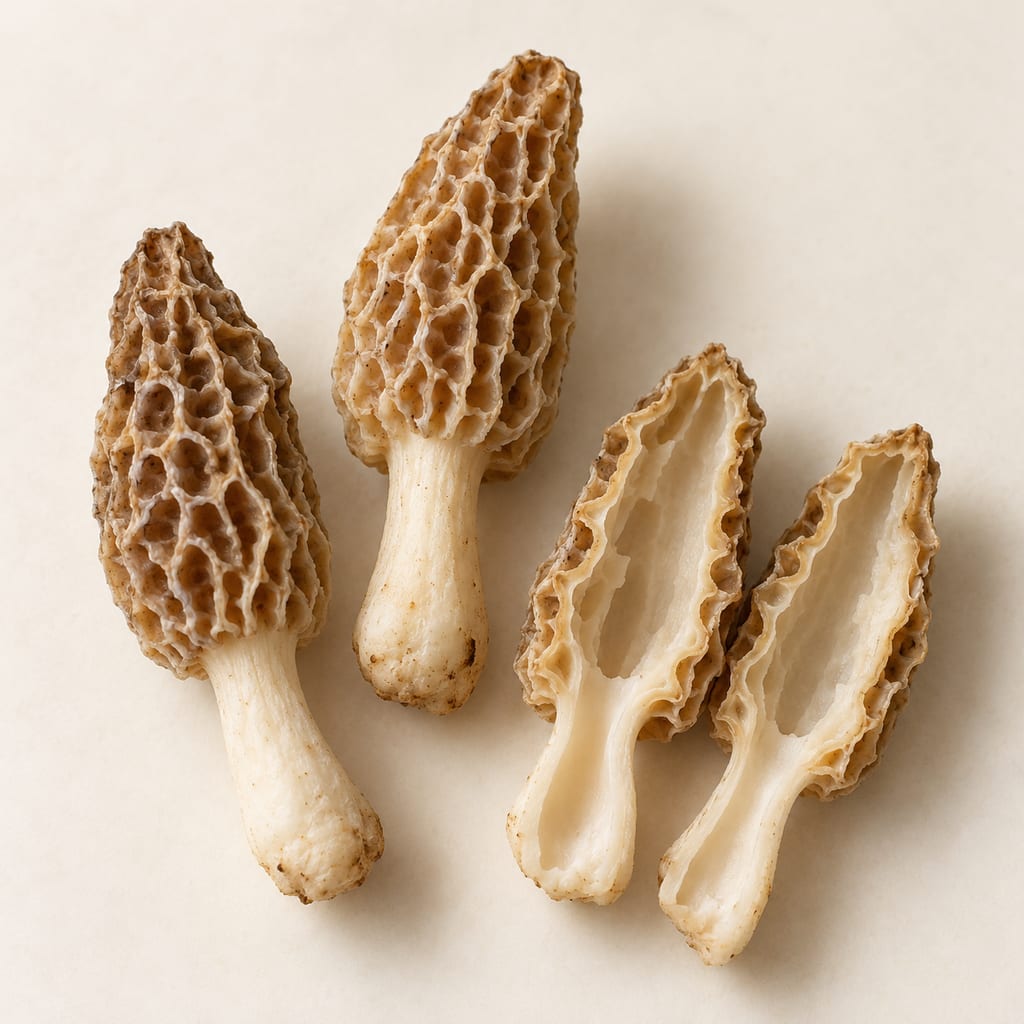
Morchella diminutiva is a yellow true morel described in 2012 from eastern North America. Sources report it as a culinary morel that must be cooked; this page is not an identification guide.
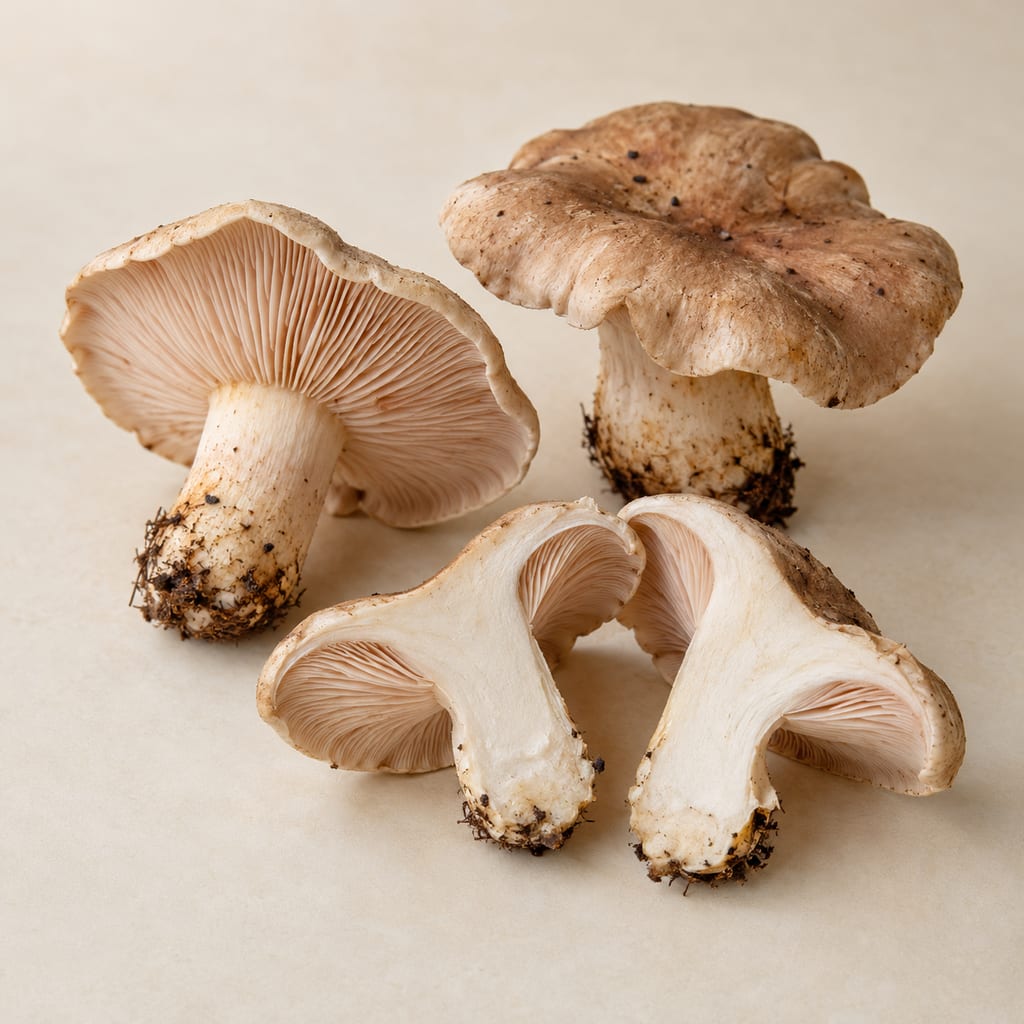
Lepista rhodotoides is a forest saprotrophic agaric recorded as locally eaten in interview-based surveys in Tshopo province, Democratic Republic of the Congo.
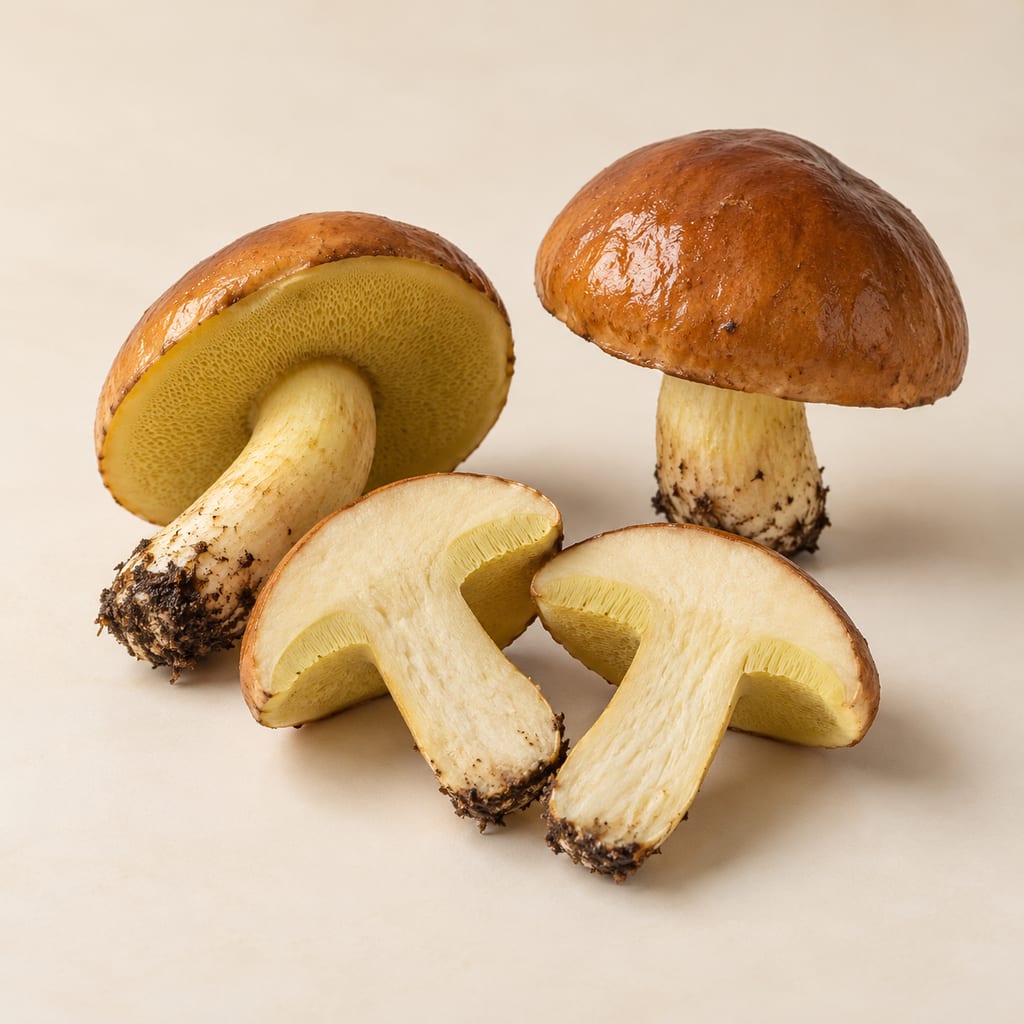
Suillus granulatus, the weeping bolete, is a pine-associated bolete of Europe and of pine regions where it was introduced, recorded as cooked or preserved.
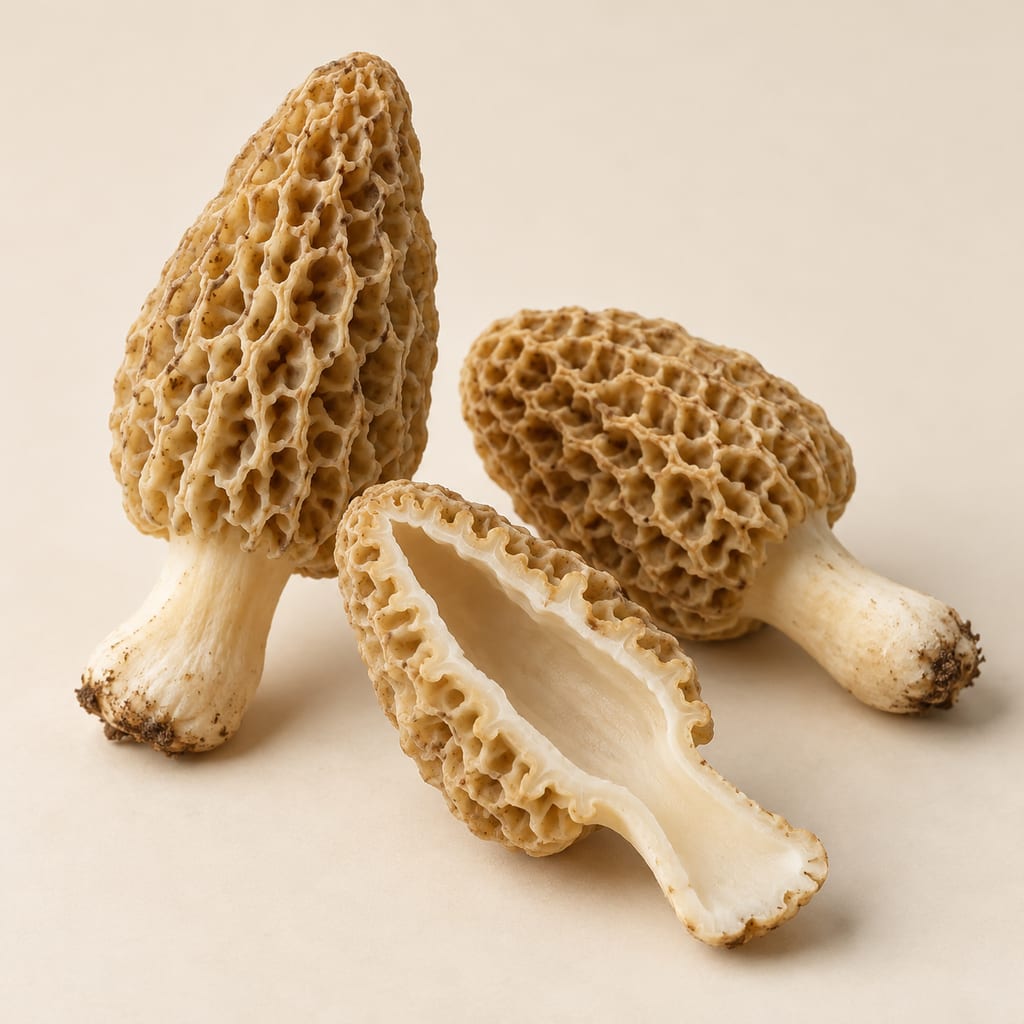
Morchella cryptica, the cryptic yellow morel, is a true morel of North America's Great Lakes region that cannot be told apart from Morchella americana by appearance alone.
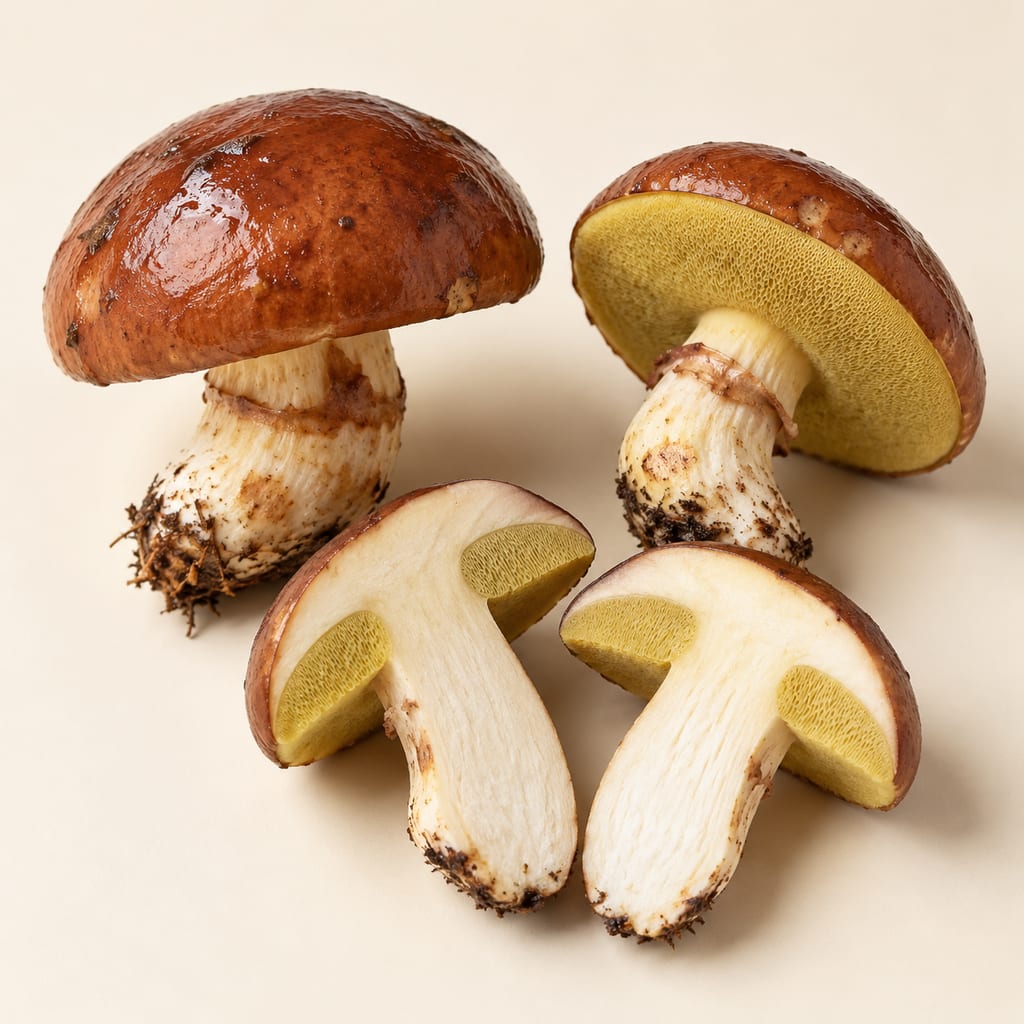
Suillus luteus, the slippery jack, is a pine-associated bolete recorded as cooked, dried or pickled in Europe and in pine plantations on several continents.
Russula pruinata is an ectomycorrhizal brittlegill of Congolese rainforest recorded as locally eaten in interview-based surveys in Tshopo province.
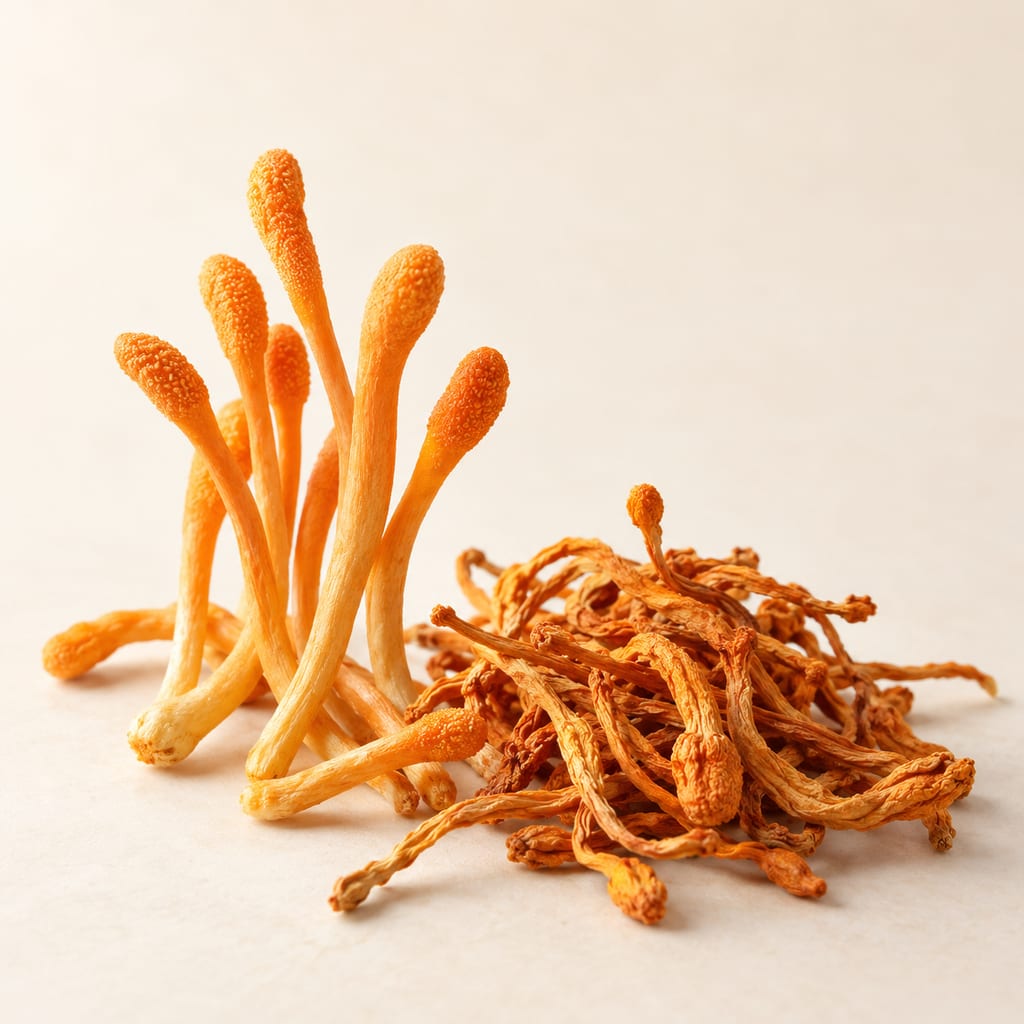
Cordyceps militaris is an insect-pathogenic fungus that is cultivated in China on controlled substrates for food and supplements.
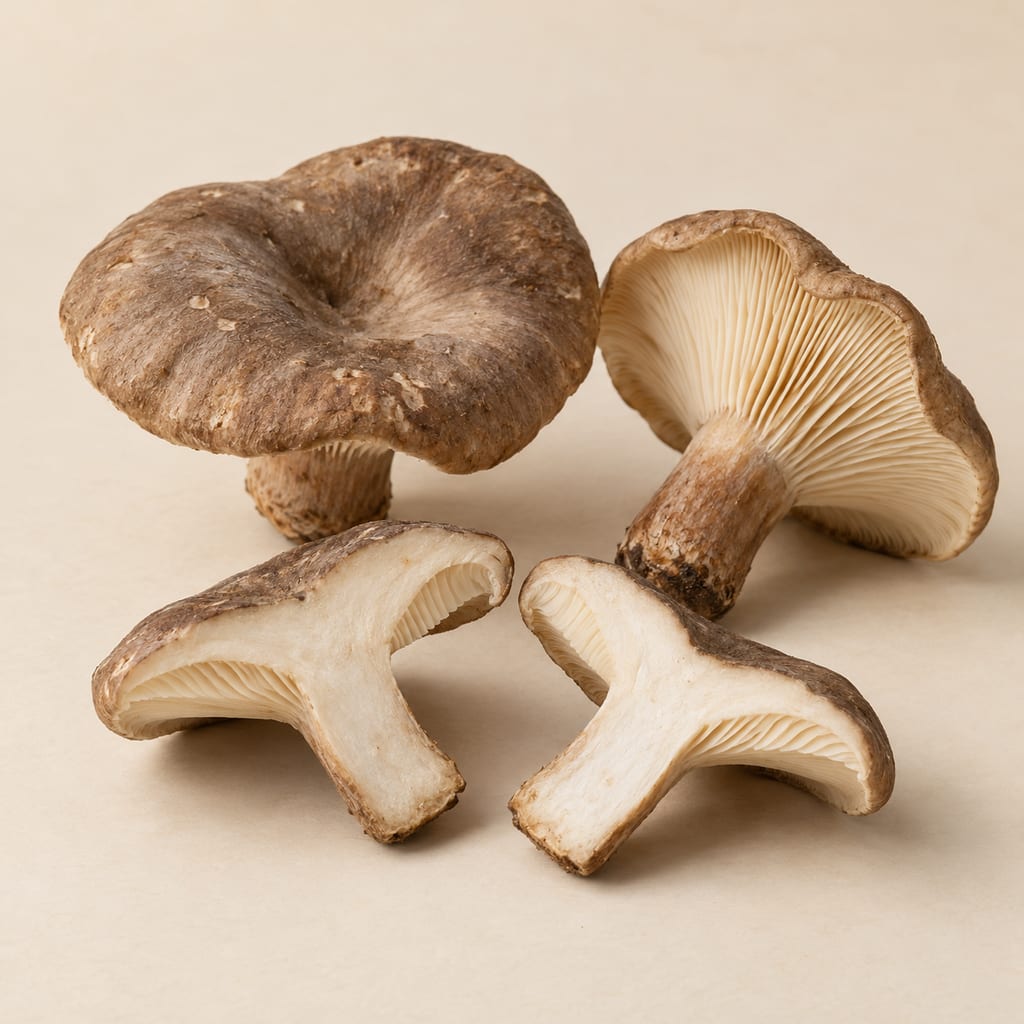
Lactarius kabansus, the African milkcap, is an ectomycorrhizal mushroom of miombo woodland that has long been recorded as food in central and southern Africa.
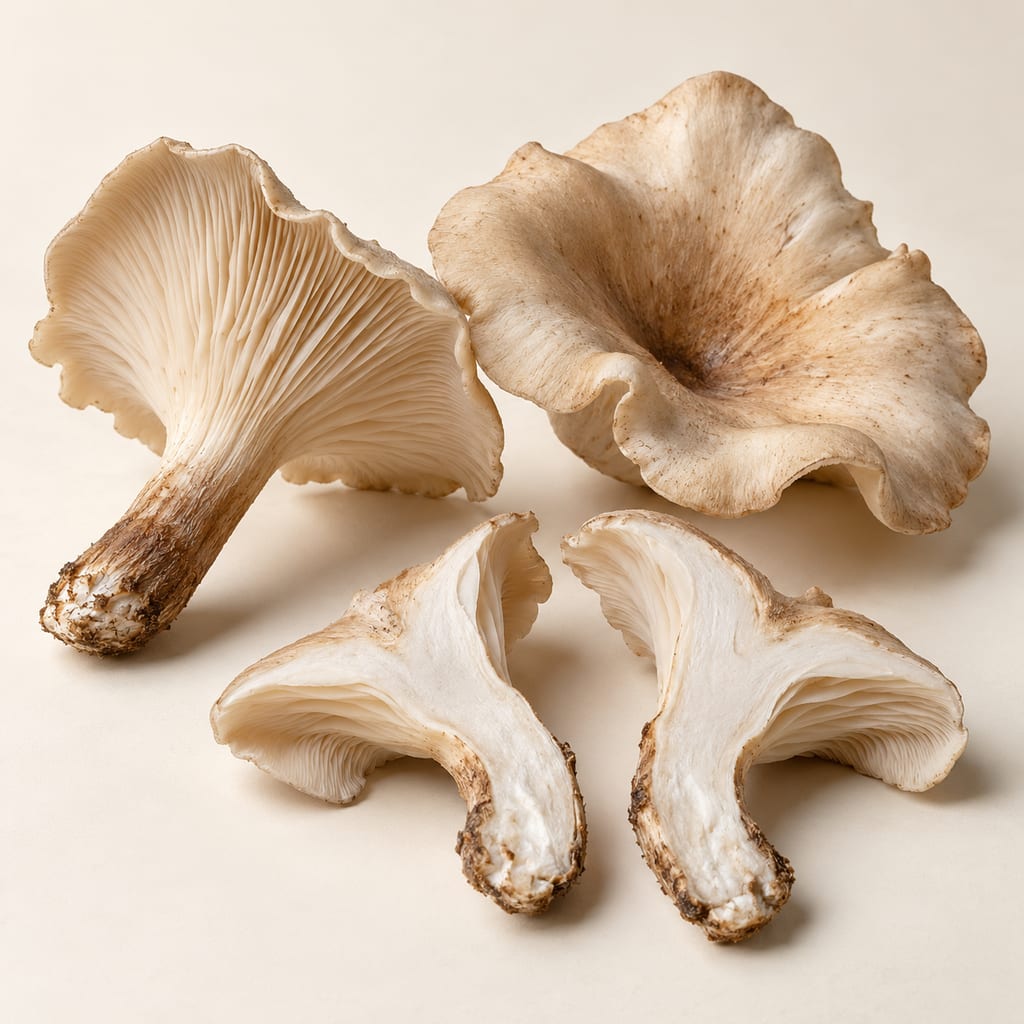
Pleurotus rickii, Rick's oyster mushroom, is a rare wood-decaying oyster fungus of the southern Atlantic Forest and Yungas, listed as Near Threatened.
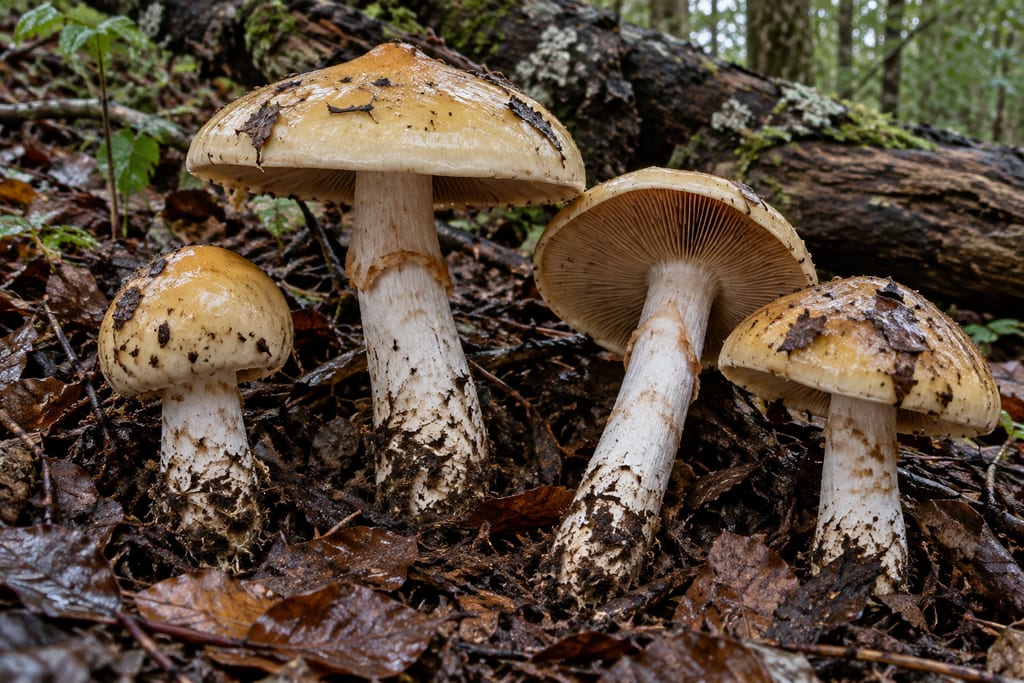
Cortinarius xiphidipus, the Patagonian webcap, is a mycorrhizal mushroom of Nothofagus forests in Patagonia with a published regional consumption record.
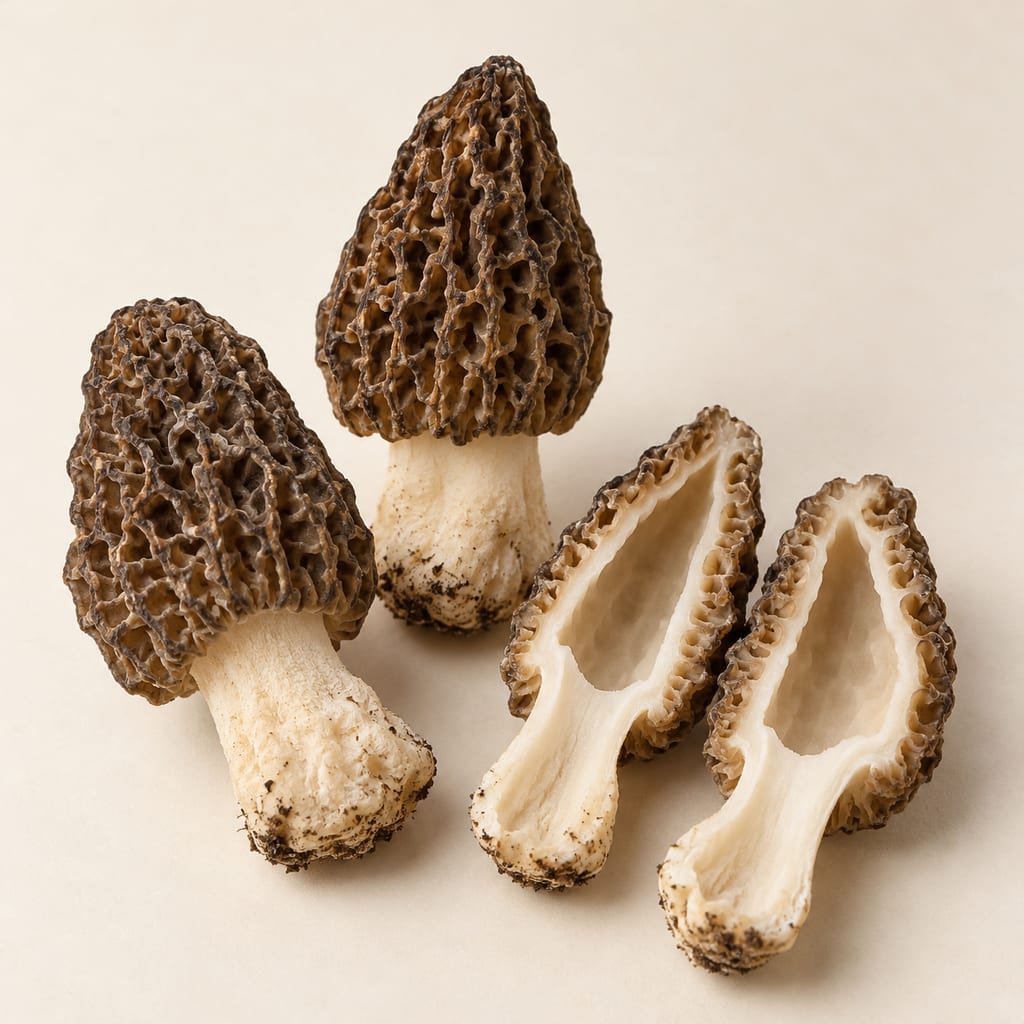
Morchella snyderi, Snyder's morel, is a true morel found under conifers in western North America in spring. It is eaten only well cooked, because raw or undercooked morels can cause serious illness.
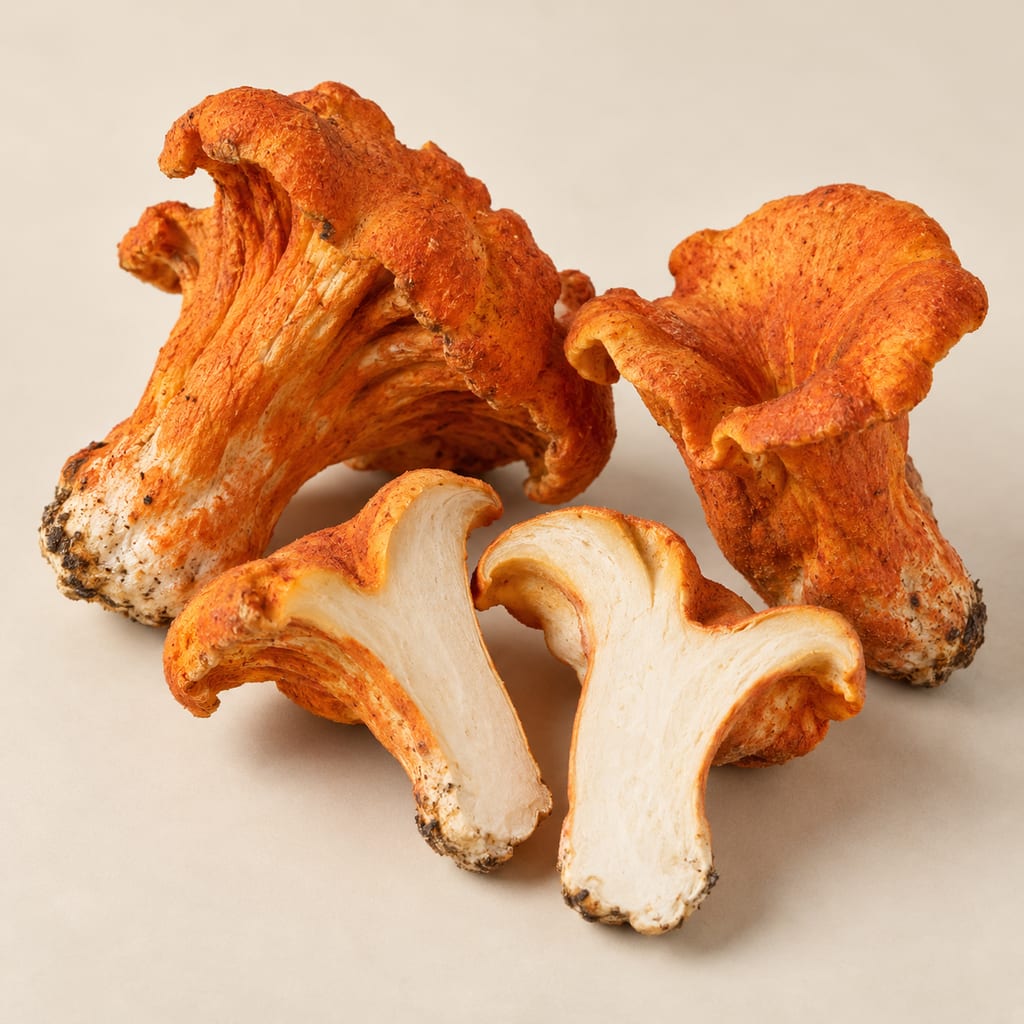
The lobster mushroom, Hypomyces lactifluorum, is a parasitic fungus that turns a white milk-cap or brittlegill orange-red and is gathered as a wild food in North America. Its host species must be identified too.
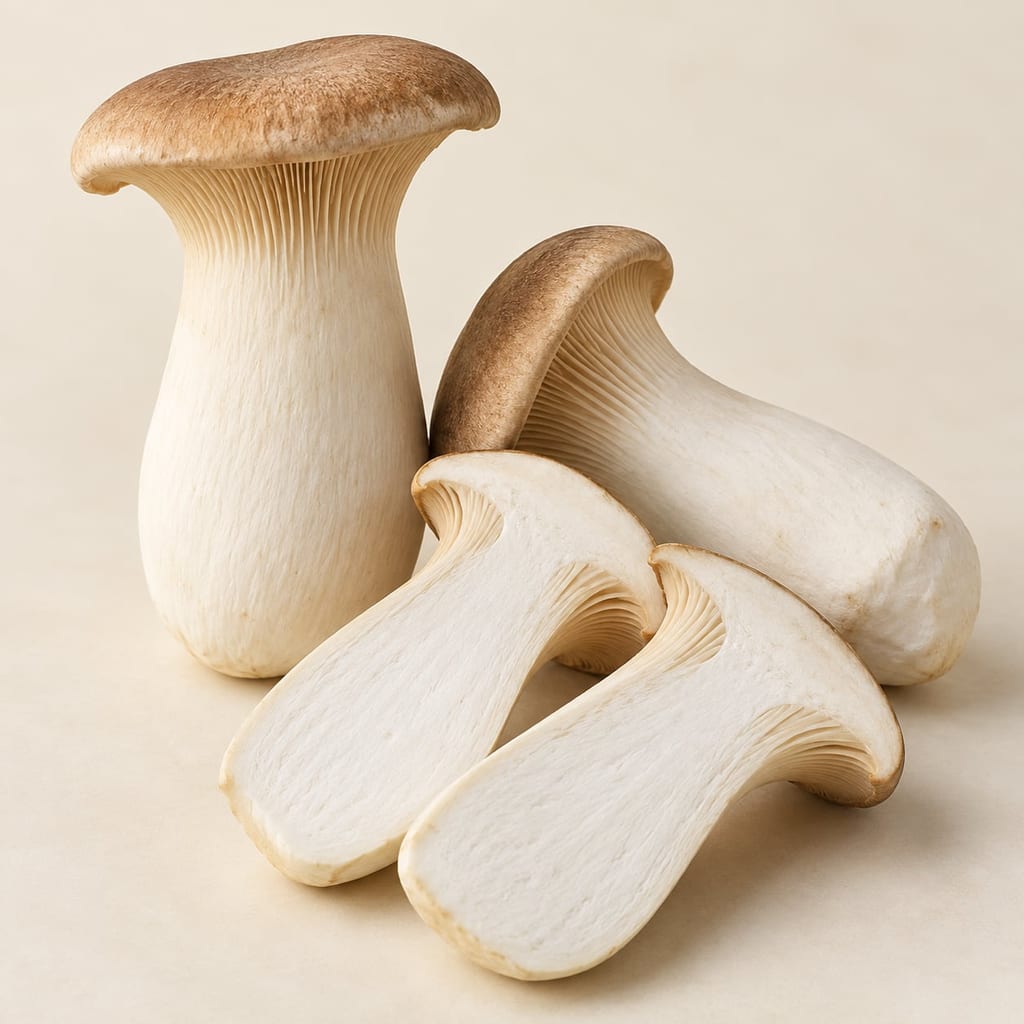
Pleurotus eryngii, the king oyster, is a fungus native to the Mediterranean region and now grown widely on sawdust and straw. Its firm stems and caps are cooked, and the species is one of the most farmed mushrooms worldwide.
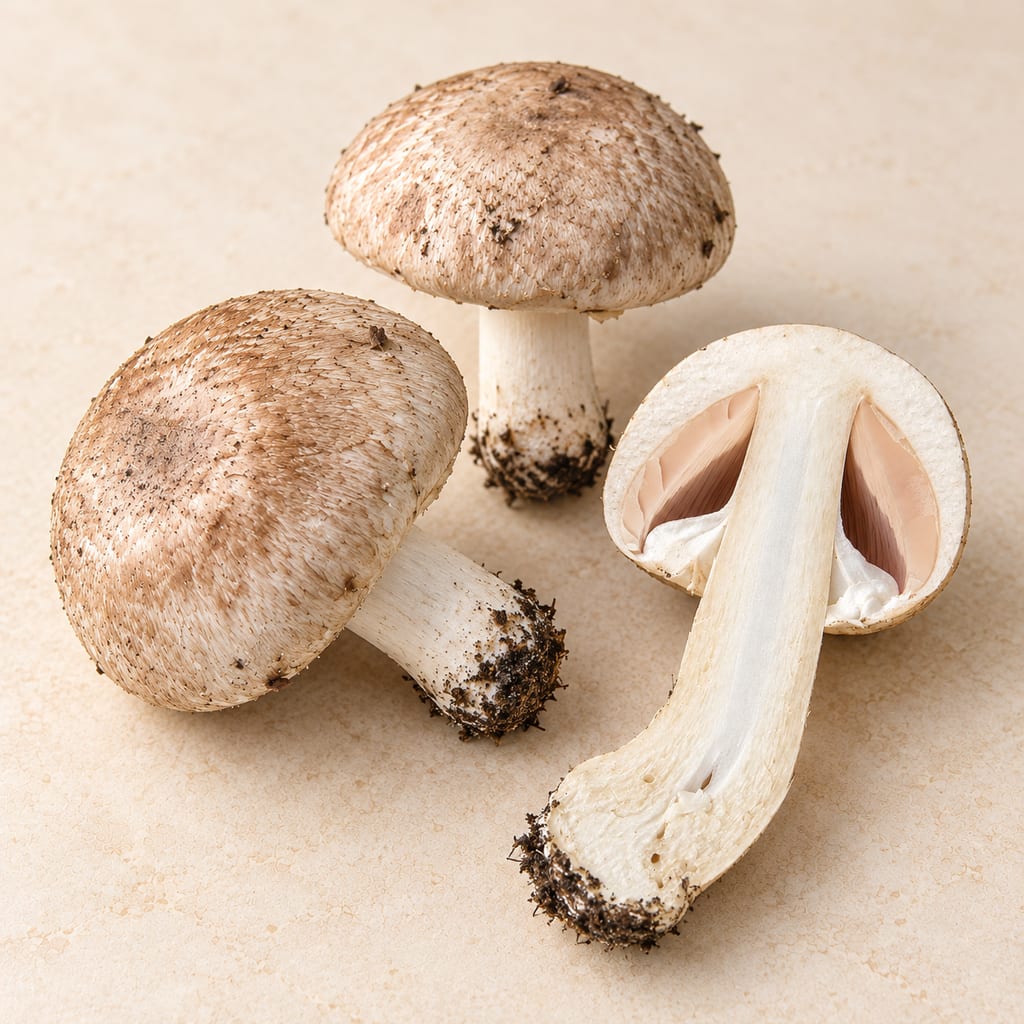
Agaricus langei, the scaly wood mushroom, is a brown-scaled woodland agaric. Its name is not settled across sources, and it is recorded as a cooked wild mushroom in Europe.
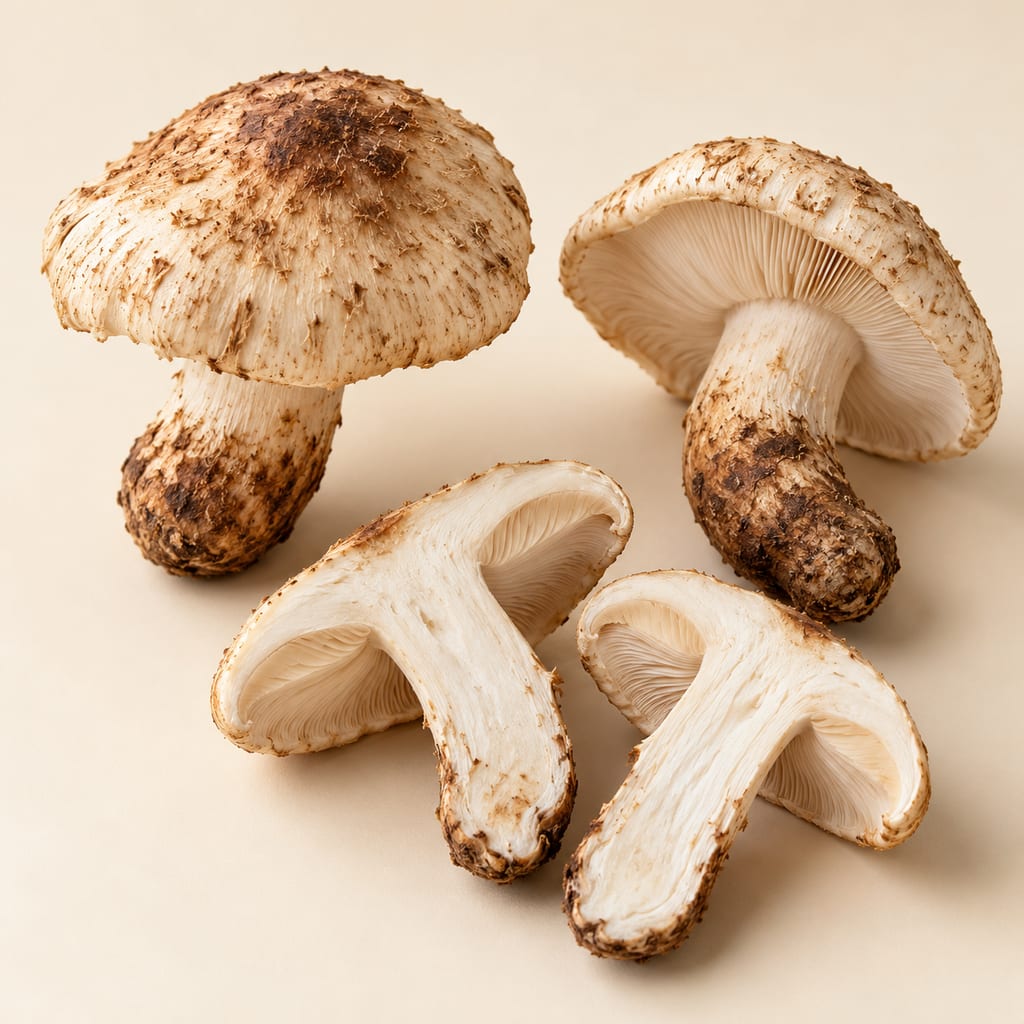
The Mesoamerican matsutake, Tricholoma mesoamericanum, is a wild mushroom of the highlands of central Mexico, prized in Oaxaca and now overharvested and declining.
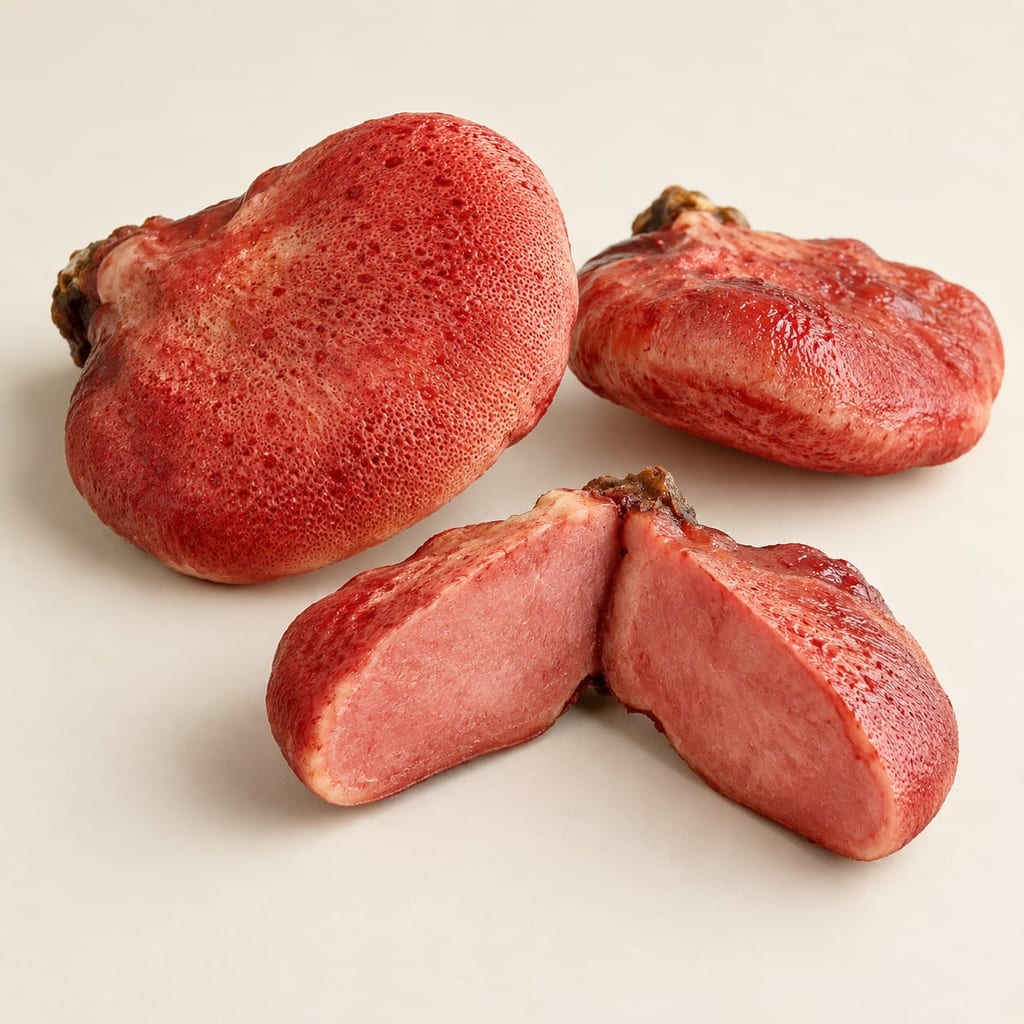
Fistulina antarctica is a bracket fungus of Nothofagus forests in Patagonia. Local people have long eaten it. The regional food record is not a full toxicity evaluation, so its species concept needs local checking.
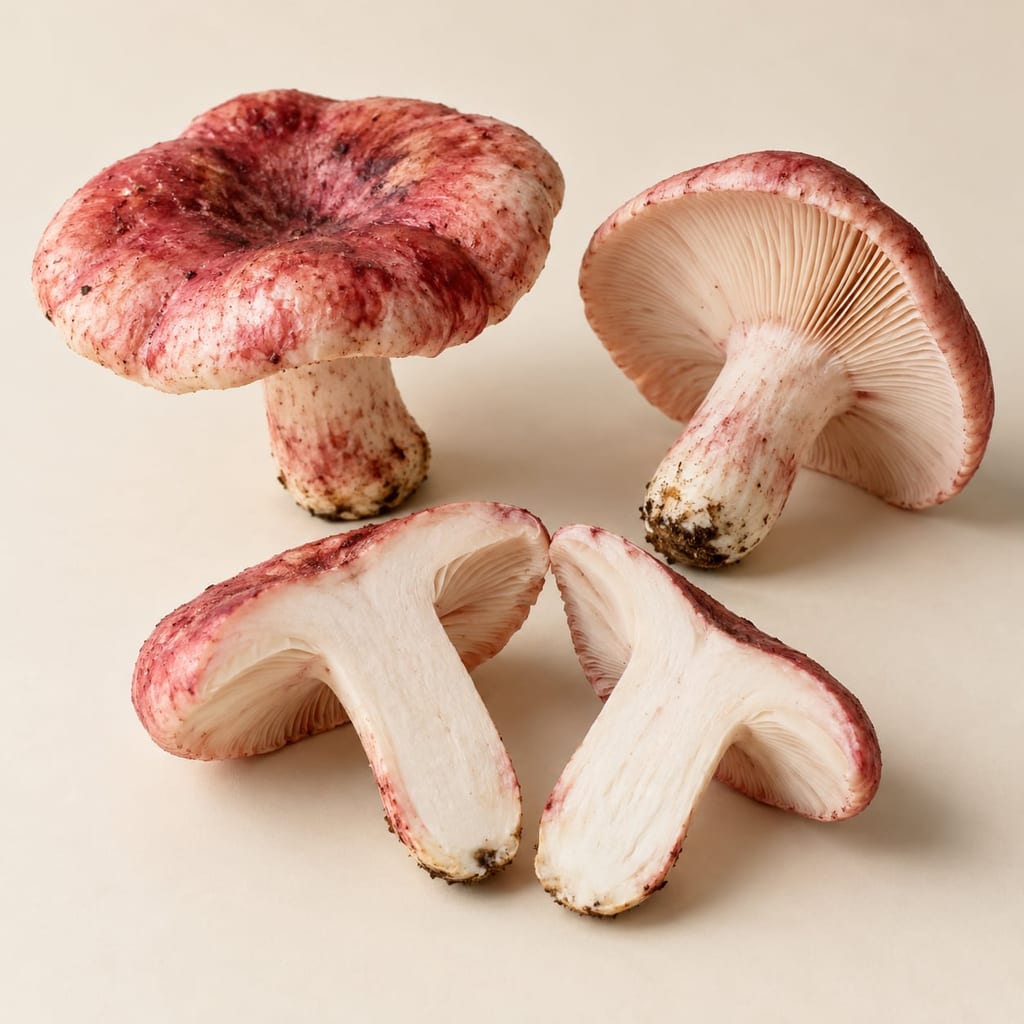
Hygrophorus russula, the pinkmottle woodwax, is a firm mycorrhizal mushroom of broadleaf woods in southern Europe and Guatemala. It is used cooked or preserved, and field guides differ on its quality.
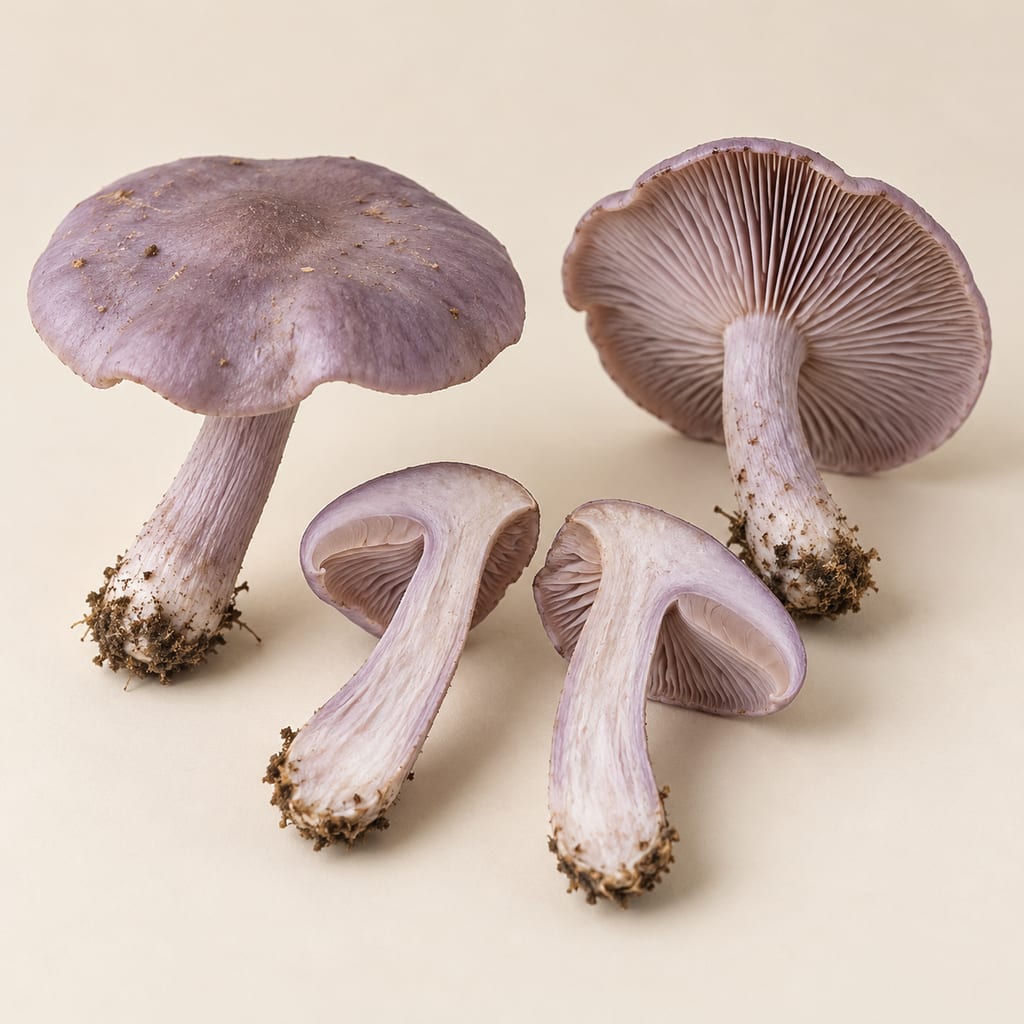
Collybia sordida, formerly Lepista sordida, is a leaf-litter and grassland mushroom. Foraging guides list it as edible. The catalogue's Brazilian record does not establish a food-safety assessment.
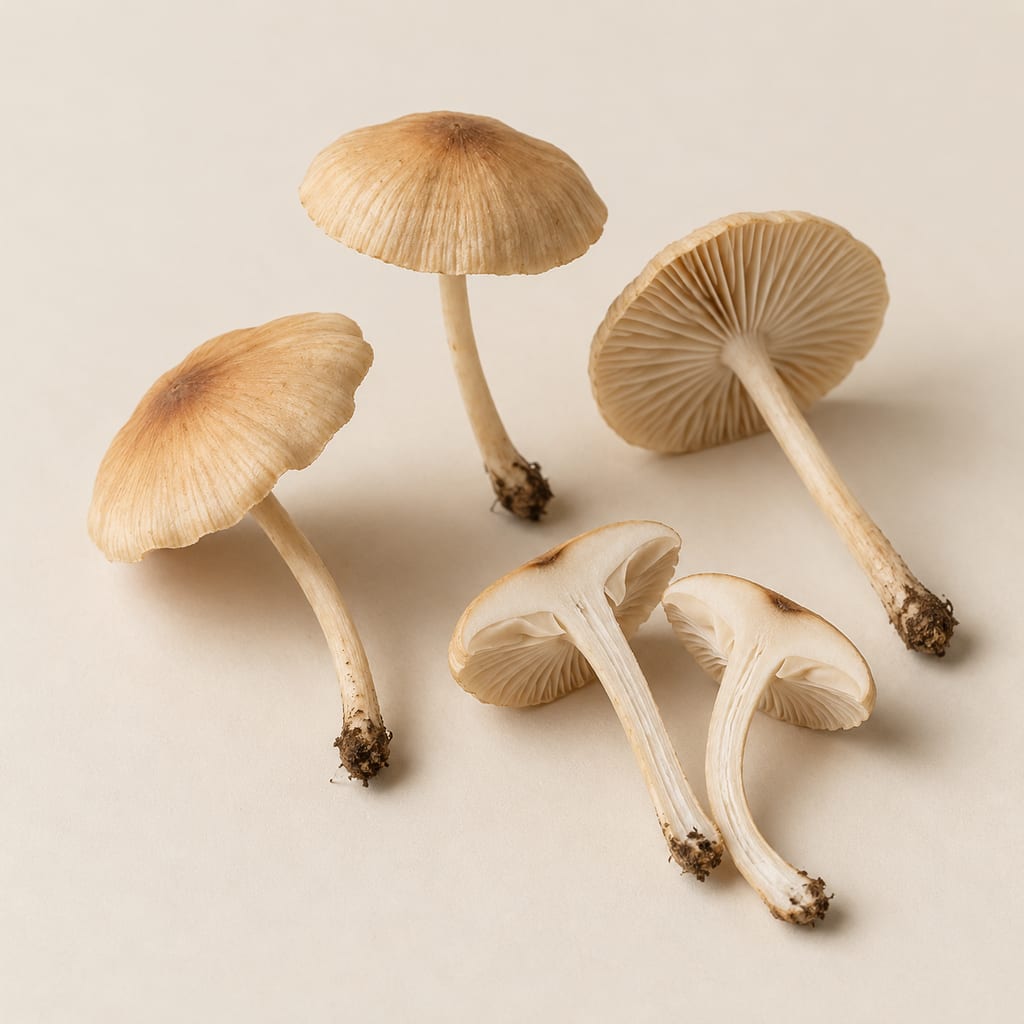
Marasmius oreades is a small grassland mushroom that forms fairy rings. It is used for cooking and drying in Europe and Mexico. Toxic grassland lookalikes occur, so growth in rings is not an edibility test.
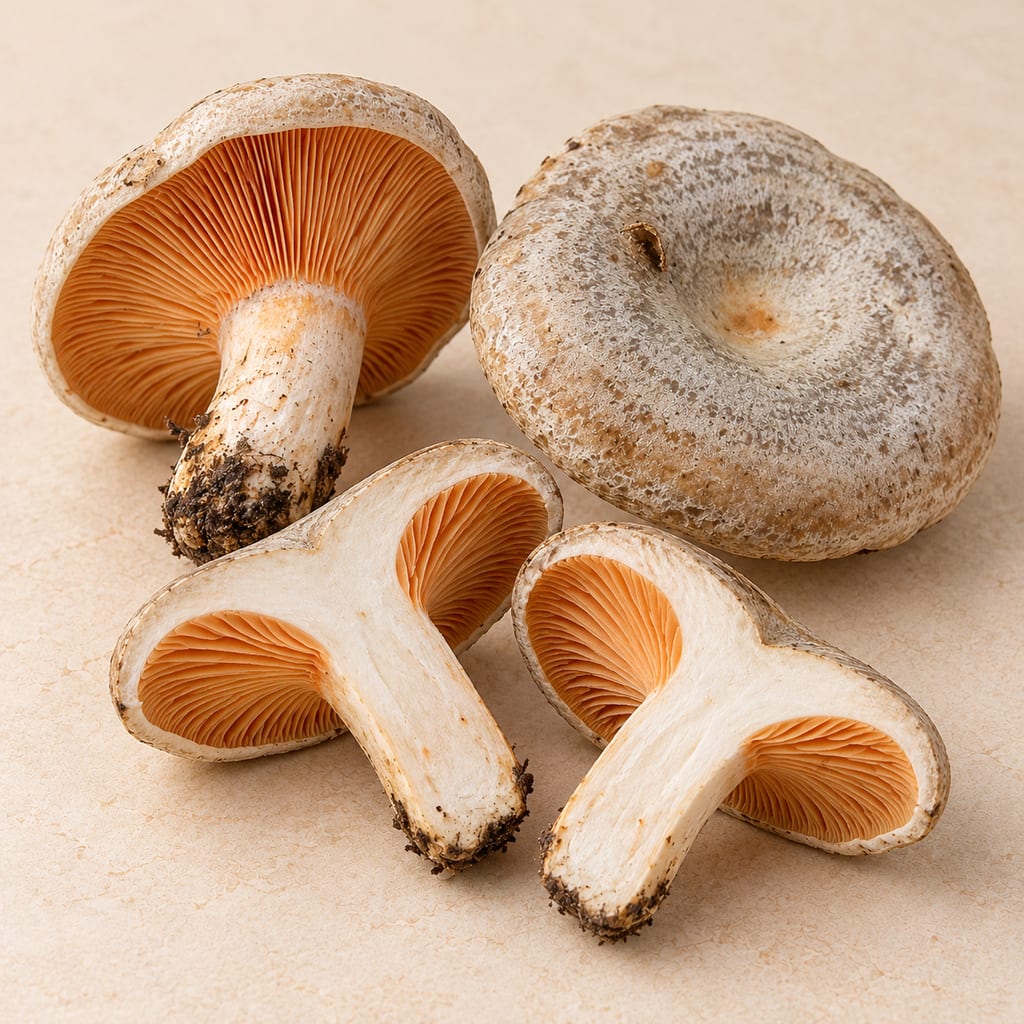
Lactarius quieticolor is a milkcap of pine plantations and pine woods in Europe, recorded as food in Brazil. The name quiet milkcap is a catalogue label, and documented use does not amount to a safety assessment.
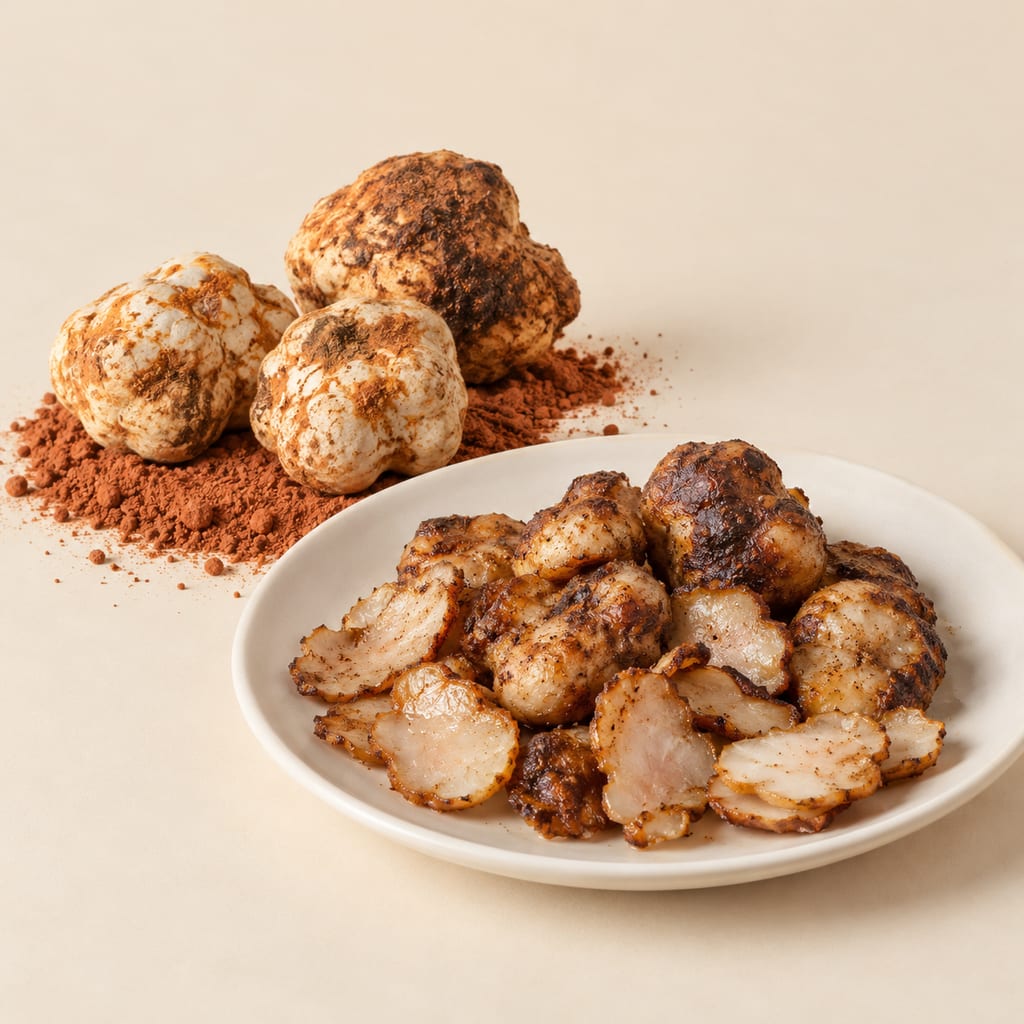
Kalaharituber pfeilii is an underground truffle of the Kalahari and adjacent drylands. San and Khoisan people have gathered and eaten it, and it is sold in Namibian markets.
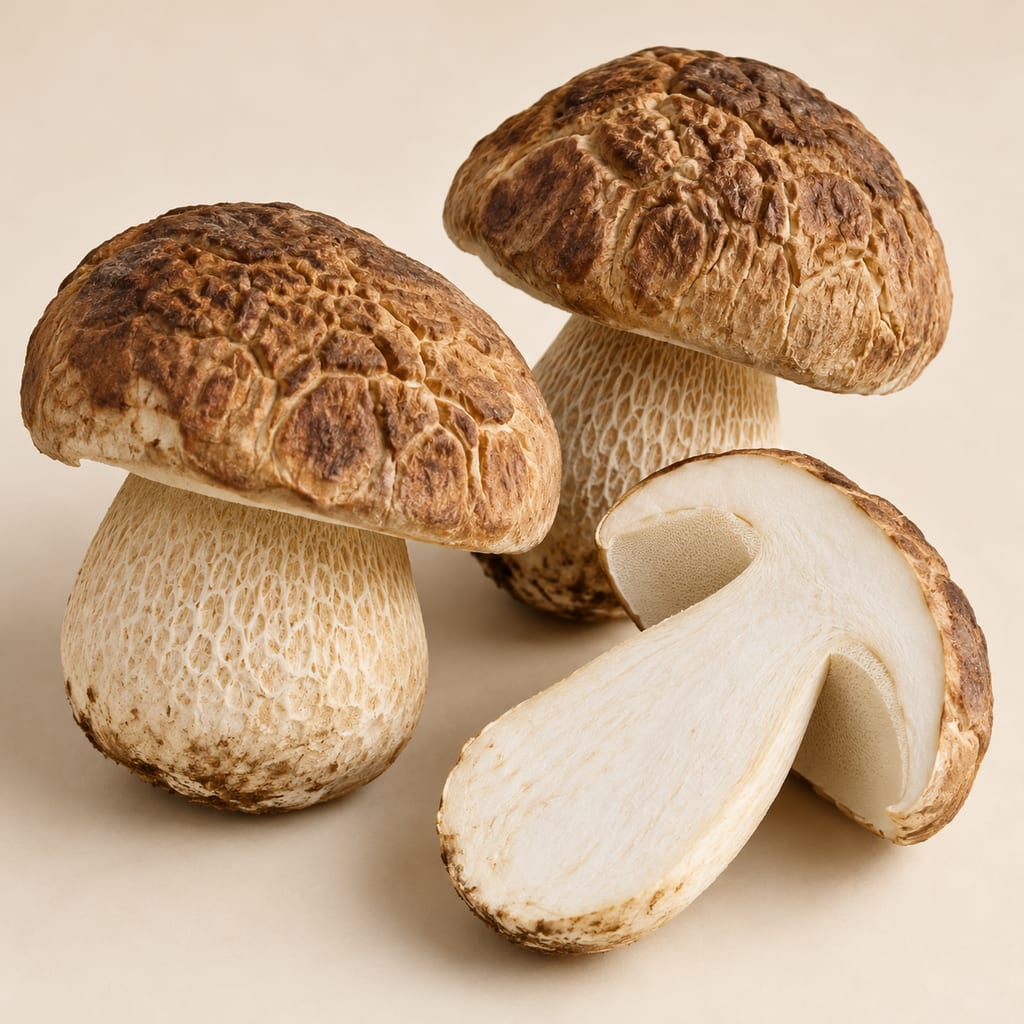
Boletus reticuloceps is a porcini-group bolete first described from Yunnan, China. A Chinese species catalogue lists it as edible, but the sources reviewed here give no culinary tradition or safety study for it.
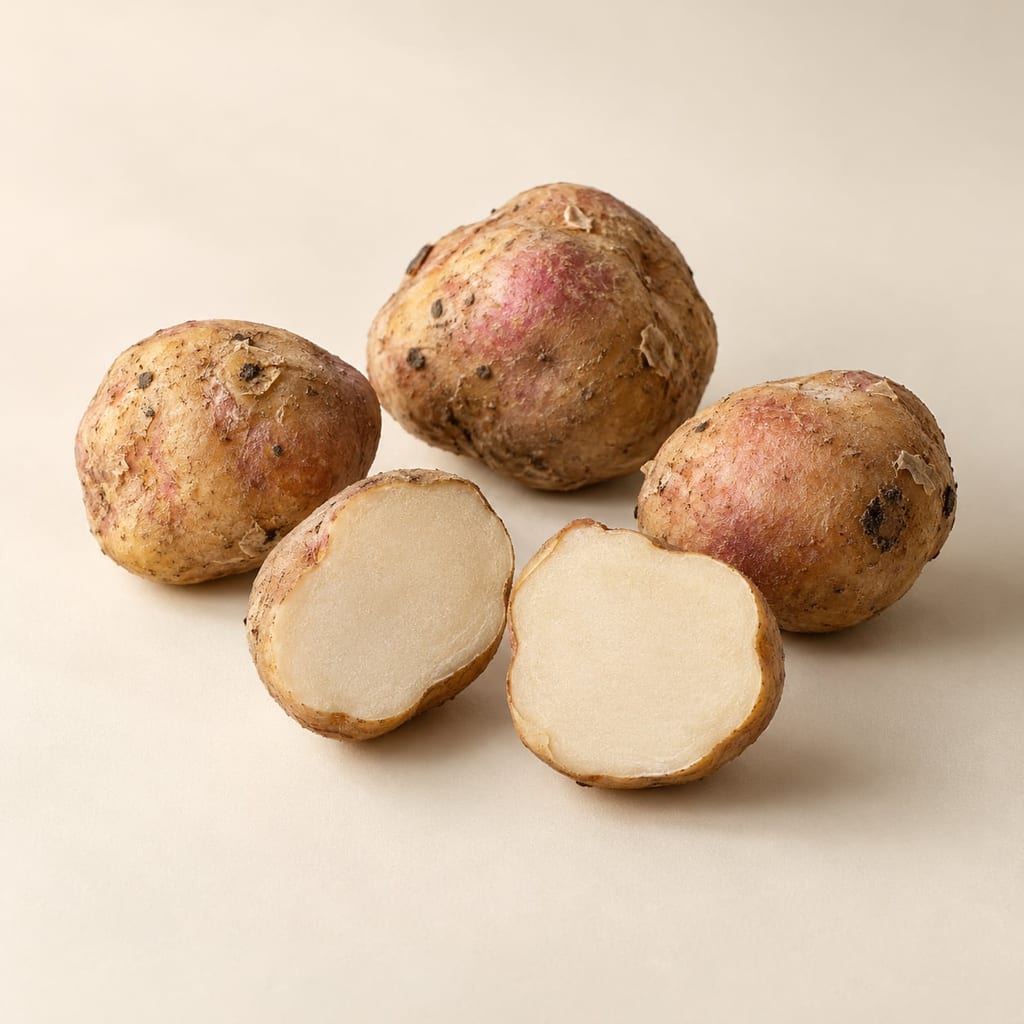
Blushing false truffle, Rhizopogon roseolus, is a pine-associated false truffle. It is recorded as a food in Europe and in Japan, where it is called shoro. Its food use depends on maturity, and its name needs checking.
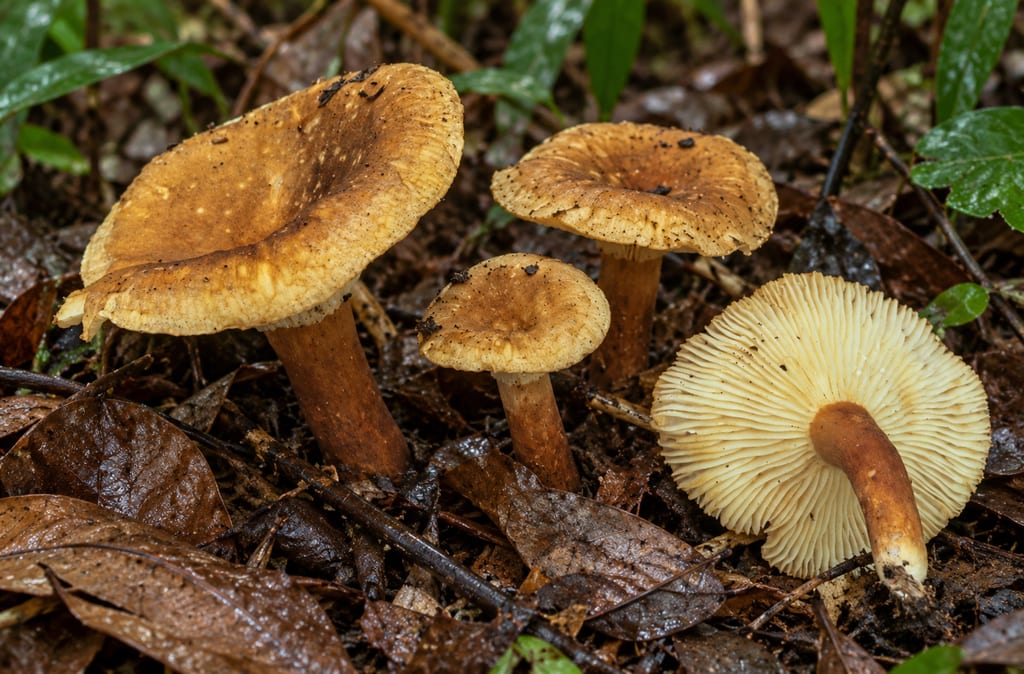
Lactifluus longipes is an African milkcap mushroom recorded in Cameroon, the DR Congo, Gabon and Togo. It is listed in an institutional inventory of edible species. Its identity, preparation and current safety are not settled by the sources.
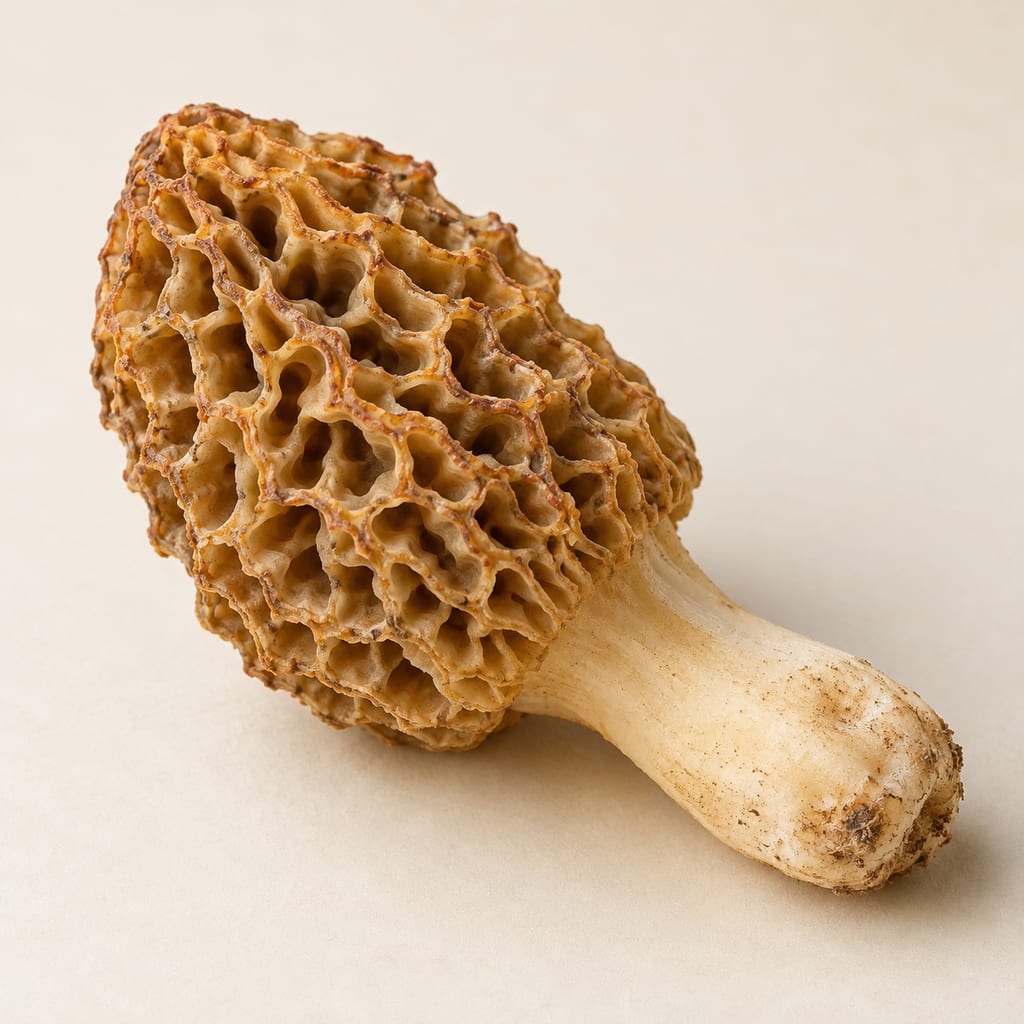
Morchella prava is a yellow morel described in 2012 from North America. It is catalogued as a culinary morel, and morels must be cooked before eating.
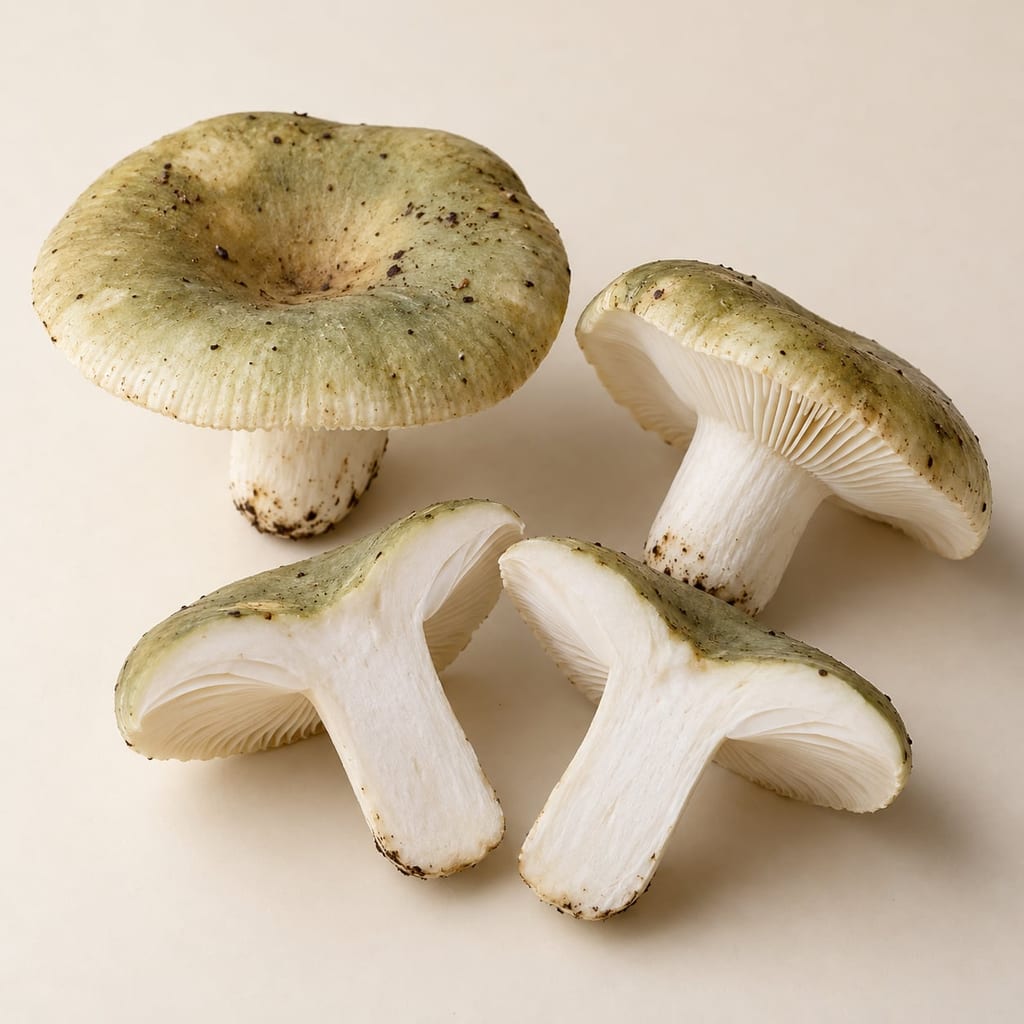
Russula viridicinnamomea is a brittlegill mushroom known by the regional name regional brittlegill in Yunnan, China. One forest survey lists it as edible. This page records that single food-use record and its limits.
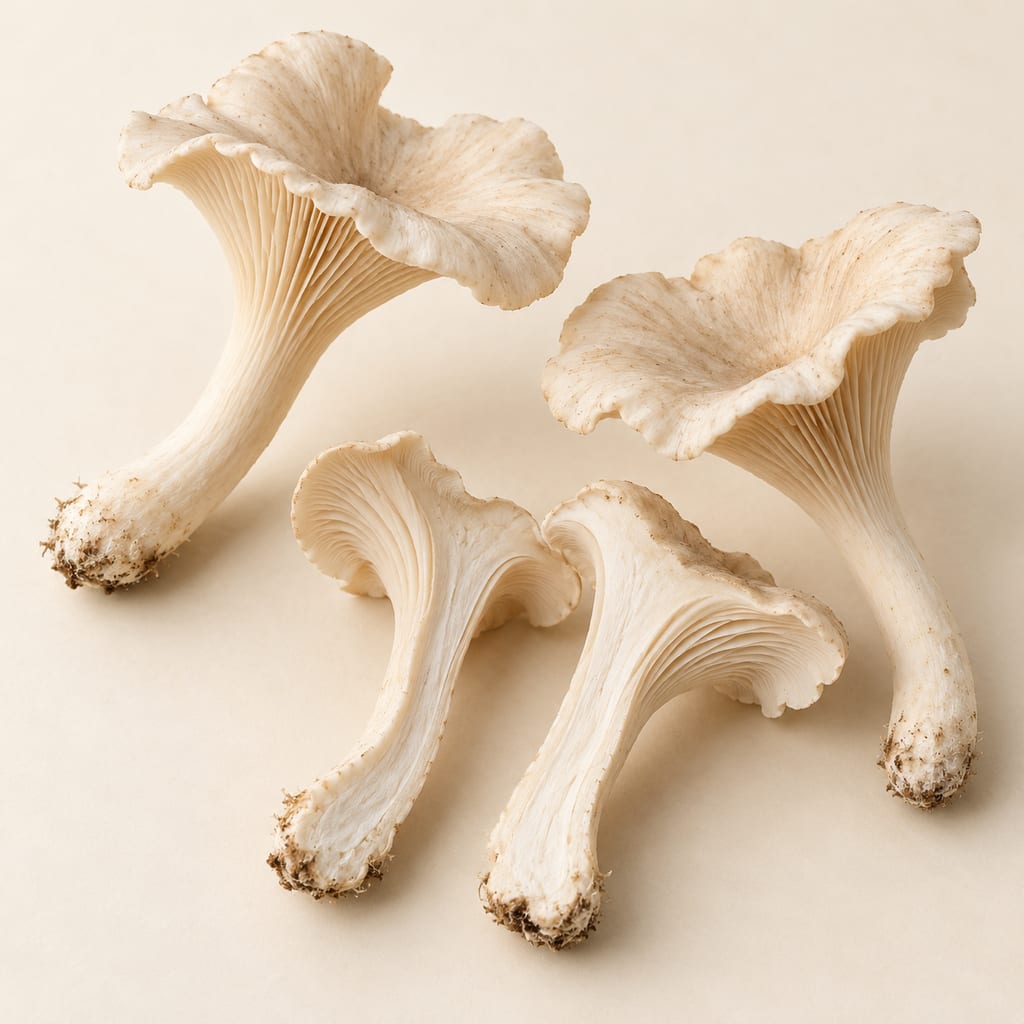
Pleurotus tuber-regium is a tropical fungus whose underground sclerotium is a staple and soup thickener in south-eastern Nigeria. It is also recorded as a food in Tshopo province, Democratic Republic of the Congo.
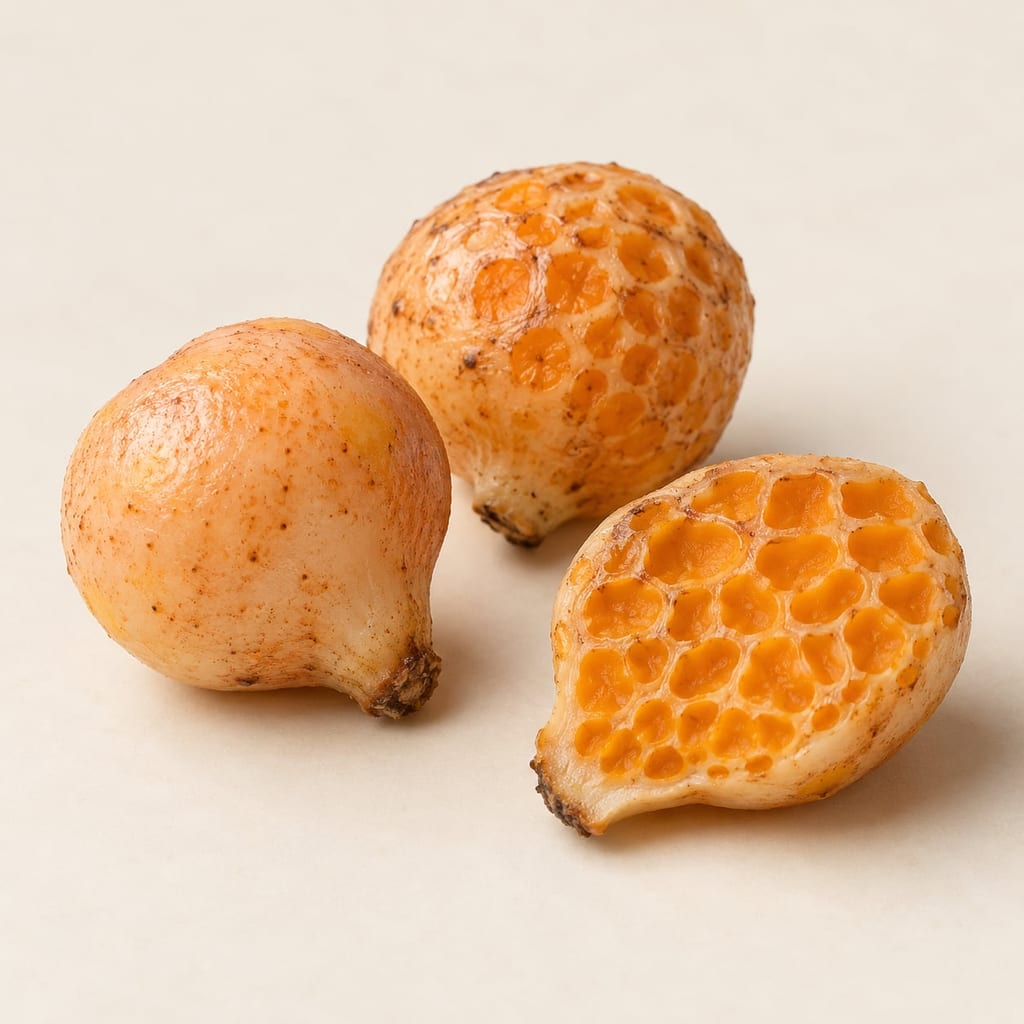
Cyttaria gunnii is a fungus that forms galls on southern beech in Tasmania and Victoria. Aboriginal Australians ate its fleshy fruiting bodies, and modern sources disagree on its safety.