


























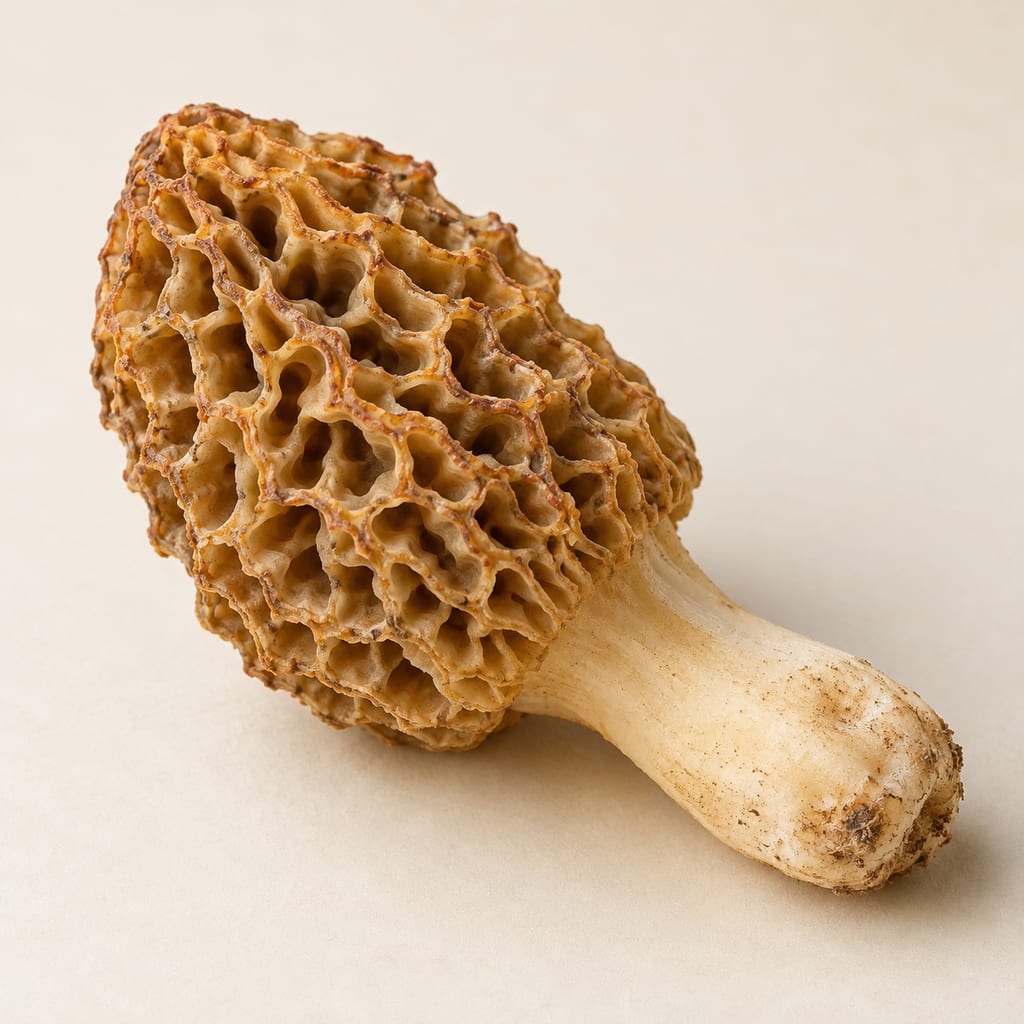
Northern yellow morel
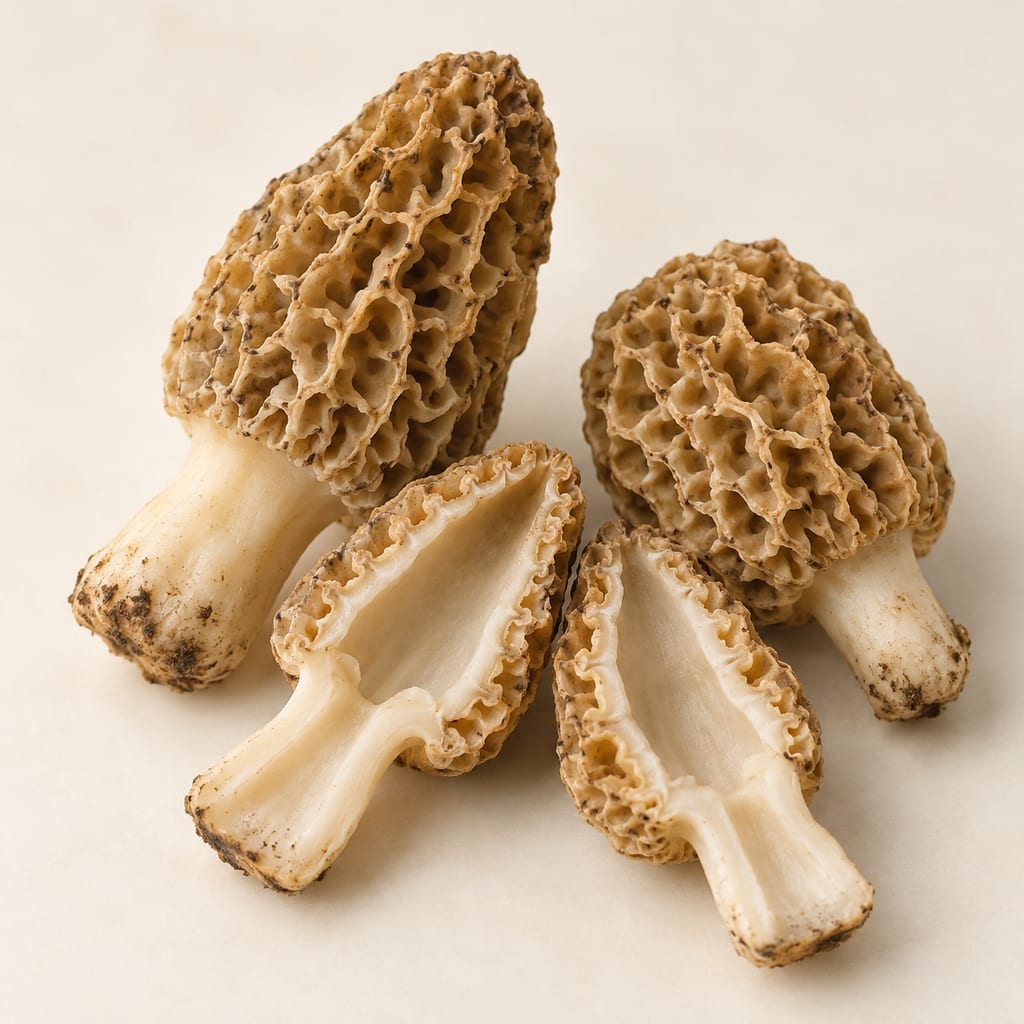
Morchella prava is a yellow morel described in 2012 from North America. It is catalogued as a culinary morel, and morels must be cooked before eating.
 FermenteaWhere food goes to change
1086 articles on substrates, cultures and additives.
 Edible mushrooms339
 Brittlegills25
 Truffles20
 Milkcaps17
 Termite mushrooms17
 Fungi7
 Morels4
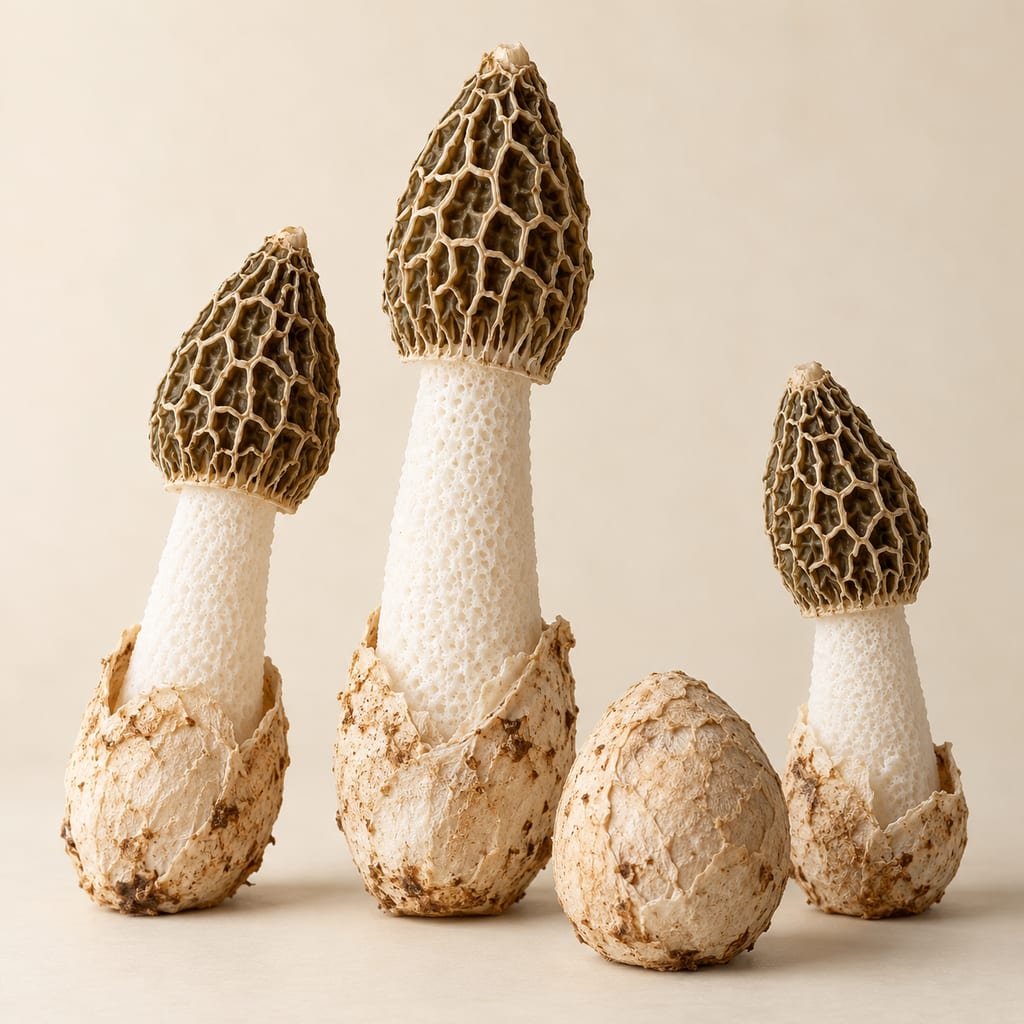 Stinkhorn fungi4
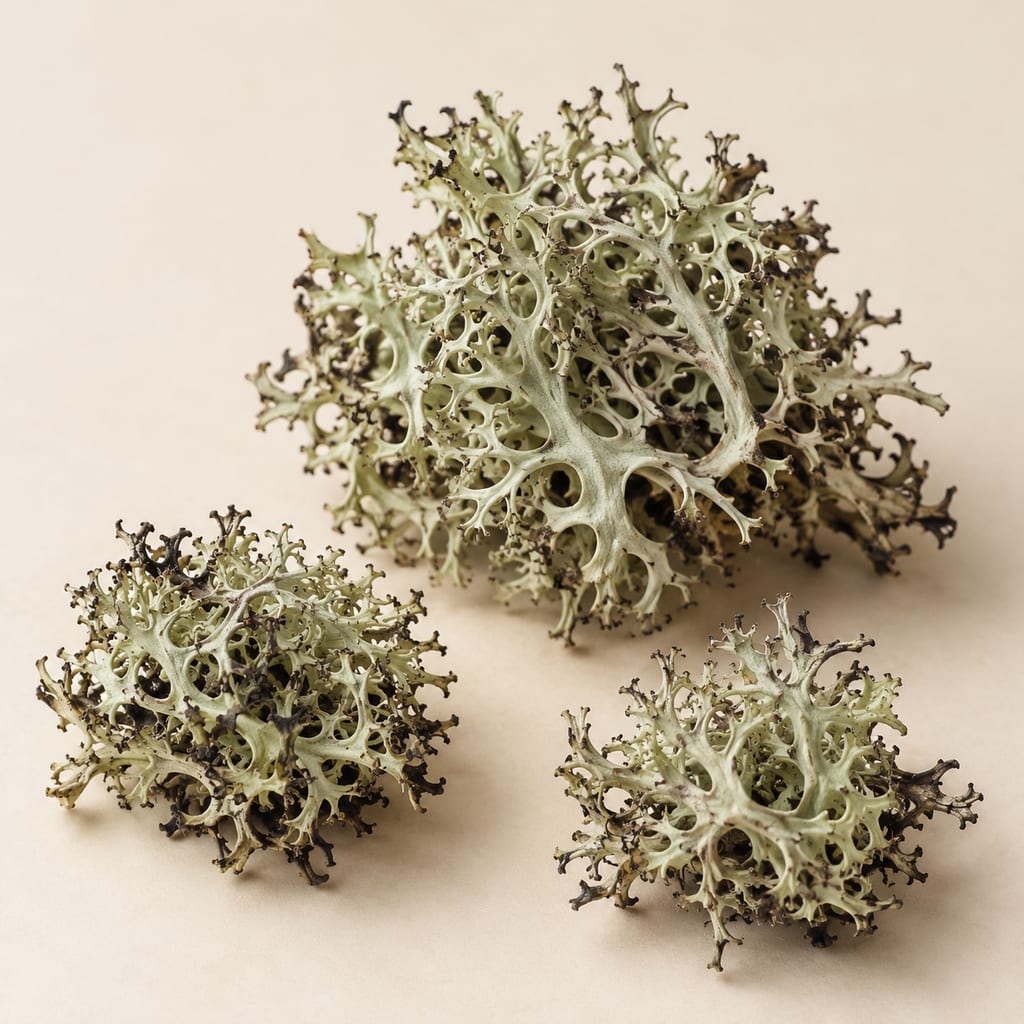 Lichens3
Morchella prava is a yellow morel described in 2012 from North America. It is catalogued as a culinary morel, and morels must be cooked before eating.
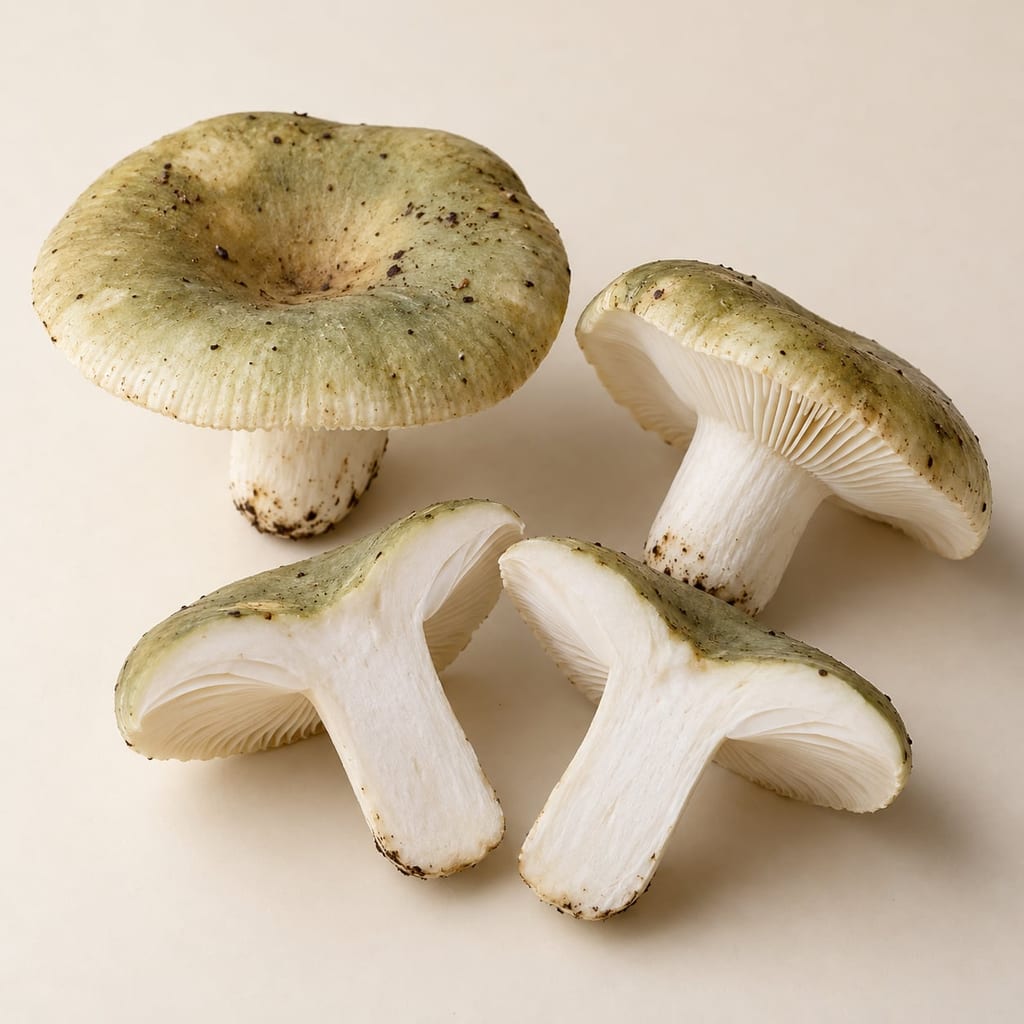
Russula viridicinnamomea is a brittlegill mushroom known by the regional name regional brittlegill in Yunnan, China. One forest survey lists it as edible. This page records that single food-use record and its limits.
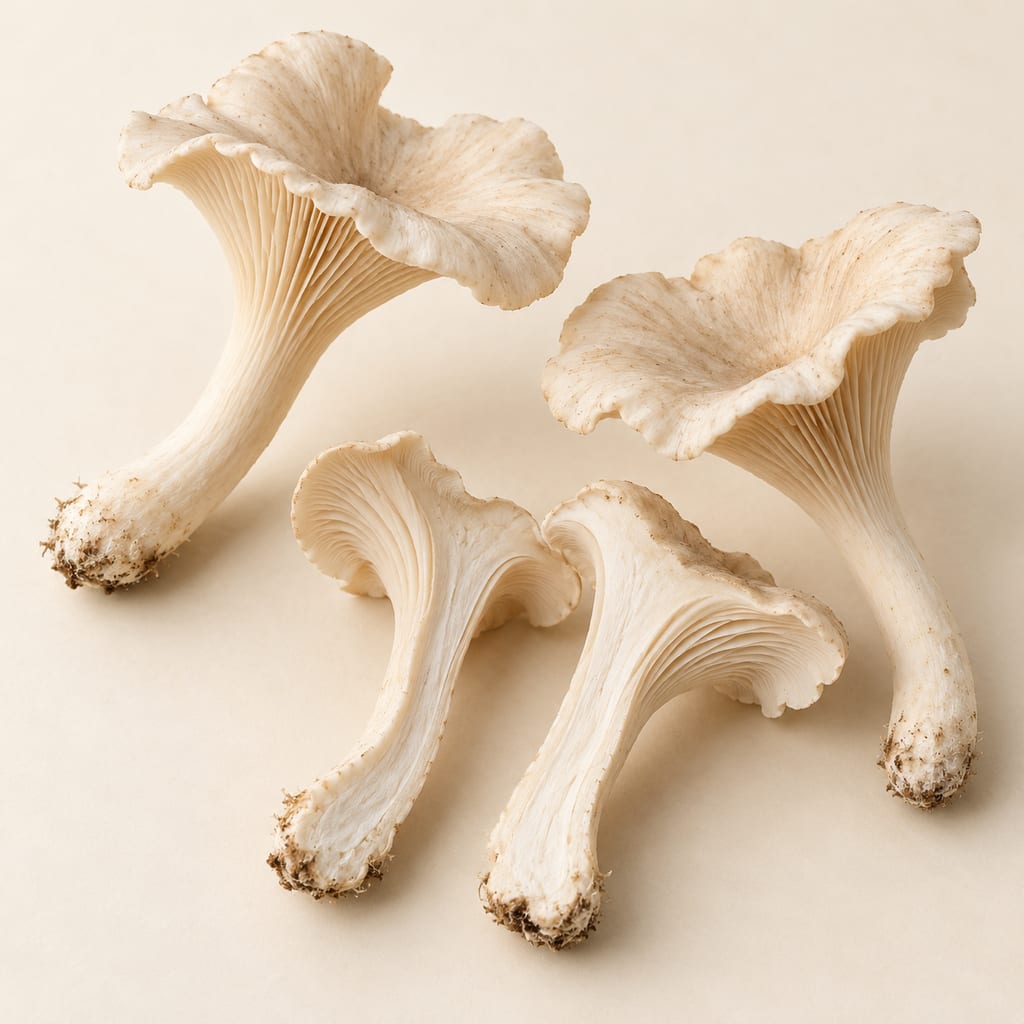
Pleurotus tuber-regium is a tropical fungus whose underground sclerotium is a staple and soup thickener in south-eastern Nigeria. It is also recorded as a food in Tshopo province, Democratic Republic of the Congo.
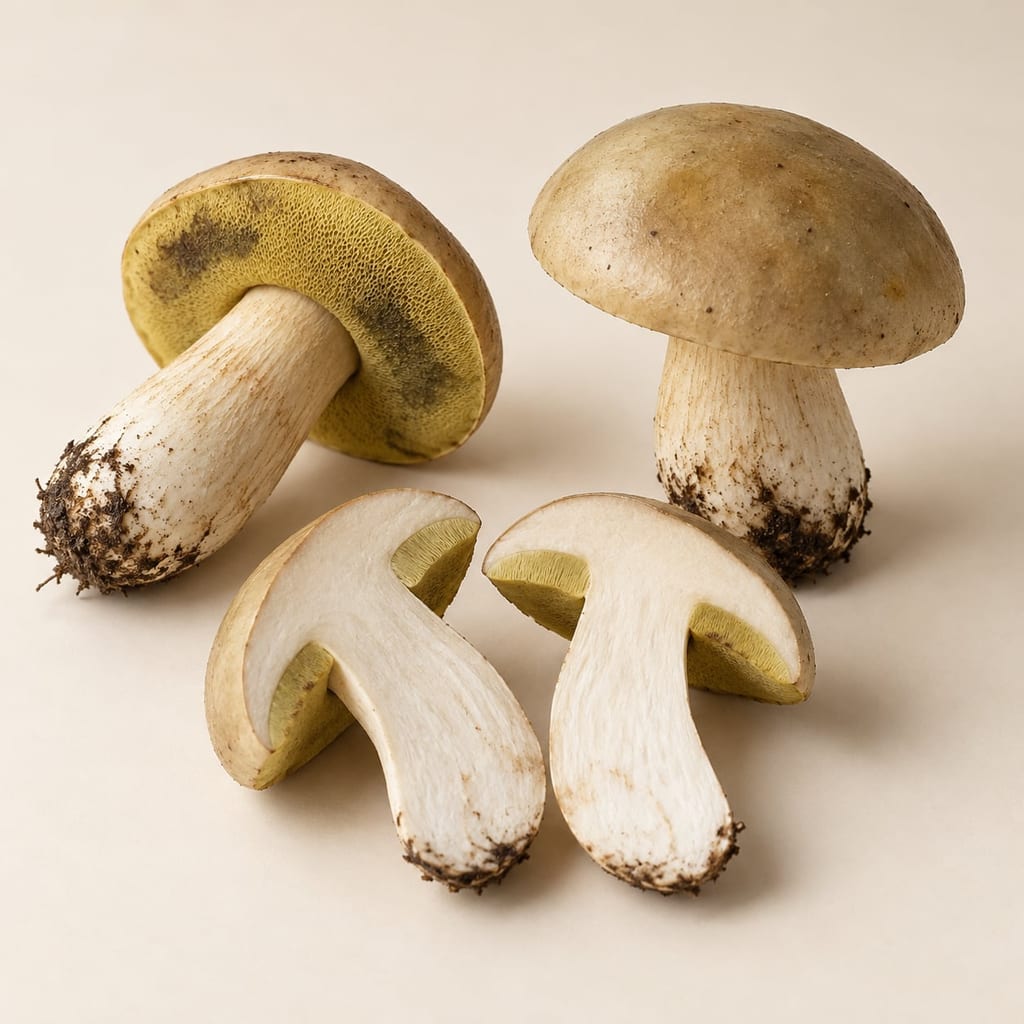
The pallid bolete, Imleria pallida, is a pale-capped wild bolete of oak woods in eastern North America. It is listed as edible, but its identity and its name are not settled.
Marasmius confertus is a saprotrophic agaric recorded as a food mushroom in the Tshopo province of the Democratic Republic of the Congo. Preparation and identity are not established in the sources.
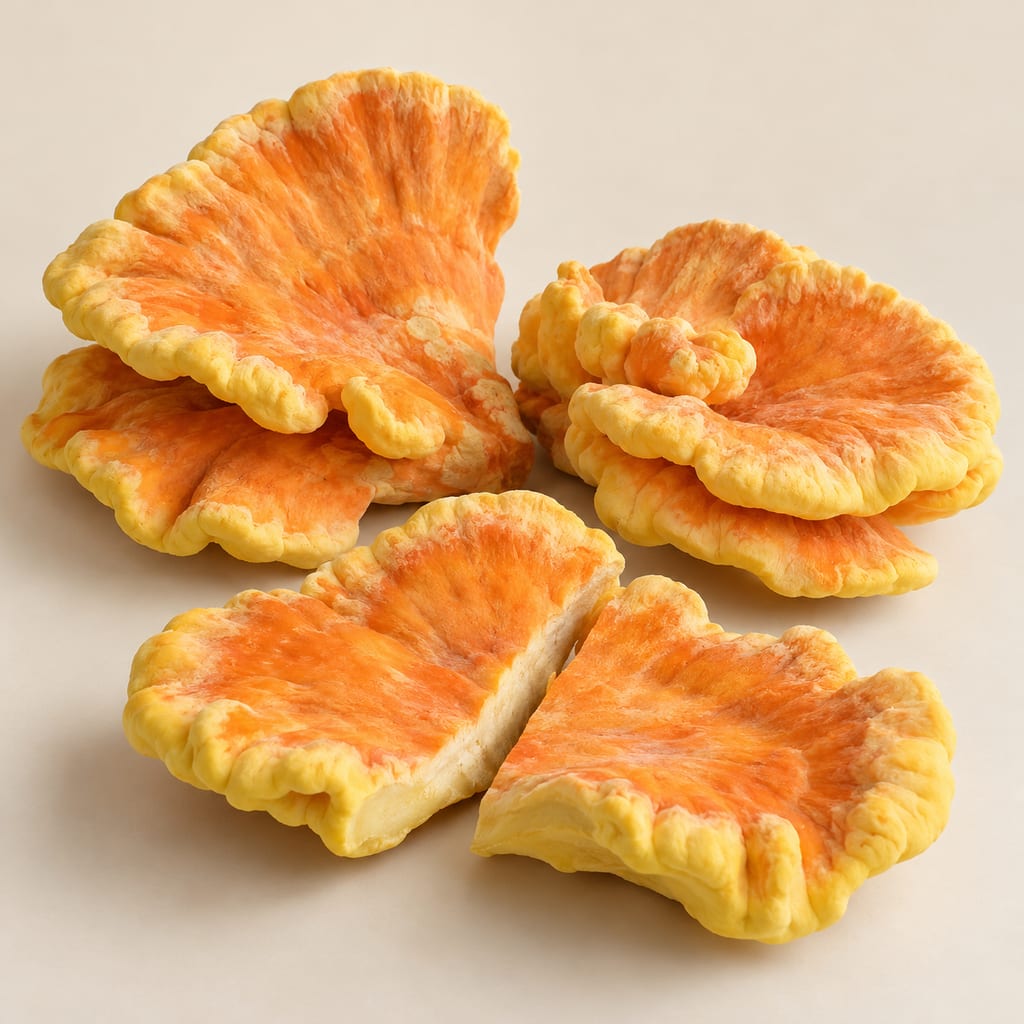
Laetiporus sulphureus, sulfur shelf or chicken of the woods, is a yellow-pored bracket fungus of hardwoods in Europe and North America that is eaten young and cooked, with reported adverse reactions.
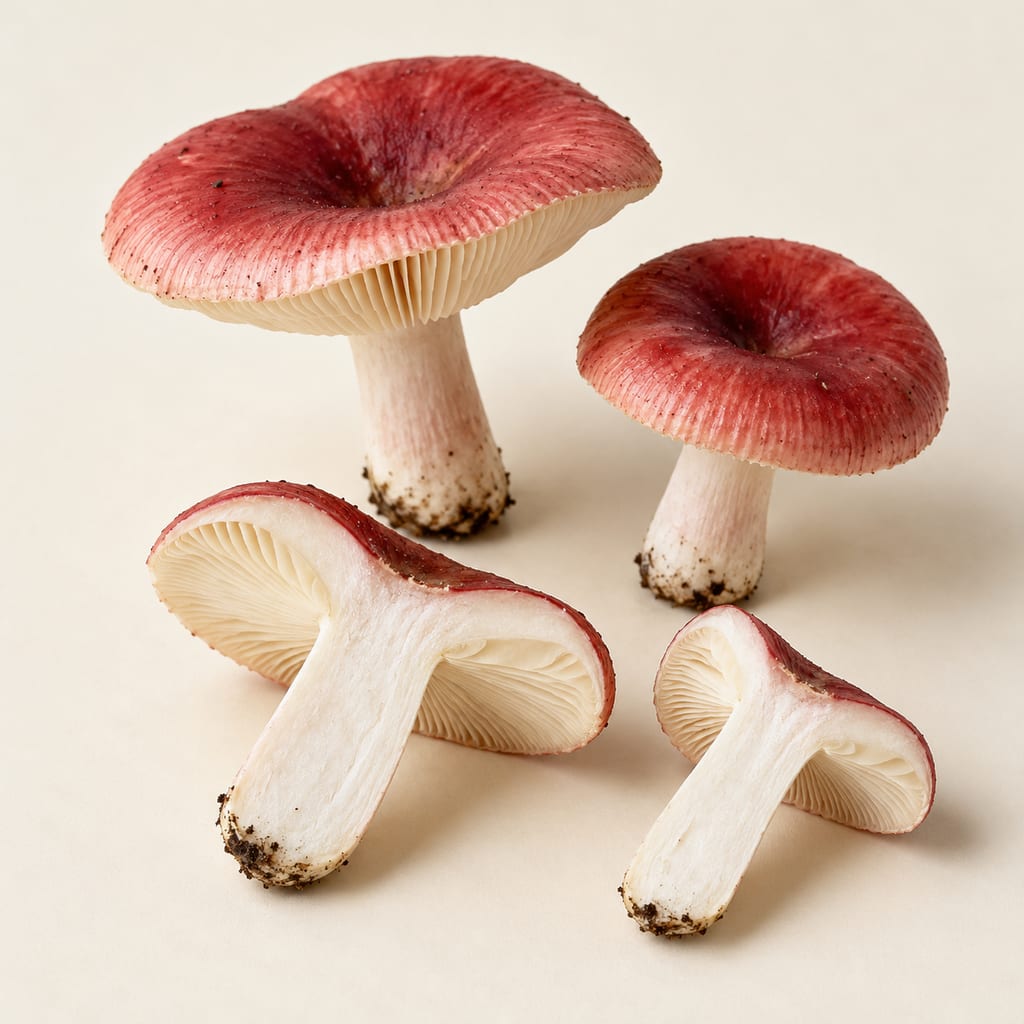
Russula congoana is an ectomycorrhizal brittlegill of miombo and savanna woodland in tropical Africa, recorded in an edible-fungi inventory. Preparation, identity and current safety still need validation.
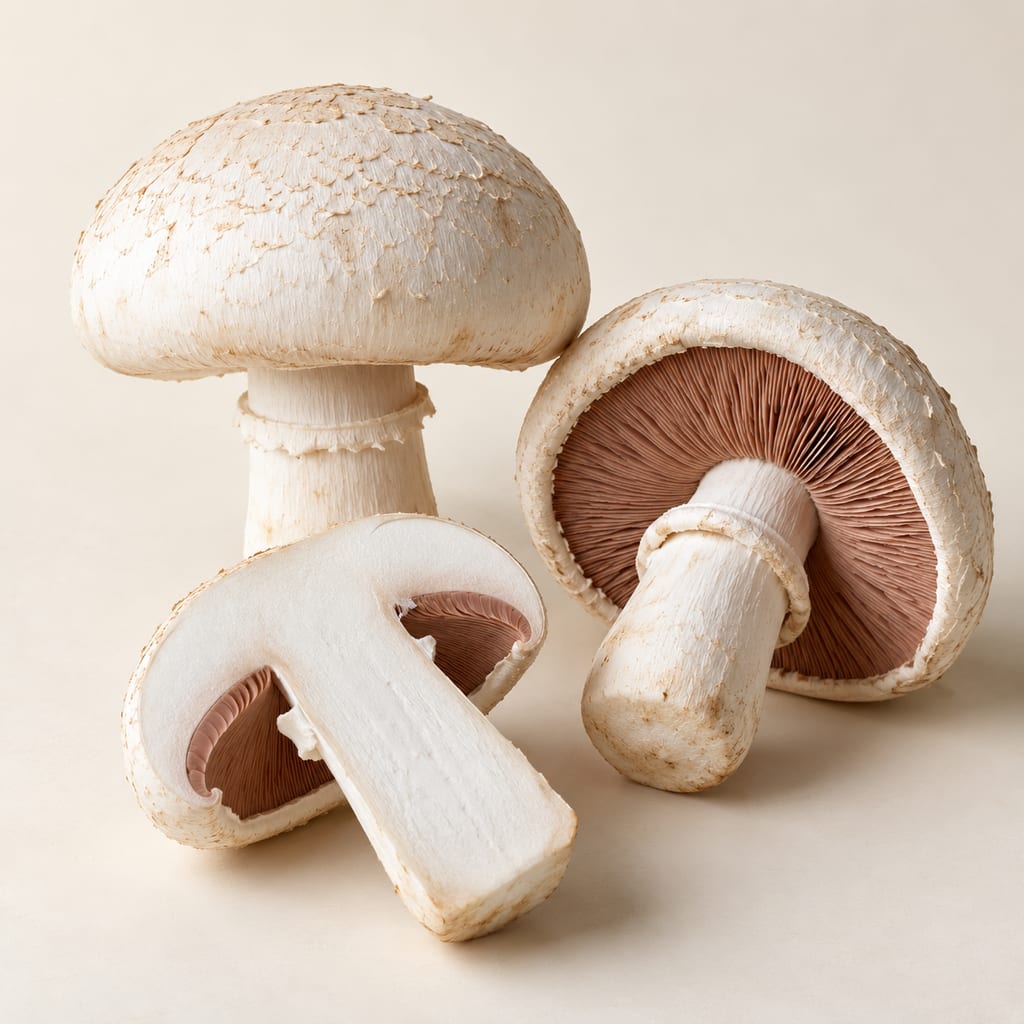
Agaricus urinascens is a large European grassland mushroom recorded as a food species. The catalogue flags its historical species boundaries and cadmium accumulation for review.
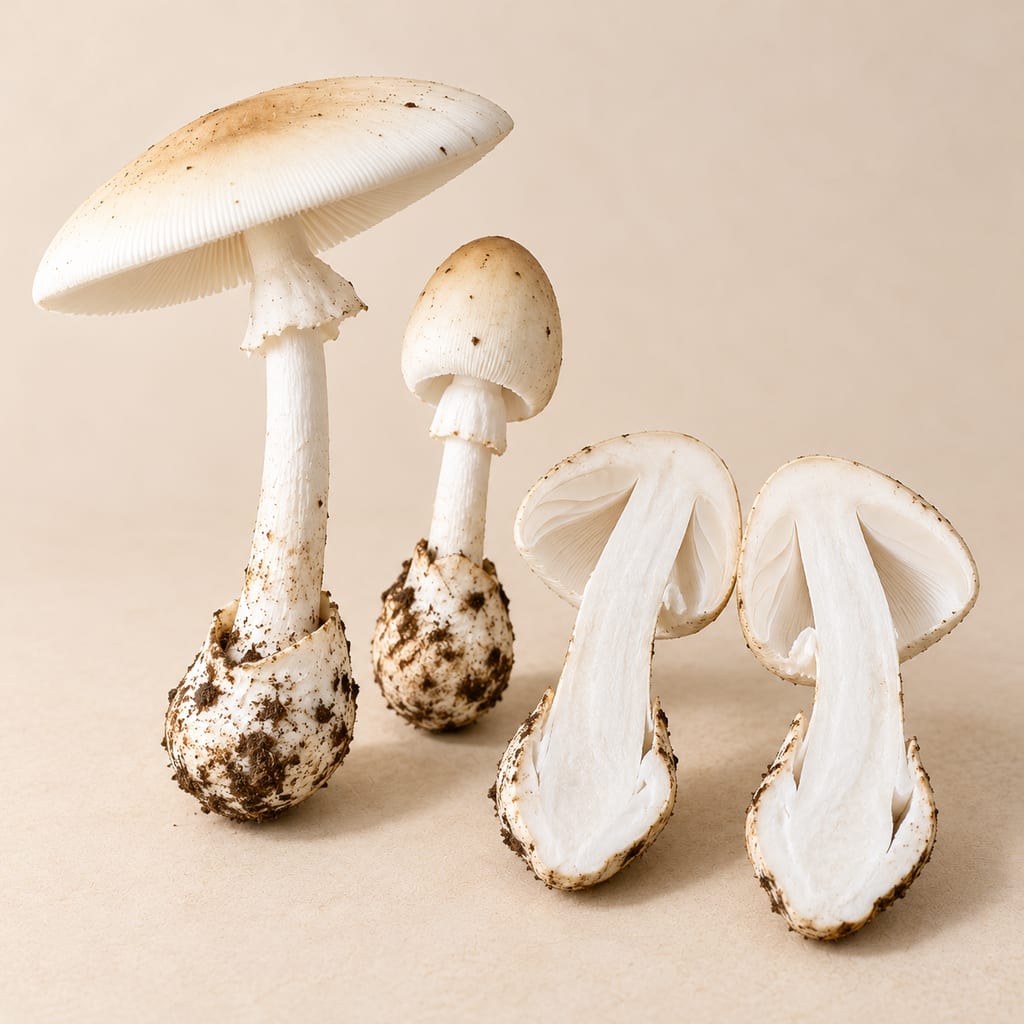
Amanita princeps, the head man slender Caesar, is a mycorrhizal fungus of tropical China and Southeast Asia that is eaten and sold locally, but the sources read advise against eating it and confuse it with the deadly death cap.
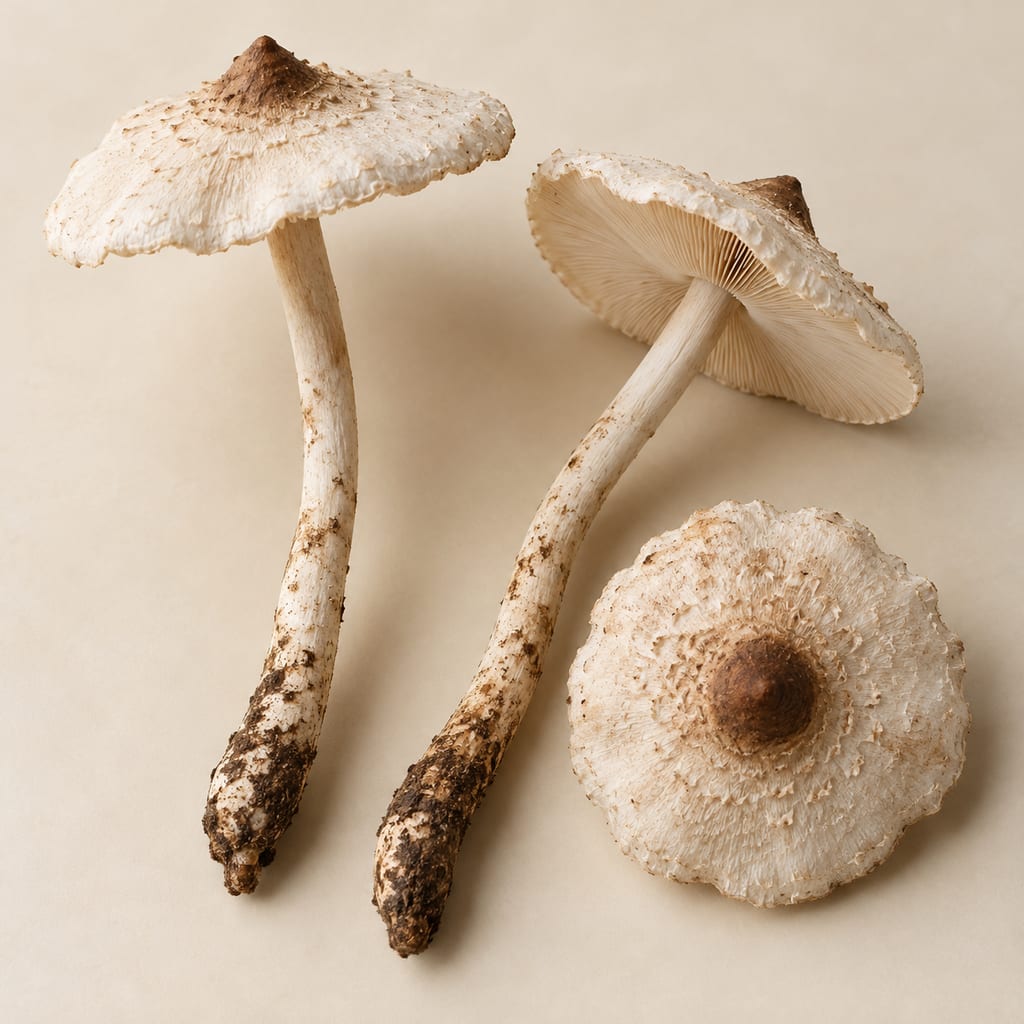
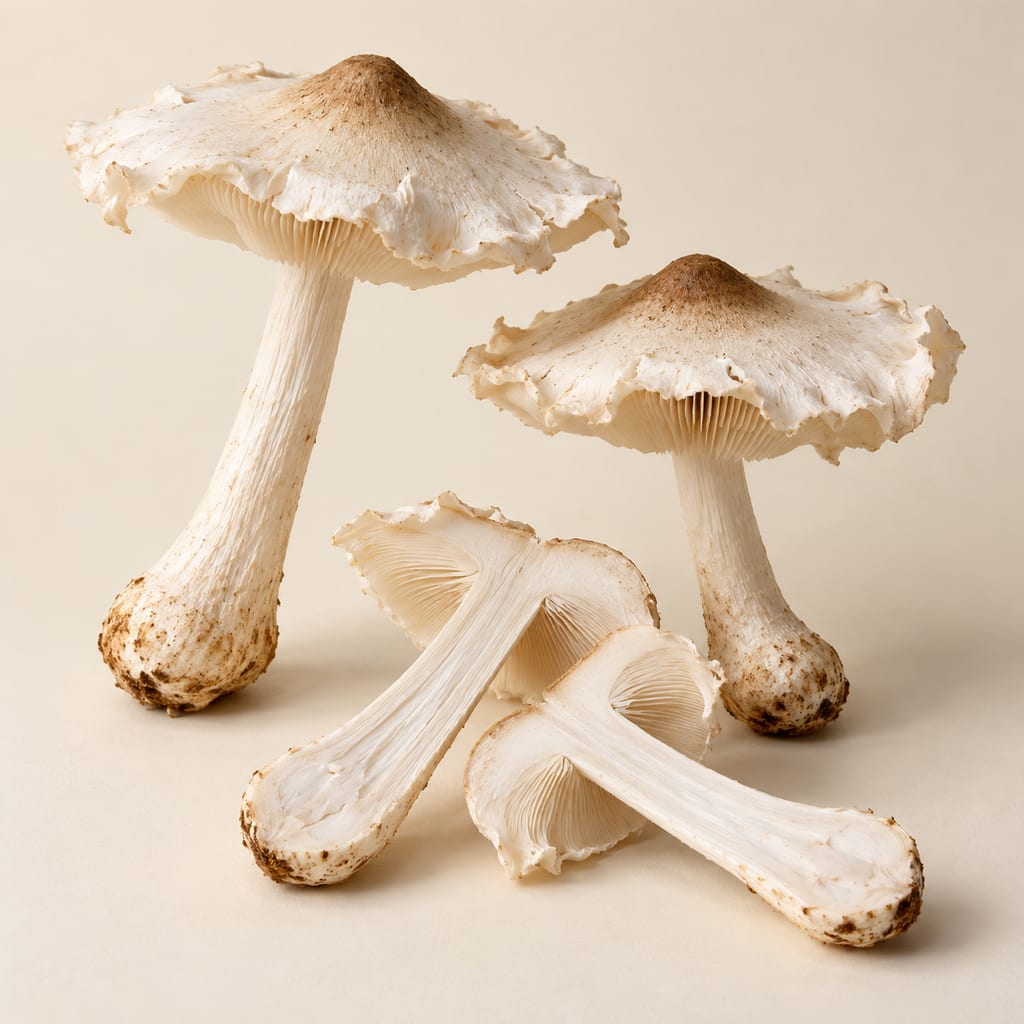
Termitomyces mammiformis is a termite mushroom with a small cap, eaten in several African countries and listed as edible in the EFTA list. Its identity and safety need separate checking; regional records do not settle them.
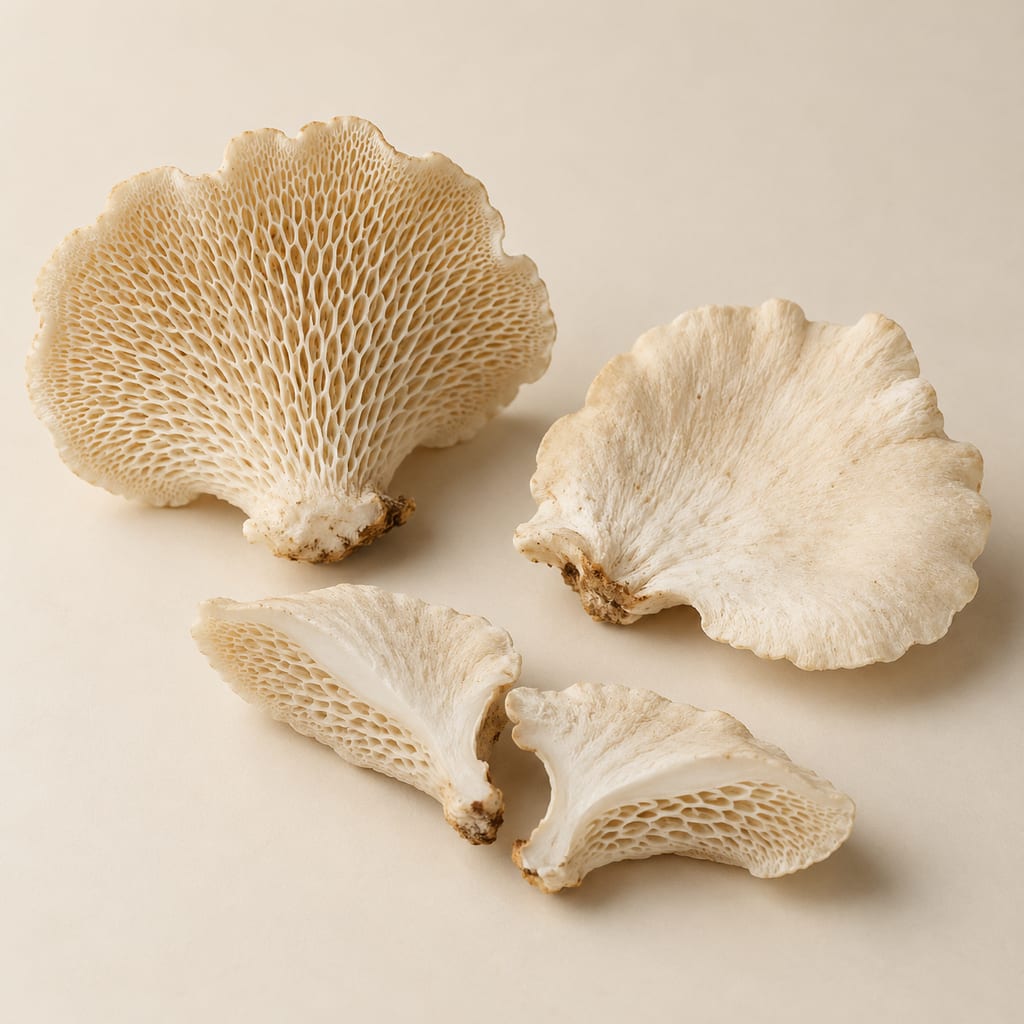
Favolus pseudoprinceps is a wood-decay polypore from the Neotropics, with a Brazilian food-use record. The sources do not establish a standard food-safety assessment for it.
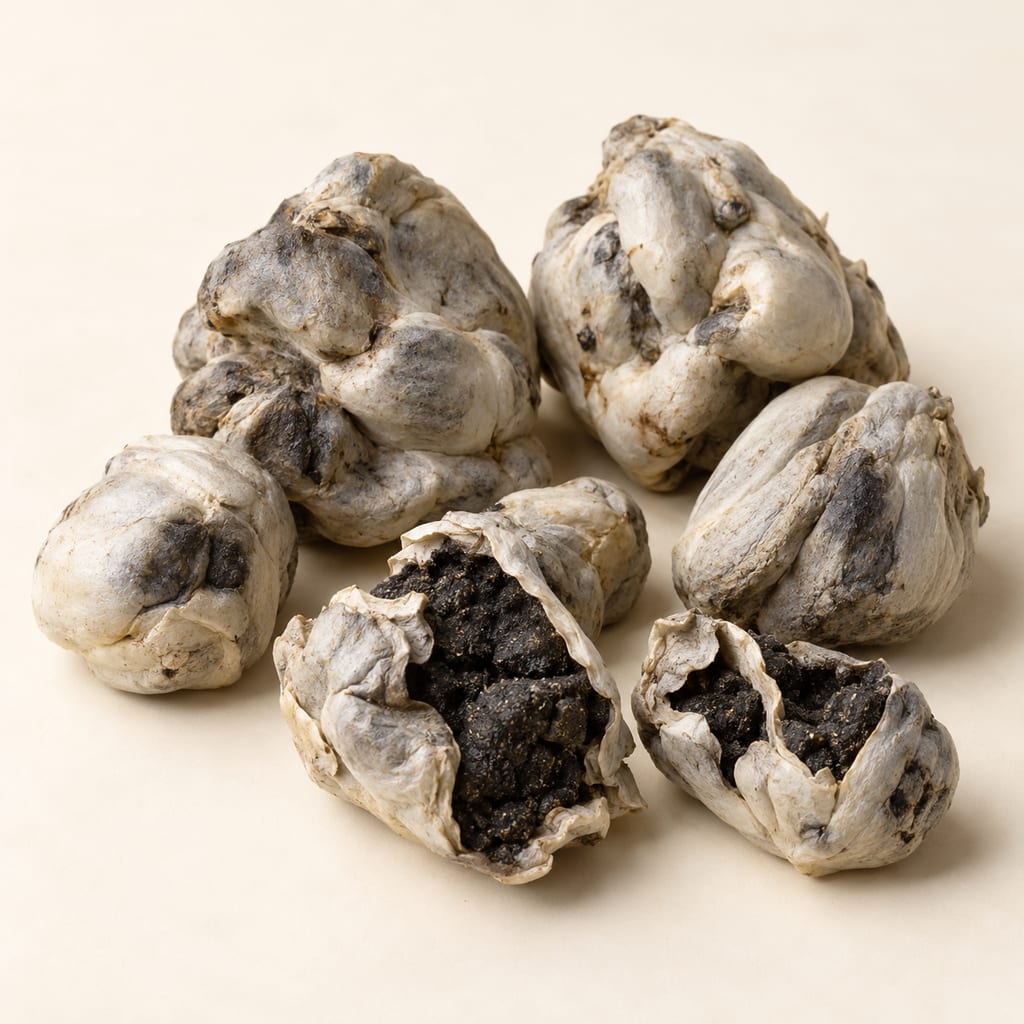
A rarely reported subterranean fungus from South Africa’s Northern Cape. It is grouped with Kalahari truffles in some literature, but occurrence in the Kalahari Desert proper and food use are unconfirmed.
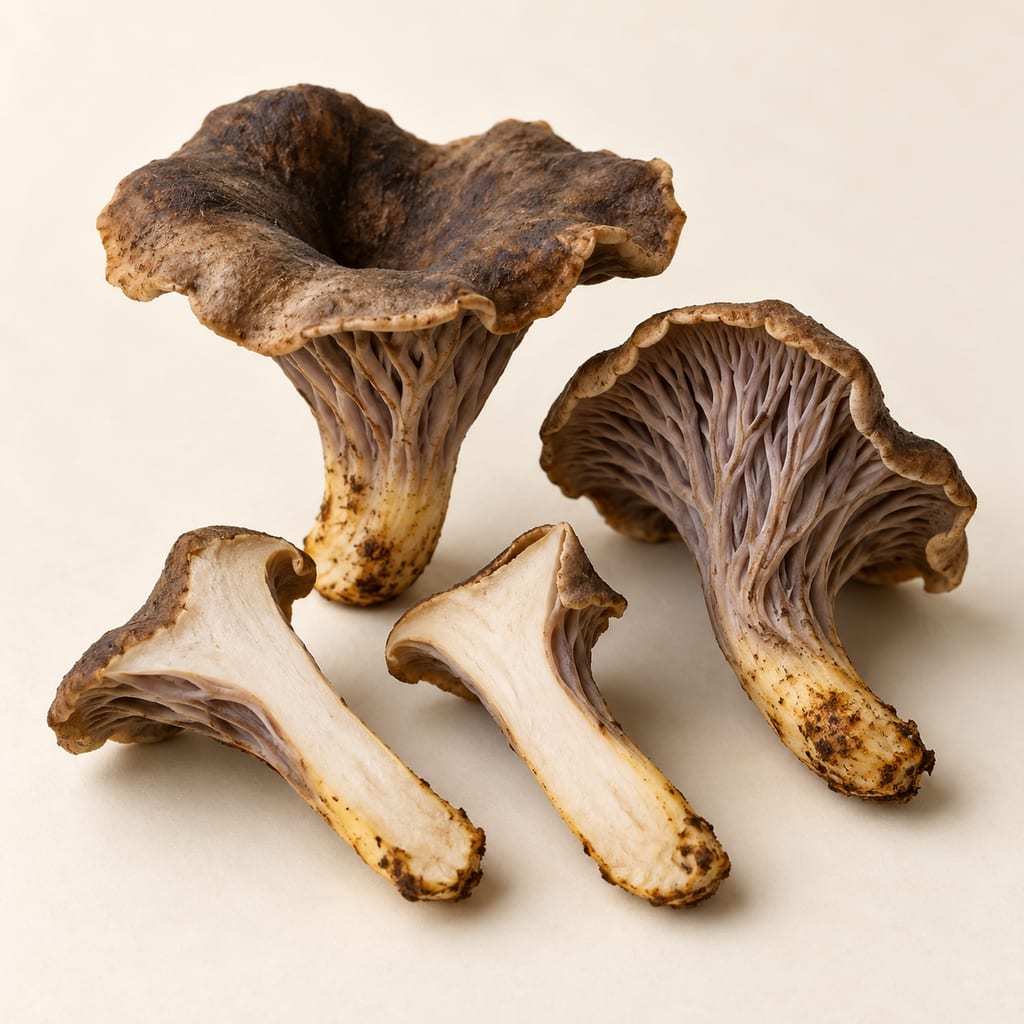
Cantharellus congolensis is an ectomycorrhizal chanterelle of sub-Saharan Africa, eaten in the Democratic Republic of the Congo under local names. Its edibility rests on food-use surveys, not on toxicity tests.
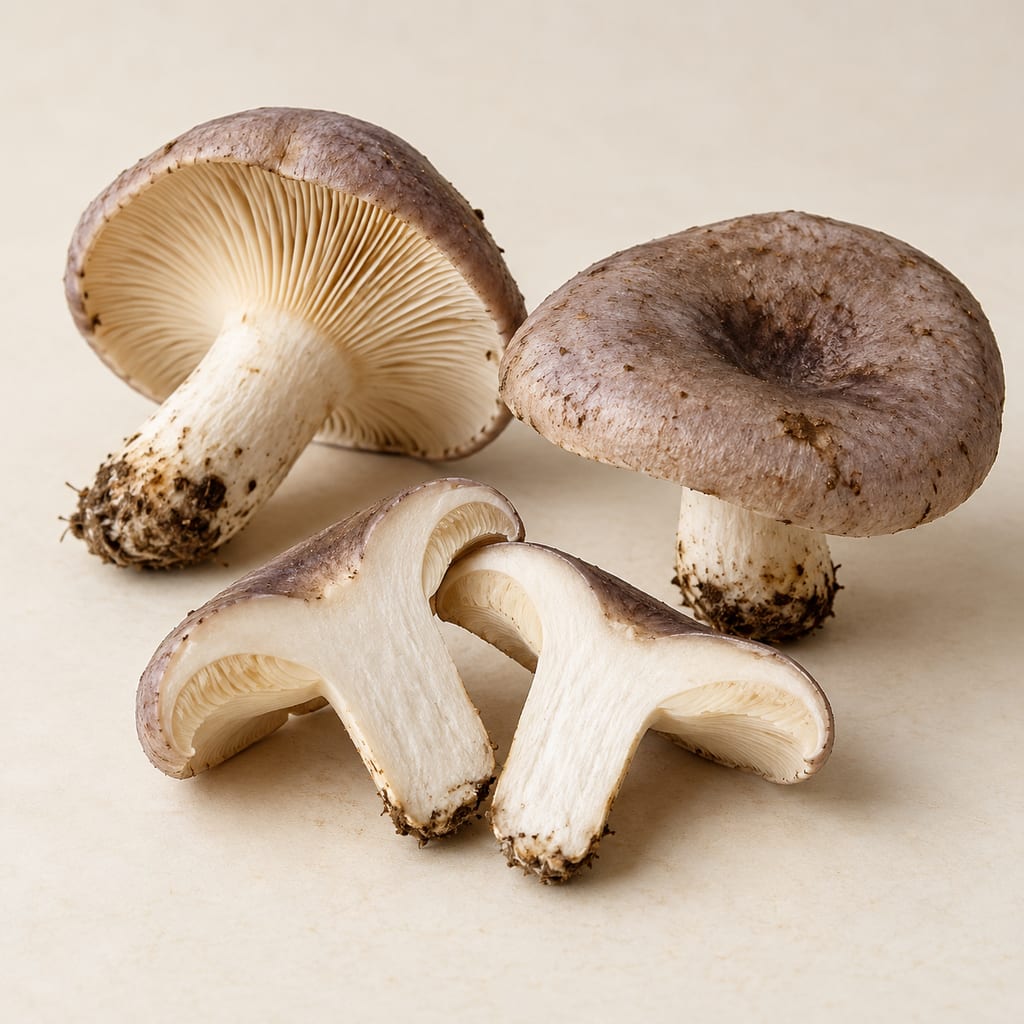
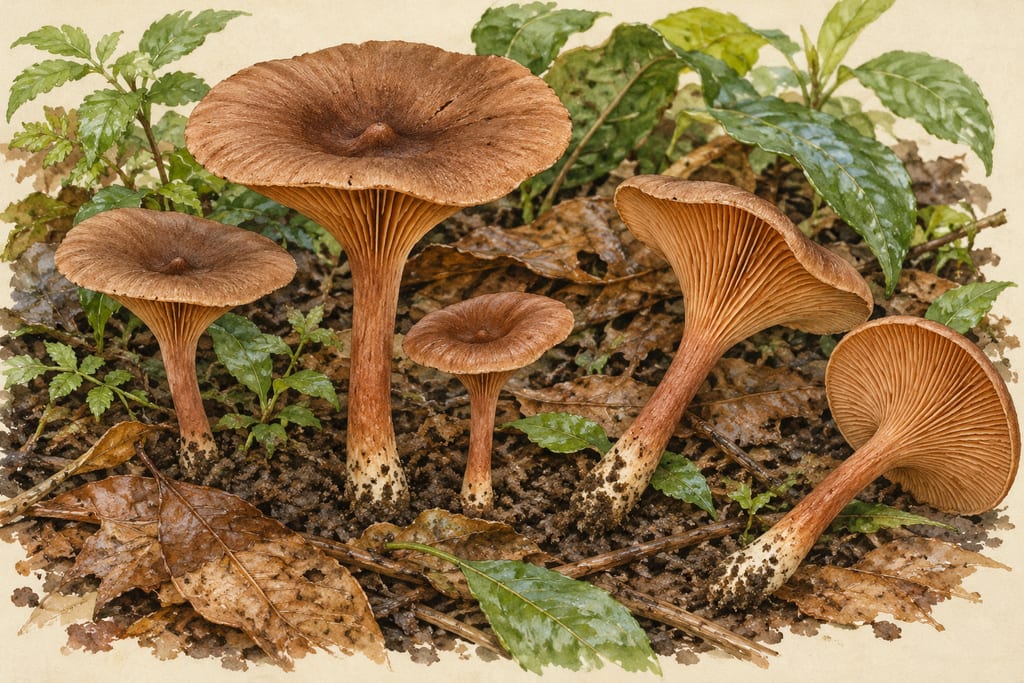
Lactarius trivialis, the northern milkcap, is a Russulaceae mushroom of Scandinavia and northern Europe, traditionally processed by salting and treated in Nordic guides as edible only after a parboiling step.
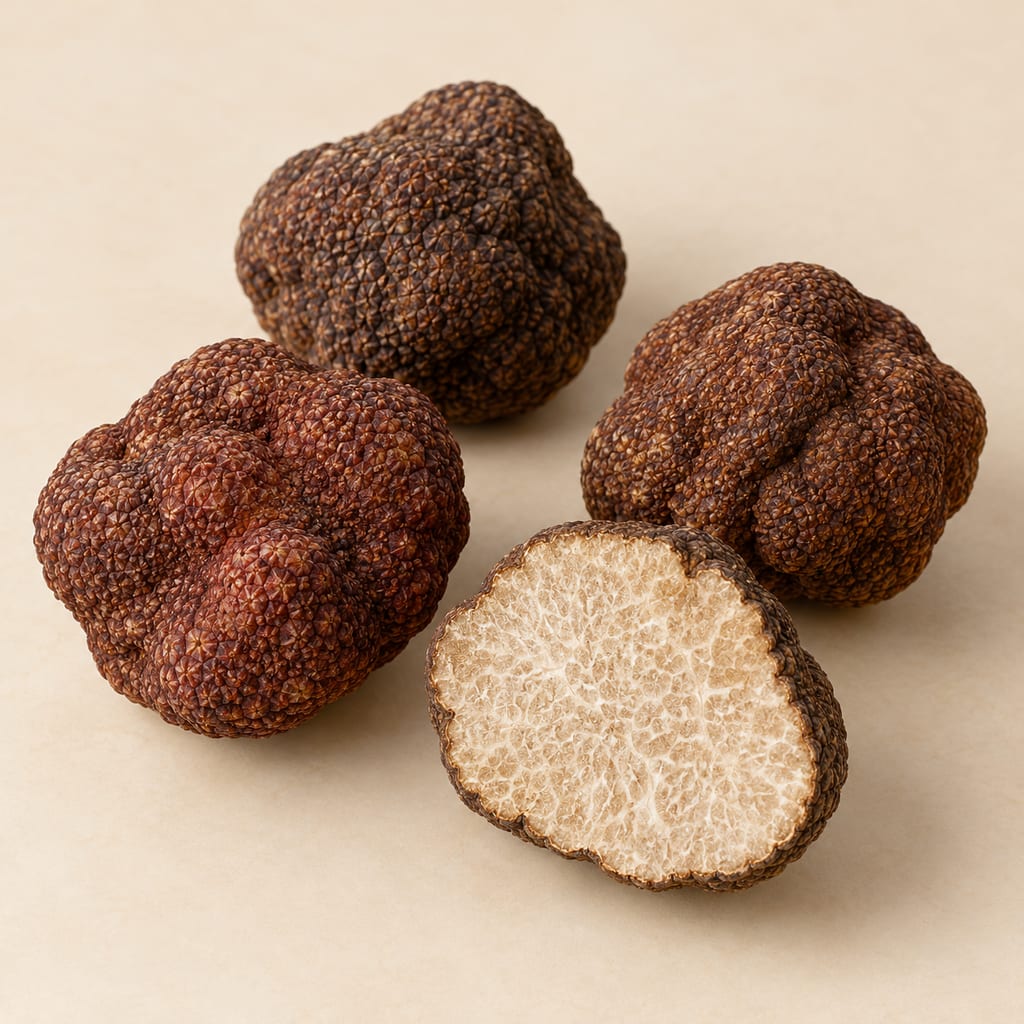
Tuber pseudohimalayense is a wild black truffle from Yunnan, China, listed as edible in a Chinese species catalogue. No independent assessment of its culinary use or safety is available.
Yellow morel, Morchella esculenta, is a wild fungus gathered for cooking in Europe and recorded in historical reports elsewhere. Morels are cooked before they are eaten; raw morels have been linked to serious illness.
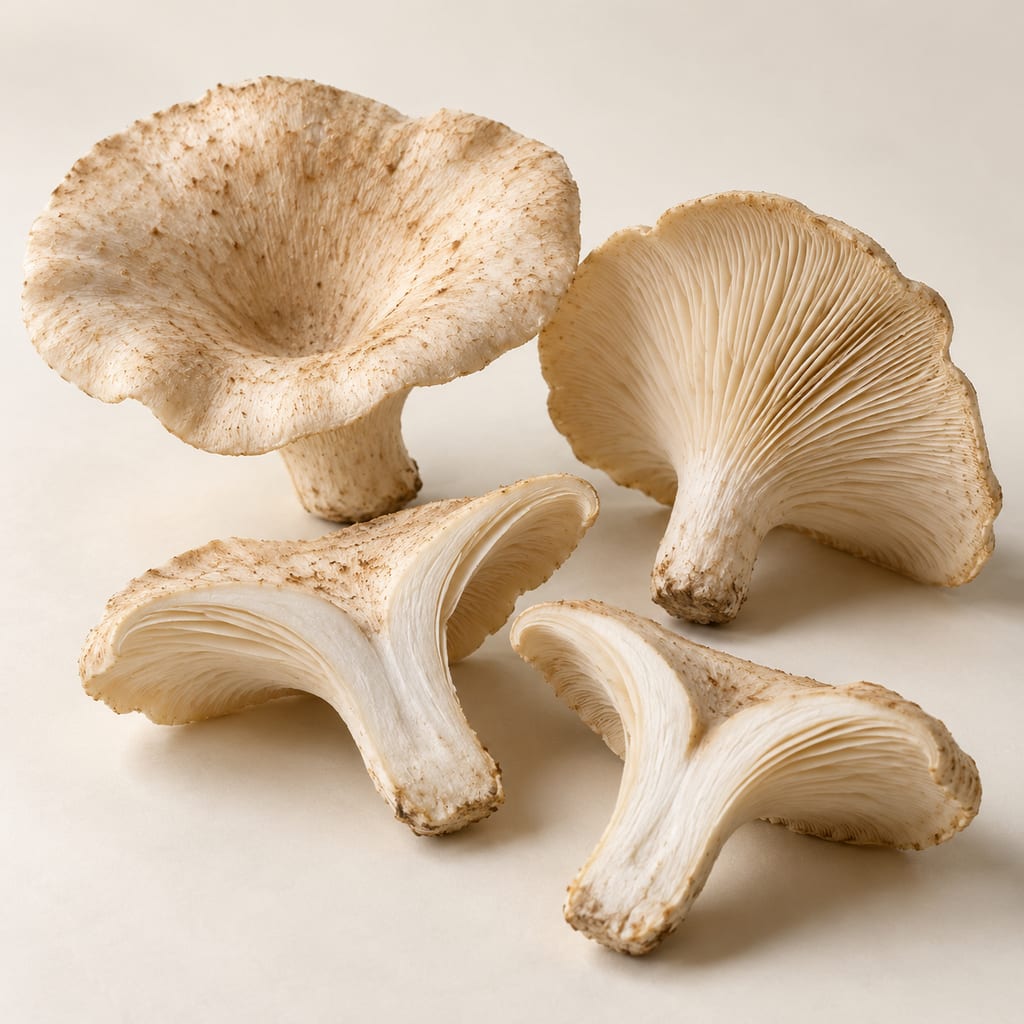
Lentinus sajor-caju, the ringed tropical sawgill, is a wood-decaying fungus with a ring on its stem. A 2026 Chinese species catalogue lists it as edible, but the culinary tradition is not established.
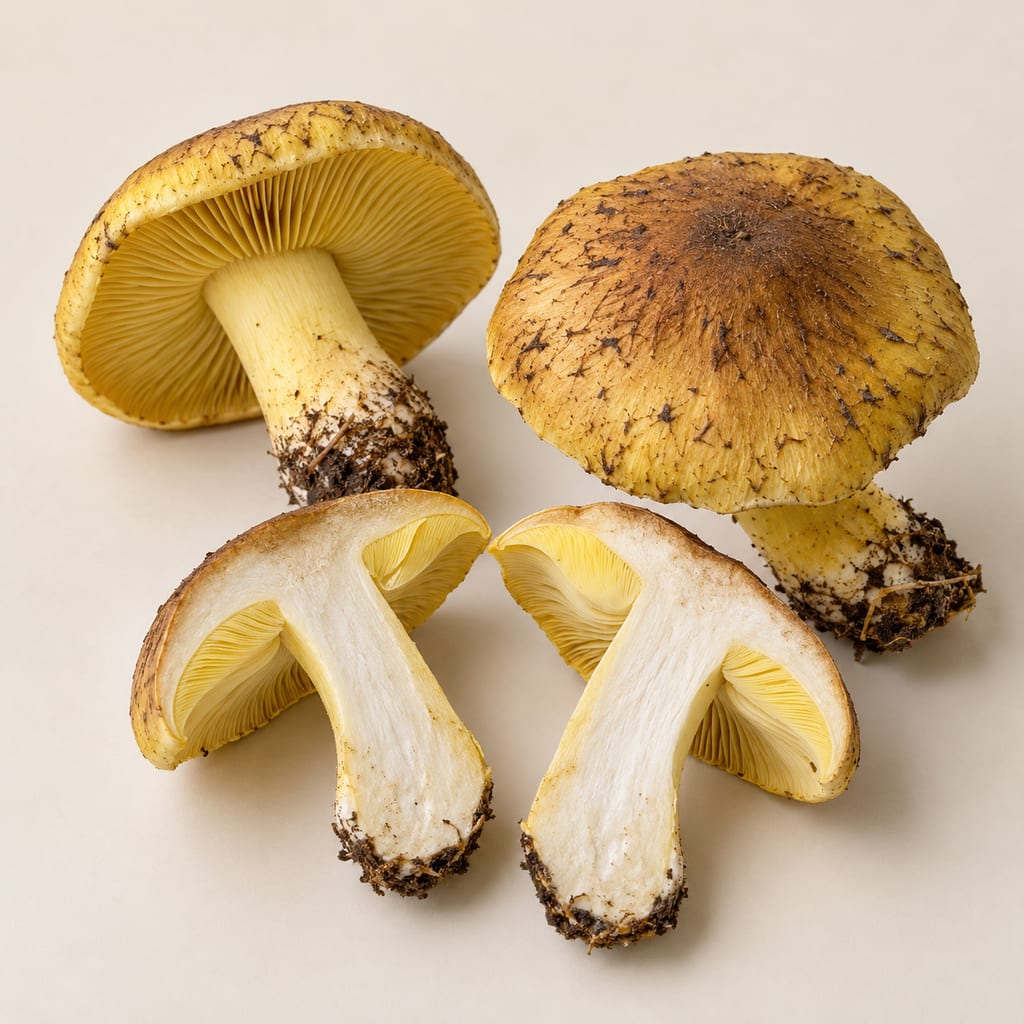
Tricholoma equestre, the yellow knight, is a yellow ectomycorrhizal fungus of pine woods whose long market history in Europe is overshadowed by serious rhabdomyolysis poisonings, so the sources read do not support eating it.
Termitomyces reticulatus is a termite mushroom that grows with Odontotermes termites in African woodland. The European Food Safety Authority list records it as edible, but its identity and preparation need checking.
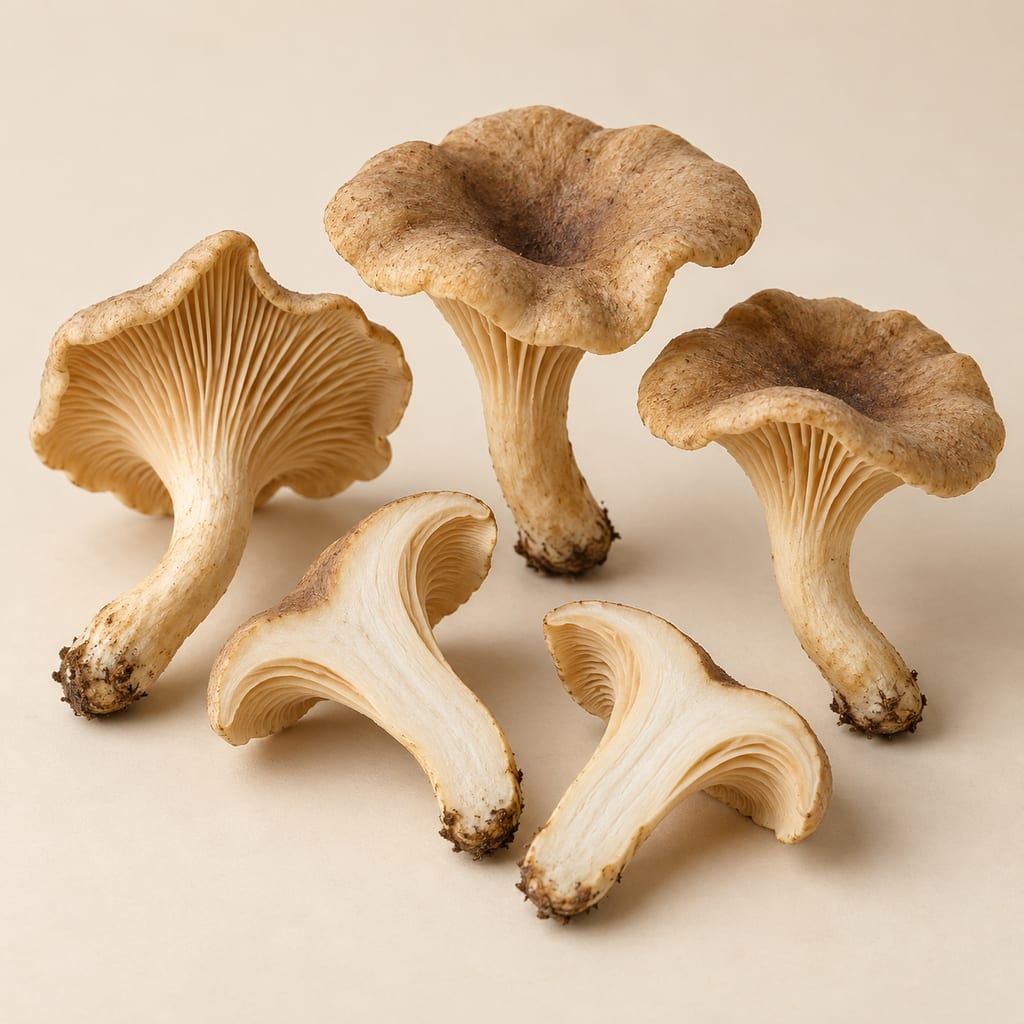
Cantharellus isabellinus, the African chanterelle, is a rainforest mycorrhizal fungus of tropical Africa that the catalogue lists in an edible-species inventory, with some regional records still needing confirmation.
Crepidotus palmarum is a wood-dwelling fungus documented as food in Pauna, Boyacá, where local names include nacuma and orejas blancas; cultivation has also been studied.
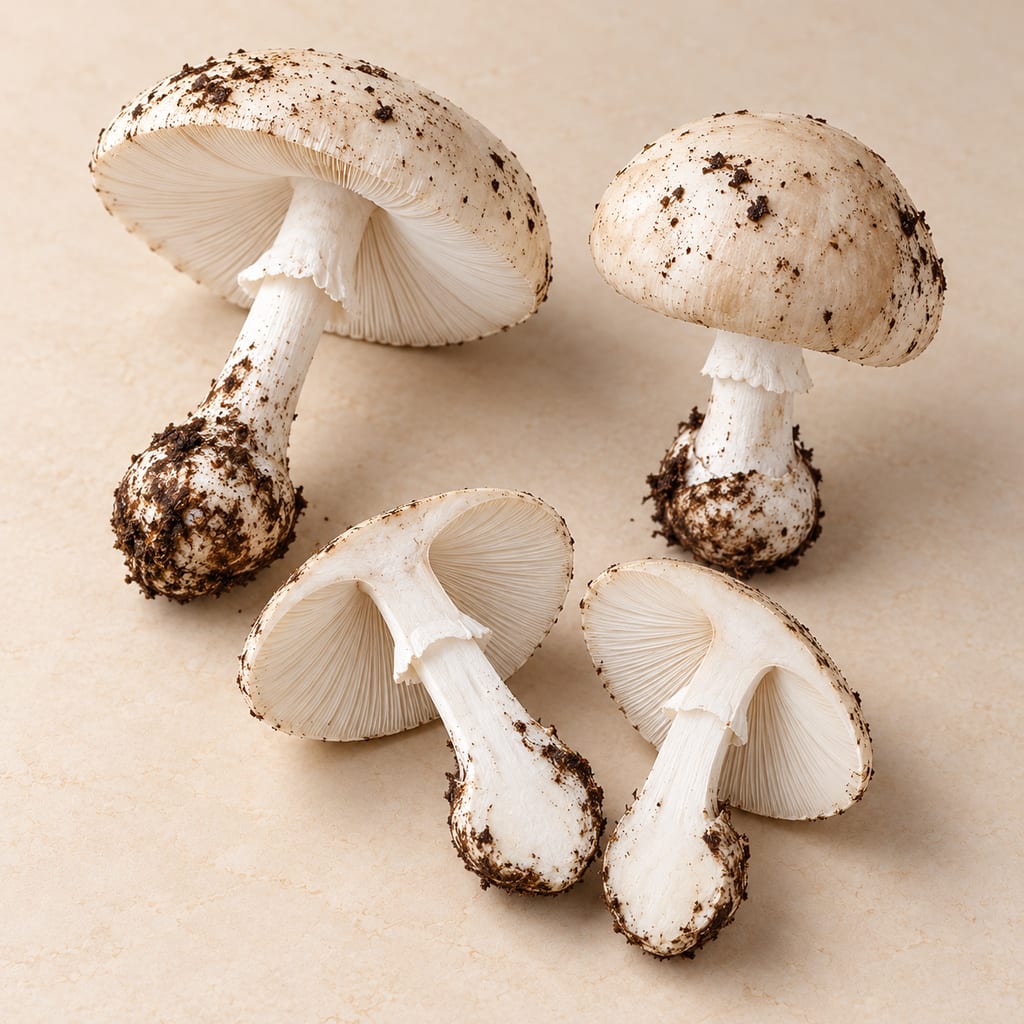
Amanita bweyeyensis is a Eucalyptus-associated Amanita in East and Central Africa, in section Phalloideae with the deadly A. phalloides. Sources call for extreme caution, and it is not recommended as food.
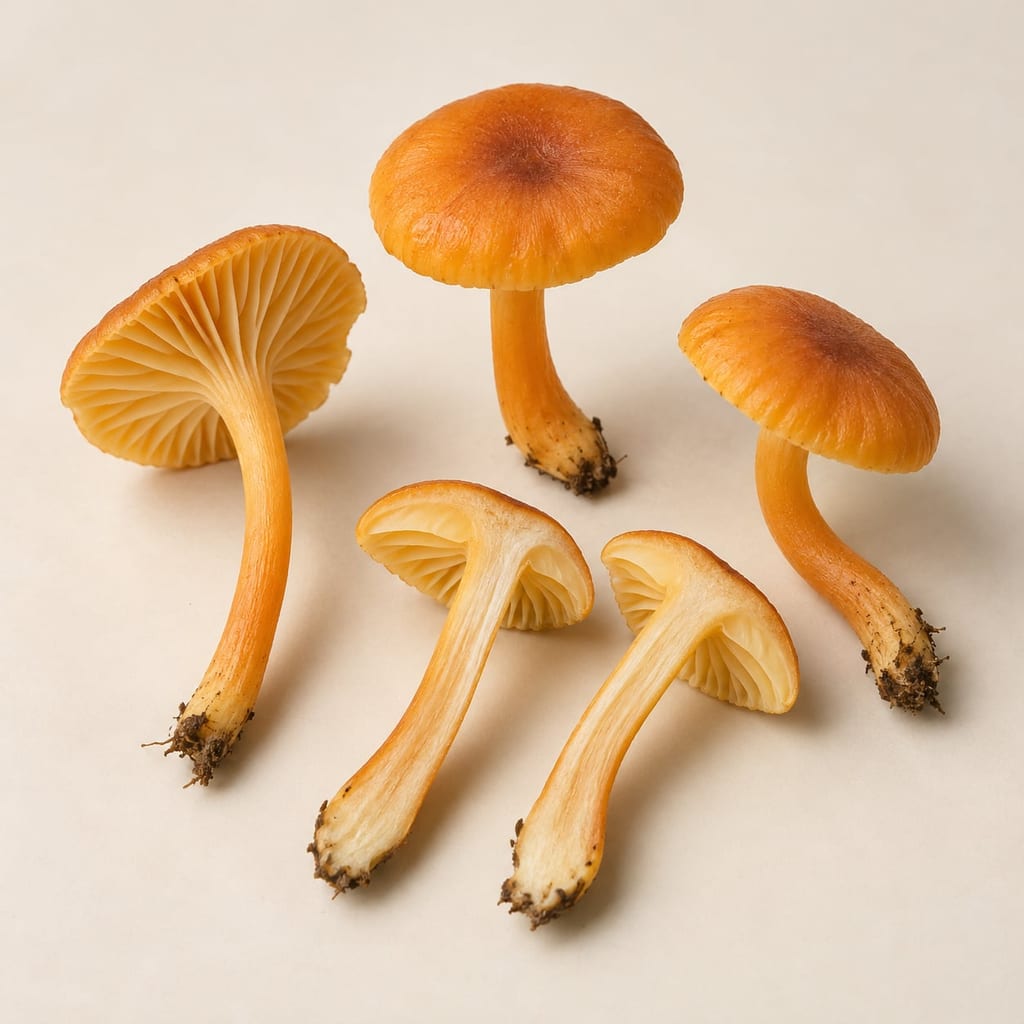
Hygrocybe cantharellus is a small orange waxy-cap agaric with a catalogued food record from Tshopo province, DR Congo, and a taxonomy that the sources read do not settle for that region.
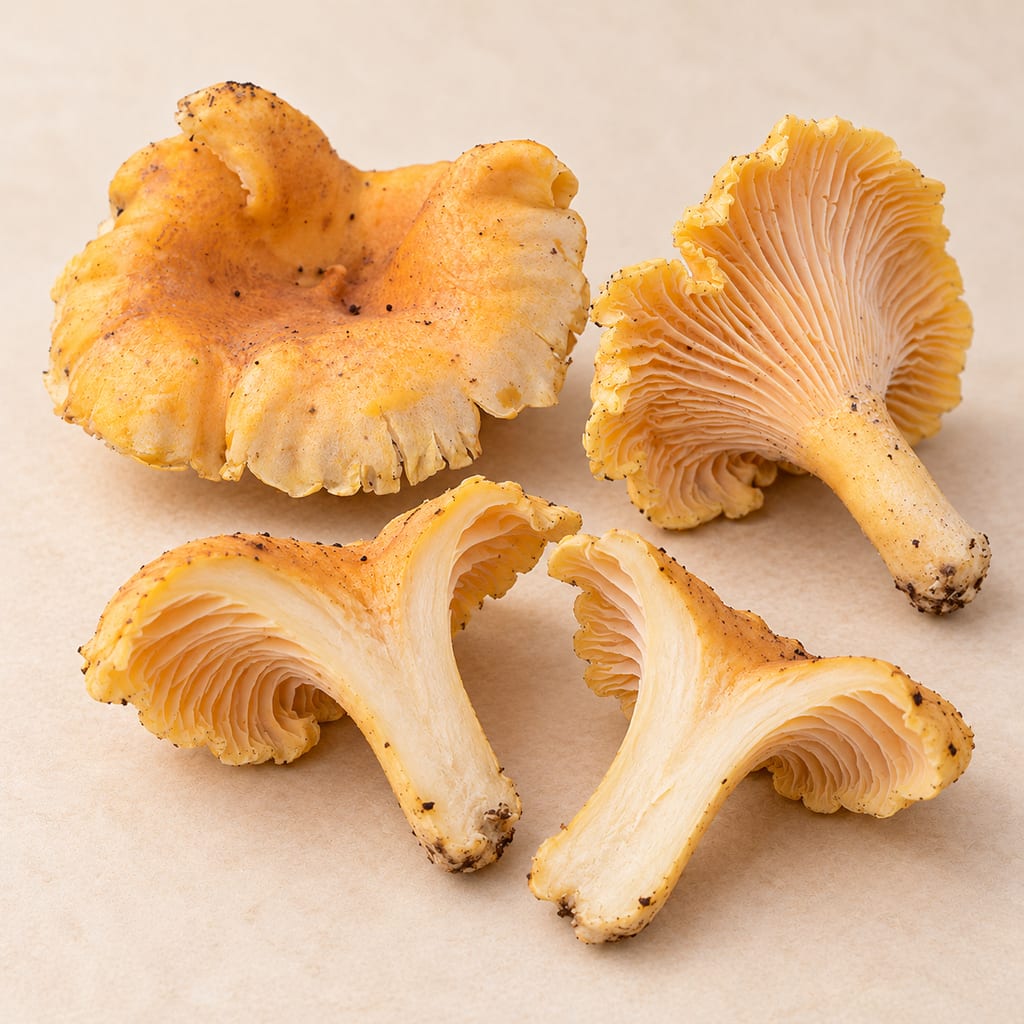
Cantharellus rufopunctatus is a rainforest chanterelle-group fungus that the catalogue records as eaten locally in Tshopo province, DR Congo, where no species-specific preparation has been established.
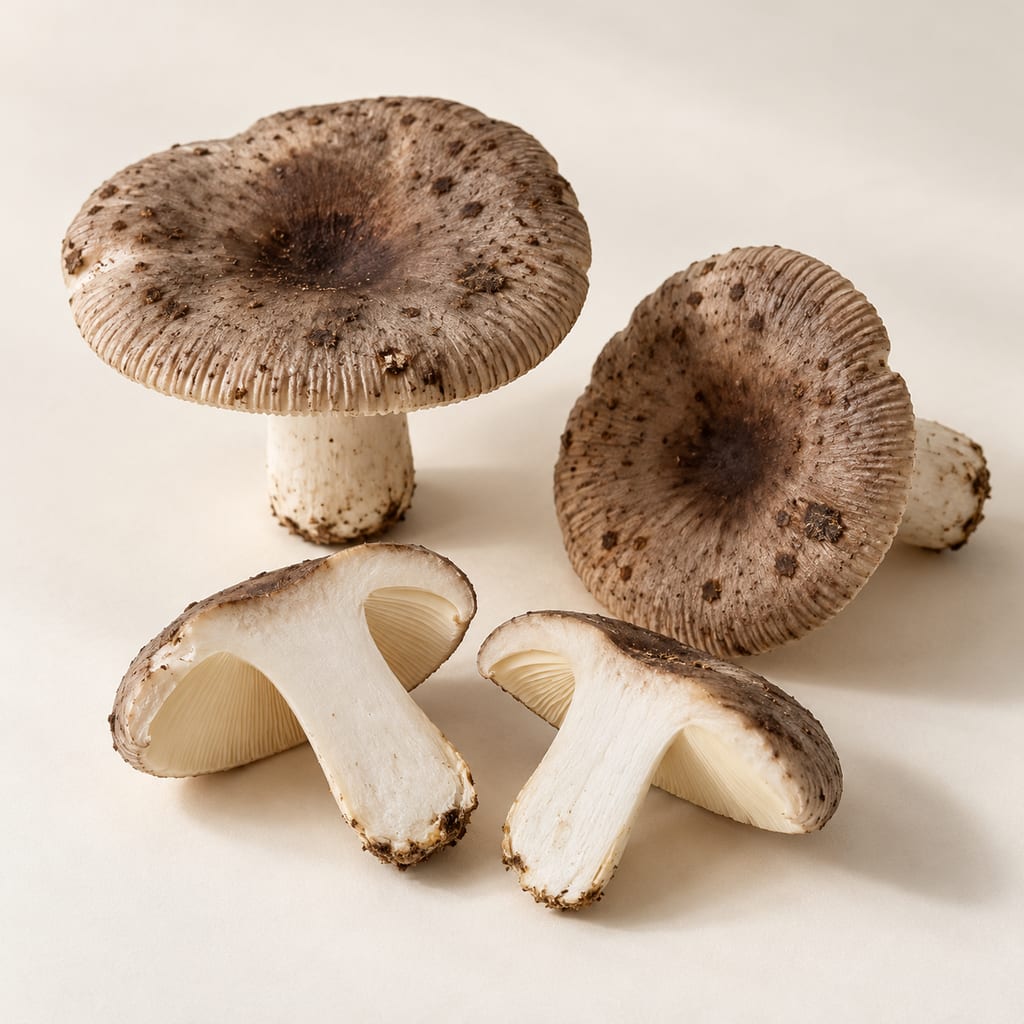
Russula meleagris is an ectomycorrhizal rainforest fungus recorded as locally eaten in Tshopo province, DR Congo, where some groups reject Russula as inedible. No species-level safety assessment exists.
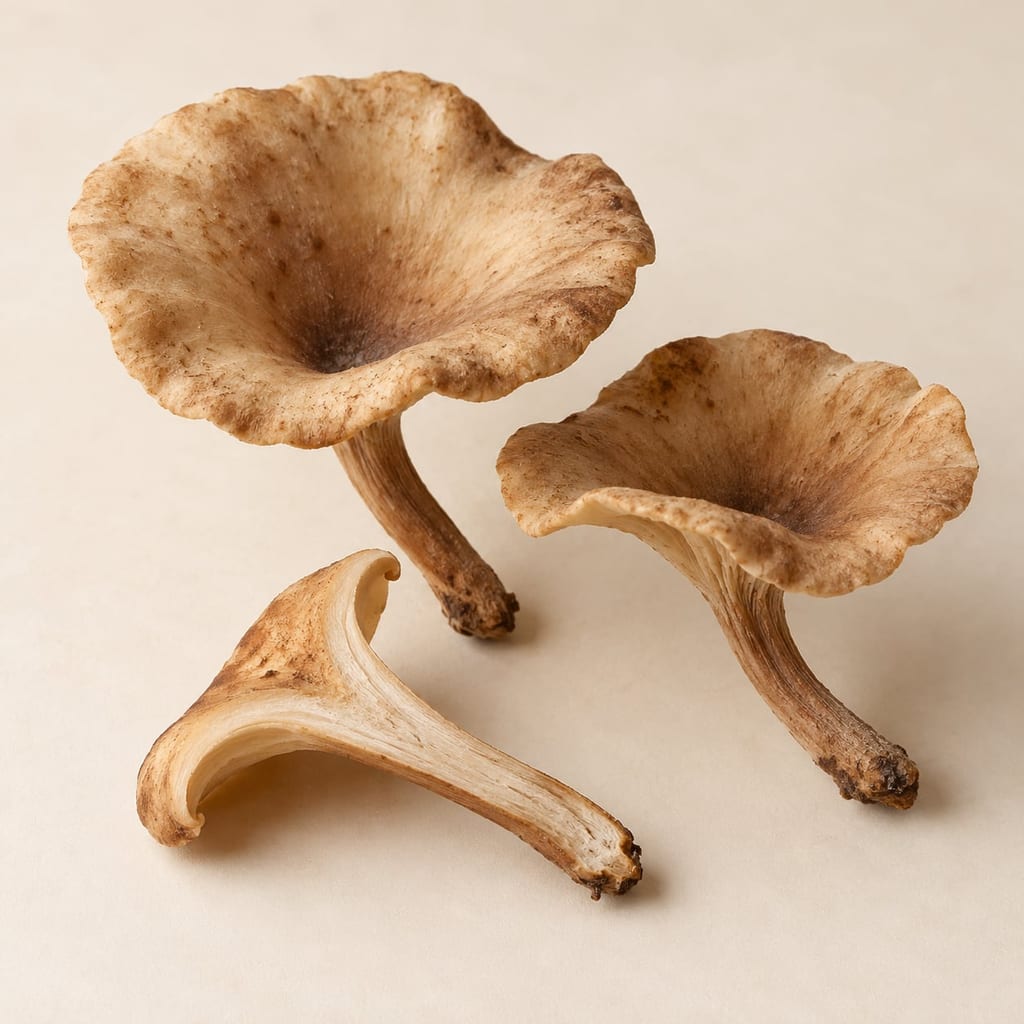
Panus velutinus, the velvety wood fungus, is a wood-rotting fungus recorded in Brazil, where a 2024 review of wild edible mushrooms lists it. Its food use is documented; no standardized safety assessment exists.
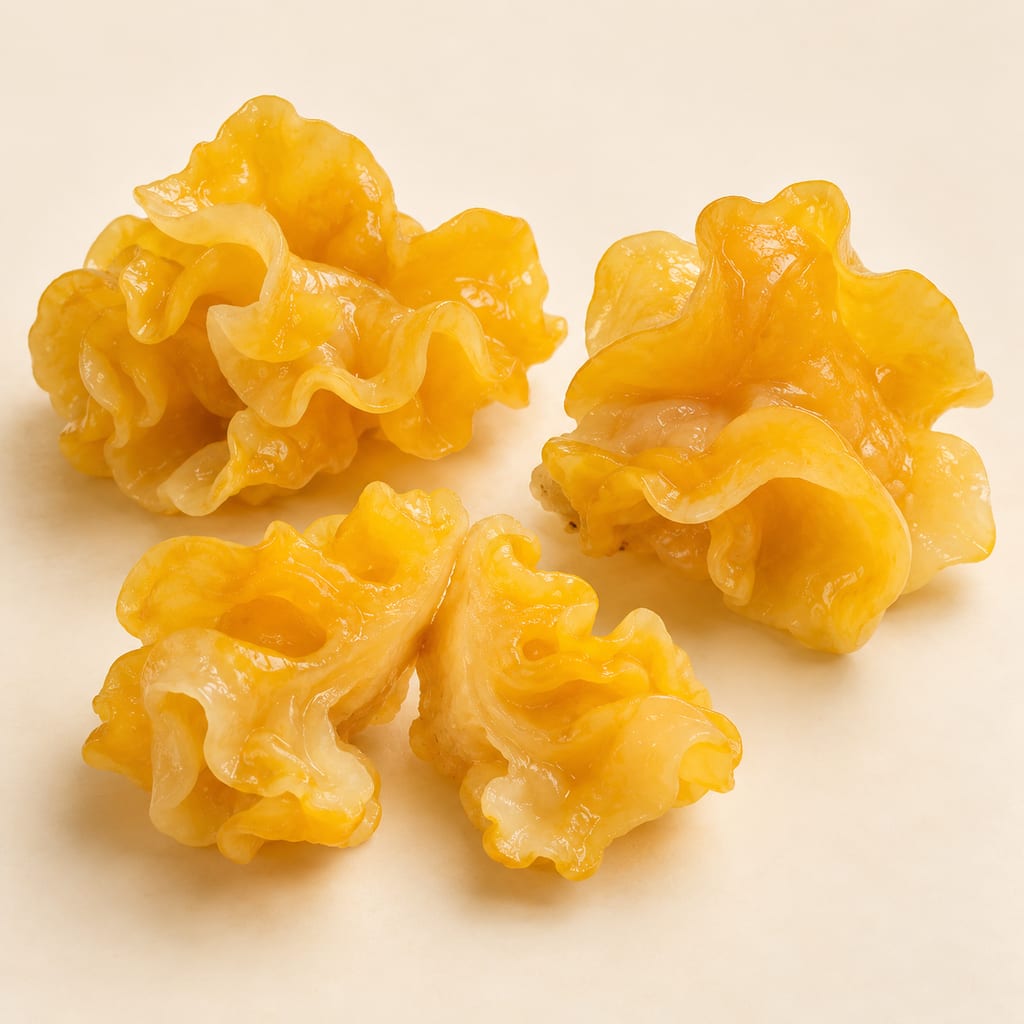
Naematelia aurantialba, golden ear, is a yellow gelatinous fungus that parasitises Stereum fruit bodies on broadleaf trees and is recorded as a wild edible relative of cultivated golden ear in southwestern China.
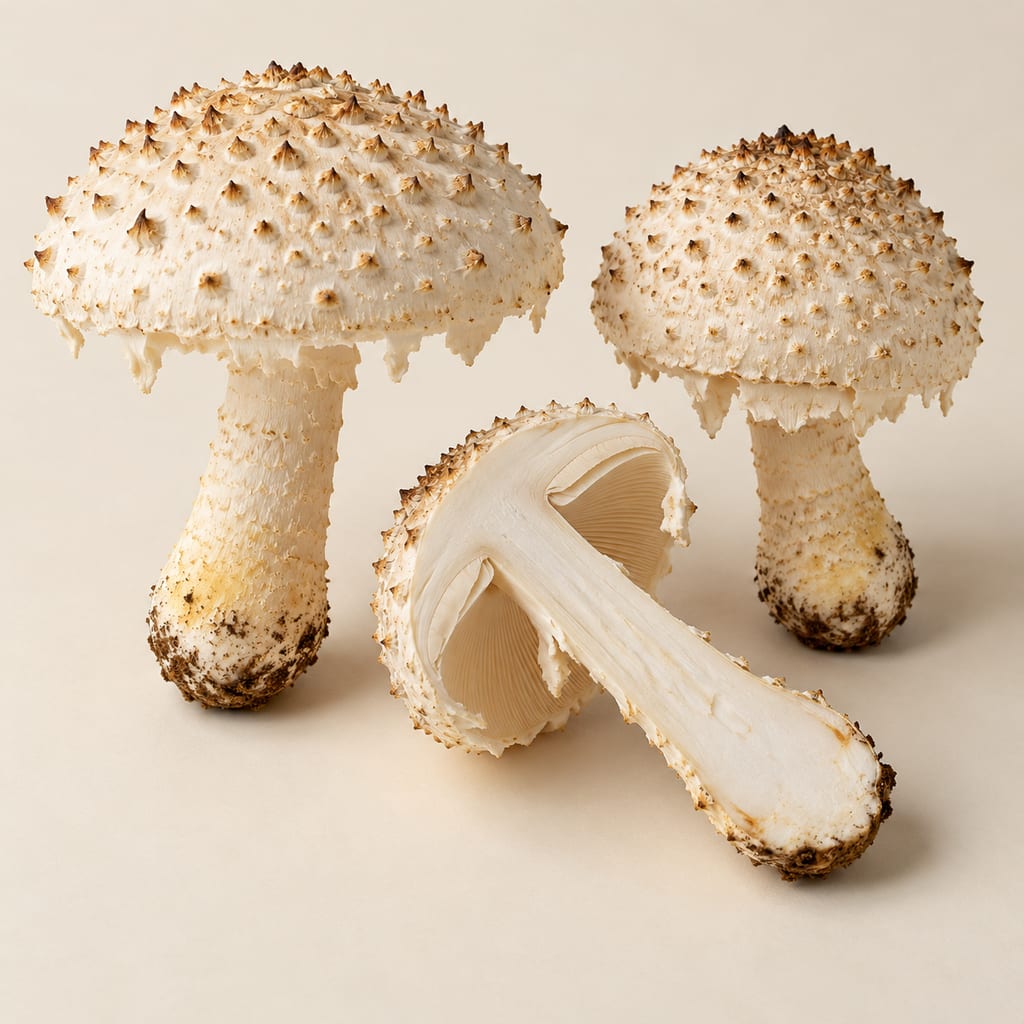
Amanita afrospinosa is a white, warted Amanita of miombo woodland in southern and central Africa. A regional food-use record exists, but the Amanita genus includes deadly species, so no safe use is established here.
Termitomyces heimii is a wild termite mushroom that grows with fungus-growing termites in Yunnan, Laos and across South and Southeast Asia. It is sold in local markets and cooked in soups and fried dishes.
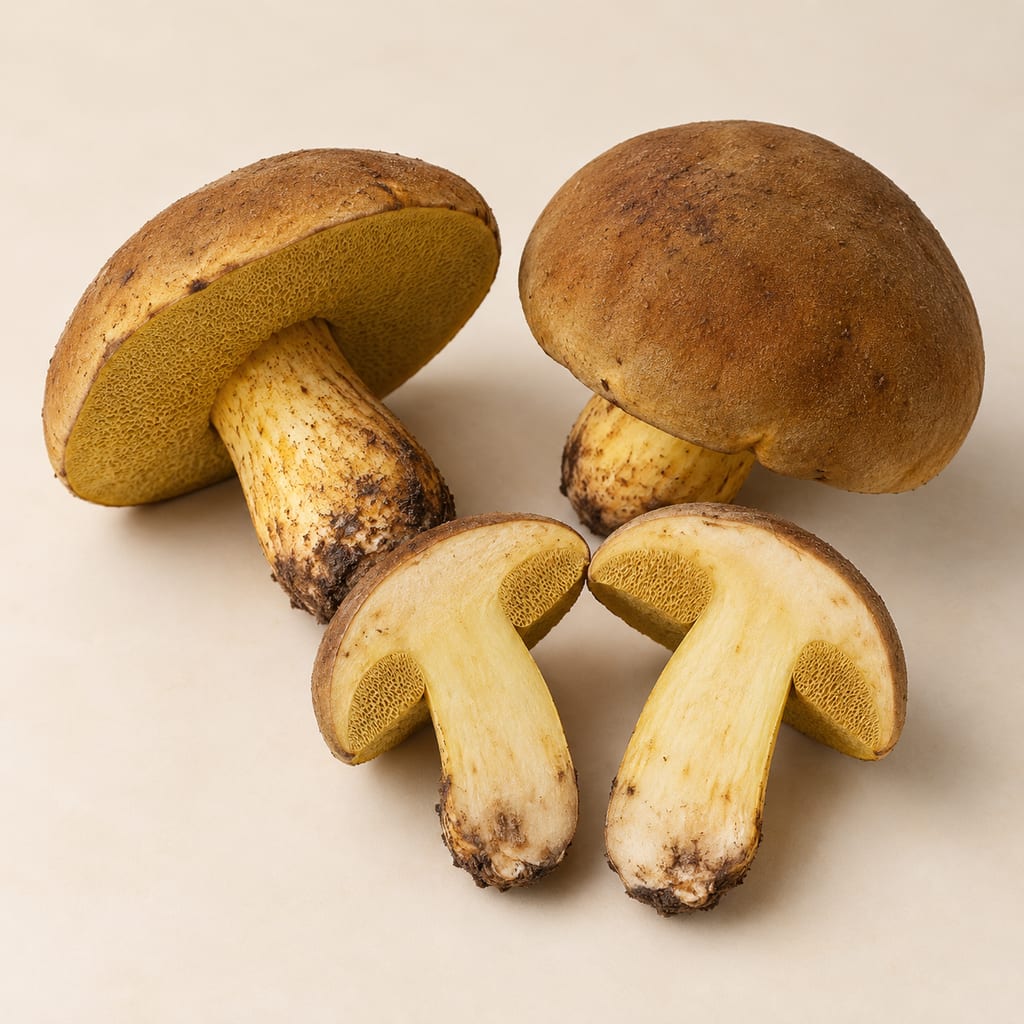
Suillus variegatus, the velvet bolete, is a wild bolete of pine woods in northern Europe that is eaten cooked or dried. Its cap and tubes are usually peeled and removed before cooking.
Russula porphyrocephala is an ectomycorrhizal rainforest mushroom recorded as eaten by people in Tshopo, DR Congo. The record is an ethnomycological food-use record, not a toxicological assessment.
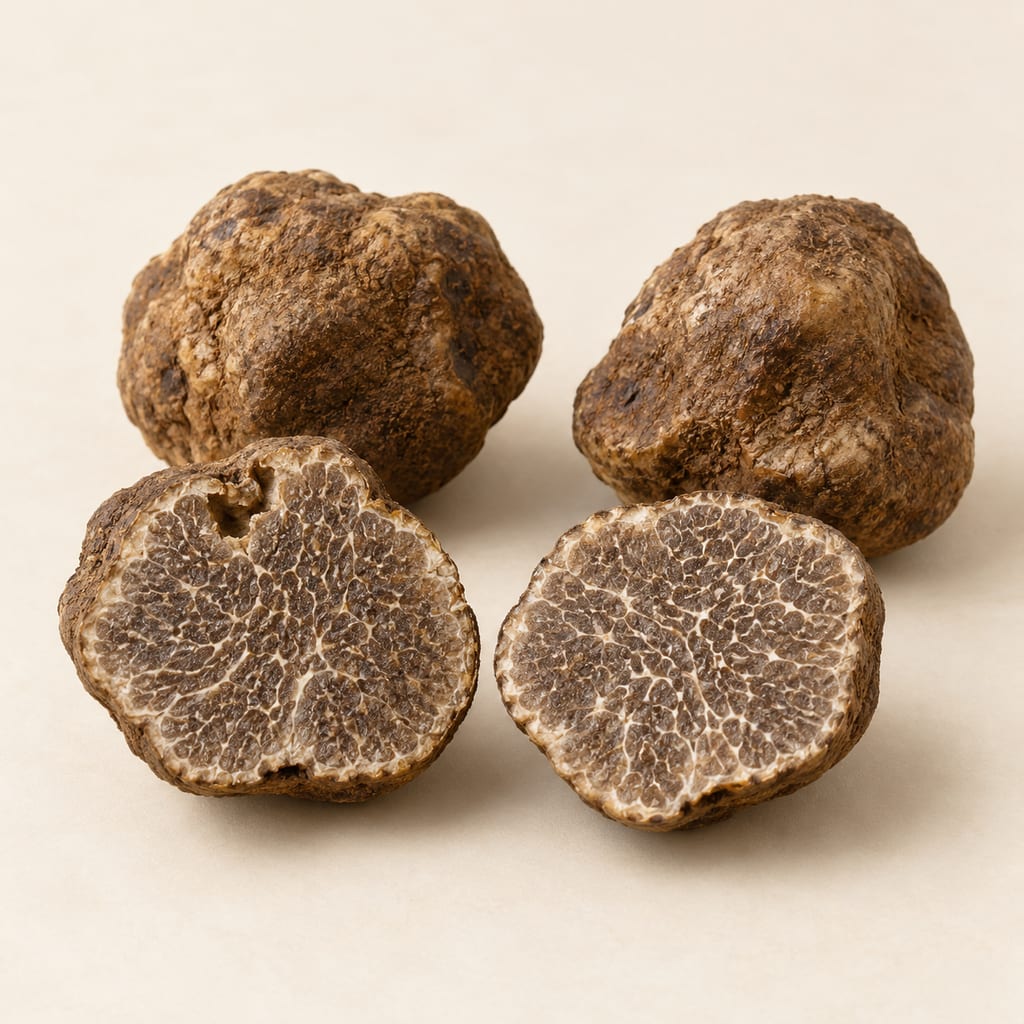
Tuber floridanum is a truffle that grows with pecan trees in orchards of the southeastern United States and has a recorded food use in Brazil. Sources describe its odour as unappealing, and the evidence for eating it is limited.
Mycoclelandia bulundari is a hypogeous desert fungus of northern and western Australia, recorded as a cooked food of Aboriginal people. Its identification and modern food safety are not established.
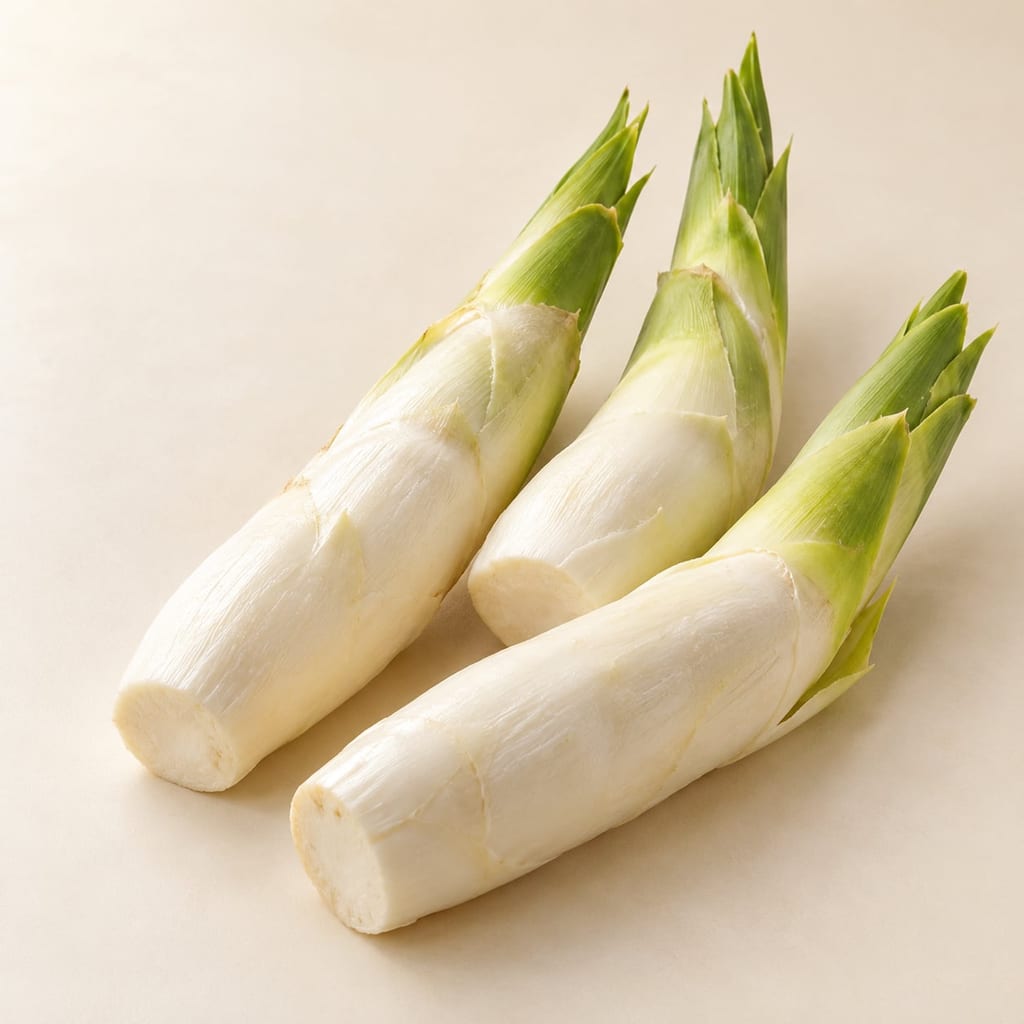
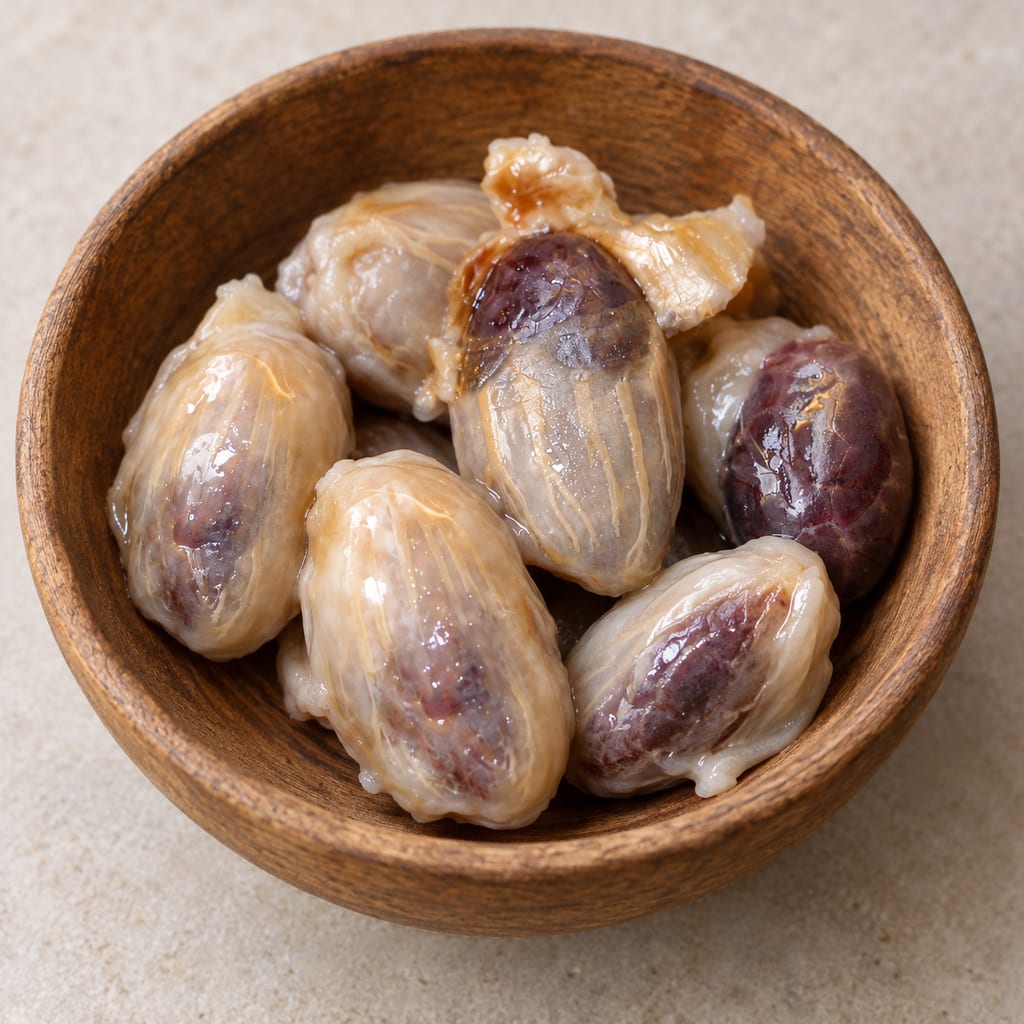
Water-bamboo smut is the swollen gall that the fungus Ustilago esculenta forms on the aquatic grass Zizania latifolia. It is eaten as a vegetable in China and elsewhere in East and Southeast Asia.
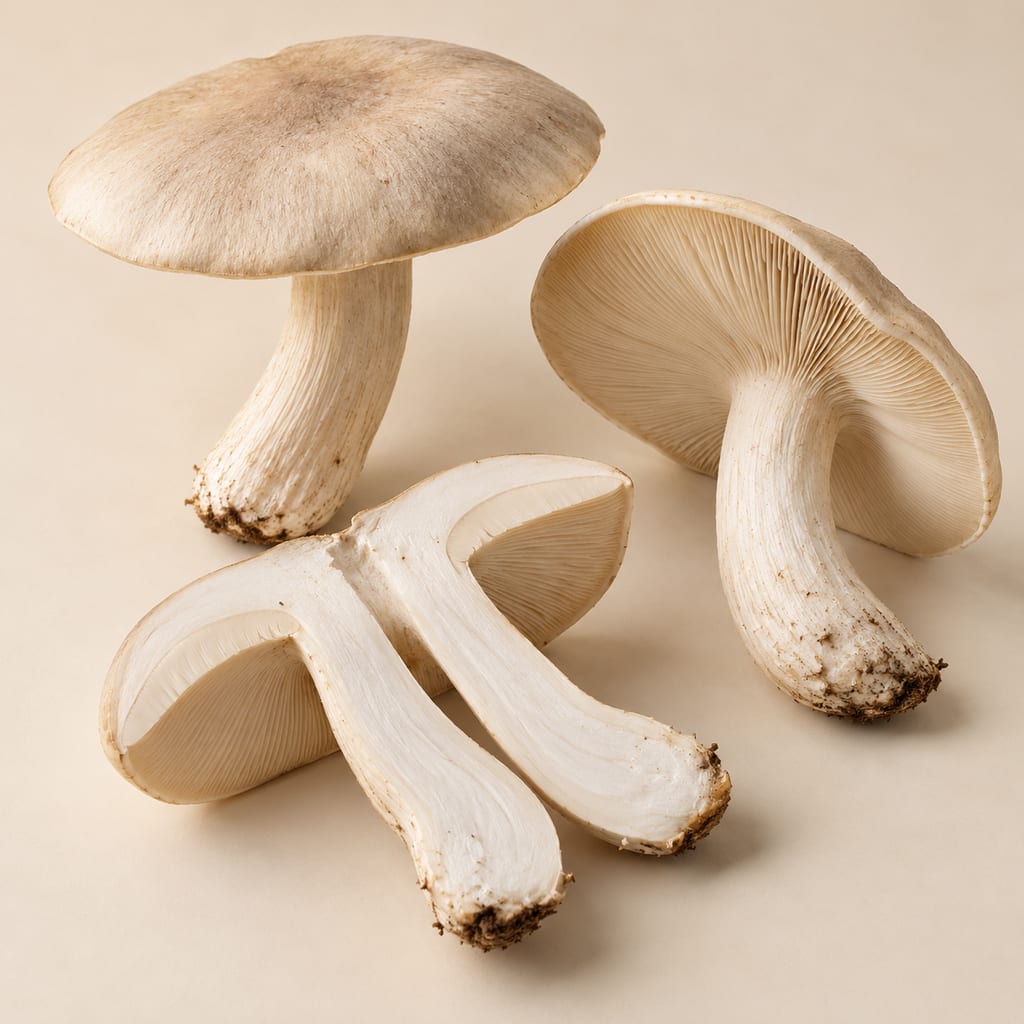
Macrocybe gigantea is a large wild mushroom of tropical and subtropical Asia that is sold in markets in Laos and Yunnan, China. Its local identification and safety still need species-level review.
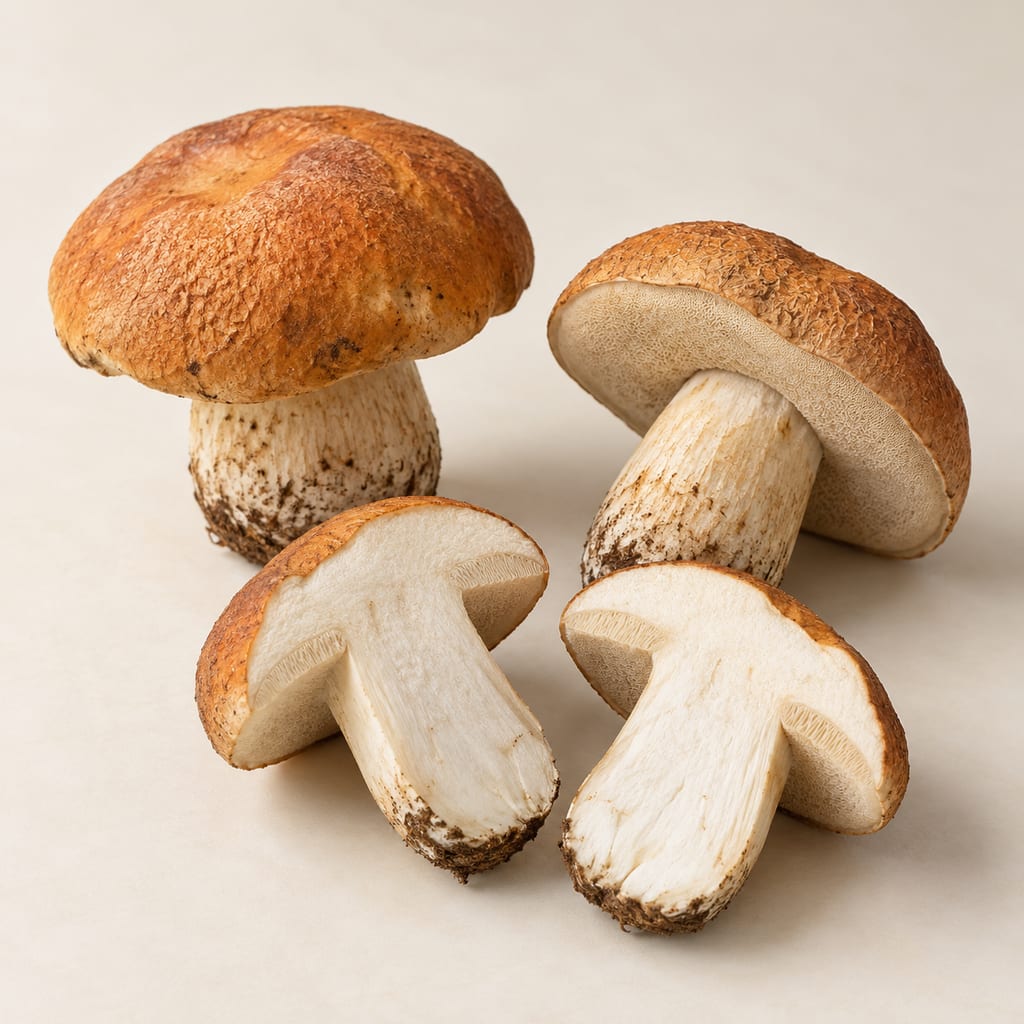
Tylopilus balloui, the burnt orange bolete, is a tropical bolete recorded as food in Guyana. Sources disagree on whether it is worth eating, and its species concept needs checking.
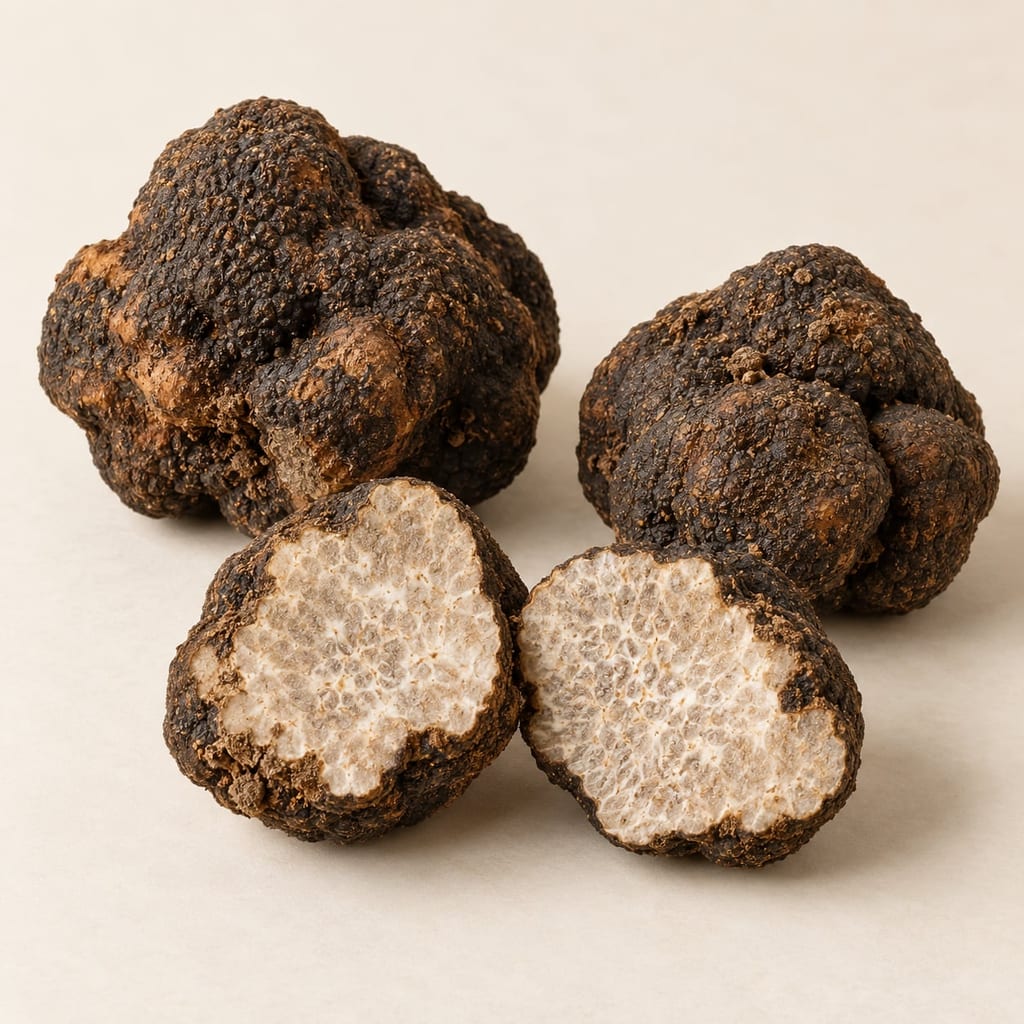
Kalapuya brunnea, the Oregon brown truffle, is a native truffle of the Pacific Northwest that is shaved raw over warm food. Sources describe it as a gourmet edible, and its safe identification needs an expert.
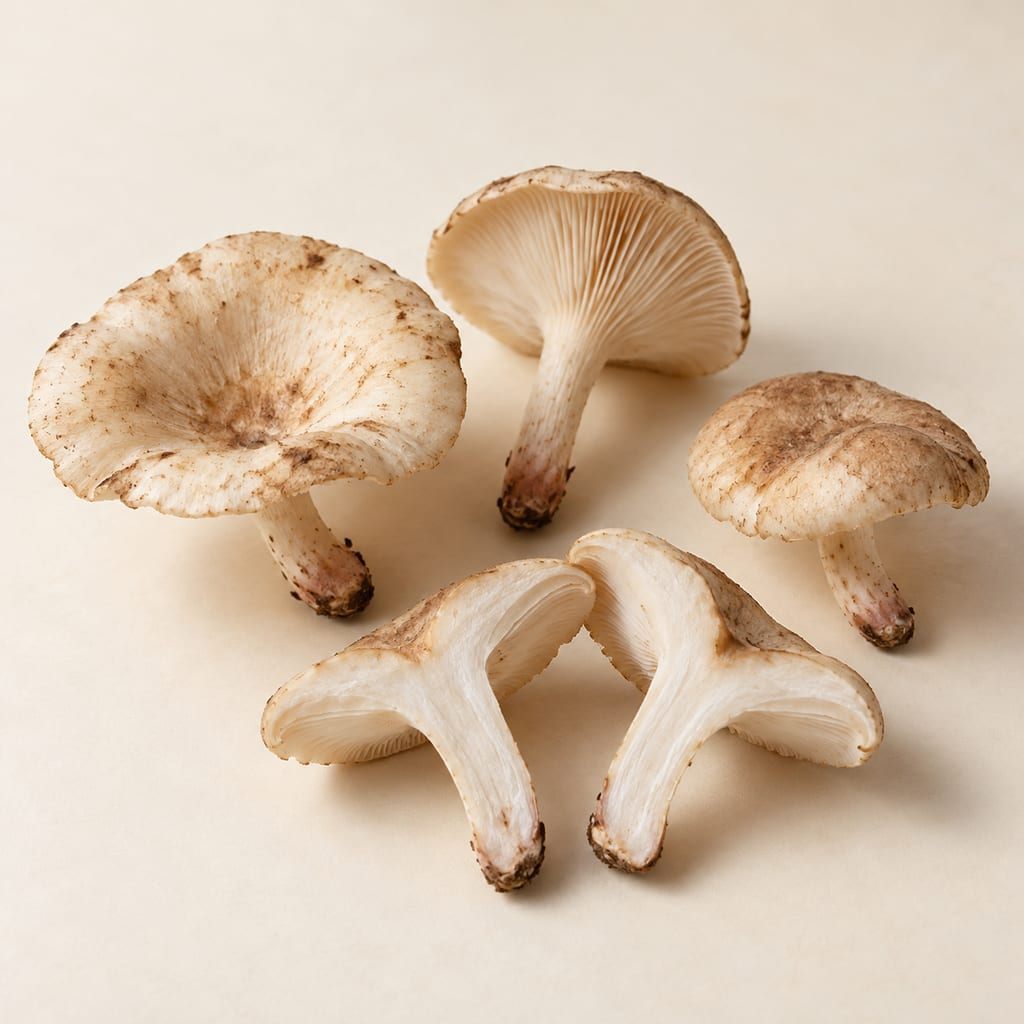
Lentinula raphanica is a wild wood-rotting mushroom of the Neotropics, a close relative of the cultivated shiitake, recorded as food by Amazonian communities and still poorly studied.
Lactarius acutus is a wild ectomycorrhizal milkcap of the Tshopo rainforests in the DR Congo, recorded as locally eaten in voucher-backed interviews; its preparation is not recorded.
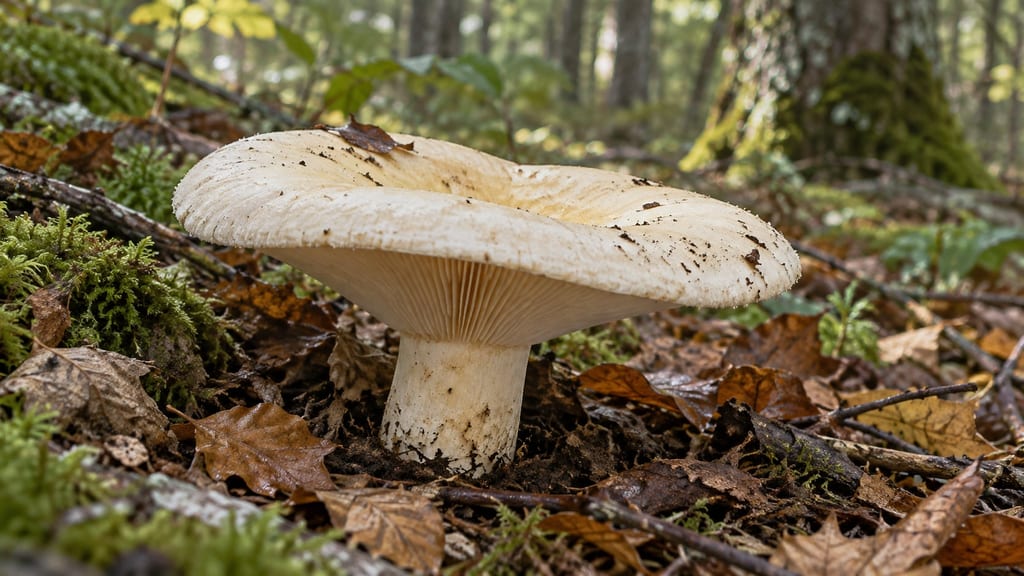
Lactifluus pilosus is a wild ectomycorrhizal milkcap recorded in Yunnan; the catalogue lists it as sold in Pu'er markets, but its species-level food use and safety are not yet confirmed.
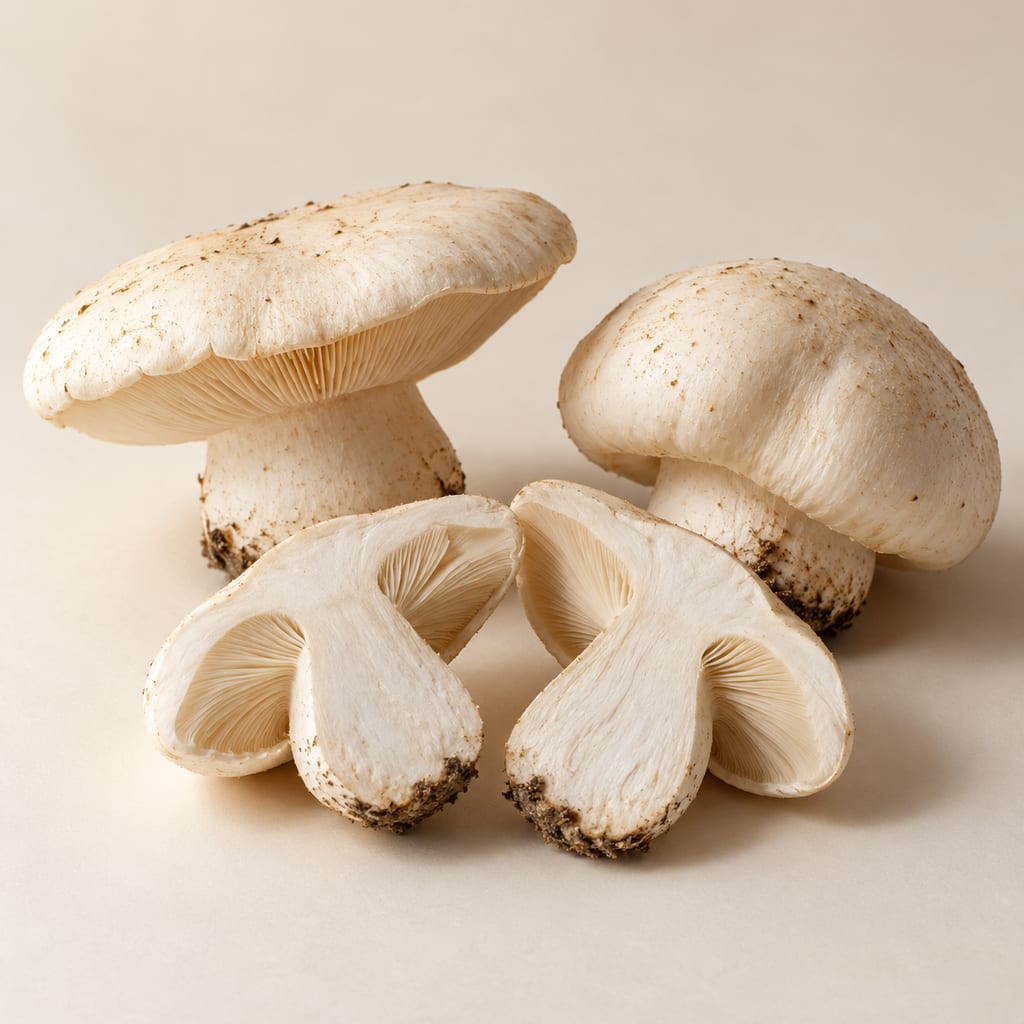
The Mongolian mushroom, Leucocalocybe mongolica, is a wild steppe fungus of the Mongolian Plateau, prized as food in Northeast Asia and listed as threatened by drought and over-collection.
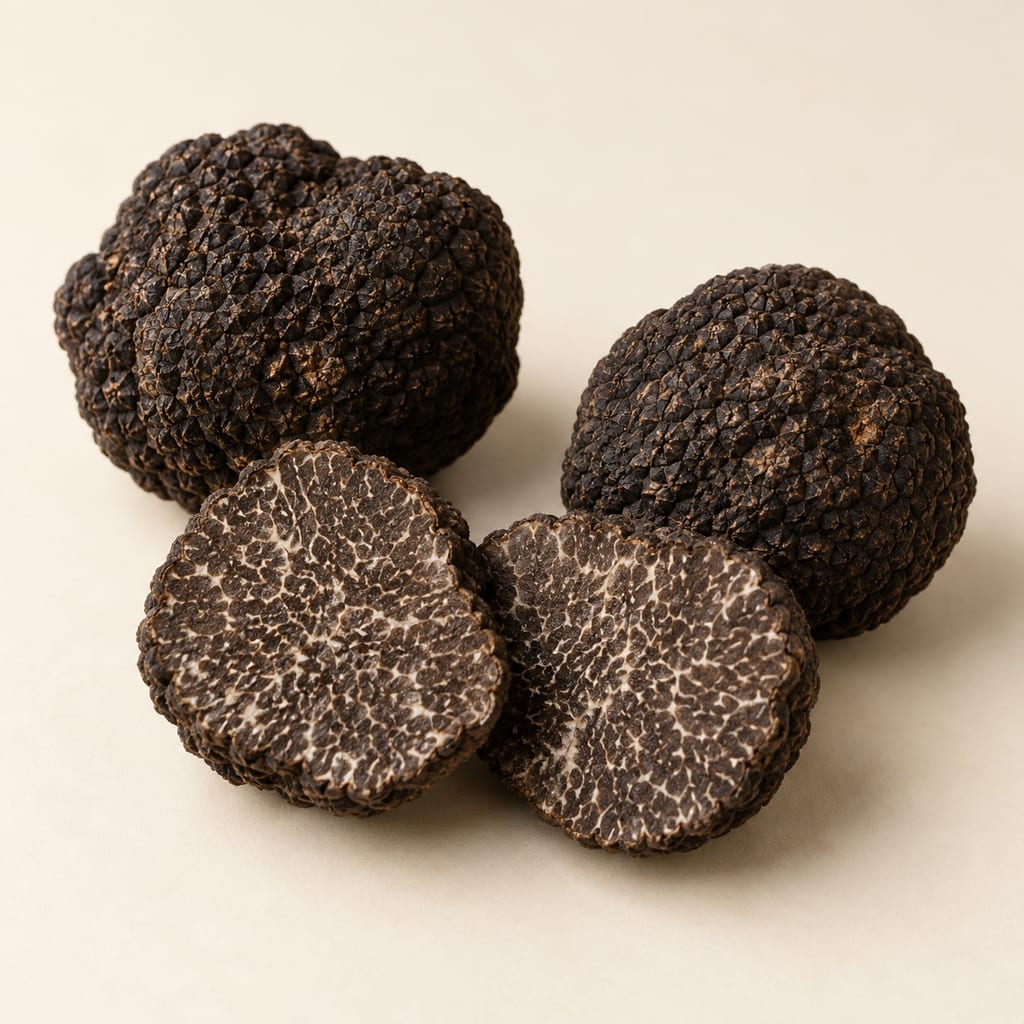
The winter truffle, Tuber brumale, is a dark, aromatic truffle of southern Europe, also called the Muscat truffle. It is sold as a cheaper relative of the Périgord truffle and is kept separate from Tuber melanosporum in records.
Tuber huidongense is a subterranean truffle of pine forests in south-western China, known from Sichuan and Yunnan. A recent Chinese catalogue lists it as edible, but no culinary tradition for it has been documented.
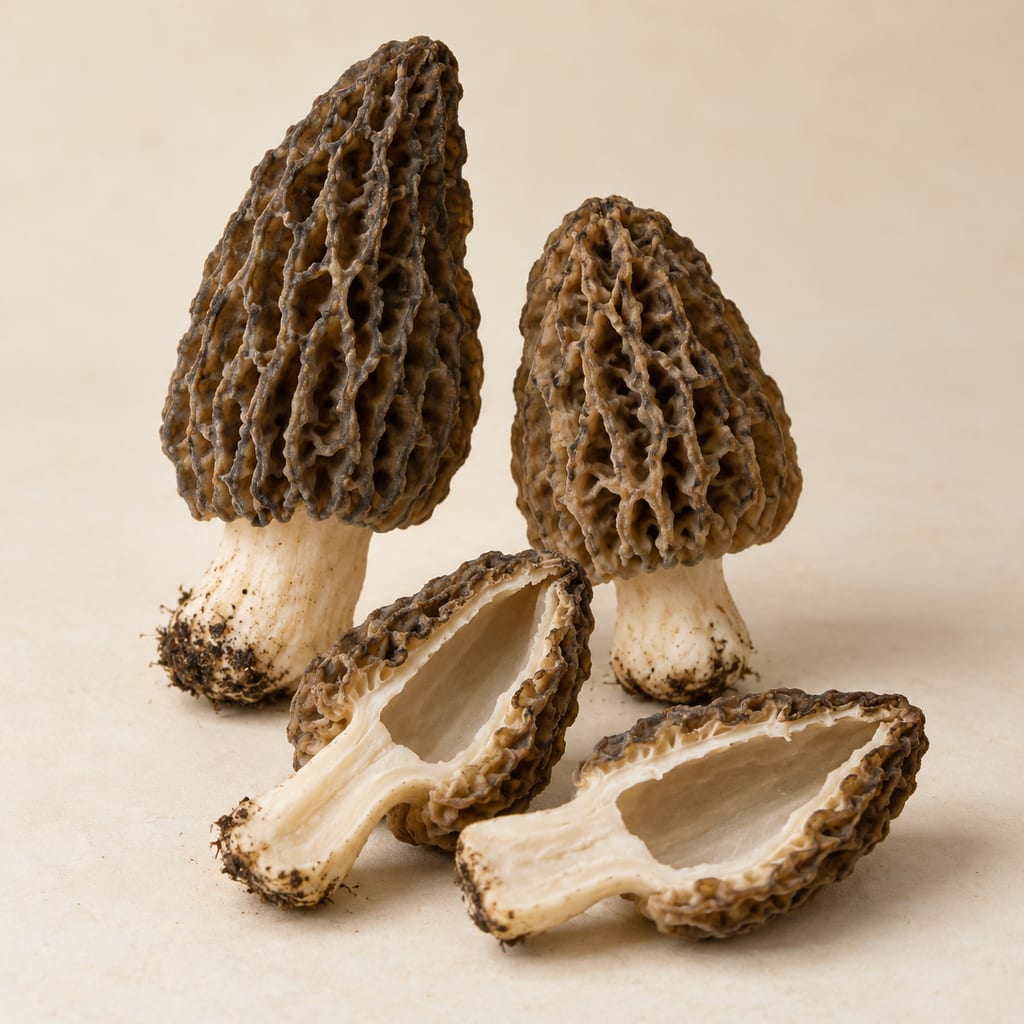
Morchella sextelata is a cultivated black morel of the Elata clade, grown in managed beds and greenhouses in China. Raw or undercooked morels are associated with illness, and cooking is the main control.
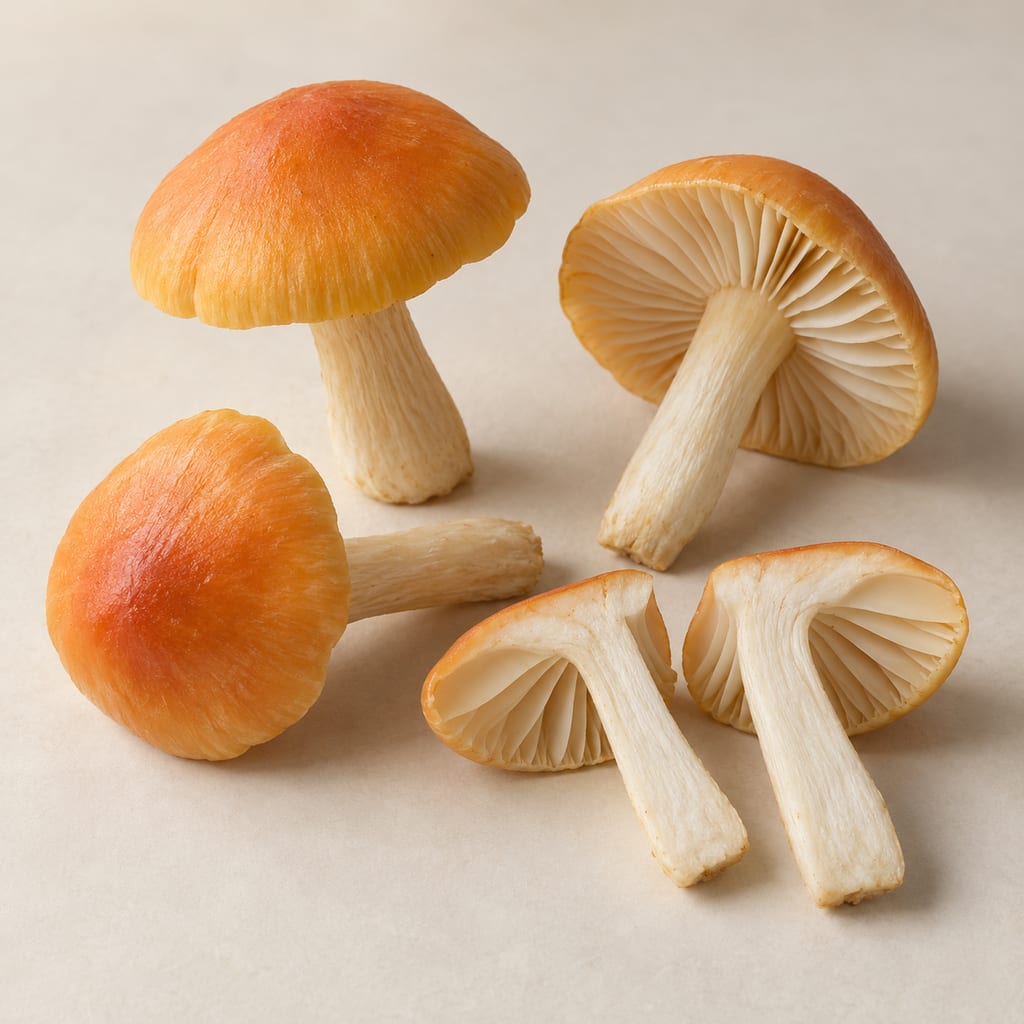
The meadow waxcap, Cuphophyllus pratensis, is a salmon-to-orange gilled mushroom of old grassland in Europe. Its fruit bodies are edible and gathered for sale in some countries, but its habitat is declining.
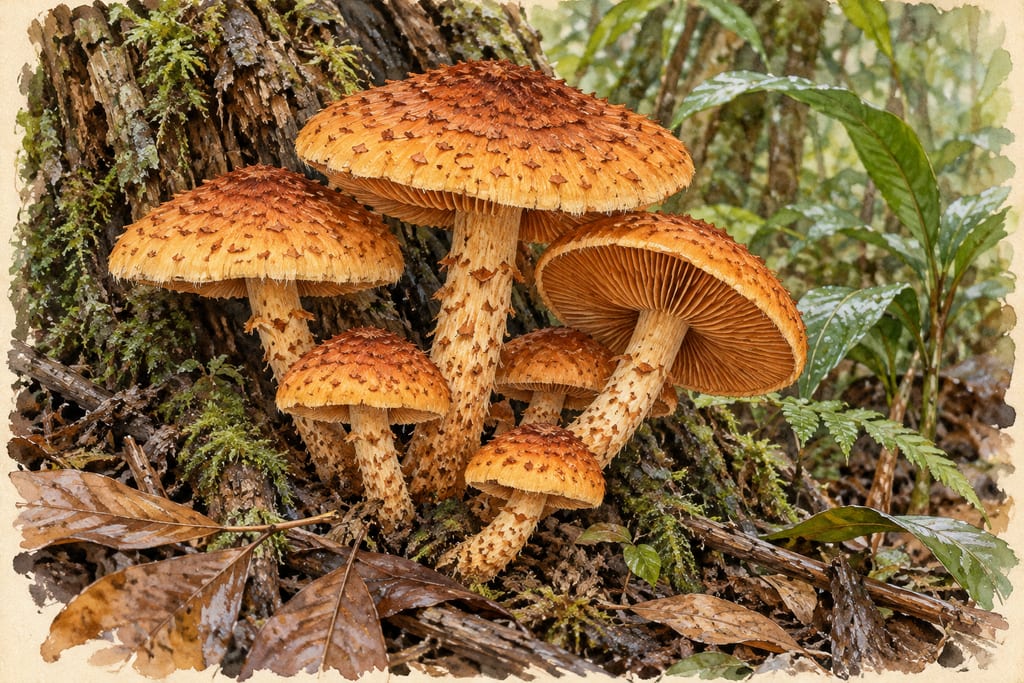
Gymnopilus zenkeri is a forest mushroom recorded as eaten locally in Tshopo province, DR Congo. The genus is described as unsafe to eat, and no preparation or safety assessment for this species has been established.
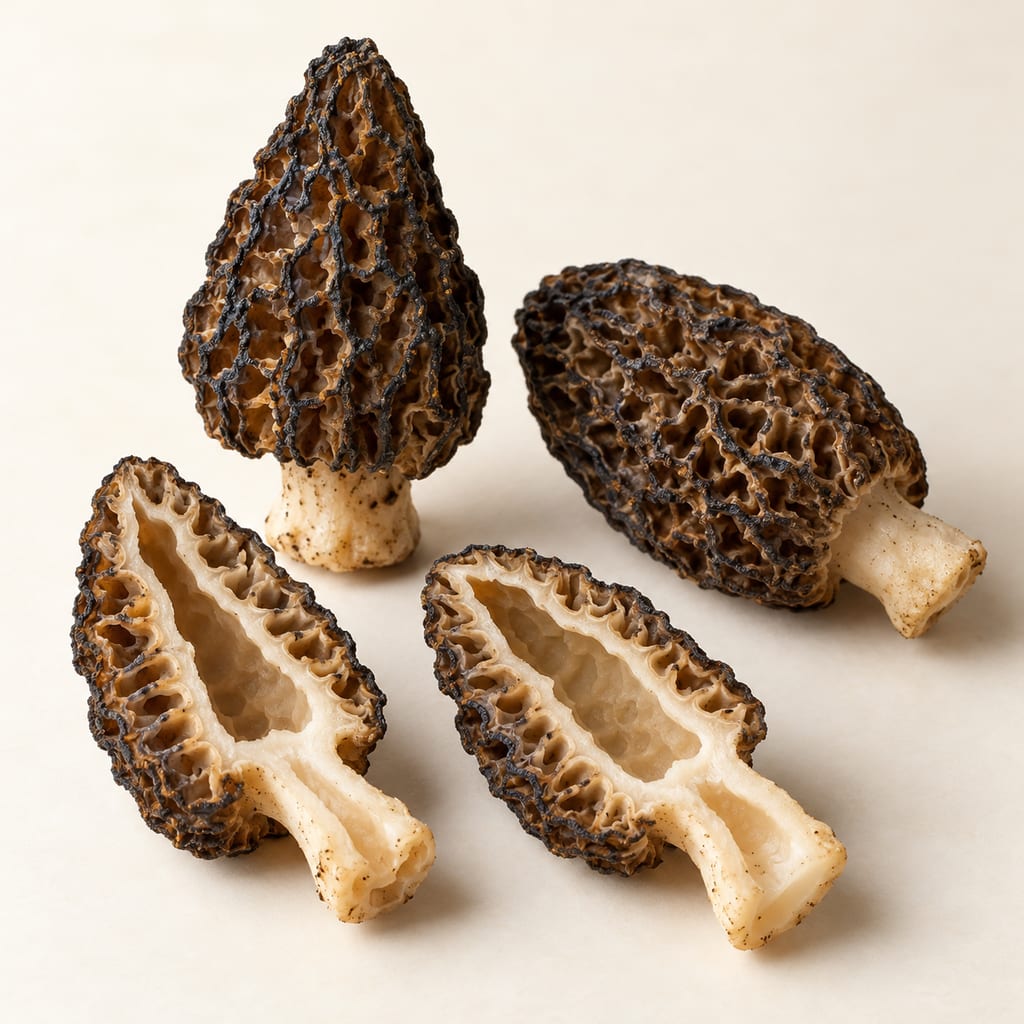
The burn-site morel, Morchella exuberans, is a wild morel that fruits in conifer forest in the year after a fire in western North America. It is eaten only after thorough cooking, because raw morels can cause serious poisoning.
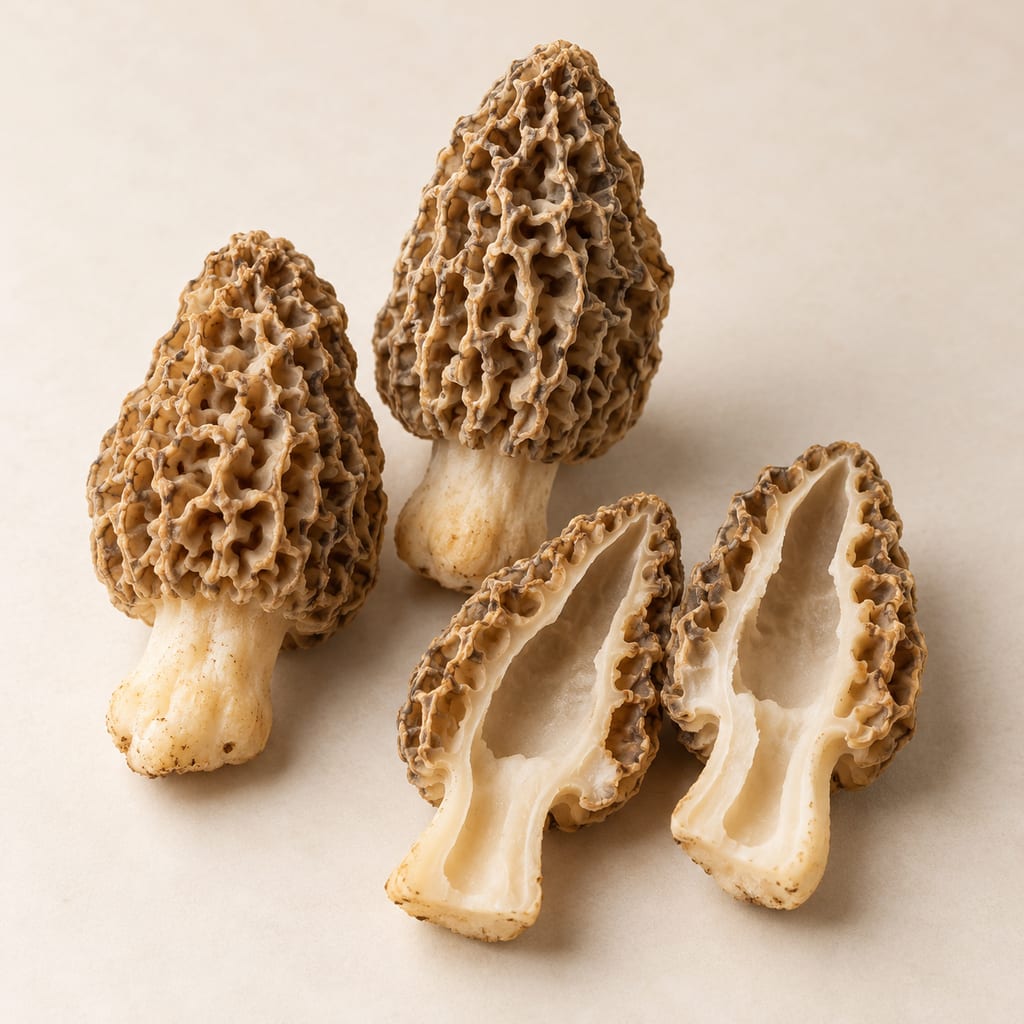
The American yellow morel, Morchella americana, is a wild spring morel of North America that is eaten only after thorough cooking, because raw or undercooked morels have caused serious illness.
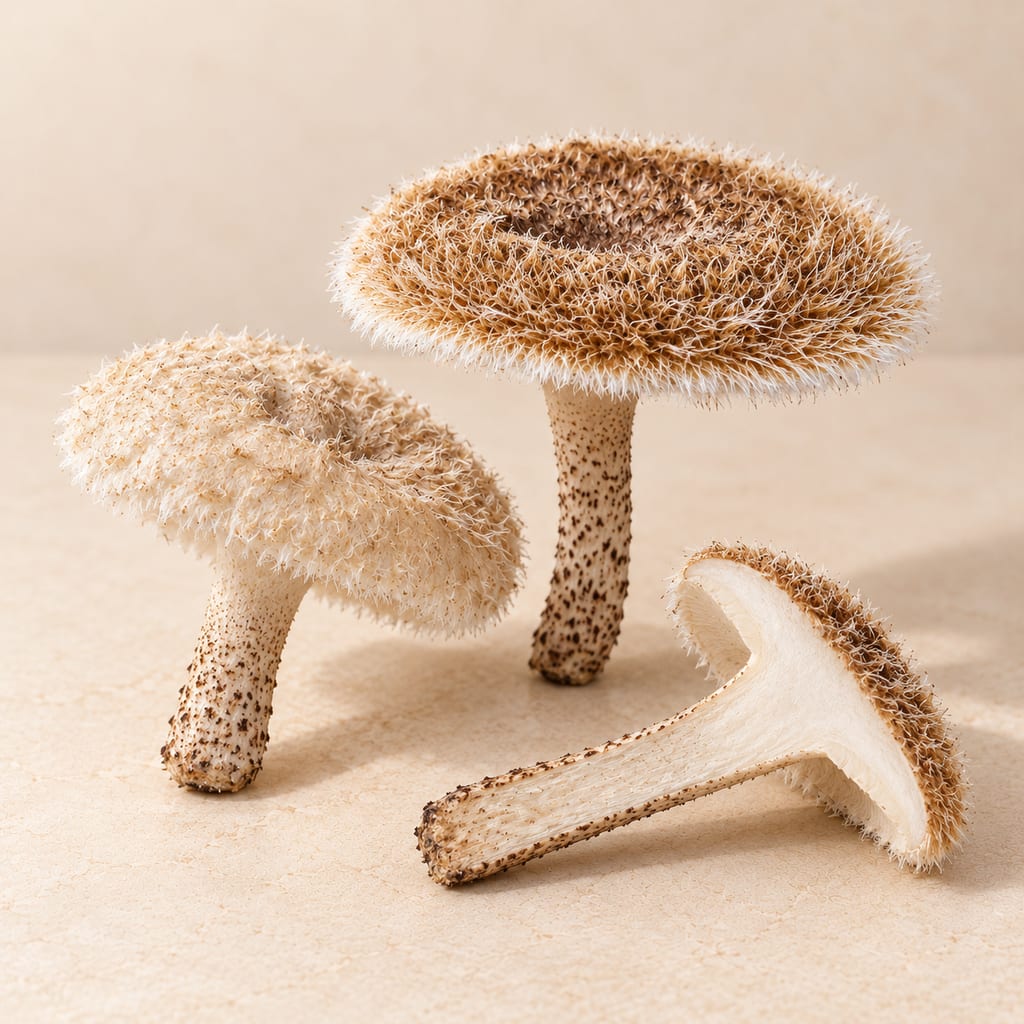
Lentinus berteroi is a sawgill mushroom of the tropical Americas, recorded as food in the Colombian catalogue and studied for cultivation in Brazil; a Brazilian food record for this species was not confirmed.
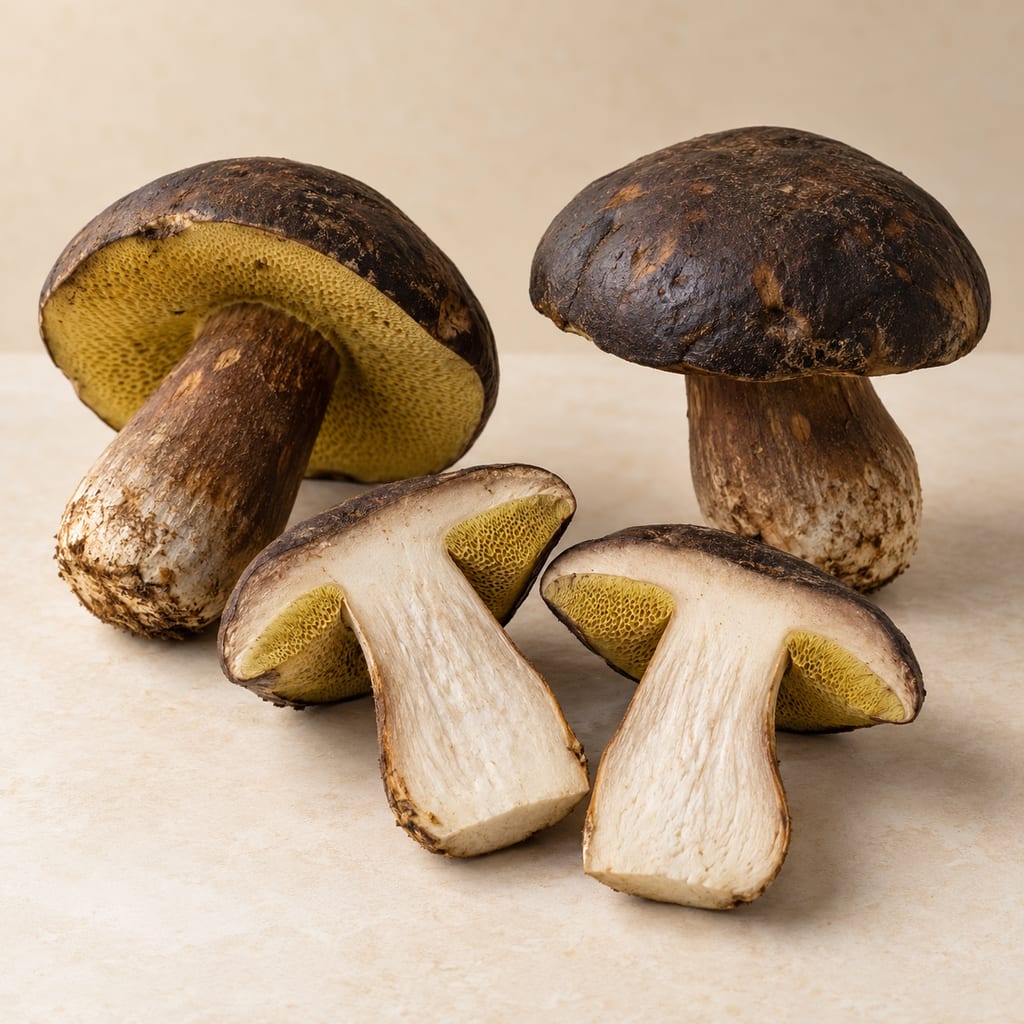
Phlebopus portentosus, the tropical black bolete, is a wild bolete prized in Yunnan and northern Thailand. It is one of the few boletes that has been fruited in culture on grain.