



















Dongsun
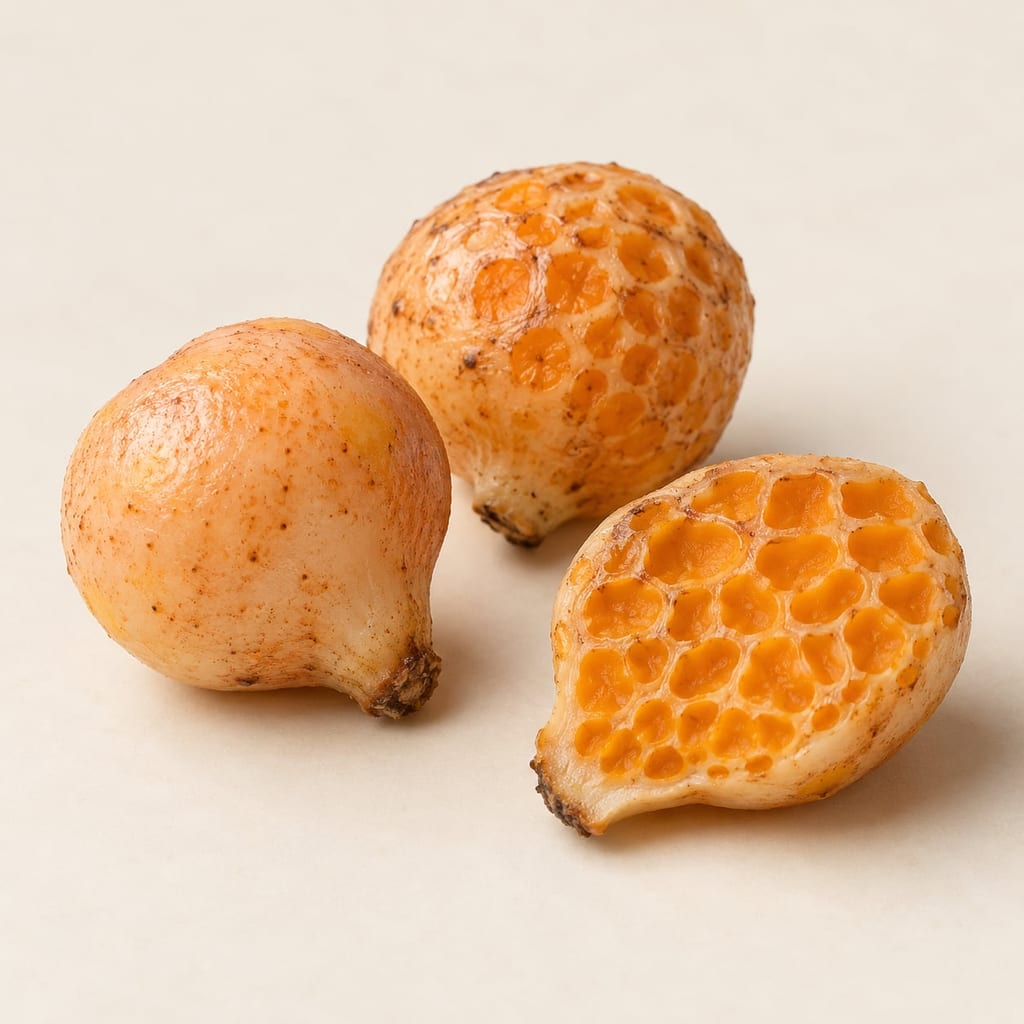
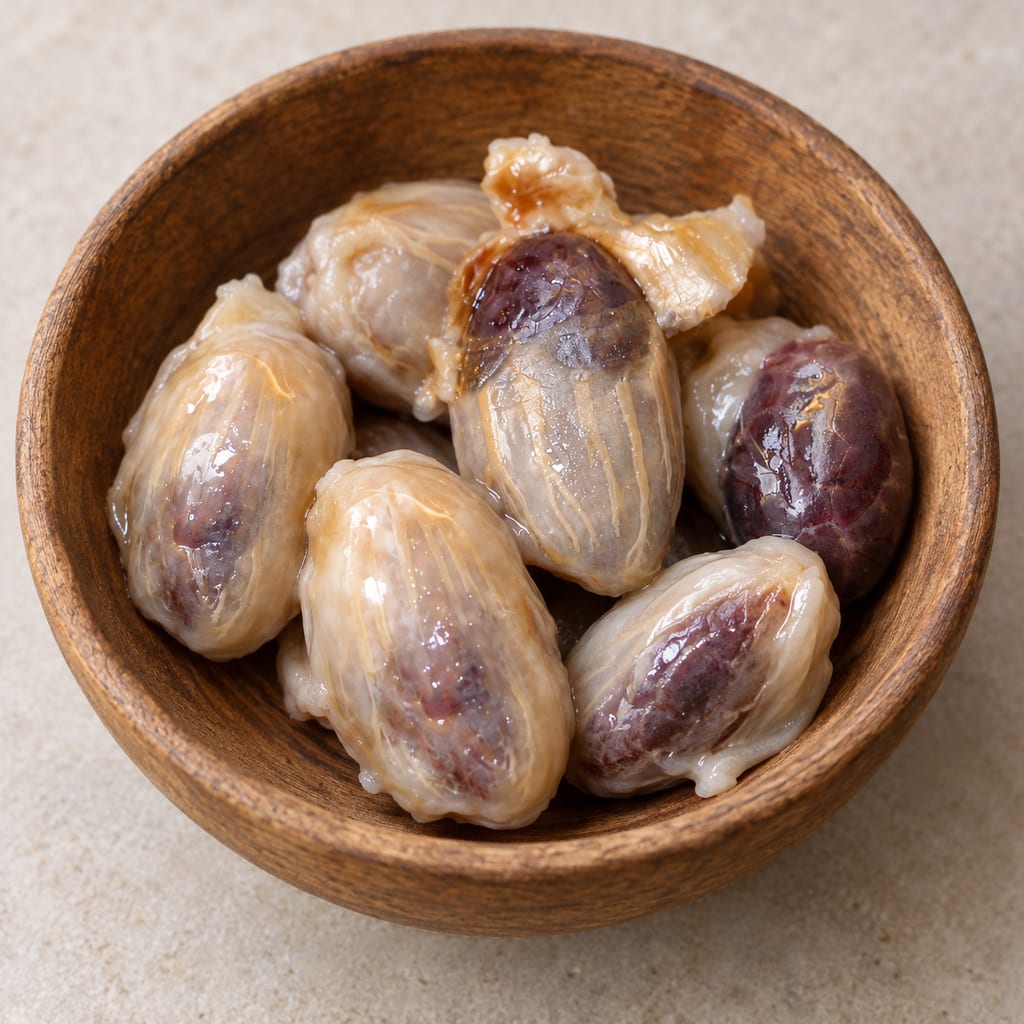
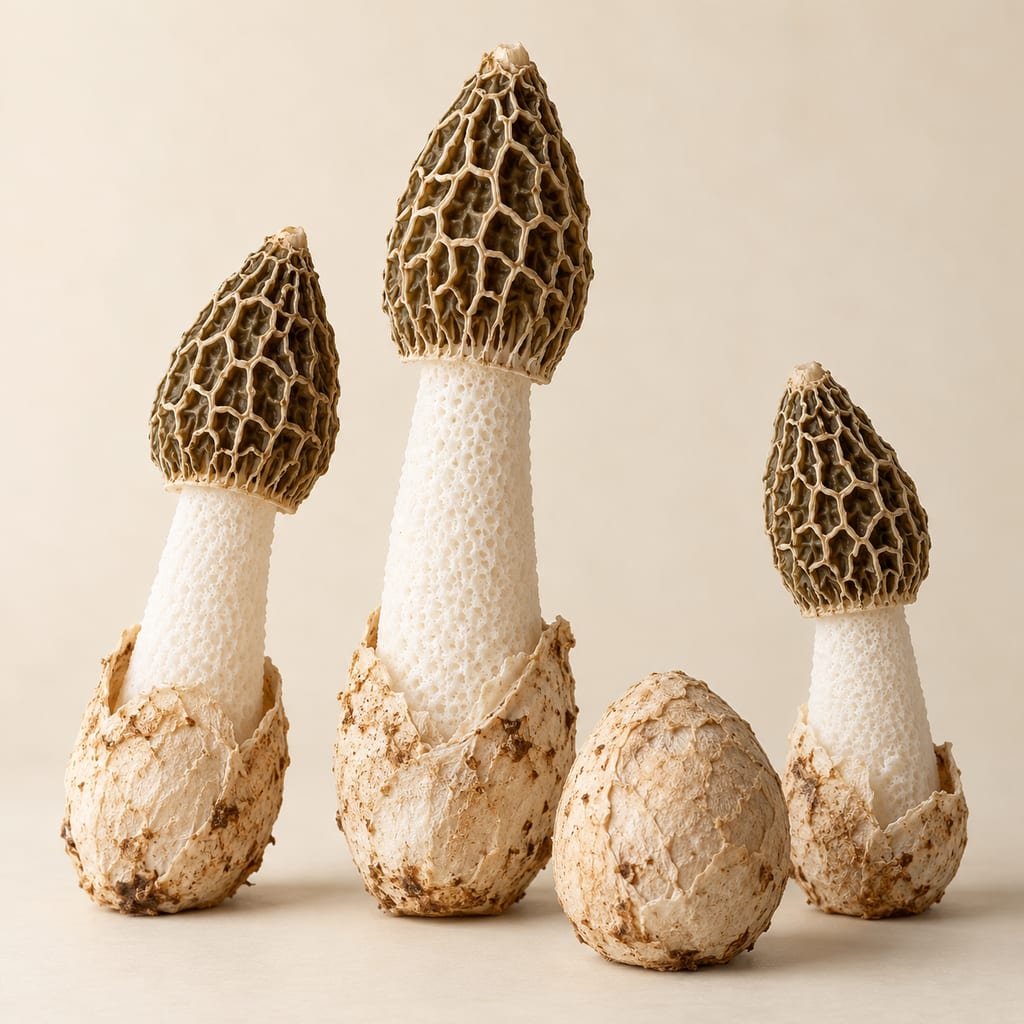
Dongsun, the Chinese name for Phallus dongsun, a stinkhorn described as a new species in 2020 and grown commercially in China as a food and medicinal mushroom.
 FermenteaWhere food goes to change
1086 articles on substrates, cultures and additives.
 Edible mushrooms339
 Brittlegills25
 Truffles20
 Milkcaps17
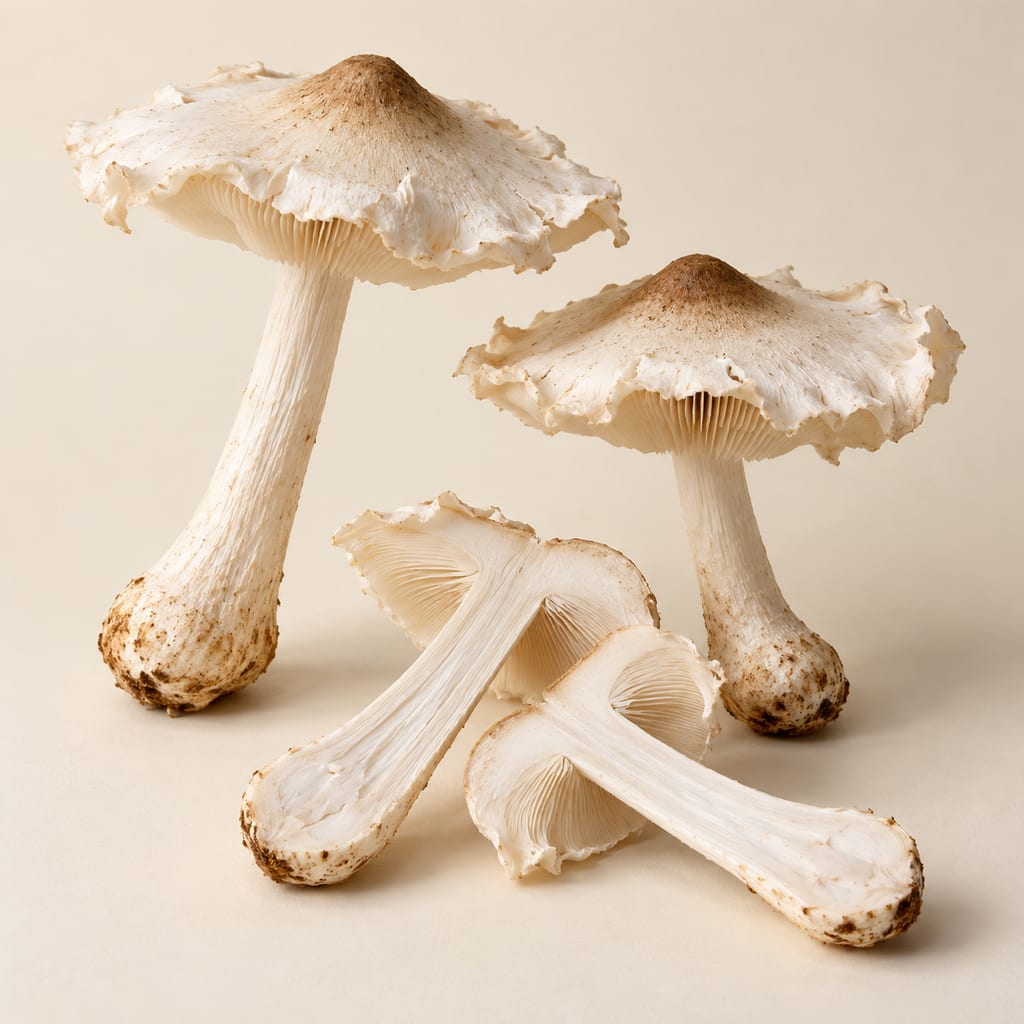 Termite mushrooms17
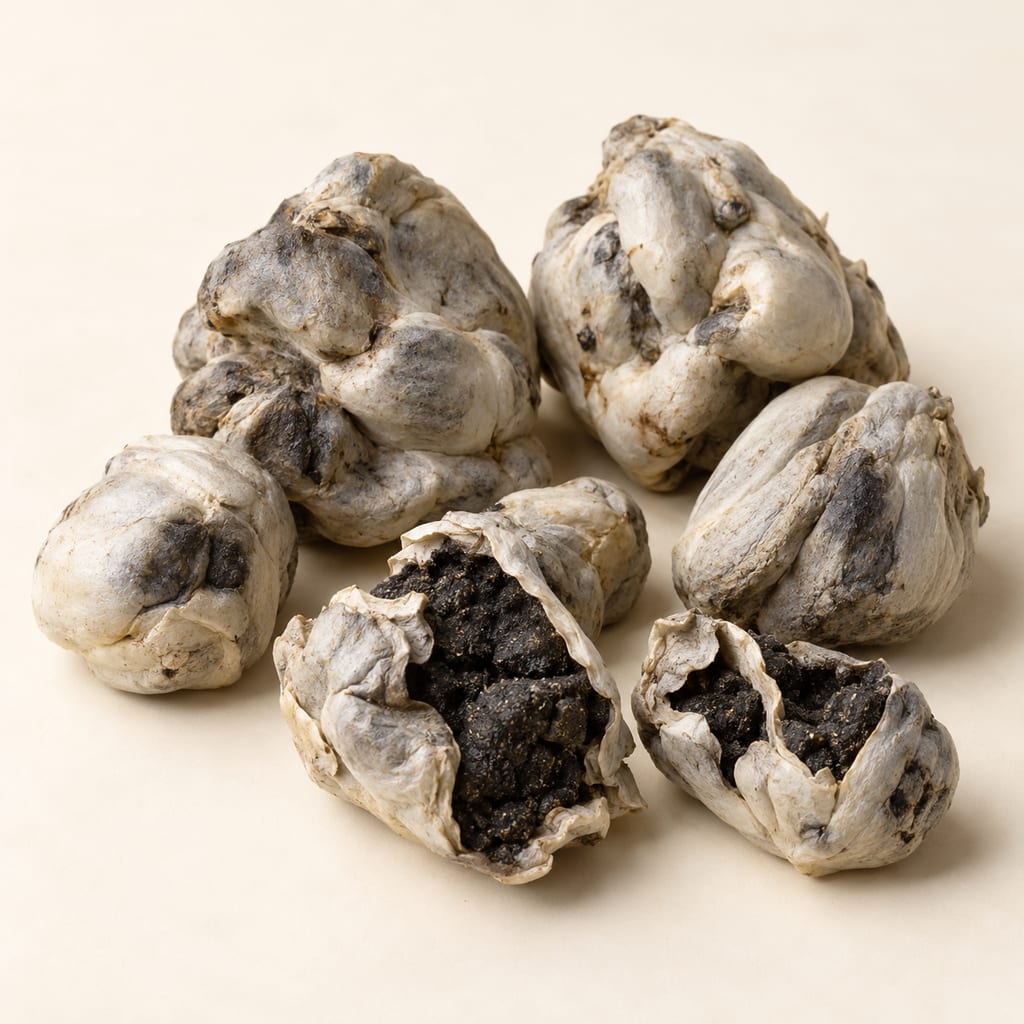 Fungi7
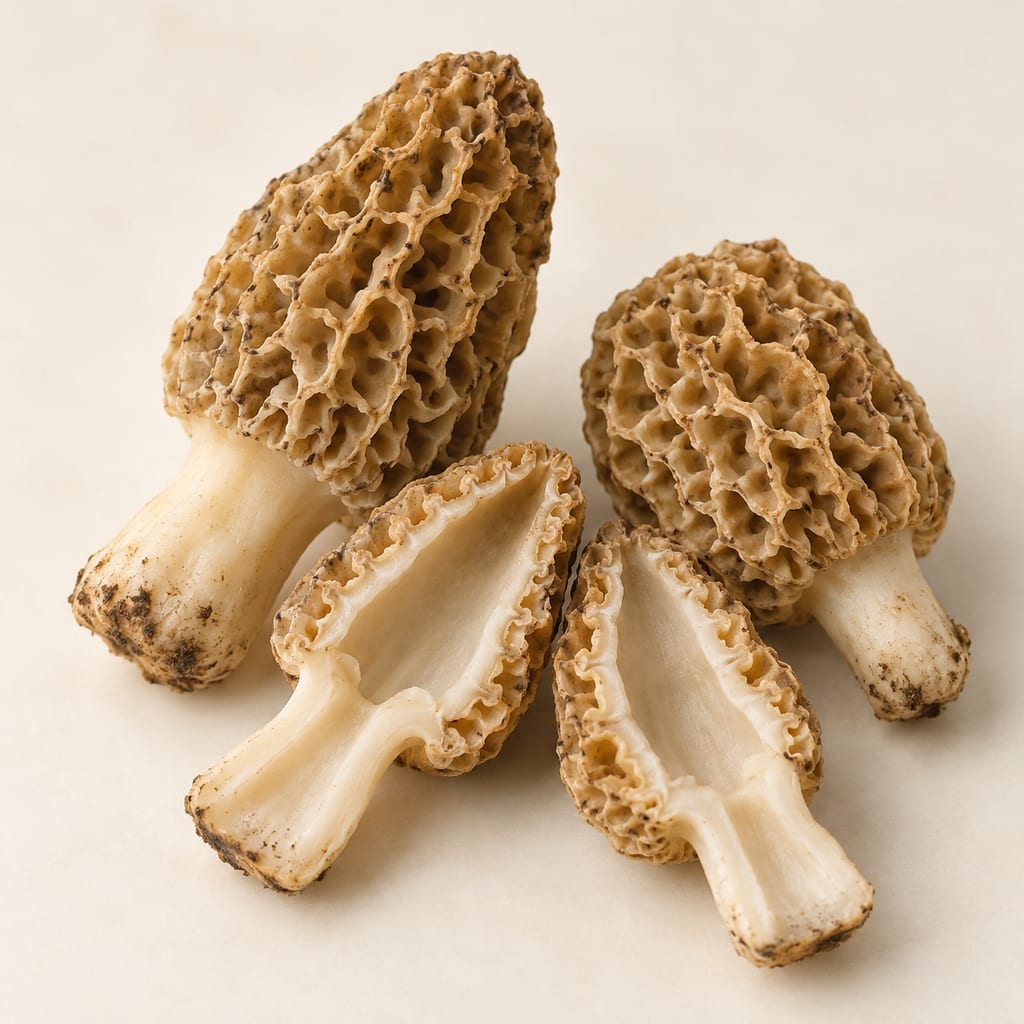 Morels4Stinkhorn fungi4
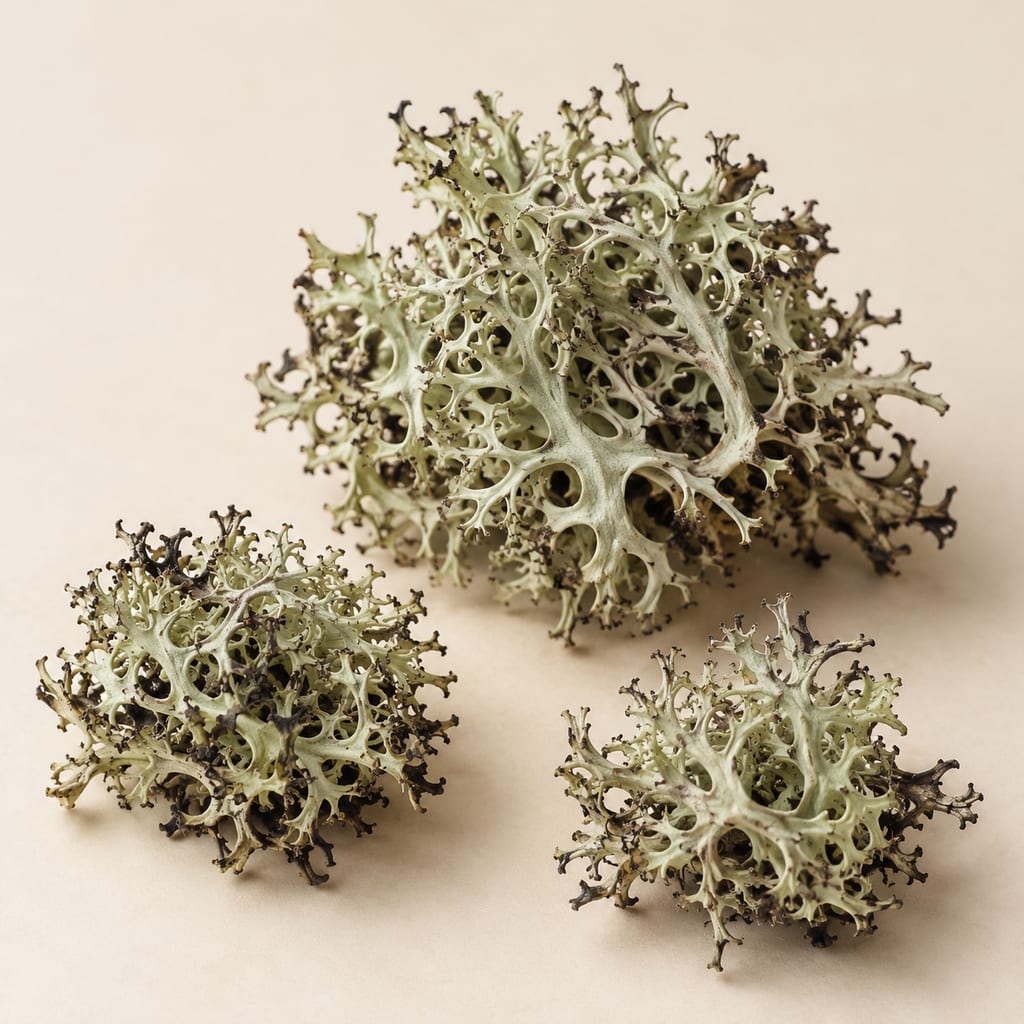 Lichens3
Dongsun, the Chinese name for Phallus dongsun, a stinkhorn described as a new species in 2020 and grown commercially in China as a food and medicinal mushroom.
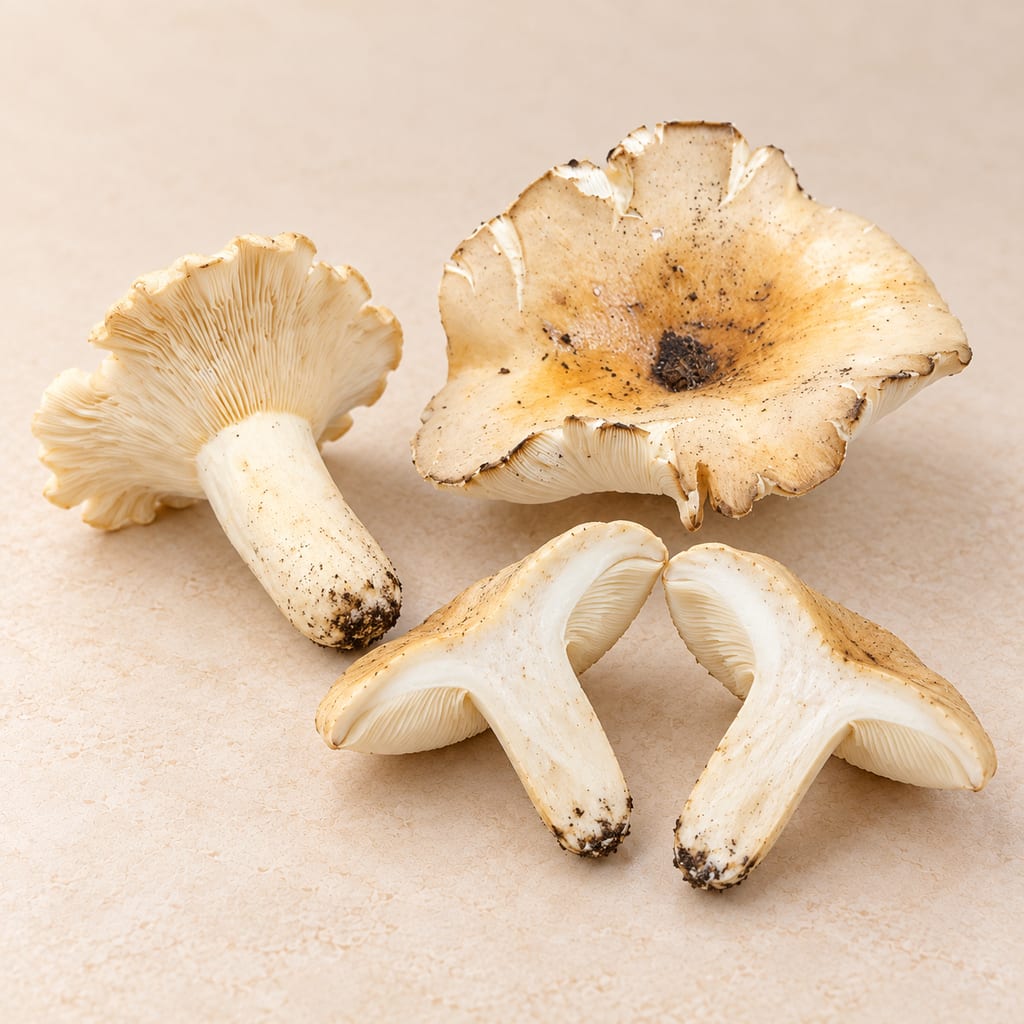
African milkcap, a wild ectomycorrhizal milkcap of woodland in central, eastern and southern Africa, recorded as an edible wild mushroom in regional inventories and food studies.
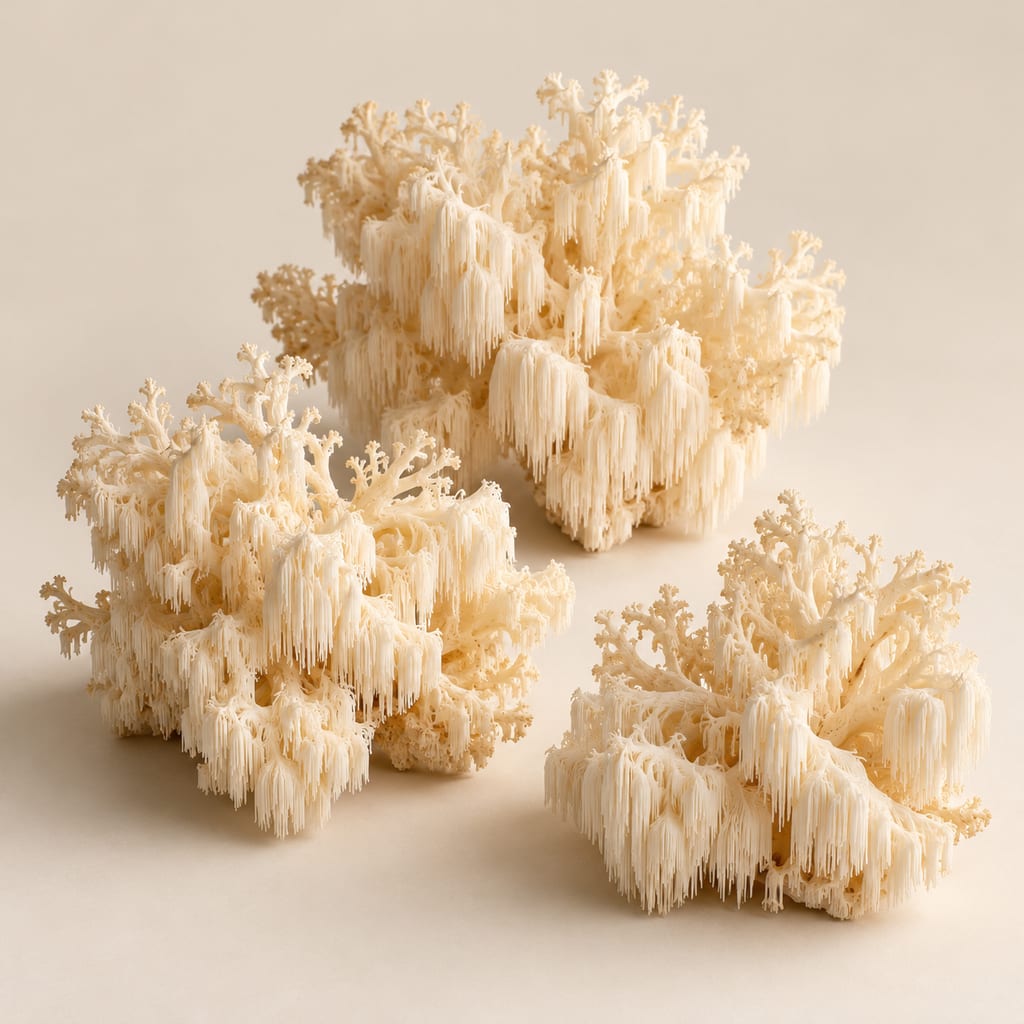
Hericium novae-zealandiae is a native New Zealand coral tooth fungus that grows on dead wood and was traditionally gathered by Māori, with little written record of its food use.
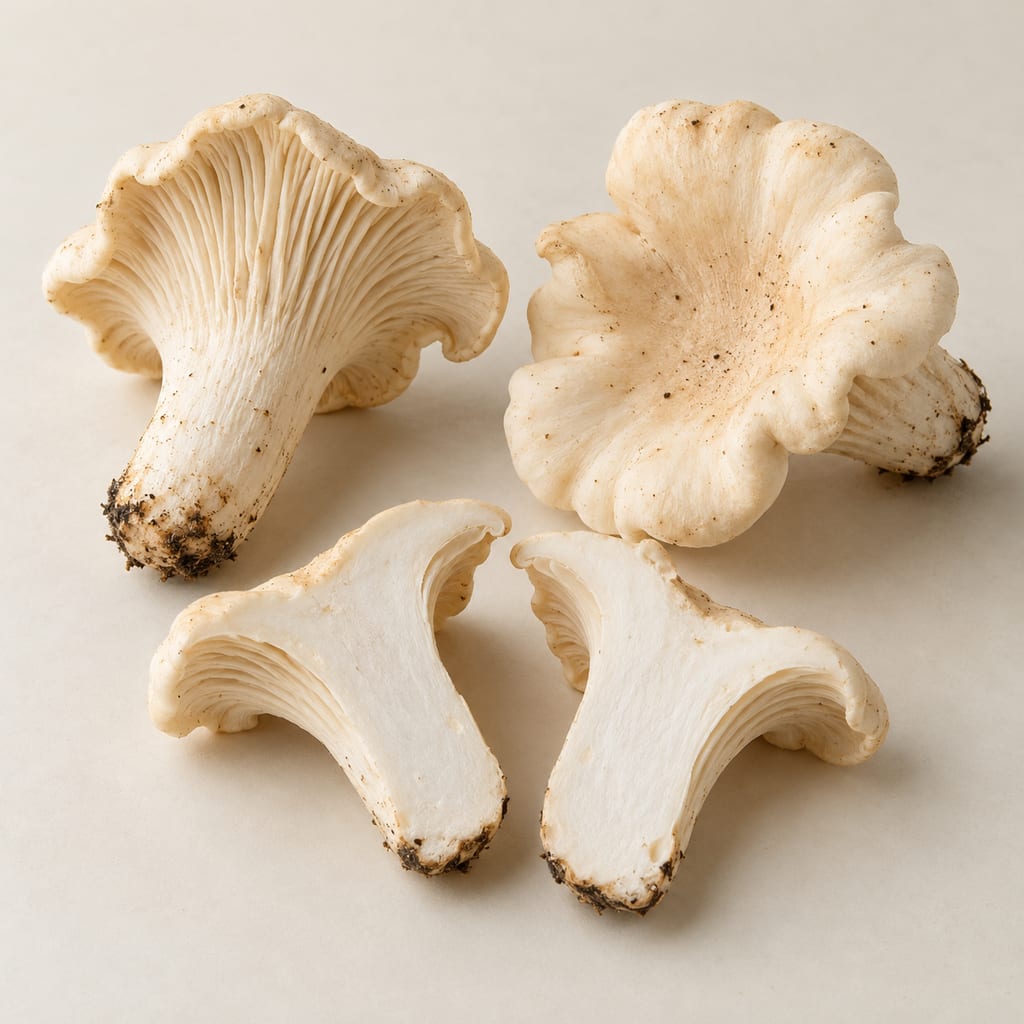
Cantharellus subalbidus is a pale wild chanterelle of western North American conifer forests, sautéed or baked as a choice edible and easily confused with other chanterelles.
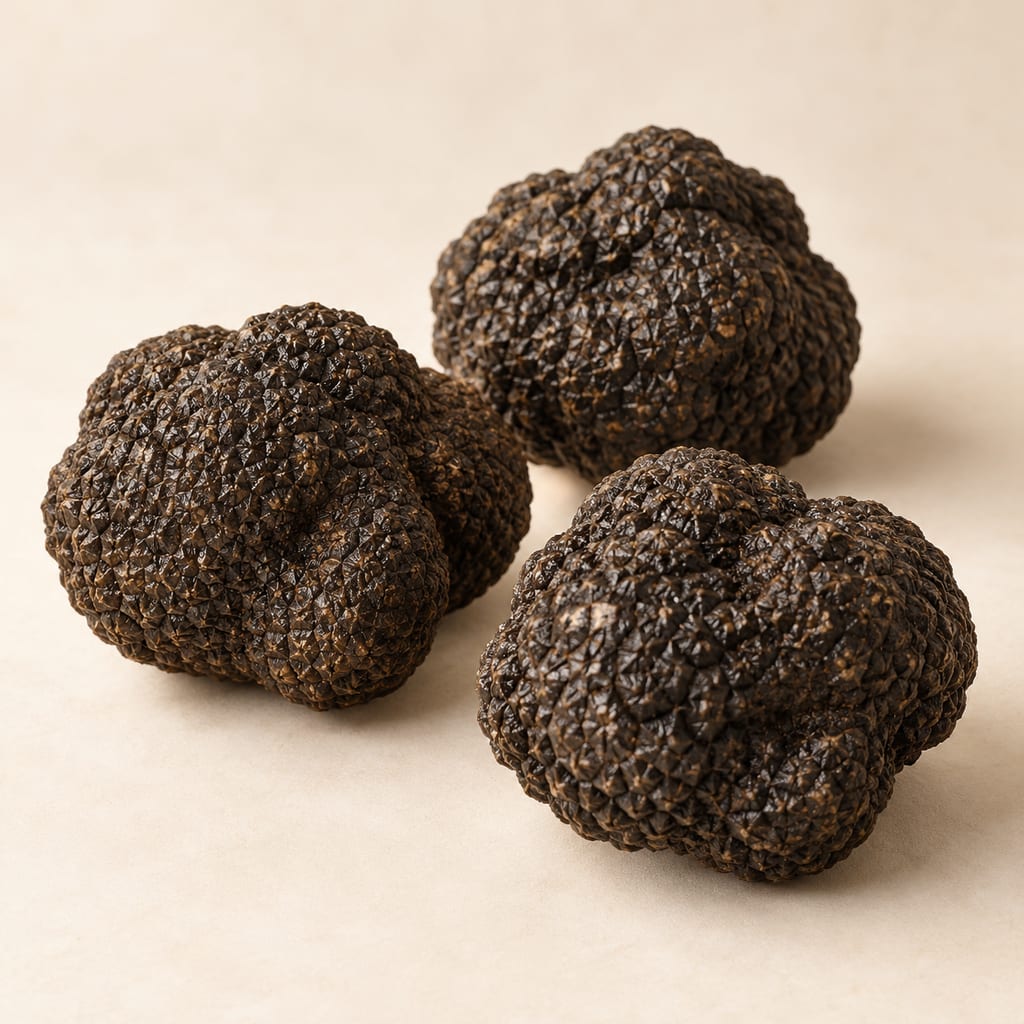
Tuber melanosporum is the Périgord black truffle, a mycorrhizal fungus of southern Europe grown in inoculated oak and hazel orchards and used as a high-value aromatic seasoning.
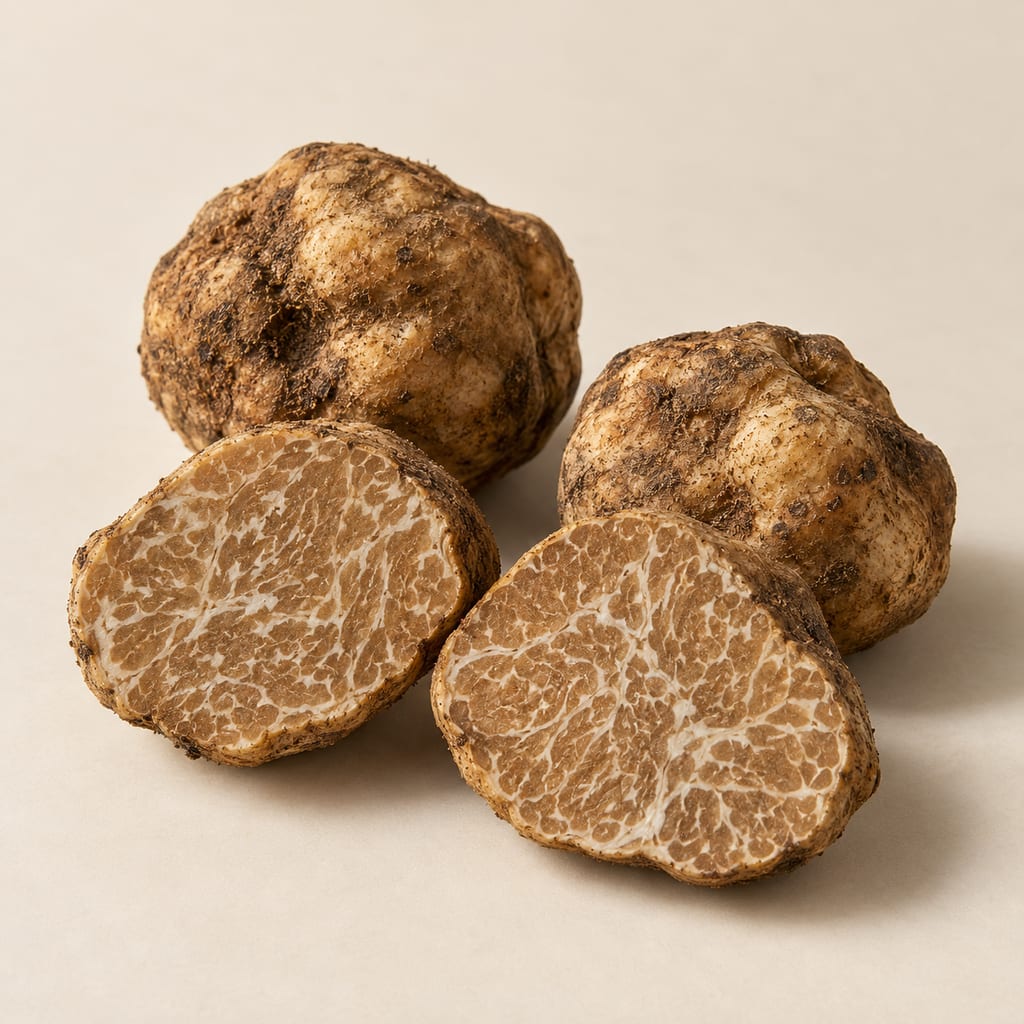
Tuber oregonense is a wild truffle of Douglas-fir forests in the Pacific Northwest, valued for its aroma and shaved raw over warm fatty food.
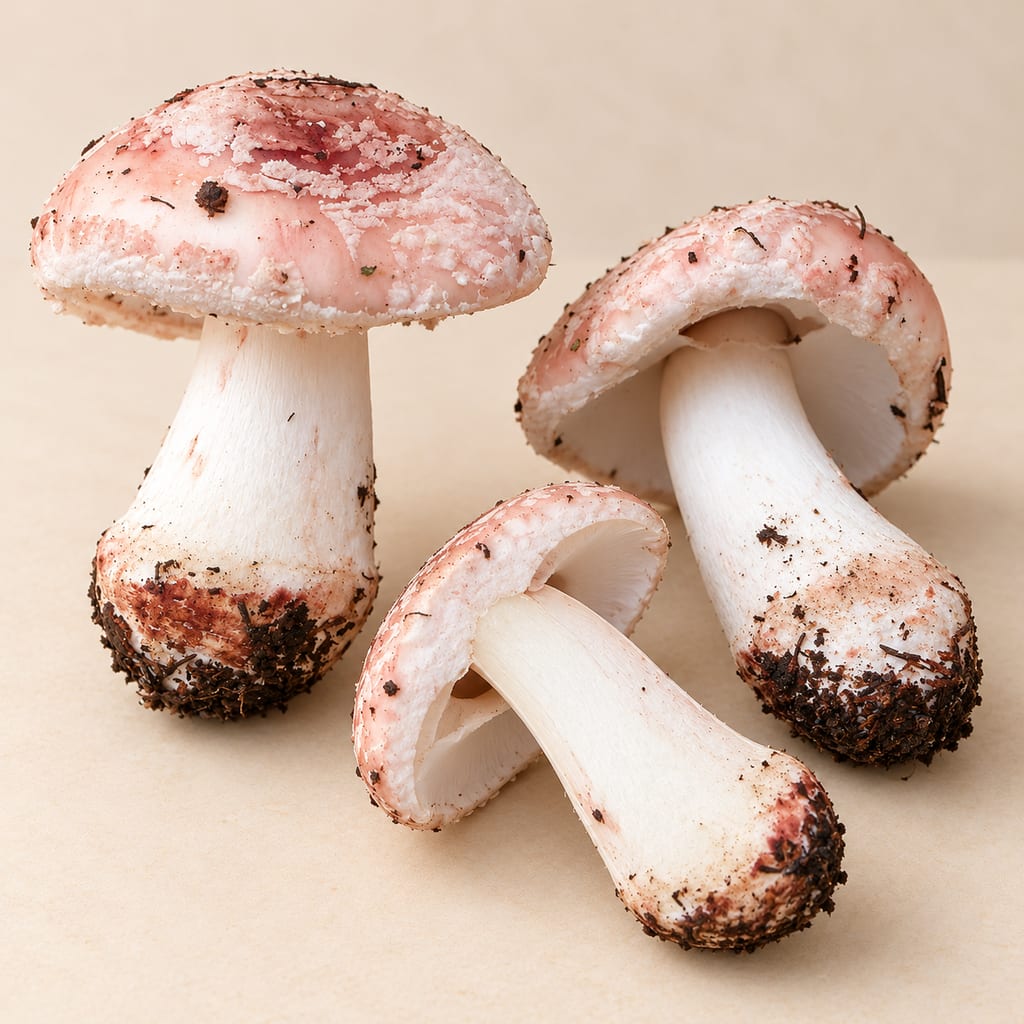
Amanita novinupta is a western North American blusher, a forest mushroom recorded as food in Mexico, and one that must be cooked because its raw flesh is toxic.
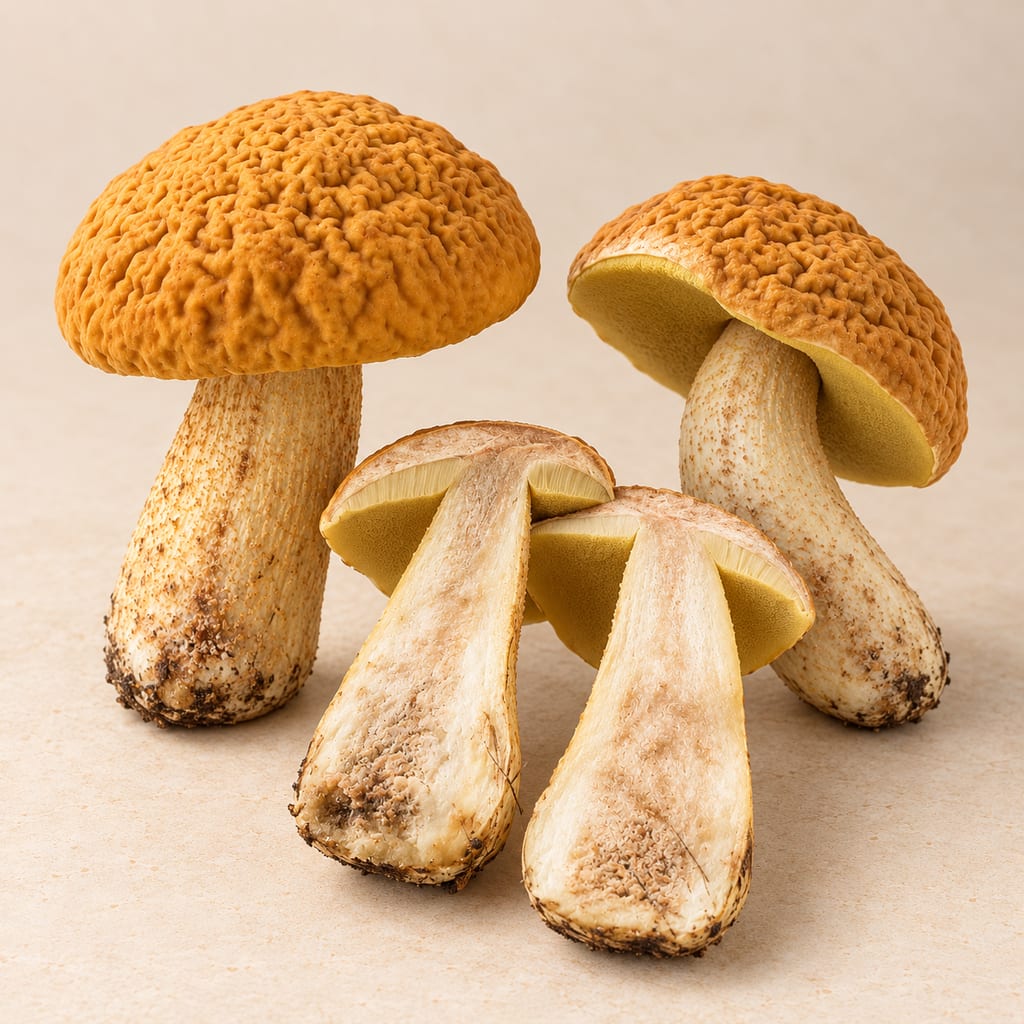
Leccinellum rugosiceps is a bolete of oak woodland across the Americas and parts of Asia, recorded as an edible wild mushroom whose quality reviewers rate variously and whose identification needs care.
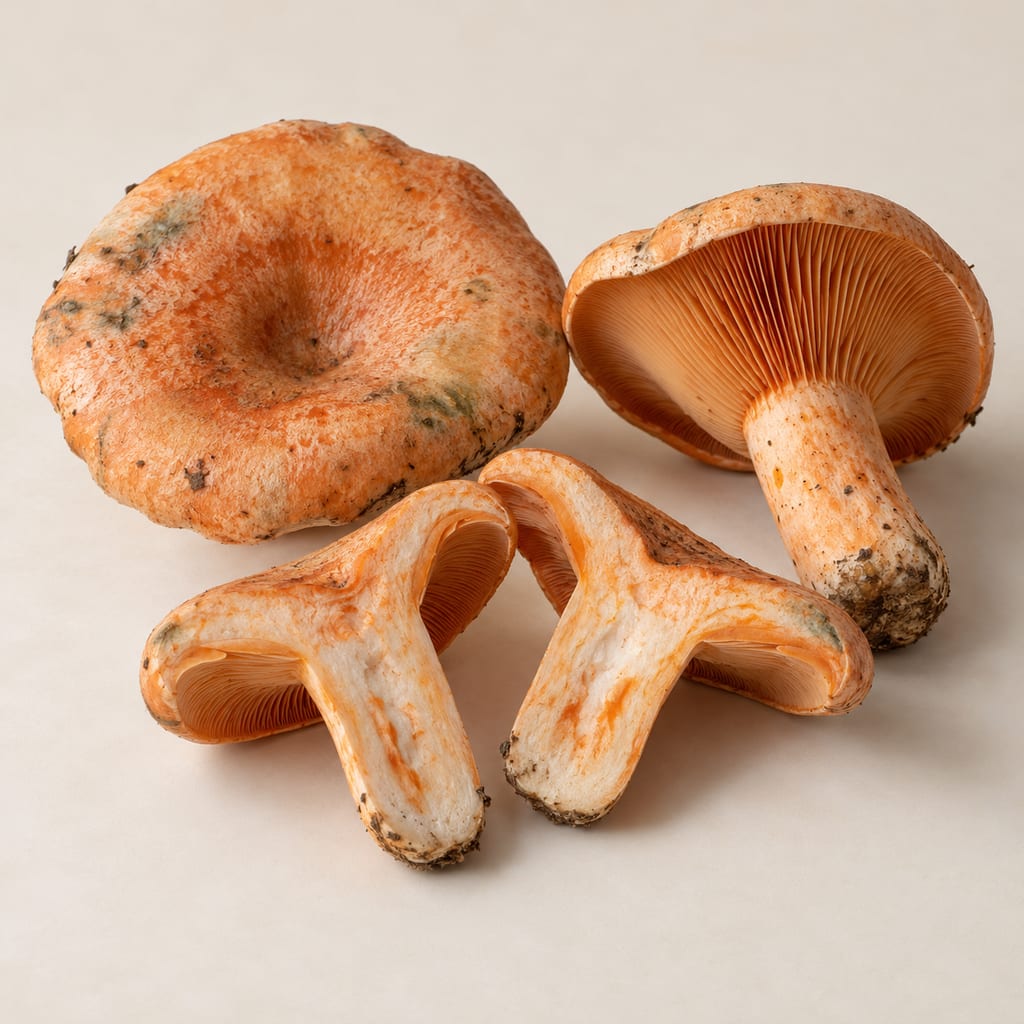
The saffron milkcap, Lactarius deliciosus, is a pine-associated wild mushroom native to Europe, fried, grilled, salted or pickled in several regional kitchens.
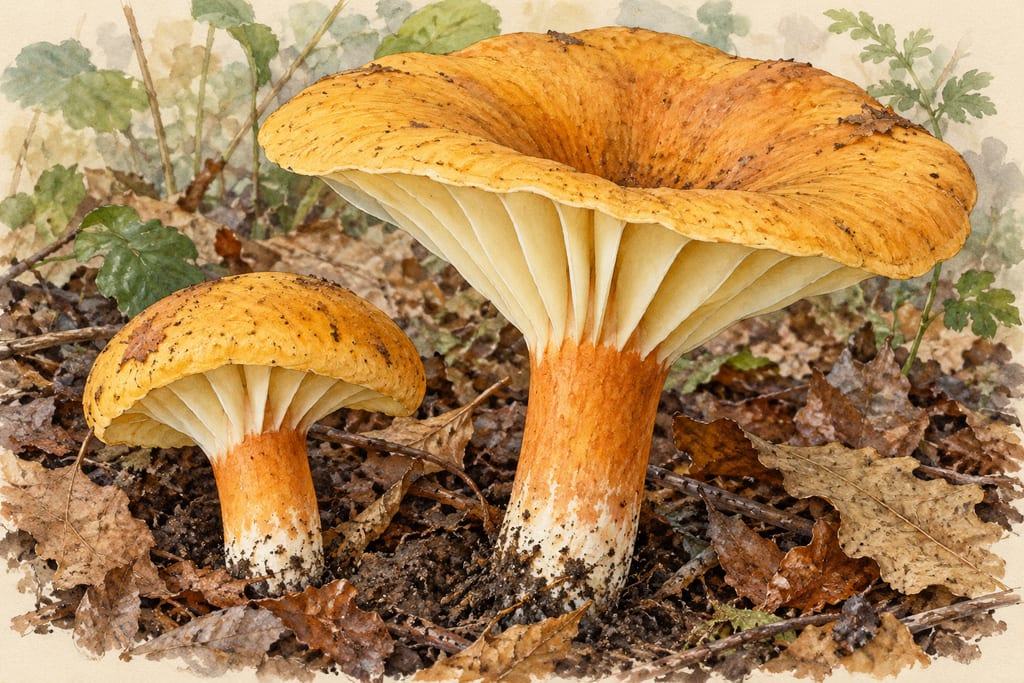
Lactifluus gymnocarpus is an African milkcap, a wild woodland mushroom of the Lactifluus group, recorded as an edible species in West and Central Africa.
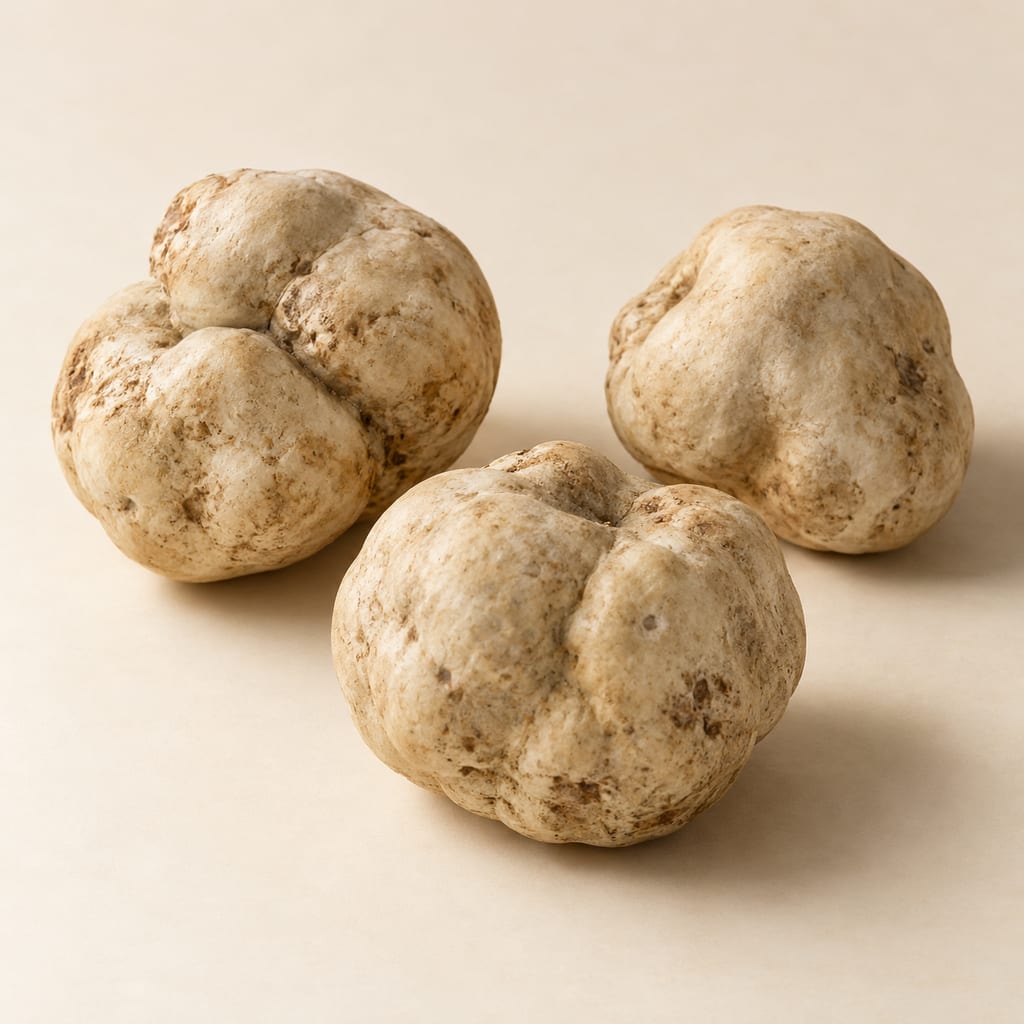
Afrocastellanoa ivoryana is a truffle-like false truffle of African woodlands, ectomycorrhizal with woodland trees and recorded as a regional wild food in West and Central Africa.
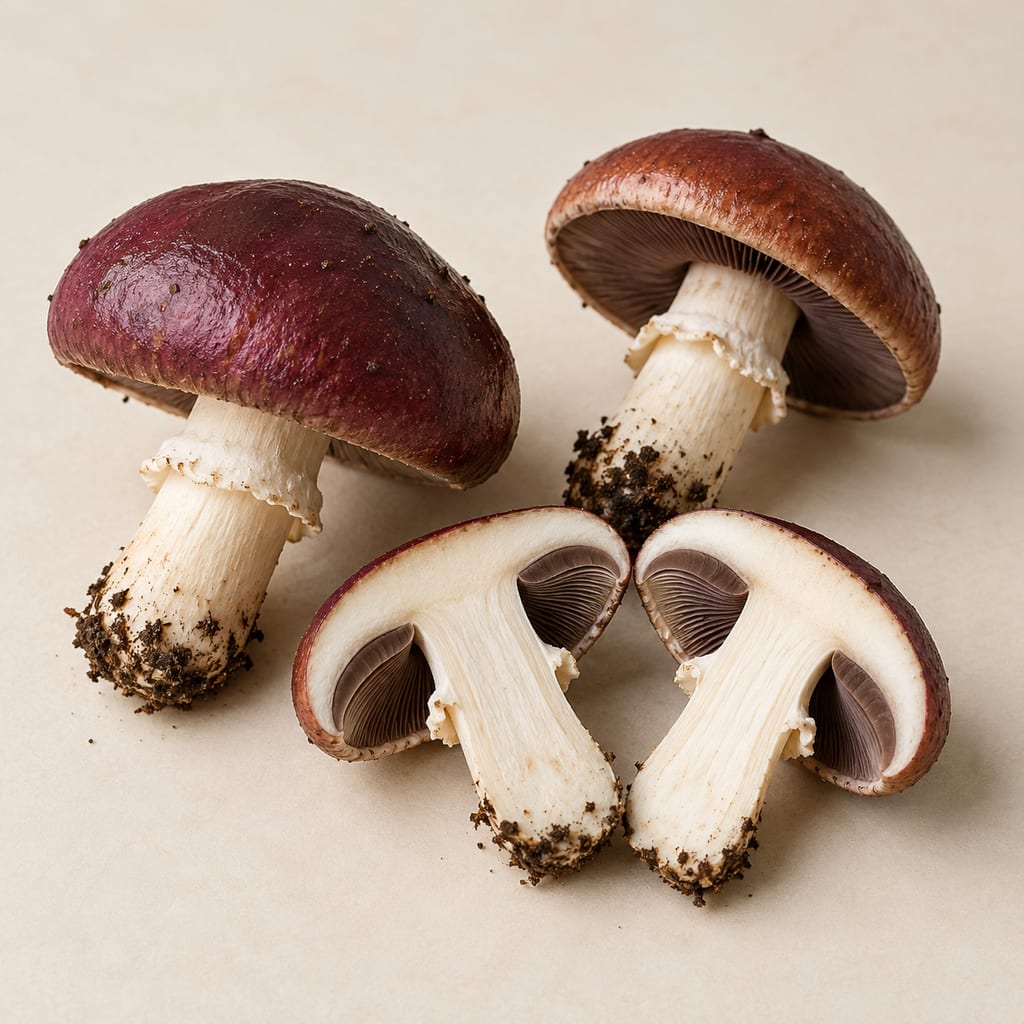
Wine cap is a large agaric mushroom of the genus Stropharia, grown on wood chips and straw and eaten cooked. Its cultivated form is the main supply.
Russula cellulata is an ectomycorrhizal African brittlegill of dry forest, gallery forest and miombo. EFTA lists it in its edible-species inventory, but the entry gives no direct edibility statement and warns of confusion with R. liberiensis.
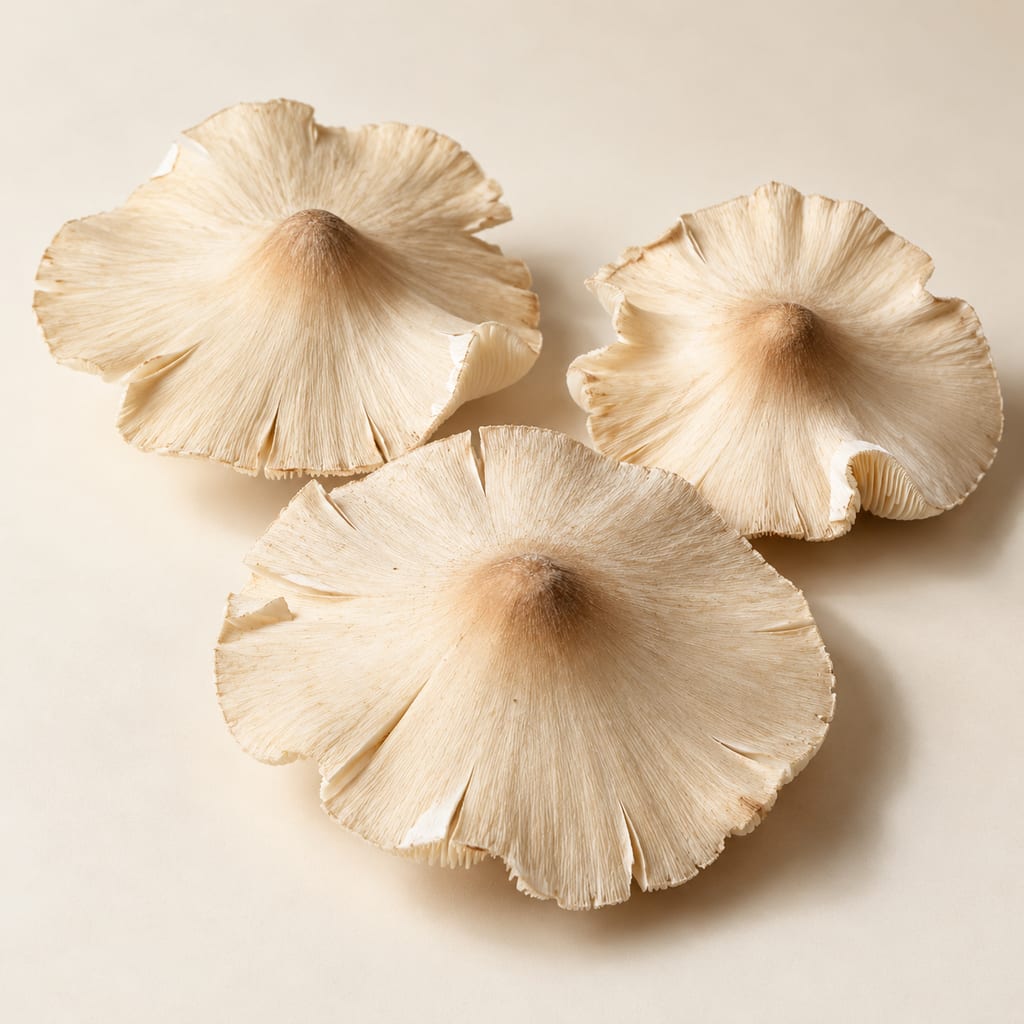
Termitomyces clypeatus is a termite mushroom of Africa, grown in association with Odontotermes termites. It is listed in EFTA's edible-species inventory, but the EFTA entry states no preparation or edibility verdict.
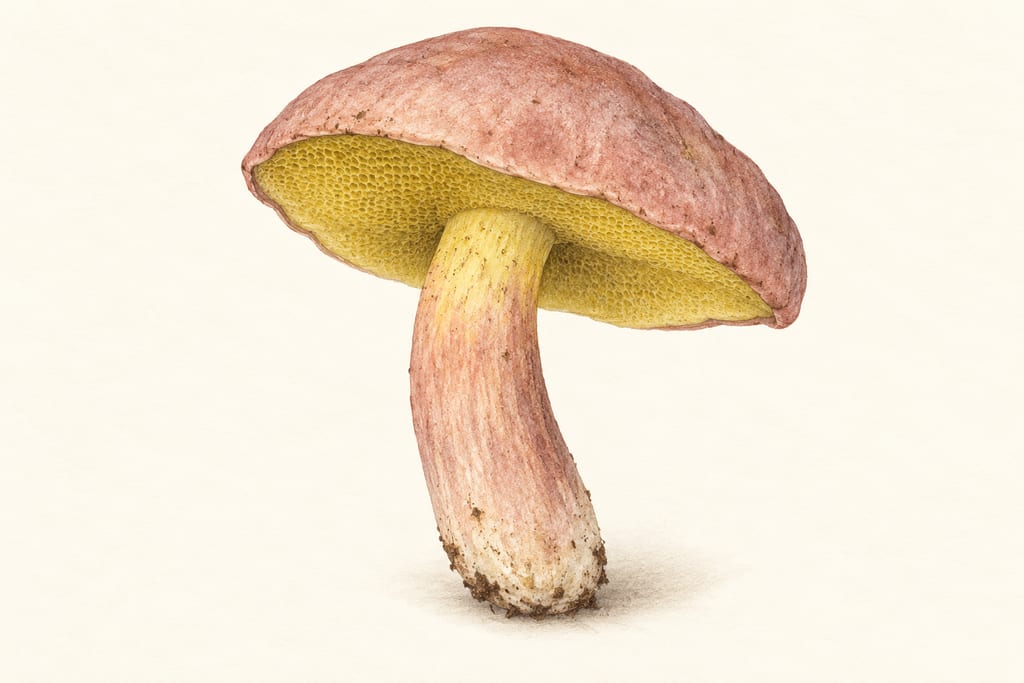
A 2023 Chinese taxonomic treatment accepts Boletellus indistinctus as a species. A separate Yunnan market record uses this name, but its specimen identification and local food safety have not been confirmed here.
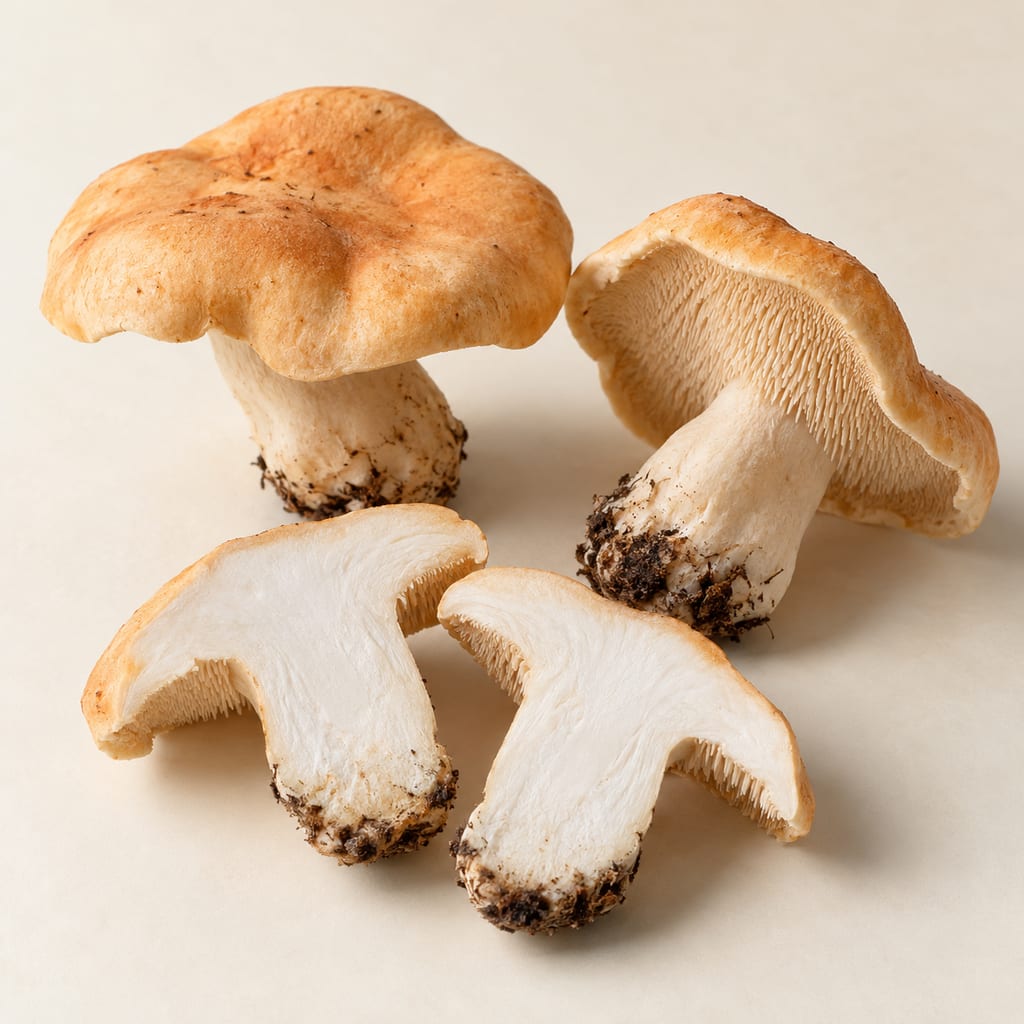
Hydnum berkeleyanum is a toothed, ectomycorrhizal forest fungus sold in food markets in Yunnan, China. Its regional identification is published, but its current name and local safety still need species-level review.
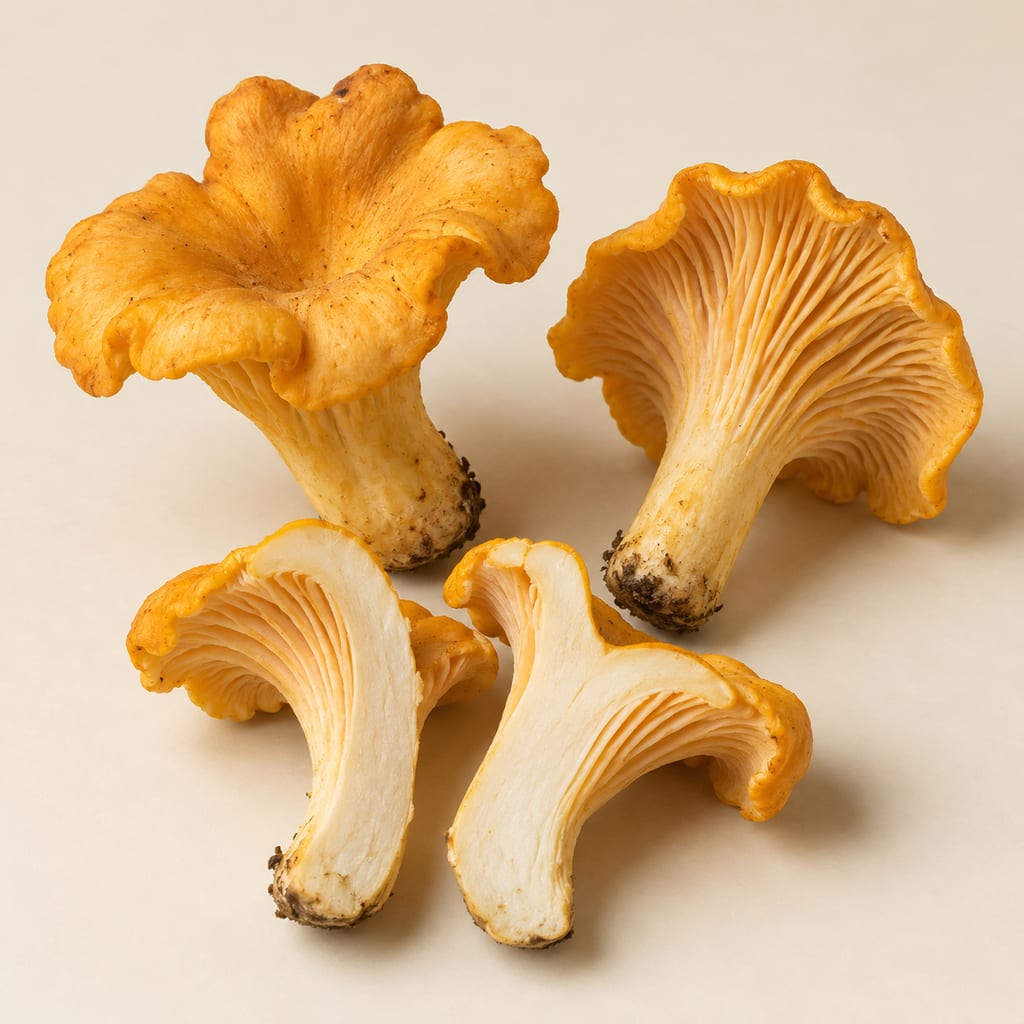
Cantharellus formosus is a wild ectomycorrhizal chanterelle of conifer forest in the Pacific Northwest of North America, gathered as a culinary mushroom.
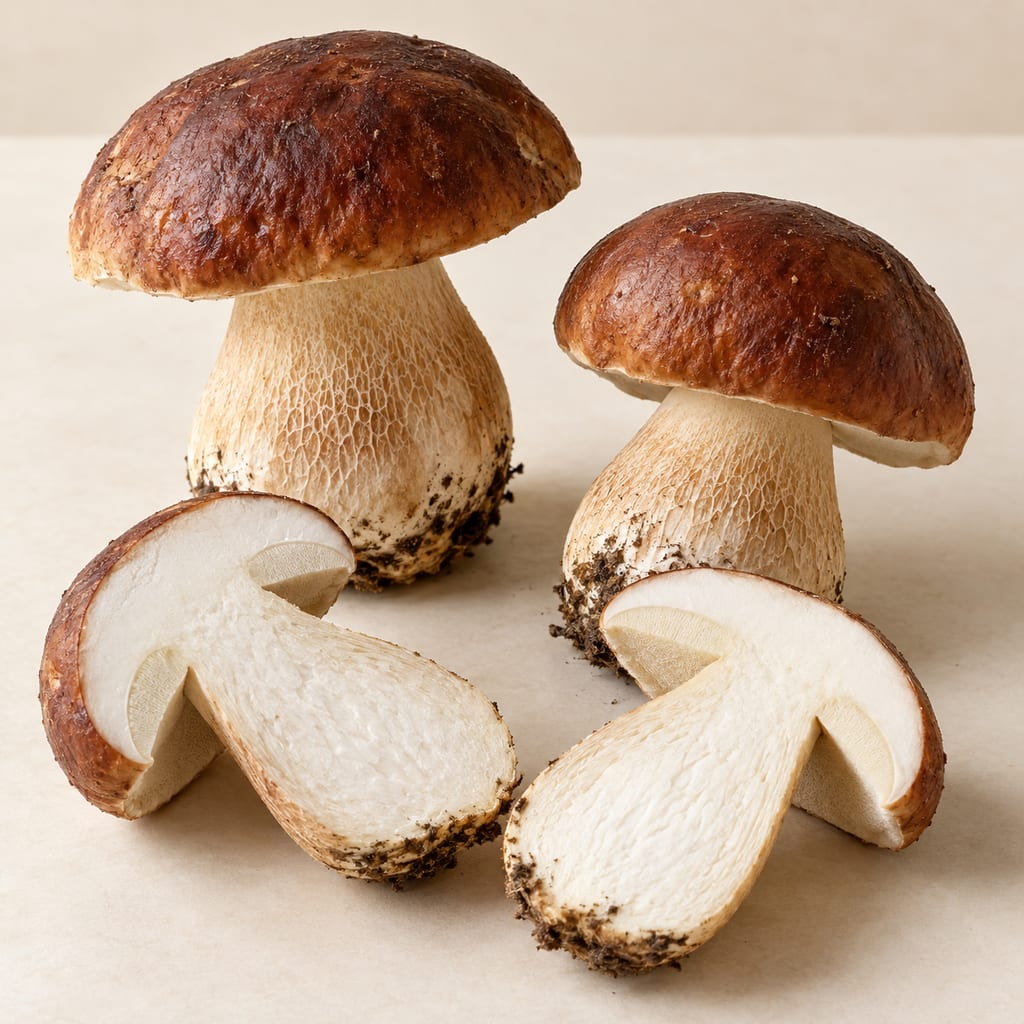
Boletus pinophilus is a European porcini-type bolete, often linked to conifers, gathered wild and used fresh or dried. Older records and commercial mixtures may not separate it from other porcini.
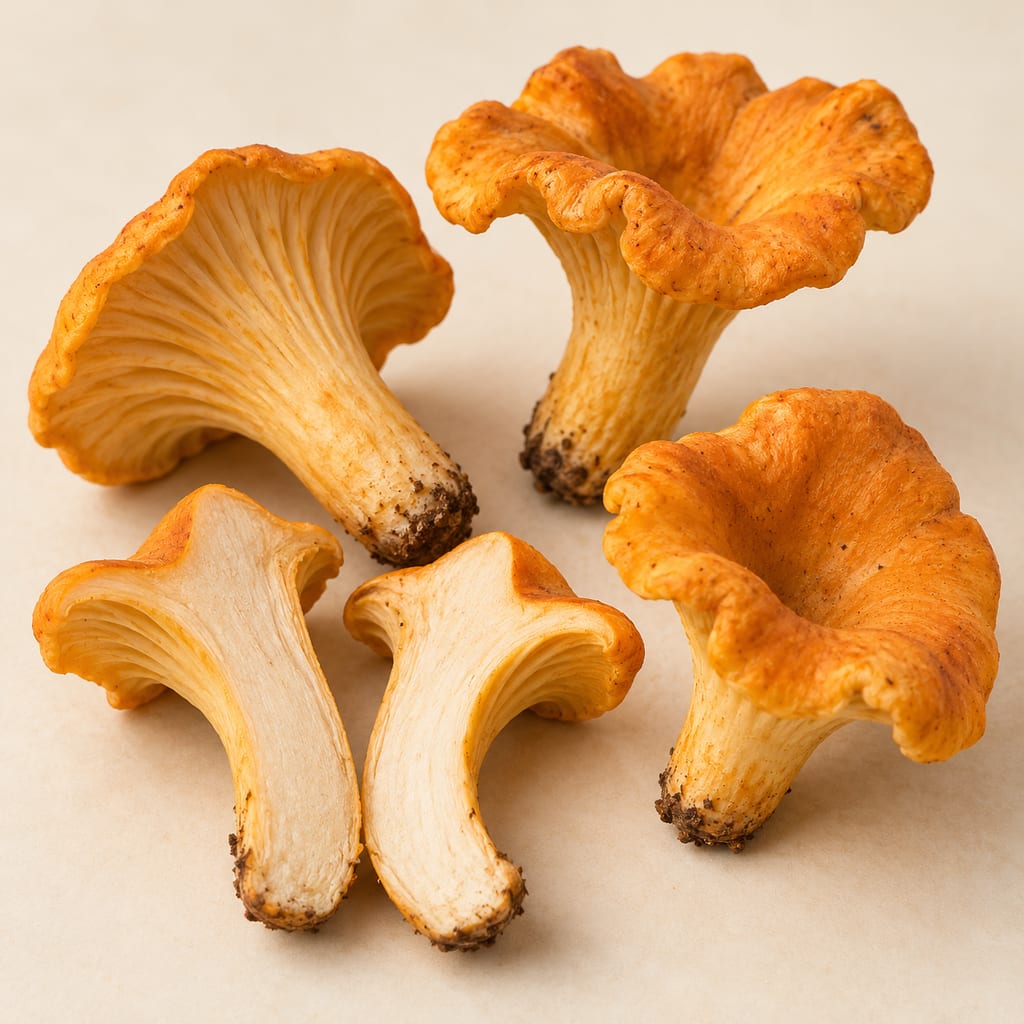
Cantharellus lateritius is a bright orange chanterelle of oak and mixed woodland. A Guatemalan market record and a Missouri field guide describe it as edible, with cautions about a poisonous lookalike.
Pine-associated false truffle, Rhizopogon songmaodan, is a hypogeous fungus of pine forests in southwest China, sold at wild mushroom markets as a delicacy. It was described as new in 2021, and its safety has not been studied in the sources reviewed.
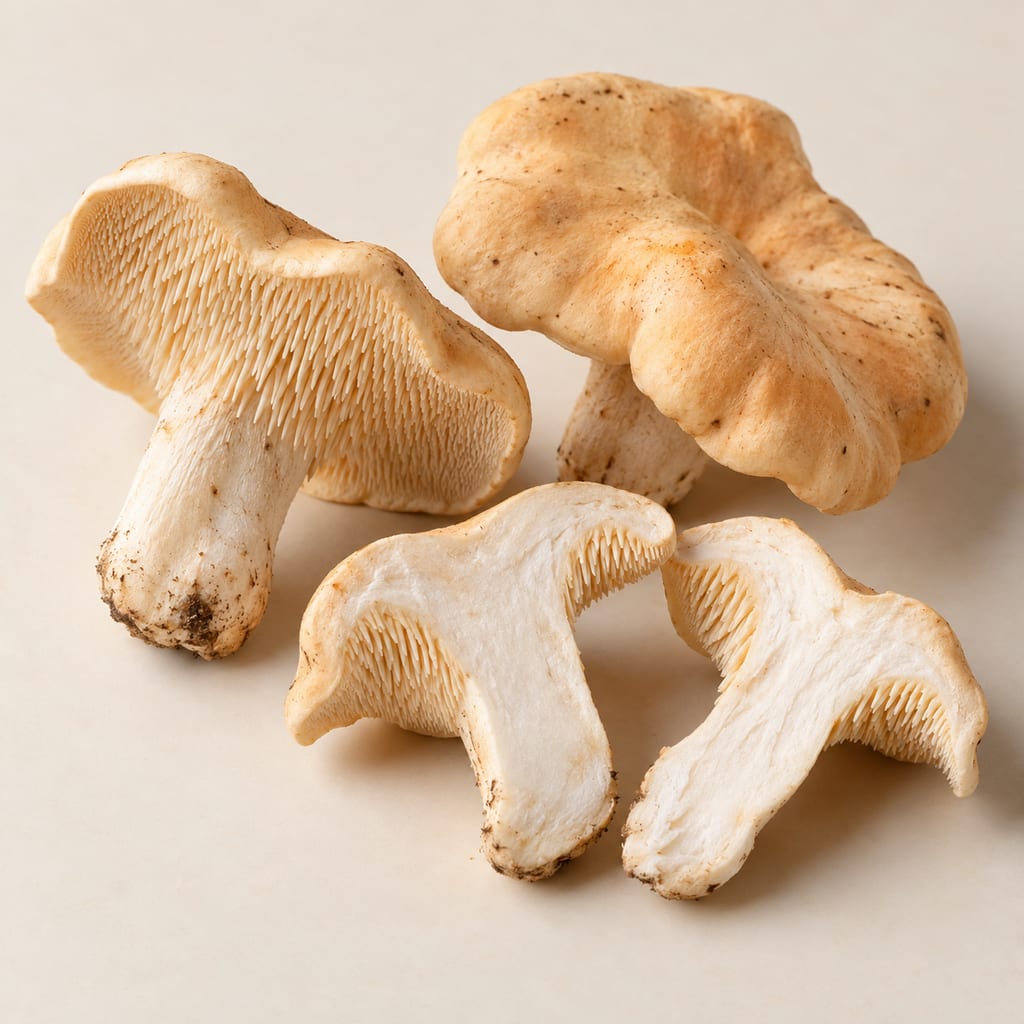
The wood hedgehog, Hydnum repandum, is a wild edible fungus with spines under the cap, widespread in European woods. Sources rate it a choice edible that turns bitter when old, and report that it accumulates caesium.
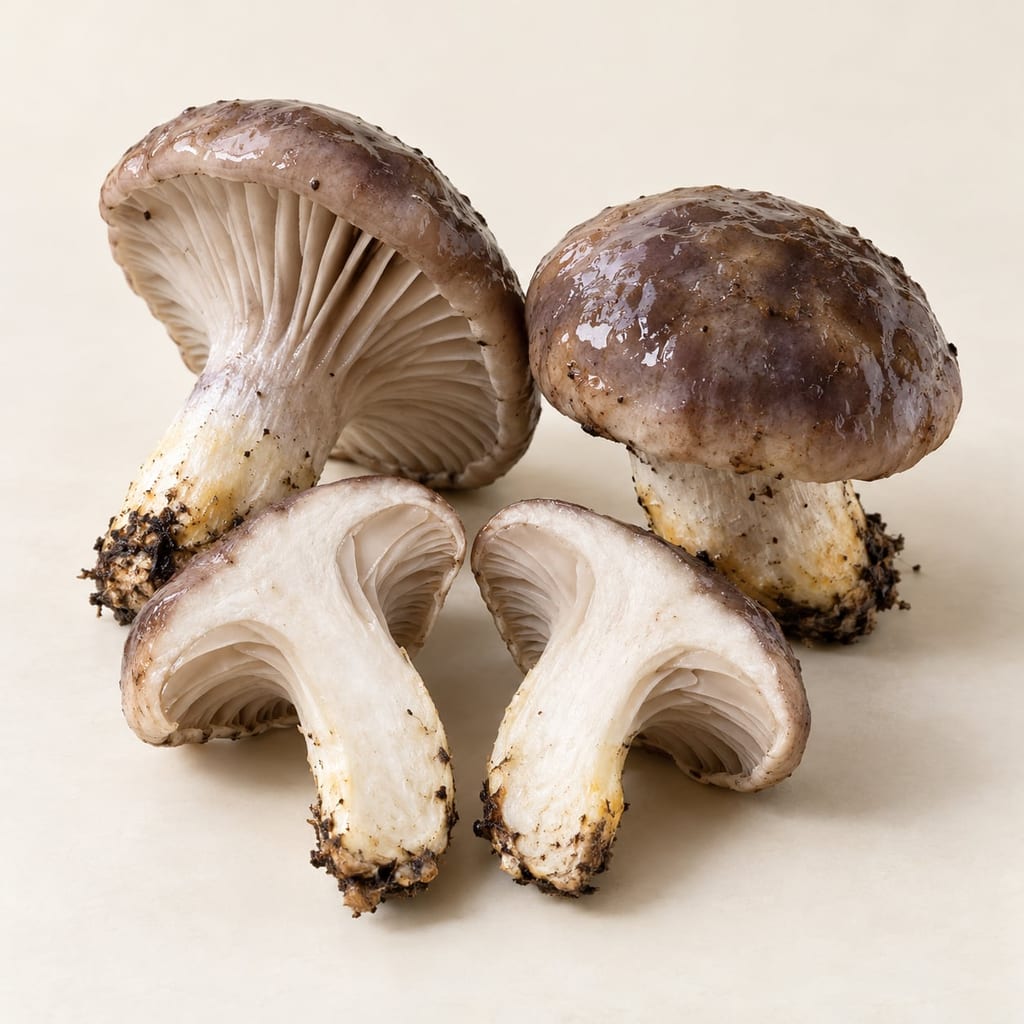
The slimy spike, Gomphidius glutinosus, is a sticky gilled mushroom of conifer woods with a slime-covered cap. Sources rate it edible but not recommended, note heavy-metal accumulation, and advise removing the slime after picking.
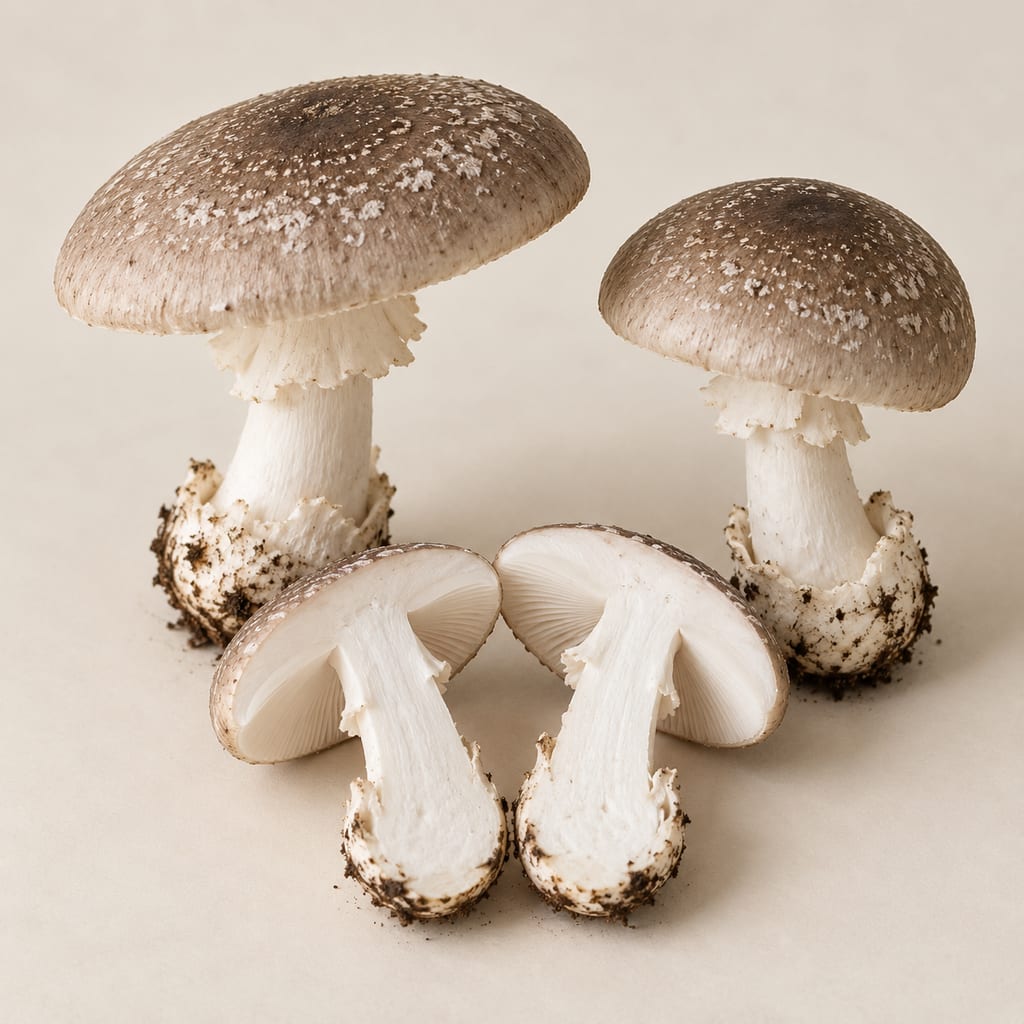
Amanita yuaniana is a Chinese Amanita that a 2023 Yanshan survey and a Yunnan ethnomycology survey list among edible species. No source tests it for safety, and the genus holds the most lethal mushrooms.
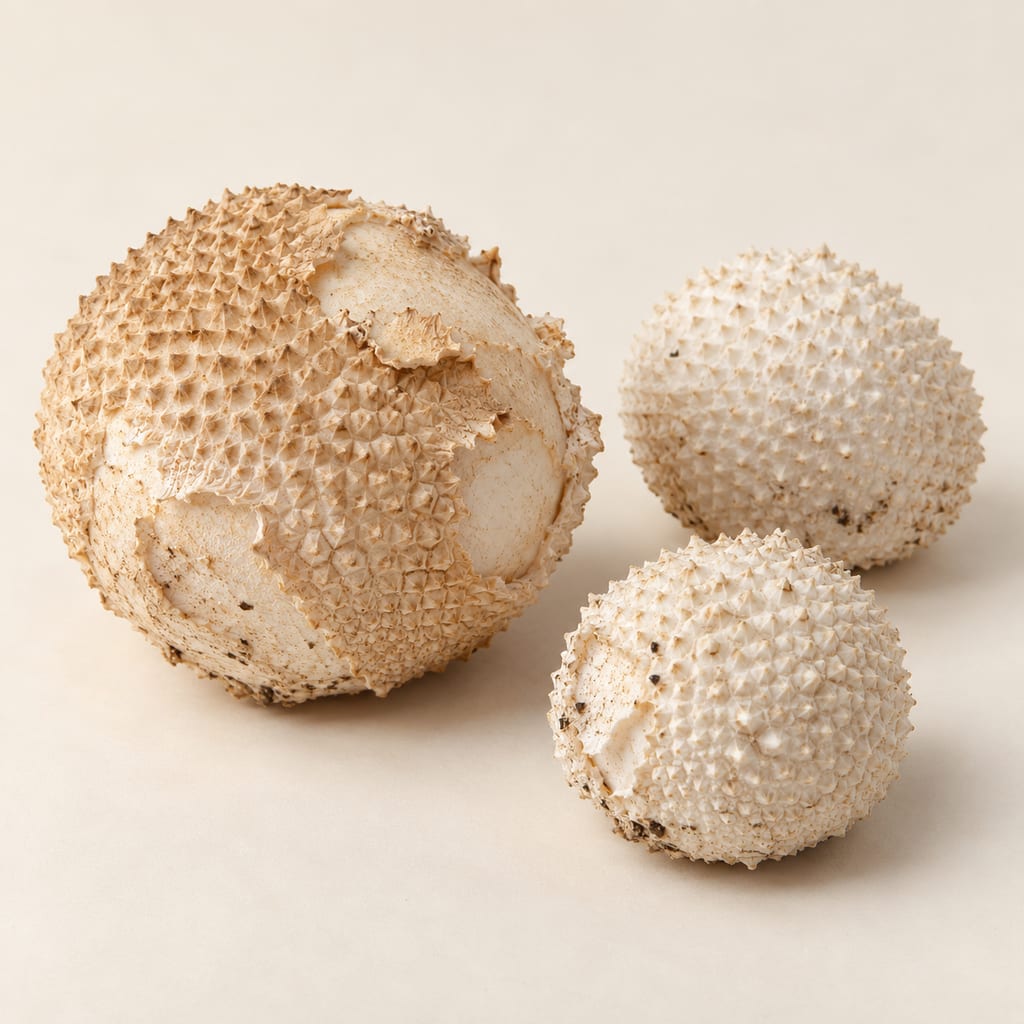
The peeling puffball, Lycoperdon marginatum, is a small saprobic puffball of sandy soil whose spiny skin sheds in patches. Its edibility is disputed in the sources, and the catalogue records a Mexican local food-use record.
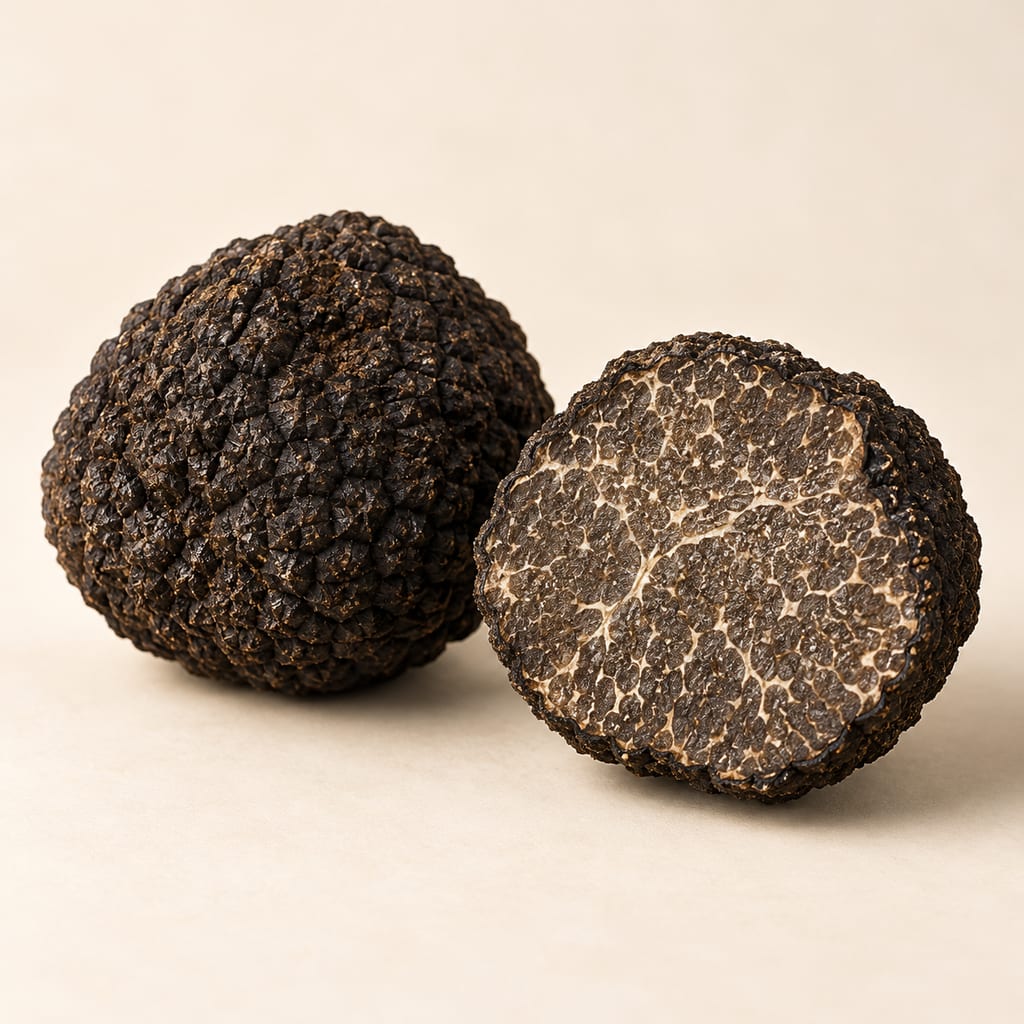
The Chinese black truffle, Tuber indicum, is a wild truffle of the Himalayas and southwest China. It is harvested in Yunnan and Sichuan, sold as a lower-priced relative of the Perigord truffle, and often sold fraudulently under its name.
Tirmania pinoyi is a desert truffle of the Terfeziaceae that grows with Helianthemum roots in arid North African and Arabian sands. It is gathered and sold locally in North Africa as a wild food.
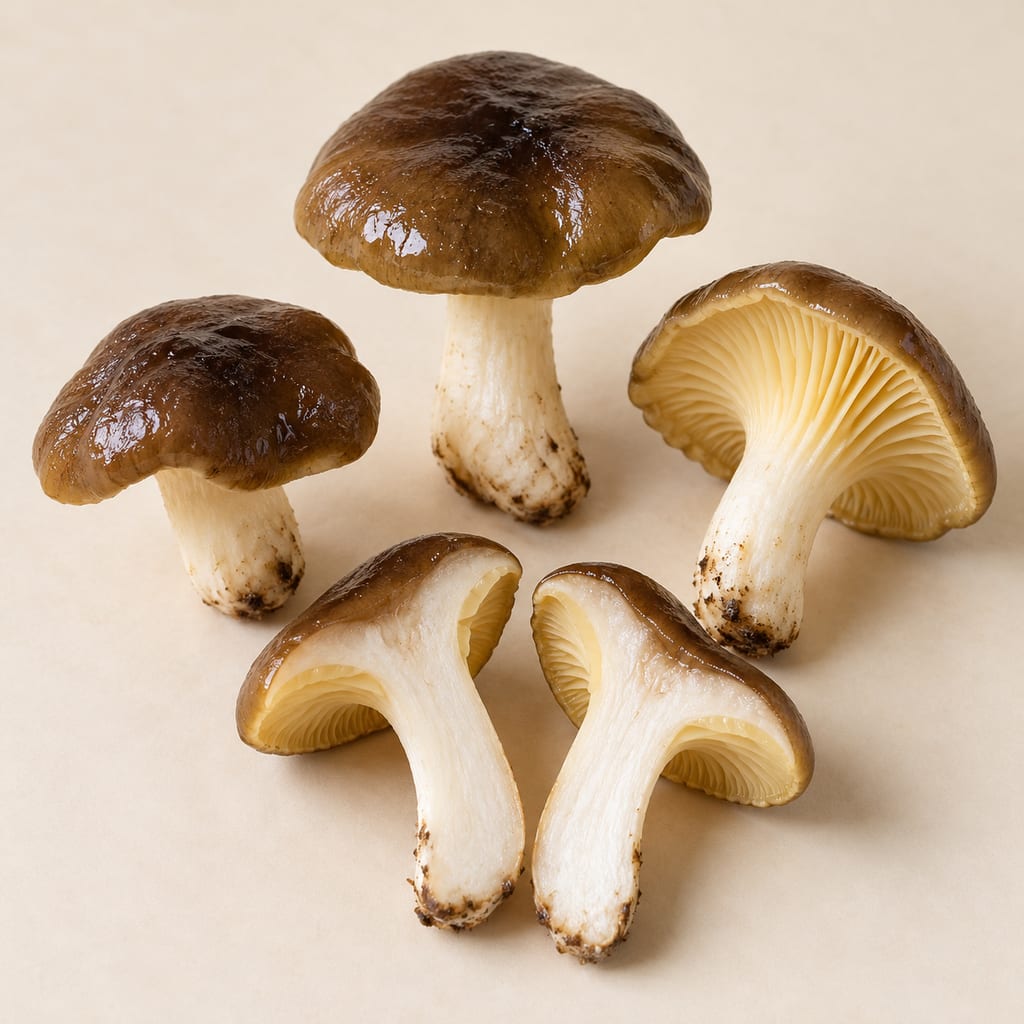
Herald of winter, Hygrophorus hypothejus, is an olive-brown, slimy waxy cap of coniferous woods that fruits in late autumn. Sources call it edible but of variable quality, and advise thorough cooking and removing the slime.
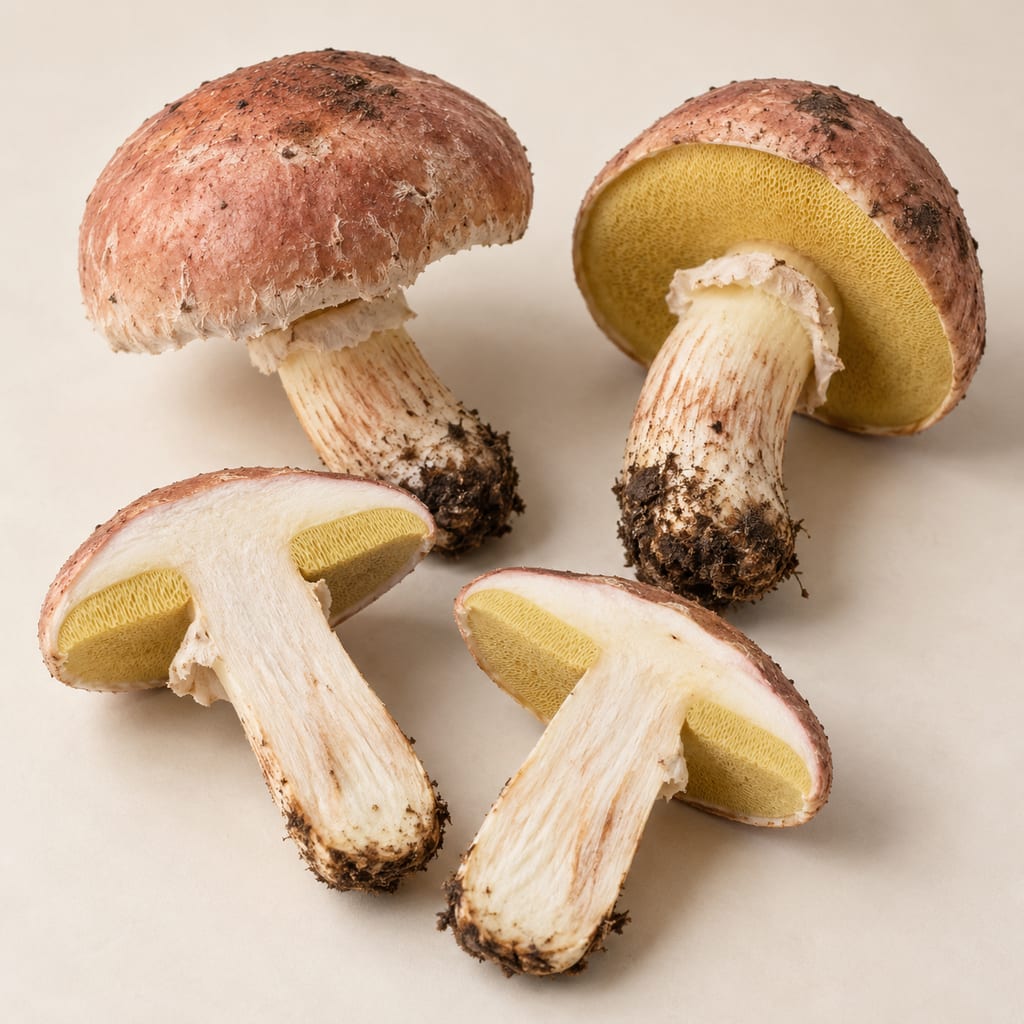
Lake's bolete, Suillus lakei, is a North American mycorrhizal bolete of Douglas-fir that has been introduced to South America, where it is gathered from plantations as a wild food.
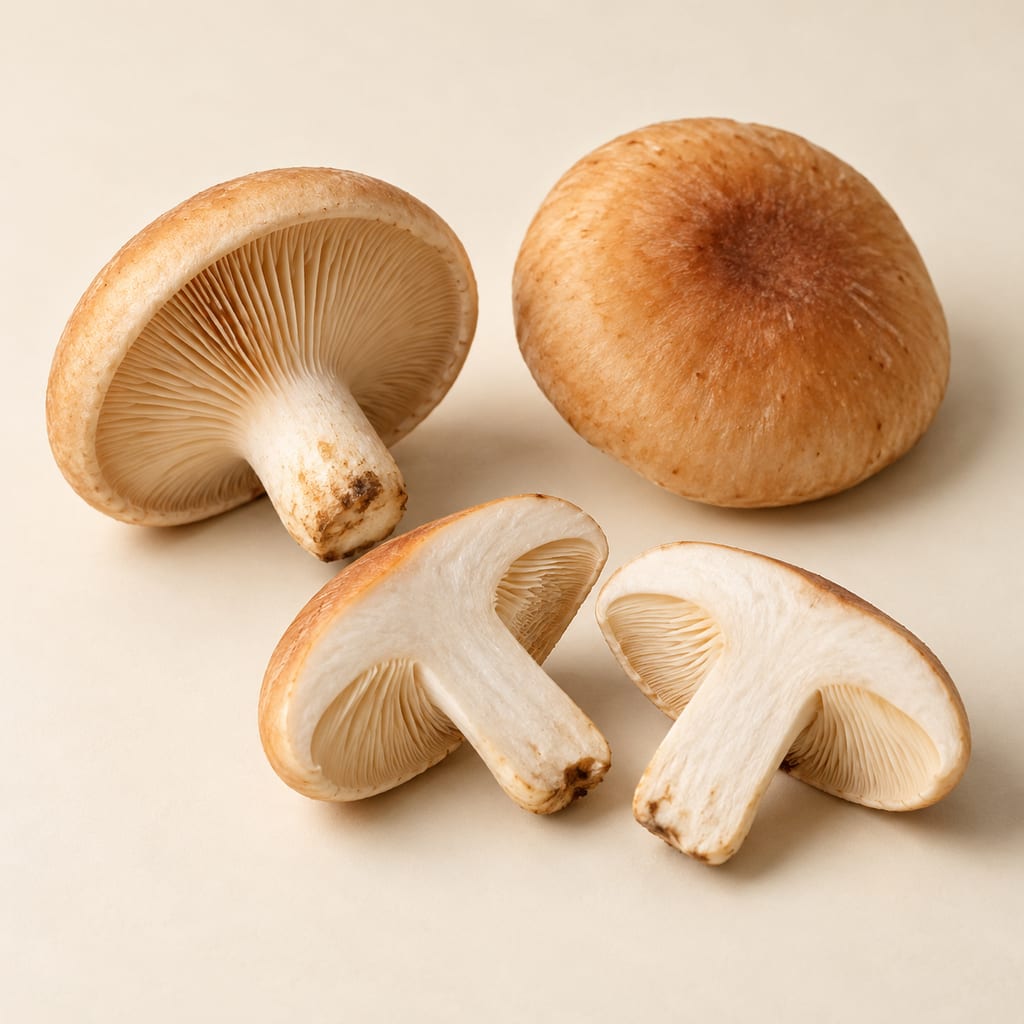
Lentinula boryana is a neotropical wood-decay mushroom of the Atlantic rainforest in Brazil, related to the shiitake. The catalogue records it as an edible wood fungus, but its supply is unknown.
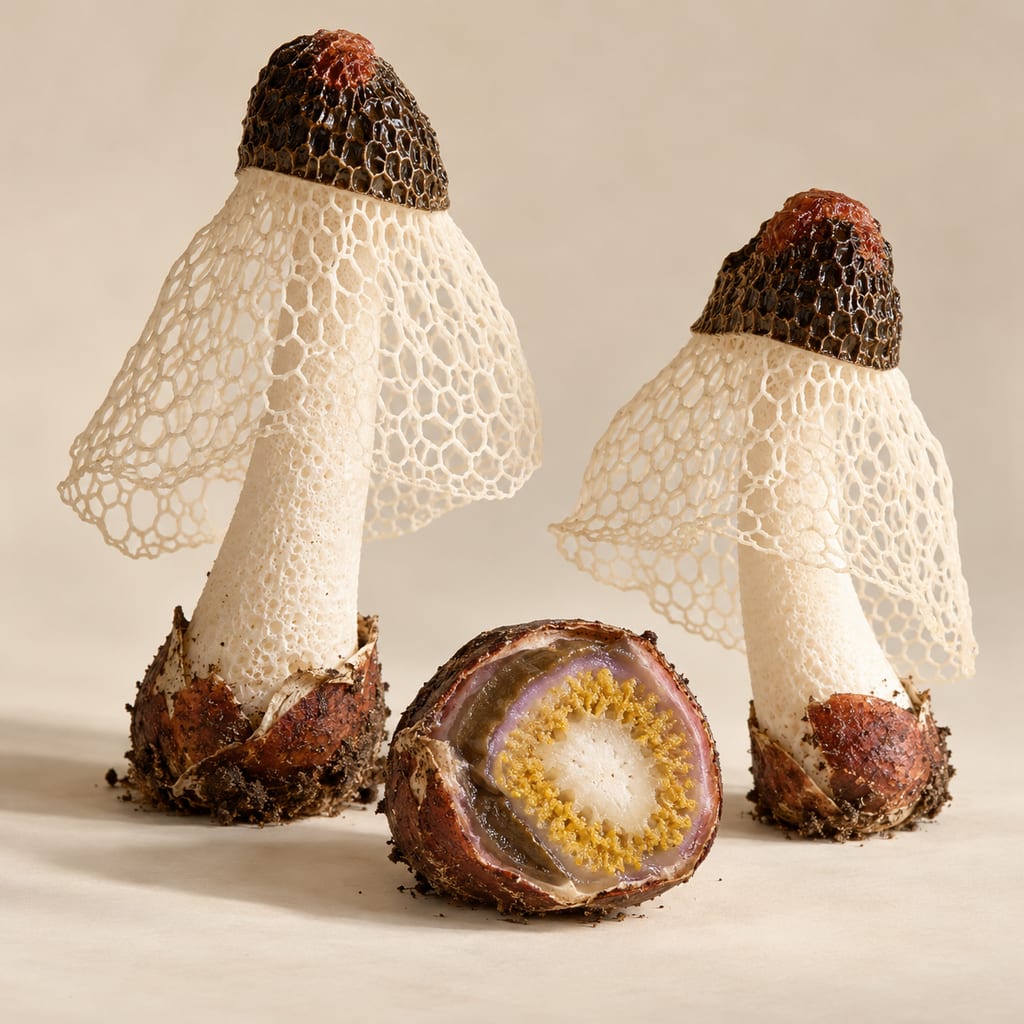
Phallus rubrovolvatus, called hongtuo zhusun in Chinese, is a bamboo fungus of temperate southwest China that is sold dried. Many market products labelled P. indusiatus have been found to be this or related species.
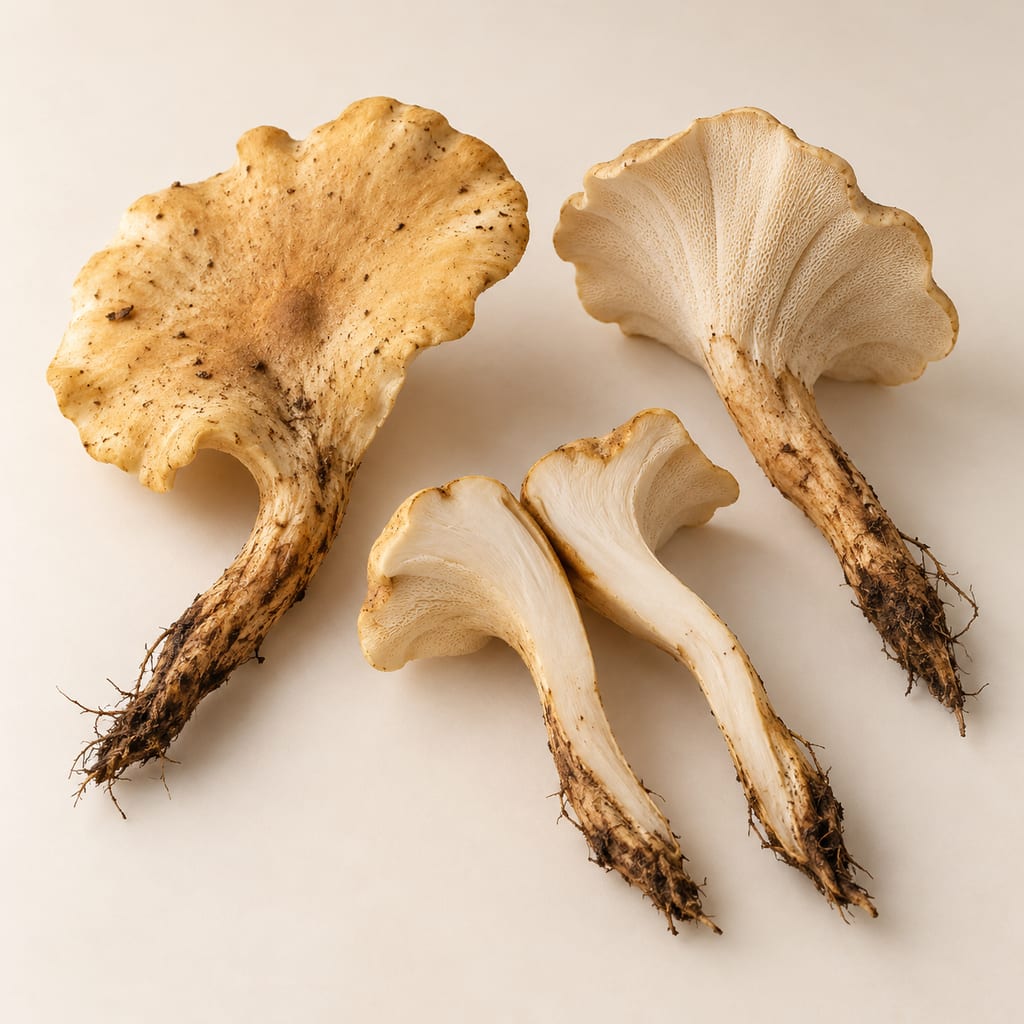
The rooting beefsteak fungus, Pseudofistulina radicata, is a wood-decaying bracket fungus with a root-like stem. A Guatemalan food record exists, but the sources found do not confirm edible use.
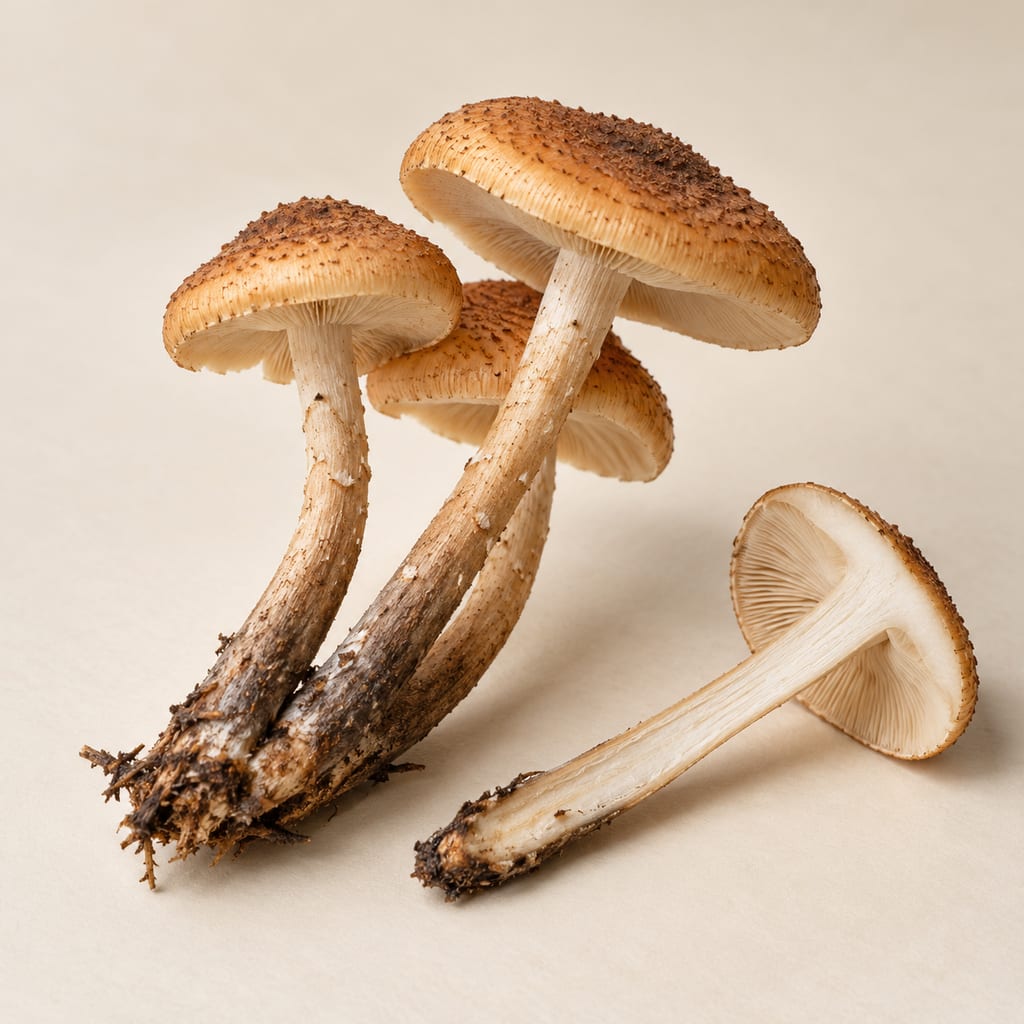
Armillaria heimii is a saprotrophic fungus of the honey-fungus genus, recorded as a wild food in Tshopo province, DR Congo. Its preparation and safety are not established in the sources.
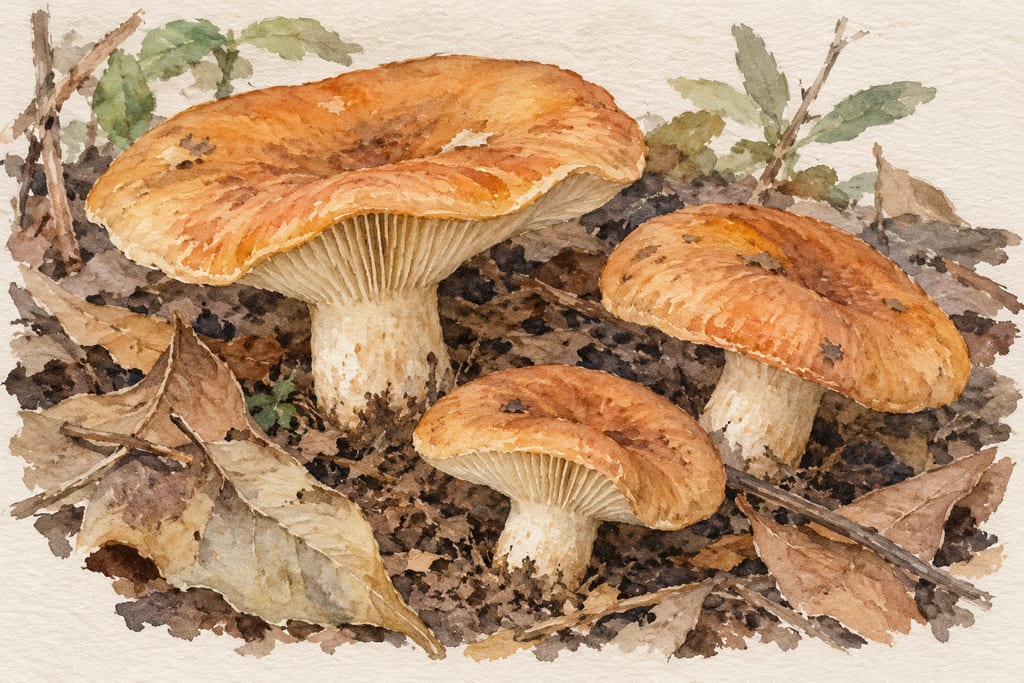
Lactifluus edulis, the African milkcap, is a wild ectomycorrhizal mushroom of the miombo woodlands of tropical Africa. The Edible Fungi of Tropical Africa project lists it as an edible species.
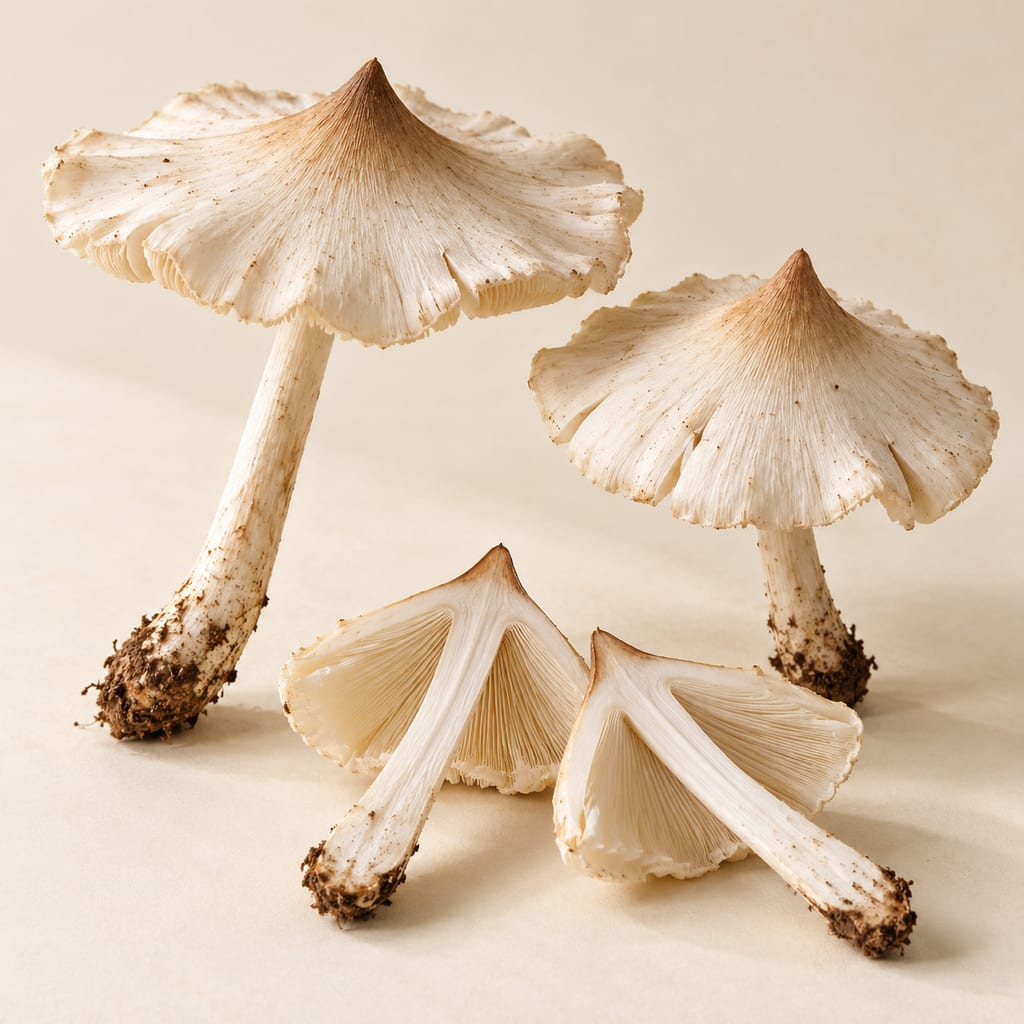
Termitomyces medius is a small termite mushroom of tropical Africa that grows with fungus-growing termites. The Edible Fungi of Tropical Africa project lists it as an edible species.
Phallus echinovolvatus is a bamboo fungus, called zhusun in China, found in bamboo forest litter south of the Yangtze River. It is sold dried, and Chinese products labelled P. indusiatus can belong to several species.
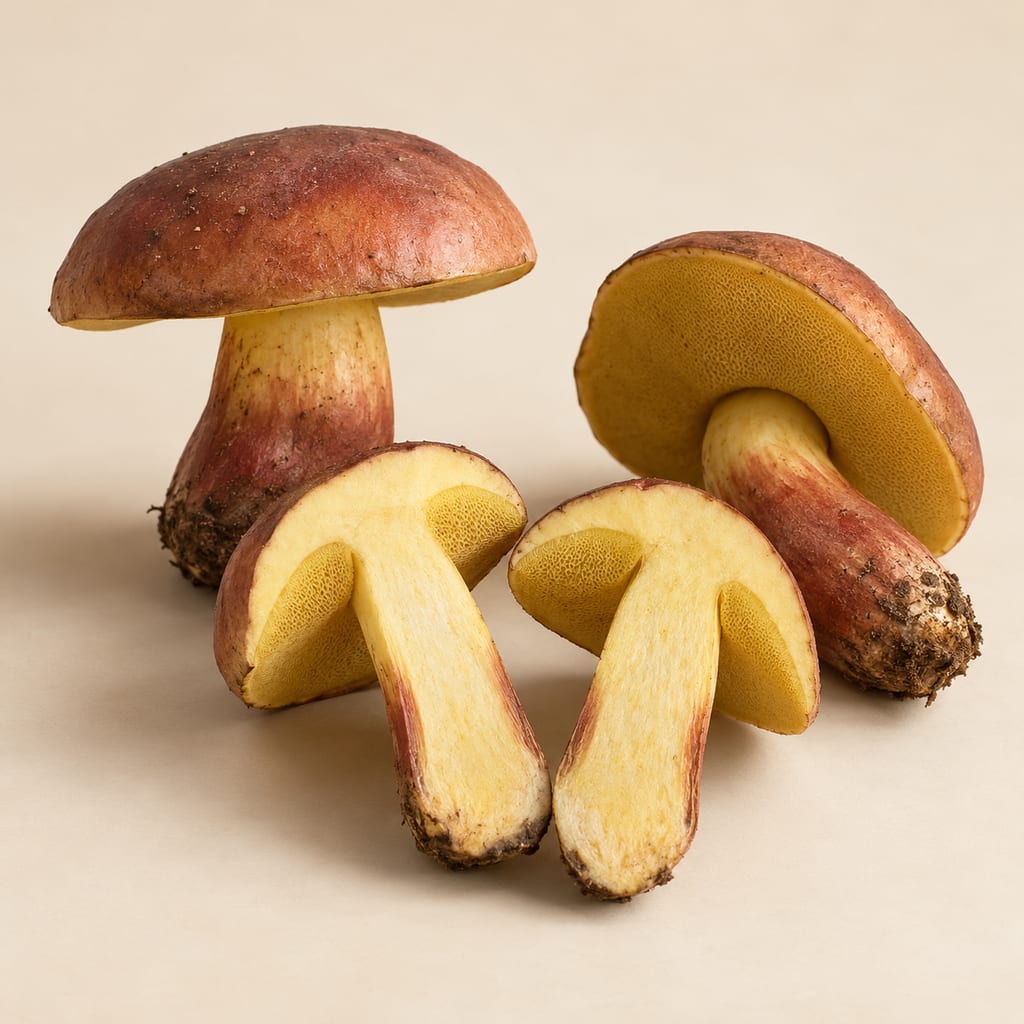
The two-colored bolete, Baorangia bicolor, is an oak-forest bolete of eastern North America. Field guides disagree on eating it because it is easily confused with poisonous boletes.
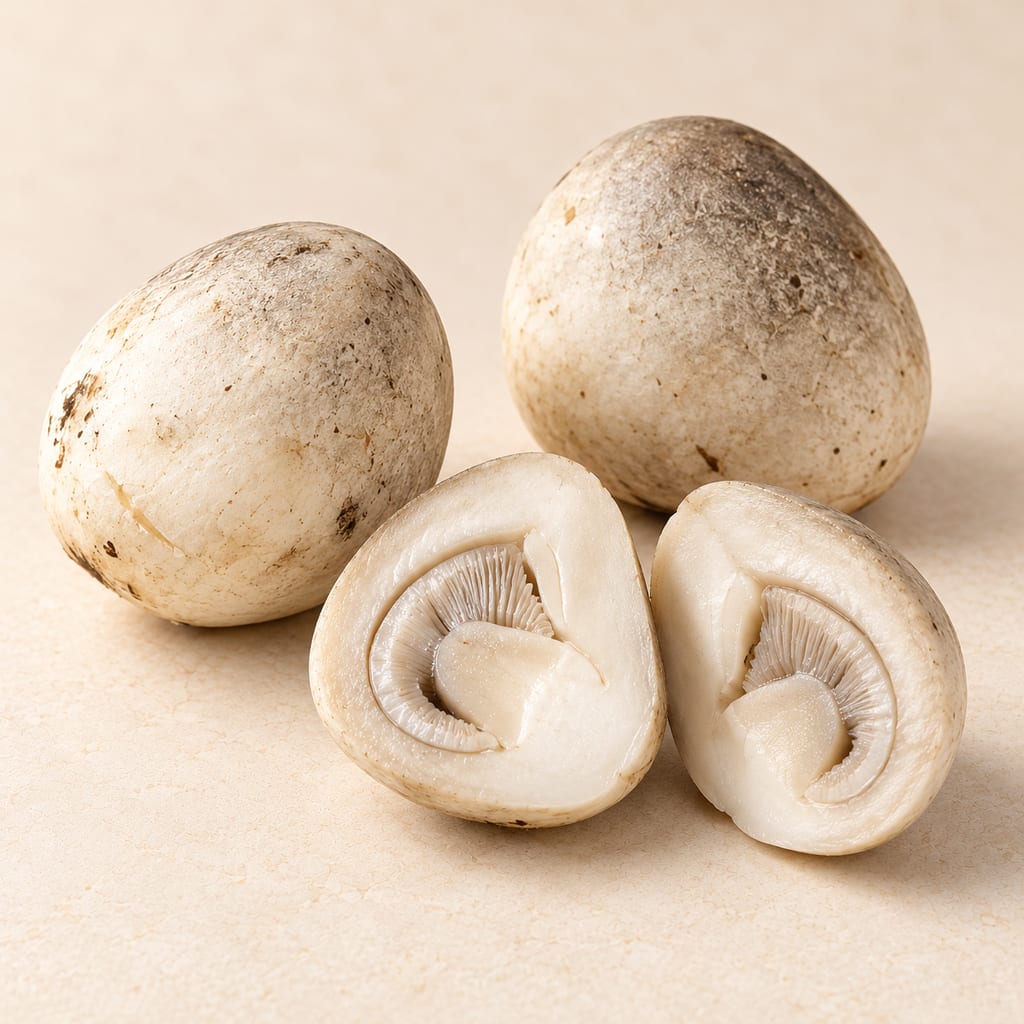
Paddy straw mushroom, Volvariella volvacea, is a fungus that grows on rice straw and other plant waste. It is cultivated across tropical Asia and sold fresh, canned and dried.
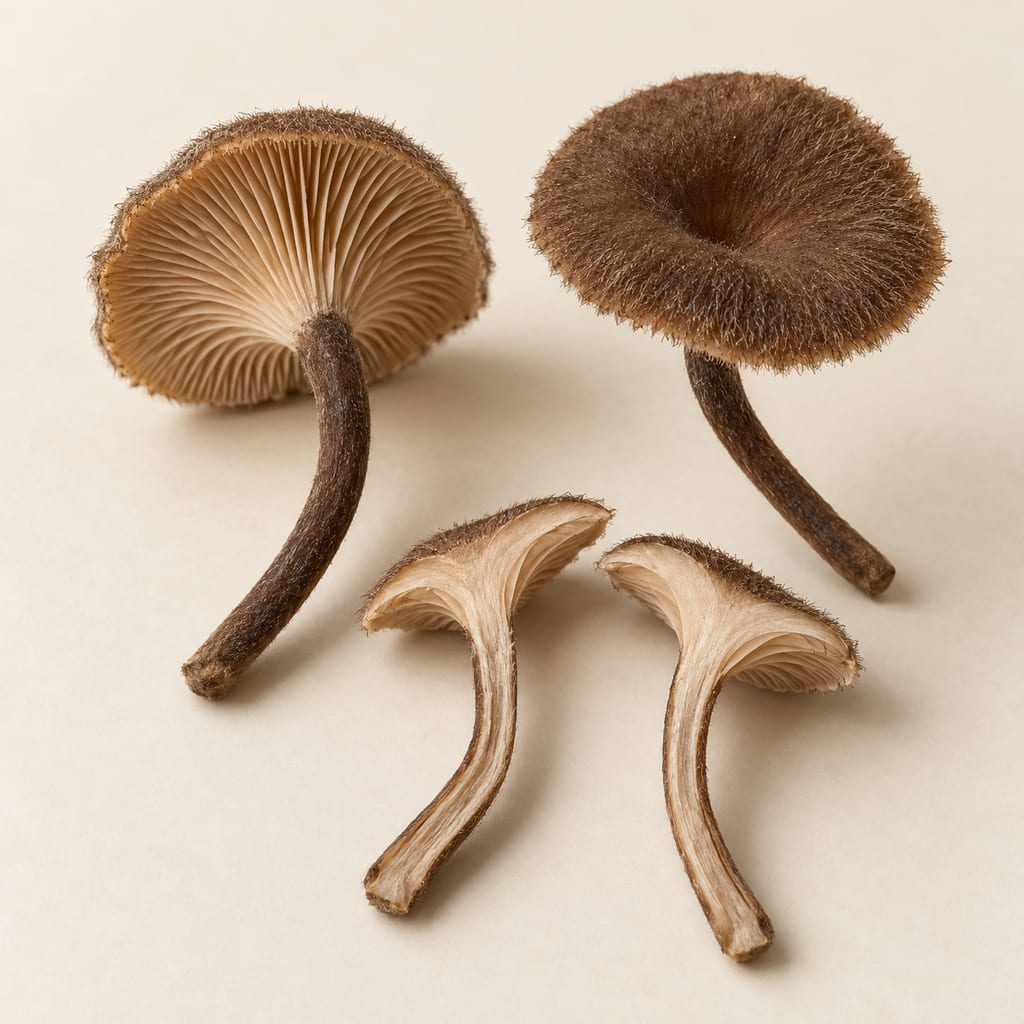
Panus neostrigosus is a wood-growing gilled fungus of Brazilian and Colombian tropical forests. A Yanomami food record exists, but sources disagree on whether it is edible, so no edibility verdict is given.
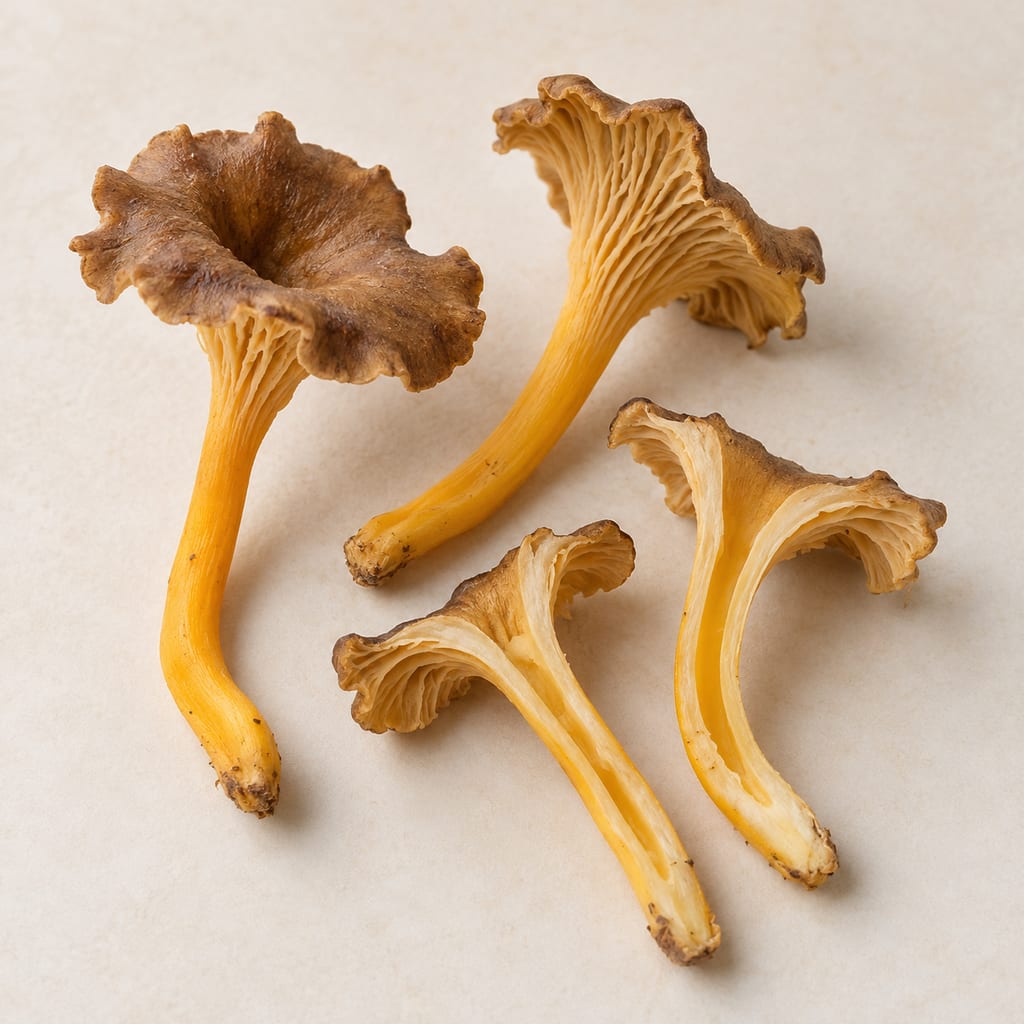
Yellowfoot, Craterellus lutescens, is a slender, aromatic, wild mycorrhizal fungus of European woods that is gathered and dried. It must not be merged with the similar Craterellus tubaeformis.
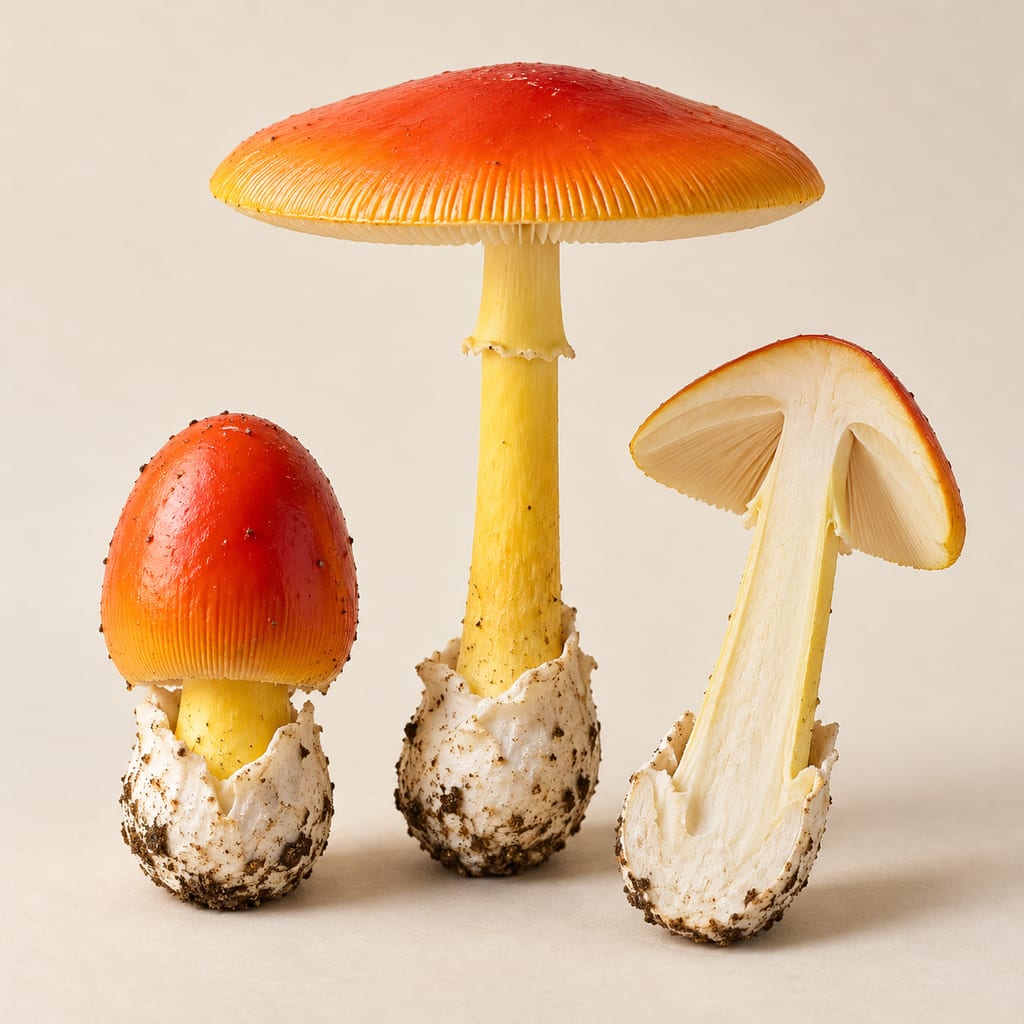
Jackson's slender Caesar, Amanita jacksonii, is a wild ectomycorrhizal fungus of Central American and Mexican forests, sold in some local markets. Amanita includes deadly species, so the name gives no basis for identification.
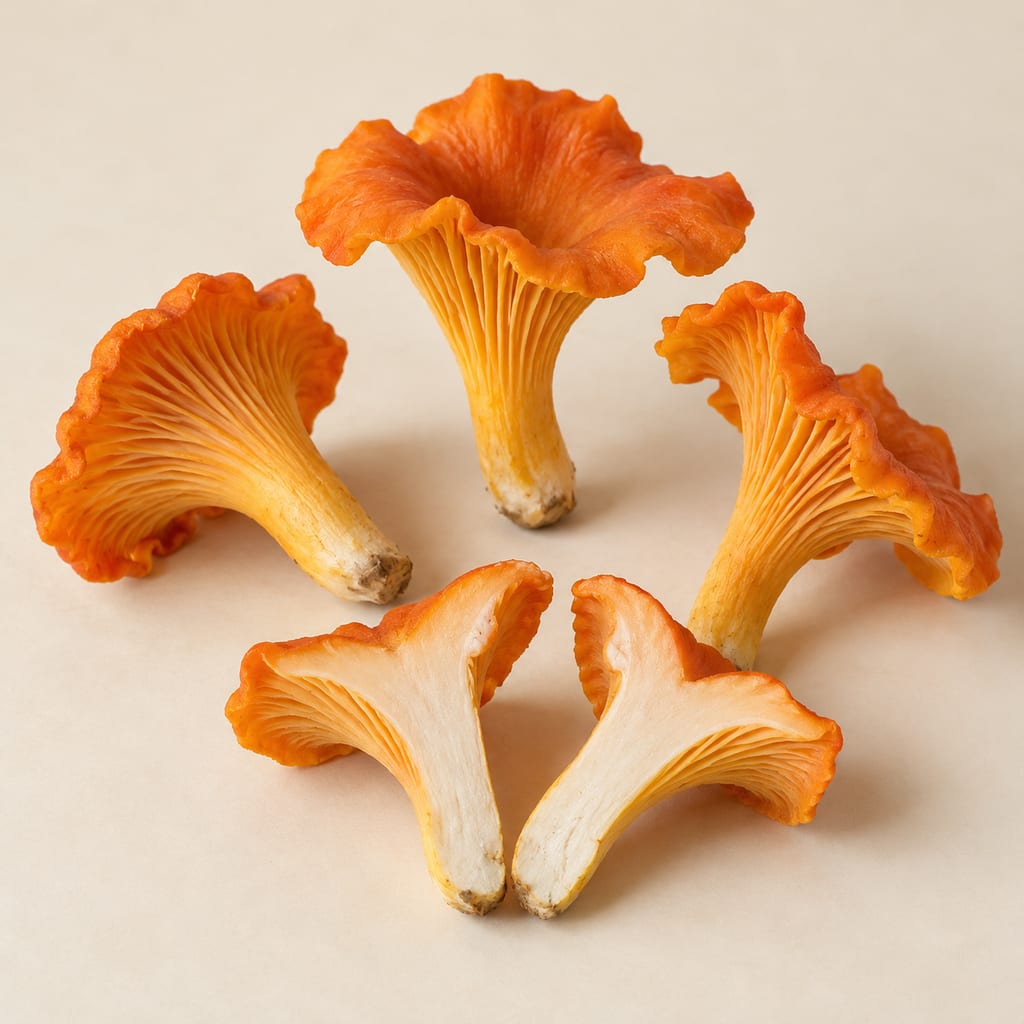
Tropical chanterelle, Cantharellus guyanensis, is a ground-growing ectomycorrhizal chanterelle of Brazilian forests. A 2026 study reports it as a food resource in the Cerrado, but no standardized food-safety assessment exists for it.
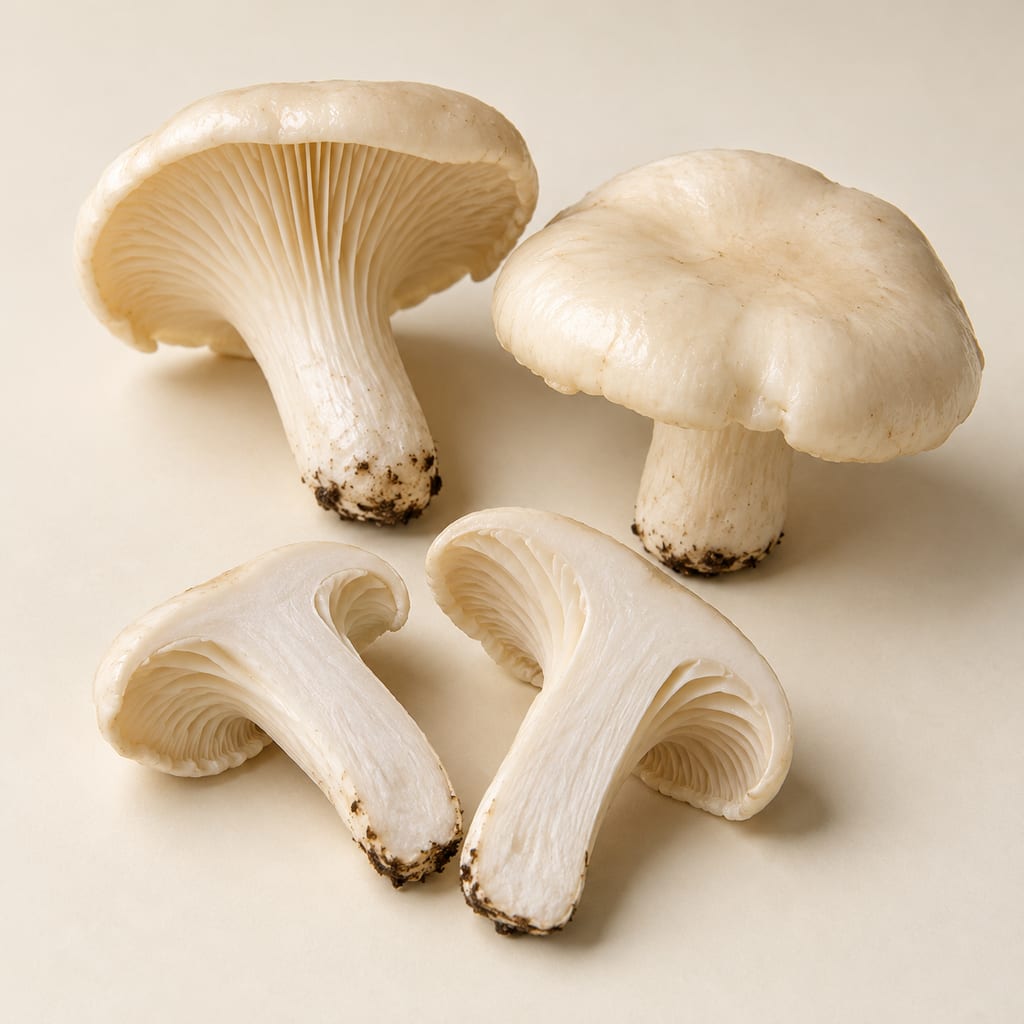
Watery woodwax, the name in the catalogue for Hygrophorus penarius, is a wild mycorrhizal waxcap of European broadleaf woods. Its name has been split since 2007, so older food records may refer to more than one species.
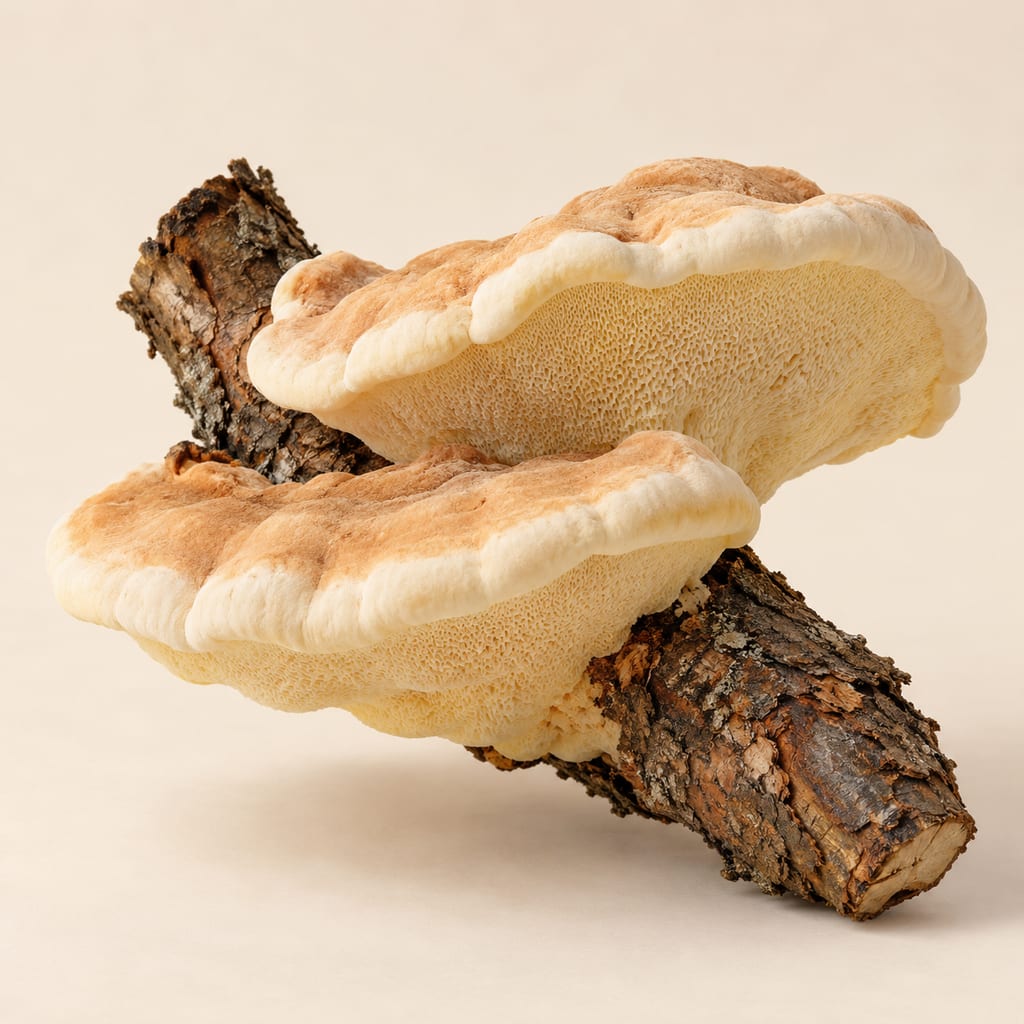
Laetiporus portentosus is a wood-decaying bracket fungus recorded in a historical Tasmanian account as a possible emergency food. The identification in that account is probable, not confirmed, so the species is not a confirmed food.
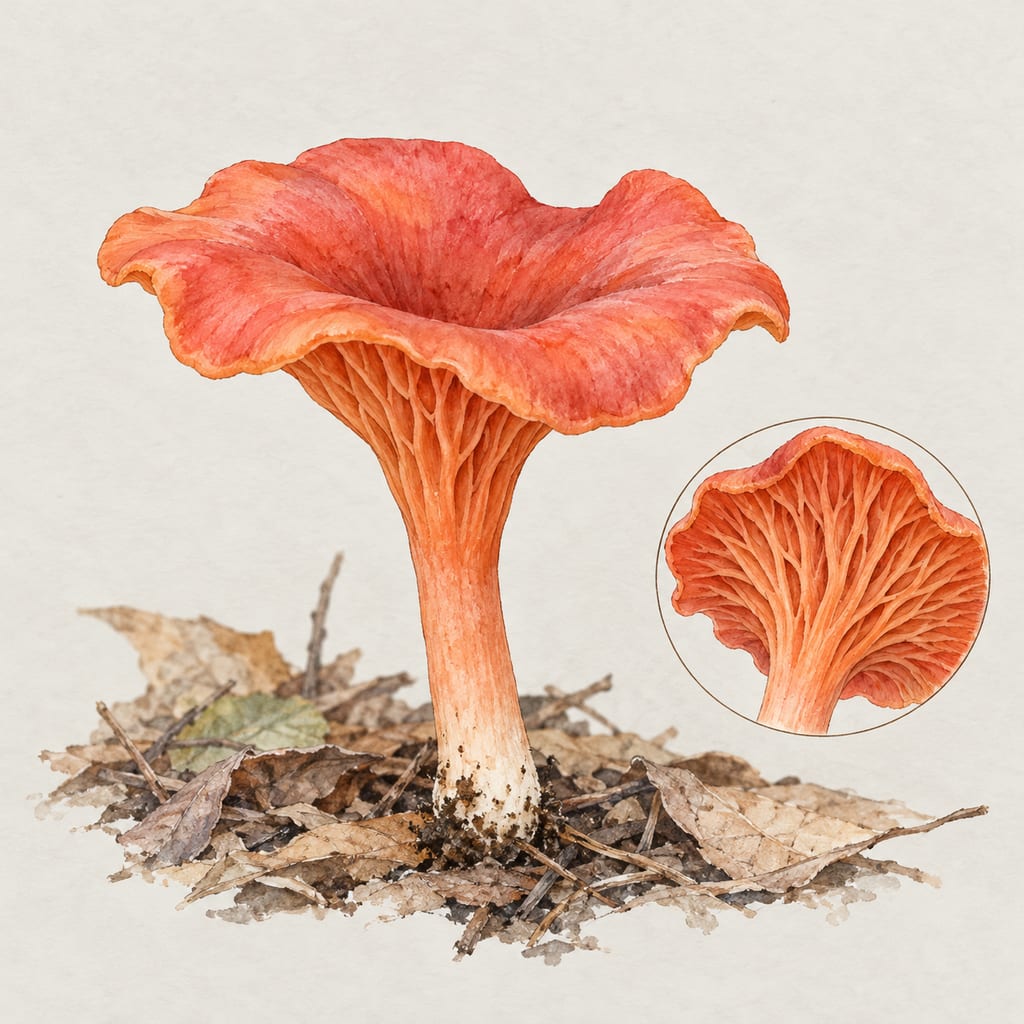
Wild ectomycorrhizal chanterelle of miombo woodland. An IUCN assessment reports consumption in Zimbabwe; sources reviewed here give no preparation method or food-safety validation.
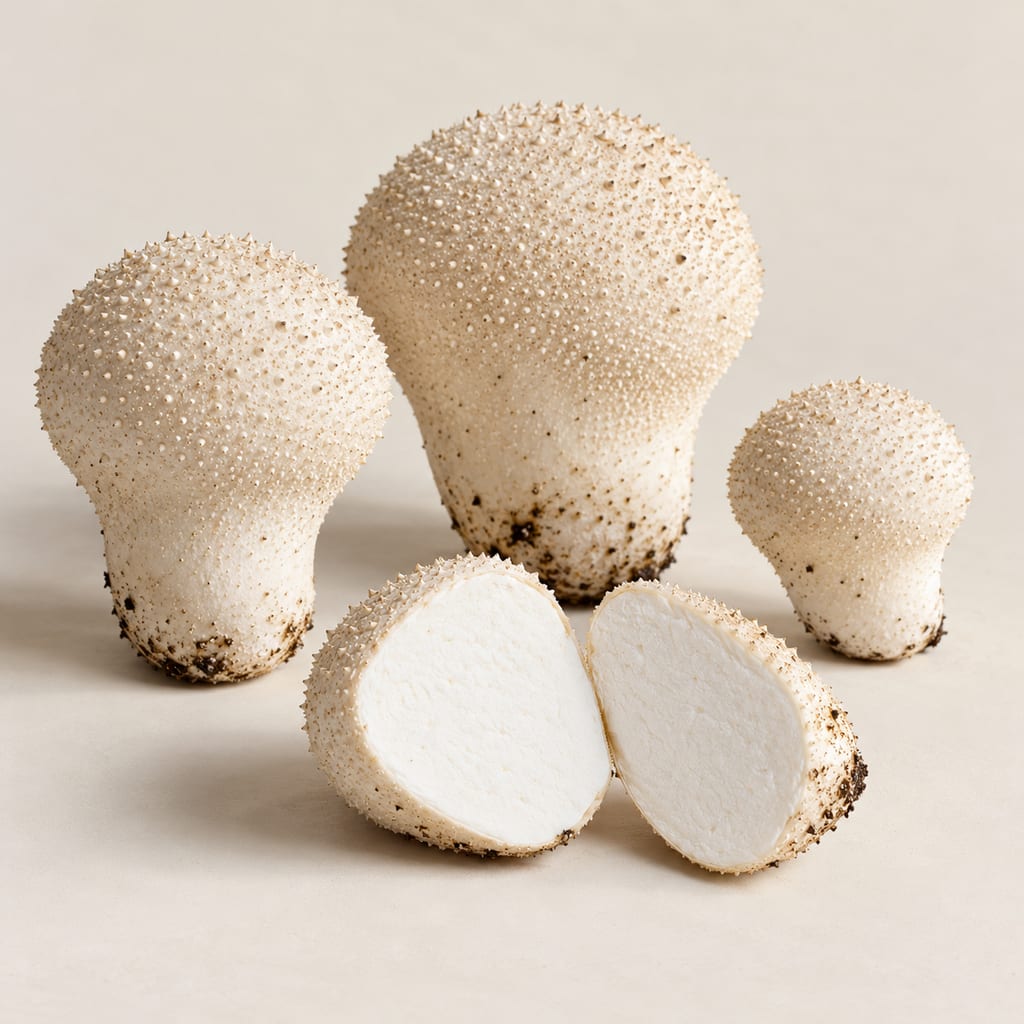
The common puffball, Lycoperdon perlatum, is a wild, ground-growing puffball. It is cooked as food in some traditions only while the flesh is still white, and its lookalikes must be excluded before any use.
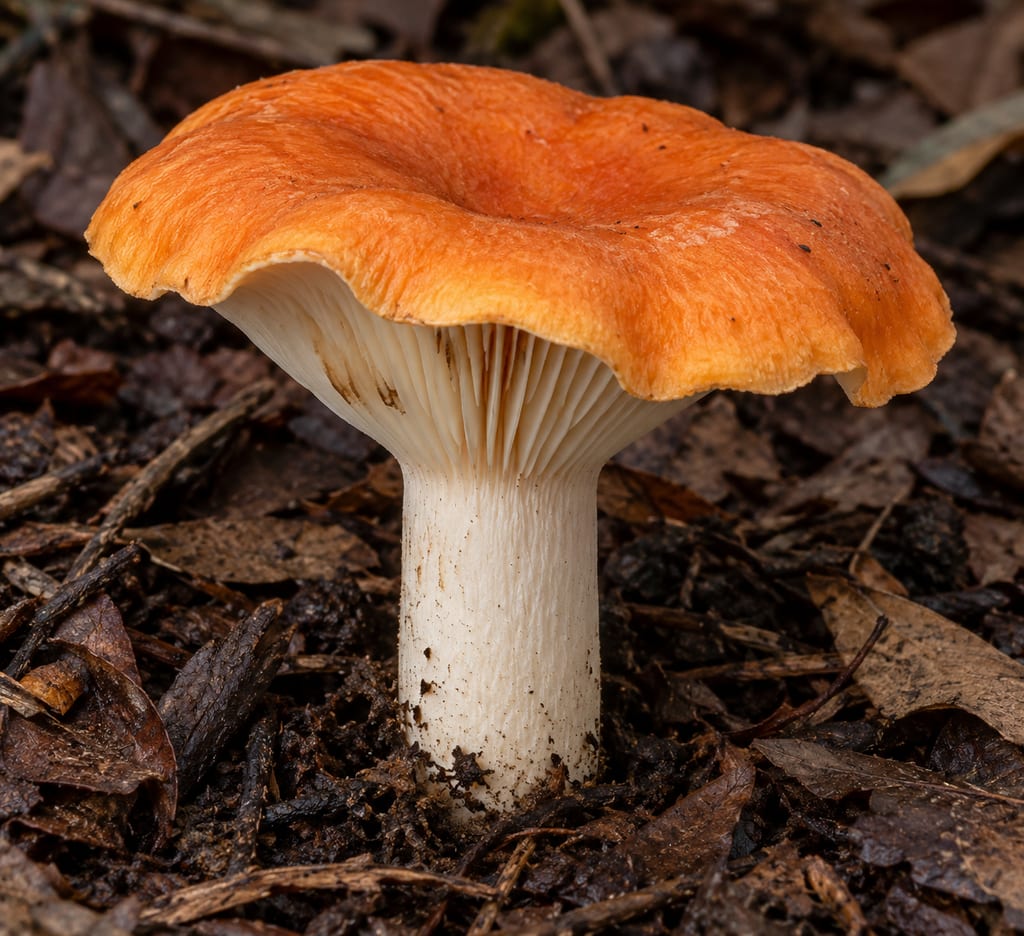
Lactifluus tanzanicus is a Tanzanian miombo milkcap. A 2020 Rungwa Corridor study records local food use and sales; this regional report does not establish identification or safety elsewhere.
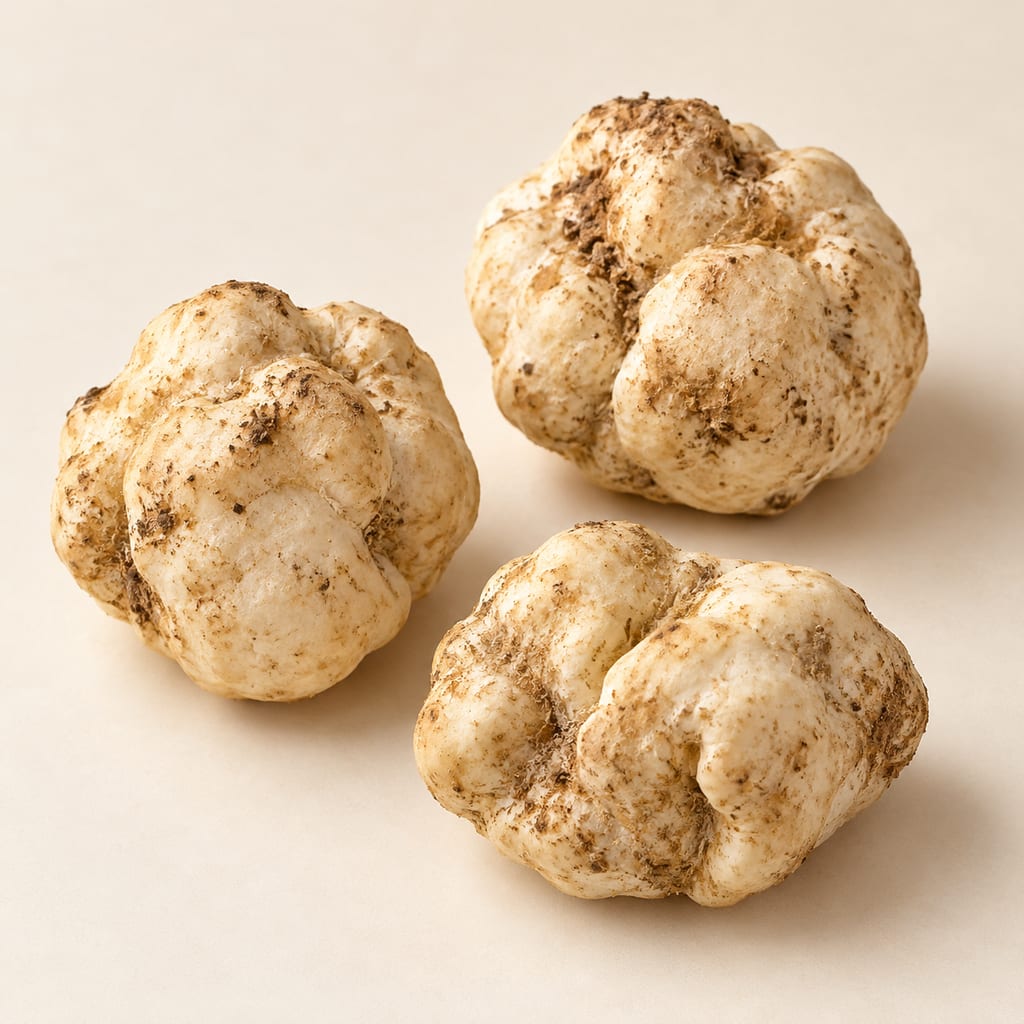
The white desert truffle, Tirmania nivea, or zubaidi, is an underground fungus of North African and Arabian deserts, gathered after autumn rains and sold in markets from January to April.
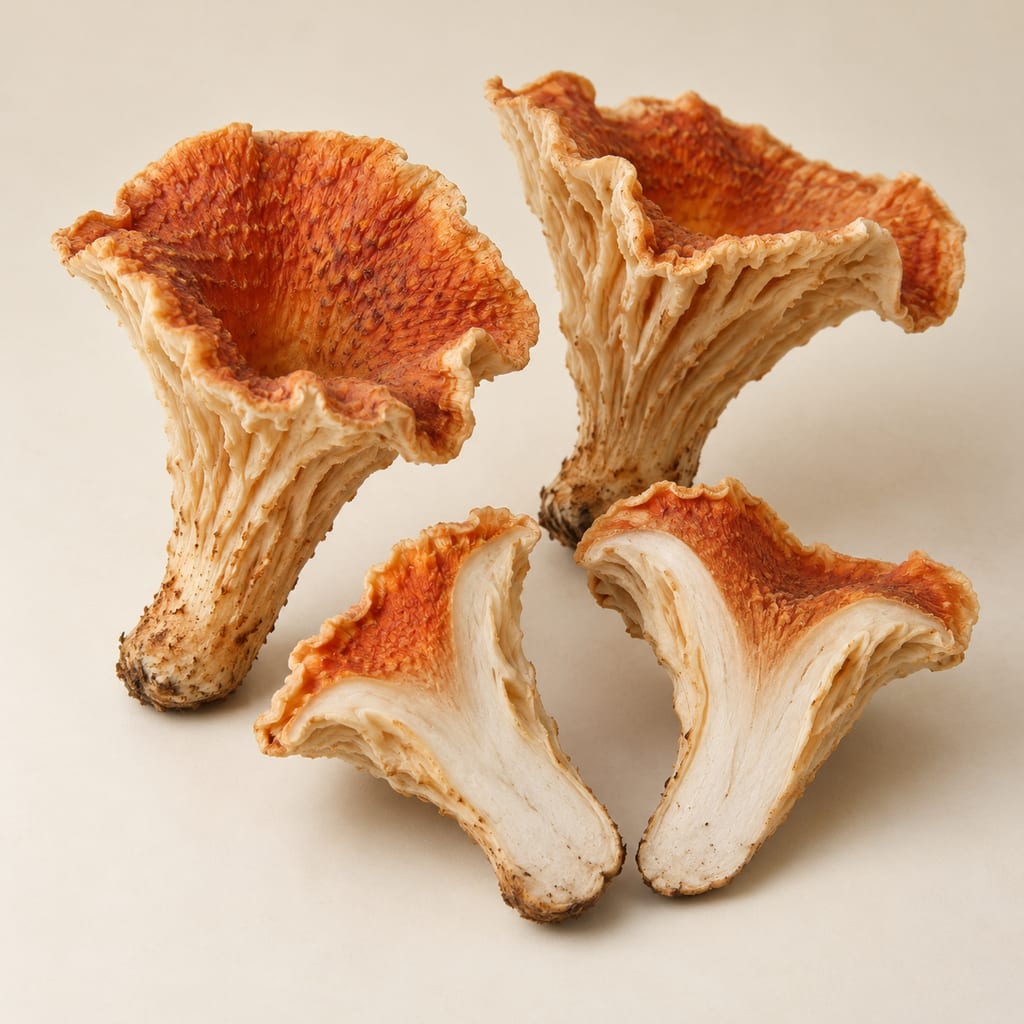
A vase-shaped ectomycorrhizal fungus sold as a scaly chanterelle in Pu'er markets, Yunnan. Its edibility is contested in the sources, and the name may cover populations that differ in toxicity.
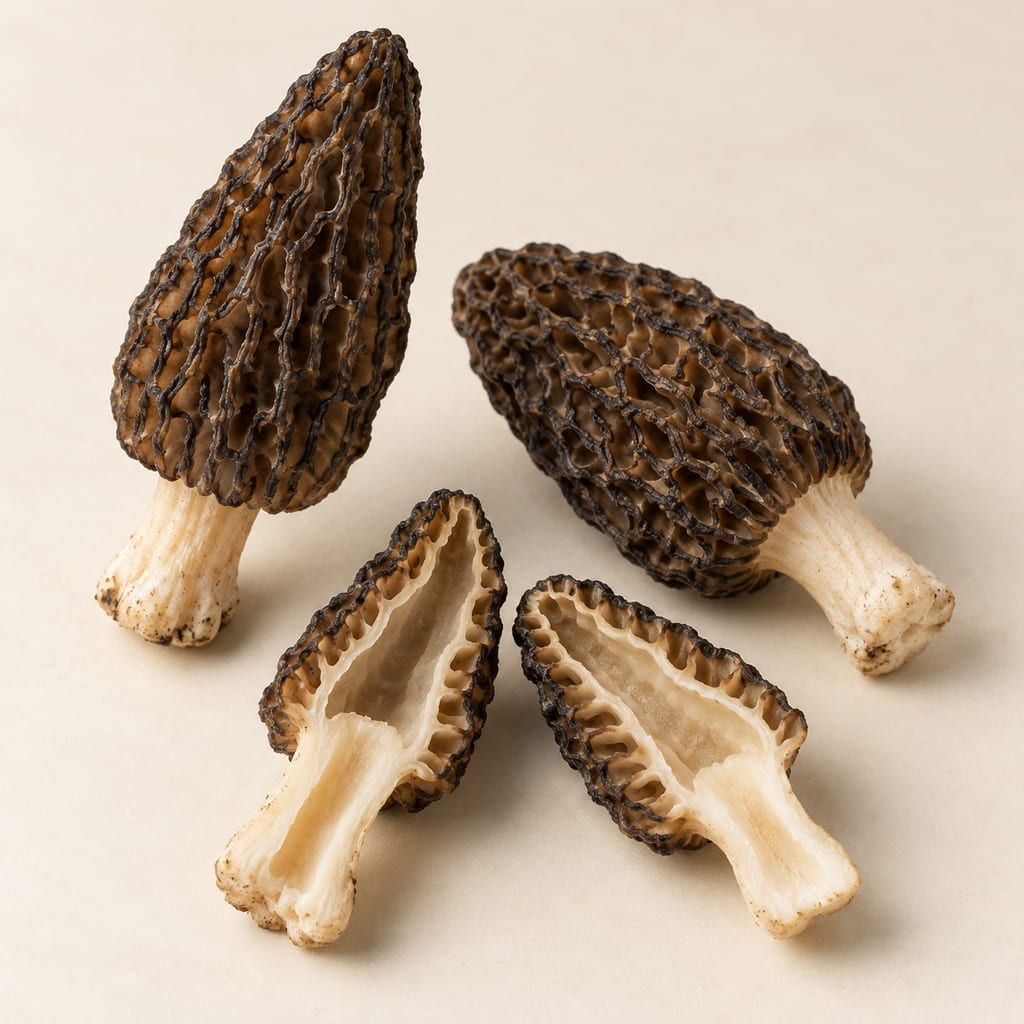
The eastern black morel, Morchella angusticeps, is a black morel of eastern North American hardwood forests, described in 1879, with no edibility verdict in the sources reviewed.
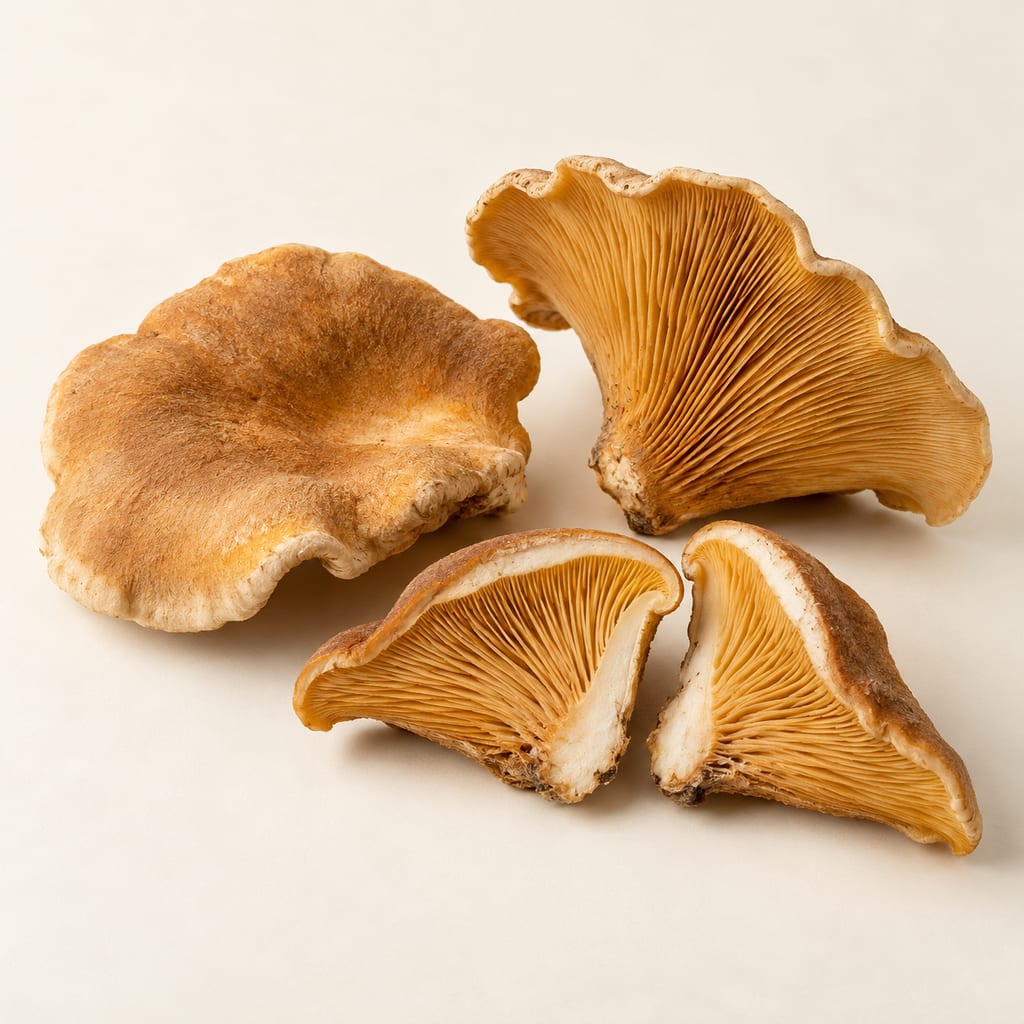
A gilled wood-decay fungus of conifer wood, known as oyster rollrim. One Congolese interview record shows local eating, but other regional references call it inedible, so the food status is in conflict.