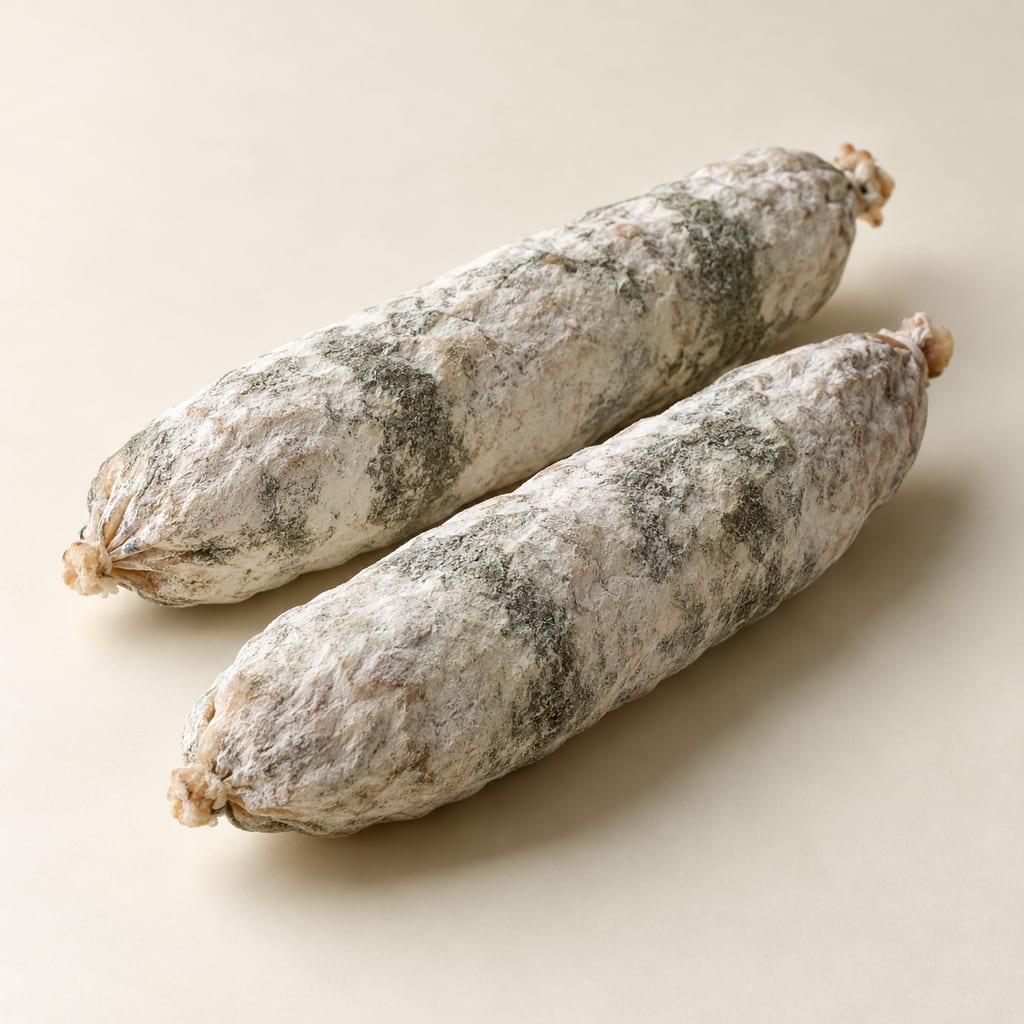
Penicillium nalgiovense
Penicillium nalgiovense is a mould sold as a selected starter culture for ripened foods, most often dry sausage, and tested in laboratory and cheese starter studies.
 FermenteaWhere food goes to change
1086 articles on substrates, cultures and additives.
Penicillium nalgiovense is a mould sold as a selected starter culture for ripened foods, most often dry sausage, and tested in laboratory and cheese starter studies.
The ginger beer plant is a retained, grain-like mixed culture of yeasts and bacteria in a polysaccharide gel, used to ferment a ginger-flavoured sugary drink; it is not a ginger bug.
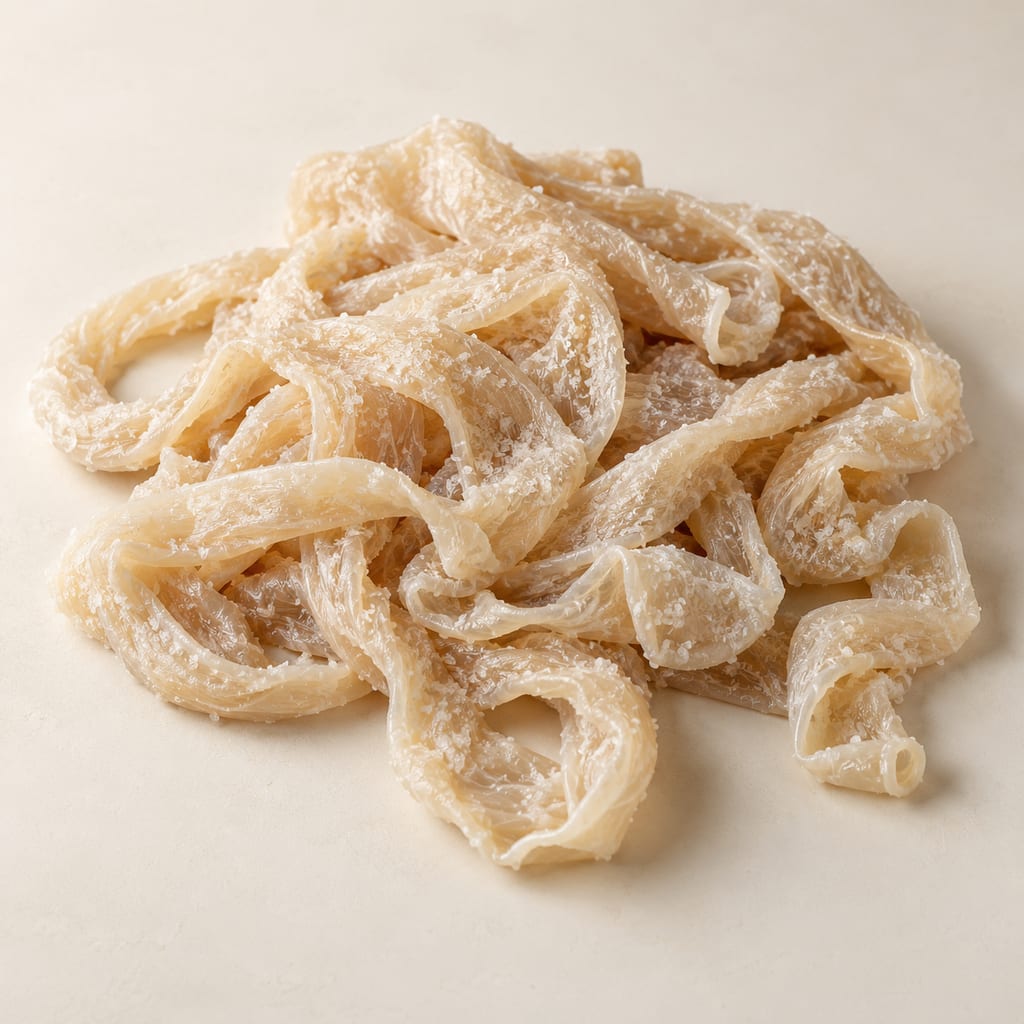
Natural casings are cleaned animal guts, stomachs, bladders and skins used to hold sausage and pudding fillings; the organ, animal and diameter decide the food's shape and drying.
Meat starter cultures are blends of selected lactic acid bacteria, often with staphylococci, added to fermented sausage to drive acidification in a controlled way. Blends differ by product.
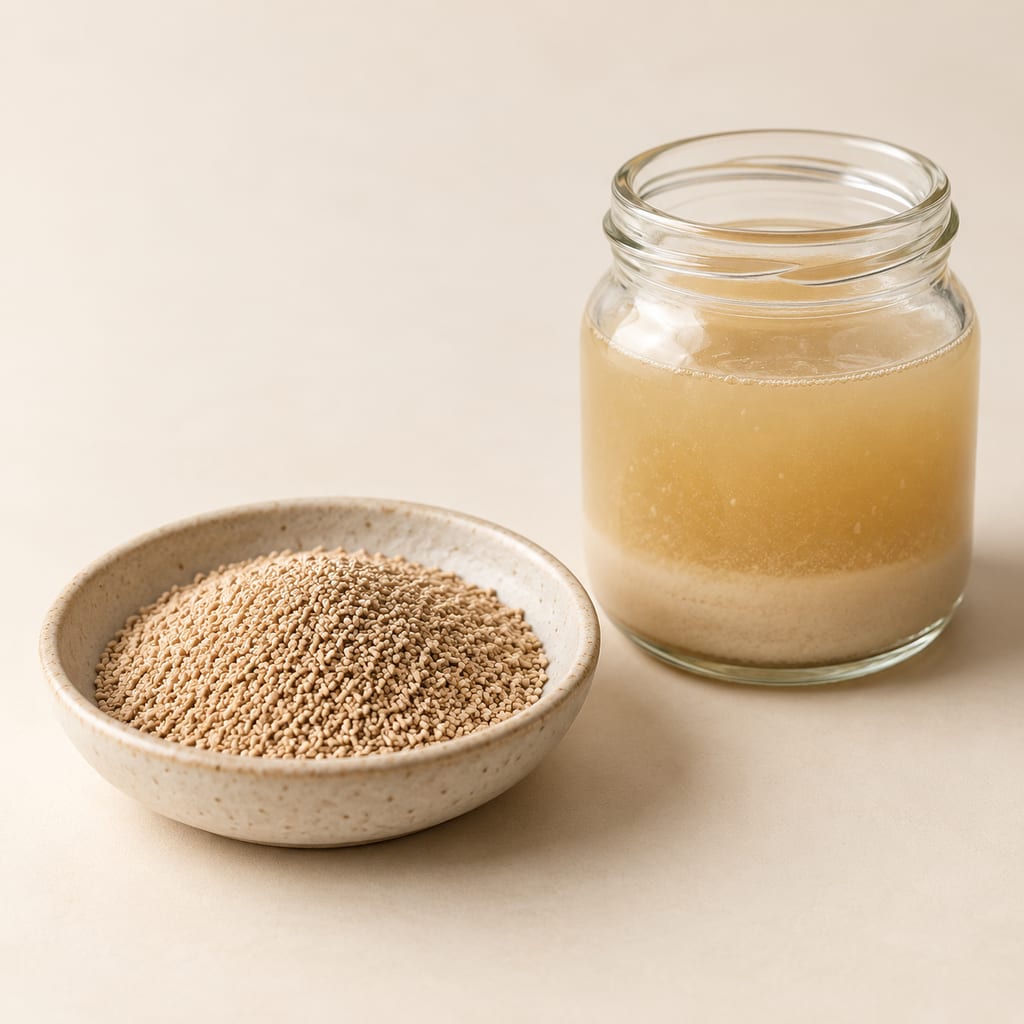
Ale yeast is a broad group of Saccharomyces cerevisiae brewing cultures, not one strain. Style labels such as English, American, Belgian or wheat beer do not identify an interchangeable culture.

Fish-sauce starters are salt-tolerant bacteria, chiefly Tetragenococcus halophilus strains, tested for flavour and for holding down histamine in fish-sauce mash. Results differ strain by strain.
Selected mould cultures, often Penicillium, are applied to the casing of some dry-fermented sausages to grow a white surface cover. A white surface alone does not identify the organism or show safety.
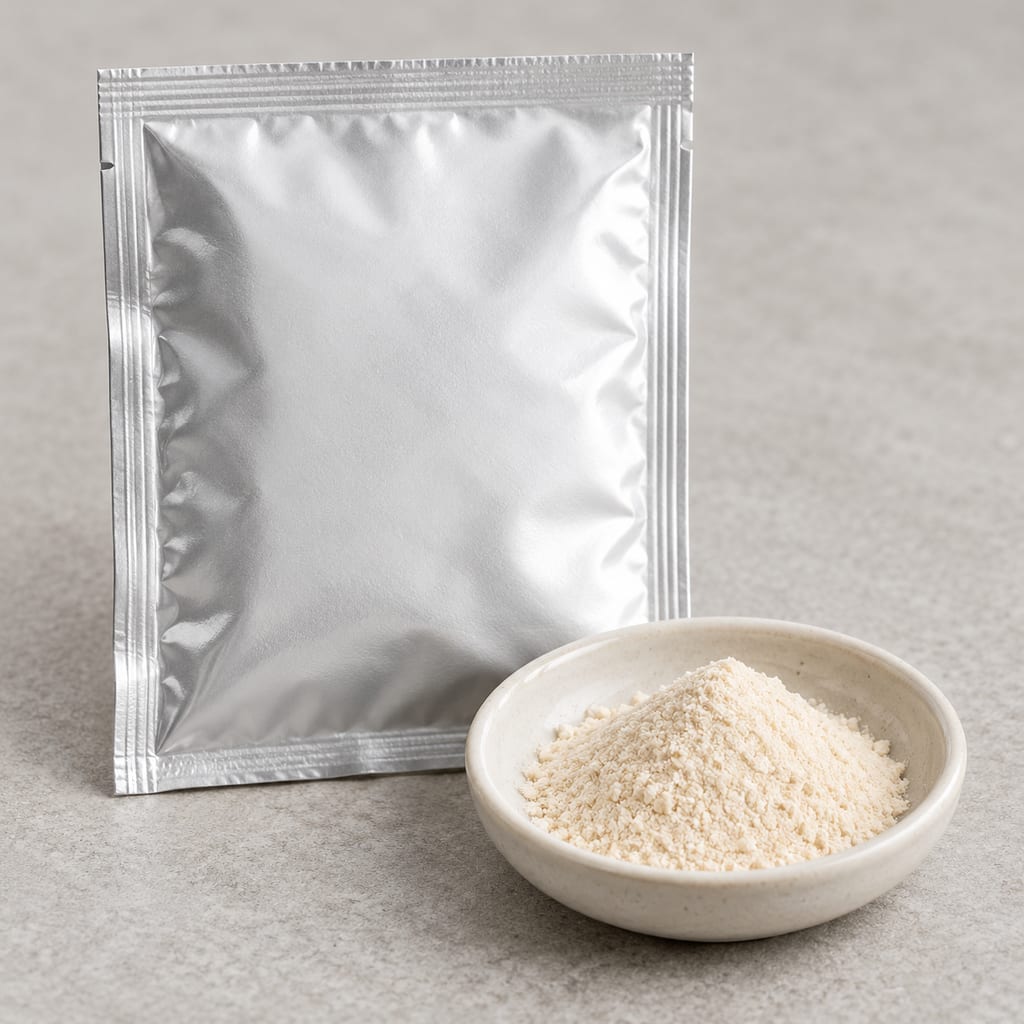
Selected coagulase-negative staphylococci, mainly Staphylococcus carnosus and S. xylosus, are added to fermented sausage for colour and flavour, usually inside a blend with acidifying bacteria.
Xiaoqu (小曲) is a family of small Chinese grain starters for rice wines and baijiu: mixed moulds, yeasts and bacteria that convert starch and ferment it, not one strain or formula.
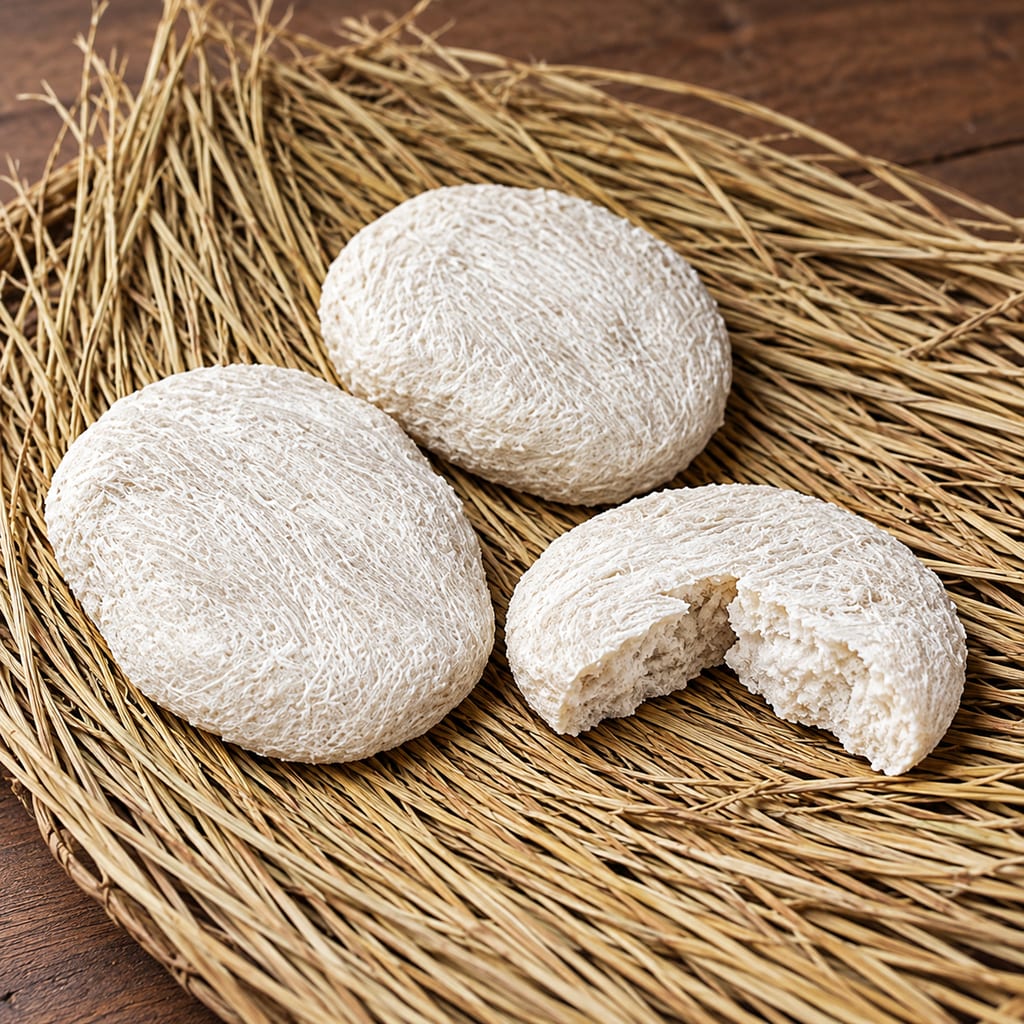
Bubod is the Philippine rice starter behind Cordillera tapuy and tapey: dry mixed-culture cakes of molds, yeasts and bacteria, plus a standardized granular version developed by DOST.
Ragi tapé, also ragi tapai, is a dried mixed starter cake from Indonesia and Malay traditions, used to ferment sweet rice, cassava and related starchy foods.
Kudeme is described in research as a traditional Ghanaian inoculant for fermenting cassava dough into Agbelima. Its exact microbial composition and a single canonical preparation are not established by the sources reviewed.
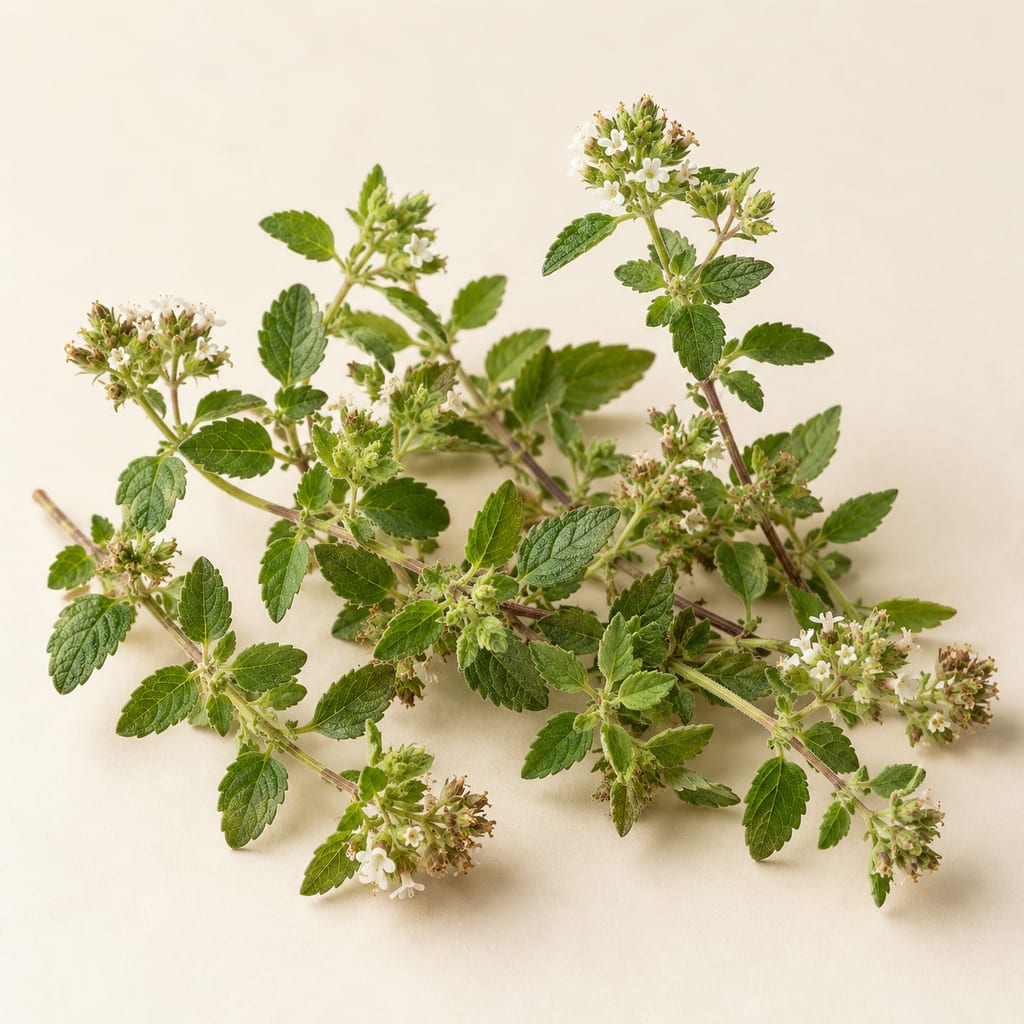
Oreganito, Lippia micromera, is a small aromatic shrub whose leaves the Flora de Cuba records as seasoning in place of oregano; no recipe, amount or method is documented.
A rye sourdough starter is a refreshed flour-and-water culture used to ferment rye dough. Its microbial community shifts with the flour, feeding routine and bakery environment.
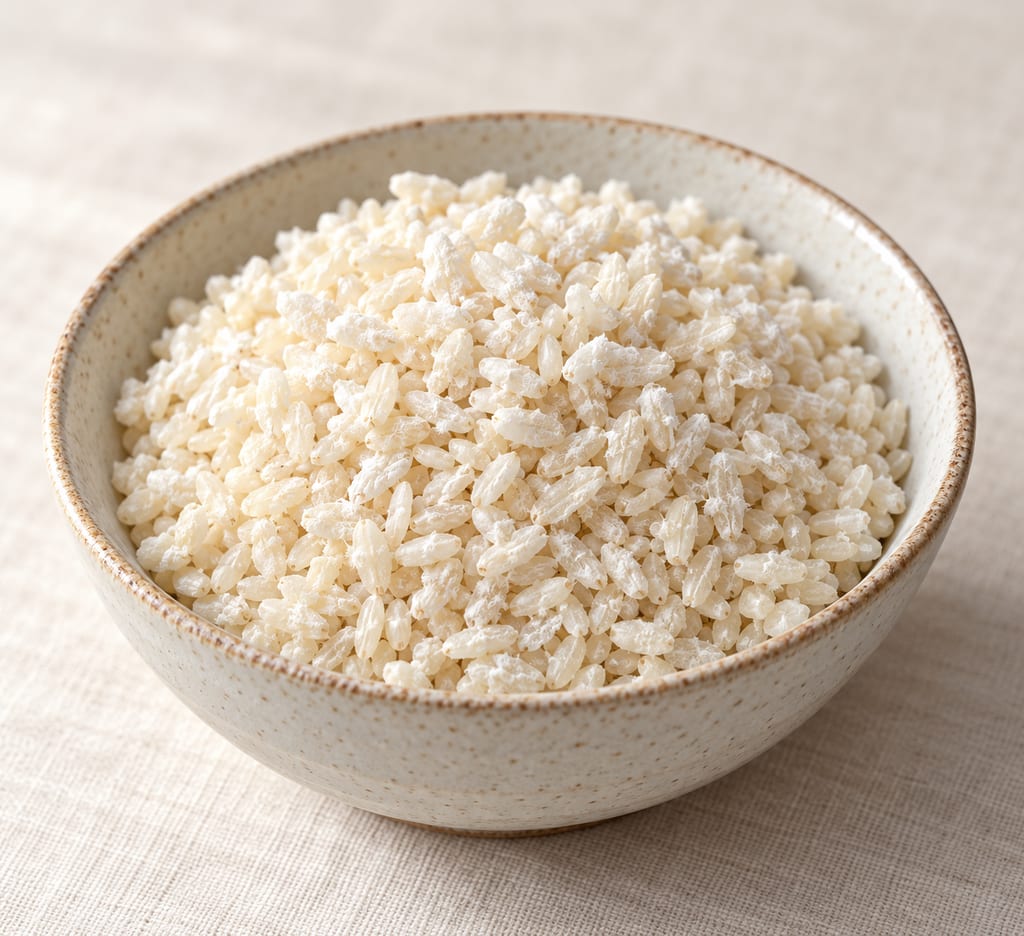
Ipguk (입국) is Korean steamed rice grown with a selected koji mould, used as an enzyme-rich starter in makgeolli and yakju. It is not the same product as traditional nuruk.
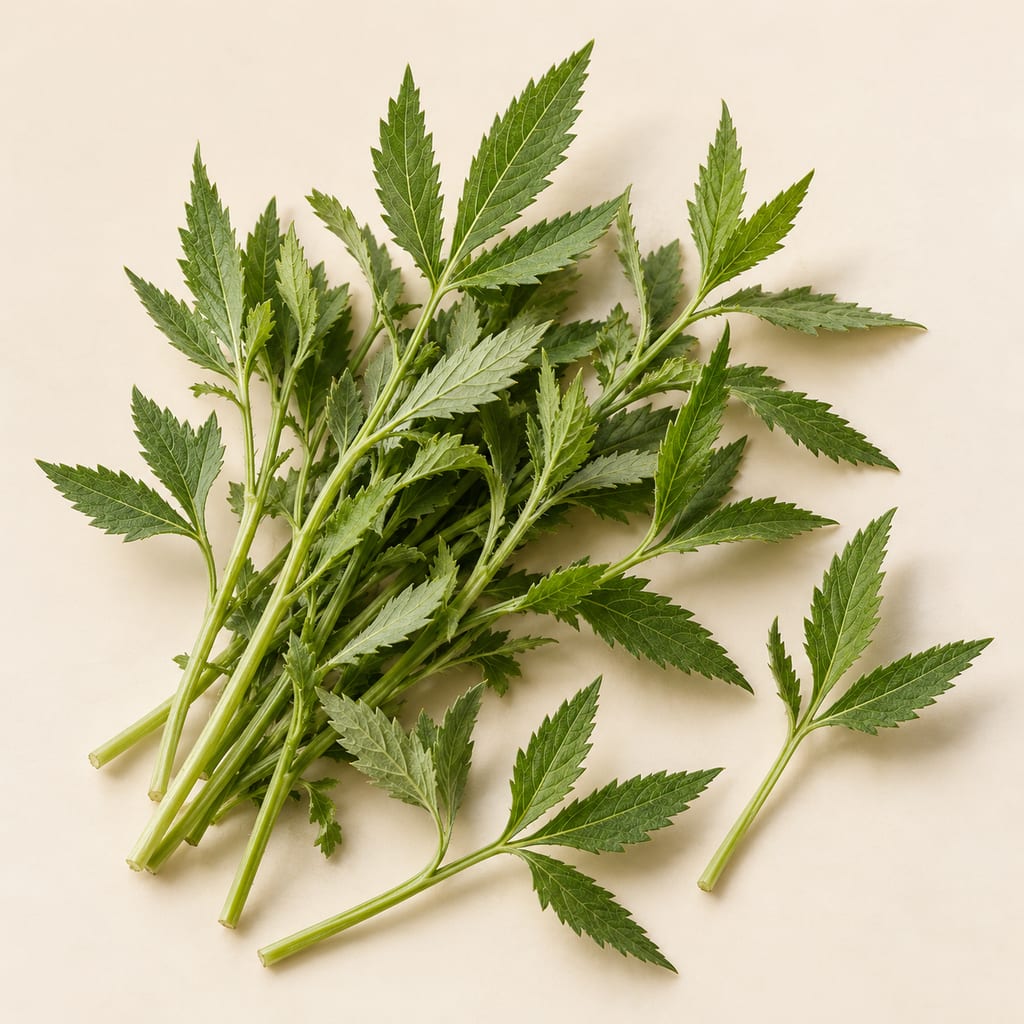
Sibekh is the young leafy growth of Falcaria vulgaris, an Apiaceae herb sold in Yerevan markets and fried with eggs; pickled, dried and canned uses are recorded without methods.
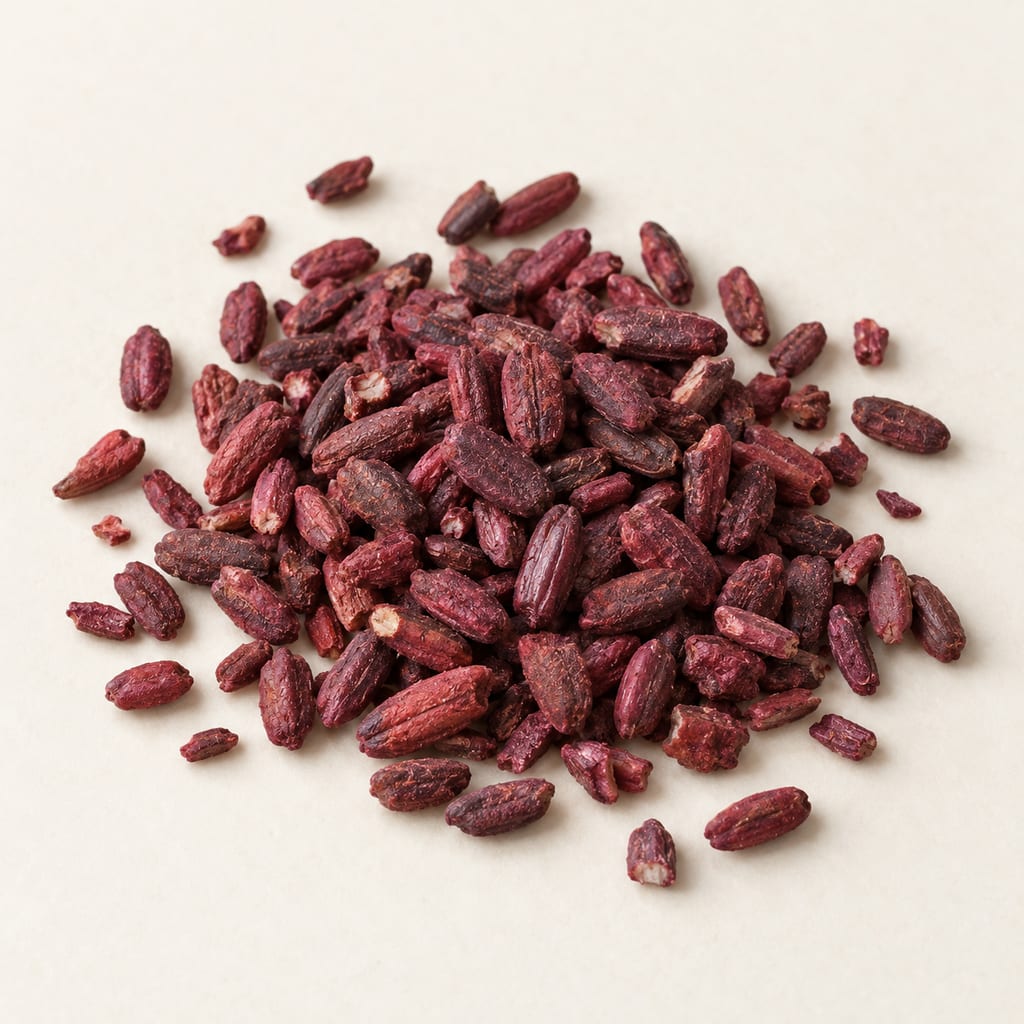
Wuyi hongqu is a regional red rice starter from the Wuyi area of Fujian, described as a mixed Monascus and Aspergillus culture used in rice wine and, in one report, cereal vinegar.
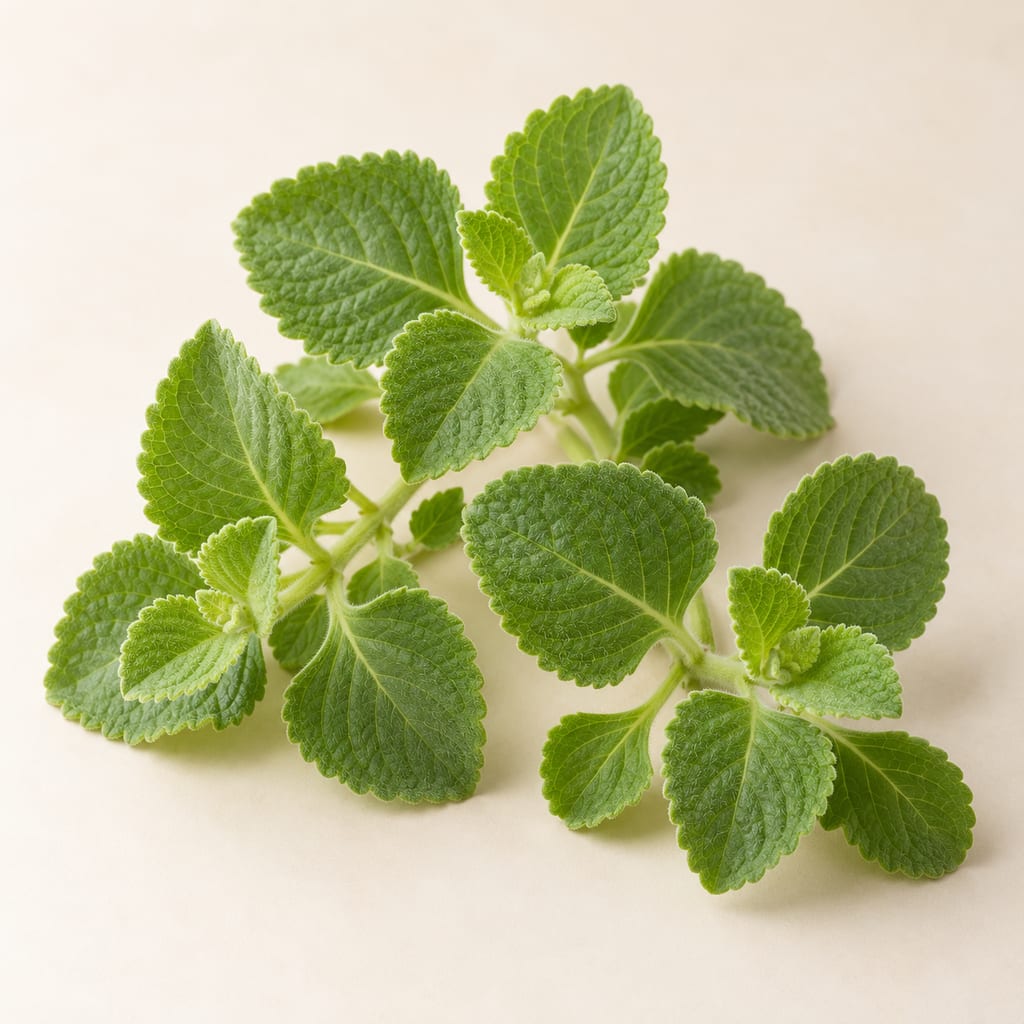
French oregano, Coleus amboinicus, is a fleshy, strongly aromatic mint-family herb used as a seasoning in Cuba, where it is called orégano francés, and across the tropics.
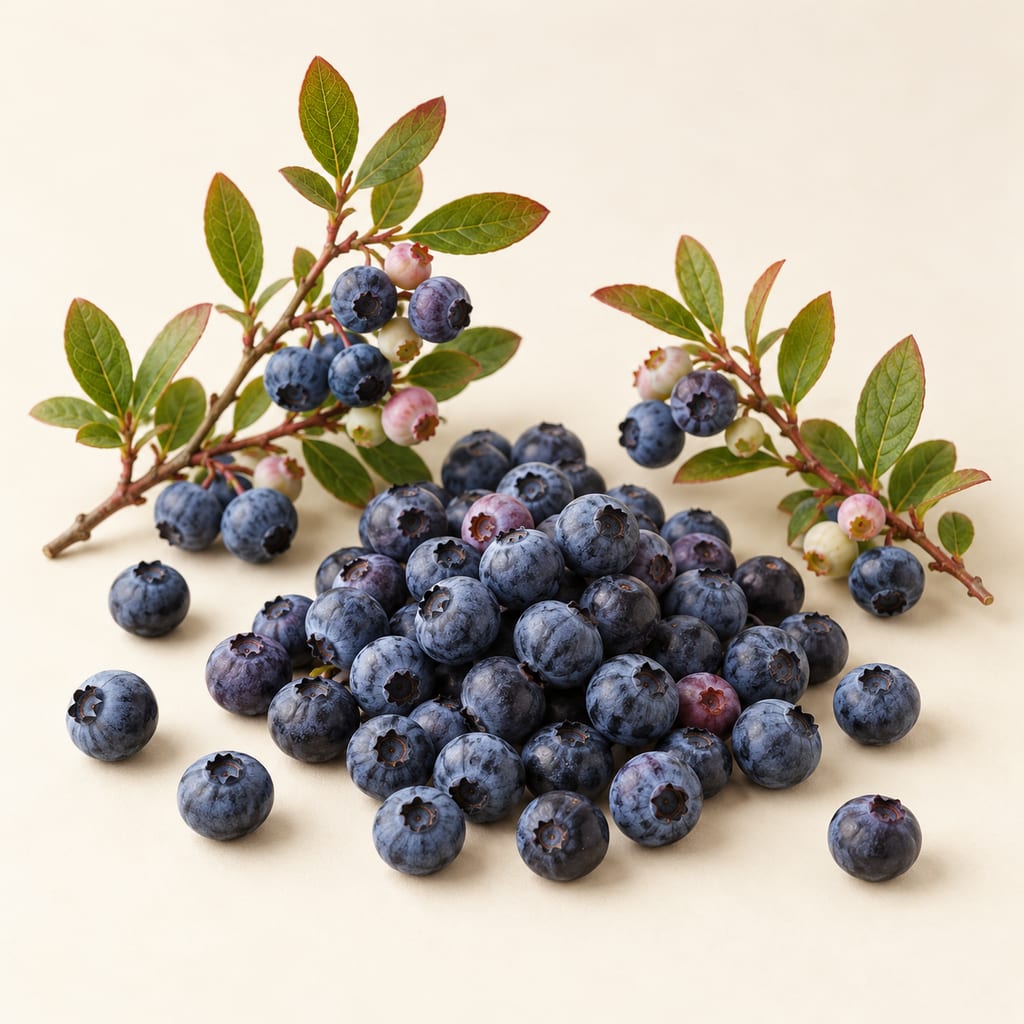
Lowbush or wild blueberry, Vaccinium angustifolium: a small subshrub of eastern North America whose berries are gathered wild and harvested from managed fields.
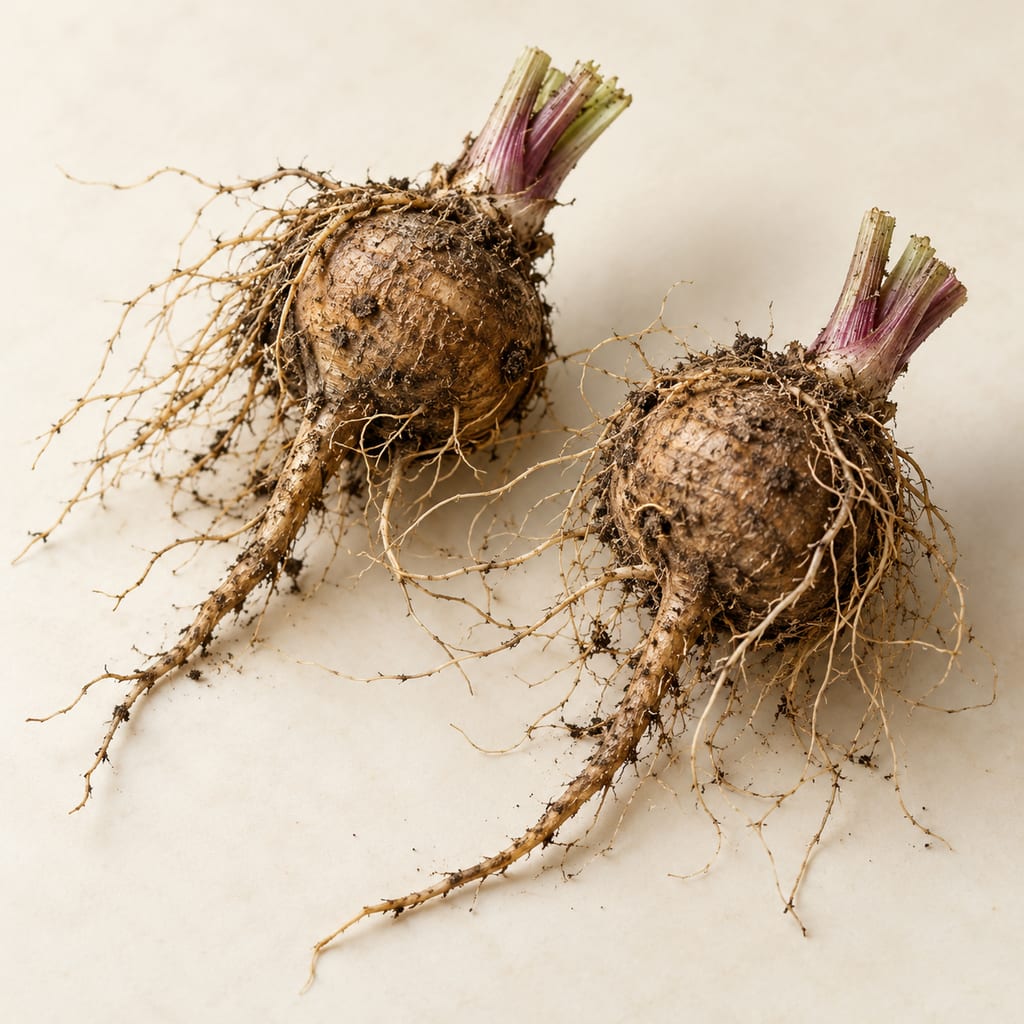
Tuberous chervil, Chaerophyllum bulbosum, is a biennial of the carrot family grown for its root in central Europe and gathered for its young leaves in Armenia.
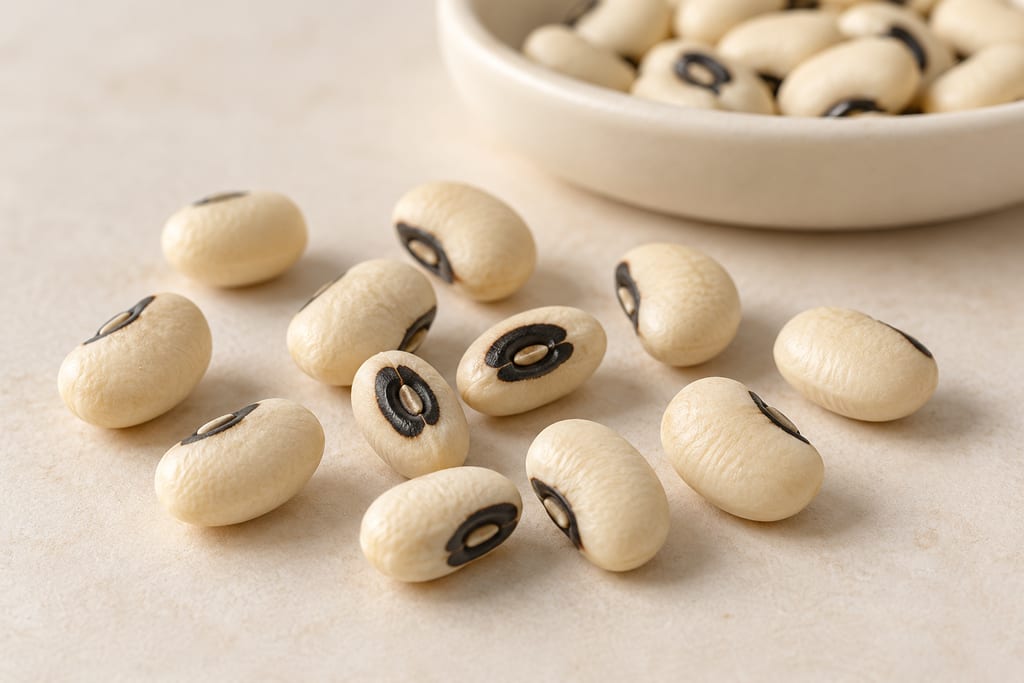
Cowpeas are the seeds of Vigna unguiculata, eaten green and freshly shelled or fully mature and dry. Across Africa they serve as food, fodder and a crop partner, while research also examines them in fermented pastes and cereal doughs.
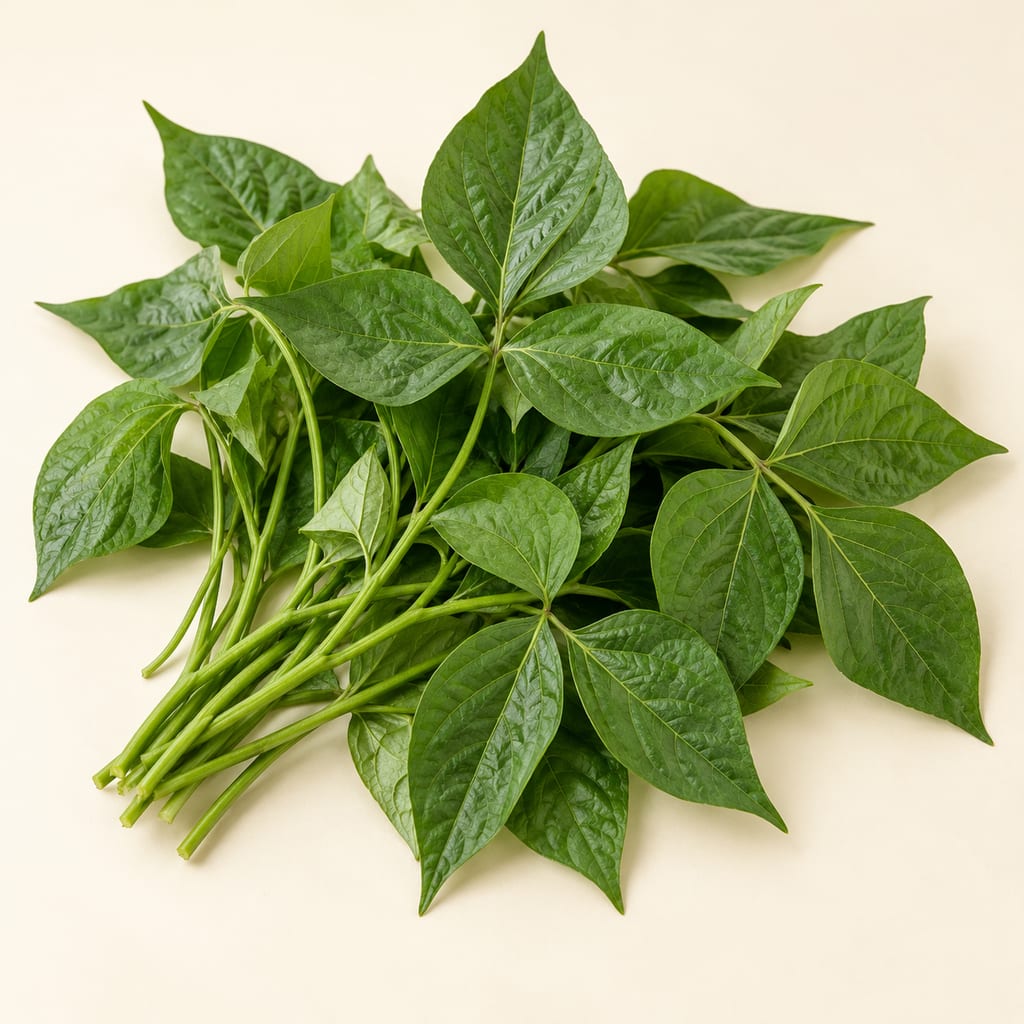
Cowpea leaves are eaten cooked and sun-dried in Botswana, where the dried product is called morogo wa dinawa. Studies of the crop add leaf-removal results and trial-site growing conditions.
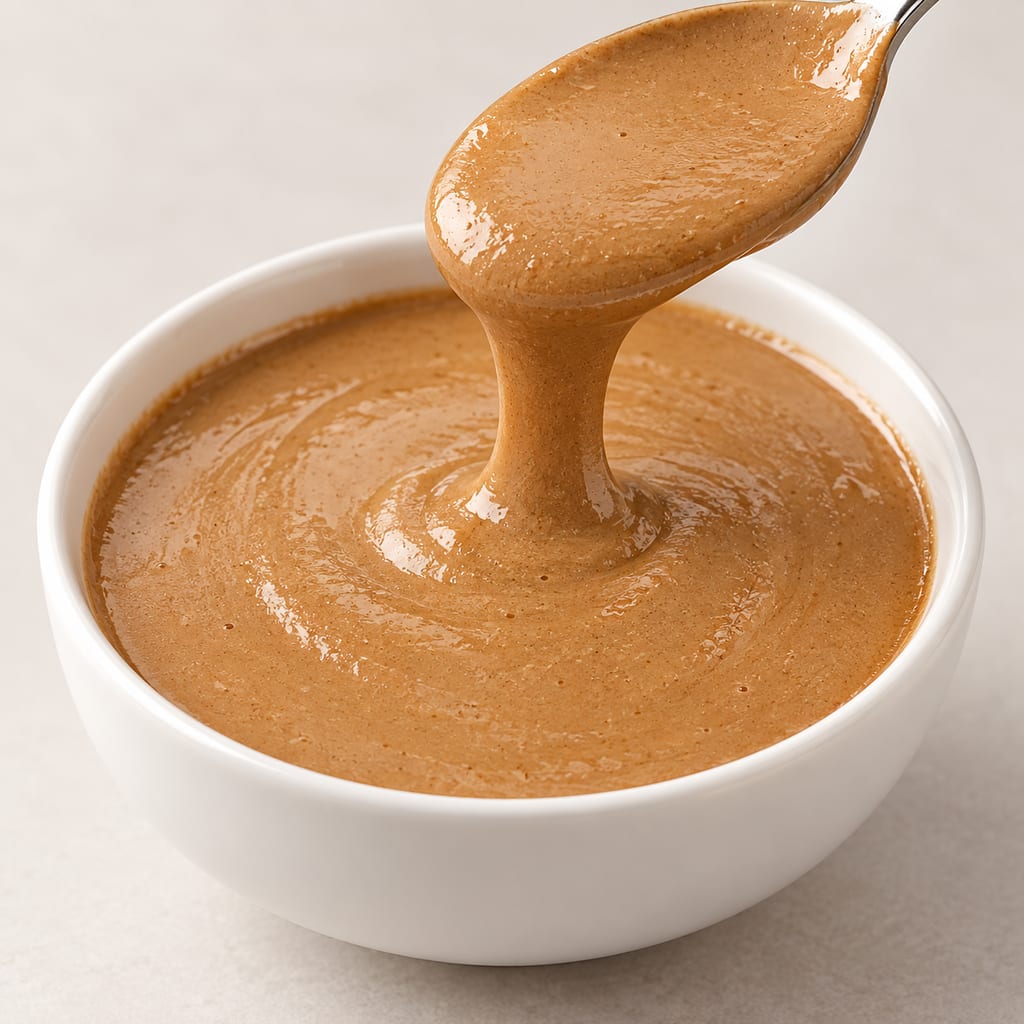
Chinese sesame paste (zhīma jiàng, 芝麻酱) is a thick paste ground from toasted sesame seeds. Roast, texture and added ingredients vary by product.

The kombucha culture is a mixed community of yeasts and bacteria carried in an acidic starter liquid and a floating cellulose pellicle, used to turn sweetened tea into kombucha.
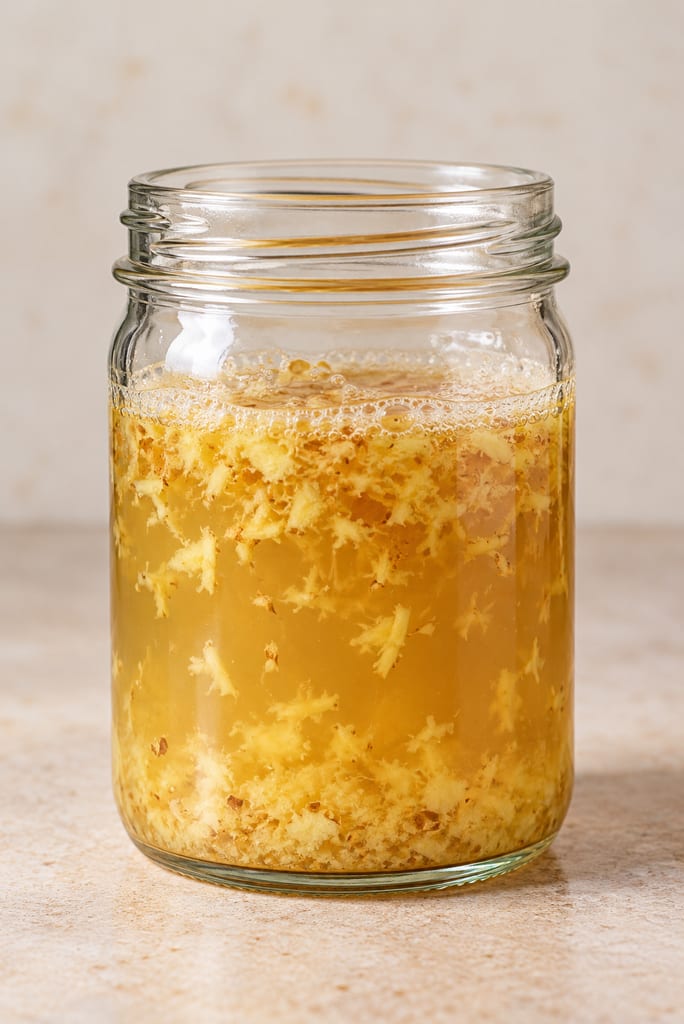
Ginger bug is a liquid starter of ginger and sugar kept going by feeding and used to start ginger beer and other drinks; the name does not fix one microbial community.
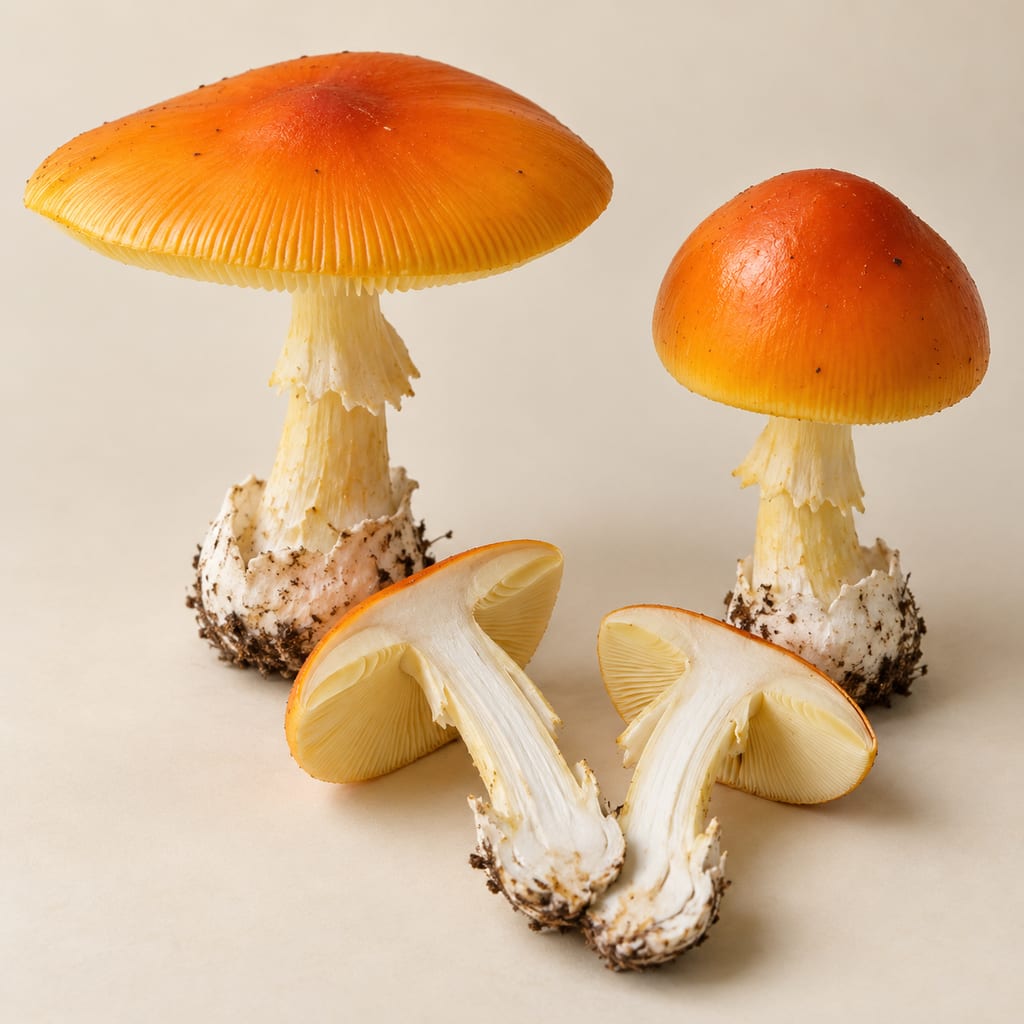
A wild Amanita valued in local foodways of Mexico and Guatemala. Community studies document seasonal gathering, market trade and distinct cooked preparations; species identity and Amanita safety require particular care.
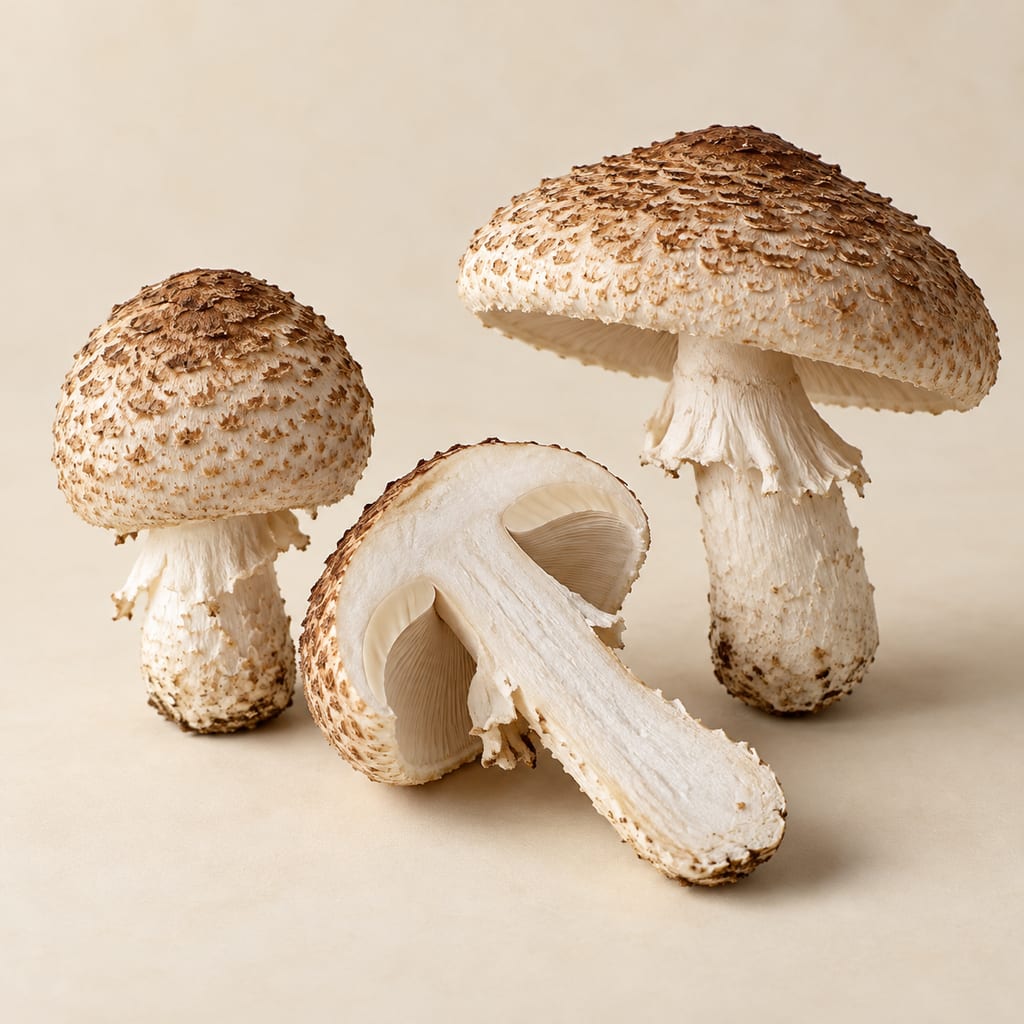
The prince (Agaricus augustus) is a large wild mushroom with a pale, brown-scaled cap and sweet almond-like aroma. Field guides describe it as edible, with species-specific contaminant cautions.
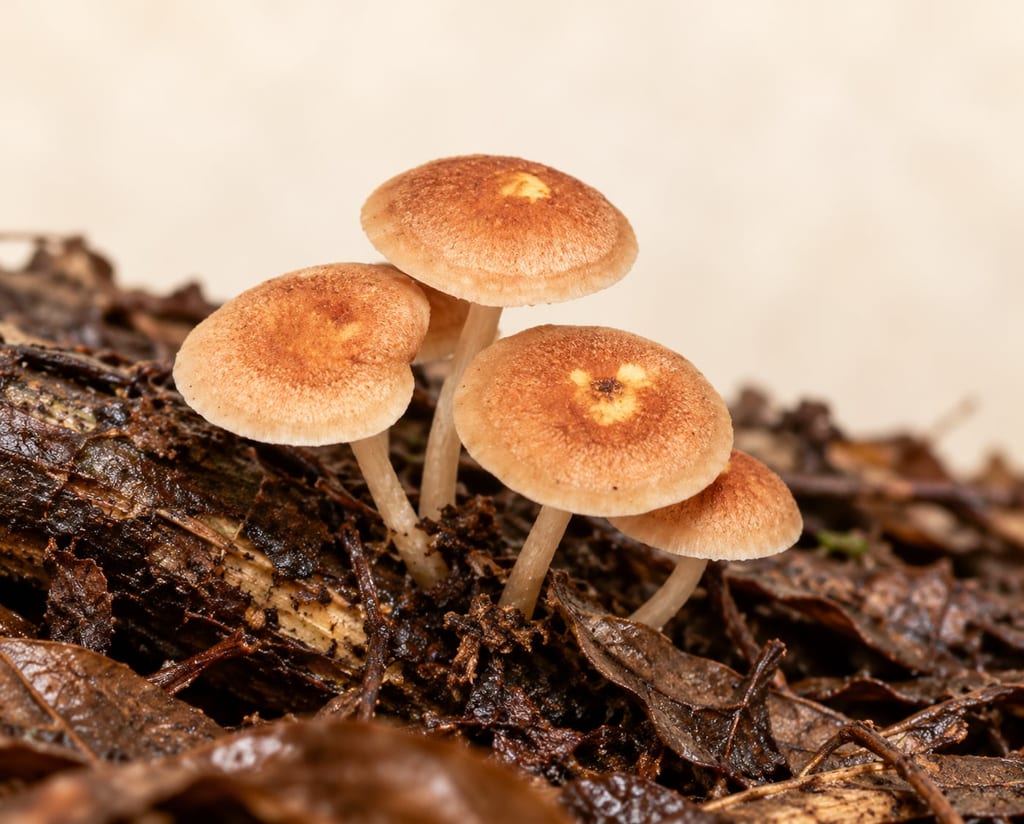
Marasmius buzungolo is a wild African saprotrophic mushroom recorded as food in Tshopo and around Kikwit in DR Congo. Its exact season and preparation remain undocumented.
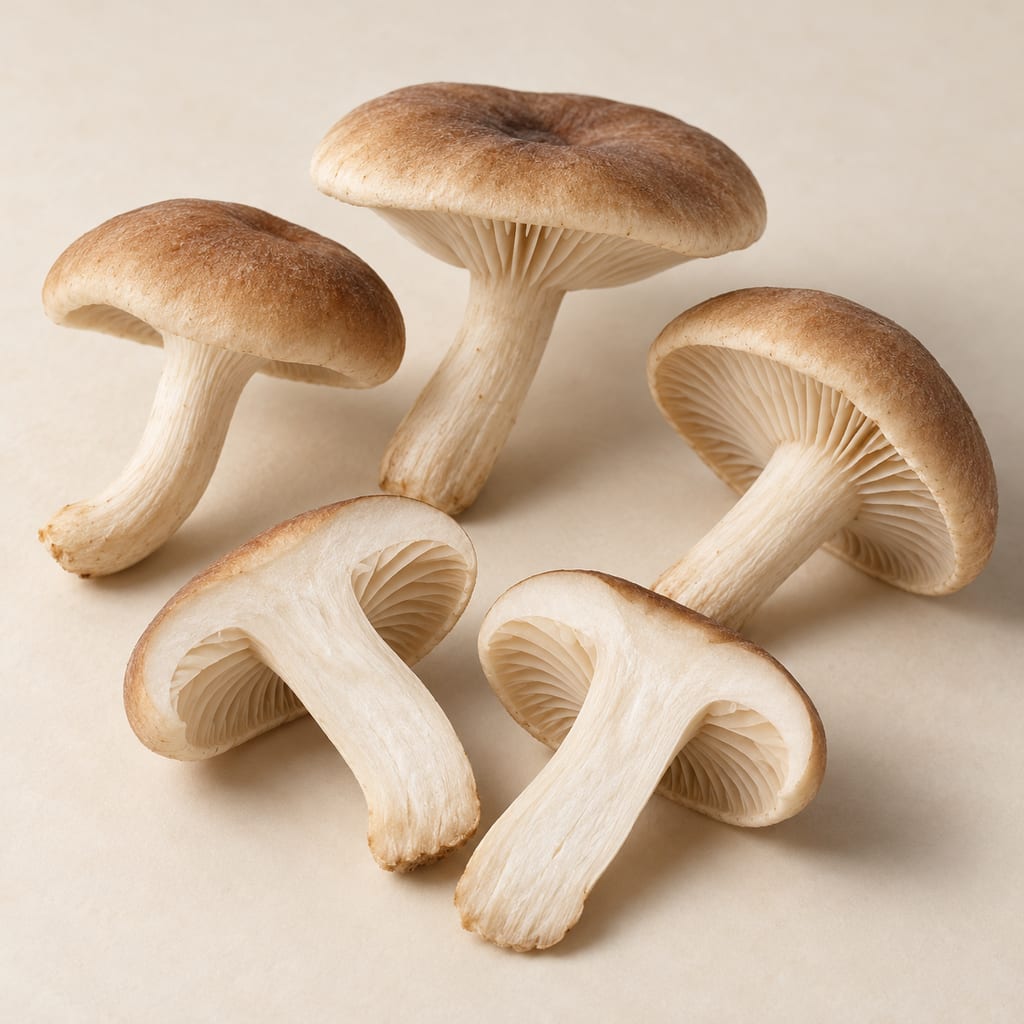
Cyclocybe chaxingu is a cultivated edible wood-decaying mushroom best known in China, where related market names can blur species identity.
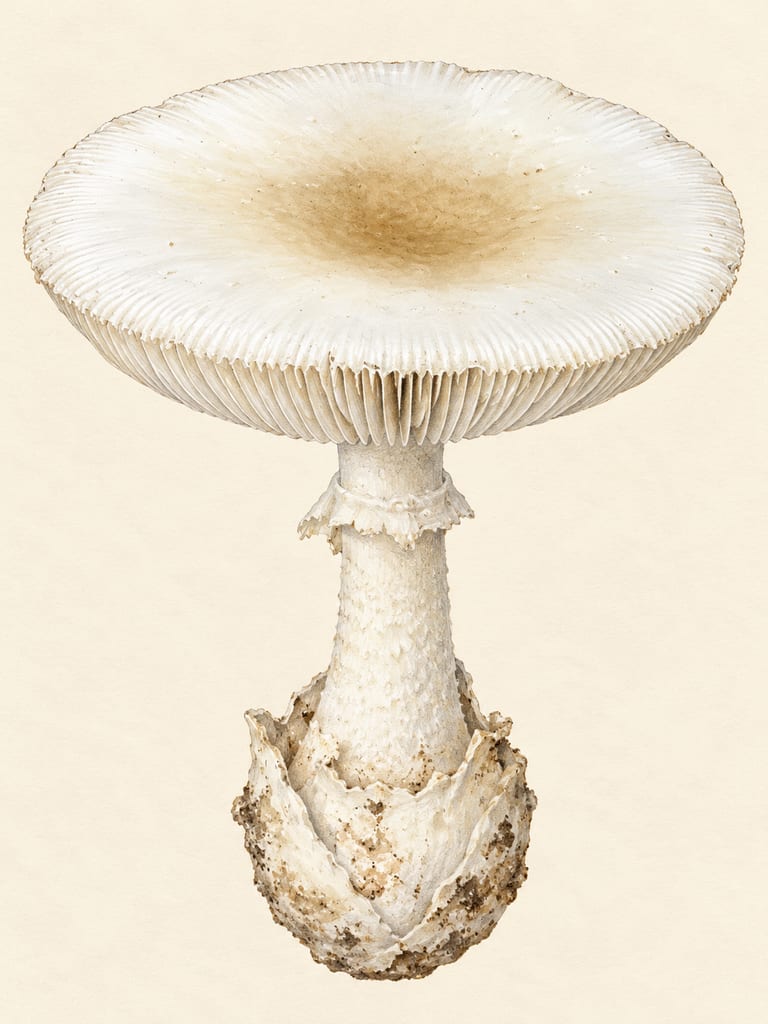
Amanita loosei is a large wild Amanita of tropical African miombo and open woodland, gathered and sold as a valued seasonal food. Regional food-use evidence is not a guide to identifying wild mushrooms.
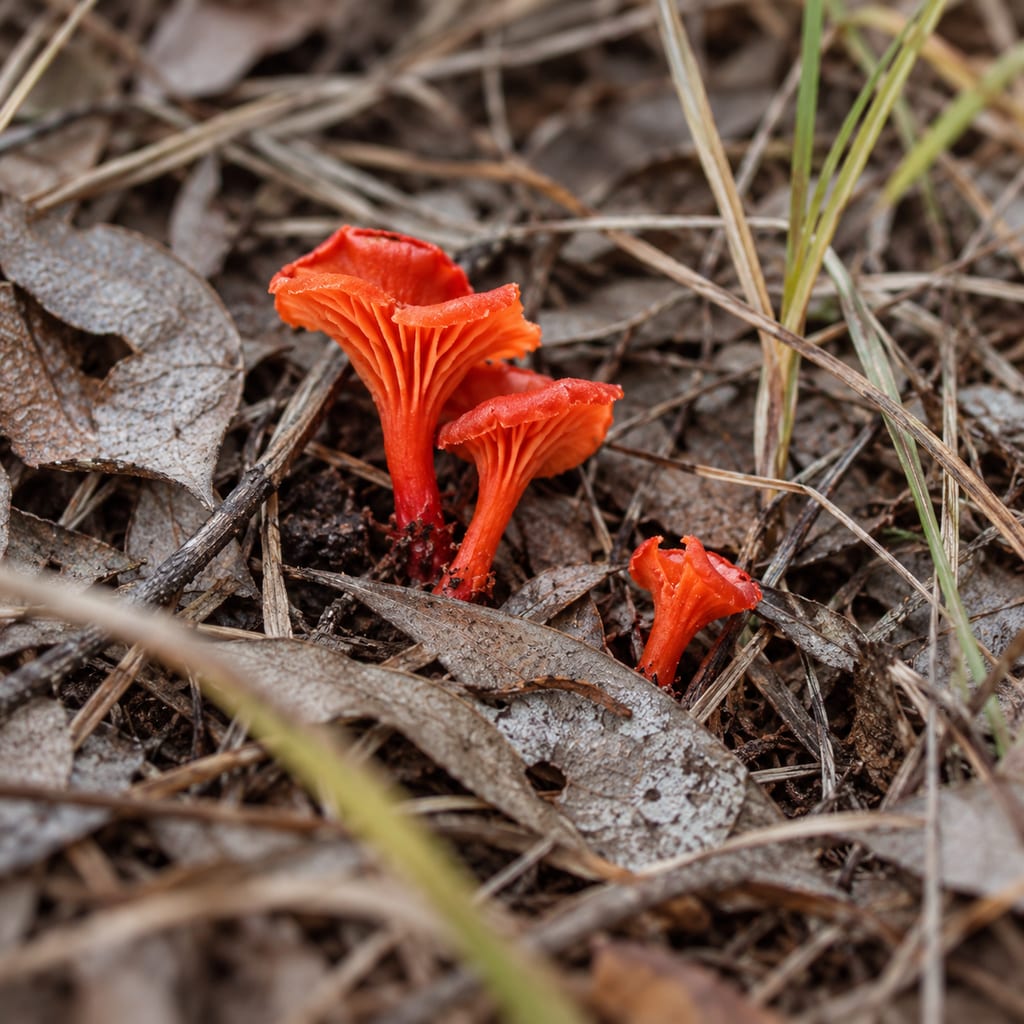
A small red ectomycorrhizal chanterelle of African open forest and miombo. Sources document regional food use but differ on taste and harvesting preference; older records as C. floridulus or C. miniatescens require care.
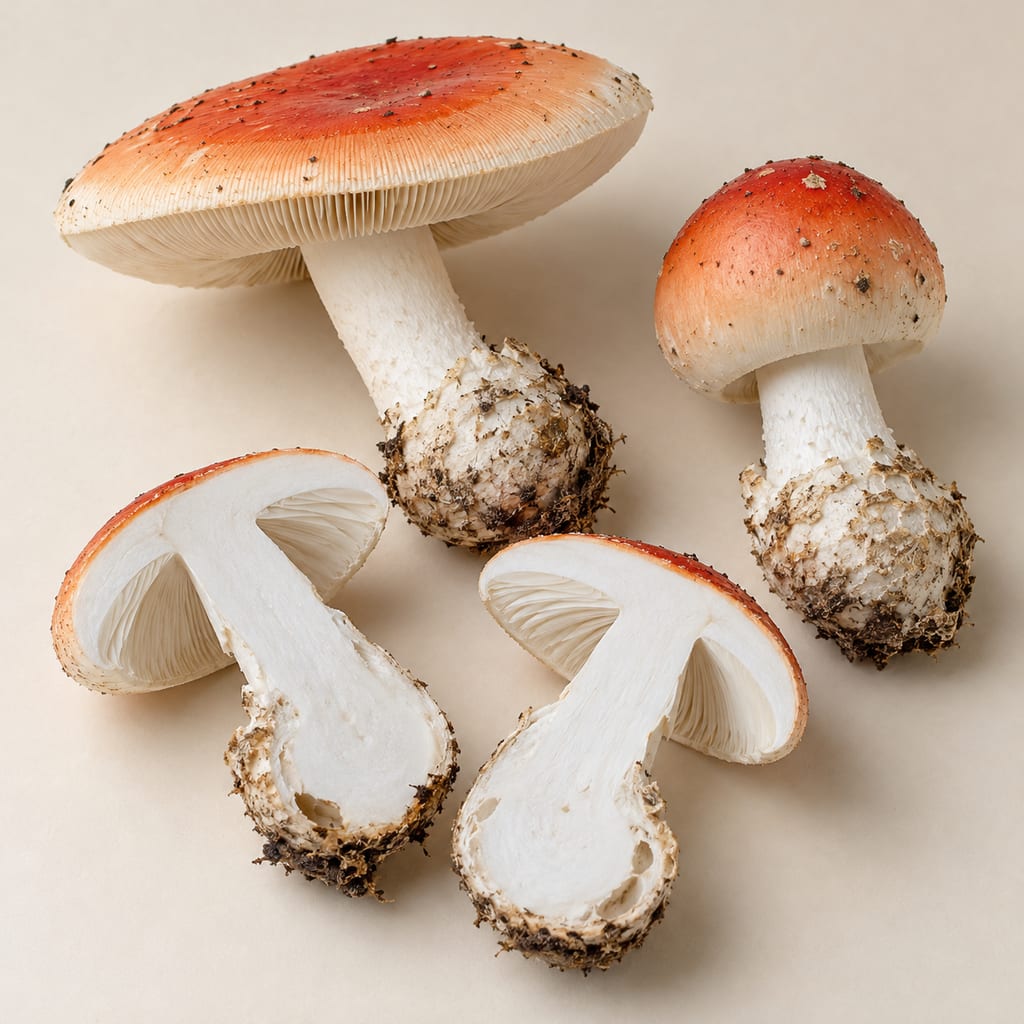
Amanita robusta Beeli is a poorly documented Central African Amanita known from voucher-backed rainforest collections in the Democratic Republic of the Congo and Cameroon. A Tshopo study reports local food use for a taxonomically supported voucher, but neither that record nor the name makes an unknown Amanita safe to identify or eat.
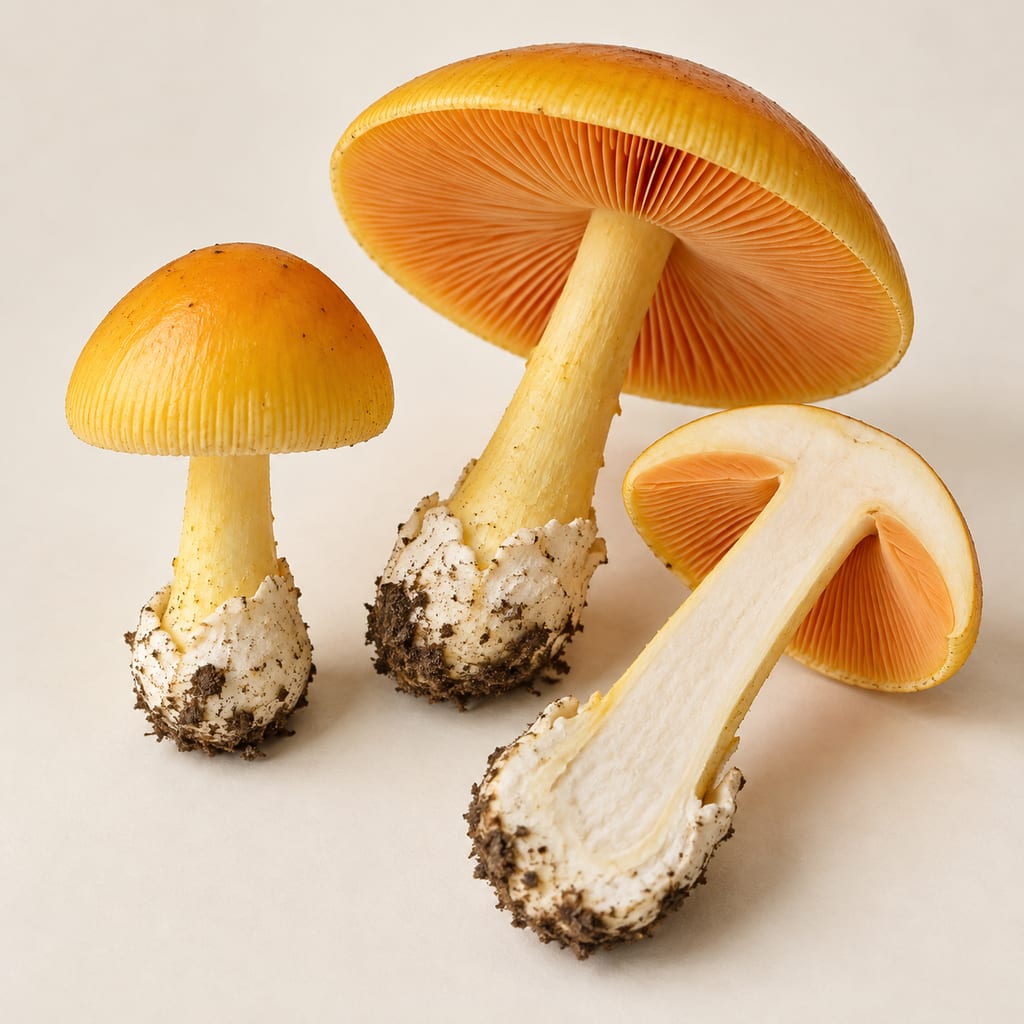
A wild miombo Amanita recorded as a local food in northern Zambia, with collections also documented in Haut-Katanga, DRC. The evidence is regional and does not make wild identification safe.
Tawny grisette (Amanita fulva) is a ringless, volva-bearing woodland Amanita with documented but taxonomically qualified food use in a few regions.
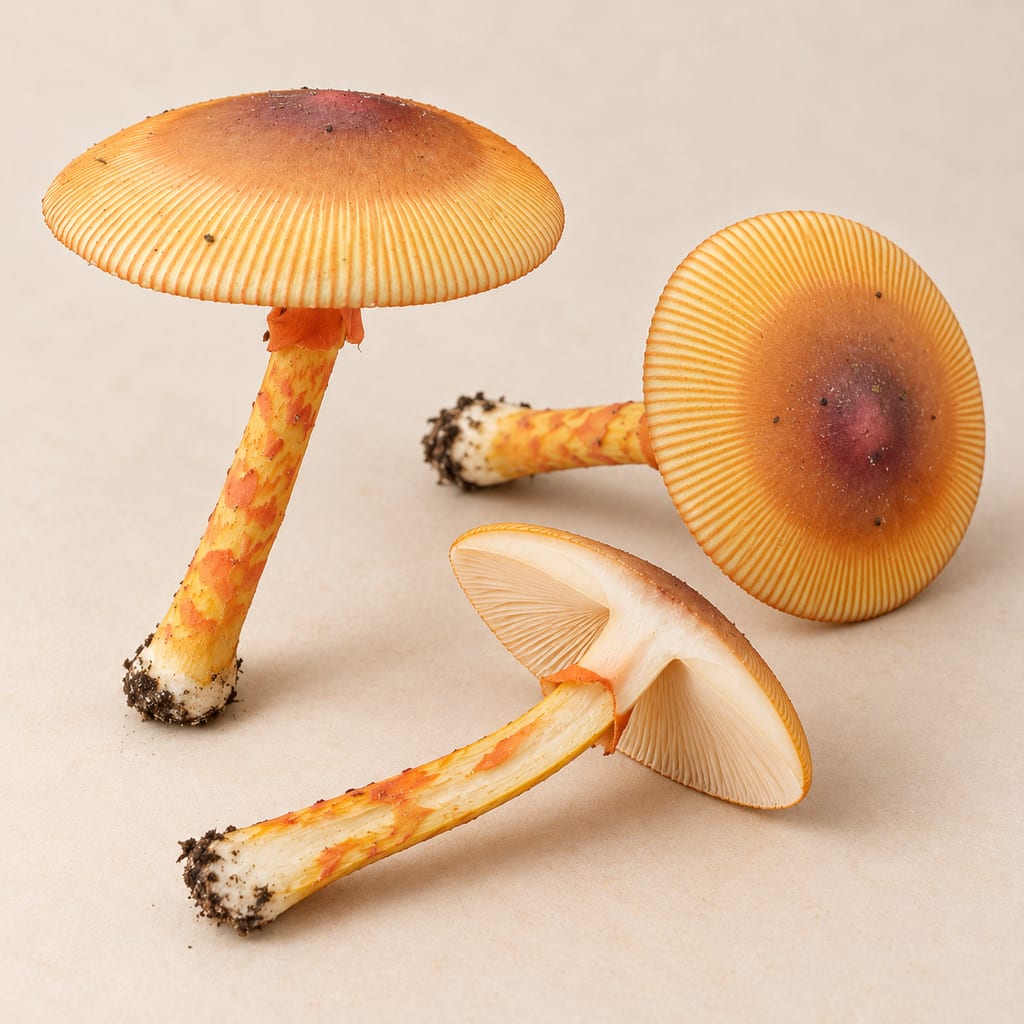
Amanita rubromarginata is a forest mushroom documented in food markets and edible-mushroom surveys in parts of China and northern Thailand. Those regional records do not make a wild specimen identified from a photograph safe to eat.
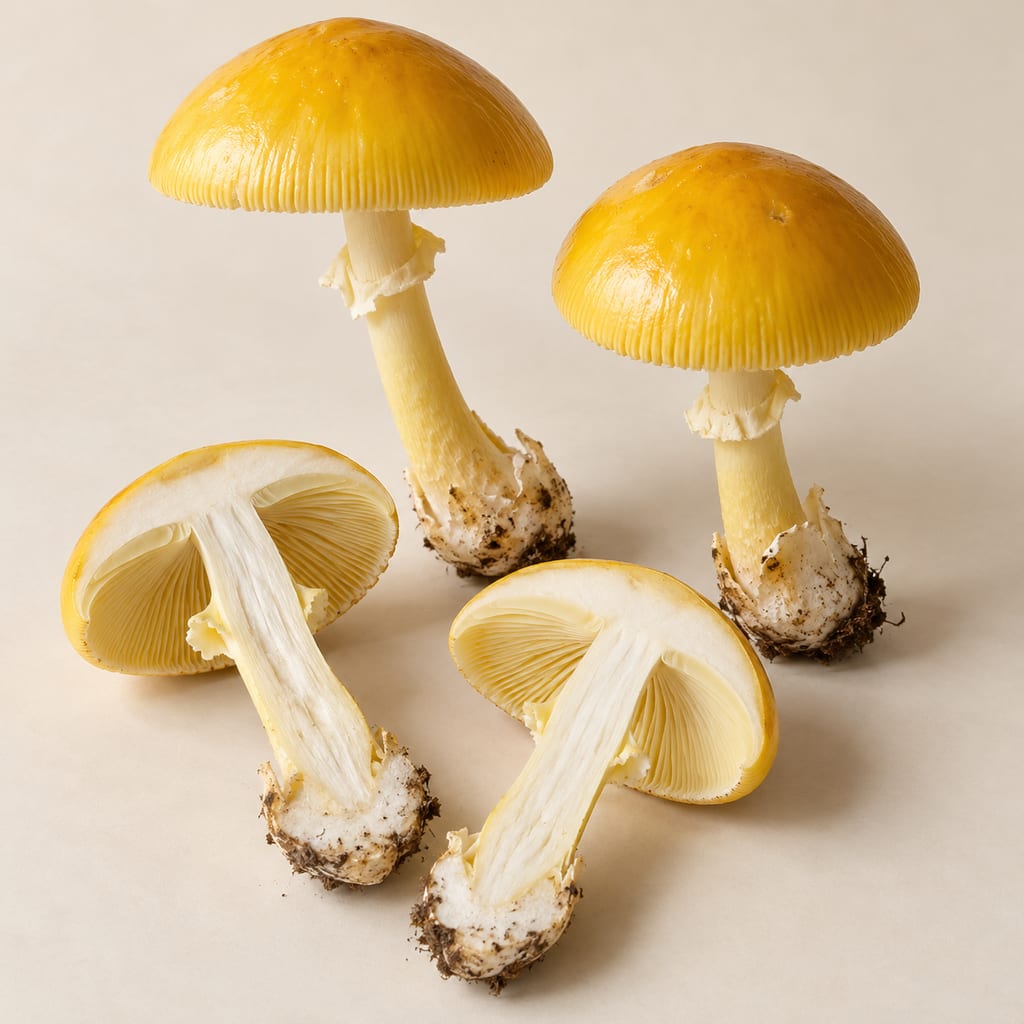
A yellow Caesar’s amanita now recognized as Amanita kitamagotake, a distinct species documented in Japan and China. Scientific catalogues list it as edible, while field identification is complicated by close relatives and lethal lookalikes.
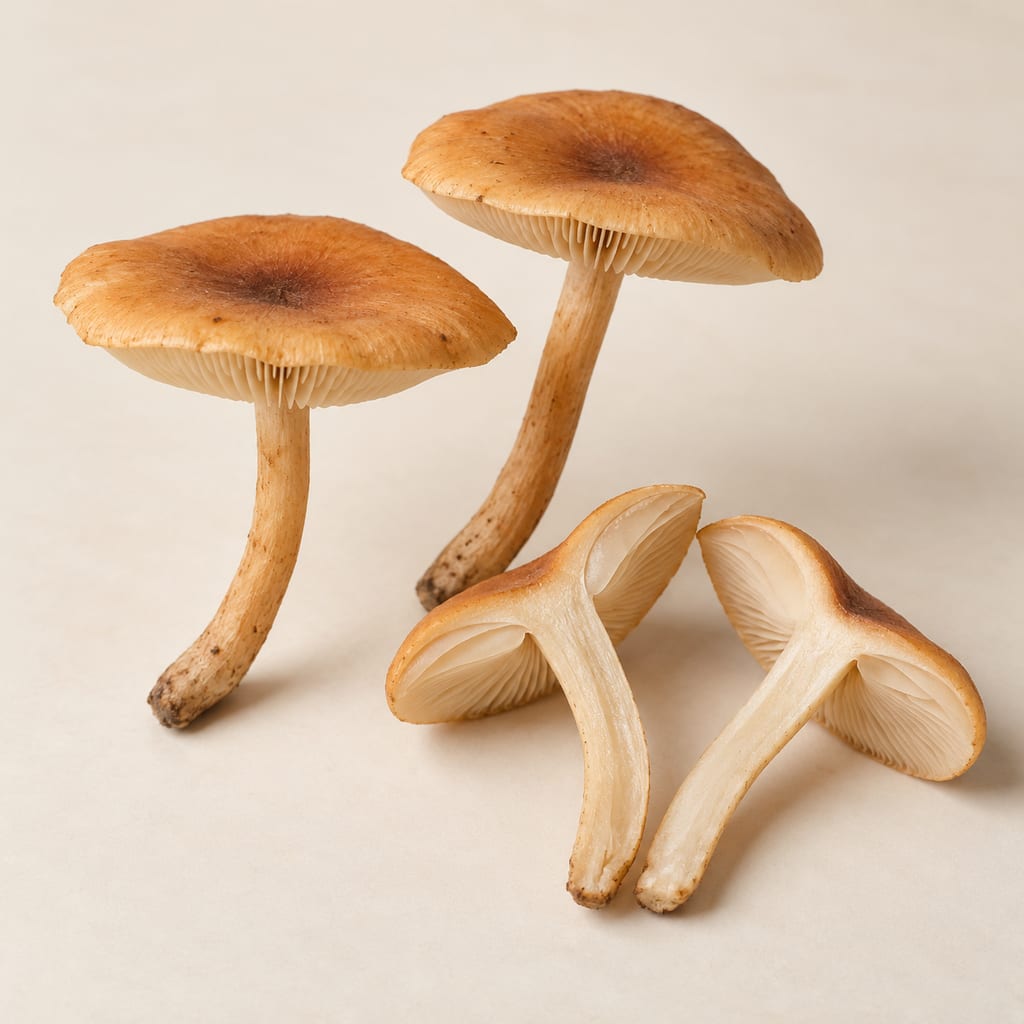
A wood-associated Armillaria recorded in Yunnan and Sichuan, China, and listed as edible in a 2026 Chinese catalogue.
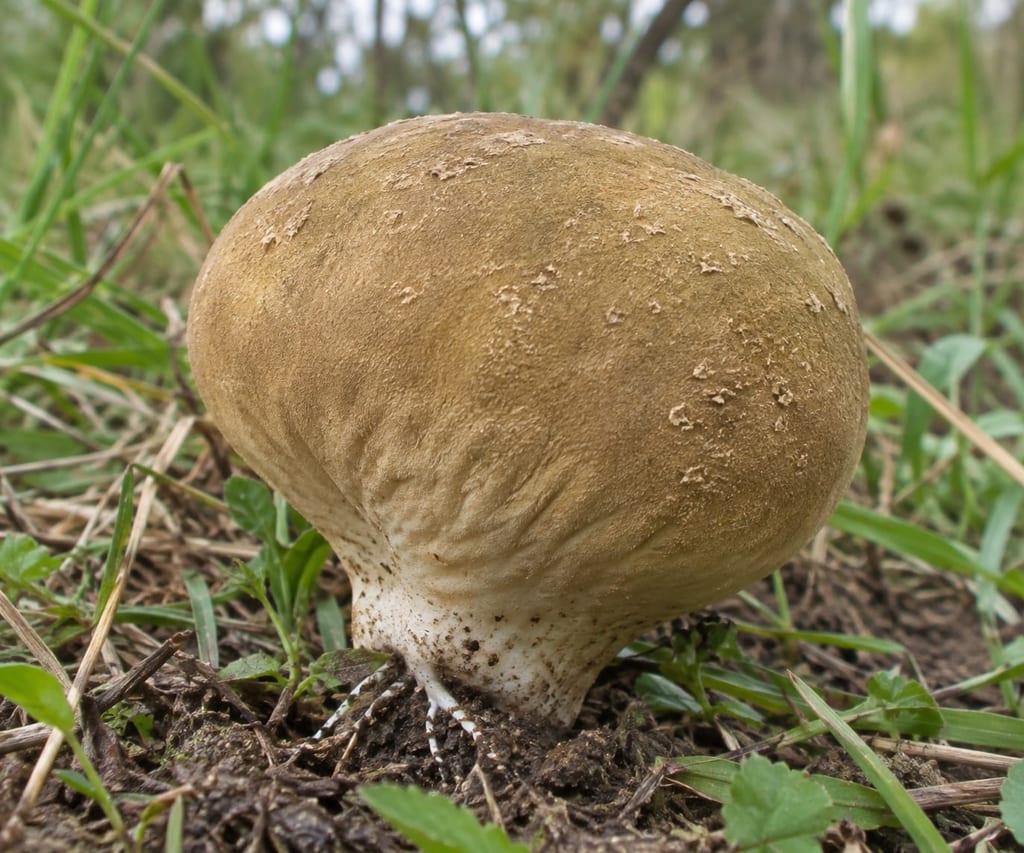
A tropical African puffball recorded in West African range accounts and Ethiopian edible-mushroom studies. Ethiopian use evidence is qualified; Benin identification and safety remain unresolved.
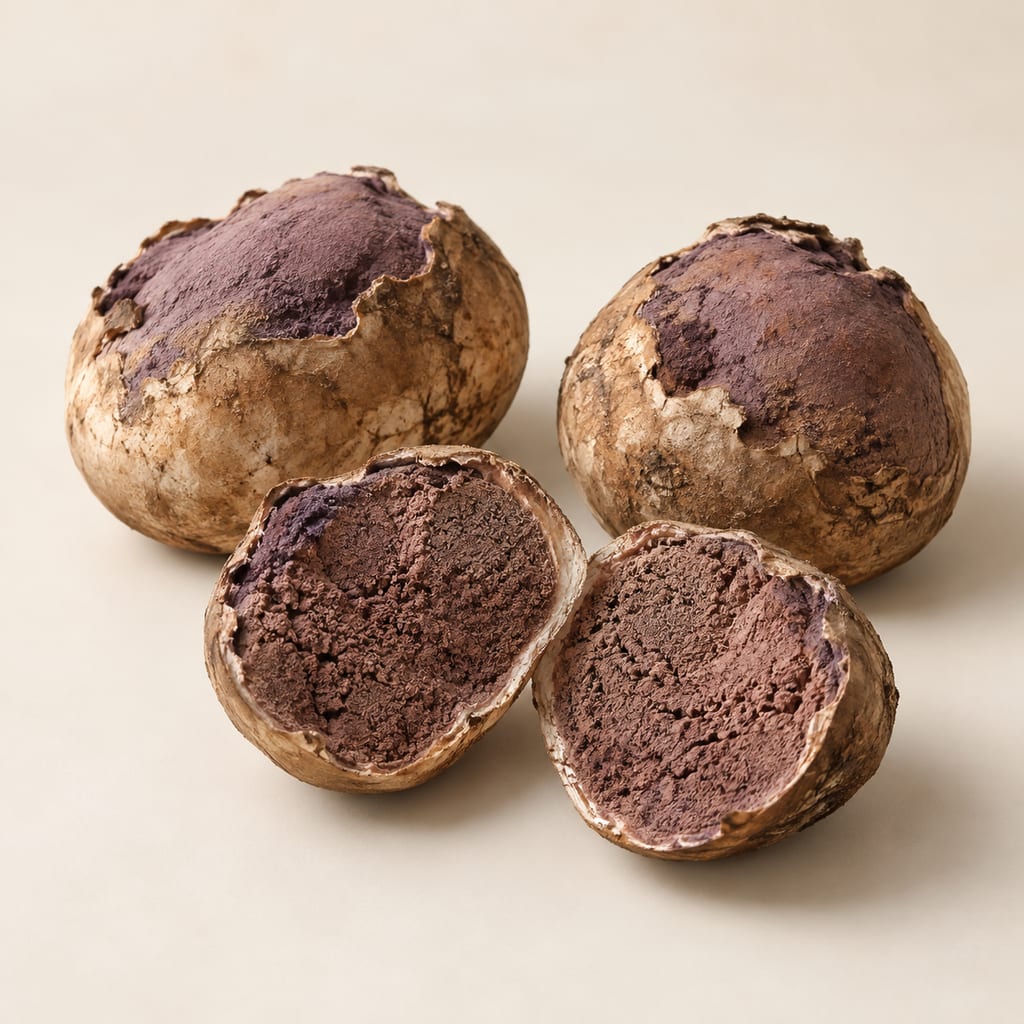
A soil-growing puffball, Calvatia cyathiformis, with white immature gleba that darkens purple as spores mature; food and seasonal records are local and do not establish a universal identification or safety rule.
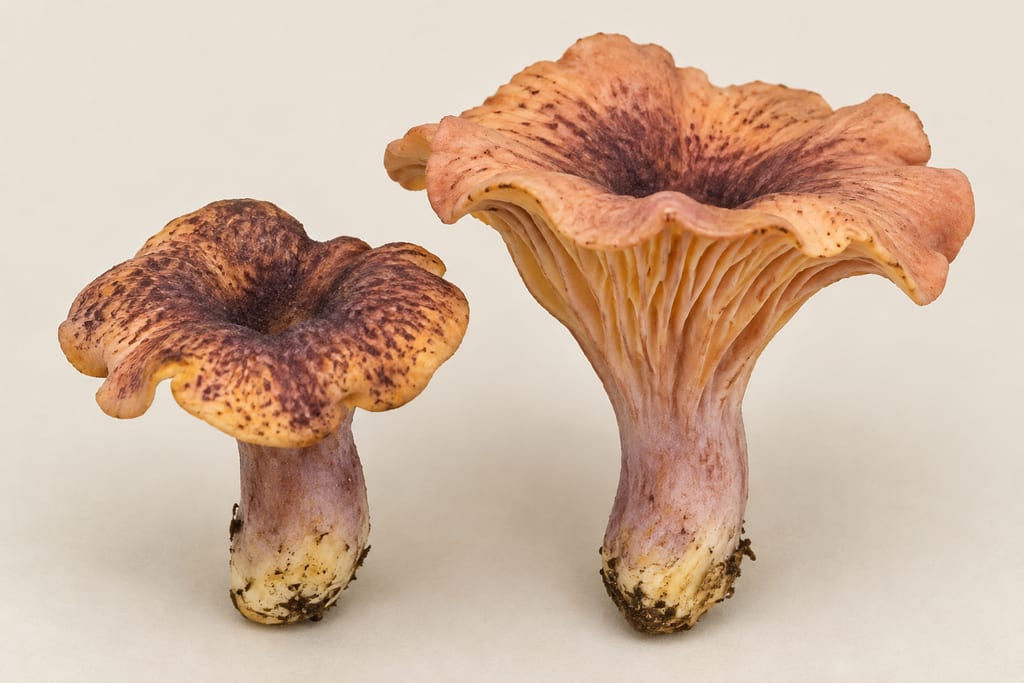
Wild Central African chanterelle recorded as locally eaten in voucher-backed Tshopo interviews. Historical country claims exceed the current revised range; preparation, fermentation and toxicology remain undocumented.
Cantharellus magnus is a large Chinese chanterelle recorded in five provinces. A national scientific catalogue lists it as edible, but evidence here does not establish preparation or local food traditions.
A miombo-woodland chanterelle described from Tanzania and called Wipatwe in the Southern Highlands. Food classifications conflict, including within a 2015 community study.
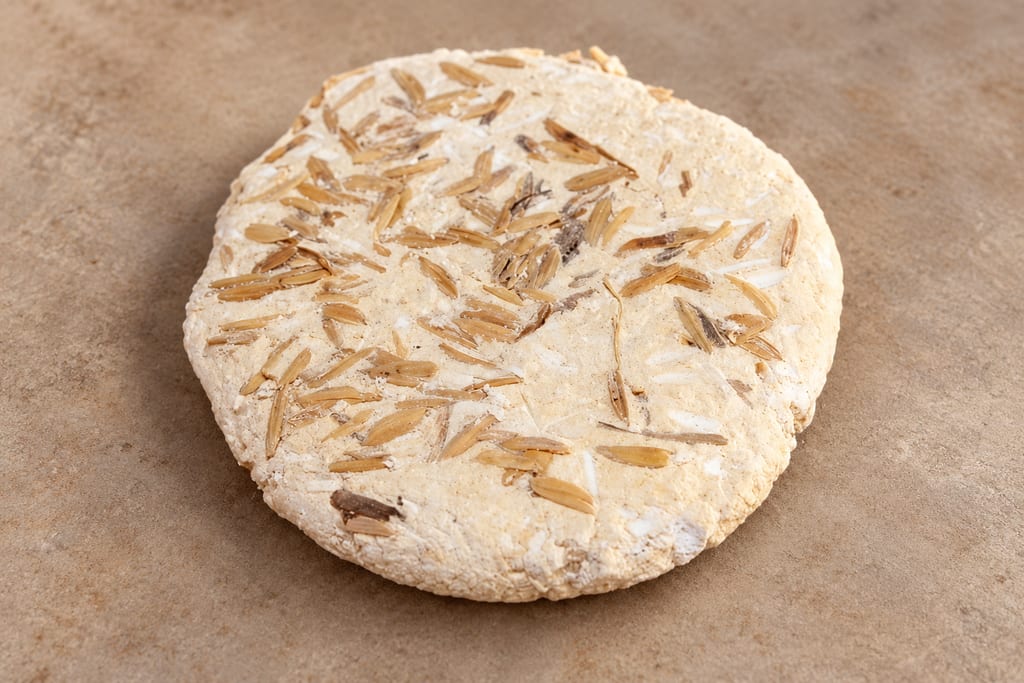
Dombae (dombea, medombae) is a Cambodian dried mixed starter for rice fermentation; studied samples differ, so the names do not specify one formula.
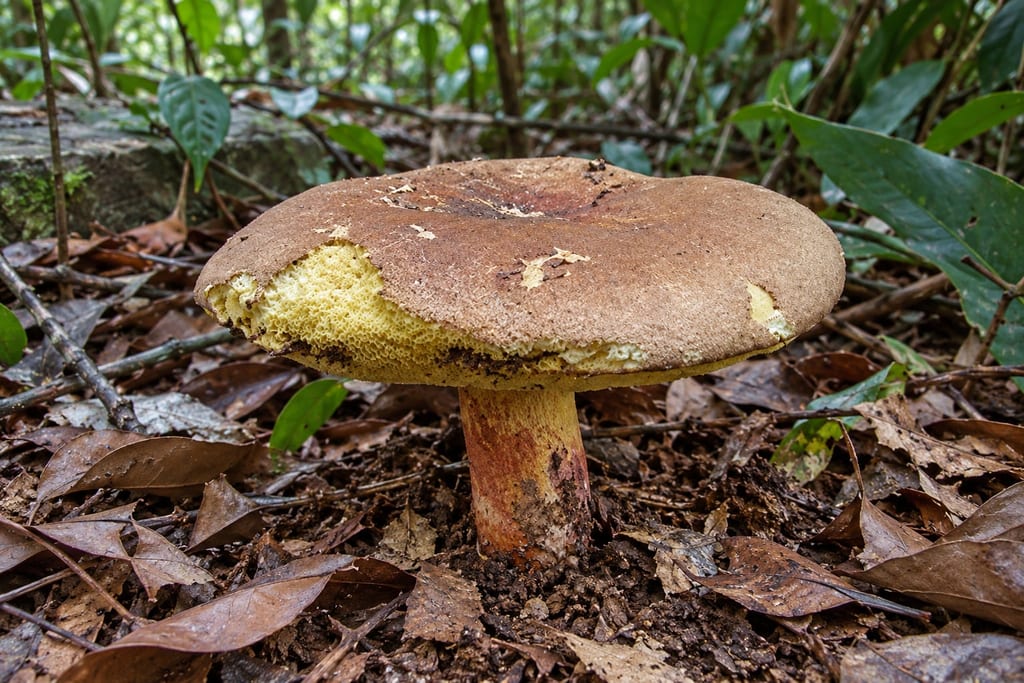
Butyriboletus huangnianlaii is a Chinese butter bolete described from Fujian and later found at market in Pu’er, Yunnan. The local edible label is limited evidence; recurring season and preparation remain unestablished.
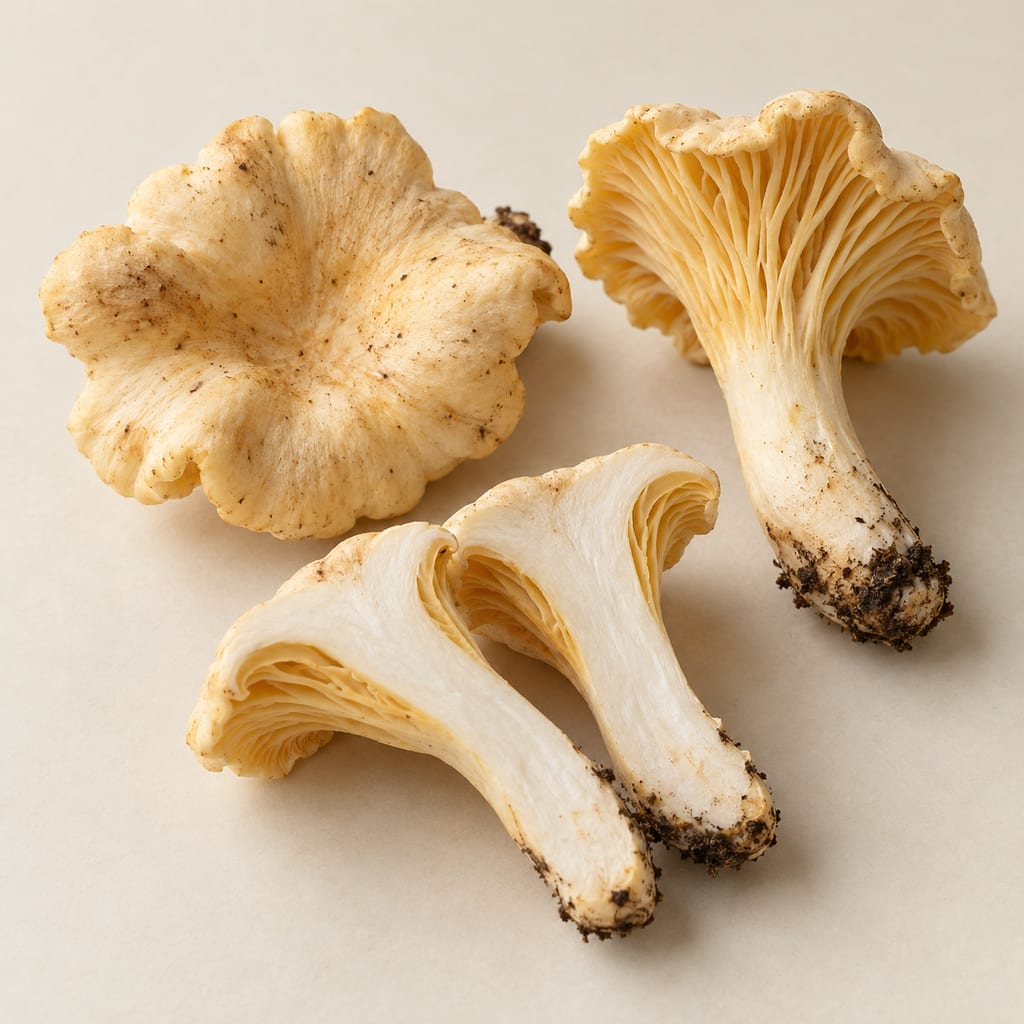
Cantharellus pallens is a pale, fleshy European chanterelle with orange-yellow folded ridges. It is gathered and sold as food in documented regional traditions, but its variable appearance makes photographs unreliable for identification.
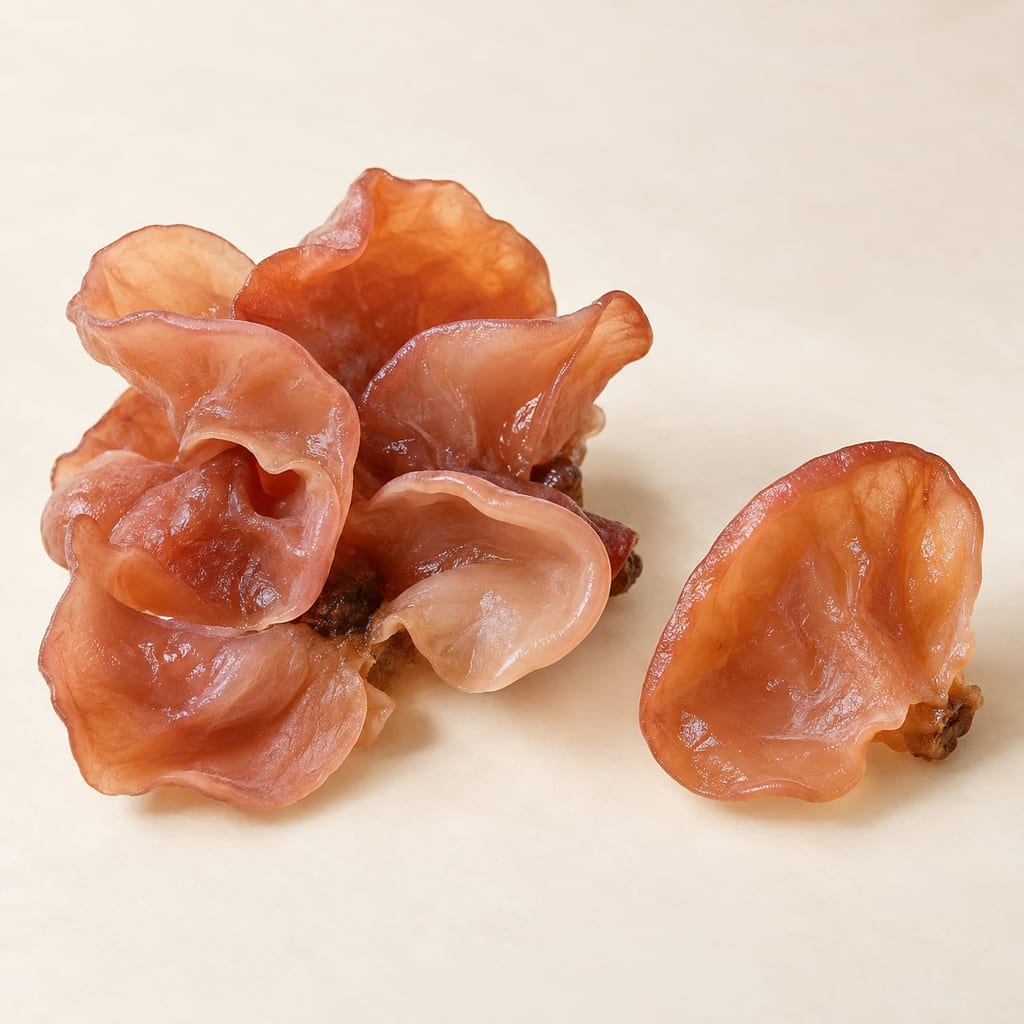
Auricularia thailandica is a thin, gelatinous wood ear described from Southeast Asian collections. Research reports it edible and experimentally cultivable, but species-specific recipes and everyday handling guidance are scarce.
Clavulina ruchengensis is a gray, branching coral fungus described from Hunan, China, where a 2024 study documents local collection and cooking.
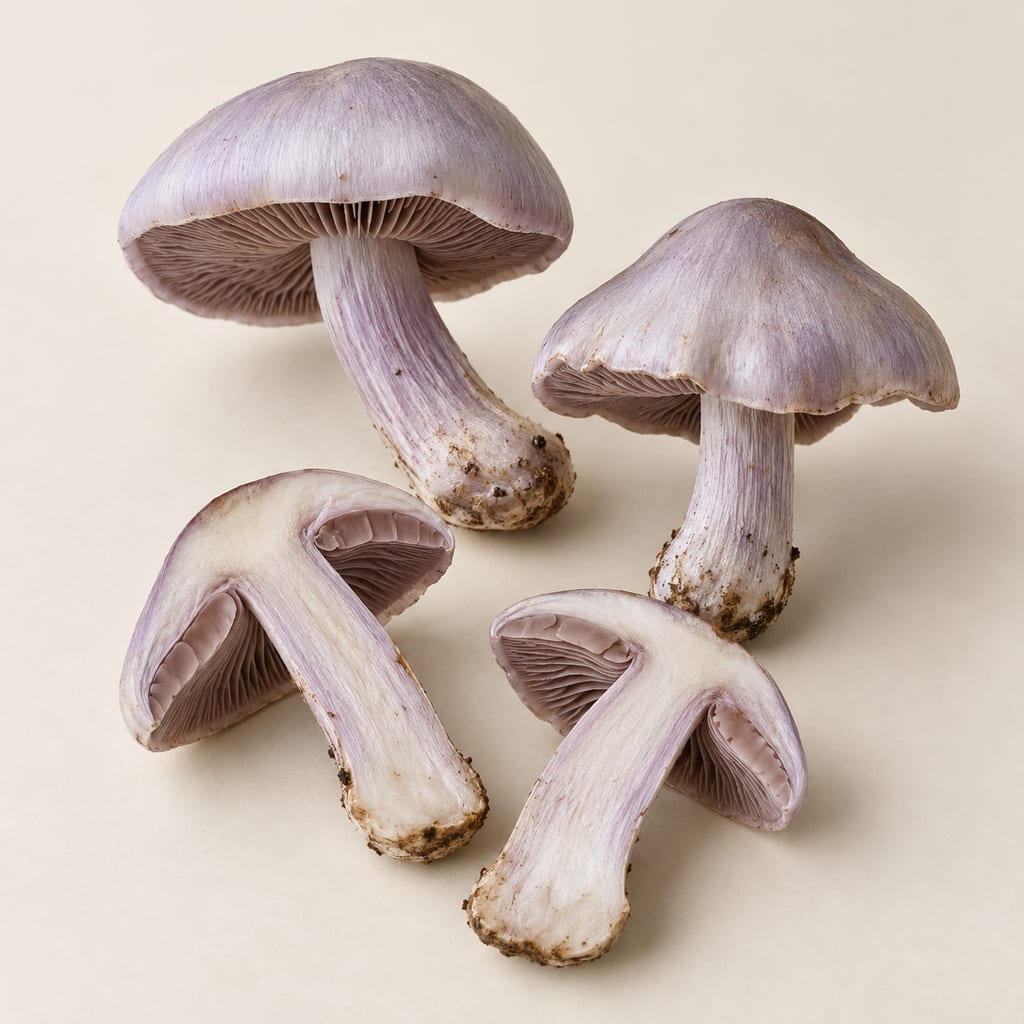
A violet woodland webcap with conflicting edible classifications. Current field guidance discourages eating it; this entry does not recommend collecting or consuming it.
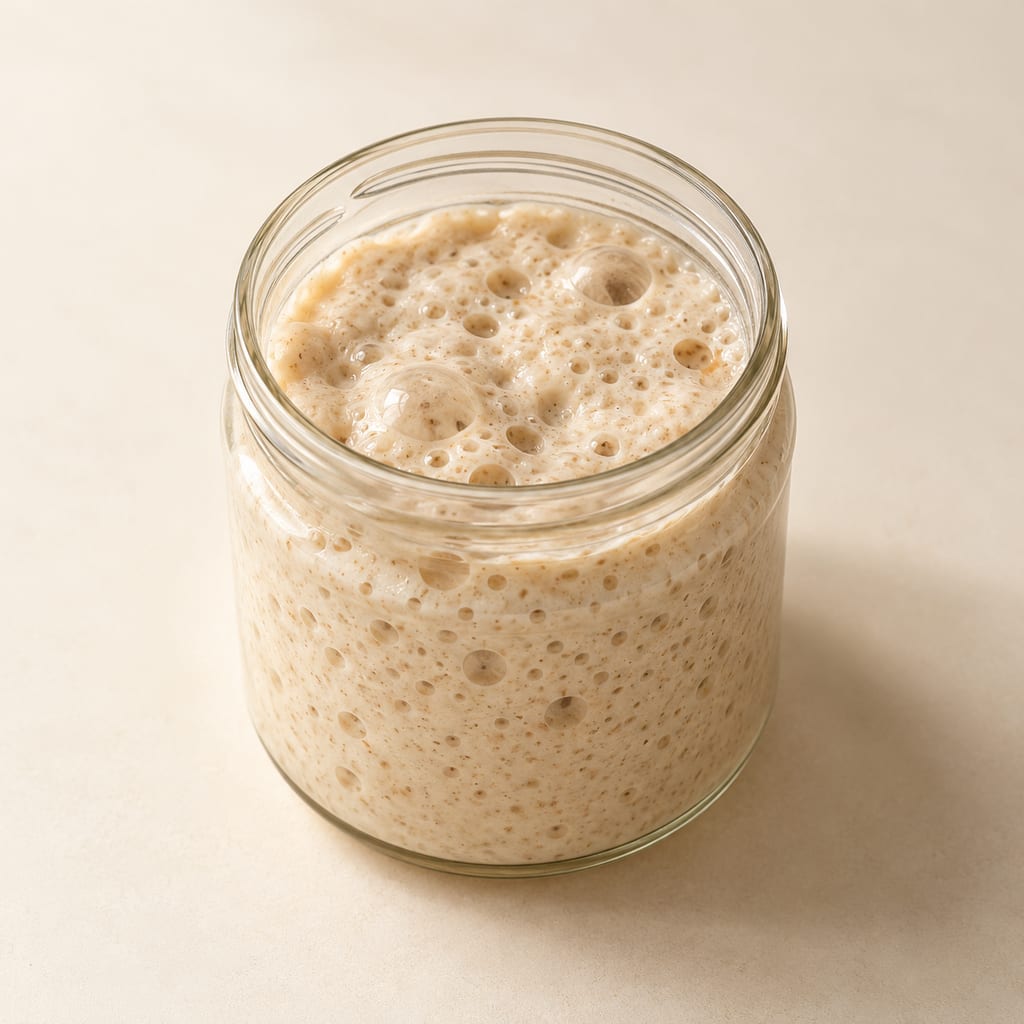
Lievito madre, or pasta madre, is the maintained Italian sourdough culture used to raise panettone and other rich festive doughs; names alone do not fix its strains or its routine.
Men or bánh men is a mixed Vietnamese starch-based rice fermentation starter. Published samples vary; their isolates and performance do not define a standard culture or household formula.