


















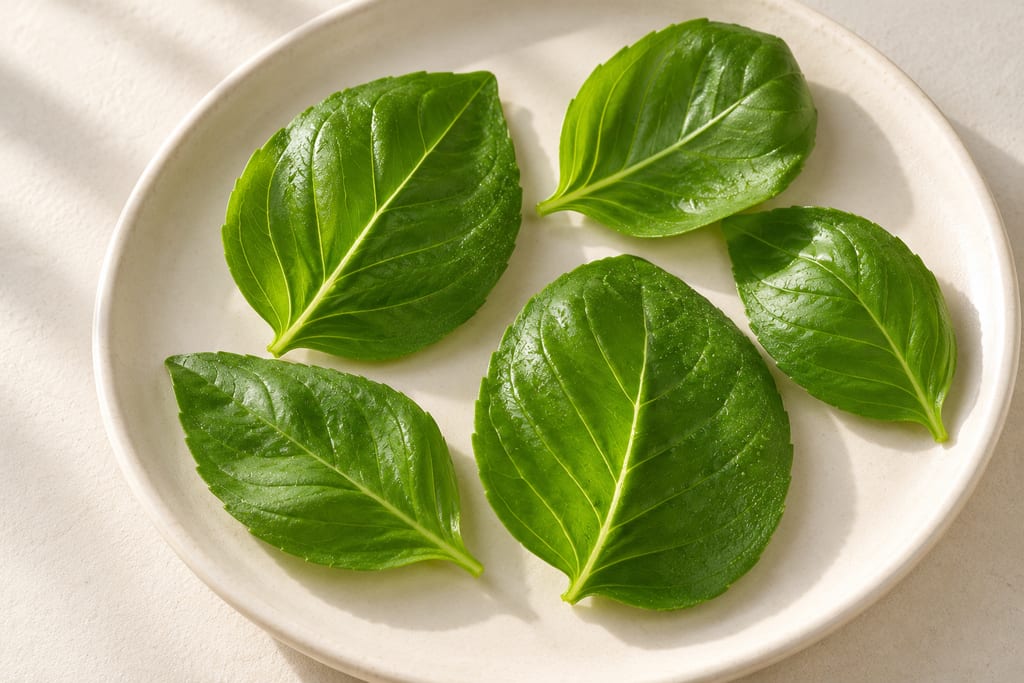
Basil
A source-linked overview of sweet basil's culinary names, one Ligurian pesto account, and the limits of UK and Maryland growing advice.
 FermenteaWhere food goes to change
1086 articles on substrates, cultures and additives.
 Herbs139
 Seed, bark and berry spices18
 Dried chilli products10
 Hops and brewing botanicals9
 Fresh chillies8
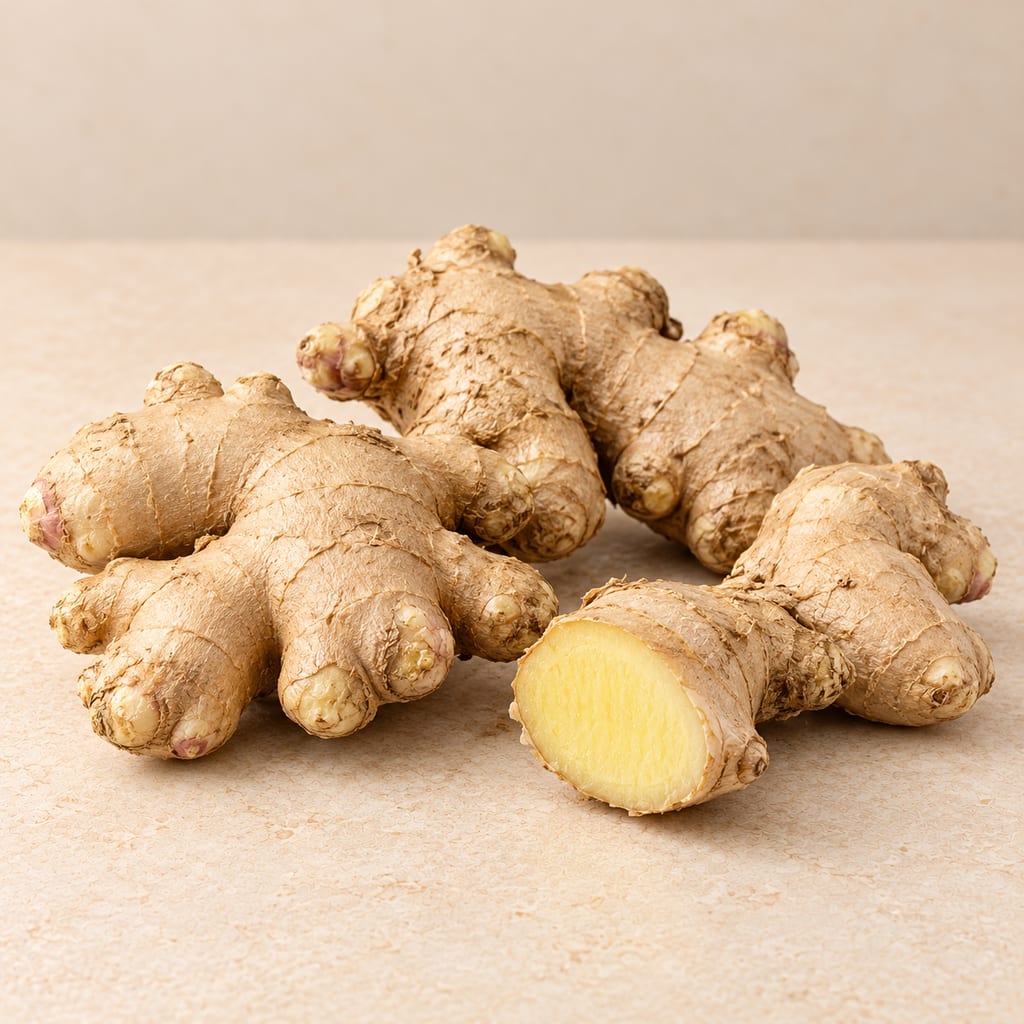 Aromatic roots and rhizomes7
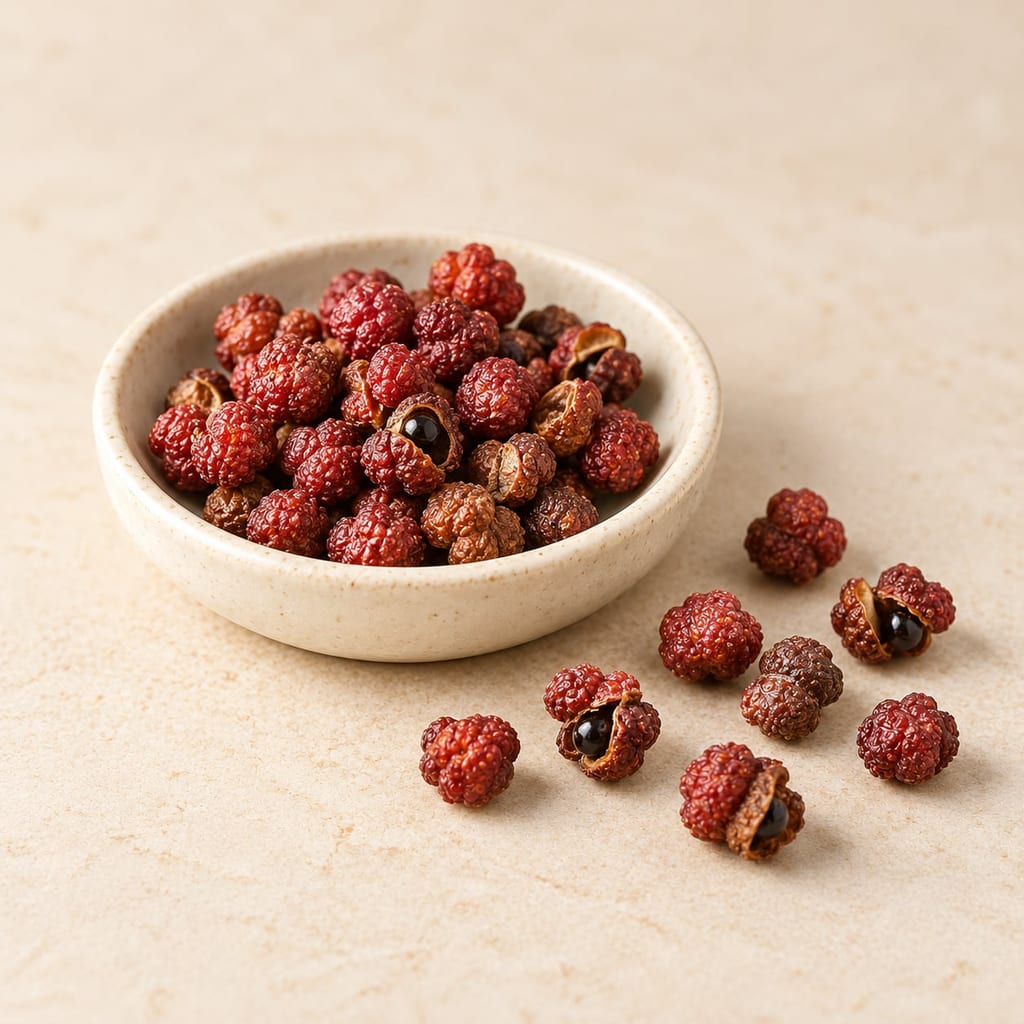 Peppercorns6
A source-linked overview of sweet basil's culinary names, one Ligurian pesto account, and the limits of UK and Maryland growing advice.
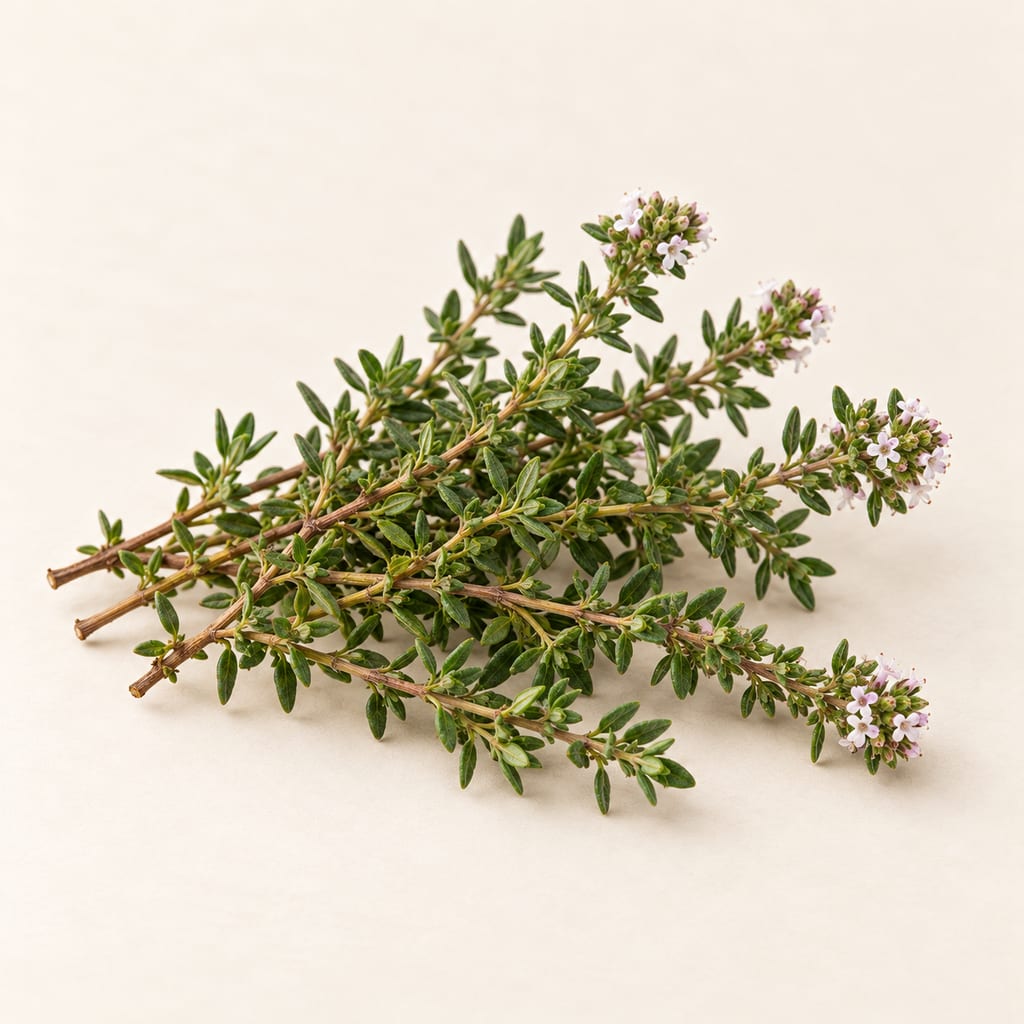
A culinary thyme with source-specific garden guidance and a regional Italian record of seasoning and tisane use.
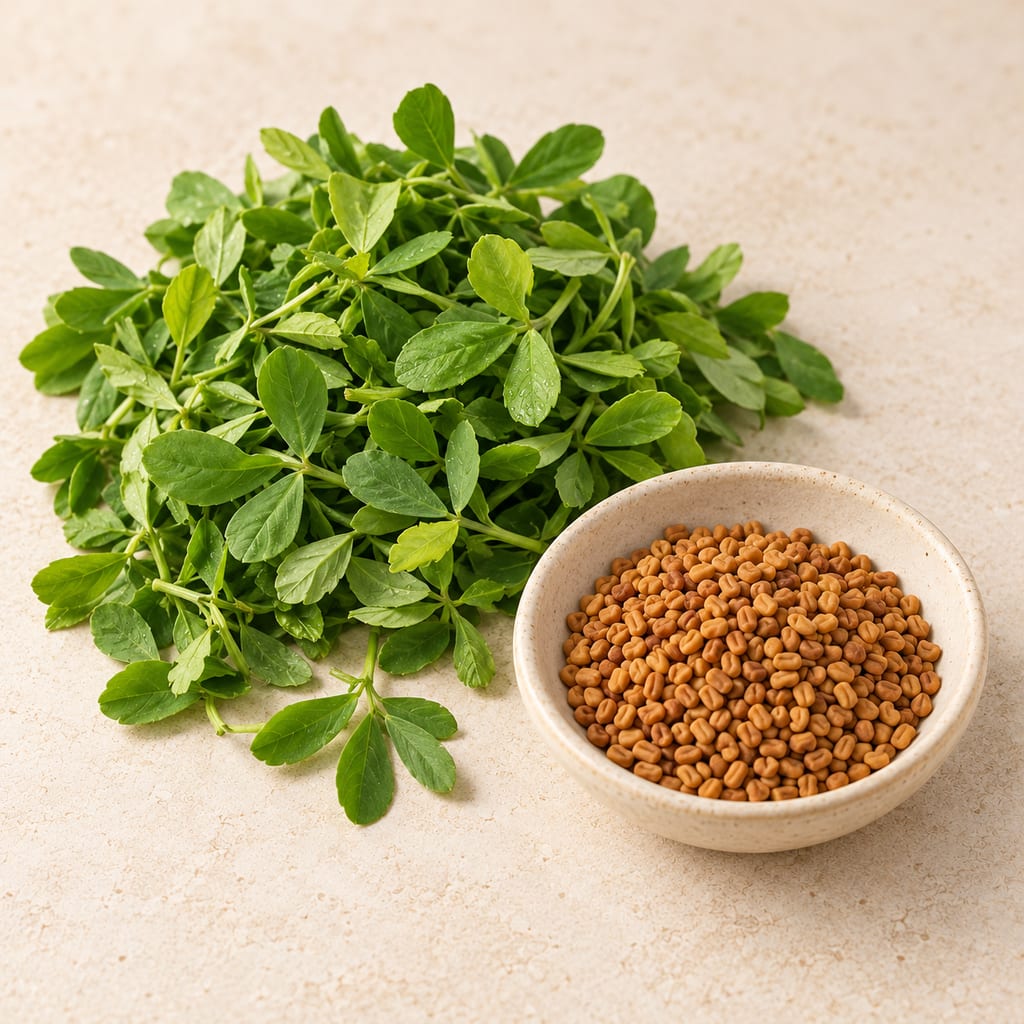
Fenugreek has separate leaf and seed food uses. This account distinguishes Tamil Nadu field guidance and a Gujarat protected-crop trial from two Egyptian station experiments, regional food reports and untested household container growing.
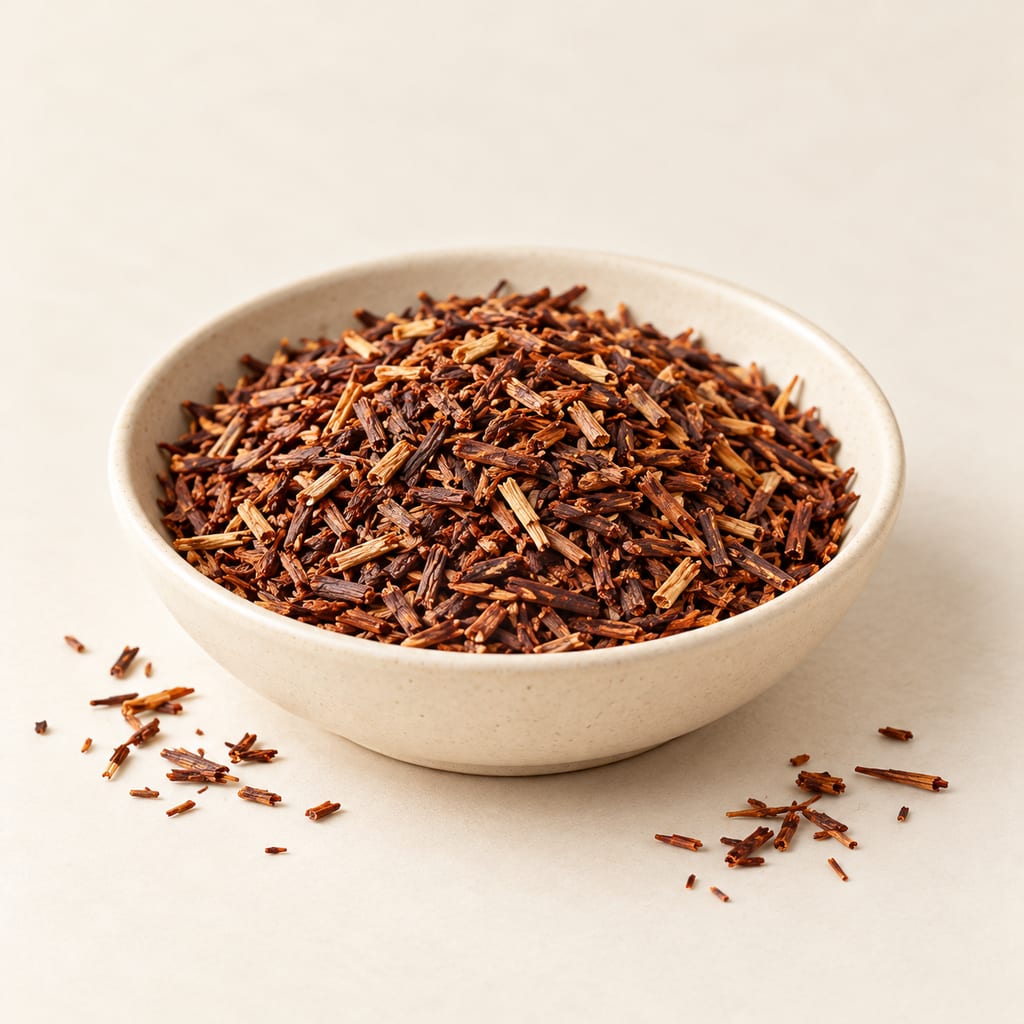
South African tea use and crop reports describe A. linearis, while cultivar, wild ecotype and regional growing observations remain distinct. No complete consumer recipe or universal growing threshold was established.
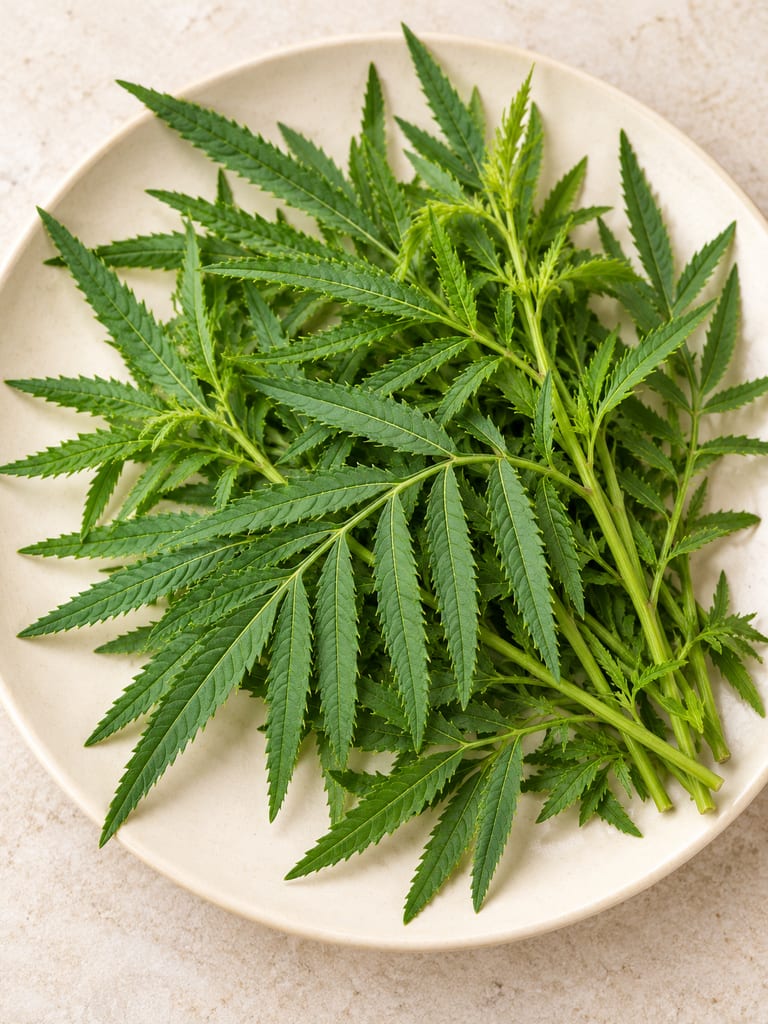
A source-bounded account of Tagetes minuta in Peruvian food and cultivation records, including the limits of the shared name huacatay.
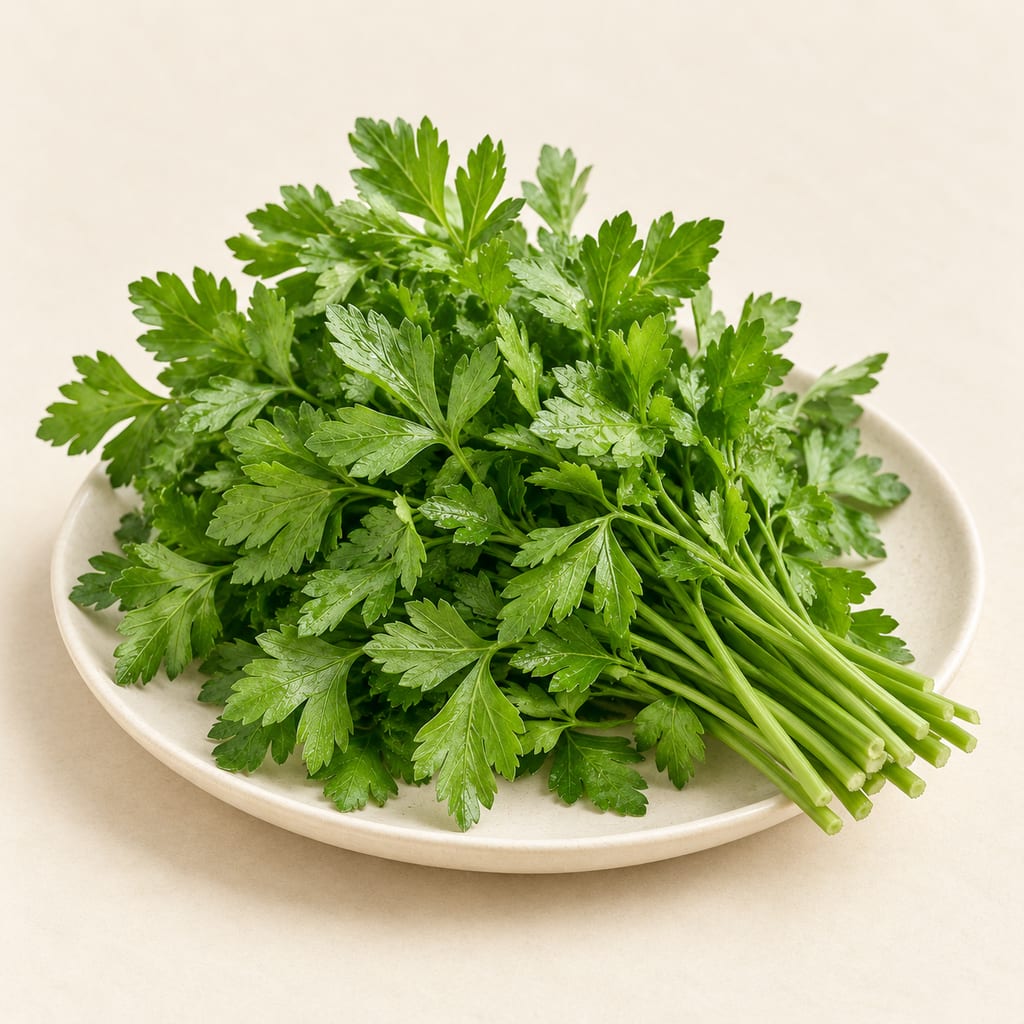
Parsley (Petroselinum crispum) is a cultivated Apiaceae herb grown mainly for its fresh leaves, though root parsley is a separate crop form. Flat-leaf and curly-leaf parsley differ in leaf shape and reported flavour.
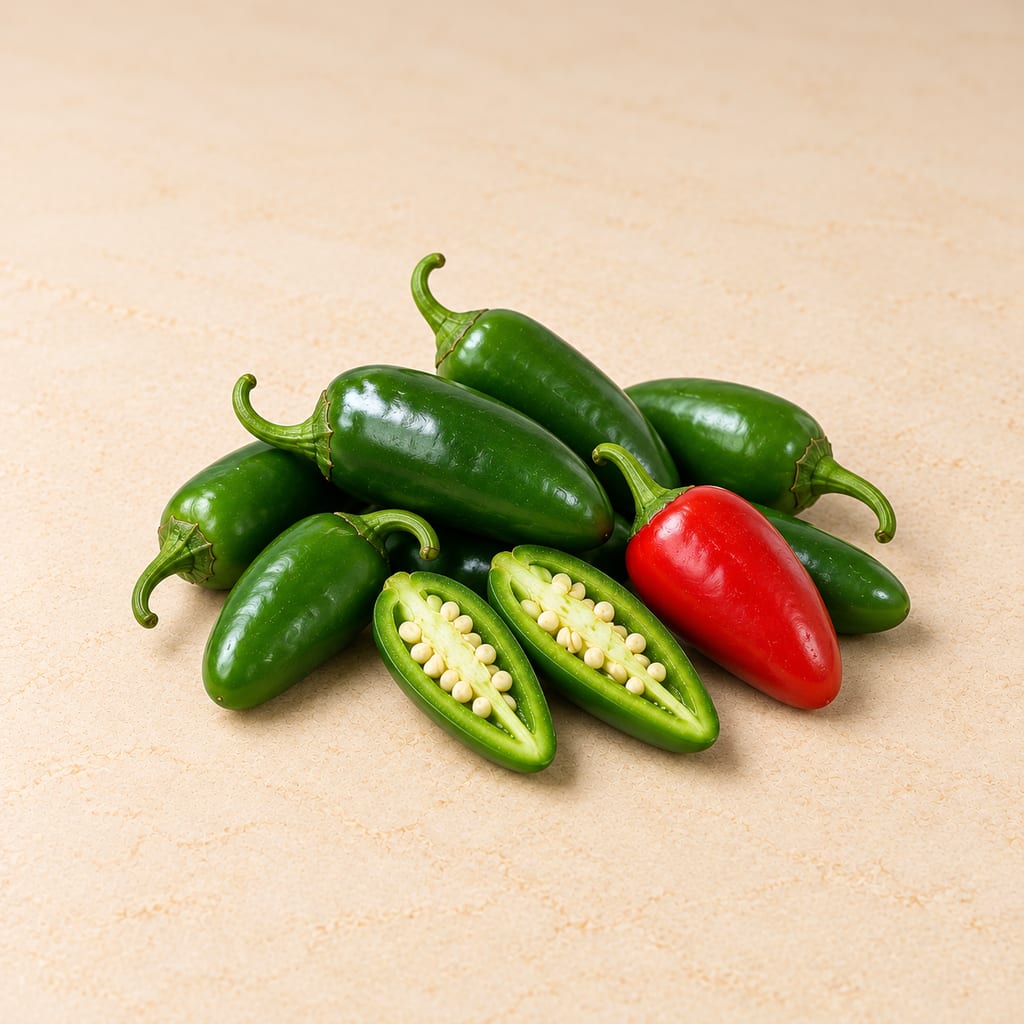
Jalapeño is a named type of Capsicum annuum, usually sold green and also eaten red when ripe. It has a fresh green aroma and a reported heat range of about 2,000–8,000 Scoville units.
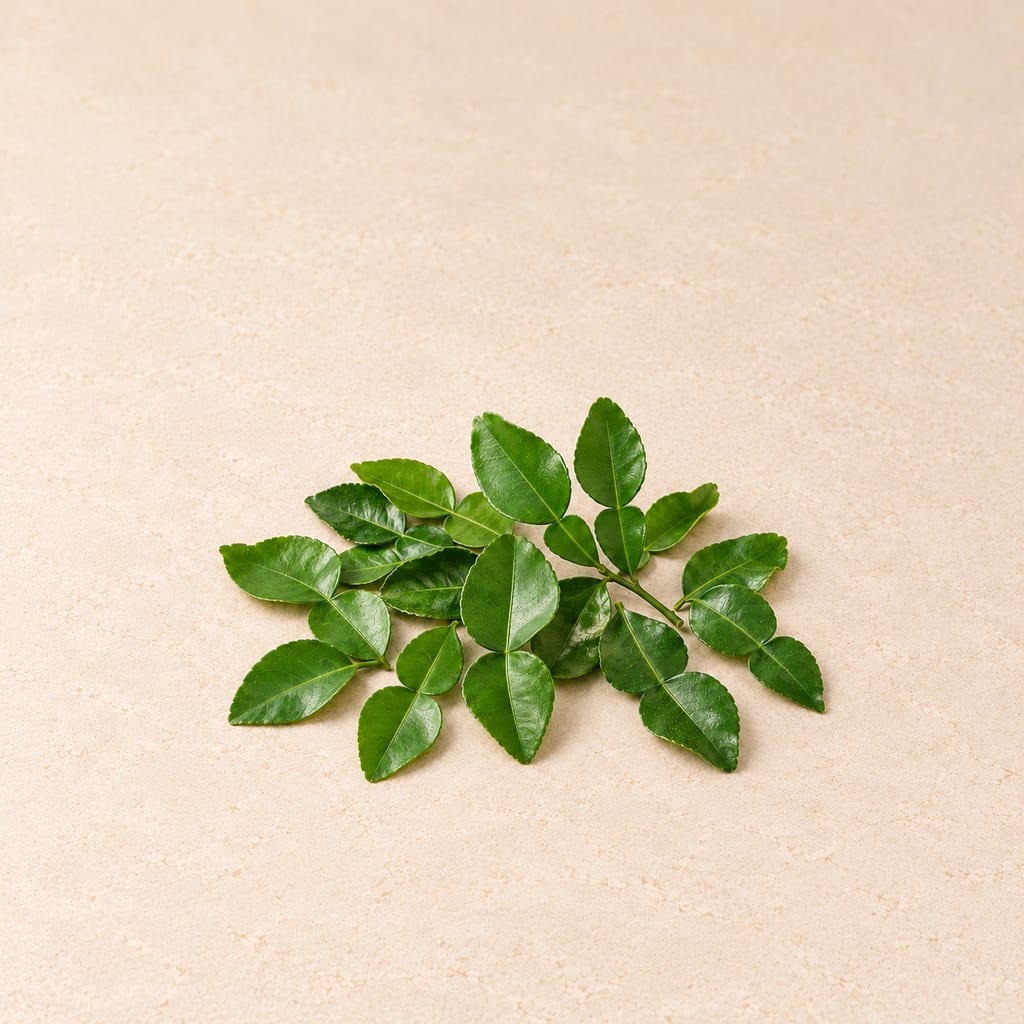
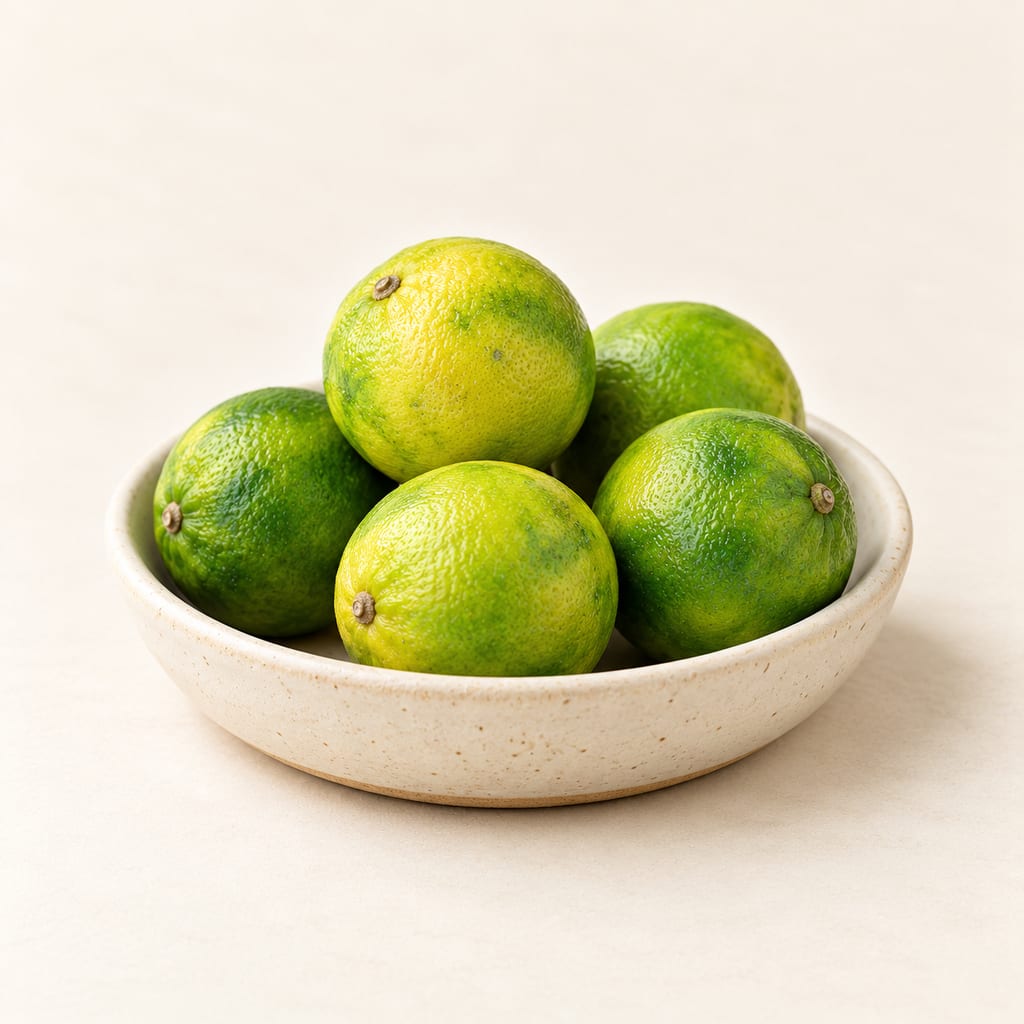
The fragrant leaves of Citrus hystrix bring a distinctive citrus aroma to Southeast Asian soups, curries, pastes and condiments.
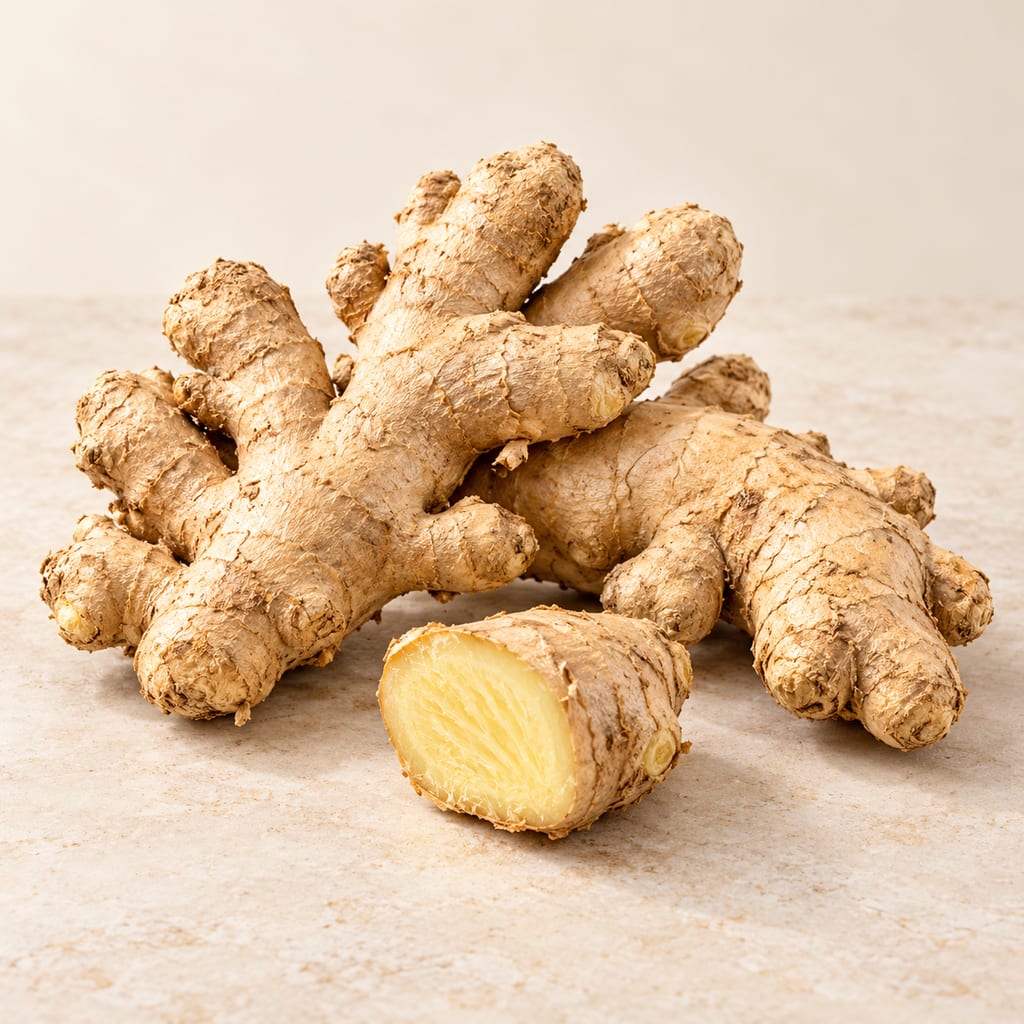
Fresh ginger is the aromatic underground stem of Zingiber officinale, used as a pungent ingredient in sauces, preserves, fermented foods and drinks.
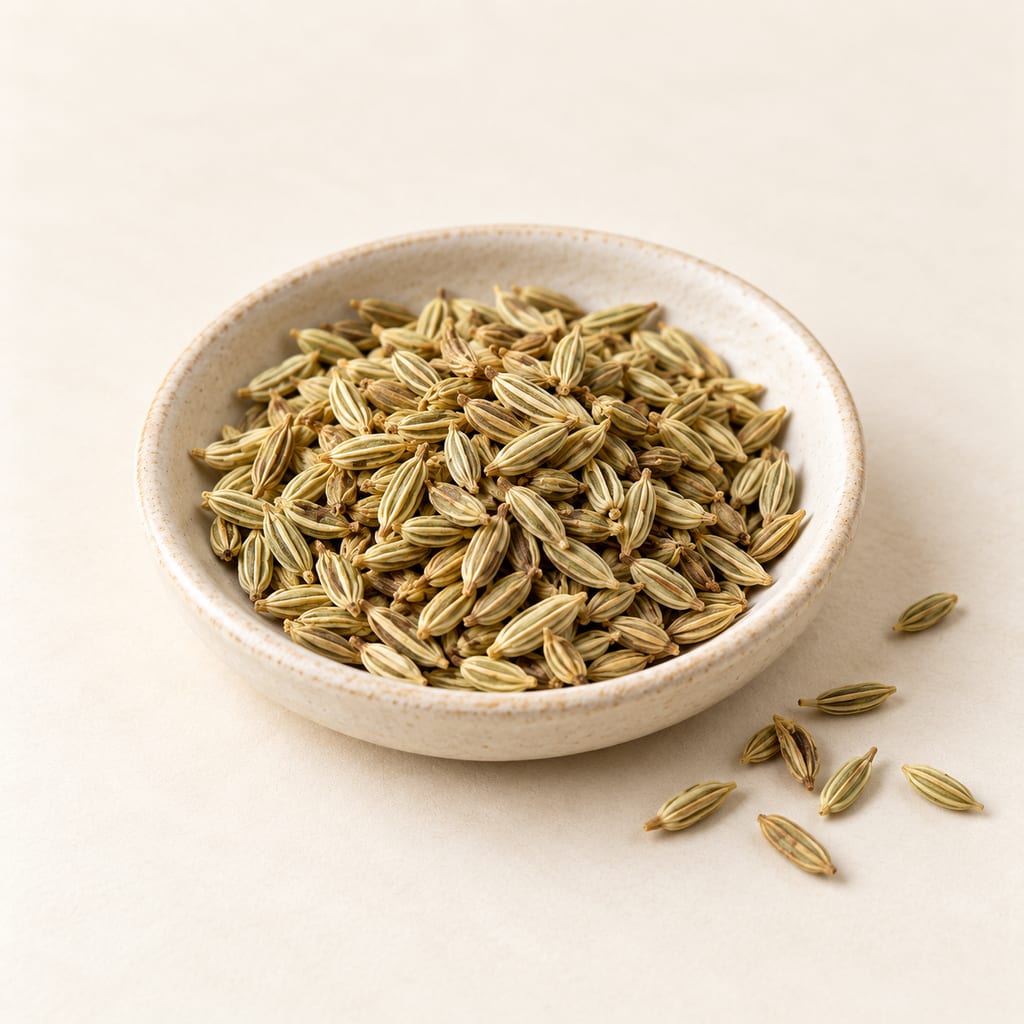
Fennel seed is the dried aromatic fruit of Foeniculum vulgare; a Himachal Pradesh survey records it among the seasonings of Galgal pickle.
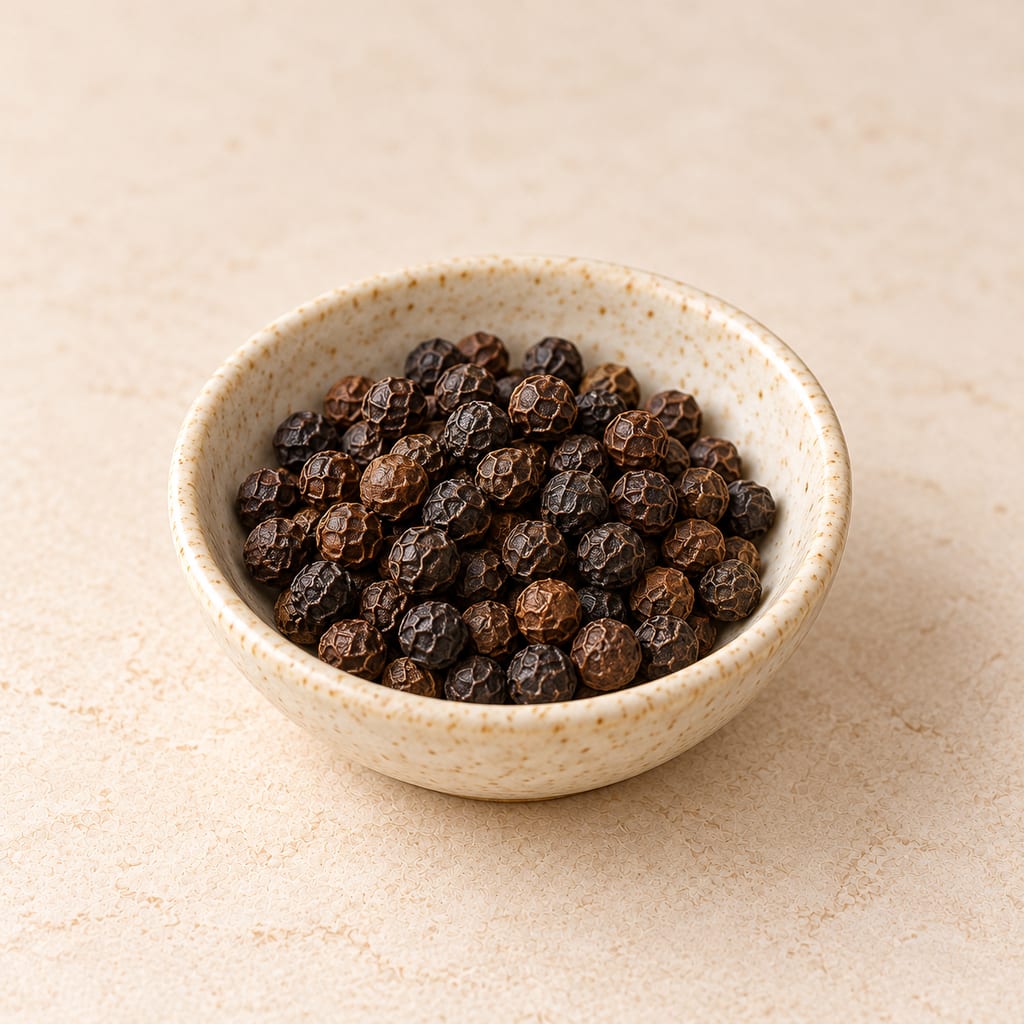
Whole peppercorns are the dried, uncracked berries of Piper nigrum, sold with their pungent seed intact. They season cured sausages such as Genoa-style salami and soppressata di Calabria beside a ground pepper.
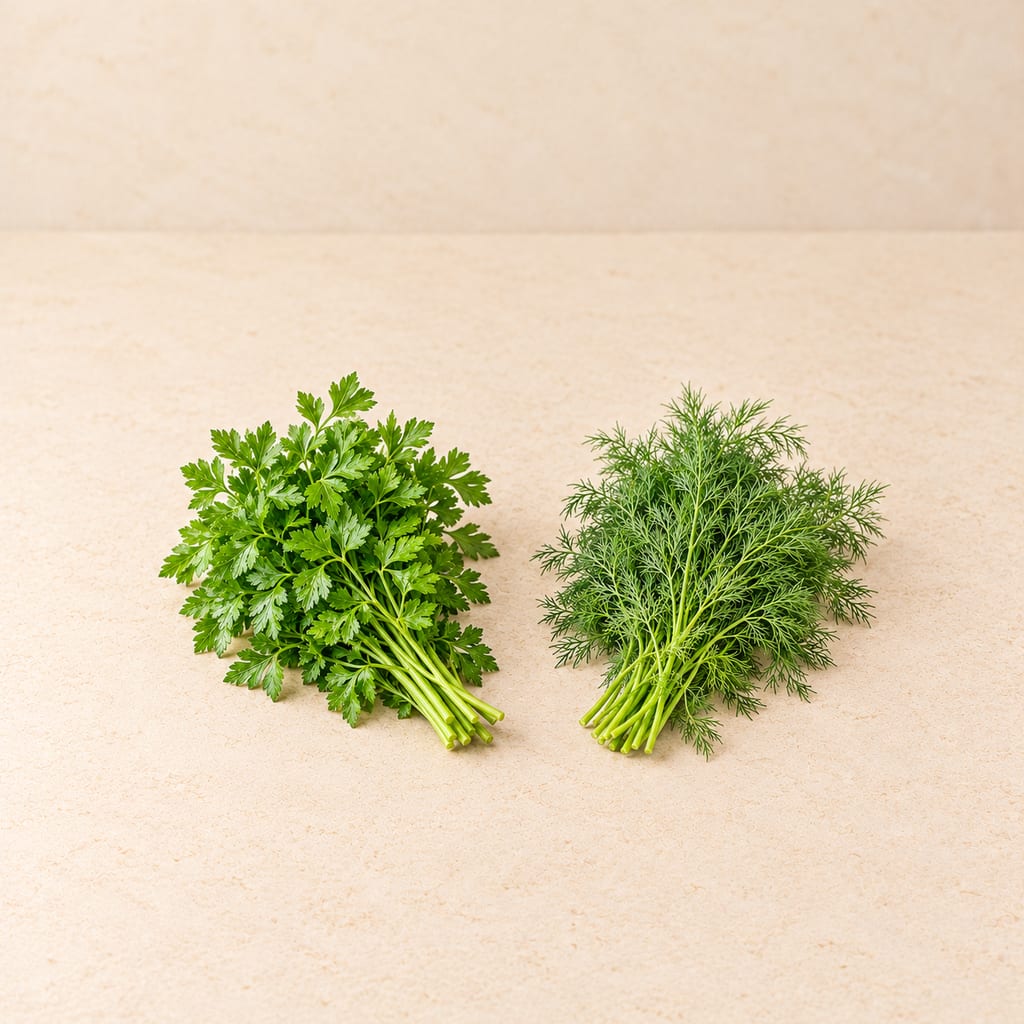
Parsley and dill are two leafy herbs of the carrot family, used fresh for their green, clean flavour. Dill also gives its name to dill pickles, the best-known cucumber ferment.
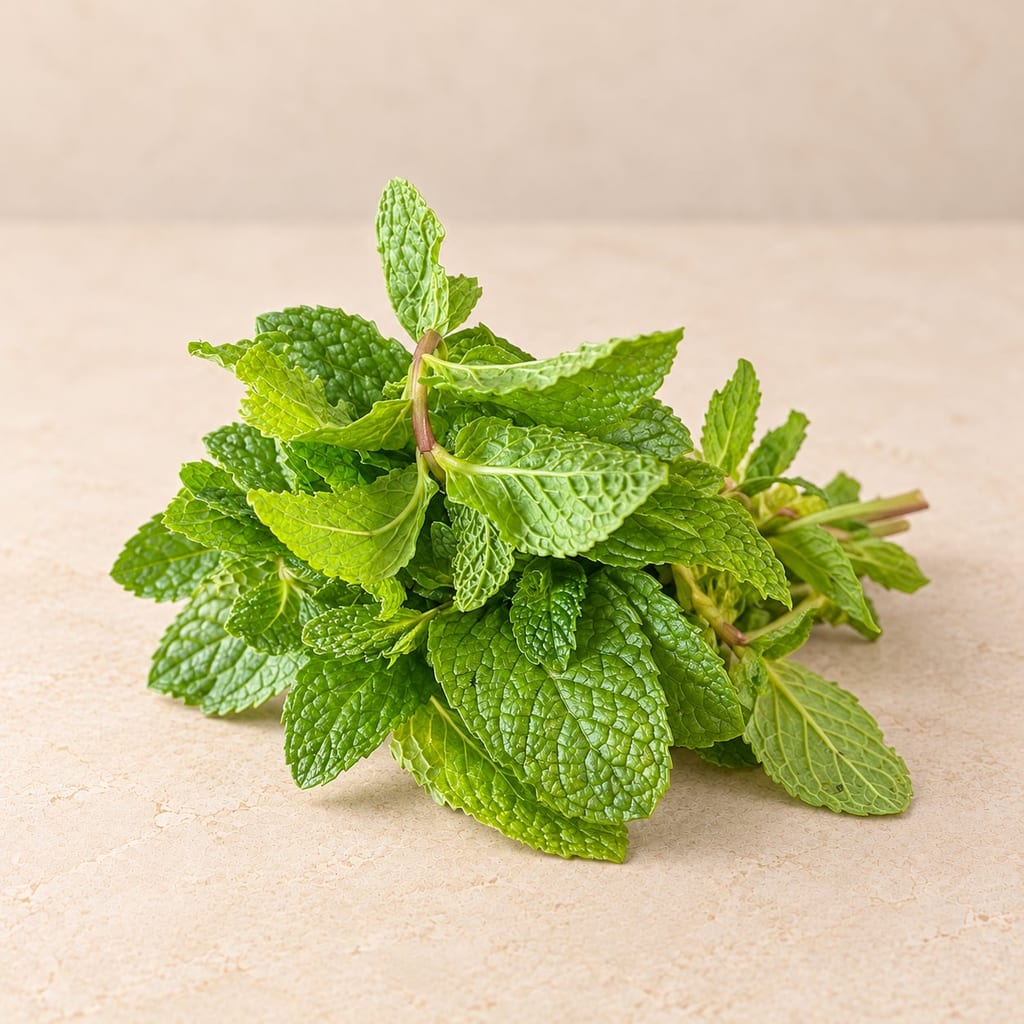
Mint is the fresh leaf of aromatic Mentha plants, chiefly spearmint and peppermint. It gives chutneys, yoghurt sauces and fermented drinks a cool, sweet, green note.
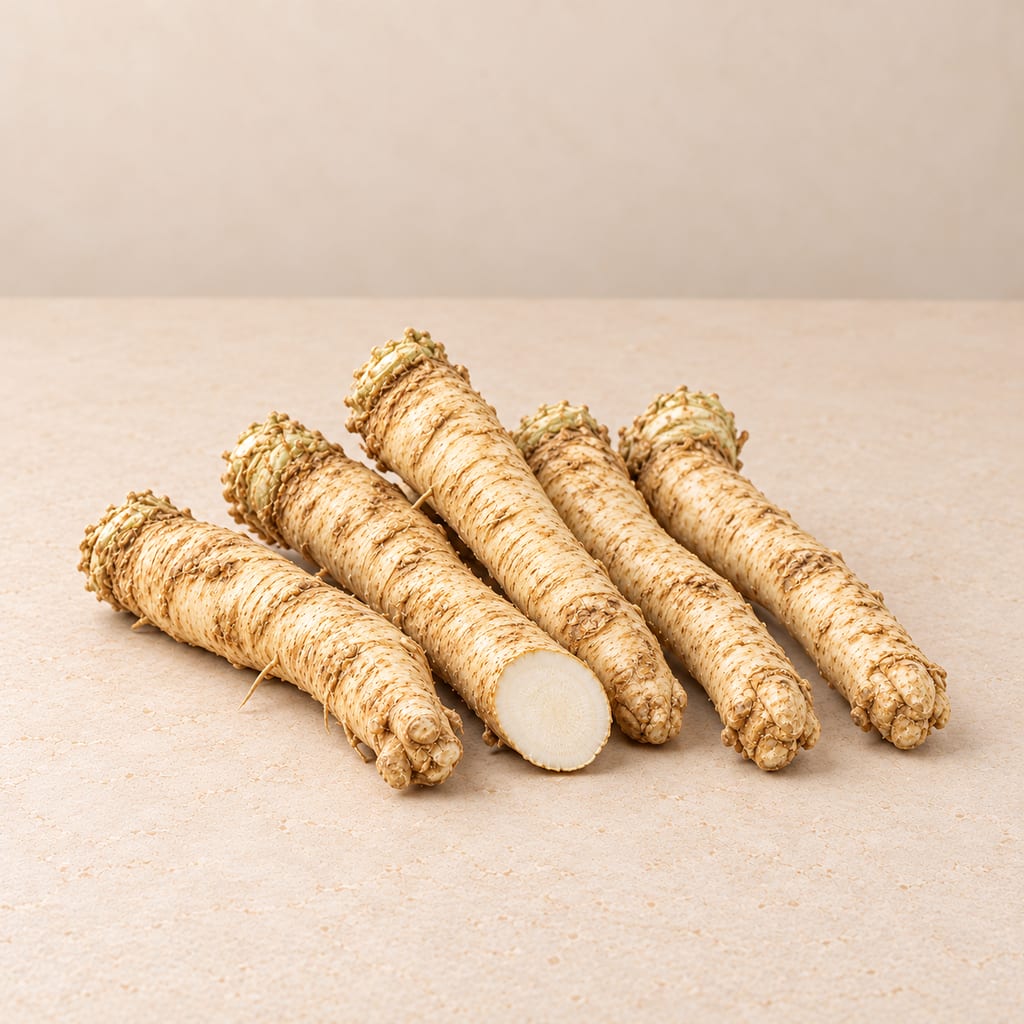
Horseradish is the long white root of Armoracia rusticana, a perennial of the mustard family. Grated, it releases a sharp, nose-clearing heat that vinegar fixes in the sauce.
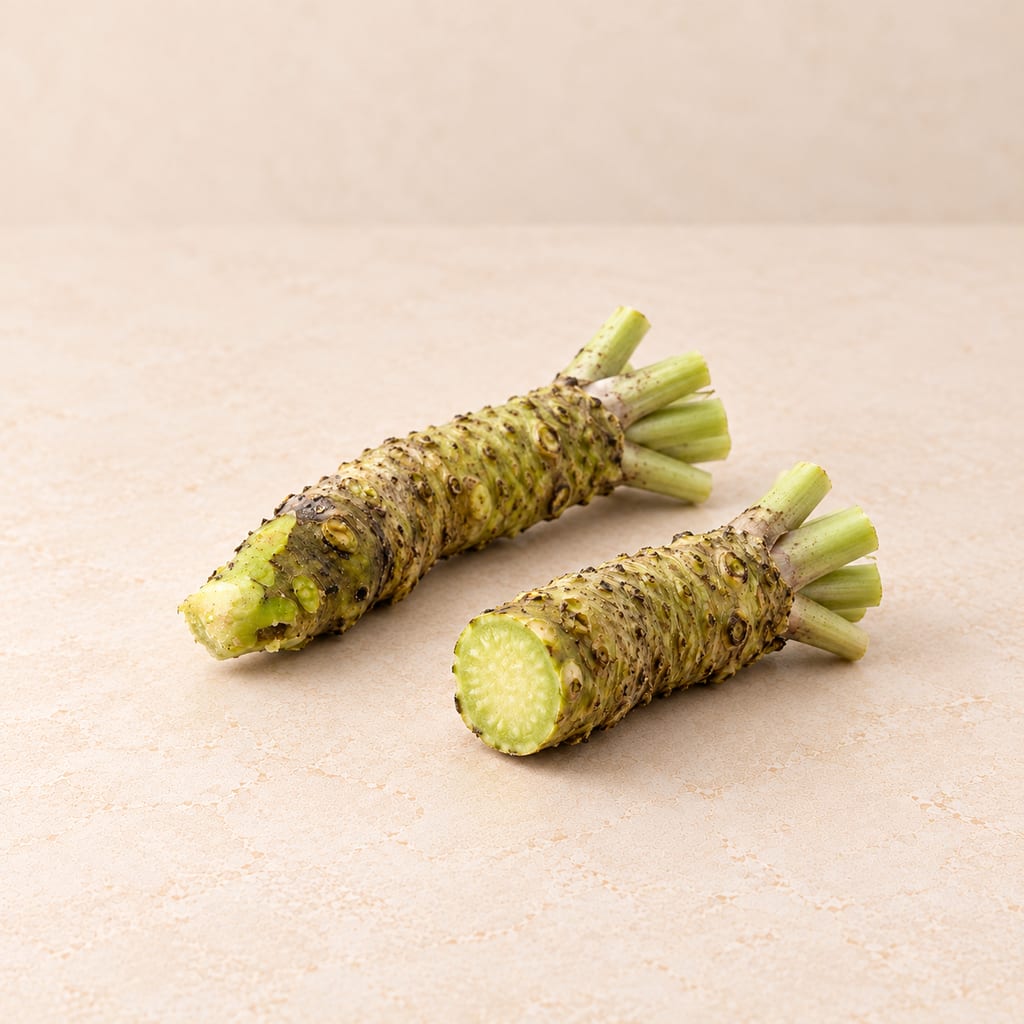
Wasabi is the enlarged stem of Eutrema japonicum, a pungent perennial in the mustard family. Fresh rhizome is grated as a Japanese condiment; powder and prepared paste are separate products.
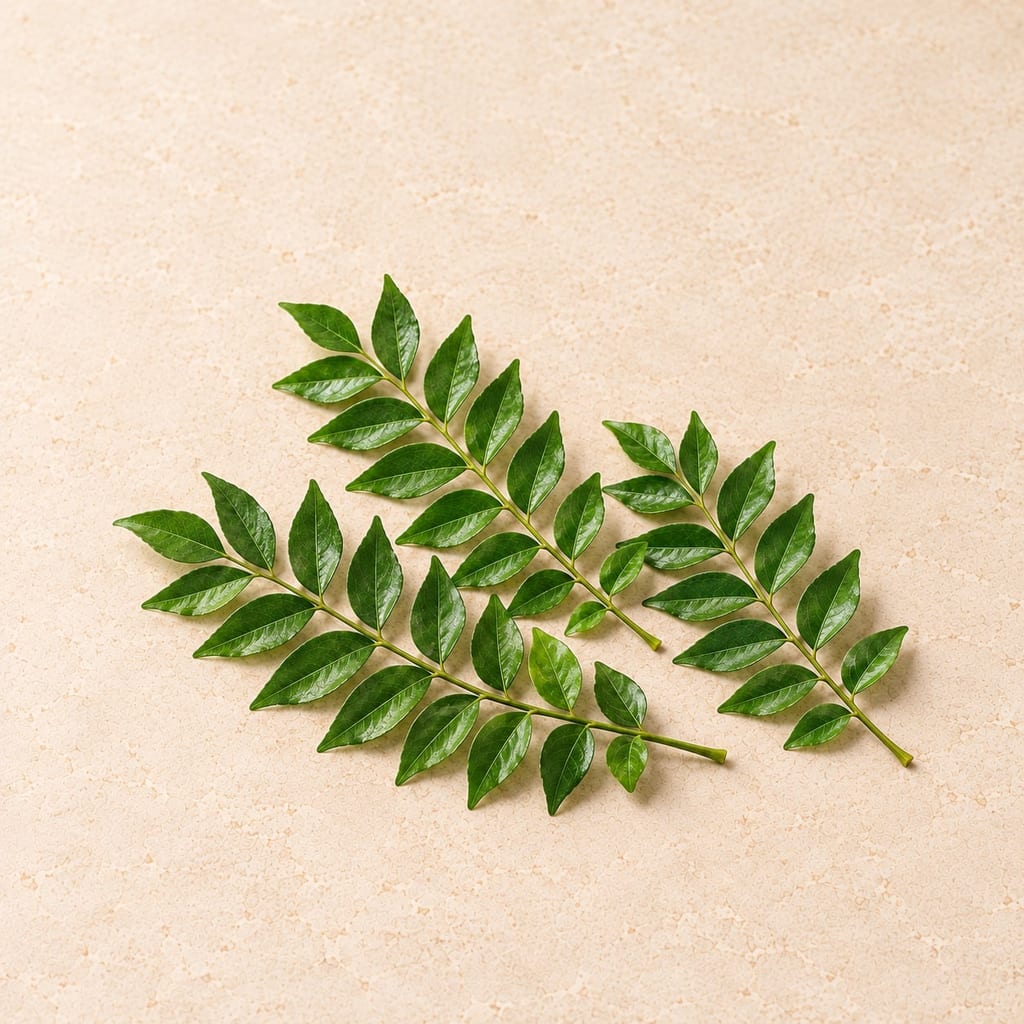
Curry leaves are the glossy compound leaves of the curry tree, Bergera koenigii, used fresh across southern India and Sri Lanka. Fried in hot oil they give a citrusy, nutty, faintly smoky note.
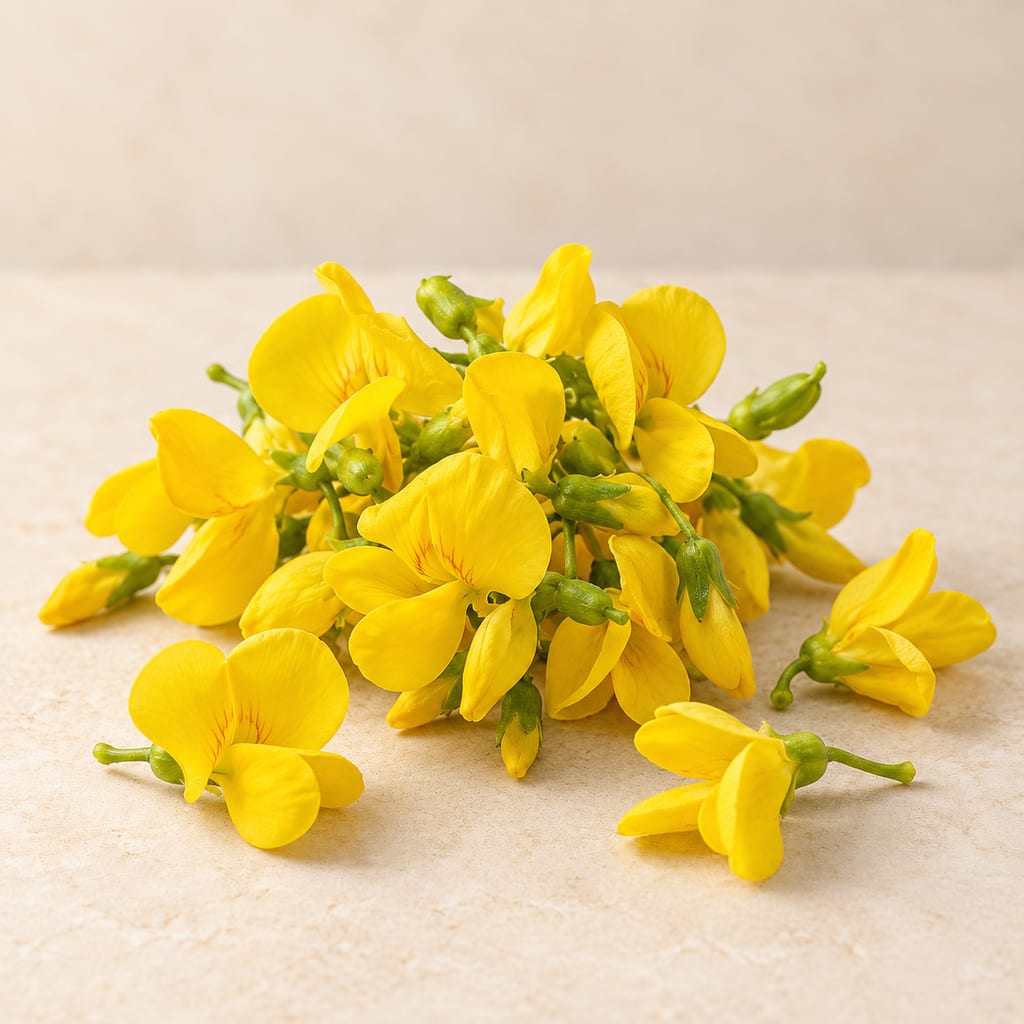
Oaxaca market research documents food uses of Diphysa americana flowers. A separate Honduran Lenca table contains an unvouchered “Diphysa robiniodes” leaf row that remains a provisional crosswalk; forestry observations from Honduras and Guatemala do not confirm that food identity.
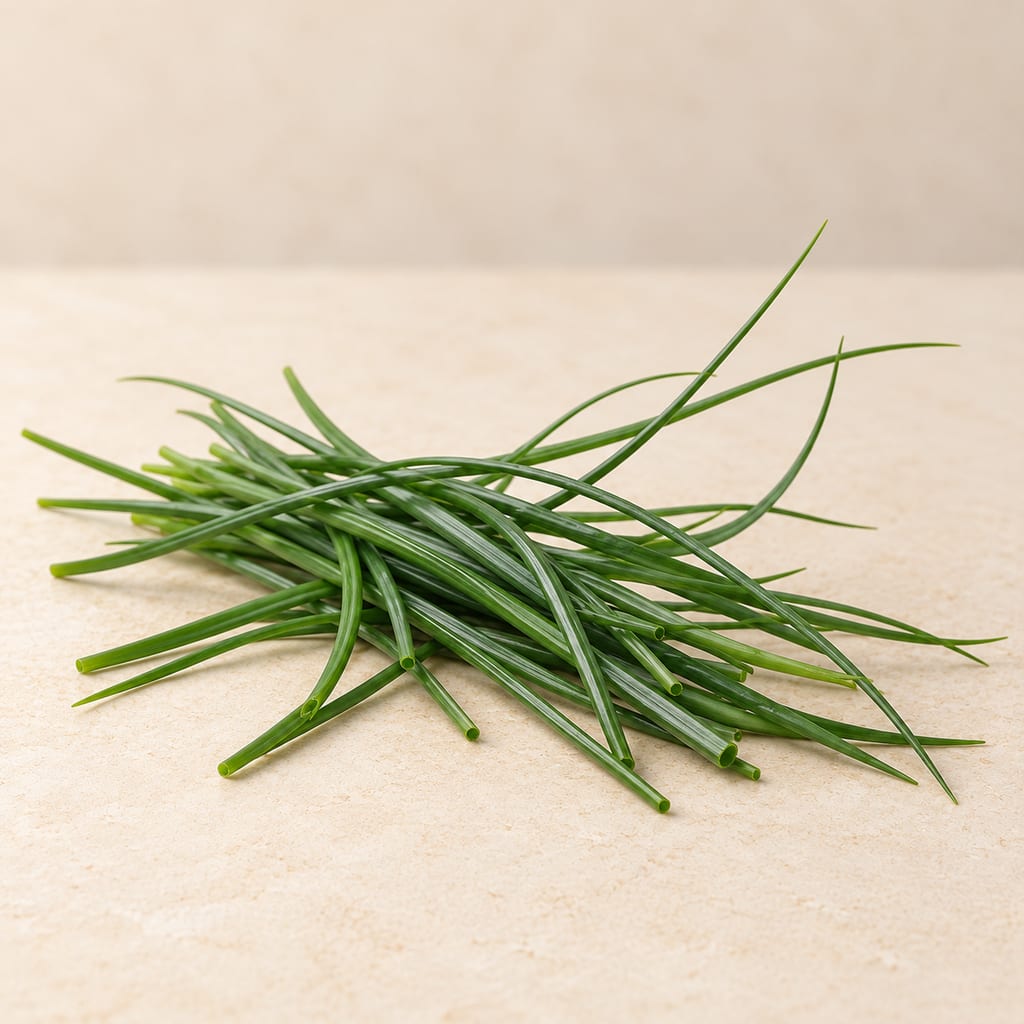
Allium vineale is a widespread European allium with hollow leaves and bulbil-bearing flowerheads. A White Carpathian ethnobotany study records a narrow, source-specific leaf-use tradition; it does not provide a complete recipe or gathering guidance.
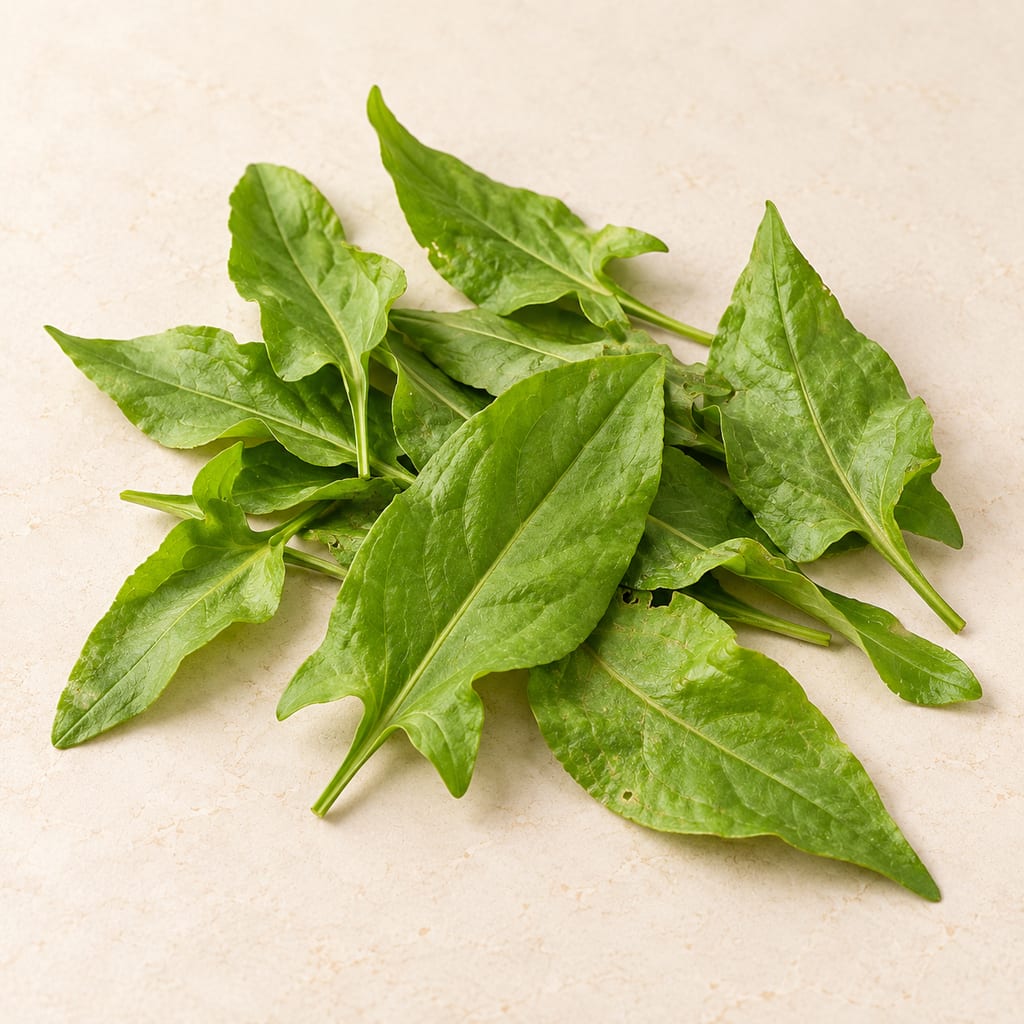
Common sorrel (Rumex acetosa) has a tart leaf used in salads and cooked dishes. UK growing guidance covers outdoor beds and containers, while the source does not give a numeric cold limit or a complete recipe or food-safety threshold.
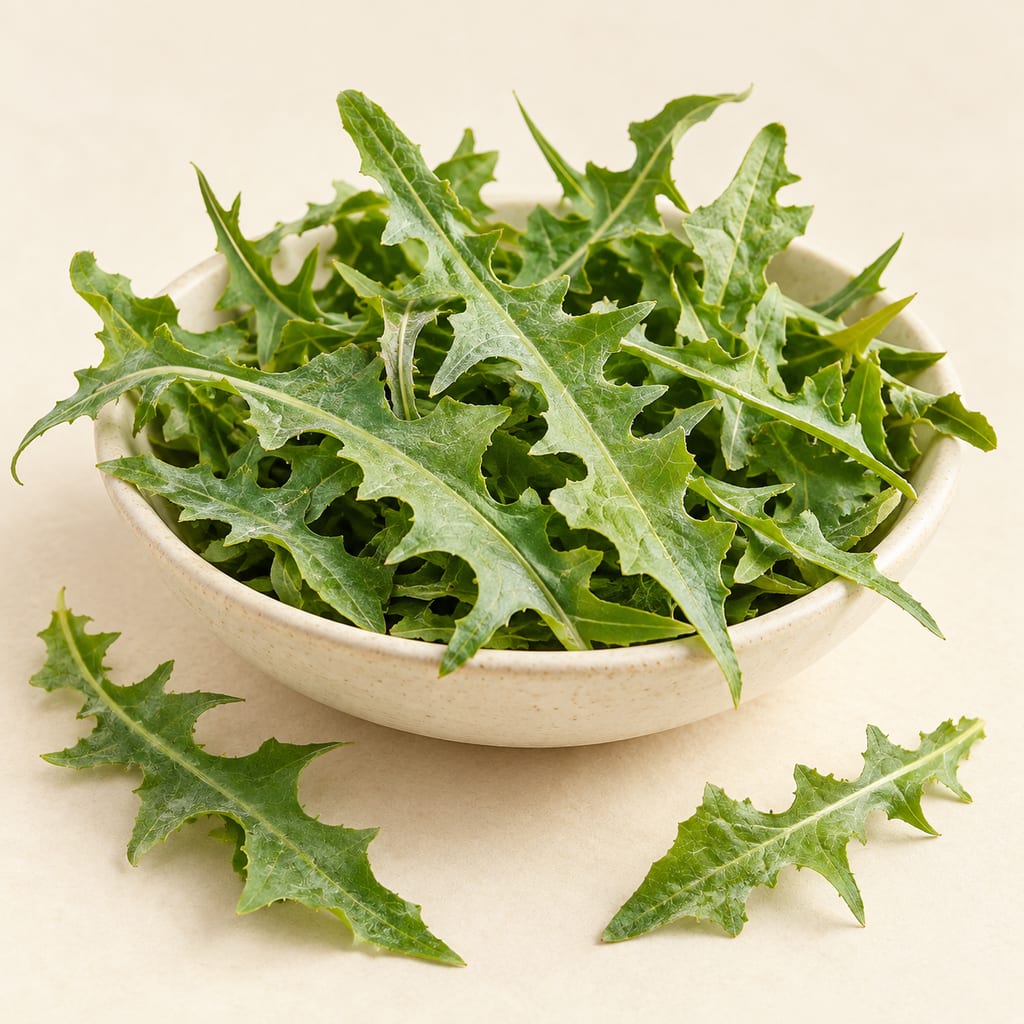
One 2017 Mostaganem thesis reports young leaves, later shoot tips and capitula as food. The Algerian food attribution is provisional: the entry has no inspected voucher or informant-level record, and no independent Algerian food source was found.
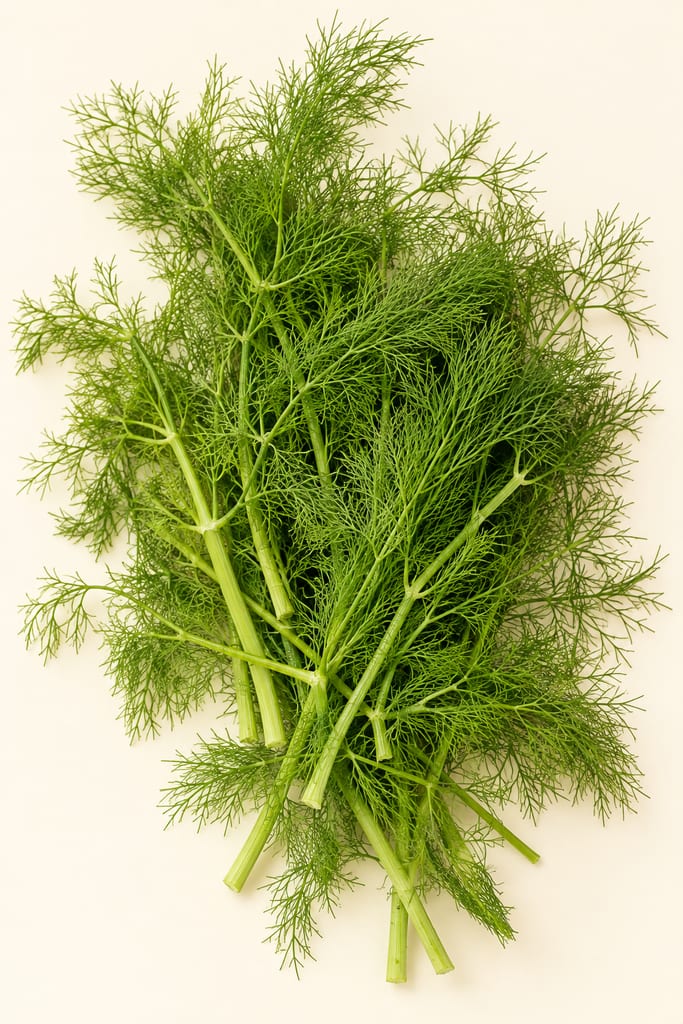
Moroccan and Tunisian sources describe fennel leaves, stems, fruits and bulb forms in different food contexts; one Tunisian folk label also pools fennel with dill.
Timur is recorded as a spice made from fruit in a Nepal study and government growing guide. Sources describe regional cultivation and nursery guidance, but their flowering and planting calendars conflict and do not validate a household food process.
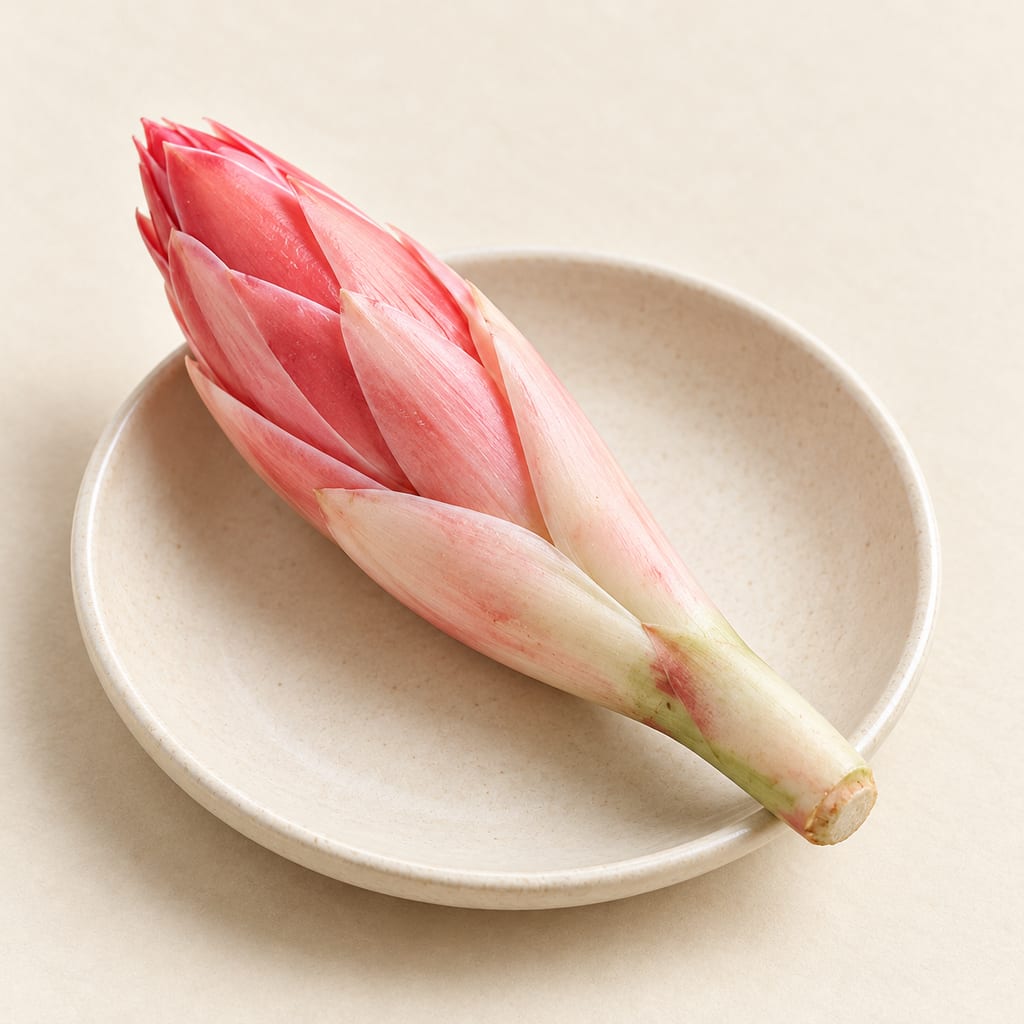
A two-site MARDI trial compared 15 Etlingera elatior accessions in Negeri Sembilan and Terengganu and found yield traits varied by genotype and location.
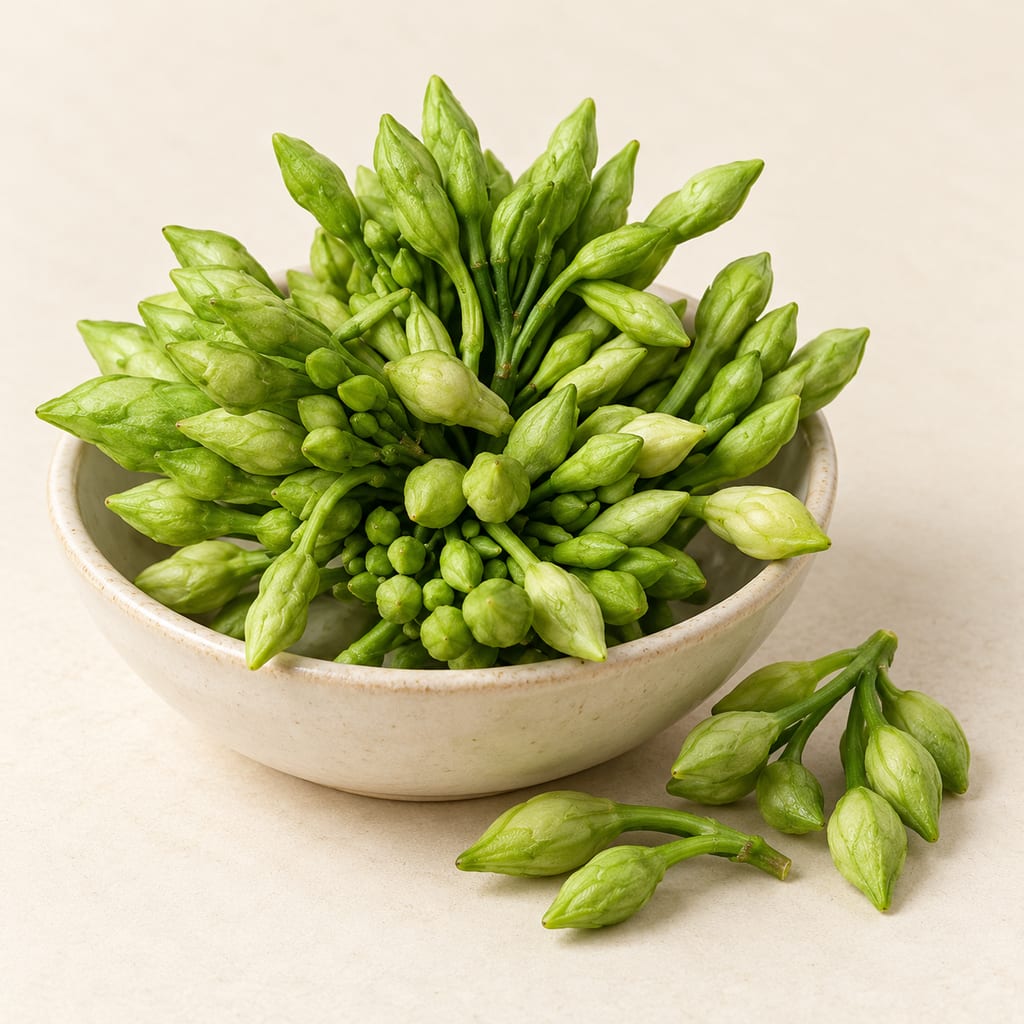
Loroco is the edible flower bud of Echites panduratus (syn. Fernaldia pandurata), eaten in Guatemalan dips, pupusas, soups and rice; local growing and preservation studies leave household production open.
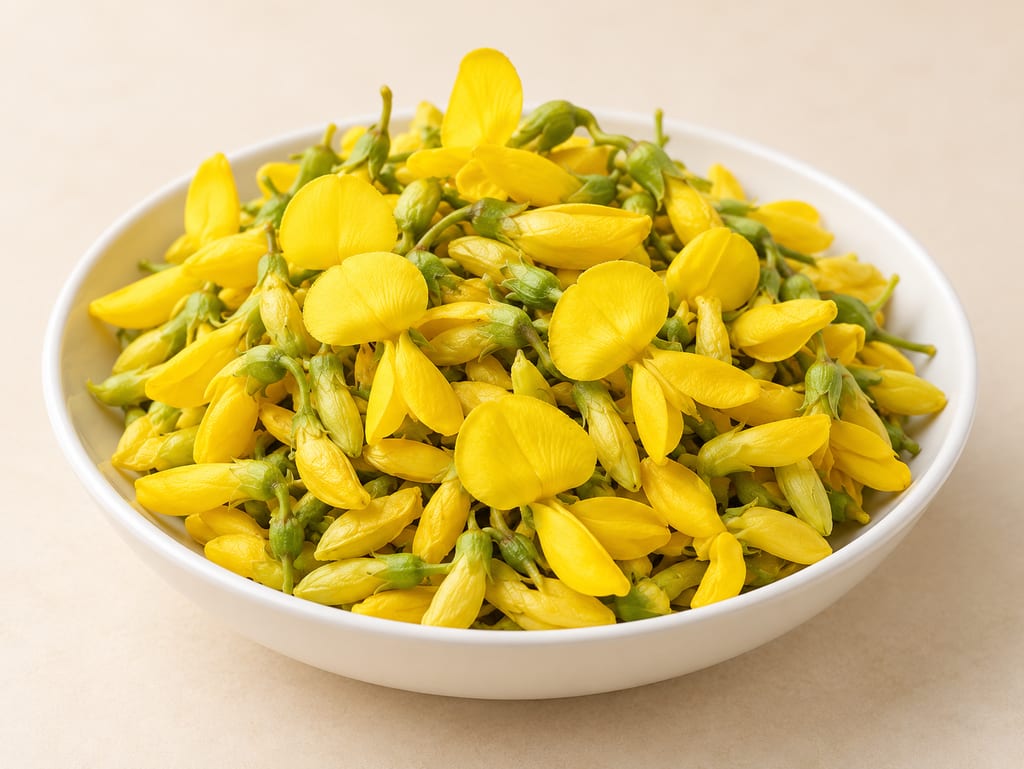
Cambodian accounts describe Sesbania javanica flowers as food, with separate reports of leaves. PROSEA records wetland habitat; a 2003 home-gardening handbook preserves a historical sowing row whose continuation cells cannot be reliably assigned.
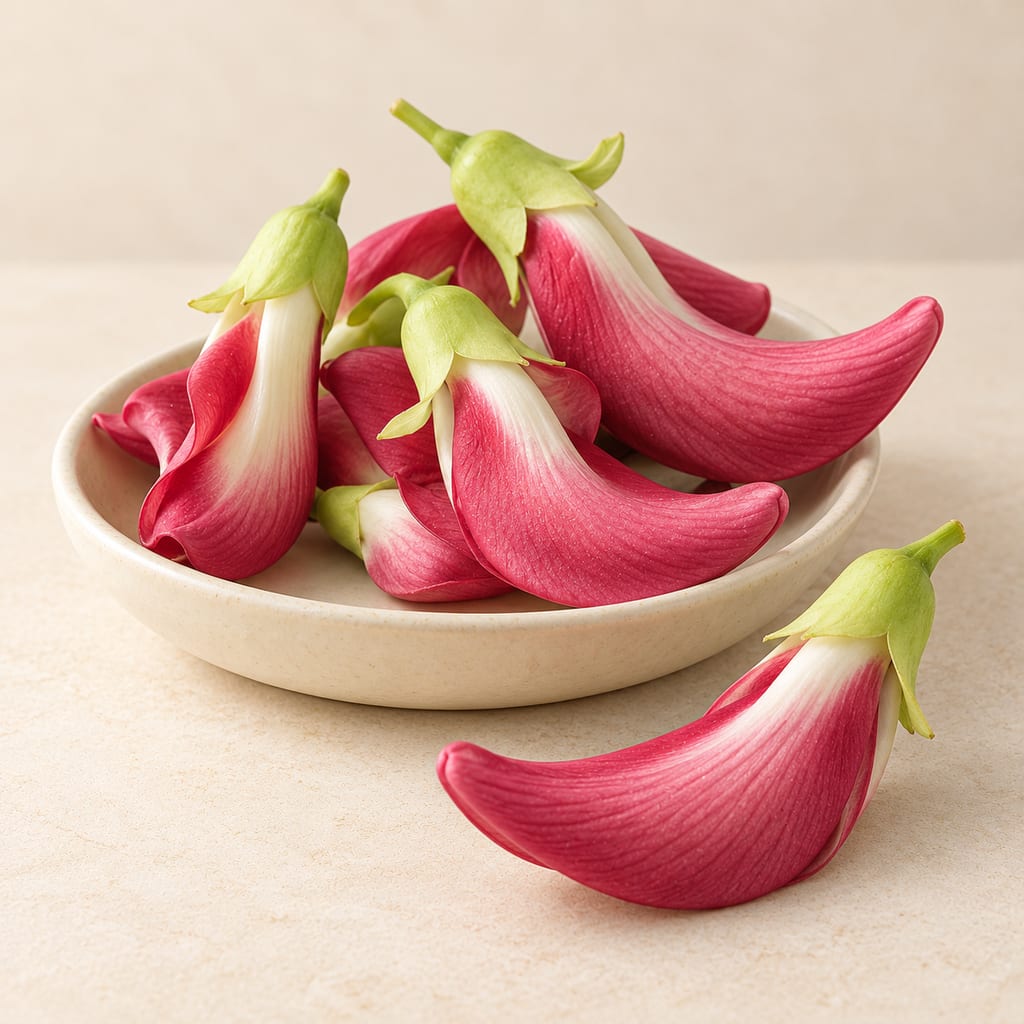
A source-linked account of katuray food uses in Philippine crop guides and an abstract-level regional survey, with conflicting field-spacing figures and incomplete household growing evidence.
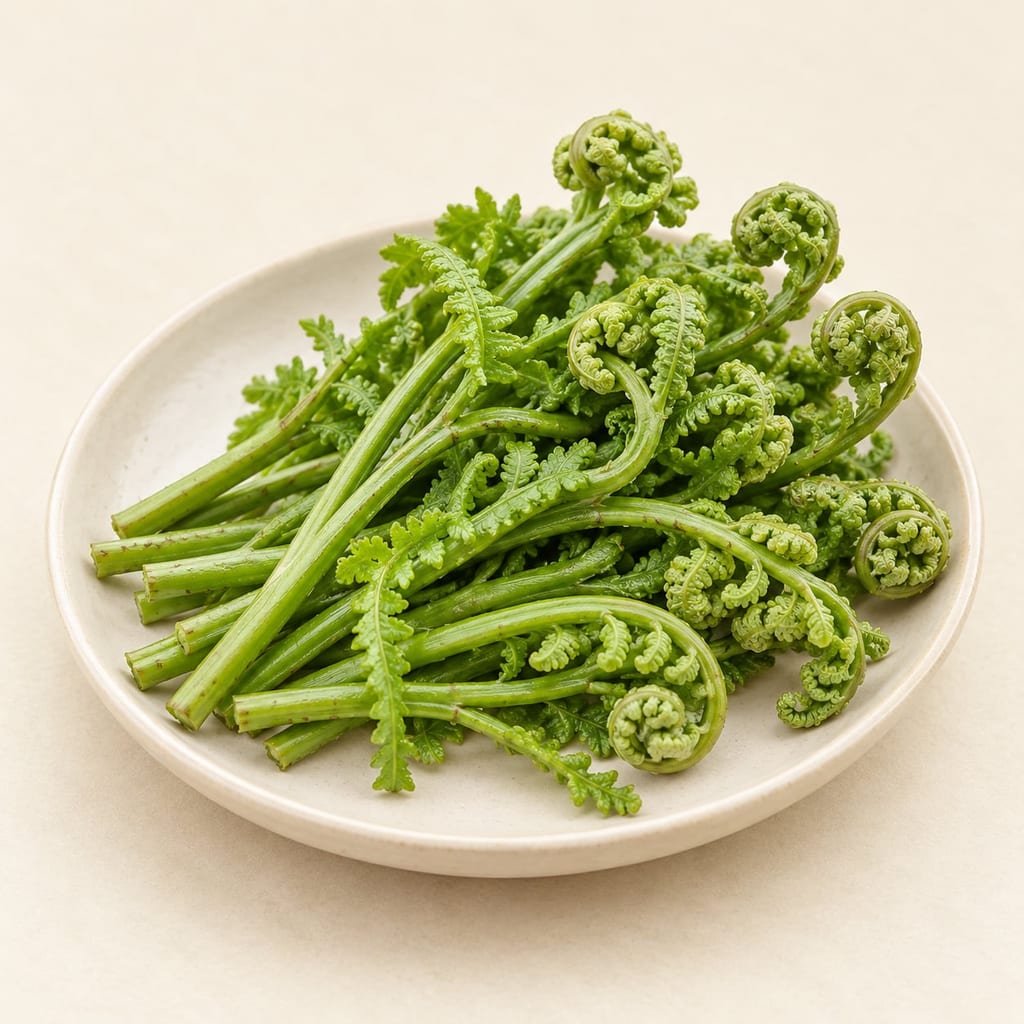
A wild fern recorded as a cooked young-shoot vegetable in one Gurung study in Nepal. Source-specific growing accounts describe wet, partly shaded habitats and propagation, but do not establish a household crop method.
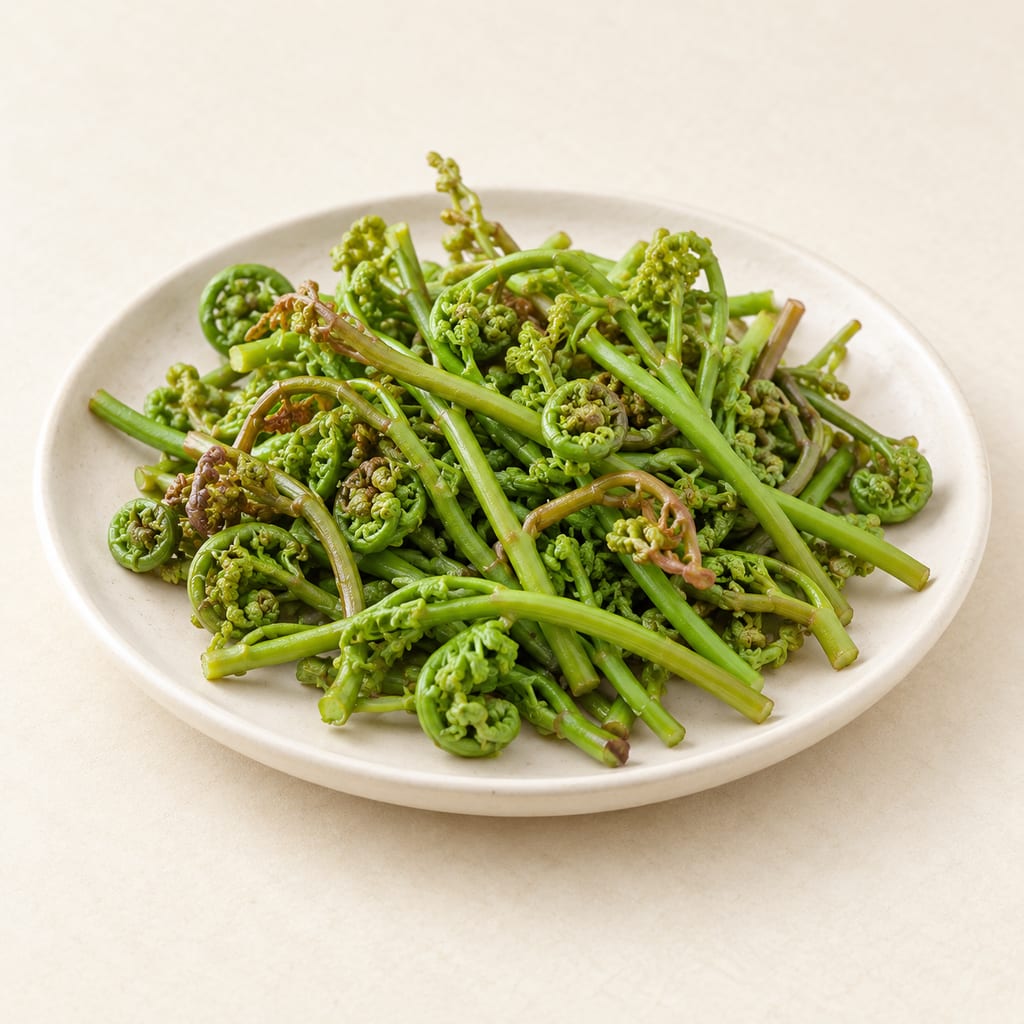
Sarawak sources describe young Stenochlaena palustris fronds as a vegetable and give regional cultivation guidance for nursery propagation, wet field sites and harvest.
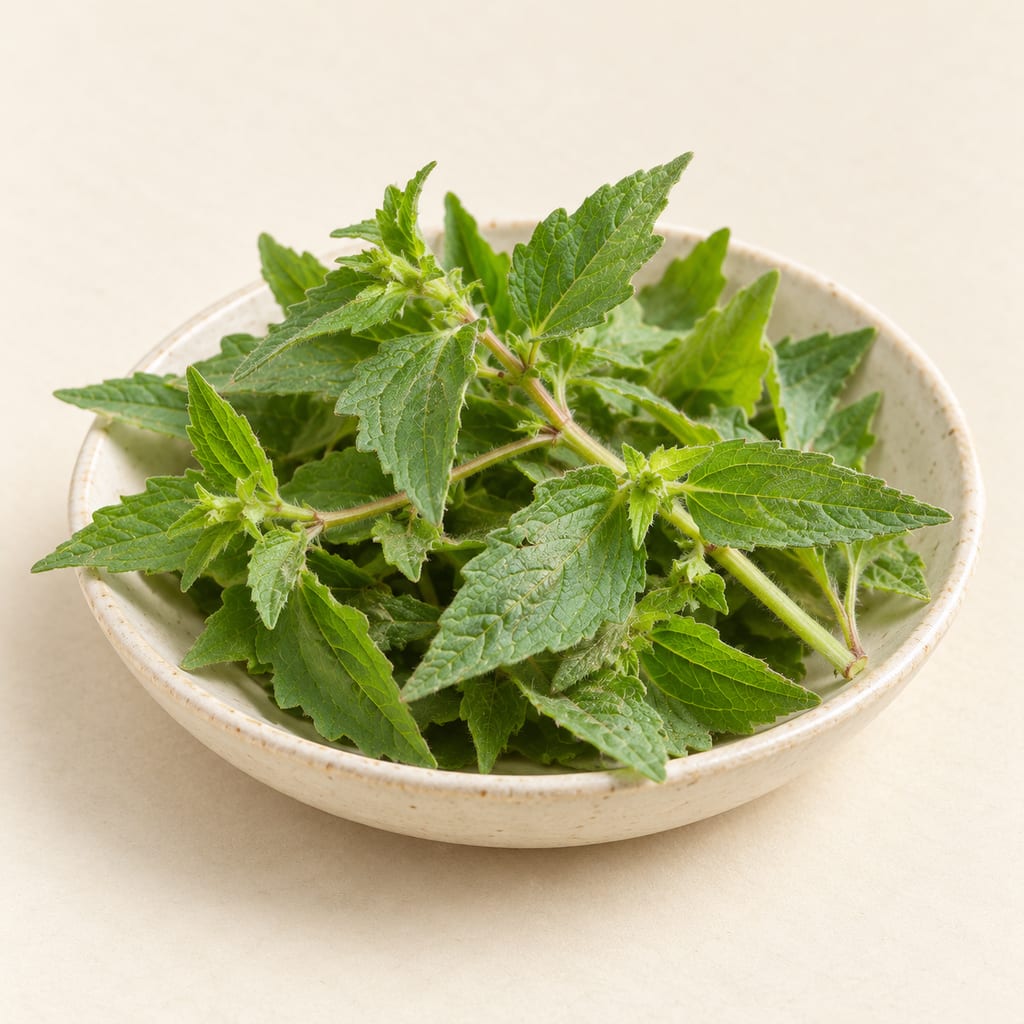
Tanzanian sources document false sesame in distinct leafy-green traditions. The name mlenda also covers other plants, and reported cooking and growing details remain tied to their source communities and studies.
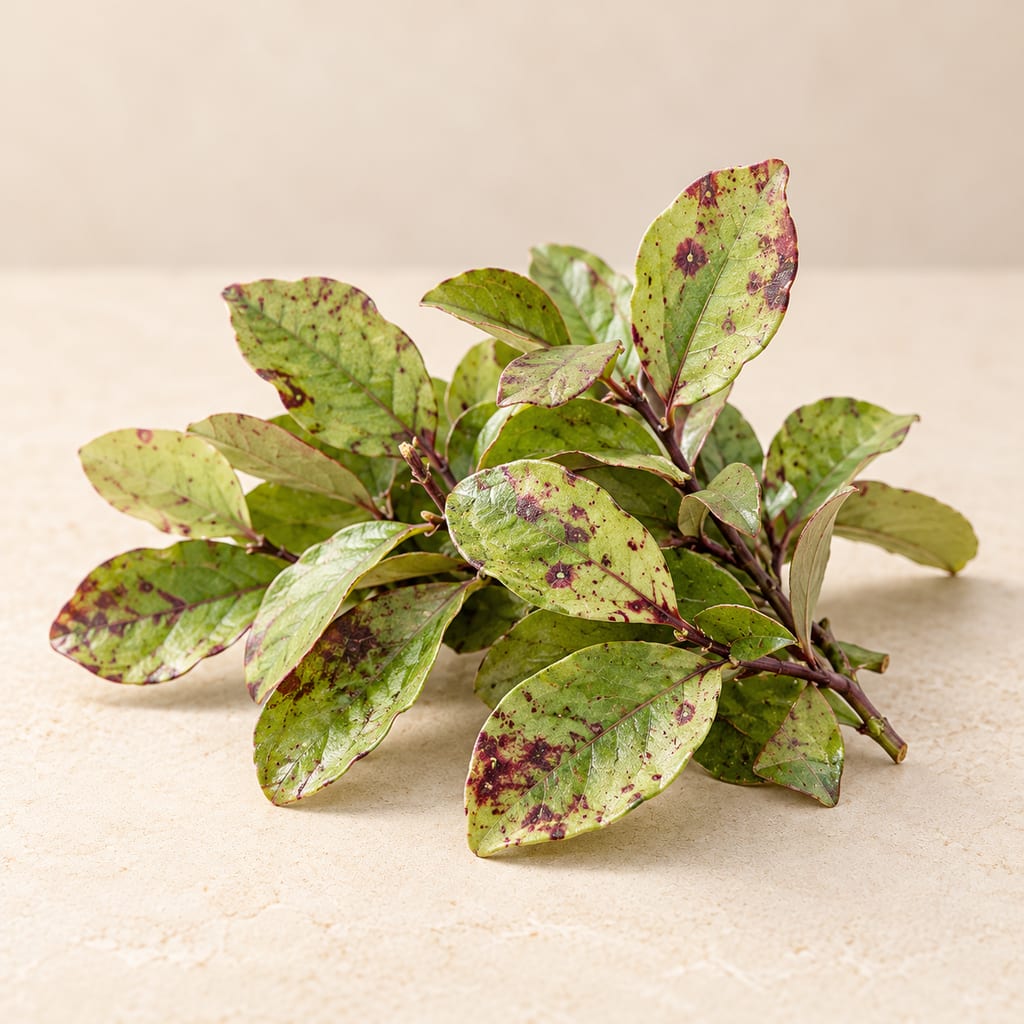
Horopito is a New Zealand endemic whose peppery leaves are described as a culinary flavouring; garden advice is qualitative and household preparation evidence remains incomplete.
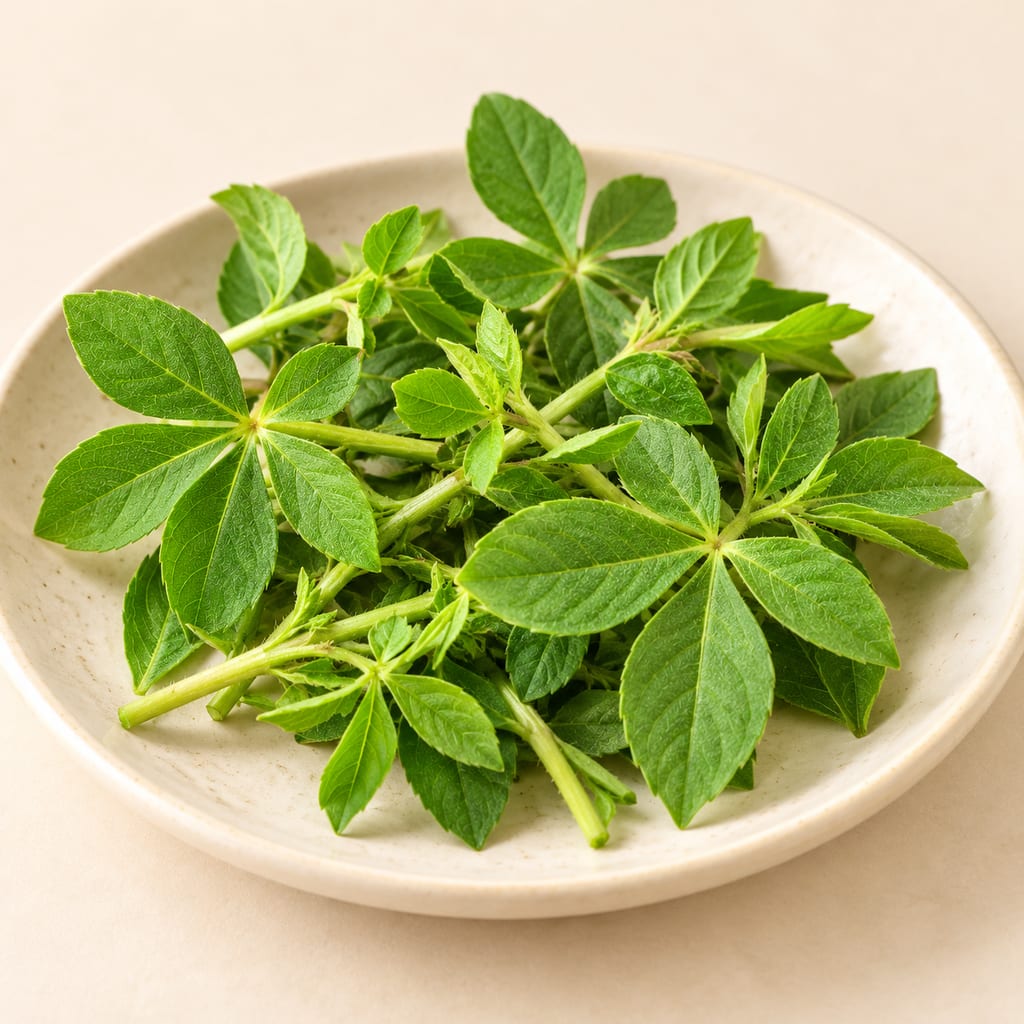
Cleome gynandra is documented in Kenyan growing guides and regional food and crop records from Zambia, Malawi and Zimbabwe. Zimbabwe sources add local leaf uses, seasonal observations and one Marondera manure trial whose published spacing and plant-density figures conflict. These records remain tied to their settings and do not establish a universal recipe or home-production prescription.
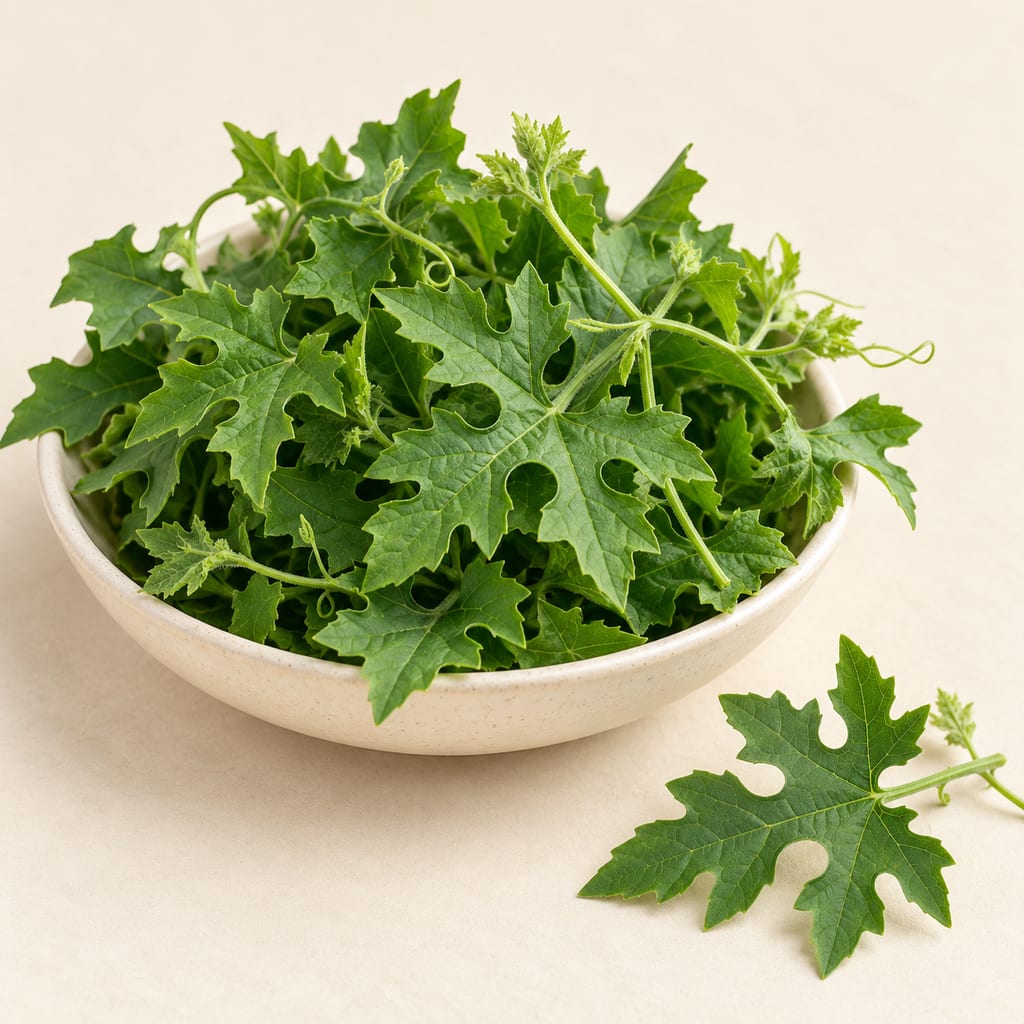
A Muda food-use study identifies nkakana as Momordica balsamina. A separate UEM abstract uses cacana for the same printed name but calls the plant introduced; another crop overview prints Momordica indica, a different current taxonomic concept. The source records remain distinct.
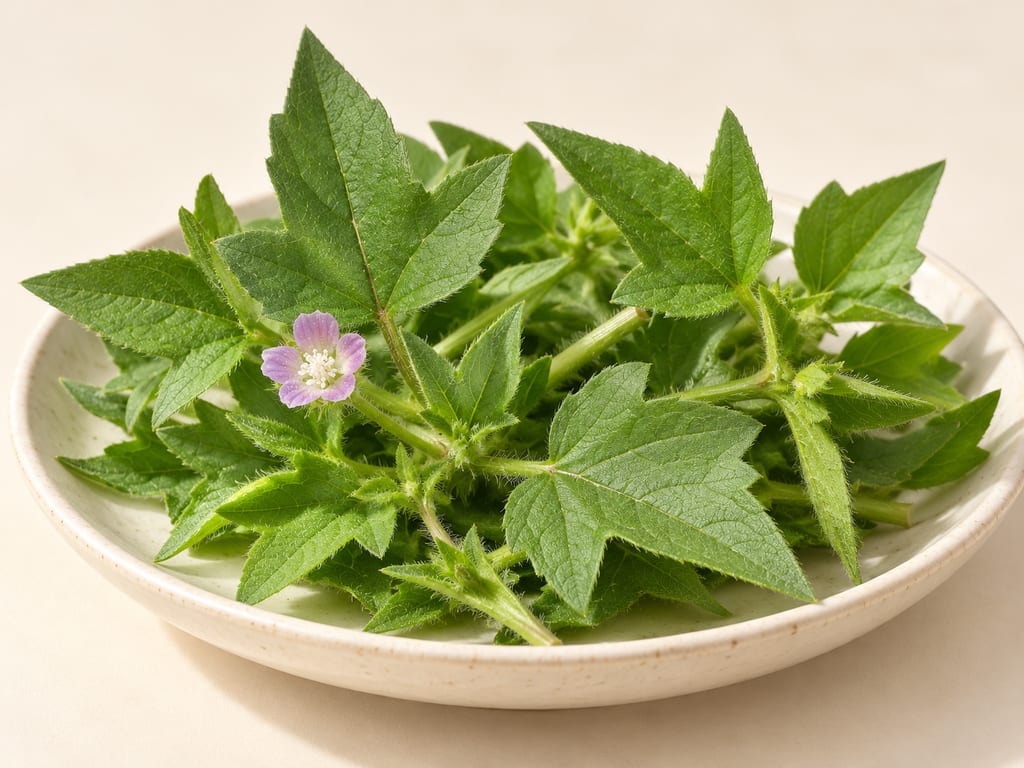
Regional Mexican food accounts and a Guerrero common-garden study document Anoda cristata names, dishes and growing observations, with identification and safety limits kept explicit.
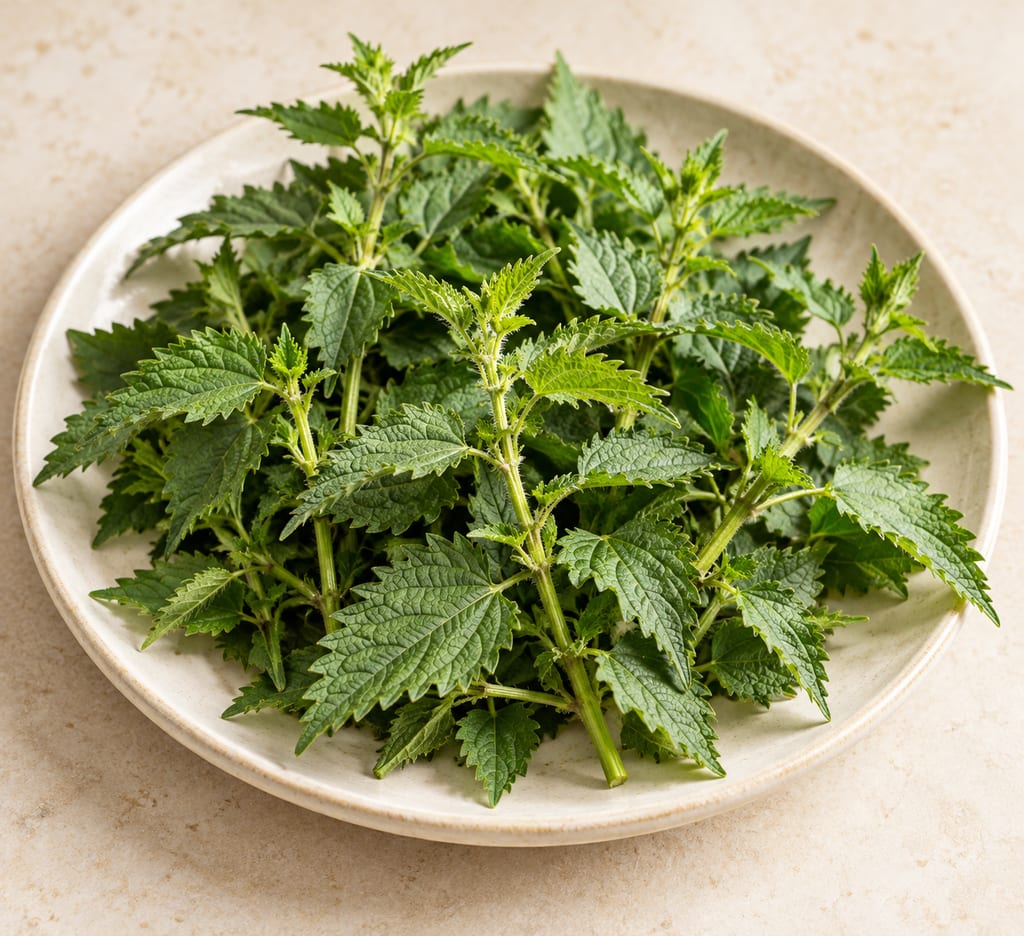
Ethiopian ethnobotanical studies describe regional use of Urtica simensis leaves and young shoots. A separate four-site study reports outdoor livestock-forage cultivation; those yields and methods are not human-food production guidance.
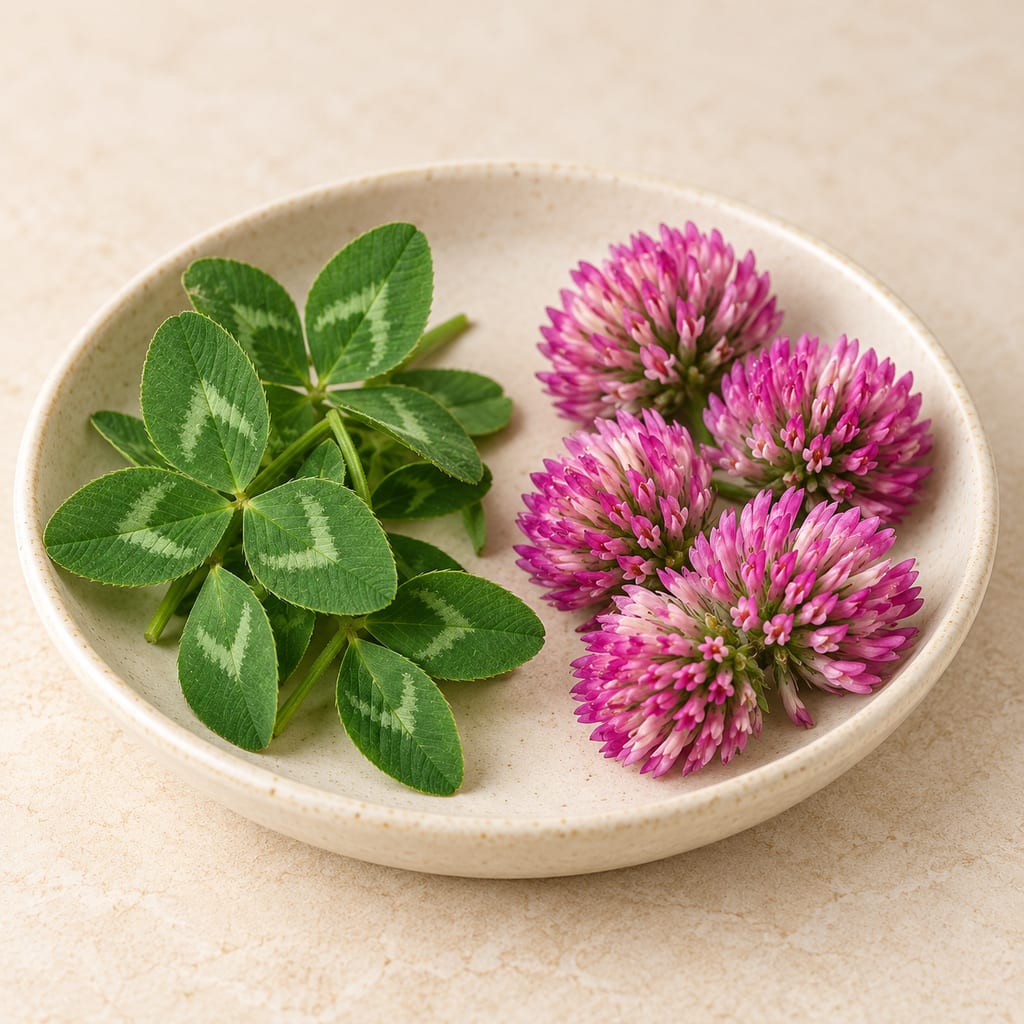
Trifolium pratense is used as a forage crop and has separate human food reports for leaves and flowers. NCSU Extension describes salads, soups and cooked greens; a Mediterranean review summarizes flower uses in several countries. The growing evidence differs by region and purpose, and the available sources do not provide a complete food recipe.
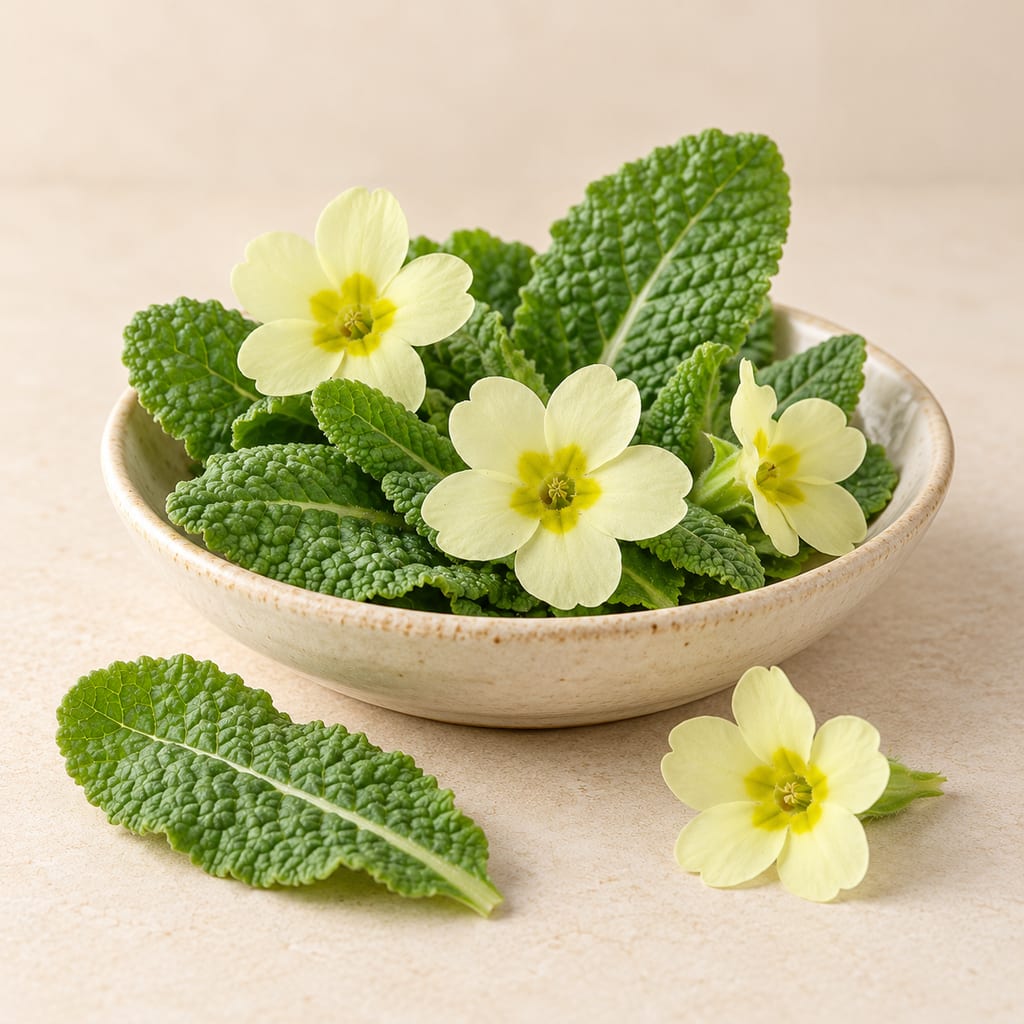
Primula vulgaris is a spring-flowering European perennial with documented flower-garnish and leaf-use notes, alongside regional garden guidance that does not define a household crop protocol.

Bellis perennis has Danish reports of leaves in salads and flowers used candied, as garnish and in cabbage dishes. A Colorado extension list names the petals as a garnish or salad ingredient. The accounts differ on heating and do not provide a complete recipe or safety limit.
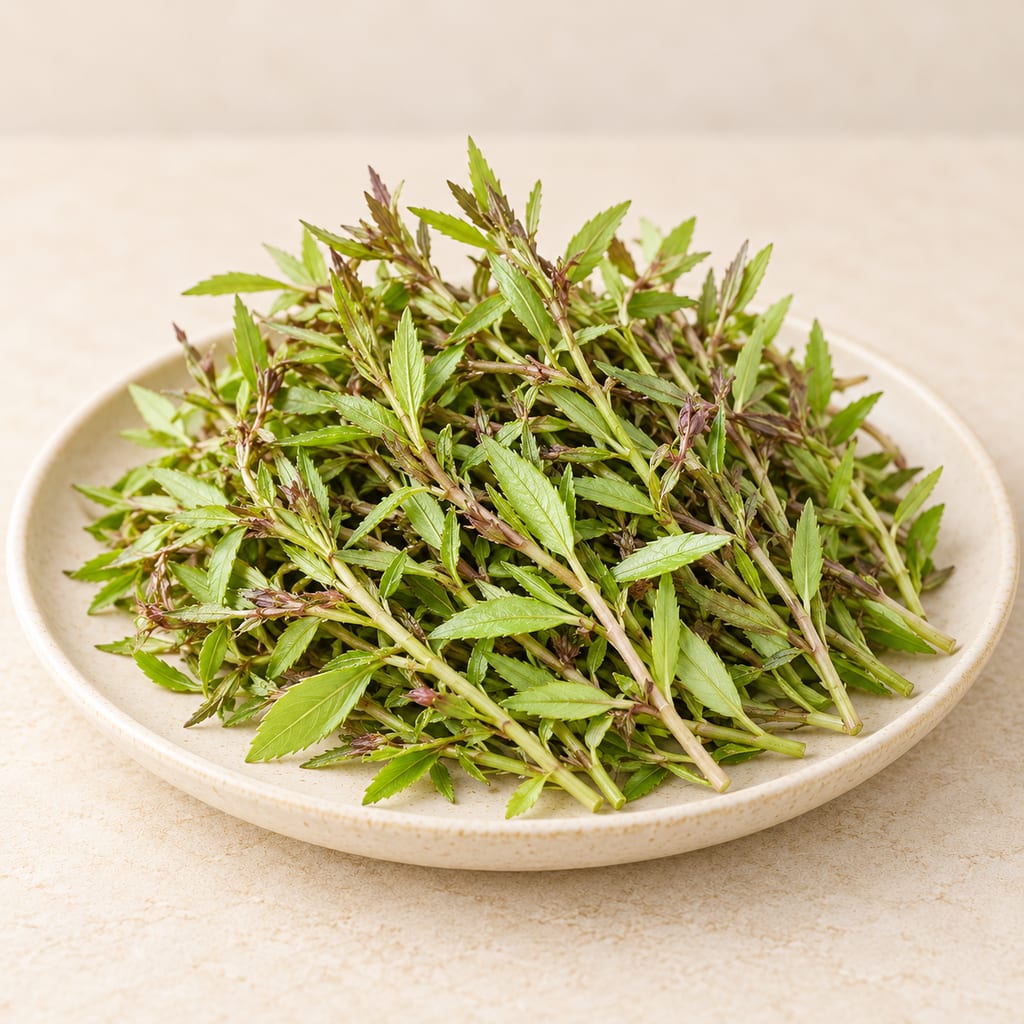
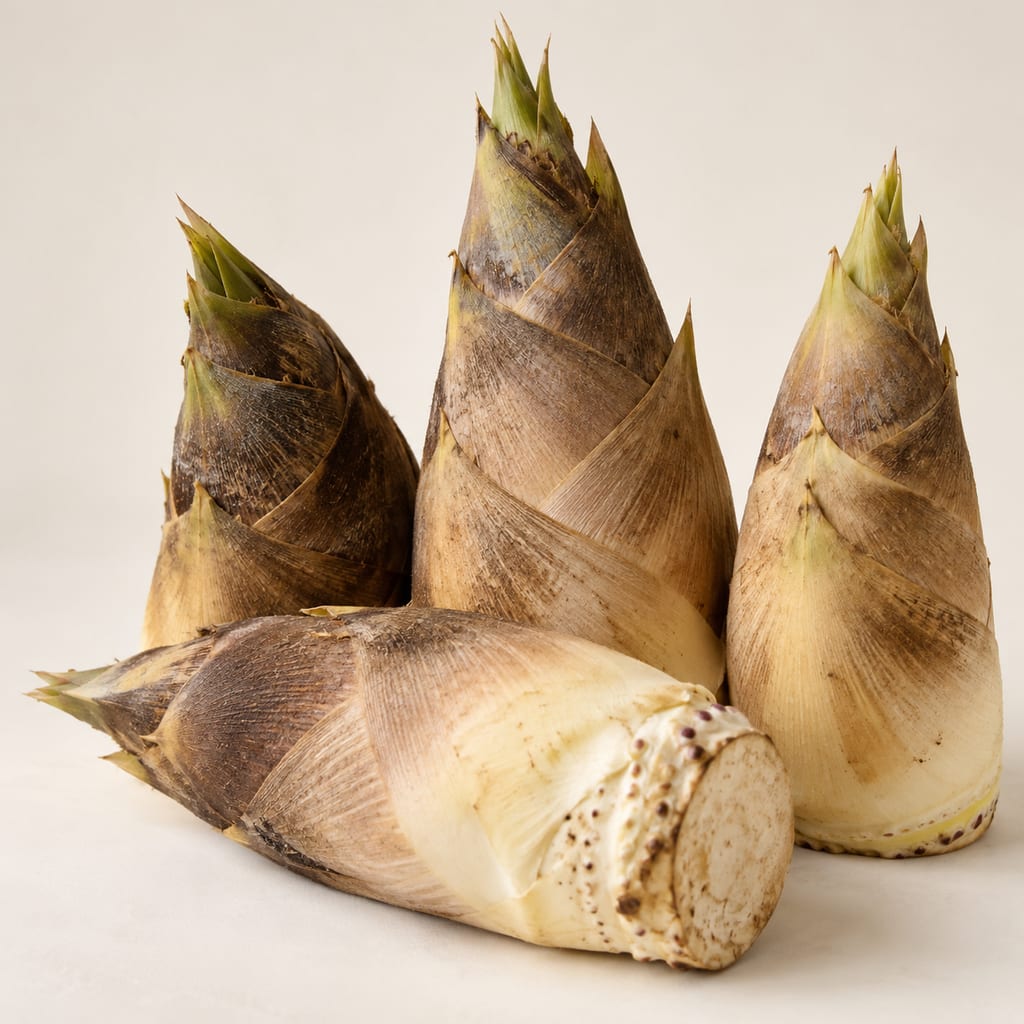
Lao field and ethnobotanical accounts describe young shoots used to flavor bamboo-shoot soup, alongside paddy-field and limited garden-growing records.
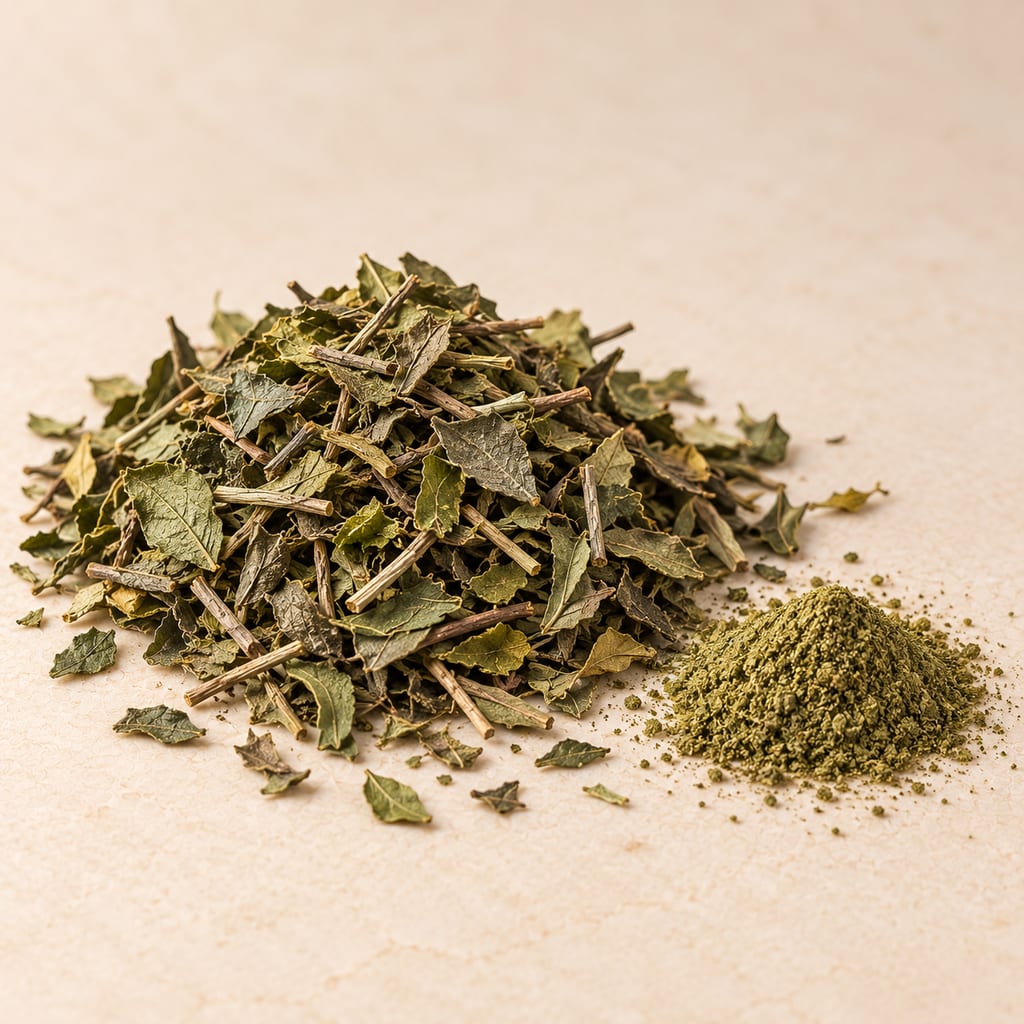
Gesho (Rhamnus prinoides) is used in Ethiopian cereal beers and honey wines for bitterness and flavour. Sources document regional cultivation and use but do not establish one origin, universal brewing measure, starter role or safety limit.
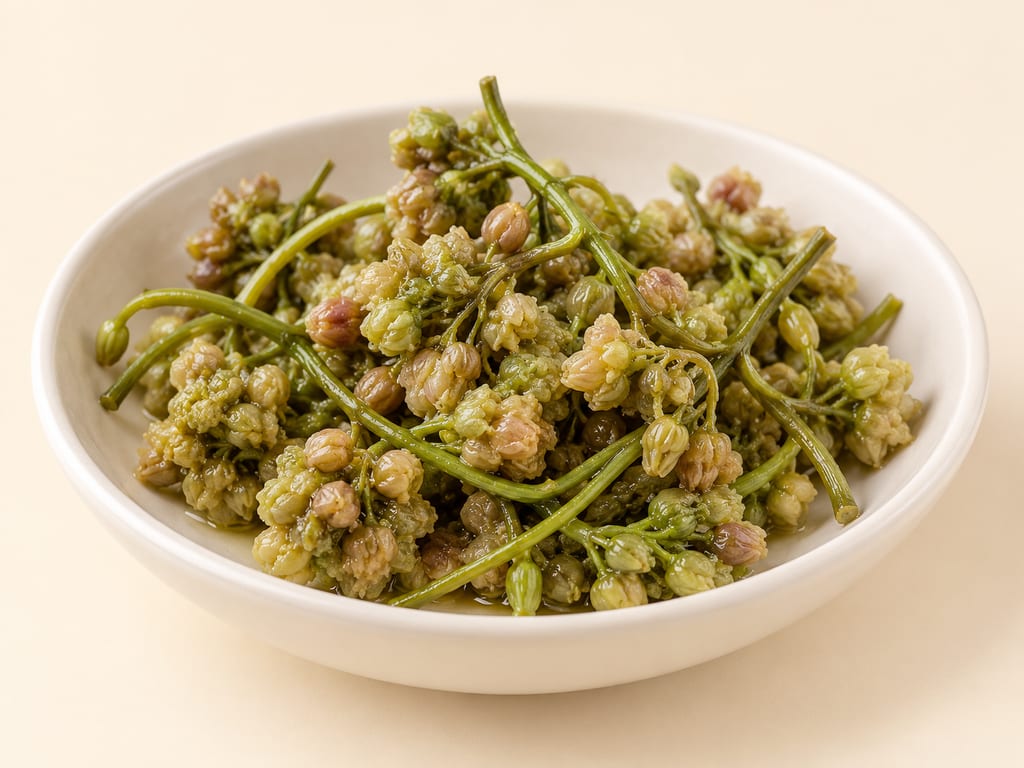
Colchic jonjoli is a Georgian food plant whose unopened flower clusters are reported pickled. Sources also use jonjoli for the distinct species Staphylea pinnata, leaving some food reports taxonomically mixed.
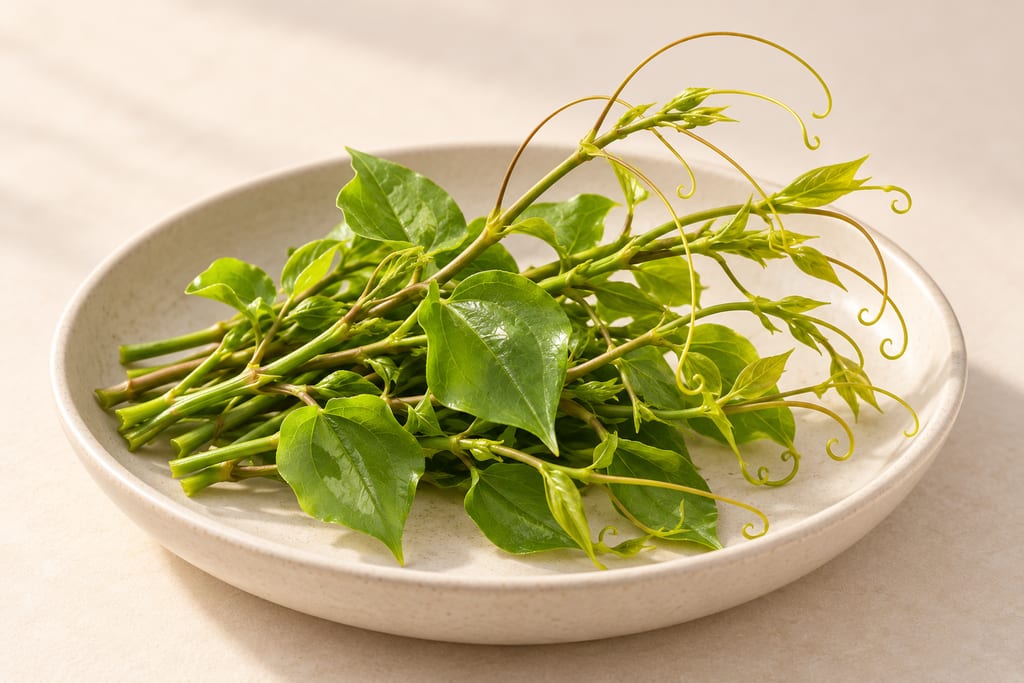
Georgian sources describe ekala as a wild food plant used in pkhali and report brine preparations. Names and plant-part labels vary by source; the food accounts do not establish a field identification or a productive growing method.
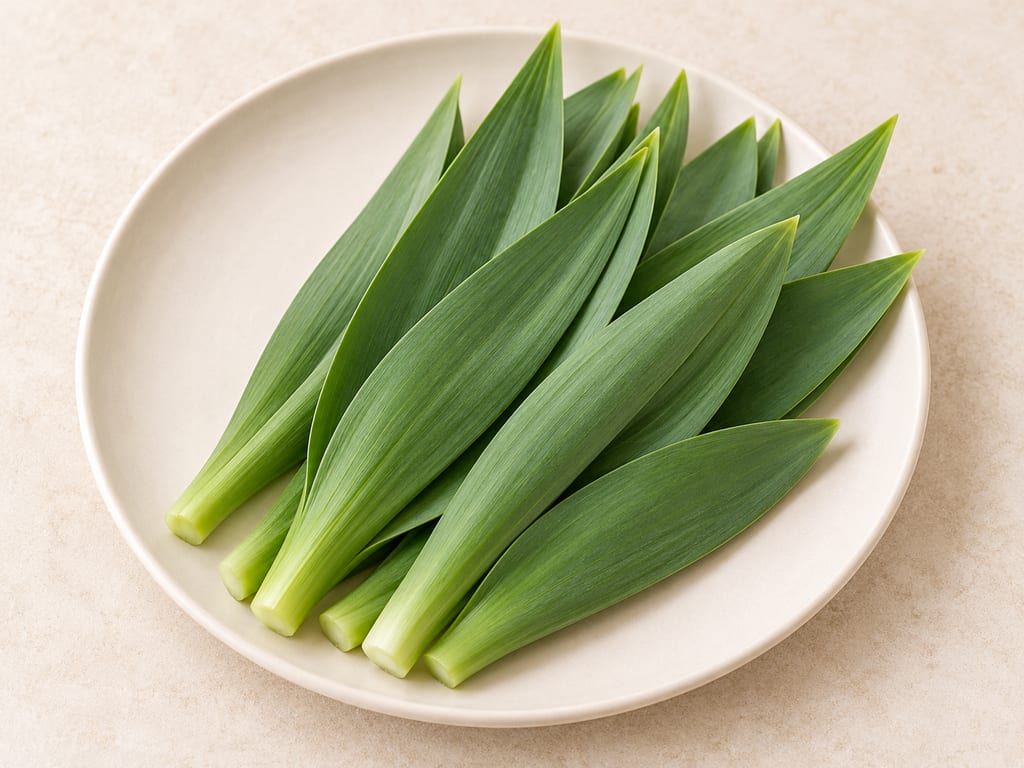
A source-bounded account of reported young-leaf uses in Ağrı and separate Turkish seed and laboratory studies. The evidence does not establish a home-growing method or identify a plant gathered under a shared local name.
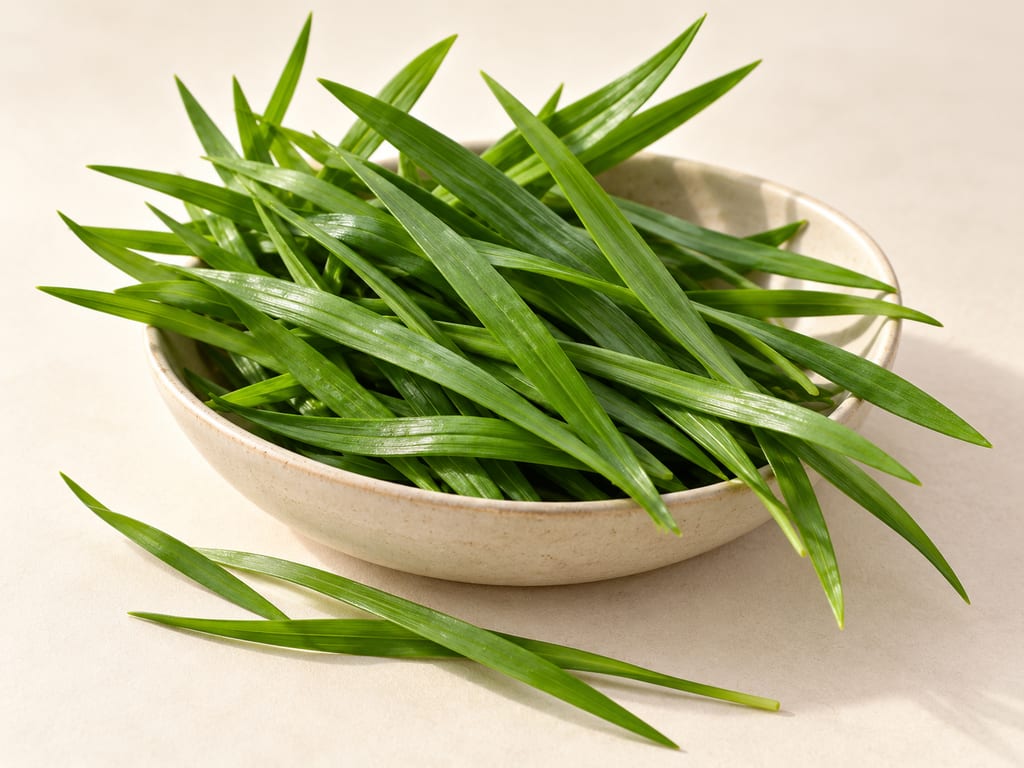
Allium triquetrum is a Mediterranean bulbous allium with a three-angled flowering stalk. An Australian gardening handout reports culinary uses for its leaves, bulbs and flowers, while separate sources document invasive spread and jurisdiction-specific restrictions.
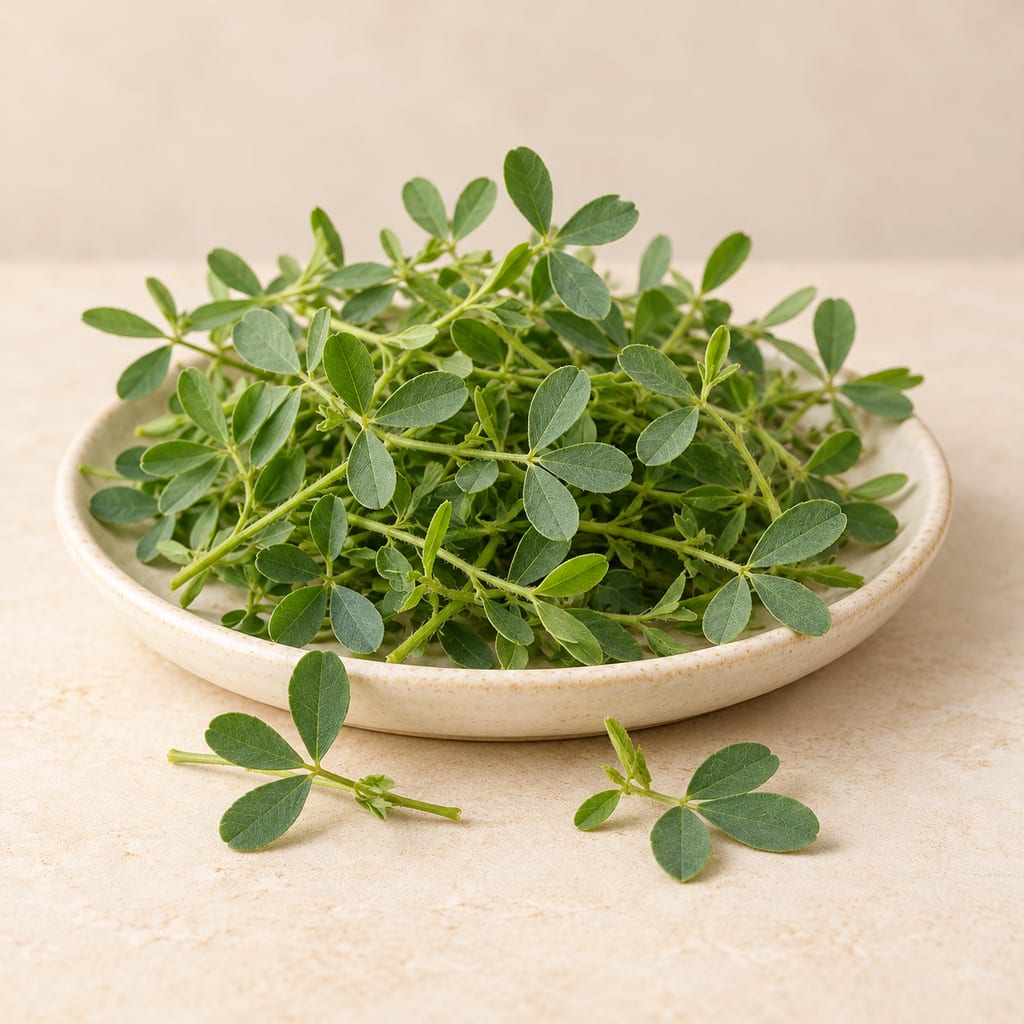
Oaxaca market and cultivation studies document chepil food uses and regional field growing practices. Other Crotalaria names and research contexts remain distinct.
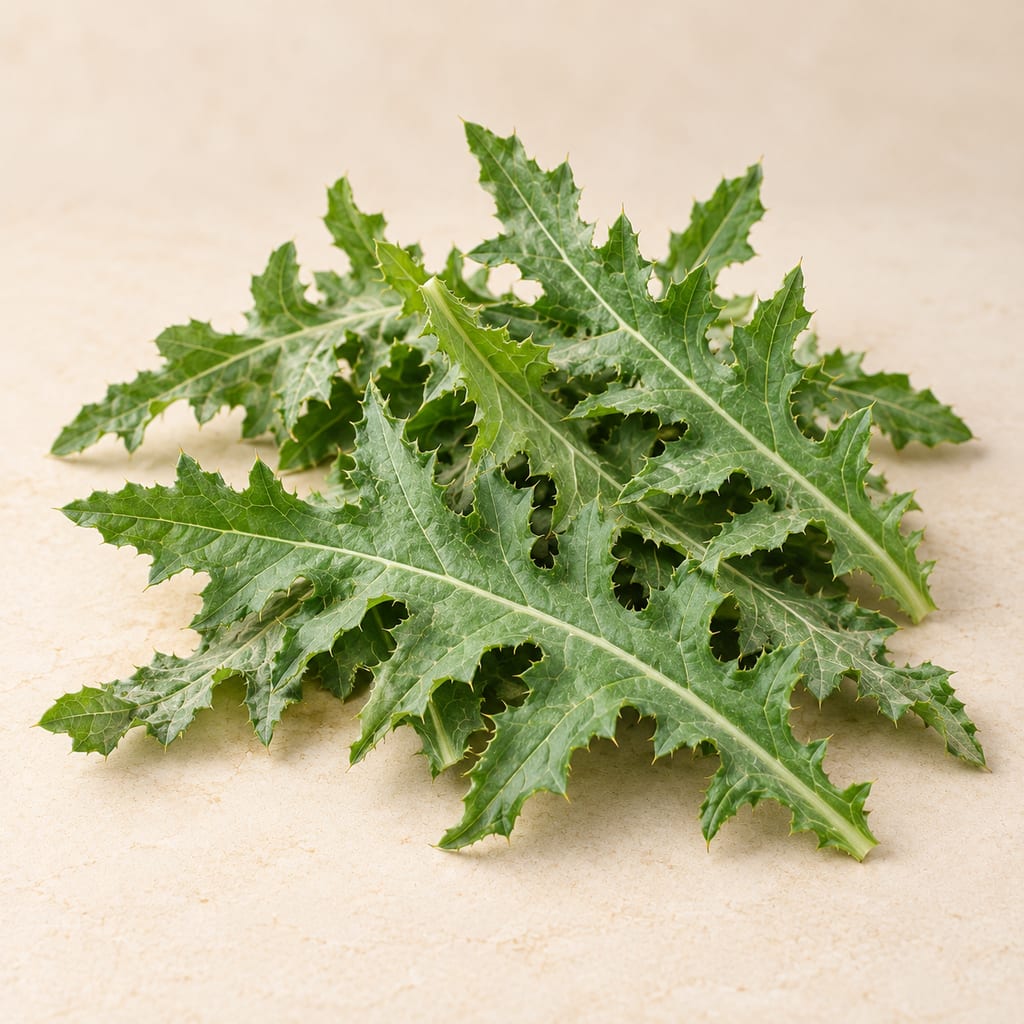
Creeping thistle is a widespread, spreading perennial with one detailed Alberta leaf-puree account and older food reports summarized by a U.S. Forest Service review.
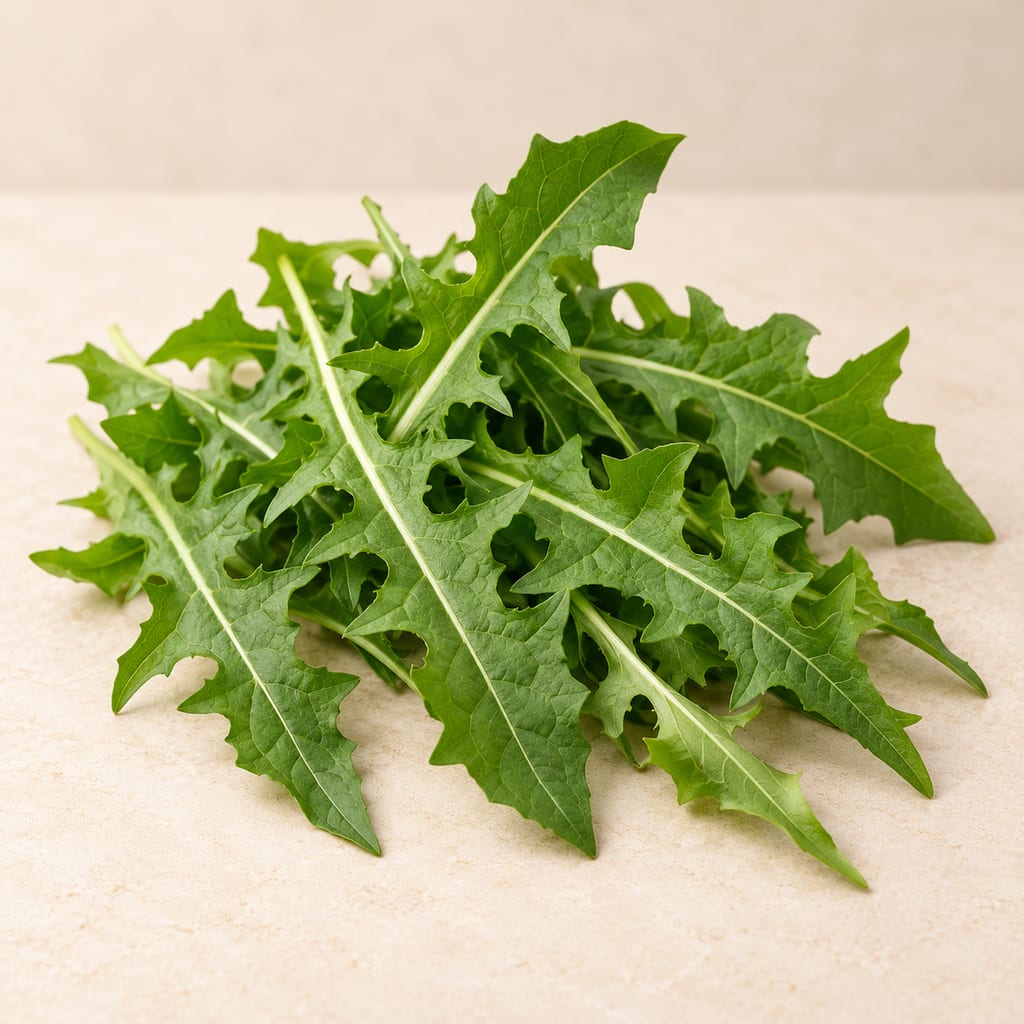
POWO accepts Taraxacum sect. Taraxacum and places Taraxacum officinale in its synonymy; Kew describes the common British dandelion as an aggregate of many apomictic microspecies. Food and growing sources use dandelion names at different levels, so this article keeps each report within its source's scope.
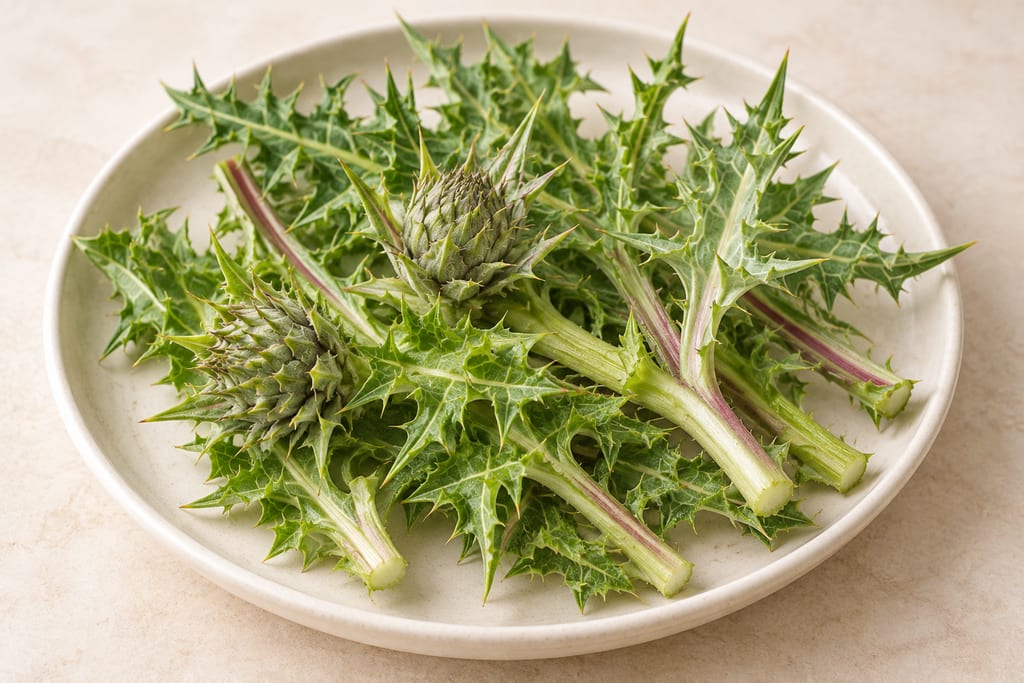
A descriptive account of several regional reports that use the name Kenger and related forms for Gundelia tournefortii, alongside changing taxonomy and limited cultivation evidence. The reports do not independently confirm every historical specimen or establish a Turkish growing method.
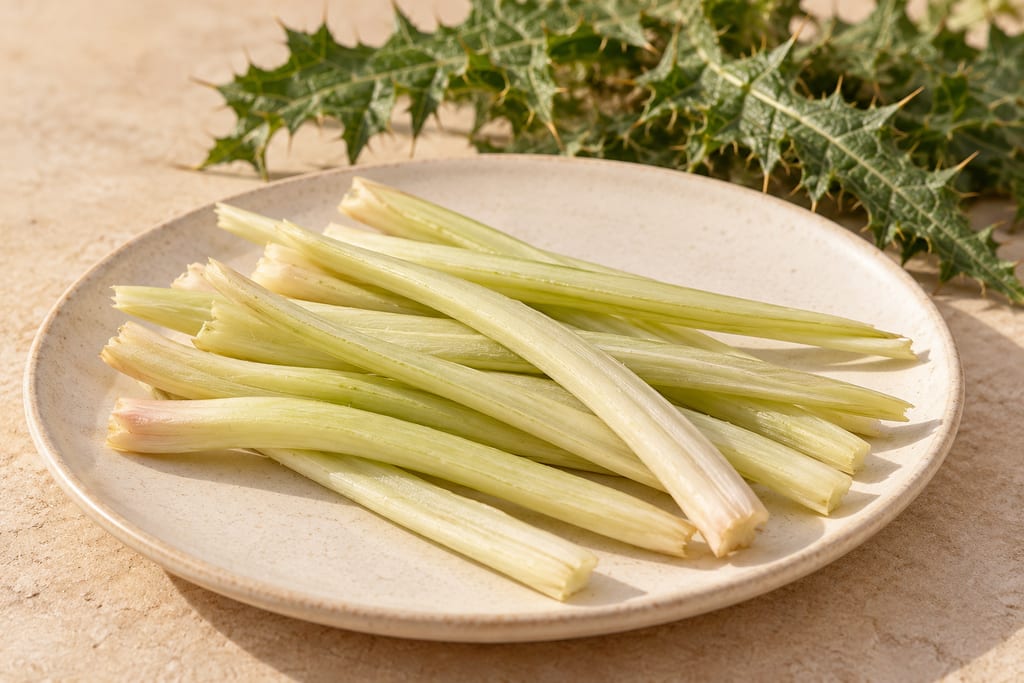
Algerian and Spanish sources report leaves, central leaf ribs and other regional food contexts. Historical gardens, weed observations, preliminary Spanish cultivation work and compiled cultivation reports are not a modern crop protocol or an identification or food-safety guide.
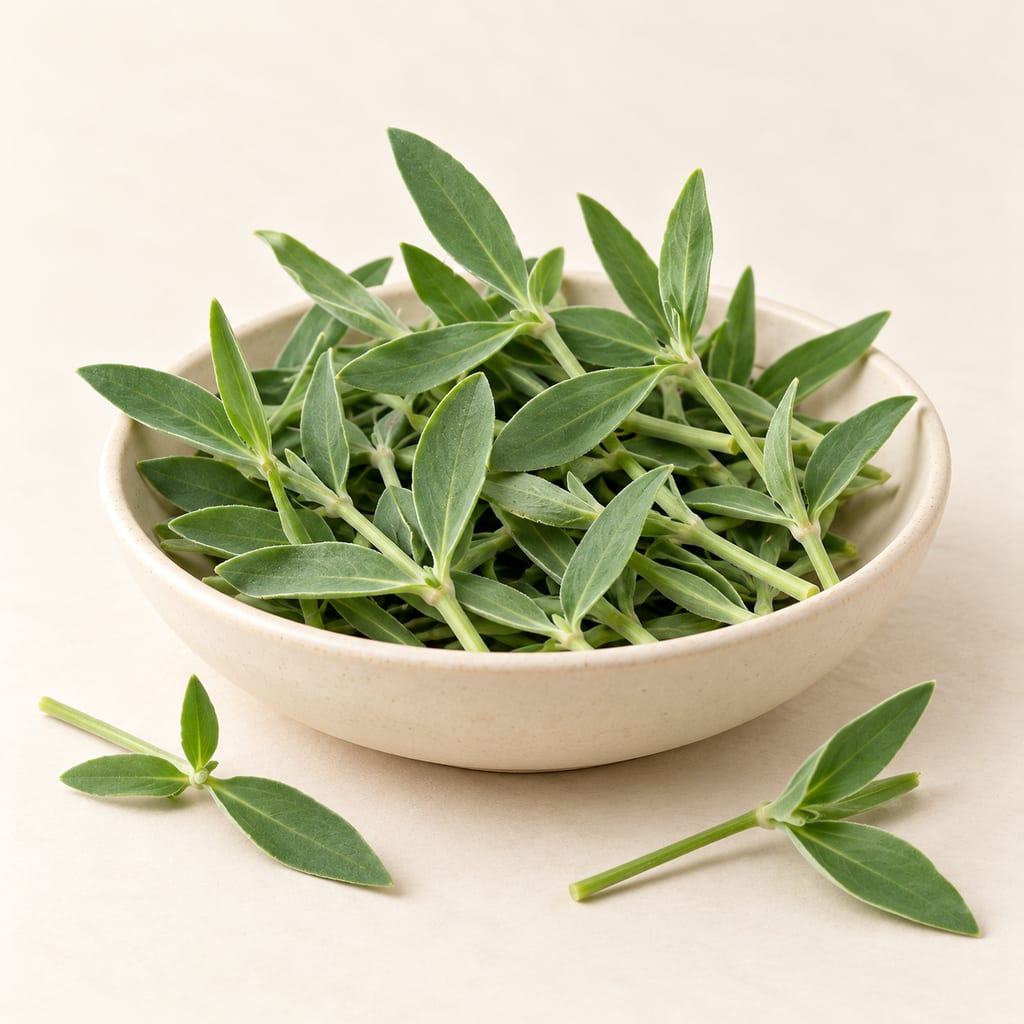
Spanish sources report young leaves and stems in cooked dishes and some salads. A Murcia field study measured one regional seed lot under fertiliser treatments, but its dates conflict and do not establish home-growing or food-safety guidance.
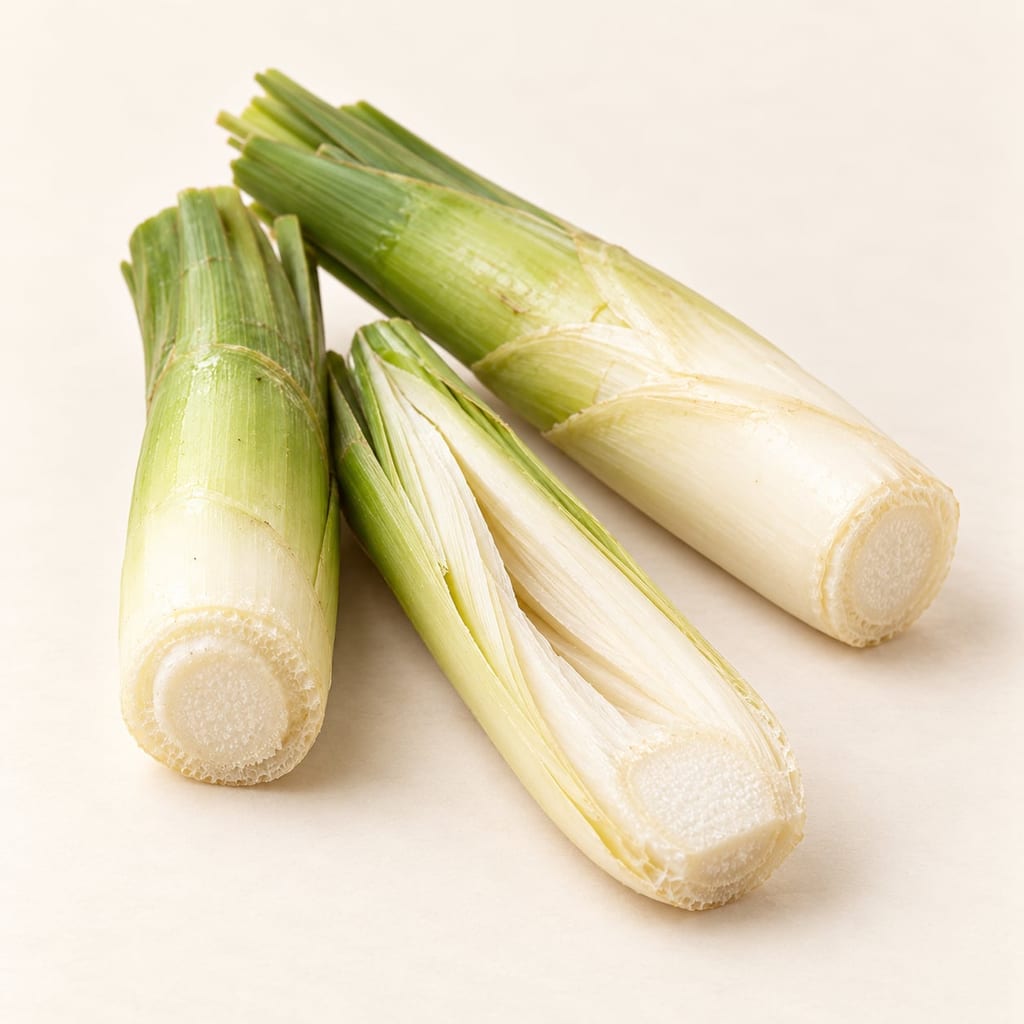
Broad-leaved cattail is a wetland plant with North American accounts of edible shoots, stem bases, flower parts, pollen and rhizomes, alongside substantial identity and water-quality limits.