



Dallae greens
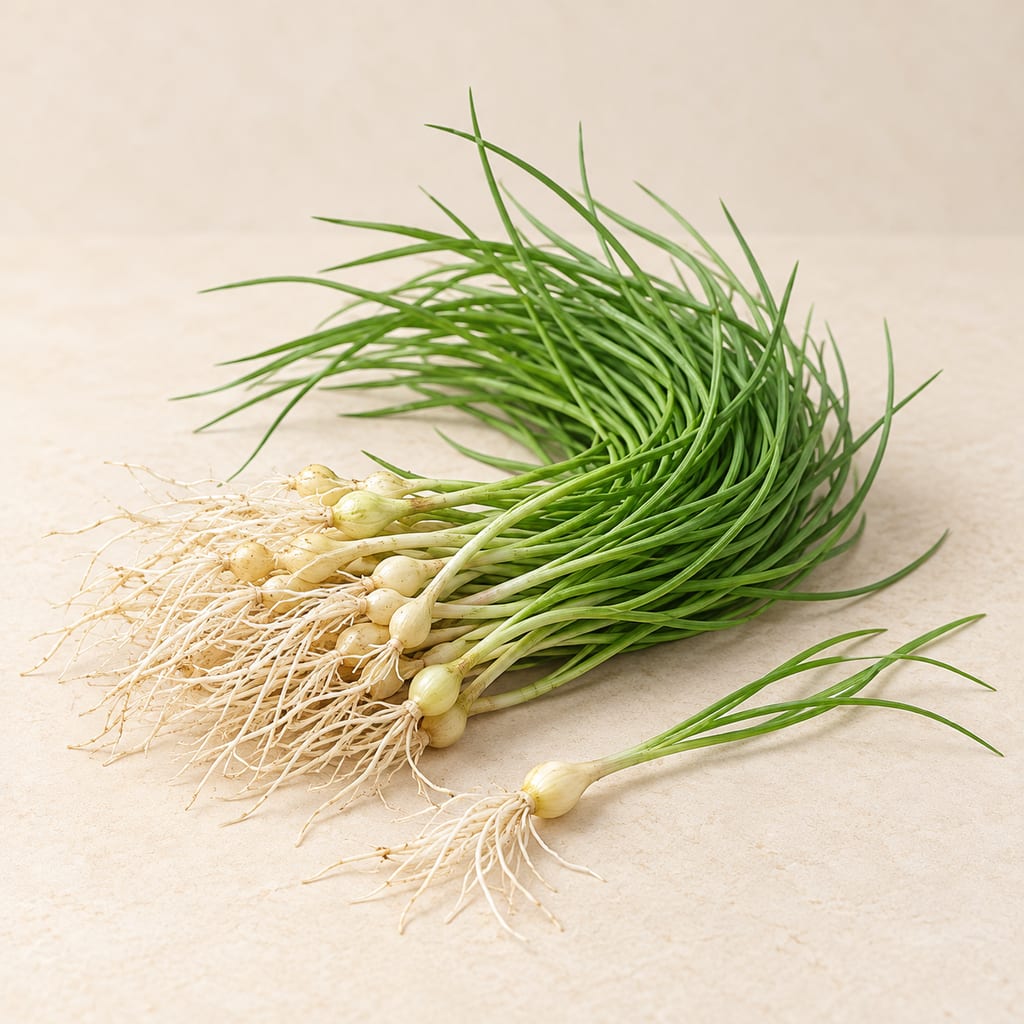
Dallae, Allium monanthum, is a small Korean spring allium eaten raw, in doenjang soup and as jangajji. Its regional names and growing advice are less settled than its food use.
 FermenteaWhere food goes to change
1086 articles on substrates, cultures and additives.
 Herbs139
 Seed, bark and berry spices18
 Dried chilli products10
 Hops and brewing botanicals9
 Fresh chillies8
 Aromatic roots and rhizomes7
 Peppercorns6
Dallae, Allium monanthum, is a small Korean spring allium eaten raw, in doenjang soup and as jangajji. Its regional names and growing advice are less settled than its food use.
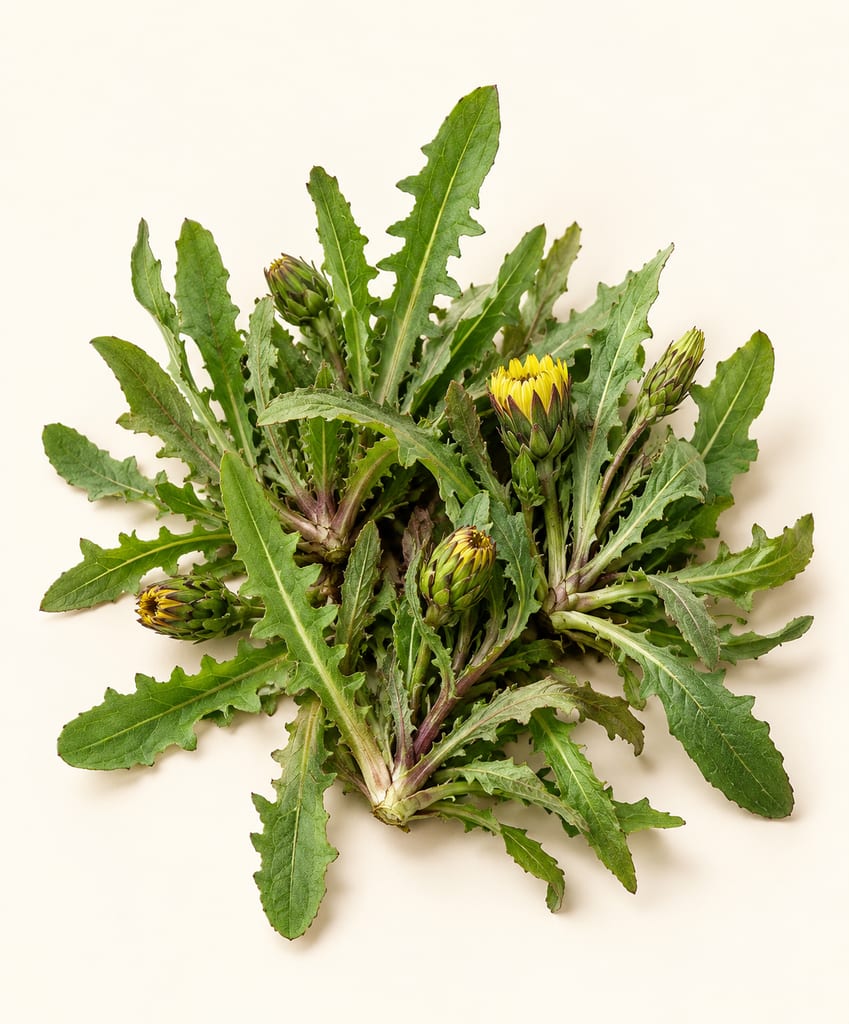
Aymara food records from La Paz name flower buds, bracts and leaves of Hypochaeris meyeniana; the article's ash-processing prose and washing caption remain unresolved.
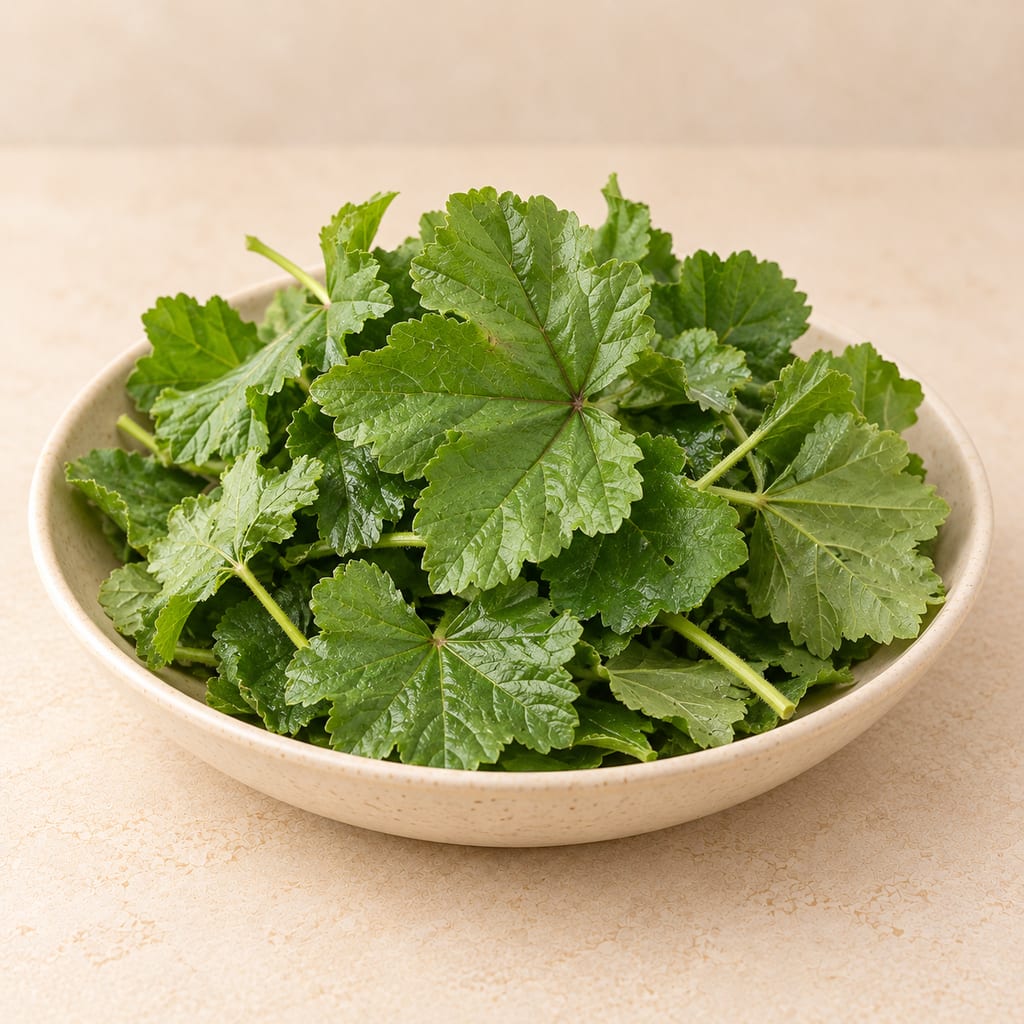
Common mallow is reported as a cooked wild green in two Moroccan studies, with one species-specific Khobbiza account and a separate mixed-greens preparation.
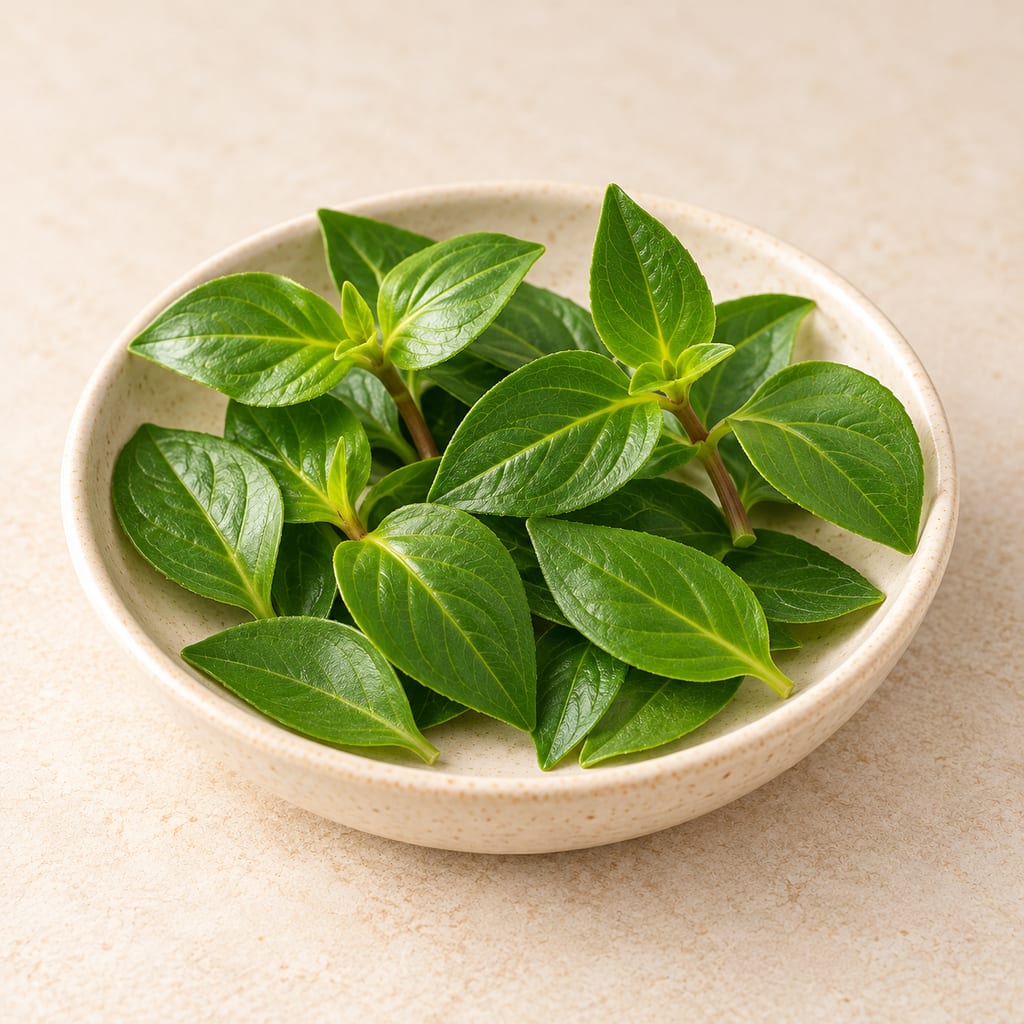
PNG crop references describe Rungia klossii leaves as a pot herb, often paired with highland pitpit. One historical Ndumba account records a specific community’s planting, food use and dietary restriction.
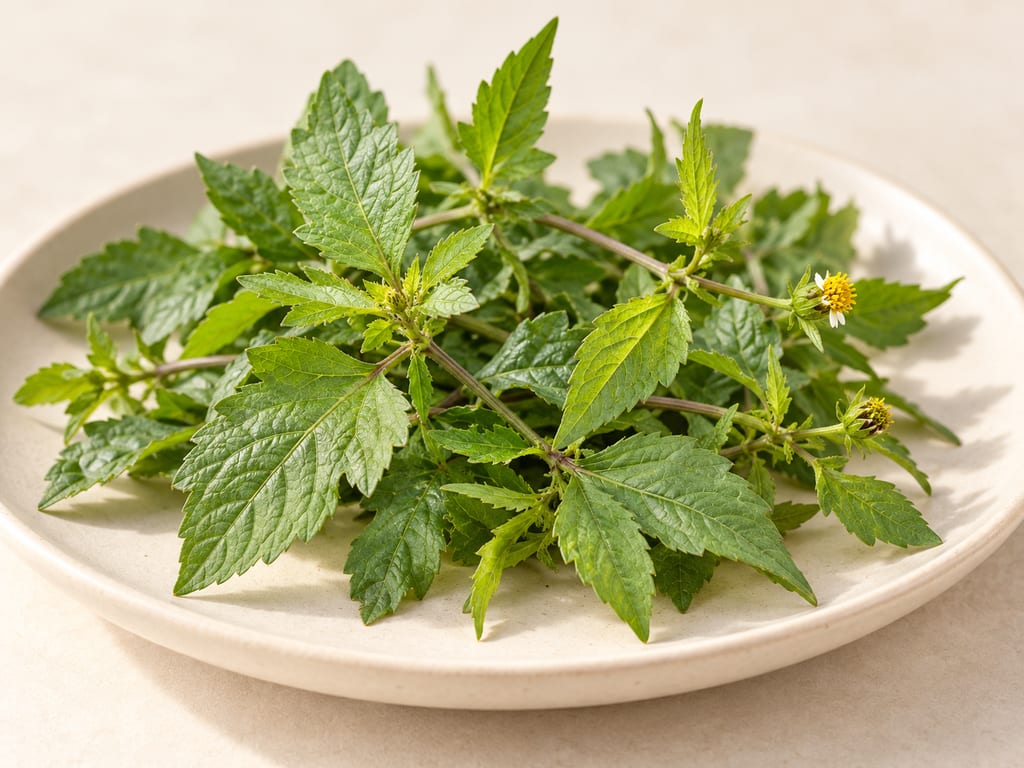
Zambian food references name Bidens pilosa as black jack and report leaves in local food records. A household study also recorded a genus-level Bidens group, but its vouchers and collection statistics cannot be assigned to this species.
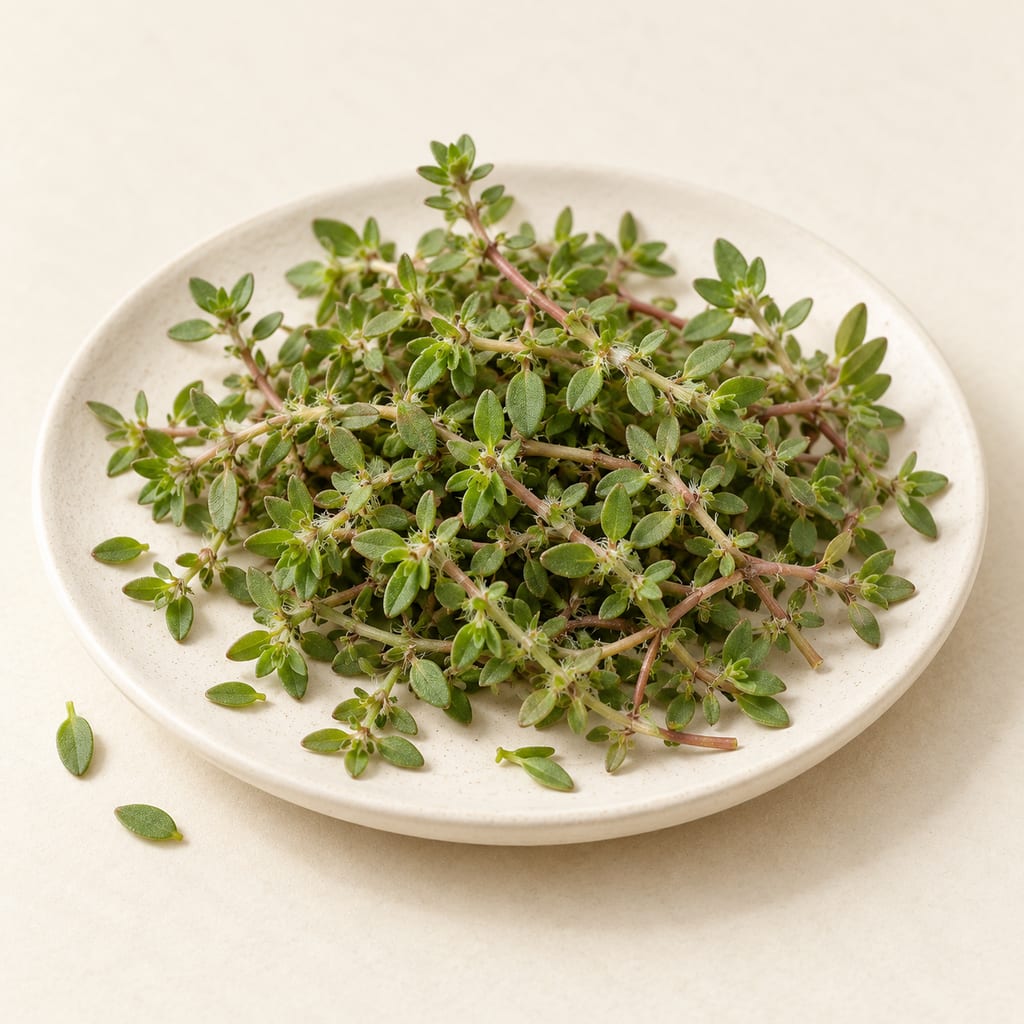
Small-leaved purslane is reported as a wild vegetable in Kenya and broader tropical accounts; PROTA describes it as a spreading weed and advises against cultivation.
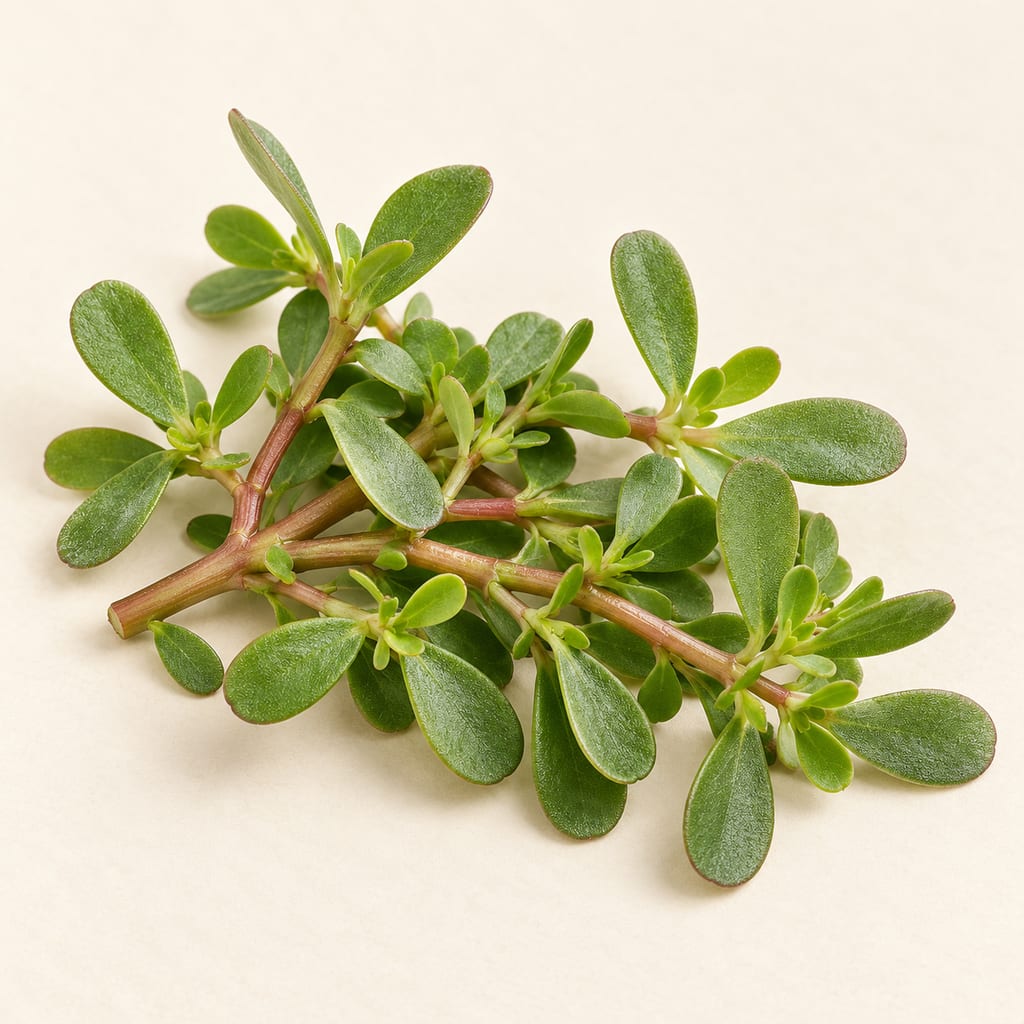
Portulaca oleracea is documented as a food plant in distinct Mexican and Taishan contexts. A Morelos cookbook names a verdolaga-and-pork dish, a Mexican field trial measures one local crop, and Taishan sources disagree about the plant part; none provides a universal safe dose, detox method or gathering guide.
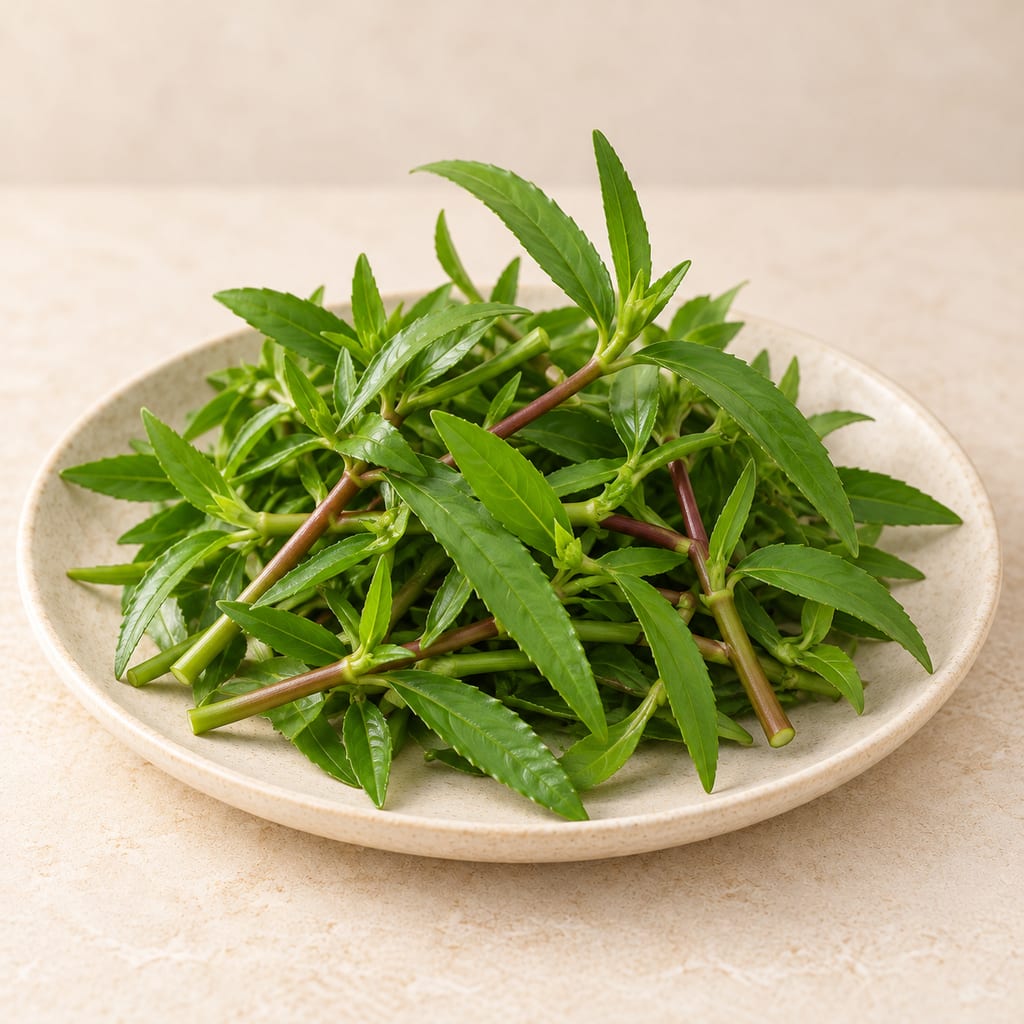
Bangladesh food and cultivation sources use several spellings and overlapping wetland names. This account distinguishes the accepted name from source labels and describes regional food reports and one waterlogged sack experiment without turning it into a household growing or cooking prescription.
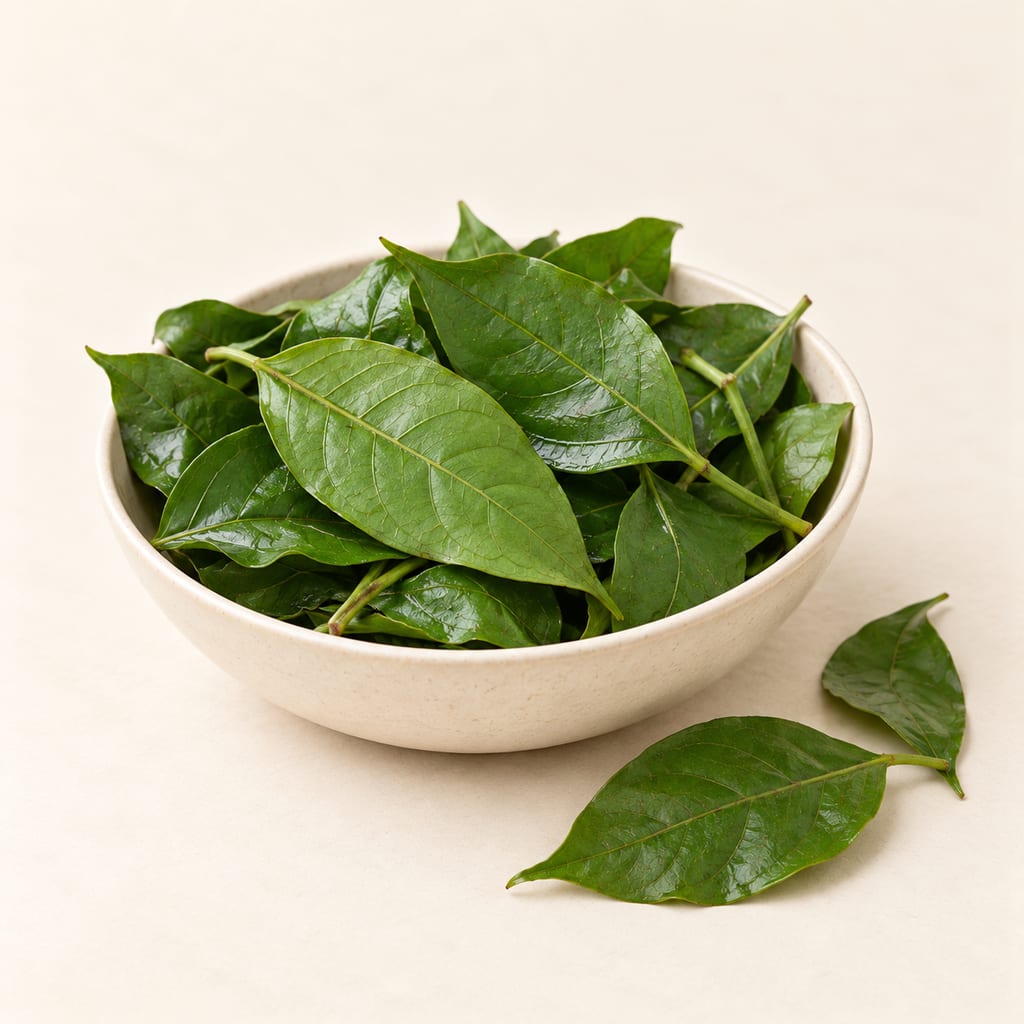
A source-linked account of Gnetum africanum as a climbing forest vegetable, with shared market names and paired-species food and cultivation reports clearly qualified.
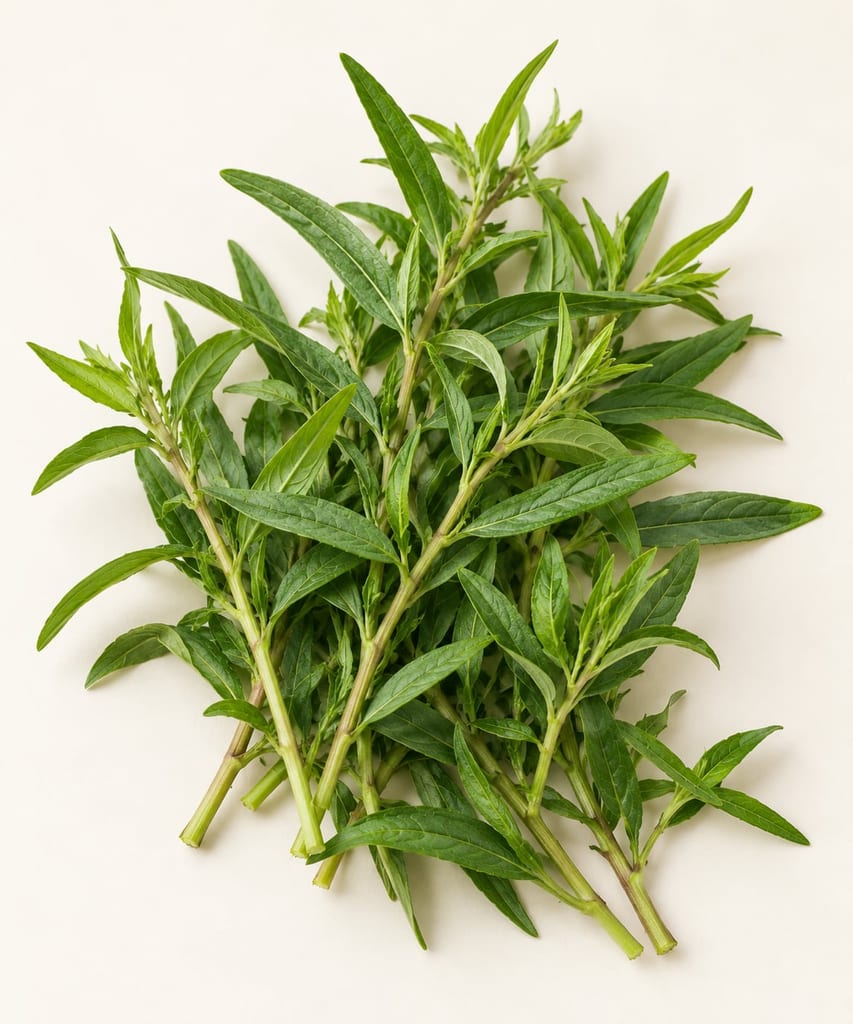
Tanzanian sources describe wild simsim as a leafy vegetable gathered and sometimes protected around homes. A printed SASS name resembles the accepted species name but has no voucher, so that row’s taxon remains unconfirmed.
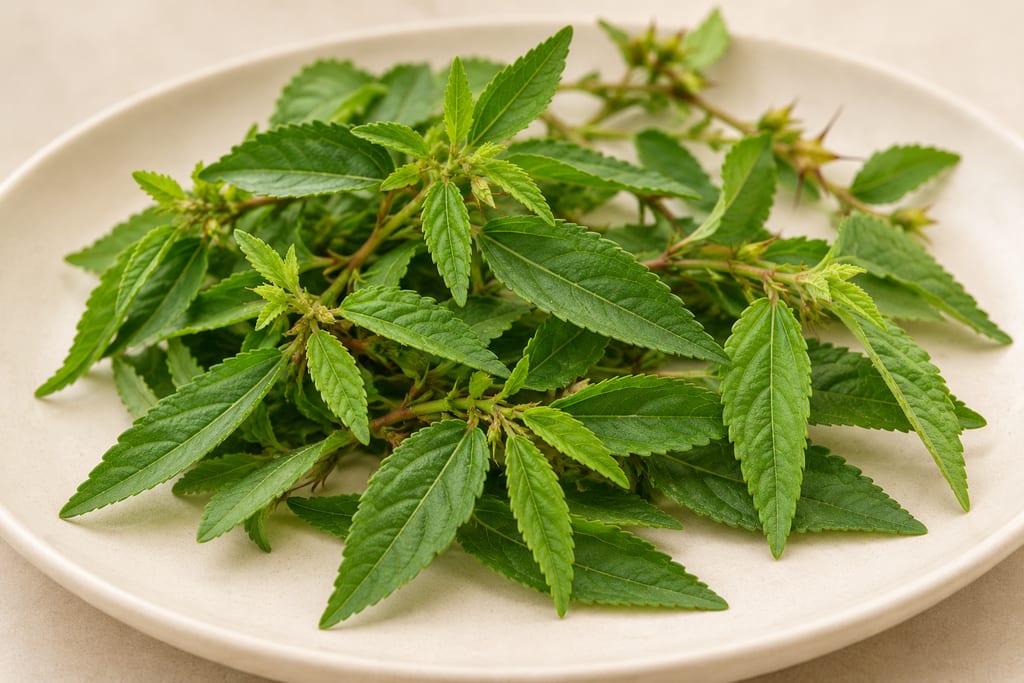
Zimbabwe flora and local studies report Corchorus tridens leaves as food, while a horticulture abstract confirms that a production study was conducted without exposing its methods or results. Similar Corchorus names in older food sources refer to distinct or unresolved taxa. Current evidence does not establish a home-growing protocol or complete recipe.
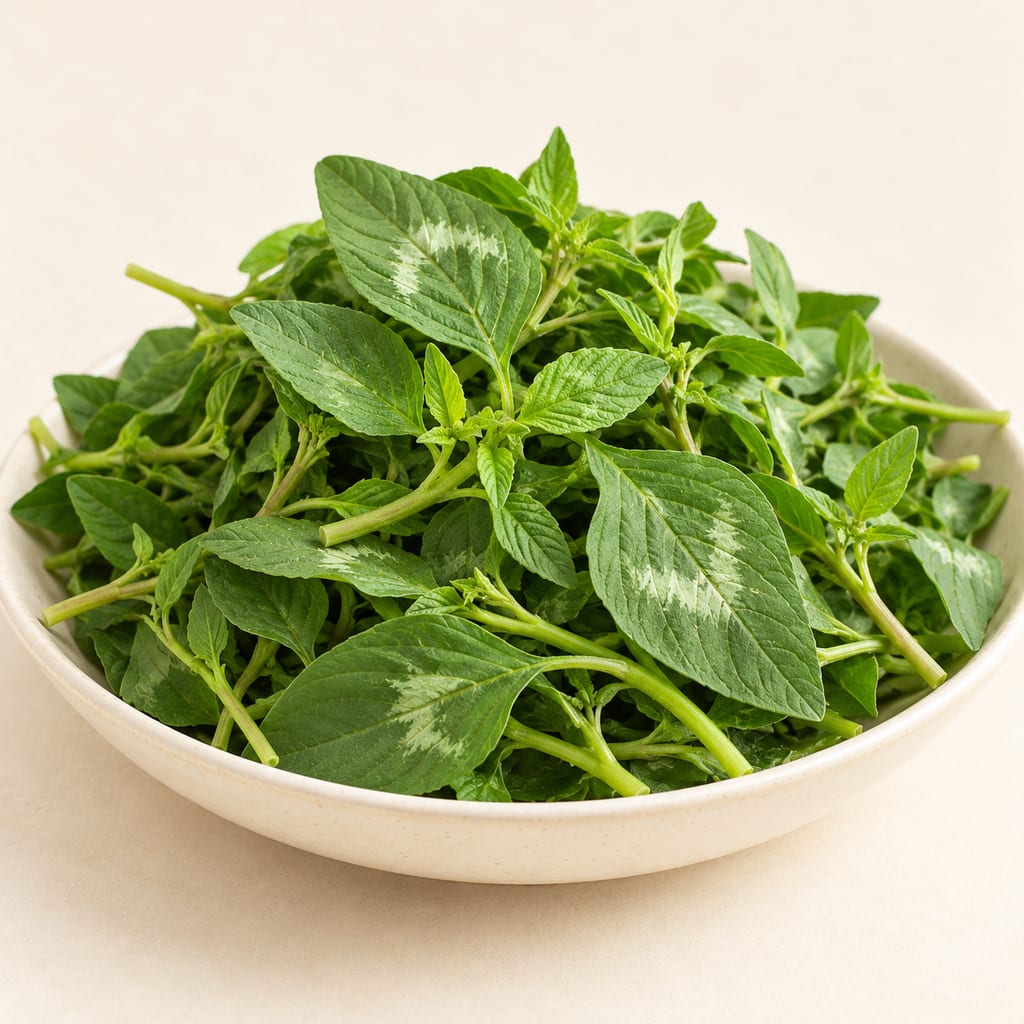
Amaranthus spinosus is recorded as a collected vegetable in several regional sources, but the Taishan study’s narrative and supplementary table do not agree on which plant part is used. Its food accounts are ethnobotanical records, not a complete preparation or a safety recommendation.
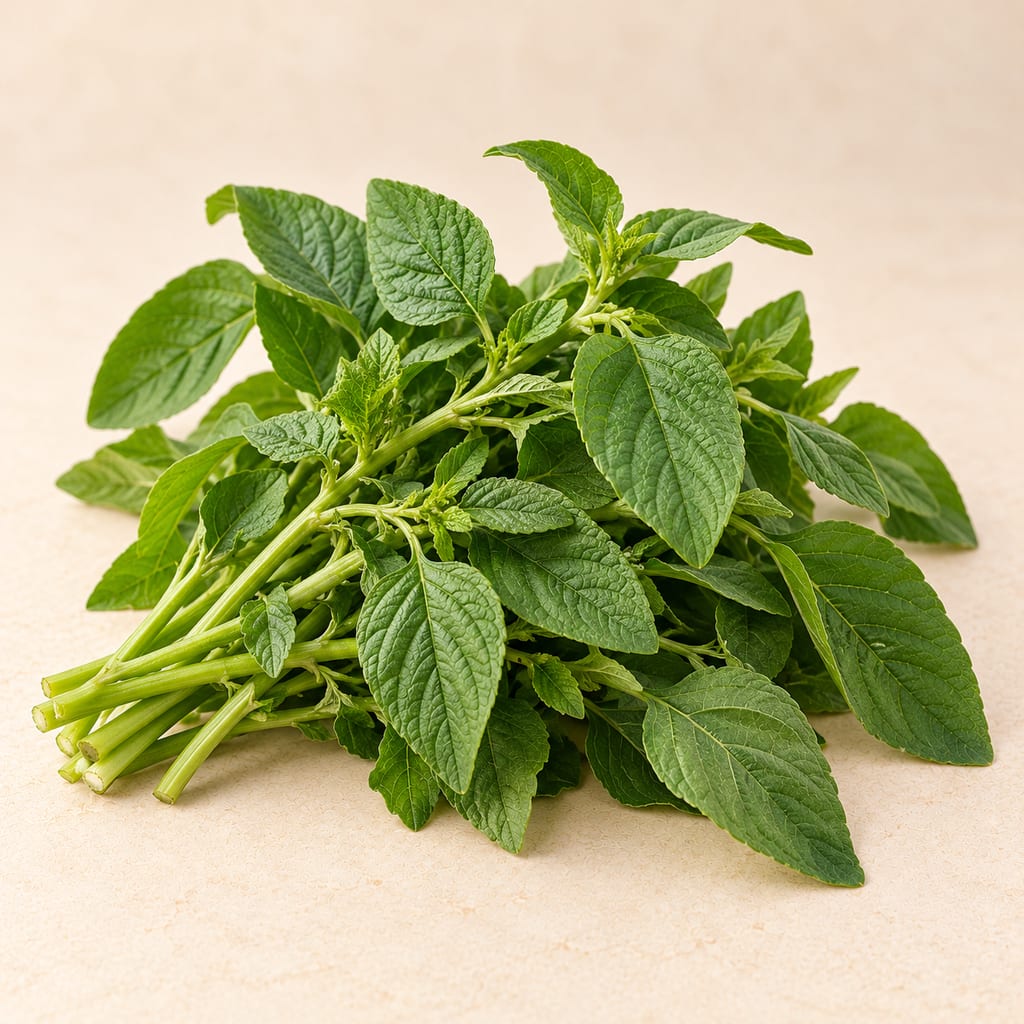
Ugandan reports associate A. dubius with leafy use and dodo, while Rwanda sources record additional leafy use and conflicting local names. Kew lists the species as introduced in Rwanda; eHinga guidance is crop-group information, not an accession-specific trial.
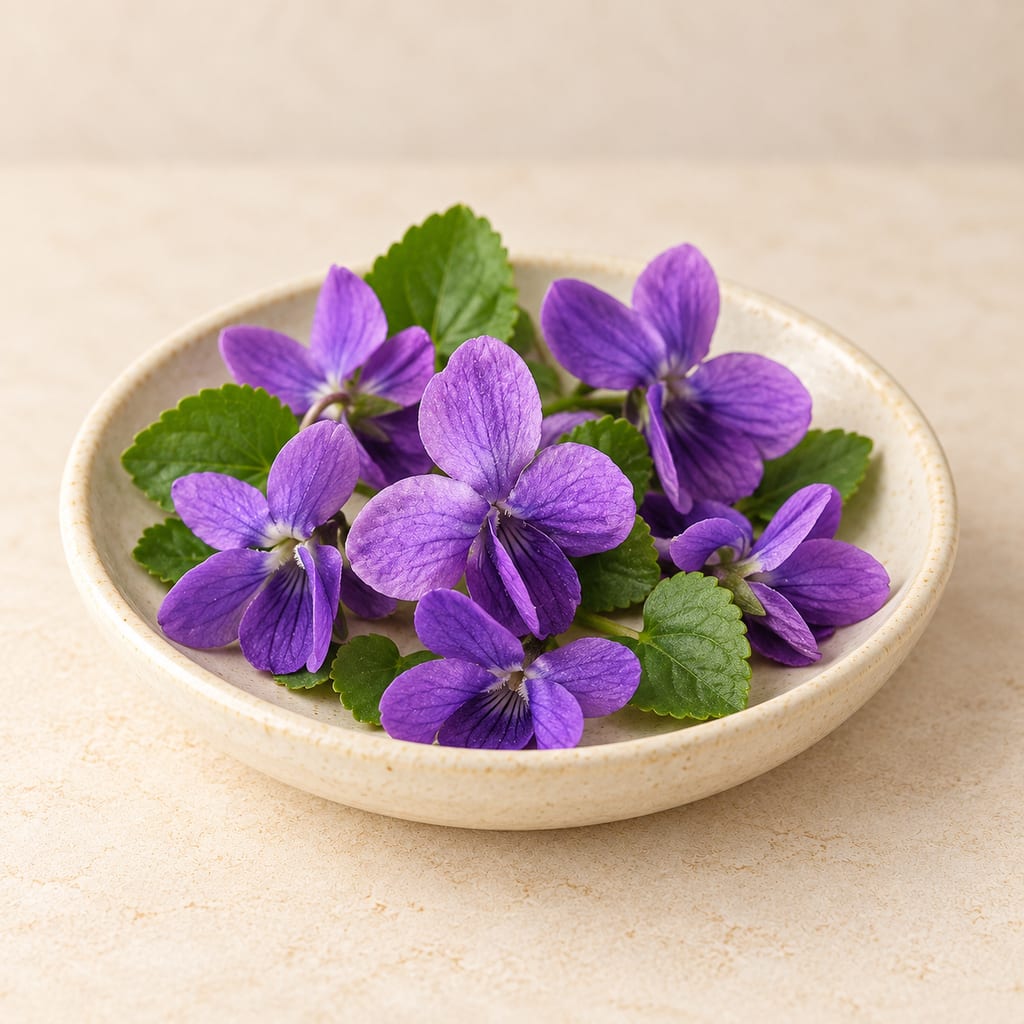
Viola odorata is a temperate, mat-forming perennial with UK flower-garnish uses and an interview-reported Moldovan fermented-flower drink whose method is not specified.
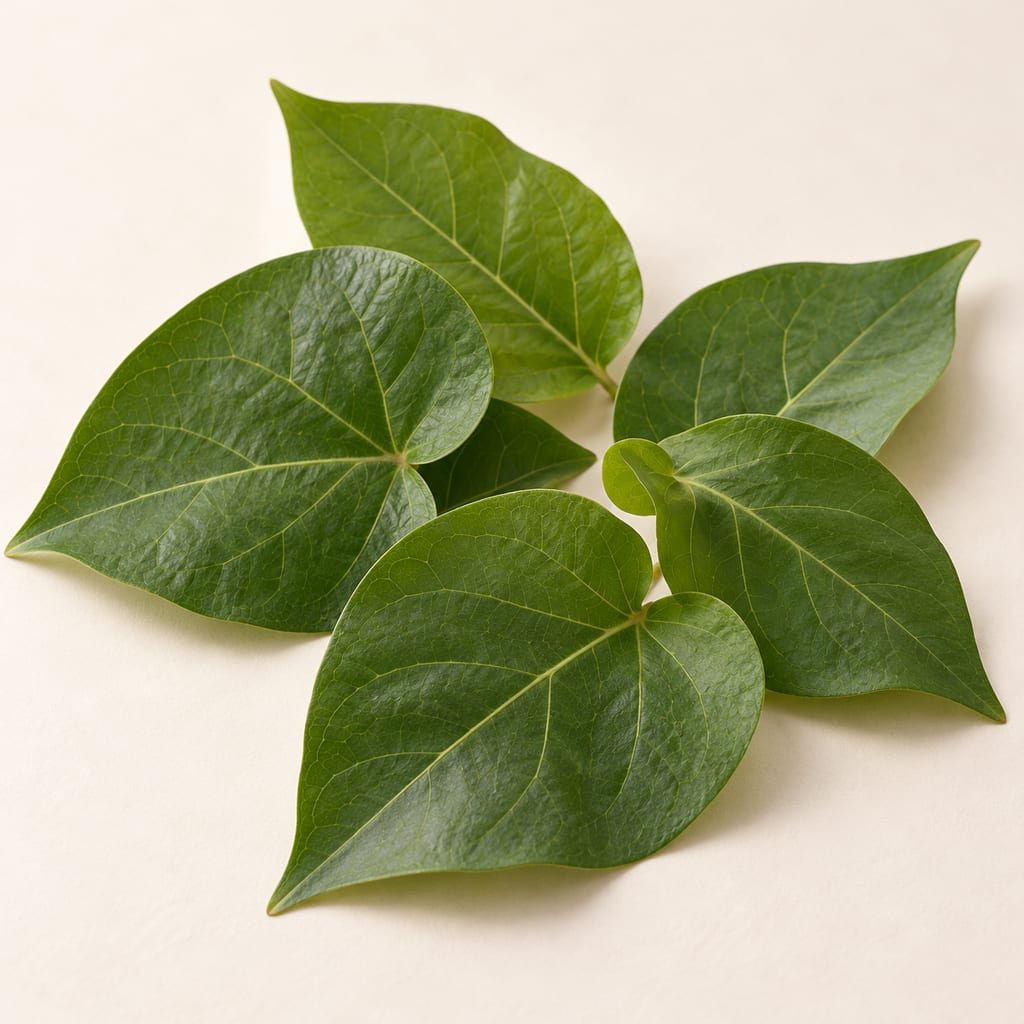
Kew accepts Gongronemopsis latifolia and lists Gongronema latifolium as a synonym. Nigerian sources report Utazi leaf use and several context-specific propagation experiments; one recent polyhouse study contains unresolved reporting conflicts.
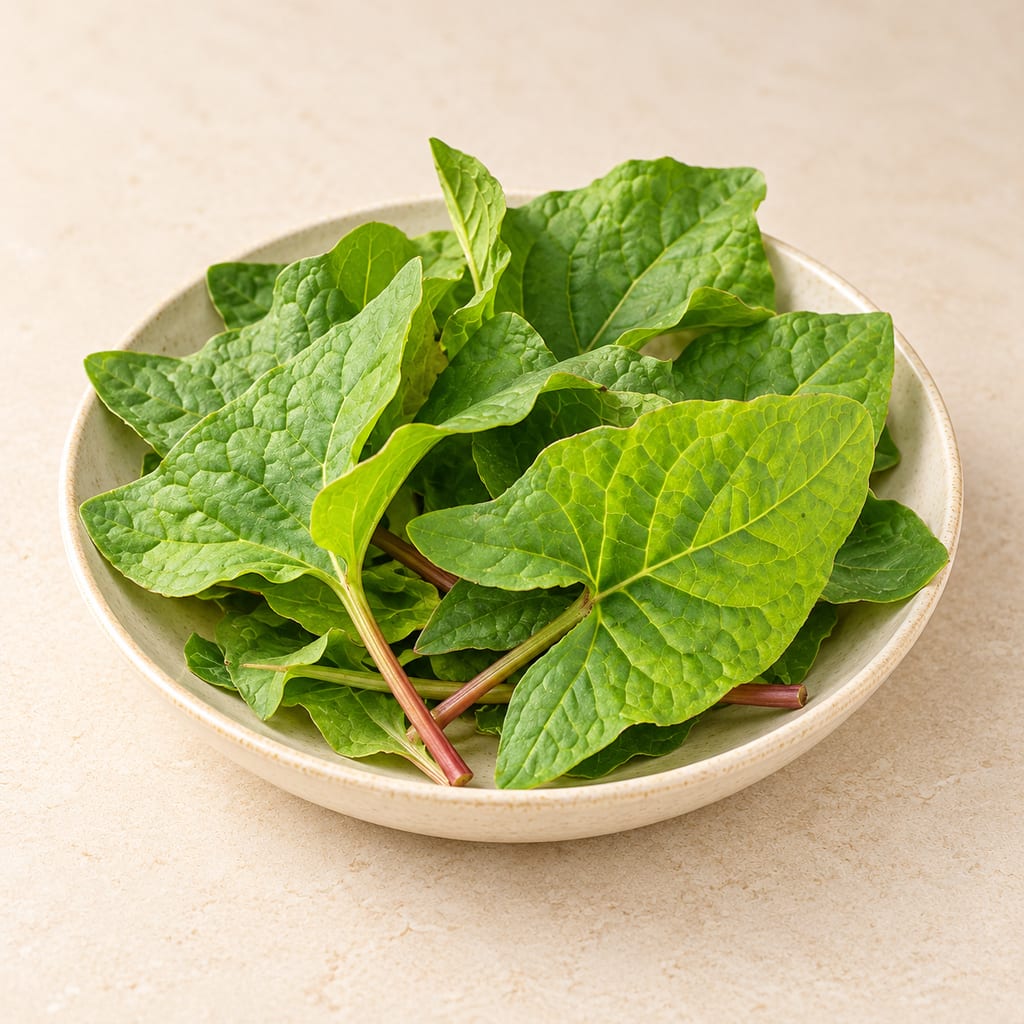
Kew accepts Blitum bonus-henricus, a European perennial also called Good King Henry. RHS guidance describes edible spinach-like leaves and UK garden cultivation, while a Dutch botanical-garden account records a historical shoot-blanching practice. Neither source supplies a complete recipe or a safe serving threshold.
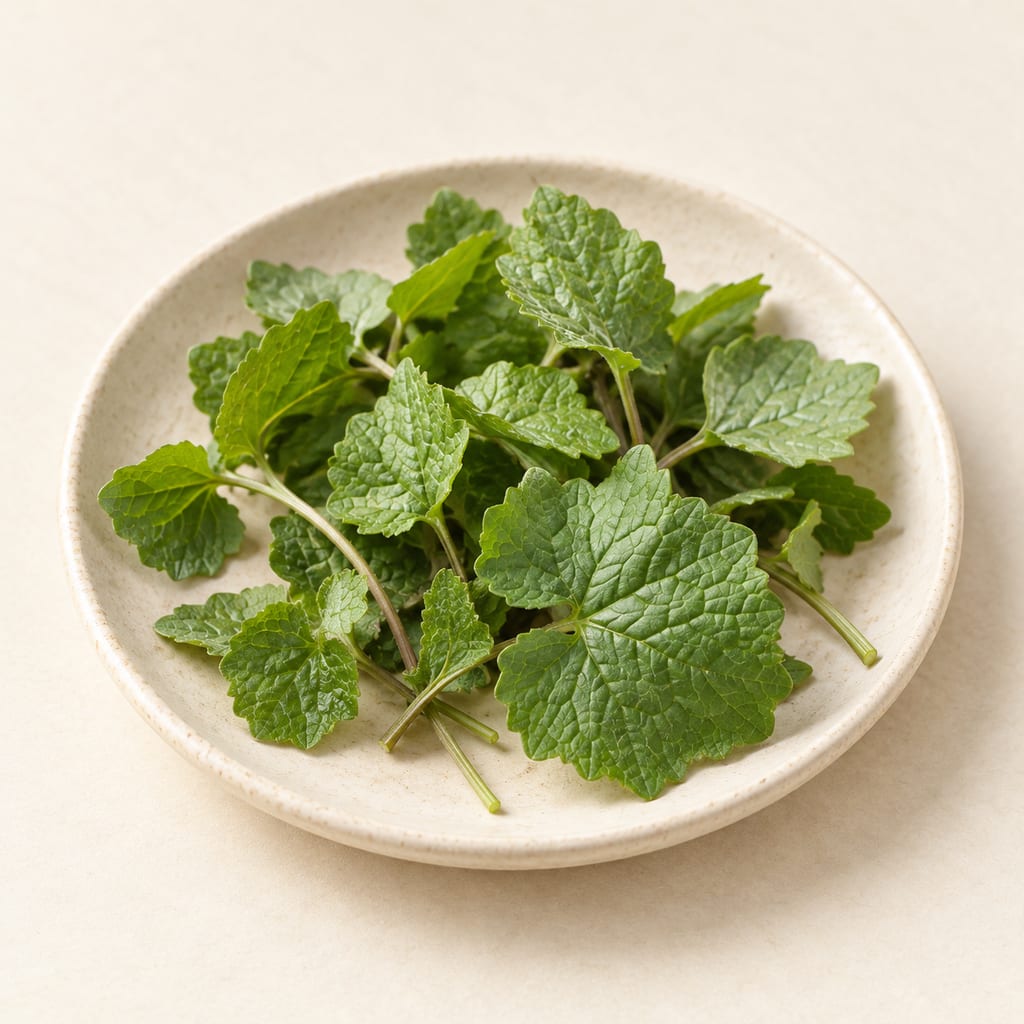
Alliaria petiolata is a European and Eurasian mustard with UK spring food-use descriptions and RHS garden guidance. The available sources do not establish a complete recipe, a safe quantity, or a general permission to forage.
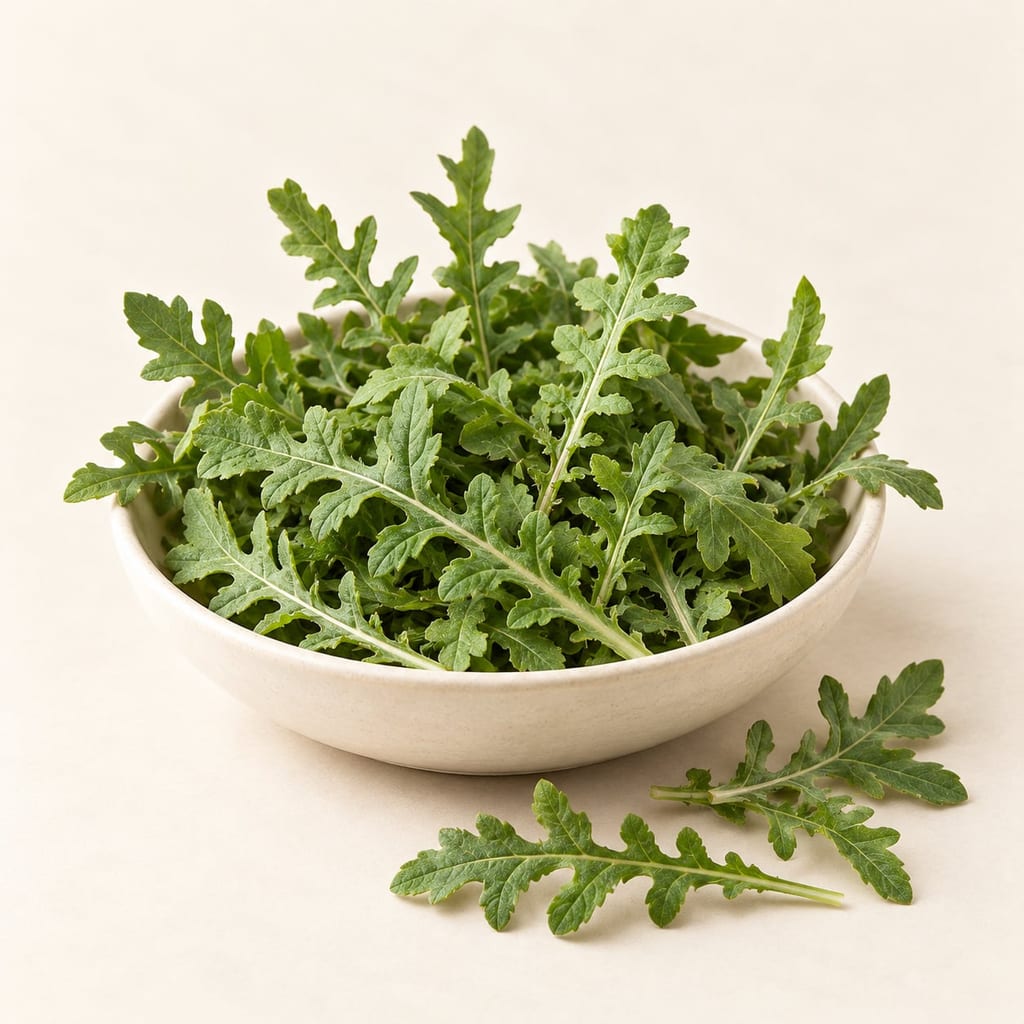
Capsella bursa-pastoris appears in Shanghai botanical notes, Korean 냉이 crop and dish records, a Japanese Seven Herbs custom, and a Dulong wild-edible comparison. These sources describe different regional contexts and do not supply a complete household pickle method or identification guide.
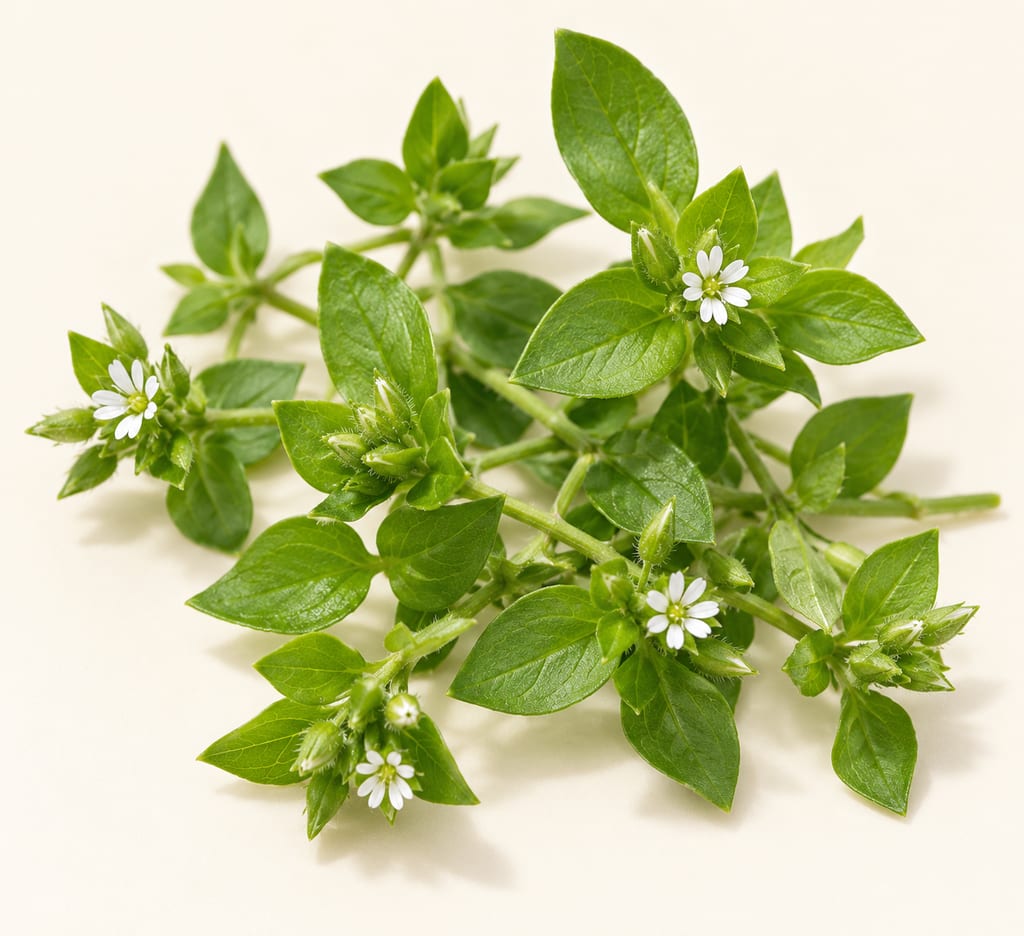
Common chickweed (Stellaria media) is a cool-season garden plant with documented food-use descriptions. UK and US sources describe where it grows and how it spreads, but do not establish a managed food-crop system or a complete recipe.
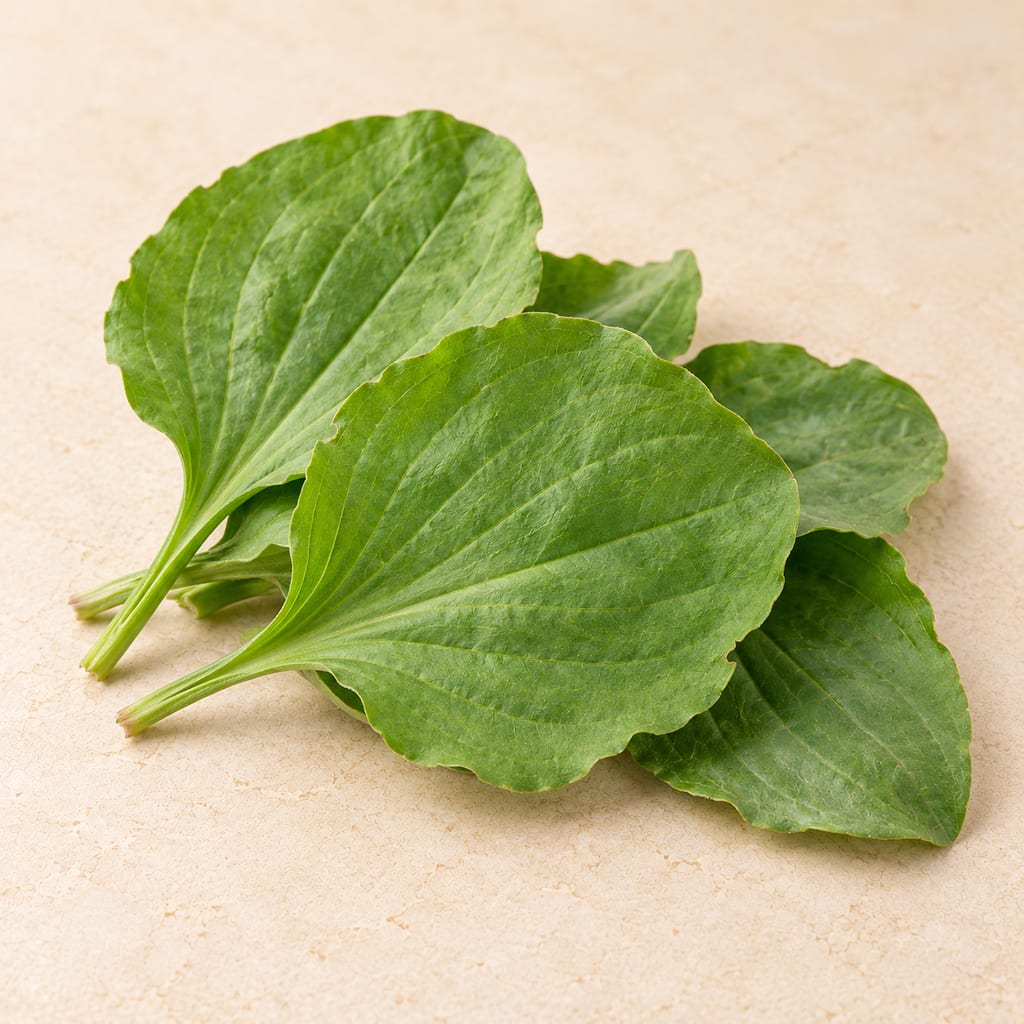
Plantago asiatica has a local Chinese food-use record and Japanese cultivation guidance whose medicinal-crop purpose limits how it can be applied to food growing.
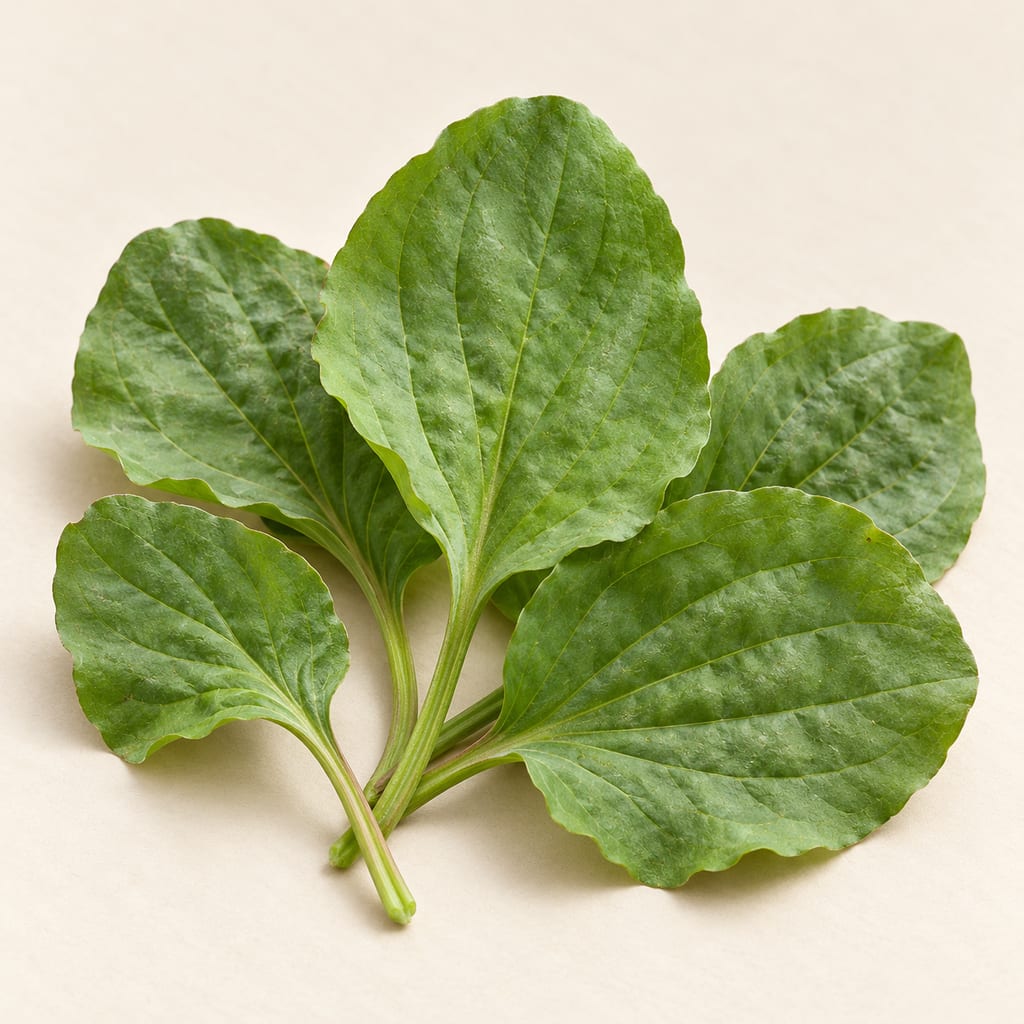
Plantago major is distinct from P. asiatica and other plantains in the food records reviewed here. Dulong survey material, Japanese food notes and horticultural sources describe different parts and settings, but do not establish a complete recipe or a safe wild-harvest method.
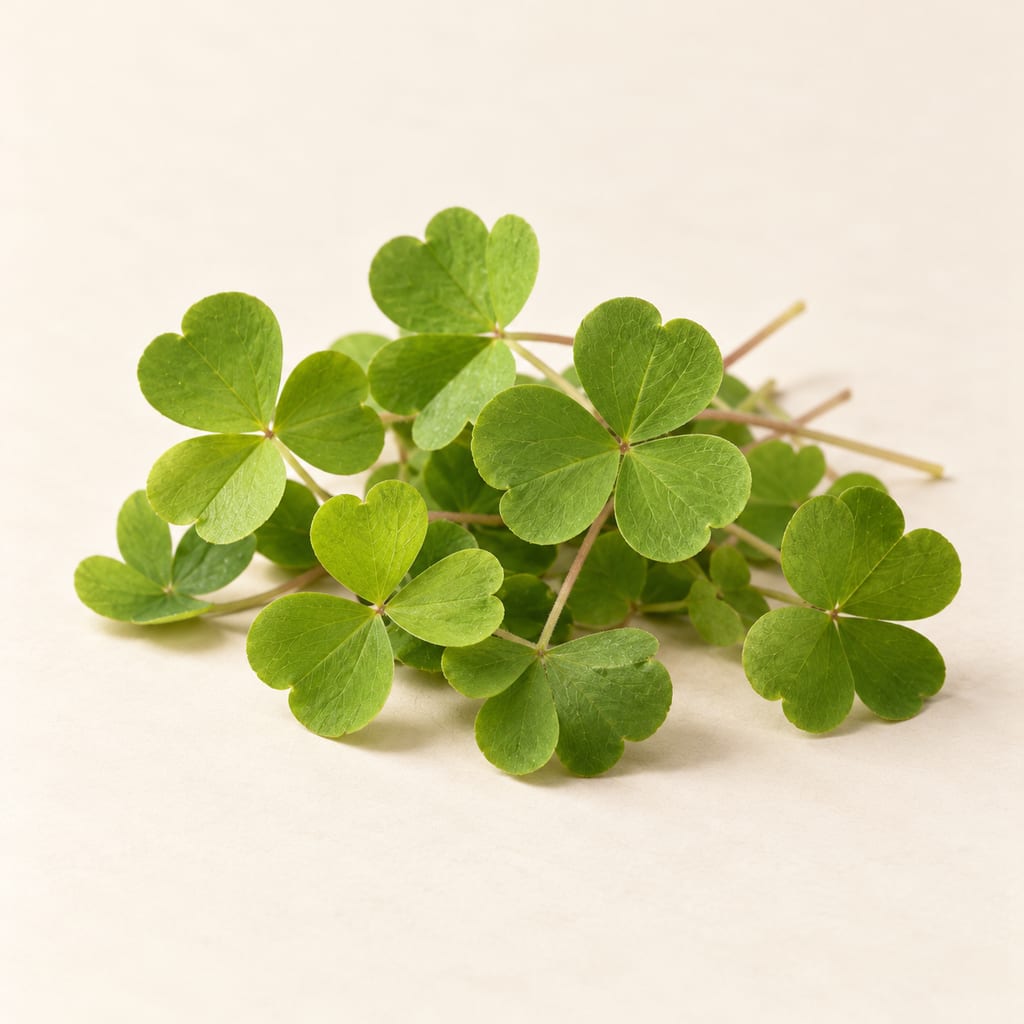
Oxalis acetosella is a small perennial of shaded woodland. Danish sources describe its sour leaves in salads and herb preparations, while Denmark’s food authority advises only limited garnish or herb use and gives a specific authority context for its intake figures.
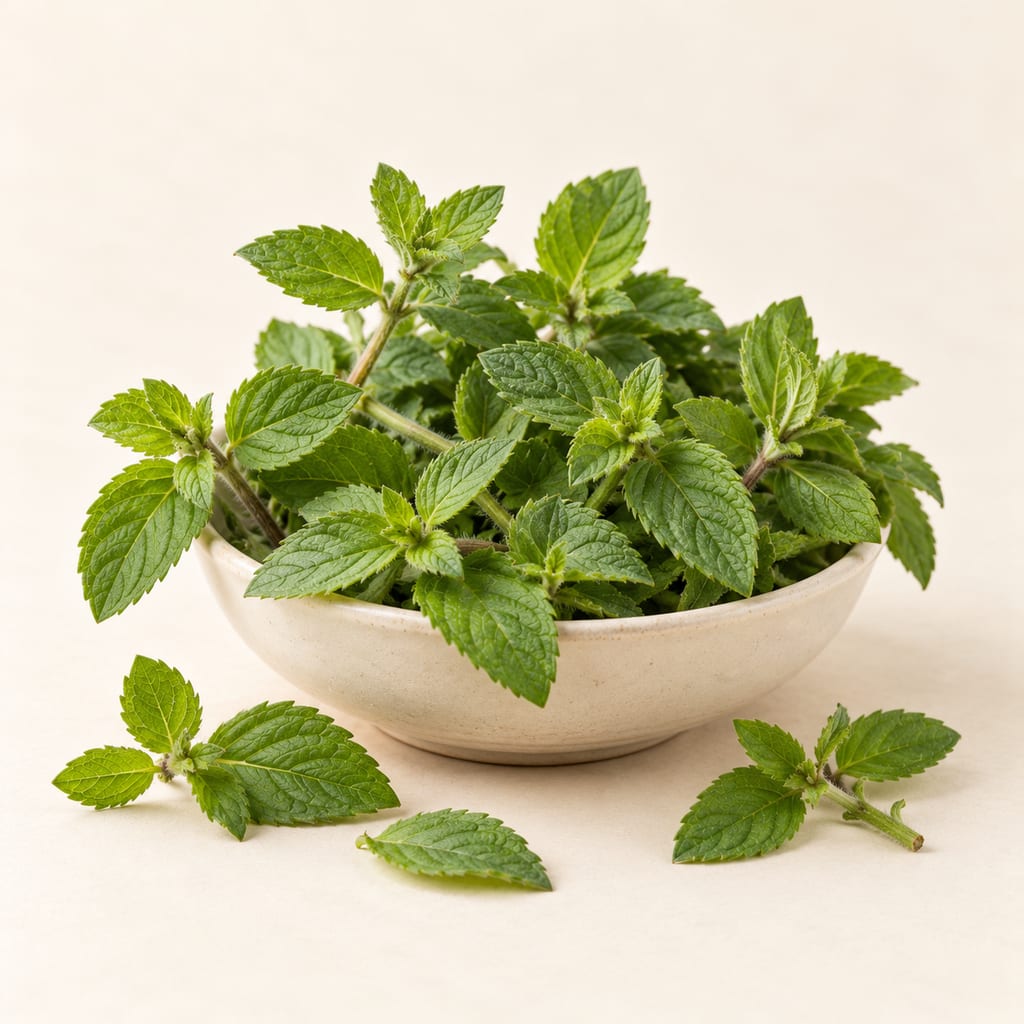
A Gumare study reports a Kwena leaf beverage and seasonal availability; Botswana flora and a UK gardening profile provide different kinds of context, not a local crop protocol.
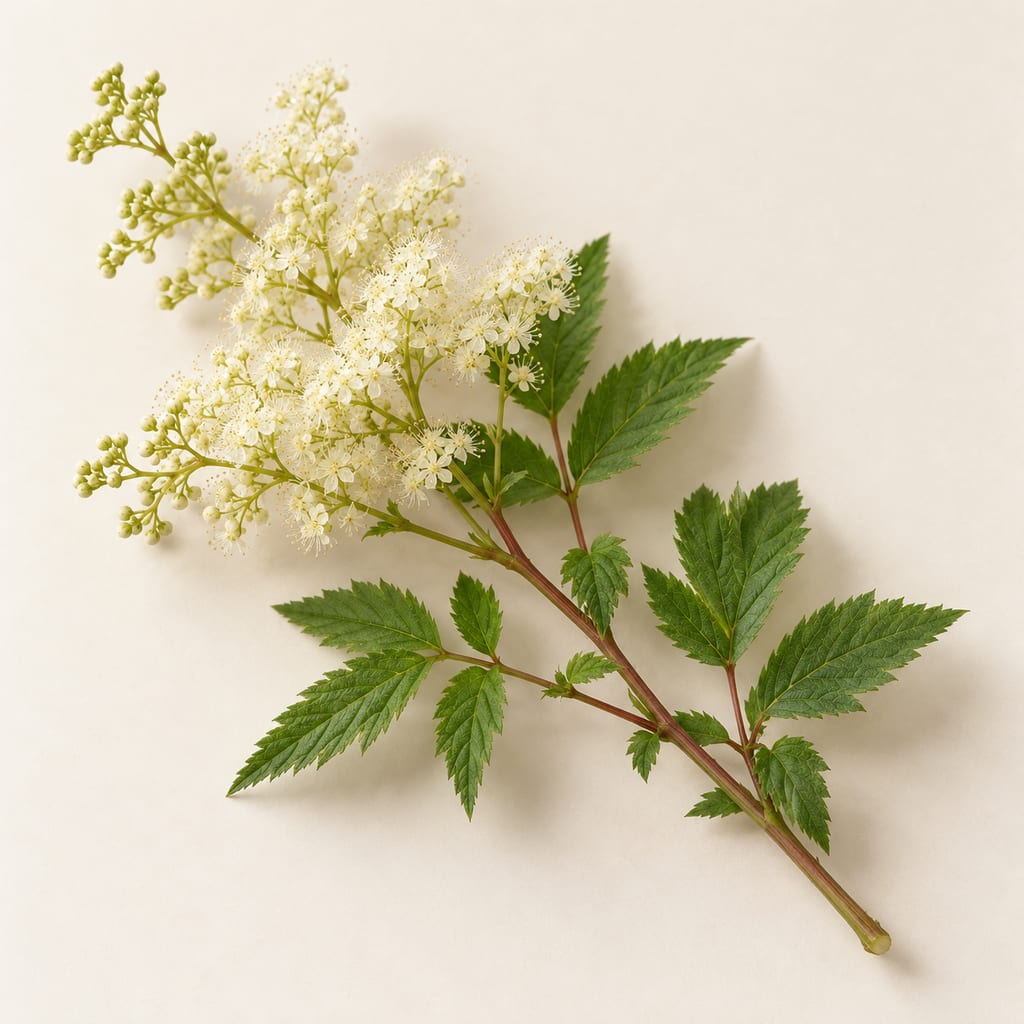
Filipendula ulmaria is a rhizomatous perennial associated with damp European habitats. A UK account reports mead flavouring; a literature review attributes soup flavouring to leaves and wine or beer flavouring to flowers, without a complete household recipe or culinary amount.
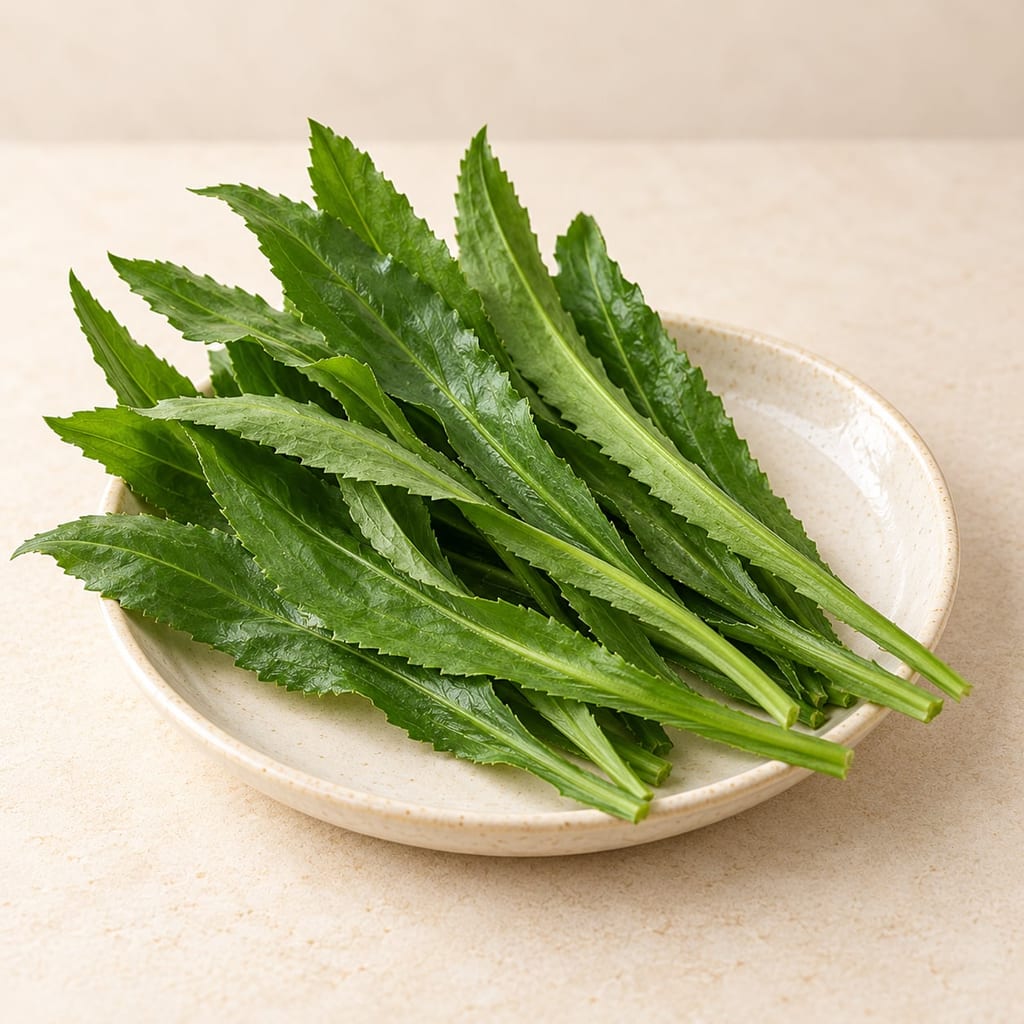
A source-linked account of Eryngium foetidum as a culinary leaf in Trinidad and Pará, alongside distinct Peru and Brazil cultivation reports and unresolved home-use limits.
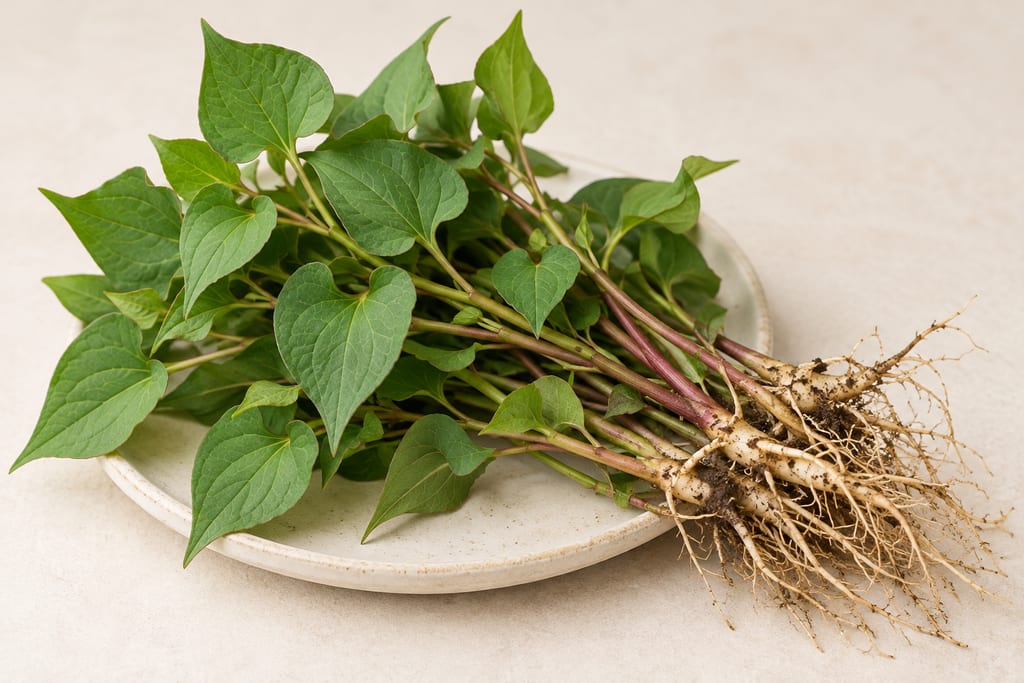
A rhizomatous perennial with regional Chinese food records and separate UK, US and Japanese cultivation accounts. Reported parts and methods vary by source; the account is not a plant-identification or food-safety approval.
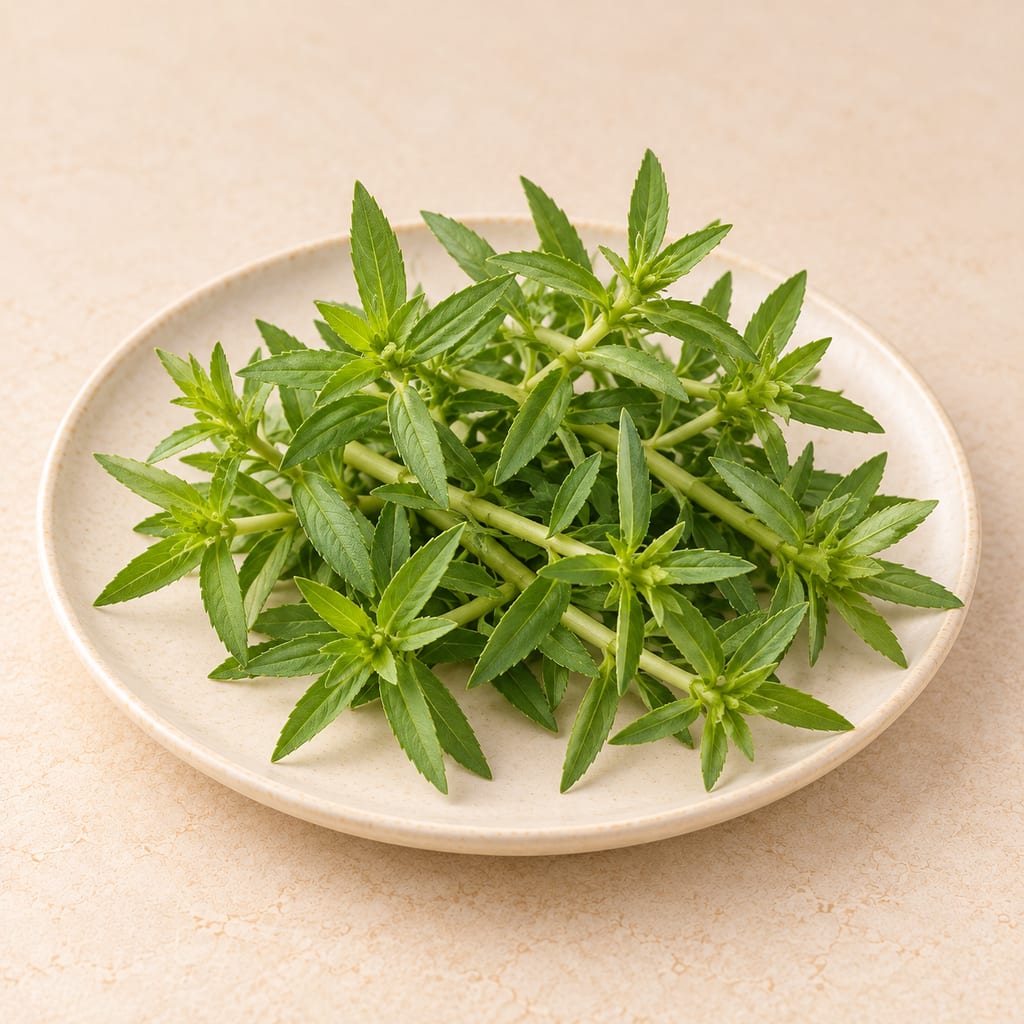
Kew accepts Limnophila aromatica and includes Cambodia in its range. A northwestern Cambodian market study records leaves; regional sources describe condiment use and aquatic habitat, while one Siem Reap press account gives conflicting season statements.
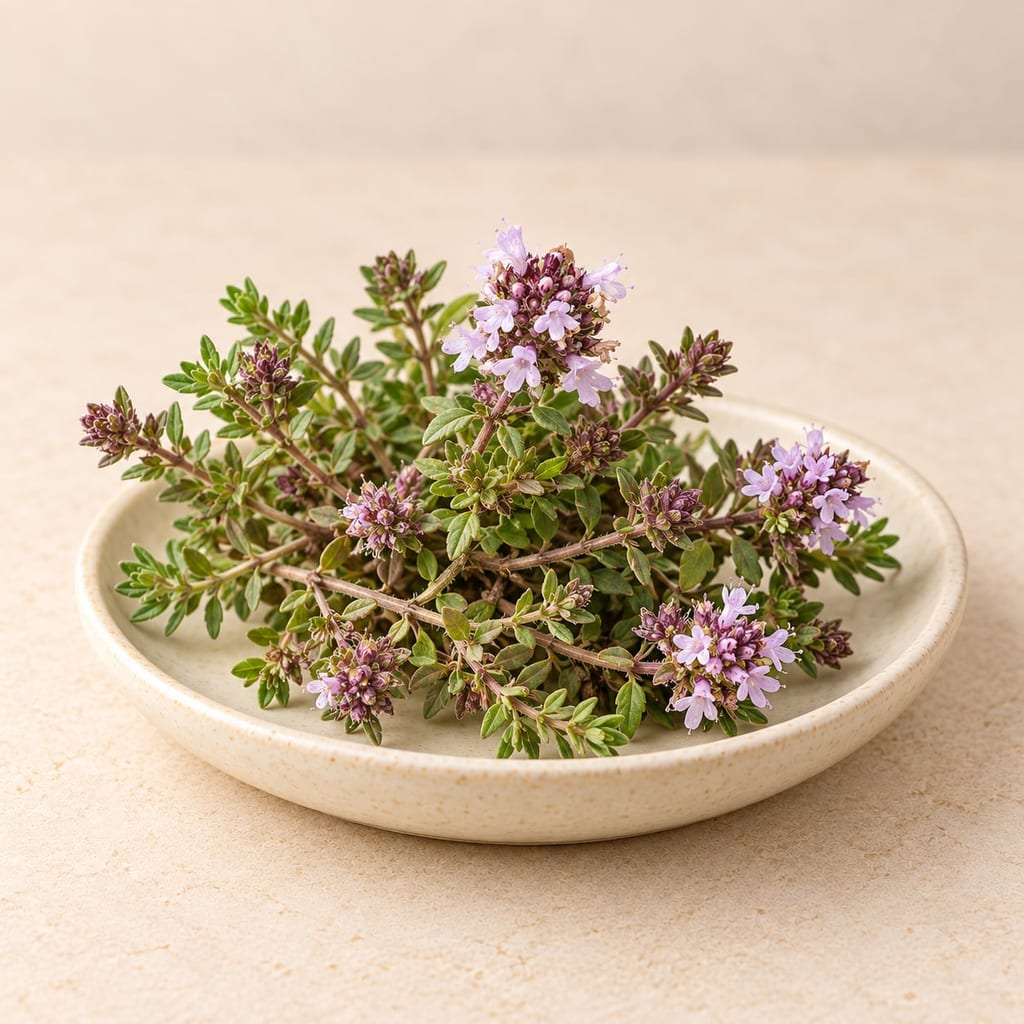
Tosign, the leaves of Ethiopian thyme (Thymus schimperi): a wild-harvested herb recorded in tea and in berbere-style spice blends, with a name shared by another thyme.
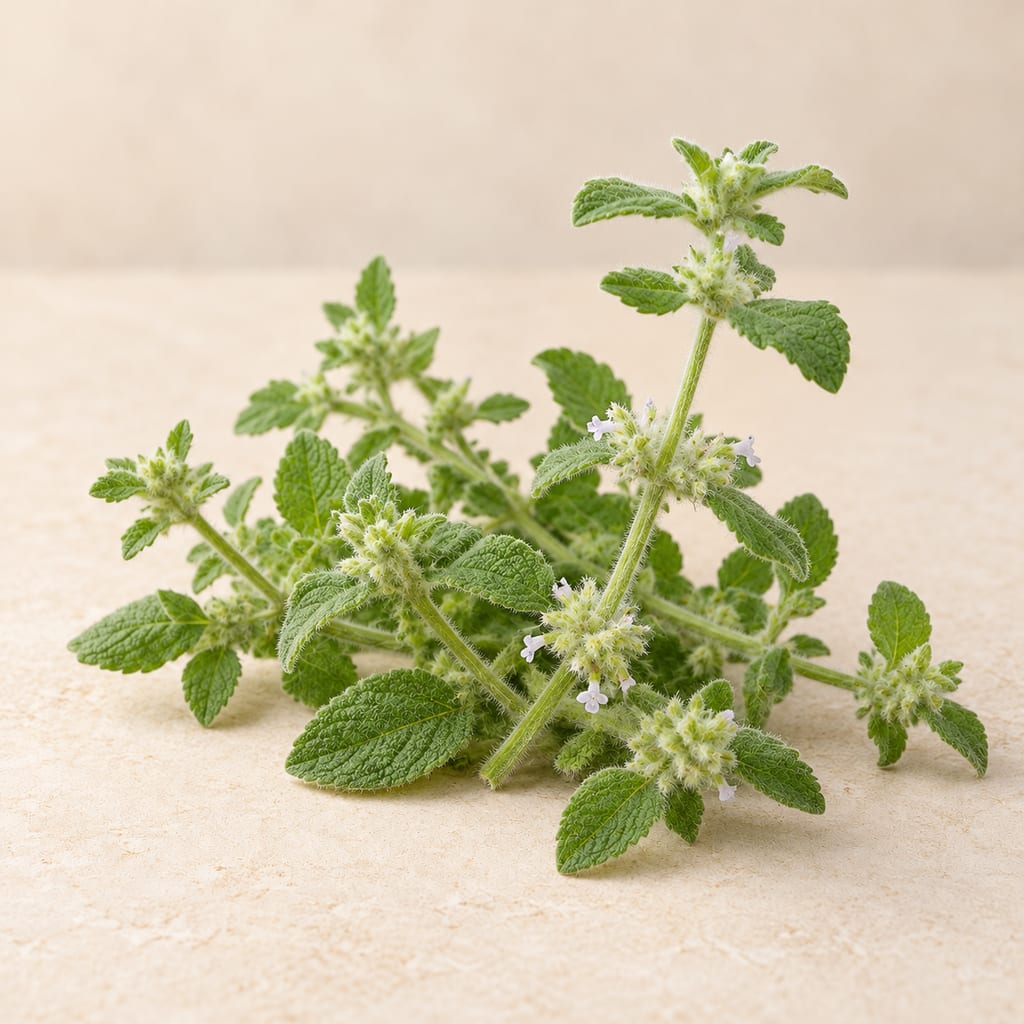
A source-bounded account of muña food uses in the Peruvian Andes and the limited evidence available for cultivation and household preparation.
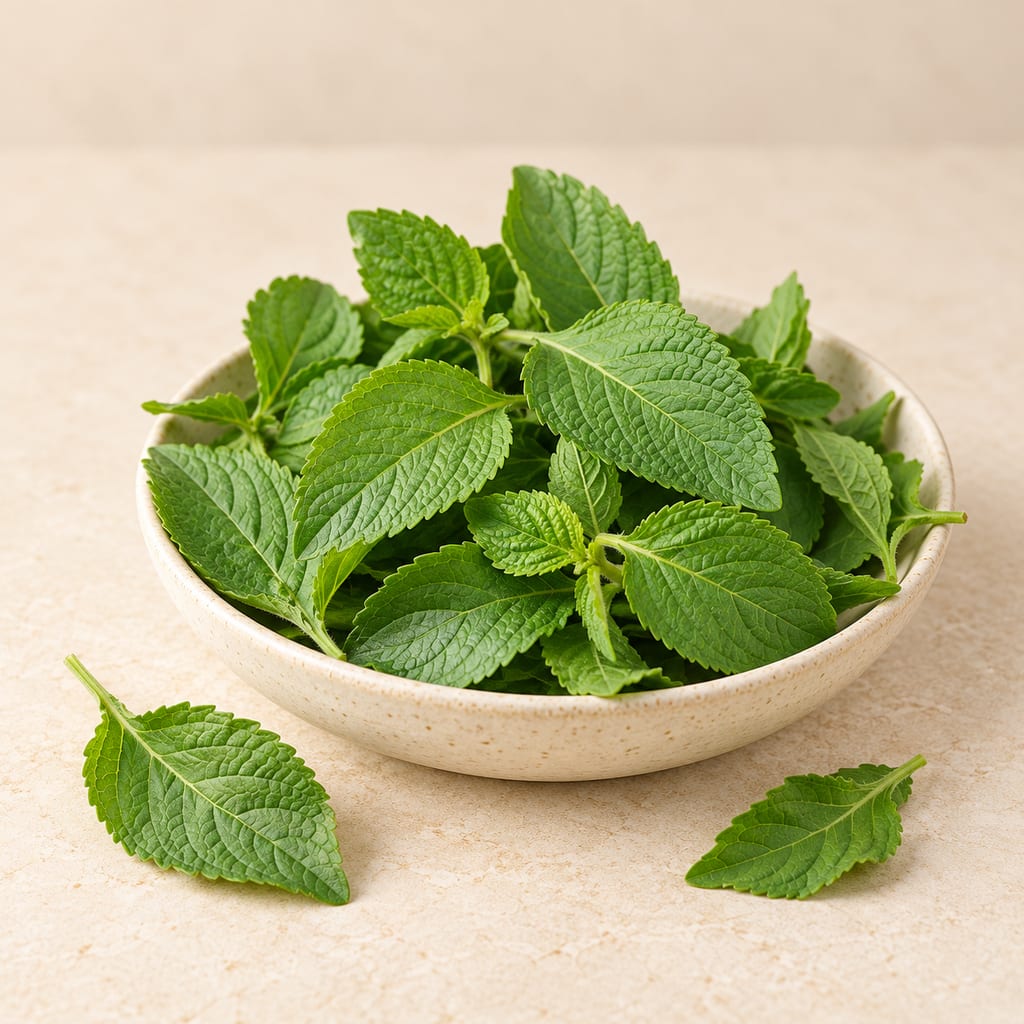
A source-linked account of Ocimum gratissimum food use in Benin, Thailand and southern Nigeria, with regional growing reports and unresolved home-method details.
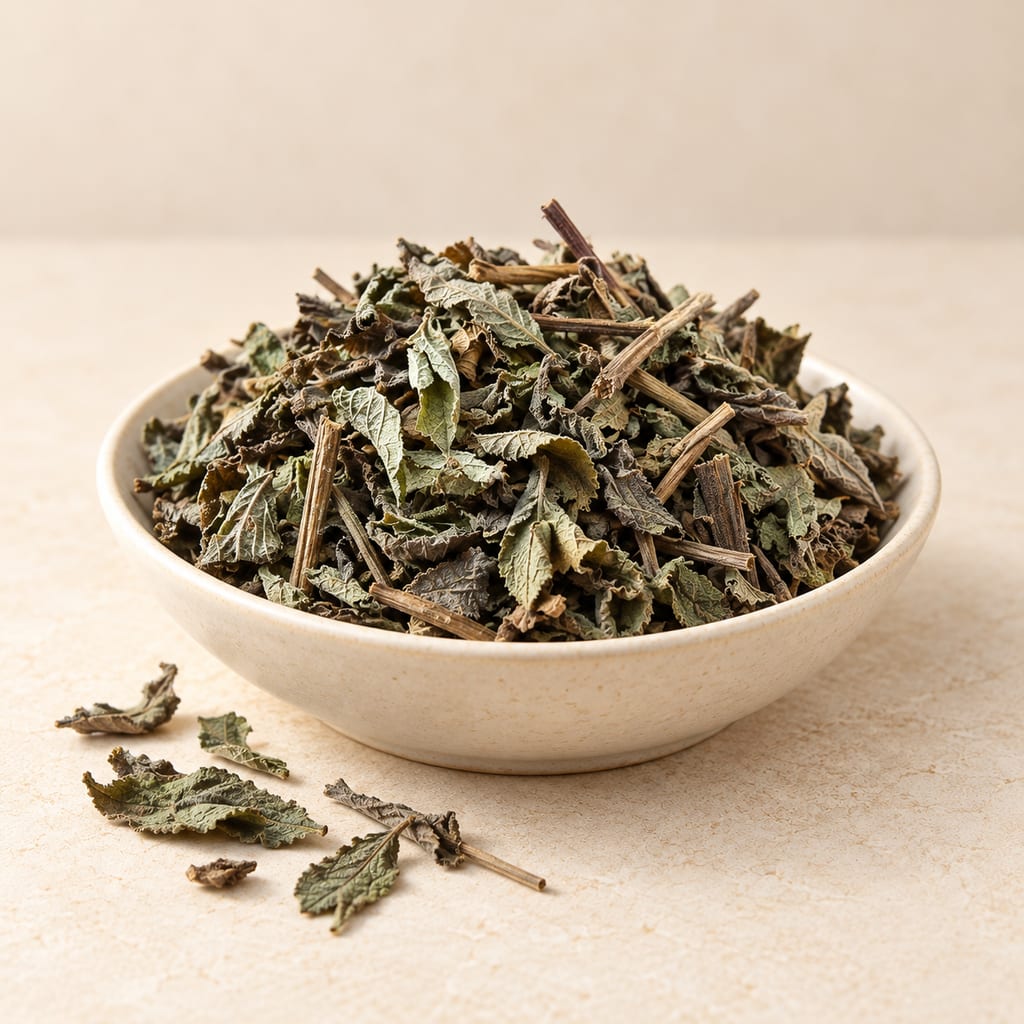
Koseret, Lippia abyssinica, is an Ethiopian aromatic herb used in spice blends, spiced butter, dairy and coffee-leaf drinks. Sources record local uses, not one method.
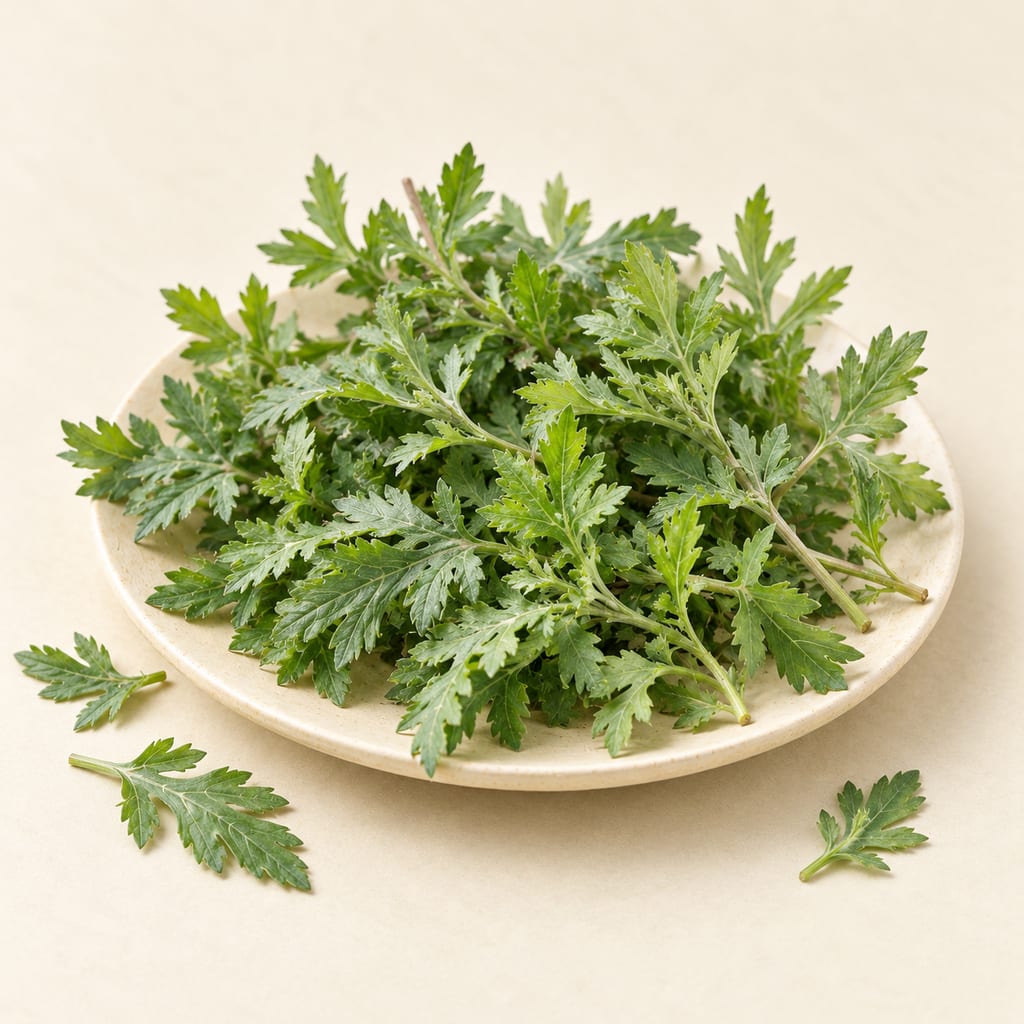
Food reports and naming limits for Artemisia princeps, set beside Japanese yomogi food traditions whose species identity is not always specified.
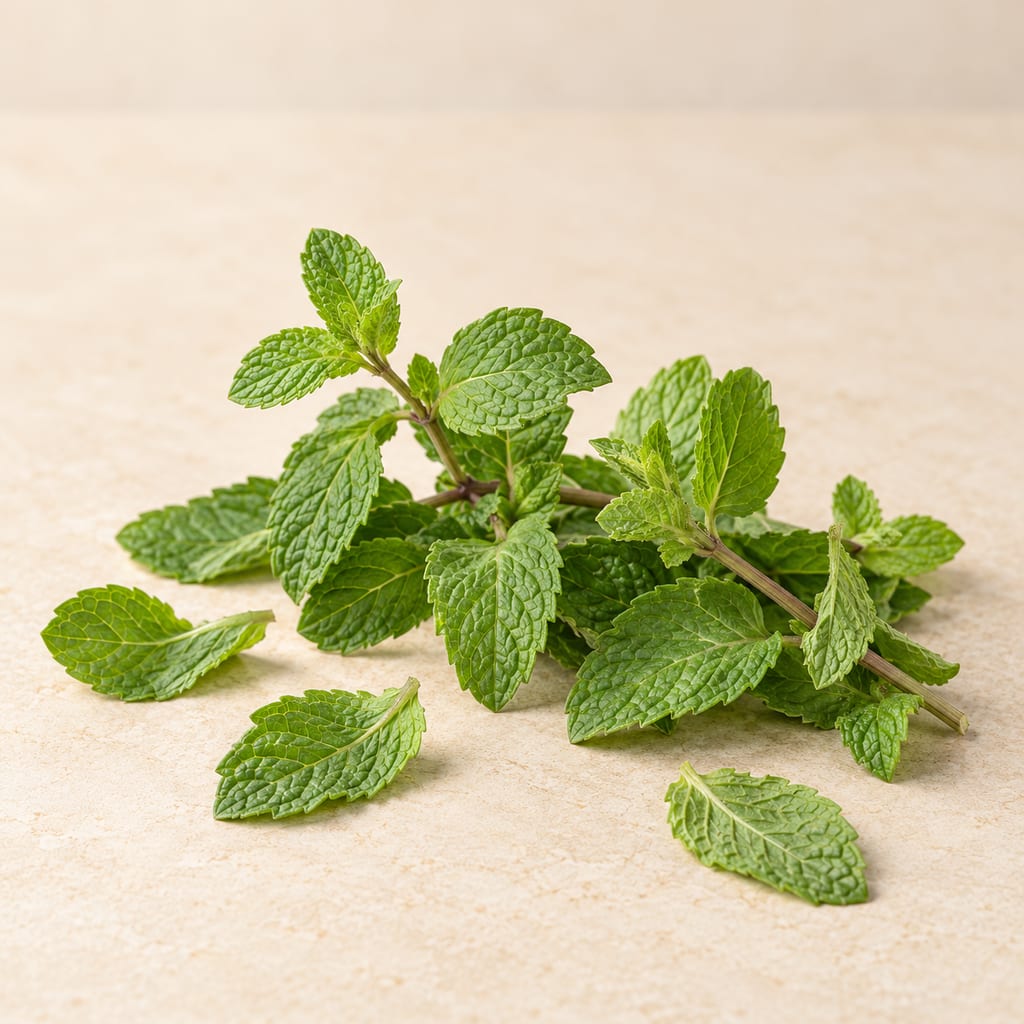
A spreading mint with documented leaf uses and contrasting source-specific moisture descriptions.
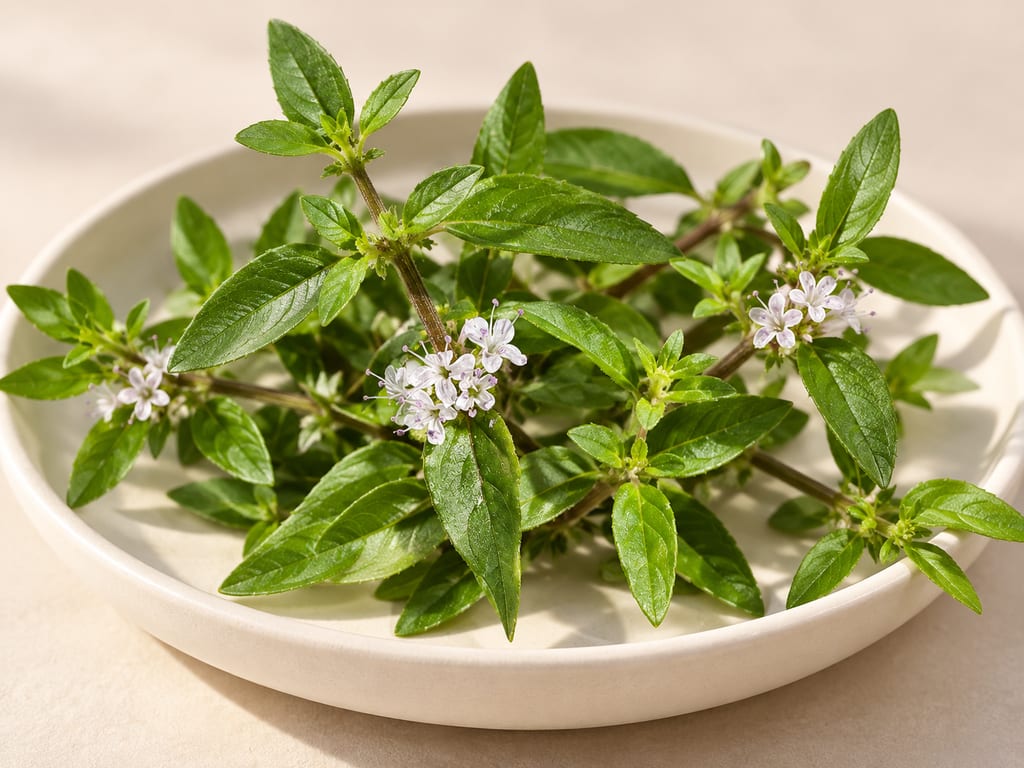
An Australian culinary mint for moist garden settings, with container-growing guidance and distinct regional conservation considerations.
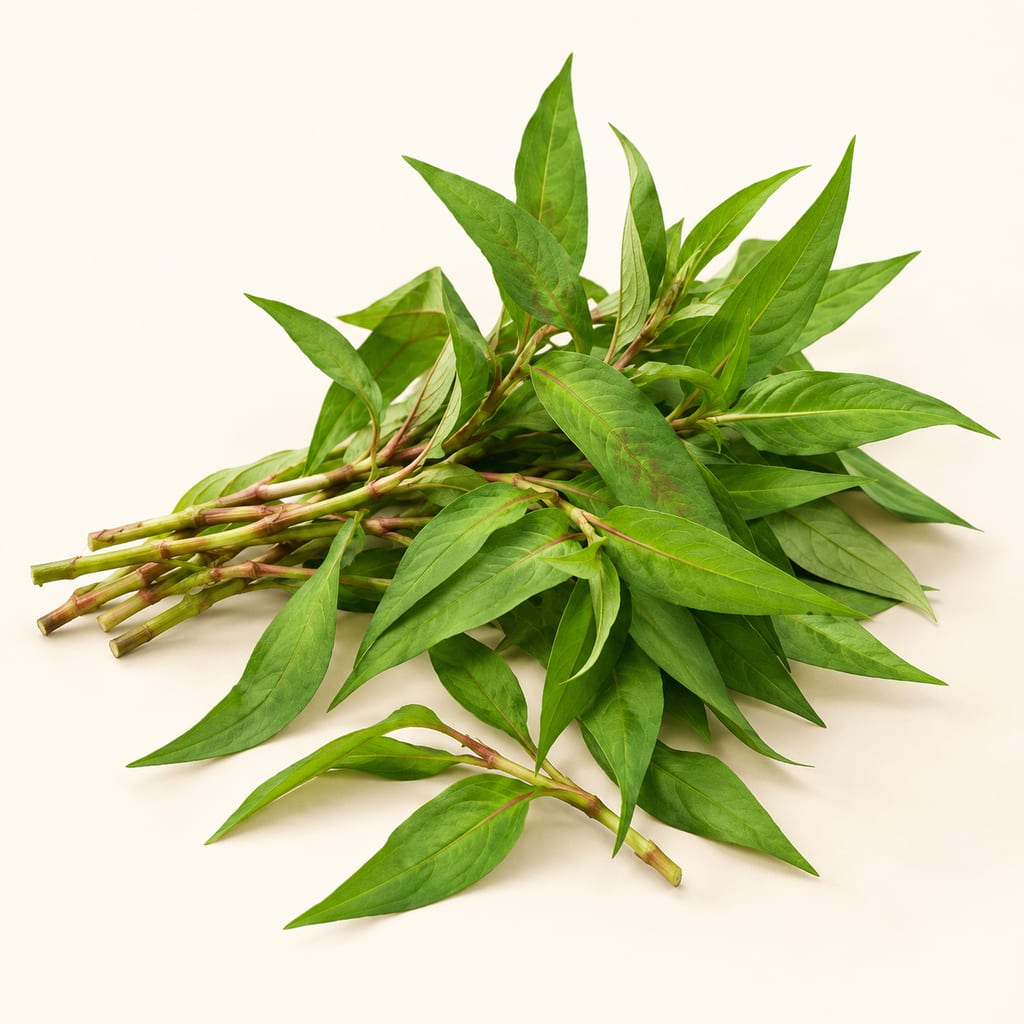
Vietnamese food-use and regional cultivation reports for rau răm, with distinct field methods and limits kept in view.
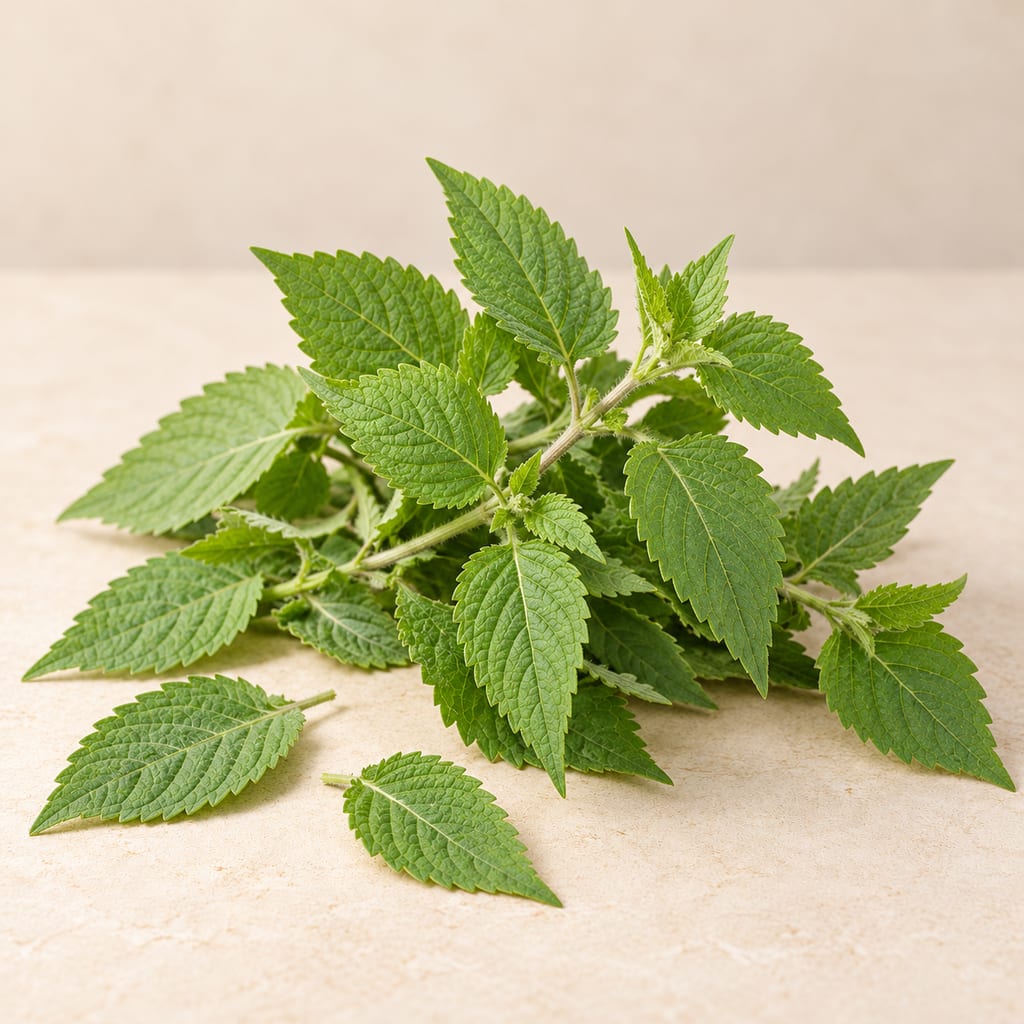
Vietnamese food and cultivation reports for kinh giới, with the limits of the inspected regional sources made explicit.
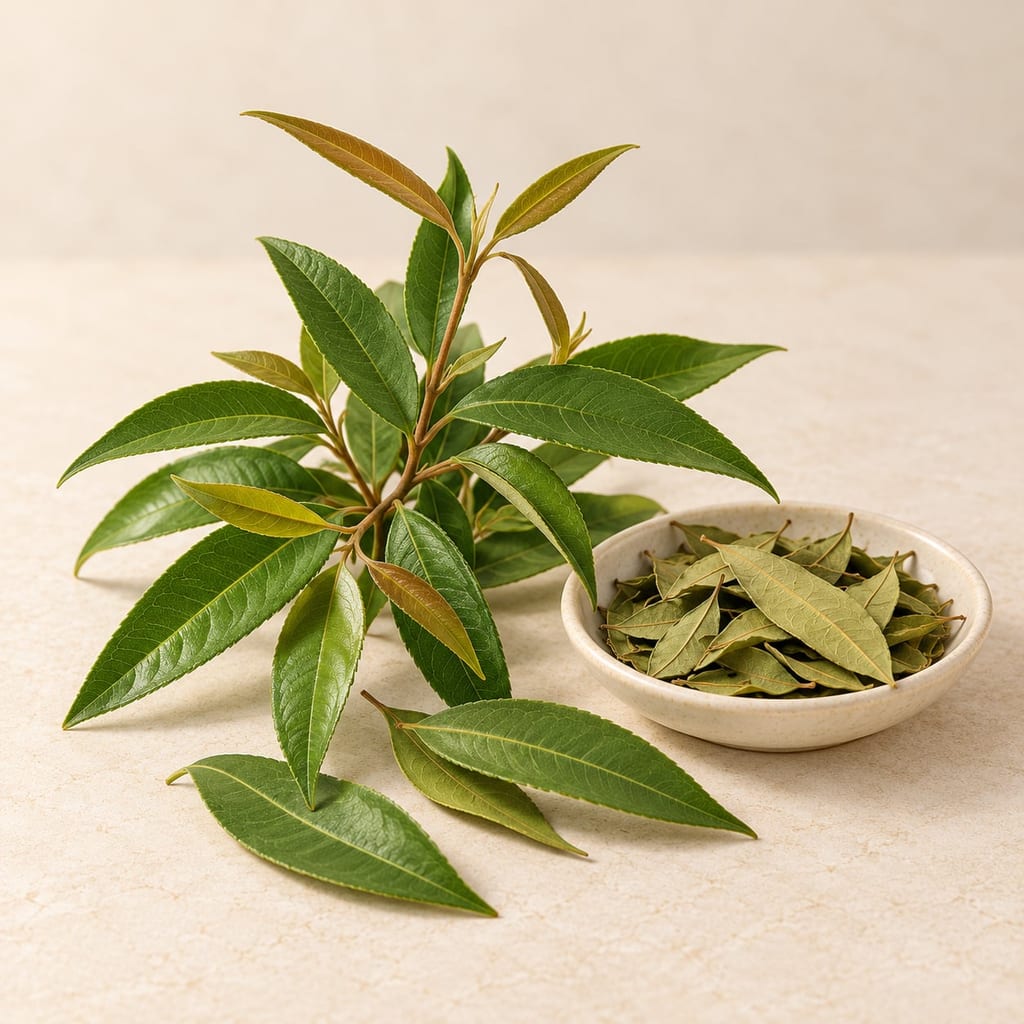
A lemon-scented Queensland shrub or tree with culinary leaf uses and source-specific guidance for sheltered gardens and containers.
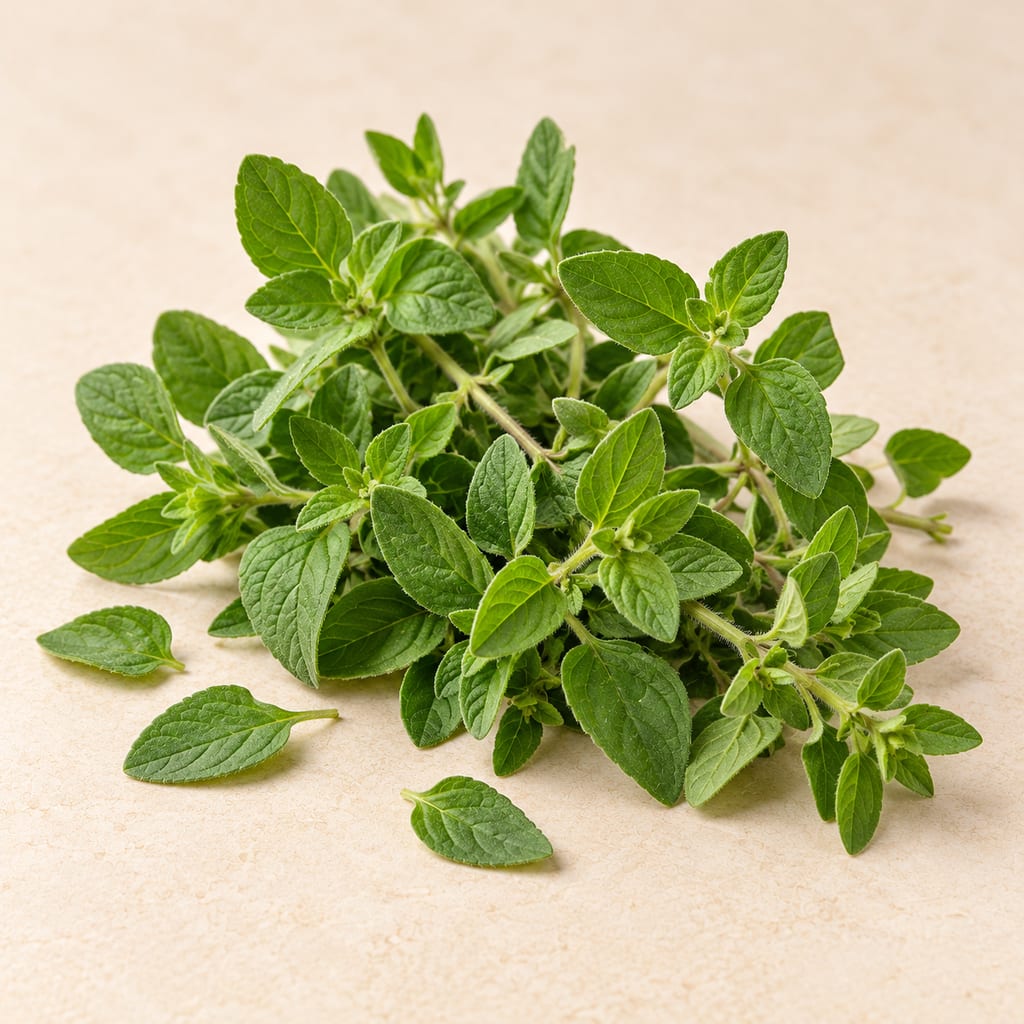
A source-scoped guide to culinary oregano leaves, UK garden growing and the limits of household drying evidence.
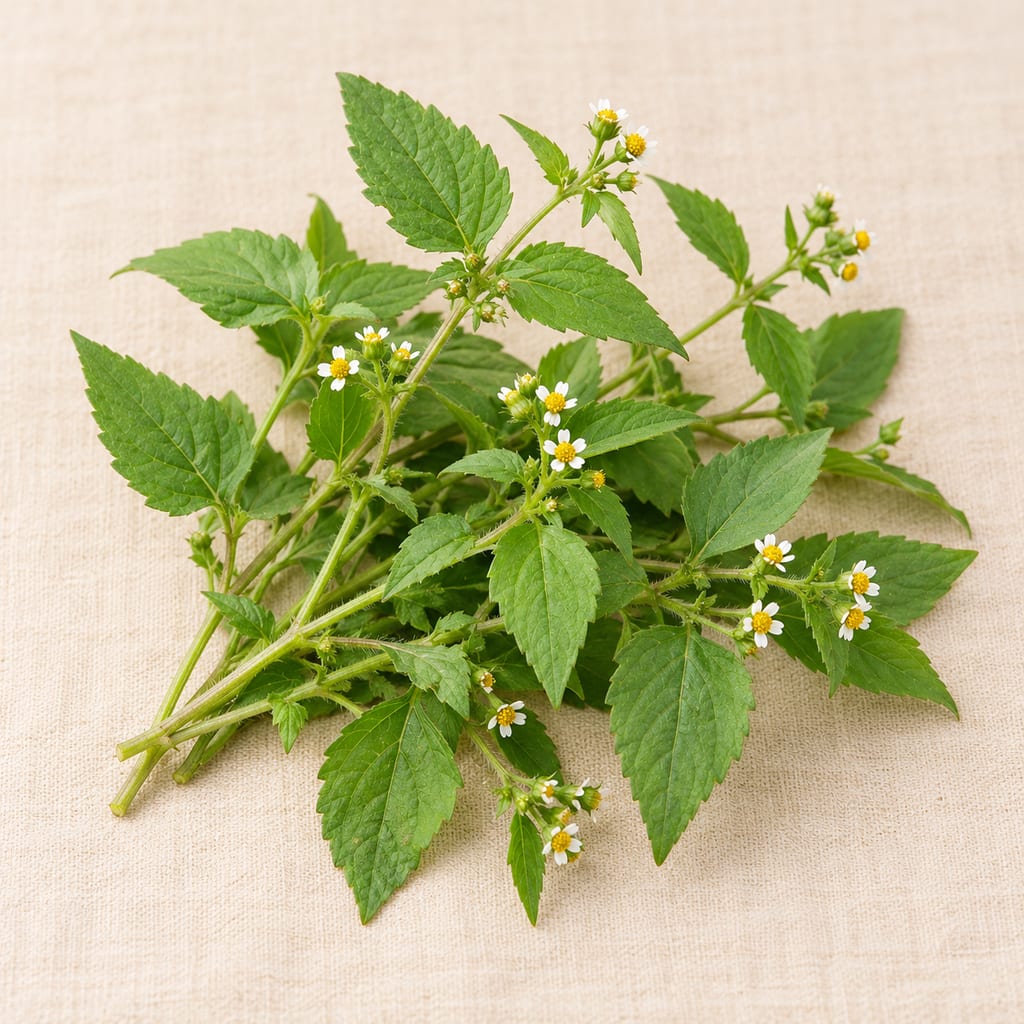
Bogotá-area community and botanical sources document Galinsoga parviflora as guascas and describe its use as an ajiaco seasoning. The plant’s common names, reported etymology and spontaneous growth are locally situated; the sources do not provide a complete recipe or a home-cultivation protocol.
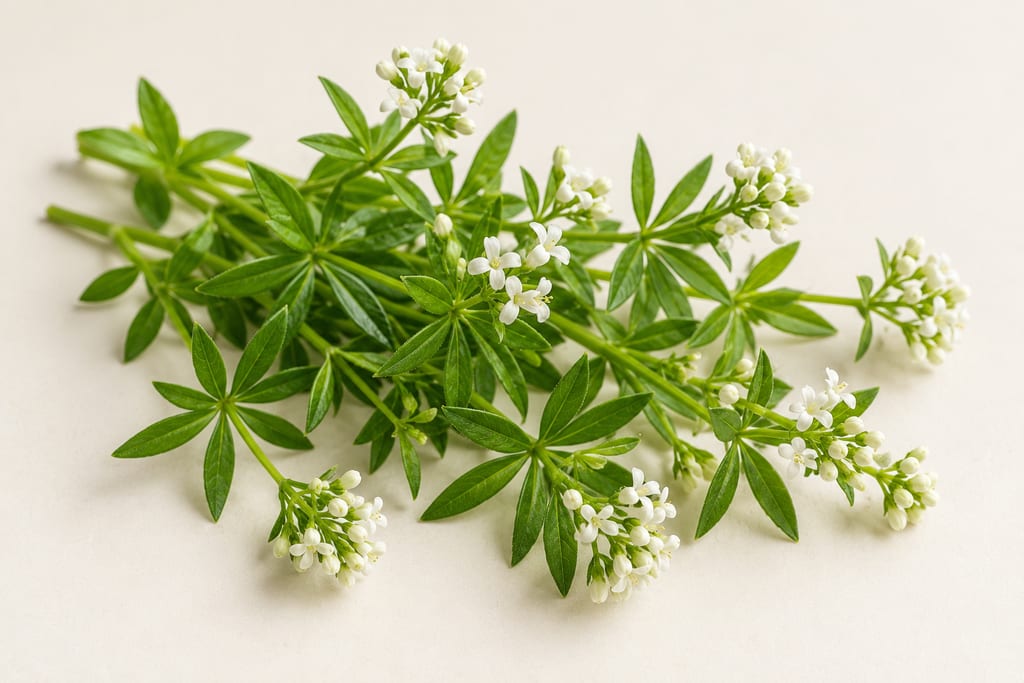
Sweet woodruff (Galium odoratum), called Waldmeister in German, is described by BZfE as an aromatic herb for Maibowle, sauces, syrup and herb butter. Its coumarin content and growing conditions are not a validated recipe or universal safety limit.
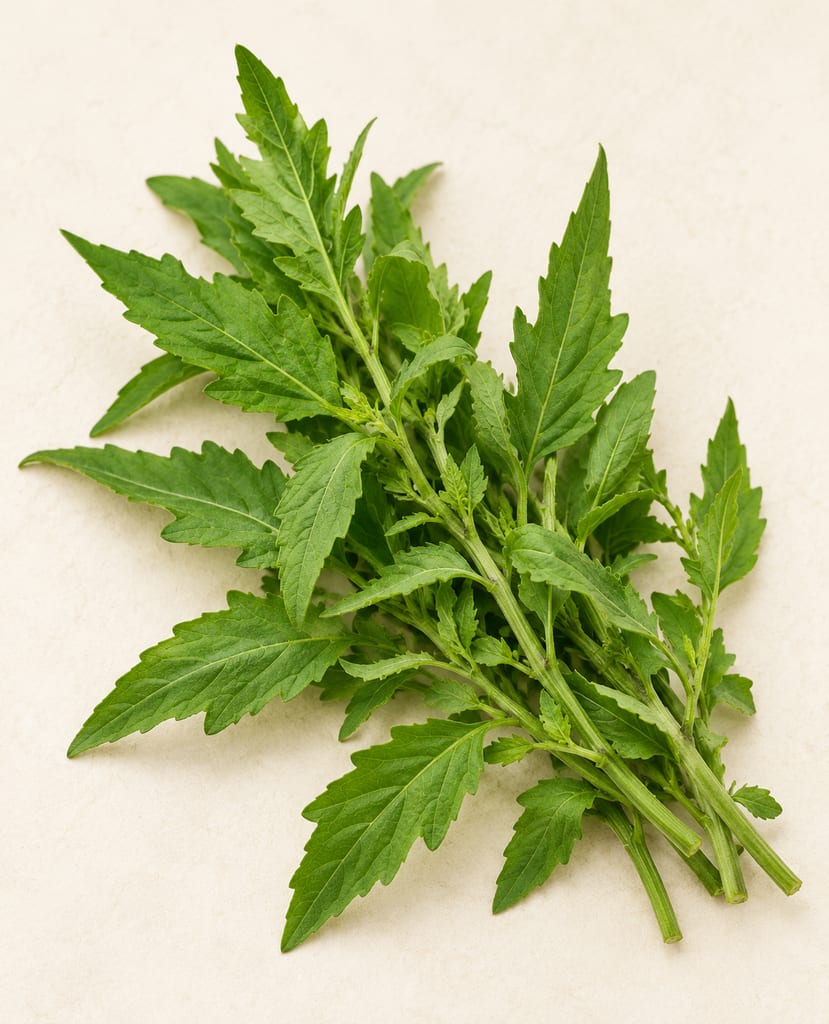
Mexican food records describe epazote leaves and stems used as a seasoning during cooking. Current taxonomy separates Dysphania ambrosioides from D. anthelmintica, while an older Mexican sheet maps some historical names differently; the culinary records do not support medicinal use, an oil dose or a universal recipe.
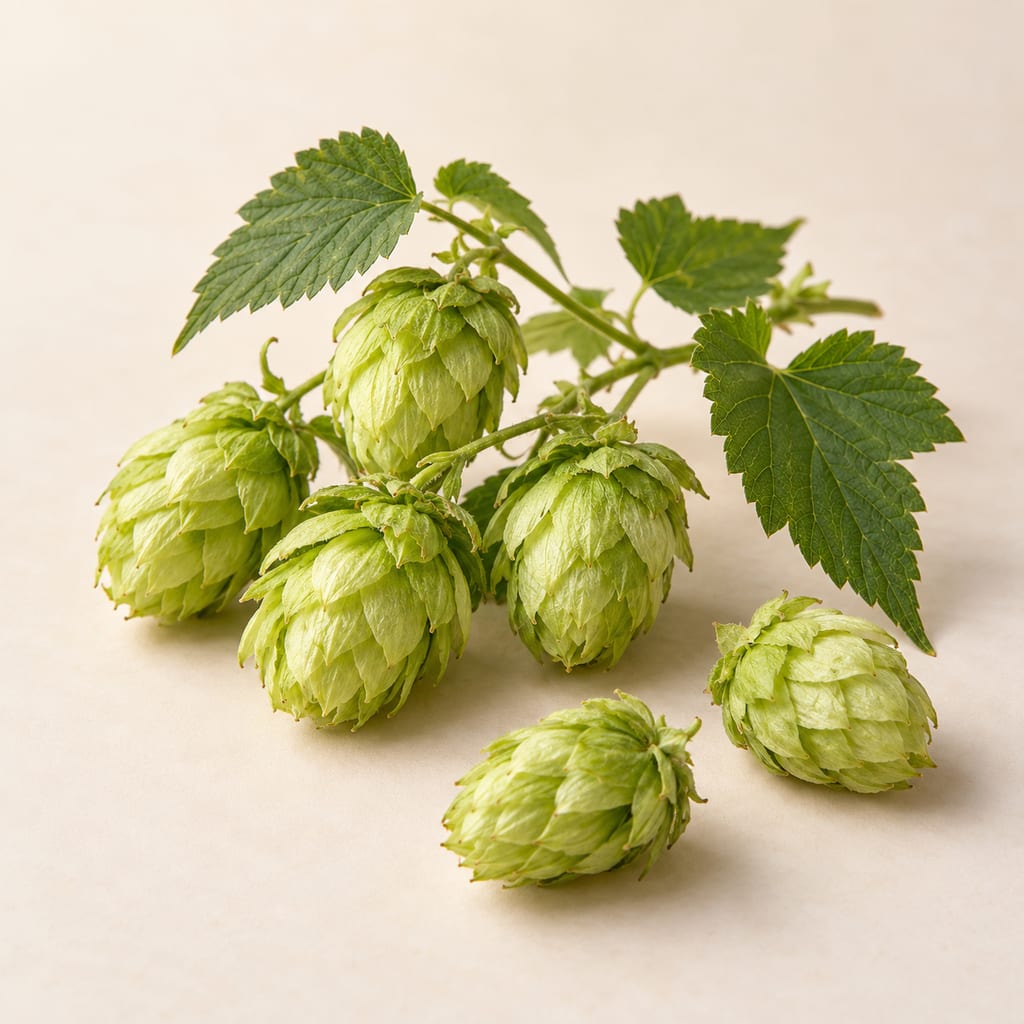
Warrior is a named American hop cultivar, YCR 5, used for measured bitterness in beer. Its current form and lot analysis determine how a brewer uses it.
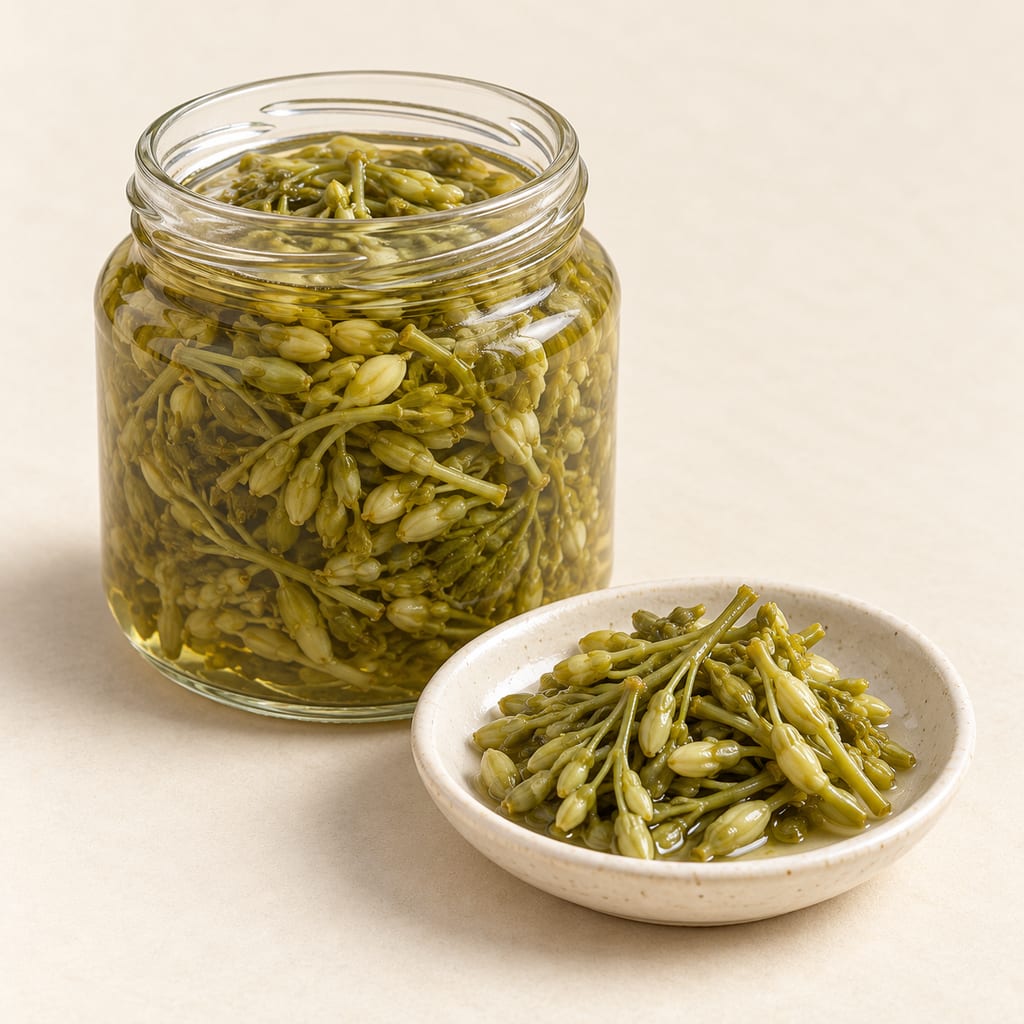
Georgian sources describe jonjoli as a flower-bud food associated with more than one Staphylea species. A 2021 figure caption names S. pinnata for the pictured preparation, while the study’s food table and the FAO profile preserve paired or shared-species evidence.
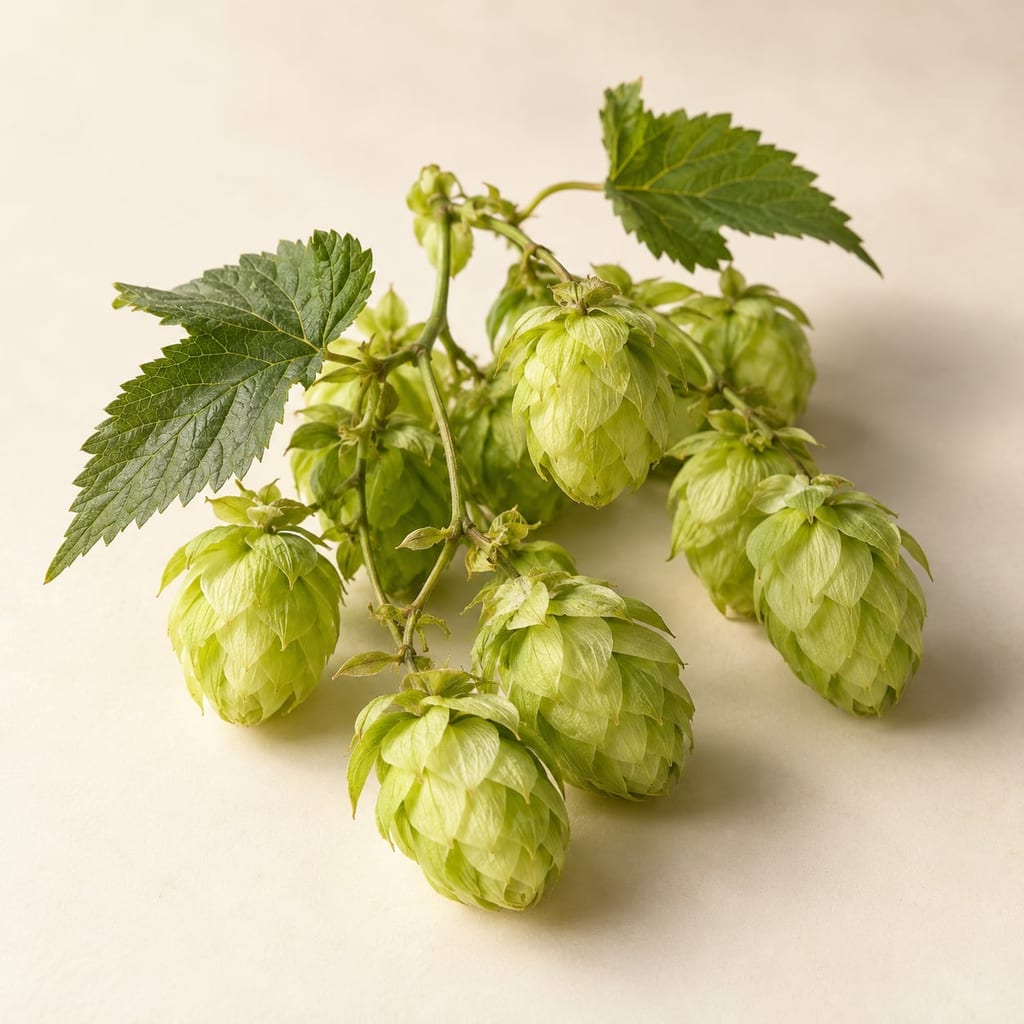
A brewing-hop name associated with the Tettnang district and the Tettnanger landrace. Regional designation, cultivar and historically confused US trade names need to be distinguished when identifying a lot.
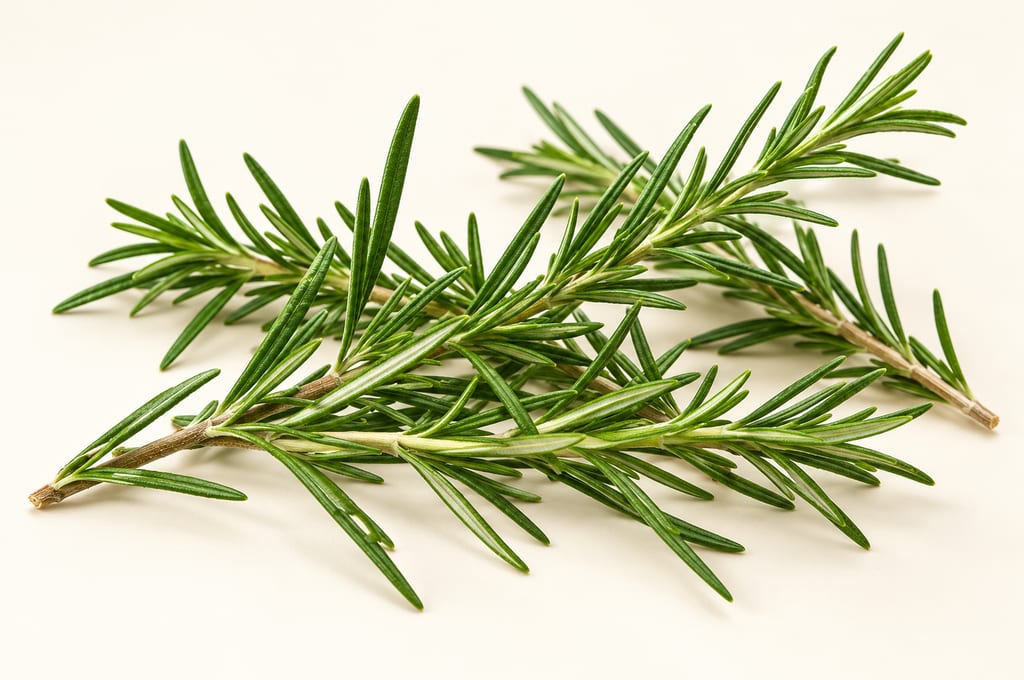
An aromatic Mediterranean shrub for seasoning, with UK garden guidance for outdoor, container and sheltered winter growing.
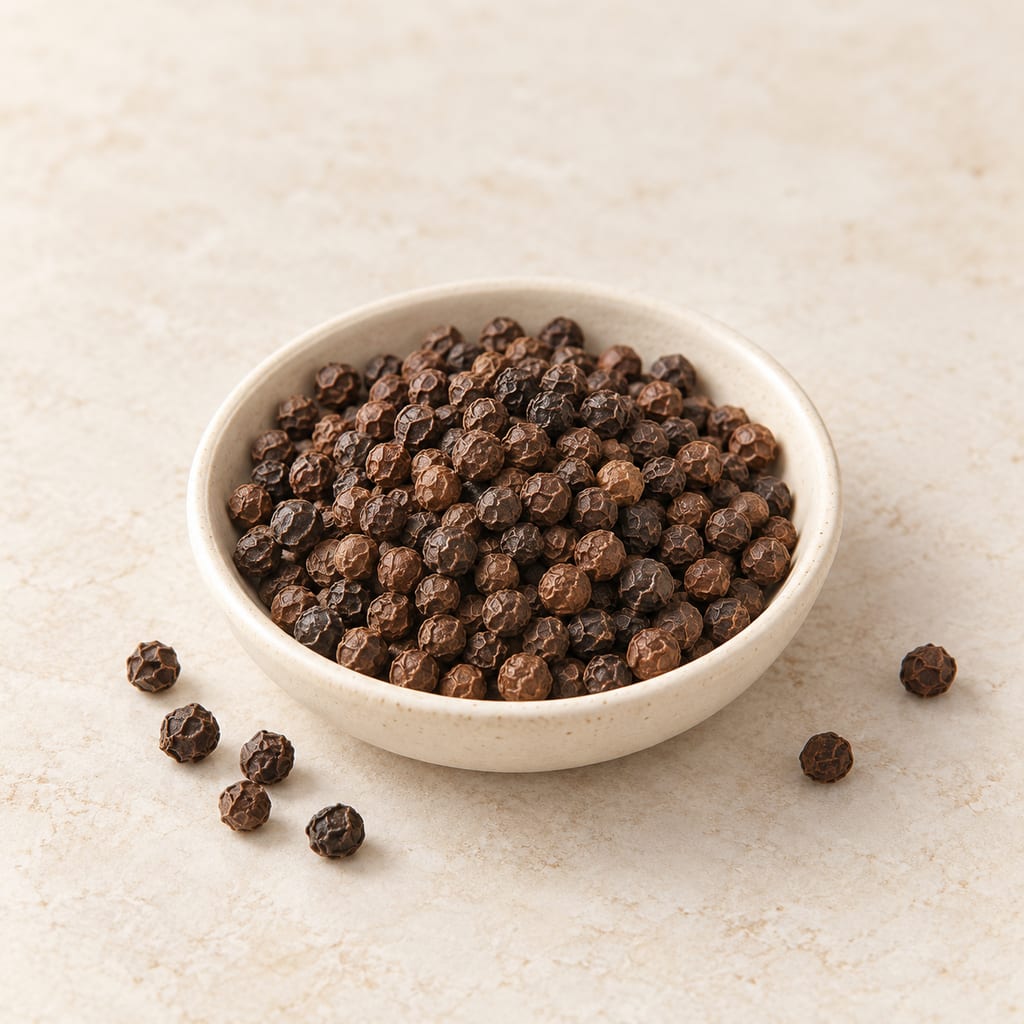
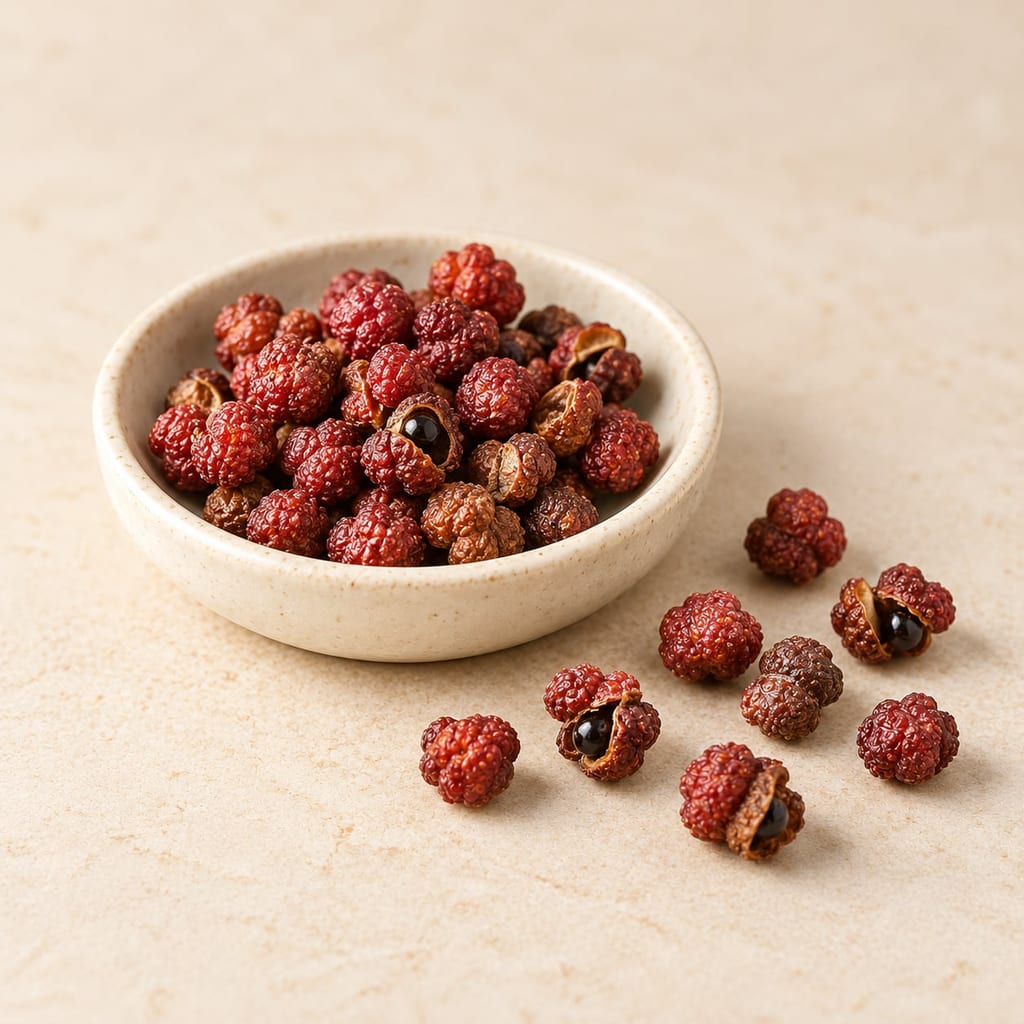
Whole peppercorns are crushed for their texture, aroma and pungency. A recipe that leaves their type unnamed does not establish a species, colour or growing origin.
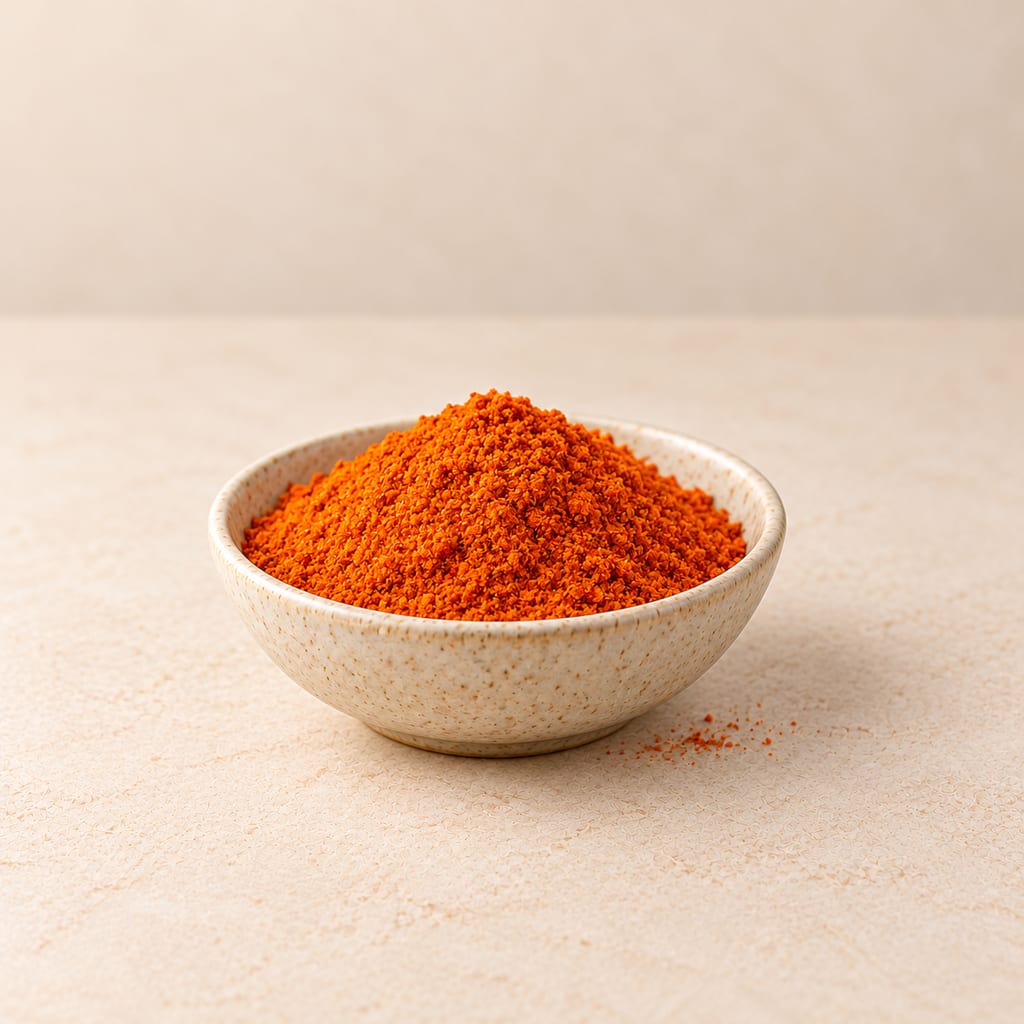
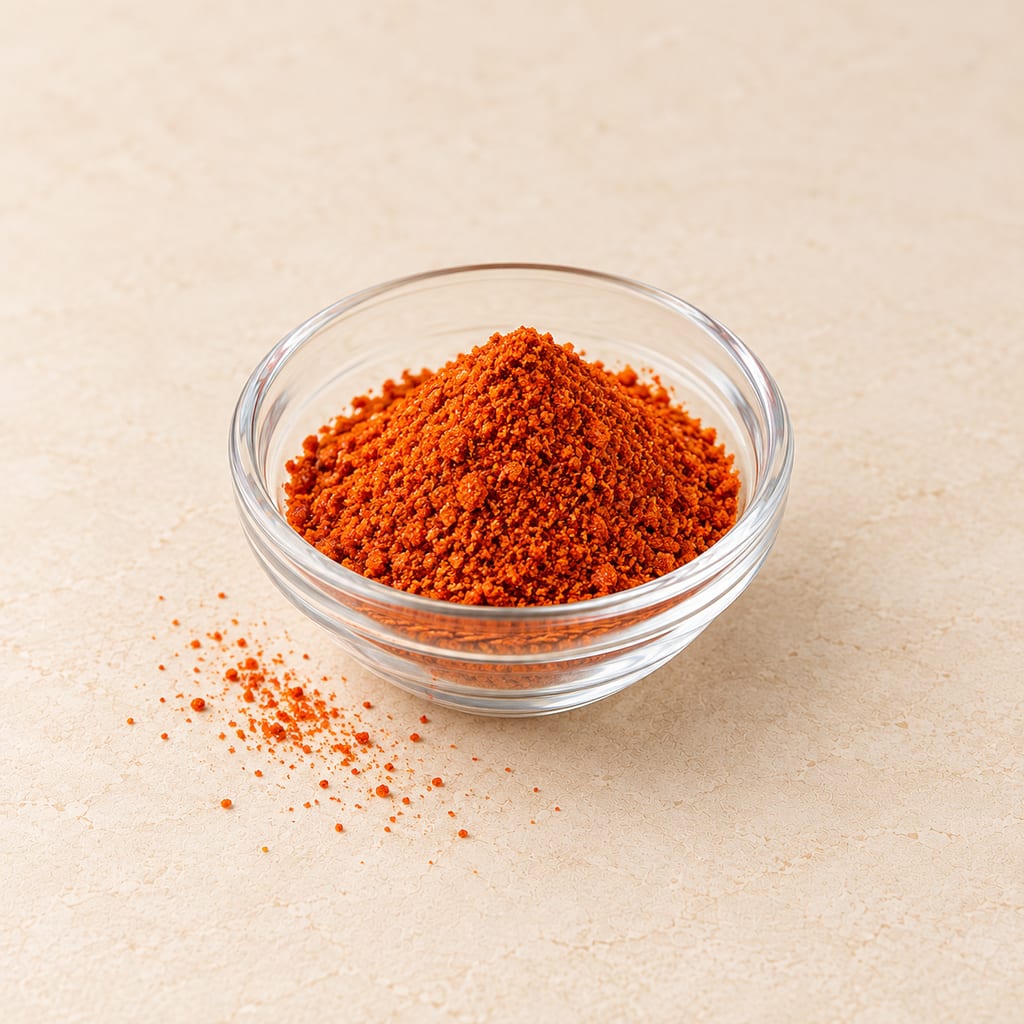
Red chilli powder is ripe red chilli pods dried and ground, sold pure or blended, and used for heat and red colour in pickles, chutneys, pastes and spice mixes.
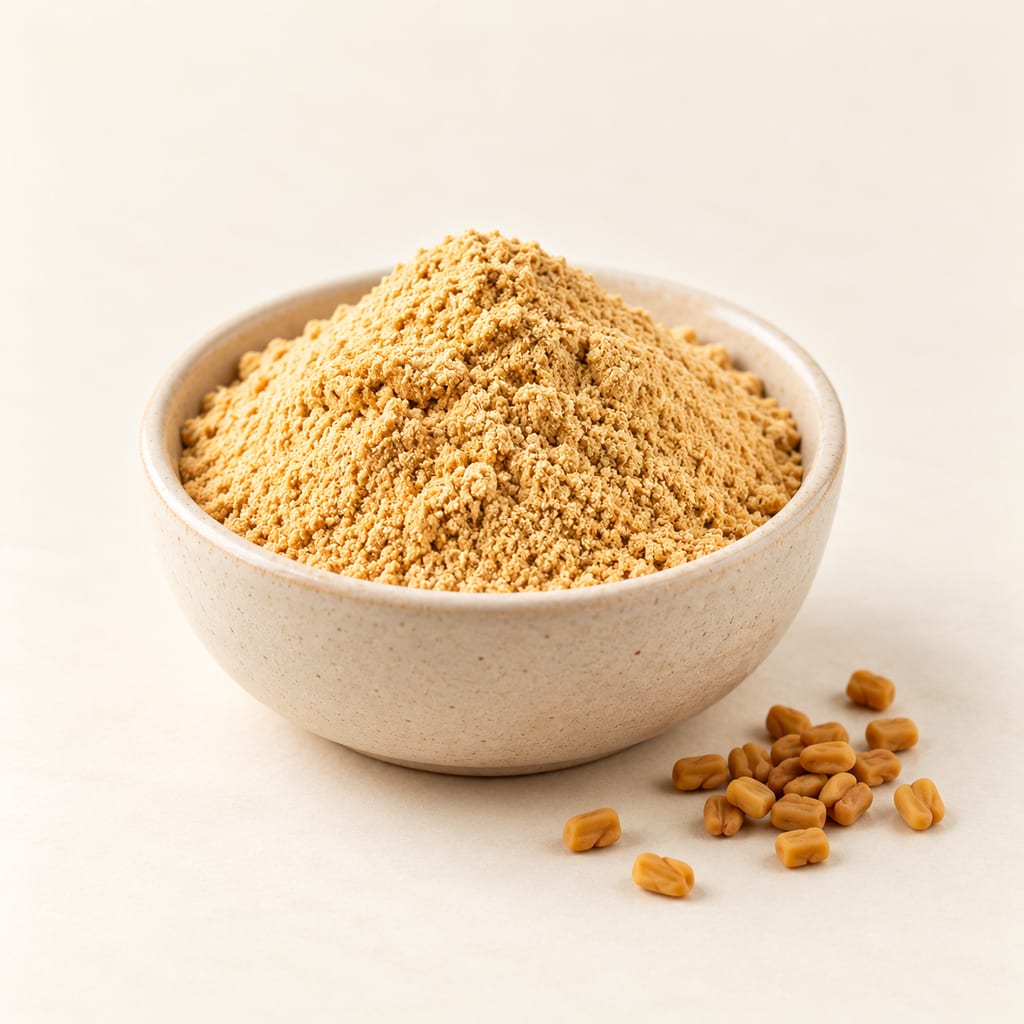
Ground fenugreek seed is a bitter, aromatic spice used in pickles and seasoning mixtures. It differs from dried fenugreek leaf powder in both material and culinary use.
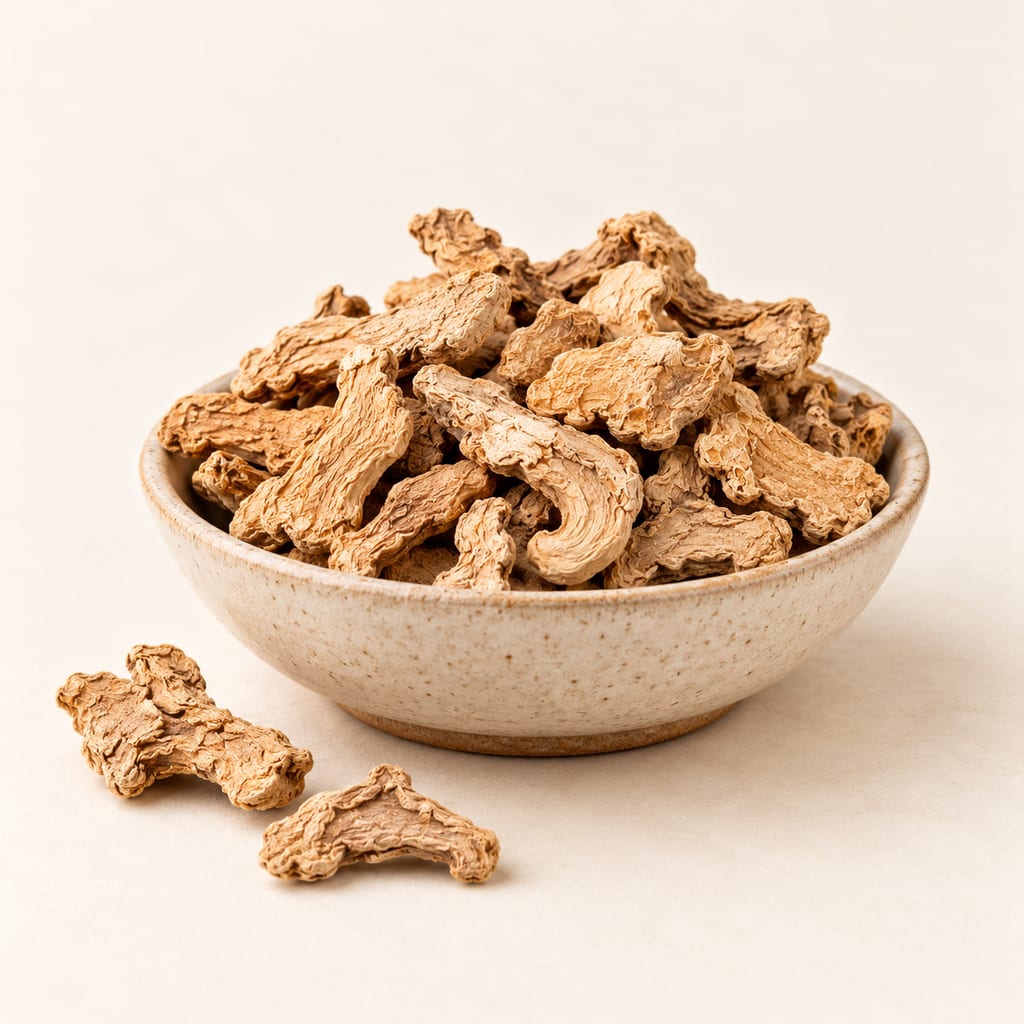
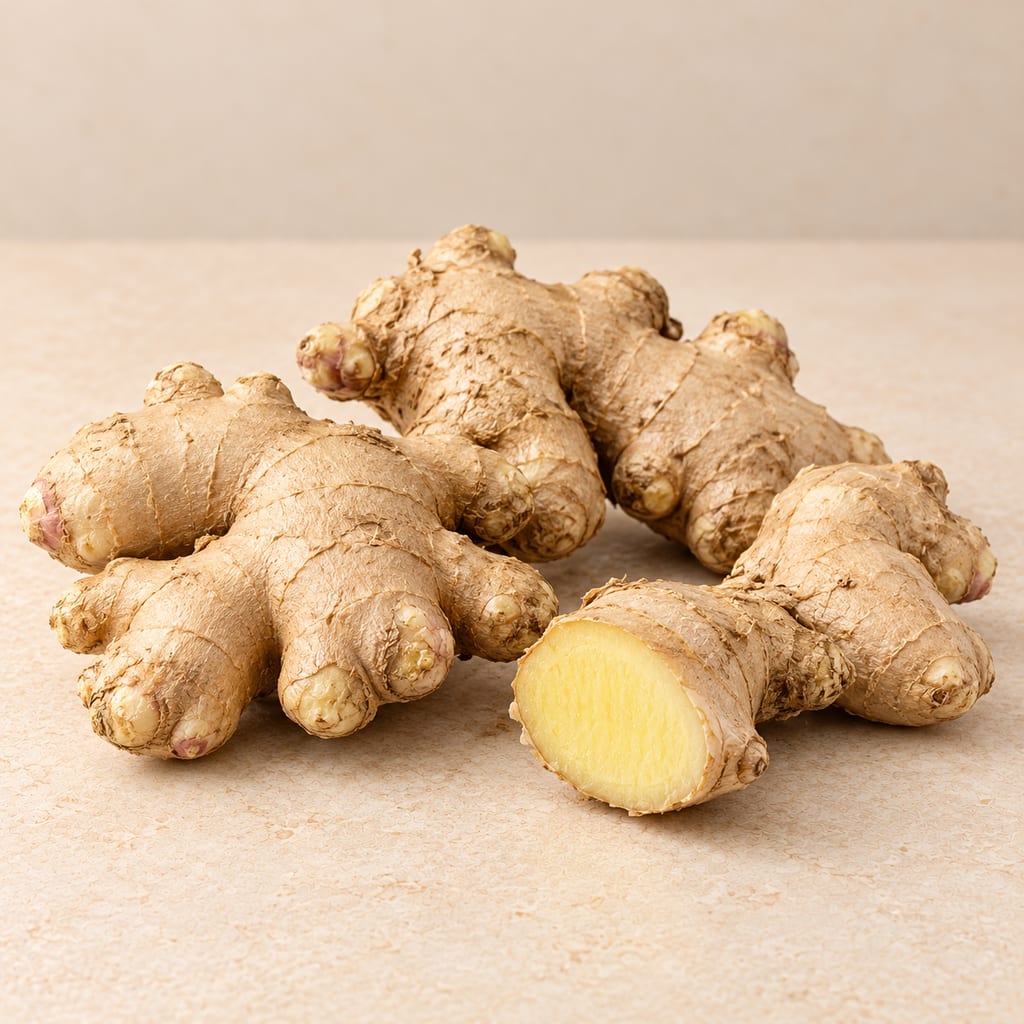
Dried ginger is the mature, dried rhizome of Zingiber officinale; its warm flavor and whole, sliced or ground forms serve different kinds of cooking.
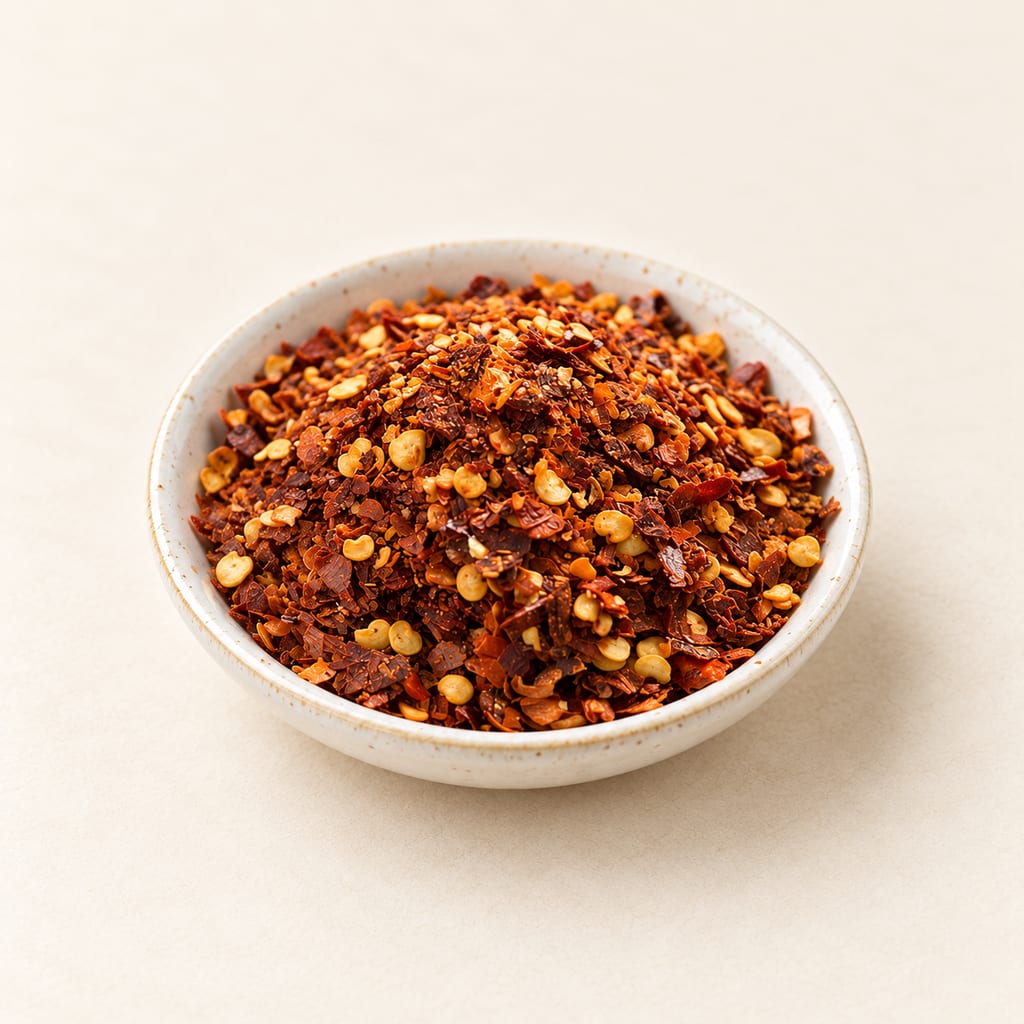
Dried chilli flakes are broken dried Capsicum fruit used for dispersed heat, colour and flavour; Peter Kuruvita's lime pickle includes one teaspoon.