





Ingredients

1086 articles on substrates, cultures and additives.

All produce111Fruits39Leafy and stem vegetables34Roots and tubers12Alliums6Fruiting and pod vegetables6Seaweeds5Cabbages, mustards and other brassicas3Dried and preserved fruits2Pome fruit2Citrus fruit1Stone fruit1

Fruit, vegetables and seaweeds

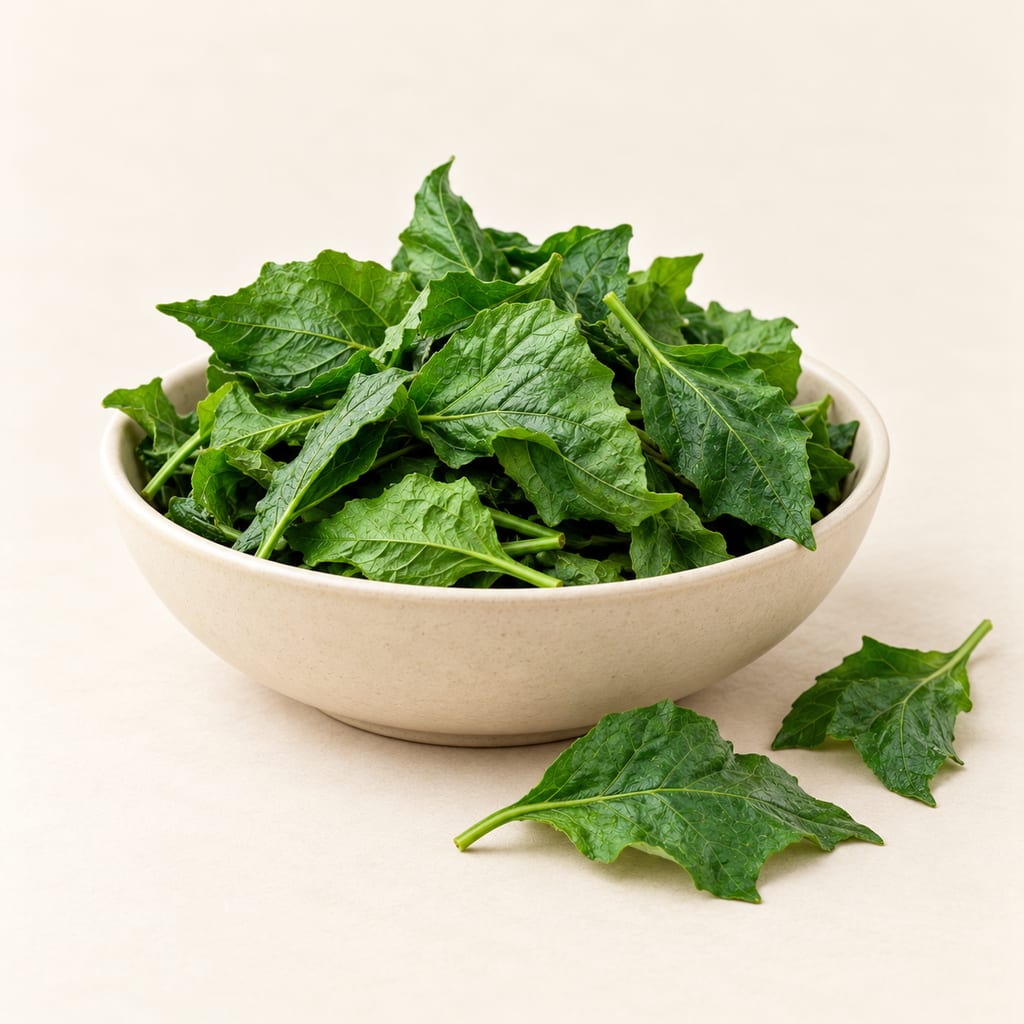
Fresh Solanum aethiopicum Shum-group Nakati leaves arranged in a shallow ivory bowl.
Substrates

Nakati greens

Ugandan Nakati sources describe the leafy Shum group of a species that also includes fruit, dual-use and ornamental groups. Regional cultivation and a small pickling study offer context, but neither establishes universal crop limits or a validated home preservation method.
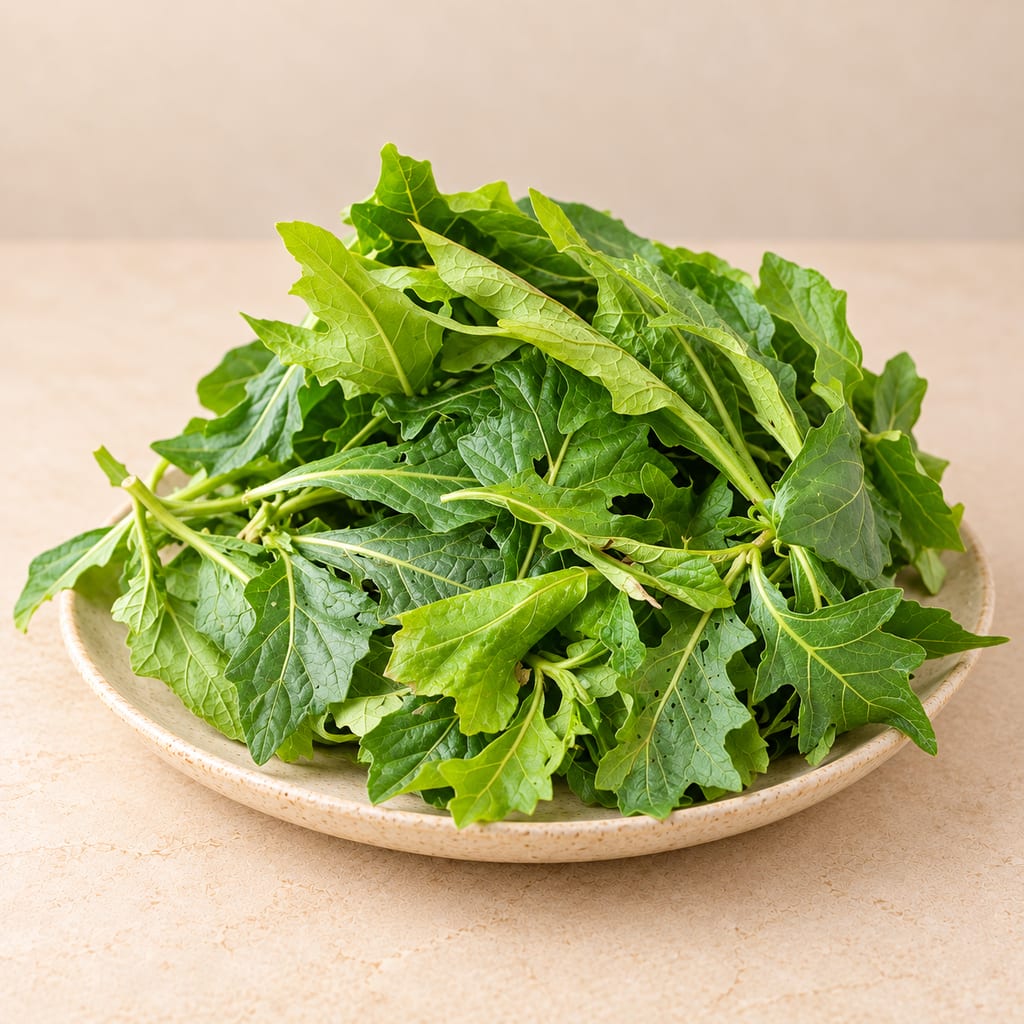
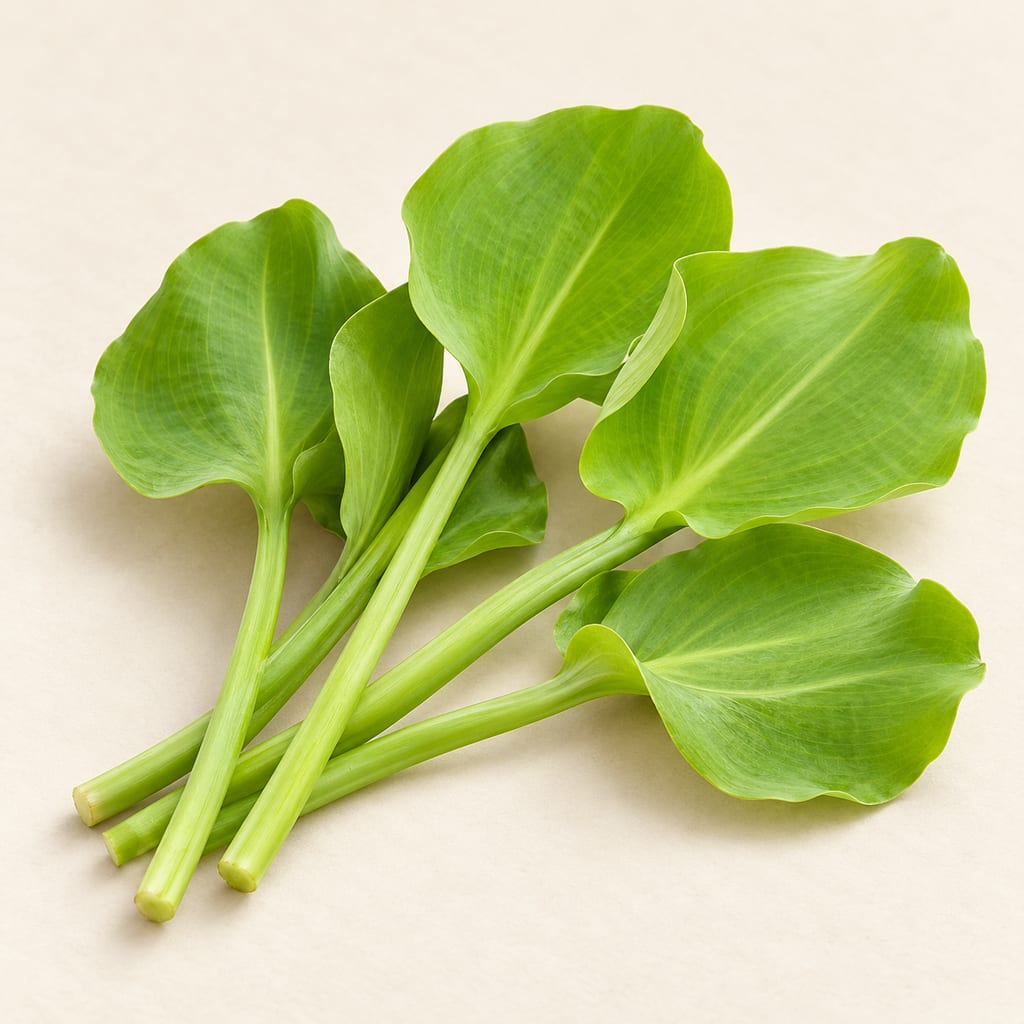
Fresh gboma leaves of Solanum macrocarpon arranged on an ivory ceramic plate.
Substrates

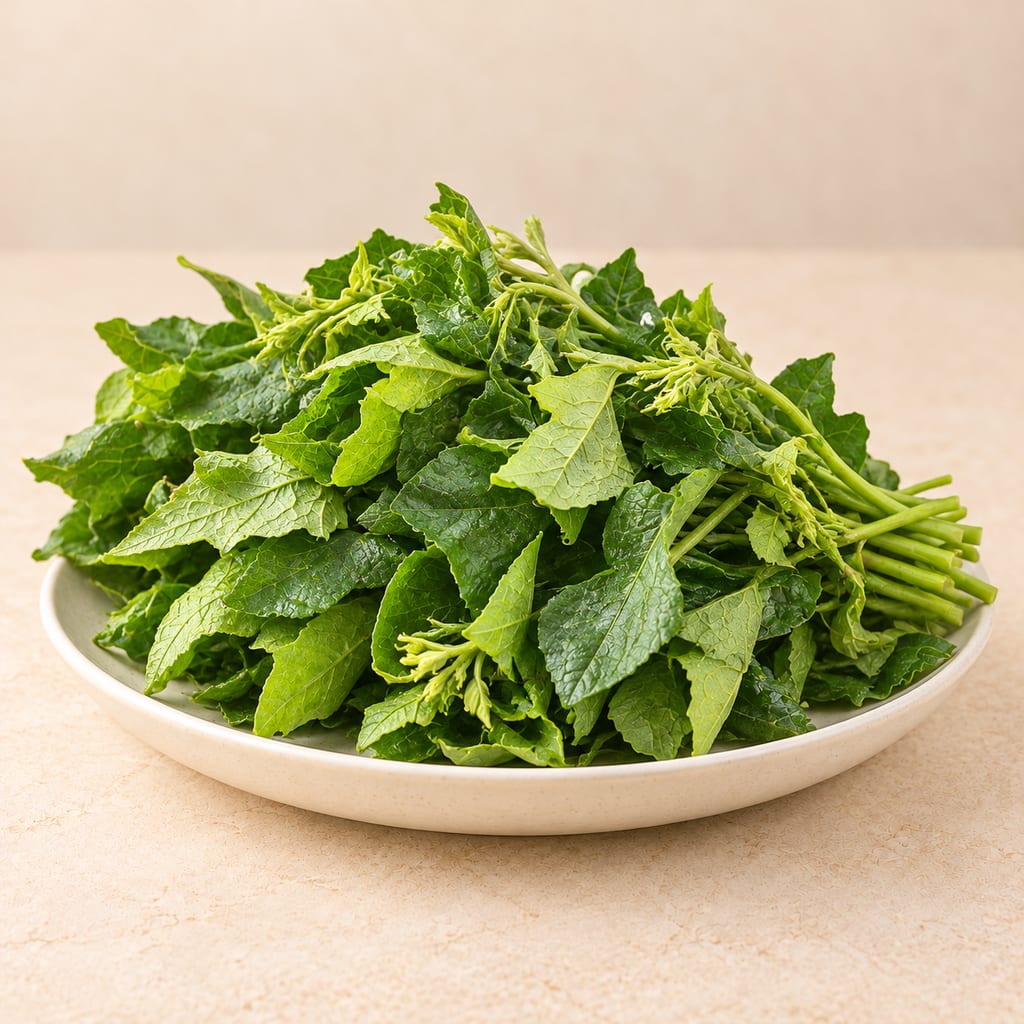
Solanum macrocarpon leaves and fruit

A historical Ghana flora account reports leaf and fruit use, while a Cape Coast fertilizer experiment supplies one accession and one-site growing data. Its abstract and detailed yield results conflict.

Fresh young genjer leaves with attached thick petioles arranged on a warm ivory surface.
Substrates

Genjer greens

Genjer is an aquatic leafy vegetable used in parts of Java; food and growing reports describe differing plant parts and cultivation settings.

Substrates

Japanese butterbur stalks and flower heads

Fuki is eaten as leaf stalks and spring flower heads; Japanese sources describe seasonal food use, water-based preparation and region-specific growing guidance.

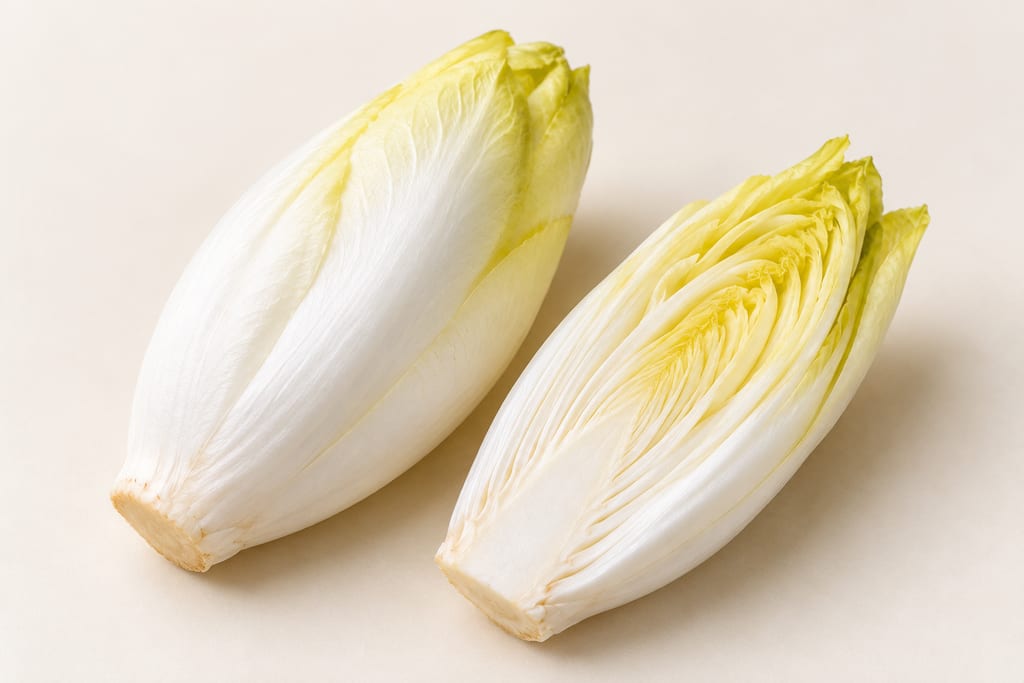
Two freshly harvested witloof chicory chicons, one whole and one cut to reveal tightly layered pale leaves.
Substrates

Chicory greens and roots

Cichorium intybus is grown for several distinct foods: bitter leaves, headed chicory, winter-forced chicons and roasted-root coffee substitutes. The crop type and source region matter.

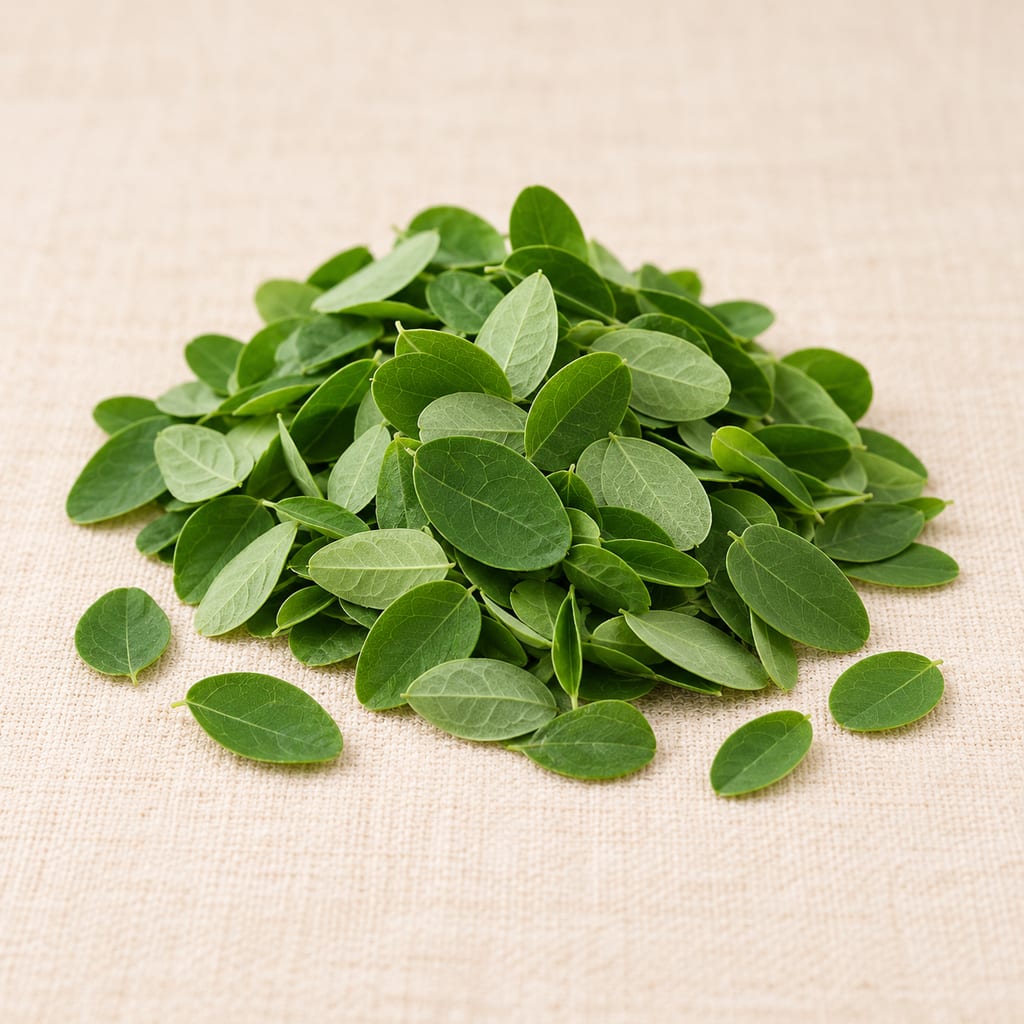
A small pile of fresh rounded Moringa oleifera leaflets on warm ivory linen.
Substrates

Moringa leaves

Source-linked accounts describe Moringa oleifera food uses in several regions, including Mauritius, alongside cultivation figures with their local scope made explicit.

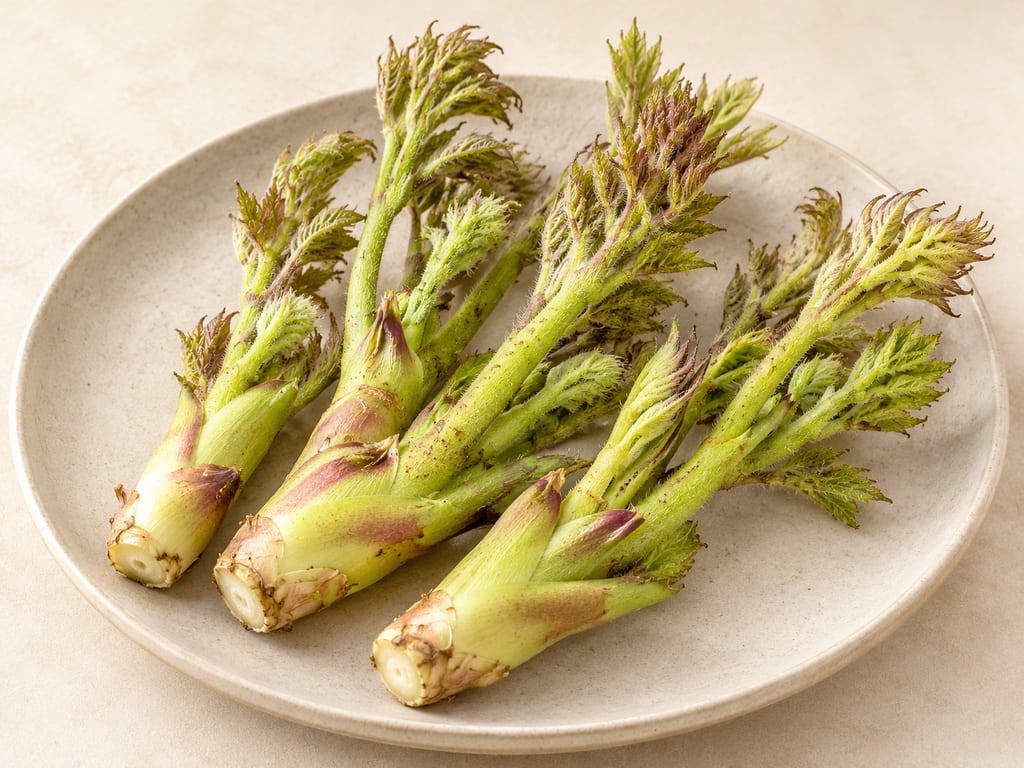
Fresh young Japanese udo shoots with pale green stems and feathery leaf tips on an ivory platter.
Substrates

Japanese udo shoots

Japanese udo is Aralia cordata, eaten as wild shoots and leaves or cultivated blanched stems, with separate home-garden and commercial forcing guidance.

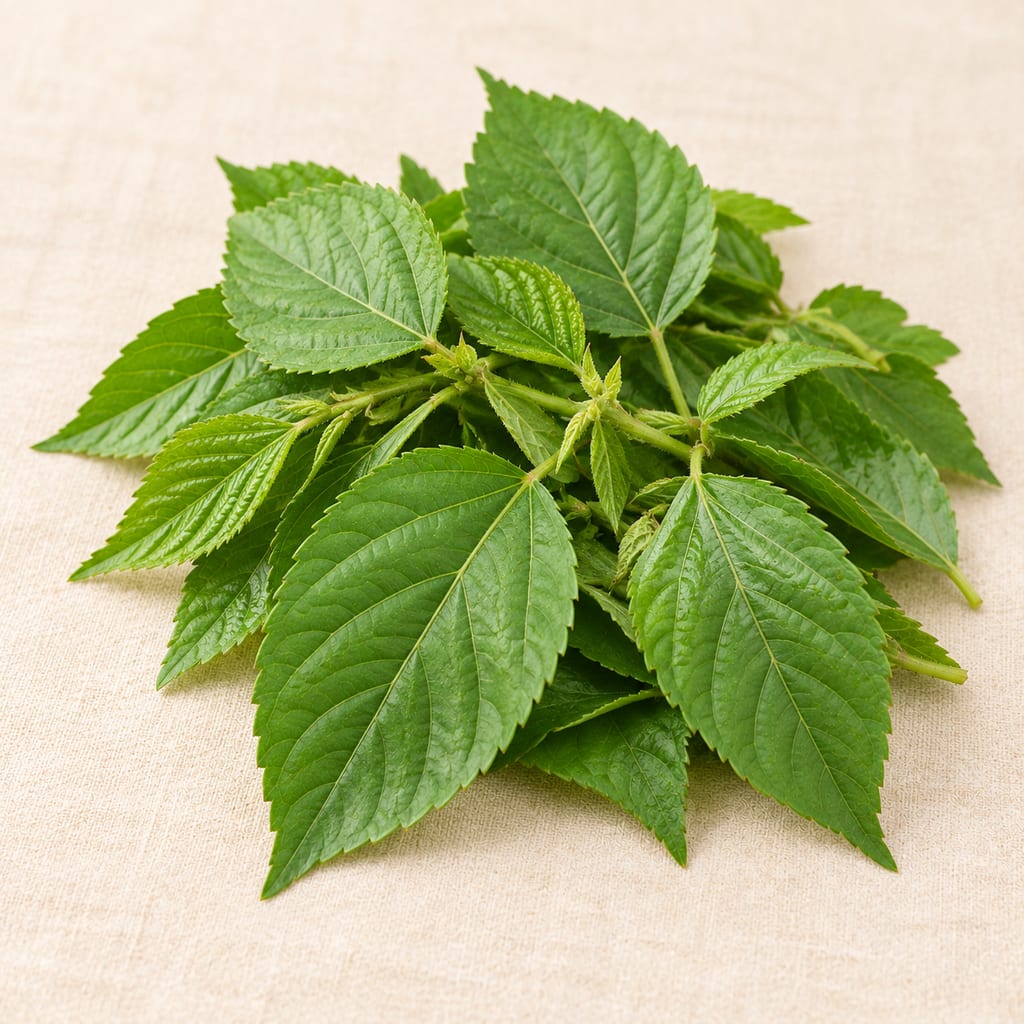
Fresh young jute mallow leaves and tender shoot tips on warm ivory linen.
Substrates

Jute mallow leaves

Jute mallow is documented in Kenyan, Egyptian and Malawian food and crop sources. Its preparation and growing evidence remains specific to each source.

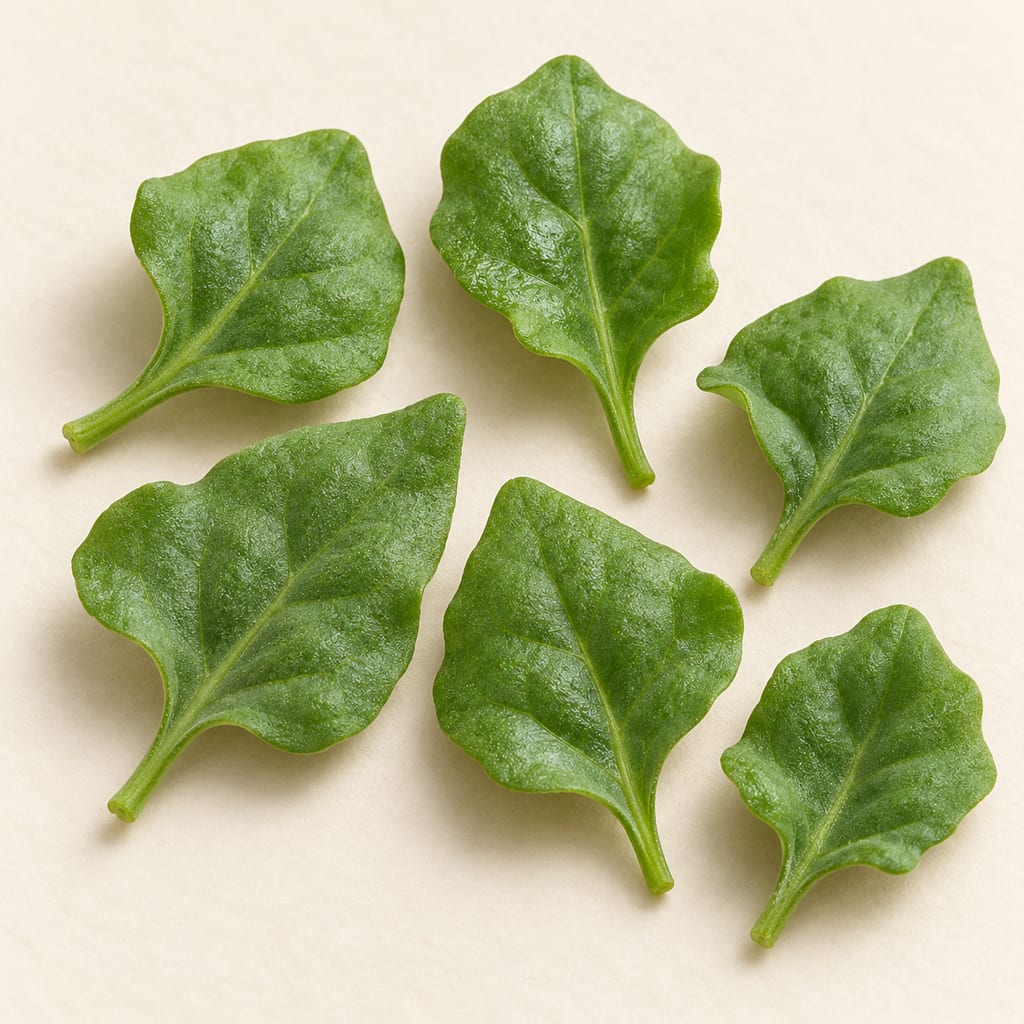
Six fresh thick green New Zealand spinach leaves with broad rhombic blades and short petioles on a warm ivory surface.
Substrates

New Zealand spinach greens

Kōkihi, New Zealand spinach or warrigal greens (Tetragonia tetragonoides): a coastal leaf vegetable of Australia and New Zealand, eaten after blanching because of its oxalic acid.

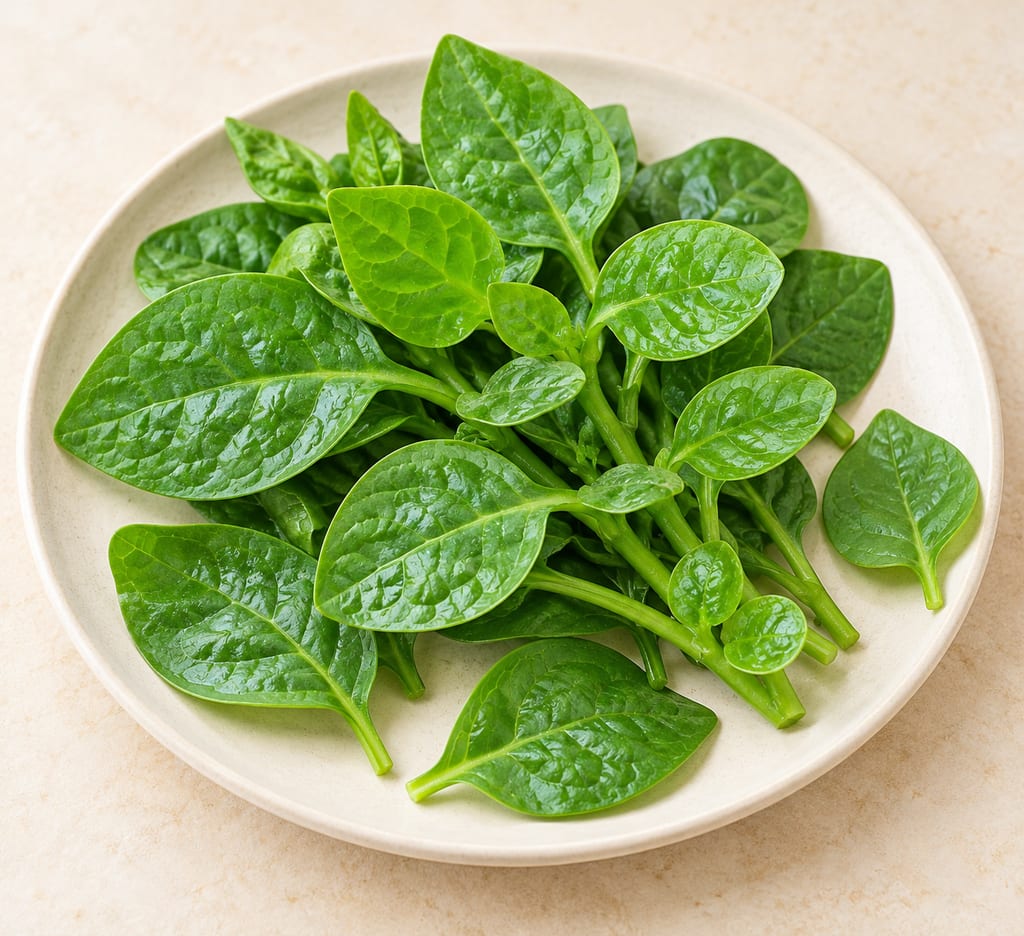
Fresh Malabar spinach greens, with thick tender stems and broad glossy oval leaves, arranged on an ivory plate.
Substrates

Malabar spinach greens

Malabar spinach, Basella alba, called alugbati in the Philippines, is a climbing leaf vegetable cooked in soups and stews. In New Caledonia an 1872 record shows it grown for dye.

Fresh ora-pro-nóbis leaves and tender shoot tips arranged in a shallow ivory bowl.
Substrates

Ora-pro-nóbis leaves

Embrapa documents ora-pro-nóbis as a leafy cactus used in parts of Minas Gerais and Goiás, with species-specific planting and harvest guidance and clear gaps around climate limits and food-safety validation.

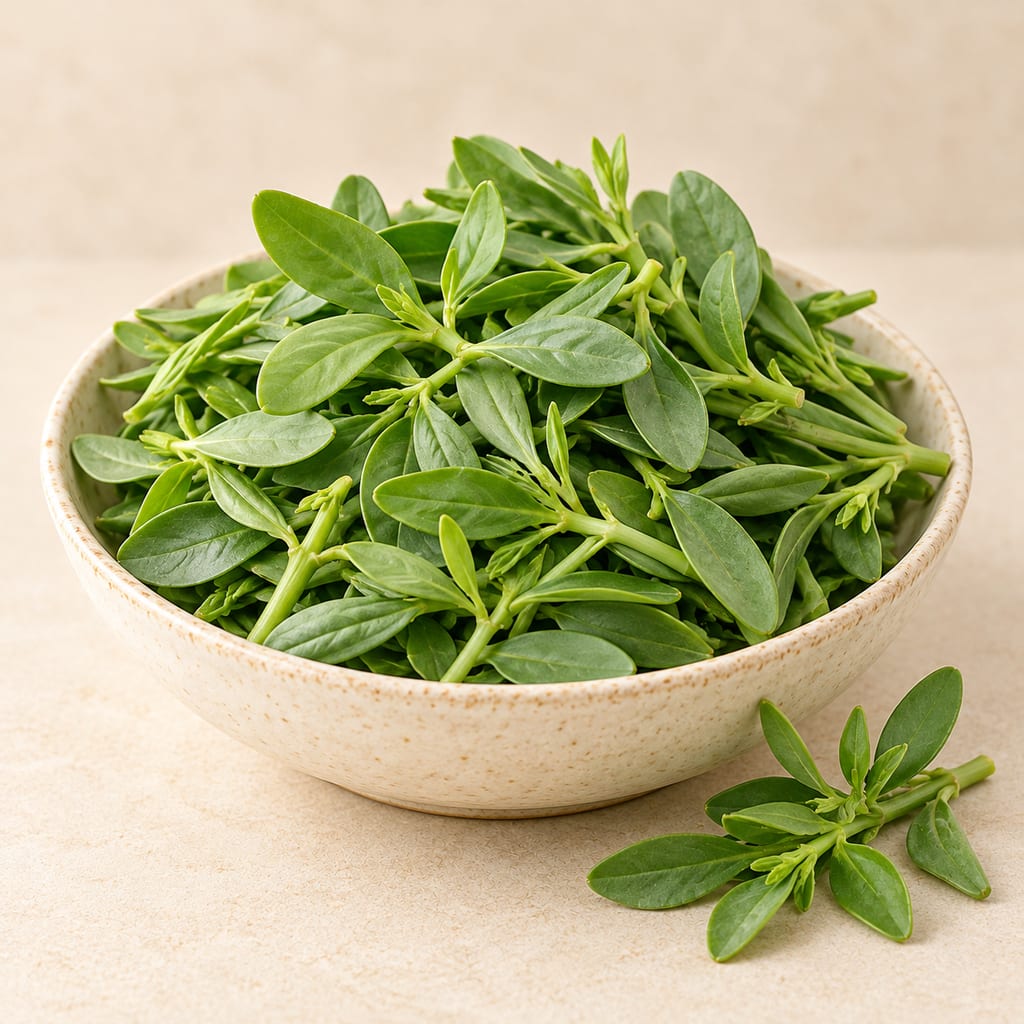
Fresh, fleshy waterleaf leaves and tender stems in a shallow ivory ceramic bowl on a warm ivory surface.
Substrates

Waterleaf greens

Waterleaf leaves and shoots are recorded as cooked vegetables and sauce thickeners in Nigeria, and in Thai soup and fried dishes; growing reports vary by source and setting.

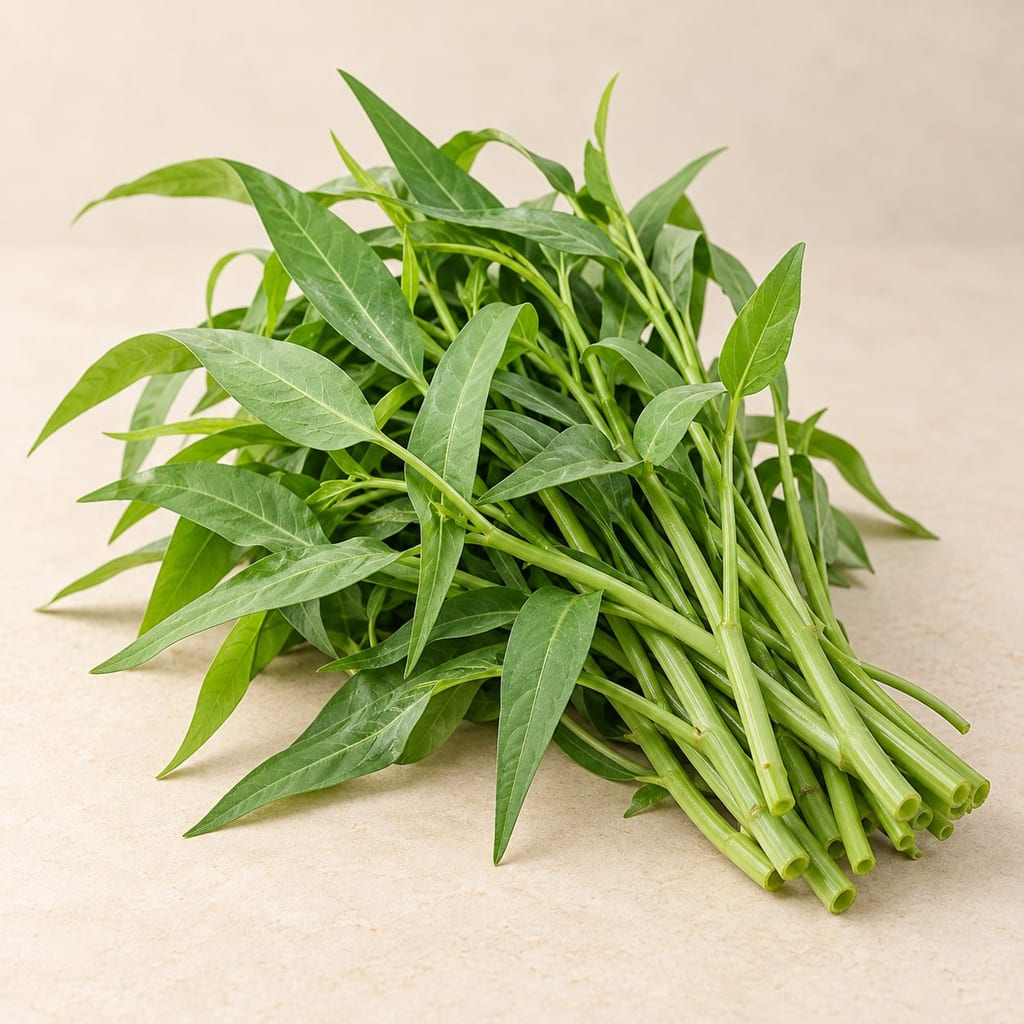
Fresh water spinach greens with tender stems and arrow-shaped leaves, arranged on a warm ivory studio surface.
Substrates

Water spinach greens

Bangladesh sources document Kolmi or Kalmi leaves and tender shoots as vegetables, alongside soil-pot, waterlogged-sack, pond-tray and protected hydroponic experiments. A contemporary abstract reports BARI’s historical Gimakalmi release, but cultivar continuity is unresolved; food notes and cultivation results remain source- and study-specific.

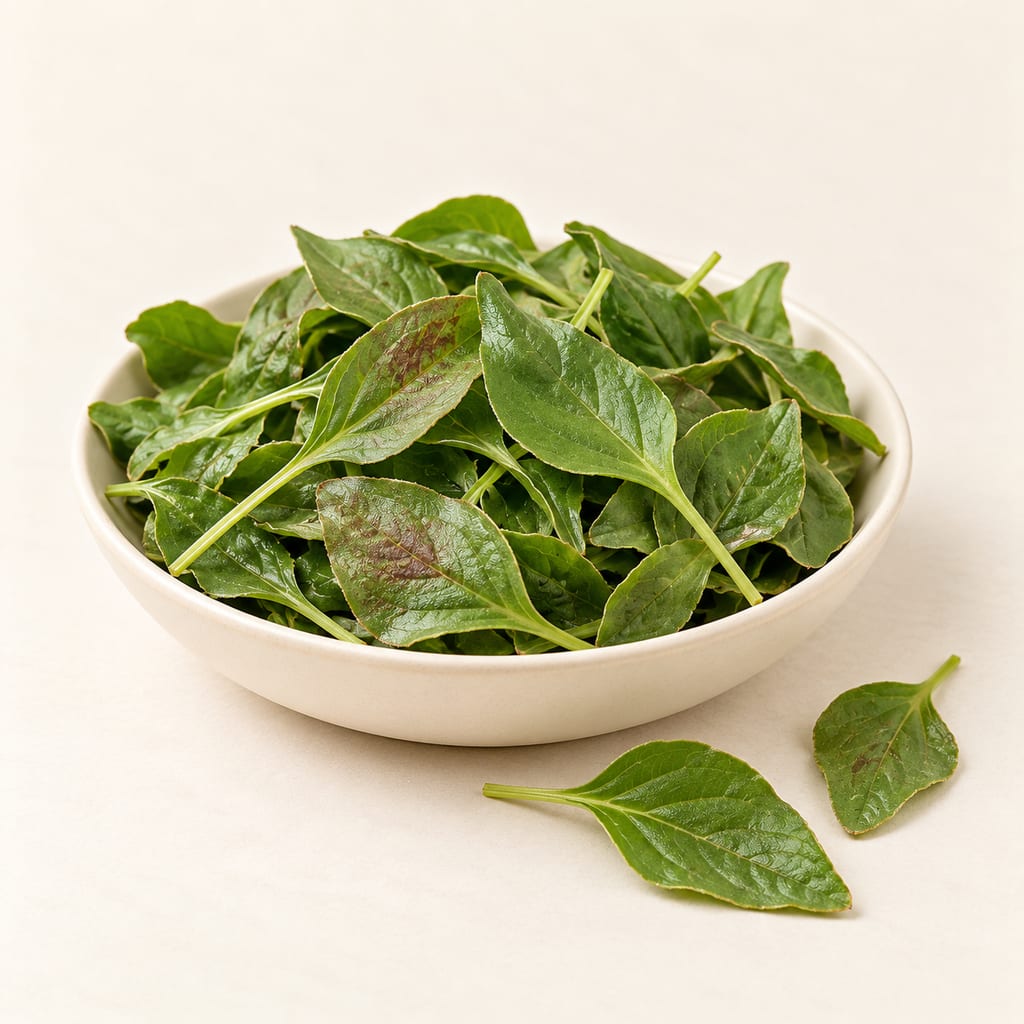
Generated editorial portrait of fresh green Mukunuwenna leaves and shoots in a cream dish on a warm ivory background.
Substrates

Mukunuwenna greens

A source-scoped account of Sri Lankan Mukunuwenna crop forms, field guidance and two described household food preparations, with identity and recipe gaps kept explicit.

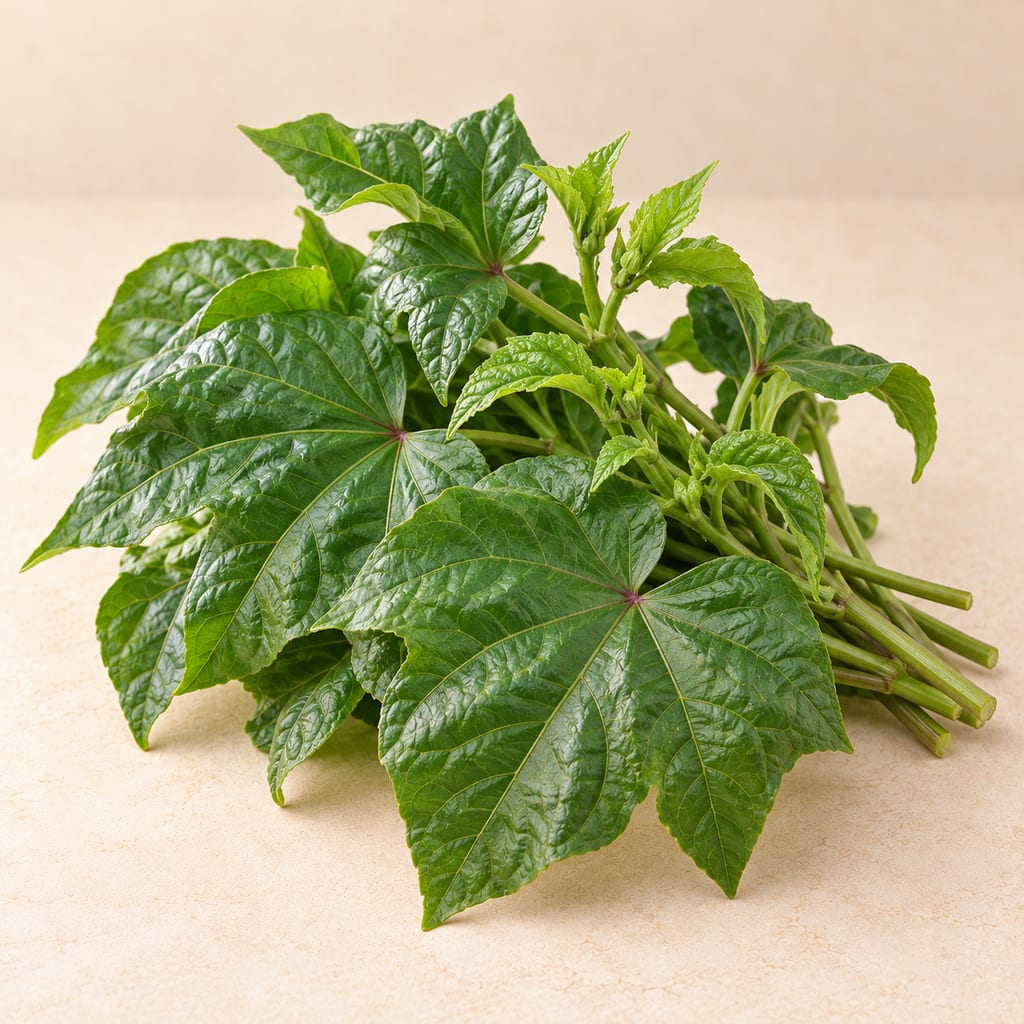
Fresh aibika greens with palmate leaves and tender shoot tips on a warm ivory background.
Substrates

Aibika greens

Papua New Guinea sources describe aibika leaves and shoot tips as cooked greens. Crop forms vary, and the reports do not identify a single cultivar or provide a complete recipe.

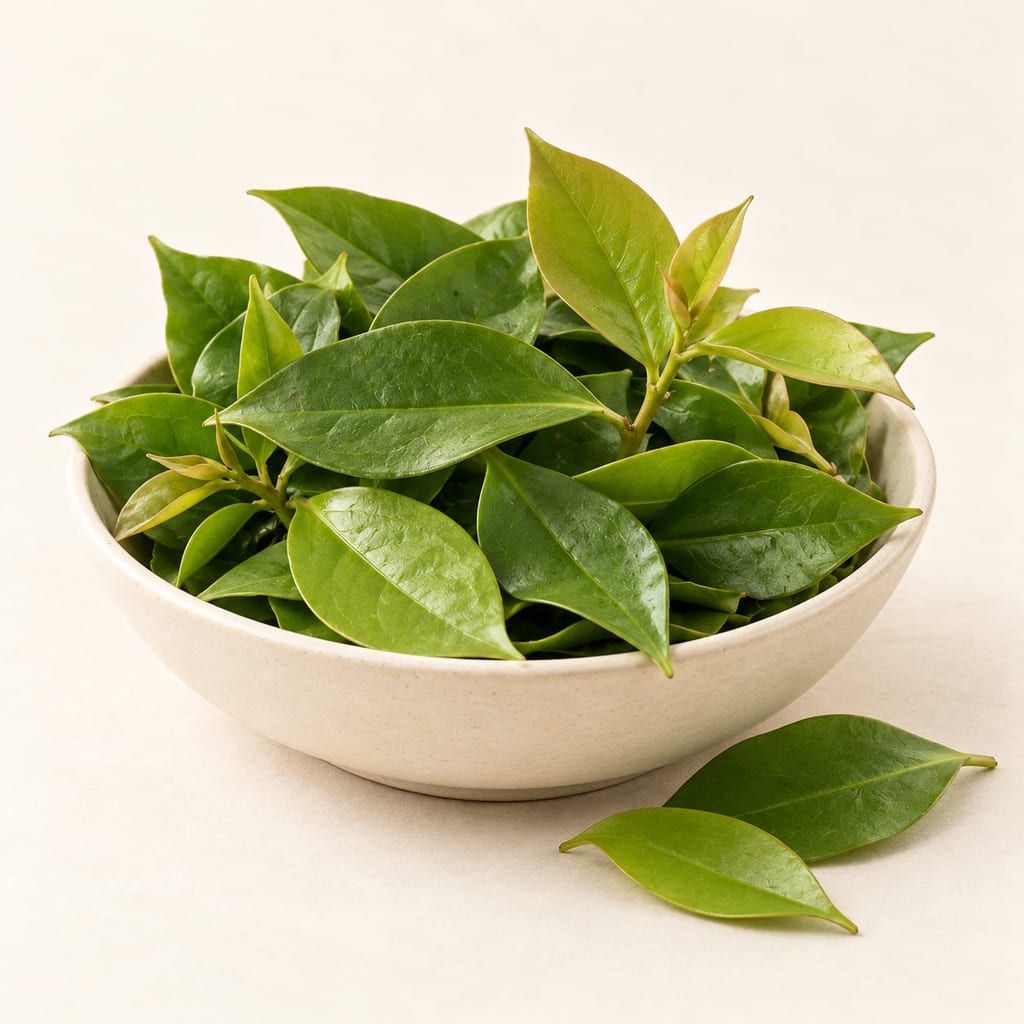
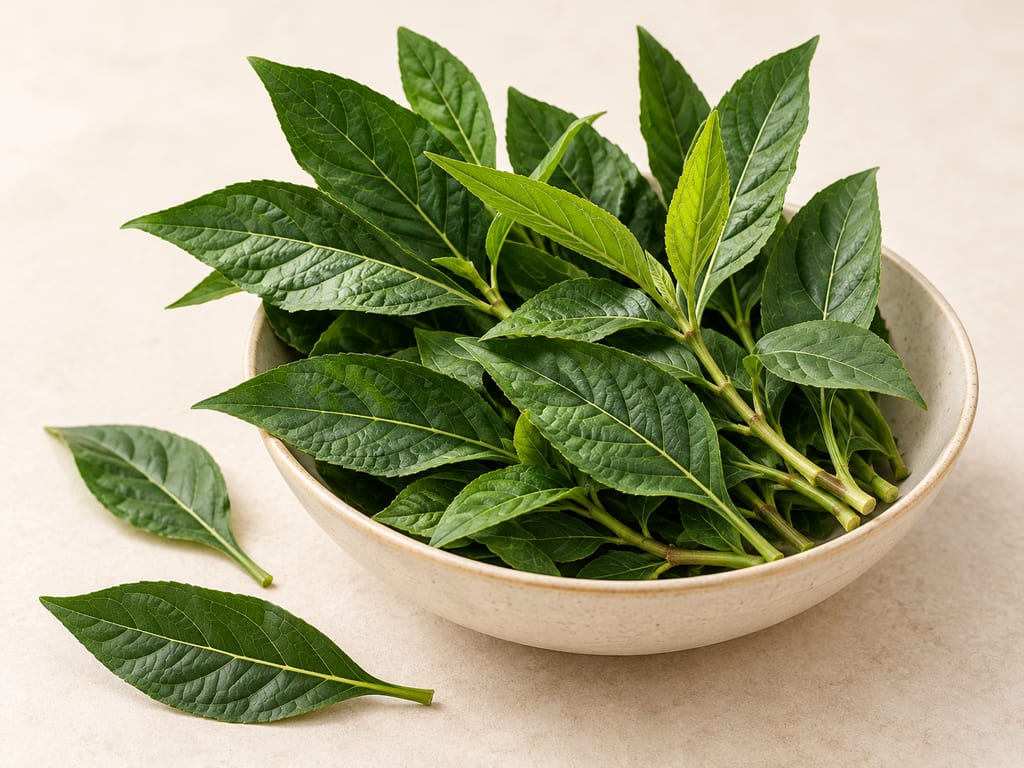
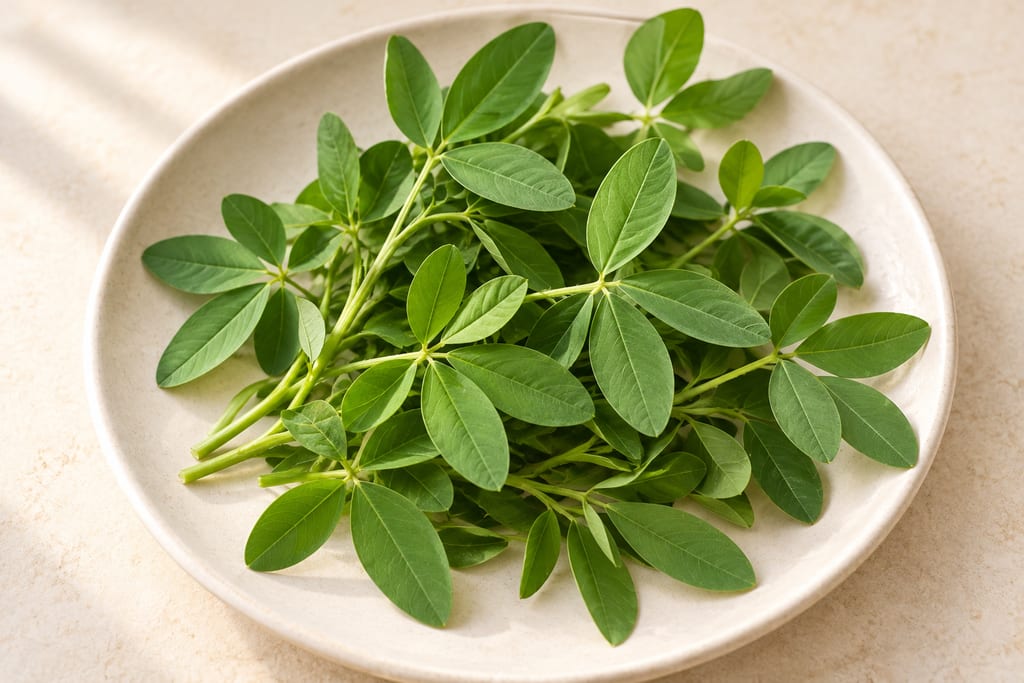
Fresh bitterleaf greens with narrow lance-shaped leaves and tender stems in a shallow pale ceramic bowl.
Substrates

Bitterleaf greens

A source-linked account of bitterleaf as a West and Central African leafy vegetable, with its accepted-name synonym, reported household preparations and cultivation context kept distinct from safety guidance.

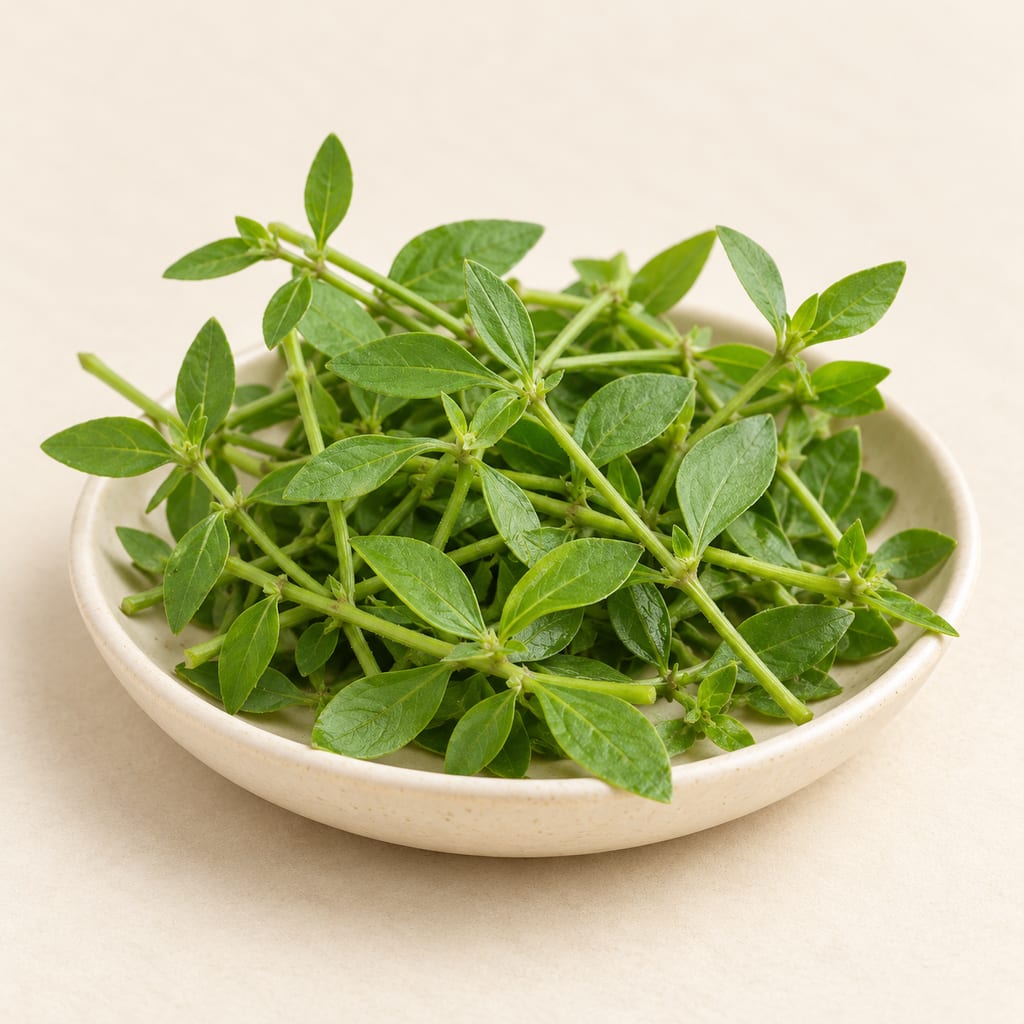
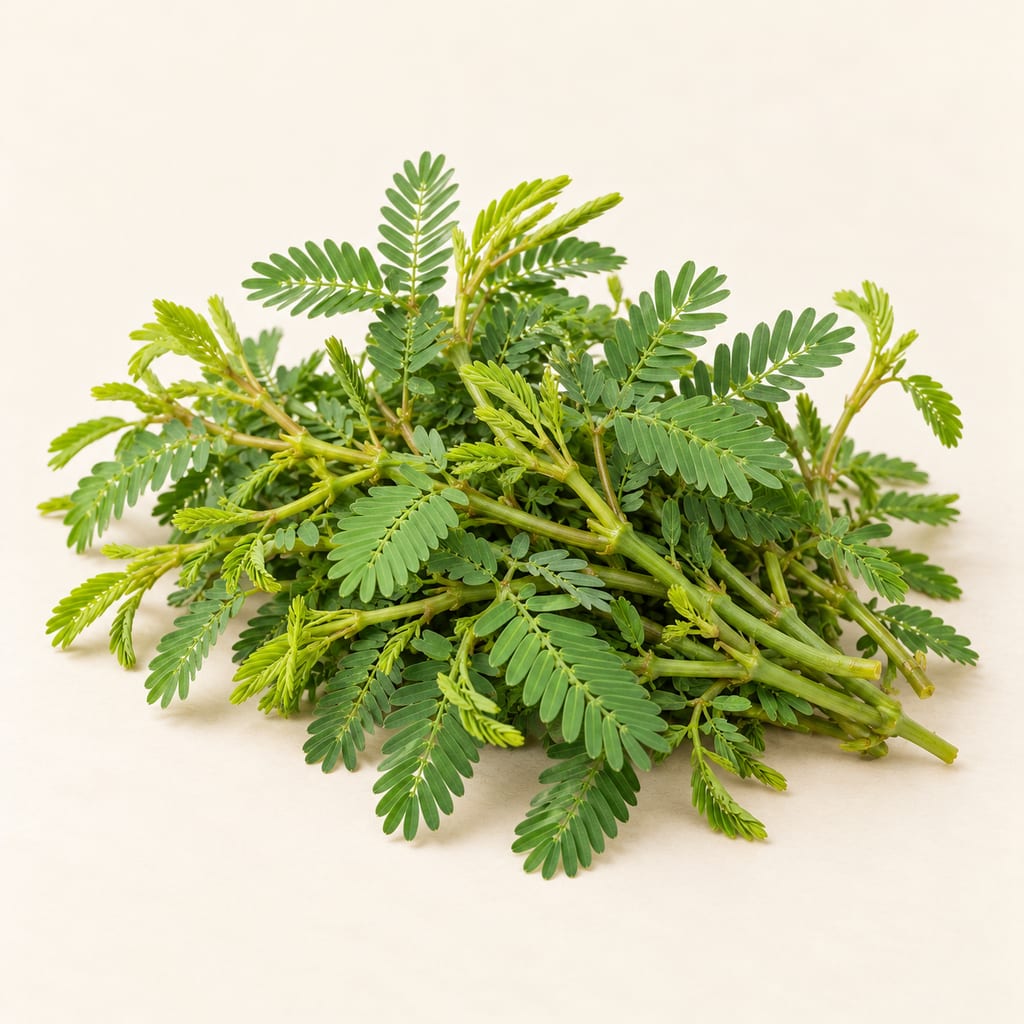
A small bunch of young water mimosa shoots with delicate paired leaflets on a warm ivory background.
Substrates

Water mimosa greens

Lao market and field accounts describe water mimosa as a wetland vegetable, while a regional handbook records separate Thai cultivation practices.

Fresh fluted pumpkin greens (Telfairia occidentalis) arranged in a shallow ivory dish.
Substrates

Fluted pumpkin greens

Kew accepts Telfairia occidentalis. Nigerian sources describe ugu and leaf, shoot and seed-kernel food uses, alongside institutional field-growing guidance whose regional scope and limits remain important.

Fresh chipilín greens, with tender stems and clusters of three oval leaflets, arranged on an ivory plate.
Substrates

Chipilín greens

Kew accepts Crotalaria longirostrata. Guatemalan ICTA sources describe leaves, stems and tender shoots in cooked foods, while a community study reports market purchase of chipilín that was absent from the sampled village. Similar names and source-reported hazards do not provide a plant-identification or preparation-safety rule.

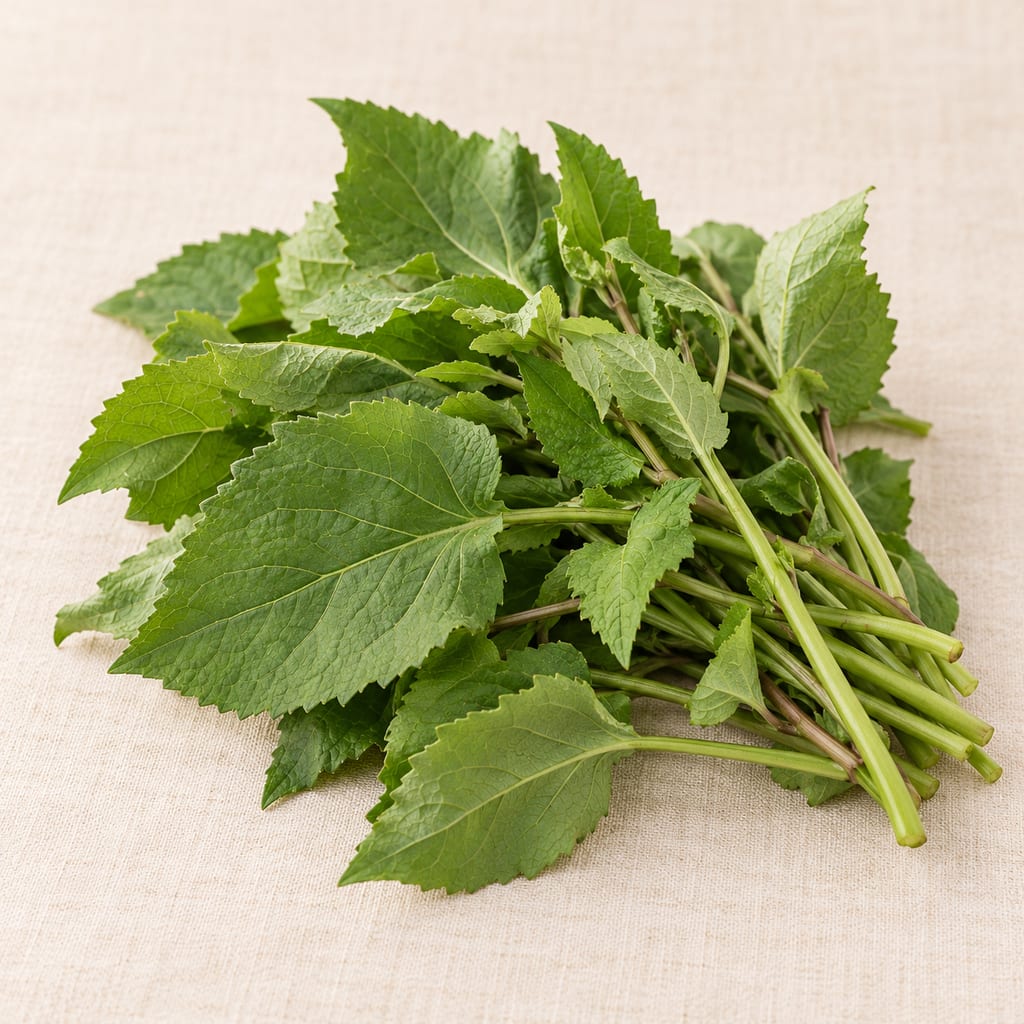
A fresh bunch of tender chamchwi leaves and slender green stems on warm ivory linen.
Substrates

Chamchwi greens

Korean extension sources describe chamchwi as a spring leafy crop and name a Chungcheongbuk-do rice wrap. The RDA crop page gives nursery and field guidance, while container evidence comes from a shared multi-crop balcony model rather than a chamchwi-specific trial.

Fresh Amaranthus thunbergii leaves with petioles arranged in a shallow ivory bowl.
Substrates

Amaranthus thunbergii leaves

A Kabbe survey lists Amaranthus thunbergii leaves as a leafy vegetable, but its preparation field is ambiguous. Similarity to A. dinteri complicates older food records, and cultivation evidence is limited to one trial known through indexed excerpts.

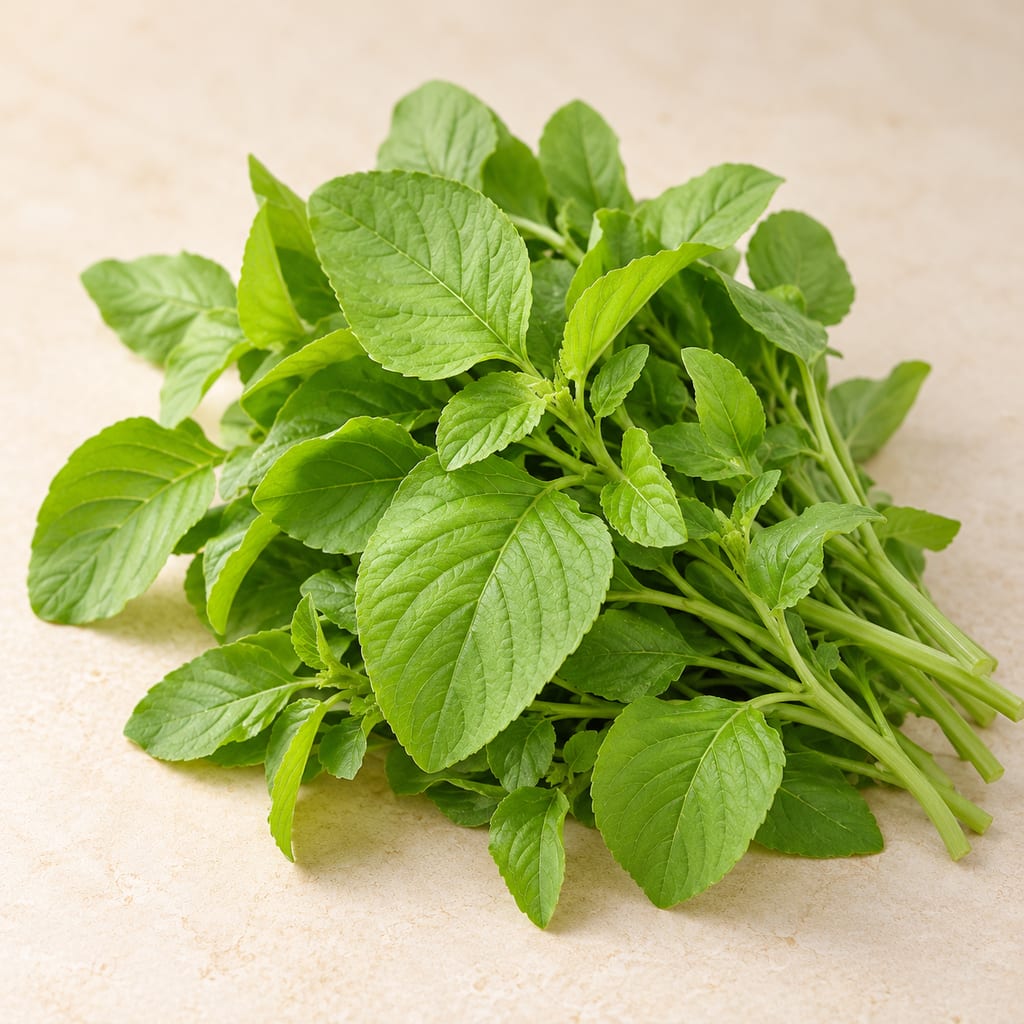
Fresh young Amaranthus viridis leaves and leafy tops arranged on a warm ivory surface.
Substrates

Green amaranth greens

Fiji and Mauritius sources describe Amaranthus viridis food use and crop guidance; local labels and regional field advice remain tied to their own sources.

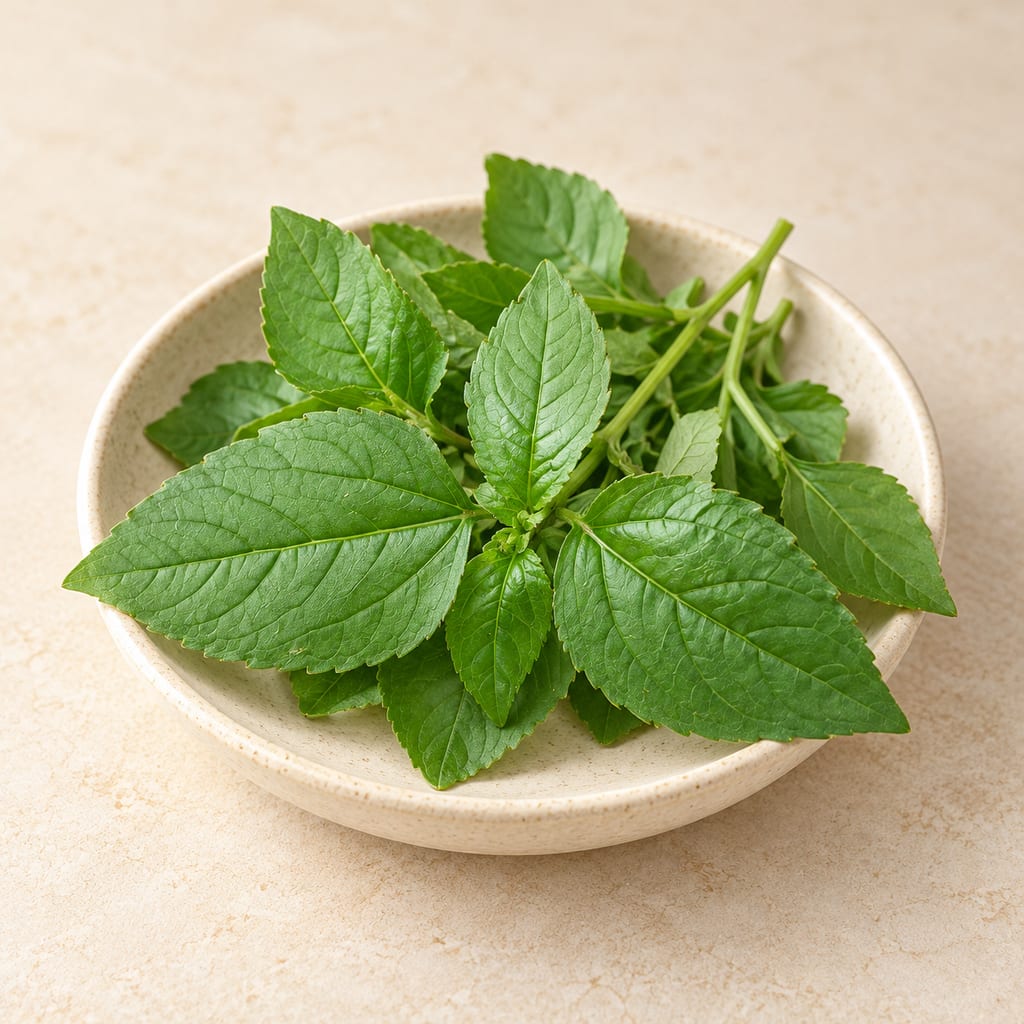
Fresh Jambu (Acmella oleracea) leaves and tender stems in a shallow ivory dish.
Substrates

Jambu leaves

Jambu is a Brazilian leafy crop described in Pará food traditions; botanical authorities and Brazilian profiles differ on its origin, while cultivation evidence is specific to Embrapa guidance and a small set of Pará experiments.

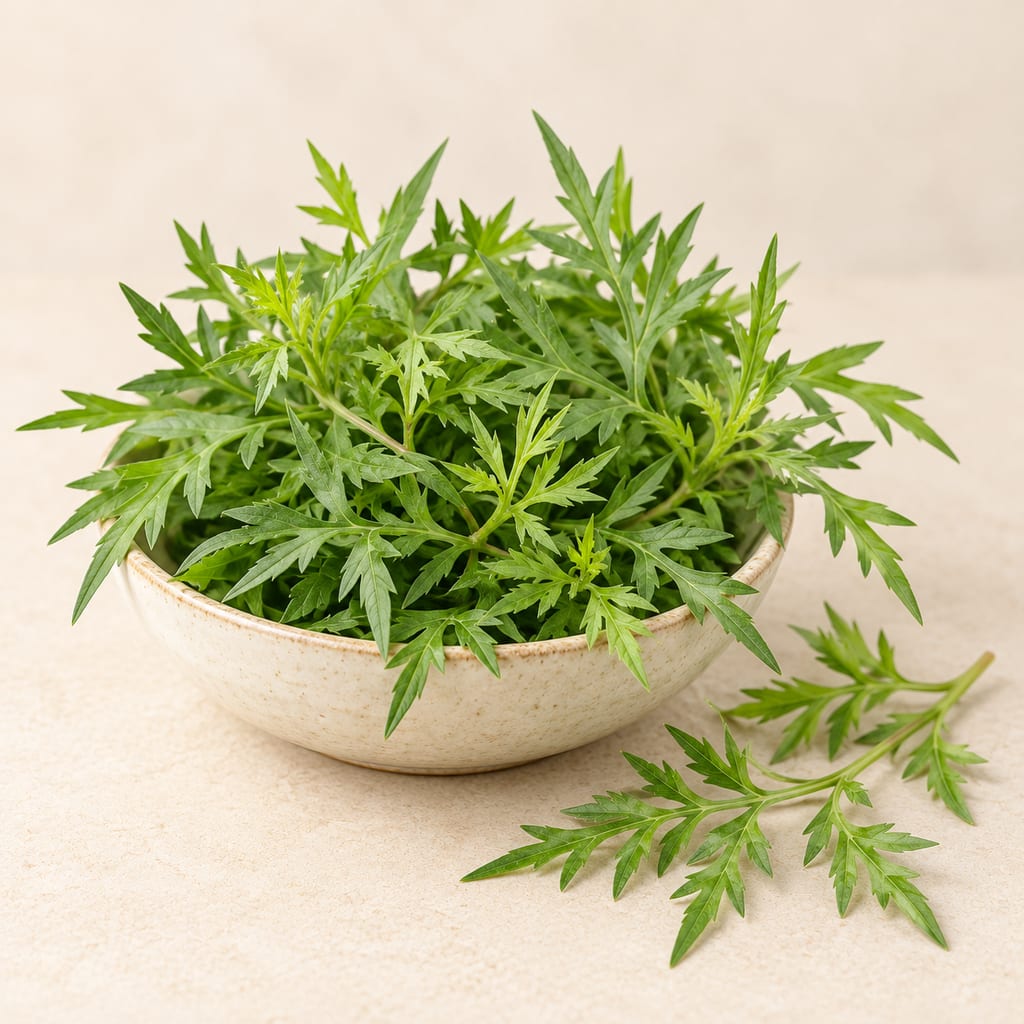
Fresh, finely divided kenikir (ulam raja) leaves with tender stems in a shallow ivory ceramic bowl on a warm ivory surface.
Substrates

Kenikir leaves

Kenikir is a leafy Cosmos caudatus vegetable documented in Indonesia; sources describe raw and cooked use, while a shared name with C. sulphureus leaves identification uncertain.

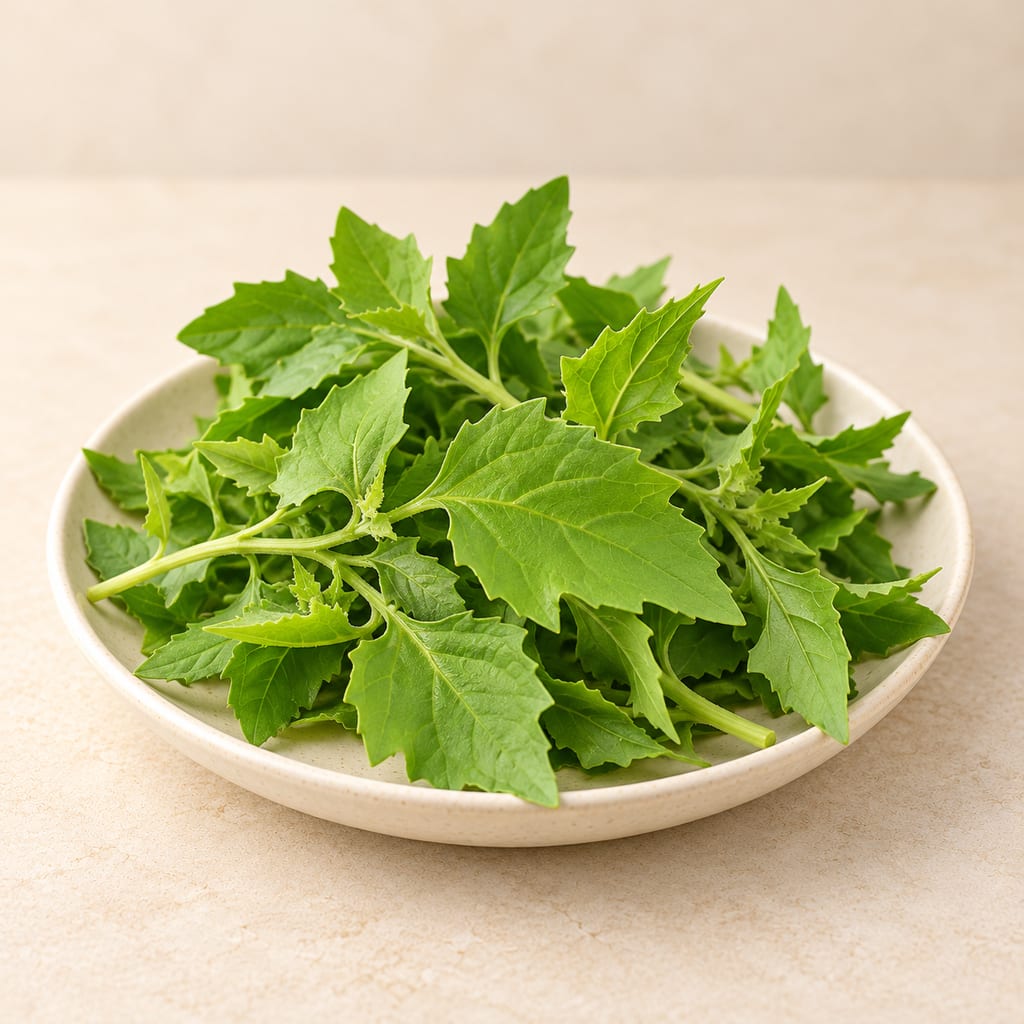
Raw bathua greens, with varied leaves and tender stems, in a shallow cream ceramic dish.
Substrates

Bathua greens (Chenopodium album)

Chenopodium album is a widespread annual with documented leafy-vegetable use in parts of India. Cultivated bathua trials and food-composition experiments describe particular plants and samples, not a universal foraging or safety method.
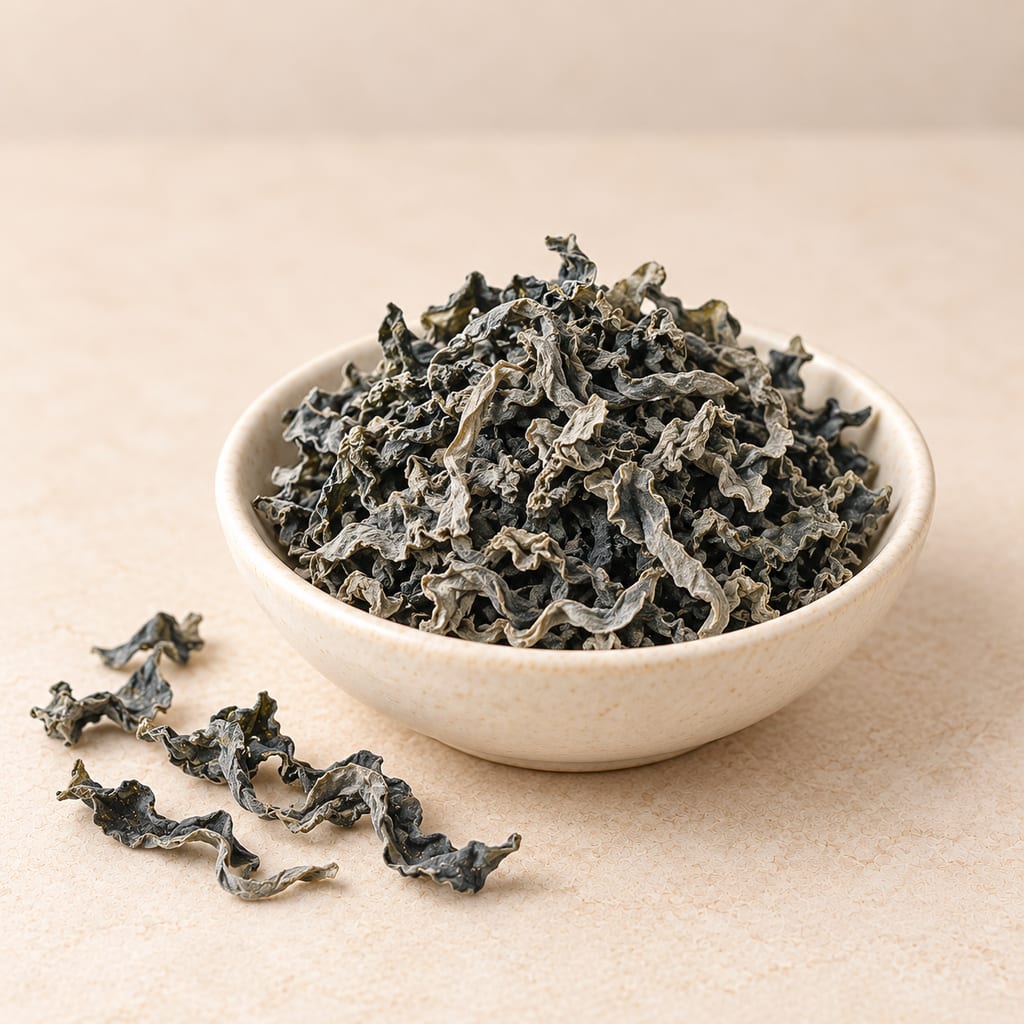
Loose dried wakame in an ivory ceramic dish, with a few curled strips beside it.
Substrates

Wakame

Wakame is an edible brown kelp native to the northwest Pacific, harvested or cultivated for its tender blades, firm stems and frilled reproductive parts, and used in soups, salads, rice dishes and preserved seaweed products.

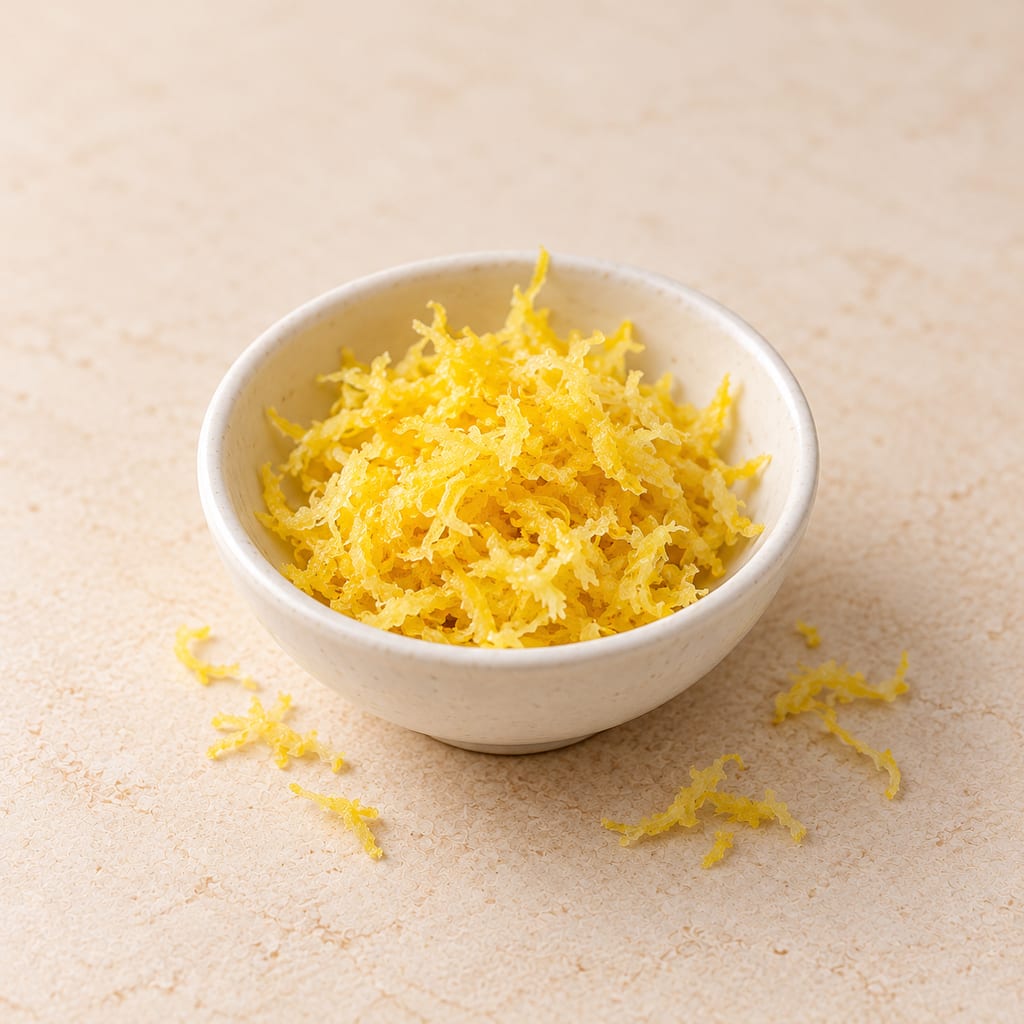
Fine yellow lemon zest fills a small white ceramic bowl, with a few scattered shreds on a warm ivory tabletop.
Spices and aromatics

Citrus zest

Citrus zest is the aromatic outer rind, taken separately from the white pith and juice. Its fruit type, cut and fresh or dried form shape its use in food.
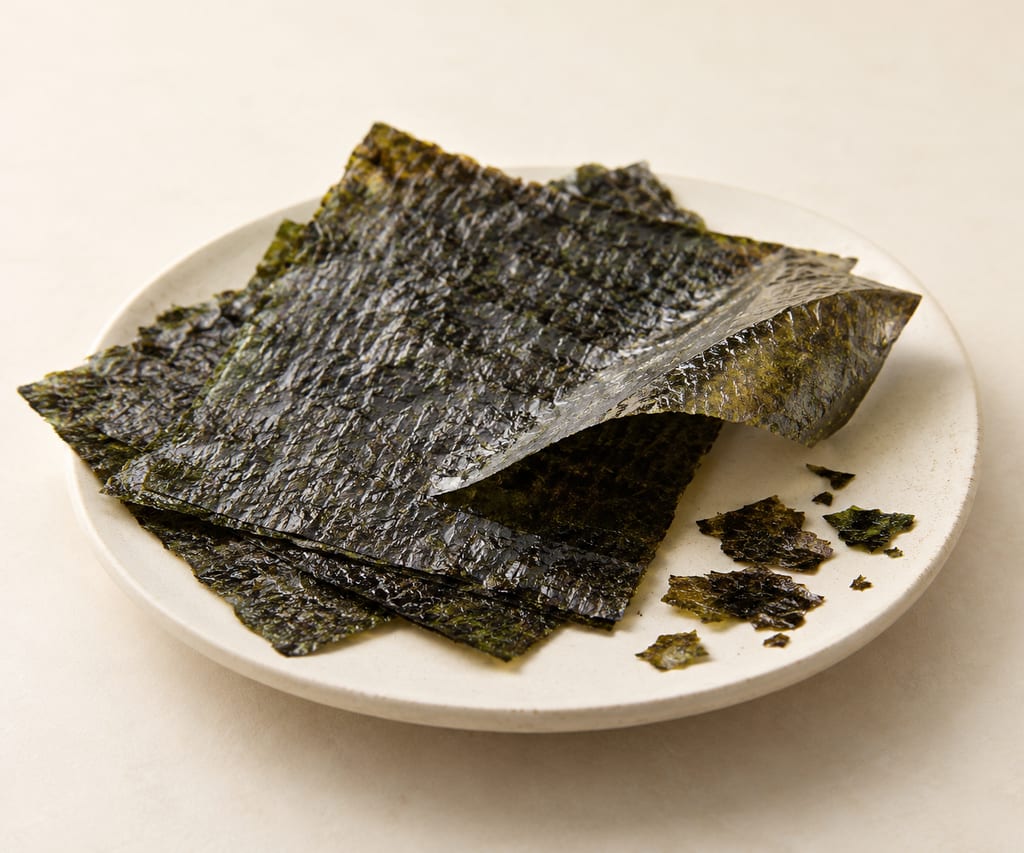
A small stack of dark roasted nori sheets, one folded to show its thin texture, with a few broken flakes on a pale ceramic plate.
Substrates

Nori

Nori is a red seaweed farmed in East Asia and dried into thin sheets, prized for its savoury flavour and crisp texture when roasted and used with rice, in soups and as a seasoning.

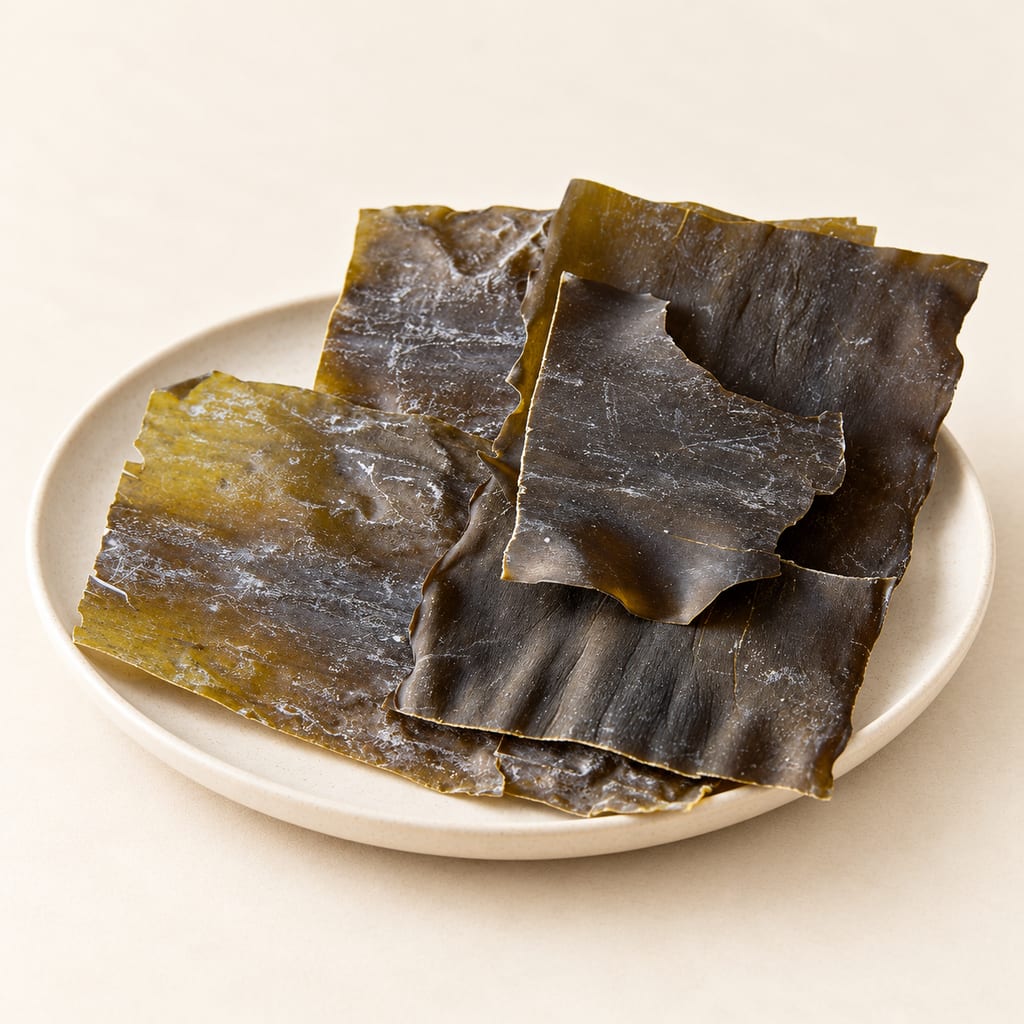
Whole dried kombu kelp sheets layered on a plain ceramic platter.
Substrates

Kombu

Kombu is a group of edible brown kelps, chiefly harvested around northern Japan or cultivated in East Asia, used for umami-rich stocks, simmered dishes, seasonings and preserved foods.

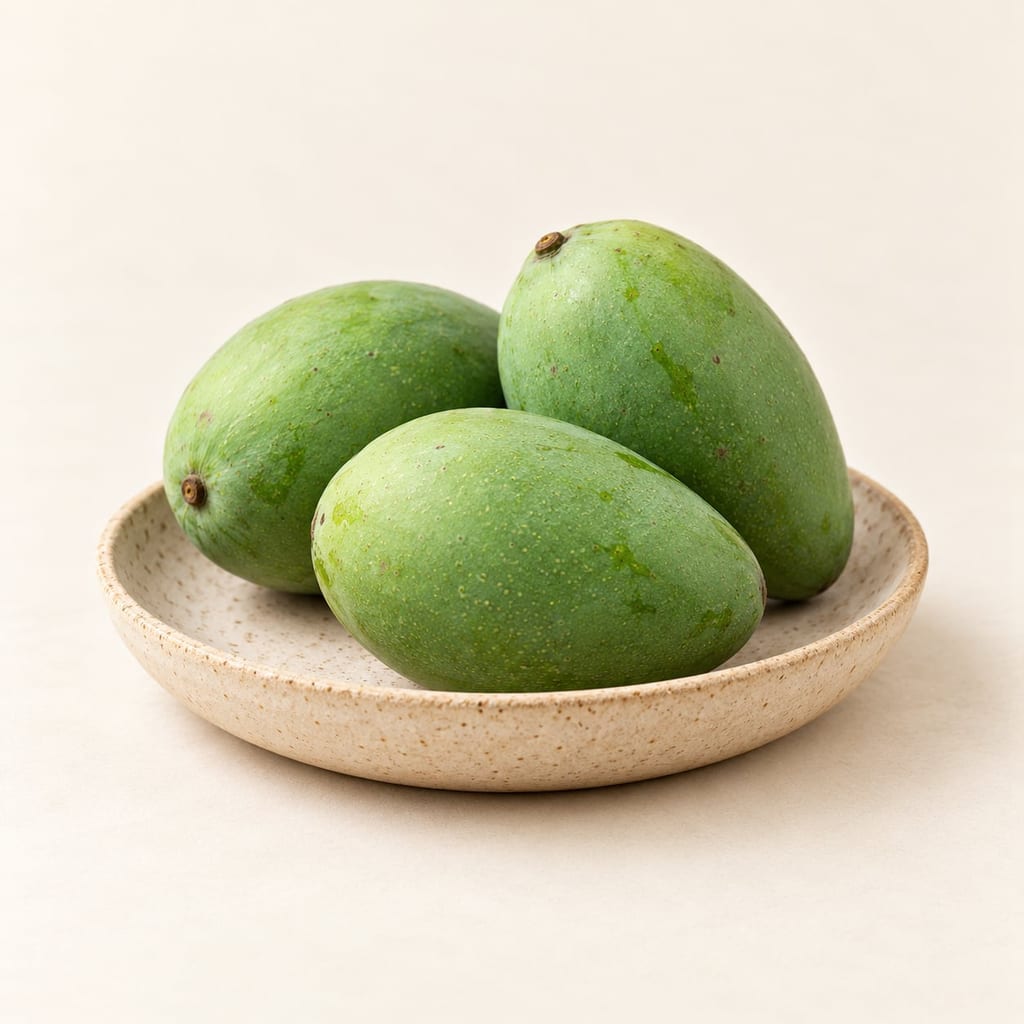
Whole firm green unripe mangoes in a plain dish.
Substrates

Unripe mango

Unripe mango offers sourness and firm texture at several maturity stages, from tender whole pickle fruit to mature-green slices for cooking or drying.

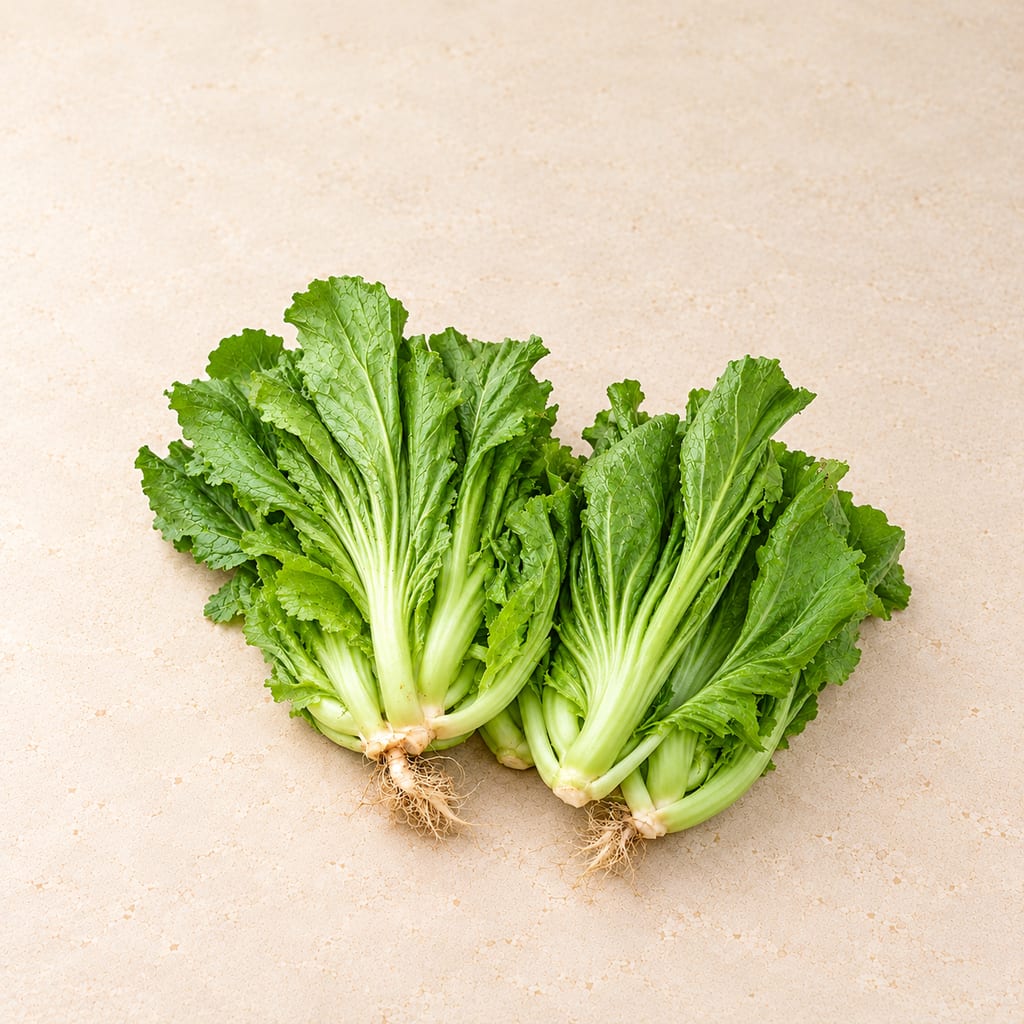
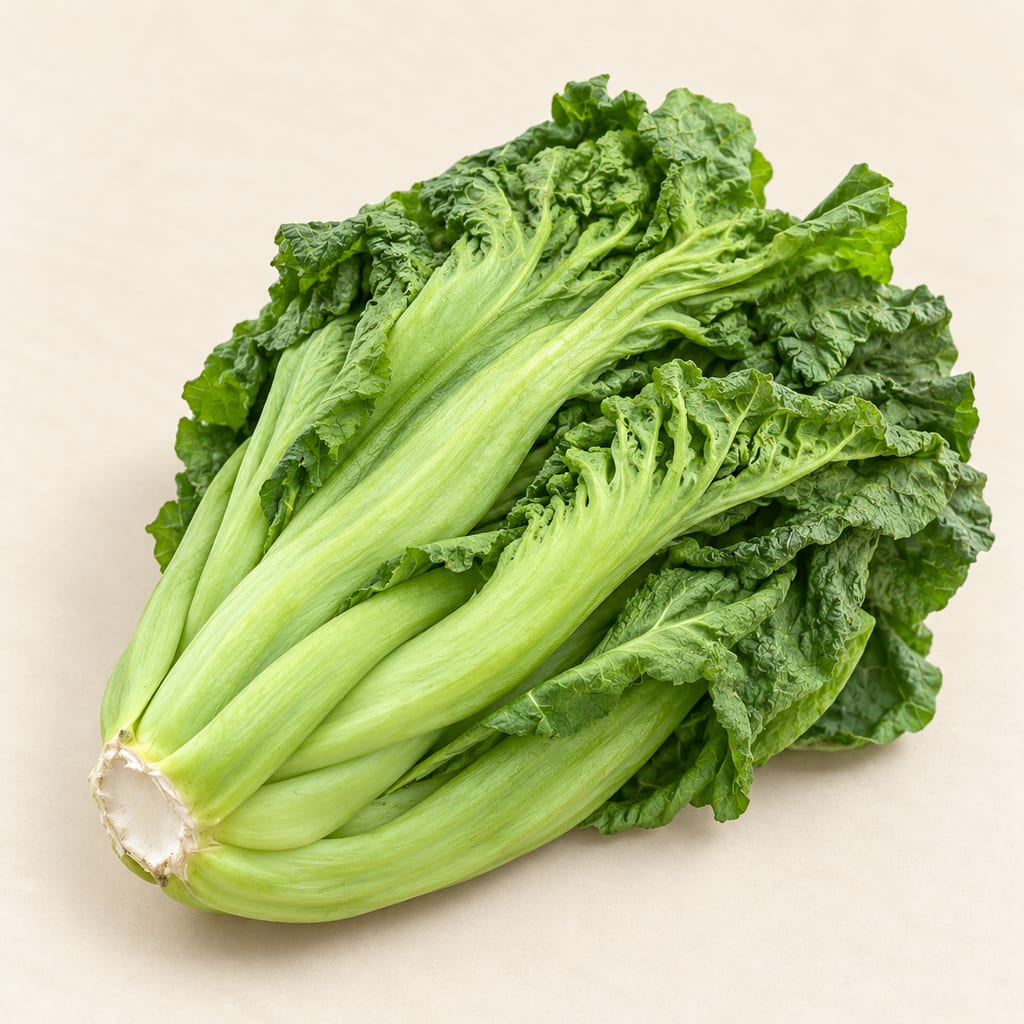
Two whole heads of fresh mustard greens with pale ribs and small roots rest on a warm ivory tabletop.
Substrates

Mustard greens

The leaves of Brassica juncea, a hardy cool-season crop with a sharp, sulfurous bite, eaten fresh and cooked and fermented across Asia as pickled greens, kimchi and gundruk.

Four avocado halves, one holding a brown seed, and one whole green avocado rest on a warm ivory tabletop.
Substrates

Avocado (ripe flesh)

Ripe avocado flesh is the soft, buttery, fat-rich pulp of Persea americana, eaten raw. It is low in acid, so it is a fresh ingredient that needs care in chilled dishes.

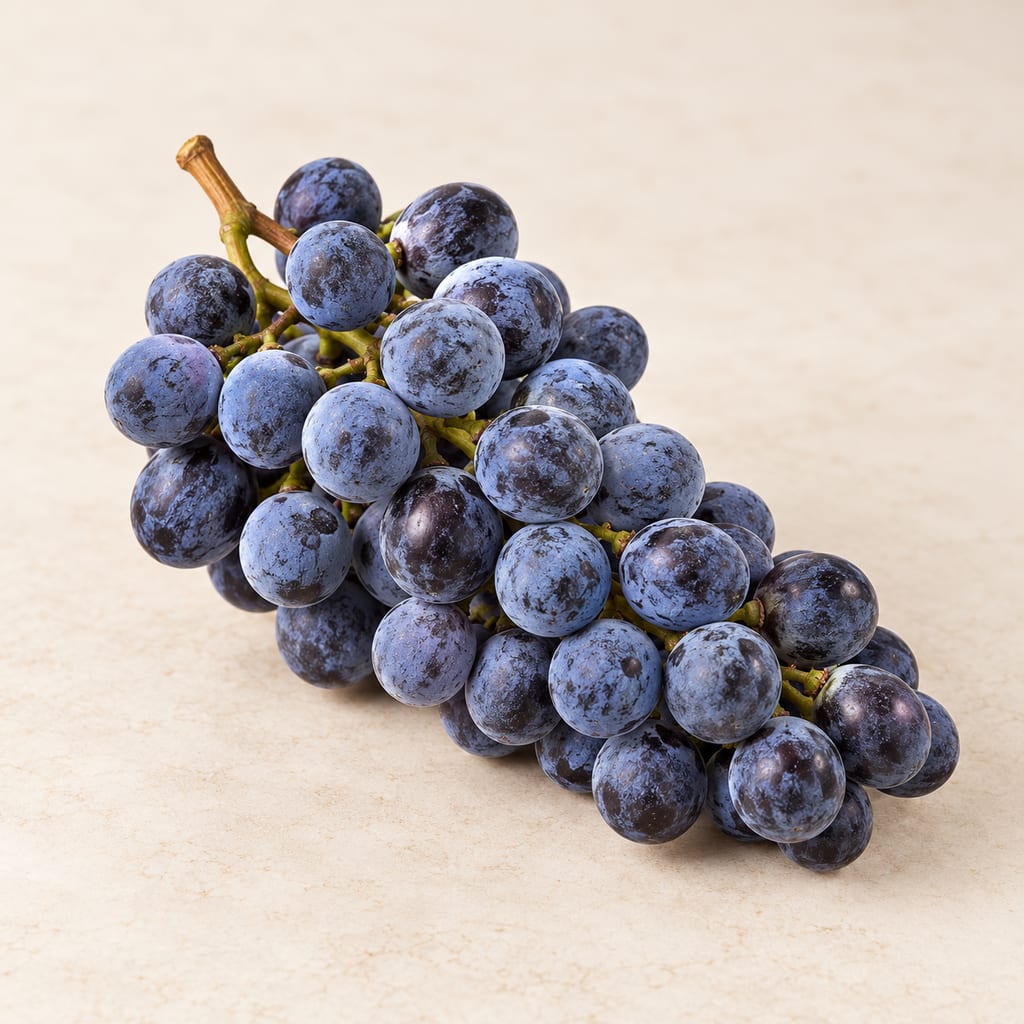
A whole bunch of blue-black grapes with pale bloom on an ivory surface.
Substrates

Concord grapes

Concord is a seeded, blue-black slip-skin grape with a distinctive aroma, used fresh and in juice, preserves, pies and wine.

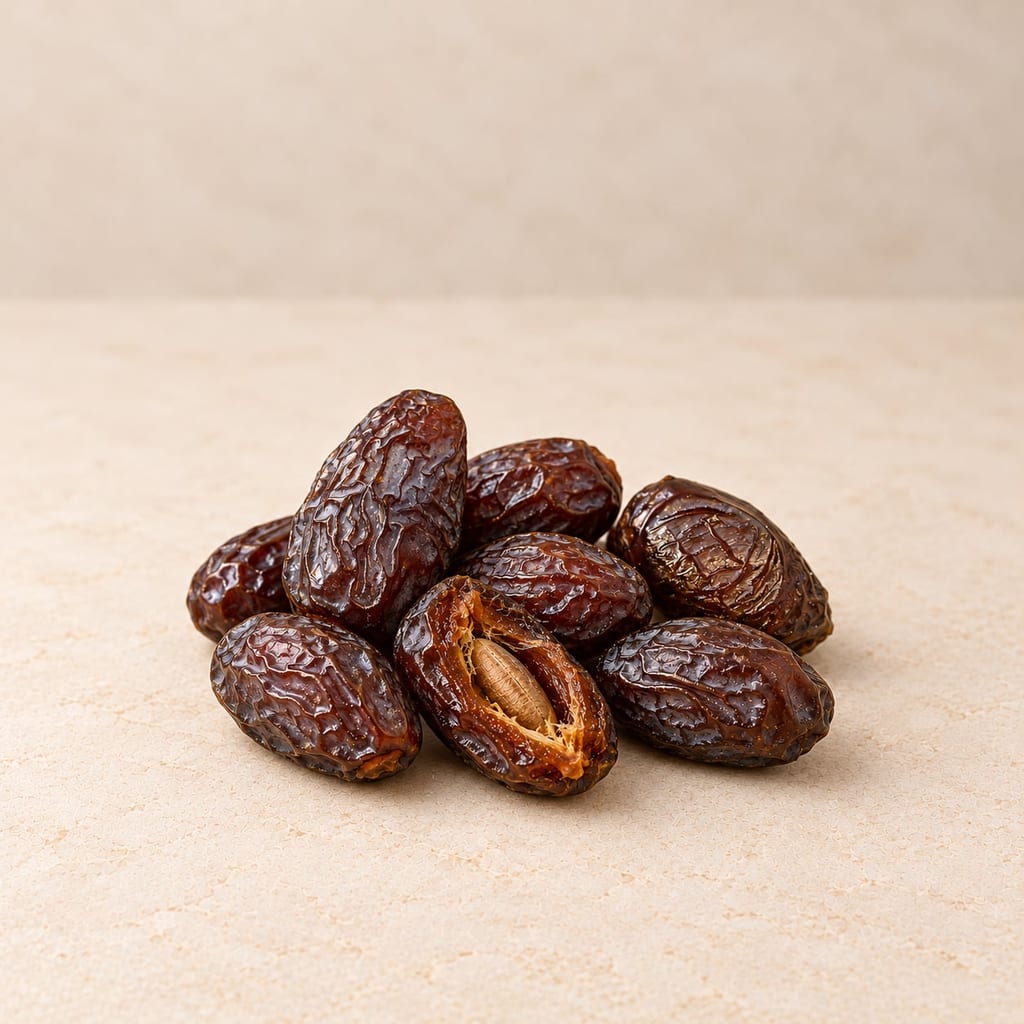
Eight dark-brown dates rest on a warm ivory tabletop, with one torn open to reveal amber flesh and a long stone.
Sugar sources

Dates

Dates are the sugar-rich fruit of the date palm, eaten soft or dried and used whole, pitted, as syrup or as paste. In sauces and chutneys they add sweetness and body.

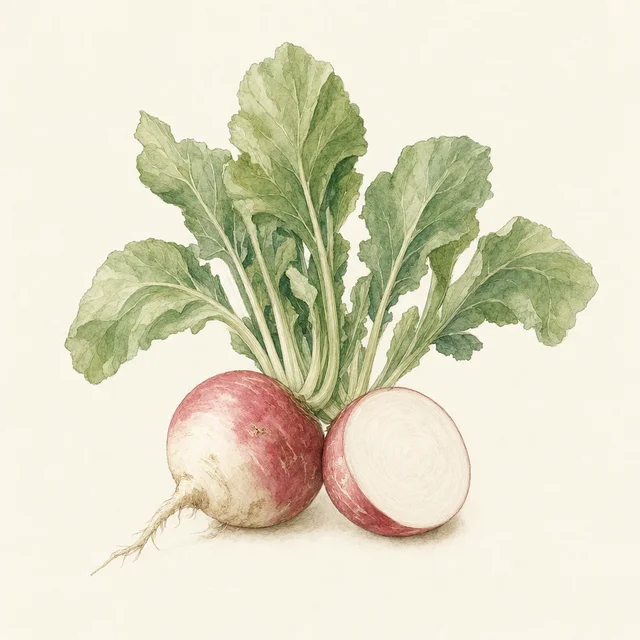
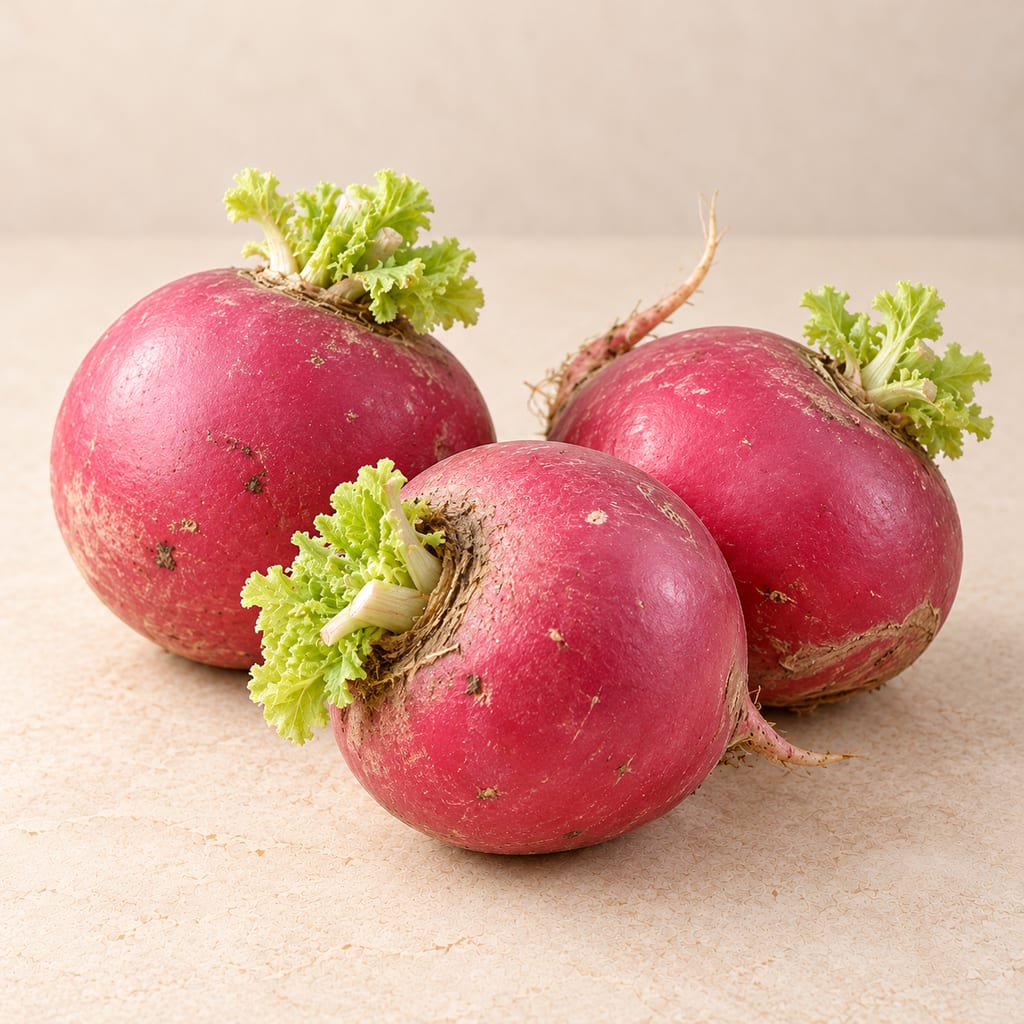
Three whole magenta-red turnips with short green crowns and slender root tails rest on a warm ivory tabletop.
Substrates

Red turnip

Red turnips are the heritage turnips of Japan's Kiso valley; their stems and leaves are fermented without salt into sunki, a sour amber pickle.

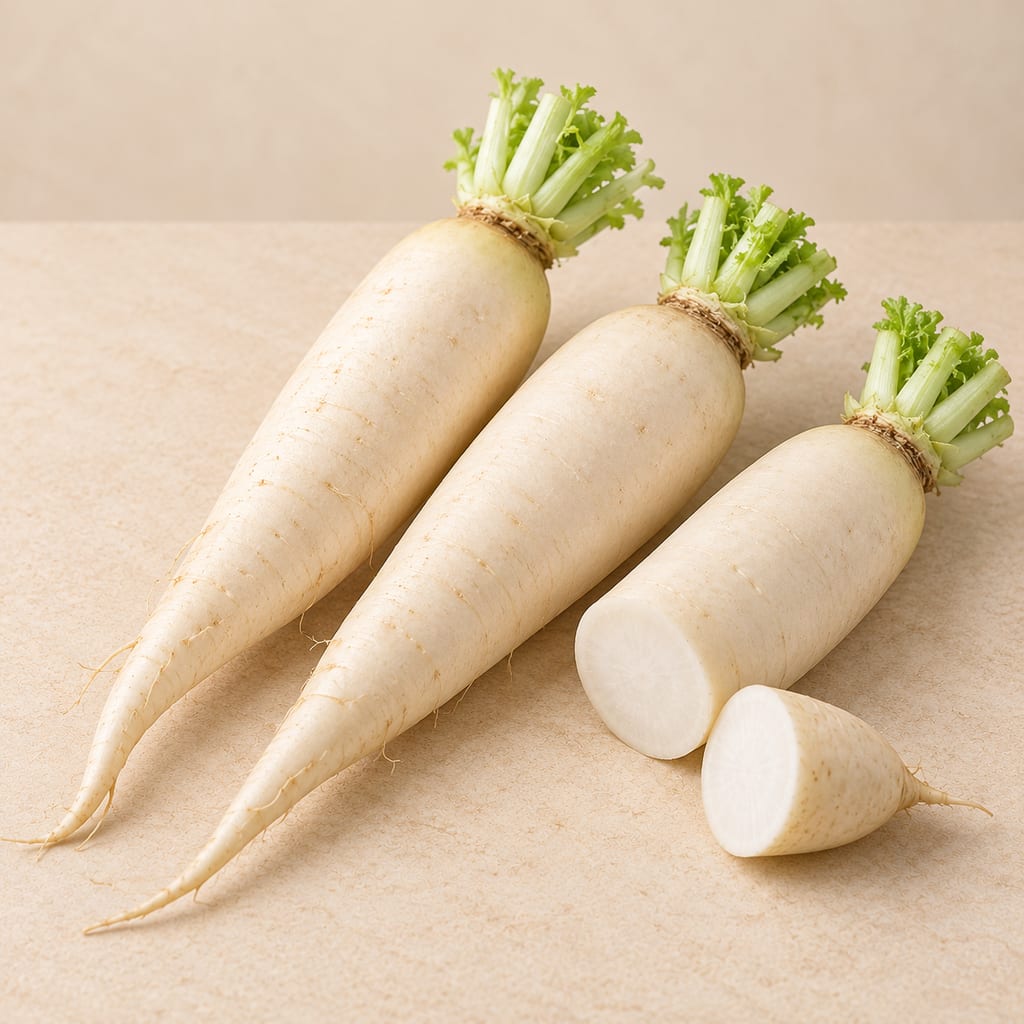
Three white daikon roots with trimmed green crowns rest on an ivory tabletop, one cut crosswise with its detached piece showing white flesh.
Substrates

Radish and daikon

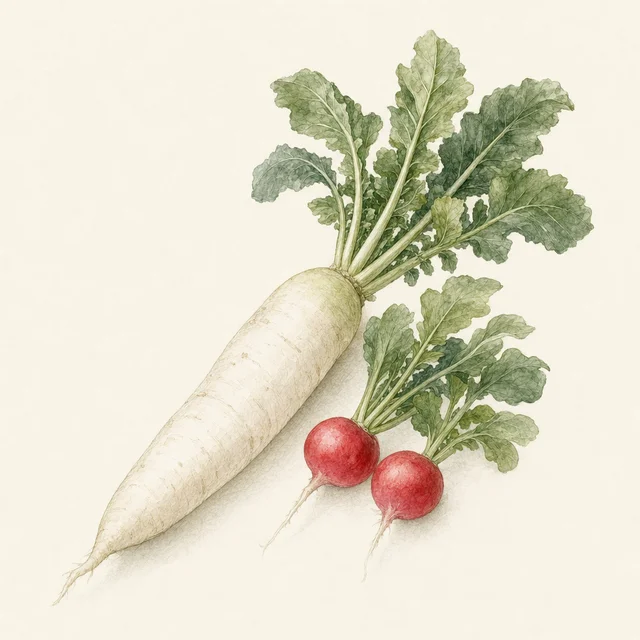
Radish and daikon are the crisp, peppery roots, leaves and seed pods of Raphanus sativus, fermented as kimchi, takuan and sinki and eaten raw across Asia and Europe.

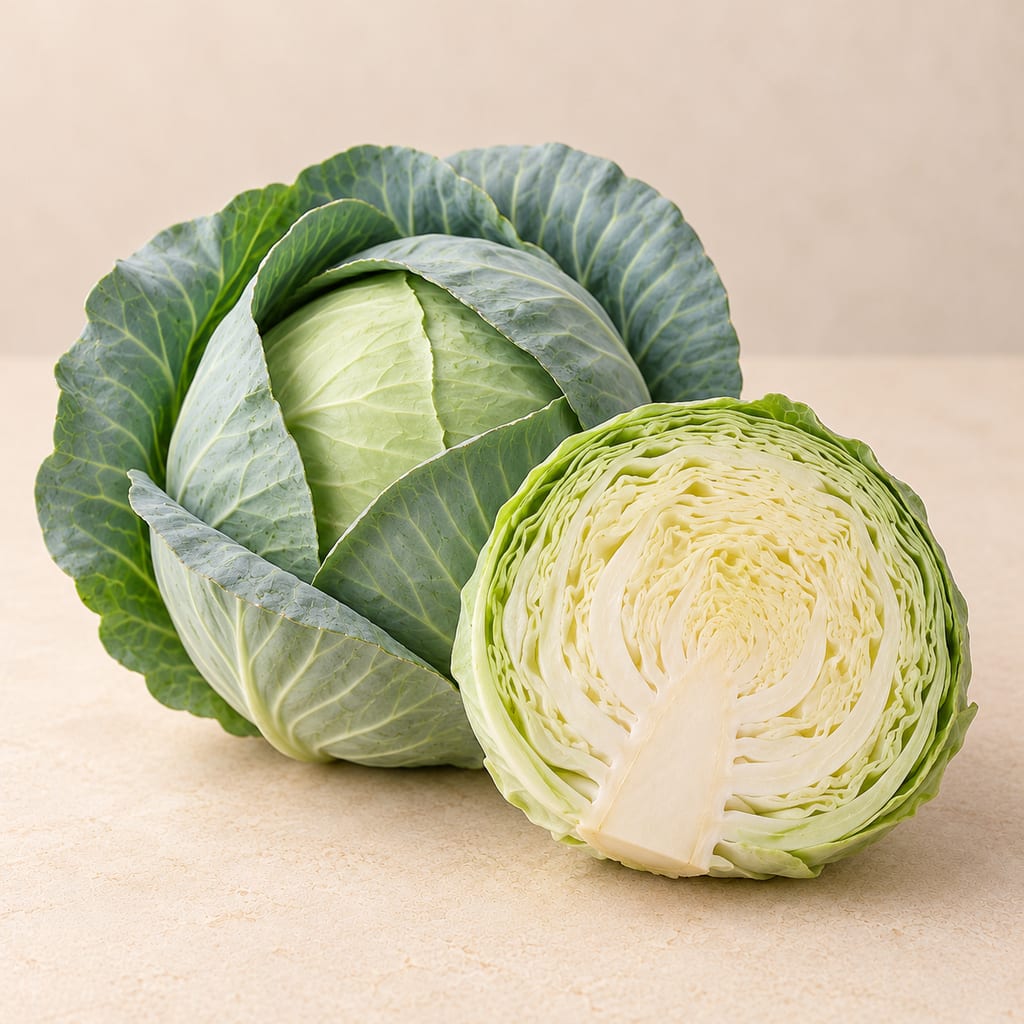
A whole blue-green cabbage and a cabbage half showing its pale layered interior rest on a warm ivory tabletop.
Substrates

Cabbage

Cabbage is the dense leafy head of Brassica oleracea, a European vegetable that keeps for months and is the classic raw material for sauerkraut, with napa cabbage the base of kimchi.

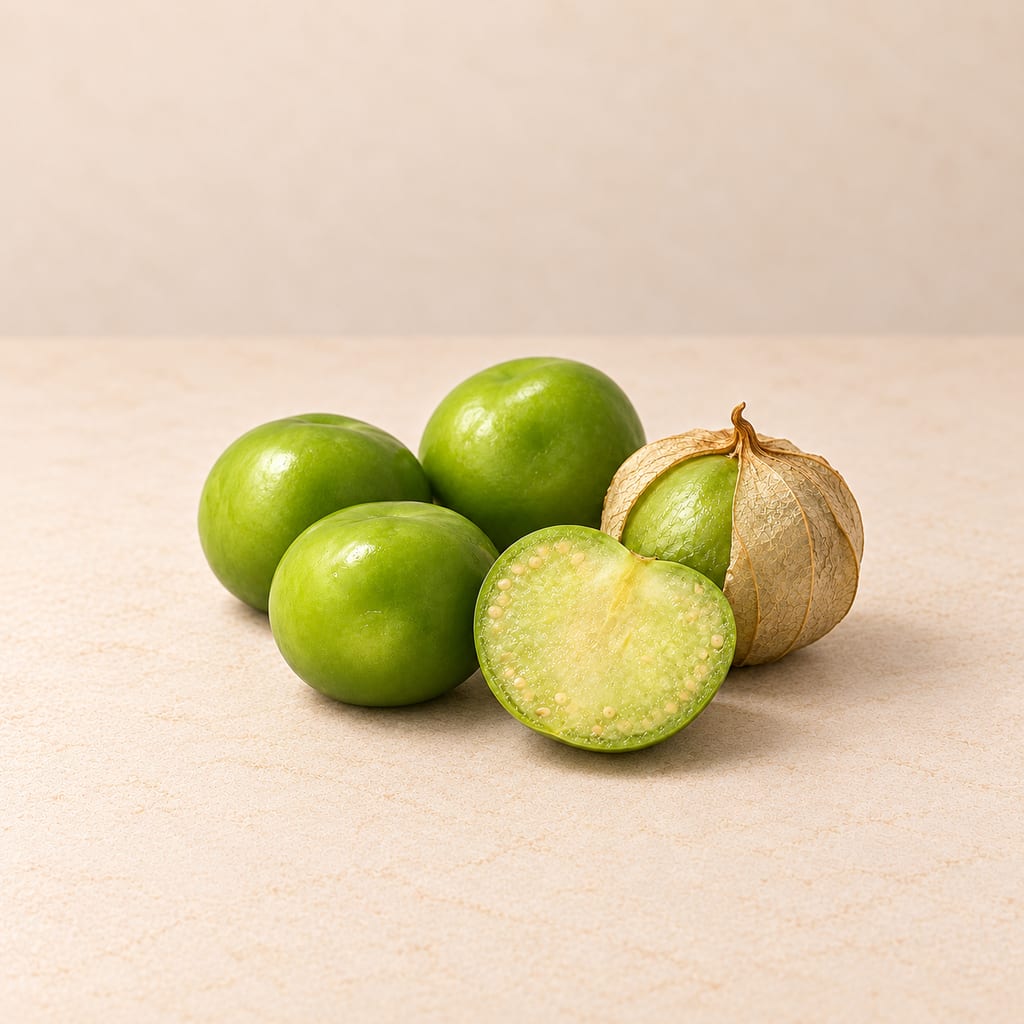
Three whole green tomatillos, one in a tan papery husk, and one cut half rest on a warm ivory tabletop.
Substrates

Tomatillo

The tomatillo is the tart green fruit of Physalis ixocarpa, a Mexican relative of the tomato that grows inside a papery husk. It is the base of salsa verde.

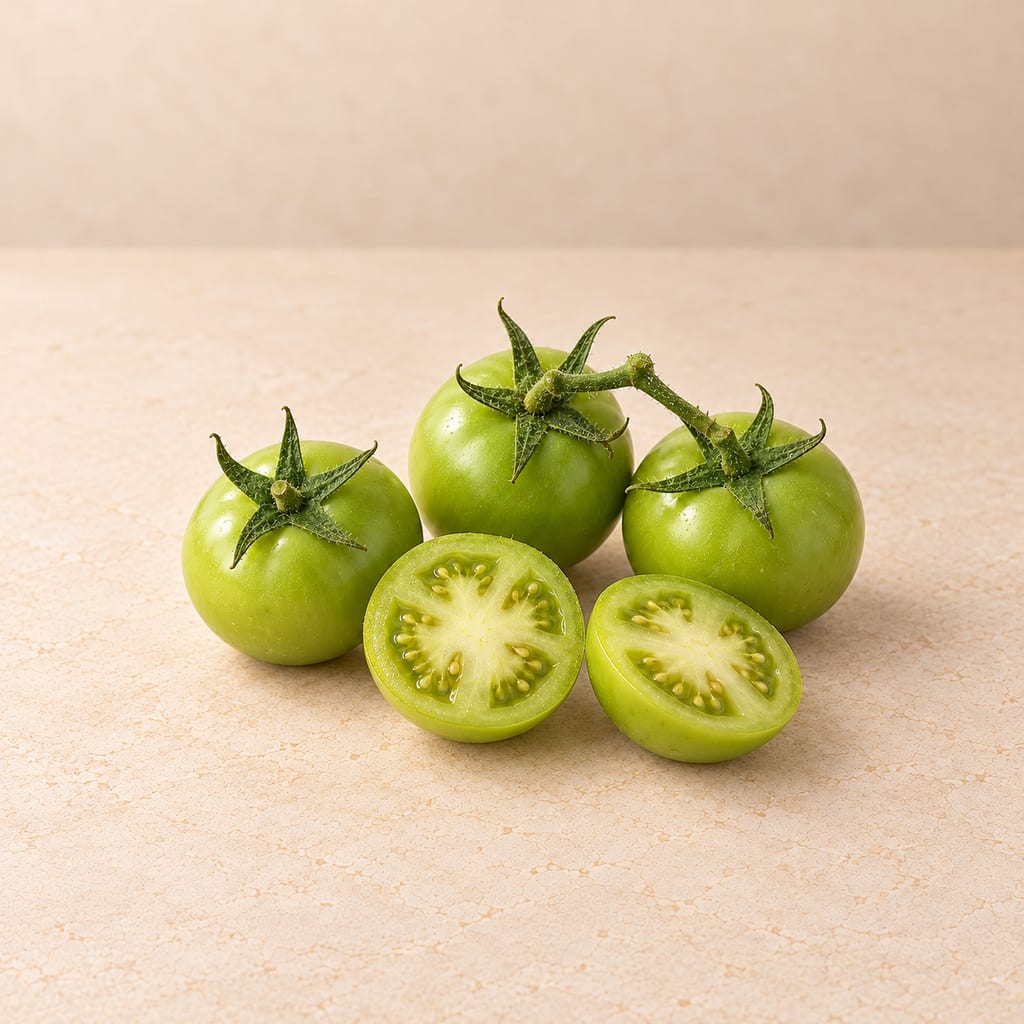
Three whole unripe green tomatoes and two halves rest on an ivory tabletop, with two whole fruits joined by a short stem.
Substrates

Green tomato

A green tomato is an unripe tomato, firm and sour, used for frying, pickling, relish and ferments. It carries tomatine, which falls as the fruit ripens.

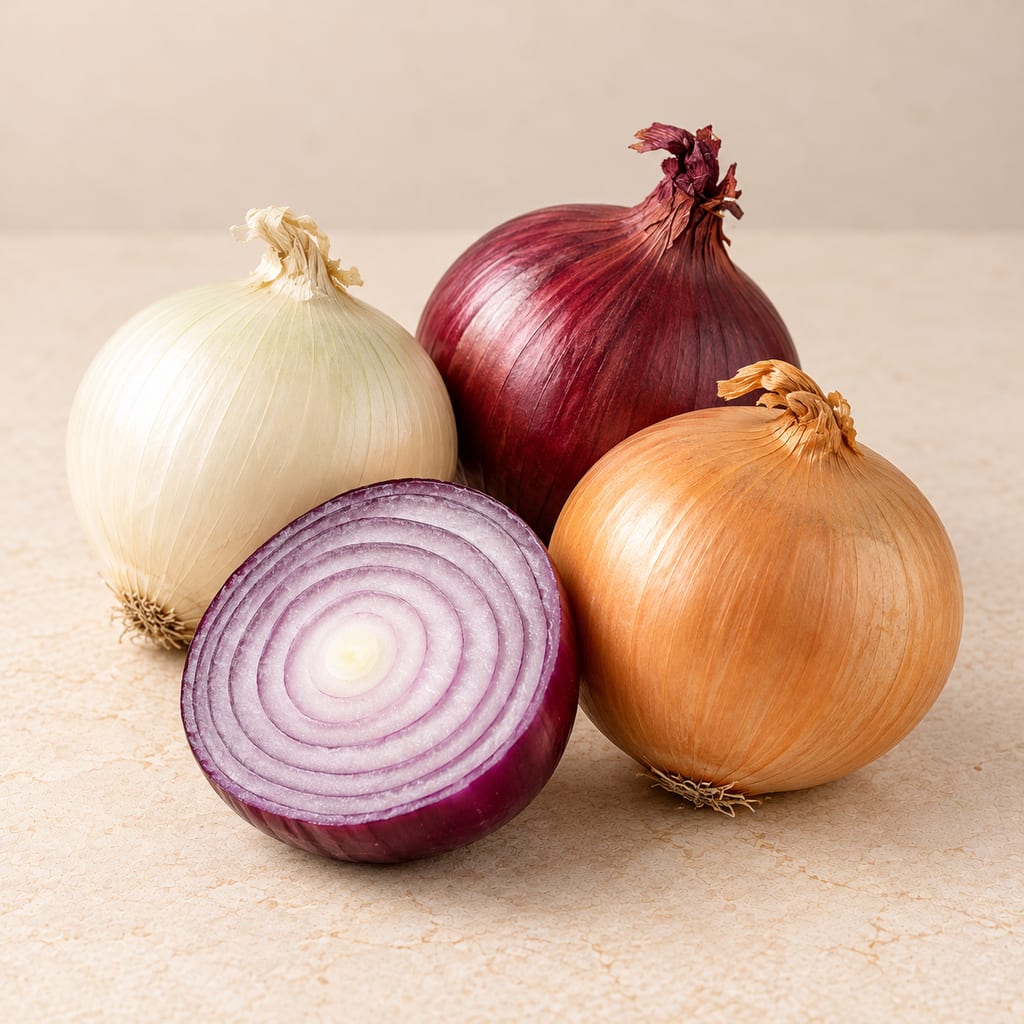
Whole white, yellow and red onions with a red onion half displaying purple-white rings on a warm ivory tabletop.
Substrates

Onion

The onion is the bulb of Allium cepa, built from swollen leaf bases, and is eaten raw, cooked, pickled and as a seasoning in ferments. It is known only from cultivation and probably began in Central Asia.

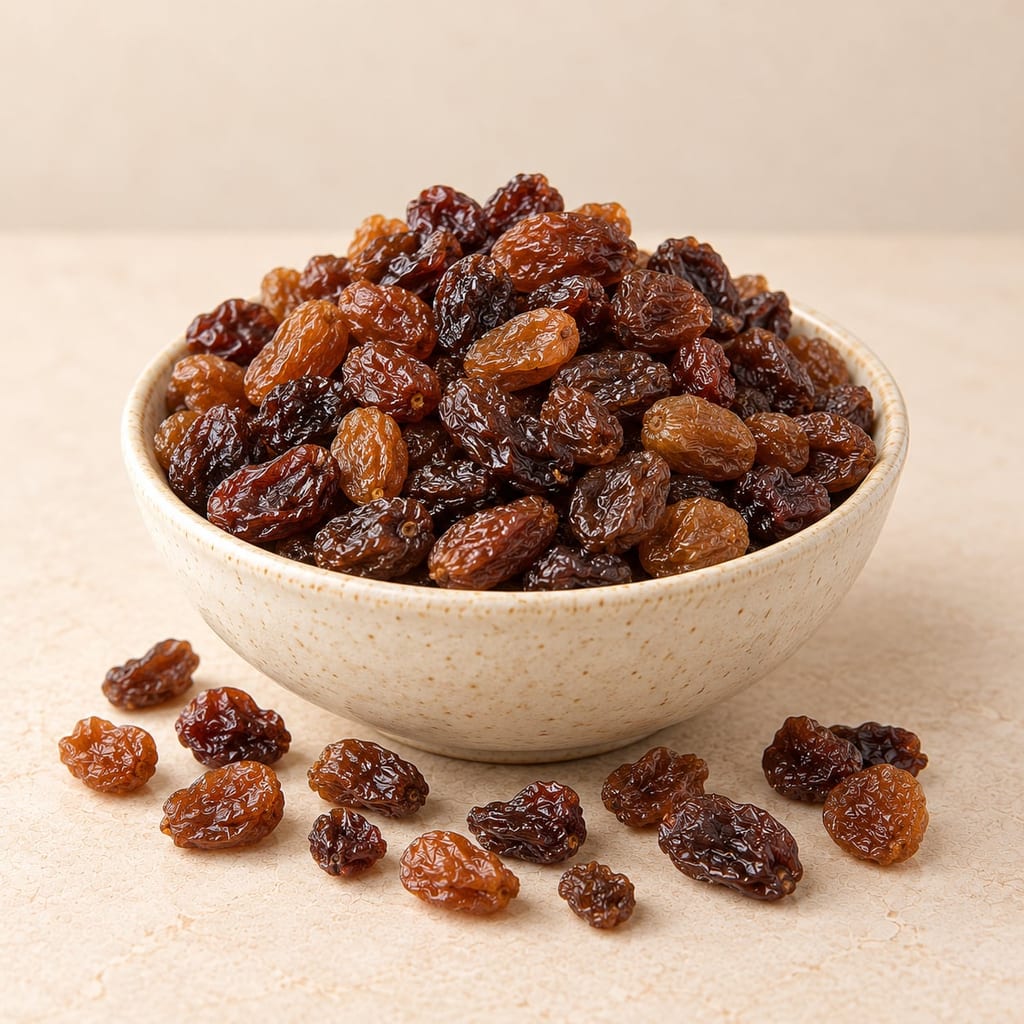
Amber and dark brown raisins fill a speckled cream ceramic bowl, with loose raisins scattered on a warm ivory tabletop.
Substrates

Raisins

Raisins are dried grapes whose variety and drying method shape their size, colour and flavour. In a documented 1861 ginger wine they are stoned, chopped and added to the cask after yeast.

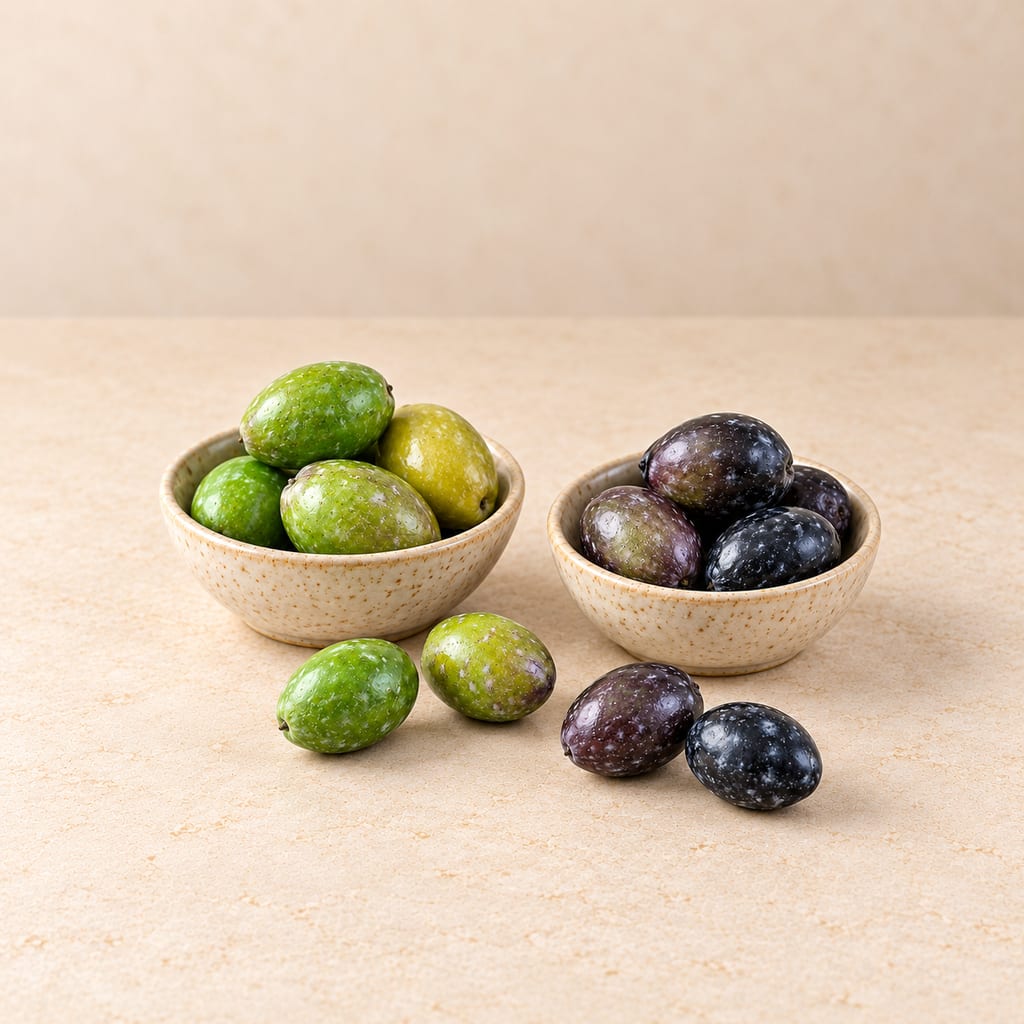
Green and purple-black whole olives in two speckled cream bowls with four loose olives on a warm ivory tabletop.
Substrates

Olives

Olives are the bitter fruit of Olea europaea, made edible by lye, brine or salt, and the raw material of the table olives that are cured and fermented around the Mediterranean.

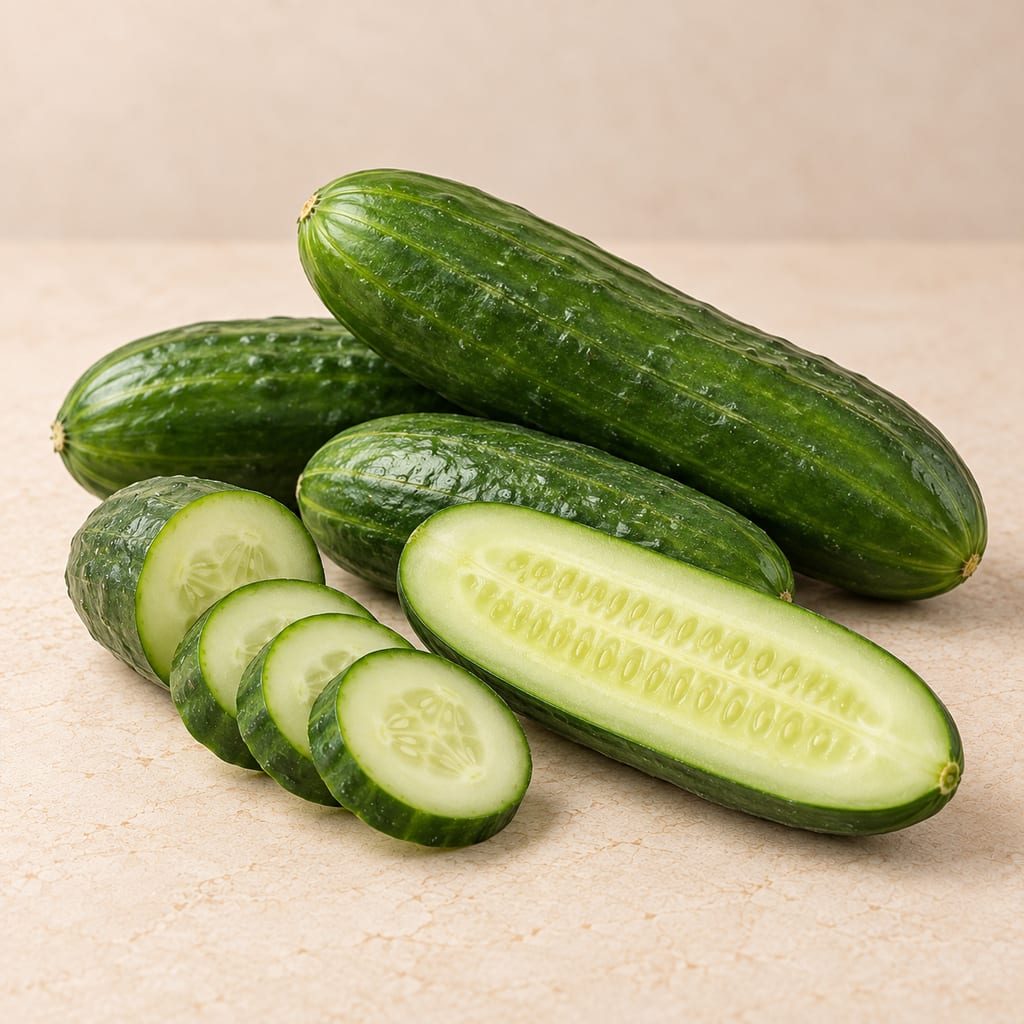
Three whole green cucumbers with cucumber rounds and a lengthwise half on a warm ivory tabletop.
Substrates

Cucumber

Cucumber is the watery fruit of Cucumis sativus, domesticated in India, and the classic raw material of brine pickles from New York dills to Nepali khalpi and Korean oi-sobagi.

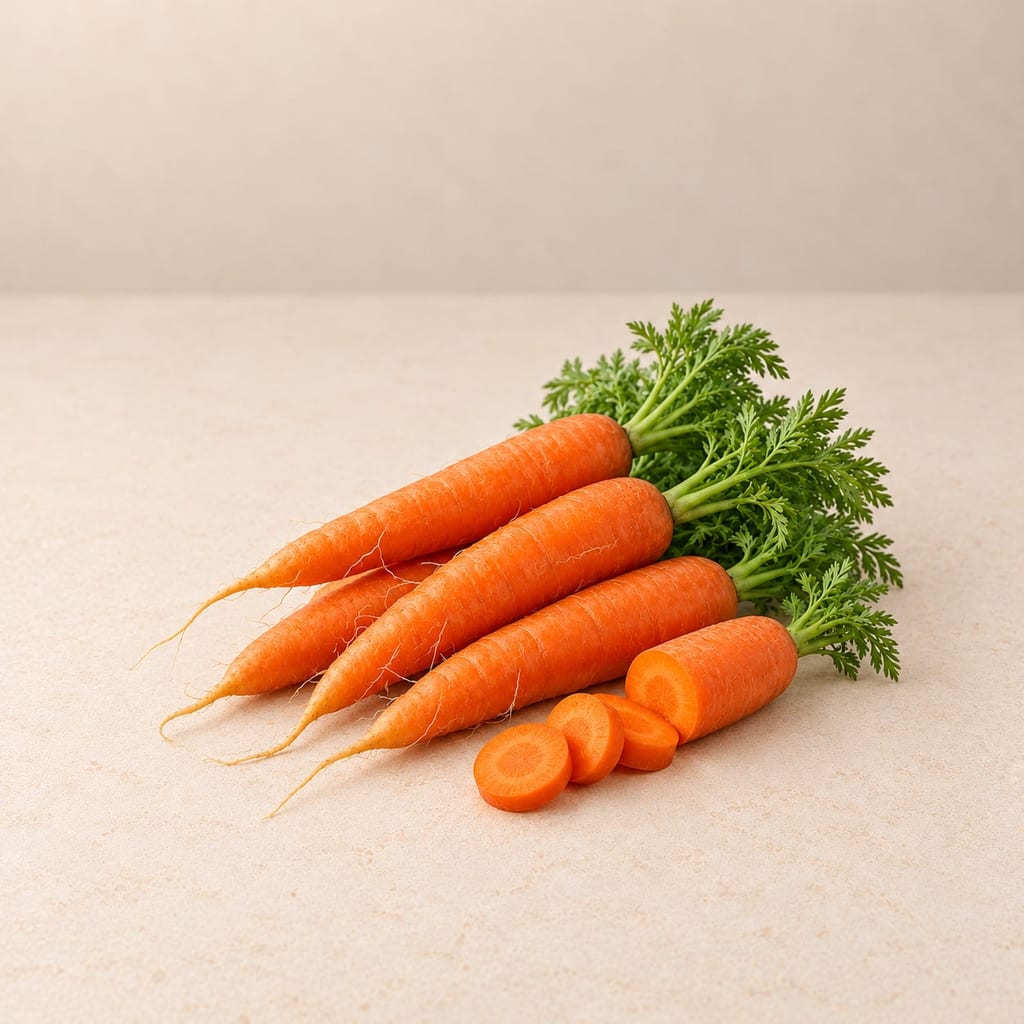
Four fresh orange carrots with green tops lie beside a cut carrot and rounds on a warm ivory tabletop.
Substrates

Carrot

Carrot is the sweet taproot of Daucus carota subsp. sativus, domesticated in Central Asia, and the raw material of kanji and a common companion in fermented vegetable mixes.

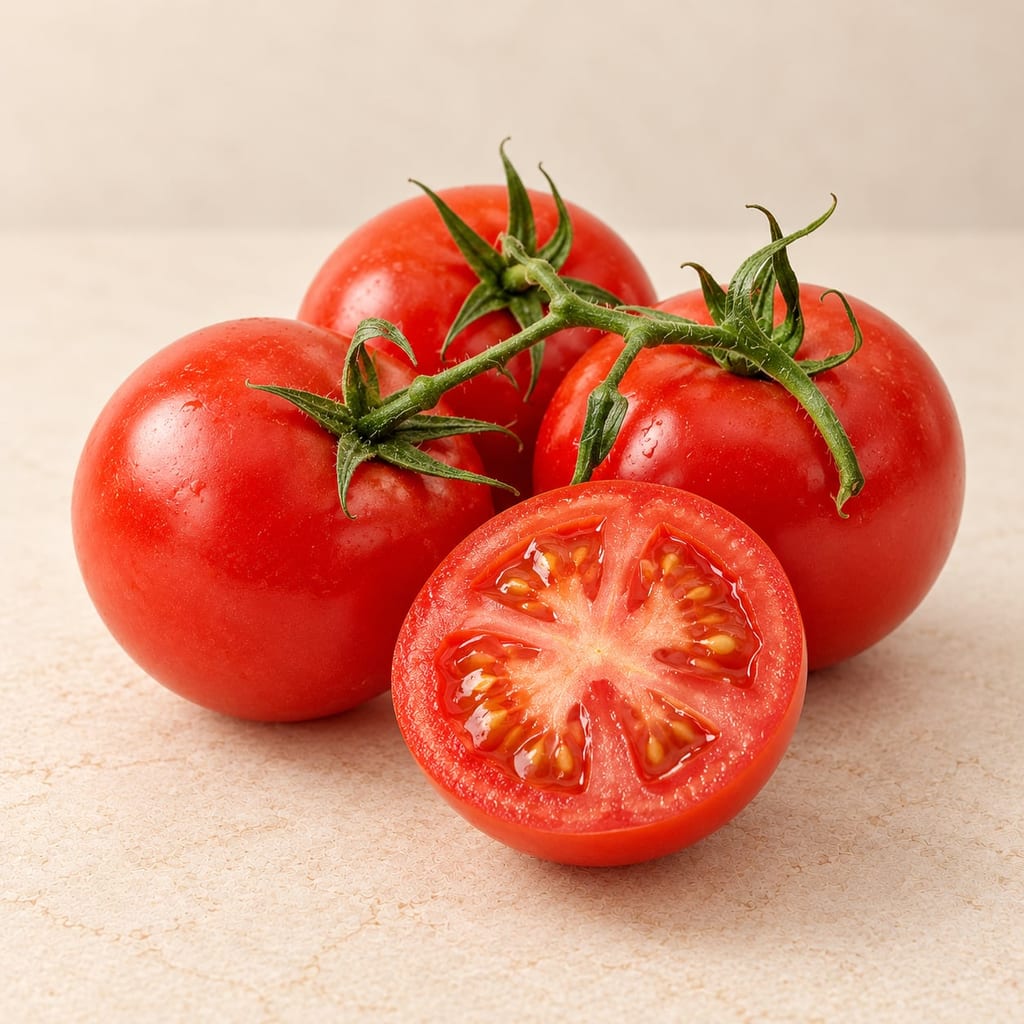
Ripe red tomatoes on a short green vine with a tomato half showing seeds and gel-filled chambers on a warm ivory tabletop.
Substrates

Tomatoes

Tomatoes are the fruit of Solanum lycopersicum, wild in the Andes and domesticated in Mesoamerica. They are eaten ripe or green, fresh, cooked, canned and fermented.
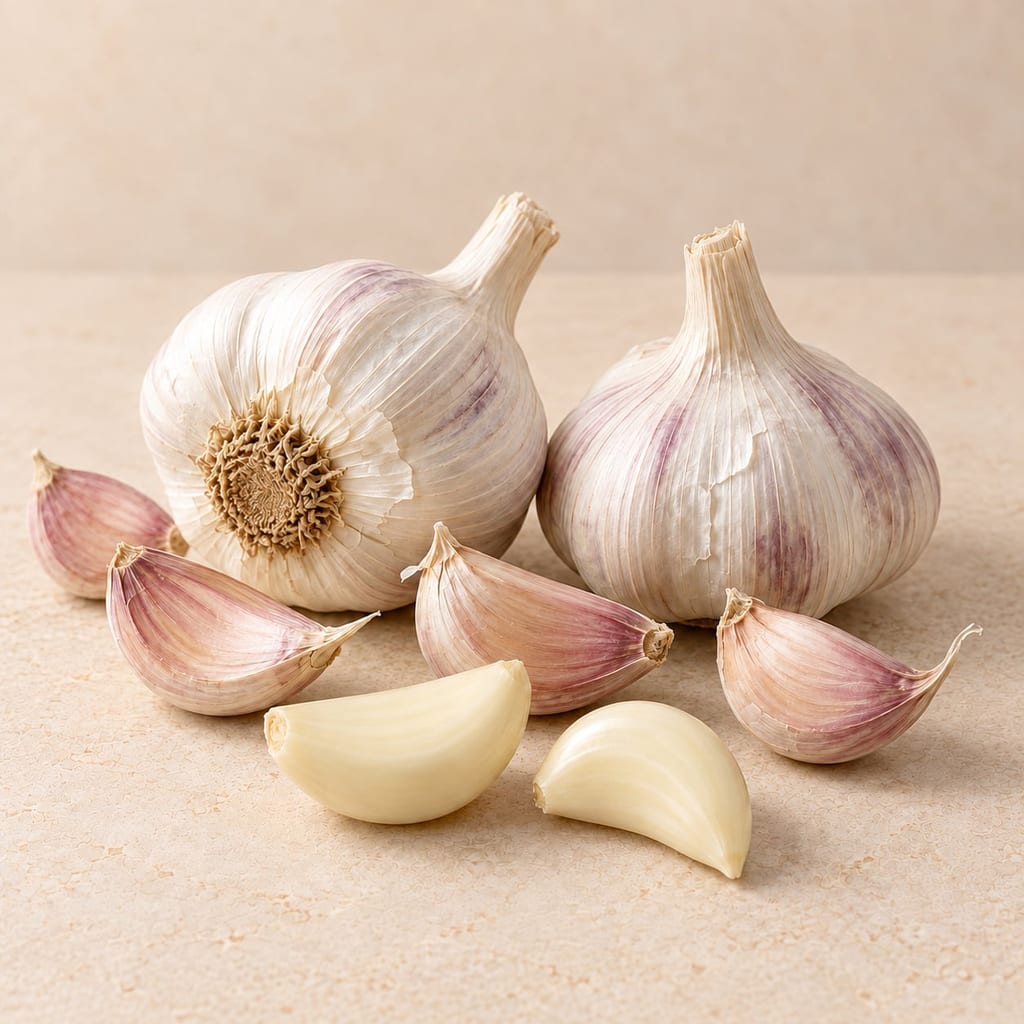
Two papery garlic bulbs, four skin-on cloves and two peeled ivory cloves rest on a warm limestone-toned tabletop.
Spices and aromatics

Garlic cloves

Garlic cloves are the separate bulblets of Allium sativum, pungent only once cut. They flavour herb salts, ferments such as Thai som-fak, and countless cooked dishes.

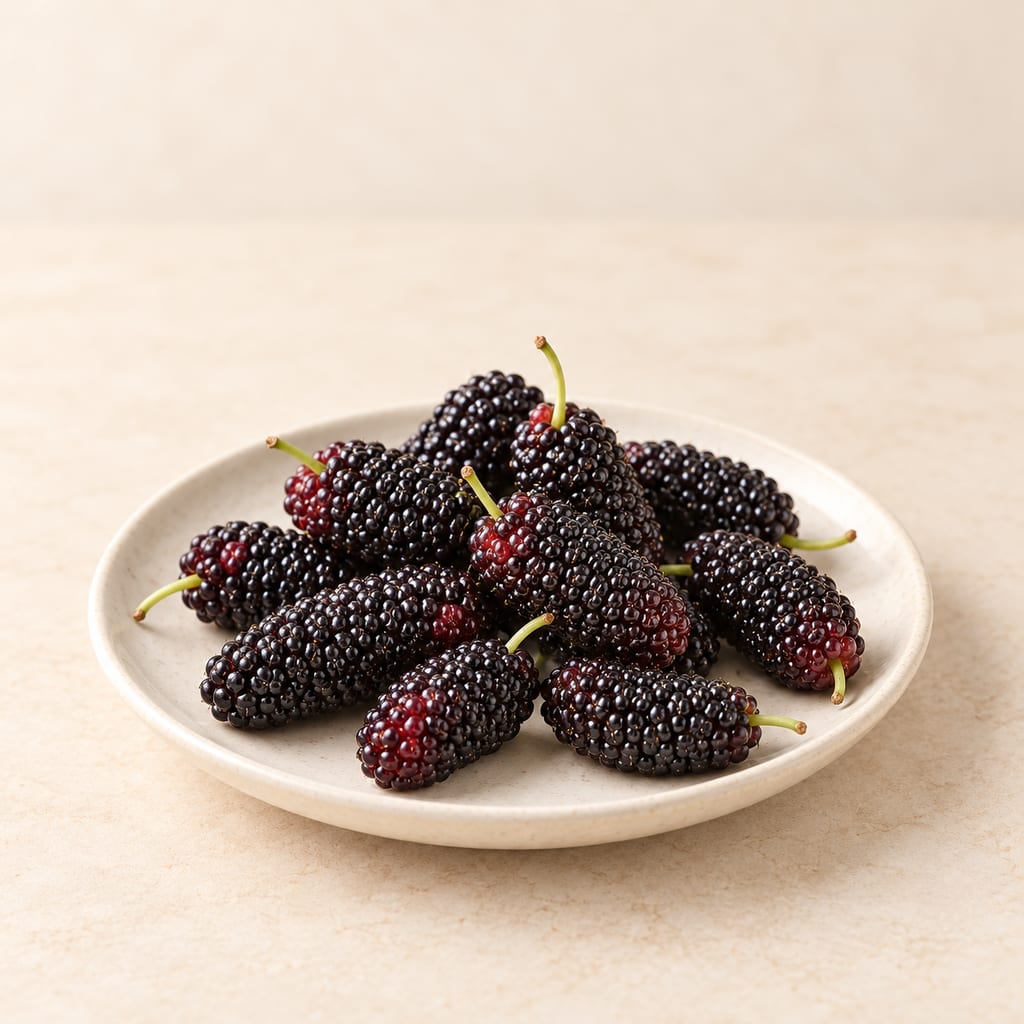
Fresh dark elongated mulberries with short stems on an ivory dish.
Substrates

Mulberries

Mulberries are the soft fruits of Morus trees, used fresh and dried and as the fruit base for documented Georgian tklapi. The cited tklapi accounts do not identify a species.

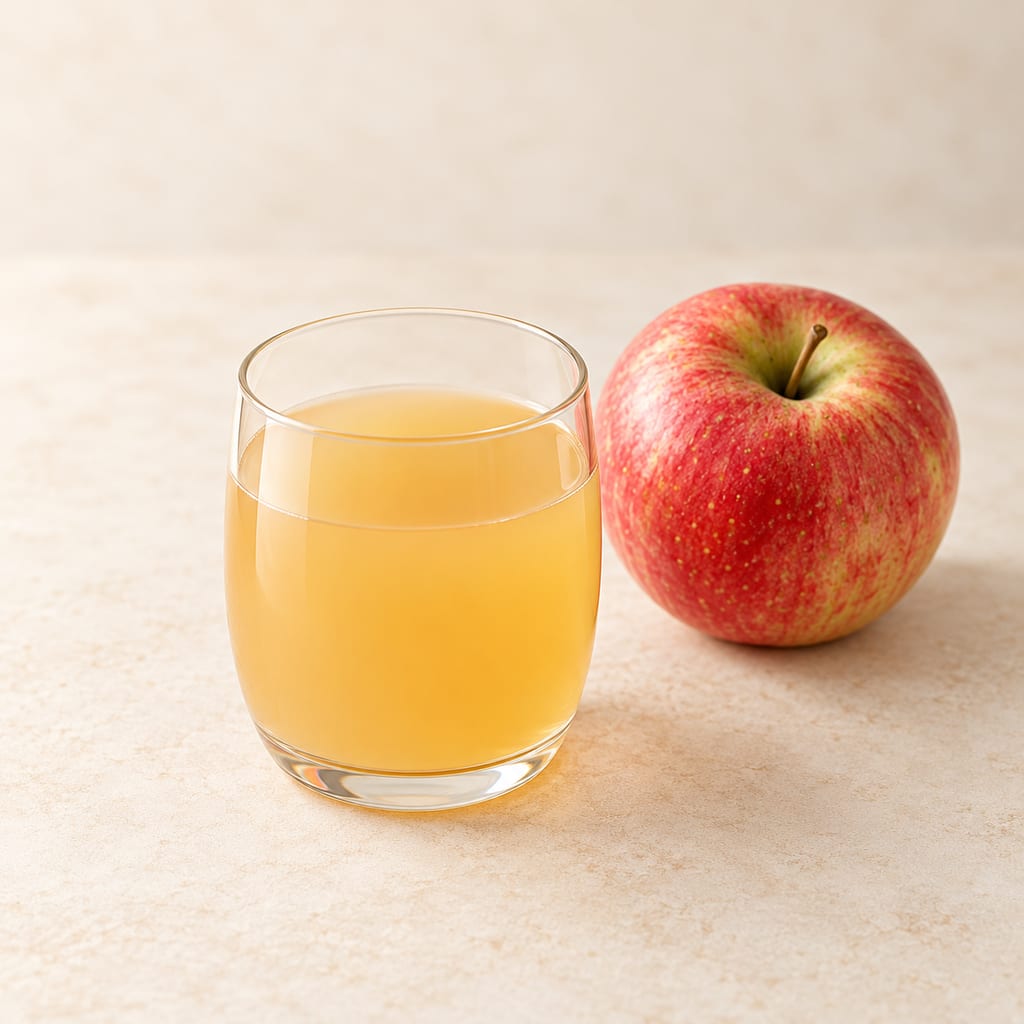
Cloudy golden apple juice in a clear glass beside a whole apple.
Substrates

Preservative-free apple juice

Apple juice without added preservatives, used as a drink, a cooking ingredient and a substrate for cider. Its cultivar, clarity, concentration and treatment history depend on the actual product.

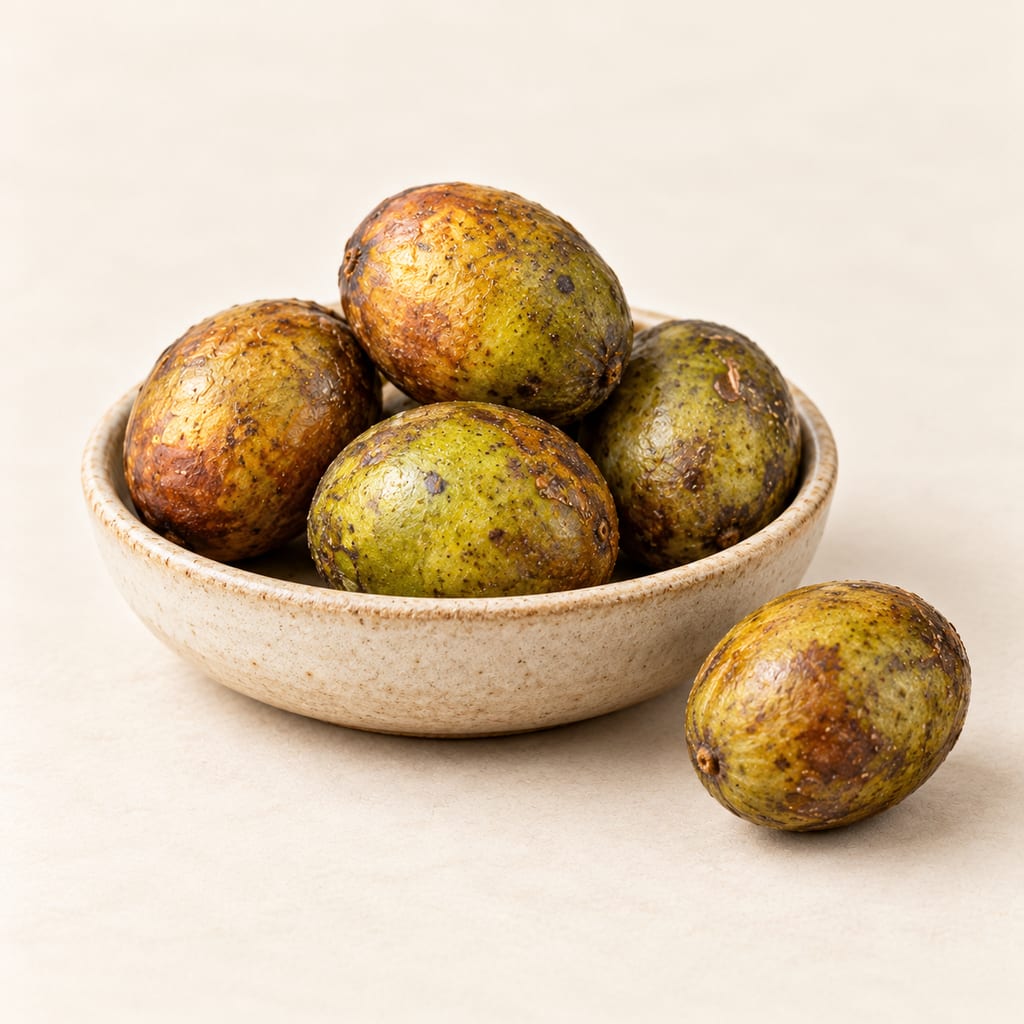
Several small mottled whole lapsi fruits in a plain ceramic dish, with one fruit beside it.
Substrates

Lapsi (Nepali hog plum)

Lapsi is Nepal's tart stone fruit from Choerospondias axillaris. Its cooked pulp becomes achar, titaura, mada and other sour or sweet preserves.

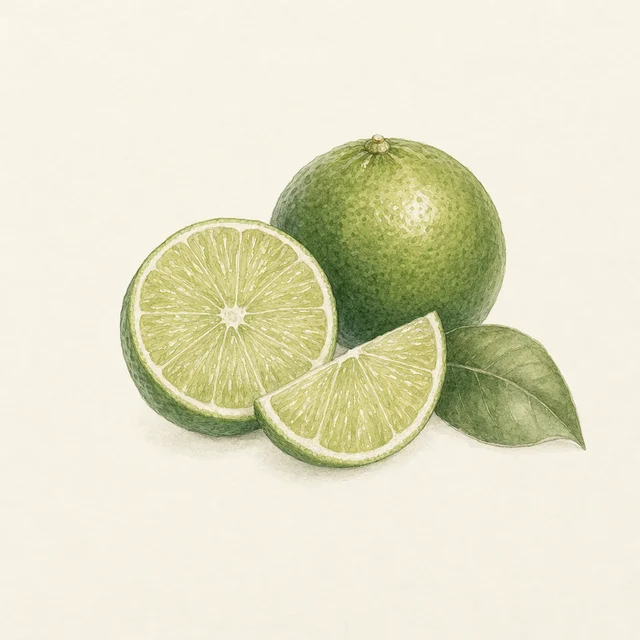
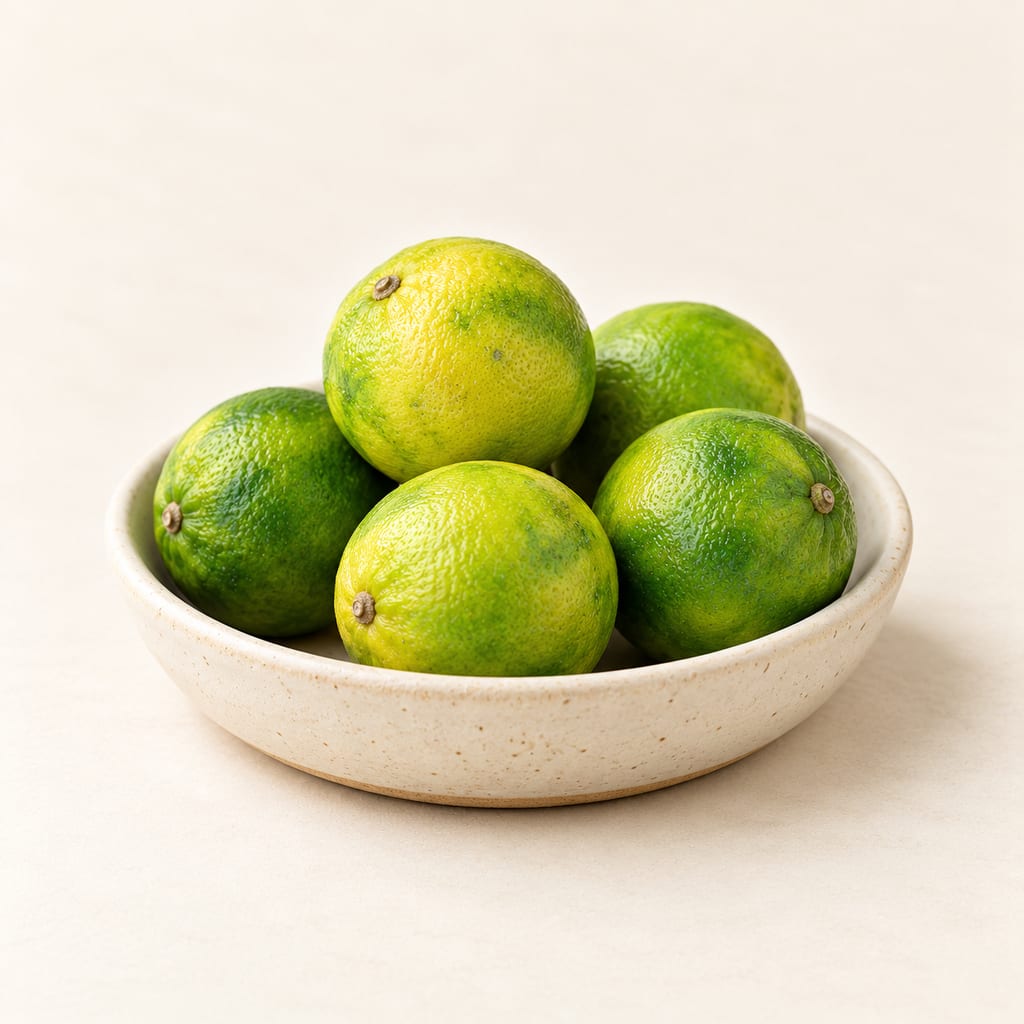
Whole green and yellow-green limes in a plain ceramic dish.
Substrates

Lime

Lime brings sour juice, fragrant peel and firm rind to fresh food and preserved condiments; the fruit named in a recipe may belong to several citrus types.