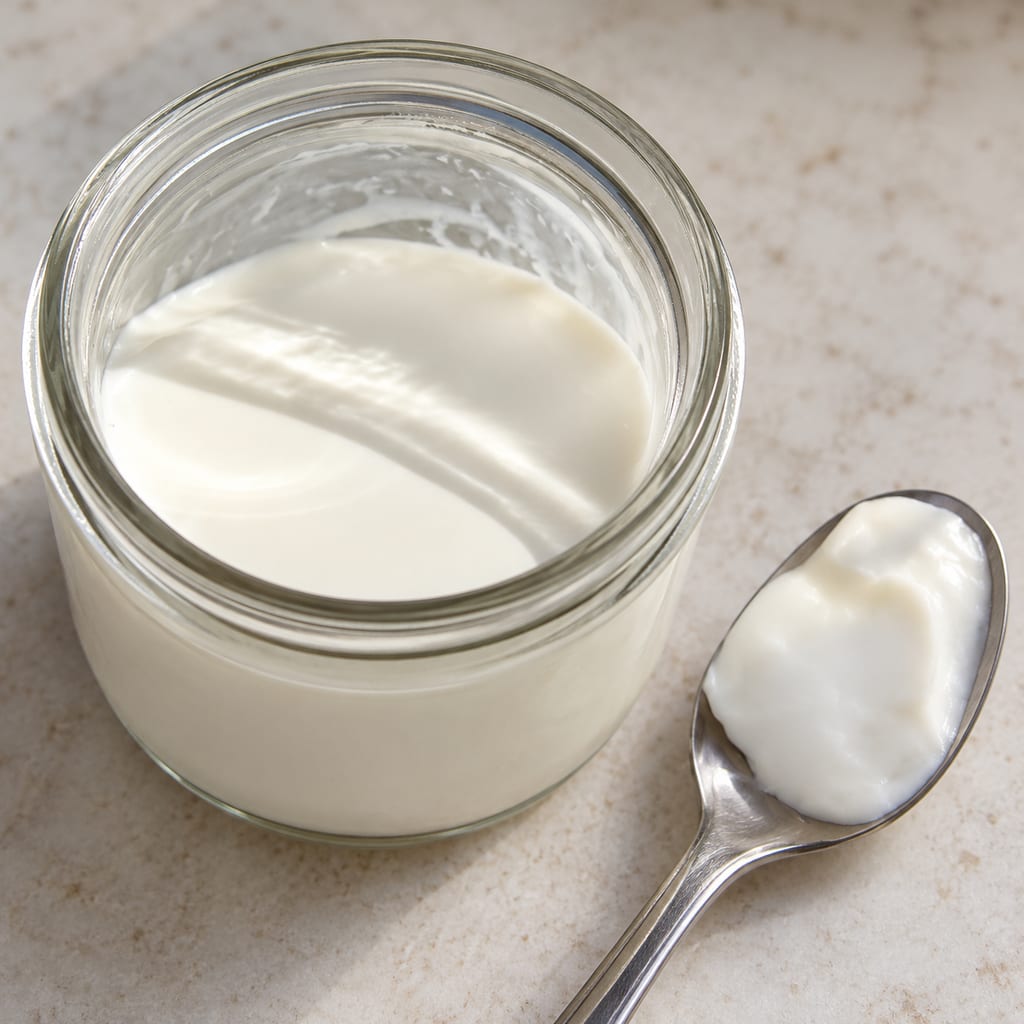
Actively growing dairy starter culture
A dairy inoculum grown before use to direct souring in household cheese, including acid-set and rennet-set preparations.
 FermenteaWhere food goes to change
1086 articles on substrates, cultures and additives.
A dairy inoculum grown before use to direct souring in household cheese, including acid-set and rennet-set preparations.
Flavor of Italy is a freeze-dried meat culture combining lactic acid bacteria with Staphylococcus carnosus to support sausage acidification, colour and aroma.

A refined common-wheat flour blended for a broad range of baking; its protein and behavior vary with wheat, milling and market.
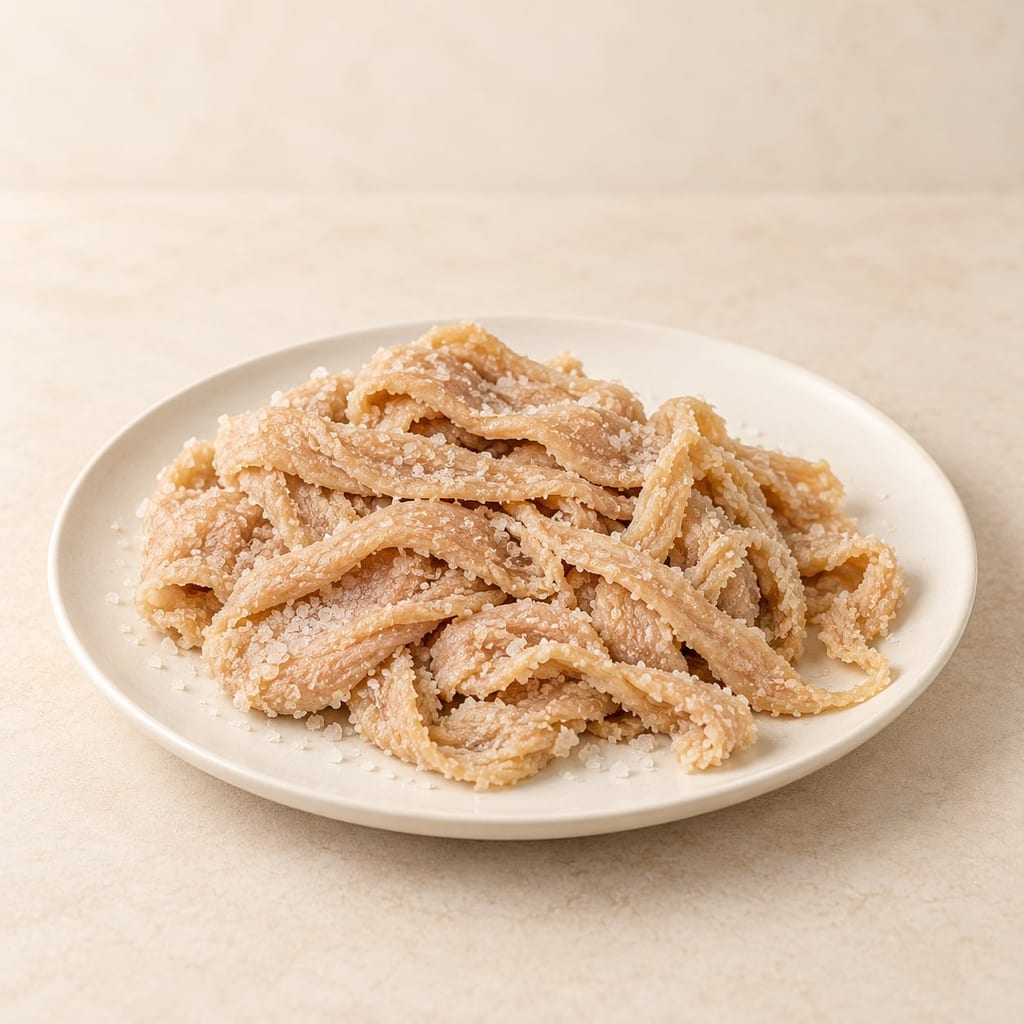
Cleaned, preserved pig intestinal tissue forms a flexible envelope for sausages. Section, calibre and packing affect handling, drying and the finished bite.
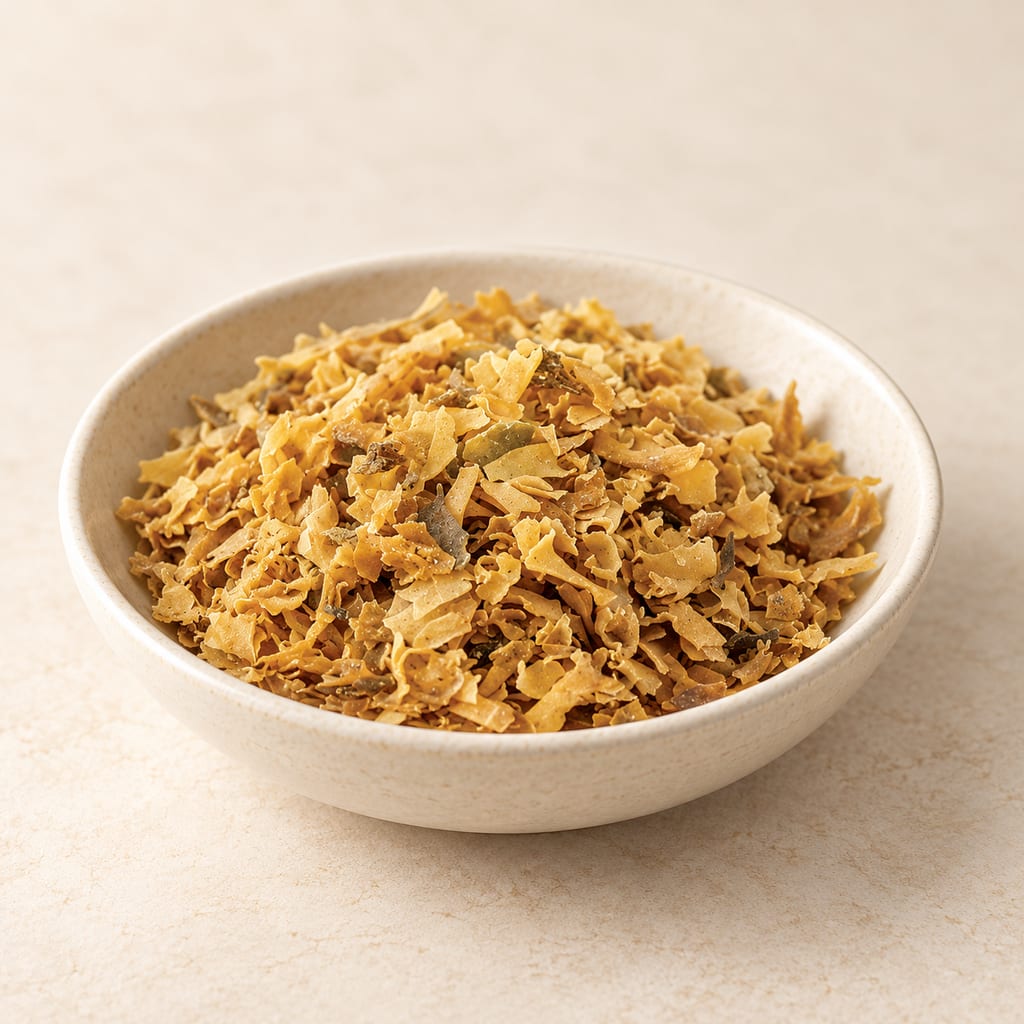
Red seaweed sold as dried material or a concentrated fining, connecting carrageen desserts and coastal trade with the separation of protein material in brewing wort.
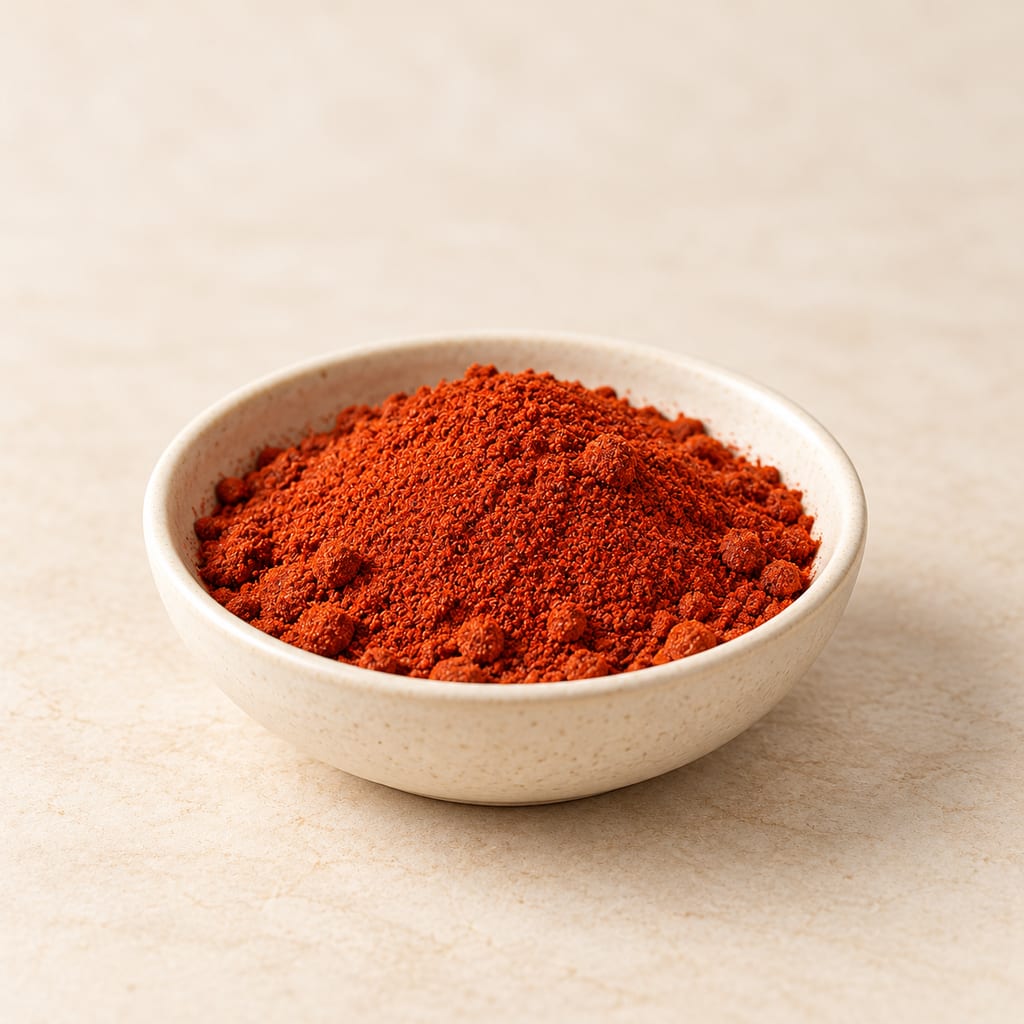
Dried ground pepper fruit supplies red-orange colour, pepper flavour and pungency. Hot, sweet and smoked describe different attributes, so the package’s exact identity matters.
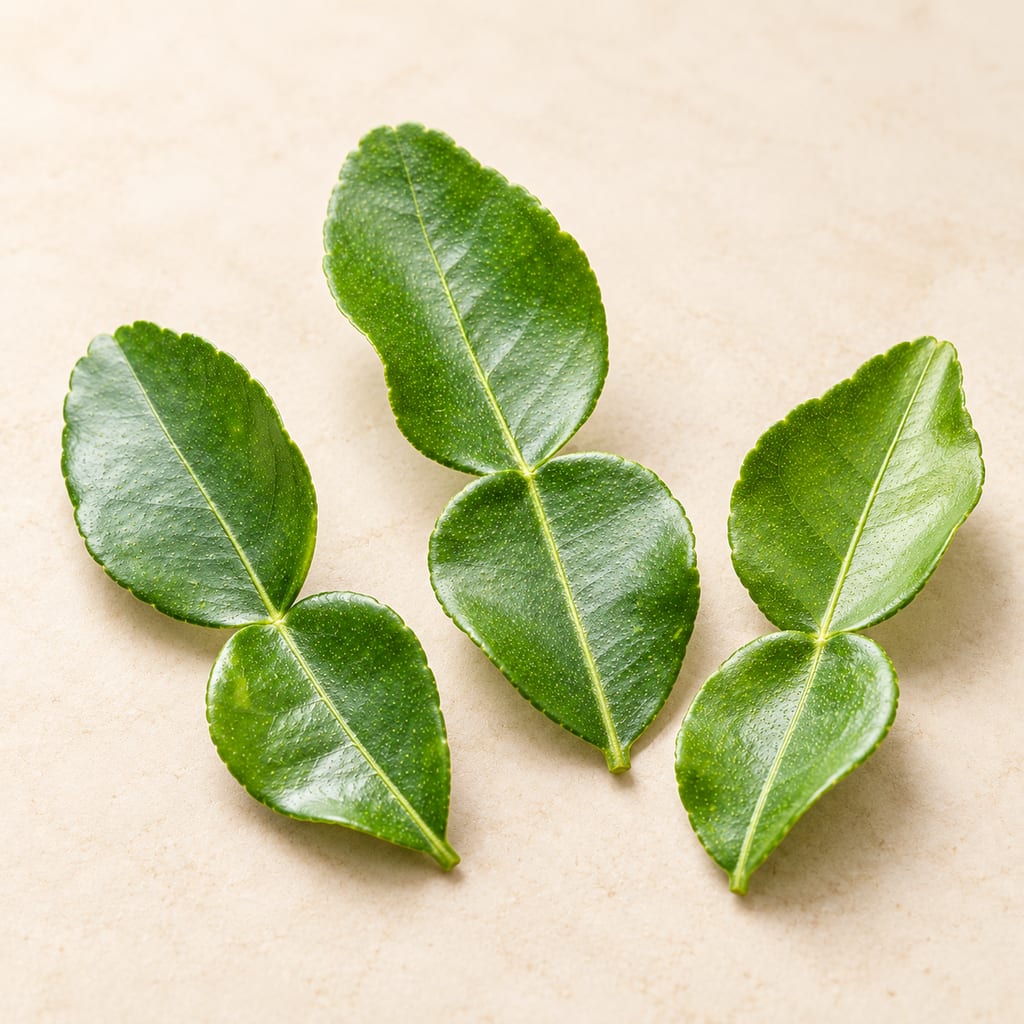
Kaffir or makrut lime leaves are the aromatic foliage of Citrus hystrix, used whole for infusion or finely cut in soups, curries and seasonings.
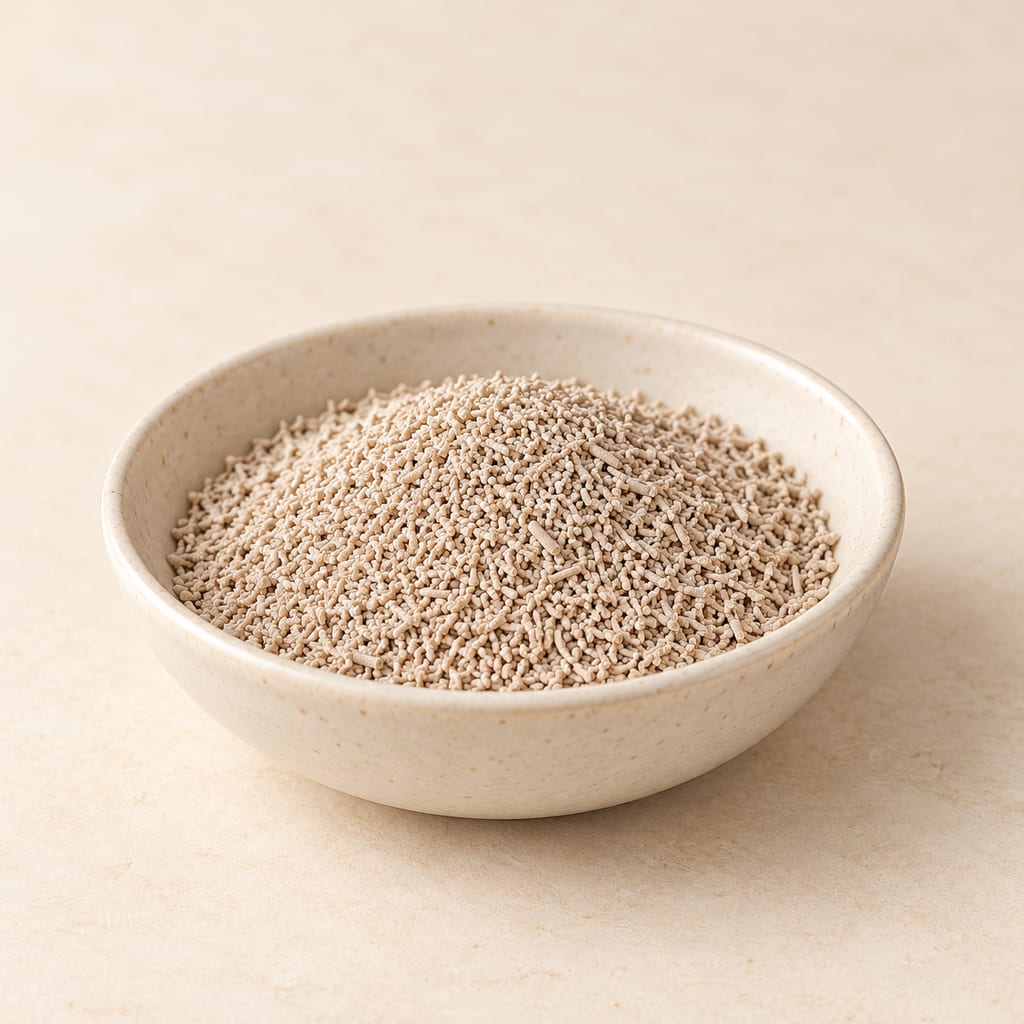
A living culture selected to ferment fruit sugars into alcohol, sold in forms whose strain, handling and flavour contribution depend on the product.
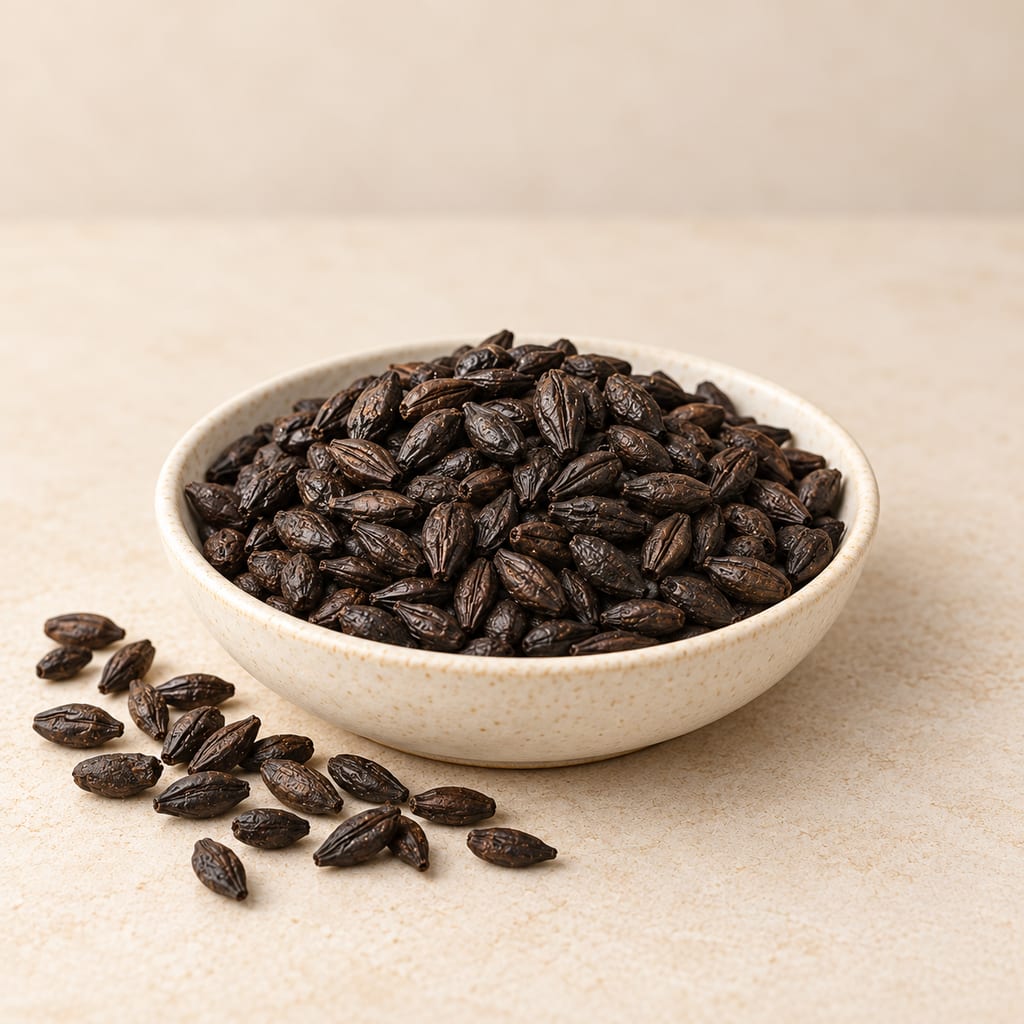
Roasted specialty malt named for coffee-like aroma, with the exact roast grade and colour varying by maltster; it is distinct from added coffee beans.
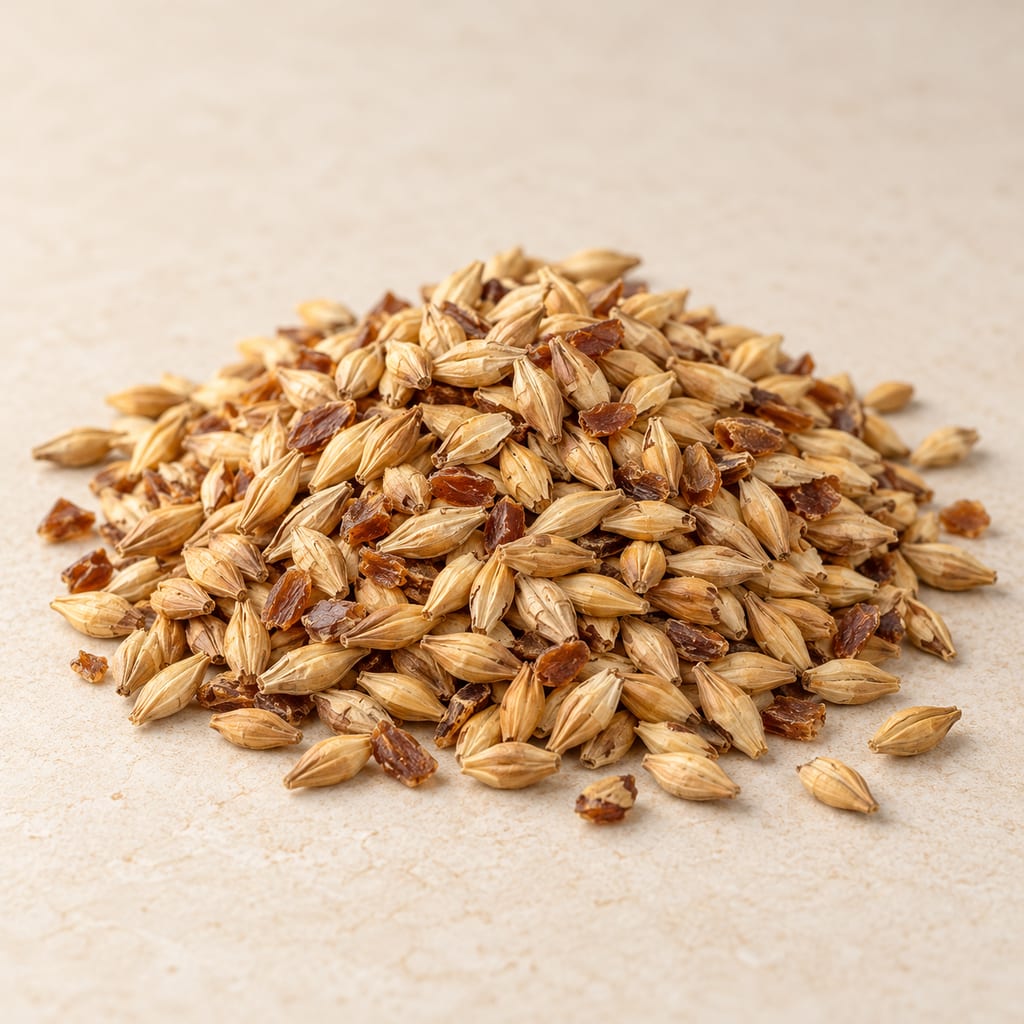
A caramel/crystal barley malt colour grade that supplies caramel-like flavour, colour and extract; producer and process refine what the 60 label means.
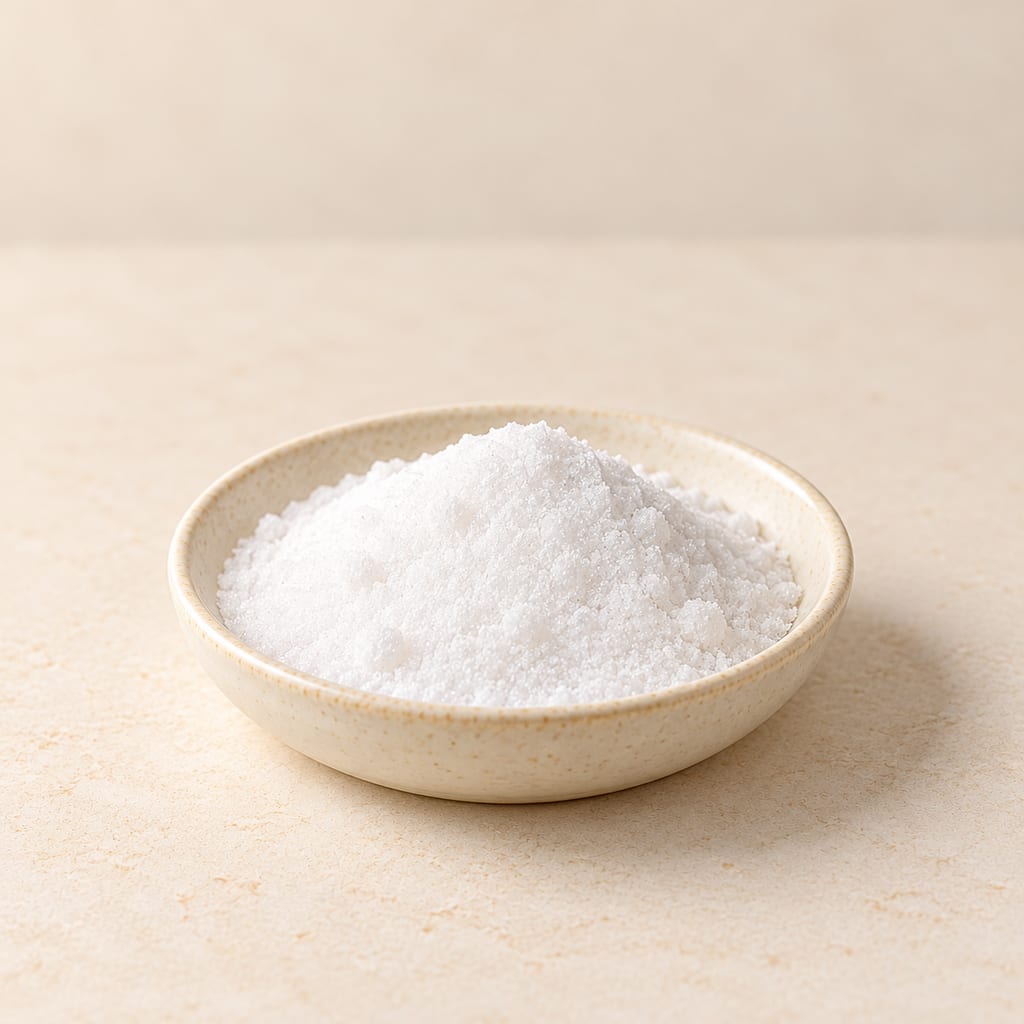
Baking soda is food-grade sodium bicarbonate, a single alkaline powder that releases carbon dioxide when it meets acid in a wet batter. It lifts quick breads without a living culture.
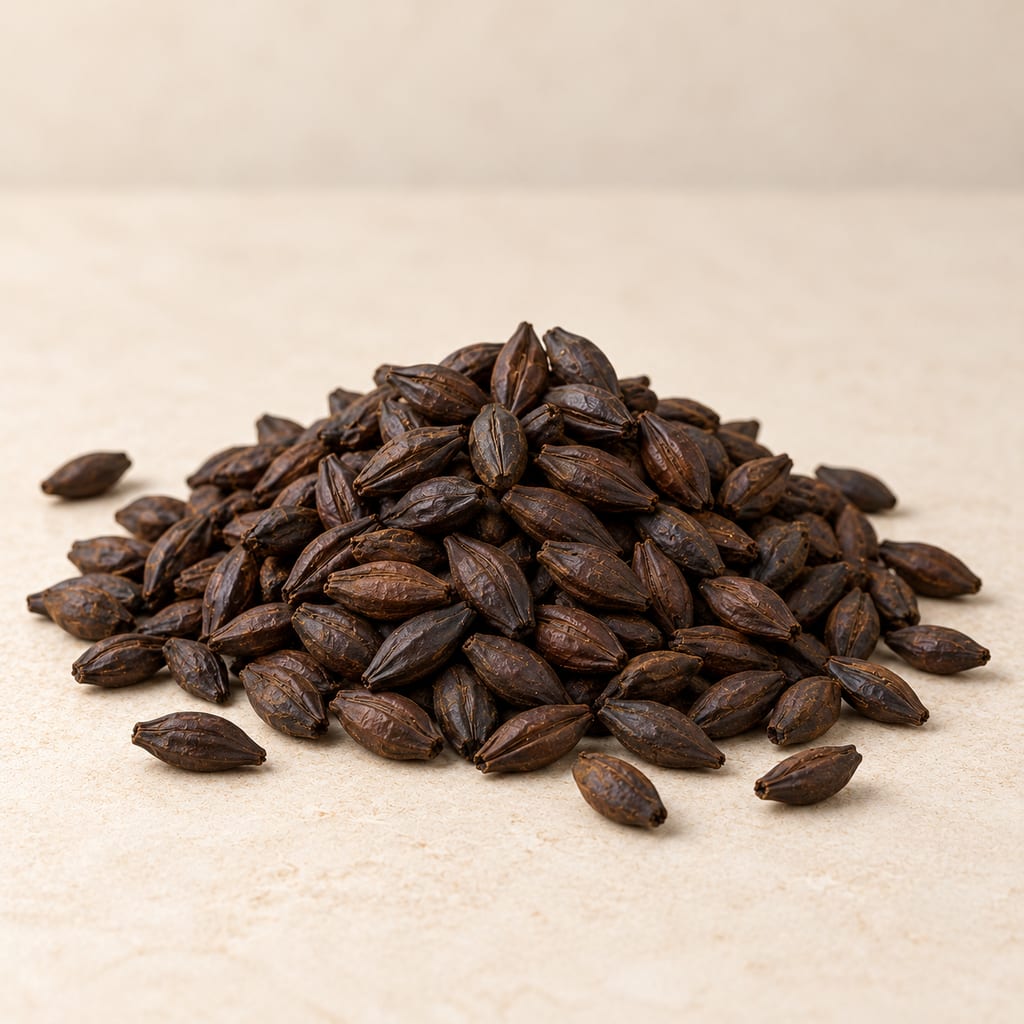
An intensely roasted malt used for dark colour and dry roasted flavour in beer, with a nineteenth-century patent name and distinct whole, milled and flour forms.
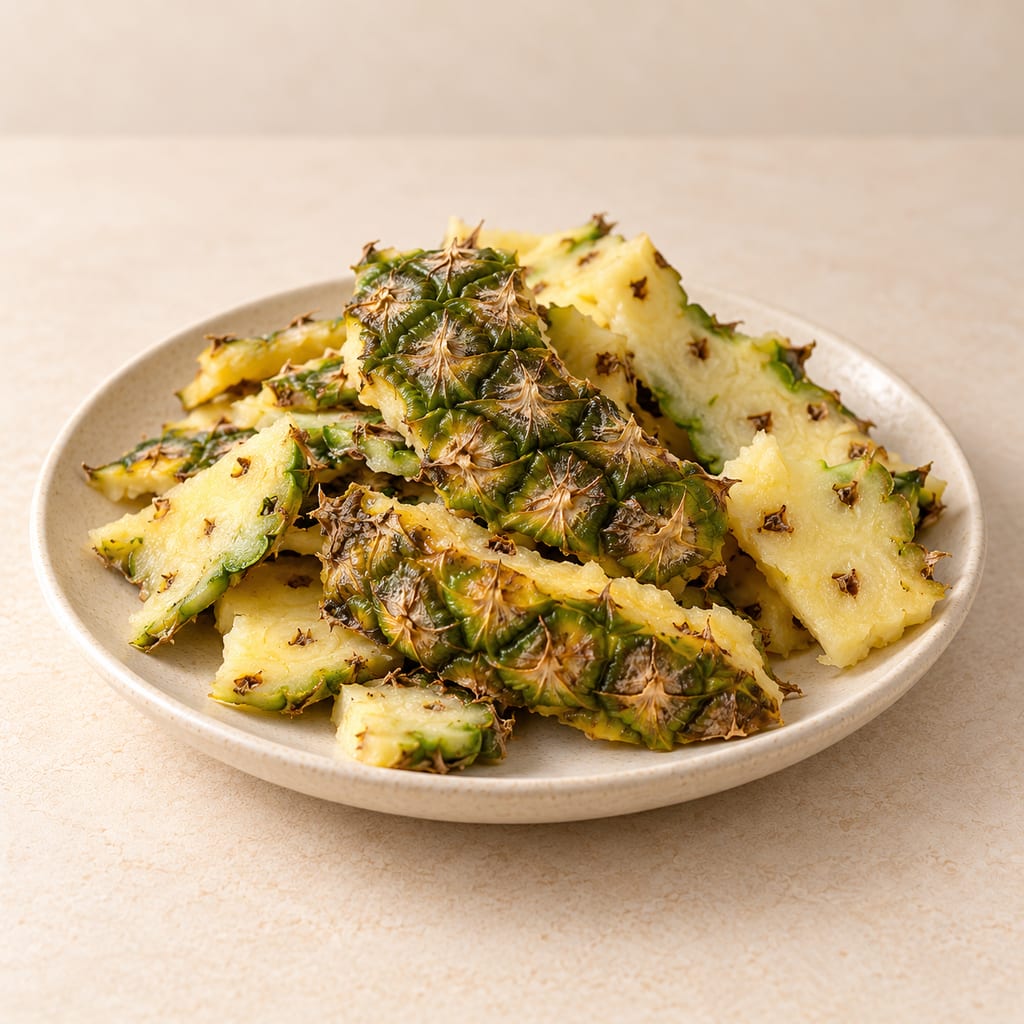
Pineapple peel is the tough, fibrous outer skin of Ananas comosus, comprising roughly a third of the fruit's mass. It serves as a flavoring substrate and fiber source in drinks like chicha de jora and tepache.
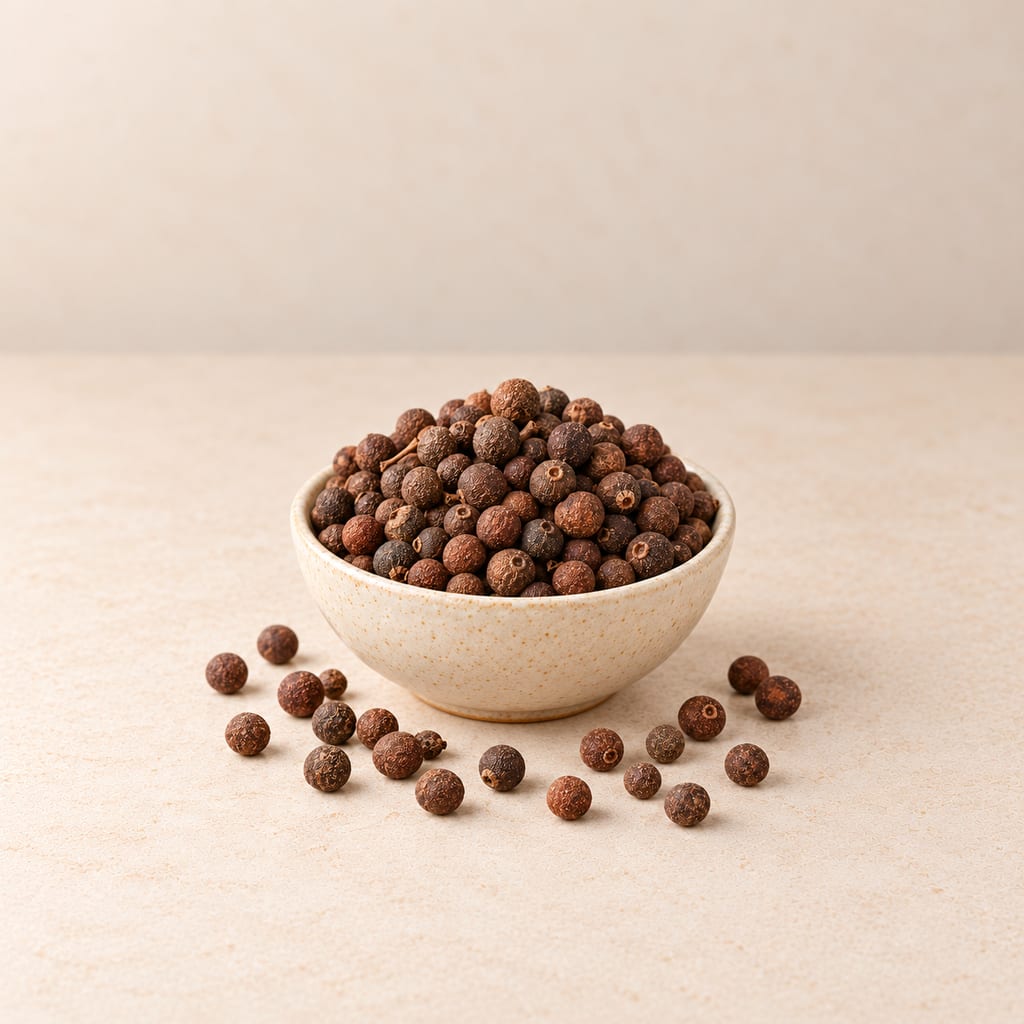
Pimienta de dulce is the Ecuadorian culinary name for allspice (Pimenta dioica), a dried tropical berry. Distinct from true peppers, it offers a complex aroma of clove, cinnamon, and nutmeg, and is used whole in chicha de jora.
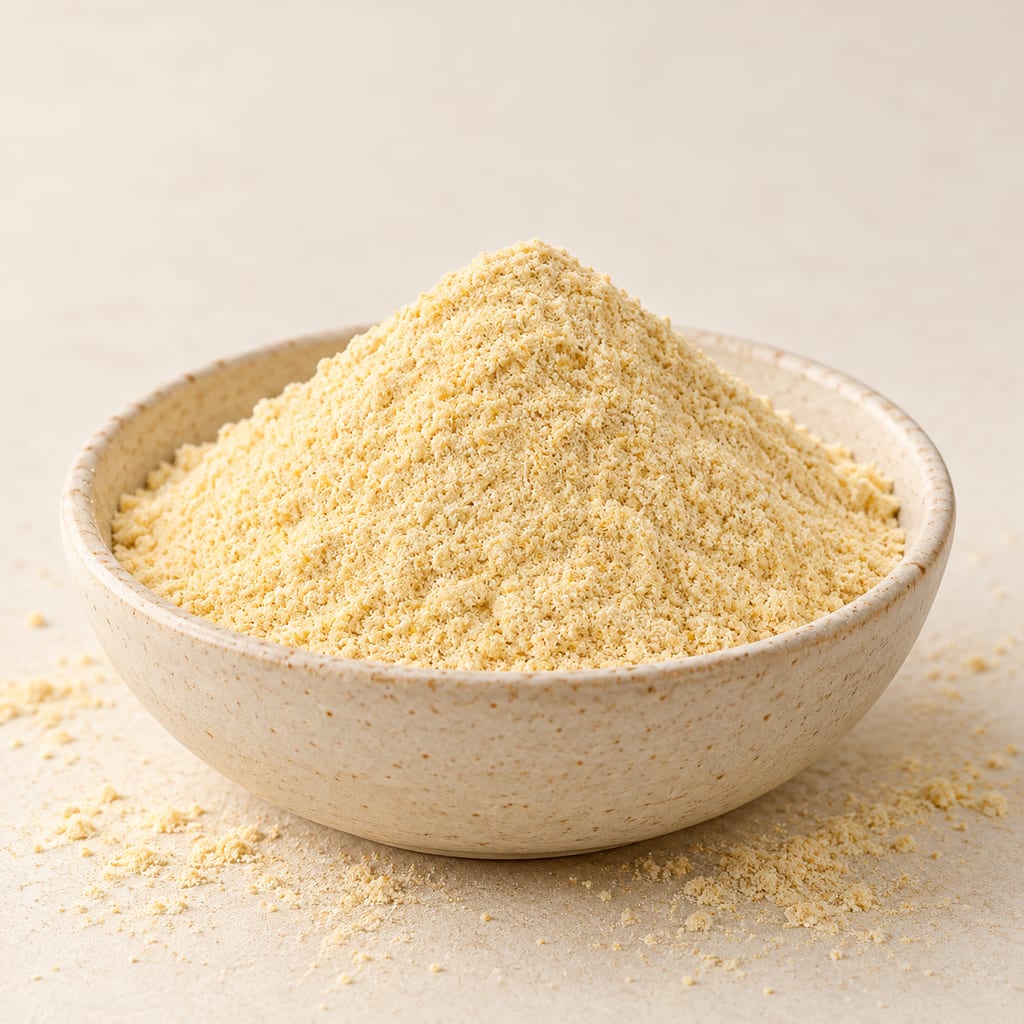
Jora flour is ground malted maize, produced by germinating, drying and milling corn kernels. It provides the enzymatic starch breakdown essential for chicha de jora.
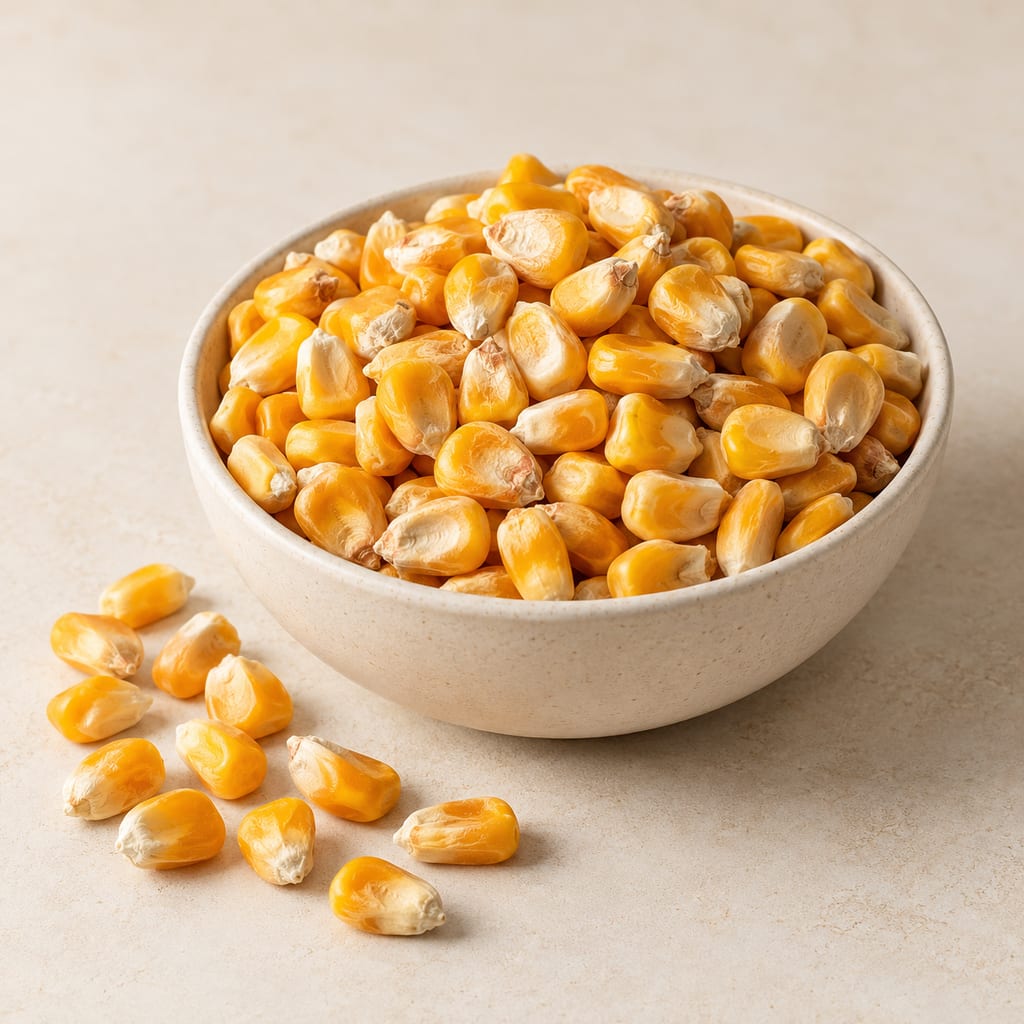
Maize is the foundational grain of Andean fermentation. Its role in brewing chicha de jora depends on germination into jora, a malted form generating enzymes and sugars necessary for alcoholic fermentation.
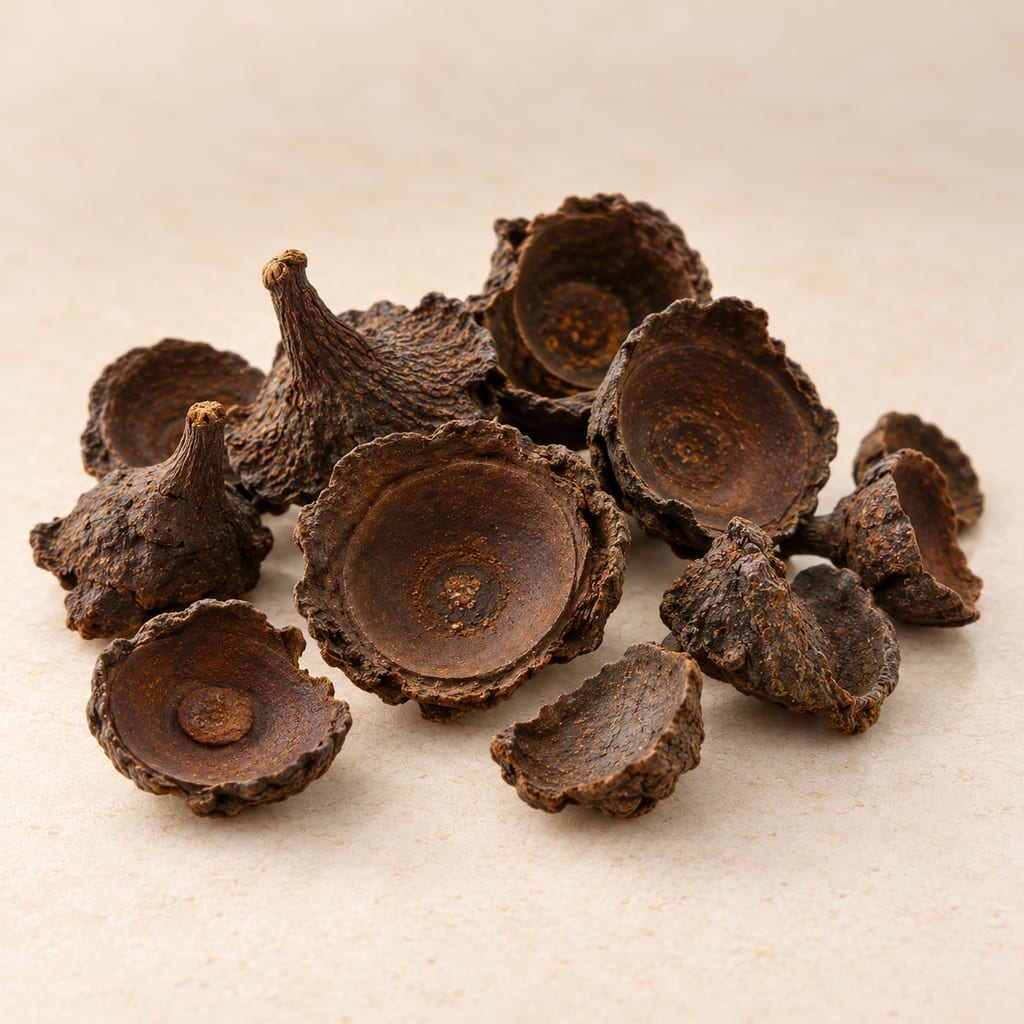
Ishpingo is the dried, hat-shaped calyx of Mespilodaphne quixos, a western-Amazon laurel. Its cinnamon-like perfume seasons colada morada, champús and chicha de jora in Ecuador.
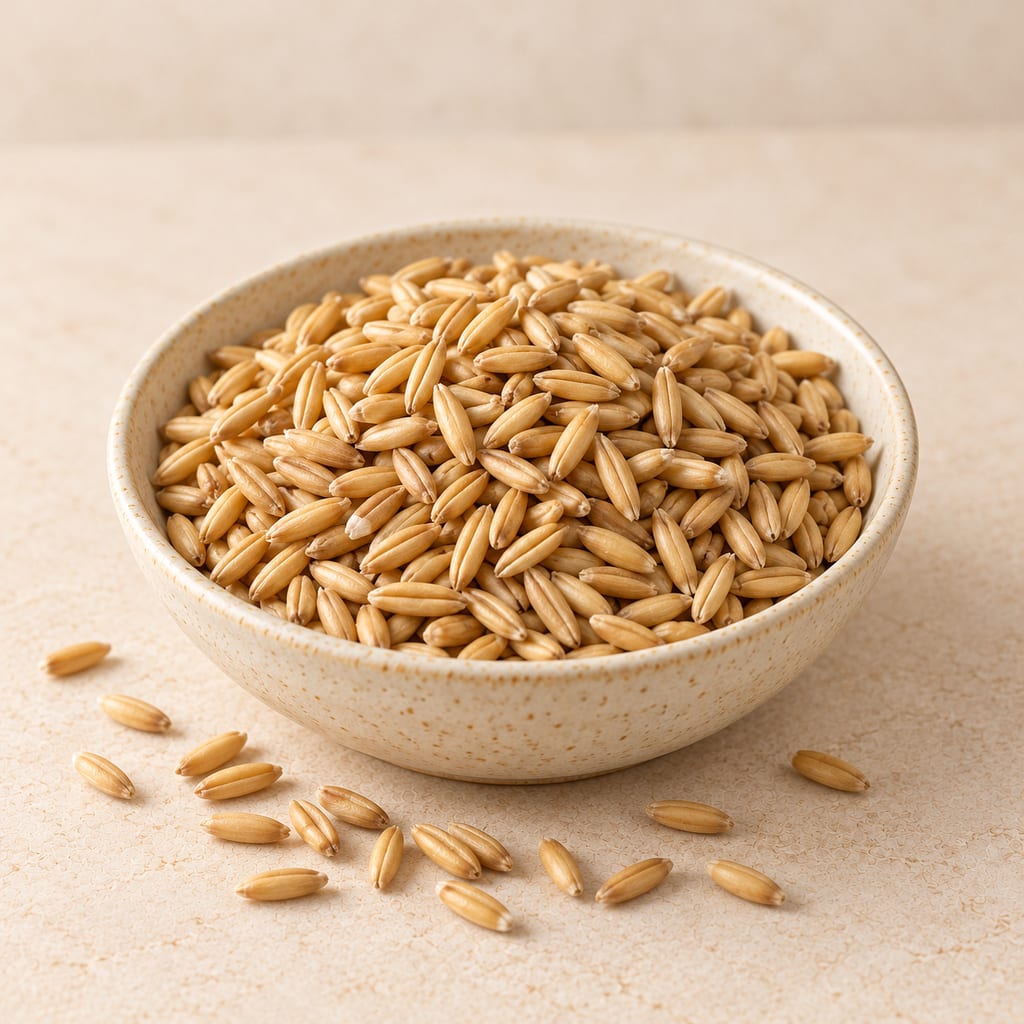
A cereal grain sold as groats, cut pieces, flakes, flour and malt. Oats shape porridge, bread and brewing differently as processing changes hydration, texture, starch, beta-glucan, protein and oil.
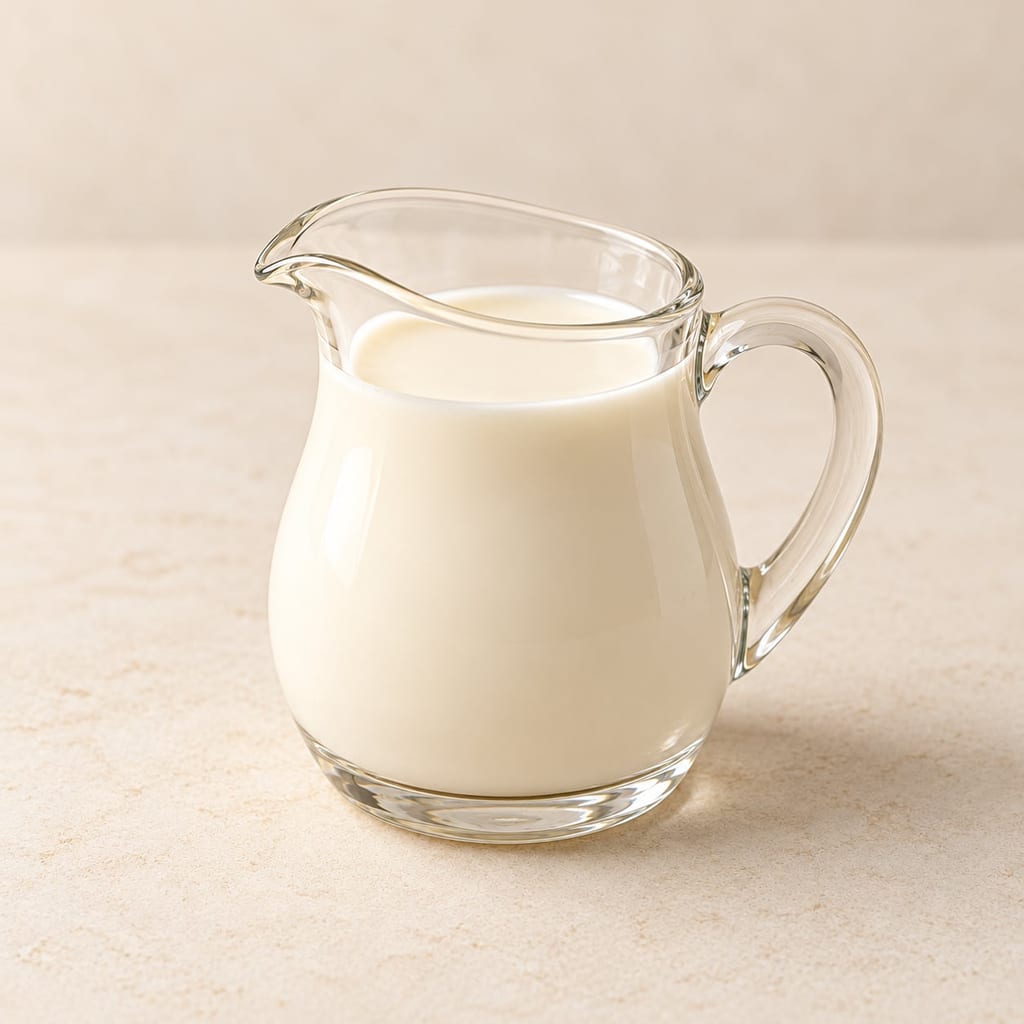
A fat-rich liquid separated from milk, used to enrich cheese and sauces, form whipped foams and supply fat for cultured cream and butter.
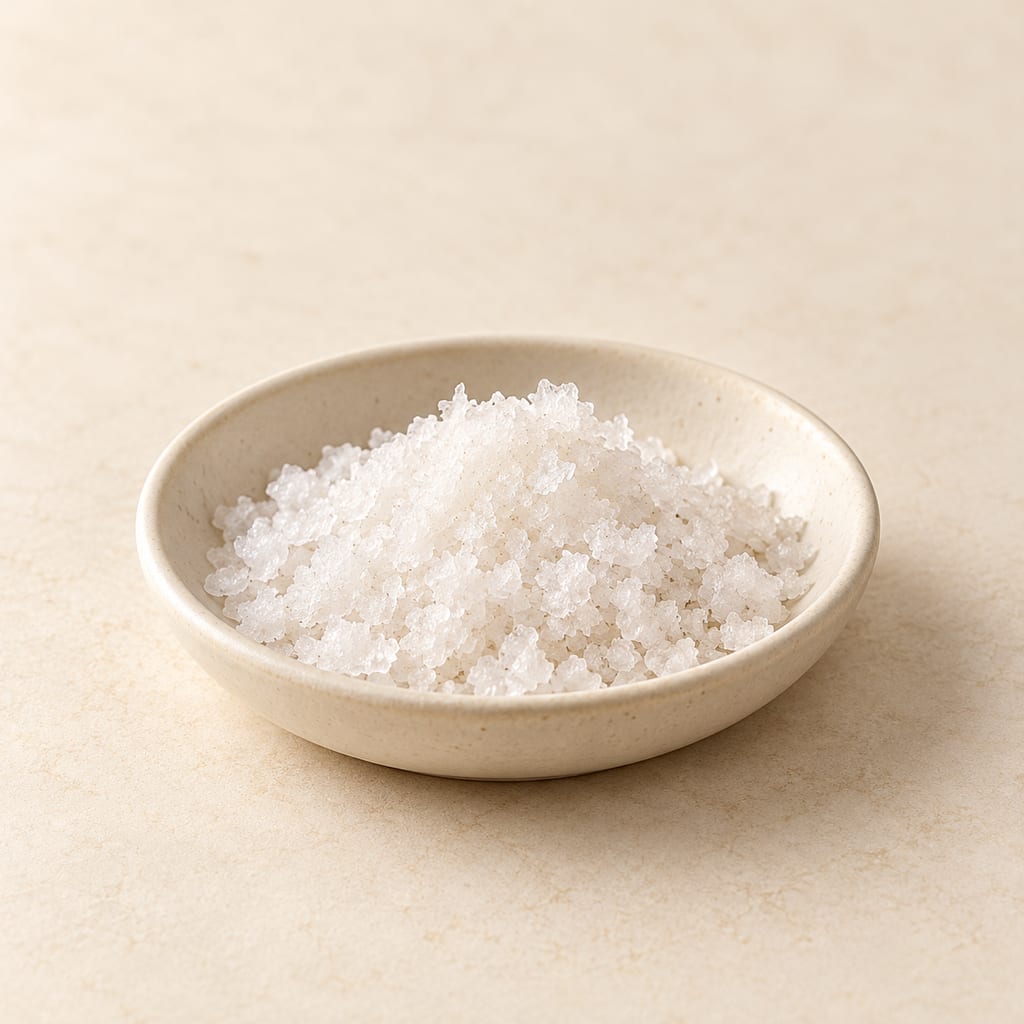
Salt recovered from seawater comes as fine grains, coarse crystals and delicate flakes. Its production, crystal form and measured use connect coastal saltworking with cooking and preservation.
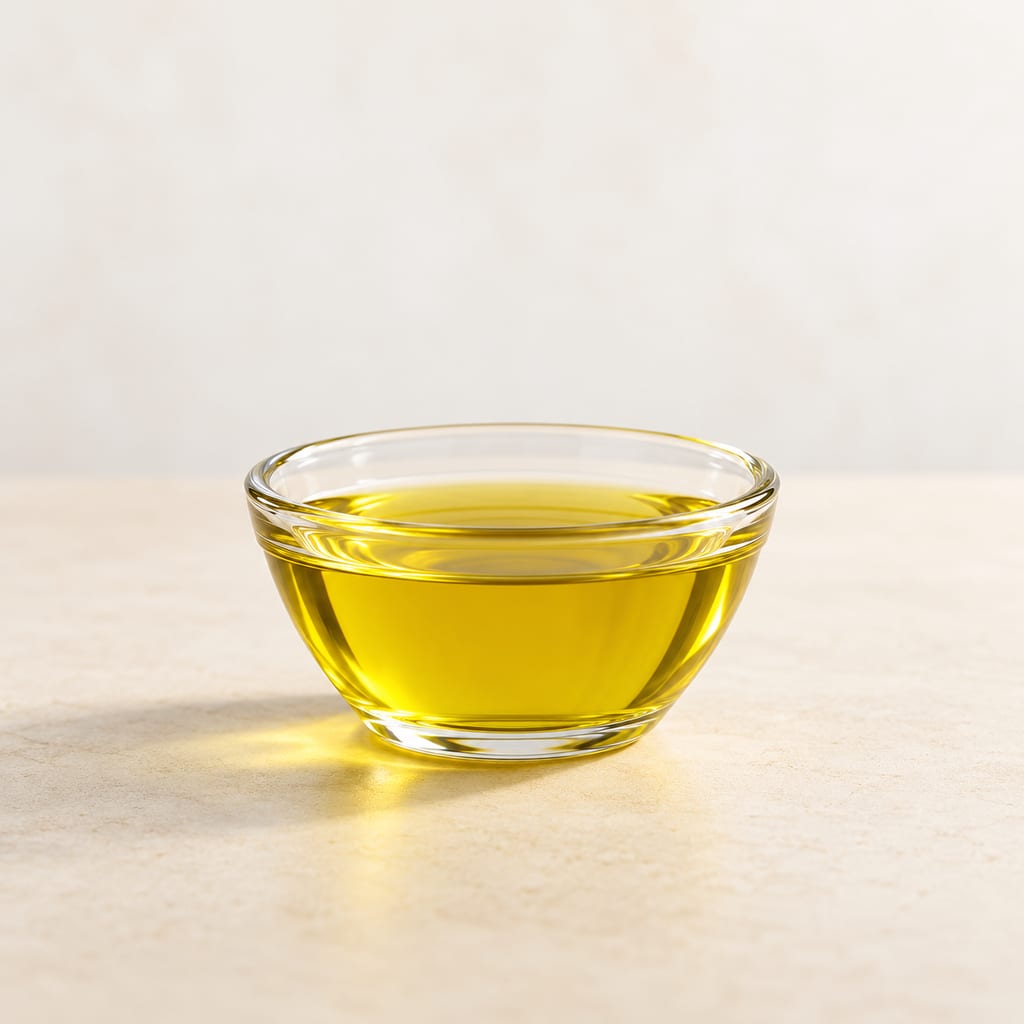
Oil extracted from olive fruit serves as cooking fat, flavouring and, in some cheese methods, an exterior treatment. Grade, cultivar, processing and storage shape its character.
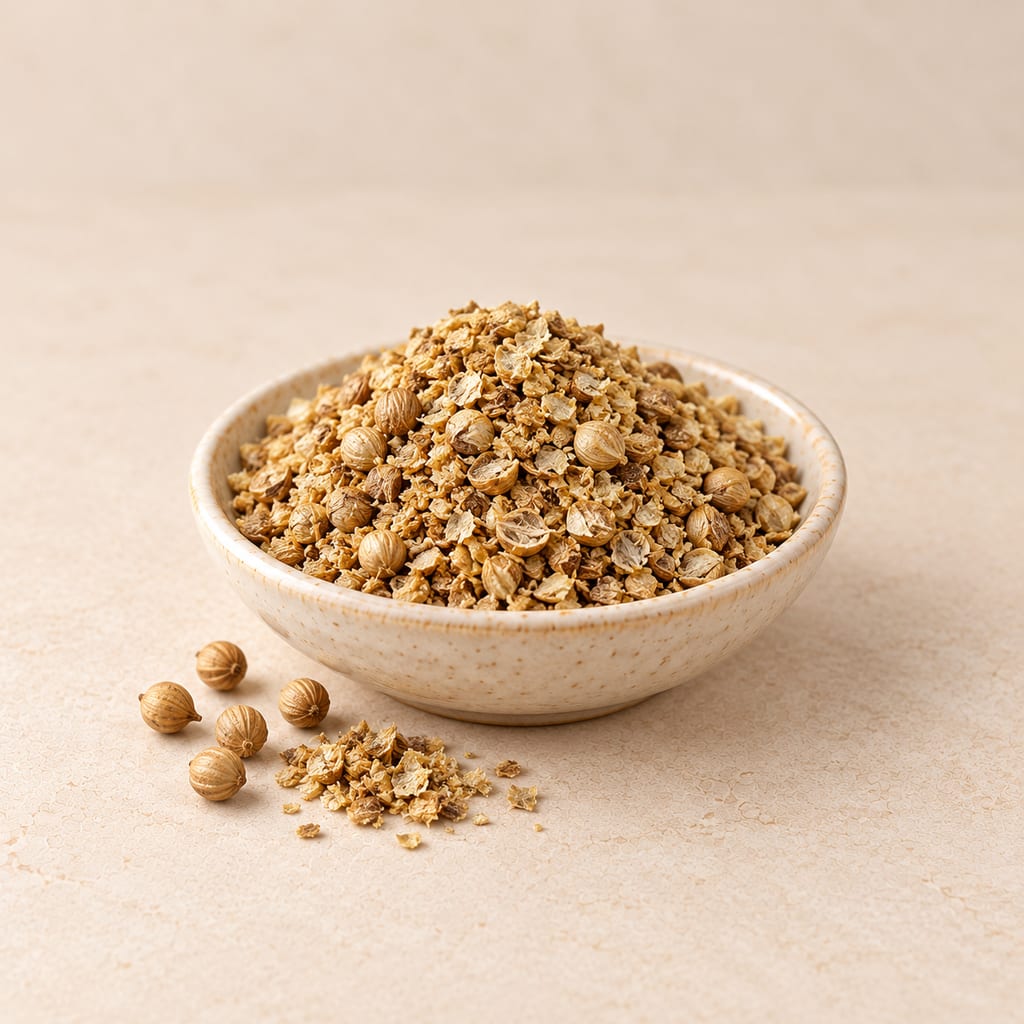
Crushed coriander seed is the ripe, dried fruit of Coriandrum sativum broken into coarse aromatic pieces for curries, sauces and meat seasonings.
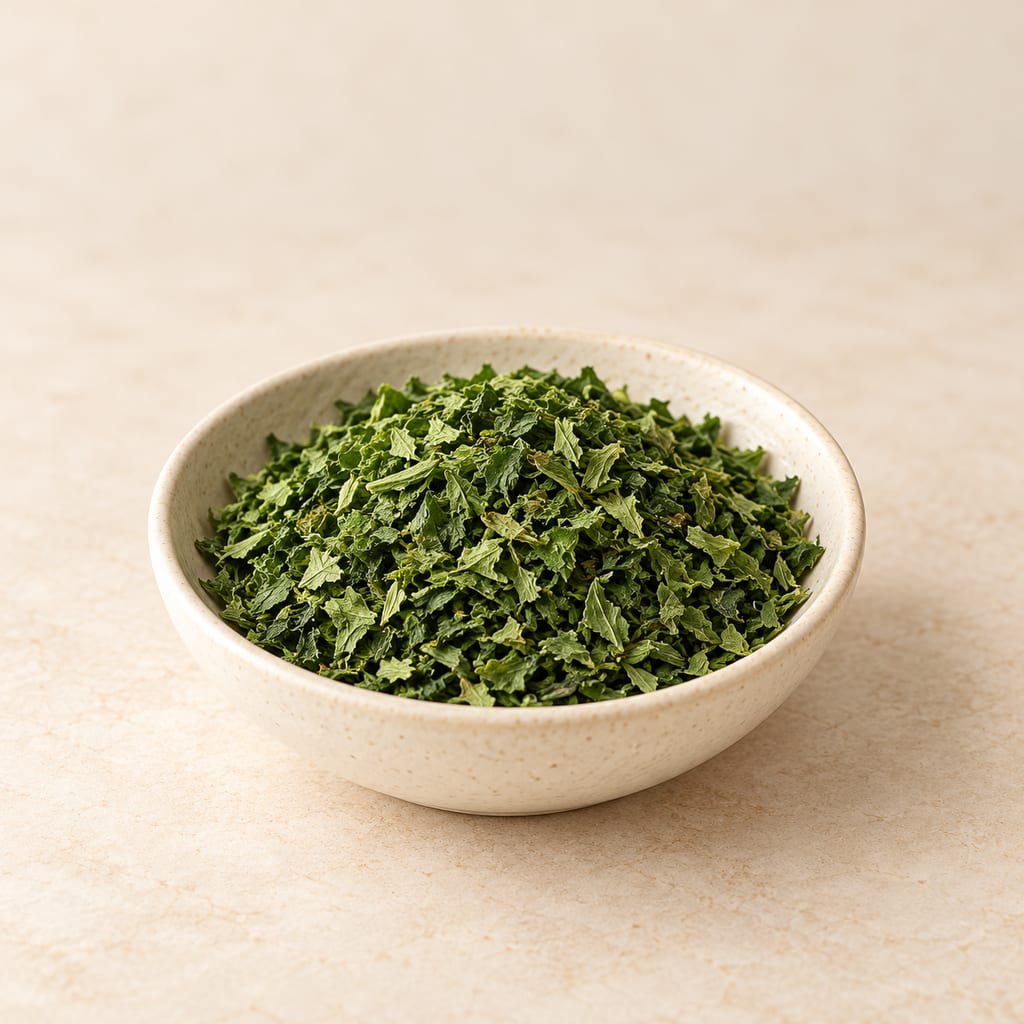
Dried parsley is the dehydrated leaf of Petroselinum crispum, sold as flakes, granules or powder for its herbal aroma and green flecks.
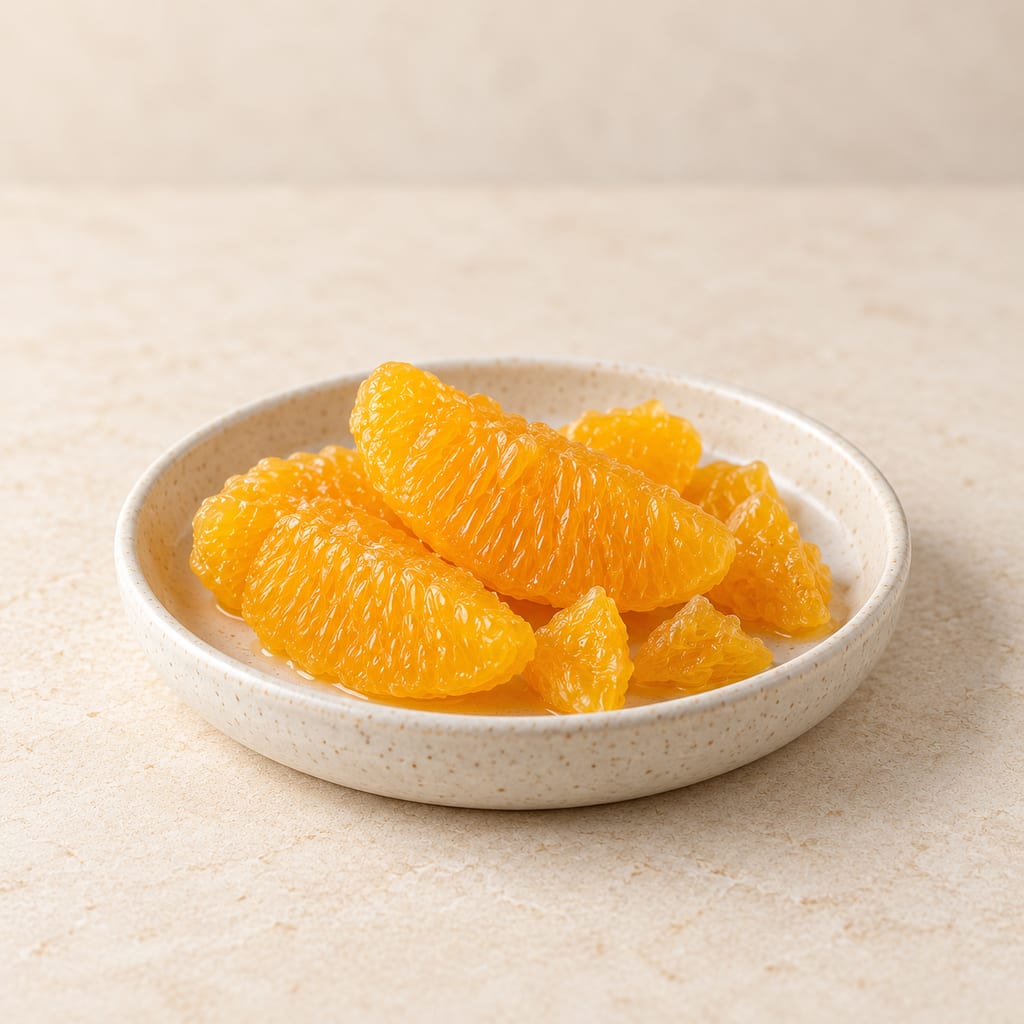
Fresh orange segment flesh, prepared separately from rind and membranes, bringing juicy tissue, sweetness, acidity and aroma to marmalade and other foods.
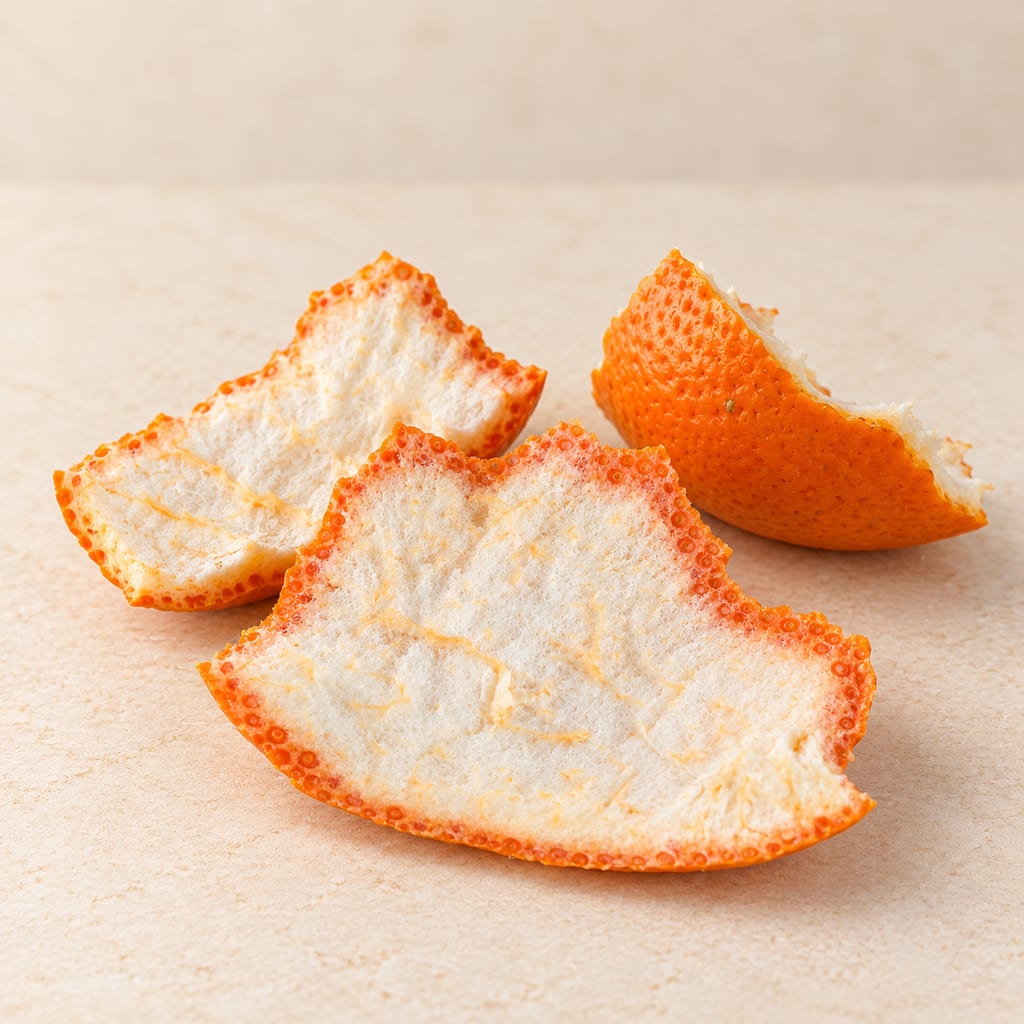
Orange rind retaining its white inner pith, combining aromatic outer peel with the body and pectin used in marmalade and other citrus preparations.
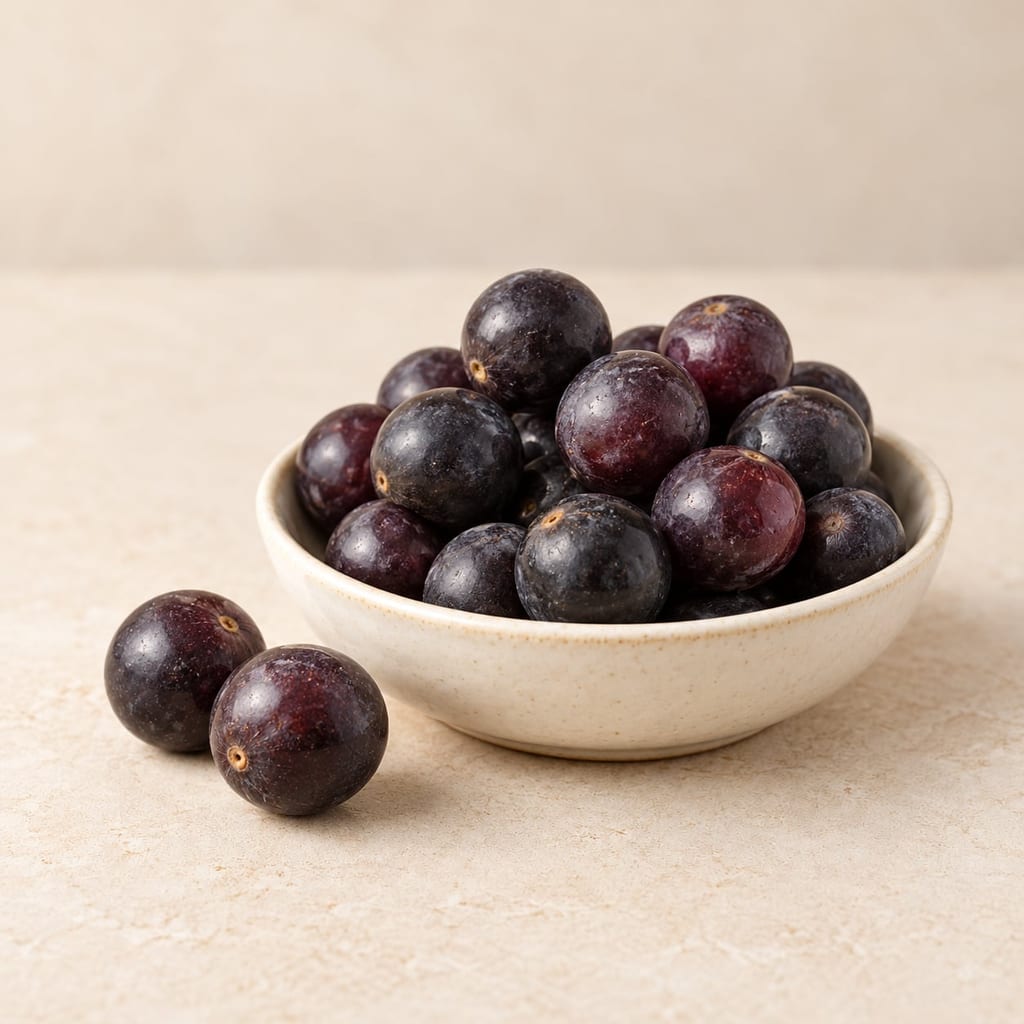
Dark-fruited muscadines have thick coloured skins, soft aromatic pulp and prominent seeds, used fresh or made into juice, preserves and red wine.
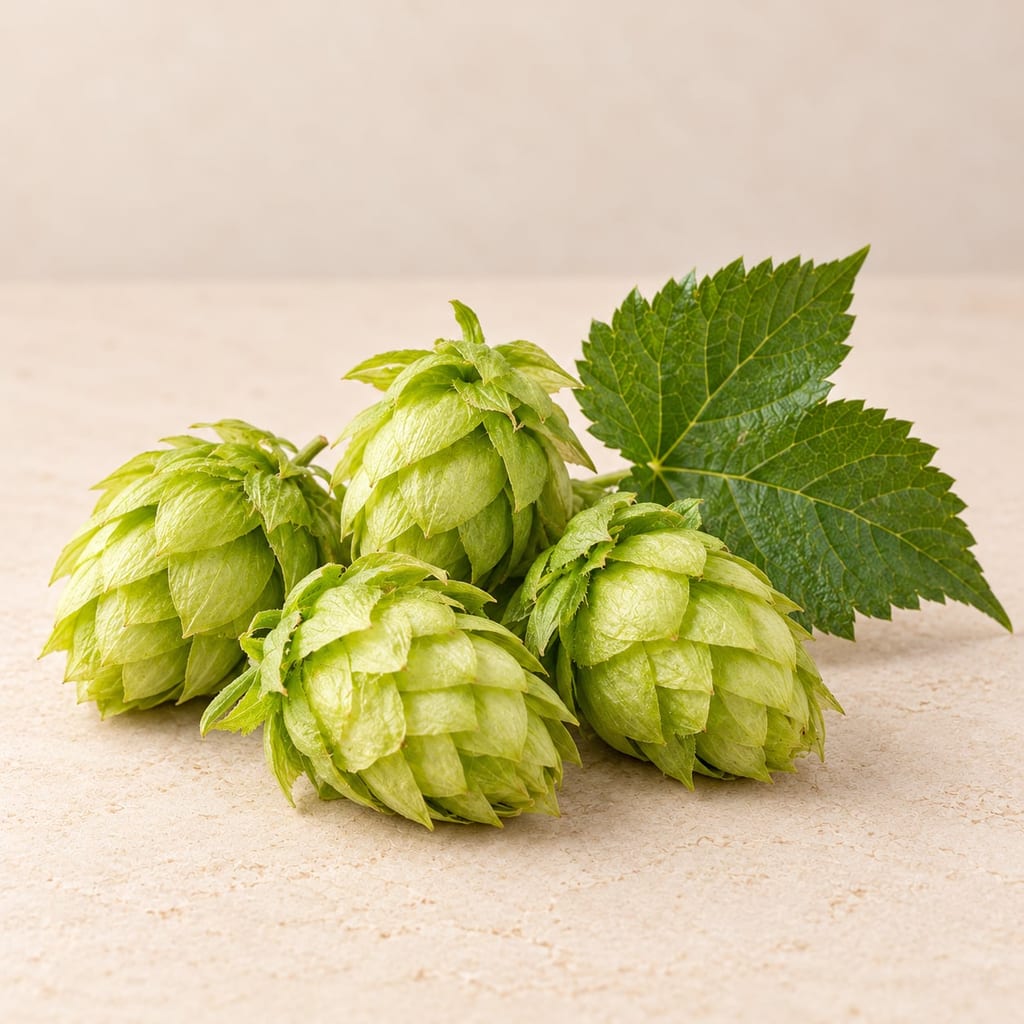
An Oregon-bred Fuggle-related aroma hop whose cones and pellets contribute bitterness and aroma through the brewer's choice of crop and addition stage.
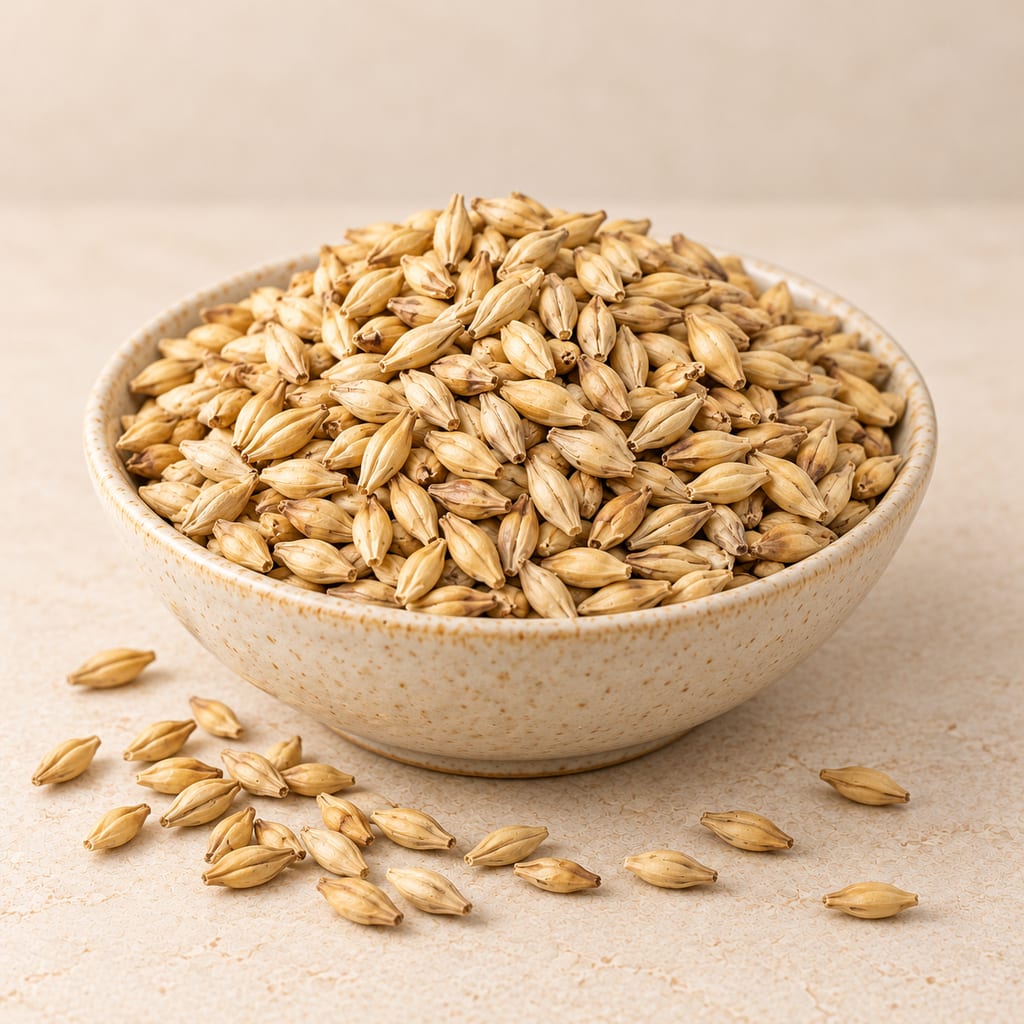
A pale, lightly kilned barley base malt that supplies wort material and brewing enzymes, with product-specific flavour, analysis and handling requirements.
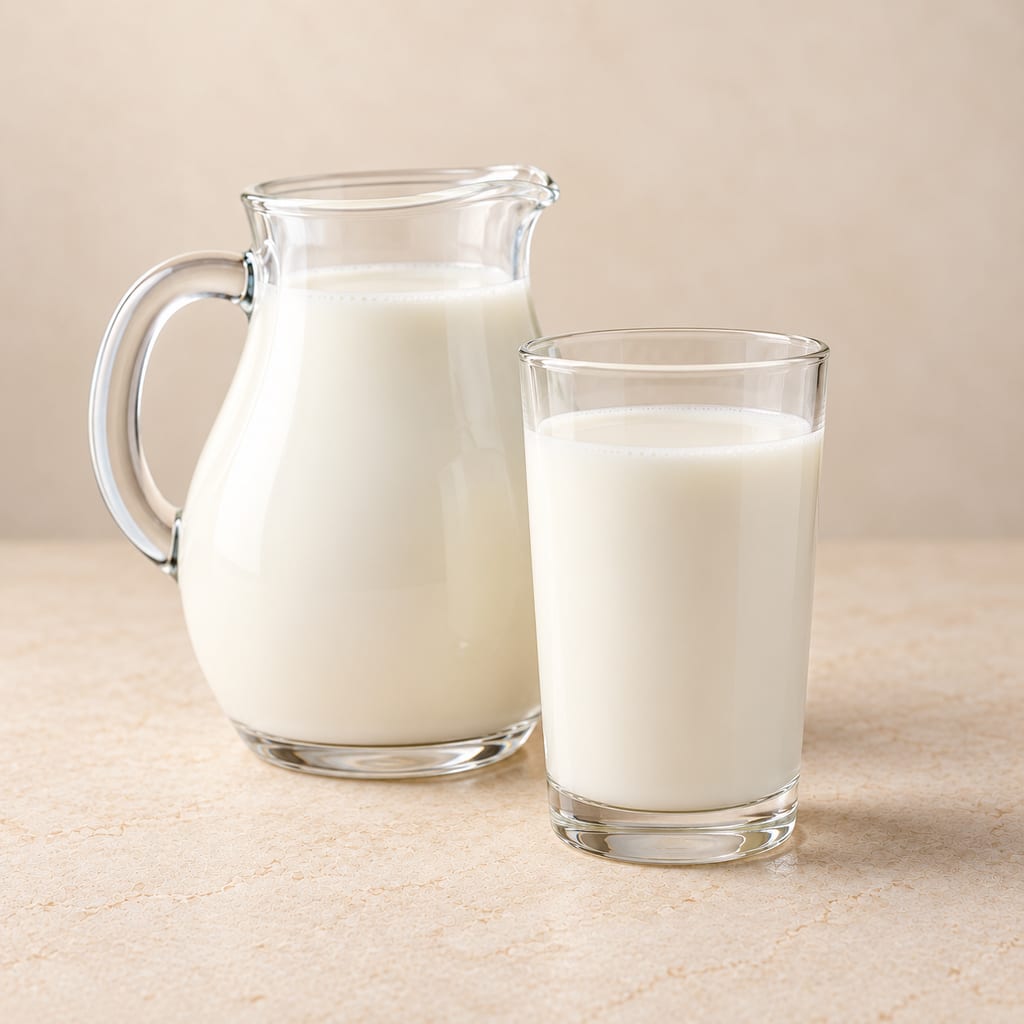
Cow milk in its whole-fat category supplies fat, proteins and lactose for cooking, cultured dairy and cheese. Heat treatment and homogenization are separate product choices.
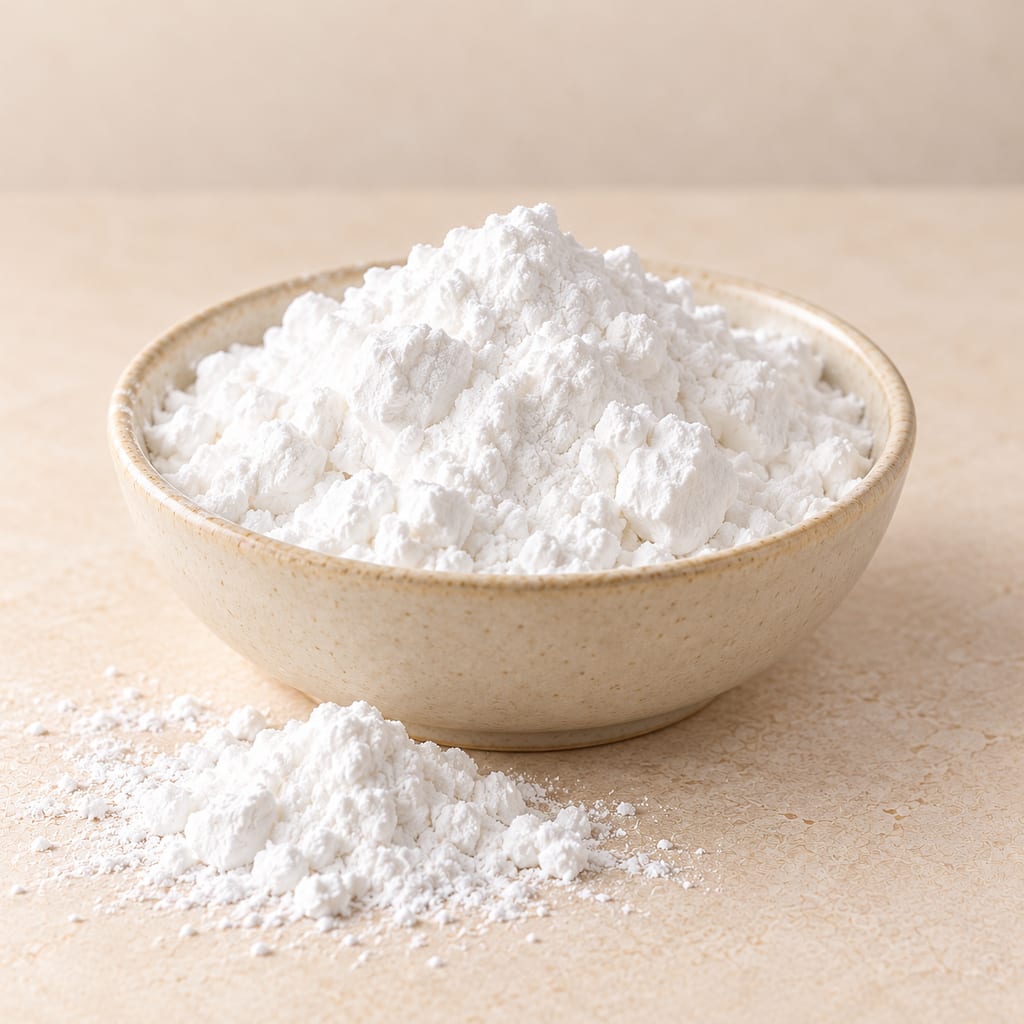
Starch separated from potato tubers is a neutral powder used for thickening, binding and texture. It differs from whole-potato flour and is not automatically fermentable by a sausage starter.
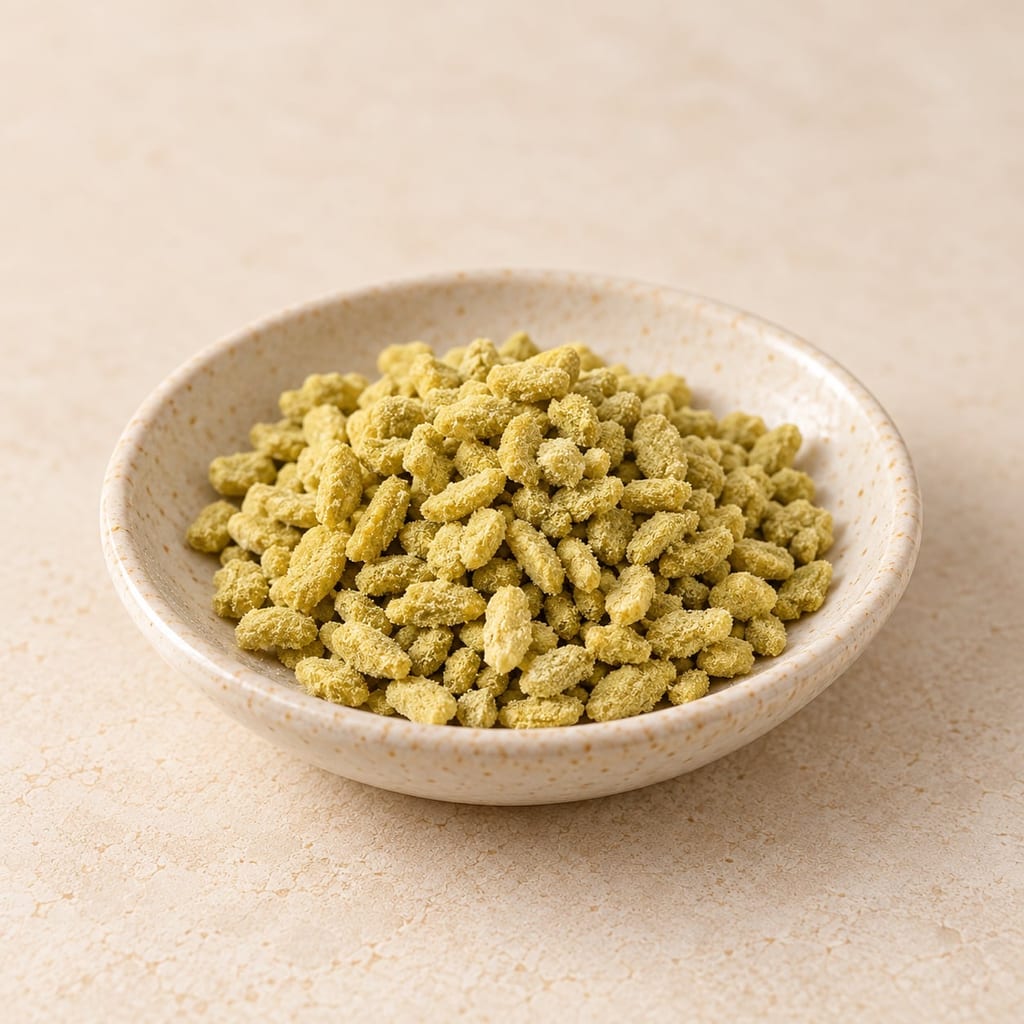
Yellow-koji starter is the spore inoculum of the yellow koji mold — Aspergillus oryzae and the related A. sojae — sold by specialist tane-kōji houses to grow koji for sake, miso and soy sauce.
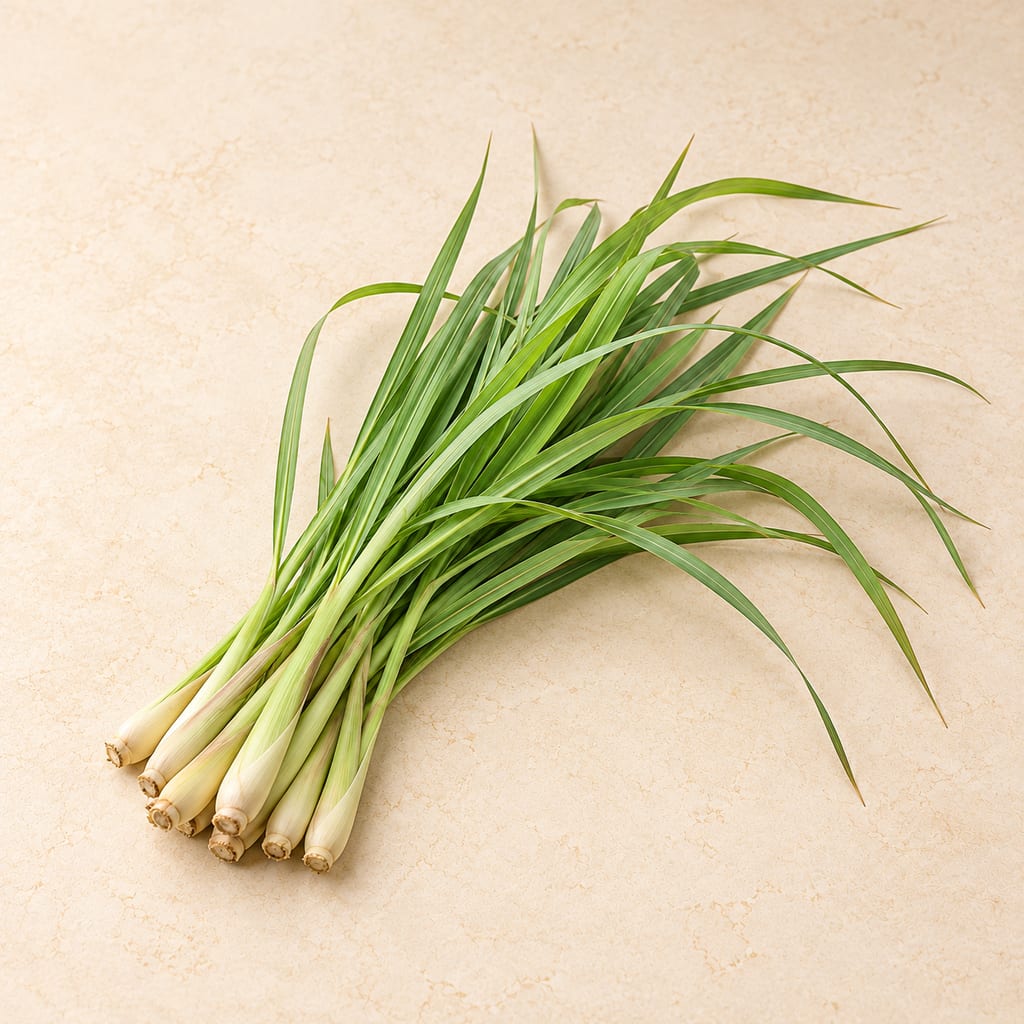
The lemon-scented grass Cymbopogon citratus, sold in Ecuador as hierba luisa or limonaria and steeped for its aroma in chicha de jora, avena and leaf water.
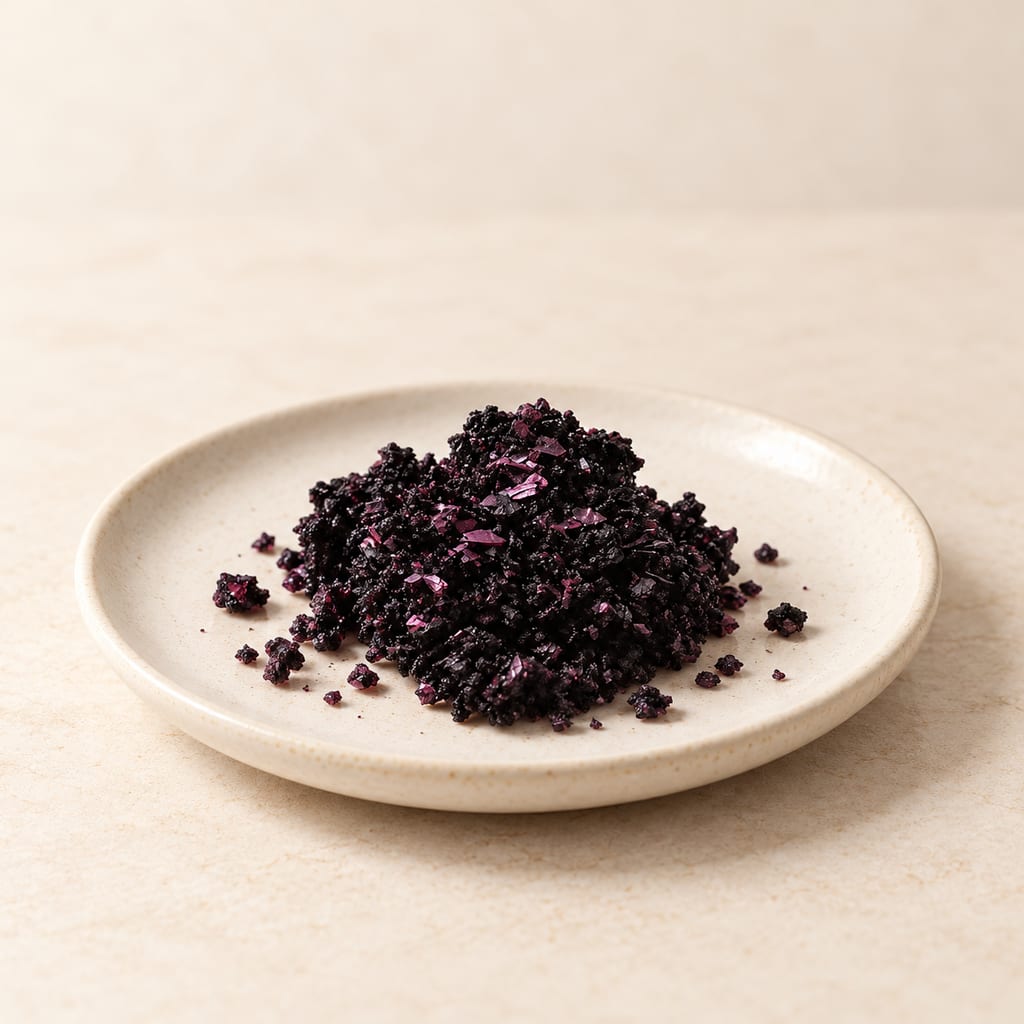
A mixed crystalline wine-vessel deposit, chiefly potassium hydrogen tartrate, used historically in wine recipes and recovered for refining into purer products.
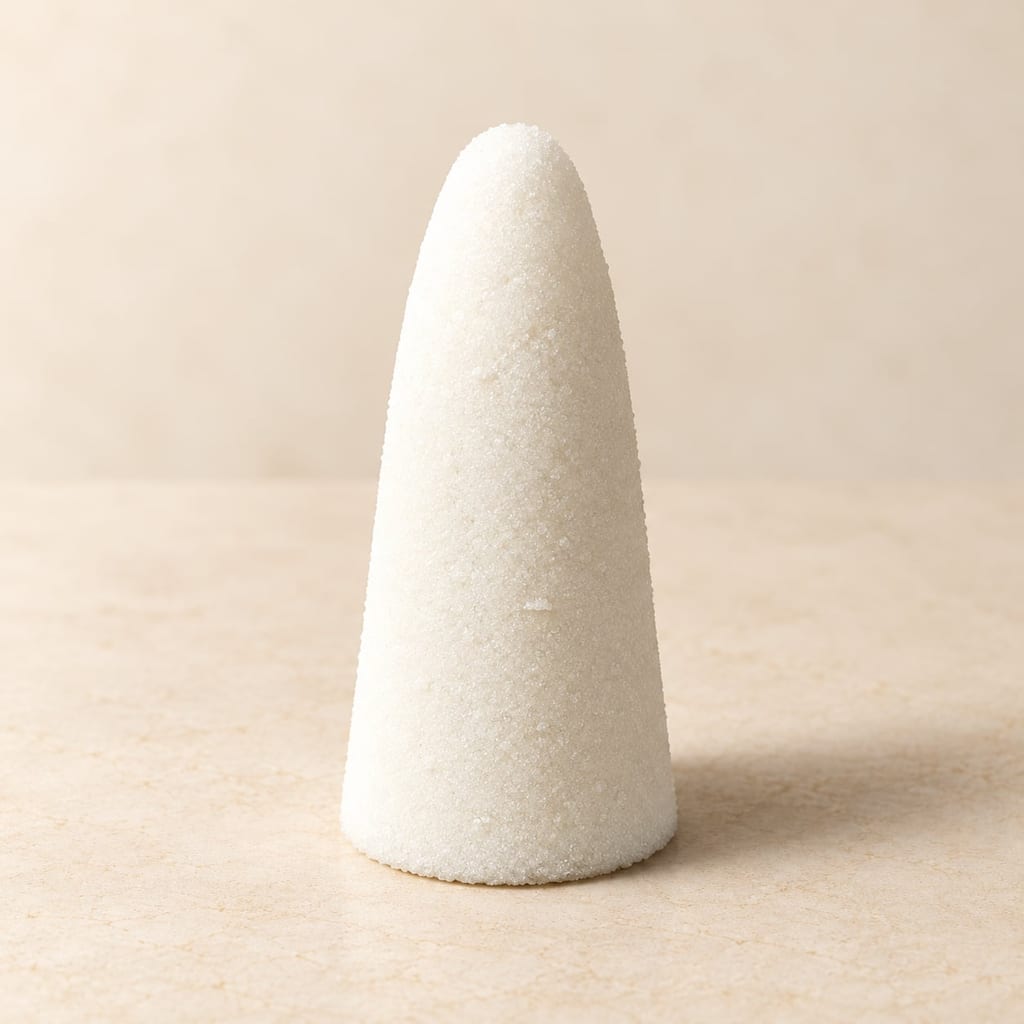
Refined sugar formed into a solid cone, historically cut or powdered for kitchen use and dissolved into wine liquor.
Mold 600 is a freeze-dried Penicillium nalgiovense culture applied to dry sausage casings, where it develops a pale surface bloom and mushroom-like aroma.
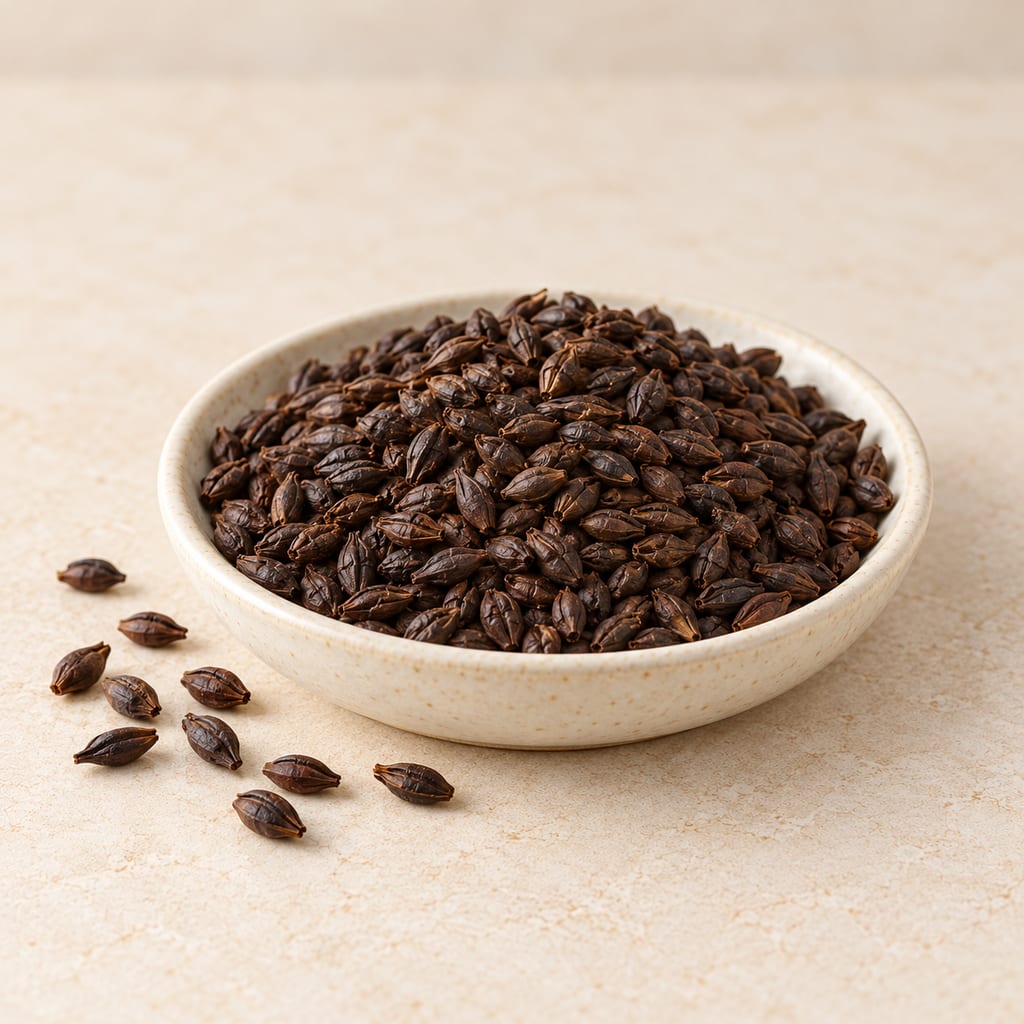
A dark roasted barley malt grade used for strong colour and coffee-to-chocolate roast character; standard Type3 differs from the husk-reduced Special line.
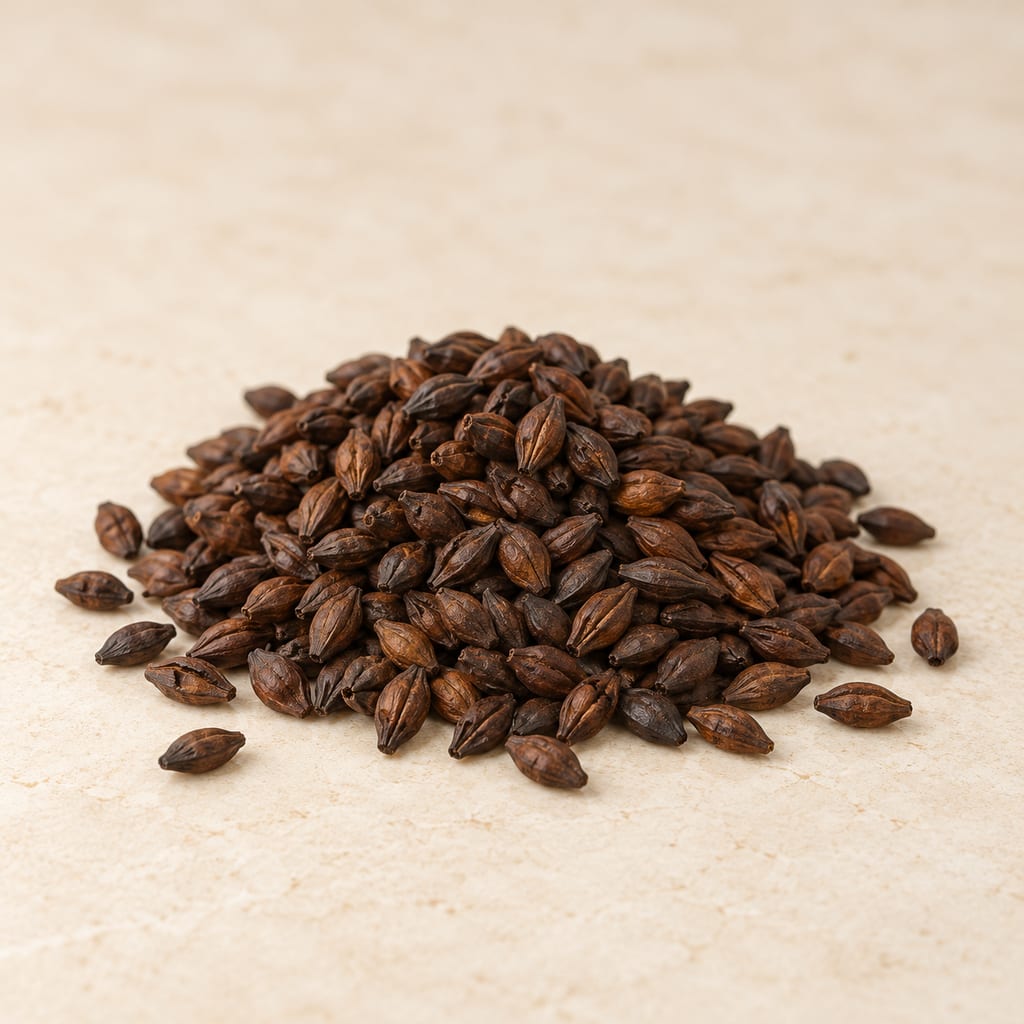
Dark-roasted unmalted barley used for colour and a dry roasted edge in stout, with other roast grades used in grain infusions and foods.
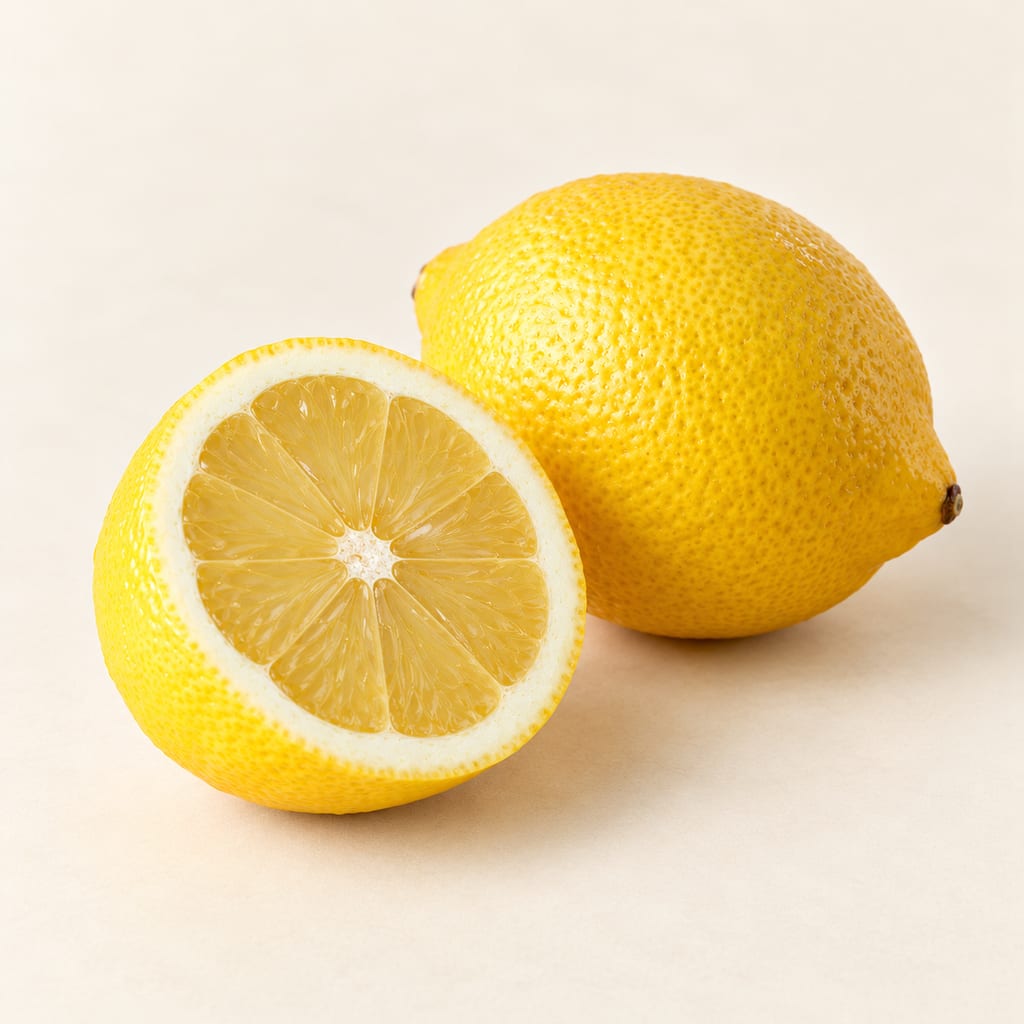
Lemons are aromatic, acidic citrus fruits whose peel, pith and juice serve different jobs in food and drink. The fruit is a hybrid with a complex history.
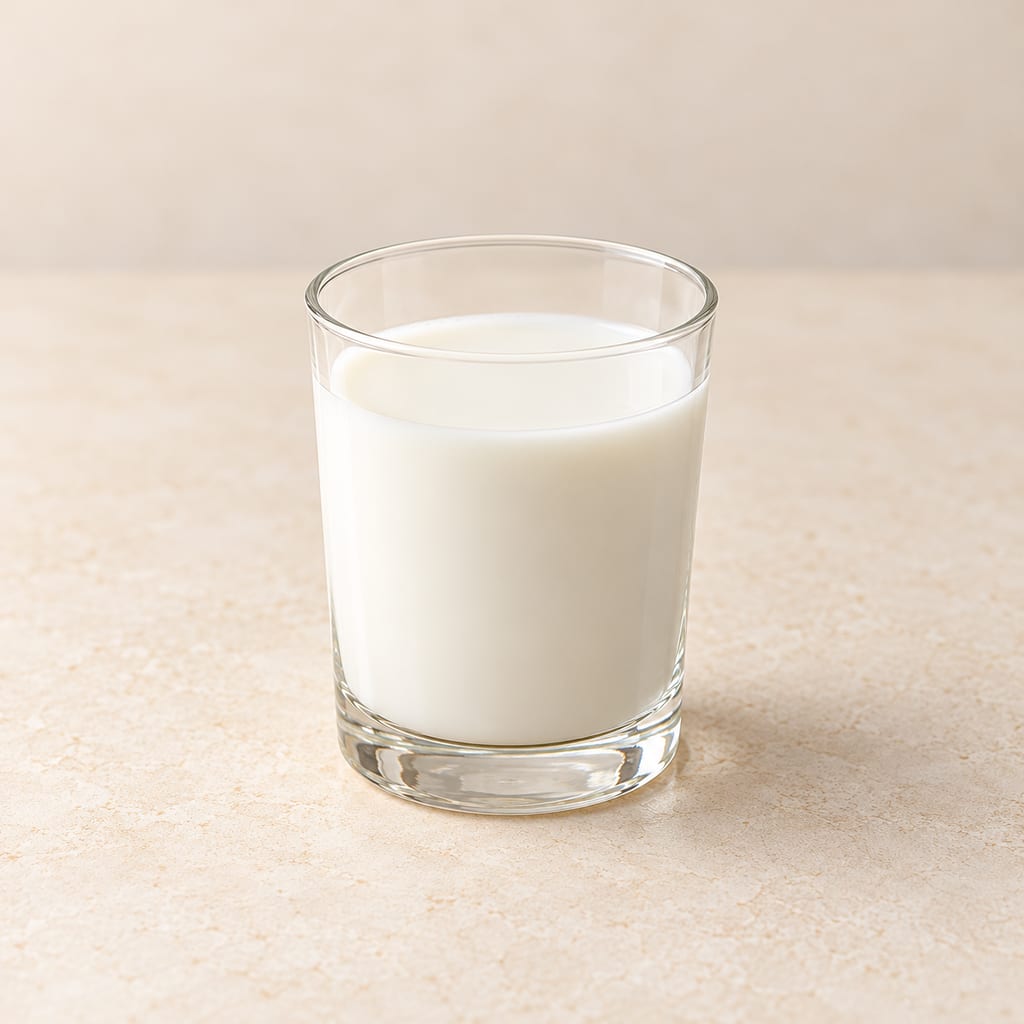
Milk with most of its fat separated into cream, retaining lactose and proteins used in cultured curds, starter media and other dairy foods.
Heat-treated dairy cream whose fat globules have not been mechanically homogenized, retaining a form used for churning cultured and sweet-cream butter.

A living dairy inoculum that starts controlled cream fermentation, developing acidity and aroma before sour cream or cultured butter is finished.
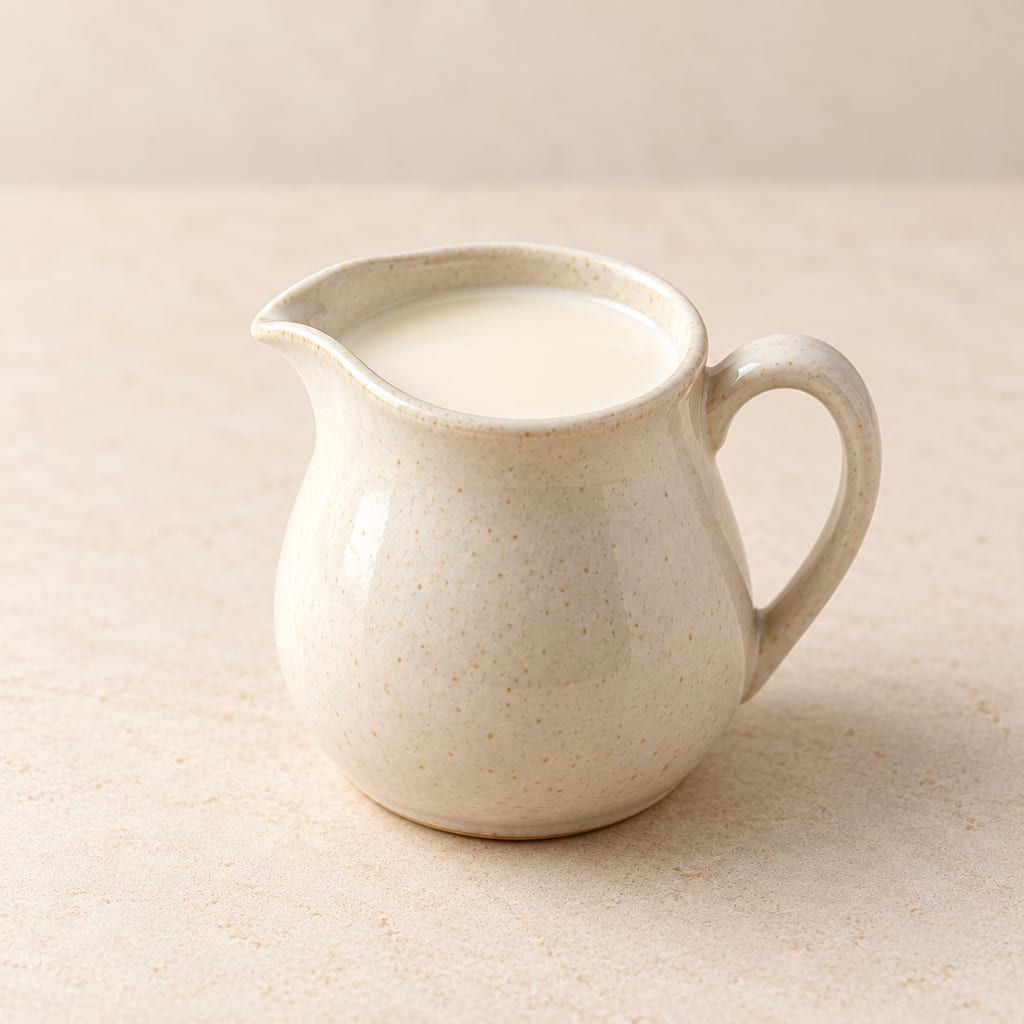
The fat-rich fraction of milk, used as a pouring ingredient, a whipped foam, a cultured dairy substrate or the starting material for butter.
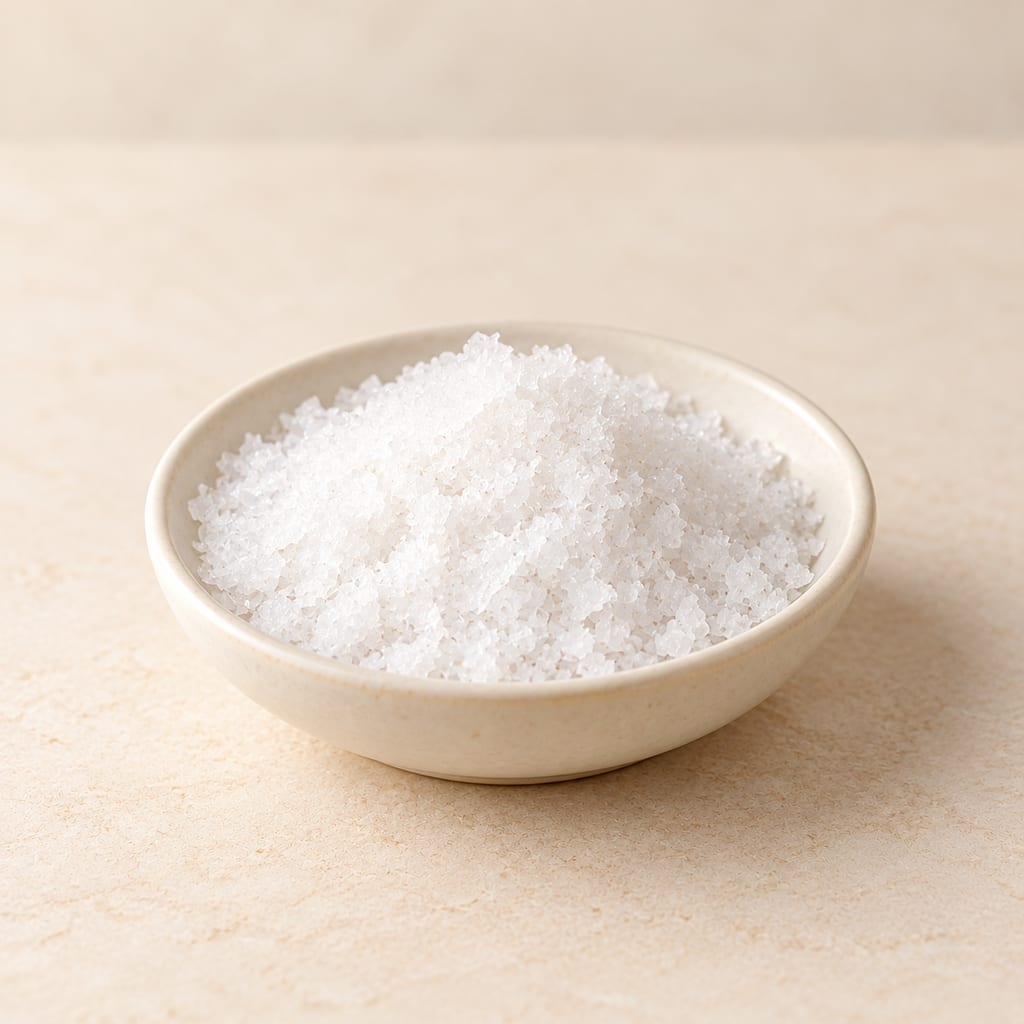
Coarse cooking salt named for its use in koshering meat. Its flakes vary by maker, so crystal shape, additives and the recipe’s unit all matter.
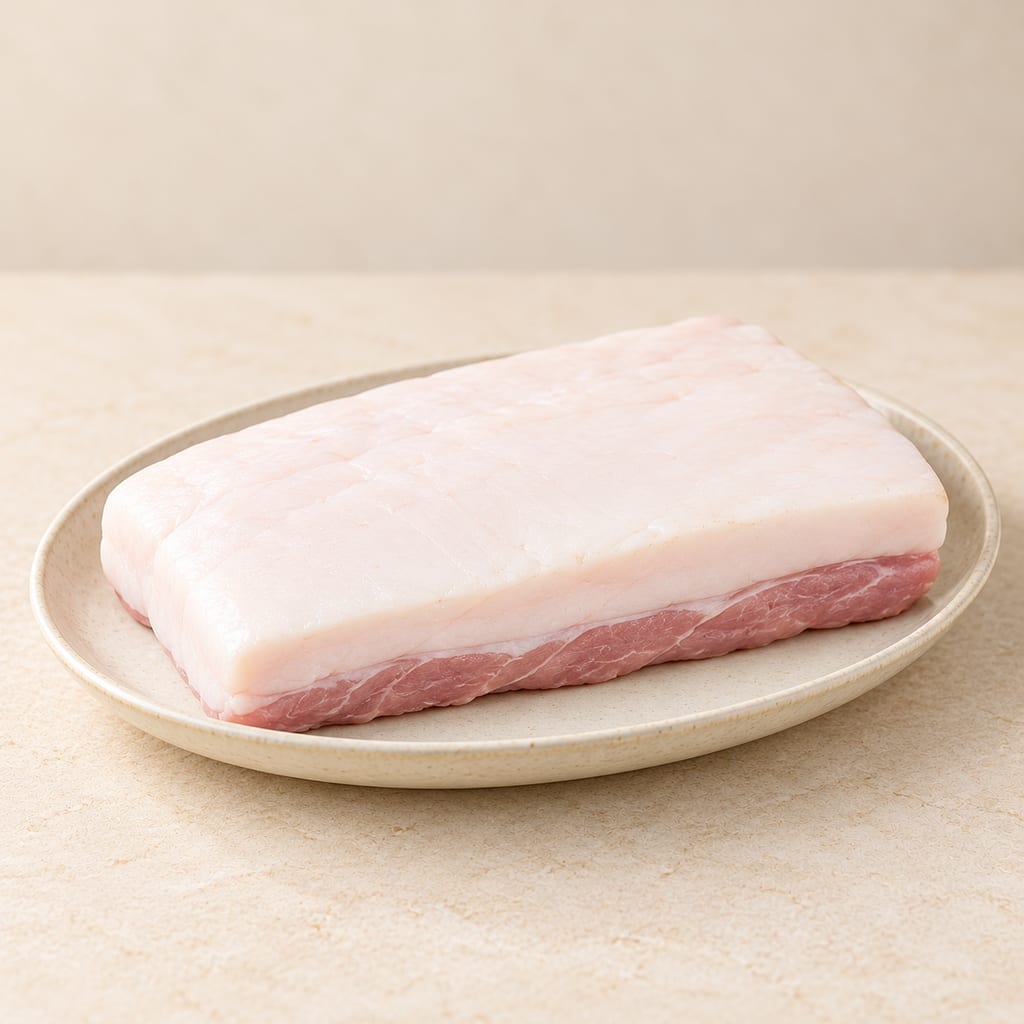
Unrendered subcutaneous pork fat provides distinct pale pieces, texture and lipid flavor precursors in sausage, and differs from belly, leaf fat and rendered lard.
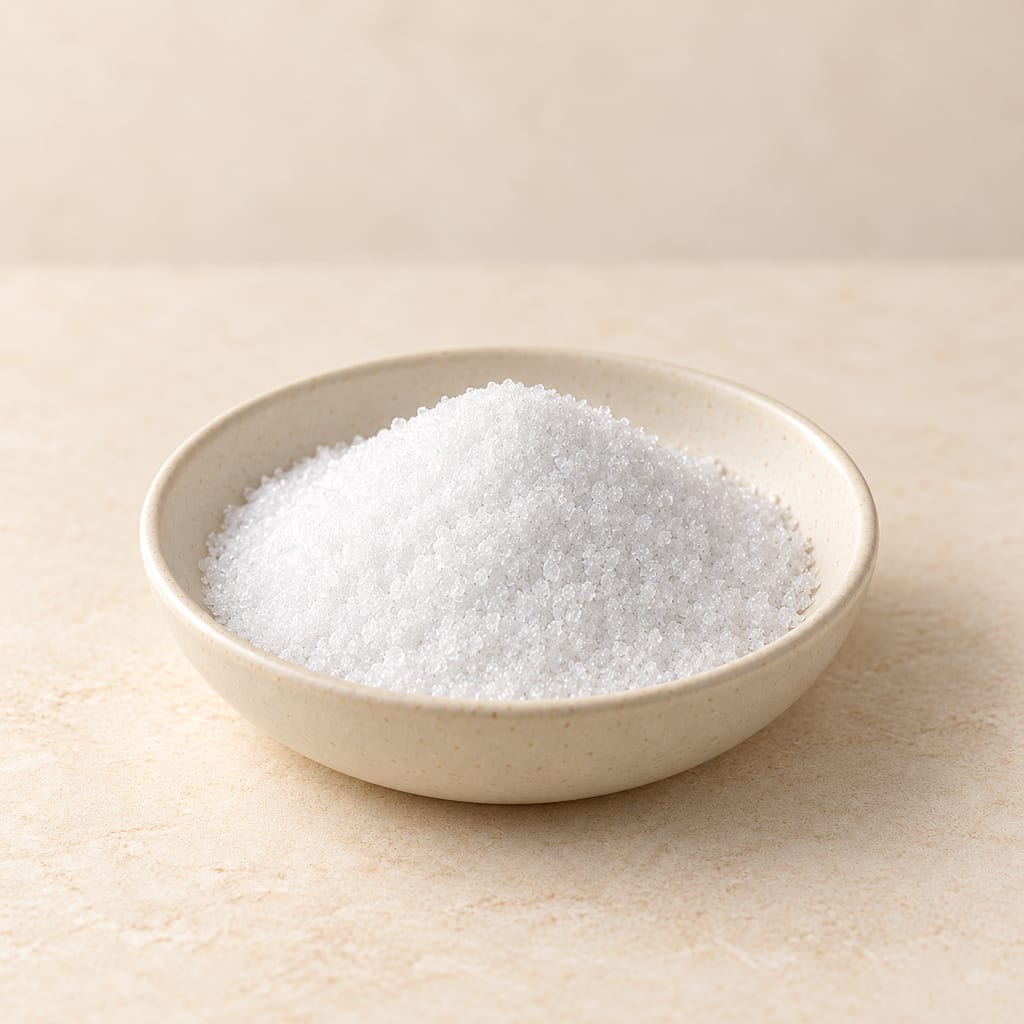
Crystalline D-glucose supplies fermentable carbohydrate to starter bacteria. Hydration state, starch source and product formulation remain relevant when selecting the powder.
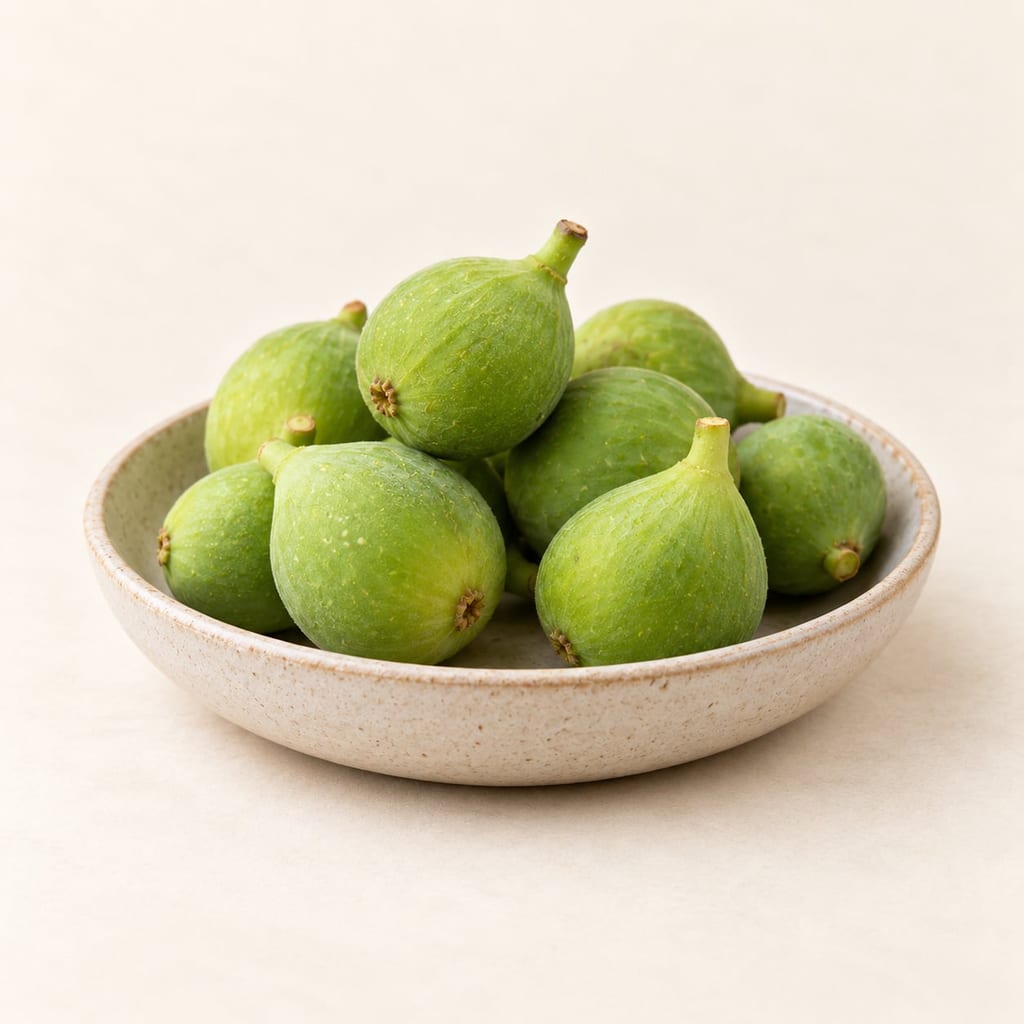
Firm green figs are the unripe fruit of the fig tree selected for preserves that keep the fruit whole and let it absorb syrup.
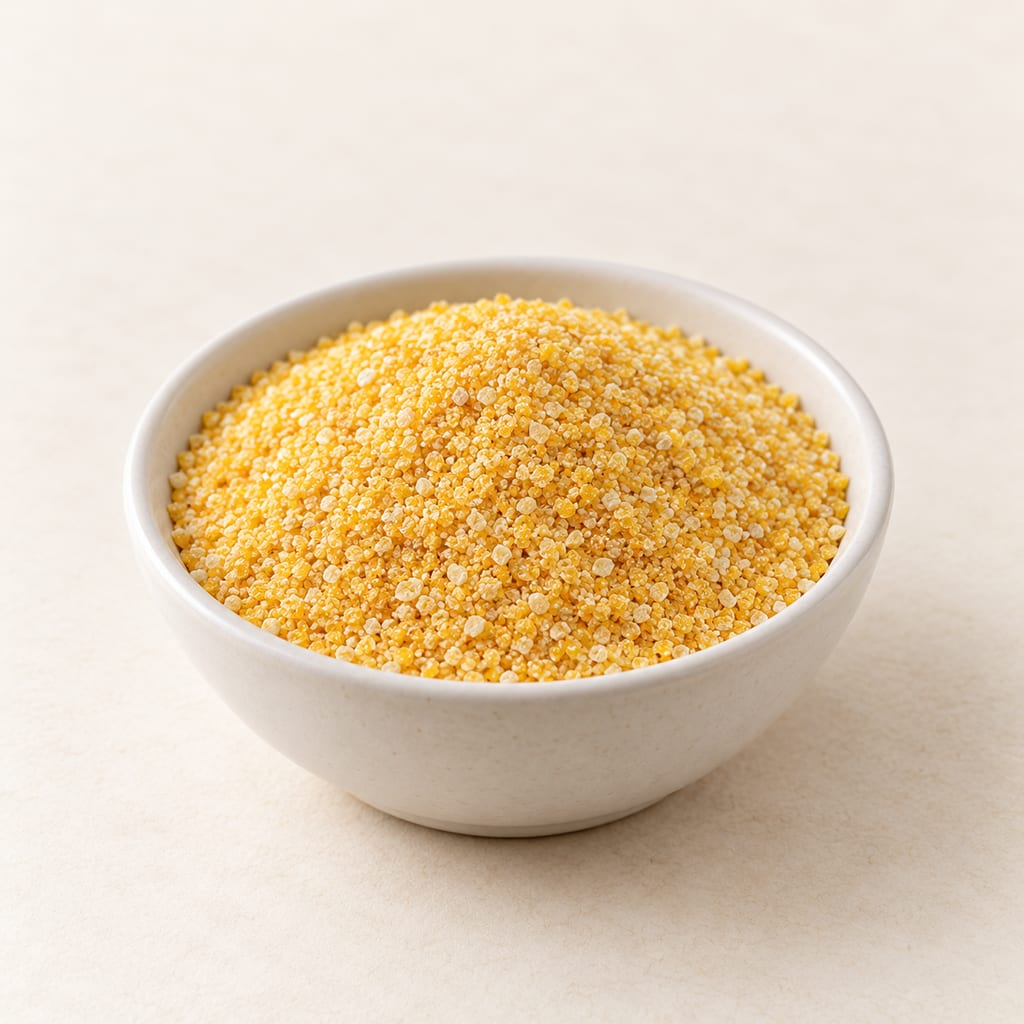
Yellow cornmeal is ground dried maize. Its particle size and milling treatment shape its texture and keeping quality; in the cited sourdough English muffin method, it is an exterior coating rather than part of the dough.
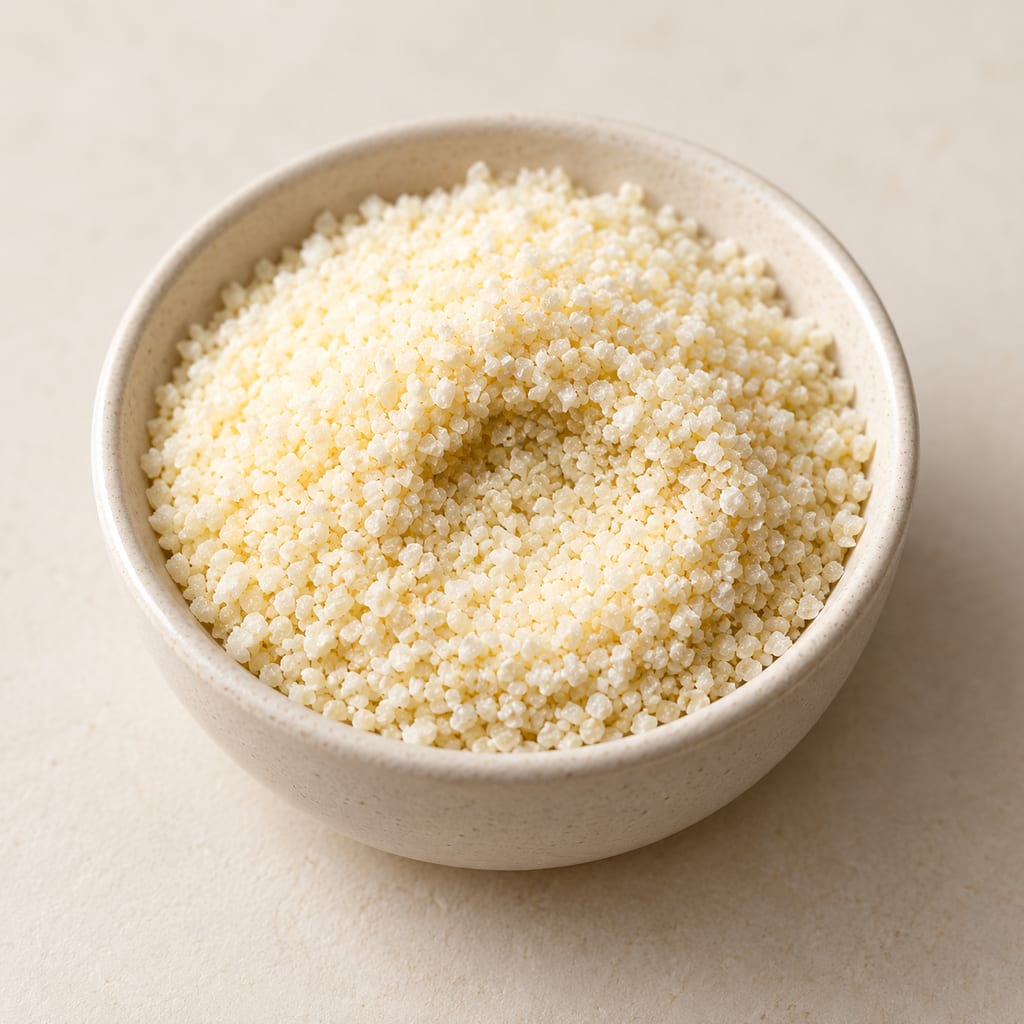
Semolina is a granular wheat milling product; in many markets it means durum, while some standards also use the name for other wheat. In sourdough English muffins, it is an optional surface coating, not the main flour.
Yeast nutrient is a family of winemaking and cidermaking additions that supplies nutrients for fermentation. Its composition varies; the linked cider and Concord wine recipes do not name a product.
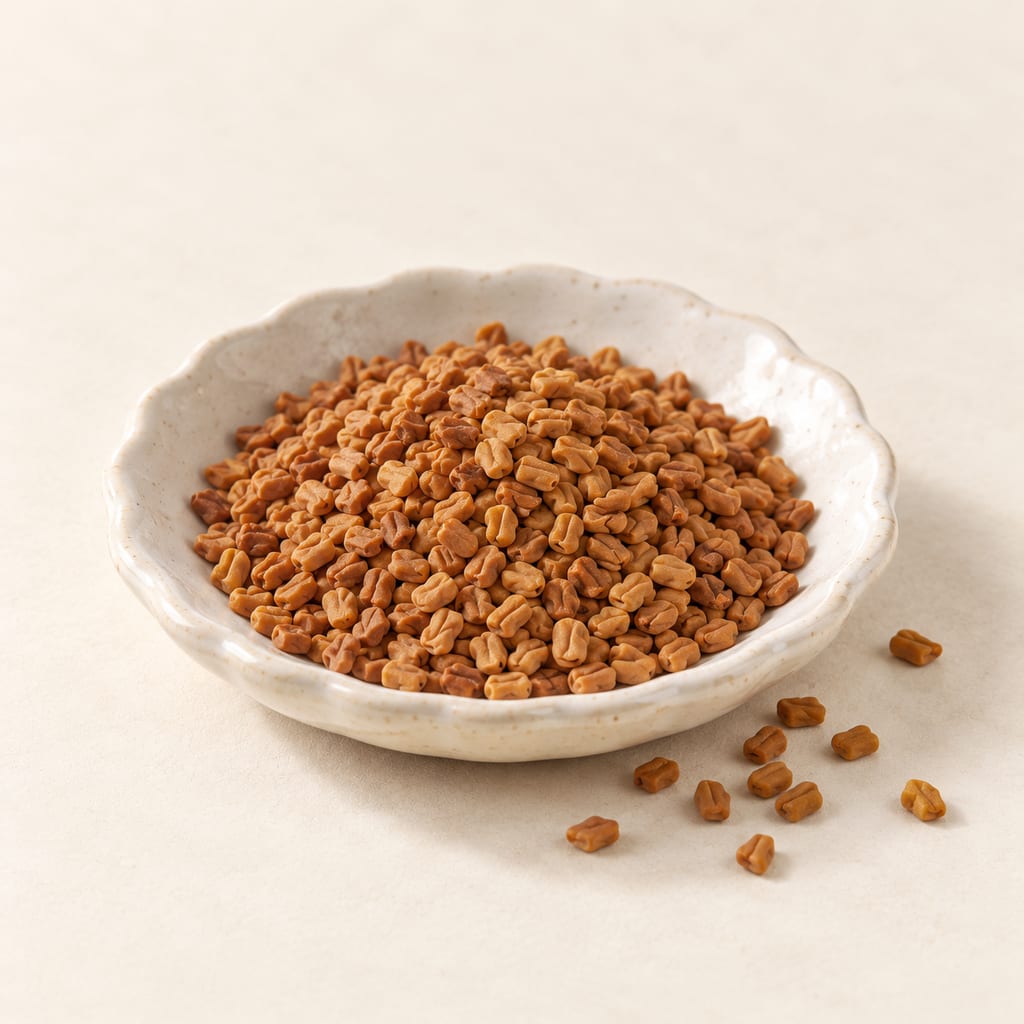
Fenugreek seed is the bitter, fragrant dry seed of Trigonella foenum-graecum, used in tempering, pickles, breads and spice mixtures.