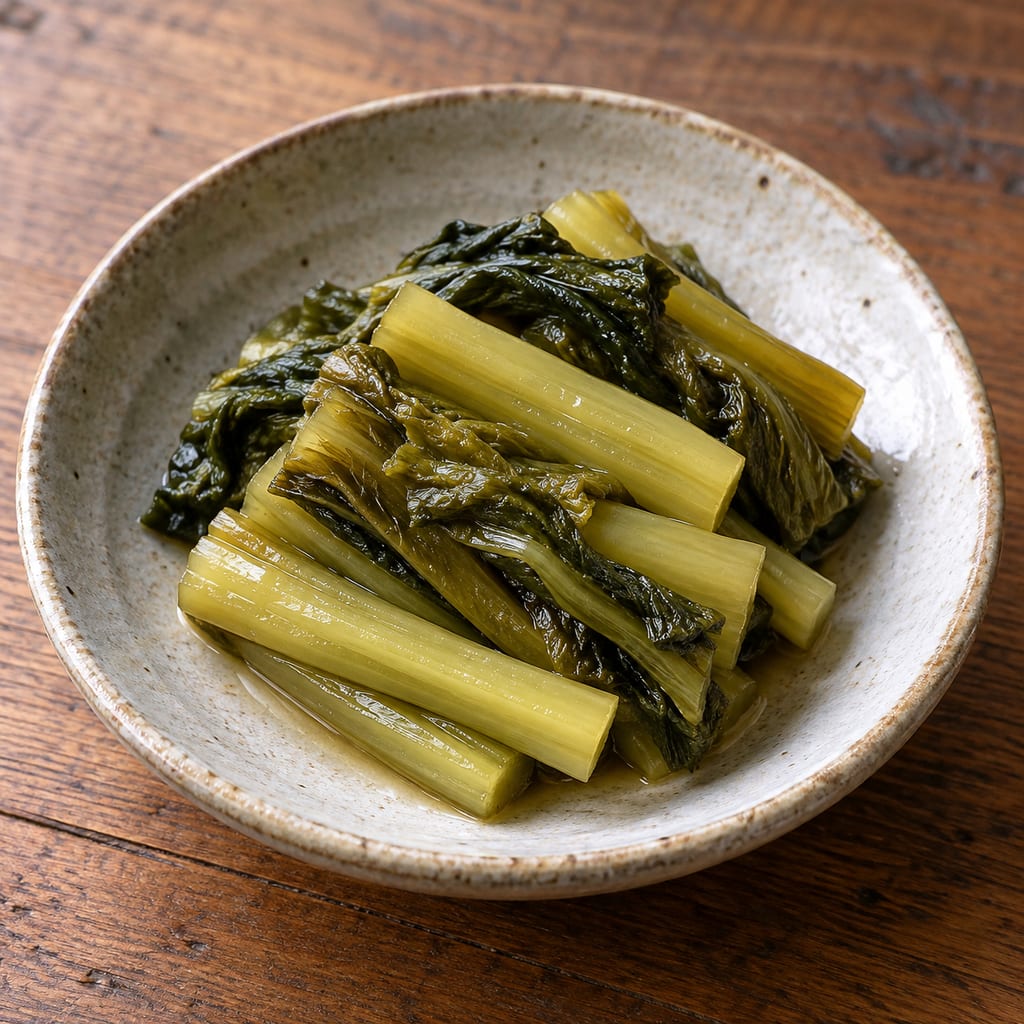
Nozawana-zuke (Nozawanazuke)
Nozawana greens salted in a barrel and weighted overnight, a Nagano household pickle sampled after about two weeks and soured by a month.
 FermenteaWhere food goes to change
Recipes by the places recorded in their sources.
Nozawana greens salted in a barrel and weighted overnight, a Nagano household pickle sampled after about two weeks and soured by a month.
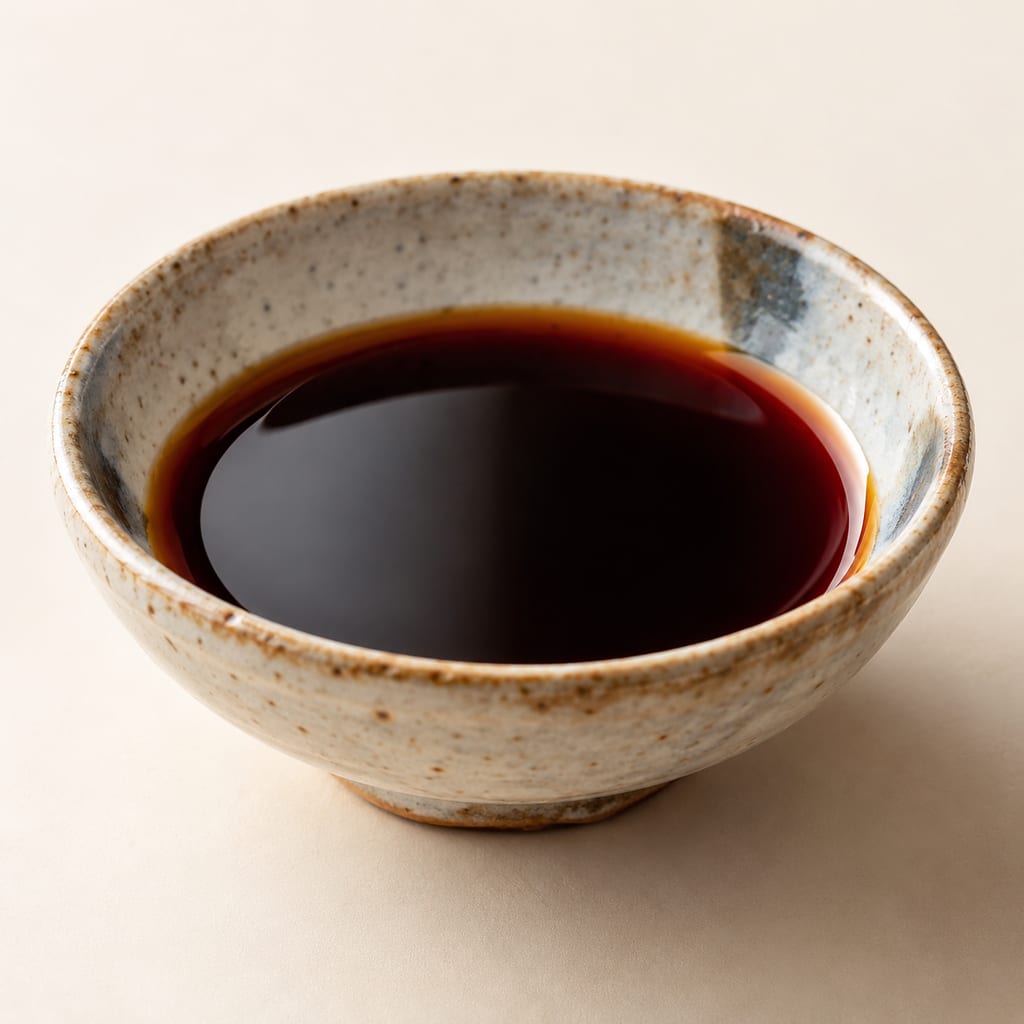
Tamari is the soybean-dominant Japanese soy sauce of the Tokai region, made with little wheat and little brine, and aged longer than koikuchi.
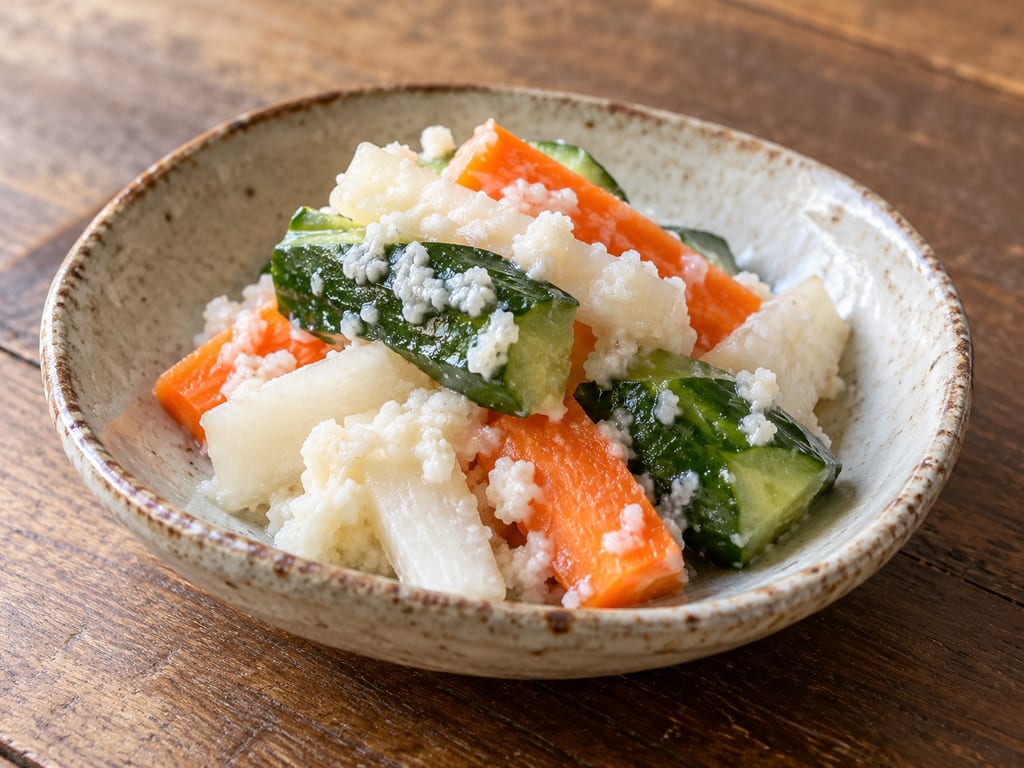
A traditional Japanese koji pickle from the Tohoku region: vegetables pickled in a matured bed of cooked rice, rice koji and salt, where koji enzymes bring sweetness alongside the salt.

Traditional Japanese sake yeast starters made from steamed rice, rice koji and water, acidified by naturally growing lactic acid bacteria. Kimoto grinds the rice mash with paddles; yamahai omits that step.
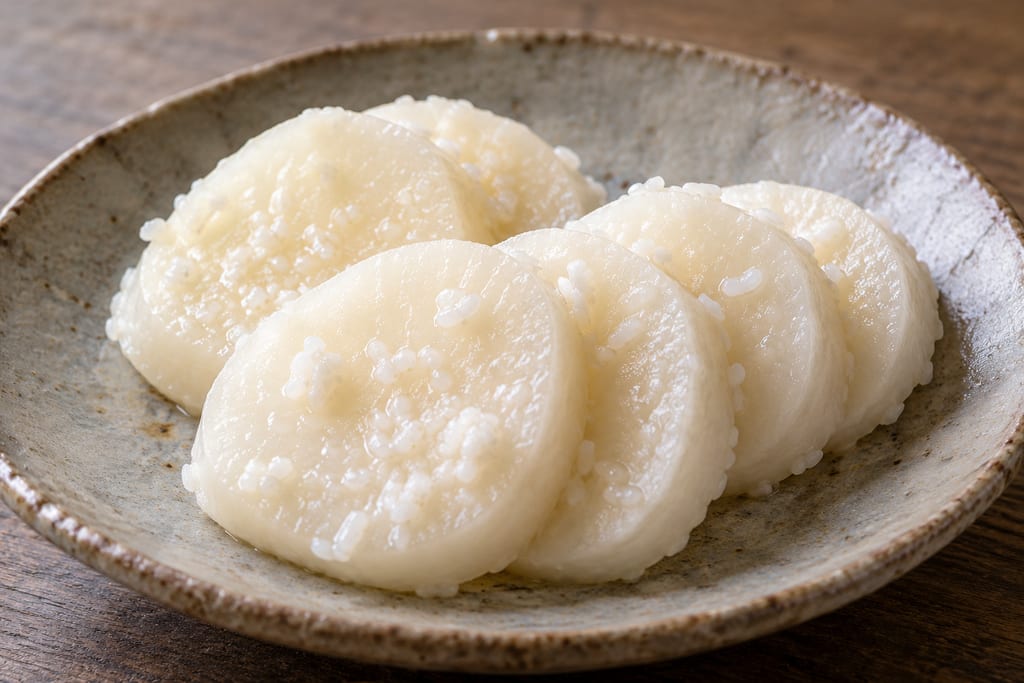
A sweet, crisp Japanese daikon pickle from Tokyo's Nihonbashi district, made by salting fresh radish and dressing it in rice koji, sugar or koji amazake without the heavy drying used for takuan.

Foods embedded in salty fermented miso paste, which transfers salt and fermentation products into them; misozuke uses an already transformed medium rather than a fresh vegetable brine.
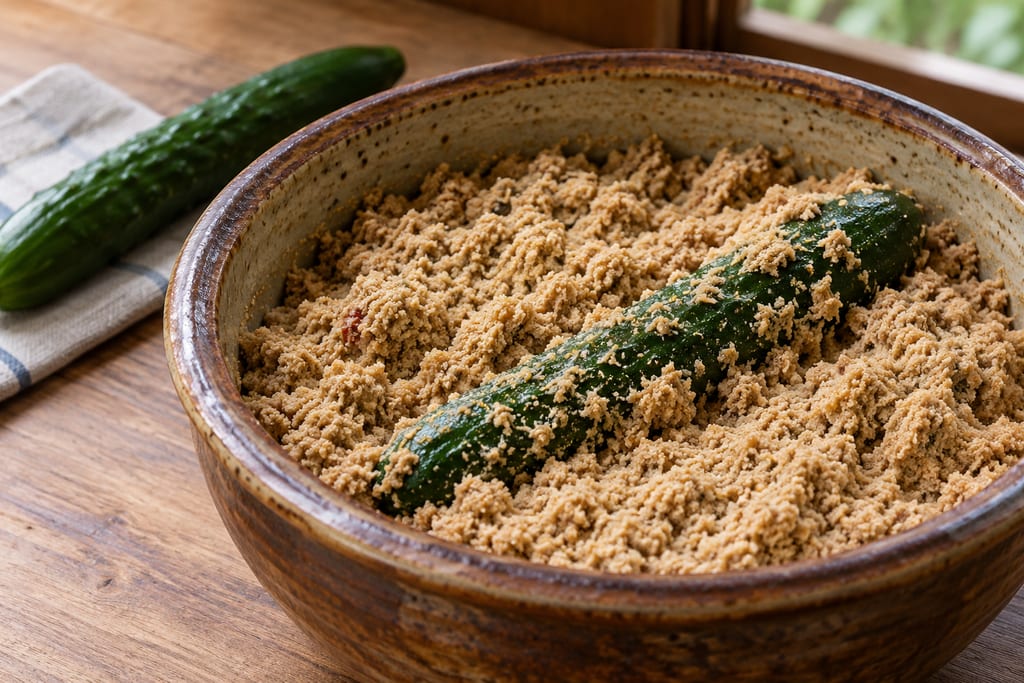
Cucumber ferments in a maintained rice-bran bed seeded through repeated vegetable scrap picklings; the record includes the starter-bed method.
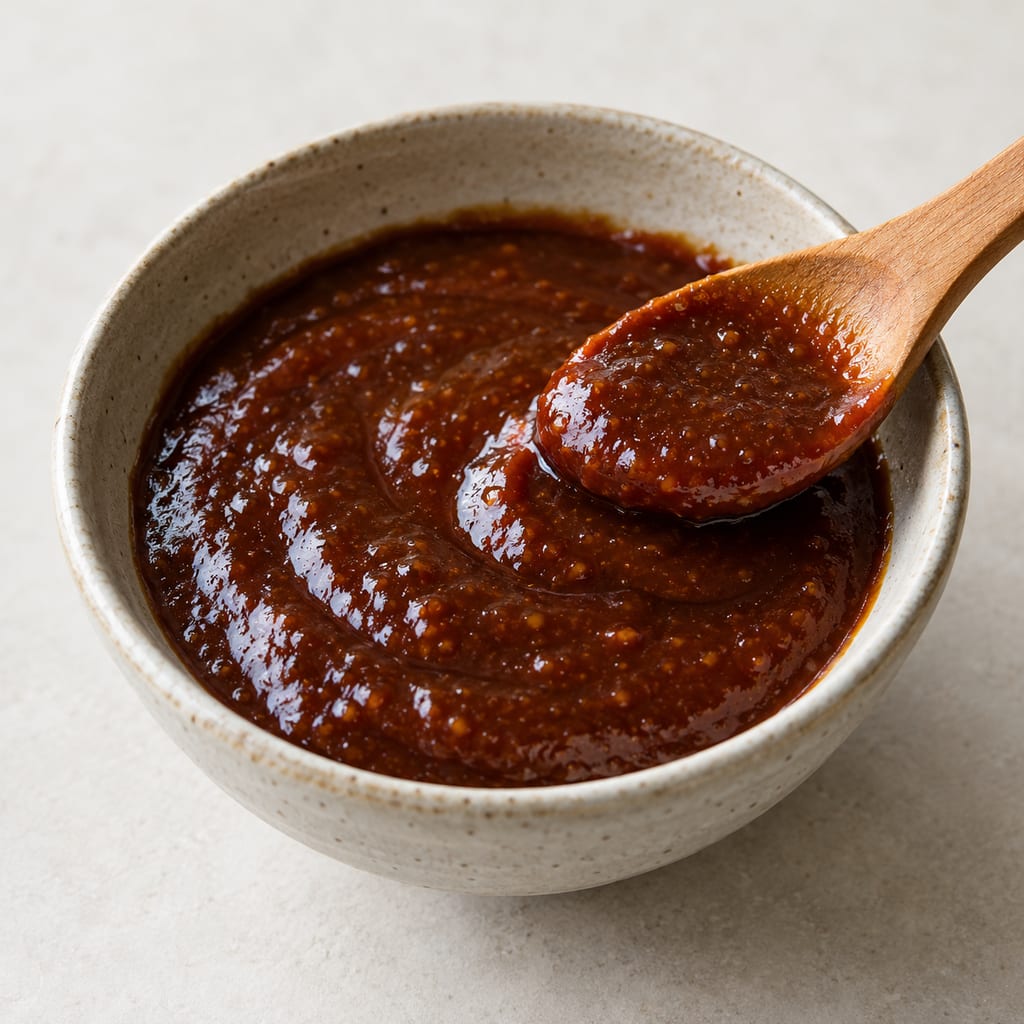
A sweet-salty Japanese glaze of miso, mirin, sake and sugar, warmed until thick and spread on grilled tofu, eggplant, daikon or konnyaku. Regional versions in Aichi use red miso and dashi.
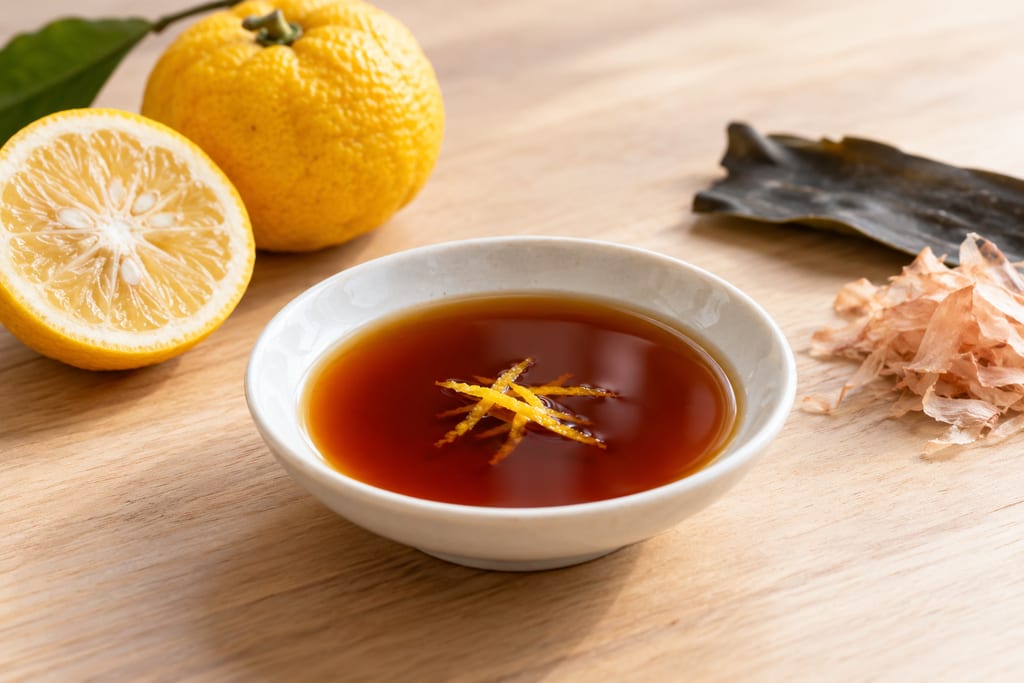
This quick ponzu combines soy sauce, vinegar, hon mirin, kombu, dried bonito and yuzu juice after a brief boil and a warm extraction; the recipe serves five.
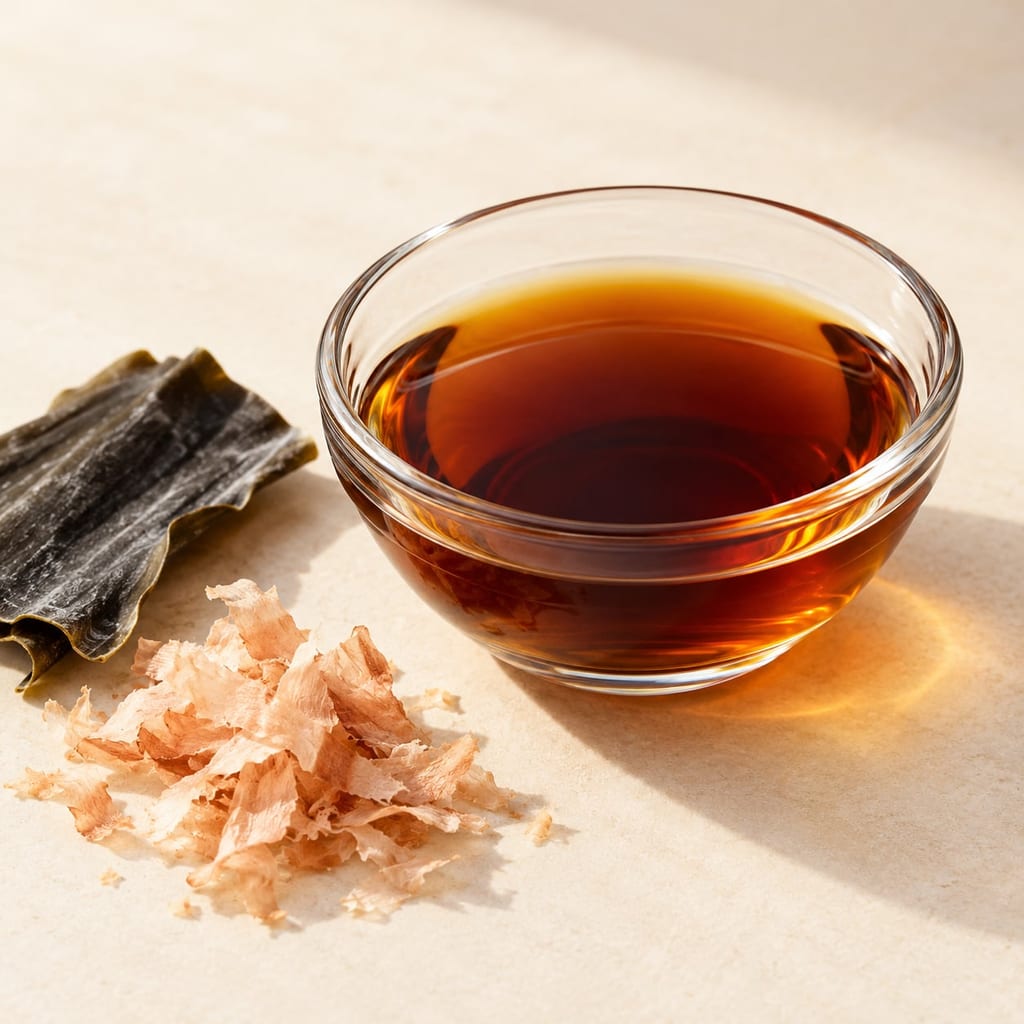
Mentsuyu seasons Japanese noodles with dashi, soy sauce and mirin. Two home formulas are recorded here: a 2012 light-soy and bonito sauce, and a concentrate diluted 1:2 for dipping or 1:4 for hot soup.
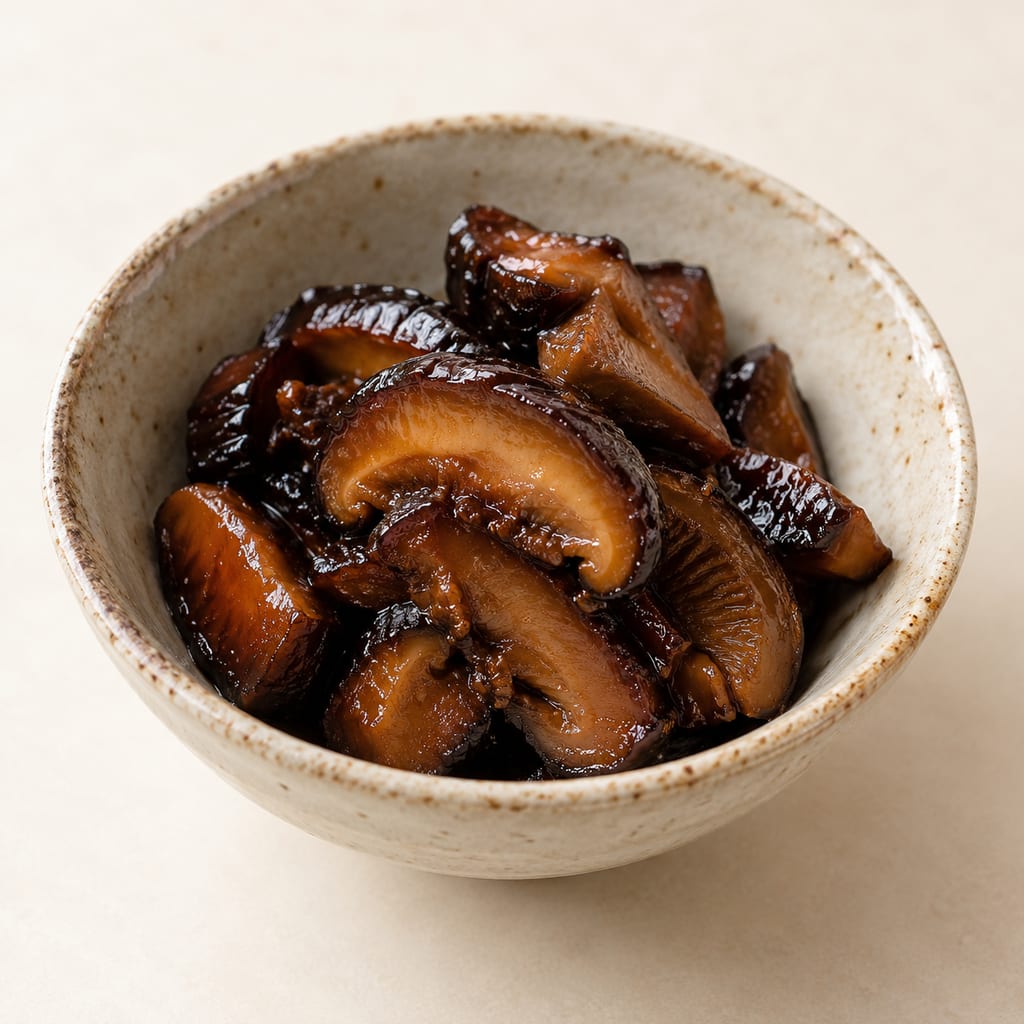
Japanese seasoned reduction in which ingredients such as shiitake or fish are simmered in soy sauce and sweeteners until the liquid is absorbed and a concentrated, storable condiment remains.
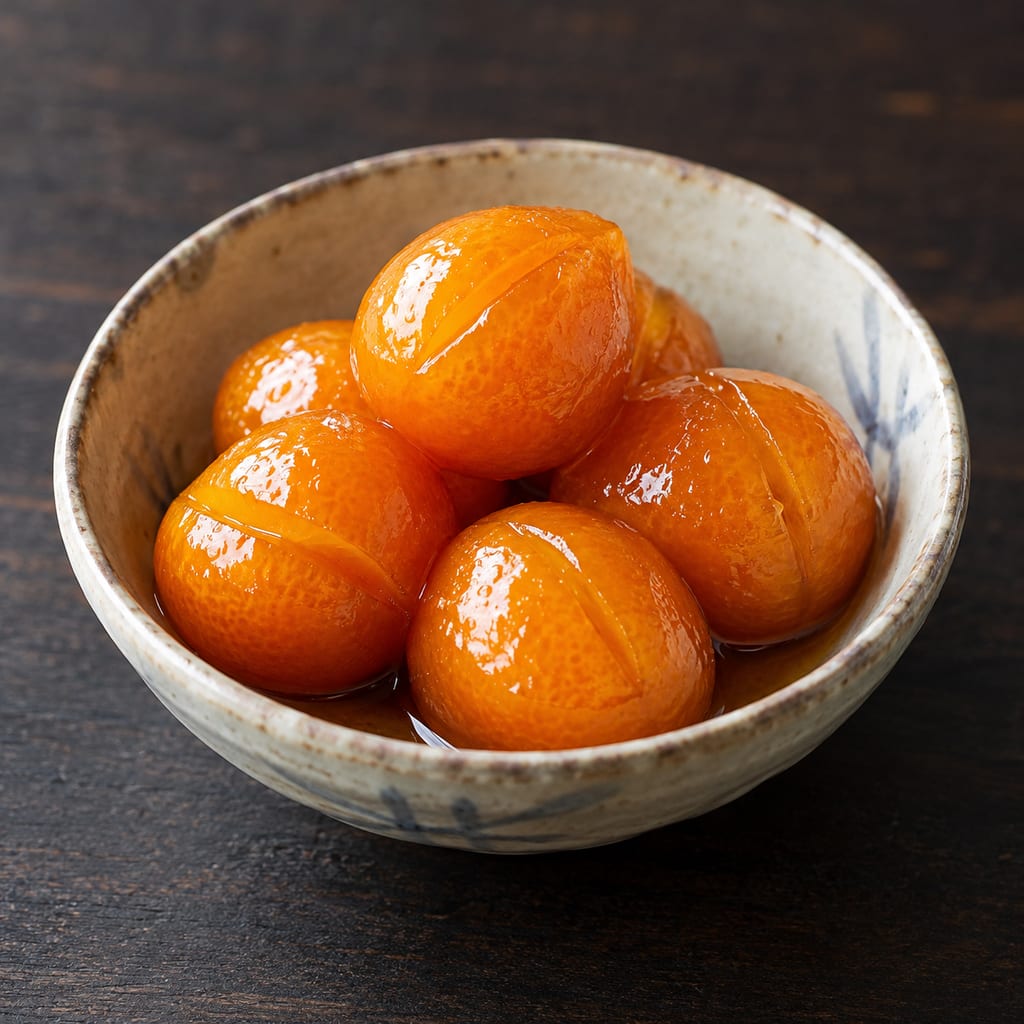
Whole kumquats are slit, blanched and simmered gently in fresh water and sugar until the peel softens and the liquid thickens. This Imari municipal recipe gives a sugar range rather than a fixed ratio.
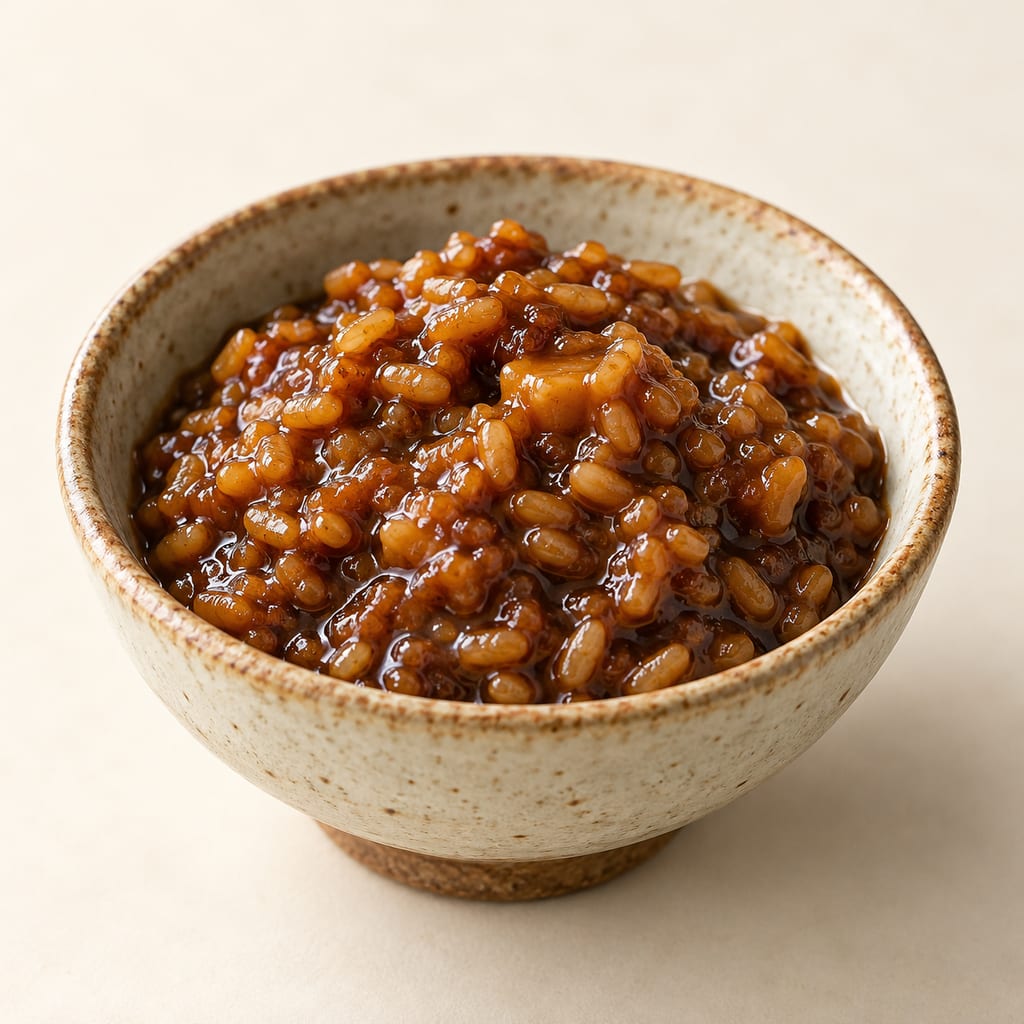
A Japanese kitchen condiment of rice koji matured in soy sauce until the grains turn soft and sweet. The same name also means the mould-grown soybean and wheat used to brew soy sauce.
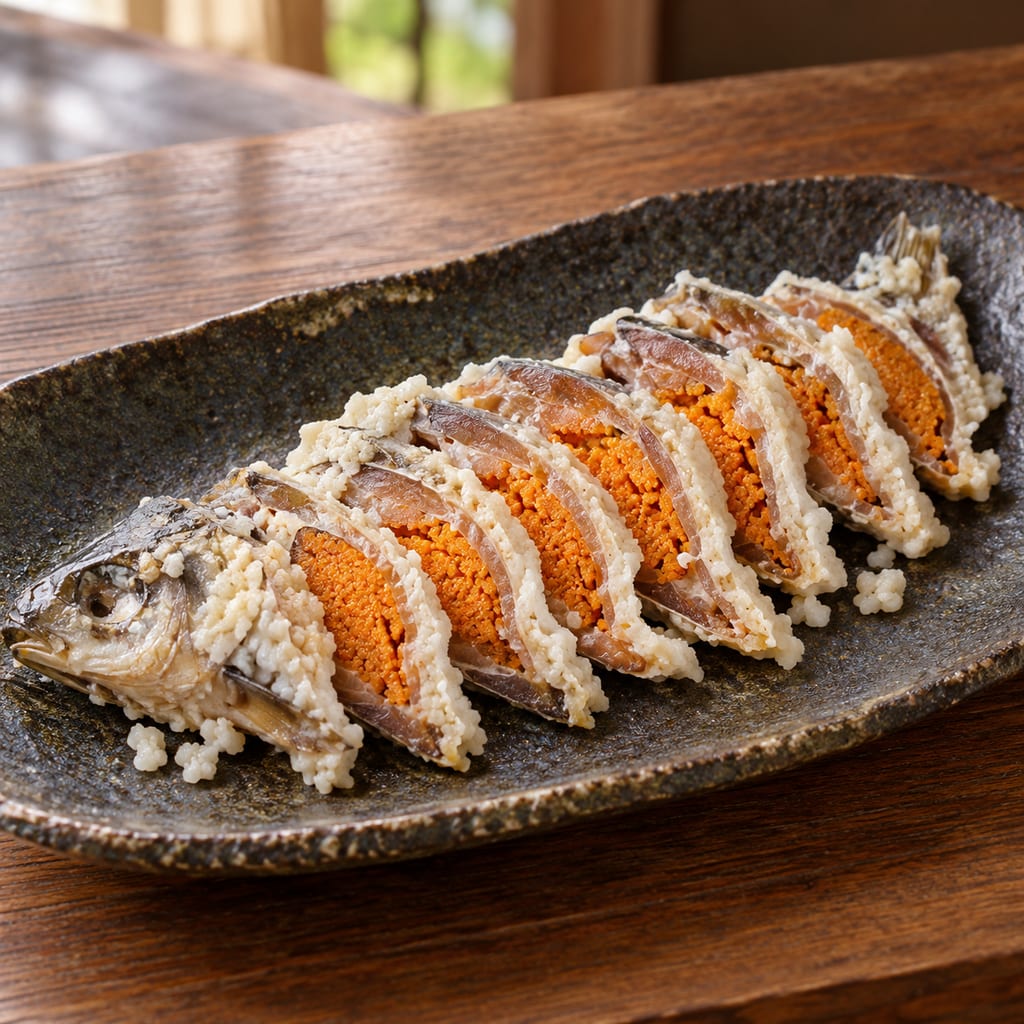
A documentary account of funazushi, Shiga’s long-ripened narezushi associated with Lake Biwa and roe-bearing nigorobuna. It preserves regional, historical and cultural context; it is not a household preparation guide.
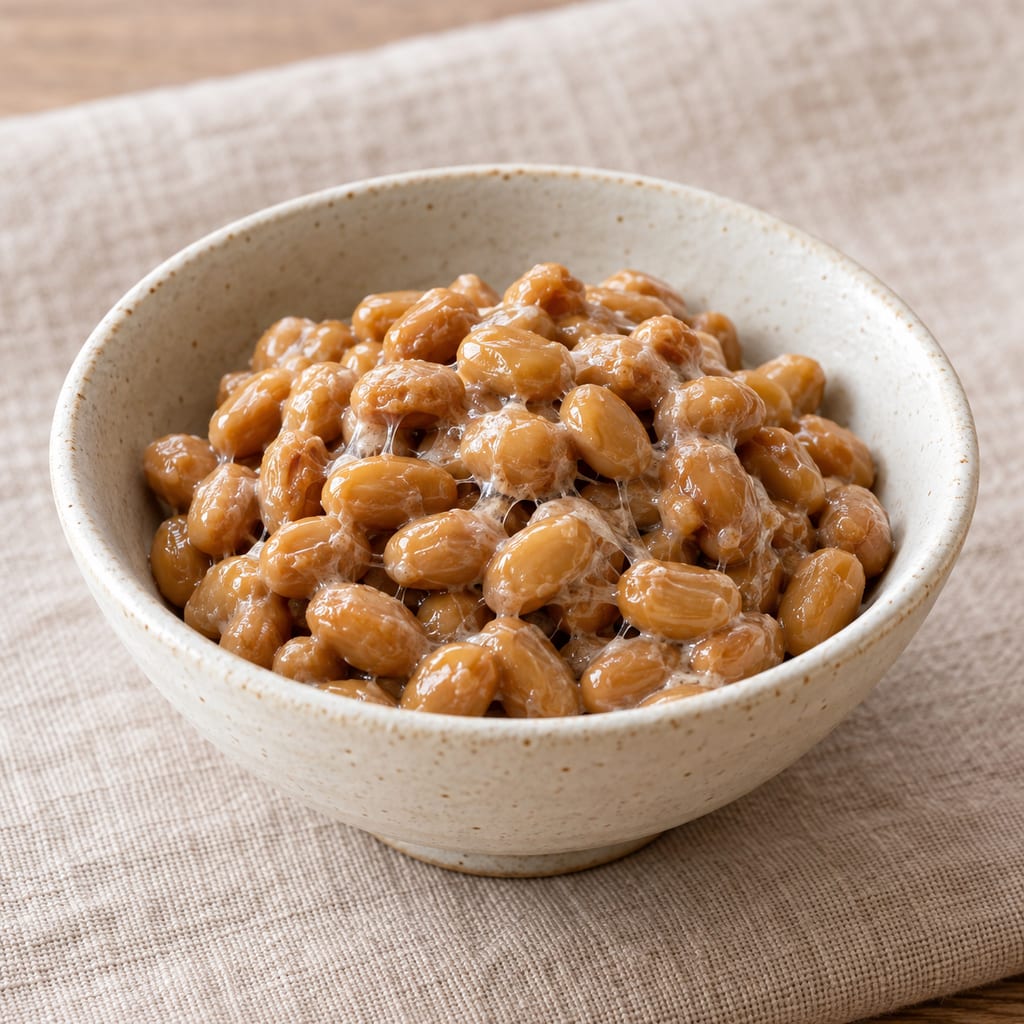
Steamed soybeans fermented by a named strain of Bacillus subtilis into Japan’s sticky, strongly savoury whole-bean food, bound by the thread-forming polymer the bacteria secrete.
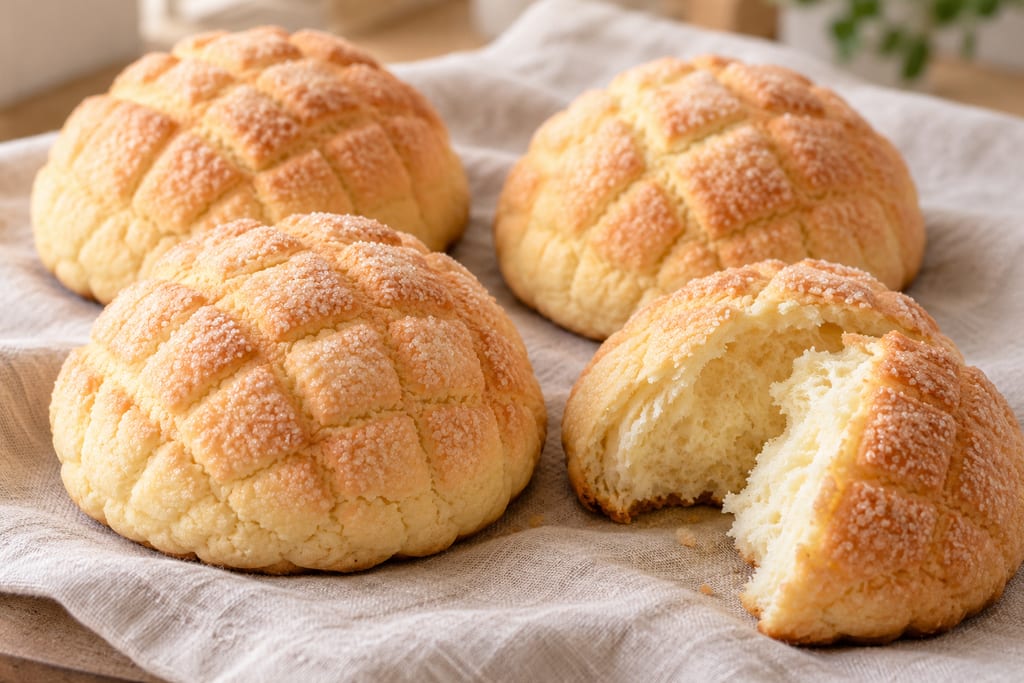
Melon pan pairs a soft Japanese yeast bun with a crisp, crosshatched cookie shell. In this ten-bun version, the bread dough is wrapped in a separate biscuit layer and baked until lightly golden.
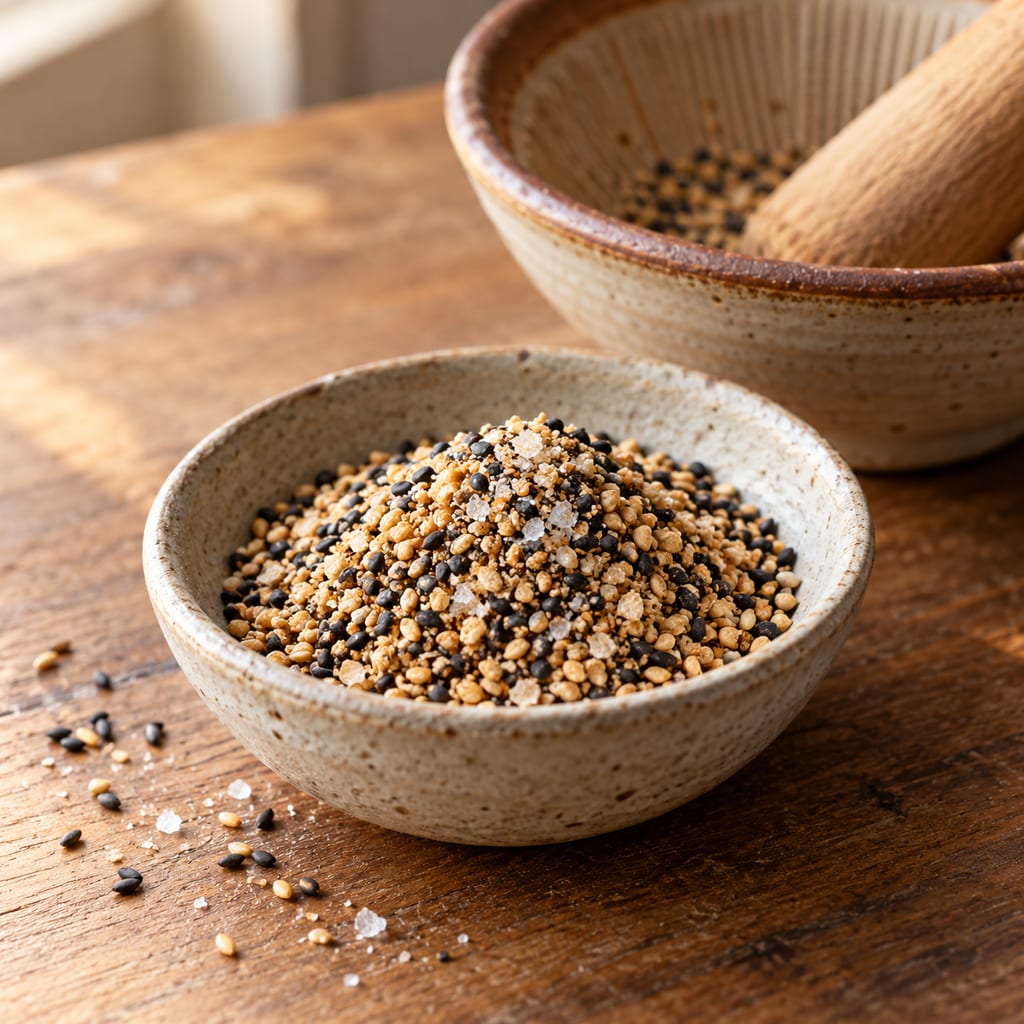
Toasted sesame seeds and sea salt are ground together into a coarse seasoning for rice. This small pan-roasted batch keeps most of the seed texture.
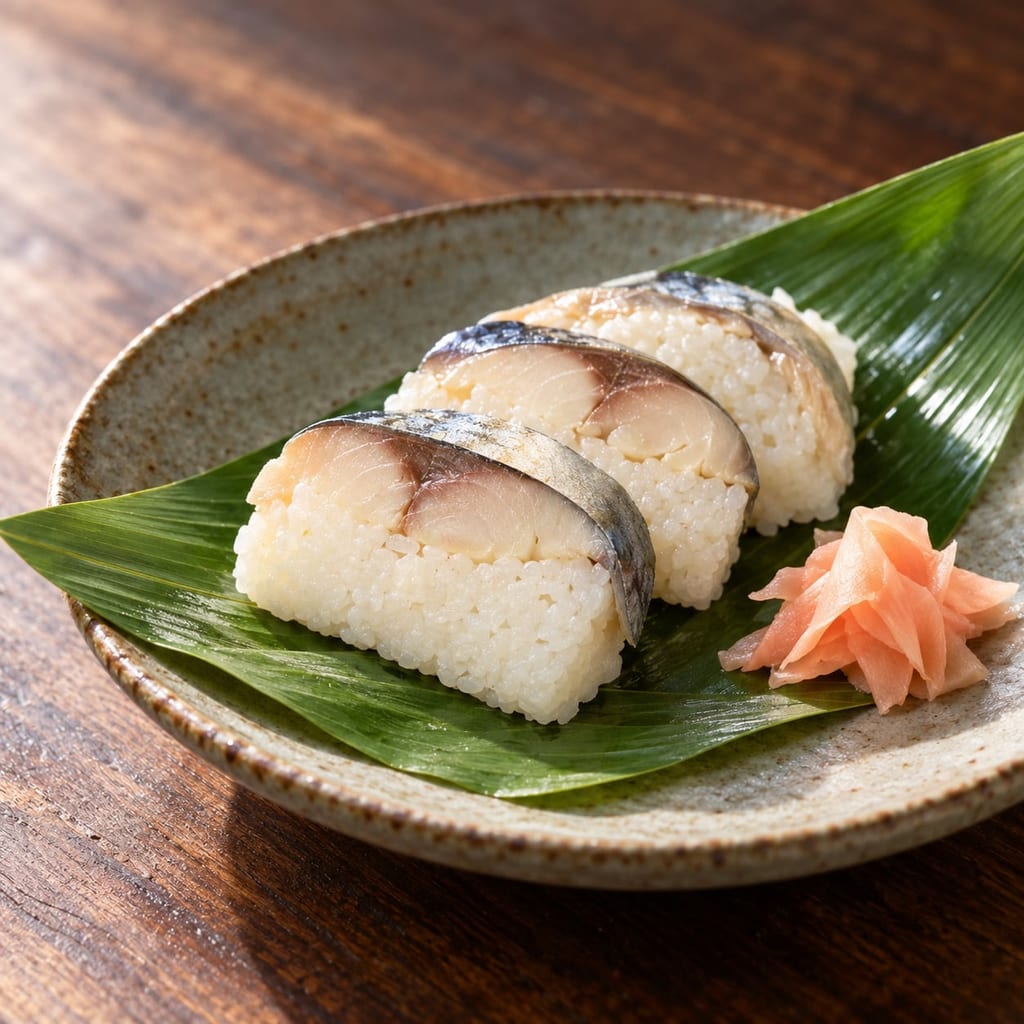
A documentary account of Japanese narezushi, a family of salted-fish and rice ferments. This entry preserves the East Kishu (Mie) source’s identity and regional context without providing a household preparation method.
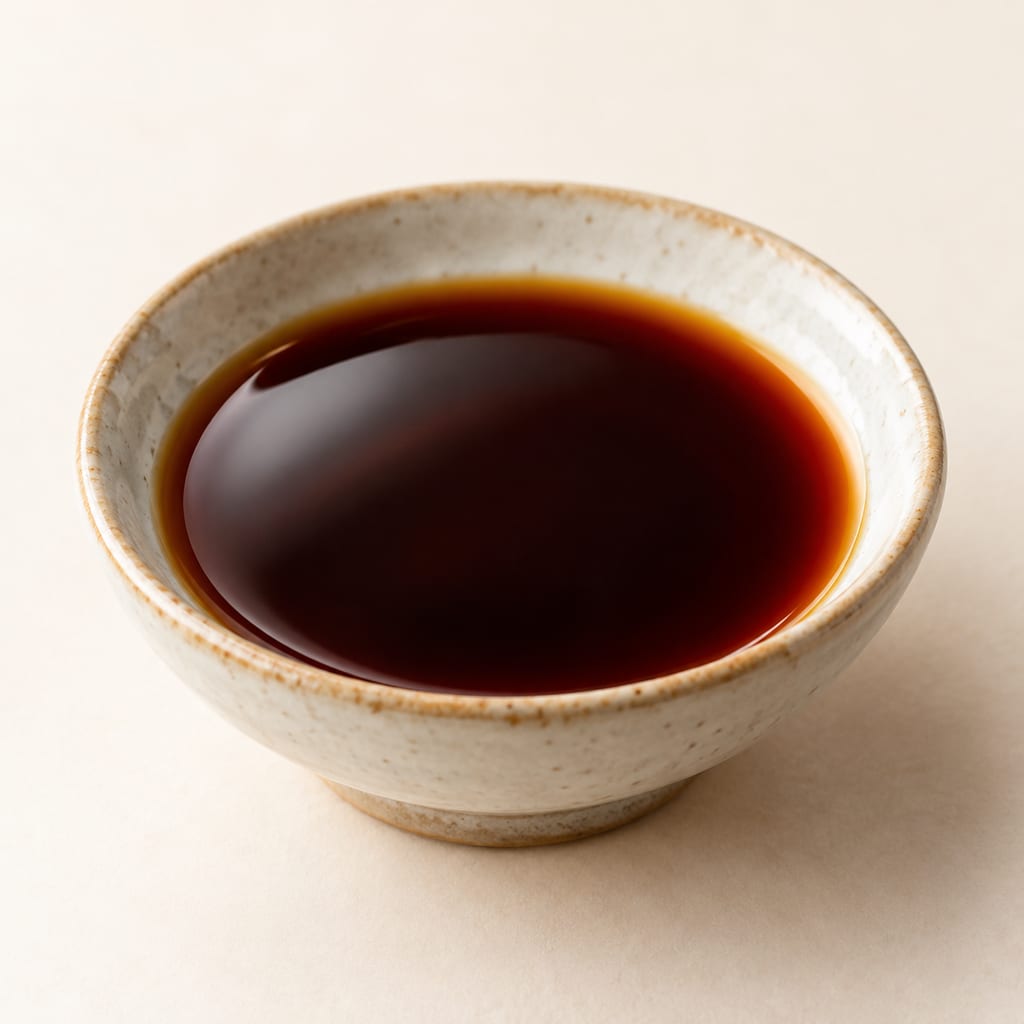
Japan's standard all-purpose soy sauce: soybeans and wheat grown over with koji mould, brined, fermented for months, pressed and usually heated into a reddish-brown, savoury liquid.
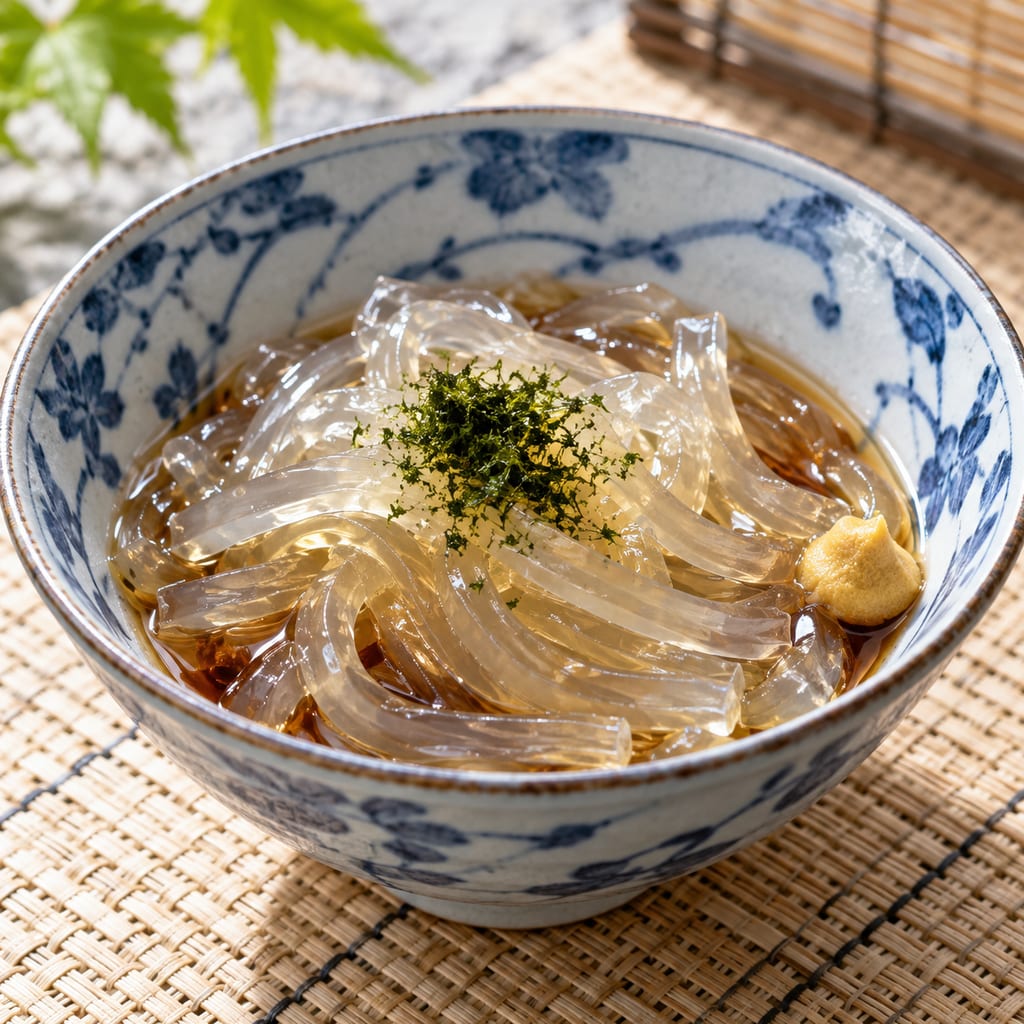
A Japanese jelly made by boiling agar-rich red seaweed, straining the extract and letting it set, then pressing it into strands served with vinegar-soy sauce or sweet syrup.
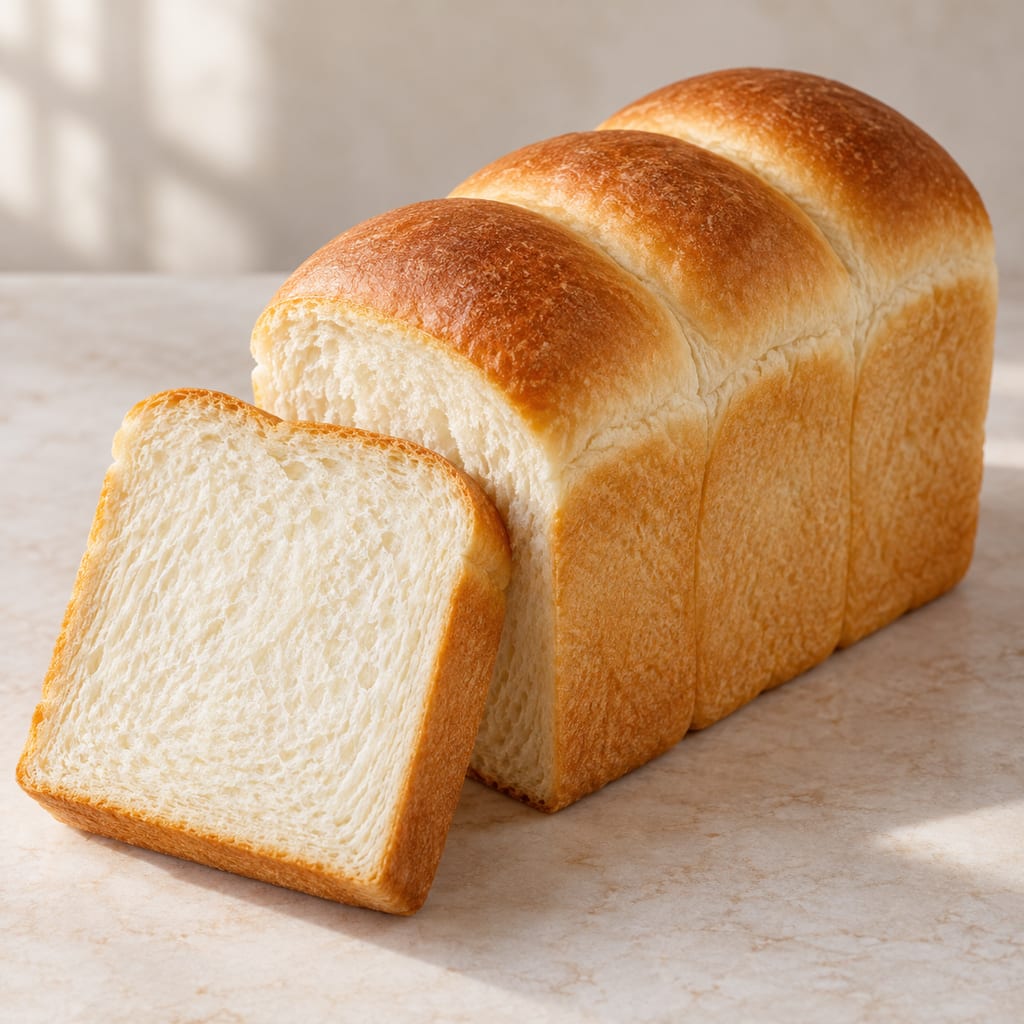
Shokupan is a soft, mildly sweet Japanese wheat loaf served as toast or in sandwiches. This formula makes a square or rounded one-loaf pan bread with a fine, milky crumb.
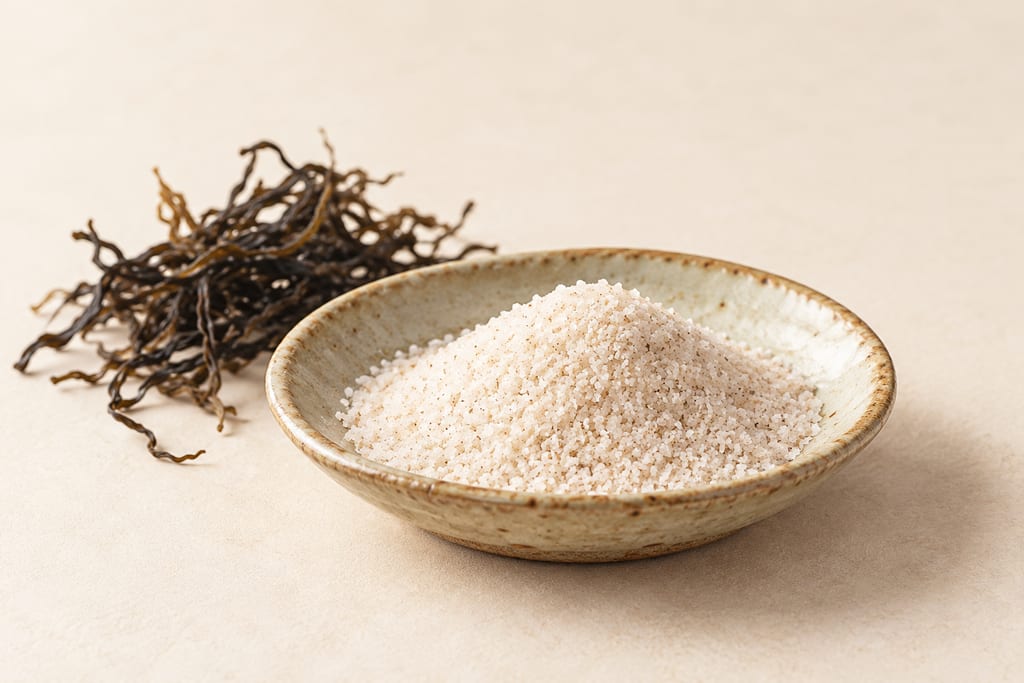
Amabito no Moshio is a modern, pale beige Japanese seaweed salt made from Seto Inland Sea water and hondawara seaweed. Its documented factory method concentrates filtered brine in kettles, then separates and dries the salt.
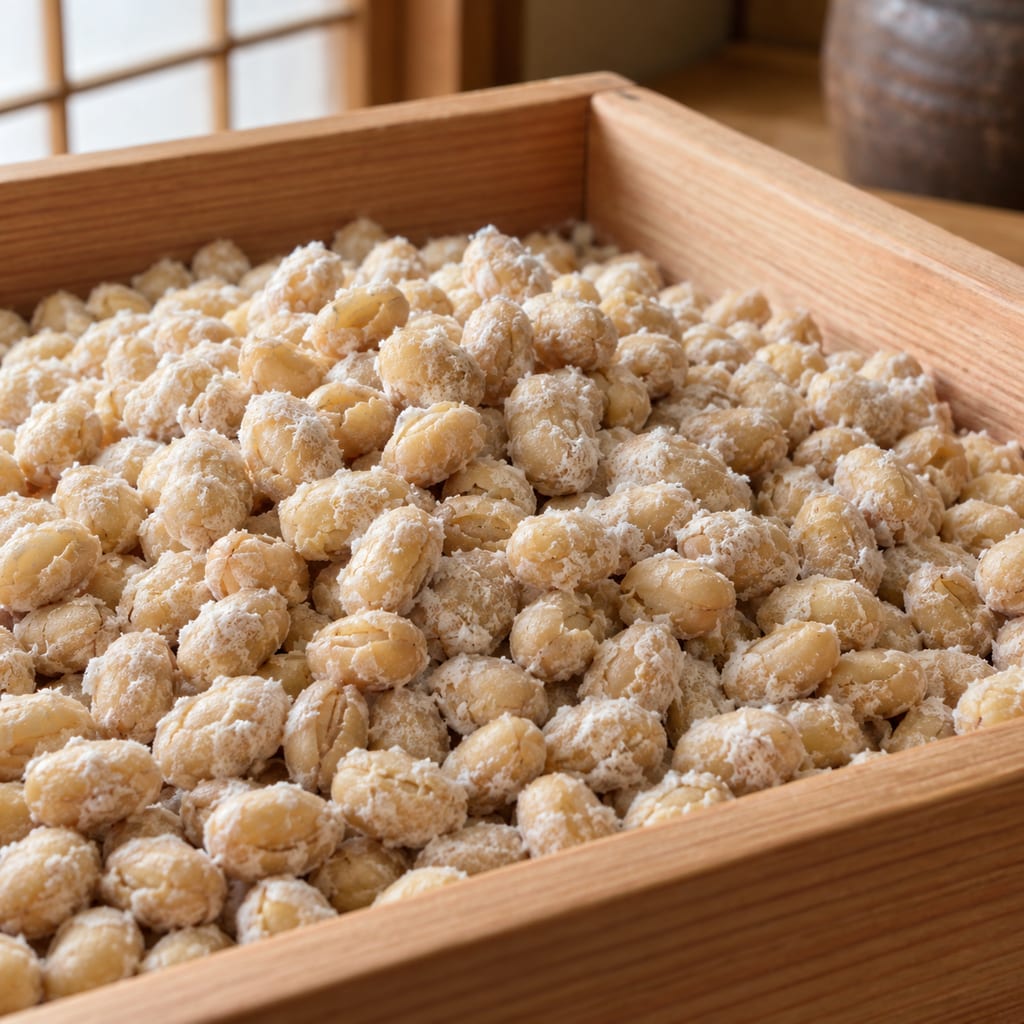
Japanese soybean koji: steamed soybeans, loose or formed into balls, grown over with Aspergillus mould to make the enzymes for mame-miso, tamari and regional soybean condiments.
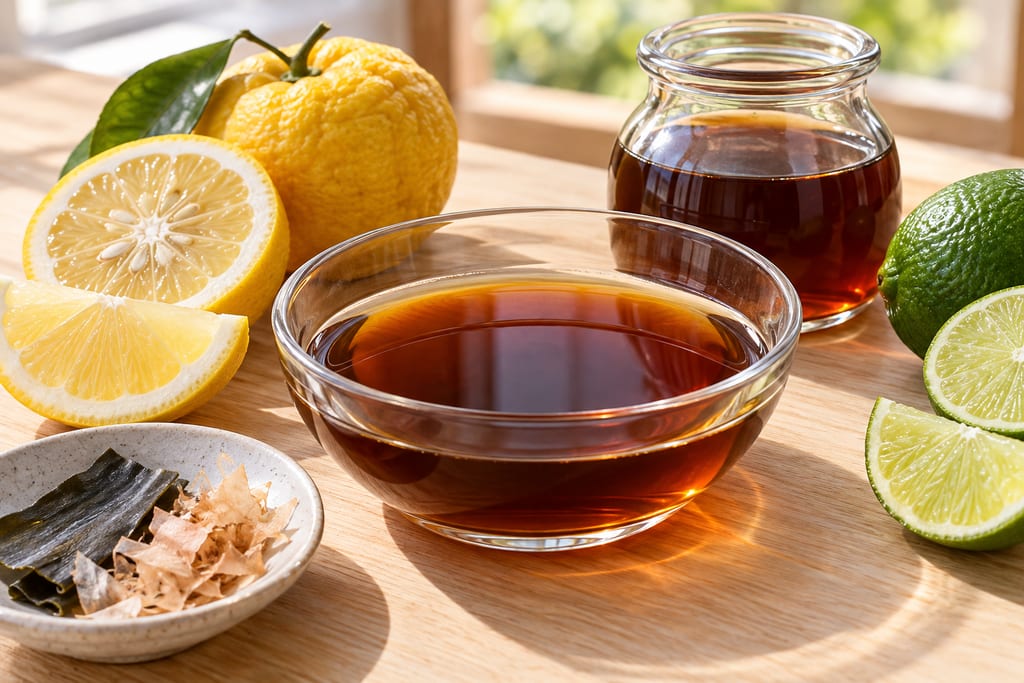
This fresh ponzu-shoyu mixes Japanese koikuchi soy sauce with yuzu or a lemon-lime blend, rice vinegar, water and sugar; optional kombu and bonito give a short chilled infusion.

Japanese vinegar from ripe persimmons: yeast turns the fruit sugar to alcohol and acetic bacteria turn that to acid; made at home in a month and by makers in Wakayama and Nagasaki over several years.
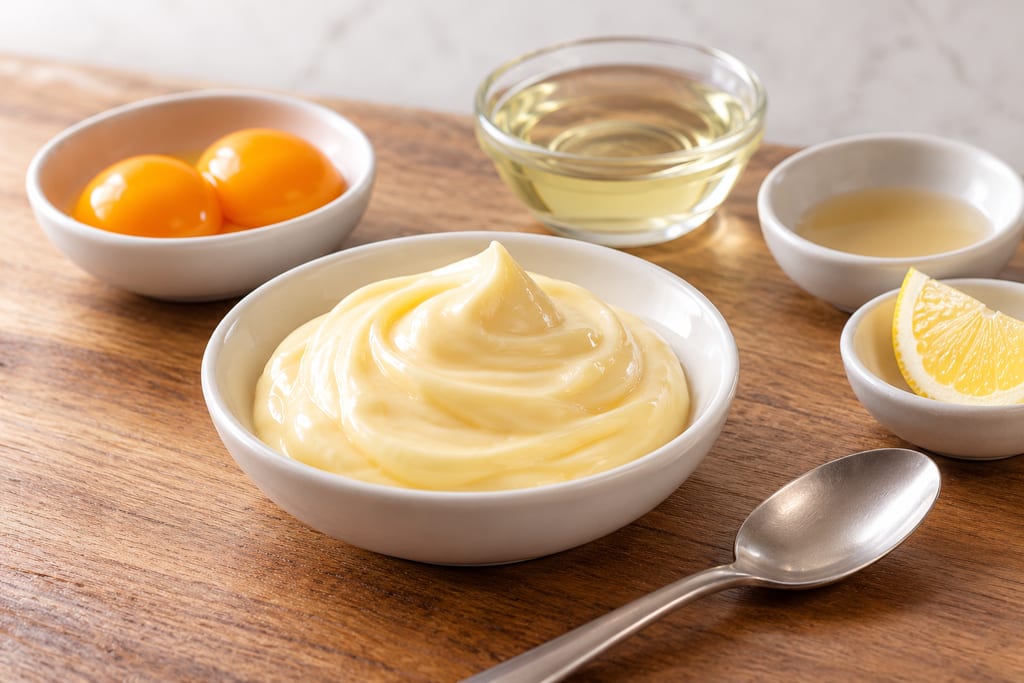
A one-cup Japanese mayonnaise batch made in a small food processor with pasteurized room-temperature egg yolks and oil added in three stages around the seasonings and acids.
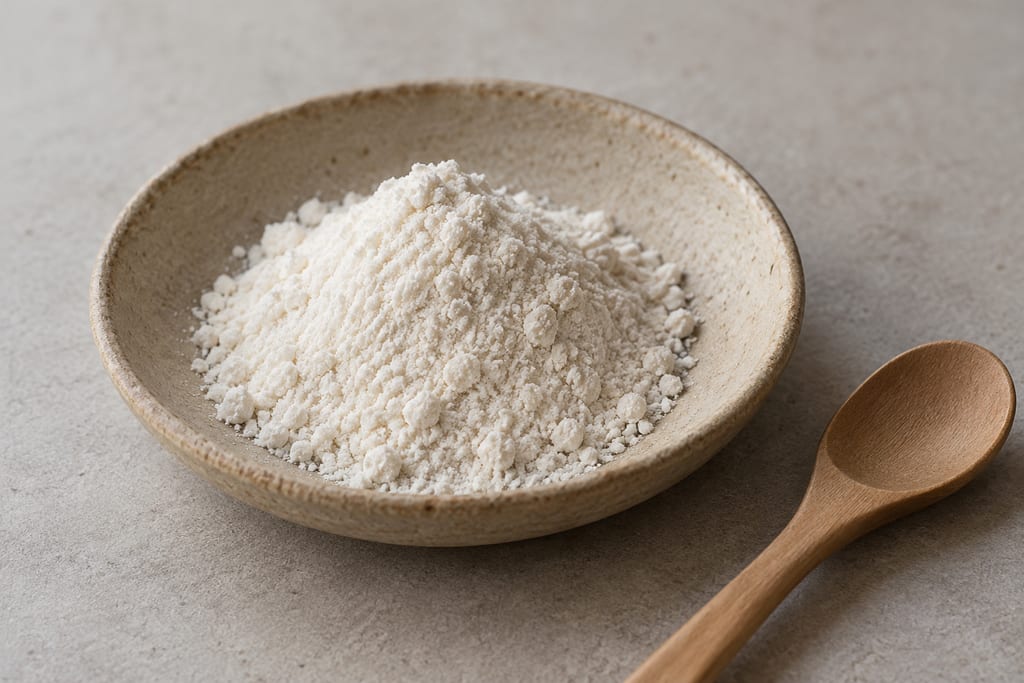
Starch released from giant woodland lily bulbs by pounding, washed out in water, settled and dried: the refined fraction of an Ainu process that also yields fermented cakes from the residue.

Salted mushrooms are a traditional wild-mushroom preserve, especially of Finnish and Russian milk caps, made by layering boiled mushrooms with coarse salt or keeping them under brine, and kept cold.
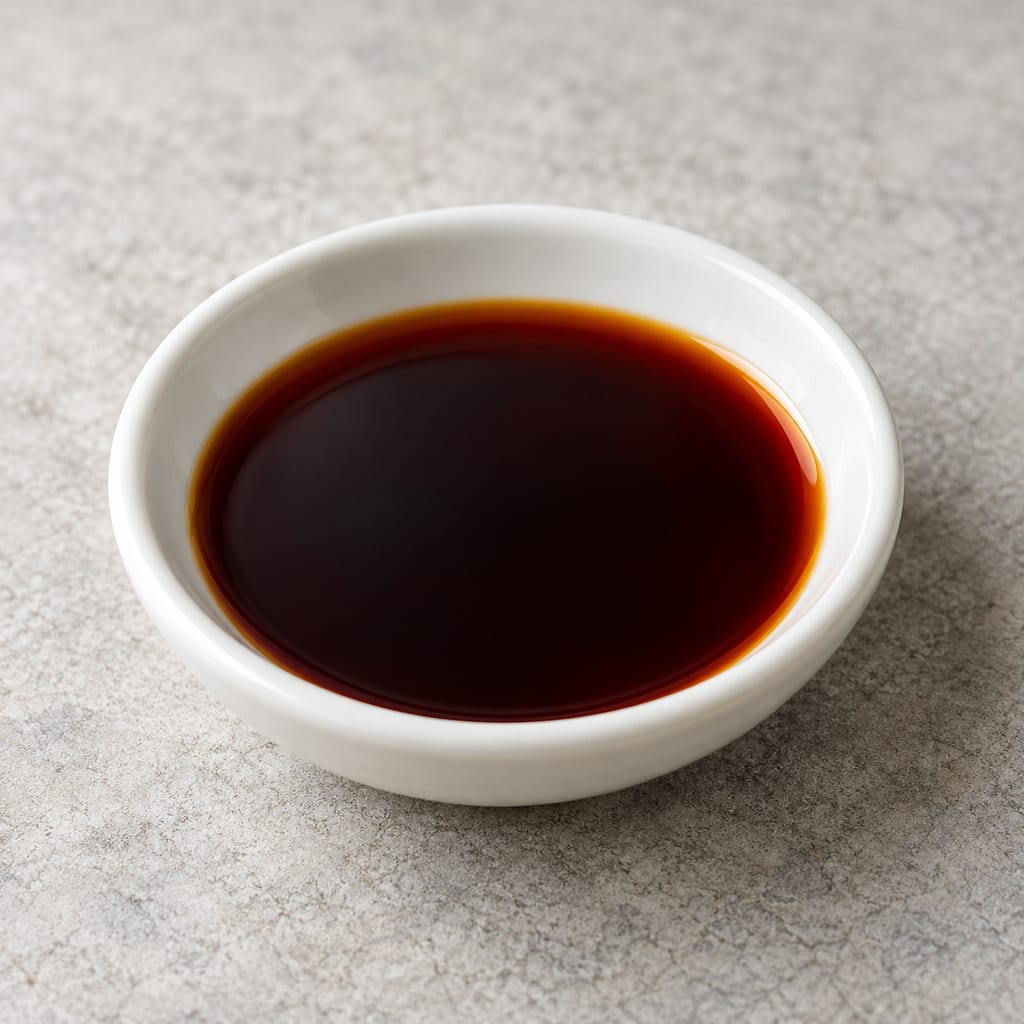
Soy sauce is a salted liquid seasoning made by growing koji mould on soybeans and grain, maturing the mash in brine and pressing out the liquid. Japan's shoyu is the best-documented form.

Japanese skipjack tuna cooked, then repeatedly smoked and dried over a wood fire by the hand-fired tebiyama method into a hard block for shaving into dashi: the first stage of katsuobushi.
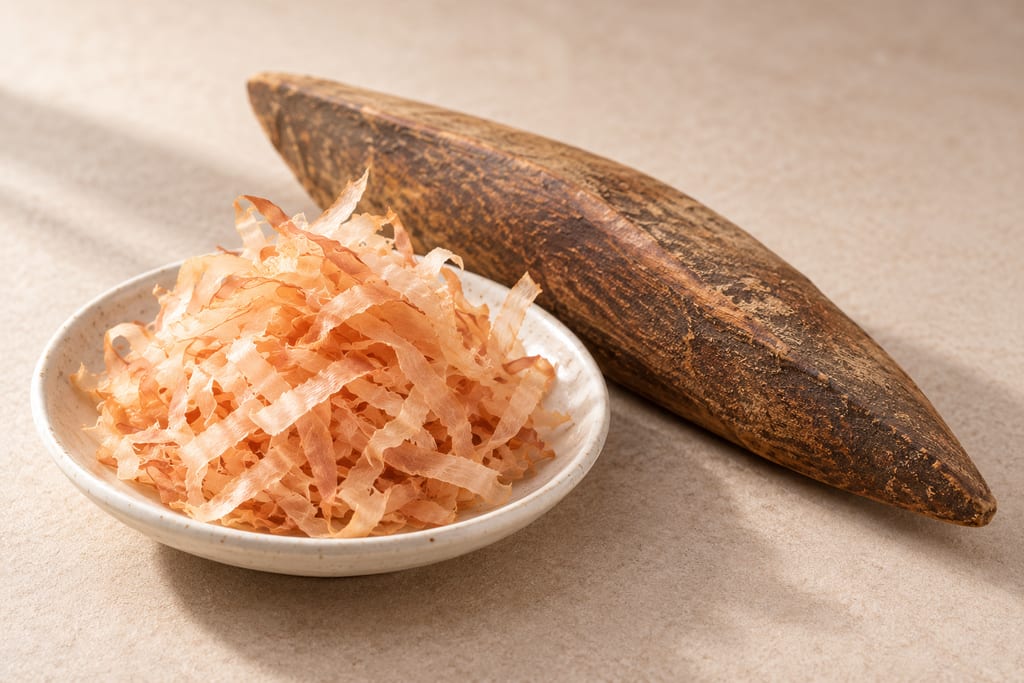
Katsuobushi is skipjack tuna cooked, smoked and dried into a hard block that is shaved into flakes for dashi and toppings. Some styles stop at the smoke-dried stage; others receive carefully managed mold maturation.
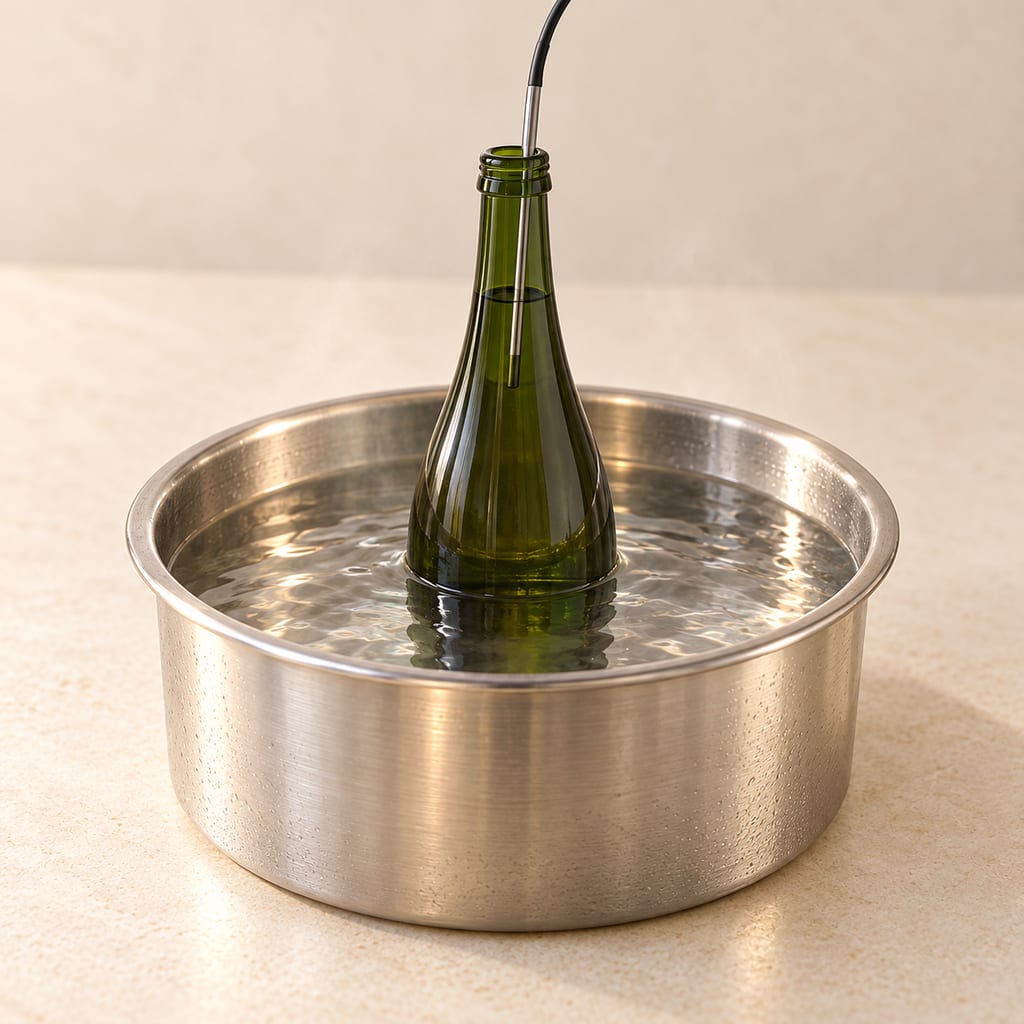
Hi-ire is the Japanese heat treatment of finished sake, about 65 °C, used to stop re-fermentation and souring. Brewers applied it from the Muromachi era.
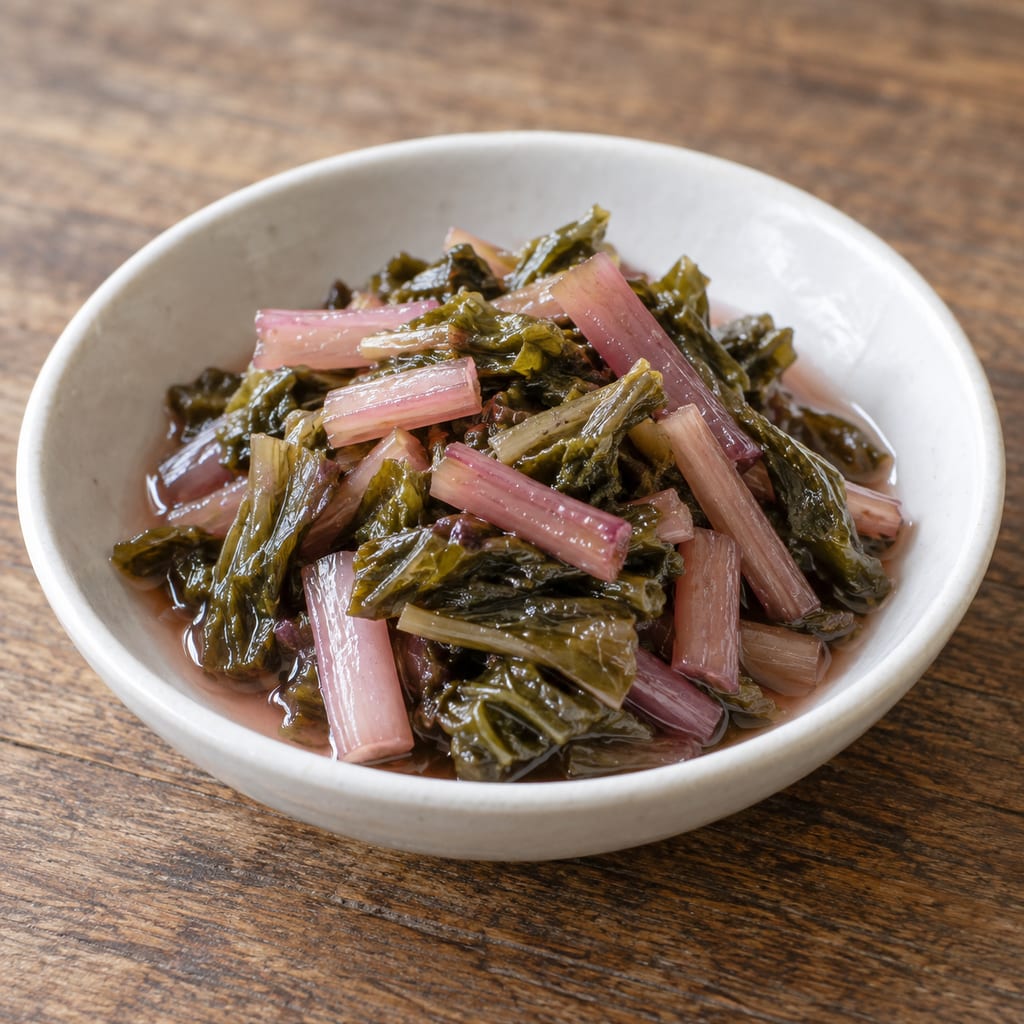
Sunki is a salt-free pickle from Japan's Kiso valley: red-turnip leaves fermented with a retained starter from the previous year's batch.
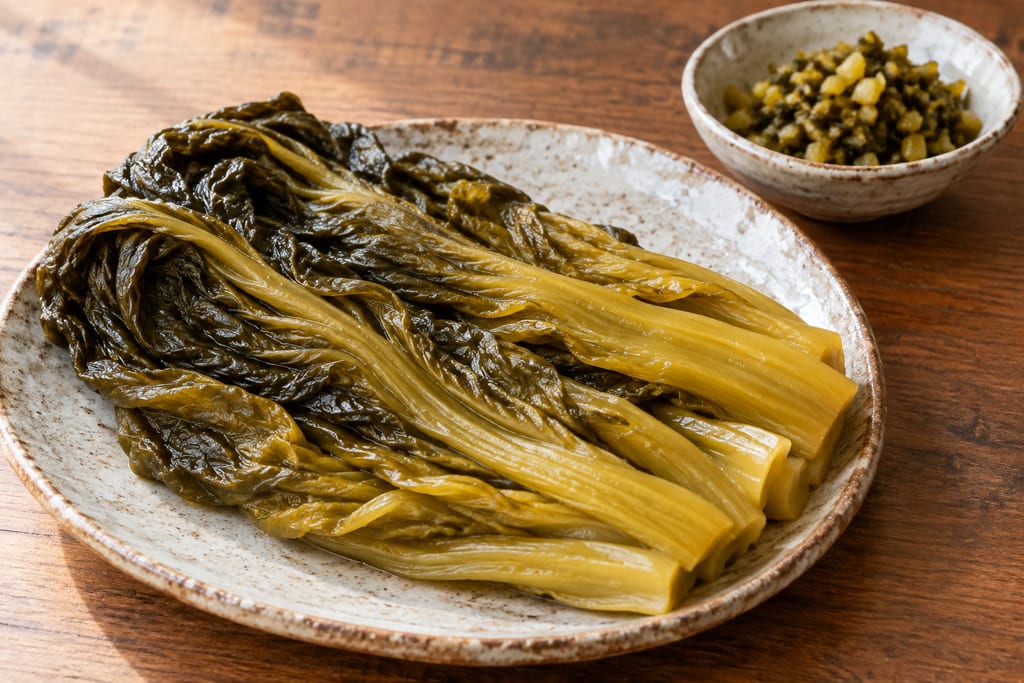
Giant red mustard leaves are dried, layered with salt and chile, pressed in a wooden tub, drained after a week and left through the rainy season.
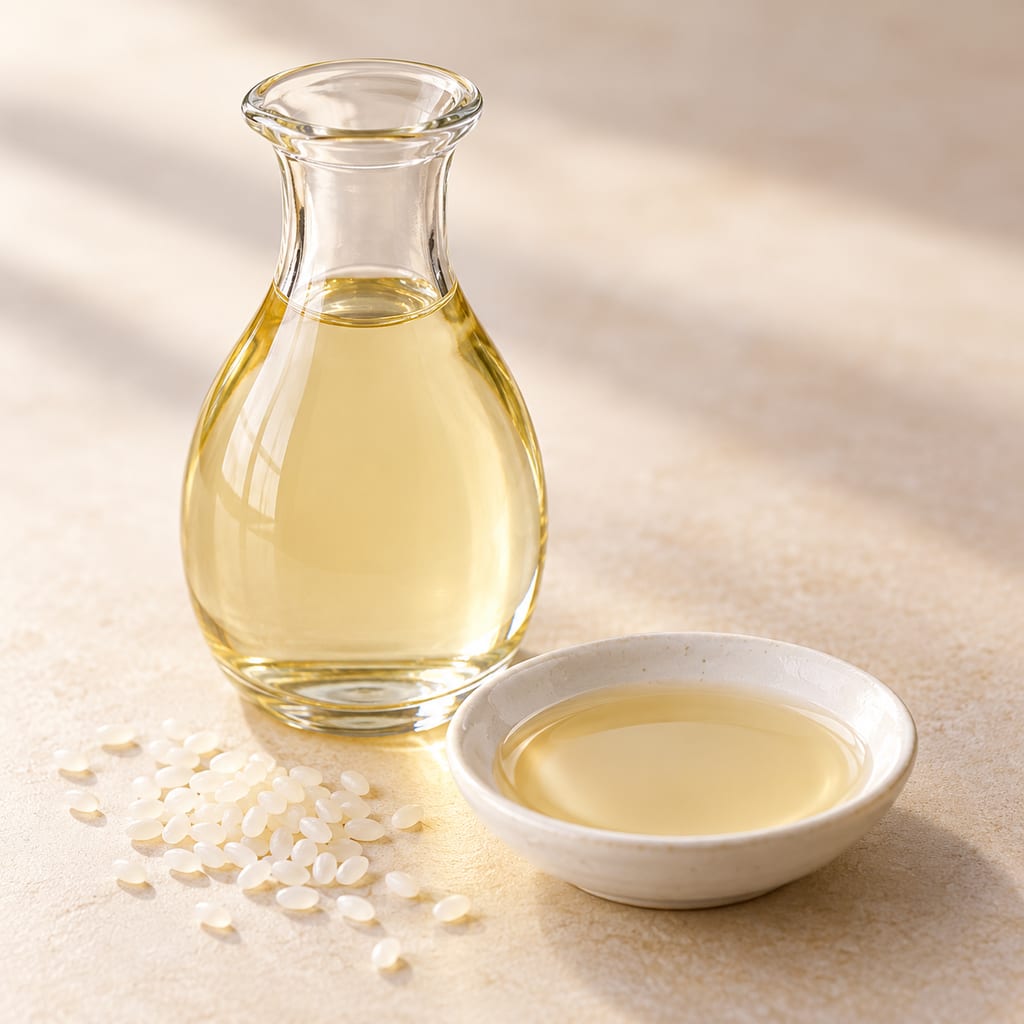
Japanese komezu is a pale, unseasoned rice vinegar made through alcoholic and acetic fermentation; rice, water, koji and yeast shape its character.
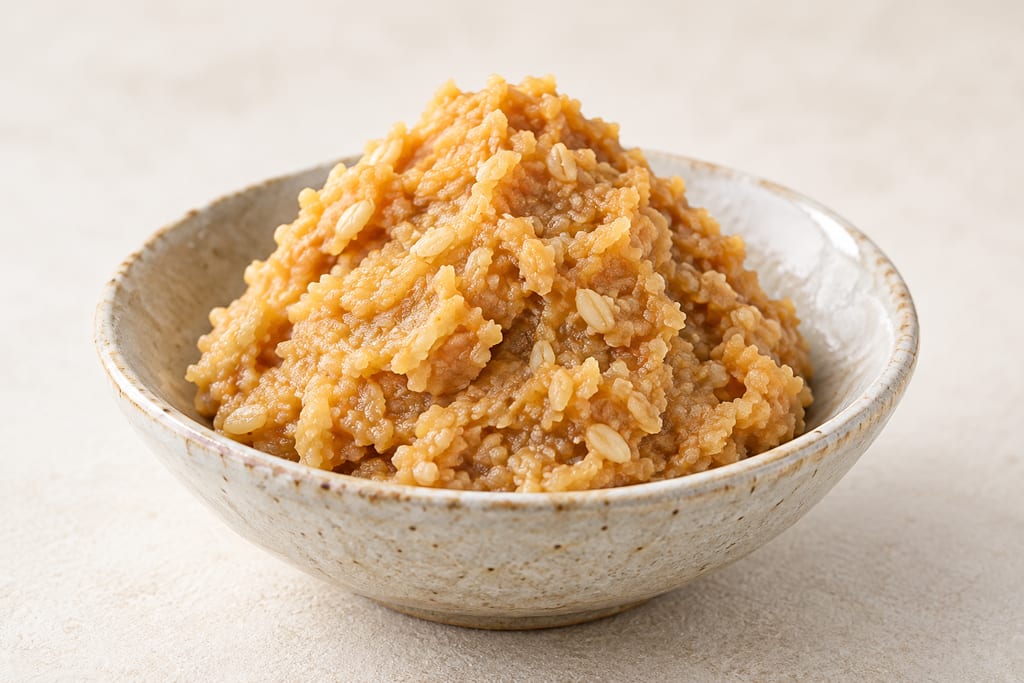
A Japanese soybean paste fermented with barley koji and salt, made mostly in Kyushu, Shikoku and western Japan. It is sweet, savoury and grainy.

Anpan is a soft wheat bun filled with sweet red-bean paste and finished with egg wash and black sesame. This dough rises with commercial instant yeast.
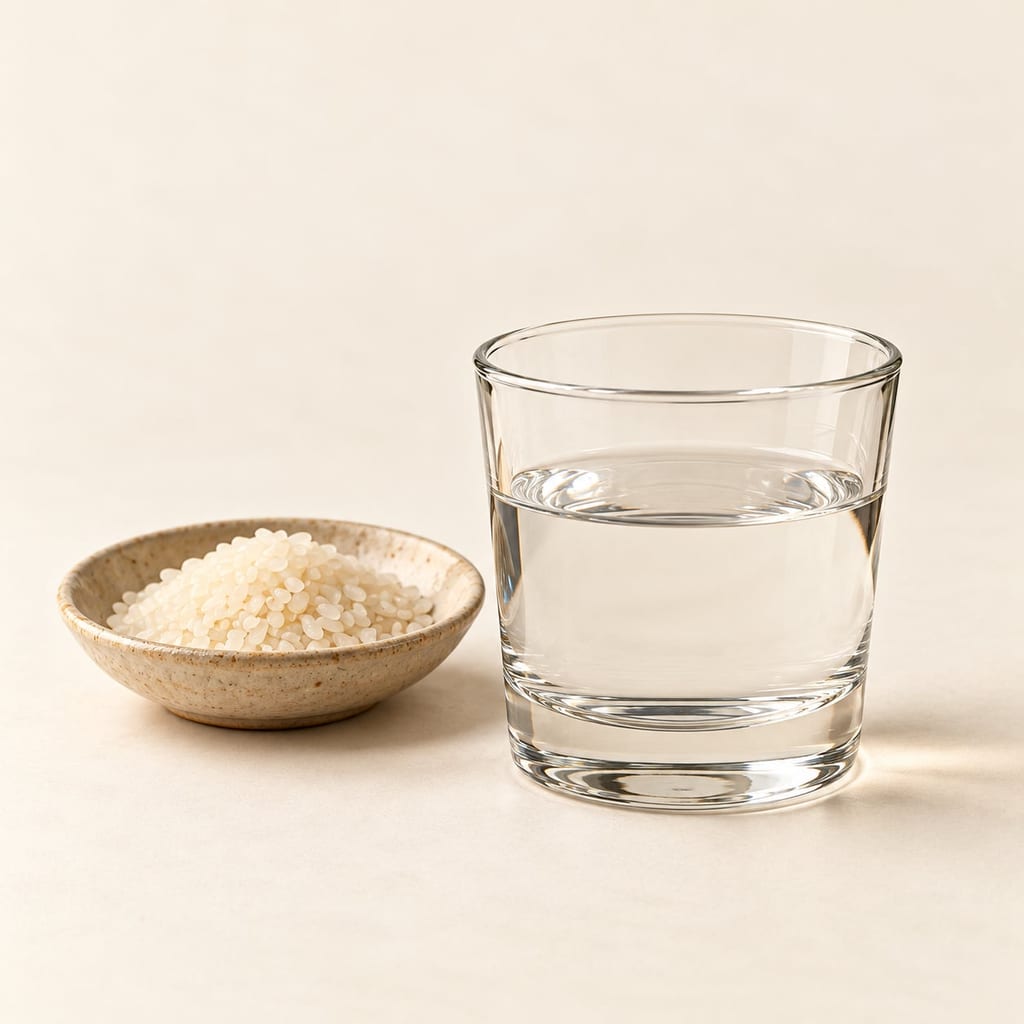
An Okinawan rice spirit made by turning all the rice into black koji, fermenting it with water and yeast, then pot-distilling and maturing the spirit.
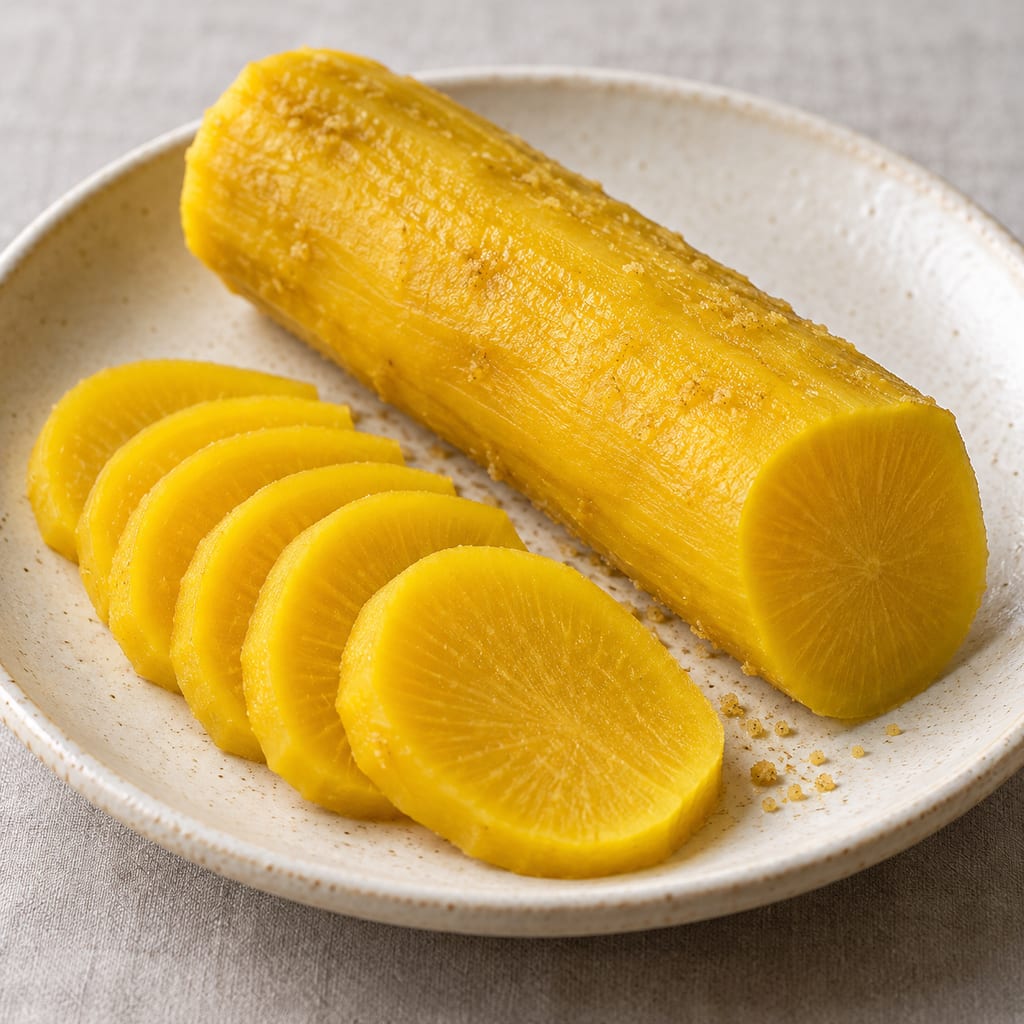
Daikon is dried until pliable, then layered in seasoned rice bran and pressed for a long fermentation.
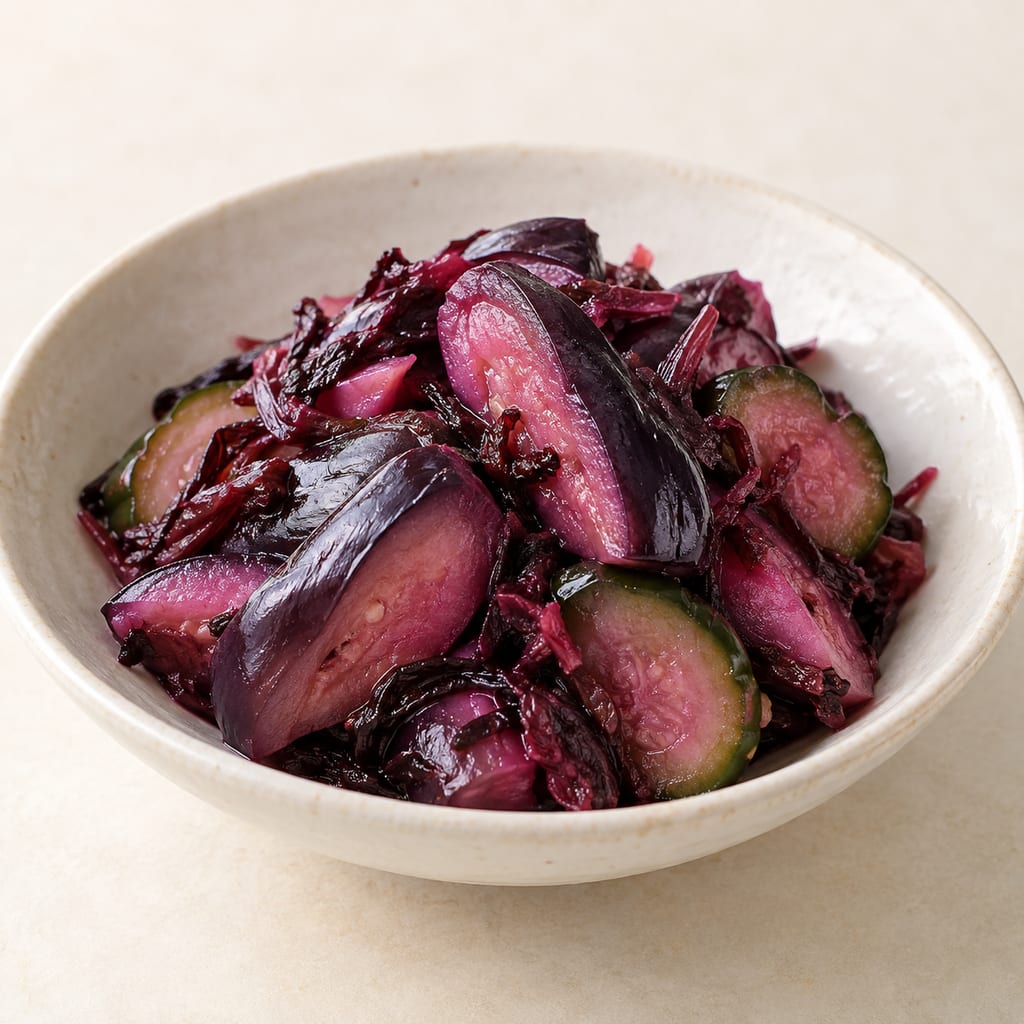
Eggplant and perilla are layered with cucumber, myoga and chiles, pressed with salt and left to mature into Kyoto’s sour purple pickle.
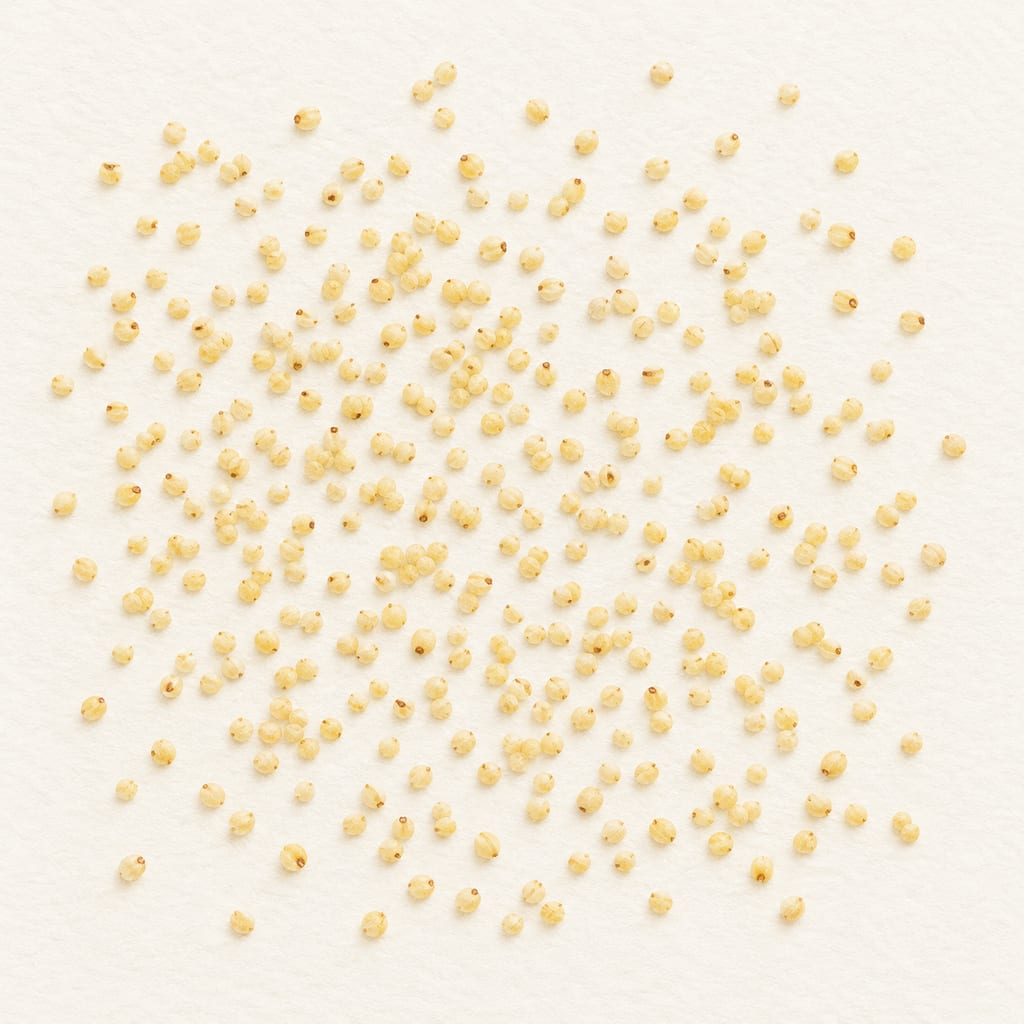
Tonoto from Shizunai in Hidaka is made of barnyard millet alone: a firm porridge kneaded with an equal amount of malted grain in a sake vessel, warmed by two embers, and left a week to ten days.
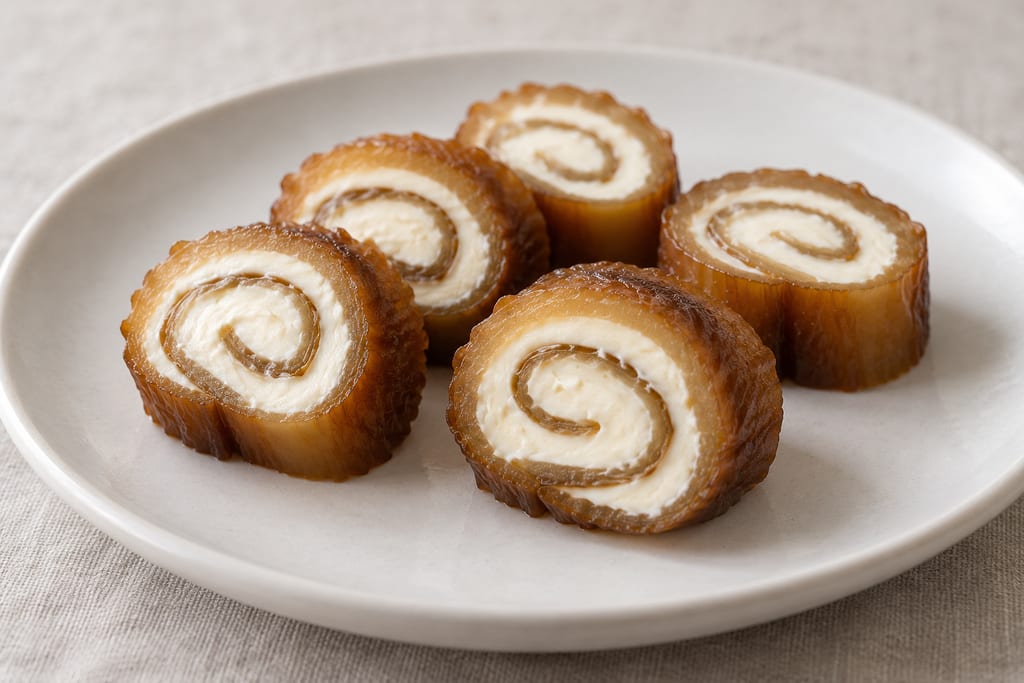
A Morinaga snack pairs thin ribbons of iburigakko with cream cheese, then chills the roll before cutting it into portions.
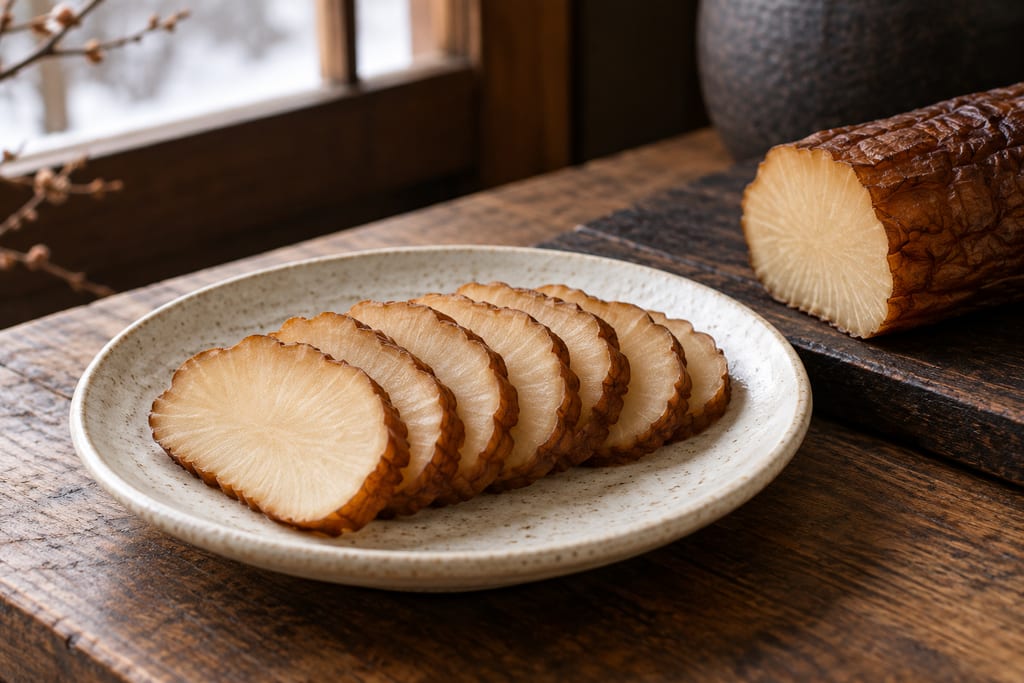
Iburigakko is Akita pickled daikon dried with smoke before it is fermented in rice bran.
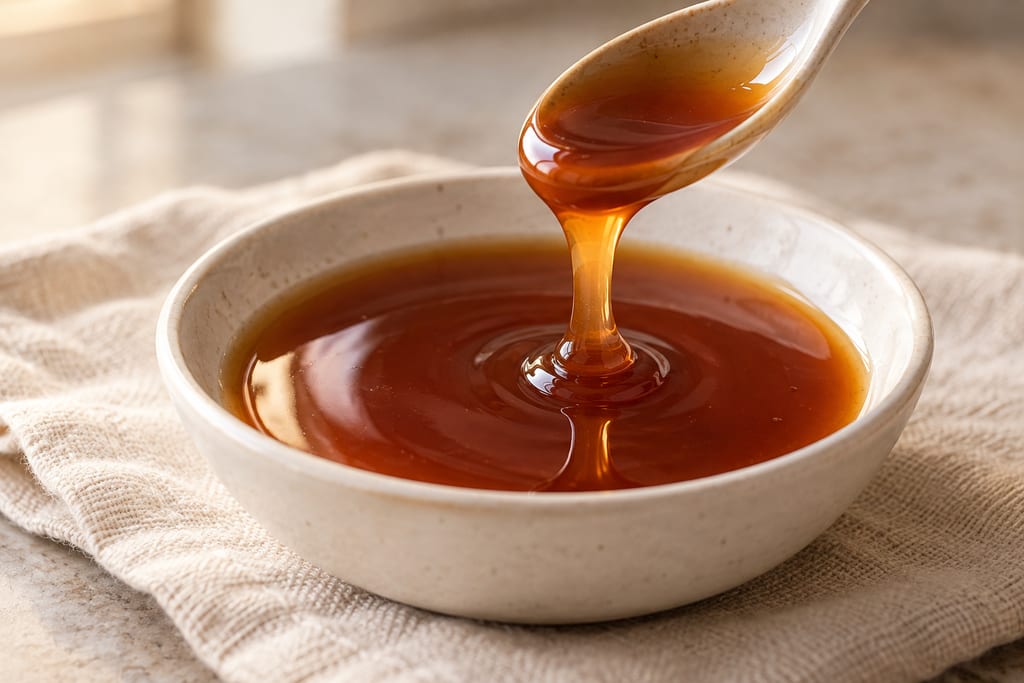
A glossy Japanese glaze thickened with starch, sugar, soy sauce and mirin. Spoon it over cooked rice dumplings while the glaze is still fluid.
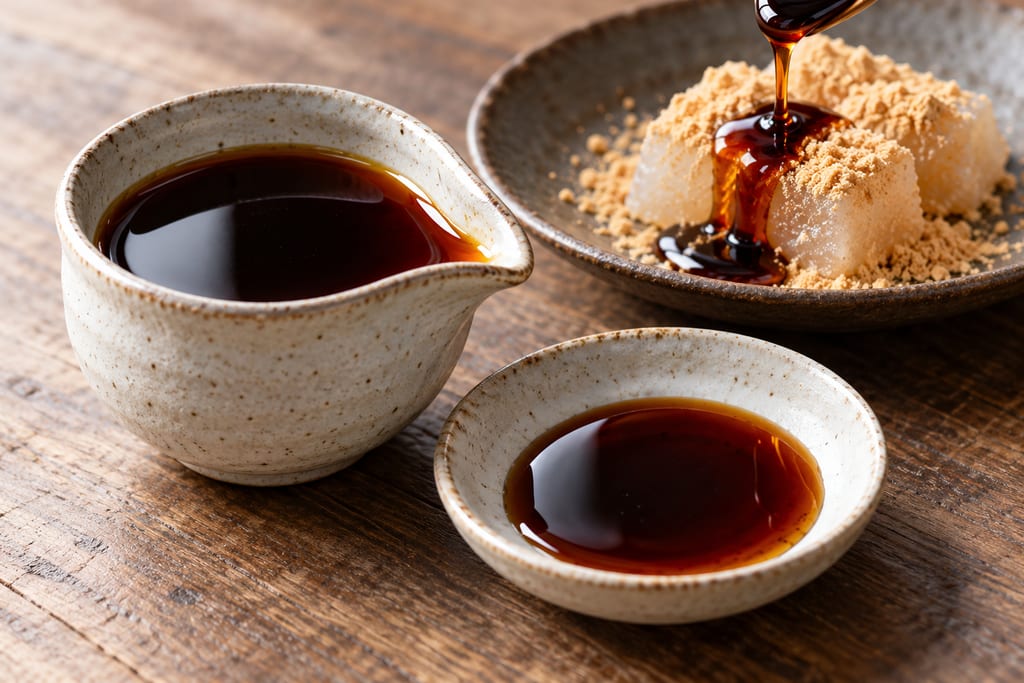
A dark Japanese syrup made by simmering black sugar with water and optional extra sugar. Drizzle it over mochi, ice cream or other desserts.
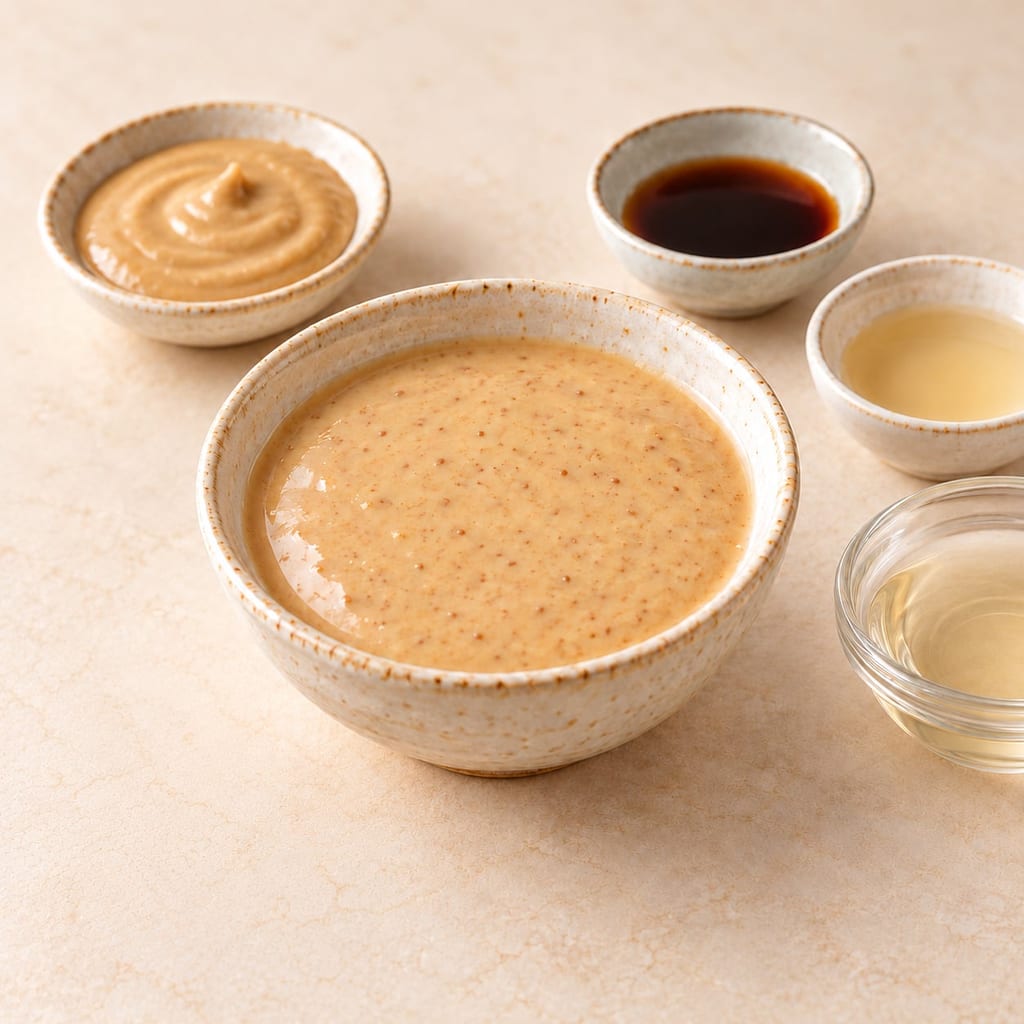
A creamy Japanese sesame dipping sauce with soy, rice vinegar and dashi. Gradual mixing turns the thick sesame paste into a smooth sauce.
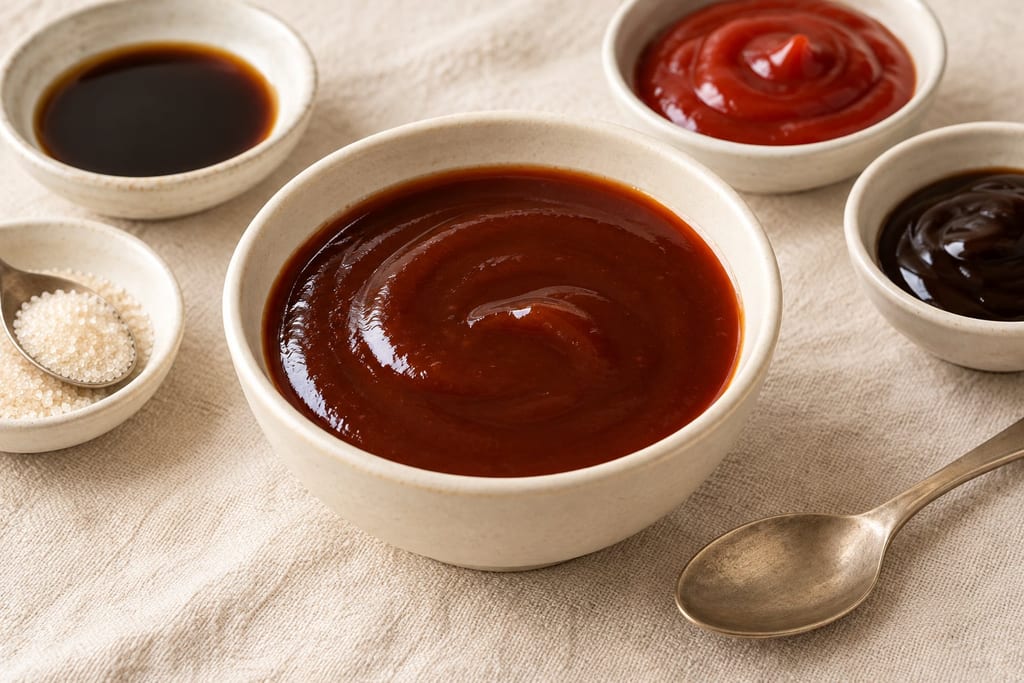
A sweet, tangy Japanese sauce mixed from Worcestershire sauce, ketchup, oyster sauce and sugar. Serve with breaded cutlets or croquettes.
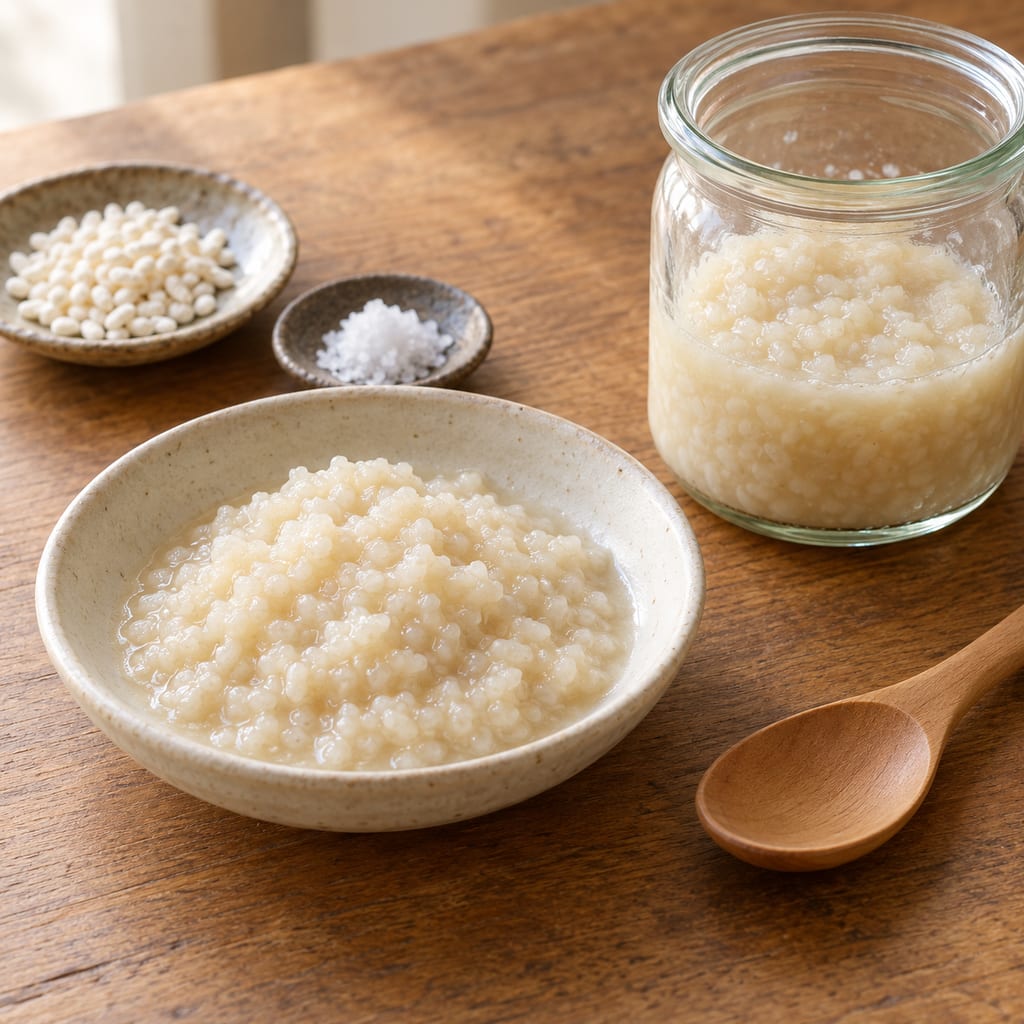
A Japanese seasoning of rice koji, salt and water, left at room temperature until the koji's enzymes and its microbes turn it into a savoury, salty paste for marinades and dressings.
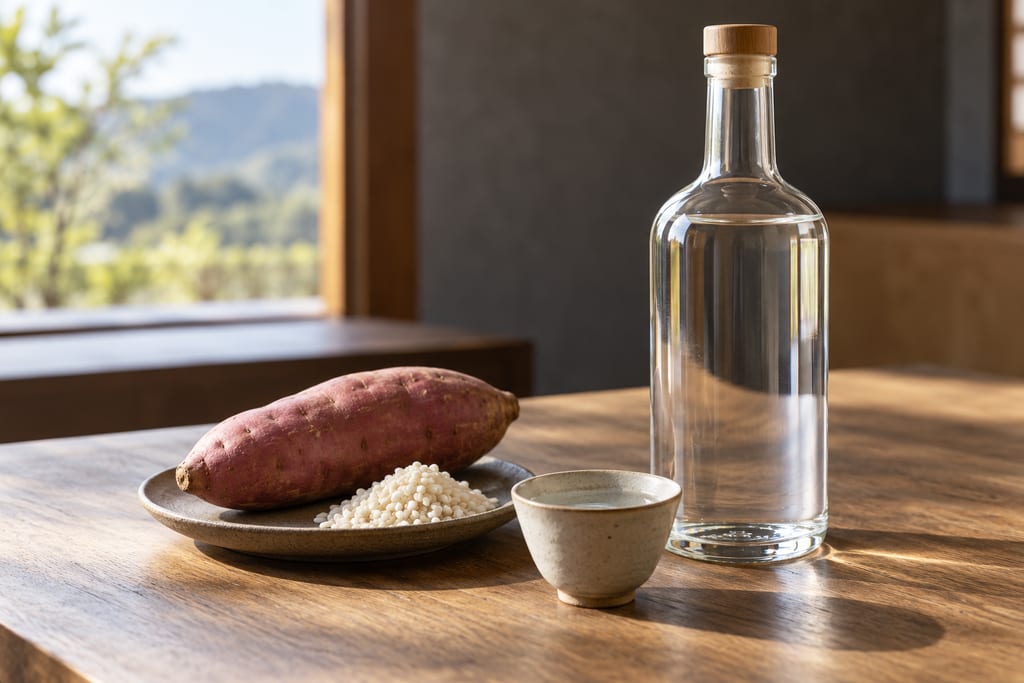
Japanese pot-distilled spirit made by fermenting sweet potatoes, rice or barley with koji and yeast in two stages, then distilling the mash once so the ingredients' aroma survives.
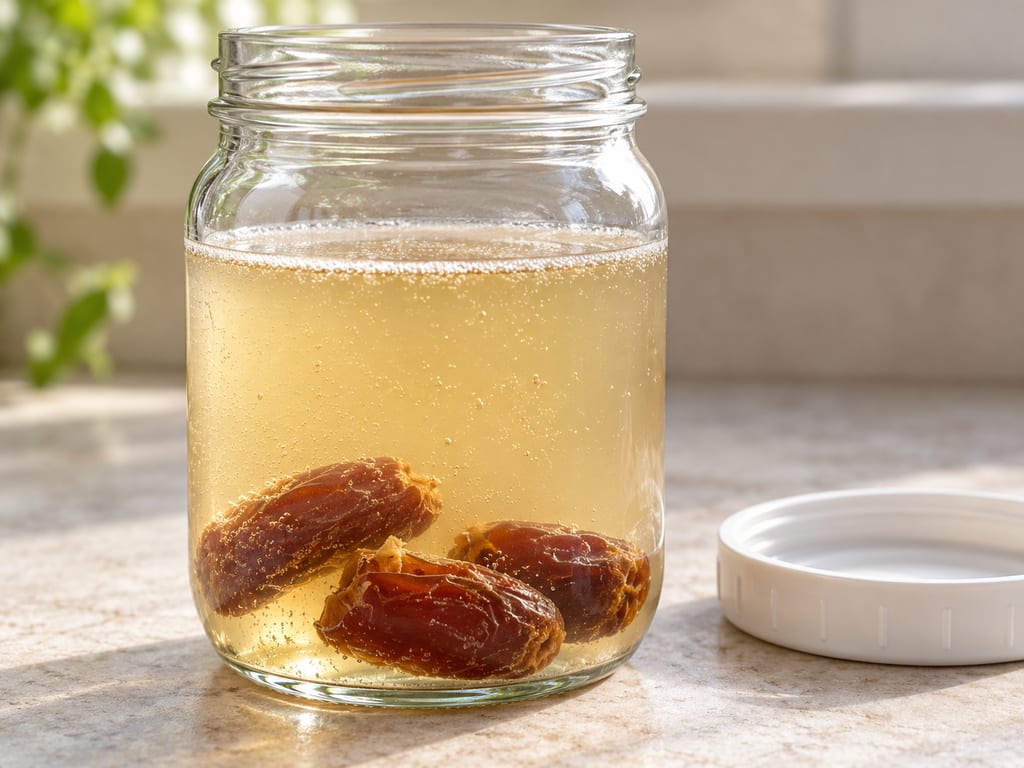
Fruit yeast water is a spontaneously fermented liquid made by soaking fruit in water, with or without sugar, to grow yeast for starting bread dough or a separate flour starter.